Author: Serkadis

  • Sergey Brin Talks ‘Moonshots’ And Pizza

    I’m starting to think he really doesn’t take that Google Glass off.

    Google co-founder recently spoke at Google’s Solve For X event, and the company has made the speech available online.

    The event is about “moonshot” ideas, and he shares his moonshot idea for an online pizza delivery system, which eventually led to the birth of Google.

    “Even when you go after a more ambitions goal, or even if you fail to achieve that one, all the side effects that come along the way can be that much more rewarding and significant in their own right,” he says. And that seems to be the basic message he had to deliver – the basic message of the Solve for X event.

  • Do or die: Hands on with the HTC One

    HTC One Hands-on
    HTC (2498) laid all its cards on the table Tuesday morning as it finally unveiled the highly anticipated HTC One smartphone. As is often the case with HTC smartphones, a string of rumors and leaks painted a fairly good picture of the phone leading up to its unveiling, but there is something important that was definitely lost in translation among the specs and press renders that trickled out over the last few weeks: This is a complete reimagining of an HTC smartphone.

    Continue reading…

  • Impire Review (PC)

    It might seem improbable, but one of the most important effects of Impire, the new video game developed by Cyanide and published by Paradox Interactive, is that it will make it almost impossible to think or write for a number of days without noticing how pervasive the particle “imp” is in the English language and how easy it is to build puns around it.

    It … (read more)

  • After A Rough 2012, HTC Fires Back At Smartphone Rivals With The HTC One

    htc-one2

    There’s little question that HTC wishes 2012 had gone just a little better — the beleaguered smartphone company posted awfully disappointing results quarter after quarter, while rivals like Samsung and Apple continued to hit milestone after milestone.

    CEO Peter Chou firmly believes that the worst is over though, and that the company he helms can truly turn its fortunes around. Now, here in New York (as well as at a parallel event in London), HTC has just introduced the device it hopes will help do all that — the HTC One.

    Frankly, there’s not a lot here that hasn’t already been spoiled by an insane number of leaks over the past few weeks, but the Jelly Bean-powered One is still a terribly pretty handset. The One sports a 4.7-inch 1080p display (pixel density: 468ppi) flanked on either side by white or black trim not entirely unlike the BlackBerry Z10. Naturally, the internals are nothing to scoff at either — inside its sleek, gently curved aluminum unibody chassis, are one of Qualcomm’s new quad-core Snapdragon 600 chipsets clocked at 1.6GHz, 2GB of RAM, and 32 or 64 GB of internal flash storage.

    Here’s the thing about the One hardware though — it almost seems like an exercise in restraint. Its 4.7-inch 1080p display isn’t the largest they’ve put out (that distinction goes to the Droid DNA and its ilk), nor is the chipset powering the show the fastest that Qualcomm has to offer. These days companies like HTC and Samsung are downplaying the perceived strength of their devices’ spec sheets in favor of pushing differentiating features, and the One has no shortage of those.

    The company’s focus on improving mobile sound quality has led it to add a pair of front-facing speakers complete with their own amplifiers and obnoxious name (really? “BoomSound”?). As you’d expect, HTC has also gone to town with the One’s camera — with its so-called “Ultrapixel” sensor HTC is trying to transcend the megapixel race entirely. An f/2.0 lens helps the cause here, but the company insists that its newfangled sensor collects “300 percent more light” than those of its rivals. Through in a living room play in the form of an IR blaster and a HTC-branded remote control/guide app powered by Peel and you’ve got yourself a neat little package.

    Of course, the hardware is but part of HTC’s vision for the One

    Of course, the hardware is but part of HTC’s vision for the One — just as those leaked screenshots indicated, the new and improved Sense 5 UI is Sense 5 is easily the cleanest, least obtrusive version of HTC’s custom UI to date. It’s a drastic step away from the sorts of overly gaudy, overwrought interfaces the company used to be so fond of.

    Google’s Roboto typeface is featured prominently throughout and Sense’s icons and widgets are flatter and more in line with Jelly Bean’s cold digital aesthetic. The biggest addition though is a new feature called BlinkFeed, which pulls in content from thousands of sources (think ESPN, AOL’s media properties, The Verge, Reuters, and more), and dumps them into an activity stream that acts as the device’s homescreen.

    Meanwhile, a series of four (that’s a hard limit) more standard homescreens can be accessed by swiping to the left from BlinkFeed. For better or worse, there’s no way to turn the feature off — rather, users can pop into the settings and trim down the list of sources that BlinkFeed pulls its content from.

    HTC has said that the One will ultimately be available from 185+ wireless carriers the world over starting in March, but here in the States, AT&T, Sprint, and T-Mobile will be the ones to carry HTC’s latest flagship. Sorry, Verizon fans — there’s no official word on why Verizon turned down the One, but it’s not a huge shock considering that the Droid DNA is still relatively new to their lineup.

    The big launch event is still underway here, so stay tuned — we’ll be hustling to get our hands on a One in short order for more detailed impressions of HTC’s would-be savior.


  • Live from HTC’s One announcement

    HTC One Live Coverage
    HTC (2498) unveiled a revamped strategy and a brand new smartphone lineup last year in hopes that it would reverse the slump it had endured since late 2011 when the iPhone 4S put an end to the vendor’s record revenue run. As great as that new One-series smartphone lineup was, HTC simply couldn’t compete with Samsung’s (005930) huge marketing budget and expansive carrier support. Now, HTC is back once again with a new flagship Android phone codenamed “M7” — and reportedly launching as the “HTC One” — and by all accounts it looks like this will be HTC’s most exciting smartphone yet. But will it be enough to divert attention from Samsung’s upcoming Galaxy S IV, which will reportedly be unveiled on March 14th? Our live coverage of HTC’s press conference follows below.

    UPDATE: Be sure to check out our HTC One preview!

    Continue reading…

  • Microsofties Say It Would Be Hard For Yahoo To End The ‘Search Alliance’ [Report]

    One thing seems clear. Yahoo is working on a turnaround in search. What is less clear is how big a role Microsoft will play in that.

    Last month, when Yahoo released its earnings report for Q4 and the full year 2012, it included better than expected results, which were significantly helped by Yahoo’s search performance.

    As you probably know, Yahoo and Microsoft entered a “Search Alliance” back in 2009, when Yahoo was under the leadership of Carol Bartz. The agreement was to last for ten years, and would see Bing powering the back end of Yahoo’s search, and Yahoo would become the exclusive worldwide relationship sales force for both companies’ premium search advertisers. Advertising for both companies would be run through Microsoft’s AdCenter platform, which has since become Bing Ads and the Yahoo Bing Network.

    For that ten-year duration, Microsoft also acquired an exclusive license to Yahoo’s core search technologies along with the ability to integrate Yahoo’s search technologies into Bing.

    It’s no surprise then, that Microsoft would want to make it incredibly hard for Yahoo to leave the partnership prematurely, if the company was inclined to do so. According to a new report from All Things D’s Kara Swisher, who has a proven track record of Yahoo insider information, sources at Microsoft say the company is “unlikely to extend the agreement without major concessions, and that any efforts to end the overall deal will be difficult for Yahoo.”

    She quotes one of the sources as saying, “There is what [Yahoo] wants, and what’s possible.”

    And leaving the Search Alliance early could very well be what Yahoo wants. Last week at an investors conference, Yahoo CEO (and former Googler) Marissa Mayer expressed her disappointment with the deal. Reuters quoted her:

    “One of the points of the alliance is that we collectively want to grow share rather than just trading share with each other…”

    “We need to see monetization working better because we know that it can and we’ve seen other competitors in the space illustrate how well it can work.”

    We’ve heard of industry rumors that Yahoo would seek to kill the deal early for quite some time, but Yahoo seems to be getting increasingly vocal about the state of affairs, though it has not come right out and said it wishes to kill the deal.

    Yahoo has, however, slammed Microsoft in other venues in recent memory.

    Either way, Yahoo is prioritizing search more than it has in years, from the sound of it. On the earnings all, Mayer said as much. Here’s Wired’s account of her words:

    “Overall in search, it’s a key area of investment for us,” Mayer said. “We need to invest in a lot of interface improvements. All of the innovations in search are going to happen at the user interface level moving forward and we need to invest in those features both on the desktop and on mobile and I think both ultimately will be key plays for us.”

    “We have a big investment we want to make and a big push on search. We have lost some share in recent years and we’d like to regain some of that share and we have some ideas as to how.”

    That does make it sound like Yahoo is more interested in focusing on the front end than on the back end, which really makes one name spring to mind as an alternative back-end partner, should Yahoo pursue an early end to the Microsoft partnership. And that’s a name that would give Microsoft all the more reason to make it as hard as possible for Yahoo to end it. It’s also a name that Mayer has very personal ties with. It’s also a name that Yahoo just announced a new display partnership with. (Hint: it rhymes with Yoogle).

    Of course, Yahoo and Google wanted to partner in the first place, but the threat of regulatory action impeded any deal, so Yahoo settled for Microsoft. It’s hard to say whether the two would be able to get something done if they tried again, even if Yahoo is able to ditch Microsoft.

    But Yahoo will press on with its own search initiatives regardless of partners. According to Swisher’s report, Mayer has appointed long-time Yahoo exec Laurence Mann to head Yahoo Search.

  • As Stores Quickly Sell Out, This Is The Last Call For Mac Pros In Europe

    MacPro_3D_Box

    The Mac Pro is an endangered species in Europe. Apple decided to withdraw its towering desktop behemoth from the market after new regulations concerning power supply design hit the books. So, instead of immediately redesigning the aging desktop, Apple intends to just stop selling it with March 1st originally slated as the day of reckoning. However, with several days still left, the model is already in very short supply.

    TUAW discovered that the Mac Pro is already sold out in many European Apple stores. It’s still available from third-party sites but Apple clearly purged its supply line with a vigorous final thrust.

    But fear not, European creative types and trust fund babies. A new Mac Pro will hit Euroland in due time. You don’t want this model anyway.

    The Mac Pro is in desperate need for a refresh. The current model was introduced in 2010 and is grossly overpriced. It lacks Thunderbolt connectivity and ships with laughable specs for the price. At this point, if you must have a new machine to render your latest artsy-fartsy animation, consider spending a cool $1,000 on a quad-core Intel Core i7 Mac mini server and waiting a bit longer.

    Last summer Apple hinted at a completely new Mac Pro and now that the company ceded to regulations and pulled its high-margin product from a key region, a new model should hit sooner verses later.

  • Microsoft takes Outlook live

    Perhaps “live” is a poor choice of words, seeing as Windows Live is dead. Early this morning, Microsoft took down the “opening soon” sign and brought Outlook — that’s the .com not the software — out of beta. The webmail service is in “grand opening” mode with 60 million “active users” in tow, and more coming as they migrate from Hotmail.

    Microsoft unveiled the email service nearly six months ago, decked out in Windows 8-logo blue and generous white space. During the beta process, Outlook ran alongside Hotmail. But with the new service launched, “we’ll soon start to upgrade hundreds of millions of Hotmail users to the new Outlook.com experience”, David Law, Outlook.com product management director, says.

    No one will be left behind, and I expect some people to come kicking screaming — seeing the uproar during the partially-aborted Hotmail to Windows Live migration. Stinkers won’t get in the way this time. Microsoft plans to “upgrade every Hotmail user to Outlook.com”, Law says. That means you. Bud.

    “The upgrade is seamless and instant for people who use Hotmail”, he emphasizes. “Everything from their @hotmail.com email address, password, messages, folders, contacts, rules, vacation replies, etc. will stay the same, with no disruption in service”. There will be a process. “We expect all people using Hotmail to be upgraded by this summer”.

    My colleague Mihaita Bamburic wrote an exhaustive review of the Outlook mail service in August that remains highly relevant. While praising the visuals he concluded: “Outlook is commendable, but I wouldn’t recommend it over Gmail at the moment”.

    I would choose Outook over Gmail, even though it’s my primary service. Call me a Gmail hater, but one sadly stuck. I would have adopted Windows Live Hotmail long ago and possibly Outlook if Microsoft supported IMAP. Sorry, but in the cloud-connected device era, where sync is mandatory feature, POP3 isn’t good enough. I’ve got too many devices — as you might, too — and Outlook is no real option without IMAP.

    I did inquire early this morning and heard from a spokesperson: “Nothing to share on IMAP for this release”. That’s standard-like statement going back eight years. So you can forget IMAP.

    That’s too bad, because Outlook offers much, and it’s a feisty, fluid beastie running on Windows 8. I like the service. Design is some ways simplistic appearance, keeping with Microsoft’s newer 2D approach. But I find the layout to be prettier and more functional than Gmail. With access to Documents, Photos, SkyDrive and Skype, Outlook and Gmail stack up fairly evenly for the major cloud extras.

    “Nearly half of the people using Outlook.com have already used SkyDrive to share more than half a billion photos and Office documents”, Law says.

    Both services pack in too many ads — more from Outlook than Gmail. But Microsoft removes them for anyone coughing up $19.95 a year, a previously available option that I’ve used before.

    Law identifies Microsoft’s major objectives for the service:

    Outlook.com was designed as an email service focused on removing barriers and getting people going:

    • Delivering a beautiful, fresh and intuitive experience on modern browsers and devices
    • Keeping people connected to their friends and co-workers across the networks they really use
    • Providing a smart and powerful inbox to handle today’s email needs, including SkyDrive for sharing virtually anything in a single email
    • Putting people in control by prioritizing their privacy

    Does Outlook live up to them? You tell me.

    Microsoft smartly supports the launch with a couple commercials, which I really like, embedded above.

  • Ubuntu countdowns to tablet time

    Earlier today, colleague Wayne Williams wrote about Canonical plans to publish images and open-source code for the Touch Developer Preview of Ubuntu for Galaxy Nexus and Nexus 4. Look for them Thursday. Meanwhile, Canonical prepares another trick, posting a countdown clock to “tablet time”. Oh my.

    In October 2011, Canonical CEO Mark Shuttleworth promised Ubuntu would appear on smartphones, tablets and TVs. The company formally announced the smartphone OS in January, with plans to make it available for older Android handsets, at the least. I wonder if Canonical would take a similar approach to tablets.

    Ubuntu for Android is another Canonical project. A docked phone — to monitor and keyboard — launches Ubuntu in tandem with Android, sharing the same kernel (and requiring at least dual-core processor). It’s a neat trick.

    Whatever the tablet plans, Canonical isn’t tying Ubuntu’s future solely to the PC. The promise in tablets is huge, surpassing notebooks for the first time. NPD DisplaySearch forecasts that 240 million tablets will ship this year, compared to 207 million laptops.

    In December, Shutterworth laid out his vision for Ubuntu, and the Unity user interface, in 2013:

    Unity in 2013 will be all about mobile — bringing Ubuntu to phones and tablets. Shaping Unity to provide the things we’ve learned are most important across all form factors, beautifully. Broadening the Ubuntu community to include mobile developers who need new tools and frameworks to create mobile software. Defining new form factors that enable new kinds of work and play altogether. Bringing clearly into focus the driving forces that have shaped our new desktop into one facet of a bigger gem.

    It’s also why we’ll push deeper into the cloud, making it even easier, faster and cost effective to scale out modern infrastructure on the cloud of your choice, or create clouds for your own consumption and commerce. Whether you’re building out a big data cluster or a super-scaled storage solution, you’ll get it done faster on Ubuntu than any other platform, thanks to the amazing work of our cloud community. Whatever your UI of choice, having the same core tools and libraries from your phone to your desktop to your server and your cloud instances makes life infinitely easier. Consider it a gift from all of us at Ubuntu.

    Google and Microsoft tout similar aspirations across devices connected to the cloud. What does that mean for tablets? We’ll know tomorrow.

  • Microsoft NEEDs a Mobile Manhattan Project

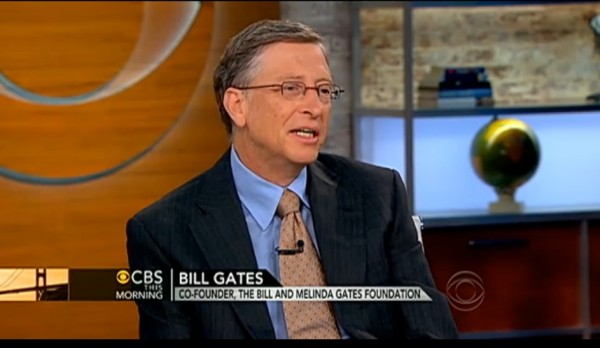
    “We didn’t miss cell phones, but the way that we went about it, ah, didn’t allow us to get the leadership. So it’s clearly a mistake.” That’s the chilling admission from Microsoft Chairman Bill Gates during a CBS This Morning interview with Charlie Rose. Referring to CEO Steve Ballmer, the cofounder emphasizes: “He and I are not satisfied that in terms of, you know, breakthrough things, that we’re, ah, doing everything possible”. You think?

    Hallelujah! Praise the Lord (or whomever or whatever you worship, if anything). Change starts with admission of fault, and Gates gives it. So what should Microsoft do about the problem? Take my advice. Please. Starting five years ago, I repeatedly recommend Microsoft lunch a Mobile Manhattan Project — on the order of Internet Explorer in the mid-1990s but only much, much larger. There simply is no other way to catch up in mobile.

    What I Predicted

    In September 2008, writing for Microsoft Watch, I cajoled and warned: “It’s time for Microsoft to launch a Mobile Manhattan Project, something on the scale of Internet Explorer in 1996. If Microsoft cedes the mobile market to Apple and Google, the PC will be the software giant’s final — and declining — legacy. Mobile devices, particularly cell phones, will be the next dominant platform. The PC’s role will reverse, becoming adjunct to the cell phone”.

    But there is greater context. I posted about Google’s browser, then out in beta, not Microsoft mobile:

    Make no mistake, Chrome is the most threatening competitive product Microsoft has faced in a decade. But the threat is more potential, because Google has a long way to go from beta to shipping product and wooing developers to the new runtime along the way. That said, if Microsoft’s mobile strategy weren’t so weak, I wouldn’t be writing this blog post.

    Before continuing on the main topic, I must clearly state something I’ve alluded to in other posts: Microsoft must change its priorities. The company has wasted too much time chasing Google in search. The search wars are over, and Google won. Microsoft must accept this. Where Microsoft should have been pushing hard is the device category where search will be the killer application: the cell phone.

    Would any of our usually sassy commenters like to argue that any of this isn’t true today, as predicted? Have fun trying.

    Once, sometimes twice, a year, I rail about this topic, but the older posts carry more weight. Another, from December 2009: “I tell you this: If Microsoft loses the mobile market, it loses the future. Once again, and I’m exhausted from blogging this, I say that Microsoft must launch a mobile Manhattan Project. If not, it will be buyers of all categories, including enterprises, hanging up on Windows Mobile”.

    Of course, Microsoft hung up on the OS and shifted to Windows Phone. I issued these warnings before iPad launched, or Android gained such overwhelming phone sales share. June 2010: “There is no Mobile Manhattan Project, but leadership living in denial about the future and the kind of resources necessary just to stay in the game. Winning is no longer an option — not at the current level of commitment”.

    Finally, though, Gates admits a “mistake”. If this is the end of denial, then change is possible, but only with deep commitment to leap ahead and redefine the mobile category. Microsoft has no time to waste. Minutes matter. Google activates more than 1.3 million Androids, the majority smartphone, per day. During fourth quarter, combined Android and iOS smartphone share reached 90.1 percent, up from 74.9 percent a year earlier, according to Gartner. Anshul Gupta, Gartner principal research analyst, says that “2013 will be the year of the rise of the third ecosystem as the battle between the new BlackBerry 10 and Windows Phone intensifies”. The operating systems have 3.5 percent and 3 percent sales share, respectively.

    What can Microsoft do

    Mobile Manhattan Project is possible, because Microsoft did something similar before in the 1990s. Netscape got a big head start in browsers, amassing massive market share early on. But in just 18 months, Internet Explorer matched and even exceeded its rival. Microsoft needs to make that kind of commitment in no more time than that.

    The company already is on the right track with Surface tablets, and I strongly encourage Ballmer and team to stay the course, while releasing models with 7-7.9-inch displays. The larger problem is phones. Some recommendations:

    1. Suspend Windows Phone licensing fees for 12 months. Make the operating system free, a strategy that worked well in browsers. Windows Phone competes with Android, which is freely licensed, and iOS, which cost Apple realizes through research and development. Microsoft must match free with free, with the goal being to gain market share. Nothing is more important than grabbing share. Fast.

    Ballmer should know from Windows’ success, an incumbent platform isn’t easily displaced. During the global transition to smartphones, Windows Phone could still make huge share gains. But the opportunity closes quickly and could be over as soon as next year’s major handset release cycle.

    Smartphone sales surged 38.3 percent during fourth quarter, to 207.7 million units, according to Gartner. Meanwhile, feature phone sales fell 19 percent to 264.4 million. Respective share in Q4: 44 percent and 56 percent. At this pace, smartphone sales should surpass feature phones within a couple quarters. Time is short.

    2. Pay some manufacturers to license Windows Phone. You read that right. China is now the largest smartphone market, and sales growth is gangbusters. During fourth quarter, smartphones accounted for 73 percent of all handset shipments to China, up from 40 percent a year earlier, according to Canalys. Shipments soared 113 percent to 64.7 million units, or 30 percent of all smartphones globally.

    Followed by leaders Samsung and Apple. three Chinese manufacturers — Huawei, ZTE and Lenovo — rounded out the top five, according to Canalys. So there are two overlapping trends: Rapid adoption of smartphones in the world’s largest handset market and manufacturers there rapidly reaching the world stage. Android is the common denominator — whether sales to China or by Chinese manufacturers.

    Microsoft must woo both by every means, even if that means paying, perhaps with co-marketing dollars, for Chinese OEMs to license Windows Phone — even preferred placement, but non-exclusive, over Android. Radical thinking is required, if Microsoft is to catch up.

    3. Buy Nokia. I never expected to recommend this, but Microsoft and the Finnish phone maker are tightly-joined through their OS licensing deal. Marriage is the only sensible step left. Such a move would:

    • Spread the Microsoft brand across the globe fast, just like that Apple logo seen everywhere
    • Put Microsoft in control. The company can design compelling hardware and software, as Xbox and Surface show. Nokia’s deep engineering skills are helluva foundation.
    • Meet market trends. Brands not operating systems matter to consumers, and there Apple and Samsung lead, with combined 52 percent smartphone sales share, according to Gartner. Google now sells Nexus phones and owns Motorola. Branded phones and supporting services are the future.

    Channel conflict isn’t much of a concern. Other than Nokia, what other manufacturer does anything for Windows Phone? For example, during Q4, Microsoft partner and global handset leader Samsung accounted “42.5 percent of the Android market globally”, Gupta says, “and the next vendor at just 6 percent share”.

    Microsoft’s success buying and leverage Skype shows that Nokia is possible, too.

    4. Make video calling the future. If Microsoft doesn’t, Apple, Facebook or Google will. Phone calls are passé. The success of services like SnapChat show just how much interest there is in immediate visuals. Skype Video Messages is a great start, alongside other existing video chat features.

    The next big thing in phones should be video calling, and Skype has mature features and global reach to be the means on any platform. Microsoft can make the experience better by cutting deals with carriers for Windows Phone and through aggressive marketing demonstrating the benefits. Apple tried with FaceTime, but the service is restricted to iOS. Skype is everywhere and a huge globally recognized brand that can help raise Windows Phone’s brand visibility.

    5. Launch “Bing Me” service. Google Now and voice search are killer apps, and the best reasons to choose Android. Microsoft, which was a pioneer in so-called New User Interface technologies, let Google leap ahead. That needs to be fixed. Immediately. Microsoft has NUI assets and search capabilities to offer a compelling, competing service. Something else: The company has talked about search as answers to questions for a decade, but Google gives them instead and where they are needed most — mobile. Microsoft needs a “Bing Me” service pronto, and it should be the Mobile Manhattan Project’s first deliverable.

    These are but a few suggestions to start, and don’t go far enough, which would be something that truly transcends and redefines the category. Perhaps that’s topic for a future post.

  • PBS Releases A Tear-Jerking Tribute To Matthew And Mary Crawley

    Still sad about the way the latest Downton Abbey ended? This will do absolutely nothing to cheer you up, but at least you can honor the love that Matthew and Mary Crawley have shared as if they are actually your own loved ones.

    Now, to cheer you up, here’s comedian Patton Oswalt’s livetweeting of the episode.

  • Now You Can Watch The Walking Dead Midseason Premiere For Free On YouTube Too

    AMC announced last week that the midseason premiere of The Walking Dead was free to watch online at AMC’s website for a limited time. Then, the network announced the availability of the episode on Android, iPhone, iPad and Kindle Fire.

    Today, AMC uploaded the entire episode to YouTube, which you are now free to watch. Presumably, the video will remain watchable for the same duration as AMC’s own video (which is until March 10th).

    The episode set a series record for viewers the night it originally aired.

    AMC is only offering this particular episode for free, but the one that follows this one is now available to stream online elsewhere for a price.

    More The Walking Dead fun here.

  • Facebook Reportedly Testing Feature Updates For Offers

    Facebook is working with global retailers on a test of a new version of its Offers product, according to a report from Inside Facebook. This incarnation of Offers reportedly lets users shop immediately or get a reminder before the promotion ends. Brittany Darwell reports:

    A Facebook spokesperson says the company is working with a few global retailers for this test, but for now other pages aren’t affected and their offers will continue to appear in the original format.

    Facebook Offers launched last year. COO Sheryl Sandberg said last month that offers had already been claimed by 42 million unique users. I would imagine that the format that’s being tested would only help users claim more of them. It will also be interesting to see if Facebook adds Offers functionality to Graph Search, as it expands that to include different types of Facebook data.

    In October, Facebook started letting Page admins promote Offers from mobile devices. That’s an important feature for this product’s succes, given that Facebook now considers itself a mobile company.

    In recent weeks, we’ve also seen Facebook launch new physical gift cards that store gift amounts from various businesses, roll out the ability to let users pay to promote their friends’ statuses, and test a new “buy tickets” option for events.

  • Finally, The Maker’s Mark Debacle Gets A Taiwanese Animation Video

    Next Media Animation (NMA) has put out a new video chronicling the big Maker’s Mark “dilution disaster” (which has now been resolved, as the distiller backtracked on its original plans following customer outrage).

    NMA, which has taken on the John McAfee story, Star Wars Episode VII, Steve Jobs, and recently, Beyonce’s Super Bowl have time show, tells the story as only NMA could:

  • CNIL Still Speaking Out Against Google Privacy Policy

    French privacy watchdog CNIL is press Google on privacy changes again, several months after it called on the company to give users more control.

    As you may know, Google consolidated a slew of its various privacy policies last year into one core policy, which enables it to share data from one of its products to the next.

    TechCrucnh points to a new statement on the CNIL site, which is in French. Here’s the roughly translated (via Google Translate) version:

    After several months of investigation by the CNIL, the authorities of European data protection issued on 16 October 2012, their joint conclusions on the new rules Google’s privacy. They recommended a clearer information and better control people by users of the combination of data between the various services offered by Google. Finally, Google said they wanted the retention periods of data. At the expiration of four months allowed Google to come into compliance and commit to the implementation of these recommendations, no response has been provided by the company.

    On 18 February, the European authorities find that Google does not give a precise answer and operational recommendations. Under these circumstances, they are determined to act and pursue their investigations. They propose the establishment of a working group, led by the CNIL, to coordinate their enforcement action, which should take place before the summer.

    The action plan envisaged by the authorities at a meeting held in Paris in late January, will be submitted for validation G29 – the group of European CNIL – on the occasion of the Plenary on 26 February.

    TechCrunch shares the following statement from Google:

    “Our privacy policy respects European law and allows us to create simpler, more effective services. We have engaged fully with the CNIL throughout this process, and we’ll continue to do so going forward.”

    Even while Google continues to fight backlash over its policy, which has been in effect for nearly a year, the company continues to work on getting more up close and personal with users, and may even be working on ways to make your actual life searchable.

    Meanwhile, Microsoft is still trying to “educate” people about Google’s privacy practices that have been around for nearly a decade, when it comes to Gmail.

  • Grabbing data and pushing pixels, a visit with Oblong Industries (video)

    As Kwindla Kramer, CEO of Oblong Industries explains it, for the past 30 years we’ve trained ourselves to think of computing in terms of one screen of pixels. In Oblong’s vision of the “post-PC” world, our workspace spans across phones, tablets, PCs, TVs and more all at the same time. Oblong was the company that came up with the design for Minority Report, and their Mezzanine product allows people to collaborate and move applications around a multiscreen work canvas.

    As part of that work, Oblong developed g-speak, a spatial operating system that gives users the ability to use multiple inputs like iPhones and gestures to maneuver through applications. As a test, it developed Seismo, which uses USGS earthquake data and allows the user to visualize, move through and manipulate data using gestures. According to Oblong interactive designer, John Carpenter, this gesture control was an “a-ha moment” for him as he now felt he had a physical connection with the data.

    We took a visit to Oblong to see firsthand the work they are doing to combine multiple screens with multiple inputs.

    Kramer explains Mezzanine and Oblong’s way of thinking about a post-PC workspace.

    Carpenter gives us a walkthrough of Seismo and how it works.

    Kramer talks about the differences in designing for voice, touch and gesture.

    Related research and analysis from GigaOM Pro:
    Subscriber content. Sign up for a free trial.

  • Bing Gives ‘Friends’ Photos’ Facebook Feature A Makeover

    Bing announced that it has made some adjustments to the Friends’ Photos social search feature it launched last year. Updates include a new look and interface and a new “slideshow mode”.

    “You may be familiar with the modern user interface design principles that serve as the foundation for Windows 8, Windows Phone and Xbox Live,” says Bing Social program manager MK Li. “We’ve introducing a new tile layout that marries design and performance, making it faster and more seamless to browse your friends’ photos.”

    Here’s what that looks like:

    Bing Photos

    “Now simply by clicking on a photo, you will enter slide show mode where you can see more photos from your Facebook friends that match your search. From there, you can also search for additional photos, or simply browse,” says Li.

    Slideshow Mode

    Of course Facebook has its own new way of browsing your friends’ photos, with Graph Search, which is still slowly rolling out to users.

  • Die Hard Wins Box Office. How About Twitter?

    The latest Die Hard sequel, A Good Day To Die Hard, won the weekend box office, debuting at $25 million, according to CBS News.

    It looks like the movie will remain in the theaters for a while, and plenty of people are still expressing their desire to see it. But what did the people who actually saw it think about it?

    Let’s let Twitter tell us:

  • Google No Longer Lets You Create Your Own Search Stories

    Google no longer supports its Search Stories Video Creator. A Googler broke the news in a Google Groups thread (via Search Engine Roundtable) when a user inquired about issues with the offering.

    “It is with a heavy heart that I have to announce that after three years, our engineers are no longer supporting the Search Stories Video Creator tool and it will not be returning,” says Google’s Courtney H. “As a former teacher, I used the tool in my classroom and also just for fun in my personal life. For the last few weeks, I’ve tried my best to get this feature up and running again. Unfortunately, we only have so many engineering resources and those working on this tool have been allocated elsewhere.”

    “I’ve looked around online a bit and found a few resources that can help you create videos,” she added. “They don’t serve the exact same purpose, but hopefully they can help you if you decide to create a video in the future.”

    She links to this “Create Videos” page on YouTube and an article at Free Technology for Teachers from last year, titled, “10 Ways to Create Videos Without Installing Software“.

    The Search Stories Creator service has apparently been broken for at least a couple months.

  • Source Claims To Have Leaked ‘iPhone 5S’ Motherboard Images

    Every so often, we see sources indicating that they have leaked images of Apple’s new devices, and the iPhone 5S (or iPhone 6, or whatever you want to call it at this point) is no different. Obviously, they’re not always legit, so a grain of salt is always required.

    Recently, some assembly line photos showed an alleged look at the device, but were later reported to be “likely an iPhone 5 clone”.

    Now, iOSDoc claims to have received some new photos from a “very reliable source,” showing an A7 quad-core CPU and GPU, and 2GB of RAM.

    Alleged leaked motherboard photo

    iOSDoc says:

    The iPhone 5S will come with a new quad-core Apple A7 processor, clocked at 1.2Ghz and iOS 7. The phone’s design will probably be very much similar to the iPhone 5, getting only hardware and software improvements. iOS 7 will also come with a highly improved Siri, able to “do a lot of new cool stuff.” Unfortunately our source didn’t want to speak very much about this aspect.

    The new A7 SoC was to be expected, but we didn’t anything until now about the amount of cores or clock rate. It should be much faster than Apple’s dual-core A6, which is clocked at 1.3Ghz. A7 will also feature the PowerVR quad-core SGX554MP4 graphics processor, also featured in the 4th generation iPad. This amount of power will definitely be able to widen the possibilities of gaming, but should get us worried about battery life.

    Obviously we can can’t confirm the legitimacy of the image, so take it as you will.