Author: Serkadis

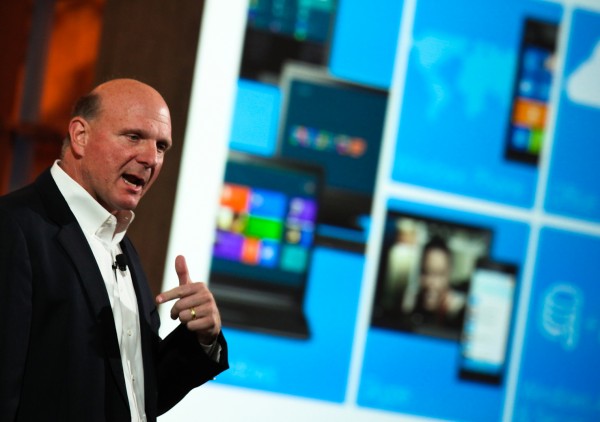
  • Steve Ballmer should step up, or ship out

    Fifteen days using Surface Pro as my primary PC, I must say that I really, really like the tablet. Windows 8, the same. Ditto for Bing and Internet Explorer. I’m no stranger to using Microsoft products or services. But I am new to them being presented and consumed the way the company intends. The experience is refreshing and exhilarating, yet depressing. Who will know, with so much attention going to Android and iOS devices, or nimbler competitors offering more compelling products or services at faster pace?

    Microsoft’s problems aren’t new, and that is the problem. This morning I reread my December 2009 post: “Microsoft isn’t losing its consumer edge, it was game over long ago“. I’m disturbed how little has changed, so much that, except for the lead paragraph, I could repost with new headline and the content would still be relevant. I will lift some parts here, as I offer, for the umpteenth time, remedies to Microsoft’s woes.

    Microsoft in Context

    I sympathize with Microsoft CEO Steve Ballmer’s plight. He assumed duties during two antitrust investigations, ran operations during two major recessions and had the misfortune of inheriting a company at the pinnacle of dominance, when the major business was reselling to existing customers rather than rapidly expanding. During his tenure, Microsoft tried to open new categories, like HailStorm web services or Tablet PC early in the century, only to fail but see competitors like Apple and Google succeed.

    Meanwhile the stock is stuck at 2000 levels and there is perception that Microsoft is a has-been incapable of competing in the so-called post-PC era. Perception can be fixed by marketing, and post-PC is a lie — a fiction created by analysts, Apple and Apple apologists. We are at the start of the contextual cloud computing era. Rather than be the central hub, the PC becomes one of many devices connected to the cloud. The PC doesn’t disappear.

    Microsoft execs and product managers understand context very well. For example, the company made defining work and home usage a product development and marketing priority more than a decade ago. How you use the tech changes based on context and role.

    Something is lost in all the PC Armageddon chatter: Microsoft is still one of the most-profitable companies in the world, and products like Azure, hosted server software and Office 365 are rightly primed for delivering meaningful contextual and cloud solutions. Microsoft’s big problem is mobile, where competing operating systems rack up share and cut out the company’s platform. Ballmer should never have let it come to this. He needs to stop living in La La Land and act, or step aside and find someone who will. I still believe in him.

    Sadly, much of the advice that follows, I’ve offered before. Many times. Will someone finally pay attention?

    Microsoft Must…

    1. Make influencing standards top priority. Microsoft has abandoned the fundamental principles that made it the most successful software company of the last two decades and ensured its software would be the most widely used everywhere. The company established Windows as a technology platform that became the standard around which developers and other partners supported products. In the early days, the approach was one of necessity: Maintaining standards compatibility with the IBM PC.

    Microsoft cofounder Bill Gates understood early on the importance of controlling standards and also file formats. In the early 1980s, Gates put Charles Simonyi in charge of productivity applications development. Early work done by the father of Microsoft Office achieved two important goals by the mid 1990s:

    • Established format standards that resolved problems sharing documents created by disparate products
    • Ensured that Microsoft file formats would become the adopted desktop productivity standards

    Format lock-in helped drive Office sales throughout the late 1990s and early 2000s — and Windows along with it. Businesses needed Office to share documents and to maintain backwards compatibility with a growing amount of their valuable information being stored in Microsoft file formats.

    In a surprisingly short span of time, Microsoft has lost control of standards and formats outside the enterprise. The company has reached a critical juncture that executives seem unable to comprehend. Under Ballmer, standards aren’t high-enough priority. Microsoft has lost leverage, while rivals like Google dictate web standards that favor its products and services.

    2. Become THE middleware company. Microsoft should shift some, even a large amount of its focus, from platforms to glue — products and services that bind any platform to its server and datacenter software and services and major applications, principally from Office System. That’s how Microsoft solves the mobile problem.

    Middleware dominance can help preserve Microsoft products that are adopted standards and establish new ones. The company should start by ramping up mobile app development for competing platforms — meeting Google feature for feature and go beyond. Google successfully pursues such strategy now, and with tight integration across products. The best mobile apps on Android or iOS should be from Microsoft, not Apple or Google, and leverage the established enterprise stack. Microsoft already offers some existing excellent mobile apps. They need to be exceptional, like those for Windows 8 Modern UI, on Android and iOS.

    At the same time, Microsoft should seek to make its software the defacto standard for managing BYOD. The company already owns the enterprise. Leverage that by providing the best applications and tools for managing devices, like smartphones and tablets, that employees bring to work or IT deploys. If Microsoft doesn’t, competitors will. Google’s decision to stop licensing Exchange ActiveSync is all about influencing synchronization standards and inserting its services into BYOD middleware management.

    3. Redefine search. Microsoft’s failure in search should be a CEO-sacking offense. The Yahoo deal didn’t dent Google’s overwhelming search share lead. Now that a Googler runs Yahoo, early termination of the Microsoft agreement is nearly certain. Divorce will cut Bing’s effective search share nearly in half. Ballmer and team must act to preserve Yahoo or go beyond it.

    Engage Bing search deals everywhere, and pay to get them. Wherever Google goes, like Firefox or iOS, Bing should be instead. The Facebook relationship is hugely important. Bing should be the glue for all search on the social network.

    Meanwhile, Microsoft, which was a pioneer in so-called New User Interface technologies, let Google leap ahead. Google Now and voice search are killer apps. Microsoft has talked about search as answers to questions for a decade, but Google gives them instead and where they are needed most — mobile. Microsoft needs a “Bing Me” service pronto that is available for all operating systems, using NUI.

    4. Cut deal with Apple for Office, but cut out Google. Microsoft and Apple have a long history. Word started out on Macintosh, for example. Office 2013/14 — or optimized-Office 365 — for iPad is a must. But not for Android. Microsoft should get something in return: Bing replacing Google as iOS search engine.

    Apple needs Office to get iPad into the enterprise, so there is mutual need to make search part of the deal. Microsoft is better off with iPad encroachment than Android tablets. Google has fierce enterprise ambitions, while Apple is more ambivalent (interest is more selling devices). Office app and/or cloud would give more enterprises reason to choose iOS over Android, acting as floodgate to adoption of the latter.

    5. Encourage internal startups. Microsoft product development cycles are too long and they feel even longer with Google cranking out new stuff every day. Look how far and fast Android, Chrome and Chrome OS have come since Windows 7 started beta testing four years ago. Meanwhile Apple and Google create new categories, while Microsoft has none.

    But look back. Many of Microsoft’s best, mid- to-late-Noughties products or services came from incubation projects. Some are mainstream today, like SkyDrive. But Microsoft killed off most internal startups following the September 2008 stock market crash.

    Microsoft must bring them back and focused on mobile and the cloud. Incubation groups should operate like mini-startups, free to develop unfettered by any requirement to connect any of their work to any other Microsoft product, particularly Office or Windows. Let them run free, run wild, wildly innovate. Reward innovation, with pay incentives and other goodies. Appoint a chief startup officer, to whom employees can submit their projects, getting them outside stifling bureaucracy and mid-managers’ self-preserving priorities. Empowered employees will produce. Microsoft just needs to let them.

    Microsoft needs someone internally responsible for encouraging internal incubation projects and bringing them to market — outside the normal management structure.

    There needs to be a fairly free-flowing process allowing employees to bring ideas to the CSO and get funding for proof of concepts, at the least. The CSO, answering to Ballmer, should have authority to spin-off new product groups as well. But more immediately he or she needs authority to create small product groups within Microsoft, focused on getting new innovations to market faster and without obligatory ties to core products like Office or Windows.

    However, Microsoft should encourage, and reward, innovative middleware projects that make existing applications stack, cloud, datacenter and server software more valuable and those that are contextually relevant.

  • Data challenges the APB on BPA

    A controversial component of plastic bottles and canned food linings that have helped make the world’s food supply safer has recently come under attack: bisphenol A. Widely known as BPA, it has the potential to mimic the sex hormone estrogen if blood and tissue levels are high enough. Now, an analysis of almost 150 BPA exposure studies shows that in the general population, people’s exposure may be many times too low for BPA to effectively mimic estrogen in the human body.

    The analysis, presented at the American Association for the Advancement of Science’s annual meeting by toxicologist Justin Teeguarden of the Department of Energy’s Pacific Northwest National Laboratory, Richland, Wash., shows that BPA in the blood of the general population is many times lower than blood levels that consistently cause toxicity in animals. The result suggests that animal studies might not reflect the human BPA experience appropriately.

    “Looking at all the studies together reveals a remarkably consistent picture of human exposure to BPA with implications for how the risk of human exposure is interpreted,” said Teeguarden. “At these exposure levels, exposure to BPA can’t be compared to giving a baby the massive dose of estrogens found in a birth control pill, a comparison made by others.”  

    In addition to evaluating the likelihood of BPA mimicking estrogen in humans, Teeguarden also analyzed another set of BPA studies that looked at the chemical’s toxicity in animals and cells in the lab. These 130 studies are significant as a group because they refer to the exposures as “low dose,” implying they are very relevant to human exposures.

    According to his analysis, however, the “low doses” actually span an immense range of concentrations, a billion-fold. In addition, only a small fraction of the exposures in these self-described “low dose” studies are in the range of human exposures, from 0.8 percent to 7 percent depending on the study.

    “The term low-dose cannot be understood to mean either relevant to human exposures or in the range of human exposures. However, this is in fact what it has come to mean to the public, as well as many in the media,” said Teeguarden.

    Analysis of 150 Exposure Studies

    The first analysis covered 30,000 individuals, including women and infants, in 19 countries. Human blood concentrations were calculated multiple ways using many kinds of exposure data.

    Teeguarden looked to see if BPA concentrations were sufficiently high to be a significant source of estrogen-like activity in the blood. Researchers have long known that BPA can bind to the same proteins that estrogen does — called estrogen receptors — when estrogen is doing its job in the body. However, in most cases, BPA does so much more weakly than estrogen. To trigger biological effects through receptors, BPA concentrations have to be high enough in the blood to overcome that weakness.

    “Systematically testing the estrogenicity, or the bioactivity of BPA at the part per trillion concentrations we expect in human blood would seem the most scientific way to substantiate or refute this conclusion,” said Teeguarden.

    Teeguarden analyzed the data in these studies using multiple independent approaches applied systematically to the data from thousands of individuals. The results showed that human blood levels of BPA are expected to be too far below levels required for significant binding to four of the five key estrogen receptors to cause biological effects.

    Teeguarden’s analysis also confirmed the findings of many academic and government scientists that biologically active BPA is at such low concentrations in the blood that it is beneath toxicologists’ current ability to detect it, raising questions about the role of sample contamination in studies reporting high levels of BPA.

    Analysis of 130 Toxicity Studies

    In this analysis, Teeguarden compiled all the BPA studies that included the term “low dose” as it referred to human exposure by using such terms as “low-concentration,” “environmentally relevant,” or “human exposure.” From the 130 studies found, he and PNNL biologist Sesha Hanson-Drury compiled all the doses that were actually used in the studies.

    The results showed that a small fraction of the “low doses” used in these studies are within the range of human exposures, with the vast majority being at least 10 to thousands of times higher than what humans are exposed to daily. In addition, the range of concentrations spans from upwards of 10 grams per kilogram of weight per day down to 100 picograms per kilogram of weight per day (a picogram is one millionth of a gram).

    “Unfortunately, the low dose moniker has been used by some to promote the importance of selected toxicity studies, for example, in arguments to ban BPA,” said Teeguarden. “For BPA and all chemicals, we need more accurate language to present these findings so the public and scientists in other disciplines can understand how human exposures compare to exposures in laboratory studies reporting toxicity.”

    Justin Teeguarden, Ph.D., is a senior scientist in the Systems Toxicology and Exposure Science group at the Pacific Northwest National Laboratory.  This work was entirely supported by the United States Environmental Protection Agency under the Science to Achieve Results (STAR) program.


    Reference: Justin Teeguarden, Estrogen Receptor Activation Potential of Internal Concentrations of BPA in Humans, Feb. 16, 1:30 p.m.-4:30 p.m., Room 302, Hynes Convention Center. http://aaas.confex.com/aaas/2013/webprogram/Paper8720.html

  • Can you see me now? Video messaging and the future of communication

    Technology is enabling us to get ever closer to the ideal of casual and seamless face-to-face communication over long distances. In fits and starts we’re pulling in more tools and options for communicating and getting us closer to a video-based ideal thanks to better devices and faster broadband connections.

    Skype is reportedly testing video messaging options for mobile users today. The service would let people leave a video-based message for their friends. I can see a whole new variant on the “wish-you-were-here” picture messages I send that could involve panoramic views or the local soundscape (good for concerts and birdcalls, bad for when I’m in New York City).

    A few weeks ago, Twitter launched Vine, to let people record 6-second videos and post them easily from their mobile, and Facebook is testing a voice messaging application that will let you leave a voice-based message for friends from Facebook. While the Facebook example isn’t video-based it drives home the larger point: Our web interactions are pushing forward to mirror our real-world interactions as much as possible, which means that our bandwidth demands and our mobile devices need to keep up.

    Vine Twitter screenshot video social sharing

    On the mobile device side, we’re doing fine. Processing, cameras and microphones on smartphones are enabling us to record quality videos, voice and images. In the case of images we even have enough processing power for some editing. But on the bandwidth side, it’s unclear if we’re going to have the capability to share our efforts. That’s why on the wireless and wireline side we need to keep adding capacity and lowering costs. Conducting a video call today sucks up a lot of bandwidth, but there are ways to reduce the impact on the network and drive down costs for consumers and the operators.

    When I look at the increasingly visual nature of the web and the influx of video options for communication I realize that we can finally escape the limits that technology has imposed on how we communicate over long distances. Letter writing, postcards, voice calls and even static web pages are poor substitutes when you want to share an experience with someone, and they are substitutes that are driven by the limits of the technology at the time. Many of those limits are no longer there.

    Adapting to this will require us to ditch centuries of habits and preferences, but it opens up much higher quality ways for people to communicate. We will still drag these other forms of communication into our video-based future but we’ll be able to choose when an email makes the most sense or when we’d rather stick with voice.

    As I scroll down the pages of an online catalog, I am grateful that I have the bandwidth at home to load pictures quickly so I can see the details in the product. I can’t wait for the ability to see things in 3D — or even set up a quick video call with someone who is near the product for a closer look.

    I assume my six-year-old daughter — who refuses to take phone calls from people she loves unless there’s a video component — will resort to voice only for strangers and business-related conversations. Getting to that point means more work needs to be done to seamlessly integrate the options available to people much like Apple has done with FaceTime on its platform, and then to spread that to all platforms.

    Companies like Skype, BlueJeans Networks, Polycom, and countless others are all trying to make this real as are the people pushing for the WebRTC standards. Right now it’s a mish-mash of standards, platforms and options, but video will coalesce into something that as simple as picking up a phone or mailing a letter is today.

    Related research and analysis from GigaOM Pro:
    Subscriber content. Sign up for a free trial.

  • EyePro Reminds You to Take a Break

    Working with the computer all day long takes a toll on your eyes, unless you make the right calls to prevent the damage. Taking a pause from the display from time to time could improve your productivity at the office and prevent the deterioration of your vision.

    However, I have yet to meet the user that remembers to take the time off the display at the right moment. E… (read more)

  • Google Hires Mars Rover Driver (And He’s Very Concerned About Evil)

    Google has hired NASA Mars rover driver Scott Maxwell, saying he will be working on “high-reliability” software.

    Maxwell announced the news himself in a Google+ post on Saturday in which he called Google “perhaps my favorite company — not perfect, as no company (or person) can be, but very very good.”

    “They’re also famous for their employee perks, which will be nice, but there was something that was far more important to me,” he added. “Google’s company mantra, as you might know, is ‘Don’t be evil.’ So both times I interviewed there, I asked every single person I talked to — a couple of dozen people in total — this question: ‘Is that ‘Don’t be evil’ stuff just something they worry about at the higher levels and not part of your life, or does it filter down to you?’”

    Every person he talked to, he says, had a story when they had to choose between doing something that would make Google more money (but be evil) and something that would make the company less money (but not be evil), and that everyone chose the “non-evil” path every time. According to Maxwell’s account, these Googlers were always supported, or even rewarded for their choices.

    Maxwell continued, “And I said to myself, these are people with integrity and a company with integrity — a company that has made sure to bake that integrity into its very DNA, all the way down to their lowest-level engineers, as insurance that it will keep itself honest (And there’s more: for example, they’ve encrypted user data and made it off-limits even to their own employees without several layers of authorization — and they’ve done it quietly, not for publicity, just because it’s the right thing to do.) This is a place I want to be. This is a place where I will feel at home.”

    Maxwell starts his job at Google on March 4th.

  • People Seem To Be Enjoying This New Chevy Ad

    People really seem to be enjoying this new ad from Chevy, uploaded to YouTube a few days ago. YouTube has it in the “Trending Topics” right alongside things like the ever-popular Harlem Shake and Asteroid 2012 Da14. Given how much these other things are being talked about, that’s a pretty good start for an advertising campaign.

    It should probably be noted that the ad is currently featured on the front page of YouTube, as an actual ad. Still the comments on the video are overwhelmingly positive.

  • Google Ventures Is The Third Most Active VC Firm In The U.S. [Report]

    Google Ventures is now the third most active venture captial firm in the U.S., according to the New York Post, citing info from CB Insights.

    Google Ventures launched in 2009 with the goal of “discovering and growing great companies,” and has barley looked back. Currently, Google’s VC arm has over 150 companies under its belt. These range across a variety of fields like mobile, gaming, energy, and life sciences – still all territory you would expect Google itself to cover.

    The investing team consists of: Bill Maris, David Krane, Joe Kraus , Karim Faris, Kevin Rose, Krishna Yeshwant, Rich Miner, Wesley Chan, Anish Acharya, Andy Wheeler, Anthony Philippakis, Blake Byers, Chris Hutchins, Lindsay Ullman, Luis Garcia, and Scott Davis.

    Google Ventures recently shared this year in review infographic and video, which will give you an idea of where it stands:

    Google Ventures Year in Review

    [via reddit]

  • Special Forces Team X Review (PC)

    Special Forces Team X is a third-person shooter developed by Zombie Studios, best known for their work on Blacklight, and published by Atari Inc., designed to appeal to those multiplayer-focused gamers who want a highly competitive environment complete with modular maps and with licensed weaponry.

    The game is an interesting entry in the genre and its… (read more)

  • Google Gives Us A Street View Tour Of Lucas Oil Stadium

    Google has posted an interactive photo tour of Lucas Oil Stadium, home of the Indianapolis Colts. The company says this is the first imagery of of inside an NFL stadium in Google Maps, leading us to believe there will be more to come.

    “With this new interactive, 360 degree imagery, you can march out of the tunnel and down the field towards the end zone, just like Andrew Luck did all season,” says Google Maps product manager Evan Rapoport. “Or check out the Colts’ locker room where Head Coach Chuck Pagano gave his memorable post-game locker room speech on November 4, after an inspirational win against the Miami Dolphins. You can also explore the stadium’s three concourses and suites, including the Quarterback Suite, a Field Level Suite and Loge-Level Suite.”

    “Together with the Colts and Lucas Oil Stadium, we’re thrilled to give you, the fans, a behind-the-scenes look at the home of the Colts, and enable anyone to ‘visit’ the stadium from wherever they may be,” Rapoport adds.

    The Field

    Lucas Oil Stadium

    The Tunnel

    Lucas Oil Stadium

    The Locker Room

    The Locker Room

    The Quarterback Suite

    Quarterback Suite

    The Main Concourse

    The Main Concourse

    The Loge-Level Suite

    Loge-level suite

    The imagery is accessible by searching “Lucas Oil Stadium” or “Colts Stadium” from a desktop browser or from the Android and iPhone apps.

  • Conan Has An Idea For Those Star Wars Spin-Offs

    There’s been a lot of talk about the upcoming Star Wars spin-off movies. Lots of fans have ideas of where they’d like to see these go. Conan O’Brien has an idea as well…

  • Google Commerce Search Is No More

    After several iterations, Google has finally decided to kill of Commerce Search.

    The product was announced in late 2009 as an ecommerce-focused version of Google Site Search. It was specifically tailored to ecommerce and product sites. Here’s a look:

    In mid-2010, Google introduced version 2.0 with some new features:

    In 2011, another refresh was announced:

    Now, without an actual announcement, Google has shut the product down. TechCrunch shares a statement from a Google spokesperson:

    We are making a strategy shift towards offering more flexible, easier to adopt modules for retailers, such as the Search As You Type widget, rather than a full site search replacement and therefore will no longer be offering Google Commerce Search as a core site search replacement product. We will continue to support our current retail customers using GCS and will try to help them on the best migration process to alternate solutions.

    As TechCrunch’s Leena Rao points out, Google recommended sites use Commerce Search as recently as July, when the company announced it would shut down Google Mini.

  • Network News: Mellanox, Extreme Networks, Brocade

    Here’s a roundup of some of this week’s headlines from the network sector:

    Mellanox expands MetroDX long-haul solutions.  Mellanox Technologies (MLNX) announced the availability of new RDMA InfiniBand and Ethernet long-haul interconnect solutions as a part of the company’s MetroX product line. A new MetroDX TX6000 system is targeted at data center long-reach connectivity and supports 18 long-haul ports running 40Gb/s to a distance up to 1,000 meters. The MetroX TX6200 enables longer reach campus and metro data center connectivity, with 2 long haul ports running 10/40Gb/s to a distance up to 100 kilometers. “The need for long-haul InfiniBand and Ethernet with RDMA connectivity continues to grow,” said Gilad Shainer, vice president of market development at Mellanox Technologies. “The MetroX series extends InfiniBand and Ethernet lossless RDMA beyond a single data center network location. Data center expansion or Disaster Recovery (DR) sites can now benefit from Mellanox’s fastest interconnect solutions with no performance degradation. Utilizing Mellanox high-throughput interconnect solutions, our customers are able to reduce their database recovery time from days to hours, and thus maintain their business continuity and gain a competitive edge.”

    Extreme Networks delivers on SDN vision.  Extreme Networks (EXTR) announced that it is delivering on its vision for Software Defined Networking (SDN) with the shipment this week of ExtremeXOS v15.3, the company’s single modular Operating System for data center, campus BYOD and the cloud. The company is also shipping its OpenStack Quantum plugin, a downloadable software module providing a rich API for ExtremeXOS that enables orchestration and management of multi-tenant networks. With the release of ExtremeXOS 15.3, Extreme Networks supports SDN applications from Big Switch Networks: Big Tap, provides traffic monitoring and dynamic network visibility with flow filtering, and Big Virtual Switch (BVS). ”As we bring new OpenFlow and OpenStack features into the market with ExtremeXOS 15.3, customers are equipped to take advantage of the promise of software advancements that extend capabilities and further simplify their networks,” said David Ginsburg, CMO for Extreme Networks.

    Brocade awarded injunction against A10 Networks.  Brocade (BRCD) announced that a San Jose federal court denied A10 Networks’ request to stay a new permanent injunction originally issued on Jan. 23, 2013, barring A10 from using four Brocade trade secrets a jury found A10 stole and incorporated in its AX series products. This order followed previous rulings for a permanent injunction for patent infringement as well as $60 million in damages for copyright infringement. ”This is a clear and decisive victory for Brocade covering a broad range of intellectual property theft by A10. We are very pleased with these rulings and we are again appreciative of the Court’s careful attention to the evidence and its willingness to enforce intellectual property rights,” said Tyler Wall, vice president and general counsel at Brocade.

  • Apigee Wrangles Oceans of App Data With API Tools

    API management firm Apigee has launched Apigee Insights, a big data analytics platform that lets organizations gain new business insights using “broad” data generated in the app economy. The data platform allows businesses to collect and analyze massive amounts of external data from APIs, apps, social, and mobile ecosystems, together with other data sources for context. This gives the business full visibility into customer, developer and partner behavior by integrating and analyzing all points of customer interaction, from both inside and outside the enterprise.

    “In the app economy, where business is often conducted through mobile and social channels, organizations no longer own – much less control – all the data they need to make accurate business decisions,” said Chet Kapoor, Apigee CEO. “Every enterprise needs to rethink their data platform for this new world. Those that can capture, add context and analyze new broad data sources outside of the enterprise will succeed.”

    Apigee Insights is a highly distributed platform that combines online data sources with a customer’s API programs with data from internal systems. It is designed for the big, continuously changing and less structured broad data and can serve as a stand-alone analytics solution or a complement to existing legacy data warehousing. It allows enterprises to gain insights through the entire app value chain or to focus specifically on the context of the app user, the app developer, or on information analytics.

    “Apigee Insights takes API analytics to a completely new level,” said Michele Turner, chief product officer at mBlox. “By combining data on our API usage with many other sources of data that enable broader usage context, we now have a much deeper understanding of what our developers need and how we can best optimize app development.” mBlox uses Apigee Insights to build a developer adoption model that combines multiple data sources such as its API access logs, app and API traffic, GitHub data and Google analytics for its developer Web pages.

    Big Data Growth

    Apigee also announced that it is experiencing over 200 percent year-over-year growth as businesses increasingly expand their digital ecosystems into the app economy. The company serves many Fortune 500 or Global 500 customers and has enjoyed the growing demand from businesses to expand and innovate in the app economy.

    “APIs are the nervous system of the app economy, and in the last year, we saw a significant uptick in businesses of all sizes delivering APIs to drive mobile strategies, create new revenue opportunities and spur innovation. In 2013, we look forward to aggressively broadening our API offerings to help customers drive ongoing business value from APIs and the apps built on them.”

    Major milestones for the company in 2012 included the launch of its API platform, a $20 million round of funding, the launch of mobile analytics, a version of its API platform for software-defined networking environments, a 90 percent employee headcount growth, and three strategic technology acquisitions. Palo Alto based Apigee opened offices in Austin and Detroit, as well as establishing a European Union headquarters in London.

  • Google Street View Hits The Wii U

    Nintendo announced on Thursday that Wii Street U powered by Google is now available in the Nintendo eShop on Wii U. This is an app that lets users access Google Street View, and view 360-degree imagery of locations all over the world using the Wii U GamePad controller’s motion controls. Users can also use the touch screen to type in an address or location.

    The announcement was first made in December.

    Nintendo highlights 70 hand-picked locations to view. The app also lets you view locations from overhead with satellite view.

    Wii Street U

    Wii Street U 2

    Wii Street U

    “With Wii Street U powered by Google, you can step into Google Street View with an immersive experience that will make you feel like you’re actually there!” Nintendo says.

    Recent additions to Google Street View include some beautiful shots from the Grand Canyon, some new places in Israel, and areas ravaged by storms. The company continues to add imagery on a regular basis, and now that it has its “Trekker” backpack device, we can probably expect to start seeing a lot of up close and personal imagery in many more places that cars can’t go.

  • Podcast: iWatch, Dr. Big Data, and surprising social media etiquette for House of Cards

    Clocks are pretty boring — unless Apple is rumored to be making one. Tom Krazit ticks off the details on the iWatch. Then Derrick Harris explains how big data will play a role in your future doctor’s visit. And finally, fresh from the D: Dive into Media conference, Janko Roettgers talks about the big news about Intel TV, HBO Airplay and Netflix’s no ratings game.

    (download)

    Subscribe via RSS

    iTunes

    Stitcher Radio

    SHOW NOTES:
    Hosts: Chris Albrecht and Erica Ogg
    Guests: Tom Krazit, Derrick Harris and Janko Roettgers

    00:00 – 12:00 – Apple’s got the time?
    12:00 – 22:00 – Paging Watson
    22:00 – 40:00 – Intel TV, HBO Airplay and Netflix

    SELECT PREVIOUS EPISODES:
    Call-in: MotoACTV smartwatch now or wait? Lumia 822 in India? Best running apps?

    How to write a web TV series

    Ballmer’s in the Dell, do tweets ruin TV? And how ISPs are not like gas pumps

    Call-in show: BB 10 Data, digital ink on Surface, and consoles v. phone games

    Podcast: Kabam founder on scaling globally and designing for different platforms

    Podcast: Blackberry’s in a jam, no Facebook phone and Netflix’s excellent adventure

    Podcast: RoadMap Re-Run: Kickstarter’s Perry Chen on creativity and crowdsourcing

    Podcast: Do you need a 128 GB iPad? Straight Talk vs. AT&T and Windows RT or Windows 8?

    Related research and analysis from GigaOM Pro:
    Subscriber content. Sign up for a free trial.

  • Lovers’ hearts beat in time, study finds

    Partners in romantic relationships don’t just share interests, habits and secrets, according to a pair of studies published in the journal Emotion and the International Journal of Psychophysiology. Researchers from the University of California, Davis and the University…
  • Abusive St. Louis police gang shut down

    The Uplands Park Police Department in St. Louis, Missouri has been a hub of corruption. From raping escorts in their police station, to hiring unlicensed officers, to setting up false arrests, this gang of police has been quite the abusive force. That is until recently…
  • Disturbed young men soon able to enter ‘the Matrix’ and ‘plug in’ to shooting games with new Oculus VR display device

    One thing concerned parents, teachers, academics and policymakers were discussing long before the second-worst school shooing in U.S. history took place in Newtown, Conn. in mid-December was the culture of violence that currently exists in our country and in which our…
  • 800 more children permanently harmed by vaccines

    More evidence has emerged showing that the GlaxoSmithKline (GSK) vaccine Pandemrix, which was widely administered throughout Europe during the 2009-2010 H1N1 influenza “pandemic,” was responsible for causing serious and permanent side effects in many of the children…
  • Yet another terrorist bomb plot turns out to have been dreamed up by the FBI

    As unbelievable as it sounds, the nation’s premier domestic law enforcement agency is treating terrorism as a job-justification program, creating one phony “threat” after another to create cases out of thin air. The latest case of what is nothing less than federal…