Author: Serkadis

  • Downton Abbey: Carson Wants To Marry Mrs. Hughes

    Downton Abbey fans in the U.S. got to see the season finale of the show on Sunday night. Today, PBS Masterpiece is sharing a video of the cast talking about the episode.

    While it may or may not happen, it’s worth noting that Jim Carter, who plays Carson on the show, says he believes that Carson should marry Mrs. Hughes. I’m sure a number of fans would enjoy that sentiment.

    “I love the scenes when Carson and Mrs. Hughes get together,” he says. “You don’t often see behind the mask with Mr. Carson, and just occasionally the mask slips, and you just get a little glimpse of the interior life, and you get that with when he’s with Mrs. Hughes. Everybody wants Carson and Mrs. Hughes (quietly) to get together. Even if they were married, he’d still call her Mrs. Hughes wouldn’t he?”

    “Carson has to marry Mrs. Hughes,” he adds. “Write to [show creator] Julian Fellowes. It’s got to happen.”

    Watch Downton Abbey: The Cast on Season 3 Episode 7 on PBS. See more from Masterpiece.

    Now check out comedian Patton Oswalt’s twitter recap of the latest episode.

  • Tech startups are the luckiest startups: A view from outside the bubble

    In Silicon Valley and the tech world, building a startup is almost seen as a rite of passage. Working at a startup is commonplace, and not just acceptable but venerated. That culture has brought a lot of innovation and perhaps a few silly ideas to the world, but sometimes it’s worth it to step outside that bubble to see what can be learned from cultures in other entrepreneurial enclaves.

    I had <such an opportunity at the Toy Fair in New York last week during its Launchpad section. It featured roughly two dozen entrepreneurs who built a prototype toy, a website and paid $1,900 for a 6-foot long table at the show. Several people showed off board games, figurines, including the above pictured Obos and a variety of other items waited for a distributor or a buyer to discover them.

    While talking to about eight of the assembled entrepreneurs I realized something: Tech entrepreneurs have it almost easy.

    Yes, starting any company is hard. It requires a leap of faith on the part of the entrepreneur and his or her family. But outside of the tech world, the networks are harder to find, the capital networks are less geared toward potential failure and the exit environment is very different. For example, at the Toy Fair, only a quarter of the people I spoke with had quit their day jobs to work full time on their toy. Most funded their efforts out of savings or their own pockets. Venture capital and angels didn’t really come into play in this world, and only a few had bank loans.

    Sarah Lee, the creator of AppPalz, said that she and her husband had decided to keep their cars around a bit longer so she could spend the roughly $20,000 developing her product. Unfortunately, the shipment of AppPalz got stuck in customs and didn’t make it with her to the show. Lee had only two prototypes, but said she already had garnered some interest for the $13 toy.

    An AppPalz in action.

    An AppPalz in action.

    Catherine King, the creator of a book and stuffed reindeer concept called Santa’s Glee, said the book was created after her husband lost his job (he’s since found another). Amin Swessi, who developed a $14 pencil-shaped stylus for touch screens, is an art teacher who built this product after watching his students struggle to control their finger-drawings on iPads. He’s not planning on leaving his day job anytime soon.

    A reality in the business appears to be that a successful product doesn’t mean a successful company — or even provide you with the notion that you might be able to quit your day job. While most of the people I spoke to hoped their toys would become hits or attract attention, they weren’t thinking of an IPO. Mostly, they wanted to put their ideas out in the world, and if they could make a living doing it, they would be ecstatic.

    The No. 2 Stylus.

    The No. 2 Stylus.

    An entrepreneur in toys still has things in common with her tech brethren.

    Yet even if the money wasn’t quite as available on the financing side or the exit side, two qualities inherent to these folks stuck out as similar to the best entrepreneurs I know from any industry: their passion and willingness to band together to help a fellow entrepreneur out. Lee told me she didn’t mind spending a full Saturday (she has a day job) creating a promotional video because it “didn’t feel like work when you are doing it for yourself.”

    Others have similar tales, such as William Walker, who brought his board game to the show because he wanted to help kids learn how to eat healthier after a lifetime in medical sales noticing the increase in childhood obesity. And for the most part these entrepreneurs were green. Walker said he was thrilled to be at the show even if no one picked up the game because he was able to connect with his fellow inventors.

    Flip2BFit board game.

    Flip2BFit board game.

    Others said the same thing. Every single person I spoke with there mentioned how awesome it was to find like-minded people so they could share advice and camaraderie — something entrepreneurs in the Bay Area and even other tech-heavy locales may take for granted. Heather Parsi, the CEO of Flip2BFit, a board game designed to promote exercise, had quit her day job as an outsourced manufacturing consultant to pursue her game. She had already scored a distribution deal at the show, but was thrilled to be helping out the others at the launchpad with tips related to getting their products into production.

    Between their passion, their hunger for peers and my experience with friends outside the tech startup world, I realized that what Silicon Valley and the tech set often take for granted is what makes the community so successful.

    It’s not that it’s not hard to be an entrepreneur in tech; but it’s a much easier journey to undertake when so many around you have done it and you can rely on a supportive community of press, investors and peers to help you out.

    Photos taken by Rani Molla.

    Related research and analysis from GigaOM Pro:
    Subscriber content. Sign up for a free trial.

  • Downton Abbey Makes Patton Oswalt Want To Set An Arby’s On Fire

    There are a lot of people talking about Downton Abbey on Twitter today, now that PBS has run the season finale here in the U.S. While many had already seen the episode, a lot of American fans only got the opportunity to do so on Sunday. While I won’t spoil it here, suffice it to say, something big happened.

    Comedian Patton Oswalt tweeted his way through the episode on Sunday night. Below is the majority of his recap, which ends with him drinking, crying, wanting to set an Arby’s on Fire and watching the movie Battleship. Beware of spoilers and language if you’re easily offended.

    From there, Oswalt proceeded to tweet his way through Battleship. Do yourself a favor and view his timeline.

  • Mobile Twitter Users Use Twitter More [Infographic]

    Twitter has released an infographic based on a Compete study, looking at mobile users in the U.K.

    Last week, the company shared some findings from Compete about mobile users in the U.S. The companies found that primary mobile users are on Twitter more than average users, they tend to be younger, they engage with Twitter throughout the day, they engage more with content, and they engage more with brands. You can take a look at the findings here.

    Here’s what they found out about mobile users in the U.K.

    Twitter mobile users in UK

  • Google Takeout Adds Blogger, Google+ Pages

    Google announced the other day that it has added Blogger and Google+ Pages to Google Takeout, meaning that users can more easily export their data out of these services if they would like to leave.

    Kári Ragnarsson from Google’s The Data Liberation Front wrote on the Data Liberation Front blog:

    Meet us at https://www.google.com/takeout, and together we will export each of your blogs as an Atom Xml file. Or, if you’ve enjoyed exporting data from your Google+ Stream and Google+ Circles through Takeout in the past, but are looking for something more, join us now and download html files with your posts and json files containing the circles for each Google+ Page you own. If you don’t want to rush into things, we can also just export a single blog or page of your choice. Either way, give us a try. Life will never be the same.

    A couple months ago, Google added some new features to Google Takeout, enabling users to maintain their original folder hierarchy when exporting files from Google Drive, and letting users pick a single resource within a service to download.

    “For instance, a single Picasa album or top-level folder from Drive – instead of exporting every single file,” Google explained at the time. “To try it out, go to the ‘Choose services’ tab and click on ‘Configure…’ once you’ve added a service that supports this.”

    Google also recently added Reader and Latitude data to the Google Takeout menu, and started letting users download all their YouTube videos together.

    Hat tip to The Verge

  • Google Retail Stores On The Way?

    Google is planning on opening up retail stores in major metropolitan areas by the end of the year, according to a report from 9to5Google.

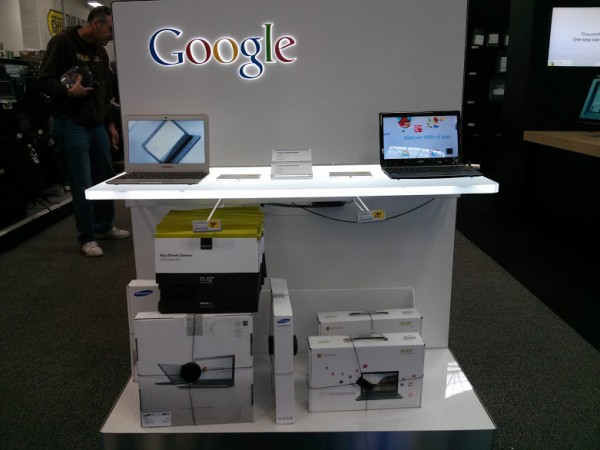
    Seth Weintraub, who notes that Google already has a retail presence in a number of Best Buys and PCWorld/Dixon’s stores, reports (citing a “reliable source”) that Google is in the process of building stand alone retail stores, and that these would be places where Google could not only sell its Nexus devices (and possibly apparel), but push its Chrome operating system, and get Google Glass into consumers’ hands.

    Google Glass, while it may seem like a novelty, could actually prove to be a very important product for Google, and if this is one of Google’s main motivating factors for opening a chain or retail stores, that shows how important Google really does consider it.

    Google was recently granted a patent, which seems to indicate the company is looking to make your actual life searchable, and Glass could play a significant role in it being able to do so. While we’re looking a ways out in the future, so may contact lenses based on similar functionality. If Google is also able to refine Glass from the fashion standpoint, one can easily imagine more merchandise to fill a store.

    Google is also said to be thinking about marketing a smart watch, so that’s yet another potential device for Google to place on the shelves.

    And who knows what else Google may have on the horizon?

    It will be interesting to see what kind of presence (if any) Google gives motorola devices in these stores, assuming they actually do open. Google indicated that it would not give Motorola special treatment among device manufacturers, when it announced the acquisition.

    As Google gets further into the hardware business, a retail store is a no brainer, particularly in light of what is already available from competitors. Apple has over 400 retail stores in 14 countries.

    We’ve reached out to Google for comment, and will update accordingly.

    Would you shop at a Google store?

  • ICYMI: Talking about

    If you’re stuck at home this President’s Day with nothing to do — obviously you aren’t at a startup. Why aren’t you at the office?! Even if you are busy, ease into the holiday by catching up with our recent podcasts. From Dr. Big Data to jogging apps to writing your own web series, we have something for everyone, honest (Abe).

    (download)

    (Download)

    (Download)

    Related research and analysis from GigaOM Pro:
    Subscriber content. Sign up for a free trial.

  • For investors sticking with “cleantech,” it could be the best of times (just don’t call it cleantech)

    The “death of cleantech” has been the topic of much discussion over the past few months. Whether you think the sector will emerge from “the trough of disillusionment” with an evolved strategy and moniker, or if you think the sector is gone for good, it’s hard to ignore metrics like the fact that venture capitalists invested a third less in cleantech startups in 2012, compared to 2011.

    But for investors that still believe in the underlying trends of cleantech — the fairly obvious notion that the world will one day need better management tactics for resources like energy, food and water — the so-called “cleantech cliff” actually has some noteworthy silver linings. The most important one of those is that there’s just not that much competition out there anymore for investors to find and fund new startups in clean power, smart grid, energy storage or tech for more sustainable transportation.

    Back in the years between 2006 and 2008, investors had to compete with their peers for the chance to fund promising young cleantech companies. These were frothy times and the startups’ valuations were often higher than the investor wanted. This was the age that produced crazy-high valuations for companies like Solyndra, Nanosolar, Fisker Automotive, and others.

    In contrast 2013 is basically an open field for investors that are sticking with cleantech investing. Valuations haven’t just dropped back to earth, they’re running below market value. If you believe in this sector, there’s undoubtedly some really great deals out there.

    Lux Capital’s Peter Hebert, whose firm just closed on its third fund, which will partly be dedicated to investing in energy technology, described another positive affect of the weeding-out process as “people in it today are there for the right reasons: passionate, want to build real companies, not just flippers, hucksters and passers-by.” The entrepreneurs and company builders are also a lot more rational, said Hebert.

    For Khosla Ventures Andrew Chung, investors that have built a substantial portfolio in energy, resource management and sustainability could use the “network effect” for their benefit during this time. The relationships we built with corporate partners, star executives, private and public funding sources can all serve to benefit multiple companies, said Chung.

    Khosla Ventures is also betting that the move away from backing cleantech companies — and companies that innovate around the underlying trends — is cyclical. “Venture is highly cyclical business, and we expect sustainability investments to experience a renaissance as today’s breakthrough companies successfully commercialize and have massive impact on society’s infrastructure,” Chung wrote.

    Still, it can be lonely out there for investors that stick with it. And that means there’s fewer investors willing to partner with firms like Khosla Ventures and Lux Capital for follow-on rounds. VCs commonly need partner with other investors for larger rounds.

    Chung said that just means they have to be more creative and patient in finding sources of funding, often tapping global investors who continue to have enthusiasm and corporate investors who can provide strategic benefit alongside capital. Khosla also has set up multiple funds so that the firm can do early stage seed investments, and then follow-on with larger rounds for companies that hit milestones and show promise.

    While it could be the best of times, there are a couple of other hurdles that loyal investors will face. Hebert said that alongside fewer investors, there are fewer entrepreneurs, as some entrepreneurs have moved onto greener (easier) pastures. In addition, there’s more pressure on the investor — from both limited partners and general partners (not focused on energy and cleantech) — to produce returns for the companies that they’ve been nurturing for years.

    Then there’s the situation that word “cleantech” itself has become rather toxic, as 2013 gets underway. Investors like Lux Capital and Khosla Ventures are not using this term; they call their portfolio companies in this space “energy tech” and “sustainability investing.”

    So if cleantech does come back, it’ll have to have a new and improved brand.

    Related research and analysis from GigaOM Pro:
    Subscriber content. Sign up for a free trial.

  • Microsoft bundles tempt Surface Pro buyers

    Yesterday, I spent about 45 minutes at Microsoft Store San Diego, which was busy — sight not seen since Kinect’s November 2010 launch. Shoppers came to see Surface, and there were lots of questions and explorations of both tablets, although clearly Pro was the draw. Unfortunately, only the 64GB model is in stock, which somewhat muted sales, or so I observed.

    If Surface is a failure, as so many bigmouths on the InterWebs claim, what company wouldn’t want one like this? There are many measures of success in retail, and just getting people in the door is one of them. Once inside, shoppers may buy something, or walk out feeling better about the brand, leading to sales of something else later on. “Jesus! Can you believe that Microsoft? Baby, you shop here for my birthday!”

    Sales Sense

    The “Surface sales suck” crowd likes to make big comparisons to Apple and iPad and allude to anything less as failure. Again, success has many measures. Surface RT and Pro are Microsoft’s first commercial computers. The company is new to this business. Now that Apple can sell millions of new iPads or iPhones during launch weekends, bigmouth supporters count no other measure. But that first million was tougher to come by when Apple was the newcomer and took 74 days with the original iPhone. In 2007, tech bloggers and Apple cultists heralded 1,000,000 in 74 as a big success. But if Microsoft does as well or better, Surface is a failure.

    Some financial analysts put holiday RT sales at around 600,000 units, which as I explained in December and January is per store on par with iPad, if not better. Last month, Ryan Reith, IDC program manager, estimated fourth quarter Surface RT shipments of 900,000 — that’s for only about 67 days, not 90, since the tablet launched on October 26.

    I got a kick posting the photo above on Google+ yesterday and observing the Microsoft-hate reaction. Strange, I don’t see these people faulting Google Nexus 10 sales. Surely they aren’t high compared to iPad. Does anyone seriously think the search giant has sold 1 million 10.1-inch tablets? Yet the Samsung slate is trumpeted a success.

    The Extras

    Ancillary sales are another measure of success — what you can tack on to the big purchase. Tech retailers love to sell extended warranties, because they’re generally pure profit. The number of people paying for protection far exceeds those needing new hardware because of coffee spills or other mishaps. AppleCare+ is a great value for iPad or iPhone, because insurance is otherwise costly or tough to come by. Apple charges $99 for iPad and iPhone, which extends base warranty to 2 years and replaces damaged hardware for $49, up to two instances.

    Then there is all the stuff sold around the gadget, like connectors and cases. Suddenly a $499 iPad is plus $99, $39 and $29 for AppleCare+, basic case and Thunderbolt adapter. That’s good business.

    Microsoft Store sells two Surface Pro bundles:

    • $199.99: Office, Microsoft Complete, carrying case, screen protector
    • $299.99: Office, Microsoft Complete, Touch Cover, carrying case, screen protector

    Buyers can choose Office Home and Student or Office 365 Home Premium, sold separately for $139.99 and $99.99 ($79.99 with new PC), respectively. Microsoft Complete is a two-year extended warranty that includes repair/replacement for accidental damage. That normally costs $149 for Surface Pro, but Microsoft is running a $99 promotion. Touch Cover sells for $129.99. There’s value in either bundle when adding the carrying case. Screen protector doesn’t excite me, but it is good way to dampen glare for outdoor computing.

    Surface or Air?

    I’ve argued that Surface Pro competes with Windows ultrabooks or MacBook Air. The $999 Surface Pro is comparable to the $1,099 MacBook Air. They both come with 1.7GHz Intel Core i5 processor, HD 4000 graphics, 4GB memory and 128GB SSD. Surface display is 10.6 inches diagonally, compared to MacBook Air’s 11.6 inches. But Microsoft’s screen supports stylus and touch and is much higher resolution (1920 x 1080 vs 1366 x 768). The Mac has a keyboard, which costs extra for Surface Pro.

    Before tax, with the more expensive bundle, Surface Pro 128 is $1,298.99 out the door. MacBook Air 128 is $1527.90 (adding $249 for AppleCare; $139.95 for Office for Mac Home and Student 2011; $39.95 for carrying case). Separately buying Office 365 would reduce price to $1,487.94 or $1447.92, if choosing Apple’s iWork, Numbers and Keynote.

    Which is the better value? You tell me. Price isn’t the only consideration but what benefits matter more to you.

    Photo Credit: Joe Wilcox

  • Google May Open A String Of Retail Stores, But What Does It Hope To Gain?

    fiber-space

    Microsoft and Apple already have their own physical retail stores, but thus far Google has managed to resist that particular temptation

    If a recent report from 9to5Google is to be believed though, that may not be the case much longer. According to a single “extremely reliable source,” Google will erect its own standalone stores by the holidays in an effort to more effectively push its hardware to consumers.

    These stores will reportedly carry Google’s Nexus devices as well as Chromebooks, but the curious report goes on to note that Google conceived the project as a way to get its ambitious Glass project in front of more people. But is this all really necessary?

    Let’s just say that these rumors are true — the value of something like Glass can be hard to discern without seeing what it brings to the table first-hand, but the more practical thing to do would be to leverage its existing partnerships. Google has a fair number of Chrome Zone experience areas already installed in existing retailers like Best Buy and PC World in the U.K., and those stores already get plenty of foot traffic (if perhaps less than in recent years). Even if Google had to pay for some more experienced folks to demo Glass, it could still be less expensive and potentially more impactful than going it alone in the retail space.

    Sure, there’s something to be said for Google controlling that experience end-to-end the way Apple does, but that approach isn’t without its potential pitfalls. Putting Glass aside for a moment, Google may have a hard time turning a profit off these stores thanks to some of its other products — devices like the Nexus 4 smartphone and the Nexus 7 and 10 tablets are sold at or around cost, meaning that Google hardly makes any money on them. Google’s hardware then is something of a Trojan horse (and not all that different from what Amazon offers): it’s generally cheap and powerful enough to make it worth a purchase, and Google has been aiming to make up that money in Play Store revenue down the line.

    That’s all well and good, but running a physical store takes a decent chunk of money. Rent is a pain, as are utilities, training and staffing costs, paying for interior design and fixtures; there’s a considerable amount of overhead that goes into a venture like that. Sure, Google could still make some money in the long run but it doesn’t seem like much of a sure thing unless Google manages to perform very, very well in terms of sales volume. If we’re looking at this whole situation purely in terms of dollars and cents, a big retail push seems like a very dicey decision.

    Of course, that’s not to say this whole thing is completely impossible — Google may be going after more than just money. A move like this may serve to solidify Google as a real consumer brand instead of just that thing you use when you want to scour the Internet for, well, everything. That sort of shift in public perception could only help when it comes to pushing hardware products in the future, especially if Google really does end up creating ambitious new devices on its own. Rumors of a hi-res Chromebook Pixel have more or less petered out (thanks in large part to the incredibly sketchy way that its supposed existence was revealed), but the furor it caused shows rather nicely that there’s interest for that sort of high-end Chrome computing experience.

    And to return the whole issue of Google Glass, the notion of carving out small retail locations to highlight new and novel Google-powered experiences isn’t without precedent. Consider Google’s Fiber Space in Kansas City — while it’s set up to provide in-person customer support for Google Fiber’s growing number of users, it’s also meant to showcase what the Fiber service is capable of. It’s a very pretty little area that Google has put together and it already plays home to at least a few Chromebooks, so it’s not inconceivable that Google would take that concept, tweak it a little, and transplant it into some “major metropolitan areas.”

    Still, if true, this retail crusade would be a pretty drastic little about-face for Google. Google Shopping’s Sameer Samat told AllThingsD just this past December that the company doesn’t “view being a retailer right now as the right decision,” so either this is all bunk, or Google’s having to adjust to the sea change more rapidly than it expected.

  • Of course Microsoft limits Office 2013 rights

    I’m not surprised about the weekend furor over changes to Office 2013 retail licensing terms. Gregg Keizer, writing for Computerworld, has done some of the best reporting on this topic. He deserves your pageviews, starting with this story. I can confirm what he writes, that the new End User License Agreement restricts usage to one PC and isn’t transferrable. Whether or not Microsoft actually enforces the provision, or changes it, is another matter. We’ll see.

    What does perplex me: Why there is no backlash about other licensing term changes that are considerably more onerous and costly. Like I explained last month, “Microsoft really doesn’t want you to buy Office 2013“. That is the reason for all these licensing changes. The company wants consumers to purchase Office 365 instead.

    What the Hell?

    Microsoft’s method is simple: carrot and stick. The sweet is generous Office 365 licensing terms, which permit the productivity suite on up to five devices, and provides cloud-connected benefits. The wood is more restrictive licensing terms. Office 2010 users can take the license with them — it’s not bound to a single PC. The successor is. (Microsoft instituted similar restrictions on Windows during the last decade, if I rightly recall.) Under the old terms, Office Business or Professional edition buyers could install on up to two PCs and three for Home and Student. Office 2013 reduces the licenses to one.

    The software giant doesn’t want to sell a perpetual license, and uses more restrictive terms to discourage consumers. The buyer pays once and can use the suite forever. By contrast, Office 365 is a subscription product that allows the user access to the software as long as he or she pays. If you don’t renew the service, that’s the end of Office.

    Conceptually Microsoft takes less per license, since consumers pay $99 per year versus, say, $399 for Office Standard. The company realizes benefits:

    • Converts customers to subscriptions, which evens out revenue, reducing sales spikes and slides around new releases and between them.
    • Generates new revenue. Microsoft otherwise sells to a saturated market — growth is gone — that upgrades only every four years or more.
    • Reduces fragmentation by keeping consumers on the newest Office version all the time, allowing Microsoft to innovate faster and pass updates on quickly to users.
    • Brings Office and customers using it to the cloud, where they get benefits of anytime, anywhere and on-anything computing (and hopefully keeps them from Google Docs).

    Stick: Pay More

    The licensing term changes essentially are price increases. Big ones. I’m surprised how little complaint there is about that. Recapping some of what I explained in September story “What Office 2013 pricing means to you“, the changes effectively raise per-license cost as much as 180 percent.

    For example, Office Home and Student 2010 lists for $149.99, with aforementioned three licenses. Its successor, with one license, is $139.99. Microsoft nearly trebles Office Home and Student 2013 for anyone wanting three licenses (from $149.99 to $419.97). Home and Business 2013 is $219.99 for one license, compared to $199.99 for 2010 version, which comes with two licenses. Professional: $399.99 for 2013; 349.99 for 2010. Companies wanting two Office 2013 licenses will pay $439.98 for Business or $699.98 for Pro.

    For many consumers or small businesses, the ability to install Office on two or more PCs for lower price hugely appeals. Microsoft will let them do that still, if they buy into the subscription model. We go from stick to carrot, which for consumers starts at $99 per year, with rights to install Office on up to five PCs. By the way, Apple and Google impose no limitations like this for their productivity suites.

    Carrot: Get More

    How does Office 365’s value compare? That $150 price for Office Home and Student 2010 is one time, for three licenses. The second year of Office 365 means the buyer pays about $50 more to continue using the product. Double that in year three: $99.99 x 3 = $299.97. Office Home and Student 2010 price: $149.99. That one-time payment covers you, while Office 365 is another $99.99 every year, and that’s assuming Microsoft doesn’t increase the subscription price later.

    However, the Office version included with 365 is equivalent to Professional, which adds Access, Outlook and Publisher to Excel, OneNote, PowerPoint and Word. That version, with single perpetual license, sells for $399.99, or 300 percent more than Office 365 for one year. Then there are added incentives for the subscription version, such as Office app cloud access via browser on any PC, 20GB SkyDrive storage and 60 minutes of Skype calls per month.

    So from another perspective, Office 365 is comparatively a helluva bargain, as long as the buyer doesn’t care about having a perpetual license. To be honest, I wouldn’t.

    Again, that’s the carrot. If you want to eat sweet and use Microsoft Office, subscription pricing is the future. The point: Microsoft rewards customers choosing Office 365 and penalizes those opting for perpetual license.

    Photo Credit: mikeledray/Shutterstock

  • Synthetic molecule first electricity-making catalyst to use iron to split hydrogen gas

    To make fuel cells more economical, engineers want a fast and efficient iron-based molecule that splits hydrogen gas to make electricity. Online Feb. 17 at Nature Chemistry, researchers report such a catalyst. It is the first iron-based catalyst that converts hydrogen directly to electricity. The result moves chemists and engineers one step closer to widely affordable fuel cells.

    “A drawback with today’s fuel cells is that the platinum they use is more than a thousand times more expensive than iron,” said chemist R. Morris Bullock, who leads the research at the Department of Energy’s Pacific Northwest National Laboratory.

    His team at the Center for Molecular Electrocatalysis has been developing catalysts that use cheaper metals such as nickel and iron. The one they report here can split hydrogen as fast as two molecules per second with an efficiency approaching those of commercial catalysts. The center is one of 46 Energy Frontier Research Centers established by the DOE Office of Science across the nation in 2009 to accelerate basic research in energy.

    Fuel cells generate electricity out of a chemical fuel, usually hydrogen. The bond within a hydrogen molecule stores electricity, where two electrons connect two hydrogen atoms like a barbell.

    Fuel cells use a platinum catalyst — essentially a chunk of metal — to crack a hydrogen molecule open like an egg: The electron whites run out and form a current that is electricity. Because platinum’s chemical nature gives it the ability to do this, chemists can’t simply replace the expensive metal with the cheaper iron or nickel. However, a molecule that exists in nature called a hydrogenase (high-dra-jin-ace) uses iron to split hydrogen.

    Bullock and his PNNL colleagues, chemists Tianbiao “Leo” Liu and Dan DuBois, have taken inspiration for their iron-wielding catalyst from a hydrogenase. First Liu created several potential molecules for the team to test. Then, with the best-working molecule up to that point, they determined and tweaked the shape and the internal electronic forces to make additional improvements.

    One of the tricks they needed the catalyst to do was to split hydrogen atoms into all of their parts. If a hydrogen atom is an egg, the positively charged proton that serves as the nucleus of the atom would be the yolk. And the electron, which orbits around the proton in a cloud, would be the white. The catalyst moves both the proton-yolks and electron-whites around in a controlled series of steps, sending the protons in one direction and the electrons to an electrode, where the electricity can be used to power things.

    To do this, they need to split hydrogen molecules unevenly in an early step of the process. One hydrogen molecule is made up of two protons and two electrons, but the team needed the catalyst to tug away one proton first and send it away, where it is caught by a kind of molecule called a proton acceptor. In a real fuel cell, the acceptor would be oxygen. 

    Once the first proton with its electron-wooing force is gone, the electrode easily plucks off the first electron. Then another proton and electron are similarly removed, with both of the electrons being shuttled off to the electrode.

    The team determined the shape and size of the catalyst and also tested different proton acceptors. With the iron in the middle, arms hanging like pendants around the edges draw out the protons. The best acceptors stole these drawn-off protons away quickly.

    With their design down, the team measured how fast the catalyst split molecular hydrogen. It peaked at about two molecules per second, thousands of times faster than the closest, non-electricity making iron-based competitor. In addition, they determined its overpotential, which is a measure of how efficient the catalyst is. Coming in at 160 to 220 millivolts, the catalyst revealed itself to be similar in efficiency to most commercially available catalysts.

    Now the team is figuring out the slow steps so they can make them faster, as well as determining the best conditions under which this catalyst performs.

    This work was supported by the Department of Energy, Office of Science.


    Reference: Tianbiao Liu, Daniel L. DuBois and R. Morris Bullock. An iron complex with pendent amines as a molecular electrocatalyst for oxidation of hydrogen, Nature Chemistry, February 17, 2013, doi:10.1038/NCHEM.1571.

    DOE’s Office of Science is the single largest supporter of basic research in the physical sciences in the United States, and is working to address some of the most pressing challenges of our time. For more information, please visit the Office of Science website.

  • Disrupt Darlings GTar Talk About What Happens After You Succeed On Stage, Raise $350K, And Have To Ship Product

    gtar

    Last May, Incident Tech launched the gTar, a guitar with real strings that connected to a smartphone for some amazing sound processing. In the last few months, the founder, Idan Beck and his team have been busy preparing the 800 guitars he pre-sold on Kickstarter for shipment. Theirs is a story of creativity, cool, and the next generation in music technology. I spoke with Idan briefly about his Disrupt experience and how it felt to go from zero to shipping in less than a year.

    TC: So how have things been going since Disrupt?

    Idan: Things have been extremely busy and going well! Shortly after disrupt we shifted our primary focus on getting the gTar into mass production out in China. While we had already been going out there for nearly a year at that point, we spent the next 6 months hammering out every issue imaginable in production and learning about how much goes into making a thousand of something.

    Now we’re starting to get units out of China in batches and fulfill them out to our amazingly supportive and patient Kickstarter backers. As a result of the last 6 months the product has really improved as well, with the end result and build quality far exceeding our expectations, since as a result of production we had to make certain changes to the design and architecture of the product, allowing us to make some significant improvements to the technology, along with the direct ability to upgrade the product in the future through iPhone delivered updates as well as hardware upgrades that our customers can install themselves.

    TC: Tell us about the gTar before and after Disrupt. What did you think would happen before you got on stage?

    Idan: Before Disrupt the gTar was still a relatively secret project being worked on in a closet-sized office in the flatland of Santa Clara. Before that I had originally started building the product in my garage in Cupertino and after that we were bouncing around for a while (even working for a month or so on an Icelandic ferry docked in the SF bay), but once we knew we were going to Disrupt everything sort of got official. Driven by the pressure to get things right, our team pulled together a really professional looking video and presentation in a matter of weeks while gearing up for what we felt was going to be a make it or break it point for the product.

    TC: Were you scared? Excited? How does it feel to launch on stage?

    Idan: It’s definitely exciting and almost foreboding to get up on the stage, especially considering that you have such a short amount of time and it’s not really possible to leave much to chance. You’re somehow stuffing three years of work into such a short little moment, and hope that people understand implicitly what had to go on under the hood to make all of that happen.

    It definitely has this sort of epic feel to it and we were definitely nervous as all hell. We spent every waking moment practicing and rehearsing every word and sentence we were going to say. Also, our dependence on our early stage prototype hardware was always something we were worried about. For example, the night before our presentation, Josh had to run out to get a Dremel tool that he somehow managed to find at the only open hardware store in Manhattan, so that I could make some internal tweaks for us to re-route some wires through the prototype to avoid any potential battery issues or audio problems that might pop up on stage.

    That prototype is in a case now, and we’re planning to hang it up as a piece of art. It was very much a super early prototype (and the only fully functional gTar in existence at that point) and we easily had disassembled and reassembled it at least 10-20 times over those few days. In fact, we did it so much that we were ruining the screws holding on the pick guard and by the last day we only had 3 left!

    TC: How many did you pre-sell that day?

    Idan: We launched the project around 2PM or something and we hit our $100K Kickstarter goal in just over 11 hours so by the end of the day we had pre-sold north of 200 gTars. The project ended up raising over $350k with about 850 people pledging to get a gTar.

    TC: Why didn’t you play any really smoking hot-reggae jams on stage? Like “Stir It Up?”

    To be honest I think we could have chosen a better set of songs for our demos, but we were also playing it a little safe as well since we wanted to choose a song that I could play well enough knowing that I’d probably freeze up on stage. I think you can probably see my leg shaking if you look carefully enough in the video of the first presentation. We actually got a lot of feedback on that demo, so for the second presentation we did change up the songs around, which definitely was a good move.

    TC: What’s next for gTar? Another version?

    Idan: We’re still working hard to get a gTar into the hands of everyone that backed us on Kickstarter, and are making solid progress and getting some great positive initial feedback. We’re eagerly awaiting another large shipment that’s on its way and on the ocean as we speak. We’ll be putting some serious effort into an Android dock and app, as well as Web browser based compatibility. We have done some light conceptualizations of how other instruments would work within our platform, but are mainly focused on the gTar for the moment.

    We’re working hard to continuously make the gTar a better product, and as a result of some the design changes that went into effect during production, the units we are sending out today will also have the capability to benefit from those improvements as we roll them out. This includes continued improvement to our own app, such as a deeper exploration and development of the social aspects of the product.

    A few weeks ago we launched an online store that is already generating pre-orders for the spring, and we’re developing retail distribution channels for the summer and holiday seasons. We’re also looking to expand our team over the next year as well!

    TC: If Disrupt were an EBay account, what would you write in the review?

    Idan: I would think that the comparison is much more likened to a summer fling. It’s a short, intense, and immensely rewarding experience that ends up surprisingly thrilling for everyone involved. At the end you might not end up being number one, but the experience will change you for the better.


  • Yes! Google should open retail stores

    I can’t say if rumors flashing across the InterWebs yesterday are true about Google opening retail shops this year. Not that it matters. The search giant should open stores — and lots of them. Timing is right, too, and who could have imagined two or even three years ago.

    Make. No. Mistake. In the 22 months since returning as CEO (following a 10-year hiatus), Larry Page has injected new vim, vigor and vibrancy into the Google empire. The company is now one of the most disruptive forces across techdom. Android Market branding to Google Play, Google+, Google Now, Nexus tablets, low-cost Chromebooks and stores selling them inside major retailers all debuted during his watch. Then there is ever-tightening cross-integration of products and services creating one of the most formidable cloud applications stacks available anywhere. Google Now, Google Play and Android and Chrome OS devices are reasons enough for retail stores, because the company has a digital lifestyle to sell.

    Boutiques, Baby

    In June 2010, I explained why “Microsoft and Apple stores are the future of technology retailing“, the day after the software giant opened its fourth branded shop four doors and a walkway down from the fruit-logo. Sony also operates a store in the mall, Fashion Valley, although closed last month for renovations. I predicted in 2010, and there is increasing evidence now, that tech boutiques and not big box stores would be the future of tech retail.

    The three company stores share similarities relevant to providing products, services and customer service:

    • In-store training for using hardware, software and services.
    • Self-branded consumer electronics and supporting third-party add-ons.
    • In-store tech support: Apple Genius Bar, Microsoft Answers and Sony Backstage.
    • Similar product activities: Computing, gaming, home entertainment, mobility, photography and videography, among others.

    Halo How

    Most importantly, each shop promotes a vertically-integrated digital lifestyle around the brands, products and services. During January earnings conference call, Apple CEO Tim Cook discussed the sales pull one product can have on others:

    If somebody will buys an iPad mini or an iPad and it’s their first Apple product, we had great experience through the years of knowing that when somebody buys their first Apple product that a percentage of these people windup buying another type of Apple product. And so if you remember what we had termed the halo effect for some time with the iPod, with the Mac, we are very confident that, that will happen and we are seeing some evidence of that on the iPad as well.

    The point is digital lifestyle and selling it, and consumers spread the halo effect. Apple and analysts agree that consumers bringing their own devices to work is major driver of enterprise iPhone and iPad adoption. Where are they most likely to truly discover these products, and supporting software and services? Apple Store. Google wants into the enterprise, too, and with greater ambitions, such as Google Apps.

    Something else: Retail stores reach small businesses. Directly. Like consumers. Imagine the value digital lifestyle story to the small business owner, who walks out of Google Store with Chromebook, Nexus 4 smartphone, Nexus 10 tablet for less than the cost of MacBook Air — all tidily synced with contacts, calendars, docs, email and more.

    Curbing Conflict

    Neither these buyers or general consumers will see the benefits at shops selling many competing horizontally-oriented products.

    One reason is conflicting objectives. Big box retailers maximize profits by selling anything consumers want to buy. Then their brand priorities. Microsoft Surface or Sony Bravia don’t define Best Buy’s brand. But these products do define the manufacturers’ brands and how people use them.

    From that perspective, the company stores are as much about brand marketing as they are places to sell stuff. Apple, Microsoft and Sony all clearly focus on building brand — through in-store marketing initiatives — and making sure customers feel good about the companies, their products and sub-brands. Hence, while profitability is important, the customer relationship takes precedence over the transaction.

    Right Risks

    But benefits don’t stop there. In May 2011, I explained why “Apple would be nothing without its retail stores“. I was there when the company opened the first shop, at Tysons Corner, in May 2001.

    The move into retail came seemingly at the worst time. There was a recession underway, Apple had reported several consecutive quarterly losses and Gateway was in process of shuttering all its company-owned shops. Apple Store was madness. But CEO Steve Jobs saw something else: Using the shops to build brand awareness and sell a digital lifestyle around Apple products.

    A dozen years later, Apple operates more than 400 stores, about 150 outside the United States. During calendar fourth quarter, with average 396 stores open, sales per shop reached $16.3 million. Total visitors: 121 million.

    The shops allow Apple to take product risks competitors can’t. For example, if the iPhone battery dies or the handset has any other problems, buyers can feel confident to pop over to an Apple Store and get it replaced. Apple can risk such unorthodox design (at time iPhone launched) because of the stores. What would that same customer do if his or her Samsung phone with fixed battery had problems? Mail it to South Korea? Meanwhile, customer feedback influences future designs, while Genius Bar visits help Apple detect design problems.

    I don’t believe that Microsoft would have so easily risked releasing a branded tablet if not for its stores — and there are many more in just a few months. Microsoft operated 27 shops before Surface RT and Windows 8 launched on October 26, when 32 “pop-up” holiday shops opened. Today, according to Microsoft’s retail store locator, most of the pop-ups remain, with some going permanent (moving from mall floor to dedicated store). By my count, Microsoft now operates 64 locations in Canada and the United States. Five new shops will open in the coming months and four more pop-ups converted to permanent stores.

    Go Google

    Google retail expansion makes sense to me. Surely company math-whizzes see the benefits from the Chromebook kiosks inside Best Buys. Google hired employees, who could speak about broader digital-lifestyle benefits, to staff the kiosks.

    Then there are Nexus devices or Chromebooks from four OEMs: Acer, HP, Lenovo and Samsung. Lenovo’s ThinkPad Chromebook is only sold to educators, who could try and buy from Google Store.

    More importantly, Google isn’t just selling a digital lifestyle but one that needs some explaining about cloud benefits.

    Yes, the company should open retail stores. I’d love to see Apple, Google, Microsoft and Sony stores at the same mall here in San Diego.

    Photo Credit: Joe Wilcox

  • Top 5 Data Center Stories, Week of Feb. 16

    Equinix-AM3

    An exterior view of the Equinix AM3 data center in Amsterdam, one of the many global markets where Equinix expanded in 2012. (Photo: Equinix)

    For your weekend reading, here’s a recap of five noteworthy stories that appeared on Data Center Knowledge this past week. Enjoy!

    Equinix Building Boom Continues. Is Chicago Next? – For Equinix, 2012 was a year of extraordinary expansion in its global infrastructure, as the company spent $607 million on data center construction and another $334 million to acquire companies in key international markets. That colocation company’s growth spanned four continents, adding capacity for for more than 15,750 cabinets, with expansions in northern Virginia, northern New Jersey, Dallas, Miami, London, Paris, Amsterdam, Frankfurt, Hong Kong, Shanghai, Sydney and Singapore.

    Building Smaller: DFT Adopts New Data Center Design – DuPont Fabros Technology will continue to build some of the largest data centers on the planet. But it will do so in smaller chunks. The developer says it is finalizing a new design that will deploy new wholesale data center space in smaller phases of about 4.5 megawatts. DuPont Fabros (DFT) will use the new approach in its ACC7 data center project in Ashburn, Virginia.

    QTS Enters Dallas Market, Buys 700,000 SF Facility – QTS (Quality Technology Services) is entering the Dallas data center market, and doing it in a big way. The company has purchased a 700,000 square foot former semiconductor plant, and plans to transform it into a state-of-the-art-data center.

    Rackspace Shares Slide as Cloud Revenue Moderates – Shares of Rackspace Hosting fell sharply this week after the company’s earnings raised concerns that the rate of adoption for cloud computing services may be moderating.

    Video: LeaseWeb Migrates 3,000 Servers – What’s it like to move 3,000 servers into a new data center? As part of its expansion in the U.S. market, LeaseWeb recently migrated 100 server-filled racks into a new data center hall at the COPT6 facility in Manassas, Virginia. Here’s a video overview of the process.

    Stay current on Data Center Knowledge’s data center news by subscribing to our RSS feed and daily e-mail updates, or by following us on Twitter or Facebook or join our LinkedIn Group – Data Center Knowledge.

  • UCLA study suggests link between untreated depression, response to shingles vaccine

    Can an individual’s state of mind effect how well a vaccine may work? In the case of seniors and shingles, the answer is yes.
     
    Reporting in the current online edition of the journal Clinical Infectious Diseases, Dr. Michael Irwin, a professor of psychiatry at the Semel Institute for Neuroscience and Human Behavior at UCLA, demonstrates a link between untreated depression in older adults and decreased effectiveness of the herpes zoster —or shingles — vaccine.
     
    Shingles is a painful, blistering skin rash that can last for months or even years. It’s caused by the varicella–zoster virus, the same virus that causes chickenpox. It’s thought to strike more than a million people over the age of 60 each year in the U.S.
     
    Every year, health officials urge individuals 50 and older to get vaccinated against the virus. The vaccine boosts cell-mediated immunity to the virus and can decrease the incidence and severity of the condition.
     
    But in a two-year study, Irwin, the first author of the research and director of the UCLA Cousins Center for Psychoneuroimmunology, and his colleagues measured immune responses to the shingles vaccination among 40 people aged 60 or older who suffered from a major depressive disorder and compared these responses to similar levels in 52 control patients matched by age and gender. Measurements were taken at the beginning of the study, and then at six weeks, one year and two years after the patients received either the shingles vaccine or a placebo.
     
    Depressed patients not being treated with antidepressants showed a weaker immune response to the varicella–zoster virus — and thus were less able to respond to the shingles vaccine — than patients who were not depressed and patients who suffered from depression but werereceiving treatment with antidepressants. 
     
    The findings suggest that patients with untreated depression were “poorly protected by the shingles vaccination,” Irwin said.
     
    Surprisingly, when the depression was being treated, responses to the vaccine were normalized, even when the depression treatment had not been effective in lessening the symptoms of depression.
     
    “Among depressed elderly, treatment with an antidepressant medication such as a selective serotonin uptake inhibitor might increase the protective effects of zoster vaccine,” said Irwin.
     
    Larger studies are needed to evaluate the possible relationship between untreated depression and the risk of shingles, the study noted, along with further research to establish what mechanisms are responsible for patients’ reduced immune response.
     
    And there is a clinical side as well, Irwin noted. “Efforts are also needed to identify and diagnose depressed elderly patients who might benefit from either a more potent vaccine or a multi-dose vaccination schedule.” he said.
     
    The findings have important public health implications beyond the prevention of shingles, possibly extending to other infectious diseases, Irwin said. Because this study measured immune system T cells that were specific to the varicella–zoster virus, the association may extend to T cells specific for antigens of other pathogens that cause disease in older adults, such as influenza.
     
    If so, Irwin said, this suggests that untreated depression may identify a sub-group of elderly likely to respond poorly to other vaccines.
     
    “While we know that psychological stress is associated with a weakened immune response to influenza vaccines in older adults, few studies have examined the association between depression and infectious disease risk, or disease-relevant immunologic endpoints, such as vaccine responses,” he said.
     
    There were multiple authors on the study. Other UCLA authors were Richard Olmstead and Carmen Carrillo. Please see the study for all authors and for conflict-of-interest statements.
     
    Funding for the study was provided by the National Institute of Mental Health at the National Institutes of Health (R01-MH 55253) and, in part, by the Department of Veterans Affairs; a grant from Merck and Co. Inc.; National Institutes of Health grants R01-AG034588, R01-AG026364, R01-CA119159, R01-HL079955, R01 HL095799 and P30-AG028748; UCLA CTSI UL1TR000124; the Cousins Center for Psychoneuroimmunology; and the James R. and Jesse V. Scott Fund for Shingles Research.
     
    The Cousins Center for Psychoneuroimmunology at UCLA encompasses an interdisciplinary network of scientists working to advance the understanding of psychoneuroimmunology by linking basic and clinical research programs and by translating findings into clinical practice. The center is affiliated with the Semel Institute for Neuroscience and Human Behavior at UCLA and the David Geffen School of Medicine at UCLA.
     
    For more news, visit the UCLA Newsroom and follow us on Twitter.

  • Google to reportedly open its own retail stores by year-end

    Google Stores
    In a move that would help Google (GOOG) continue its push beyond the Internet and into the realm of consumer electronics, the company reportedly plans to open its own retail stores ahead of the holidays this year. 9to5Google says a single “extremely reliable source” confirmed that Google will open stores in several major metropolitan areas across the United States. The stores will reportedly be used to showcase and sell the company’s Nexus-brand devices as well as computers running Chrome OS. The stores may also be a perfect place to show off Motorola’s upcoming “X Phone.” Google did not immediately respond to a request for comment.

  • Anne-Cath. Vestly Honored With Google Doodle

    Google is honoring Norwegian children’s literature author Anne-Cath. Vestly with a doodle in Norway. This would have been her 93rd birthday. She passed away in 2008 at the age of 88.

    She won numerous awards, and her most famous work was Eight Children and a Truck (Åtte små, to store og en lastebil in Norwegian). It is about a family with eight children living in a small Oslo apartment. It was the first in a series of nine books known as the “Eight Children” series. Her first book, Ole Aleksander Filibom-bom-bom, also became a series of 12 books.

    Other doodles Google has run this week include George Ferris (for Valentine’s Day), Carnaval (in Brazil) and Feodor Chaliapin in Russia. Apparently there was briefly a doodle about Asteroid 2012 DA14 today, but Google removed it after the Meteor explosion in Russia.

    See more recent Google doodles here.

  • Facebook’s Graph Search mastermind shares a few tech secrets

    A month after launching its vaunted Graph Search feature to much fanfare, Facebook is finally opening up a bit about how, exactly, it works. The product’s primary architect, Lars Rasmussen, took to Reddit yesterday in an Ask Me Anything session during which he elaborated (beyond what Om reported last month) on how Graph Search is built.

    Of course, this being a Reddit discussion, Rasmussen answers a bunch of questions about the history of graph search, its privacy issues, his role with building Google Maps (and Wave) and his walks with Mark Zuckerberg. But here are some of the more-informative excerpts about the architecture itself.

    gs4

    gs2

    gs1

    gs3

    I should point out, too, that we’ll be talking a bit about graph processing and graph databases at our Structure: Data conference next month, too. Graphs, as it turns out, are a great way to storing, processing and presenting a lot of data that has nothing to do with social connections.

    Related research and analysis from GigaOM Pro:
    Subscriber content. Sign up for a free trial.

  • What ‘Thinking Like Zuck’ Could Mean For Your Business

    Not everyone loves all of Facebook’s policies and practices, but one thing that’s hard to argue against is Founder/CEO Mark Zuckerberg’s entrepreneurial success.

    Have you learned anything about business from the Facebook story? Let us know in the comments.

    Think Like Zuck: The Five Business Secrets of Facebook’s Improbably Brilliant CEO Mark Zuckerberg is a Wall Street Journal bestselling book about a topic which is made fairly obvious by its title. While it was just published in December it could go on to be considered one of the major works dealing with entrepreneurship in the age of the social network. We had a conversation with author Ekaterina Walter, a “social media innovator” at Intel and board member of the Word of Mouth Marketing Association, about what it means to “think like Zuck” and how doing so can help entrepreneurs build the best businesses possible.

    “‘Think Like Zuck’ is an analogy of a leader who follows his/her passion, leads with purpose, builds great teams, and strives for continued excellence in his/her product (or services) and partners smartly,” Walter tells WebProNews. “It is a mentality that drives great leaders to build successful businesses and the approach they use to do so.”

    The one trait Mark Zuckerberg holds that entrepreneurs should strive to emulate, Walter says, is “Long-term strategic outlook and the courage to stand up to the pressures (both internal and external) that would veer him away from his vision.”

    “For example, everyone was saying NewsFeed was a bad idea and now it is the feature we can’t live without,” she says. “People were saying Facebook becoming a platform is not the right strategic and business decision and now 24.3 percent of the top 10,000 websites in the world have some form of official Facebook integration on their home pages.”

    “It isn’t easy (especially when you are in your early twenties) to withstand those pressures,” adds Walter. “It is even harder to walk away from a billion dollar buy-out offer. But Zuck has a clear long-term vision of where he wants to go and where he wants to take this company and he is executing on that vision. Everything he does consistently supports his purpose of connecting the world and making it more open and transparent. Having a clear direction and focus is critical for a success of any company.”

    For some, it’s become hard to remember what the Internet was even like before Facebook. Still, even today, Zuckerberg is only 28 years old, and he’s had far more success than most of us, including many entrepreneurs with years more experience, will ever see.

    When asked what more experienced entrepreneurs can learn from Zuck, Walter says, “Creating the culture of urgency, staying in the state of permanent beta, not resting on [and] its laurels. That is something a lot of leaders are struggling with, especially once they reach some level of success. The hacker culture that Zuck created is the key to its continuous innovation and fluid adaptability.”

    “Find and hire passionate people (independent of their age and sometimes experience) and offer them non-traditional career paths,” she suggests. “Zuckerberg understands the power of passion and the right attitude. Sometimes Facebook hires people just to have the right talent on board, and later on matches up their passions to the projects that they are best suited to work on.”

    “Facebook runs hackathons where engineers can work on new ideas outside of their current projects and anything goes,” Walter notes. “A lot of traditional leaders a lot of times are afraid to give young and inexperienced a big chance and that’s where they are missing a huge opportunity to tap into passion and motivation of the entrepreneurial generation.”

    As big and ubiquitous as Facebook has become, many wonder what direction the company would take, should Zuckerberg ever decide to step down from his role. Walter is not so sure Facebook could continue to thrive if someone else took over as CEO.

    “Zuckerberg has always had this profound vision of where he wants to take the company,” she says. “He has made some unpopular decisions that ended up paying off big time. I believe the reason Facebook stayed so successful was because Zuckerberg maintained control over the company and a laser focus on his vision. How many leaders do you know have courage to stand up to the short-term pressures to create long-term value? And how many companies fell apart because they were bought out and/or changed leadership? More than we care to admit.”

    Near the beginning of her book, Walter talks about how organizations need “intrapraneurs.” This is a term she credits Edelman Digital executive vice president David Armano with coining, and defining as “someone who has an entrepreneurial streak in his or her DNA, but choose to align his or her talents with a large organization in place of creating his or her own.”

    So how can an employer foster this kind of development within its staff?

    “Hire for attitude, not just skills,” urges Walter. “Skills can be taught; passion can’t. You need to get the right people on board. The right people are those people who share your beliefs, live your values, and strive for the same purpose.”

    “Zappos is considered to be the company that not only treats its customers right, but also treats its employees right,” she continues. “Zappos has a rigorous screening process and intense 3-week training for new hires. But even with that, Tony Hsieh, CEO of Zappos, thinks bad hiring has cost Zappos more than $100 million. ‘This cost is a result of not only the bad hires we’ve made, but the decisions those people have made and how they have contributed to additional poor selections,’ he says. That’s why Zappos offers its new hires a substantial sum of money to leave the company if after the training they feel like this isn’t the right fit for them. You see, a great company not only has to focus on bringing the right people on board, but also make sure it leaves the wrong people behind.”

    “Also, foster the environment of fearlessness, not fear,” she adds. “Empower your employees to innovate and execute on their ideas…passion, curiosity and sometimes naiveté prevail. Don’t dismiss ideas and believe in impossible.”

    In the book, Walter says that when a company starts growing, it gets harder and harder to find employees who share the same bigger purpose or who fit perfectly into the unique environment created by its founders, but if building the right team around the values of the company is so important, how can employers overcome this challenge? How do you find the right people?

    “First, look within,” says Walter. “Rally your employee base and involve them in finding the best candidates. Chances are if your employees are passionate about your brand and your mission, they connect with similar-minded people. In the early days every single employee at Facebook was serving a function of a recruiter. They were scouting their connections, universities, friends to see if they can find people who are passionate about what the company does and wanted to join them.”

    Second, watch the industry closely,” she says. “Who are some of the people who write about the issues you are passionate about? Who are the ones that are being mentioned in the hallway conversations?”

    “Third, invite the candidates in. Events like the Hacker Cup that Facebook puts together every year brings a lot of like-minded people together. That is an amazing (and elite) candidate pool to choose from.”

    “Be creative in building communities internally and externally that would allow you to identify and single out the most passionate people,” Walter says.

    That’s a handful of the things you can learn from Zuckerberg, but of course, there are enough to fill a book. On the other hand, as another book (and the film that adapted it) taught us, some have different views of Zuck’s principles.

    Do you consider Mark Zuckerberg an inspirational figure? Let us know in the comments.