
Mr. Scatter has never been much of a list-keeper, and although he reads a lot of books and other products of the printing press he finds it easy to lose track of them. Their ideas and images become part of some vast quasi-literary soup of the subconscious, like the broken-down bits of verbiage in Jasper Fforde’s wry novel The Well of Lost Plots.
Mrs. Scatter is a seasoned list-maker, and she Keeps Track of Things. She is sometimes shocked by people who Do Not Keep Track of Things, so in her presence I attempt to downplay my disability.
“Can you imagine someone forgetting they’ve read a whole book!” she’ll say now and again. “I mean, a magazine article, OK. But how do you forget you read a book!”
I’m sure I don’t know.
Which is just to warn you that what follows is bound to be at least partly a work of fiction. I’ve decided for some reason I can’t quite fathom to take a beginning-of-the-decade accounting of the books I read in 2009, and arrange them into – yes, yes – a list. It will be faulty. And, don’t worry, it’ll be relatively brief: I won’t be mentioning the whole lot, only the ones that are still rattling around my brain with a fair amount of vividness. The ones, in other words, that successfully evaded becoming just part of the soup.
 As near as I can figure in the aftermath, I read about 75 books in 2009: a decent clip, though still pretty minor-league compared to the truly devoted. I won’t pretend to be as catholic or compulsive in my reading habits as Art Scatter’s friend Rose City Reader, who consumes books the way a competitive professional eater downs hot dogs or oysters while training for the world championships; or as omnivorous as my erudite sister Laurel, who in 2009 almost accidentally read or reread all of Charles Dickens’ novels while maintaining a steady speed diet of the classics and a few contemporary books, some of them in foreign languages just to brush up on her linguistic skills. (This year she’s aiming at a slightly less prolific target, James Galworthy, in addition to her “regular” reading.)
I won’t be counting the small number of books on tape I listened to, which at any rate this year would amount only (as I recall) to the five volumes of Lloyd Alexander’s enjoyable Chronicles of Prydain fantasy series, slipped into the CD player of the Scattermobile to lessen the effect of teen/tween squabbling during long car voyages, and the first book and a half in Susan Cooper’s equally breathless The Dark Is Rising series, undertaken for the same reason.
Nor am I promising that I didn’t read one or two of these volumes in 2008. If so, it’s not that I’m trying to cheat. I just suffer from Faulty Memory Syndrome. And I’m quite sure I’ve read some books this past calendar year that I simply can’t remember having read at all. (Several of those would have been borrowed from the public library, leaving me no physical reminder of our brief flings.) Shocking, yet true. Please don’t tell Mrs. Scatter.
I’ll leave it to you and Dr. Freud to figure out the patterns inside this list. I’ll mention just one: In 2009 I reread a lot of books. This, I think, is a good thing. I’m branding repeat readings with an RR
And now, on with the list:
HISTORY, POLITICS, WORDS AND IDEAS
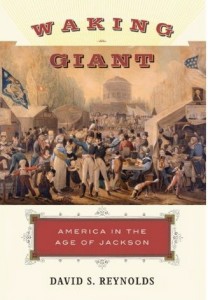 Waking Giant: America in the Age of Jackson. By David S. Reynolds. A very good popular history of that vast period between Jefferson and Lincoln that is something of a blank to most of us, and shouldn’t be. These years, essentially the first half of the 19th century, were the years of the nation’s adolescence, when it was stretching its newfound muscles and figuring out what it wanted to be when, or if, it grew up. This is when the empire expanded from sea to shining sea, when it decided to be a nation rather than an association of states, when internationalism and isolation duked it out, when the philosophical and economic splinterings that separated North and South became a chasm. Reynolds, also a biographer of Walt Whitman and the abolitionist John Brown, tells the tale with humor, insight and a sense of adventure. Scatterers may remember his recounting of the blood sport of 19th century politics from this post.
This Republic of Suffering: Death and the American Civil War. By Drew Gilpin Faust. Most histories of the Civil War concentrate on military tactics, political decisions, or the moral questions of slavery. Faust, a distinguished historian and president of Harvard, approaches the war from the view of the people who died in it. The result is a fascinating and sobering account of politics, cultural beliefs and morality. What made these men willing to die? How did they approach their meeting with their presumed maker? What happened to the corpses, and what were the lasting effects in the victorious national government’s differing levels of care for the dead of the North and of the South? You can’t call this an enjoyable read, although it’s written with elegant straightforwardness. But it’s engrossing, and important.
The River of Doubt: Theodore Roosevelt’s Darkest Journey. By Candice Millard. Begun in 2008, finished in ’09. After losing his bid to return to the White House in 1912, Roosevelt went into a funk and decided to get himself out of it by exploring in South America. His target: A long, fierce tributary of the Amazon that had never been mapped. The trip cost lives and reputations and left the former president with injuries that probably hastened his death. But he and his companions emerged. At a time when people believed that man’s role was to conquer nature, conqueror and conquered became horribly mixed up. A fascinating history of nature, power and determination. I wrote about it in this post.
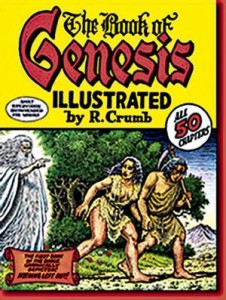 The Book of Genesis, Illustrated by R. Crumb. What is this thing? “Comic book” doesn’t seem quite right. Neither does “illustrated novel.” Comic-strip history? Nope. Call it what you will, it’s an inspired pairing of artist and text. In a comic-book (but hard cover) format, the famed creator of Mr. Natural gives the entire 50 chapters, in accepted translation, concentrating on the rough power of these creation and founding stories. His drawings focus on the brusque carnality of the tales, breathing sexuality and emotional vividness into what too often is almost singsong recitation. These are astonishing stories, and Crumb embraces them with devoted lustiness, making even the “begats” seem somehow vital.
Pretensions to Empire: Notes on the Criminal Folly of the Bush Administration. By Lewis Lapham. Published in 2006, when the fight was still on, Lapham’s book of essays burns with keenly focused anger. Most of it is aimed at Bush and his team of what Lapham clearly believes to be radical usurpers, but his scorn could also be spread to the mainstream press that allowed itself to be so easily manipulated by the Bush administration. Lapham, the patrician leftist who edited Harper’s magazine for almost 30 years and now publishes Lapham’s Quarterly, lathers on the facts with relentless logic but sometimes hurts his cause by refusing to get off his high horse: Eventually people stop paying attention to a scold. On the other hand, he was out there crying when a lot of other journalists were unwilling even to note for the record that we were in the middle of a wilderness.
The Price of Loyalty: George W. Bush, the White House, and the Education of Paul O’Neill. By Ron Suskind. O’Neill, a highly successful corporate chieftain who had served previously in the Ford and Nixon administrations, was George W. Bush’s first Treasury secretary. He didn’t last long. Suskind’s 2004 book struck while the iron was hot (although I didn’t read it then) and was a best-seller. Very flattering to O’Neill, who cooperated with Suskind, it paints the Treasury boss as a big-idea man who was frustrated at every turn by the ideologues who held sway with a president who lacked curiosity and saw the world in black and white. A good inside look at the world of big-league politics. Perhaps self-serving, but notable in that O’Neill was a lifelong Republican player who discovered he was too “liberal” and not loyal enough for the bosses of Bush’s repurposed party.
The Collector: David Douglas and the Natural History of the Northwest. By Jack Nisbet. A fascinating history of the young Scots botanist who came to the Pacific Northwest in the 1820s under the sponsorship of the Hudson’s Bay Company and the London Horticultural Society to collect and identify the flora and fauna of the tenuously tamed territory. So brief a time ago, and yet so different. Our corner of the world was familiar and yet fundamentally different from the Northwest of today.
Operation Bite Back: Rod Coronado’s War To Save American Wilderness. By Dean Kuipers. Inside the Earth Liberation Front, Animal Liberation Front and other underground outposts of either fierce moral counterinsurgency or Luddite terrorism, depending on how you look at it. It’s here (this is largely a Western movement, with deep roots in the Pacific Northwest) and it’s now, and Kuipers gets deep behind the occasional sensationalistic headlines. The question: Has the author drunk the Kool-Aid? Maybe a sip or two. But it seems worth it for the insider access he got.
 The Oregon Companion: An Historical Gazetteer of the Useful, the Curious, and the Arcane. By Richard H. Engeman. The title pretty much sums it up: Sometimes rooting through history is mainly for the simple pleasure of stumbling on some intriguing facts. This is a dip-in-at-leisure collection, running alphabetically from George Abernethy (Oregon’s only provisional governor, before it became an official U.S. territory) to Zigzag River, with a lot of fun between. Illustrated profusely with historic photographs.
Ex Libris: Confessions of a Common Reader. By Anne Fadiman. A small, quirky, altogether lovely book about one woman’s love affair with books. Each essay is elegantly crafted, warmed with intelligence and humor. We learn of the difficulties of merging libraries when two people become a couple and move in together (whose system of organization wins the day?) and of the book-people split between courtly lovers and carnal lovers: the first group puts the physical book on a pedestal, as an object to be treated with the utmost care; the second group rips into it, writes in the margins, dog-ears pages, treats the flesh with gusto as it goes for the soul, the ideas, inside. Fadiman, daughter of the legendary writer/entertainer Clifton Fadiman, reports with pleasure that her family comes from the carnal side of the great divide.
The Eclectic Encyclopedia of English. By Nathan Bierma. This collection pulled from Bierma’s “On Language” column in the Chicago Tribune is engaging, informative, and not schoolmarmish at all. Bierma doesn’t wag fingers, and instead of pronouncing from on high he listens to what the linguists have to say. An excellent bedside book for late-night browsing, which is how I eventually read the whole thing. It’s published by William, James & Co., the Sherwood publishing house.
NOVELS AND OTHER IMAGINED TRUTHS
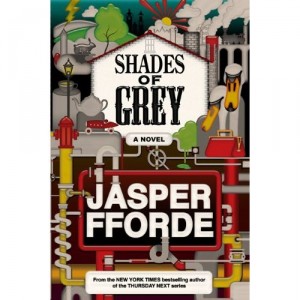 Shades of Grey. By Jasper Fforde. The sly linguistic entertainer of the Thursday Next and Nursery Crime novels, in which fictional characters are real and interact, sometimes alarmingly, with “real” characters who are of course themselves fictional, takes a sharp turn in this new novel that lays the groundwork for a new series. The jokes are tamped down (though they’re still there) and what had been a wry acceptance of the idiocies of bureaucracy has become an altogether dark view of a tightly regulated future world after some unspecified great disaster that has left humans socially stratified according to their abilities to detect specific hues in light. It’s like George Orwell crossed with Russell Hoban’s Riddley Walker. As the first of a series, this one raises the questions and sets up the problems. Can’t wait to see what comes next.
Winterkill, River Song, The Sky Fisherman. By Craig Lesley. For some reason other writers get the praise while Lesley delivers the goods. This trio of novels represents some of the finest fictional evocations ever of life in the Pacific Northwest – mostly the forgotten rural Northwest, where Portland and Seattle are either ignored or resented — and their emotional effect goes far beyond mere regionalism. Lesley gets at the importance of land and water, at the brutality of history, at the stark differences between Indian and white ways of looking at the world. He writes about betrayals and loyalties and the surprises of love, and he tells hauntingly good stories. As the best fiction does, these stories ring shatteringly true. If you’ve never read Lesley, do yourself a favor and pick him up (I’d read them in the order above, although that’s not crucial). If you have read them but it’s been a while, do a re-read. It’s worth it. RR
Straight Man. By Richard Russo. Published in 1997, before he hit it big with Empire Falls, Russo’s Straight Man is that rare and wondrous thing, an academic novel that’s genuinely funny and entertaining. His hero, a one-hit-wonder novelist who’s rotted into the English department chairmanship of a third-rate state college, has the saving grace of being an irredeemable anarchist, which creates untenable situations – at one point he holds a goose hostage, threatening to wring its neck while television news cameras roll – and also allows him to scramble out of harm’s way.
The Anthologist. By Nicholson Baker. Baker’s hero is a little like Russo’s in Straight Man, but more extreme: He’s so untamed and untamable that he’s dropped out of academia because he can’t stand the restraints. He also has a mythic case of writer’s block that’s keeping him from writing the introductory essay to his collection of rhyming poems – and Baker’s novel, in both hilarious and deeply felt ways, is essentially what that essay ought to be. This guy – Paul Chowder by name – is a mess. But I’d love to read his anthology once it comes out.
 Farthing, Ha’Penny, Half a Crown. By Jo Walton. The English/Canadian writer’s fascinating trilogy rejiggers history with an Orwellian eye, imagining life if England’s Nazi sympathizers had won the day and entered into partnership with Hitler. The scary thing is how plausible it all seems: a twist here, a slip there, a little white lie whispered in the right place, and it’s bye-bye democracy, hello fascism. Walton manages this cultural nightmare within the tea-cozy tradition of the British murder-puzzle mystery: Josephine Tey or Agatha Christie with real consequences. Because Walton’s known as a sci-fi and fantasy writer, this trilogy flew mostly under the radar of mainstream critics. Too bad. It’s got a lot on its mind, and it tells its tale admirably. As Ursula K. Le Guin says on the cover of Farthing: “If Le Carre scares you, try Jo Walton.”
Bread and Wine. By Ignazio Silone. A priest who is not a priest hides in a mountain village, a fugitive from both the fascist rulers of 1930s Italy and the Communist party with which he’s become disillusioned. A deeply felt study of idealism, totalitarianism, moral duty and independent thought, this is a touchstone novel for me, one I read every few years. I wrote about it in this post. RR
Parnassus on Wheels. By Richard Morley. This droll pastoral from 1917, about a farm woman who embarks on a horse-and-wagon journey with an itinerant book salesman, determined to take over his business of spreading culture across the countryside, is a light and whimsical crackerbarrel delight. Nothing too serious, sometimes even a little corny, it’s nonetheless a pleasing diversion. I described rediscovering it in this post. RR
 The Fires of Edgarville. By Craig Joseph Danner. Danner, who also wrote the Pacific Northwest Book Award winner Himalayan Dhaba, tells an involving story about personal and cultural secrets in Oregon’s Hood River Valley, going back to the detention of Japanese American citizens during World War II and coming forward to the kind of neo-incarceration of a prominent doctor who’s been forced back to the valley of his childhood after a professional scandal has ruined his career. Race, love, revenge, honor, mercy and redemption wind through this tale, which also touches sensitively on the realities of aging and dementia.
The Warden. By Anthony Trollope. Whimsy, wisdom, avarice, idealism, maybe a little shady money on the side: Ah, for the life of a quaint English village in Victoria’s reign. My first Trollope (try typing that!), and I found the experience stimulating.
On the Black Hill. By Bruce Chatwin. Best known for his travel writings – In Patagonia in particular – Chatwin published this novel of rural life in 1982. At times its characters and situations seem from an earlier century, and the novel promises more than it delivers, but the writing’s beautiful and some of the characters, especially the identical-twin brothers Lewis and Benjamin, are memorable.
Middle Passage. By Charles Johnson. It won the National Book Award in 1990 and stands up well – spectacular lush language, an adventure worthy of Fielding or Defoe, and a subject matter that burrows deep into an essential question of the American character. Johnson’s hero, Rutherford Calhoun, is a freed slave in 1830 New Orleans who runs afoul of the local kingmaker and “escapes” onto a slave ship, where he becomes part of the crew. A harrowing, astounding, crucial moral journey that is also, like August Wilson’s best plays, a dazzling work of art. RR
Revolutionary Road. By Richard Yates. One depressing puppy dog of a novel. Well-written, though, in a meat-ax-surgery sort of way.
Christmas at the Juniper Tavern. By Charles Deemer. Deemer’s fine, funny, and insightful Northwest play still has things to say about the way people live their lives in this corner of the country. I wrote about it in this post. RR
MYSTERIES, MURDERS AND SCOUNDRELS
 The Stolen Gods. By Jake Page. Read on recommendation of my friend Gerald, who lives part-time in Santa Fe and sometimes hangs out in the same restaurant as Page’s sleuth. Mo Bowdre is a big, bluff, blind sculptor in Santa Fe. Connie Barnes is his smart and longsuffering Hopi girlfriend. A big-money dealer in Native American art is murdered and his gallery trashed. Some Hopi deities, sacred objects that should never show up on the legal or illegal art market, are missing. The world’s out of joint. Page works the borders between Anglo and Indian cultures deftly, which makes the mystery less important than the atmosphere.
Death Shall Overcome, Murder Against the Grain, A Stitch in Time. By Emma Lathen (pseudonym for the team of economist Mary Jane Latsis and economic analyst Martha Hennisart). Three mysteries from the mid-1960s featuring amateur sleuth John Putnam Thatcher, senior vice president of the Wall Street bank Sloan Guaranty Trust. Sly, witty books about foolishness and greed, written with the underlying principle that on Wall Street as in real life, doing the honorable and legal thing is better in the long run for everyone. Where are Lathen and Thatcher when we need them most?I wrote about Death Shall Overcome in this post. RR
Death Before Bedtime, Death in the Fifth Position, Death Likes It Hot. By Edgar Box. Gore Vidal wrote this trio of urbane mysteries – like the Lathen books, they’re more comedies of manners than whodunits, really – under the Box pseudonym. If he was slumming, he did it superbly. Murder at the ballet, murder in the Senate, murder at the country club – and the amateur detective is a public-relations guy who spends more time in the sack than James Bond. I wrote about them in this post. RR
Rainy North Woods, Rising Dog. By Vince Kohler. The mass of men may live lives of quiet desperation. On Kohler’s southern Oregon coast they’re very noisy about it. And the violence is wide-eyed and weird. Kohler, the late news reporter for The Oregonian, could make you feel the craziness and mythic power of his fictional Nekaemas County, and the soggy sad-sack determination of his lost-in-the-rain reporter sleuth, Eldon Larkin. Minor Northwest classics. I wrote about them in this post. RR
The Daughter of Time. By Josephine Tey. A bored detective recuperating from a broken leg sets out to clear the reputation of Richard III. A little precious, but diverting. A lot of people consider this a mystery classic. Can’t say I’m one of them.
CHILDREN’S AND YOUNG-ADULT BOOKS
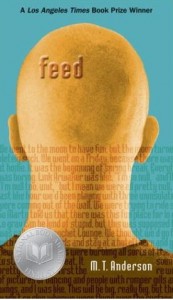 Feed. By M.T. Anderson. Killer novel about a future dystopia, a high-tech environmental disaster in which bored teens fly off for the weekend to get stoned on the moon and everyone’s plugged into the feed – a sophisticated, highly manipulated advanced Internet that enters through a surgically implanted chip in your head, and that pretty much calls the shots on everything. What do you listen to? Where do you go? What do you want to buy? The feed sets the agenda. You could call this novel scary good.
The Absolutely True Story of a Part-Time Indian. By Sherman Alexie. The Seattle poet and novelist’s first young-adult book hits its intended audience squarely between the eyes. A good, honest story about growing up poor, being caught between the Rez and the white town, wanting more, and regretting what you’ve lost. This is what one life feels like: How do you leave and stay at the same time?
I Am the Messenger. By Markus Zusak. From Australia, the engaging coming-of-age mystery of a young cabdriver who accidentally foils a bank robbery and is suddenly sent into the world on a series of missions prompted by strange clues sent in the form of playing cards with messages. Who’s behind it all? How is Ed supposed to respond? Like Feed and Part-Time Indian, another example of the growing frankness and complexity in the young-adult world. What makes these young-adult and not mainstream novels? Nothing much, except the protagonists are young. Then again, so was Holden Caulfield.
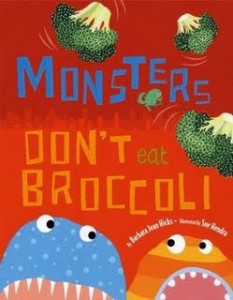 Monsters Don’t Eat Broccoli. By Barbara Jean Hicks, illustrated by Sue Hendra. Fum, foe, fie, fee. Monsters don’t eat broccoli! Seems they’d “rather snack on tractors or a rocket ship or two.” The latest whimsical wordplay from my sister the children’s author, whose words are nicely paired with clever illustrations, as they were in her multiple award-winning Jitterbug Jam. I’d like this book even if Barb weren’t my sister. And kids love that chant.
Fairy Tales by Hans Christian Andersen, East of the Sun and West of the Moon. Both illustrated by Kay Nielsen. The stories in both volumes are great, but the real draw is Nielsen’s magical illustrations. Born in Copenhagen in 1886, he completed most of his children’s illustrations in Europe before moving to the United States in 1926 and becoming a Hollywood set designer. He understood these northern stories and found a kind of still, timeless beauty in them.
The Troll With No Heart in His Body, and Other Tales of Trolls, from Norway. Retold by Lise Lunge-Larsen, woodcuts by Betsy Bowen. A handsome collaboration on some good shivery stories. Snipp, snapp, snute, Her er eventyret ute! which means, Snip, snap, snout, This tale’s told out!
FOOD AND WINE
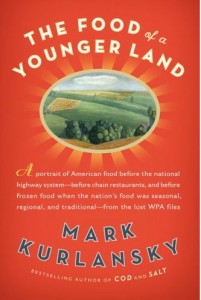 The Food of a Younger Land. Edited by Mark Kurlansky. Kurlansky (Cod; Salt; The Big Oyster) is one of our finest food historians, using food as a conduit to carry cultural stories, and so it makes sense for him to assemble this selection of writings from the Federal Writers’ Projects “America Eats” series of stories about the nation’s regional food lores. The Depression-era project was abandoned in the early 1940s, but not before a lot of the work was completed and turned in by many writers barely known and a few eventually famous. Zora Neale Hurston, Eudora Welty and Nelson Algren were among the contributors. There are recipes, but mainly this is social history, from Maine clambake to Wisconsin lutefisk supper to Arkansas squirrel mulligan to the controversy over the correct way to make a mint julep. (“That’s the finest meal I ever drank.”) Sometimes parochialism and racism stick out like sore thumbs: That’s the way things were. But there was also vigor, and innocence, and heartiness, and surprising regional variety in a time before golden arches and uniform food.
Whistleberries, Stirabout, Depression Cake: Food Customs and Concoctions of the Frontier West. Edited by Edward B. Reynolds and Michael Kennedy; foreword by Greg Patent. Kurlansky’s “America Eats” collection is heavy on the Northeast and South and relatively light on the West, so that got me re-reading this delightful collection, which is from the same project but concentrated on the West. The two books have surprisingly little crossover. You can’t walk away from this literary feast without a renewed appreciation for the hard labor and excellent appetites of these not-so-long-ago settlers. Does anyone remember crawfish at Portland’s old Quelle Restaurant? Apparently William Howard Taft had several dozens sent up to his hotel suite. They’re properly “served with pickles, cheese and crackers, and mugs of beer that are filled and refilled time and again.” RR
Vintage Pellegrini: The Collected Wisdom of an American Buongustaio. By Angelo Pellegrini; edited by Schuyler Ingle. Seattle’s celebrated master of the garden and the vine was nobody’s fool. Born in rural Italy and moving as a child to the rainforests of southeast Washington, he became a professor of English at the University of Washington. But the old country stayed with him, and he in turn passed it to his students and readers: a dislike for flair and fads, an appreciation of the land and the work and the seasons. This volume is part food book, part memoir, and worth an occasional revisit. RR
 So you’re Chrysler, and you hop into the Chapter 11 pool. While you can wash away some of your past sins with a bankruptcy-protection filing, the deal with Chapter 11 is that you’ve got to come up with a way to get out of your financial pickle and return to profitability. Part of the Chrysler plan to keep its head above water was divestiture of 789 dealers, a very unpopular idea with the rejected sales organizations.


 Until we’re holding our Apple tablets in our hands, we can only speculate as to what the next wondergadget will do. Still, it’s safe to assume that the tablet will offer more than


