Author: Serkadis

  • MPAA/Sony Pictures Realizes That Shutting Down Muni-WiFi Over Single Download Was A Bad Thing

    Last week, we wrote about the ridiculous situation, whereby the MPAA had an entire muni-WiFi network shut down because one person using that system had downloaded a single film. The story ended up getting a fair amount of press, and it looks like the MPAA and Sony Pictures in particular, quickly realized that this was really, really bad publicity for the company. After the company got bombarded by complaints, Sony Pictures contacted the town and asked them to turn the WiFi back on, while also claiming it could help the town set up tools to block such things in the future. Of course, as Broadband Reports notes in the above link: “Of course if the MPAA and Sony had approached the network owners like human beings in the first place — instead of engaging in the kind of scorched earth tactics they’ve employed for several years now — they probably wouldn’t have gotten the bad press to begin with.” But, acting like human beings in the first place isn’t the sort of thing the industry does well.

    Permalink | Comments | Email This Story


  • Homebrew – ScummVM v1.0.0

     The homebrew coders from the ScummVM Team has finally release version 1.0.0of their classic multi-platform point-and-click adventure games emula…

  • Pictured: Magellan’s new iPhone car cradle

    Hey, you! I know you. You’re the one that gets all hot around the collar over shots of unreleased iPhone accessories, aren’t you? Boy, oh boy – are you gonna love this..


  • New stealth jumpjet starting hover trials

    f35b_rollout_4_20071219The Harrier jumpjet is one of the most famous aircraft in the world. Ideal for carrier take off and landings, the jumpjet has been part of the US military arsenal for many years. The problem is that it isn’t very fast. Now the next generation of jumpjet is entering testing to see if it measures up.

    The new Harrier, known as the F-35B, combines stealth and supersonic speed. Currently there is only one other aircraft in the world that does this: the F-22 Raptor. The problem with the Raptor is it requires a standard runway to take-off and land, and is also extremely expensive ($361 Million per aircraft). The new Harrier, on the other hand, is both cheap (comparatively so, at $83 million each) and doesn’t require a full-length runway to operate. Assuming the F-35B passes testing, the U.S. is expected to invest in a large number of the new aircraft.


  • The Big News from the Retail Sales Report

    The big news from the retail sales report was that sales rose again and even more than expected–1.4%, which was a full half point more than the consensus forecast.

    The core retail spending–the stuff that tends to give a steadier picture and not fluctuate around a lot–rose for the third straight month.  And if you compared the core sales in October 2009 to October last year, it was the first year-over-year increase in 8 months.  In fact, the three-month gain ending in October was the strongest since June 2008. 

    This string of gains means that consumer spending is on track to post another gain in the fourth quarter of the year.  From mid 2007 to mid 2009, we had measly growth or outright declines in consumer spending so this is a welcome sign of the beginnings of recovery.

    One last thing worth noting in this retail sales report is the fact that consumer spending on motor vehicles posted a big increase.  The report last month showed a decline in sales as the Cash-for-Clunkers program ended.  Some critics argued that the perceived recovery of the economy was only a temporary blip due to people shifting their car purchases forward and sales now would be lower for an extended period.  These data suggest that didn’t happen.  They confirm what the private industry sales data already documented. The sales of motor vehicles in October are up to an annual rate that actually exceeds the rate in the eight months before cash-for-clunkers began. 

    The President’s focus is on recovery and getting people back to work.  Turning the economy around is the necessary first step for job creation.  This report suggests the recovery effort may be picking up steam.


    Austan Goolsbee is a member of the Council of Economic Advisers


  • Good news: Mario Galaxy 2 will be hard; Bad news: they’re not giving up on Wii Music

    mario2
    I haven’t played through all of Super Mario Galaxy, but what I did play was pretty forgiving. Compare that to the punishing, yet rewarding, difficulty curve of the original games or newer games like Demon’s Souls — it’s like comparing a sprint to a ramble. However, Miyamoto has stated in a recent interview that Mario Galaxy 2 will be “really challenging,” which is encouraging. They need to remember that their company has its roots in games that were hard as coffin nails.

    On the other hand, Miyamoto also said that Wii Music was getting an enhanced version. I don’t know what to tell you there, Shigeru. The game is a joke, and all of Nintendo is humoring you. Don’t push it. Just make more Mega Man 9 type games and make sure the next Zelda has time travel in it.

    [via 1UP and CVG; image from College Humor]


  • iPhone App Makers Get Edgy Over Bogus Edge Trademark

    In the past, we’ve discussed how some guy named Tim Langdell seems to think that because he once had a game that had the word “edge” in the title and got a trademark for it (even though he hasn’t released a game in about fifteen years) that he can go after anyone who uses the word edge in a video game title. EA is even working on getting Langdell’s trademark dumped. In the meantime, he just keeps going with it, threatening plenty of folks. It appears that some game developers are getting sick of this and have decided to fight back. William Jackson alerts us to the news that game developers are now purposely adding the word “edge” to their game titles in solidarity with those threatened by Langdell. I wonder if that will get the message across?

    Permalink | Comments | Email This Story


  • Gift Guide 2009: Headphones

    Intro

    So you’ve taken the plunge and bought (or are going to buy) a sweet new personal media player. iPod, Zune, Walkman or other, they’re all capable of holding all your favorite music. But what’s the point if it sounds like garbage on that chintzy pair of included earbuds? Every pair of white headphones you see represents someone who cares more about the look than the sound. Is that you? Didn’t think so.

    Now, you don’t have to drop a ton of money to get great sound, but if you’re game, then there are vast and beautiful sonic realms just waiting for you to visit. I’ve had my eyes opened in the last few years as I’ve become… well, I wouldn’t call myself an audiophile, but I’m certainly enjoying my music more than ever these days. Here are a few pairs we’ve liked, from surround-sound to in-ear, and from budget to luxury.

    Sleek

    Sleek Audio SA6: $249

    My new “reference” pair of headphones, this excellent in-ear pair not only sounds great, but is customizable with different tips which change the sound. Sure, you can EQ your songs and albums individually, but being able to blow up the bass or extend the treble in the hardware is fun and can really bring new life to your music. Aside from that aspect, the SA6es, I felt, added power to almost every song I played. I’m not sure how, but there you have it. It’s a lot of money for a pair of headphones, but if you (or a loved one) spend a lot of time using the ones you’ve got, it may just be worth the investment.

    If you’re not sure, Sleek is just now starting to ship a cheaper ($80) customizable pair, though we haven’t had a chance to put them through their paces yet.

    Product Page | CrunchGear Review

    Radius

    Radius Atomic Bass: $35

    Looking for a good pair of in-ears to replace those stock headphones, but don’t want to spend a bundle? Peter loved the Atomic Bass in-ears from Radius, which completely block out external sound and have a great low end. For subway riding, jogging, or editing video in a crowded cafe, these are a good bet. For $40 you’re not going to get crystal-clear quality, but you’re going to be getting a lot more than with those tinny things that came with the Walkman.

    Product Page | CrunchGear Review

    Logitech

    Logitech G35 7.1 Surround-Sound headphones: $120

    Know someone who enjoys playing games or watching movies on your computer? A good pair of surround-sound headphones can be a game-changer. Most modern games support surround sound, and the G35s use Dolby’s virtual surround technology to make even plain stereo sound bigger. I found that with movies and shows it could be hit or miss, but whether they were providing “true” surround sound or not, there was always power and detail. For games I soon came to find them indispensable. As a bonus, they’re closed-type headphones, meaning they’re great for college dorm rooms where speakers or open headphones (like the similarly good Megalodons) can disturb roommates.

    Product Page | CrunchGear Review

    Altec Lansing

    Altec Lansing Backbeat 903: $99

    Wireless headphones used to be big chunky affairs with huge IR or RF bases. These Altec Lansings, however, pair via Bluetooth and in addition to sounding good, have integrated phone control buttons and a microphone. If your (or a loved one’s) phone has a weird headphone jack (likely), these are a great alternative. And of course they’re a good option for jogging or going to the gym with, since there’s 100% less cord to worry about.

    Product Page | CrunchGear Review

    Roxy

    JBL Roxy reference 430: $70

    Teens are hard to please when it comes to fashion, much less on audio quality, so these JBL Roxy on-ears came as somewhat of a surprise. All the young ladies who saw them pronounced them cute, and the sound was impressive both to our seasoned reviewer and the teens who gave them a try. There are two color choices that both look ridiculous to me, so they must be cute.

    Product Page | CrunchGear Review


  • PM highlights importance of British role in Afghanistan


    Sorry, you do not appear to have the flash player installed
    – please use the link below to get it now.

    Get Adobe Flash player

    The Prime Minister has said that international terrorism remains the biggest source of threat to the UK’s national security but that more has been done to disable Al Qaeda over the past year than in any year since 2001.

    The comments were made as the Prime Minister gave his annual foreign policy speech at the Lord Mayor’s Banquet on Monday night, where he discussed the campaign in Afghanistan and Pakistan, as well as Britain’s role in the world, climate change and the challenge of nuclear proliferation.

    On Afghanistan, Gordon Brown said:

    “We are in Afghanistan because we judge that if the Taleban regained power, Al Qaeda and other terrorist groups would once more have an environment in which they could freely operate. We are there because action in Afghanistan is not an alternative to action in Pakistan, but an inseparable support to it.”

    The PM has offered London as the venue for an international conference on Afghanistan early next year. The international community is expected to meet to discuss plans for future support for Afghanistan, following the inauguration of President Karzai this week.

    In his speech, the PM said:

    “I want that conference to chart a comprehensive political framework within which the military strategy can be accomplished… It should identify a process for transferring district by district to full Afghan control and if at all possible, we should set a timetable for transfering districts to Afghan control starting in 2010.”

    On Britain’s overall foreign policy direction, the PM said he believes Britain can play a key part in changing the world. He said British foreign policy must be both “patriotic and internationalist”, and has the potential to help build a new “global order”.

    “To do so we must have confidence in our distinctive strengths: our values, our alliances; because with conviction in our values and confidence in our alliances, Britain can lead the way in the construction of a new global order.”

    Foreign Secretary David Miliband delivered a speech on Afghanistan at the NATO Parliamentary Assembly the following morning. Read his speech

    Previous story: Britain will not walk away from Afghanistan

  • Collaboration & Copyright & a New Way to Work

    If you provide or create content online, you should know about Creative Commons. The short explanation, from their blog is, “The Creative Commons licenses enable people to easily change their copyright terms from the default of “all rights reserved” to “some rights reserved.” It’s a good way to share info – whether you’re the creator, borrower or buyer.

    Bernadine Joselyn sent me an article that highlights the need for and application of Creative Commons and talks about how the Creative Commons opens a door to innovation. It’s a good example of how the Internet (and broadband) have changed traditional business models. Before the Internet, everyone seemed to work in silos; since the advent of the Internet, most successful businesses work more collaboratively. Google is the prime example. Google creates tools that are intended to work in most environments for free, such as Gmail, Google Maps or Google Analytics for web statistics. They have gone so far as it open up some of their code to developers around the world, making it possible for developers to make improvements to Google tools as well as create entirely new tools.

    Before the Internet, businesses seemed to think that such openness would devalue their products or services; in a post Internet world, openness adds value. Businesses that have understood and acted on that shift in openness have flourished; those who are still playing according to the old rules are dying on the vine. The Creative Commons has been able to step in to help some businesses take advantage of the openness.

    I thought about that transition into openness last weekend when I was at the TMCA Fall Conference. We heard from several traditional media resources that are creating intriguing media web sites that encourage reader interaction. That focus on interaction is great and a nod at the changes brought about by the Internet – but most of the sites we saw stopped short of being truly open. They will not be opening up their code at this point and they are not creating ways to interact with other web site. I contrast this with the new media tools – Facebook, Twitter, LinkedIn, blogs – which seem to be finding more and more ways to work seamlessly together – or at least allow users to work seamless with multiple tools.

    If you think about broadband a lot, it’s tough not to make the connection between this story and net neutrality. What we need is a new business model that makes sense for broadband providers and users. To quote the article on Creative Commons, “while the technology is frictionless, the collaboration faces another hurdle”.

  • Microsoft launches Office 2010 technical beta a few days early

    By Scott M. Fulton, III, Betanews

    New Office 2010 logoParticipants in the first Technical Preview for Microsoft Office 2010 received invitations this morning to join the Office 2010 technical beta build 4536.1000. Not long afterward, the link to the technical beta went live on MSDN and TechNet.

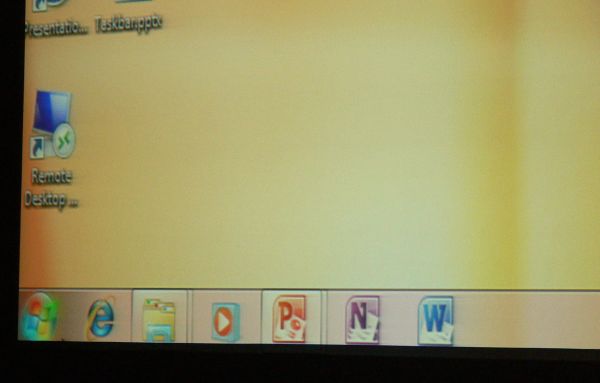
    Ironically, once again, attendees at Microsoft’s own PDC 2009 conference were the last to know about it, unless they were checking their own e-mail. The first hint that something was up came up during an unrelated demo during Day 0 of the conference. At the bottom of a screen where taskbar demos were being shown, the new icons for the Office 2010 apps showed up. Now, it appears all Office apps will be represented by their initials, not just Word.

    In the new artwork package this year, we’re noticing that the Office logo not only gets a tweak (arrows pointing to the center of the various boxes) but a color scheme change. As Google commandeers more of Microsoft’s four-color product logos, Microsoft itself has been signaling shape and design over color, especially with Exchange Server and SQL Server. Now Office gets an all-gold scheme — gold used to be Outlook’s color.

    The icons for Office 2010 showed up for the first time at an otherwise unrelated demo, at PDC 2009.

    Technical Preview participants were not necessarily MSDN or TechNet members, so in actuality, the Technical Beta is being extended to two groups, the second of which are comprised of active contributors to the Preview program. Today’s release may impact the anticipated schedule of the keynotes somewhat, which originally had been spread out over two days. We had anticipated the Office beta launch Wednesday.

    We’ll dive into the download tonight and let you know what we find.

    Copyright Betanews, Inc. 2009


    Add to digg
    Add to Google
    Add to Slashdot
    Add to Twitter
    Add to del.icio.us
    Add to Facebook
    Add to Technorati


  • FourSquare Opens API, Invites Developers to Play

    FourSquare, the hot location-based services startup, is hoping to increase its momentum by opening its API to the public. Developers can use the API to visualize data generated by its community or create new ways to check into its service, the company said in a post today on its site. The company had already shared its API with a handful of developers, but opening it up to the public could entice a host of developers to build offerings on its service — and that would help set FourSquare apart from other players in a big way.

    FourSquare launched at SXSW earlier this year along with three other LBS startups, making an already crowded space even more crammed. The service allows iPhone and Android users to check in and notify friends when they arrive at certain locations, like a bar or restaurant, and earn “badges” as they use the service.

    There is no shortage of players in the LBS space, but FourSquare appears to have gained an impressive following. The New York-based startup was founded by Dennis Crowley — the guy behind Dodgeball – and two months ago pocketed $1.35 million in a first round of funding led by Twitter backer Union Square Ventures. Spurring the development of a variety of FourSquare apps could be a key advantage in an increasingly packed field.


  • Magellan Gets Into The iPhone GPS Game, Car Cradle Incoming

    Screen shot 2009-11-16 at [ November 16 ] 2.06.07 PM

    Google might be in the middle of turning the navigation market on its head with hints that their free turn-by-turn service might make its way to the iPhone, but that’s not scaring the big players away. TomTom and Telenav have both been on the platform for months and show no sign of turning tail, and now another big-name has jumped into the mix: Magellan.

    Just minutes ago, Magellan announced that their first application, Roadmate, has hit the App Store at an “introductory price” (which, more often than not, tends to be the final price drummed up for the sake of pumping launch sales) of $79.99.

    Read the rest of this post >>


  • VLAB Event — SSDs: Technology for Bigger, Better, Faster Apps

    Solid-state drive (SSD) is a disruptive technology that has arrived and is creating new opportunities for startups. 

An SSD-enabled, networked world promises near real-time access and blazing performance for ultra-fast games and massively scalable databases, and will enable a range of new consumer and enterprise applications. On Nov. 17, come to the MIT/Stanford Venture Lab to find out more about startup opportunities that are tapping into SSDs: What’s the impact of SSDs on enterprise and consumer applications? Given the widespread emergence of SSD, what are the new opportunities for startups in hardware and software? What do developers need to know to seize the opportunities unfolding here? To register, click here. For more information, please click here.


  • Why are we so attracted to disaster movies like 2012

    garbage

    Here’s another topic I’m stealing from Ron and Fez: disaster movies. We sorta discussed this a few times already, but the movie 2012 broke all sorts of records at the weekend. I’d make a big stink about Americans having zero taste, but if I could make $80 zillion per movie sleeping through my lines like the cast of 2012 presumably did, you can guarantee I’d be right there alongside them. That aside, the topic on the radio show was this: what is it about disaster movies that make people so excited?

    There’s a few theories. The one I found most interesting is that since nobody wants to die in real life, people enjoy seeing movies where the entire planet is threatened. “I don’t want to die and know that you guys are still having fun without me,” that type of thing. So watching a movie where everyone is in danger, well, count us in. (And it really does need to be that everyone is in danger, and none of this I Am Legend action-adventure nonsense, otherwise you alienate people who aren’t into Indiana Jones-style movies. One man versus crazy odds.)

    Which brings us to 2012: why did so many of y’all watch it this weekend? Were you attracted by the special effects? Do you like the director or the actors? Just needed to kill some time with your friends at the mall? The movie is bloody awful, so I’m just curious.

    Then again, I used to watch WWF/WWE all day long, so who am I to question people’s judgement vis-à-vis entertainment?


  • Google Earth For iPhone 2.0 Arrives

    iPhone users with an interest in geography have a reason to cheer today: a certain search giant has released version 2.0 of Google Earth for iPhone, and the software has been improved in just about every way.

    A post on the LatLong Blog announced, "We’ve added some exciting new features, including the ability to view maps that you create on your desktop computer right from your iPhone, explore the app in new languages, and improved icon selection and performance."

    Then the other big difference is that this release of Google Earth for iPhone is available in 13 new languages (for a total of 31).  Impressive.

    Still, this development raises an interesting question: Where’s Google Earth for Android?  Google Earth for iPhone was first released over a year ago, and for Google to upgrade it prior to acknowledging its own mobile operating system seems odd.  Especially since there is (and has been) a demand.

    Ah, well.  The official Google post concluded, "We hope you enjoy our latest release.  Please note that the app will be rolling out around the world over the next twenty-four hours – if you don’t see it immediately, be sure to check back soon.  You can download Google Earth for iPhone here."

    Related Articles:

    > Google Street View Hits Hawaii, Mexico

    > Google Earth Users Get A Way To Build Architecture

    > A Year Of Google’s Big Eye In The Sky

  • And the winner of the HP MediaSmart server is…

    hp-ex495-7

    Big props goes out to Joe W. for almost correctly guessing the total storage capacity of the CrunchGear staff. His guess of 38.5TB nets him a brand new HP MediaSmart EX495 server. Congrats. Click through to see the total capacity broken down by writer.

    In no particular order,

    • >Devin: 4.2
    • Doug: 3
    • Dave: 8.4
    • Matt: 8
    • Nicholas: 5
    • John: 2
    • Greg: 8

    For a grand total of 38.6TB, which isn’t that much actually. It will probably be double next year at this time


  • Is There Economic Consensus on Climate Bills?

    The Institute for Policy Integrity (IPI) recently released a survey [.pdf] of 144 leading economists who have published peer-reviewed articles on climate change. In the media blitz accompanying the release of the study, IPI spokespeople sold its results as a “consensus” among expert economists comparable to that of the climate scientists. They gave the average person the impression that only a fool or a tool of big business could possibly oppose the Waxman-Markey or Kerry-Boxer bills.

    This is completely misleading. It is true that the vast majority of the surveyed economists believe that climate change poses a threat to the economy. However, this alone doesn’t mean that their work endorses the pending legislation. In fact, we will show that many of the responses in the survey underscore that Congress’ proposed “solutions” to climate change violate the recommendations of even those economists who are very concerned about climate change.

    The Existence of a Threat Alone Doesn’t Justify Any Government “Solution”

    The most-hyped result from the survey was the fact that 84 percent of the surveyed economists agreed with this statement: “The environmental effects of greenhouse-gas emissions, as described by leading scientific experts, create significant risks to important sectors of the United States and global economy.”

    Already we see that the question is loaded; a more neutral question would have been, “Do you think greenhouse-gas emissions create significant risks to the economy?” There are many economists who have expressed skepticism about the computer models and techniques used to generate some of the scarier projections. But with the phrasing of the question, they were technically being asked to take the climate models at face value, and assess what the impact of their projections would be on the economy.

    But that’s a minor quibble. The real problem with the hype placed on this particular result, is that it does not follow that the Waxman-Markey or Kerry-Boxer bills are appropriate to dealing with this potential risk. For an analogy, if we surveyed doctors and asked, “Is there a significant risk to the public from H1N1?” presumably a large percentage would say, “Yes.” If the Obama Administration then proposed vaccinating every American three times a month for the next 20 years, that would clearly be a waste of resources and detrimental to public health.

    The same is true with the threat of climate change. As we will show, the pending Congressional legislation actually violates many of the recommendations of the economists in the survey. Yet one would never get that impression from reading the NYT coverage, or story in USA Today.

    Surveyed Economists Favor “Market-Based” Approach and Auctioned Allowances

    Another completely misleading result from the survey shows that an overwhelming 91.6 percent of the respondents favored a “market-based” approach to curbing greenhouse gas emissions. In the news stories linked above, as well as the Executive Summary of the survey itself, this statistic is offered as apparent endorsement of the cap-and-trade legislation currently being debated in Congress.

    On the contrary, the economists endorsement of “market-based” approaches really shows how inefficient the pending legislation is. By “market-based” approach, the economists mean that the government should place a price penalty on carbon dioxide emissions, either through a cap-and-trade system or a straightforward carbon tax. And then…the government should mind its own business. In particular, policymakers should not try to micromanage the particular ways that business and consumers scale back their emissions, but rather the (augmented) profit and loss system will lead to the most efficient response to the new incentives. As the study itself explains:

    Nearly all respondents—92%—also agreed or strongly agreed that market-based mechanisms, as opposed to command-and-control approaches, are the preferred way to cut greenhouse gas emissions and place a price on carbon. As such, most economists would support the cap-and-trade structure proposed by the main legislative options now pending before Congress. [Emphasis added]

    Yet contrary to the non sequitur in the quote above, if a straightforward “market-based” approach is what the expert economists favor—by an overwhelming majority—then the economists would likely reject the monstrous hunks of legislation that passed the House and are being debated in the Senate. We at IER have already shown the tremendous thicket of new regulations contained in the House-passed Waxman-Markey bill, besides its cap-and-trade system. At best, only one half of Waxman-Markey could even be called cap-and-trade, leaving an additional 700 pages of inefficient regulations. The 91.6 percent of economists who favored a “market-based” approach were rejecting the top-down central planning contained in Waxman-Markey and Kerry-Boxer.

    Speaking of cap-and-trade, the IPI survey also found that 80.6 percent of respondents favored auctioning emission allowances rather than handing them to favored groups for free. Presumably then these economists would join with IER in condemning this thinly veiled transfer of an enormous amount of wealth from low- and middle-class energy consumers into the pockets of politically-connected shareholders.

    What the Media Hype Didn’t Report

    We have seen that the two most-hyped results of the survey actually do not support the pending legislation, and if anything actually undercut it. What’s interesting is that if one looks at pages 18-19 of the actual survey [.pdf], one learns:

    The survey asked what percentage of benefits from emissions reduction would accrue to the United States. The average response was 7.7%, and the median was 4%….Given the global extent of the problem, each individual country has an incentive to “free ride” on the efforts of others—it is important for all countries to act to overcome this incentive or else appropriate controls will not be put in place.

    The lay person who simply reads the news coverage or Executive Summary would be stunned by the above concession. Many economists support a reduction in greenhouse gas emissions because they calculate that the global benefits will outweigh the global costs. But as the above quotation makes crystal clear, if the U.S. restrains its own emissions while other major governments do not, then the impact on the U.S. economy—which the CBO estimates could be as high as 3.4 percent of GDP by 2050—will result in benefits that will accrue largely to foreigners.

    Of course, there is nothing wrong with foreign aid per se; Americans are quite generous with their wealth. Furthermore, many people believe that the Western countries ought to bear the lion’s share of the pain from emissions cuts, because they historically benefited from plentiful energy supplies in the form of fossil fuels. Even so, average Americans are being misled when they believe the pending legislation will benefit the U.S. economy on net. Even according to the “consensus” models, it will not benefit if the U.S. acts unilaterally.

    Conclusion

    The media blitz surrounding the new IPI survey tells Americans that economists as well as climate scientists support government intervention into the energy sector. Yet a little digging shows that if anything, the economic consensus rejects the particular legislation pending in Congress. Just because many experts agree there is a problem doesn’t automatically mean Congress has the solution.

  • Apple’s Black Friday deals leaked?

    apple-black-friday

    One of our connects just hit us up with some intriguing Apple information. According to them, what you see detailed above is a shot of Apple’s yearly Black Friday deals. It’s reported to be something Apple will email out shortly. This time around, it looks as if Apple will be offering up to 30% off on all iPods (Update: excluding iPhone and iPod shuffle, sorry), up to 25% off Macs, and up to 15% off all accessories as well as Apple software and hardware. The deal is only good for the day of November 27th and if that’s not good enough, “select” Apple stores will open at 6AM. This is unconfirmed but it doesn’t seem too unrealistic. Thoughts?

  • Facebook And Twitter Land New Words In Dictionary

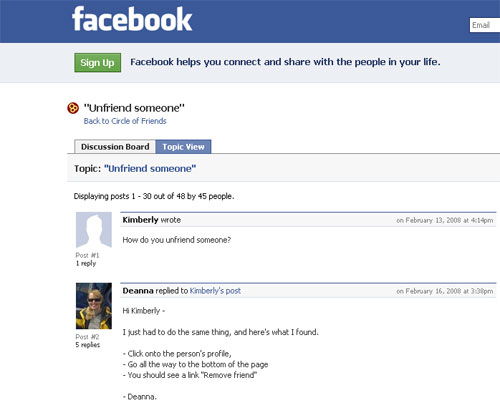
    Facebook users will be familiar with the New Oxford American Dictionary’s 2009 Word of the Year, "unfriend."

    Oxford says the term unfriend is a verb. Its definition of the word is "To remove someone as a friend on a social networking site such as Facebook."

    "It has both currency and potential longevity," said Christine Lindberg, Senior Lexicographer for Oxford’s US dictionary program. "In the online social networking context, its meaning is understood, so its adoption as a modern verb form makes this an interesting choice for Word of the Year.

    Unfriend

    "Most ‘un-‘ prefixed words are adjectives (unacceptable, unpleasant), and there are certainly some familiar ‘un-‘ verbs (uncap, unpack), but ‘unfriend’ is different from the norm. It assumes a verb sense of ‘friend’ that is really not used (at least not since maybe the 17th century!). Unfriend has real lex-appeal."

    Other Words of the Year finalists include:

      hashtag – a # [hash] sign added to a word or phrase that enables Twitter users to search for tweets (postings on the Twitter site) that contain similarly tagged items and view thematic sets
      intexticated – distracted because texting on a cellphone while driving a vehicle
      netbook – a small, very portable laptop computer with limited memory
      paywall – a way of blocking access to a part of a website which is only available to paying subscribers
      sexting – the sending of sexually explicit texts and pictures by cellphone
    freemium – a business model in which some basic services are provided for free, with the aim of enticing users to pay for additional, premium features or content

    Twitter releated word clusters for 2009 include:

    Tweeps
    Tweetup
    Twitt
    Twitterati
    Twitterature
    Twitterverse/sphere
    Retweet
    Twibe
    Sweeple
    Tweepish
    Tweetaholic
    Twittermob
    Twitterhea

    To determine the Word of the Year, Oxford says its lexicographers track the vocabulary of the English language to see how it changes from year to year. The word is then debated and chosen  with the selection made to reflect the mindset of the year and its lasting potential for cultural significance and use.


    Related Articles:

    > Thinking Beyond Facebook And Twitter For Social Relevance

    > Facebook,Foo Fighters To Pair Up Tonight

    >Twitter Expands Into More Than Just 2 Languages