Author: Serkadis

  • Microsoft’s COFEE Computer Forensic Tools Leaked

    Last year, we wrote about Microsoft’s COFEE tools, which are a set of computer forensic and auditing tools that Microsoft puts on a USB key and gives to law enforcement to use in trying to extract info from a computer. There was some fear that it was a “back door,” but people insisted it was no such thing, but just a collection of basic tools. Still, the fact that the system was promoted as being useful for decrypting passwords and analyzing a computer’s data and internet activity seemed troubling. We noted that if Microsoft was giving it out to law enforcement, it seemed likely that others would have access to it as well.

    Well, late last week, reports started showing up noting that COFEE itself had been leaked to various file sharing sites. Apparently, the program had been quite sought after at private tracker What.cd — though, after it was leaked there, the admins actually removed the torrent.

    Still, you have to imagine that the software is very much out there. So, the question still remains, is this a big deal or not? When we did our original post, many people insisted that there was no big deal in Microsoft COFEE and it was just basic everyday auditing software. Yet, when even What.cd is removing the torrent, claiming they “didn’t like” what they saw when they examined the software, in terms of “the potential impact on the site and security of our users and staff,” it does raise certain questions that are similar to those we originally raised.

    So, once again, let’s get some feedback from the folks reading here. Is this really a big deal? Or is it just your ordinary tools?

    Permalink | Comments | Email This Story


  • Transcript: Health On The Hill – November 9, 2009

    As House Democratic leaders celebrate passage of health care legislation, Senate Majority Leader Harry Reid, D-Nev., continues to await a Congressional Budget Office analysis as he tries to craft a compromise package between bills passed by the Senate Finance and the Senate Health, Education, Labor and Pensions committees. President Obama has said that he wants a health care bill to his desk by Christmas but it is unclear if that timetable will be met. View the HOTH video or listen to the audio version (mp3).

    Transcript:

    JACKIE JUDD: Good day. I am Jackie Judd with Health on the Hill, a conversation about efforts to pass health care reform legislation. Joining me, Mary Agnes Carey of Kaiser Health News and Eric Pianin, also of Kaiser Health News. Welcome as always to you both. Those efforts moved ahead quite a bit over the weekend as we know. The House passed a Bill to vote margin, $1.1 trillion over ten years. The expectation is 36 million people currently uninsured will have coverage. What are the other big points in that Bill?

    MARY AGNES CAREY: Well, it has a public plan option based on negotiated rates versus tied to Medicare. It also would put an excise tax on high income wage earners here. We are talking about folks who make $500,000 a year as an individual or a couple who makes $1 million. It’s about a 5.4 percent surtax, not expected to be too popular in the Senate. It has an individual mandate, an employer mandate. Most individuals with some exceptions would have to have insurance or face a penalty, and for small employers, $500,000 or lower wouldn’t have to provide –

    JACKIE JUDD: In payroll.

    MARY AGNES CAREY: In payroll, thank you, would not have to provide health insurance but there is a penalty that begins to phase in up to a payroll of $750,000 and then beyond that they would be required to provide insurance or face the penalties. There are some Medicare changes in there. There is a big expansion for Medicaid, taking up to about 150 percent of the poverty level, so it’s quite a comprehensive –

    JACKIE JUDD: Where are the cost controls?

    MARY AGNES CAREY: Well, the cost controls include looking at how Medicare is paid for and trying to make some changes to that. One of these issues is how they pay private plans in Medicare, called the Medicare Advantage Plans. They want to bring those payment rates down to what they pay for beneficiaries in the private fee for service plans. Data now shows that in Medicare Advantage the government pays about 14 percent more per beneficiary. That is one of those it is pointed to. There are also steps taken over time to link payment in Medicare more to the quality of the care provided.

    JACKIE JUDD: Eric, you were on the Hill Saturday before the vote. What happened in terms of the abortion language compromise, which helped the Democrats get over the 218 vote threshold that they needed?

    ERIC PIANIN: That is right. For a long time, the public option seemed to be the hottest issue, most contentious, but in the last couple of days the whole question of whether there would be some restrictions on abortion spending as part of the health care reform package became the preeminent debate, really, and Congressman Bart Stupak from Michigan, a Democrat, representing as many as 40 Democrats, warned that they would oppose the Bill unless there was an extremely strict restriction placed in the legislation, concerning abortion spending.

    What is interesting in the end is that Nancy Pelosi basically went along with their demands and gave them a vote on an amendment that passed that really takes restrictions on federal involvement in abortion programs to new levels. There is absolutely no way any of the subsidies could be spent in the new exchanges or outside of the new exchanges for abortion related services. No program could be offered as part of the exchange to provide abortion services. So, this really enraged a lot of the liberal Democrats who are pro-choice and at first a lot of them threatened to pull out their support.
    In the end, though, Pelosi prevailed and they added a very tough abortion provision and the liberal Democrats in the end decided to go along with it because they felt that passing health care reform was more important than victory on abortion, but I just wanted to make one other –

    JACKIE JUDD: And with the expectation that in conference that language would change.

    ERIC PIANIN: Well that’s the hope, but once it gets over the Senate, there is no telling what form that abortion provision will take. It is also interesting, too, that to me at least it showed that Pelosi was prepared to do almost anything to get that Bill passed in the House. I mean, there is this basic sense that we just have to move the process along. The final Bill is not going to look anything like the House Bill, but still she showed that she was prepared to do almost anything to get a victory that night.

    JACKIE JUDD: And even by doing almost everything, there was only that two vote margin, which shows how hard this is and will continue to be. So, what are the next difficult steps? What are the big questions that the Senate will now have to face and then, presuming they pass something, the conferees?

    MARY AGNES CAREY: Well, first of all, the Senate has to come up with a Bill. Harry Reid, who is the majority leader, has sent several options off to the Congressional Budget Office. He is awaiting their analysis. He has to try to reconcile differences between Bills passed by two different committees and find something that can get 60 votes in the Senate. Differences include the public plan, for example.

    In the House, it is offered to everyone. In the Senate, it would allow states to opt out of the public plan. That is a big difference. Financing is a big difference. We talked earlier about this excise tax on the high wage, the high income earners.

    That in the Senate would be, is not there, and instead they would place a tax on some of the highest cost health insurance plans, which they feel is a great way to get cost at containment, the other issue that we just discussed. The individual mandate is not expected to be as severe or rigorous, rather, as what is in the House Bill, and also there is not expected to be a strong mandate on employers to offer coverage. There is, in the Finance Bill for example, if one of your workers received the subsidy, you would have to help offset the cost of that, but it’s nowhere near as tough as the provisions in the House Bill.

    JACKIE JUDD: So, as hard as it was for Democrats to cross the finish line in the House Saturday night, is the most difficult work still ahead?

    ERIC PIANIN: I think that’s true. And I think there is a lot of concern that the Senate has lost some of its momentum. When the Senate Finance Committee finished up its work, there was a feeling that things would move apace. Since then, Harry Reid, the majority leader, has decided to take the responsibility upon himself and a small number of other leaders to try to cobble together a Bill that would attract 60 votes in the Senate.

    Right now, they are still waiting a week later for the CBO to come back with some estimates of what their latest options, proposals would cost. They don’t even have a Bill yet. And Reid signaled recently, much to the consternation of the White House that he wasn’t going to be held to any deadlines, suggesting that this thing could spill over into next year.

    Rahm Emanuel immediately was dispatched to the Hill the next day to say you know we are really thinking in terms more like Christmas rather than New Years to get something out of the Senate and the President gave a similar message for the Rose Garden on Sunday. Now that the House has acted, it’s time for the Senate to pull up its socks and get moving.

    JACKIE JUDD: And now there is some hope that it actually could happen before Thanksgiving. Likely?

    MARY AGNES CAREY: I don’t think so. I mean if Senate debate began before Thanksgiving, that would be amazing progress and we are not even sure that is going to happen, but this is Congress. Anything can happen at any time.

    JACKIE JUDD: You know, beginning about five or six weeks ago there began to be a sense of inevitability that there would be a Health Care reform Bill passed by both Houses of Congress and signed by the President. Where are we at this moment?

    ERIC PIANIN: I don’t think we are feeling that sense of inevitability right now. I think that it was a big victory for Pelosi and the Democrats to get this thing through the House. It was a great accomplishment. It was a very interesting debate and clearly incredible division between the Republicans and the Democrats. Only one Republican, Cao of Louisiana, finally voted for it.
    But moving to the Senate, these things get more complicated because there aren’t the strict rules that the Democratic leadership imposed in the House to kind of march through it, set time limits for debate, schedule votes. This stuff is like the old saying, it’s like herding cats when you are trying to deal with the Senate, and Harry Reid does not have the same power that Nancy Pelosi does.
    So there is no telling when they can pull together something that is likely to get 60 votes. And now this abortion issue, it’s very problematic, and it is going to play out in the Senate just as it did in the House and in the end it might be very hard for liberal Democrats, who are pro-choice, to go along with any Bill that is so restrictive in terms of abortion.

    JACKIE JUDD: Okay, well thank you both very much, as always, Mary Agnes Carey and Eric Pianin. Thank you for joining us. I’m Jackie Judd.

  • Rupert Murdoch to Block Google = Smart = Twitter has changed it all.

    Rupert Murdoch has said that his Newscorp sites are going to block Google indexes.  Of course, all the netizens freak out when this happens. Which I love.

    I love to tweak all the internet information must be free bigots. They get so damn religious about information on the net that they lose what little objectivity and awareness of the real world they had in the first place.  First a little enlightenment for all of you that think Murdoch is making a mistake. This is not 1999, nor is it 2004, nor is it 2006, nor is it 2008.  The calendar is about to turn to 2010.  What worked and made sense 3,5 and 10 years ago, no longer does.

    What has changed  ? Quite a bit, but lets start with this.  TWITTER IS SURPASSING  GOOGLE as a destination for finding information on breaking and recent news  of all types. Whats more,   TWITTER POSSES NO THREAT to any destination news site. 140 characters does not a story make.  Find it on twitter, link to a story on say, FoxNews and everyone is happy. The same concept applies to Facebook Links. Twitter and Facebook are not news  destinations that can compete with traditional news sources.  Google is.   Rupert loves him some twitter. Google, not so much.

    Not only are Twitter and Facebook becoming strong competitors for referrals to news sources from topical searches, they both have one HUGE HUGE HUGE advantage for news outlets that Google does not:

    TWITTER AND FACEBOOK are platforms that allow the news sources, like newscorp to post breaking news and gain value from their brand. Google does not.  In other words, if I trust a newspaper, tv or any  brand, I can follow it on twitter and expect the news to come to me.  The concept  of “If the news is important, it will find me” works better by the day.  If it matters to me, chances are very good its in one of the twitter feeds I follow.
    Having to search for and find news in search engines is so 2008.

    Twitter and Facebook have become the ultimate real time programming guides.  Look at it like this. “Hear about bubble boy from a follow”. If: “its a news source, go to that news source” If not: “Look it up on twitter (or i use icerocket.com it shows tweeter authority) to see if there are any 1st hand accouts or check my FB wall to see what my friends have to say,  if anything”  “See tweets/posts to determine how I want to get more information:  from  TV ( stream, regular, phone), or from online written or audio source” if online: “go to that source from link in twitter or facebook”

    All of the above complements everything Rupert and Newscorp are doing.   Google is no where to be found in that equation.

    Thats not to say Twitter is perfect. Its not. It has  a HUGE and growing problem with spam (unlike Facebook updates and another reason why I pimp Icerocket.com). Nor am I saying that Google is toast and has no role. Non real time feed users will continue to source news through Google.  I just see that as a declining number in an era where much of our first crack at news is via our phone.  But, perfect or not, the bottom line is that in this new era of twitter, things have changed.

    News sites blocking Google ain’t what it used to be.  Rupert is right. Deal with it.

  • EyeTV on the iPhone: In-Depth

    EyeTViPhone

    Recently, Elgato released EyeTV for the iPhone (AppStore Link). At a cost of $4.99, its marketing blurb offers the following functionality:

    With the EyeTV app, you can watch, record, and enjoy live and recorded TV on your iPhone or iPod touch. At last, you don‘t have to leave all your great TV shows at home; the EyeTV app puts the power of award-winning EyeTV in the palm of your hand.

    The EyeTV app accesses EyeTV running on your Mac at home to deliver these great features to your iPhone:

    • Watch live TV and change channels anywhere (Wi-Fi connection required)
    • Watch your EyeTV recordings
    • Browse the comprehensive Program Guide
    • Start recordings back home on your Mac immediately or schedule them for later
    • View and edit your recording schedules

    How Does it Measure Up?

    Now that we know the promises, how does the functionality work in practise and does it live up to the hype? To set the picture accurately; my set up is a 2.0GHz Core 2 Duo Mac mini with 2GB of RAM and two Elgato Digital USB Tuner sticks. This is hooked up to an Airport Express, which extends my existing wireless connection from another room. Between myself and my wife, we have an iPhone 3G, iPhone 3GS and iPod touch 2nd Gen, so I will be testing EyeTV on all three looking for differences.

    Setting Up and Preparing

    After downloading the EyeTV app from iTunes and installing onto my three iDevices, I had to update EyeTV to version 3.2 on my Mac mini by simply checking for updates. Once updated, switching on iPhone streaming was a simple option in the preferences.

    EyeTV3.2.iP1

    There is also functionality for using Elgato’s servers to allow connecting to your EyeTV device from outside your wireless network called “My EyeTV.” This works in a similar manner to Apple’s “Back To My Mac” functionality of MobileMe and requires UPnP support between your EyeTV host and your router. Because I have an AirPort Express extended network, UPnP didn’t work — but I was able to manually configure a port forwarding rule in my router on port 2170 to make the service work.

    Advanced options allow you to require a passcode to connecting a device and the option to automatically convert recordings into a format suitable for streaming at a later time. While Live TV does not need to be prepared, recorded content does.

    EyeTV3.2.IP2

    You can however, also prepare recordings manually, on a case-by-case basis.

    EyeTV3.2iP3

    After starting the iPhone app and entering my “My EyeTV” details, I get the option of connecting via Wi-Fi (on the bottom) and via “My EyeTV” (on top). When connected to my local wireless, the “My EyeTV” connection did not work (of course you wouldn’t want to do this, but the software doesn’t detect this in any way).

    0EyeTVIpConnect

    Selecting the local Wi-Fi option connects quickly and presents the app’s main menu.

    1EyeTViPMainMenu
    Watching Live TV

    Selecting LiveTV gives a list of channels and what is currently showing.
    2EyeTViPLiveTV

    Clicking on the green icon on the right displays the upcoming programs on that channel.
    3EyeTViPLiveTV

    I can then select the current show to get a summary and an option to “Watch Now.”

    4EyeTViPLiveTV

    This process then takes about 20 seconds of processing and streaming before I get picture and sound, which is smooth and crisp and just as one would expect.

    5EyeTVIpLiveTV

    Tapping on the screen brings up the controls which allow pausing, rewinding 30 seconds (and jumping back to the live stream), a volume control and resizing between widescreen (just like in the iPod app).

    6EyeTVIpLiveTV

    Pressing the ‘gear’ icon displayed in the top right of the channel listing presents a bandwidth/quality settings screen to enable you to tweak the size of the stream. This worked well and allows you to find the right setting for your moment. The lowest setting is about equal to the early days of You Tube while the highest setting is flawless.
    EyeTViPQuality

    Watching Recordings

    Pressing the recordings menu gives you a sub menu to narrow down searching for an existing recording.

    7EyeTvIpRec

    Selecting an option (such as Library) gives a list of individual recordings.
    8EyeTVIpRec

    While there is no way to search directly for a recording, you can sort the list by a number of means.
    EyeTViPSort

    Unlike live TV, when watching a recording you get full track scrubbing navigation, not just ‘back 30 seconds.’
    9EyeTViPRec

    The quality of recordings is not configurable like LiveTV is, it depends on the quality options you selected for ‘preparing recordings’ on your Mac. Cellular quality is very low and like You Tube, but if you’re on wireless (or on a jailbroken phone with 3G Un-Restrictor) you get full quality.
    EyeTViP3.2Quality

    Schedules

    Schedules let you see what upcoming recordings you have scheduled.
    EyeTViPSchedules

    All you can do here is browse and remove an item from the schedule.

    EyeTViPHDontRecord

    Guide

    The Guide gives you access to the full electronic TV guide available in your Mac’s EyeTV software, this is exactly the same as when browsing the guide for Live TV, except instead of an option to “Watch Now,” the button is “Record,” which will add the show to your recording schedule.

    EyeTViPRecord

    The Verdict

    There is no noticeable speed differences with performance between the iPhone 3G, iPod touch 2nd Gen or the iPhone 3GS. The bottleneck here is available bandwidth and the speed of the host computer. Generally, the functionality works as advertised, however there are some limitations to be aware of, and some version 1.0 bugs that need to be squashed.

    • Live streaming does not work on 3G, requires Wi-Fi — thanks AT&T, for affecting my functionality in Australia. However, on a jailbroken phone, I was able to successfully use 3G Unrestrictor to fool EyeTV into thinking it was on Wi-Fi, thus allowing it to work. This worked at a much higher quality than I expected and was also very smooth. Well worth the $2.99 it costs for 3G Unrestrictor.
    • Streaming only supports one device at a time. Connecting with my iPhone and watching a live TV stream, then connecting with my iPod touch works, but when actually selecting a channel to view on the iPod touch, it drops the stream for the iPhone. This is probably fair enough as one stream is pretty CPU intensive as it is.
    • When both recording a show and streaming live TV, I had two instances of the host application crash, requiring a full EyeTV restart to allow connections again.
    • When testing across the Internet while on my work’s wireless, or on 3G, I found my iPhone’s EyeTV app constantly crashing whenever it tried to connect. This seemed to be an issue with the EyeConnect helper software on my Mac mini, which needed to be restarted by turning EyeTV sharing off and on again in my Mac mini.
    • When stopping a live or recorded stream, the CPU usage on the host computer often stays high for 5-10 minutes. It looks like its continuing to stream data out and didn’t get the ’stop’ message from the iPhone. This does seem to eventually time out and really isn’t a big problem unless the CPU usage causes you a problem.
    • It would be a nice option to be able to ‘prepare’ a recording for the iPhone remotely.

    Once Elgato gets a software update out for both ends of the solution (iPhone and OS X) to fix the crash bugs and bring stability to the software, this will be absolutely great. Until then, it’s a bit of hit and miss, it may work fine or it may need someone to be at your computer to restart software before it works, which defeats the purpose. Elgato is working hard on its forums to replicate user’s issues and make this stable, so its a bright future ahead.

  • PM commemorates fall of Berlin Wall

    The Prime Minister has travelled to Berlin to attend events commemorating the 20th anniversary of the fall of the Berlin Wall.

    He was joined by many other heads of state and government, including the President of France, Nicolas Sarkozy, the President of Russia, Dmitry Medvedev, and Hillary Clinton, the United States Secretary of State.

    Over 1,000 giant dominoes, erected along a section of the strip that once divided East and West Germany, were toppled to symbolise the fall of communist powers across Eastern Europe in 1989.

    Gordon Brown, who was accompanied by his wife Sarah, paid tribute to the spirit of the ordinary people whose actions brought down the wall.

    “This wall was torn down not by leaders, not from on high, not by military might; this wall was torn down by the greatest force of all, the unbreakable spirit of the men and women of Berlin.”

    Speeches and Transcripts: Speech commemorating fall of Berlin Wall

  • I say we should never have to read the manual

    frustratedHave you heard? Men generally don’t read the manual before calling tech support. Women do. It probably has something to do with ego or something like that, but you know what, I never read the manual and for a damn good reason.

    It’s almost 2010. Gadgets and technology in general have been around long enough that we shouldn’t have to read a manual anymore. I expect products to work out of the box and I doubt I’m alone in that thinking. In fact, I make a point at not reading the manual when I’m reviewing a product. It says something negative if I need the help of the manual to figure out how to work a random gadget. I mean, if I can’t get it to work, how are my parents supposed to?

    This isn’t too much to ask, either. Companies spend years and a boatload of money developing a certain product. They better have made the product well enough for me to open up the box, put it together and switch it on. But when that doesn’t happen, I still don’t open the manual.

    dysonInstead, I expect Google to give me the answer in one of the first search query results. If Google fails me, I’m already too frustrated to call tech support and so I throw the crapgadget on a table for another go later in the day.

    Yes, it would help if men and women would read the manual before calling tech support. I agree. But we shouldn’t have to call in the first place. Oh, and can we please have the tech support phone number somewhere on the product just in case. Dyson does that and it’s how I know that the company believes and stands behinds its products.


  • Casio plans to enter the OLED game

    oledscreen

    OLED can still pretty much be considered a thing of the future, but we’re getting closer to use the technology in our homes every month. Today, Casio Computer announced [JP] it has teamed up with Tokyo-based technology company Toppan Printing to develop and produce OLED panels. The new joint venture will start operations from April 2010, with both companies involved saying they’ll focus on manufacturing OLED panels sized ten inches and smaller first (like the one you see in the picture).

    Those OLED screens are supposed to be used in digital cameras and cell phones by 2015. But Casio and Toppan also said they will conduct R&D to eventually develop bigger sized OLEDs, for example for TVs, too. The OLEDs will be manufactured using high-polymer-type organic electroluminescent compounds, whereas OLED production today is mainly based on low-polymer organic compounds. According to the companies, their method is more efficient and simpler.

    Casio will first transfer 600 employees to a new firm, which will be established in February and will focus exclusively on OLED development. Toppan says it will then buy 80% of all outstanding shares of the joint venture (total capitalization: $4.5 million).


  • Sam’s Club (rumored) Black Friday ad

    samsClub2

    A list of rumored items for the Sam’s Club Black Friday ad has been percolating around the web lately. There’s no ad scan to confirm any of this yet, but I’ll update this post once more information becomes available.

    For now, though, here’s a list of the rumored electronics items:

    Blank Media

    Blu-ray 2-Packs – $17.00

    Computers

    Acer Aspire One 10.1″ Netbook – $197.00

    HP G71 17″ LED Notebook w/Blu-ray – $499.00

    Digital Cameras

    Olympus FE-4000 12 MegaPixel Camera – $98.00

    Digital Media Cards

    Toshiba 16GB SDHC Digital Media Card – $24.00

    DVD Players

    JVC 1080p Blu-ray Player – $129.00

    Phillips Dual Screen Portable DVD Player – $99.00

    Electronics

    Samsung Compact SD Camcorder w/Bag – $149.00

    GPS Systems

    Garmin Nuvi 255w GPS Navigation System – $119.00

    Home Theater

    Samsung 5.1 Blu-ray Home Theater – $398.00

    Printers

    HP AIO Printer Bundle – $69.00

    Televisions

    Hitachi 42″ 1080p LCD HDTV – $598.00

    Phillips 52″ 1080p LCD HDTV – $1198.00

    Vizio 47″ 1080p 240Hz LCD HDTV – $997.00

    Video Games

    PS3 120GB Bundle – $399.00

    Wii Active Life Bundle w/Mat – $69.00

    Wii Family Bundle – $349.00

    No word on possible doorbuster items or when the store will open on Black Friday. I’ll update this post when more information becomes available.

    Sam’s Club Black Friday Ad [BlackFriday.info]

    More Black Friday deals…


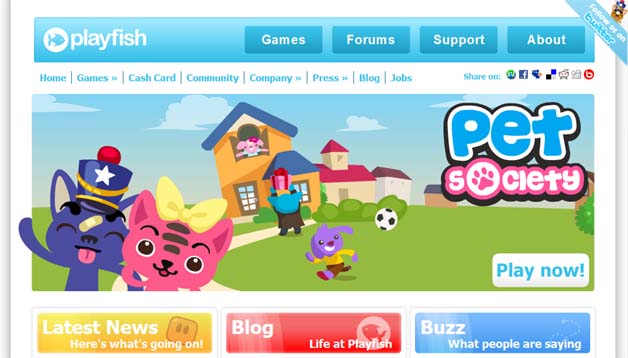
  • EA Acquires Playfish For (Maybe) $400 Million

    Social network games – and by extension, social networks themselves – received a strong endorsement this morning as a major acquisition was announced.  Electronic Arts has bought Playfish, a maker of said games, for at least $300 million.

    Barry Cottle, Senior Vice President and General Manager of EA Interactive, explained in a statement, "Social gaming, with its emphasis on friends and community, is seeing tremendous growth and this is the right time to invest to strengthen our participation in this space."

    Indeed, Playfish should make a good partner for EA.  The company describes itself as a leader in the social gaming industry, and has received backing from Accel Partners (which also invested in Facebook) and Index Ventures (which put its weight behind Last.fm and Skype).

    Moreover, Playfish claims that over 150 million of its games have been installed.  (Playfish’s top games are Country Story, Pet Society, Restaurant City, and Who Has The Biggest Brain? in case you’re curious.)

    And that large number brings us back to the matter of Playfish’s price.  EA’s paying $275 million in cash and $25 million in "equity retention arrangements" up front.  Then, as much as $100 million more will be delivered if unspecified performance milestones are met between now and the end of 2011.

    Related Articles:

    > 20 Goals For Business Social Media Use

    > Nearly Half Of Consumers Would Recommend A Product On Facebook

    > Facebook Most Widely Used Network Among Businesses

  • Activision to donate a million dollars for the benefit of war veterans

    Now that Modern Warfare 2 (PC, PS3 and Xbox 360) is slowly making its way into store shelves and home consoles, Activision seems to be busying itse…

  • Word from the White House: Passage of the Affordable Health Care for America Act

    It’s no secret that institutions of all stripes focus their communications on certain messages day to day. We thought it would all be a little more open and transparent if we went ahead and published what our focus will be for the day, along with any related articles, documents, or reports.  Today we publish our second batch.

    Supporting website: "Affordable Health Care for America Act," Speaker.gov

    Talking Points: Passage of the Affordable Health Care for America Act

    Saturday night, in an historic vote, the House of Representatives passed a bill that would finally make real the promise of quality, affordable health care for the American people.
    The Affordable Health Care for America Act provides stability and security for Americans who have insurance; quality affordable options for those who don’t; and brings down the cost of health care for families, businesses, and the government while strengthening the financial health of Medicare. 
    It is also fully paid for and will reduce our long-term federal deficit.
    Thanks to the hard work of the House, we are just two steps away from achieving health insurance reform in America. 

    Talking Points: Closer to Reform than Ever Before

    The House of Representatives’ historic step brings us far closer to comprehensive health insurance reform than ever before.
    Now it’s time for the United States Senate to follow suit.  We are absolutely confident that it will and President Obama looks forward to signing reform into law by the end of this year.
    Thanks to the long hours and hard work the Senate has already put in, it too is close to passing reform legislation. And the level of agreement between the House and Senate versions of reform is remarkable.

    Like the House bill, the Senate legislation would provide unprecedented security and stability for Americans with insurance.  It would provide quality, affordable options for Americans without insurance.  And it would lower costs for families, businesses, and the nation as a whole.
    And like the House version, the Senate proposal is also fully paid for and would reduce our national deficit.


  • Datatel To Switch Private Equity Sponsors

    Hellman & Friedman and JMI Equity have agreed to acquire Datatel Inc., a Fairfax, Va.-based provider of enterprise information management solutions for higher education institutions. No financial terms were disclosed. Sellers include Thoma Bravo, Trident Capital, HarbourVest Partners and JP Morgan Asset Management — which sponsored a management buyout of Datatel in early 2005.

    PRESS RELEASE

    Datatel, the industry’s most experienced provider of higher education software, services and insight, announced today that they reached a definitive agreement to be acquired by Hellman & Friedman LLC.

    Hellman & Friedman and its affiliates, co-investor JMI Equity, and Datatel management and employees will purchase the company from current investors Thoma Bravo and its co-investors in the transaction including Trident Capital, HarbourVest Partners and JP Morgan Asset Management. Hellman & Friedman is a leading private equity firm with a focus on investing in superior business franchises.

    Following the higher education market’s strong positive reaction to Datatel’s new solutions in the areas of teaching and learning, recruiting, and mobility, Datatel President and CEO John Speer said, “Datatel’s new solutions, strong professional services, and exceptional client relationships coupled with our consistent performance are what attracted Hellman & Friedman to Datatel.” Mr. Speer went on to say, “Datatel will continue to be led by our current executive and management teams and remains focused on delivering strong, compelling solutions for higher education.”

    “We are delighted to be part of a company that has out-performed the market,” said David Tunnell, Managing Director of Hellman & Friedman. Anupam Mishra, Director of Hellman & Friedman added, “We see our partnership as an opportunity to support Datatel’s continued success in helping colleges and universities meet their institutional goals.”

    “Our partnership with Datatel has been an exceptional experience,” said Orlando Bravo, a Managing Partner of Thoma Bravo. “Together we have substantially increased the value of the company while expanding the solutions and services available to Datatel clients.”

    About Datatel, Inc.

    Datatel is the most experienced provider of technology products, services, and insight to higher education. Colleges, universities, and technical schools across North America partner with Datatel to build Strategic Academic Enterprises dedicated to achieving student success. The company has focused exclusively on higher education since 1979, and its technology is used by nearly 800 institutions serving more than five million students. For more information, visit www.datatel.com.

    ShareThis


  • Sean Carroll Joins Polachi

    Sean Carroll has joined executive search firm Polachi & Co. as a Stamford, Conn.-based partner, with a focus on C-level tech executives. He previously was a managing partner with the Barlow Group, and before that was with both Pequot Capital’s venture capital unit and Heidrick & Struggles.

    PRESS RELEASE

    Polachi, the leading provider of Access Executive Search™ services to technology, clean tech, venture capital and private equity clients, announces the addition of Sean C. Carroll as Partner. In his new role, Sean will specialize in situating C-level technology executives and will be based in the Stamford, Connecticut area.

    During his seasoned career as an executive search associate and Partner, Sean has successfully managed hundreds of senior executive search assignments for clients ranging from software, eCommerce and professional services to venture-backed technology and technology-enabled companies. His experience encompasses the execution and direction of a comprehensive executive search process from search origination, recruitment and placement.

    “Sean brings a proven track record of executing searches spanning from established portfolio companies to start-ups backed by investors,” said Peter Polachi, Partner, Polachi. “His strong client candidate networks and technology background will be a tremendous asset to the firm.”

    Prior to joining Polachi, Sean was a Managing Partner and part owner of the Barlow Group. He led the human capital efforts for the venture arm of Pequot Capital, and was also a Senior Associate at Heidrick & Struggles.

    Prior to his executive search career, Sean was an officer and Maritime Patrol Pilot in the U.S. Navy. He achieved the designations of Mission Commander & Instructor Pilot and was deployed twice to the Middle East in support of Operations Desert Shield and Desert Storm. Sean received his BS in Oceanography from the United States Naval Academy. He currently resides in Wilton, Connecticut.

    About Polachi, Inc.

    Polachi, Inc. (www.polachi.com) provides Access Executive Search™ services to technology, clean technology, private equity and venture capital companies. The firm’s partners, all search industry veterans with decades of experience, understand that leading companies deserve access to the absolute best talent on the planet. While traditional executive search firms limit candidate access due to “off-limits” protocol, and newer search firms lack the breadth and depth of connections, Polachi’s Access Executive Search™ model, coupled with unmatched agility, delivers the most accelerated results. Polachi is a sponsor of the New England Clean Energy Council (NECEC) as well as a founding member of Access Search Partners™ (ASP), a partnership of five leading technology search firms that provides clients with specialist search services on a global scale. For more information about Polachi please call 508-650-9993 or visit www.polachi.com.

    ShareThis


  • Carlyle Buying OpenLink Financial from TA Associates

    The Carlyle Group has agreed to buy OpenLink Financial from TA Associates. No financial terms were disclosed for the deal, which is expected to close later this quarter. Bank of America Securities and Credit Suisse Securities are providing leveraged financing. OpenLink is a Long Island-based provider of software for the the commodity, energy and financial services industries.

    PRESS RELEASE

    Global private equity firm The Carlyle Group, OpenLink Financial, and TA Associates today announced that Carlyle has agreed to purchase OpenLink Financial, a software developer for the commodity, energy and financial services industries, from TA Associates. The terms of the transaction were not disclosed. The transaction is expected to close in the fourth quarter.

    Founded in 1992, OpenLink is a provider of cross-asset trading, risk management, and related portfolio management software solutions for the commodity, energy and financial services markets globally. OpenLink’s blue chip client base of more than 150 customers worldwide includes twelve of the top twenty-five largest commodity and energy companies by market capitalization, eight of the largest financial institutions and eleven of the largest central banks, as well as major hedge funds and public utilities. Headquartered on Long Island, New York, and with offices in New York, Houston, London, Berlin, Vienna, São Paulo, Sydney, and Singapore, OpenLink has more than 785 employees worldwide.

    Kevin Hesselbirg, CEO of OpenLink, said, “TA Associates has played a key role in the development of OpenLink, helping us to grow organically and evolve from our entrepreneurial roots. In this next phase of our journey, Carlyle’s technology expertise and financial know-how will serve us well, particularly as we expand internationally and through acquisitions. We see a bright future for the continued growth of OpenLink, driven by the persistent expansion of demand in the industries we serve, as we deliver solutions to the world’s leading energy, commodity and financial services companies who are our clients.”

    Cam Dyer, Principal in Carlyle’s U.S. Technology Buyouts group, said, “We are pleased to back CEO Kevin Hesselbirg and his talented management team, who have an outstanding track record and a clear strategy for long-term growth. We look forward to supporting OpenLink’s growth through Carlyle’s global resources and industry expertise, and we expect that OpenLink’s valued clients and talented employees will benefit from this growth as OpenLink continues to increase the breadth and depth of its industry leading software solutions.”

    Kurt Jaggers, a Managing Director at TA Associates, said, “We enjoyed working with the entire management team and Board at OpenLink. This has been a truly successful relationship that has further accelerated OpenLink’s growth.” Added John Meeks, a Managing Director at TA Associates, “OpenLink is on a path for continued success and we wish them well.”

    Acquisition financing has been arranged by Bank of America Securities and Credit Suisse Securities. OpenLink Financial was advised by Morrison & Foerster and BofA Merrill Lynch. The Carlyle Group was advised by Alston & Bird and Credit Suisse. TA Associates was advised by Goodwin Procter.

    Equity capital for this transaction will come from Carlyle Partners V, Carlyle’s flagship $13.7 billion U.S. buyout fund, management, and Founder and Chairman Coleman Fung.

    * * * * *

    * * * * *

    About The Carlyle Group

    The Carlyle Group is a global private equity firm with $86.1 billion of assets under management committed to 64 funds as of June 30, 2009. Carlyle invests in buyouts, growth capital, real estate and leveraged finance in Africa, Asia, Australia, Europe, North America and South America focusing on aerospace & defense, automotive & transportation, consumer & retail, energy & power, financial services, healthcare, industrial, infrastructure, technology, business services and telecommunications & media. Since 1987, the firm has invested $56.3 billion of equity in 920 transactions for a total purchase price of approximately $229.1 billion. The Carlyle Group employs more than 875 people in 20 countries. In the aggregate, Carlyle portfolio companies have more than $109 billion in revenue and employ more than 415,000 people around the world. www.carlyle.com

    About TA Associates

    Founded in 1968, TA Associates is one of the largest and most experienced middle market private equity firms. The firm has invested in nearly 400 companies and manages more than $16 billion in capital. With offices in Boston, London, Menlo Park and Mumbai, TA Associates leads buyouts and minority recapitalizations of profitable growth companies in the technology, financial services, business services, healthcare and consumer industries. More information about TA Associates can be found at www.ta.com.

    ShareThis


  • EA Buys Playfish for $400 Million

    Electronic Arts (Nasdaq: ERTS) has bought social gaming company Playfish Inc. for $400 million, including a $100 million earn-out. The company had raised $21 million in VC funding from Accel Partners and Index Ventures.

    PRESS RELEASE

    Index Ventures and Accel Partners, two leading global venture capital firms, today announce the sale of portfolio company Playfish Inc. to Electronic Arts (NASDAQ: ERTS). Playfish was acquired for a consideration of up to $400 million including an earnout of up to $100 million and excluding cash balances.

    Kevin Comolli, board member from Accel Partners stated, “As the original institutional seed investor in Playfish it has been a pleasure to work with the founders and management team and to see them achieve such extraordinary growth. Playfish has been recognized in the industry for its innovation and creativity and continues to change the way people play games by creating more social and connected experiences. We are sure they will continue to thrive under the ownership of Electronic Arts.”

    Ben Holmes, board member from Index Ventures said, “We want to congratulate Kristian Segerstråle, the other founders and the entire Playfish team for what they have achieved in such a short time. We are delighted to have been one of the investors in such a forward-thinking company and we wish them every success in the future.”

    Kristian Segerstråle, Playfish CEO, commented, “I want to thank Accel Partners and Index Ventures who bought into our vision for a new type of games company and have supported us from the start and through our sale to Electronic Arts.”

    About Playfish

    Playfish leads the social gaming industry in innovation and creativity with award-winning, category-defining games designed for friends to play together. The company has changed the way people play games by creating more social and connected experiences. To date, more than 150 million Playfish games have been installed and played by millions of people worldwide on platforms such as Facebook, MySpace, Google, Bebo, iPhone and Android. The company’s games are amongst the most acclaimed and popular online, including Pet Society, Restaurant City, Country Story and Who Has The Biggest Brain? Playfish has development studios in London, San Francisco, Beijing and Tromso, Norway. Playfish is backed by Accel Partners, Index Ventures and Stanhope Capital.

    About Accel Partners

    Founded in 1983, Accel Partners has a long history of excellence and innovation in venture capital, and is dedicated to partnering with outstanding entrepreneurs and management teams to build world-class businesses. Accel today invests globally using dedicated teams and market-specific strategies for local geographies, with offices in Palo Alto, California, London, UK, and Bangalore, India as well as in China via the IDG-Accel Partnership.

    With over $6 billion under management, Accel has helped entrepreneurs build over 300 successful companies, many of which have defined their categories, including Actuate, Acopia, Agile Software, Alfresco, AMCC, Arrowpoint, BBN, Brightcove, ComScore, Etsy, Facebook, Foundry Networks, Gameforge, Getjar, GlamMedia, Imperva, Infinera, Interwoven, JBoss, Kayak, Macromedia, Maven Networks, metroPCS, Polycom/PictureTel, Portal Software, QlikTech, Rapt, Real Networks, Redback Networks, Riverbed, UUNet, Veritas, Walmart.com, Webroot, Wily Technology, XenSource and Zimbra. For more information, please visit the Accel Partners web site at www.accel.com

    About Index Ventures

    Index Ventures is a leading global venture capital firm active in technology venture investing since 1996. The firm is dedicated to helping top entrepreneurial teams in the Information Technology, Clean Technology and Life Science sectors build their companies into market defining global leaders. The firm has offices in Geneva, London and Jersey and focuses on investments from seed through growth stage companies. Current portfolio companies include Adconion, AlertMe, Betfair, Criteo, DimDim, Lovefilm, Moshi Monsters, MOO, NormOxys, Oanda, OpenX, PanGenetics, Telegent and viagogo. Recent exits of note include Last.fm (the world’s largest socialmusic platform, recently acquired by CBS) and MySQL (the world’s most popular open source database recently acquired by Sun). For more information, please visit www.indexventures.com.

    ShareThis


  • Anger Against Red Light And Speed Cameras Going Mainstream

    A bunch of folks have submitted this recent Washington Post article about the growing anger and resentment towards red light and speed cameras. We’ve posted similar articles in the past, but this is one of the first times I’ve seen the topic discussed in a major mainstream paper. The discussion basically hits on all the high points, showing that people really hate the devices and that the reason they’re so popular is not safety, but revenue. It also looks at the stats, talking about a few different studies. It does mention one study claiming that the cameras have decreased accidents and fatalities, but then notes numerous other studies that disagree, and digs into the details of the original study to find that it does not account for multiple other factors. At best, the studies seem to indicate that red light and speed cameras do not decrease accident rates (in one damning study, a town that got rid of its cameras saw a bigger decrease in accidents than a neighboring town that installed them). In the end, it’s quite clear that the cameras are entirely about money, and have nothing to do with safety — and it’s nice to see more people recognizing this issue.

    Permalink | Comments | Email This Story


  • GameStop given permission to break Modern Warfare 2 street date (Update: Actually, no permission has been given at all. Fancy that.)

    gsmw2

    UPDATE Activision just contacted us and in no uncertain terms said that nobody has been given permission to sell the game early. Not GameStop, not the indie video game store on the corner, not anybody.

    Activision has not given any retailer permission to sell Modern Warfare 2 prior to the Nov. 10 street date. The company fully supports the Nov.10 street date.

    And there you have it. (I always thought this whole thing sounded fishy. Why would Activision spend millions upon millions of dollars publishing the game, marketing the Nov. 10 date, only to break it because a couple of mom-and-pop video game stores decided to sell it early? It didn’t make sense. As it that doesn’t happen all the time, street dates being broken by rogue stores.)

    So if you do find a copy of the game before tomorrow consider yourself lucky.

    I’ve kept the original text down here, just because. You’ll notice that I cleverly struck it out, indicating that it’s no longer valid.

    You most certainly already know this by now, but Modern Warfare 2 is probably already available at your local GameStop. The release date (tomorrow, actually) was broken last week by various so-called mom-and-pop video game stores, so Activision went ahead and started letting select GameStops sell the game.

    GameStop, with Activision’s eventual approval, made the decision to break the street date, as its known, because other stores, particularly in the northeast, had already broken the date. Can’t have li’l ol’ mom-and-pop have all the fun, now can we?

    What does this mean for you? You can try to call your local GameStop, and see if it’s selling the game early. If so, hooray. If not, you’ll have to wait one more agonizing day to play the game.

    I’m still undecided if I’m going to get it, seeing as though World of Warcraft takes up a supermajority of my gaming time. Not that any of you care, which I fully recognize.


  • Will the Cloud Lead Me Away From the Mac?

    cloud

    There’s no doubt that cloud computing is a growing trend. All you have to look at is the popularity of netbooks to see that many people nowadays will be quite happy with a computing device that gives them access to the web, and not much else.

    I’m certainly part of this trend, as I write this story I have the following web-based applications open on my Mac:

    What surprises me isn’t how many web apps I’m accessing, but how few native Mac applications I am using to access these services. I am using Tweetie to access Twitter, Evernote has it’s own native Mac application and I use BusyCal to access Google Calendar. Apart from that, all of these web services are being accessed either via Safari (Facebook and Lexulous), or via Site Specific Browsers (SSBs), which means I’m using the naked, if you will, web interface for the application.

    Two years ago I never would have done this. I actually wrote a whole blog post, on a now defunct blog, about how I eschewed web-based applications in favor of native Mac apps because I wanted a Mac-like experience. As such I used Mail.app to get my email, NetNewsWire for RSS feeds, Omni Focus for tasks, etc. Nowadays I use web-based apps for all those functions.

    There were several factors that led me to this place. First of all web based apps have become better in terms of user experience, in some cases even exceeding, in my opinion, the user experience of the native Mac alternative, for example Gmail versus Mail. Although Google’s web apps aren’t particularly pretty, they are well thought out, and some other web apps are almost elegant, like Remember the Milk.

    The iPhone has also been a driving force towards web-based applications because they are more likely to offer the ability to easily synchronize over the air. For example, I would love to use Things as my main task manager, but the simple reality is that I never remember to go through the rigamarole of synchronizing via Wi-Fi. If I can’t sync over the air with my iPhone, then I don’t want to use it on my Mac.

    Probably the most important driving force, however, has been features. Google Reader is an excellent example of this. I recently went over several native Google Reader clients for the Mac, but despite this range of choices, I’m still using a site specific browser to access Google Reader. Why? Because none of these applications offer the feature set that the actual website does, and I actually use all of those features. I’ve faced similar problems with native Mac apps that purport to give you access to Facebook or WordPress.

    The reality is that many web applications have reached the point of complexity that building a third-party client for them becomes very difficult, especially on the desktop where users will demand feature parity, or something close to it. Unless a company is building their own client, such as Evernote, or the service is exceedingly simple, such as Twitter, desktop clients are constantly going to be playing a losing game of catchup.

    What all this means for users like myself is that more and more of my computing experience is moving away from the Mac and to the web (subscription required). I love the Mac, I love the combination of stability, elegance, ease of use and power Apple’s computers offer me, but I have to admit that I’m taking less advantage of the platform than I have in the past, and unless something drastic changes, that trend is only going to continue.

    Apple doesn’t seem to be making aggressive moves towards building better support for web applications into the operating system, and this may be a dangerous mistake. Someday in the not to distant future something approaching 100 percent of the average user’s computing is going to move online, and when that happens Apple may find itself flat footed in a new world, and I may find myself looking for a computing platform better suited for my actual use.

  • Should Health Insurance Companies Be Allowed To Sell Individual Policies Across State Lines?

    Kaiser Health News staff writer Phil Galewitz reports on this element of GOP-backed health reforms. “A core feature of the health overhaul proposal unveiled by House Republicans – and of GOP plans for years – would allow individual health insurance policies to be sold across state lines. Currently, consumers can buy policies only from insurers licensed by the states where they live.”

  • Health Policy Experts Review The House Vote

    Health policy experts hold different views on Saturday’s House overhaul vote. Kaiser Health News collected some of their responses.

    Douglas Holtz-Eakin: The House Bill Could Have Been Avoided

    Jonathan Cohn: The House Bill Is A Great Start

    Robert Laszewski: Loading More People Onto the Titanic

    Karen Pollitz: From Now On, We’re All In This Together