Author: Serkadis

  • Ubuntu 9.10 Review

    Right after Ubuntu’s fifth birthday it was time to celebrate once more, because a Karmic Koala was released, and it brought with it a lot of reasons to upgrade. If Ubuntu 9.10’s smart looks haven’t convinced you yet, maybe the fast boot times and overall enhanced performance will. You still don’t know what Ubuntu 9.10 (Karmic Koala) is all about? Then read on, we will clue you in.

    While writing this review, I tried to put myself in the “shoes” of a new Ubuntu user. This meant that I didn’t go on to installing my favorite programs or setting up everything as I like right after installing the operating system, but instead I tried to make do with what Ubuntu provides in the default installation. Also, I tried to stay away from the terminal and, largely, succeeded in doing so. We’ve tested Ubuntu 9.10 over a period of one week on the following systems:

    [tablec][row][col]· AMD K8 nForce 250Gb Motherboard         
    · AMD Sempron 2800+ Processor
    · Nvdia GeForce FX5500 Video Card
    · 512 MB RAM
    · IDE HDD 80 GB Maxtor
    · LG CD-RW/DVD-ROM Drive
    · 17″ LG Flatron L1730S LCD[/col]
    [col]· Intel Gigabyte GA-965P Motherboard
    · Intel Pentium 4 3 GHz
    · Nvidia Leadtek Geforce 7300GS 256 VRAM
    &middot… (read more)

  • Strikeforce will be the ‘premier’ MMA league in EA Sports MMA

    eamma

    Strikeforce (UFC’s closest competitor here in the U.S.) promotes one of the bigger fights of the year tomorrow in Fedor vs. Brett Rogers. It takes place in Chicago, which explains why EA Sports just held a press conference there to reveal more details of its upcoming MMA game, entitled EA Sports MMA. EA Sports says that Strikeforce will be the “premier” mixed martial arts league in the game, and that well-known referee “Big” John McCarthy will be in the game.

    The game, which is due out for the Xbox 360 and PS3 next year, will, as such, feature Brett Rogers and other Strikeforce fighters.

    In-game commentary will be provided by Frank Shamrock and Mauro Ranallo. I haven’t played an EA Sports game in three years, so I have no idea who good the commentary is these days.

    Other fighters confirmed to be in the game include current UFC star Randy Couture, Gegard Mousasi, Renato Sobral, and Cung Le. (Check Wikipediafor the full list of confirmed and rumored fighters. Hopefully Alistair Overeem makes the cut. You’d think he would, being that he’s the Strikeforce heavyweight champion, even if he hasn’t defended the belt in two years.)

    Presumably EA Sports MMA will now be colloquially referred to as “the Strikeforce game.” Hopefully EA can work in plenty of Dream fighters, as well as the Dream arenas.

    Oh, the first trailer of the game will debut during tomorrow night’s Strikeforce show that airs on CBS at 9pm. And if you’re interested in a little backstory, check out Showtime’s 30-minute documentary on both Fedor and Rogers. Fun stuff.


  • Sony Ericsson’s 720p shootin’, S60 runnin’ Kurara leaks out

    se-kurara-3

    A year ago Sony Ericsson’s prominence was dropping faster than Kirstie Alley could pound back Quarter Pounders, but its most recent offerings have been successful in generating buzz in a way that the Japanese-Swedish phone maker hasn’t experienced in quite some time. Fast forward to today where pictures of the companies second Symbian S60 device have leaked out by way of Russia and again we have some buzz, this time about how its 8.1 megapixel camera might be able to record videos at resolutions up to 720p. It’s codenamed Kurara and is said to have a 3.5″ AMOLED display, but other than that we really don’t know anything about it, other than it’s likely to come sometime within the next 6 months. More pictures are available after the break.

    Thanks to everyone that send this in!

    se-kurara-1

    se-kurara-2

    se-kurara-3

    se-kurara-4

    Read

  • Stimulus Funds for Green Energy Projects Going Offshore along with Other U.S. Manufacturing

    The Obama Administration sold its $787 billion stimulus plan on the basis of improving the economy through investing in green energy and by doing so, increasing employment in the United States. But what is actually happening, particularly with wind and solar projects, is that the majority of the manufactured components are being built offshore in either Asia or Europe, resulting in foreign countries capturing a good deal of our stimulus funds and finding a lucrative haven for their products in the United States.

    Green Stimulus Money Going Overseas

    Since September 1, 84 percent of the $1.05 billion in clean energy grants has gone to foreign wind companies. Foreign countries benefiting from stimulus funds for wind technology are Spain (57%), Germany (12.6%), Japan (9.5%), and Portugal (5%).[i] Companies began applying for grants at the end of July and awards were announced by the two joint administrators of the program, the Energy and Treasury Departments, beginning on Sept. 1. In the first round of the grants, 77% went to foreign wind developers, followed by 84% in the second round. Of the 11 wind farms that received grants, 695 of the 982 installed turbines were manufactured by a foreign company.[ii]

    Further, there are few restrictions on how the grants can be used. According to the Investigative Reporting Workshop at American University, over $800 million were provided to wind farms that were already producing electricity. As required by law, all 11 wind farms started operating after January 1, 2009, but before the grants were awarded.[iii]

    Turbine Manufacturing Dominated by Foreign Competitors

    The U.S. currently has the most installed wind capacity in the world, but it is not a leader in the manufacture of turbines. The Investigative Reporting Workshop reported that of the turbines currently under construction in the U.S., 67 percent are slated to be purchased from foreign-owned turbine manufacturers.[iv] According to U.S. customs data for 2008, and the U.S. Trade Commission, the U.S. imported $2.5 billion worth of wind turbines last year—up from $365 million in 2003.

    In the future, wind turbines and/or their component parts may be coming from China where lower labor costs have allowed Chinese-made products to dominate many manufactured goods in the U.S. GE, a major U.S. wind turbine producer, already owns three facilities in China that produce turbine components. GE is also planning a factory in Vietnam that will employ 500 local workers and export 10,000 tons of components to GE Energy assembly plants around the world.[v]

    China is already beginning to develop its own strong hold for wind power in the U.S. A joint venture between China’s Shenyang Power Group, the U.S. Renewable Energy Group, and Cielo Wind Power LP to develop a 600 megawatt wind farm on 36,000 acres in West Texas, costing $1.5 billion, was announced on October 29, 2009.[vi] A-Power Energy Generation Systems Ltd., a provider of distributed generation systems in China and a fast-growing manufacturer of wind turbines, will supply the turbines. A-Power Energy entered the wind power industry last year.[vii] Delivery of wind turbines for the West Texas wind farm is scheduled for March 2010.[viii]

    Solar Cells Manufactured Overseas

    Not only are wind turbines mostly manufactured in countries overseas, but so are photovoltaic (PV) cells. Florida Power & Light (FPL) started operating its 25 megawatt photovoltaic solar plant in southwest Florida in conjunction with a visit to the plant by President Obama on October 27. [ix] The DeSoto plant in southwest Florida is the first of a total of 110 megawatts of solar capacity that FPL will install at 3 different sites by the end of 2010. Although Obama praised FPL’s work in the solar arena, he did not tell the American public that the components of the DeSoto plant are from foreign countries. While the PV cells were provided by a firm from California, they were made in the Phillipines. The steel PV frame holding the cells was produced in Canada, and the electrical parts and boxes were made in Germany, where solar power has been given heavy subsidies by the German Government. While German manufacturers have been producing PV technology for their country’s solar expansion, they are now concerned that China will take over their market due to costs that are 30% lower.[x]

    Conclusion

    The Obama Administration has told the American public that it will produce jobs and stimulate the U.S. economy through green energy technology. He has also touted that stimulus funds will be used for goods made in America. Yet, the the Investigative Reporting Workshop at American University finds that this is not the case. And, more examination of green energy development in the U.S., shows Asian and European countries well established here in providing the component parts for green energy technology.

    The problem is not with international trade per se. In a genuinely free market, where politicians do not pick winners or losers, the most efficient firms would capture market share, be they American or foreign. The result would be the best products at the lowest prices for American consumers.

    The real problems are a government “stimulus” plan and efforts to centrally plan a “green economy.” The government can only “stimulate” by spending money that it has first taxed or borrowed from the private sector. It would be bad enough for the government to destroy jobs in American fossil fuel industry while spending money on domestic producers of “green energy.” But it is particularly absurd for the U.S. government to cripple American industry while shoveling the lion’s share of the pork into the hands of foreign beneficiaries.


    [i] “Overseas firms collecting most green energy money”, October 29, 2009, http://investigativereportingworkshop.org/investigations/wind-energy-funds-going-overseas/

    [ii] Ibid.

    [iii] Ibid.

    [iv] Ibid

    [v] “Vietnam’s first turbine component plant underway”, May 13, 2009, http://www.vietnewsonline.vn/News/Business/Companies-Finance/6072/Vietnams-first-turbine-component-plant-underway.htm

    [vi] www.reuters.com/article/pressRelease/idUS200008+29-Oct-2009+BW20091029

    [vii] “Lone Star, Meet Red Star: China’s $1.5 Billion Wind-Power Deal in Texas”, October 30, 2009, http://blogs.wsj.com/chinarealtime/2009/10/30/lone-star-meet-red-starchina%e2%80%99s-15-billiob-wind-power-deal-in-texas/

    [viii] www.reuters.com/article/pressRelease/idUS195122+29-Oct-2009+PRN20091029

    [ix] http://www.instituteforenergyresearch.org/2009/10/26/highest-cost-generating-plant-comes-on-line-in-florida-to-obama-fanfare/

    [x] “Solar-Power Incentives in Germany Draw Fire,” Vanessa Fuhrmans, Wall Street Journal, September 28, 2009, http://online.wsj.com/article/SB125383541153239329.html

  • You are not worthy of the 18-button OpenOfficeMouse (and it has an analog stick)

    OOmouse-proto3
    You may recall our incredulity when SteelSeries announced their 15-button MMO Mouse. Not one to be passed by, Razer shortly thereafter came out with the 17-button Naga, which we’ll be reviewing soon. But unknown to them, a small team was working in obscurity to create an 18-button mouse… with an analog stick for your thumb, to boot.

    The OpenOfficeMouse, or OOMouse, isn’t exactly the most attractive piece of hardware, but its creator claims that “16 buttons divided into two 8-button halves were the maximum number of buttons that could be efficiently used by feel alone.” I guess if you take the thumb out of the equation with the analog stick, which Razer nor SteelSeries had the wherewithal to do, that’s probably true. They’ve set up profiles to make the OOMouse work with WoW, 3D Studio Max, Firefox, and many others — including, of course, the whole OpenOffice suite.

    Personally I’m not a mega-mouse kind of person; ergonomics are far more important for me considering the amount of mousing i have to do, which is why I’m considering the Microsoft Natural as an alternative to the G500 and Mamba, which I switch between to keep things interesting. And while this OOMouse may look ridiculous, I’m sure there are some people who will find it a joy.


  • Chinese Michael Jackson phone is no Thriller

    ♪It’s close to midnight and something cheesy’s lurking in the dark
    Under the moonlight, you see a phone that almost makes you barf♪

    Man. Just last weekend, I was looking at my boring ol’ phone and thinking to myself: if only this were covered in faux-gold and diamonds and molded to look vaguely like Michael Jackson’s torso!


  • Tundra Headquarters Now on Twitter AND Facebook

    Here’s a quick update on our growth plan for our loyal readers. If you like the site, I would be grateful for any feedback or comments you have on these items, our plans, and what we can be doing better.

    New Stuff

    First, as you may or may not know, I’ve been posting on Twitter on behalf of TundraHeadquarters.com for a few months now.

    TundraHeadquarters.com Admin Jason is posting on Twitter - click the image to see his profile.

    TundraHeadquarters.com Admin Jason is posting on Twitter – click the image to see his profile.

    Second, I setup a Facebook fan page for TundraHeadquarters just now. It’s sort of ugly right now (at least I think so), but I’m going to get some help with making it prettier.

    The first attempt at a Facebook fan page for TundraHeadquarters.com

    The first attempt at a Facebook fan page for TundraHeadquarters.com

    It’s also very empty right now…so anyone who wants to post a “Hey what’s up” or start a discussion or put a picture or whatever would be greatly appreciated.

    I’m also on Facebook myself and I’d like to be Facebook friends with anyone who wants to be friends with me. http://www.facebook.com/tundrahq.

    Third, we added a section for user reviews of Tundra accessories a month or two ago. It’s sort of empty right now, and we still need to add a bunch of parts, but I’m getting a helper to work with me on adding more stuff. If you have one of the accessories listed (like one of these air intakes), please take a moment to add your review. It will help other people out when they’re ready to buy.

    Our new Tundra Accessory user review system

    Our new Tundra Accessory user review system

    Future Plans

    • We’re going to re-do the Tundra Buyer’s Guide to be more useful.
    • We’re going to integrate a used Tundra classifieds system into the website.
    • We’re going to try and re-design the site to reduce clutter.
    • We’re going to try and publish an eBook about Tundra accessories, how they work, options, etc. for new Tundra owners or for anyone who wants to learn more about their truck.

    Big Picture

    As many of you know, TundraHeadquarters is about 90% me. I want that to change because I think the site could be better. I’d also like that to change because I want to create other sites like this one (one for Tacomas to start with, maybe some others…).

    I’ve got some help from Mark (a behind the scenes guy who I’d like to get more involved), I’ve got a couple of writers that help me with reviews, etc., but I’m always interested in the idea of having another author or two.

    If you’re interested in writing blog posts or articles (and if you have some experience), I’d like to hear from you. This is a paid writing opportunity, so if you know a writer who knows cars and you like their outlook on things, I’d love to hear from them.

    Final Thought

    Please, please, pretty-please, contact me with ideas, suggestions, things that don’t work, things that you’d like to see changed, etc. I’m very open to criticism and always looking to make this site better. You can email me directly jason[at]tundraheadquarters.com. Just replace the [at] with an @.

    Thanks to everyone who visits!

    Read user reviews of Tundra Accessories.

  • What hath Mac wrought? A remembrance after a quarter-century

    By Scott M. Fulton, III, Betanews

    [ME’s NOTE: This article was originally published on January 30, 2009, here in Betanews. I’m reprinting it today in honor of the memory of a man I refer to in this article, who was one of my early mentors in computing and in business, and who passed away last October 26: Elmer Zen “E.Z.” Million, the proprietor of the original Southwest Computer Conference, later the CEO of private aircraft services company Million Air, and occasional candidate for some lofty, high Oklahoma office. He was a brilliant businessman, a true fiscal conservative who really did teach me how to run a business, through long hours in his office poring over accurately written ledgers. And he was the absolute antithesis of everything people assumed a “computer pioneer” was, but he was all of that and more. I dedicate this to E.Z.’s enduring memory.]

    Banner: Viewpoint

    The reason there’s a Macintosh today is not because of some brilliant flash of engineering genius, as many revisionists like to believe. It’s because Apple had the audacity to make a few big mistakes first, and learn from them.

    The main reason I wasn’t escorted out of those first computer conferences, even though they typically displayed signs that expressly forbade anyone under 18 from entering, was because I looked the part of someone older who knew what he was doing. The moustache and the tailored suit somehow helped, like a rookie NASCAR driver who wanted to fit in with the big boys in the pit crews.

    It helped even more to know some people. Three decades ago now, I’d gotten to know a fellow who was one of the first great regional conference organizers, a promoter and business consultant whose given name truly was Elmer Zen Million. At first, he called me “The Kid,” which always made me shrink a little because that’s exactly what I tried not to look like at the time. After a few years, I was Scott to him and he was E.Z., and I was exempt from the 18-or-under rule…until one year when it finally didn’t matter. I was a private consultant, earning a small living, and just introducing myself to the publishers who would soon jump-start my career.

    It was the winter of 1983, one month before the rule wouldn’t matter anymore. By this time, a local computer store called High Technology had become one of Apple Computer’s top-selling independent retailers. I used to hang around that store and drum up business for myself, finding clients and helping them set up Apple II and Atari 800 computers. They didn’t mind because I’d end up sending my own customers back to them for more software, which was a high-margin business then. Folks were more interested in buying a computer that ran something weird-sounding like VisiCalc or Electric Pencil if they knew they’d have the help of someone who could give them a hand.

    So High Tech had purchased the prime space at one of E.Z.’s semi-annual computer conferences, and I was there to help set up. The store manager had reserved a big chunk of his floor display for the arrival of a computer he hadn’t seen yet. It was coming directly from Apple, its delivery was already a few days late, and all we knew about it was that it was not the “Apple IV” that had been rumored, and that it would cost ten thousand dollars.

    “So are you sure you want The Kid around?” asked one fellow. “Who, Scott?” replied the High Tech man. “Are you kidding? I don’t even have an instruction manual for this thing. He’s the only hope we have.”

    The crate arrived after lunch, literally looking like the “major award” shipped to Ralphie’s dad in the movie A Christmas Story. We were told to move our food and drinks a respectable distance from this major device since we wouldn’t know how delicate it would be, or how sensitive to soda pop drops and the grease from hot dogs. Some workmen gently extracted the device from its container, a process which consumed two hours, during which I probably consumed a six-pack of Dr. Pepper. And when it was eventually set up, it was missing its startup disk.

    The first attempt at a Macintosh: Apple's 're-invented' Lisa, model 1 (1983) [Photo credit: ComputerHistory.org]A High Tech associate eventually found it back at the store and drove it downtown, but in the meantime, we sat pondering what this new thing was going to do. “Lisa,” we’d concluded, must be a code-name and not the final brand. Somebody thought it would eventually be the Apple IV anyway, but the High Tech manager had heard from Cupertino that the Roman numerals had been declared history after “III.”

    I saw that Lisa came with a “puck.” At least that’s what I thought it was called; two years earlier, hanging around another computer conference, a guy from Tektronix instructed me on how to use its CAD/CAM system. It came with a digitizer device that you placed on a table called a “puck,” and you could also slide it along the left side of the table to select functions for the program.

    I had met a guy the year before who called it a “mouse,” but I thought it was a stupid name, and surely not the one anyone would settle upon. It was only several years later, after sorting through the mountain of business cards I’d collected over the years, that I realized, in one of those “holy-crap” moments, that the guy was Doug Engelbart.

    And since I had also been privy to a demonstration of the Xerox STAR Workstation a year or so earlier (although the fellow there also refused to call it a “mouse”), I was the one designated to flip the switch on Lisa. It took me about an hour to figure out how to boot the thing. You couldn’t even pull out the diskette by yourself; a software switch made the disk slide out slowly and deliberately, like teasing a sideways sloth and being teased back. Even E.Z. laughed at me as he walked by, at one point saying, “Who would’ve thought Apple would be the one to make The System That Stumped Scott?”

    It was mid-afternoon, and only when the electric sloth stopped spitting out cherry-bomb icons did we start drawing a crowd. Although I did hear one fellow praise the cherry-bombs, with language that stuck with me: “You know, if you think about it, that’s not a bad deal,” he said. “Imagine an operating system that’s so smart that it knows it’s hosed.”

    We spent the next several hours trying to guess how this most “intuitive” of systems worked, and I took extensive notes. By “we” at this point, I mean about a few hundred people — an audience had formed outside our table. Some brought out some Samsonite folding chairs, and E.Z. started making the rounds to make sure everyone was comfortable and had refreshments.

    We guessed wrong far more often than we guessed right. Ideas for what to do next were being shouted fast and furiously from folks in the crowd. The idea with Lisa was that you had this document, which you tore off from this on-screen pad using the puck. Then you used a menu to decide what to do with this open scrap of paper. Once we found LisaDraw, we started going to town with it. That’s when I could let the puck go for awhile and let other people (carefully, now, this thing costs ten grand) experiment with making the arrow move the way their hands moved.

    The most amazing thing I remember was how many folks were afraid of it. Psychologists who’ve studied the history of advertising have pointed out that it’s color that attracts people to a new gadget first and foremost. People thought of the Apple II, and even Apple’s logo, as being about color; this thing was monochrome and beige, like a brick of vanilla ice cream left to melt in the sun. We had decided “Lisa” couldn’t possibly have been Jobs’ or Wozniak’s girlfriend — perhaps a junior-high-school Spanish teacher, but not anyone close.

    [Photo credit: An original Lisa advertisement, from ComputerHistory.org]

    Next: The world that made the Mac…

    The world that made the Mac

    When younger folks today (I don’t have to pretend I’m old enough anymore) ask me what it felt like to experience a Macintosh for the first time, expecting a moment of revelation as though I’d set foot on Mars, it’s hard for them to understand this embryo of the Mac in the context of the world we early developers lived in. While we appreciated the Apple II for having accelerated the pace of evolution in computing, and for having been smart enough to let people tinker with its insides like with the Altair 8800 a mere three years before the II premiered, most of us in the business had the sincere impression that Apple least of all understood what our work was about. The Apple III was proof — the only way it could run good software was when it could step down into Apple II emulation mode. And the Lisa didn’t even have that.

    What it did have was Motorola’s 68000 processor, and now we could really see what a world of difference it would eventually bring to our lives. Back in the early ’80s, the CPU ran not only the operating system and the software but whatever graphics the software was capable of doing — it wasn’t shipped off to some co-processor. Simply watching the mouse pointer move fluidly on the screen was impressive to us at the time — more amazing, even, then creating our first plaid-patterned polygons with LisaDraw for no particular reason.

    But also, the world of computing was full of so many more great names than today. Sure, IBM was marching in and would set the tone for the next few decades, but we still had Commodore, Atari, Osborne, KayPro, Ohio Scientific, HP (which had its own designs for business computers at the time), Exidy, Sinclair, Apollo, and the brand which brought me into this business in the first place, Radio Shack. The world was full, and new ideas in hardware were coming out everywhere. Sure, some geniuses in particular rocked the world, but from our vantage point, that’s what everyone was doing…that’s what we were doing. Steve Jobs was one of our rock stars, sure. But we had a plethora of others — Jay Miner, Adam Osborne, Chuck Peddle, Clive Sinclair; the writers like Rodnay Zaks and Peter McWilliams; the great publishers we loved (some whom I’d later work for) like David Ahl, David Bunnell, Wayne Green; and the brilliant man whose name is so long forgotten, but who may have contributed at least as much if not more to our foundation of computing than anyone else, Gary Kildall.
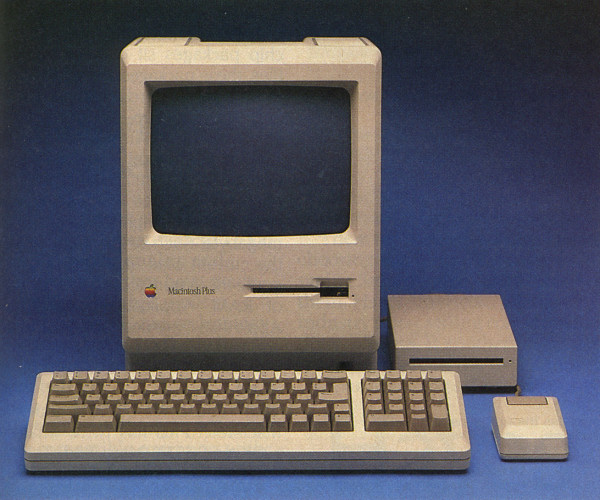
    It started coming together with the advent of the Macintosh Plus (1984)

    It started to come together with the advent of the Macintosh Plus, with 512K — enough memory to actually run software — and the numeric keypad.

    So when the Macintosh first entered the scene for us, you have to understand, “new” for us came every three months or so. Even then, some of us were still puzzling over the Lisa. Though we all loved the “1984” ad, our expectations of the first Mac were based on our supposition that it would be an attempt to correct the failures of the Lisa. Being priced $8,000 less certainly helped.

    But even the first Macs weren’t brilliant, not really. They suffered from what we all perceived to be Steve Jobs’ basic nature to go with whatever he had at the time, explaining that it’s all by design, and if we didn’t get it, then it’s our fault. The first Mac was a closed system — oh sure, it had a serial interface that was being “pioneered” by Apple, for the connection of external devices that we were promised but never actually saw. But we couldn’t get hard drives to work with the first Macs, no matter how hard we tried (SCSI would only come later). The very first Mac-only conferences, sponsored by the nation’s Apple II users’ groups — easily the most friendly and the greatest computer users who ever walked this planet at any time in our history — were literally showered with businesses whose missions were to connect real peripherals to these things. We had laser printers, for crying out loud, and they were beautiful, but we had to fit our documents on these floppy diskettes; and without compression, we were using one diskette per document easily.

    And because opening up one’s Macintosh to do something horrible and unsanctioned, such as hiding a hard disk, constituted a violation of the sacred and sacrosanct Apple Warranty, none of these businesses were given accreditation by Apple, and many of them were scared to even employ the Apple logo in their brochures for fear of retribution. Thus the first Mac users’ groups — the offshoots of the Apple II groups — flourished despite Apple. In fact, at about the time he was ousted from his CEO position, many leaders of the Apple community were tired of Steve Jobs and his bloviating nature, and were more than happy to see him replaced with the down-to-earth, all-business, no-frills approach offered by John Sculley.

    Throughout the duration of the 1980s, the Macintosh was never the most powerful 68000-based computer you could buy. In terms of raw processing speed, the Atari ST (the focus of my career for about four years) blew the Mac away in every single challenge, yet that computer was being peddled by a company that was as clueless about computing as FEMA was about hurricanes. And for sheer fun and excitement and creativity, the Commodore Amiga ran circles around the Mac at warp speed. Both the ST and Amiga had orders of magnitude better software going into 1987. Meanwhile, the world’s best software authors all wanted to write for Mac and were stymied by all the hoops Apple made them jump through just to be certified, to get development kits, to attend the seminars, and to be treated in kind. Then something happened round about 1988, in the era of the Mac SE and the Mac IIci, when the 68020 and 68030 processors roared to life. The software got better, the systems became more reliable…HyperCard entered the public vernacular. And Apple became more desperate, more humble, and more willing to let other companies enter into its realm. There was an opening, for the first time. System 7 took bold steps forward in functionality and principle. It really took five long, painful years for the Mac to truly be born.

    Indeed, the Mac’s greatness derives from its designers’ willingness to break barriers. Not everything they tried was novel, and let’s face it, a good deal of it (just like Windows) was stolen from someone else. Many of the concept’s original ideas fell flat on their face, which is the key reason none of us boot up with Workshop disks today.
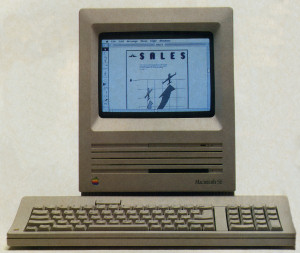
    The first great Macintosh: The Mac SE (1986)

    The first great Macintosh: The Mac SE

    The true brilliance of Macintosh is the ideal that computing can have one way of working that we can believe in and stick to. That brilliance was inside the crate the Lisa was delivered in, but it may have been too hard to notice on day one, when I flipped the switch for the first time. Back in the late ’70s and early ’80s, when systems crashed, we lost everything we were working on, and sometimes the disk it was stored on; even the Lisa brought forth the idea that an operating system can be all-encompassing, that you could be “in” the Lisa rather than “in” dBASE or VisiCalc or Valdocs. The computer itself could define the way its user worked.

    Granted, that was a great idea that was probably born in Gary Kildall’s mind before anyone else’s, but Apple made it work first. It took a lot of time and patience, and some swearing — most of which has been forgotten by revisionist history. But if you were there in the room when the switch was flipped, or if you can imagine sitting there on a folding chair and watching it happen and sharing the joys and the frustrations in equal measure, then you can truly appreciate what the Mac has brought us.

    [Photo credits: Scans of the Macintosh Plus (1985) and Mac SE (1986) from Byte Magazine]

    Copyright Betanews, Inc. 2009


    Add to digg
    Add to Google
    Add to Slashdot
    Add to Twitter
    Add to del.icio.us
    Add to Facebook
    Add to Technorati


  • 11 Top Open-source Resources for Cloud Computing

    Open-source software has been on the rise at many businesses during the extended economic downturn, and one of the areas where it is starting to offer companies a lot of flexibility and cost savings is in cloud computing. Cloud deployments can save money, free businesses from vendor lock-ins that could really sting over time, and offer flexible ways to combine public and private applications. The following are 11 top open-source cloud applications, services, educational resources, support options, general items of interest, and more.

    Eucalyptus. Ostatic broke the news about UC Santa Barbara’s open-source cloud project last year. Released as an open-source (under a FreeBSD-style license) infrastructure for cloud computing on clusters that duplicates the functionality of Amazon’s EC2, Eucalyptus directly uses the Amazon command-line tools. Startup Eucalyptus Systems was launched this year with venture funding, and the staff includes original architects from the Eucalyptus project. The company recently released its first major update to the software framework, which is also powering the cloud computing features in the new version of Ubuntu Linux.

    Red Hat’s Cloud. Linux-focused open-source player Red Hat has been rapidly expanding its focus on cloud computing. At the end of July, Red Hat held its Open Source Cloud Computing Forum, which included a large number of presentations from movers and shakers focused on open-source cloud initiatives. You can find free webcasts for all the presentations here. The speakers include Rich Wolski (CTO of Eucalyptus Systems), Brian Stevens (CTO of Red Hat), and Mike Olson (CEO of Cloudera). Stevens’ webcast can bring you up to speed on Red Hat’s cloud strategy. Novell is also an open source-focused company that is increasingly focused on cloud computing, and you can read about its strategy here.

    Traffic Server. Yahoo this week moved its open-source cloud computing initiatives up a notch with the donation of its Traffic Server product to the Apache Software Foundation. Traffic Server is used in-house at Yahoo to manage its own traffic, and it enables session management, authentication, configuration management, load balancing, and routing for entire cloud computing software stacks. Acting as an overlay to raw cloud computing services, Traffic Server allows IT administrators to allocate resources, including handling thousands of virtualized services concurrently.

    Cloudera. The open-source Hadoop software framework is increasingly used in cloud computing deployments due to its flexibility with cluster-based, data-intensive queries and other tasks. It’s overseen by the Apache Software Foundation, and Yahoo has its own time-tested Hadoop distribution. Cloudera is a promising startup focused on providing commercial support for Hadoop. You can read much more about Cloudera here.

    Puppet. Virtual servers are on the rise in cloud computing deployments, and Reductive Labs’ open-source software, built upon the legacy of the Cfengine system, is hugely respected by many system administrators for managing them. You can use it to manage large numbers of systems or virtual machines through automated routines, without having to do a lot of complex scripting.

    Enomaly. The company’s Elastic Computing Platform (ECP) has its roots in widely used Enomalism open-source provisioning and management software, designed to take much of the complexity out of starting a cloud infrastructure. ECP is a programmable virtual cloud computing infrastructure for small, medium and large businesses, and you can read much more about it here.

    Joyent. In January of this year, Joyent purchased Reasonably Smart, a fledgling open-source cloud startup based on JavaScript and Git. Joyent’s cloud hosting infrastructure and cloud management software incorporate many open-source tools for public and private clouds.  The company can also help you optimize a speedy implementation of the open-source MySQL database for cloud use.

    Zoho. Many people use Zoho’s huge suite of free, online applications, which is competitive with Google Docs. What lots of folks don’t realize, though, is that Zoho’s core is completely open source — a shining example of how SaaS solutions can work in harmony with open source. You can find many details on how Zoho deploys open-source tools in this interview.

    Globus Nimbus. This open-source toolkit allows businesses to turn clusters into Infrastructure-as-a-Service (IaaS) clouds. The Amazon EC2 interface is carried over, but is not the only interface you can choose.

    Reservoir. This is the main European research initiative on virtualized infrastructures and cloud computing. It’s a far-reaching project targeted to develop open-source technology for cloud computing, and help businesses avoid vendor lock-in.

    OpenNebula. The OpenNebula VM Manager is a core component of Reservoir. It’s an open-source answer to the many virtual machine management offerings from proprietary players, and interfaces easily with cloud infrastructure tools and services. “OpenNebula is an open-source virtual infrastructure engine that enables the dynamic deployment and re-placement of virtual machines on a pool of physical resources,” according to project leads.

    It’s good to see open-source tools and resources competing in the cloud computing space. The end result should be more flexibility for organizations that want to customize their approaches. Open-source cloud offerings also have the potential to keep pricing for all competitive services on a level playing field.

  • Facebook User Count Now 325 Million (Or More)

    On September 15th, Mark Zuckerberg announced that Facebook "now serves 300 million people across the world."  It seems the site’s growth hadn’t exactly come to a stop, either, as about a month and a half later, stats indicate the number of users has risen to at least 325 million.

    This isn’t a case of comScore versus Hitwise or Compete versus Nielsen discrepancies.  Nick O’Neill reported today, "According to Facebook’s own advertising statistics . . . the company is now beyond 325 million users and continuing to grow."  So everyone should be on the same page.

    What we appear to have here is a social network simply gaining 25 million users in the space of seven weeks.

    That’s an impressive fact all by itself.  Another way of looking at it is that, if Facebook users created their own country, the Land of Zuckerberg would have a larger population than the good old U.S. of A. (even if the users somehow didn’t leave America at the same time).

    What’s next, then?   Well, that’s hard to say.  Facebook’s almost sure to need additional hardware and employees.  Marketers are liable to worship it more, improving the results of monetization efforts.  Otherwise, this is pretty much uncharted territory.

    Related Articles:

    > Nearly Half Of Consumers Would Recommend A Product On Facebook

    > Social Networking Donation Cause Leaves MySpace For Facebook

    > Facebook Most Widely Used Network Among Businesses

  • Exclusive video of the Litl Webbook

    When news of the Litl Webbook broke out on Wednesday, I was pleased to learn that the company is located here in Boston, since there aren’t nearly as many people in this area making actual hardware devices, as opposed to software and web companies.

    I got a chance to sit down with CEO John Chuang for a thorough overview of the Webbook, so check out the above video for some information about the design philosophy and user interface behind the $699 transforming internet computer.

    As for the machine itself, it’s a 12-inch laptop-style device with a screen that folds over into an “easel mode” for viewing full screen web channels. The screen has a 178-degree viewing angle and there’s a built-in HDMI output for quick connection to TVs.

    The computer stores very little actual data on its 2GB flash drive, instead connecting to existing services and web sites. As such, user settings are constantly synched between multiple Litl machines and there’s no need to worry about losing data, viruses, or any of that stuff. Updates are pushed out silently to machines during the night and you can even pre-customize the “web cards” that will appear on your desktop before ordering. Litl owners in different households can send photos and videos directly to each others’ machines as well.

    Most existing web sites can be turned into web cards to be viewed in easel mode and to appear with the other cards on the home screen, although the company has also tapped into various services’ APIs already to create custom interfaces (Weather Channel, Photos, etc.). Easel mode can be controlled with a scroll wheel that’s built into the side of the computer or with an optional $19 remote control.

    Litl is priced at $699 and includes “a free two-year unconditional ‘satisfaction guaranteed or your money refunded’ warranty.” See the initial coverage and press release here.

    Litl [litl.com]


  • Does The White House Have Any Legal Right To Demand No Modifications To Its Photos?

    You may recall earlier this year that there was a fair bit of controversy when the White House started putting photos up on Flickr. Or, rather, there was controversy over the licensing. Everyone thought it was great that the White House would have its own Flickr channel and constantly post photos — but since Flickr only had certain licensing options that you could put on a photo, there was a problem. Even though the White House chose a Creative Commons Attribution license at the time, that was still too much. Government documents are not covered by copyright, and the photos clearly should be public domain. After a bit of back-and-forth, Flickr created a special public domain license so the White House could properly designate the photos.

    And yet… it appears that the White House is now trying to claw back some rights over these photos that it just doesn’t have. Tim Lee points out that along with these officials photos is a licensing claim that goes well beyond the public domain, stating:


    This official White House photograph is being made available only for publication by news organizations and/or for personal use printing by the subject(s) of the photograph. The photograph may not be manipulated in any way and may not be used in commercial or political materials, advertisements, emails, products, promotions that in any way suggests approval or endorsement of the President, the First Family, or the White House.

    The problem is the White House has no right to say that you can’t manipulate the photo, since the photo is public domain. It’s really unfortunate that, once again, we’re seeing how little people seem to understand (or value) the public domain.

    Permalink | Comments | Email This Story


  • John Dingell: The House’s Link To Health-Care History

    Holding the gavel he used when Medicare legislation was first passed, Rep. John Dingell speaks about health care legislation Oct. 29 on Capitol Hill.

    When people think of health care and Congress, often the first name that springs to mind is the late Sen. Edward Kennedy of Massachusetts. While Rep. John Dingell, D-Mich., may not be as well known, his legacy on health care is even richer than Kennedy’s.

    And when the House takes up the health overhaul bill this weekend that bears Dingell’s name as its lead sponsor, it could cap more than a half-century of effort on his part to bring health insurance to nearly every American.

    Dingell’s quest for universal health care began in 1932, when his father, John Dingell Sr., was first elected to the House from Michigan. The elder Dingell quickly became one of the architects of the New Deal.

    Related Audio

    Morning Edition

    “If you look at the the picture of Roosevelt signing Social Security, you’ll see a little skinny Pollack with a big broken nose and a mustache standing in back of him — that was my dad,” Dingell said in an interview in his office on Capitol Hill last week. “And he was very, very proud of that.”

    But Social Security was just the start. In 1943, the elder Dingell, along with Senators Jim Murray of Montana and Robert Wagner of New York, introduced the first national health insurance bill. The so-called Wagner-Murray-Dingell bill was fought over for years, though it never became law.

    And when the elder Dingell died in 1955, John Dingell Jr. took over not only his father’s seat, but also his quest for national health insurance.

    For the first decade after his father’s death, on the first day of each Congress, Dingell introduced a bill to create a Medicare program to provide health insurance for the elderly, as his father had tried and failed to do. But after 1965, he no longer had to.

    In fact, then-speaker John McCormack gave the still quite junior Dingell the task of presiding over the House when it passed the Medicare bill, “not because I had any merit in the matter — but because he was Dad’s great friend and because Dad had been the guy who started the whole business of Medicare,” Dingell says.

    But Dingell did not give up the custom of introducing a national health insurance bill on the first day of every Congress in his father’s memory. One nice thing has happened over time, he says: “As I have revised the bill over the years, we found about half of the original legislation has been enacted into law.”

    That includes things like the National Institutes of Health, universal vaccine programs for children, and maternal and child health programs. What Dingell doesn’t say is that most of those things were enacted into law under his stewardship at the powerful Energy and Commerce Committee, which he led from 1981 to 1995.

    California Democrat Henry Waxman ousted the 83-year-old Dingell from the chairmanship this year, but that was over their differences on energy and environmental issues. The two have always seen eye to eye on health care. And Waxman says he was always happy to have Dingell to back him up when it came to tough negotiations.

    “It was always a relief for me to know that when he and I met with the Senate in conference, we were talking from the same page, believed in the same things, and we were going to fight together,” Waxman says. “And that’s the reason we’ve been so successful as we have been in many of the health bills throughout the decades.”

    As chairman, Dingell was legendary for his sometimes overbearing style of interrogation, often berating witnesses. But for all his bluster, says Republican Joe Barton of Texas, who last led the committee for his party, Dingell is actually a very humble person.

    “He doesn’t put his name on bills, so to some extent his legacy is hidden, because it’s just the Health Care Policy Act of whatever or the National Institutes of Health whatever,” Barton says. “If he were like other members, and they put their names on bills, there’d be dozens of Dingell-something bills, not just in health care, but in energy and telecommunications and many, many other fields.”

    Dingell, who this year became the longest-serving member in the history of the House, says he remains focused on the one bill that has eluded him the longest — health care for all.

    And will this be the year?

    “I’m an optimist,” he says with the enigmatic Dingell smile.

  • Super Street Fighter IV gets four new modes

    Including the bonus stages revealed in Famitsu recently, Super Street Fighter IV (PS3, Xbox 360) has a grand total of four new modes. You can check ‘e…

  • Japan wins again with automatic bike parking and retrieval system

    bikey
    Fifty years ago, guessing what the future would look like was particularly in vogue, and all those fantastic retro-futuristic drawings were born. I remember seeing somewhere the concept for an automatic car parking machine with robots taking your car and stuffing it somewhere in a big warehouse. “That’s ridiculous,” I thought, “When we have the technology to do something like that, we won’t still be driving cars!” Well, I was wrong. Of course it’s not for cars, and of course it’s in Japan, but this automatic bike storage system (video in link) is definitely a little piece of the future.

    cycle_005

    These Cycle Trees, designed by JFE Engineering, have actually been in use for about two years in various places around Japan, and are recently starting to become a bit more common. A little tag stuck to your bike identifies it to the computer, which then files it away in a sort of big bike rolodex. Swipe a card, and you have your bike back in about 30 seconds, if that video is any indication. Man, I’d love to have one of these for my neighborhood. In fact, Seattle city planners are trying to figure out how to get more bike parking around the upcoming light rail stop on Capitol Hill. If they had one of these things, that’s it — problem solved (plus it’s awesome).

    Of course, it’s isn’t free. But ¥1800 (about $20) a month isn’t too much to ask. It’s about on the edge of affordability, though, considering there are plenty of street signs and rails to lock your bike to around here. Still, it’s totally awesome.

    [via Reddit]


  • Rich Carriers Got Richer in Q3

    The rich mobile carriers got a little richer in the third quarter, as the nation’s top two operators increased their leads over the rest of the field. Verizon Wireless added a million subscribers and posted revenue of $15.8 billion, up 24.4 percent year-over-year, while AT&T reported 2 million net adds — thanks largely to the iPhone — and $13.65 in revenue, up 8 percent over the year-ago period. Meanwhile, the increasingly heated prepaid space took its toll on Leap Wireless and MetroPCS, as both service providers saw customer growth slide in the third quarter. 

    Leap Wireless: Reported Nov. 5
    Wireless Service Revenue: $541.3 million
    Wireless Operating Income: N/A
    Wireless Data Revenue: N/A
    Net Prepaid Subscriber Adds: 102,000
    Total Subscribers: 4.5 million
    Prepaid Churn: 5.4 percent
    Prepaid APRU: $39.60
    Metro PCS: Reported Nov. 5
    Wireless Revenue: $896 million
    Wireless Operating Income: $158 million
    Wireless Data Revenue: N/A
    Net Prepaid Subscriber Adds: 66,157
    Total Subscribers: 6.3 million
    Prepaid Churn: 5.8 percent
    Prepaid APRU: $41.08
    T-Mobile: Reported Nov. 5
    Wireless Revenue: $5.38 billion
    Wireless Net Income: $417 million
    Wireless Data Revenue: N/A
    Net Prepaid Subscriber Adds: 63,000
    Total Subscribers: 33.4 million
    Blended Churn: 3.4 percent
    Postpaid APRU: $52
    Sprint: Reported Oct. 29
    Wireless Revenue: $6.9 billion
    Wireless Operating Loss: $448 million
    Wireless Data Revenue: N/A
    Net Prepaid Subscriber Adds: 666,000
    Net Postpaid Subscriber Loss: 801,000
    Total Subscribers: 48.3 million
    Churn: Postpaid 2.17 percent, prepaid 6.65 percent
    APRU: Postpaid $56, prepaid $35
    Verizon: Reported Oct. 26
    Wireless Revenue: $15.8 billion
    Wireless Operating Income: $4.47 billion
    Wireless Data Revenue: $4.1 billion
    Net Prepaid and Postpaid Subscriber Adds: 1 million
    Total Subscribers: 89 million
    Churn: Postpaid 1.13 percent
    APRU: Postpaid $51.04
    AT&T: Reported Oct. 22
    Wireless Revenue: $13.65 billion
    Wireless Operating Income: $3.4 billion
    Wireless Data Revenue: $3.6 billion
    Net Prepaid Subscriber Adds: 641,000
    Net Postpaid Subscriber Adds: 1.4 million
    Total Subscribers: 81.6 million
    Blended Churn: 1.43 percent
    APRU: Postpaid $61.23

  • The House Bill Could Have Been Avoided

    I watched Saturday night’s House vote with mesmerized horror. The good news is that it did not degenerate into a re-run of the vote for Medicare Part D – an all-night mixture of retail politics and Mafioso strong-arm tactics. Instead, Speaker Pelosi kept her brass knuckles hidden behind closed doors, the proceedings were dominated only by rhetorical excess, and the proceedings moved forward like clockwork.

    Unfortunately, the remainder of the spectacle was a bit hard to digest. The most obvious problem is that this is a bad bill. While one might be tempted to write it off to a triumph of good intentions over good legislation, the House bill has too many transparent flaws to be defensible. Let us review:

    (1) It does not bend the cost curve. As noted by the Congressional Budget Office, it does not reduce the pace of health care spending growth. Even worse, Administration actuary Richard Foster concludes that it bends the cost curve the wrong way. In this way, the Pelosi bill betrays the basic promise of health care reform: providing quality care at lower cost. No legislation should pass the Congress that does not meet this test.

    (2) It is budgetarily dangerous. The bill sets up a new entitlement spending program that grows at 8 percent annually as far as the eye can see – faster than the economy will grow, faster than tax revenues will grow, and just as fast as the already-broken Medicare and Medicaid programs. It also creates a second new entitlement program – the so-called CLASS Act – that Senate Budget Chairman Kent Conrad correctly identified as a Ponzi scheme.

    The United States is already living off the questionable generosity of China and other international lenders. The federal budget is already projected to run enormous deficits for the next decade, tripling the national debt by 2019. The Congress has already displayed no capacity to address Social Security, Medicare and Medicaid. Every member of Congress that supported this bill (as well as the American Medical Association and AARP who sold their integrity for this bill) should be writing a letter of apology to America’s children.

    (3) It is budgetarily dishonest. One reason the Democrats were able to sell the bill is that it uses every budget gimmick and trick in the book: leave out inconvenient spending, back-load spending to disguise the true scale (the Senate Budget Committee minority estimates that the first 10 years of full implementation will cost $2.4 trillion – so much for $900 billion or less), front-load taxes, let inflation push up tax revenues, promise spending cuts that will never materialize … the list goes on. The only thing less transparent than the budget treatment was the process of developing the bill.

    (4) It is economically dangerous. The bill has been sold as help for the uninsured, and the polling suggests that people are expecting relief in 2010. Instead, the bill will levy taxes and fees that simply cannot improve a precarious economic situation. It will undertake insurance market reforms that will raise the premiums of those that already have insurance, especially small businesses. As noted above, it invites a U.S. debt crisis. And the reality is that it offers no real insurance subsidies or expansions until 2013.

    I could go on to dissect additional follies, but the basic point is simple: we need for our elected leaders to do better than this.

    The second, and ironic, aspect of the proceedings was that they were probably also dangerous to the political health of Democrats. The bill is structured so that the first several years are nothing but bad news. Higher taxes, higher fees and misguided insurance reforms will not shower good news on America. No real sign of the misguided Medicaid expansions and debt-financed subsidies until 2013. It is a recipe for electoral backlash. As I watched, it kept running through my head: “What are these Democrats thinking? How could they get the pandering so wrong?”

    The third and most troubling recurring aspect was the partisanship (although I personally can’t wait for the spectacle of Democrats’ claiming bipartisan support by cornering the single vote of Republican Ahn Cao). Republicans will now be dead-set on doing a u-turn. If so, the U.S. will achieve neither health care reform nor real health insurance reform and will have expended enormous political energy in the process. This is the worst of all outcomes.

    It could have been so easily avoided. With the right leadership, a bi-partisan merger of the Republican alternative and the coverage expansions in the bill itself could have been augmented with real delivery system reforms. Alas.

    On to the Senate.

  • Loading More People Onto the Titanic

    Our health care system is truly titanic, in more than one sense of the word.

    Not only is it huge, but it’s also growing at unsustainable rates that undermine our health care security and fiscal stability – and threaten to sink the system under its own weight.

    When the health care debate began in earnest just after the November 2008 election, it was supposed to be about reform moving the nation toward universal coverage in a system that could be sustained in terms of costs. We could no longer “kick this can down the road.”

    In the spring, it became clear there was neither the consensus on what to do about health costs or the political will to try to tackle them. That is when the health care reform effort shifted to a health insurance reform effort.

    In one bit of good news, liberals have shown as much concern as conservatives about bringing costs under control, though their preferred solutions are obviously far different. Liberals pointed to the need for a robust public plan option, saying it was the key to cost containment.

    But the House Democratic leadership ended up gutting the pubic option; now it’s hardly more muscular than the weakling co-ops in the Senate Finance Committee bill. As a result, neither fiscal conservatives nor liberals are left with much reason to believe the House-passed bill has much chance of bending any cost curves.

    The House bill also fails to provide affordable health insurance to the middle class.

    Under the legislation, an uninsured family of three earning $54,930 a year would be expected to pay $5,493 each year for their health insurance plan from the new insurance exchange-net of the government subsidies the bill would provide. A family making $73,240 a year would be expected to pay $8,789 for their health insurance. These costs are not affordable for these families.

    If these families didn’t pay these premiums, they would be subject to fines equal to 2.5% of their income–$1,373 annually in the case of the family making $54,930.

    The bizarre result is an incentive for families to skip buying coverage, and pay a fine that is only a small percentage of their premium costs. They’ll still be able to get insurance on demand from the exchanges should they have a big medical problem. That’s like being able to buy insurance on your house after it burns down. This kind of system will not make insurance costs lower.

    Some supporters of the House bill say that, while the legislation doesn’t tackle health care costs, it’s still important to reduce the number of uninsured. Their reasoning goes: The pressure of adding 30 million more people to the system, coupled with the unsustainable cost trends, will eventually force Washington to deal with real health care reform.

    That strikes me as about the same as rounding up lots more people to board the Titanic in the hope that it will sink even faster.

  • Keep an Eye on Public Opinion

    House Vote: Reviews Are In

    View other reactions to the House health overhaul bill vote from:

    On Saturday evening an old adage proved not to be true. History did not repeat itself. Fifteen years earlier, a Democratic-led House of Representatives failed to enact major health reform legislation put forth by a Democratic president. This time, the same political constellation led to a different result. A major health reform bill was passed, albeit by a close margin. This legislation is as sweeping as any healthcare bill enacted since Medicare.

    But a note of caution is needed as we move into the final phases of the congressional debate. It relates to the state of public opinion. When Medicare was enacted in 1965, 62 percent of the public supported its passage. When the ill-fated Clinton health plan did not pass the House in 1994, support was between 39 percent and 43 percent. In recent polls, public ratings of the congressional and Obama health reform proposals are much closer to those for the Clinton plan than for Medicare. Support for enactment in recent polls ranges from 34 percent to 49 percent with the most recent suggesting growing public opposition since the summer. This is the case even though many of the policy elements of the current House legislation are popular with the public, such as requiring insurers to cover people with pre-existing conditions, and the presence of a public option offered as a competitor to private health plans.

    But polls show countervailing concerns about the congressional plans. These involve the potential impact of the bills on Americans’ health costs and affordability, their taxes, the extent of government interference in their health care decisions, and worries that health care for those receiving Medicare will deteriorate. Regardless of public enthusiasm for health reform as a principle, and support for many policy elements in the House bill itself, most Americans do not see their healthcare situation as getting better if this legislation is signed into law, and some see their situation as getting worse.

    In the weeks ahead, Americans are unlikely to read the 2000-page House bill. Rather, they will form their judgment about the final legislation based on others’ assessments. They will rely on those whom they trust as intermediaries to clarify its impact on them. Many of those who will be most influential will not be political figures working in Washington. Polls suggest they may be leaders of physicians’ and nurses’ groups, seniors’ groups, and organizations advocating for patients with serious illnesses. Also they may rely on the views of major media figures and experts interviewed frequently.

    The American public was promised throughout the presidential campaign that major reform if enacted would improve their current health care situation. At the moment they are not convinced that this will be the case. Changing their perceptions may be critical if a bill as extensive as the one enacted by the House is to be passed by both houses of Congress in the next few months.