
Ok, no prize today, just bragging rights.
Get your S&P close answer in by 3:30.
Good luck!
Join the conversation about this story »
Ok, no prize today, just bragging rights.
Get your S&P close answer in by 3:30.
Good luck!
Join the conversation about this story »

Review: 2010 Toyota Prius
Having debuted in Japan in 1997 and introduced to the rest of the world in 2001, the Toyota Prius came to dominate the segment, even though it wasn’t the first hybrid to be mass-produced. Available for sale in 40 countries and regions with the largest markets being Japan and North America, total units moved stands in excess of 1.6 million units, with the 1 million unit mark having been surpassed in May of 2008.
Click here to get prices on the 2010 Toyota Prius.
Given the massive success of its predecessor, the 2010 (and most noted) Prius, came to market amidst the high expectations of consumers, critics, and the media. In lieu of incorporating new technologies such as a lithium-ion battery pack or plug-in capability however, Toyota decided to focus on more subtle changes in design, and increases in power and fuel-efficiency.
Make the jump to read more and to view our high-res image gallery (at the bottom of the post).


All Photos Copyright © 2010 Omar Rana – egmCarTech.

Review: 2010 Toyota Prius
Our main gripe with the exterior design is that it still strikes an uncanny resemblance to a cheese-wedge, as was the case with the previous generation model. Though it may seem that automakers love awkward and unattractive designs when it comes to hybrid and electric vehicles, they serve primarily to maximize efficiency and fuel-economy through enhanced aerodynamics. This is especially evident in the new design; it is more aerodynamic than its predecessors, reducing the drag coefficient to 0.25 Cd. An underbody rear fin also serves to stabilize the car when traveling at higher speeds.
The new vehicle is bigger in all dimensions and lacks the horizontal bar across the rear window that had posed visibility issues in the previous generation’s design.
Although the car sits at the same overall height as the previous Prius, the roof profile has been altered by way of an adjustment which moves the roof-top back 3.9 inches. This further emphasizes the cheese-wedge-like design, but is tremendous for aerodynamics. While the wheelbase retains its dimensions, the overall length of the car is increased by 0.6 inches, largely in part due to the front cowl being moved forward.
The most notable changes however, come in the form of the new grille and headlamps that are included in the augmented front fascia.
While the Prius is certainly not the best looking hybrid on the road, in keeping its distinctive shape, it still seems to attract tree-huggers and those who wish to garner the tree-hugger image. Oh and it still stands popular with those Hollywood actors that want to portray the “I care about mother nature” image.

Review: 2010 Toyota Prius
Powertrain aside, the most significant changes to the 2010 Prius are on the vehicle’s interior. The new design provides for a much more quiet, roomy, and better equipped interior featuring advanced standard and optional features such as a solar-paneled moonroof, four driving modes, Intelligent Parking Assist (IPA) and steering wheel touch controls with instrument panel display.
One of the most blatant design changes you will notice is the relocation of the hybrid energy display and fuel-economy bar graph to the top of the dash. The smaller and less-colorful display makes it somewhat cumbersome to view information; even more so when you factor in the fact that your eyes must be diverted from the road and to the center of the dash to view your driving statistics.
We tested out the Prius IV (available in II, III, IV and V), which included leather seats, navigation, JBL audio system, Bluetooth connectivity, back-up camera, and the really interesting solar-roof option. The system employs the use of an electric fan to draw air from the outside, into, through, and back out of the cabin as the cabin temperature reaches 68 degrees Fahrenheit. The cabin temperature is lowered to be consistent with the exterior, so that reentering the vehicle is more comfortable.
All in all, the 2010 Prius offers a much more refined, comfortable, and ergonomic design than that of generations past. The available features and higher quality of materials contribute to an overall feeling of great comfort. Our only real bone to pick with the interior is with the driver-seat; it is impossible to find a comfortable driving position in this car, and while the tilt/telescoping steering wheel contribute to diver comfort, it’s still not perfect.
Notable interior features on the 2010 Prius include; remote keyless entry system with Push Button Start, 60/40 split rear bench seat with adjustable headrests, and Lane Keep Assist; a feature which detects lane markers of certain roads and tightens torque on the steering wheel to keep the car centered, and emits a warning tone to alert the driver.

Review: 2010 Toyota Prius
Toyota says that the patented Hybrid Synergy Drive system employed in the current generation Prius is 90% newly developed, offering significant improvement over previous models. The lighter transaxle reduces torque losses by as much as 20% over previous models, and the inverter has a new direct cooling system that not only reduces size, but also weight. When taken together, the transaxle, inverter, and motor are 20% lighter than before.
The ’10 Toyota Prius derives its power from a 1.8 liter 4-cylinder engine with VVT-i that produces 98-hp and a maximum torque of 105lb-ft. That engine comes mated to two electric-motors which when working together, combine for a net output of 134- hp, a 24 hp improvement over last year.
Despite this added power, fuel-economy has improved. With the outgoing model garnering an EPA-certified rating of 46 mpg, the incoming model is rated at 50 mpg. During our test drive, we averaged 49 mpg.

Review: 2010 Toyota Prius
One major feature of the Prius is EV-Drive mode, which allows you to drive solely on battery power during lower speeds for approximately 1 mile. However, that means you’ll have to accelerate really slow and drive even slower, which might end up bothering drivers behind you.
Sooner or later, you’ll find yourself late to work or a date and that’s where the Prius’s Power Button comes in handy; One press of the Power Mode button will increase sensitivity to the throttle input to provide for sportier drive. 0-60 mph in the Prius comes in 9.8 seconds with a top speed of 112 mph; compared to 103 mph on the previous version.
The last mode, Eco Mode (a mode we never recommend using unless you want to be completely bored with life), is designed to help you achieve the best fuel-economy during your trip.
Though nothing is a substitute for a standard gasoline powered car, the new engine and hybrid system is much quieter and much more refined than in the past. The car also feels more stable and more secure than previous generations and its current rival, the 2010 Honda Insight.

Review: 2010 Toyota Prius
Does the 2010 Prius still deserve to hold the crown? Absolutely. MSRP starts at $22,800 for the Prius II and ranges all the way up to $28,070 for the Prius V. While this may be a slight premium over the price of the Honda Insight (starting MSRP $19,800) the Prius leads in fuel-economy (the Insight gets an EPA rated 40/43 mpg), performance, and general bang-for-the-buck. The car has many positives, except the cheese-wedge design.
All Photos Copyright © 2010 Omar Rana – egmCarTech.
– By: Stephen Calogera

Well we were wondering when PIMCO would weigh in…
Bill Gross, the co-chief investment officer of Pimco and manager of the firm’s Total Return Fund, told Reuters that “fiscal tightening momentum” is increasing in almost every corner of the world.
That comes as financial markets are exhibiting “a mini-relapse of a flight to liquidity as hedge funds and other leveraged positions are liquidated to preserve capital,” Gross said.
Join the conversation about this story »
 The second day of the Google I/O 2010 developer conference just kicked off with two major announcements, Android 2.2 and Google TV, neither of which were exactly surprises. The first part of the morning’s keynote was dedicated to Android. The latest and greatest version is here, Android 2.2 codenamed Froyo, and the entire platform is loo… (read more)
 On wensday night . Millions of dollars worth of Paintings were stolen, some of these paintings belonged to the famous Picasso, and others to the also very known Matisse. The total ammount of the photos were valued around $ 75 to $125 million. The authorities at the museum discoverd the theft just around 7 a.m on Thursday. They said that they had video images of the hooded man while he was breaking in to a very famous museums art decoration building. Which is not far from the Eiffel Tower. This raised questions about the museums security in the french capital. While the picasso museum was undergoing renovations the last summer it was under renovation.
The stolen works, part of the museum’s permanent collection, were “Dove With Green Peas” by Picasso, “La Pastorale” by Matisse, “Olive Tree Near Estaque” by Georges Braque, “Woman With a Fan” by Amedeo Modigliani and “Still Life With Chandeliers” by Fernand Leger.
People are still wondering how the security got breached and why they could not catch the buglar fast enough. The deputy mayor of culture for paris said that the museums were equipped with security alarms and armed guards on wendsay night and that they had not seen any thing happen.
“We must leave it to the police to determine how the security system was evaded,” Mr. Girard said.
The mayor of paris has orderd the museum to be closed while the investigation continues.
Related posts:
Not altogether surprising, but the TED spread, a major of bank confidence (technically LIBOR over risk-free) continues to widen.
It’s up about 4.3% today to 33.

Join the conversation about this story »
 General Motors Co. is feeling the impact of scrapping incentives in Germany, with sales of Opel suffering in its home market while its overall car sales in Europe dwindle as well.
New-car sales for Opel fell 55% to 17,207 units in April, a 36% drop to 68,301 registrations during the past four months, Germany’s Federal Motor Transport Authority (KBA) reveals. Meanwhile, the overall market fell 32% in April and dropped 26% for the first four months of the year. Another factor that led to the 19% drop in April for European new-car sales at Opel and Vauxhall was the trouble in Germany. From January to April 2010, Opel/Vauxhall’s European sales dropped by 4% to 340,888 registrations, according to industry association ACEA. If the drop in sales of GM unit Chevrolet is included, the total European volume at GM’s three-brand group decreased by 19% to 95,706 registrations last month. And for the first four months of the year, there was a 5% drop to 403,953 units. Opel’s sales in Germany fell due to the uncertainty on whether it will be able to receive German state aid to help fund its recovery.
[via autonews – sub. required]
Source: Car news, Car reviews, Spy shots
JohnForDummies points us to the news that the latest attempt to stretch trademark law to ridiculous levels has been sorta maybe rejected — though it appears to still be open for abuse. The case involved Autodesk and a competitor, Dassault Systemes Solidworks Corporation, who had released some software that was compatible with Autodesk’s .dwg files used in AutoCAD. Dassault had apparently reverse engineered the file type (which, by itself, is perfectly legal). Some of Dassault’s products (under the Solidworks brand) used “DWG” in the name, and Autodesk, overprotective as always, sued — claiming that the use of DWG in product names infringed. What happened then goes back and forth a bit, but ends up with a court telling Autodesk that file extension names should not be considered trademarkable:
The court found that ownership of file extension designations cannot be appropriated under the Lanham Act — file extensions are inherently functional, and functional uses cannot be trade-marked. It stated that computer programmers and computer users should be free to designate file extensions as they see fit, without the fear of infringing trade-marks.The motions judge further opined that the purpose of the Lanham Act is to target unauthorized use of a trade-mark “in connection with a commercial transaction in which the trade-mark is being used to confuse potential consumers.” In contrast, the purpose of file extensions is to indicate to a computer the type of file that is being handled. The court noted that “a computer is not a consumer,” and its recognition of a file extension is not “in connection with a commercial transaction.” In other words, the computer does not concern itself with the question of who made the file format. Therefore, whether on the grounds that a file extension connotes a “functional use” or a “non-trade-mark use,” the court held that a file extension per se is not protectable under US trade-mark law.
In its decision, the court did recognize that computer users may associate a particular file extension with a specific vendor or manufacturer. However, the court found this association only incidental to the primary function of file extensions, namely to identify a file or file type.
Of course, it’s not all good news. The court did suggest that Autodesk could have gotten away with this by disavowing any use of the mark in functional areas, but had limited it to just product names and such. Autodesk pushed back on this a bit, which resulted in the ruling above. And, actually, the transcript from this part of the court discussion is priceless:
THE COURT: I want — you’re skating by something that’s very important to me. So I want to get a clear answer. All right?
Will you disavow, from here to eternity and for the rest of the universe, that the world has a right to use .dwg as a file extension, and you’re not going to try to assert, here or anywhere else, that that use as a file extension violates any law?MR. SABRI: Your Honor, it may be the case it violates patent law. We’re not addressing that today. I will state —
THE COURT: You will be in trouble if you don’t give me — listen. If you are trying to monopolize .dwg, you and your company are in big trouble.
MR. SABRI: We absolutely are not, your Honor.
THE COURT: Well, then disavow it.
MR. SABRI: Autodesk cannot —
THE COURT: You’re not disavowing it?
MR. SABRI: I am disavowing it, your Honor. Autodesk cannot state claims against functional uses of .dwg, and the distinction between a word mark DWG and the functional uses I believe will be very clear by this presentation.
THE COURT: I want to hear you say we disavow it.
MR. SABRI: We disavow any claims against functional uses of the .dwg, your Honor.
THE COURT: Thank you.
But, still, all is not well. Before the case actually went to trial, Autodesk and Dassault “settled,” with part of the settlement being that Dassault agreed that Autodesk had a legitimate trademark on DWG (of course, Dassault isn’t the USPTO or a court, so Dassault’s agreement on that point is somewhat meaningless). Also, the article notes that our neighbors up in Canada just allowed Autodesk to register a trademark on DWG. So despite the court’s clear concern about Autodesk trying to monopolize DWG, don’t be surprised if it keeps trying…
Permalink | Comments | Email This Story

You might be one of those who are entitled to some unclaimed money. The Pension Benefit Guaranty Corporation (PBGC) may help you to get your unclaimed money in your name. The website was featured on The Early Show last week which showed over $33 million dollars in unclaimed American money. Two websites were given last week to check if you’re one of them. For those who were unable to see the original segment, the two websites are Missingmoney.com and Unclaimed.org. These are very helpful websites that are linked up to the state treasury departments that track unclaimed cash across the country. Examples of unclaimed money may be old bank accounts that you may have forgotten, stock dividends, annuities, customer overpayments, insurance refunds and more.
The Pension Benefit Guaranty Corporation (pbgc.gov) is a federal corporation which was created under the Employee Retirement Income Security Act of 1974. They currently guarantee payment of basic pension benefits earned by 44 million American workers and retirees who are participating in over 29,000 private-sector defined benefit pension plans. There are no funds received by the agency from general tax revenues.
Related posts:
PRO2AIR Pre-PUR® membrane tube diffuser made from polyurethane for increased safety and lower operating costs
NORRES, the Gelsenkirchen based hose manufacturer, recently unveiled an innovative Pre-PUR® membrane tube diffuser made from premium polyurethane. All the other tube diffusers currently available in the market often have a shorter lifetime and are much more sensitive to dynamic loads owing to their inferior raw materials. In many cases, their mechanical properties deteriorate during the course of their service life, leading to premature damage such as cracks in the diffuser membrane. Some of these diffusers additionally suffer from a significant increase in pressure loss as they grow older because the softener leaches out. With the new PRO2AIR Pre-PUR® made from premium polyurethane this is no longer possible: it is absolutely free of softeners and impresses with its extreme flexibility and mechanical strength under dynamic loads.
The innovative PRO2AIR Pre-PUR® membrane tube diffuser made from premium polyurethane was recently added to the portfolio of the NORRES Schlauchtechnik Environmental Solutions Business Unit. It is used for intermittent, fine-bubble, compressed air aeration (nitrification / denitrification) as well as continuous aeration. The membrane material exhibits very good resistance to municipal wastewater according to the latest version of the DWA-M 115 Advisory Leaflet. Thanks to the
Pre-PUR® premium polyurethane, the new membrane tube diffuser is characterised by high tensile strength and tear resistance, and is also remarkably durable and robust. Its extreme flexibility and mechanical strength under dynamic loads mean increased reliability, an extended service life and hence lower operating costs. Other tube diffusers currently available in the market tend to form a kink edge in intermittent operation; the resulting permanent kinking can be a primary cause of damage in the long term. If damage of this kind occurs, sludge can get into the system; significantly more air escapes from a defective or ruptured diffuser than from an intact one. There is a rapid decrease in oxygenation, leading to reduced oxygen transfer efficiency and impacting the diffuser’s reliability.
[..] You can find the complette Press Release at http://www.norres-aeration.com/hm/06/040102.
The integration of LOOS into the Bosch Group last year has brought with it many positive changes. This means that LOOS now can access a wide systems portfolio of Bosch Thermotechnik. Besides the innovative touchpanel and PLC-based controllers LOOS LBC / LSC, LOOS customers can now enjoy the Buderus Logamatic 4321 with the MEC2 operating unit, specially designed for the UT-L boiler series.
The Logamatic 4321 can offer the following functions and options for the basic variant of the UT-L boilers:
· Control functions for low-cost, efficient and environmentally-friendly energy generation and distributions
· Display of system data including the current temperature values
· Weather-compensated control
· Return temperature protection
· Performance regulation for firing systems
· Safety switch-off of firing
· Control of boiler circuit pump
· Selection between different weekly heating programs to specify heating times and
breaks, orientated to user behaviour
· Radio-controlled clock reception can be activated for super-accurate date and time, automatic changeover of summer and winter time
· Comfort functions for short-time influence of the regular heating program
TopSolid 7.3, the latest version of the 7th generation of the integrated software range TopSolid will be launched in the upcoming weeks in March 2010. CAD for the mechanical engineering is now available with the version TopSolid 7.3. The CAM module of TopSolid 7 (which will complete the integration that is the hallmark of the TopSolid range) will be completed in the second semester of 2010. The key characteristics of the TopSolid 7 CAD solution are:
• Significant performance benefits – The end user of the new software generation benefits from productivity gains estimated at being 30% superior to traditional solutions thanks to such characteristics as partial loading and very fast realistic rendering.
• Built-in Product Data Management (PDM) – All data management actions are carried out directly in TopSolid (rename, move, copy/paste, …) and data is shared and secured transparently (guaranteed data integrity, PDM messenger, …)
• FreeShape – A new concept to TopSolid which implies that users do not need a history tree to edit imported parts
A British-made pump is proving so reliable for a South African mine that its only downtime has been for hose replacement and annual plant maintenance. The Verderflex VF40 is installed within the precipitation plant at the Xstrata Alloys Rhovan site which extracts vanadium, a metal whose principle use is for strengthening steel.
The Verderflex VF40 has been employed to pump abrasive mining slurry at 6 – 8 m3/hour, a medium with 60% solid content. Whilst centrifugal pumps struggle to perform well with such slurries the Verderflex peristaltic pumps continue to prove their ability to pump these dense fluids, continuously and problem-free.
Indeed the VF pumps regularly handle slurries with sub-micron content in excess of 80% and with a specific gravity rating of more than 2.0. For this reason the Verderflex industrial hose pump is now regarded by the majority of mining companies around the world as the industry standard for pumping abrasive, high density fluids.
Classified as a small heavy duty pump, the VF40 is designed to run dry without undue maintenance. This is an important feature for Xstrata as no gland water is used in its operation. The company also praises the rotor design and flange arrangement that makes pump maintenance easy. Indeed the speed with which the VF can be maintained has resulted in many other brands of hose pumps being substituted for Verderflex models on site.
Another contributor to the VF’s reliability is the absence of any wearing parts other than the hose. And even this is designed and manufactured to minimise the effect of fatigue resulting in extremely long hose service life. “The Verderflex pump works well and is only off-line for scheduled maintenance,” confirms Xstrata’s Christelle van Vuuren. “Quite simply, it’s a reliable pump.”
Water jet manufacturer Jet Edge, Inc., of St. Michael, Minn., will exhibit its Mid Rail Gantry water jet cutting machine at the 2010 WJTA-IMCA Expo, Aug. 17-19 at the George R. Brown Convention Center in Houston. Look for Jet Edge in Booth 829.
During the WJTA-IMCA Expo, Jet Edge will perform live precision waterjet cutting demonstrations on its Mid Rail Gantry waterjet system. Powered by a 60,000 psi or 90,000 psi Jet Edge waterjet intensifier pump (available in 30-200hp models), the Jet Edge Mid Rail Gantry water jet cutting machine features an exposed tank that easily accommodates overhead loading. It is designed to cut virtually any material. Optional mirroring cuts part cycle time in half. The Jet Edge Mid Rail Gantry water jet system utilizes an industrial PC controller and can be configured so that all three axes are fully programmable (Z optional). It also features direct-couple AC brushless digital servo motors and single or double carriages. Critical bearing components are protected with heavy metal covers with brush seals. The Mid Rail Gantry waterjet system is available in 5’x5′, 8’x5′, and 21’x5′, 8’X13′ and 21’X13′ and 5’x13′ work envelopes.
Jet Edge’s Mid Rail Gantry Waterjet System is proudly made in the U.S.A.
More Information
For more information about Jet Edge, visit www.jetedge.com, e-mail [email protected], call 1-800-JET-EDGE (538-3343) or 1-763-497-8700. For more information about the WJTA-IMCA Expo, visit www.wjta.org, e-mail [email protected] or call 314-241-1445.
About Jet Edge
Established in 1984, Jet Edge is a global designer and manufacturer of waterjet systems for precision cutting, surface preparation and coating removal. Jet Edge systems are used around the world in a broad range of industries, from the world’s leading airlines to automotive, aerospace, industrial manufacturers, machine and job shops. Jet Edge waterjet systems are proudly made in the U.S.A.
For more information about Jet Edge, visit www.jetedge.com, e-mail [email protected] or call 1-763-497-8700 or 1-800-JET-EDGE (538-3343).
Filed under: Truck, Europe, Videos, Work, UK

Northern Ireland’s Wrightbus has officially won the contract to build London’s next double-decker bus – the new Routemaster – and this is what it will look like. This rendering of the final version comes from the winning entry in the design contest, drawn up by Capoco Design. That drawing was given to Wrightbus and made ready for actual use on the streets of The City.
Although it’s roughly ten feet longer than the old Routemaster, it seats two fewer people, but those 62 folks will have a better time of it getting in and out with three points of entry. Also improved are means of accessing all areas of the bus with two staircases inside, and extensive use of glass aims to keep the behemoth from appearing so behemoth-y.
Having been blessed by London Mayor Boris Johnson himself, the new Routemaster will be showing up on London roads in 2012. Follow the jump to look around it for now.
[Source: BBC]
Continue reading London unveils design for next-gen double-decker bus [w/video]
London unveils design for next-gen double-decker bus [w/video] originally appeared on Autoblog on Thu, 20 May 2010 12:59:00 EST. Please see our terms for use of feeds.
Read | Permalink | Email this | Comments
It’s easy to make money on trends and correlations — markets down, Europe down, yen up, dollar up — until suddenly it’s not.
You have to figure this sick spike in the euro is frying a lot of folks today.

Join the conversation about this story »

Broadcasting his commitment to austerity, Sarkozy called today for a constitutional amendment to limit austerity, according to France 24. Germany already has a similar clause on the books.
Sarkozy would force every French government to publish a five-year trajectory for balancing its budget.
Of course that means balancing his own 8% deficit. Sarkozy plans to hack away 10% France’s budget by 2013. The president will do this by initiating a spending freeze and other major austerity measures:
Sarkozy said he would save five billion euros (6.16 billion dollars) per year by closing tax loopholes, and reduce government running costs and subsidies by ten percent by the end of 2013.
“We will continue to only replace one public employee for every two that retire,” he said, predicting that this will mean the saving of 34,000 public sector salaries per year on average.
“And from 2011 we will strictly reinforce our control on spending. We will reject general tax rises and we will proceed at the pace of the recovery to pursue reforms that will strengthen our growth.”
Join the conversation about this story »
Who will be the next American Idol of 2010? From three, we narrowed our finalists to two as James Casey was eliminated from the May 19th episode.

The American Idol episode last night was about the Idols’ visits to their home as well as performances by two new singers: Justin Bieber, who rendered us the songs “U Smile” and “Baby”, and another singer Travis Garland who preformed “Believe”. As they say, this episode provided an opportunity for the three of them to be in the place they grew up and people they grew up with so as to reminisce who they had been in the recent past before they became performers for the American Idol. Focusing on Casey as he was the one who just bid goodbye, his story in relation to his music career had not been very smooth. At 21 years of age, he incurred a serious injury from a motorcycle accident wherein the affectations involved his extremities not being able to play guitar anymore. It can be seen through his actions and words how grateful he was to the hospital personnel and staff, the doctors and nurses who took care of him althroughout his therapy when he visited the hospital in his hometown in Texas.
Related posts:
 The first day of the Google I/O 2010 developer conference was packed with announcements, but much of the two-hour or so keynote speech was dedicated to the enterprise sector. Though Google has been putting a lot of effort into its business services, it looks like the company is now ready for a full frontal assault. Google unv… (read more)
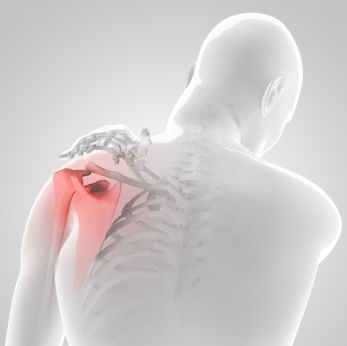 If you’ve been following my series on joint mobility you’ll know that I’ve already covered how to improve and maintain joint mobility for the hips, thoracic spine, and ankles and wrists. Today and tomorrow I’ll be going over the shoulder. The shoulder is a tricky joint because it has to provide adequate stability while maintaining full mobility to prevent injury and maximize function and performance. If you look at yourself in the mirror and wave your arms around, you’ll see what I mean. If that doesn’t work, watch a swimmer, preferably one doing the IM, and watch the incredible range of motion in those shoulders. That’s what the human body is capable of.
Know what you’re looking for and you should be able to count ten different types of shoulder articulations. Ten! Contrast that with the hips (eight), the ankles (two), the wrists (four), or the spine (five), and the shoulder is clearly the most complicated joint with the greatest range of motion. Because “with great power comes great responsibility,” the shoulder is also perhaps the joint most vulnerable to injury. You can do a whole lot with a well-functioning shoulder joint, but you can also really mess yourself up and curtail your activity level for a long time if you get haphazard with its maintenance. Take it from a guy who messed his shoulder up more than once: shoulder health is absolutely required for an active, enriched life. And if you plan on attaining any sort of athletic competency on any level, you need good shoulders.
A person’s shoulder joint is composed of the clavicle (collar bone), the scapula (shoulder blades), and the humerus (upper arm bone), along with two joints – the acromioclavicular, or AC joint; and the glenohumeral joint. AC joints exist between the clavicle and the scapula, whereas the glenohumeral joint is the classic ball-and-socket joint responsible for basic arm rotations and hinging. All these bones and joints are in turn supported by the surrounding musculature.
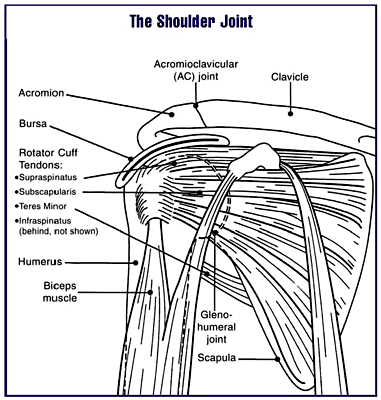
The surrounding musculature is extensive. You’ve got the big boys, like the rear, middle, and anterior deltoids or the trapezius, that get all the credit. They’re the ones that pop out and look great in tank tops. Important? Yes. But there are more important ones, I’d argue. Because for all that mobility and all that muscle mass to work correctly, you need stability. You need a base, something to work from.
This concept isn’t new, and it’s certainly not unique to the human shoulder joint. The entire body’s continuum of joints is governed by this “law.” Mobility-centric joints, like the hips, thoracic spine, and ankles, are connected to stability-centric joints, like the knees and lumbar spine. Each requires the next in line to function correctly and smoothly.
For the mobile shoulder joints to stay mobile and healthy, they rely almost entirely on the proper function of the scapula. Yes, the true key to shoulder mobility is scapular stability. You gotta have strong shoulder blades. You need a foundation.
While doing the bench press, that infamous destroyer of rotator cuffs, a trainee must tighten his scapula to create a “shelf” to lay against the bench. A trainee must also maintain that shelf throughout the set, even (especially) when pressing up. This is scapular retraction, and benching without it – with a loose, rounded back on the press up – will eventually kill your shoulders. It certainly knocked mine out for a good couple of months the most recent (and last) time I tried to max out my bench.
Any overhead work, whether it’s pressing a barbell, lifting a growing child, or moving luggage into the overhead bin on an airplane, requires scapular elevation to help the acromion clear the rotator cuff. It moves, ideally, smoothly, but if you’ve got poor scapular function (say, from kyphosis, or poor thoracic mobility), the upward rotation is halted, and impingement syndrome can result.
Back squats work best with a close grip and strong scapular retraction in order to urge the rest of the torso to stiffen and create that “shelf” for the bar to lie on. Try doing back squats with a wide grip and lax shoulder blades to see what I mean. Actually, don’t; it’ll just hurt your shoulders.
Rowing (machine, boat, or barbell) is all about scapular retraction. You’re not just going to yank on a cable or work a paddle by flailing your arms wildly. Well, you could, but you’d injure yourself. Setting your shoulder blades back and keeping them tight creates a safe, linear path for your primary rowing muscles to travel.
Pull-ups and chin-ups are all about scapular stability, very similar to the rows.
The shoulders figure into every upper body exercise. If your arms are moving, that movement is occurring along the joints that comprise the shoulder. Bench presses, dips, overhead presses, and anything else involving your arms depend on healthy shoulders and good scapular function. Tomorrow, I’ll explain more about the scapula, how to target its supporting musculature, and how it all figures into overall shoulder health and mobility.
Related posts:
