Author: Serkadis

  • High school gardening — for credit

    New York Times: Starting this week at Princeton Public High School, students can take gym class in the garden.

    “I think it’s strangely enjoyable,” said Tim Vasseur, a Princeton sophomore, shovel in hand. “It’s definitely not easy to do or anything like that.”

    Advocates for greener schools believe this is the first time public school students will receive physical education credit for garden work. The idea was conceived by Matt Wilkinson, a physical education teacher and a former wrestling coach who also has a background in horticulture.

    “We’re giving students another option to mainstream physical education,” Mr. Wilkinson said. “How long is somebody going to play basketball or soccer? Gardening they can do their whole lives.”

    Last fall, members of the community raised $1,500 and constructed 16 raised garden beds on school property. Now that it’s spring, students will get to work planting seeds, weeding, and turning compost.

    “It gives people who aren’t that athletic — and I feel like I’m not — it gives them an opportunity to do something else,” said Kruthi Isola, a sophomore. “You learn how to do more than just play a game.”

    As part of the class, students will create weight lifting programs customized to build gardening muscle. For example, Mr. Wilkinson emphasized how the day’s activity — using shovels to turn over soil in preparation for planting — uses the same muscles employed in bicep curls.

    But the teenagers are not required to get their hands dirty. Each member of the class can choose between working in the garden or a more traditional activity. On the first day the garden was open, 17 of 27 students in one class picked gardening; the rest played Frisbee.

    “Some of my friends, they’re like dude, come on, let’s go play some basketball,” said Alex Henry, also a Princeton sophomore. “Why are you doing this girl stuff? But I was like, you know, let’s break the orthodoxy a little bit.”

    When the gardening gym class first received publicity in a local newspaper, most of the comments left on the Internet were positive, but not all.

    Read more>>

  • Green university: Saudi Arabia’s KAUST with eco-friendly environment

    Environmental News Network: The Kingdom of Saudi Arabia may still be considered as one of the most conservative from a religious standpoint. But with the opening of the new King Abdullah University of Science and Technology, otherwise known as KAUST, a new era in academic learning, combined with new innovations in ecological architecture and design, has begun in which both men and women students will benefit jointly.

    The new campus opened its doors in September in the Red Sea city of Thuwal. It is considered to be the most environmentally innovative campus of its kind in the Kingdom. Constructed in a manner to utilize the maximum benefit of sea breezes for cooling, the buildings themselves have been constructed in order to screen out a good deal of the heat that is generated by the hot Arabian sun; making the internal environment more sustainable for the students.

    From an academic standpoint, the university will offer degrees in 11 fields of study, including Environmental Science and Energy Development, Biosciences and Bioengineering, Industrial and Chemical Engineering, Applied Mathematics, and Computer Science. One of the most innovative aspects to the new KAUST campus is that both male and female students will study together in the same classrooms; something that has not been common in other Saudi campuses.

    Read more>>

  • PSN US Video Content update – 04/09/10

    This week’s highlight on the Video Store goes to Lord of the Rings. Starting today, you can download the Fellowship, the Two Towers, and the Return of the King right into your personal video collection, and in

  • As Cyberbullying Moral Panics Heat Up, Actual Rates Of Cyberbullying Decreasing

    If you hadn’t noticed, there’s been a growing moral panic around the concept of “cyberbullying”, with various states passing laws against it and Congress even considering it as well. And, of course, if you read stories in the news these days, you might think that cyberbullying is happening everywhere and that It Must Be Stopped at all costs To Protect The Children.

    However, as Larry Magid is pointing out, actual studies on the issue show that so-called “cyberbullying” is on the decline and most kids are good kids who are as disgusted with the concept as adults. In fact, some research suggests that all of the stories about this “cyberbullying” threat may actually make the problem worse. That’s because kids are more likely to engage in the practice if they think it’s common. And, even though it’s not common today, all the press reports may spread the idea that it is. In the end, as Magid points out, as with other moral panics, the real solution tends to be parental education — not misguided laws.

    Permalink | Comments | Email This Story


  • HTC HD2 Metal Detector

    image

    Metal detector is a very cool feature for any Android phone owner, and our very own HD2 can also do this. The HD2 application for this is a very cool, sexy, and functional app that gives the phone the ability to find your money that you lost in your house seats.

    It comes in a simple cab file and you here is what you get… for free I might add:

    Current status of this app
    This is far from finished, but as we both are quite busy at the moment, we’d like to share the current beta of this app.

    All gauges are fully functional. Clicking sound and vibration working too. You may turn them on/off using the corresponding buttons on the left.
    To exit the app, use the lower right button.

    The camera button has a new meaning as of v0.2.0.0:
    It enables a test mode, where sensor readings are simulated. Use the sliders to advance the main/aux gauges

    todo’s we’re aware of:
    – artwork needs final polishing
    – sliders do slide but have no effect whatsoever, temporarily used for debugging
    – screenshot (camera) button switches debugging mode (this will change in a final release)
    – detection algorithm still crappy
    – sound and vibration status not saved on exit

    Testing
    Place your device flat on a surface. After starting the app, the gauge should show zero. If it doesn’t, take your device and write a couple of "eights" in the air (this is to get rid of magnetism which might get stuck in the sensors).
    Then use a pair of scissor or something the like and move it slowly to the right side of your device. At a distance of approx. 5 cm. the gauge should start to move. Take your device and move it with its right side near metals, and see if the gauge shows values.

    How to recalibrate the electronic compass
    Info
    Video

    Version history
    v1.0
    – detection algorithm improved (tilt compensation)
    – sensitivity slider (red) now working
    – continuous ticking after app exit solved
    – new app icon, thanks jaguaralani
    – now uses HW accelerated opengl (problem with silvermoon solved, thanks Phippu)
    v0.2
    changed skin, added sound ticks and vibration
    v0.1
    first public release (alpha)

    You can try this out at XDA-Developer


  • Bone up on your Italian: Ferrari releases 599 GTO videos

    Filed under: , ,


    Ferrari 599 GTO – Click above for high-res image gallery

    A couple of new videos have landed on the tubes dedicated to presenting all the yummy details on the new Ferrari 599 GTO. The only problem – for us, at least – is that both videos are in Italian. That doesn’t mean gearheads can’t still enjoy the imagery, including in-car video of test driver Raffaele de Simone tapping the carbon fiber flappy paddles. Actually, carbon fiber seems to be the operative material everywhere in GTO’s interior.

    While we don’t speak Italian, we can certainly pick up words like “Formula Uno,” “composite” and “aggresiva.” Regardless of your mother tongue, it’s worth spending a few minutes watching Ferrari’s latest creation after the jump before the GTO debuts at the Beijing Motor Show in two week’s time.

    Gallery: Ferrari 599 GTO

    Continue reading Bone up on your Italian: Ferrari releases 599 GTO videos

    Bone up on your Italian: Ferrari releases 599 GTO videos originally appeared on Autoblog on Fri, 09 Apr 2010 15:02:00 EST. Please see our terms for use of feeds.

    Permalink | Email this | Comments

  • Dow 11,000! (Briefly)

    Wow.

    Update: We’ve slipped back down. Not clear if we can hold.

    Update 2: Uh, oh, it’s looking like we’re not going to hold it with 3 minutes left to go. We’re back down to 10,992.

    Update 3: Per CNBC, we haven’t hit that level since September 26, 2008.

    Update 4: We didn’t hold. Looks like we missed it by about 3 points. But, given the ructions in Greece, etc. today’s 71 point gain is pretty impressive.

    Update 5: Here’s a fuller rundown of what happened today.

    Join the conversation about this story »

  • Tell Burning Man To Respect Your Digital Rights

    It appears the Burning Man Organization (BMO), organizers of the annual Burning Man art and music festival, is reconsidering its “all your photos are belong to us” attitude toward images taken at the event. On April 7, the organizers called for community feedback on the Burning Man camera policy, including its approach to image rights. They’re asking for comments via email ([email protected]) by Friday, April 23, in advance of an April 28 meeting on the issue.

    We’ve repeatedly criticized BMO for the onerous terms and conditions it imposes on Burning Man ticket sales. For example, the Burning Man ticket terms require participants to assign to the BMO—in advance—the copyright to any pictures they take on the playa; and limit participants’ rights to use their own photos online by obliging them to take down any photos to which the organizers object for any reason and forbidding them from allowing anyone else to download or copy the photos (meaning, participants can’t CC-license their photos, or dedicate them to the public domain).

    BMO claims that the ticket terms are necessary to protect Black Rock City’s unique culture and the privacy of its participants. Furthermore, BMO points out that the limitations are rarely enforced and they only claim copyright if the photos are used in a way BMO doesn’t authorize. By asserting copyright in photographs taken at the event, BMO can use the streamlined “notice and takedown” process enshrined in the Digital Millennium Copyright Act (DMCA) to quickly remove unapproved photos from the Internet.

    But using online ticket terms for fast and easy takedown and to restrict CC-licensing and dedication to the public domain is a terrible precedent to set. We understand the real challenges BMO faces in trying to preserve its noncommercial, community character. That said, a benevolent censor is still a censor, and if other event organizers follow suit, assignment and abrogation of rights could become standard Terms of (Ab)use in all ticket contracts.

    We’re glad that BMO is revisiting its image rights policy, and we hope the community will take full advantage of this opportunity to weigh in. So, Burners, if you care about your digital rights, tell the BMO that using take-it-or-leave-it fine print to assert veto rights over online expression is no way to promote a “society that connects each individual to his or her creative powers.”

  • Toyota develops “SMART” process for quick on-site evaluation of uninteneded acceleration cases

    Filed under: , ,

    Ever since the whole Toyota recall debacle exploded late in 2009, one of the company’s biggest problems has been the way it has responded to the problems. Many have criticized Toyota for either ignoring the problems or pretending that there is nothing wrong, but the company is now seeking to address that appearance by setting up rapid response teams to deal with reported incidents of unintended acceleration.

    For example, when a pair of alleged “unintended acceleration” incidents happened in San Diego and Connecticut, Toyota jumped in, sending out investigators to join government officials in trying to find out what happened.The new Swift Market Analysis Response Team (SMART) will now be immediately dispatched to the site of any reported unintended acceleration incident. The teams will consist of product engineers, field technical specialists and specially trained dealer technicians.

    Whenever dealers or Toyota are notified of an incident, the SMART team will head out to the site to evaluate the vehicle and gather evidence. Engineers from Toyota’s Japanese product development teams will also assist in the analysis. Hopefully, a more thorough investigation of every reported case will provide Toyota with a larger pool of data from which it can gain a better understanding of what may or may not be happening. Even if there is not actually a problem, Toyota needs to prove so conclusively, because if these kinds of incidents continue happening, they will only damage the company’s reputation further. Official press release after the jump.

    [Source: Toyota | Image: CNN]

    Continue reading Toyota develops “SMART” process for quick on-site evaluation of uninteneded acceleration cases

    Toyota develops “SMART” process for quick on-site evaluation of uninteneded acceleration cases originally appeared on Autoblog on Fri, 09 Apr 2010 13:58:00 EST. Please see our terms for use of feeds.

    Permalink | Email this | Comments

  • Juliet vs. Juliet: Did Someone Forget To Tell Hollywood You Can’t Copyright An Idea?

    A few years back, we wrote about the oddity of Hollywood studios often paying newspapers or others for “the rights” to a particular news story. But, there’s no legal reason why you need to do so (with — potentially — a few exceptions for the more modern concept of publicity rights) in most cases. That’s because a news story is based on facts, and you can’t copyright facts. You also can’t copyright an idea. Now, there are plenty of good reasons why movie studios do pay for such “rights” even if they don’t need to. For example, by licensing the rights, they also get access to certain people who know the story better than others. It also can lend an air of legitimacy to the movie. However, perhaps one reason why studios license the rights to an idea or a news story is because they don’t even realize they don’t have to.

    That’s the only explanation I can come up with for the ongoing lawsuit between two movie studios over who can make and/or release a movie about people seeking advice in love by leaving letters at the supposed gravestone of Juliet Capulet (of “Romeo &” fame). Apparently, two separate studios made movies on the topic, and one is suing to stop the other from releasing the movie.


    There’s Summit Entertainment, who is releasing a movie called Letters to Juliet, which they made after licensing a book by the same name, that told the story of the letters left at the gravestone and of a girl who responds to one of them. But then there’s EPV Enterprises, who is asking for Summit’s movie to be blocked, noting that it’s working on a “Juliet” movie itself, called Dear Juliet — which it licensed from a group called Club di Giulietta, who has (in real life) been responding to those letters.

    While the two movies may be based on the same premise, it sounds like they’re very different in terms of the actual story. And we’ve certainly seen similar movies come from multiple studios around the same time (Antz/Bugs Life, Dante’s Peak/Volcano, Deep Impact/Armageddon, The Illusionist/The Prestige, etc…). While Summit says it’s working to settle the lawsuit before a ruling is reached, it seems likely that it should prevail in any lawsuit as well. You can’t copyright facts or basic ideas — and it doesn’t look like these two movies are the same — just built off the same idea.

    Permalink | Comments | Email This Story


  • Methuselah Protocol


    I established some months back that a reinterpretation of the Noah story in concert with other conforming conjectures told a story of the establishment of human colonies on the post Pleistocene Nonconformity Earth.  The text itself retains survivals that supported both the story and the likelihood this text was a translation of an original report in an original language.

    It follows that the initial leaders of the colony retained their original life spans during the millennial build out of the colony.  We have the lifespan of Methuselah in particular.

    Science is now clearly unraveling the necessary protocols to extend human life spans and this report by this company in the midst of the necessary research endeaver pretty clearly spells out were we are at.    There is obviously rising optimism and the suggestion that this generation may well gain some of the benefits.

    If we accept the Methuselah story as just given and I suggest that my reinterpretation gives us a consistent data base and little choice, then this work is about restoring that level of human longevity.  It is not about immortality but about been able to spend a great number of years in the fullness of health on earth.

    That is well worth supporting.

    Overview of BioTime’s Reversal of the Aging of Human Cells

    An Overview with Questions & Answers


    Summary:
    • BioTime and its collaborators reported on March 16, 2010 in a scientific paper titled “Spontaneous Reversal of the Developmental Aging of Normal Human Cells Following Transcriptional Reprogramming” the reversal of human cellular aging. The paper is online at
    • The Company reported that by selecting for cells with sufficient levels of the immortalizing protein telomerase, they were able to reset the clock of aging back to the embryonic state.
    • Using the new technologies of reprogramming, BioTime scientists showed that time’s arrow of development, as well as aging, could be reversed.
    • BioTime revealed why existing Induced Pluripotent Stem (iPS) cell lines being studied showed signs of premature aging, and a means to overcome that roadblock.
    • This new capability does not require the use of human embryos or egg cells.
    • BioTime’s reversal of developmental aging may be the seed for future technologies that will one day allow young cells of any kind to be produced that might be useful for aging patients in repairing the heart, the blood system, the brain, and the retina, as well as many others applications. In this way, we might increase the “healthspan,” that is, the years free from expensive and debilitating disease.
    The Role of Gerontological Research in Society Today
    The science of the biology of aging (gerontology) is increasingly a strategic focus for the medical community, the pharmaceutical industry, and government. The United States, China, and many other developing countries are about to experience an unprecedented tsunami of aging people with an unprecedented demand for medical care associated with the chronic debilities of aging. Data on this demographic trend published by the Bureau of the Census is available online on this site or from the US Census Bureau at http://www.census.gov/prod/2006pubs/p23-209.pdf.

    A Brief Summary of BioTime’s Technology

    The approach BioTime scientists have taken to devise new strategies for the treatment of age-related disease begins with the recognition that the human life cycle uses both “mortal” and “immortal” cells. One of the remarkable things about life is that it continues generation after generation through our children, while the individual human being inevitably ages and dies. Curious about how some cells (those in the reproductive lineage also known as the germ-line) accomplish this unending task, gerontologists began to investigate the internal molecular machinery of life, looking for the differences in mortal and immortal cells. “Immortal” cells are those of the reproductive lineage that have the potential to continually make babies generation after generation, forever. In contrast, the cells of the human body such as blood, brain, and muscle cells (somatic cells) have an irrevocably finite lifespan and are therefore called “mortal.” An amazing fact about life is that our bodies are the offshoots of lines of these immortal cells that have been proliferating since the dawn of life on earth. They, unlike the individual human being, have no dead ancestors. So, the question is, “Why?”
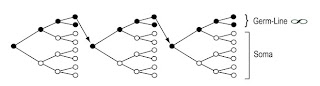


    Figure 1. The dichotomy of germ-line and somatic cells. Germ-line cells continue in an unlimited immortal proliferation of mitosis and meiosis (the latter not shown) while somatic cells are destined to die with the individual.

    The “Clock” of Cellular Aging

    In the 1960s, Leonard Hayflick demonstrated that cells from the human body have a finite capacity to divide. That is, when grown in the laboratory, they divide perhaps 70 times and then age and stop. In the years that followed, gerontologists began to study this aging of cells in the lab dish in an effort to solve the riddle of human aging. Finally, in the late 1990s, the use of Dr. Hayflick’s cellular aging model led to the identification of the central clocking mechanism. The “clock” of cellular aging was shown to be in the DNA of every cell, in a region called the “telomere” or “end part” of the chromosomes. Telomeres have often been compared to the protective plastic ends on our shoelaces (see Fig. 2 below). In 1998 it was demonstrated that a gene expressed in the germ-line cells called telomerase continually rewinds this clock of aging, keeping it at the appropriate embryonic setting, allowing the reproductive cells to proliferate without limit and making babies born young. However, when cells begin to branch out to make the human body, the immortalizing enzyme is turned off and as a result, telomeres shorten every time cells divide (hence their mortality). Telomeres are long enough at the beginning of life to allow all the cell doublings necessary to make a baby, to allow the person to grow to adulthood, and to allow cell division in the adult for up to approximately a century. However, progressively over time, telomeres shorten; aged (senescent) cells accumulate in tissues throughout the body and are thought to lead to age-related changes in the body.



    Figure 2. Human chromosomes are shown in blue. Telomeres are illuminated in green at the chromosome ends.

    It was appreciated very early on that cancer cells have abnormally reactivated the immortalizing enzyme, telomerase, giving the rapidly proliferating tumor cells the ability replicate out of control forever. So, to intervene in aging without causing an undue risk of cancer, scientists sought a way to carefully turn telomerase on when needed and then to turn it off again to make young (but not immortal) cells to repair the tissues worn out with age in the human body.

    The approach settled on was to attempt to isolate cells from the immortal human germ-line that naturally maintain long and youthful telomeres when they are in the germ-line state and that turn off telomerase when the cells of the human body begin to form as they do naturally in each human generation. In 1998 the first such naturally immortal cells were cultured from the human germ-line and they were called “human embryonic stem cells.”

    There was a great deal of excitement in the scientific community relating to these cells because for the first time it was possible to devise technologies that would allow the manufacture of all the cells of the human body on a very large scale. This, in principle, could lead to a wide array of products useful in repairing tissues like the heart, brain, bones, eyes, and many other tissues that have never been possible to repair before. As a result, this new field came to be called “regenerative medicine.”

    However, the fact that these cells came from the earliest stages of human life, shortly after the egg cell is fertilized by sperm, has caused the use of human embryonic stem cells to be controversial for some people. In 2001, President Bush allowed federal funding to be used on embryonic stem cell lines created before 2001, but not those made thereafter. This despite the fact that the embryos had not yet begun to develop (i.e., were not yet a pregnancy), and were destined to be discarded in the process of in vitro fertilization (IVF).

    A Cellular Time Machine

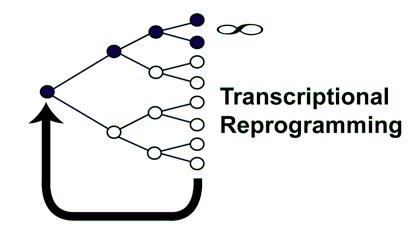
    In 1997 when Dolly the sheep was cloned, it occurred to some scientists that the transfer of DNA from the aged cells of the body into an egg cell was capable of changing the state of the cell in what could be compared to a cellular time machine. Despite the rumors that Dolly the sheep was born old because she came from an aged breast cell (hence her being named after Dolly Parton), scientists soon demonstrated that the cloning process really could reverse both the process of specialization of the body cell to make embryonic cells again, and surprisingly, cloning could also reset the clock of aging in cells. So, just like the immortal perpetuation of the species, cloning would allow a baby animal cloned from an aged body cell to be born young, and theoretically, the process could be repeated forever. If this could be tapped in the cause of medicine, it might be possible, similarly, to make unlimited young replacement body cell types forever to repair cells and tissues worn out with age. Early efforts to clone human embryonic stem cells, a process called therapeutic cloning to distinguish it from human reproductive cloning (the cloning of a human being), led to cloned embryos that would only grow to a small number of cells. In addition to the difficulties in making human therapeutic cloning efficient, the difficulty of sourcing human egg cells and the intense ethical controversy over the use of cloning in medicine made progress in the field relatively difficult. The good news is that in the years that followed, scientists identified some of the molecules within the egg cell that accomplish the work of cloning. These discoveries allowed these molecules to be used in such a way that egg cells were not required and no embryos were cloned. In other words, a cell type, such as a skin cell, could be coaxed back to an embryonic state in an ethically noncontroversial manner. Because these cells do not come from an embryo, they are called “induced pluripotent stem (iPS) cells” instead of embryonic stem cells. This transformation of a body cell back to an embryonic state uses proteins that are master regulators of other genes called “transcription factors.” Therefore this process is called “transcriptional reprogramming” or “iPS” technology. These cells exhibit pluripotent capabilities, meaning they have the potential to mature into all of the cell types or tissues types — skin, blood, bone or retinal cells, for example.
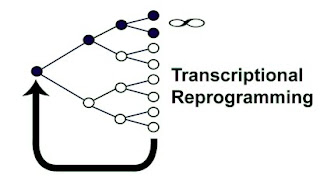


    Figure 3. By understanding the molecules called “transcription factors” within the egg cell that is capable of returning cells in the body back to an embryonic state, they were able to turn back the clock of biology, a process called “reprogramming.”
    However, recently, scientists reported that iPS cells show evidence of premature aging when induced to become cells of the body such as blood-forming cells (Feng et al, 2010). In some cells that have abnormal regulation of telomerase — an enzyme that maintains telomere length, there was evidence that iPS could at least partially rewind the clock of aging (Agarwal; et al, 2010); however, suggestions that iPS cells might generally be prematurely old caused concern over the new technology.

    Reversal of Developmental Aging

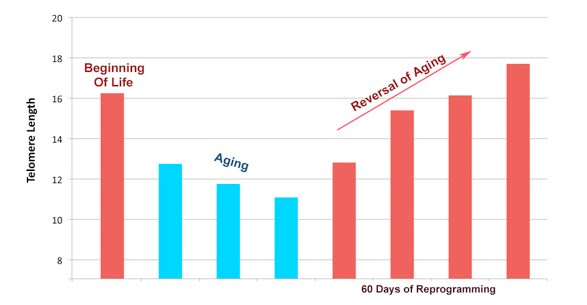
    In BioTime’s report, we show that the premature aging observed in the existing iPS cell lines studied was due to the fact that the telomere clock of cellular aging in at least many of the lines being used in the scientific community is set at a relatively old (short) level. However, using a system where cells with the same DNA type at young embryonic states, as well as aged states were used, BioTime scientists reported that by looking for cells with sufficient levels of the immortalizing protein telomerase, they were able to reset the clock of aging back to the embryonic state. So, both the process of development wherein the germ-line cells specialize into the cells of the body, and also the telomere clock of aging was reported in the study. This reversal of developmental aging may be the seed for future technologies that will one day allow young cells of any kind to be produced for aging patients for use in repairing the heart, the blood system, the brain, and the retina, as well as many others applications.
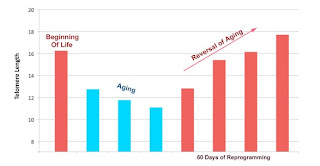


    Figure 4. In BioTime’s publication, the clock of cellular aging (telomere length) was measured in cells at the very beginning of life (embryonic stem cells). Then body cell types were made from those cells and they were observed to become mortal and to age from telomere shortening. Then, using these cells with the same DNA type, the application of iPS cell technology with careful studies of the levels of the immortalizing gene telomerase, allowed the complete reversal of developmental aging.

    A presentation Dr. Michael West, CEO of BioTime Inc., recently gave on this technology is available online at 

    Shaping a U.S. Policy on Interventional Gerontology
    We are at a critical nexus in our history. The aging of our population is occurring at an unprecedented rate due to the aging of the baby boom population. The cost of this age wave will cause economic, as well as personal human suffering. The United States has historically approached serious challenges in the past with courage and creativity, with an eye on the compassionate application of science. There is just enough time to begin to apply the new advances in regenerative medicine if we begin today.


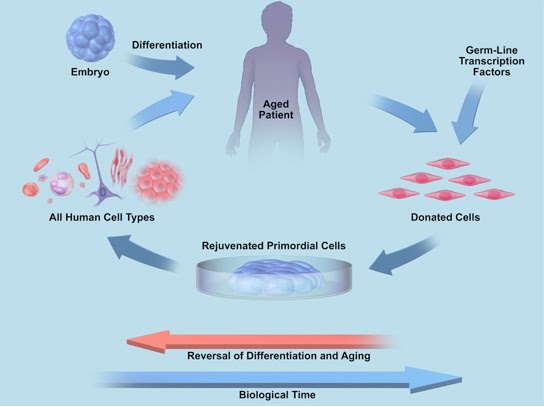
    Figure 5. Summary of the reversal of developmental aging. In normal development and aging, the immortal cells from the reproductive lineage of cells make all of the cells of the human body that will age and die with the individual. Using the new technologies of reprogramming, BioTime scientists showed that time’s arrow of development as well as aging could be reversed, potentially one day leading to the ability to make any young cell type useful in repairing those worn out with age.

    Dr. Michael D. West is the Chief Executive Officer of BioTime, Inc. (NYSE-Amex: BTIM) and OncoCyte Corporation of Alameda, California. The Companies are focused on developing an array of research and therapeutic products using human embryonic stem cell technology. He received his Ph.D. from Baylor College of Medicine in 1989 concentrating on the biology of cellular aging. He has focused his academic and business career on the application of developmental biology to the age-related degenerative disease. He was the Founder of Geron Corporation of Menlo Park, California (Nasdaq: GERN) and from 1990 to 1998 he was a Director, and Vice President, where he initiated and managed programs in telomerase diagnostics, oligonucleotide-based telomerase inhibition as anti-tumor therapy, and the cloning and use of telomerase in telomerase-mediated therapy wherein telomerase is utilized to immortalize human cells. From 1995 to 1998 he organized and managed the research collaboration between Geron and its academic collaborators James Thomson and John Gearhart that led to the first isolation of human embryonic stem and human embryonic germ cells. From 1998 to 2007 he was President and Chief Scientific Officer at Advanced Cell Technology, Inc. (OTCBB: ACTC) where he managed programs in animal cloning, human somatic cell nuclear transfer, retinal differentiation, and ACTCellerate, a technology for the multiplex derivation and characterization of clonal human embryonic progenitor cell lines.
    About BioTime, Inc.

    BioTime, headquartered in Alameda, California, is a biotechnology company focused on regenerative medicine, blood plasma volume expanders, and low temperature medicine. BioTime develops and markets research products in the field of stem cells and regenerative medicine through its wholly owned subsidiary Embryome Sciences, Inc. BioTime’s subsidiary OncoCyte Corporation focuses on the therapeutic applications of stem cell technology in cancer. BioTime also plans to develop therapeutic products in China for the treatment of ophthalmologic, skin, musculo-skeletal system and hematologic diseases, including the targeting of genetically modified stem cells to tumors as a novel means of treating currently incurable forms of cancer through its subsidiary BioTime Asia. In addition to its stem cell products, BioTime markets blood plasma volume expanders and related technology for use in surgery, emergency trauma treatment, and other applications. BioTime’s lead product, Hextend®, is a blood plasma volume expander manufactured and distributed in the U.S. by Hospira, Inc. and in South Korea by CJ CheilJedang Corp. under exclusive licensing agreements. Additional information about BioTime can be found on the web at www.biotimeinc.com.
    Forward-Looking Statements

    Statements pertaining to future financial and/or operating results, future growth in research, technology, clinical development and potential opportunities for the company and its subsidiary, along with other statements about the future expectations, beliefs, goals, plans, or prospects expressed by management constitute forward-looking statements. Any statements that are not historical fact (including, but not limited to statements that contain words such as “will,” “believes,” “plans,” “anticipates,” “expects,” “estimates,”) should also be considered to be forward-looking statements. Forward-looking statements involve risks and uncertainties, including, without limitation, risks inherent in the development and/or commercialization of potential products, uncertainty in the results of clinical trials or regulatory approvals, need and ability to obtain future capital, and maintenance of intellectual property rights. Actual results may differ materially from the results anticipated in these forward-looking statements and as such should be evaluated together with the many uncertainties that affect the company’s business, particularly those mentioned in the cautionary statements found in the company’s Securities and Exchange Commission filings. The company disclaims any intent or obligation to update these forward-looking statements.
  • Basically, Investors Aren’t Even Remotely Concerned About Holding Stock Over Greece’s Big Weekend

    happy turkey

    All those emergency meetings and fears of a bank run aren’t scaring investors.

    Dep ite it being a Friday and all, and despite the opportunity to sell for a little profit after some volatility earlier in the week, stocks are comfortably.

    It’s hard not to think this is moral hazard writ large. Nobody really thinks leaders will allow anything bad to happen (no matter how much they talk), so it’s too early to jump off the train.

    Though there’s still a little over an hour to go, so… who knows.

    Join the conversation about this story »

  • This week in Twitter

    Lots of the little stuff that used to wind up here at SvN gets posted by us individually at Twitter these days. So as an experiment, let’s try a wrap-up post featuring highlights from this week’s 37signals staff posts at Twitter.

    @rjs Here are some notes on my talk at the School of Visual Arts by @soulellis: http://bit.ly/9MBLig

    @jasonfried http://twitpic.com/1ea9hl – The Russian jet train: http://bit.ly/dpeU3f

    @dhh The American scoffed, “I am a Harvard MBA and could help you”. http://bit.ly/dCLsmW (The Fisherman’s Parable)

    @dhh Kindle still owns the iPad for use outside. You can’t see anything but smudges and it overheats in 5-10 minutes in direct sunlight 🙁

    @jasonfried You haven’t blown them away until they send you a check.

    @jsierles Travel, but have a modest base. Carry a pen. Put the camera away. Talk to people.

    @asianmack For all the praise Apple gets for its quality user interfaces, iTunes really sucks the big one.

    @bergatron You can double-tap a paragraph of text with TWO fingers on the iPad to select it. The alternative is four successive single taps.

    @mattlinderman Good piece on “Producing Pro Podcasts.” http://emusician.com/tutorials/emusic_producing_pro_podcasts/index.html

    @jasonfried Zillow’s iPad app is really well done. Great way to explore homes for sale/rent: http://www.zillow.com/ipad

    @mattlinderman Robie House video: Experience a Frank Lloyd Wright masterpiece from inside. http://bit.ly/9bHKGe

    @dhh Talking computer setups at http://david.heinemeier.hansson.usesthis.com/

    @rjs “Goodbye Point & Shoots, Goodbye Laptops.” http://bit.ly/d1Apz5

    @jasonfried My first article for Inc. Magazine. Also in the April issue on newsstands now: http://bit.ly/d7B66F

    @rjs Beautifully simple and complete sketches of splashes and falling drops from “On Growth and Form”: http://bit.ly/a7yCPU

    @jasonfried Newsweek on 37signals and REWORK: http://www.newsweek.com/id/235687/output/print

    @asianmack Apple’s market capitalization exceeds Walmart’s. Microsoft and Exxon are the only US companies whose market caps exceed Apple’s.

  • 2011 Lotus Elise rated at 46.7 mpg, runs 0-60 mph in 6 seconds

    Yesterday, we received an e-mail from Lotus saying “149 – Sorry, but we’re too busy celebrating to elaborate!” Well, today Lotus told us exactly what 149 means.

    “We are delighted to announce that the new 2011 Lotus Elise has just been certified with an outstandingly low emissions figure of 149g of CO2 / km which represents a reduction of 16% over the previous Lotus Elise S,” Lotus said in a statement.

    That means that the new 2011 Elise has the lowest CO2 for its performance level for any gasoline sportscar in the world. If that’s not impressive enough, Lotus says that the Elise also returns an impressive fuel-economy figure of 56.1 mpg (46.7 mpg in U.S. terms). This means that the Lotus Elise can travel 500 miles on one tank of fuel.

    Not to mention, the 2011 Lotus Elise is still capable of running 0-60 mph in 6 seconds flat thanks to its 136-hp 1.6L 4-cylinder VVT-I.

    2011 Lotus Elise:

    – By: Omar Rana


  • Amazing Visualization Of Wal-Mart’s Growth Over Time

    Flowingdata has put together an amazing visualization of Wal-Mart’s (WMT) growth over time.

    We won’t say it’s “cancerous,” but we’ve got no doubt that more than a few of you will think that.

    Click the map:

    null

    Join the conversation about this story »

  • Documents show that Toyota knew about acceleration defects in 2006

    According to a report by Bloomberg, Toyota knew about its unintended acceleration flaws more than 3 1/2 years before it recalled vehicles to fix the problem. Documents dated March 24 that were submitted to the National Highway Traffic Safety Administration show that Toyota learned that floor mated could entrap accelerator pedals as early as Feb. 7, 2006 and that pedals could stick 5 months later.

    Toyota, which admitted to responding to the issue at an untimely manner, recalled about 8 million vehicles worldwide starting late last year to repair the two types of acceleration problems.

    The first report of the accelerator being trapped against a floor mat was from a 2005 model year Prius.

    Toyota started its recalls for the two pedal-related issues after the Aug. 28 Lexus ES crash that killed a family of four.

    Source: Automotive News (Subscription Required)


  • Bluster, Appease, Ignore, Deny.

    04.09.10 09:05 AM posted by Skip MacLure

    The four pillars of Obama’s policies… it seems that they are remarkably alike both for domestic or foreign consumption. Obama’s technique when confronted by a domestic issue is to bluster his way through when confronted… appease his way through or around the issue… ignore it and pretend not to know anything… or deny it altogether, it never happened.


    Obama and Medvedev Sign.

    The problem with that approach is that people watch it a few times and then they figure out that’s the only game you have, and that they are starting to think that you may not have the horsepower for the job. Something the rest of us knew a long time ago.

    I keep watching one massive blunder on top of another and I’m amazed that people in the Congress who should know better aren’t being more vocal about the disaster area that is our economy. Even the densest Democrat out there instinctively feels the loom of 2010 on the horizon.

    The first of the pillars works astonishingly well in dealing with those terrible bullies over in the middle east. It goes hand in hand with ‘appease’, because Obama uses that pillar more frequently than the first (bluster). The guys over there have been counting speeches too. They’ve got his entire program wired down, and they know that Obama appeasement always comes with some concession, usually to the detriment of our national interest. That and the current administration’s facility for policies detrimental to our allies, simply ignoring them entirely, and when that isn’t working deny anything to do with it and leave them to take the rap. read more »

    http://www.conservativeoutpost.com/b…se_ignore_deny

  • Why Being Called “Nice” Hasn’t Cooled My Heels, or DHS Fervor to Collect Civilian Dat

    04.09.10 09:40 AM posted by Veronica Estrada

    Amid Rasmussen polls telling us what middle America already knows and CNN playing "nice", it behooves every freedom-minded individual to forget that we are a breath shy of being called "terrorists."

    There are the various, sundry people, who – either because of ignorance or willful blindness to fairness — will claim Timony McVeigh would have been "one of us" and that political terrorism begins before the act:

    Would Timothy McVeigh be part of the Tea Party movement if he was still here today and had not been caught? My guess is he would, and he would be welcomed with open arms. That being said, I believe he was at one time a patriot—but the real question is; when does the delusional view of patriotism morph into terrorism—it starts long before the act of terrorism—I believe there are some loud voices out there that would view terrorism as patriotic to support their Ideology.

    Then there are others will mindlessly repeatlefty organizations as they attempt to discredit you and I by labeling the conservative movement "political terrorism," as in exhibited politicalarticles.net’s "Political Terrorism: We are Witnessing a Total Nervous Breakdown of Right-Wing America" read more »

    http://www.conservativeoutpost.com/w…_civilian_data

  • UK Musician’s Open Letter To Musicians Union Over Its Support Of The Digital Economy Bill

    With the passing of the Digital Economy Bill in the UK, many musicians are quite upset — even though the law is supposed to be about “protecting” them. Musician Steve Lawson, a member of the Musicians Union (which supported the bill), has written a brilliant open letter to the organization, explaining why he was upset about their position, and considering leaving the group. Here’s just a snippet, but the whole thing is worth reading:


    The BPI wrote the bill as a protectionist measure of an outdated and unworkable business model. It was a model that was NEVER to the advantage of musicians who cared about the music they played and the culture it existed in, but one that made sense at a time when physical distribution was required to reach anyone, and the costs involved were prohibitively high. At that point, labels lying to musicians about how much they dig the music, while making a fortune for themselves but still never “recouping” on the album was deeply unpalatable but a necessary part of recording and releasing music.

    All the costs have dropped. I’ve written extensively about this — most notably here — but nothing has changed in the industry. They still spend money on the behalf of musicians, pay themselves that money, recoup it (AGAIN) and own the product at the end. None of that is remotely to our advantage.

    ….

    So, the premise of the bill — that the situation is desperate — was spurious. The figures quoted for industry ‘losses’ are insane. Utterly nonsensical if mapped against spending trends on ‘physical and download entertainment media’ — we are part of a much bigger entertainment industry now that we ever were, and we don’t dominate it in the way we did from 1956 to 1998. Games and DVD are a bigger part of it than ever. And entertainment spending continues to rise. So 200 million hasn’t been ‘lost’, it’s being spent elsewhere. Meanwhile, the cost of making and distributing records is tiny, and download sales go up and up.

    How you can see that as a situation that needs legislating is utterly beyond me. To shut down sites and services on suspicion of illegal activity is a civil liberties travesty. To have my internet traffic monitored ‘in case I do anything bad’ is like the royal mail reading my post, in case my letters contain naughty words. While threatening to brick up my front door if they find them, or think they might have found them.

    It’s great to see musicians realizing that just because the bill’s backers claim it’s in their interest that this is not necessarily the case — and that it could very much go against their interests.

    Permalink | Comments | Email This Story


  • Distressed House Sales Increasing Again…

    First American Corelogic released their first distressed sales report yesterday morning: Distressed Sales Again on the Rise, Reaching 29% in January

    First American CoreLogic today released its first monthly report on distressed sales activity. The report below indicates that distressed home sales – such as short sales and real estate owned (REO) sales – accounted for 29 percent of all sales in the U.S. in January: the highest level since April 2009. The peak occurred in January 2009 when distressed sales accounted for 32 percent of all sales transactions (Figure 1). After the peak in early 2009, the distressed sale share fell to 23 percent in July, before rising again in late 2009 and continuing into 2010.

    Here are a couple of graphs from the report:

    Distressed Sales Click on graph for larger image in new window.

    Credit: First American Corelogic.

    This graph shows the total percent of distressed sales broken down by REO and Short Sales. Notice that the percent short sales has increased significantly over the last year – that trend will probably continue.

    Distressed SalesThe second graph shows the breakdown by certain metropolitan areas.

    Among the largest 25 markets, Riverside, CA, had the largest percentage of distressed sales in January (62 percent), followed closely by Las Vegas (59 percent) and Sacramento (58 percent) (Figure 2). The top REO market was Detroit where the REO share was 48 percent, followed closely by Riverside (47 percent) and Las Vegas (45 percent). San Diego’s short sale share was 19 percent in January, making it the highest ranked short sale market, followed by Sacramento (18 percent) and Oakland (16 percent). Although the top 10 markets for foreclosures are all located in Florida, only two Florida markets, Orlando and Cape Coral, made the top 10 distressed sale list. The most likely reason: Florida is a judicial state where foreclosures process through the courts and take quite a bit longer than in California, Arizona or Nevada, where non‐judicial foreclosures are the norm.

    I’ve been following the Sacramento market as an example of a distressed market – and the Sacramento Association of REALTORS® reported that almost 69% of sales were distressed in January, with 24% short sales, and 45% REOs. The FACL data shows about 58% as distressed. The difference is probably in the methodology.

    The exact numbers probably aren’t as important as the trend – and this will be an interesting trend to follow in 2010.


    This post is reprinted from Calculated Risk, a leading finance and economics site.

    Join the conversation about this story »