Author: Serkadis

  • Here’s Metallica Performing The Star-Spangled Banner

    Metallica frontman/guitarist James Hetfield and guitarist Kirk Hammett played “The Star-Spangled Banner” at the Giants/Dodgers game a few days ago, in a segment that in some ways felt like it could have been the intro to a Metallica album of yesteryear (think “Fight Fire With Fire,” “Battery,” or “Blackened”).

    Unfortunately, what followed was just a baseball game and not five minutes of heavy metal thunder. Still worth a watch.

    Note, both Metallica members are wearing Giants jerseys, and have Giants logos on their guitars, as the band is from San Francisco.

    The Giants won the game 4-3.

    Oh, and here’s Lars throwing out the first pitch:

  • Google Says Glass Could Be Harmful To Some Eyes

    A lot of kids are starting to play with smartphones and tablets very early in their lives. It may not be a good idea for kids to wear Google Glass, however.

    Google itself says as much in a FAQ for the product. This is straight from the page:

    Glass isn’t for everyone. Like when wearing glasses, some people may feel eye strain or get a headache. If you’ve had Lasik surgery, ask your doctor about risks of eye impact damage before using Glass. Don’t let children under 13 use Glass as it could harm developing vision. Also, kids might break Glass or hurt themselves, and Google’s terms of service don’t permit those under 13 to register a Google account. If Glass is not for you and you wish to return it, do so before the end of the applicable refund period.

    There are only six of the so-called “frequently asked questions,” and oddly one of them is “Can I use glass while operating a jackhammer?” Google’s response is, “Use caution,” noting that it will not protect your eyes from debris, balls, sharp objects, or chemical explosions.

    So, probably not a good idea.

    [via AndroidHeadlines]

    Image: Stop the Cyborgs

  • McAfee Set To Acquire Firewall Provider Stonesoft

    Intel’s antivirus software company, McAfee, is acquiring Stonesoft. The company announced that it has executed a definitive agreement to initiate a conditional tender offer to do so.

    Stonewall, if you’re unfamiliar, creates firewall products.

    The deal is worth $389 million.

    McAfee President Michael DeCesare said, “With the pending addition of Stonesoft’s products and services, McAfee is making a significant investment in next-generation firewall technology. These solutions anticipate emerging customer needs in a continually evolving threat landscape. Stonesoft is a leading innovator in this important market segment. We plan to integrate Stonesoft’s offerings with other McAfee products to realize the power of McAfee’s Security Connected strategy. Stonesoft products will benefit from the collective expertise of more than 7,200 McAfee employees. Leveraging McAfee’s cloud-based Global Threat Intelligence service will provide our combined customers with unparalleled security.”

    Stonesoft CEO Ilkka Hiidenheimo added, “The combination of the two companies allows Stonesoft to benefit from McAfee’s global presence and sales organization of over 2,200 employees, best-in-class threat research and technology synergies. Combined, we believe we can offer our customers a world-class product portfolio with world-class support – all backed by Intel.”

    The rationale for the acquisition, McAfee says, is based on network security being a vital component of a comprehensive security solution, and next-generation firewalls are one of the fastest growing segments of this. Stonesoft is considered a leader in the space, and McAfee expects to grow its network security business with a more complete offering.

  • Tactus And Synaptics Create A Reference Tablet For OEMs With An Amazing, Disappearing Keyboard

    tactus-render

    One of the most impressive things we happened upon at CES this year was the Tactus keyboard, a special fluid-filled layer that could be baked into a tablet or smartphone to provide users with a physical keyboard that could recede back into the screen when it wasn’t needed.

    Since then the company has been flying under the radar, but it turns out Tactus has been hard at work on a prototype device with help from a prominent player in the touch interaction space. Tactus confirmed to TechCrunch that it has partnered with touch panel experts at Synaptics to create a reference device — a 7-inch Android-powered tablet — that it will begin shopping around to OEMs and carriers at the end of June.

    As you might expect, the company was hesitant to name names, but newly-installed sales and marketing VP RK Parthasarathy noted that “multiple tier 1 OEMs” are already waiting for a chance to fiddle with the 7-inch reference design kit, and that the first Tactus devices were still slated to be shown off some time this year… just not around these parts. Instead, Parthasarathy expects the first official Tactus-enabled tablet to make an appearance at a trade show in Asia in Q4 (the tight-lipped VP wouldn’t confirm which) before popping up at CES in early 2013.

    Fortunately, it seems as though those Tactus-enabled tablets may able to compete on price just as devices like the Nexus 7 and Kindle Fire do right now. Despite the seeming complexity of adding a fluid-filled outer layer to a tablet’s screen, it’s apparently a walk in the park compared to the alternative. According to Parthasarathy, the process of handling and cutting down glass for the traditional cover lenses that sit over tablet displays is cumbersome and pricey enough that implementing a Tactus layer is a viable financial alternative. The fact that the keyboard can be made to work with whatever OS sits below it is an intriguing proposition to boot — there’s nothing stopping Microsoft or Apple from running with these things short of a mismatch in vision.

    The move works rather nicely for Synaptics too — the company’s touch layers have become ubiquitous in laptops and smartphones, but short of an appearance in Samsung’s 10-inch Galaxy Tab 2.0 Synaptics hasn’t had much success in cracking the tablet market.

    “The tablet market has been evolving, and Synaptics has been criticized for being late to the game,” said Synaptics technology strategist Dr. Andrew Hsu. Granted, the tablet market is still relatively small compared to the handset business — while Synaptics’ presence in tablets has been modest, it hopes that partnering with Tactus can help them pick up steam in an already-crowded market.

    It’s an incredibly neat concept and seems to work well enough in practice, but are people really clamoring for a return to more tactile way to interact with their devices? After all, big names in the mobile space like Samsung have been tinkering with ways to users to manipulate their gadgets without the need to lay a finger on them. In short, are touchier keyboards really the way forward? At least one person would probably agree, but as far as Tactus is concerned there’s nothing to stop an OEM from baking a whole host of interaction methods into a single device.

    “What we’re seeing is a natural evolution,” Parthasarathy pointed out. “We don’t believe there is a single interaction mechanism that belongs on every device. Users will have a multitude of interface options, but serious content creation requires a physical interface.” We’ll soon see if the Tactus vision ultimately pans out — with any luck, that initial batch of Tactus tablets will go on sale a few months after appearing at CES.

  • Zach Galifianakis Plays ‘Game Of Game Of Thrones’ On SNL

    Comedian Zach Galifianakis hosted the most recent episode of Saturday Night Live, and a number of the show’s segments are generating a fair amount of buzz on Monday morning.

    We already looked at the Google Glass sketch from Weekend Update, in which Fred Armisen played tech blogger Randall Meeks, trying to convince Seth Meyers that the device is cool, and makes life easier. Spoiler alert: it did neither (though the jury’s still out in real life).

    Another one of the most-talked about sketches from the episode features Galifianakis on a game show called “Game of Game of Thrones”.

    It seems that not a day goes by that the Internet doesn’t produce some type of Game of Thrones parody, so it’s no surprise to see SNL take on the show. Game of Thrones’ Peter Dinklage actually appeared on Weekend Update a few weeks back.

  • Don’t Starve Review (PC)

    The first time I died in Don’t Starve it was at the hands of a pig, who apparently has a number of homes in the woods, and it was mainly my fault: I did not yet understand the fact that I needed to click once for each swing of my axe.

    This game is not about success or even about progress, this is an experience about pure survival, about using the environ… (read more)

  • LinkedIn Is Ten Years Old

    LinkedIn turned ten years old on Sunday. It’s hard to believe it’s been a decade, but believe it or not, the professional social network launched all the way back in 2003. It has come a long way in the meantime.

    The company has put together an interesting visual timeline that you can peruse here. It begins in 2002 when Hoffman recruited a team of old colleagues from SocialNet and PayPal to work on the idea that would eventually become LinkedIn. In the early days, they were sometimes getting as few as 20 signups a day.

    In 2009, Jeff Weiner joined as President, and would then become CEO, a title he currently holds. Two years later came the IPO.

    Reid Hoffman writes on the LinkedIn blog:

    Ten years ago, I co-founded LinkedIn in my living room with the mission of connecting the world’s professionals to make them more productive and successful. Inspired by the invaluable role relationships played in our own careers, we launched LinkedIn with the tagline “Relationships matter.”

    At the end of our first month, we had 4,500 members in the network. 10 years later, we’re honored and humbled that so many of you have made LinkedIn a part of your daily professional lives.

    Today, hundreds of millions of professionals around the world are turning to LinkedIn to connect with each other, manage their identities, get insights they need to be great at what they do, and find their dream jobs. I’m continually inspired by our members’ career aspirations and achievements.

    LinkedIn currently boasts 225 million members, and says it is growing by a rate of two members every second.

    The company’s stock is up 0.23% in pre-market trading.

  • Iron Range Entrepreneur Speaks up for Broadband Deployment and Tax Incentives

    Last November the Minnesota Broadband Task Force met in Duluth – a meeting that coincided with the Minnesota Broadband Conference. The Task Force heard from one young entrepreneur about his business developing apps and the difficulty he had getting his job done with limited broadband on the Iron Range. Yesterday the same entrepreneur (Jake Dahl) had a Letter to the Editor in the Duluth News Tribune

    I’m a 2012 graduate of Eveleth-Gilbert High School and currently attend Mesabi Range Community and Technical College. For the past couple years, I’ve been developing a series of handy smart phone apps that users can download on their iOS devices. In the short time I’ve been doing this, the app consumer community here has grown significantly as more and more people are using wireless devices (mostly the iPhone) for a wide variety of needs. Entrepreneurs like me are tapping into those needs and developing useful applications that mobile users want.

    It’s a thriving industry, but we need a strong wireless broadband system to support our efforts.

    He pleads the case for improving broadband infrastructure by allowing tax incentives to defray costs of broadband deployment…

    That’s why we’re even more concerned about recent developments in the state Legislature that would increase taxes on broadband network providers. Instead of doing everything it can to encourage network providers to expand broadband services, the Minnesota Senate recently passed a bill that would repeal some of the tax breaks the state offers on purchases of telecommunications equipment.

    Many Internet-related entrepreneurs like me worry that such a move would slow mobile broadband development and deployment on the Iron Range and around the state. The state needs to do everything it can to encourage private investment in broadband. The high-tech community here and elsewhere in the state depends on it.

    I thought I’d include the video of Jake’s remarks from last November too…

  • Cloudera Launches SQL-on-Hadoop Solution

    Cloudera announced the general availability of Cloudera Impala, an open source, interactive SQL query engine for analyzing data stored in Hadoop clusters in real time. Cloudera worked closely with customers and open source users to develop the platform, designed from the ground-up for enterprise workloads.

    “With Impala, Cloudera has decisively planted the stake in bringing the worlds of Hadoop and enterprise SQL together,”  said Tony Baer, principal analyst, Software and Enterprise Solutions at Ovum. “And it has done so in a way that addresses the expectations for performance that are taken for granted in the enterprise SQL world. For Hadoop to cross over to the enterprise, it must become a first class citizen with IT, the business and the data center. A large part of making Hadoop a first-class citizen in the enterprise is making it accessible to the large base of SQL developers and applications that already exist.”

    Cloudera says that adoption of its platform has been strong, with over 40 enterprise customers and open source users are using Impala today, including 37signals, Expedia, Six3 Systems, Stripe, and Trion Worlds. With its 1.0 release, Impala extends Cloudera’s unified Platform for Big Data, which is designed specifically to bring different computation frameworks and applications to a single pool of data, using a common set of system resources.

    With Impala, users can query data stored in HDFS and HBase directly. The framework supports all standard file and data formats available, so users can choose the format that best suits their use case. The Impala framework is optimized for use with CDH, Cloudera’s 100-percent open source distribution of Hadoop and related applications.

    “Impala represents a major advance for Cloudera and the Hadoop ecosystem as a whole,”  said Mike Olson, CEO at Cloudera. “Cloudera was first to recognize that Apache Hadoop would be a catalyst for business transformation in the 21st century. We have worked tirelessly to support the rapid development of the platform to form a viable and open enterprise solution, with a rich and vibrant ecosystem to support it. We will continue to be a primary driver behind the evolution of a 100-percent open source Hadoop platform by setting a high bar that pushes the boundaries of what’s possible to exceed the high expectations of our enterprise customers.”

  • Saturday Night Live Makes Fun Of Google Glass

    You know you have a pop culture phenomenon on your hands when you make an appearance on Saturday Night Live’s Weekend Update, as Google’s Glass did over the weekend.

    Tech blogger Randall Meeks (played by Fred Armisen) stops by to show off the device. The skit really seems to be poking more fun at Google’s voice recognition technology than anything. He has a quite bit of trouble getting Google to recognize the Wi-Fi password and the word “Italitan.”

    At one point, the device starts playing porn sounds, which Meeks has some trouble muting.

    This is certainly not the first time the device has been parodied, but now that it’s in people’s hands, the jokes have made quite the comeback.

  • WALL-E, meet EVA: ‘Robo-doc’ navigates on its own, frees doctors to focus on the critically ill

    Ronald Reagan UCLA Medical Center, the world’s first hospital to introduce a remote-presence robot into its neurological intensive-care unit in 2005, now welcomes the RP-VITA, the first robot able to navigate the hospital on its own.
     
    UCLA staff affectionately dubbed the 5’5″, 176-pound robot “EVA,” for executive virtual attending physician. Unlike earlier models that physicians steered via a computer-linked joystick, this version drives on auto-pilot, freeing doctors to devote more time to patient care.
     
    “During a stroke, the loss of a few minutes can mean the difference between preserving or losing brain function,” said Dr. Paul Vespa, director of neurocritical care at Ronald Reagan UCLA Medical Center and a professor of neurosurgery and neurology at the David Geffen School of Medicine at UCLA. “This new advance enables me to concentrate on caring for my patients without being distracted by the need to set up and manage its technological features.”
     
    With a simple push of an iPad button, Vespa can send the robot gliding down the hall to a patient’s room. Equipped with 30 sensors that enable the it to “see” when its route is blocked by a gurney or curious bystander, EVA possesses the intelligence to self-correct and plot a detour to its destination.
     
    After the robot reaches a patient’s bedside, Vespa can examine the patient in real time. A two-way video monitor in EVA’s “face” enables the patient and doctor to see and hear each other. A 120x zoom capacity allows Vespa to magnify a single word on the patient’s chart or zero in on the patient’s eyes to check for dilated pupils.
     
    “The robot is the next best thing to having a doctor come and talk to you,” said Kevin Sittner, a former neuro-ICU patient at Ronald Reagan UCLA Medical Center. “You see each other’s faces, and it feels like you’re actually talking to the doctor. It was added comfort to me as a patient knowing I could get care whenever I needed it.”
     
    Jointly developed by InTouch Health and iRobotCorp, EVA’s software creates a map of the neuro-ICU floor that is integrated with hospital records, informing the robot where to go when a physician selects a patient on an iPad. Saved in EVA’s memory bank, the map constantly refreshes as patients are admitted and discharged.
     
    In the neuro-ICU, where “time is brain,” EVA enables neurosurgeons and neurologists to connect with patients and their family members at a moment’s notice, regardless of where they are. The robot also allows specialists to offer lifesaving consultations on complex cases worldwide at hospitals without neurocritical-care expertise. Encrypted patient data and medical images are easily downloaded from a cloud-based network.
     
    “Consumers nationwide are facing long delays in medical delivery, largely because the health care system can’t provide enough physicians in enough locations,” Vespa said. “We need new technologies that revolutionize physicians’ capacity to see more patients and greatly expand patients’ access to specialized care.”
     
    The UCLA Department of Neurosurgery is committed to providing the most comprehensive patient care through innovative clinical programs in minimally invasive brain and spinal surgery; neuroendoscopy; neuro-oncology for adult and pediatric brain tumors; cerebrovascular surgery; stereotactic radiosurgery for brain and spinal disorders; surgery for movement disorders such as Parkinson’s disease; and epilepsy surgery. For 21 consecutive years, the department has been ranked among the top neurosurgery programs in the nation by U.S. News & World Report, including No. 1 in Los Angeles and No. 2 on the West Coast.
     
    For more news, visit the UCLA Newsroom and follow us on Twitter.

  • Armed march on Washington D.C. announced for July 4th: Is Adam Kokesh crazy, or courageous?

    Adam vs. the Man activist Adam Kokesh, a Marine Corps Reserve veteran, has announced an armed march on Washington D.C. for July 4th. The event calls for protesters to carry loaded rifles slung across their backs as they march on Washington. It has been announced on Kokesh’s…
  • How MailChimp learned to treat data like orange juice and rethink email in the process

    MailChimp Chief Data Scientist John Foreman likes to talk about orange juice. On the surface, it’s a strange way to start a discussion about data, but it all starts to make sense when you peel back the rind. It’s a way of thinking that’s letting MailChimp — which sends about 35 billion emails a year on behalf of roughly 3 million users — transform itself into a data-driven business 12 years into its existence.

    When you’re in Atlanta, as I was during a recent trip, the obvious place to start talking about orange juice and data is with Coca-Cola. Foreman can tell you all about how the beverage giant — whose headquarters tower over the city just a just a mile away from MailChimp’s office — uses advanced algorithms and giant vats of different juices to ensure the proper flavor of its Simply Orange line of orange juice. However, it’s something else Coca-Cola is doing that inspired the way Foreman thinks about data and that’s helping MailChimp re-imagine what it means to engage with fans, readers and customer through their inboxes.

    Anyone familiar with how large web companies came to pioneer the practice of what we now call “big data” should appreciate the analogy. Coca-Cola, which also owns Minute Maid, produces a lot of excess pulp when it makes orange juice. For decades, presumably, it had just been throwing that pulp away, but in 2006 it decided to make use of it by launching a new product called Minute Maid Pulpy. Sold primarily in Asian countries, Pulpy has become a billion-dollar business for Coca-Cola.

    Once MailChimp is done with its primary business of sending emails, it has a lot of pulp of its own in the form of data. And rather than just ignoring it or writing up some cute blog posts (which he also does), Foreman and his bosses want to turn that data into revenue.

    First things first: Making better orange juice

    Neil Bainton

    Neil Bainton

    Actually, though, MailChimp first brought in Foreman in 2011 to help the company improve its core business of letting users build and send their emails. MailChimp’s culture was built around many things, COO Neil Bainton told me, but data wasn’t one of them. It had “various fits and starts” through the years trying to work data into its business model, and each step just added more complexity.

    The challenges were technological as well as cultural, but Foreman had a plan, of which focus was a key aspect. Keeping a tight focus meant Foreman and his lone-developer sidekick could build what they needed to in a short timeframe. It also meant the company didn’t have to worry about some massive overnight transformation into a data-obsessed company like Google.

    John Foreman

    John Foreman

    “[They] don’t need to be afraid the entire culture is gonna fall down if we bring in this weird math guy,” he joked.

    Foreman’s first project — deploying artificial intelligence models that would automatically detect spammy email lists from MailChimp’s users – is actually critical to the way MailChimp operates, though. It was up and running in production within a year, after a technologically challenging effort of merging separate database instances for each customer into a single environment that would let MailChimp run complex analyses across its customer base.

    It’s such an important project, Foreman explained, because internet service and email providers keep reputation scores on the IP addresses that send email through their systems. Because MailChimp serves as the email engine for its millions of users, sending too many messages that get flagged as spam and lower MailChimp’s reputation will have a negative impact on everyone. The company used to deal with spam manually, and only after recipients began complaining about the messages they received.

    “It used to be before we had that AI model in place that everyone had a crappier experience,” Foreman said.

    Say goodbye to those ’90s fans, Pearl Jam

    Source: MailChimp

    Source: MailChimp

    Now, however, MailChimp knows some of the telltale signs of spam for which it should be on the lookout. If too high a percentage of email addresses on a given list are also available via publicly available lists or those you can buy on sketchy corners of the internet, it’s probably spam. Too many old and far-more-likely-to-be-dead Earthlink or Compuserve addresses, or letters within one keystroke of each other as if someone just mashed the keyboard? Probably spam.

    Thankfully, though, about 98 percent of the spam that MailChimp identifies is what Foreman calls “ignorant” — that is, people or companies that just don’t know the laws or best practices around sending emails. But ignorance doesn’t mean MailChimp relaxes its rules. Recently, it even flagged Pearl Jam for spammy practices because the band was trying to reconnect with old fans whose email addresses read like a who’s who list of 1990s email providers.

    Having such a high percentage of ignorant spam actually has a positive effect on the company’s overall goal of monetizing its vast data repositories. Because the AI model automates what used to be a manual process, and because most innocent spammers will fall in line quickly once they’re notified (as opposed to nefarious spammers who constantly try to outsmart the system), MailChimp can pretty much set the model loose, forget about it and get to work on new efforts, Foreman said.

    Now, about that pulp

    Spam under control, MailChimp can focus its efforts on actually building new products with data, just like Coca-Cola did with that extra pulp. One of its first orders of business is figuring out how to help customers get to know better the people to whom they’re sending their newsletters.

    With this in mind, the company built a service called Wavelength that shows customers other newsletters that are similar to theirs. But the system that powers Wavelength also stores pretty much every interaction that every email address in the company’s database has with the newsletters they’re sent. That means what emails they open and when they open them, what links they click and when they click them, and what other newsletters they’re subscribed to. MailChimp also has a feature called Ecommerce360 that lets customers track clicks right through to conversions (marketing speak for someone actually buying something).

    The company has been playing around with this data to identify clusters of users based on their behaviors and their interests — some of which Foreman has detailed on the company’s blog — and now it wants to roll it out to customers via a product MailChimp is calling ChimpQuery. Built atop Google’s BigQuery analytics service, ChimpQuery will let customers start doing this type of clustering and segmentation on their own, while saving MailChimp the troubles of hosting that infrastructure itself. (You can play with a monstrous, interactive graph of the entire MailChimp subscriber list here.)

    If you sell knitting supplies and you find out there’s a big cluster of people on your mailing list who also are interested in wedding planning and custom jewelry, there might be an opportunity to create your content with these interests in mind or even to partner with companies in those spaces.

    A sample cluster of subscribers.

    A sample cluster of subscribers.

    Another topic that has been on Foreman’s mind lately is what he calls “frequency elasticity of engagement.” He’s done research suggesting that blasting the heck out of your email list might actually have detrimental effects in the long term (regardless of how the Obama campaign successfully exploited this strategy) but noted that engagement also has a lot to do with content and a particular company’s given user list. MailChimp’s data could help customers figure out the ideal schedule for emailing their subscribers.

    For example, Birchbox has really high engagement because people love the service and have to open their emails to find out what goodies they’re receiving. Emails from a company like Papa John’s, on the other hand, might sit in someone’s inbox essentially as spam until they want to order a pizza and go searching for a coupon. Everyone has to figure out what pace and engagement metrics work for them.

    Reining expectations back in

    However, now that management is fully sold on the power of data, Foreman sometimes finds himself managing expectations rather than just pitching his ideas. COO Bainton, for example, is adamant that MailChimp start aiding its publishing-industry customers by using techniques such as natural-language processing and semantic analysis to help them personalize emails based on readers stated and unstated interests (that is, what boxes they check when they sign up and what stuff they actually click on).

    Foreman, well, he’s pretty sure that’s too big a challenge for MailChimp to tackle considering how many publishing customers it has. MailChimp would have to understand all those customers’ industries to some degree (open source tools tend to highlight technically but not situationally relevant relationships, he said, and don’t always understand things like sarcasm) and probably the different languages they publish in, as well. Rather than understand content, he’d rather focus personalization efforts around how users are connected.

    The company also needs to balance its ambitions with what’s legally and socially acceptable. The creep factor might be more important than what’s legal when it comes to email marketing. MailChimp determines the legality of everything it does before rolling it out, Foreman explained, but in era of “post-modern spam” where legitimacy is in the eye of the recipient and where some people use their “spam” button as a proxy for unsubscribing, companies must be careful not to offend.

    “The more we can tell you about that list without getting creepy is really useful,” Bainton said. However, he added, ”I think expectation is more important than law.”

    Related research and analysis from GigaOM Pro:
    Subscriber content. Sign up for a free trial.


  • ICYMI Podcasts: Chrome apps, smart power companies and the end of Apple’s skeuomorphism

    This week’s GigaOM podcasts covered a wide range of topics, starting with the GigaOM Chrome Show. Chris Albrecht tells everyone how he really feels about Samsung’s low-cost Chromebook in addition to the Chrome OS software from Google.

    On the Internet of Things podcast, Stacey Higginbotham chats with Austin Energy on how the company manages electricity price fluctuations with technology. And on the GigaOM Weekly Wrapup podcast, the focus is on potential iOS design changes from Apple: Should we say good-bye to realistic physical representations in software?

    (Download the GigaOM Chrome Show)

    (Download the GigaOM Internet of Things podcast)

    (Download the GigaOM Weekly Wrapup podcast)

    Related research and analysis from GigaOM Pro:
    Subscriber content. Sign up for a free trial.


  • Recap: Highights From Data Center World

    dcw-scene

    The AFCOM Data Center World Spring conference has concluded. Here’s a recap of the news highlights of the event in Las Vegas:

    Using Consumer Technology to Manage the Data Center – The Bring Your Own Device movement of adopting consumer technology can be of great benefit for an IT organization, according to health care provider UPMC, which outlined its efforts at Data Center World.

    Surviving Sandy: Two Views of the Superstorm – A keynote panel at this week’s Data Center World conference showcased two stories of Superstorm Sandy’s impact: one from the Jersey Shore at the heart of the damage, another from Philadelphia. Both experiences contained lessons for data center managers.

    Microsoft: Centralization is Driving Energy Efficiency – We are now in an era of centralization, Microsoft Director of Energy Strategy Brian Janous said yesterday in his keynote address at Data Center World Spring 2013 at the Mandalay Bay, drawing many parellels between the data center and energy industries at the turn of the last century.

    David Shaw of IO is AFCOM’s Data Center Manager of the Year – David Shaw of IO has been named the Data Center Manager of the Year Award by AFCOM, the leading association for data center managers. Shaw, the Senior Vice President of IO, was honored Wednesday night in an awards ceremony at Data Center World.

    Scenes from Data Center World 2013 – The event featured more than 60 educational sessions, panels, and interactive presentations addressing IT to facilities topics. For highlights of this eek’s conference, check out our photo galleries.

  • You can have iPhone 5, I’ll take HTC One

    Anyone moving up from a feature phone to smart one and considering iPhone 5 should look at HTC One. From a design perspective, both stand out for mostly metal enclosures, and they share similar design aesthetics. On T-Mobile USA, HD voice is available for both phones, too. Beyond that, their functionality couldn’t be more different, because of screen resolution, physical size and overall interaction — the latter more about operating systems than anything else.

    I probably would chose the One over S4 but haven’t used the Samsung. I reviewed iPhone 5 in September and one is in process for the HTC flagship. Simply stated: One is the best smartphone I have ever used. The device is so beautiful, the display equally so, that I want to hold and caress the device. Often. Social and news UI BlinkFeed changes how and how often I use a smartphone. More. More. More. The smartphone makes me happy in a way not since the original iPhone nearly six years ago.

    The One may be HTC’s last stand, and a helluva, well, one, too. Someone put great thought into the design — from hardware, software to services. The Taiwan-based company struggles of late, losing shipment and subscriber share in key geographies, and reporting disappointing financial results. The One needs to be a big hit — and it is with me. Magnanimously.

    As I write, HTC offers a trade-in promotion that ends May 5. Buyers get a prepaid Visa card when trading in their old handsets — $300 to $375 for iPhone 5 and $250 for BlackBerry Z10, for example, and $100 guaranteed. If you recently bought one of these handsets — or have iPhone 4S and Galaxy S III, among others — HTC offers buyer’s remorse cash so you can get the One. The manufacturer sells the unlocked One direct for $574.99. Locked prices start at $199. AT&T, Best Buy, Cincinnati Bell, Sprint and T-Mobile sell the smartphone.

    My HTC One arrived on Tuesday. I ordered from T-Mobile, paying $99.99 upfront before tax and shipping. The phone is sold-out locally and online when I purchased mine. I didn’t know that HTC sold unlocked phones, which probably would be better way to get faster Android updates.

    I started this post by suggesting the One is the choice for people coming from feature phones. I specify them for not having invested in a platform. Existing iPhone owners must justify buying new apps on Android. However, because Apple changed the connector on iPhone 5 and overall physical shape, upgraders must get new cases and replace some peripherals, which makes platform switch easier. They’re paying for add-ons either way. Android users thinking iPhone 5 absolutely should strongly consider the One. HTC’s flagship offers many of iPhone 5’s most-appealing attributes, starting with the striking design, but offer many more benefits.

    Hardware Lifestyle

    Specs. Smartphones are not just devices that should be compared spec-to-spec. They represent different kinds of digital lifestyles and pointed philosophies about what matters more to mobile users. I’ll start the lifestyle discussion with hardware.

    HTC One: 4.7-inch Super LCD3 display with 1920 x 1080 resolution and 468 ppi; 1.7GHz Qualcomm Snapdragon 600 quad-core processor; 2GB RAM; 32GB or 64GB storage; 4MP front-facing and 2.1MP rear-facing cameras; 1080p video recording; 4G: LTE (Asia 1800/2600 Mhz), EU (800/1800/2600 MHz), AT&T (700/850/AWS/1900 MHz), Sprint (1900 Mhz), T-mobile USA (1900 Mhz); HSPA/WCDMA (850/900/1900/2100 MHz); GSM/GPRS/EDGE (850/900/1800/1900 MHz); WiFi N; FM radio; GPS + GLONASS; Bluetooth 4; NFC (carrier chooses); DLNA; ambient-light and proximity sensors; accelerometer; digital compass; gyroscope; 2300 mAh battery; Android 4.1.2 with HTC Sense. Measures 137.4 x 68.2 x 9.3 mm and weighs 143 grams. In the United States, AT&T and Sprint: $199.99 for the 32GB model, with 2-year contract. AT&T sells the 64GB One for $299.99. T-Mobile: $99.99 upfront and 24 $20 monthly payments for 32 gigger.

    Apple iPhone 5: 4-inch display with 1136 x 640 resolution, 326 ppi; Apple A6 dual-core processor; 1GB RAM; 16GB, 32GB or 64GB storage (depending on model); 8MP rear-facing and 1.2MP front-facing cameras; UMTS/HSDPA/HSUPA (850, 900, 1900, 2100 MHz), GSM/EDGE (850, 900, 1800, 1900 MHz), LTE (bands vary by carrier model and region); accelerometer; ambient-light sensor; gyroscope; GPS; proximity sensor; digital compass; Bluetooth; WiFi N; 1440 mAh fixed battery; carrier locked; iOS 6. Measures 123.8 x 58.6 x 7.6 mm and weighs 112 grams. With 2-year contract sells for: $199 (16GB), $299 (32GB), $399 (64GB). Carrier locked, but in United States not Verizon model. T-Mobile: $99.99 upfront and $24 $20 monthly payments.
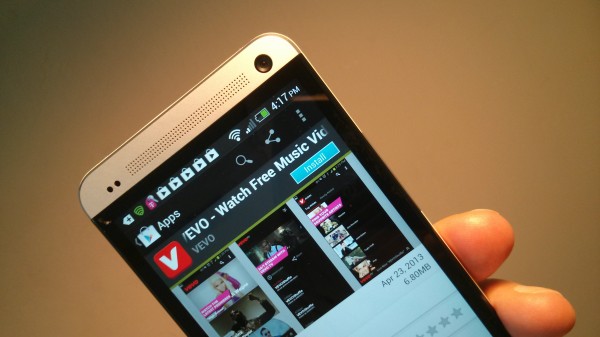
    Style. Aesthetically, I find iPhone and One to be the two most-pleasing smartphones currently available in North America, with BlackBerry Z10 also ranking highly. Both feel solid in the hand because of their aluminum enclosures. Metal gives the handsets a ruggedness uncharacteristic of a market so dominated by plastic. Fit and finish is striking on both phones in either color, black and white for iPhone 5, black and silver for HTC One.

    Carrying a handsome device is a lifestyle decision. How the phone looks says something about you. For some people, appearance doesn’t matter; for many others it’s all that matters. I like the aesthetic of both handsets. One is the first Android that looks as good, or better, than any iPhone.

    Size is a digital lifestyle choice. Which matters more to you: Having a more pocketable phone or one with larger display, which granted is better for viewing websites, photos or videos? Do you use handset-to-face rather than wired or Bluetooth earphones and does the appearance against the head matter to you? I don’t find One to be over-sized, but the device is larger in every way, including thickness and weight, than iPhone 5. HTC’s device is heftier by every measure (see full specs above).

    Screen. I’m simply stunned how good everything looks on the HTC handset. The screen is larger, 4.7 inches to iPhone’s 4 inches, but the measurement deceives. Screen size is a diagonal measure, and iPhone is unusually narrow, making that 4 inches in many ways less than handsets with comparable measure.

    One’s screen isn’t just bigger but offers higher resolution. Like the S4, full 1080p but more pixels per inch (468). iPhone 5 is 1136 x 640 resolution and 326 pixel density. The HTC’s screen is gorgeous, from virtually any viewing angle, with superb contrast and color accuracy — and it’s bright. I enjoy the screen so much, my tablet collects dust now. iPhone 5’s display, which is no slouch, can’t compare.

    Sound. The screen is an important part of the One’s aesthetic, but surprisingly so are the speakers, which grills flank the display and are pleasingly incorporated into the design. The One features Beats audio, which from front-facing speakers booms. For sheer sound volume and reach, iPhone 5 can’t compare.

    But there’s another measure, which is carrier specific. T-Mobile offers HD audio, which is fantastic. My daughter has iPhone 5, which also supports the capability. Calls are crystal clear. The audio is simply amazing. Both handsets have the feature, but only from select cellular providers.

    Shutter. Apple and HTC adopt very different approaches to the cameras. iPhone 5’s is 8 megapixels and pretty good. One is 4 megapixels, which deceptively looks like a step backwards. More megapixels isn’t necessarily better and often is worse. Manufacturers typically add more pixels to the same size sensor. They’re smaller and tend to introduce artifacts and other deficiencies, while performing poorly in low-light situations.

    HTC takes a different approach, by putting fewer pixels and larger (2 micron pixels) on the sensor. The lens is f/2 aperture, which is a little better than iPhone 5’s f/2.4. But it’s the sensor that makes the difference. HTC claims up to 300 percent more light sensitivity than 13-megapixel cameraphones. Oh, there is optical image stabilization, too, for when in low light shutter speed is slow.

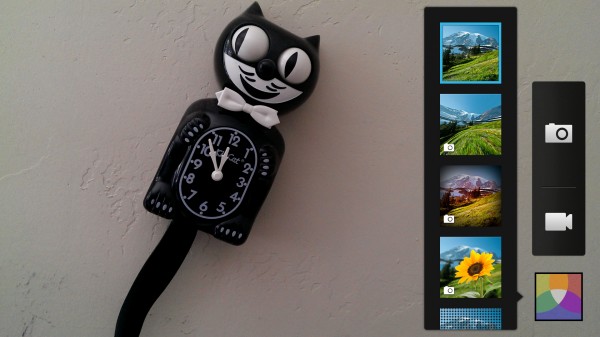
    As a test, I snapped the photo of our cat in the living room around 12:30 am. There were three light sources: The 42-inch screen and two IKEA lamps — Stranne and Barometer — neither pointed at the feline. I switched to “Night Mode”. Auto ISO is 780.

    Connected Lifestyle

    Being I write on Saturday, I’ll restrain the rest, but not ignore other lifestyle benefits.

    Software. My last three smartphones all ran stock Android. But my newest is a step backwards to Jelly Bean 4.1.2, rather than current 4.2.2, the version on my Nexus 4 and what Samsung Galaxy S4 packs, too. HTC skins Android with Sense 5 UI. I expected to really loathe it, being a bit stuck up about stock and put off by Samsung’s garish ToucWiz UI. Instead, I rather like Sense, which is tasteful, uses attractive font and adds to Jelly Bean rather than truncate benefits.

    Jelly Bean and Sense 5 are killer combination, for simplicity and utility. iOS 6 feels five years too old, by comparison. There’s a vibrancy and vitality that iPhone 5 can’t match.
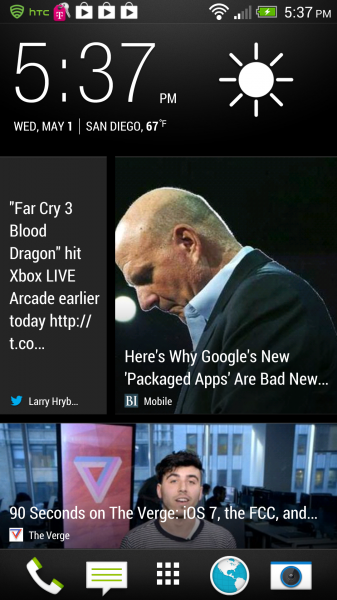
    Social. BlinkFeed delivers some of the vitality. The feature brings together social and news feeds into a full-screen Flipboard-like experience, only better. I’m using Twitter now again and even monitoring Facebook — plus being more informed, whether from social or news feeds. Presentation is excellent and immersive. My gripe: BlinkFeed offers too limited number of sources and no real customization. Why is Huffington Post there alongside AP as a news wire? Where are Google+, Instagram or Pinterest?

    Still, I wouldn’t give up BlinkFeed for anything. It’s an addiction now. Neither Apple, nor its app partners, offers anything comparable. HTC’s software/service is its own screen, and you won’t find that on iPhone 5 if for no other reason that Apple restrictions.

    Shooter. I wrap up returning to the camera, and one of HTC One’s unique capabilities. Briefly, as more will come in my actual One review: HTC adds feature call Zoe, essentially 3 seconds of video and 20 still images. If there’s a killer app here, Zoe is it along with companion Highlights Reel. The latter takes the Zoe and turns it into a 30-second clip with music — and the presentation is fantastic.

    Apple has got nothing like Zoe or Highlights Reel. I also prefer the overall software shooting experience. HTC keeps the process simple, like iPhone but unlike Galaxy smartphones, while offering meaningful and easily accessible controls.

    Photography is another lifestyle choice. I’d buy HTC One just for the camera, software and supporting services.

    That’s a wrap. I reached gadget nirvana this week. You can have iPhone 5 — Galaxy S4 or Nexus 4 — I’ll take HTC One.

  • Top 5 Data Center Stories, Week of May 4th

    Microsoft-Boydton-ITPACs-47

    Some of the server-filled IT-PAC modules at a Microsoft data center in Boydton, Virginia, one of a handful of billion dollar data center projects. (Photo: Microsoft)

    For your weekend reading, here’s a recap of five noteworthy stories that appeared on Data Center Knowledge this past week. Enjoy!

    The Billion Dollar Data Centers – Your iTunes downloads, Facebook posts and YouTube videos travel through small rural communities that are home to billion-dollar data centers from the world’s largest cloud builders. Here’s a look at these facilities and how they’re changing these communities.

    Big in Texas: CyrusOne Sees Massive Growth in Dallas – Staffers at CyrusOne use scooters and golf carts to get around the company’s new Carrollton, Texas data center. It’s a sign of the scale of the company’s ambitions in the Dallas market, where the company has just opened its first phase of colocation space.

    USPS Leverages Big Data To Fight Fraud – When you think “big data,” you probably don’t think of the United States Postal Service (USPS). As it processes more than 528 million pieces of mail each day, the USPS has become an active participant in the big data revolution, and operates one of the most powerful non-classified supercomputing databases in the world.

    New QTS Lab Will Advance High-Security Federal Clouds – QTS (Quality Technology Services) wants to help federal agencies get comfortable with cloud computing, and is dedicating some of its data center space toward this goal. The company, in conjunction with i2 Sentinel Associates, has set up a testbed inside its massive data center campus in Richmond, Virginia that will focus on creating highly secure cloud computing capabilities.

    HP Unveils Complete Software-Defined Network Fabric – HP unveiled a series of hardware and software solutions Tuesday designed to make networks simpler, scalable and automated. HP (HPQ) launched a data center network fabric built on HP FlexNetwork architecture.

    Stay current on Data Center Knowledge’s data center news by subscribing to our RSS feed and daily e-mail updates, or by following us on Twitter or Facebook or join our LinkedIn Group – Data Center Knowledge.

  • Celebrate Star Wars Day By Blinding General Grievous, Losing R2

    3UP_R2A6_Photo_watermark

    Beep boop boop bee squeee! Happy May 4th aka Star Wars Day (say the date out loud and you’ll figure out why). In celebration, quite a few hardware vendors have released special gear for the day, thereby allowing you to celebrate the magic of George Lucas in proper Mandalorian fashion.

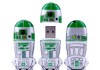
    First we have a charming facsimile of R2-A6, a green R2 unit that is a favorite of the Naboo security forces. Made by Mimobot, this sassy little droid you’re looking for comes with built-in content, including desktop backgrounds and icons. They also make a Jar Jar Binks USB key if you’re so inclined.

    Next we have something from Lucasfilm lawsuit recipient Wicked Lasers whose Arctic laser looks like everything but a replica of a light saber. To celebrate May 4th, the company has released the $75 Phosforce that turns the Arctic laser into a white LED flashlight that can pump out an Ewok-blinding 500 lumens, allowing you to swing your thing around in the dark swamps of Dagoba or the back alleys of Coruscant.

    To be clear, the Phosforce attachment must be purchased in addition to the $299 laser body and the adapter turns the Arctic’s decidedly dangerous blue laser light into eye-safe white light. It is not exactly an LED flashlight in the traditional sense but instead uses white-emitting phosphor. Also, to be clear, you can burn the heck out of your eyes if you mess with this thing wrong, so be careful.

    Happy fourth and remember: Han shot first. May you live long and prosper.

  • Android this week: Nexus 11 leaked; Wii Fit turns into smart scale; LG Optimus Pro here

    Google’s I/O Developer event is fast approaching and expectations of a showcase new device are riding high. It’s likely that Google’s Nexus 7 tablet will see a refresh at the very least. And based on information of an alleged Samsung road map leak, Google could be introducing a new Nexus 11 tablet.

    Nexus 10 tabletThe details were found this week by the SamMobile site, which has a good track record for Samsung’s upcoming plans. According to the road map, the 11-inch tablet will use Samsung’s Exynos 5410 chip, which has one high performance quad-core processor for heavy duty tasks and a lesser quad-core processor for lighter tasks. This approach should offer power when apps demand it but be light on battery life due to offloading simpler tasks.

    No indication of the screen resolution appeared in the leaked data, but Google’s current Nexus 10 tablet offers a 2560 x 1600 resolution display. At the very least, I’d expect Google to use a 1920 x 1200 resolution screen for a Nexus 11, if not the same as what the Nexus 10 currently offers. The only reason I can think of using a lesser resolution is to keep the price down. The tablet will reportedly also offer a pair of cameras and — in a first for Nexus device — a micro SD expansion card slot.

    Fans of Android hardware will have to wait until May 15 to see if Google releases a new Nexus, but those looking for a new phone have another choice now. AT&T introduced the LG Optimus G Pro as an exclusive this week. I just received a review unit and my initial impressions are very positive.

    LG Optimus G ProI can already say this is the nicest phone hardware LG has designed and built. The device also reminds me of the Samsung Galaxy Note 2 that I own: Both have similar screen sizes, for example, although the LG Optimus G Pro is slightly narrower and has a full HD screen. LG’s user interface is also quite nice and polished. I’ll have a full review in the near future, but so far, LG has shown me it can build an Android phone that competes with the Samsung Galaxy S 4 and HTC One.

    New hardware is always nice but sometimes it’s better to re-purpose old devices. That’s exactly what I did with an old Nintendo Wii Fit Balance Board thanks to a free Android app called FitScales.

    The software lets you wirelessly connect an Android phone to the Balance Board via Bluetooth. When standing on the board, your weight and BMI are sent to your phone, where the data can be automatically synchronized with either a RunKeeper or FitBit account: no need to buy a new Wi-Fi scale!

    FitScales

    Related research and analysis from GigaOM Pro:
    Subscriber content. Sign up for a free trial.


  • We’re halfway toward artificially intelligent robotic bees

    Remember those artificially intelligent robotic bees I wrote about in October? Well, it turns out they’re already on a good pace toward being reality: The RoboBees project at Harvard has been flying prototype bees for months, and the next step is equipping them with brains.

    That the bees, which are described as being half the size of a paperclip and weighing less than a tenth of a gram, can fly at all is an engineering marvel in its own right given their minute size. However, the next parts of the project could actually prove to be even bigger challenges.

    According to a Harvard University press release:

    [T]he next steps will involve integrating the parallel work of many different research teams that are working on the brain, the colony coordination behavior, the power source, and so on, until the robotic insects are fully autonomous and wireless.

    Source: Kevin Ma and Pakpong Chirarattananon, Harvard University.

    Source: Kevin Ma and Pakpong Chirarattananon, Harvard University.

    The problems are that building AI-powered brains won’t be easy and that there’s not yet an energy source small enough and dense enough to power a wireless bee.

    On the brain side, though, the RoboBees team might have some help. As we explained in October, there’s a team from the Universities of Sussex and Sheffield in the United Kingdom working on a project called Green Brain that aims to develop a brain that could let robotic bees like those RoboBees is building act autonomously and respond to sensory stimuli.

    Again, though, the small scale of the Harvard project could pose some initial challenges depending on how advanced it wants the brain to be. The plan is for the Green Brain project to run on a GPU-powered supercomputer and, presumably, communicate with sensors on the robot. Even if it were possible for a single GPU processor to run the Green Brain at operational speed, that could still prove too big for the tiny RoboBees, which need to do their own processing.

    The key to success, however, might lie in RoboBees’ focus on colony behavior, which is somewhat akin to the concepts underlying distributed computing systems. Because the team expects the robotic bees to function like real honeybee colonies, individual bees can get by with less computer power.

    Related research and analysis from GigaOM Pro:
    Subscriber content. Sign up for a free trial.