Author: Serkadis

  • High Accuracy HDI Pressure Sensors Offer 3 V Supply Versions

    Sensortechnics’ HDI sensors measure absolute, differential or gage pressures in various ranges from 10 mbar up to 5 bar. The HDI series features 3 V supply versions which are ideally suitable for battery powered applications, e.g. in portable or handheld devices. HDI pressure sensors perform precision digital signal conditioning and achieve ultra high accuracies with an excellent Total Error Band (TEB) better than ±0.5 %FSS over a temperature range of 0…+85 °C.

    The HDI series provides digital interfaces with I²C bus protocol and analog 0.5 … 4.5 V output signals at the same time therefore allowing customers to build up a redundancy functionality for safety critical applications. The sensors are intended to be used with air and non-corrosive gases and offer various unidirectional, bidirectional or barometric calibrations as well as different accuracy classes. Miniature SMT and DIP housings allow for space-saving PCB-mounting and maximum OEM design flexibility. A wide selection of sensor configurations are available from stock at Sensortechnics. All HDI pressure sensors can be modified according to customer specific requirements, e.g. with respect to pressure range, resolution, accuracy and internal digital settings.

    Important features of the HDI series are:

    – 3 V and 5 V supply versions available from stock
    – Total Error Band (TEB) ±0.5 %FSS from 0…+85 °C
    – I²C bus interface and analog output signal at the same time
    – Miniature SMT and DIP housings

    Due to the wide selection of different sensor configurations Sensortechnics is able to offer customers the best suitable sensor with an ideal cost/performance ratio. Typical applications of the HDI pressure sensors include medical devices, instrumentation, environmental controls and HVAC.

  • Sensortechnics Distributes Miniature Liquid and Pneumatic Diaphragm Pumps

    Sensortechnics GmbH expands its product portfolio of fluidic control devices as Certified Distributor of miniature liquid and pneumatic diaphragm pumps from the Hargraves Technology Corporation. As a leading supplier of high quality sensors, actuators and custom sensor designs as well as integrated sensing and fluidic control systems these new products add to the existing range for OEM device manufacturers in the medical, analytical, laboratory and instrumentation market.

    Hargraves’ miniature diaphragm pumps dispense precise amounts of gases and liquids which are completely isolated from the internal pump components. The air and gas pumps of the BTC, BTC-IIS and CTS series feature reduced noise levels and are highly efficient. The dual head pumps of this family deliver flow rates up to 11 l/min air and achieve pressures up to 1.4 bar (20 psi) and vacuum to 680 mbar (20 inHg). The liquid pumps of the LTC series offer high media compatibility with many aggressive fluids and very durable diaphragms from advanced proprietary elastomer materials. LTC miniature pumps deliver flow rates up to 650 ml/min water and achieve pressures up to 2 bar (30 psi). All Hargraves pumps feature low power consumption, optimised flow paths and excellent gas tightness. Due to superior brushless motor designs and selected materials these pumps allow very long service-free operation and extended overall life times.

    Sensortechnics’ complete product range includes pressure, level, flow, oxygen and force sensors as well as ultrasonic air bubble, air-in-line and fluid monitoring detectors. The fluid control portfolio includes miniature solenoid valves, miniature diaphragm pumps and electronic pressure controllers.

  • Grinding the pivots on universal joints with JUPITER 500

    Highly-productive, centerless cylindrical grinding of the pivots on up to four universal joints simultaneously in the plunge grinding process on a JUPITER 500. All eight pivots are ground in one work sequence. The machine is equipped with a handling system which delivers the universal joints from the bulk material in sets of four for the fully automatic grinding process. In a first step, the pivots are simultaneously ground in pairs and transported from the machine to a post-process measuring station by means of workpiece transport. The universal joints are then rotated by 90° to grind the following pivot pairs.

    Due to the simultaneous grinding of several workpieces, this grinding concept provides high efficiency with extremely short cycle times and an enormous production output.

  • Filter material – Because only the best gets through

    Woven fabrics for mechanical separation of solids and liquids are frequently manufactured for technical processes, and are often in continuous operation. Whether for the separation of contaminants or for cider plants in food production – filter media are always needed. Individual filter and large filter manufacture, as well as immediate availability of the materials for the operators are arguments enough for favouring the specific use of laser technology. Typical filter media are:

    *Polyethylene (PE)
    *Polypropylene (PP)
    *Polyester (PES)
    *Polyamide (PA…)
    *as well as other materials

    The demands on manufacture are growing in step with the technical opportunities to ensure that really only the best gets through. Laser cutting is quite simply better and guarantees you:

    *Welded edges
    *Lint-free cuts
    *No stressing due to stretching or punching
    *Large format cut up to 3,200 mm roll width
    *Precise cut – wear-free, no tool changes
    *Free contour choice – no punching dies needed
    *Automatic material feed- and wind-up options
    *Sewing markings possible by means of touchless InkMarker

    An automatic material feeding unit combined with a table extension for the removal of material, increases your productivity by more than 50% and simultaneously guarantees consistently high quality in the cut.

  • OWIS® Universal Position Control with Display

    OWIS® range of motion controls has been extended by a new one – the PS 35 – as a stand-alone unit with LC display.

    The 3-axis control unit is designed for DC servo motors as well as 2-phase step motors. Easy point-to-point positioning operation with trapezoidal or S-curve velocity-time profiling is possible. The PS 35 provides a digital PID-positioning when using the DC drive.
    Position and status are shown on the LC display.

    The control unit can be used with a stand-alone-compiler. At the same time, accessories such as joystick are available for easy operation. Further, several I/O’s can be used for interaction.

    The scope of delivery comprises an API for C/C++, VI’s for LabView (V. 5.0 and above) and the software tool OWISoft for a comfortable configuration.

  • Aseptic filling valve range extended to small nominal sizes

    The aseptic GEMÜ 660 filling valve has been extended to the small size MG8 (DN 4 – 15).

    The GEMÜ 660 diaphragm filling valve was successfully introduced in the beverage industry in 2007. Its main application is the aseptic filling of non-carbonated beverages such as still mineral water. Now this valve range has been extended to include the small actuator size for valves with diaphragm size 8 which enables fast and safe filling of smaller quantities. In addition to standard valve bodies, customer and machine specific special versions can be supplied. The control air connectors are positioned in-line with the flow direction as standard but can also be supplied at 90° to the flow direction.

    The Kv values of the small valves are between 0.5 – 2.2 m³/h, depending on the nominal size and connection. The stainless steel valve bodies are from the proven GEMÜ modular system and are therefore fully compatible with existing equipment. Connections available are butt weld spigots, clamps and threaded connections to DIN, ASME BPE, BS and JIS. The valves with EPDM and PTFE diaphragms are suitable for use up to max. 5 bar operating pressure. The required control pressure is 2 – 6 bar dependent on the design. The valves are easily cleanable and CIP/SIP capable. The maximum filling temperature for beverages is 85°C and sterilisation with steam can be carried out up to 150°C.

  • New electric energy meter, SaiaALD1 – Swiss made

    The SaiaALD1 is a new, monophase energy meter up to 32 A, with a 17.5 mm mounting width and an LCD display. Alongside the classical energy value, other values can also be displayed, such as current, power and voltage. It combines maximum functionality with high quality attributes of reliability, durability and stability in high precision measurement (class B according to EN 50 470-3, class 1 according to IEC 62 053-21). All Saia energy meters have been developed and manufactured in accordance with the European measuring instrument directive (MID). Meters are calibrated directly in the factory and can be put to use immediately in applications to calculate energy costs.
    Approval authorities periodically check the systematic quality of manufacturing and final inspection in the Swiss manufacturer’s production facility. This means that individual tests on devices supplied can be dispensed with completely.

    The life cycle and electrical reliability of this measuring device are fully oriented to industrial requirements. Saia-Burgess has been a manufacturer of industrial electronics for 30 years and every year produces over half a million small devices in its factory in Switzerland.
    With its energy meters in particular, Saia-Burgess has very high growth rates and has probably become one of Europe’s largest manufacturers. The success factor here has again been its strength in technical innovation. For example, all LCD energy meters have been consistently designed for serial bus operation. The classical SO pulse interface is, of course, always on board and can be configured over a large range.

  • Aeroflex Introduces LTE Signal Fading Simulator for Profiling of Mobile Handsets

    To speed up real-world testing of mobile handsets for LTE networks ahead of network deployment, Aeroflex is introducing the first one-box test system for cell phone signal fading simulation. Integrated within the 7100 Series digital radio test set, the new fading simulator option offers RF engineers an inexpensive and reliable baseband tool for signal fading profiling, a requirement for LTE (Long Term Evolution) certification.
    Fading simulators, combined with noise generators, modify RF signals transmitted by the LTE system simulator (in this case the 7100 Series) and emulate degradations introduced into the radio channel by real-life obstacles such as buildings and foliage. For LTE developers who must profile signal fading on mobile handsets to meet 3GPP requirements before a network is available, the 7100 Series fading simulator allows engineers to perform realistic signal fading simulations in a reliable and repeatable lab environment.
    As the world’s cellular network operators work towards adopting LTE, the demand is growing to meet all of the LTE requirements, including fading profiles specified by 3GPP in 36-521-1. The Aeroflex 7100 Series test platform provides fading simulation that meets or exceeds all 3GPP requirements, as well as an unprecedented degree of flexibility in allocating cells and fading taps for LTE user equipment (UE) without the need for manual reconfiguration. The fully repeatable test scenarios presented by the 7100 Series with the fading simulator include the emulation of dynamic environments and realistic and accurate testing of MIMO (multiple-input/multiple output) scenarios.
    Based on Aeroflex’s tried and tested RF and baseband technology, the 7100 Series digital radio test set is unique in its support of both RF parametric and protocol testing for LTE terminal devices. The 7100 Series simulates a network from the physical layer to the core network IP infrastructure. Focused on the R&D market—from components to handsets—the Aeroflex 7100 Series is a comprehensive test system for LTE mobile devices incorporated into a small footprint, single bench-top instrument.

  • Stäubli has invented active safety for compressed air.

    Now a single movement is all that is needed to guarantee your safety!

    Simpler to use, more convenient to handle, even safer and more reliable, the latest in the range of Stäubli quick couplings for compressed air circuits has all these qualities, plus one: innovation !

    Simplicity and safety combined in one

    Internationally renowned for its innovative and high performance solutions in the field of connection, Stäubli is innovating with new technology dedicated to efficiency and safety.
    A single movement by the operator automatically triggers three actions:
    . closure of the upstream circuit
    . decompression of the downstream circuit
    . automatic disconnection of the plug as soon as the pressure falls low enough.
    Applied to quick couplings for compressed air circuits, this revolutionary technology contributes actively and reliably to the safety of work stations and personnel in all workshops.

    RSI coupling: the new arrival in the circuits

    Developed to cover industry’s needs in widely differing sectors, the new range of Stäubli safety quick couplings combines the following advantages and achievements:
    * absolute safety by pressing just once a rotating button and a 360° swivel version, to suit all requirements and adapt to all work configurations
    * ergonomical design to follow all your movements
    * materials that are both light and strong, to reduce musculoskeletal disorders while providing long service life
    With the RSI range movements become safer and more efficient.
    * perfect tightness, a guarantee for controlling costs and energy consumption
    * faultless conformity to the standards in force
    * simplified identification to prevent mistakes in installation or use
    The new Stäubli couplings are very strong and easy to integrate into your processes. They will play their part in your successes for many years.

    Our new range of Stäubli couplings is available now. There is a place waiting for it in every workshop striving for safety and efficiency.

  • Download Google Chrome 5.0.360.4/5 Dev with Integrated Adobe Flash Player

    The rumors yesterday tuned out to be accurate, Google has just announced a deeper integration of the Adobe Flash Player in Chrome. Specifically, the latest development builds now come bundled with the Flash Player, though the feature is not enabled by default. Google says this path is more convenient for users, who don’t … (read more)

  • Rather Than Respond To Criticism Of Aussie Censorship Plan, Conroy Attacks Google

    With more and more complaints coming in about Stephen Conroy’s plan in Australia to start censoring the internet, it appears that Conroy, rather than responding to the critics, has decided to just lash out at them. For example Google recently filed comments with the Australian gov’t suggesting that the plan was “heavy-handed” and raised “genuine questions about restrictions on access to information.” Now, these seem like legit concerns — and from what we’ve heard, many citizens in Australia agree. So you might think that Conroy, the main backer of the plan and Australia’s Communications Minister would take the complaints seriously and respond to them.

    Instead, he just starts trashing Google over a variety of totally unrelated issues and taking quotes totally out of context:


    “Recently the founders of Google have got themselves into a little bit of trouble because notwithstanding their alleged ‘do no evil’ policy, they recently created something called Buzz, and there was a reaction, and people said well look aren’t you publishing private information?,” Senator Conroy said.

    “[Google CEO Eric] Schmidt said the following: ‘If you have something that you don’t want anyone to know maybe you shouldn’t be doing it in the first place’. This is the founder of Google. He also said recently to Wall Street analysts, ‘we love cash’, so when people say, shouldn’t we just leave it up to the Googles of this world to determine what the filtering policy should be….”

    Of course, none of that has anything to do with the censorship plan. With the Buzz controversy, it’s also worth noting that within hours of the controversy coming out, Google changed its plans and corrected its mistakes. Has Conroy done that at all? Nope. The Schmidt quotes are then both taken totally out of context and also have absolutely nothing to do with filters. No one is saying that it should be Google who determines what the filtering policy is, but Google did raise important questions, which Conroy doesn’t even bother to address.

    And it’s not just Google. As the article notes, these comments were made on a radio program where the majority of phone calls were against the censorship proposal. And yet Conroy wants to “defend” the proposal by attacking Google? On the whole, it seems like a lot more people are willing to trust Google than trust Conroy to tell them what they can and cannot do with their internet connections.

    Permalink | Comments | Email This Story


  • Heaven and Science


    Without doubt, reports of near death recollections have excited folks looking for a glimpse of a afterlife for the human soul.  The idea of the immortal soul is imbedded deeply in the mythos of our culture and is accepted by most.  It has been tied up with a wide range of religious teachings that contributed nothing to our understanding.  The soul is the living active memory of our lives.  We can comprehend that idea.
    Today, we can comprehend the idea that such a materially defined soul could be mapped onto a physical device to provide a form of immortality or at least longevity for the soul.
    It is not a big leap from that idea to taking on the challenge and creating that capacity ourselves.  There are plenty of reasons that prohibit us from doing it now, but they are exactly the type of difficulties that science tackles and overcomes.
    The creditable idea is that science will allow us to preserve the human soul as defined above.  It is creditable that living human beings will one day be able to automatically record their lives.
    I can take this further for if you wish to go back and read my appropriate posts you will discover that I have conjectured that mankind has already completed techno development back before the end of the ice age whose end they triggered.  They had transitioned into space adapted humanity with long lives and then exited to space habitats using large magnetic exclusion ships.  After the Earth settled down, they recolonized Earth with a number of settler populations whose lives were naturally short.  We are the descendents.
    It makes complete sense to record those lives and restore them to donors if possible.  No data is ever lost and it becomes possible to attract volunteers to the task at hand which happens to be terraforming the Earth to accept huge populations.  This job is well underway.  It is humanities primary mission.  Of course, it would be better to not tell us anything.
    All of a sudden heaven merely becomes a real place in which we resume our lives as space adapted humans, perhaps until we take another tour of duty.
    My point is that I can construct a paradigm for heaven and God that once again conforms rather nicely to our only sources, while stripping out the overlay of mystery.  It certainly were science is taking us and the only oddity is that we passed this way before.
    Can Science Explain Heaven?
    Scientists try to explain near-death experiences.
    By Lisa Miller | Newsweek Web Exclusive
    Mar 26, 2010
    There are those who believe that science will eventually explain everything—including our enduring belief in heaven. The thesis here is very simple: heaven is not a real place, or even a process or a supernatural event. It’s something that happens in your brain as you die.
    I first encountered this idea as I was researching my new book, Heaven: Our Enduring Fascination With the Afterlife. I was having lunch with my friend and colleague Christopher Dickey, who told me that his father, the writer James Dickey, had a fantasy of heaven in which all of his closest friends were sitting around a swimming pool, chatting. “There was nothing special about the pool itself,” wrote Chris in Summer of Deliverance: A Memoir of Father and Son. “Nobody walked on the water. And he never told me who the friends were … But what he took away from the dream was a sense of contentment, of being at ease with himself and the world, as if he had gotten a preview of heaven. He called that place ‘The Happy Swimming Pool.’ ” Chris believes that everything we think we know about heaven happens in the moments before death. After that, there’s nothing.
    Science cannot definitively proof or disprove Chris’s theory, but some scientists are willing to take guesses. And these guesses are based, in part, on a growing body of research around near-death experience (NDE). According to a 2000 article in The Lancet, between 9 and 18 percent of people who have been demonstrably near death report having had such an experience. And surveys of NDE accounts show great similarities in the details. People who have had NDEs describe—like some religious visionaries—a tunnel, a light, a gate, or a door, a sense of being out of the body, meeting people they know or have heard about, finding themselves in the presence of God, and then returning, changed.
    Andrew Newberg is an associate professor in the radiology department at the University of Pennsylvania who has made his reputation studying the brain scans of religious people (nuns and monks) who have ecstatic experiences as they meditate. He believes the “tunnel” and “light” phenomena can be explained easily. As your eyesight fades, you lose the peripheral areas first, he hypothesizes. “That’s why you’d have a tunnel sensation.” If you see a bright light, that could be the central part of the visual system shutting down last.
    Newberg puts forward the following scenario, which, he emphasizes, is guesswork. When people die, two parts of the brain, which usually work in opposition to each other, act cooperatively. The sympathetic nervous system—a web of nerves and neurons running through the spinal cord and spread to virtually every organ in the body—is responsible for arousal and excitement. It gets you ready for action. The parasympathetic system—with which the sympathetic system is entwined—calms you down and rejuvenates you. In life, the turning on of one system prompts the shutting down of the other. The sympathetic nervous system kicks in when a car cuts you off on the highway; the parasympathetic system is in charge as you’re falling asleep. But in the brains of people reporting mystical experiences—and, perhaps, in death—both systems are fully “on,” giving a person the sensation both of slowing down, being “out of body,” and of seeing things vividly, including memories of important people and past events. Does Newberg believe, then, that visions of heaven are merely chemical-neurological events? He laughs nervously. “I don’t know.” He laughs again. “It’s, um … I don’t think we have enough evidence to say.”
    Since at least the 1980s, scientists have theorized that NDEs occur as a kind of physiological self-defense mechanism. In order to guard against damage during trauma, the brain releases protective chemicals that also happen to trigger intense hallucinations. This theory gained traction after scientists realized that virtually all the features of an NDE—a sense of moving through a tunnel, and “out of body” feeling, spiritual awe, visual hallucinations, and intense memories—can be reproduced with a stiff dose of ketamine, a horse tranquilizer frequently used as a party drug. In 2000, a psychiatrist named Karl Jansen wrote a book, Ketamine: Dreams and Realities, in which he interviewed a number of recreational users. One of them, who called himself K.U., describes one of his drug trips this way: “I came out into a golden Light. I rose into the Light and found myself having an unspoken interchange with the Light, which I believed to be God.” Dante said it better, but the vision is astonishingly the same.
    Adapted from the forthcoming book Heaven: Our Enduring Fascination With the Afterlifeby Lisa Miller. To be published by Harper, an imprint of HarperCollins. Copyright ©2010 by Lisa Miller. Reprinted by arrangement with the author.
  • Global Agriculture Needs Radical Change


    I grow weary of these reports bemoaning the so called lack of progress in global agriculture.  As I have posted many times we need to do two simple things.  The first is that we need to empower the land operator himself everywhere.  The farmer needs to own or have a reasonable expectation of owning his land and in the process have access to cost effective credit.  No and no less is demanded.  That individual is the single most productive method of working the land.
    If large landowners think that this is unreasonable then tax their land on the basis of the gross income earned by the most efficient small operator.  Why should the government give up revenue?
    Then actively support any and all biochar protocols to steadily eliminate the need for chemical fertilizer.  The method has been field tested for centuries without any aid from modern tools.  Surely every farmer can sort out some way to produce enough.  In fact, that is exactly what is presently taking place in some locales in Africa.
    The radical change will be the onset of the biochar revolution.
    Radical Change Needed For Global Agriculture
    by Staff Writers

    London, UK (SPX) Mar 30, 2010
    According to the report, the global population will likely reach 9.0 billion by about 2050, mostly from developing countries. Urban populations will increase from today’s 3.4 billion to well over 6 billion. With higher incomes and different tastes, diets in developing countries will shift from low- to high- value cereals, poultry, meats, fruits and vegetables. While this will constitute an improvement for many, this major shift in consumer preference for nutritional security is also likely to be accompanied by hunger and poverty in the countries with the poorest populations, while obesity rates as high as those now seen in wealthy countries would occur in others. Increased demand for fossil fuels for fertilizers and transport to meet growing food demands will likely change the prospects for biofuels

    A report to be released at a pivotal global meeting on agriculture finds that transforming the agriculture agenda to meet the challenges of a warmer, environmentally-degraded world of 9 billion people will require changes “as radical as those that occurred during industrial andagricultural revolutions of the 19th and 20th centuries.”

    The comprehensive assessment, Transforming Agricultural Research for Development, suggests the need for massive reform of the architecture of what it terms a currently “fragmented global system of research and development,” in order to better reach small-scalefarmers on the ground, while making food production more sustainable and the systems in which they are produced more resilient to future climatic and energy shocks.

    The report, funded by a range of international organizations and development agencies, including the World Bank, European Commission, and the UK Department for International Development, provides a stage-setter at the first Global Conference on Agricultural Research for Development (GCARD), which has been tasked by the G8 to turn priorities on future needs in agriculture into constructive actions to reshape its future.
    Nearly one thousand participants, including World Food Prize Laureates, heads of international organizations, agriculture ministers, farmers, civil society groups, community development organizations, leading scientists, and private sector innovators are expected to participate in the meeting, taking place 28-31 March in Montpellier, France.

    The report, prepared by a team of experts led by Uma Lele and including Eugene Terry, Eduardo Trigo and Jules Pretty, builds on extensive consultations across all continents in 2009 and their considerable experience in global food and agriculture, and is undergoing review by stakeholders around the world. It will be formally presented at GCARD on Monday, 29 March.

    According to World Bank estimates, some 1.4 billion people were already living in poverty in 2005, well before the 2007 food price increases and the 2008 financial crisis. Since the financial crisis, an additional 100 million people are now believed to have joined the ranks of the poor and hungry, according to both FAO and World Bank estimates.

    “It is clear that the Millennium Development Goal of substantially reducing the world’s hungry by 2015 will not be met. A major cause has been a steady decline in policy attention to agriculture and rural development,” said Uma Lele, the lead author of the report and Former Senior Adviser at the World Bank.

    “Little has been done by developed and developing countries alike to deal with the daunting challenge of hunger with long term- development assistance to agriculture and rural development. Rather as a flip side of development, short term emergency food and other emergency aid have increased.”

    Over the 1981 to 2007 period, the share of net aid flows to developing countries has become negative for Latin America and for East Asia, and it has declined substantially for South Asia. Even for sub-Saharan Africa, net aid has declined and less of it has been going to agriculture.

    “Barring the three big countries of China, India, and Brazil, capacity of most developing countries in agricultural R and D has been winding down,” said Lele. “We must make a quantum leap in building back up their capacity and translate government and donor pledges into concrete actions.”

    “There has been remarkable progress in food production over the past half-century, with historically unprecedented improvements when agricultural research and development were given primacy,” said Jules Pretty, a global author and Professor of Environment and Society, Department of Biological Sciences, at the University of Essex, UK.

    “But some of those benefits were spread unevenly, and there are big problems around the corner: climate change, the energy crunch, economic uncertainty, population growth, environmental degradation, and a shift in consumption patterns in emerging economies that are following the same unsustainable models found in the West. Substantial changes are needed in the levels and types of aid and the way it is given.”

    According to the report, the global population will likely reach 9.0 billion by about 2050, mostly from developing countries. Urban populations will increase from today’s 3.4 billion to well over 6 billion. With higher incomes and different tastes, diets in developing countries will shift from low- to high- value cereals, poultry, meats, fruits and vegetables.

    While this will constitute an improvement for many, this major shift in consumer preference for nutritional security is also likely to be accompanied by hunger and poverty in the countries with the poorest populations, while obesity rates as high as those now seen in wealthy countries would occur in others. Increased demand for fossil fuels for fertilizers and transport to meet growing food demands will likely change the prospects for biofuels.

    “The business-as-usual model of how things have been organized over the previous 50 to 70 years is no longer an option. We have to go back to the drawing board,” said Eduardo Trigo, a global author, Director of Grupo CEO, and Scientific Advisor to the International Relations Directorate of the Ministry of Science, Technology and Innovation of Argentina.

    The authors contend that there should be enough knowledge and resources available-or that can be mobilized-to tackle the problems of poverty and hunger, if the system for doing so could be massively overhauled. The report sets an approach for transforming the current global system of cooperation in agricultural research for development into “a coherent whole so as to achieve more rapid, scaled-up and sustainable impacts on food security, poverty, and the environment.”

    The report and overall conference process are seeking to ensure that agricultural research for development will be more inclusive of both women and the needs of small farmers.

    The report provides a holistic view of the myriad actors that currently form this fragmented global agricultural research system-the landscape of actors and funders in the agricultural system as it stands today; regional research organizations and their development needs; and a roadmap of guidelines for translating the products of agricultural research into larger and quicker development successes.

    It includes references to some 300 pieces of research; a review of dozens of documents, international assessments and summits on the state of agriculture undertaken over at least two decades; and consultations with national governments, members of civil society, scientists, and other key players from all regions of the world. The consultations undertaken have involved direct inputs from over two thousand people.

    Investments Needed

    “We are in a paradoxical state where we are living in the age of knowledge, but the level of investments going to agricultural research is less than half of what it should be,” said Trigo. “And there is ample evidence that these investments are tremendously profitable.”

    This pattern of concentration parallels what is happening in overall science spending throughout the world, according to the report. In developed countries, agricultural R and D has also become increasingly concentrated in a handful of countries, with just four countries (the United States, Japan, France, and Germany) accounting for 66% of all global public R and D conducted in 2000.

    Similarly, just five developing countries (China, India, Brazil, Thailand and South Africa) undertook just over 53% of the developing countries’ public agricultural R and D in 2000-up from 40% in 1981. Meanwhile, in 2000, a total of 80 countries with a combined population of approximately 625 million people conducted only 6.3% of total agricultural R and D.

    To meet the backlog of underinvestment alone, the report calls increasing agricultural research investments in developing countries to 1.5 percent of agricultural GDP, more than double or triple the current investments in scientific capacity and institutions and delivery mechanisms at both the national and international levels.

    Some analysts say that to meet FAO estimates of food demand in 2050, annual investments in developing countries of about US $210 billion gross or US $83 billion net in 2009 dollars would be needed annually after allowing for depreciation of the existing stock of capital. This is an increase of almost 50% over current levels. These needs would decline over time with increased efficiency in agriculture and decelerating demand for food, say the global authors.

    Currently, the Consultative Group on International Agricultural Research (CGIAR), which was set up by the World Bank and wealthy country donors in the 1970s to develop new crop varieties, farm management techniques and innovations to farmers in the developing world, constitutes about 4-5% of the total global public sector expenditures on agricultural research, according to the report.

    The CGIAR’s Strategic Results Framework has estimated that public agricultural research and development for developing countries would need to increase from the current $5.1 billion to $16.4 billion by 2025 of which the $1.6 billion would need to be the CGIAR element. The report contends that this is the minimum amount needed since developing-country needs for research extend beyond the CGIAR’s mandates.

    “GCARD is intended to leverage the remaining 94-95%, which includes both public research systems of developed and developing countries which are often not responsive to the needs of smallholder farmers,” said Lele. “With the 4-5% from the CGIAR, the objective is to get a much bigger bang for the buck on effectiveness and impact.”

    “Donors need to increase aid levels for capacity building and especially to the regions of the world with the greatest concentration of poverty; these include Asia with two thirds of the world’s poverty and Sub-Saharan Africa with slightly less than a third. The $20 billion the G8 committed for food and agriculture over three years is too small. It also remains to be seen whether it will materialize,” said Lele.

    “In addition, CGIAR, which already has a track record in research would need to help make a case for additional investments in developing countries” said Eugene Terry, a global author and former Director General of one of the 15 CGIAR centers (Africa Rice/WARDA), Founding Director of the African Agriculture Technology Foundation, and Ex-Chair of the World Agroforestry Center (ICRAF).

    The CGIAR is undergoing a reform process to ensure it has a greater collective impact, simplified governance, and clarified accountabilities with clear and distinct roles for both investors and implementers.

    “It is clear that the issues of food insecurity and poverty, rather than the funding cycles of governments and donors, need to drive the strategic frameworks both of national agricultural research systems and of the CGIAR,” write the authors.

    Gaining Production Increases “Outside the Box”

    “Without viable livelihoods, the resource-poor smallholder farmers will move to the cities in the future,” said Trigo. “Addressing food security issues in urban areas is completely different than doing so in rural areas. The focus will have to shift to producing food by the poor for the poor. During the food crisis, we had food riots not in the rural areas, but in the cities.”

    Options deployed over the previous five decades for ensuring big productivity gains to meet the enormous and diverse food needs of the future are no longer on the table or the most sustainable options, say the authors. These include “extensification,” or moving agriculture onto lands currently not being used. “We need to produce food for a growing population on the same piece of land,” said Terry. “Sustainable intensification now has to be given high priority to reduce negative environmental impact.”

    To get the production increases needed, the authors call for a broader approach to agricultural research for development that departs from the traditional approach that keeps scientists who develop a technology separate from the process that delivers that new technology to farmers.

    The report calls for greater participation amongst a broad range of stakeholders in the seed-to-table chain of events-from the rural farmer to the scientist, in addition to the players in between, including extension officers, the private sector, national and regional agricultural programs, and civil society.

    It also calls for recognizing and drawing on the tremendous innovation of farmers themselves. According to the authors, agriculture is highly context-specific and needs to move away from the expectation that research advances can be applied as one recipe-or single models as silver bullets-developed globally and applied locally.

    “Development problems cannot be solved by research alone, as research by itself can be a blunt instrument,” said Terry. “Research has to be translated into real development outcomes. There are many pathways to achieve this, including through partnerships, but none of them involve linear solutions.”

    “Real partnerships with developing countries in leadership roles are needed to enable developing countries to address their problems in ways only they can,” said Lele.

    Closing the yield gap between the best yields and those realized by a large majority of farmers calls for increased investments in adaptive research, extension, and a variety of other delivery services which constrain growth, write the authors.

    “If you can get the conditions right in agriculture, you’ve got millions of farmers, men and women, with ideas on how to improve things,” said Pretty.

    “If they could just have access to credit or fertilizer, they could go a long way. It is this locked-up innovation we have previously been unable to get at, because the poor are starving or hungry or powerless or excluded. We just have to find a key. The trouble is there are billions of keys. That’s why you need the new architecture for agricultural research to keep finding the keys and unlocking the potential.”
  • Continuing Bee Collapse


    A pretty good argument was laid out a year or so ago that a particular pesticide was the likely culprit.  By now that should have been clarified statistically.  Otherwise, what this continues to show is that we have no good ideas.
    It is a good idea to rethink the role of pesticides.  We have developed a large arsenal and actually we keep developing new product.  It is way more appropriate to license pesticide usage on the basis of minimal residual effect.  I suspect that this is now possible.
    It will certainly be resisted by the manufacturers who certainly do not want limitations on their marketing.  Yet the community wants it.  The general application of a specific agent across a biological region should also suppress refugia.  Such methods can be specifically tested on bees.
    I do not believe that pest control was meant to include blanket suppression because this also suppresses the natural control agents.  Yet a wide variety of such agents must suppress any number of other species.
    I think it is time to establish test ranges to learn more about what we are doing than continuing to rely on targeted testing as to simple efficiency.
    After I wrote this short item on the subject of the plausibility of the pesticide theory, I was introduced to another important possibility.  It is the effect of microwave towers on bee populations.  The apparent cycle eliminates populations interacting with a given tower over about three years.  It also impacts wild bee populations.
    I am inclined to listen simply because these insects rely on homing systems that surely take advantage of our old friend magnetite.  Microwaves will react and disturb such a system and it makes total sense for the insects to become lost or otherwise disoriented.
    During the time period noted, microwave towers have gone up everywhere.  Bee keepers need to position hives as far away from those towers as possible.
    Scientists stumped
    by Staff Writers
    Washington (AFP) March 29, 2010

    The decline in the US bee population, first observed in 2006, is continuing, a phenomenon that still baffles researchers and beekeepers.

    Data from the US Department of Agriculture show a 29 percent drop in beehives in 2009, following a 36 percent decline in 2008 and a 32 percent fall in 2007.

    This affects not only honey production but around 15 billion dollars worth of crops that depend on bees for pollination.

    Scientists call the phenomenon “colony collapse disorder” that has led to the disappearance of millions of adult bees and beehives and occurred elsewhere in the world including in Europe.

    Researchers have looked at viruses, parasites, insecticides, malnutrition and other environmental factors but have been unable to pinpoint a specific cause for the population decline.

    The rough winter in many parts of the United States will likely accentuate the problem, says Jeff Pettis, lead researcher at Department of Agriculture’s Bee Research Laboratory in Beltsville, Maryland.

    Winter figures will be published in April. But preliminary estimates already indicate losses of 30 to 50 percent, said David Mendes, president of the American Beekeeping Federation.

    “There are a lot of beekeepers who are in trouble” he said.

    “Under normal condition you have 10 percent winter losses.. this year there are 30, 40 to 50 percent losses.”

    He said the phenomenon probably results from a combination of factors but that the increased use of pesticides appears to be a major cause.

    “I don’t put my bees in Florida because the last couple of years there has been tremendous increase in pesticide use in the orange crop to fight a disease,” he said.

    “It’s a bacterium and the only way to control this disease is to use pesticide… a few years ago they did not use any pesticide at all.”

    He said that pesticide use “has changed dramatically” and has made beekeeping “more challenging.”

    Research conducted in 23 US states and Canada and published in the Public Library of Science journal found 121 different pesticides in 887 samples of bees, wax, pollen and other elements of hives, lending credence to the notion of pesticides as a key problem.

    Pettis said the finding of pesticide residue is “troubling.”

    “It might not be the only factor but it’s a contributing factor,” he said.

    The best thing to help bees, he said its “to try to limit habitat destruction,” leaving more natural areas in agriculture and in cities such so honey bees can have “a diverse natural environment.”

    Ironically, he said the problem stems from expansion of agriculture to feed the world. But in destroying bee populations, that can hurt crop production.

    “The world population growth is in a sense the reason for pollinators’ decline,” he said.

    “Because we need to produce more and more food to feed the world and we grow crops in larger fields. A growing world means growing more food and to do that we need pollinators. And the fact that the world is continuing to grow is the driving force behind the habitat destruction.”
  • Sub Sea Volcano Near Italy


    This is a worthy reminder that these monsters exist.  We are now able to inventory all such volcanoes.  Perhaps we should.  At least we can be aware that the possibility exists when we build sea side cities.  A global list would allow occasional monitoring although any activity itself will show up on the seismic record.
    Here we have a very nice reminder of Santorin.  If this were to blow it would produce as big a mess.
    There has to be a lot more in the ocean simply unnoticed.  Every atoll in the Pacific is one such.
    Of course this volcano will not be doing anything soon.  It is just that it could.
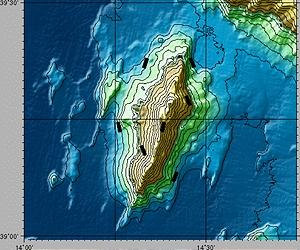
    Undersea volcano threatens southern Italy: report
    by Staff Writers

    Rome (AFP) March 29, 2010
    Europe’s largest undersea volcano could disintegrate and unleash a tsunami that would engulf southern Italy “at any time”, a prominent vulcanologist warned in an interview published Monday.

    The Marsili volcano, which is bursting with magma, has “fragile walls” that could collapse, Enzo Boschi told the leading daily Corriere della Sera.

    “It could even happen tomorrow,” said Boschi, president of the National Institute of Geophysics and Volcanology (INGV).

    “Our latest research shows that the volcano is not structurally solid, its walls are fragile, the magma chamber is of sizeable dimensions,” he said. “All that tells us that the volcano is active and could begin erupting at any time.”

    The event would result in “a strong tsunami that could strike the coasts of Campania, Calabria and Sicily,” Boschi said.

    The undersea Marsili, 3,000 meters (9,800 feet) tall and located some 150 kilometres (90 miles) southwest of Naples, has not erupted since the start of recorded history.

    It is 70 kilometres long and 30 kilometres wide, and its crater is some 450 metres below the surface of the Tyrrhenian Sea.

    “A rupture of the walls would let loose millions of cubic metres of material capable of generating a very powerful wave,” Boschi said.

    “While the indications that have been collected are precise, it is impossible to make predictions. The risk is real but hard to evaluate.”
  • Explore the World with 25 New Themes for iGoogle

    Not that many people use Google’s customizable homepage, iGoogle, when compared with the number of people using the search engine, though ‘many’ is a very relative term in this case. Most employ it to get quick access to the information they need, but there is also the motivation of standing out a bit. With millions of users, though, it’s not tha… (read more)

  • Ultra Mod Feeding Station for Moderncats, Too!

    Eastvold Modern Feeder

    Why should Fido be the only one to enjoy this beautiful piece of modern design? Although it’s marketed for modern canines, this gorgeous feeding station from Eastvold Custom Woodworking would suit a modern feline just as well. Not only is it beautiful, but it’s extremely functional. Two raised stainless steel bowls are cantilevered to the side of a food storage tower. The perfect way to keep everything together and looking great! This might be one of my favorite new finds.

    $195 US Available from Eastvold Furniture’s Etsy shop.

  • What is Facebook Marketing?

    Facebook is primed and ready to break open the social media market. Everyone is on Facebook, but how can you get leads, clicks, and buyers on the social network?

    The good news is, the demographics for Facebook and your potential marketing audience are staggering. You need not be a genius to market to 350 milllion subscribers who visit the site often several times a day.

    So what ways can you market with Facebook? This guide shows you how, with all free ways for Facebook marketing.
    facebook marketing
    The Online Community and Facebook Marketing

    First, the best way to implement Facebook marketing is to create a complete online experience. In order to create a brand, especially online, you need to create a user experience. They need to be entertained, shocked, overjoyed, and curious.

    The Profile or Fan Page and Groups

    Your profile page and the option to use groups are two dynamic, free Facebook marketing options. After all, you can do a lot with both. The group feature may be the best, as it reminds Facebook users to constantly come back for news and updates. With the profile, you give a first look to your company by new users; they can choose to come  back or never visit again, so make it rewarding with pictures and interesting info about your company. For groups, regular updates and specials on your products and services keep users coming back for more.

    Marketplace  for Facebook Marketing

    Facebook Marketplace is a another free way to engage and sell. While it used to be a place for college students to sell items like games or books, now it’s for smart businesses who offer special deals.

    Networks

    Networks narrow you down to industry, location, and many other ways to get users interested. This too is free, and all too often companies skip this. Many do go on Facebook looking to buy, either in their specific industry or in their neighborhood; with Facebook’s networks, you can sell to them.


    Inbox and Email Marketing

    The inbox allows an almost quasi email marketing plan to go into effect. You can send out mass emails to contacts, but not everyone you want. You can also send direct messages to anyone on Facebook. For B2B businesses, it’s even more powerful, as you don’t need to send huge masses of emails to sell one product. And for freelancers or contractors, it allows you to show interest in a company who may not be hiring full time employees.


    These are just a few ways to market, for free, with Facebook. So what really is Facebook marketing? It’s the social media strategy to market your company, find new customers, and network with former customers.

    Related posts:

    1. What is Internet Marketing? Act or promoting your business on through internet is known…
    2. Facebook: We own your stuff. Forever!!! Mwoehahaha!!!! (Updated) Facebook did it! They managed to, again, reach the top…
    3. Advertising on Facebook Image via CrunchBase Being an internet marketer, why on…


  • House Passes Ban On File Sharing Use By Government Employees

    For a few years now, one of the tactics of the entertainment industry to get another foot in the legislative door towards outlawing file sharing programs, is to push ridiculous stories about how secret gov’t documents were showing up on file sharing networks. Of course, there’s a reason why that’s happening: clueless gov’t staffers not being careful. But, in typical Congressional fashion, the response is to overreact, very much at the urging (and legislative guidance) of the entertainment industry. After trying for a few years, it looks like the industry has been marginally successful this time. Slashdot points out that the House has passed legislation that would bar government employees from using file sharing, but notes that the language of the bill is so broad that it likely forbids all sorts of useful applications.

    Of course, this was only passed in the House, and it looks like the Senate is going in a different direction — instead preferring an equally pointless bill that would require any file sharing software (again, so broadly worded that it would include browsers, FTP software, backup software, etc.) to pop up an alert that you would have to click every time you opened the software.

    Hey Congress, here’s a better idea: instead of passing dumb laws with serious unintended consequences, why not have a bit of basic computer security training for your staffers so they don’t do idiotic things like putting top secret plans in a shared folder?

    Permalink | Comments | Email This Story


  • Ex-Boyfriend Key Chain Winner

    Ex-Boyfriend Keychain Winner

    Congrats to Marty Thomas (comment #118), you get to choose one of the cool new key chain bottle openers from Ex-Boyfriend. Enjoy!

    Everyone else can still order one now through April 17 and 100% of the profits will go to the Maryland SPCA.