Author: Serkadis

  • Obama Administration Warns Australia About Its Internet Censorship Plan

    With the latest in a long line of attempts by the Australian gov’t to censor the internet in a manner similar to China, it seems that its plans have finally caught the attention of the US government. The State Department has apparently raised concerns about the plan with the Australian government. The specifics of the comments to the Australian gov’t were not made clear beyond “we have raised our concerns on this matter.” Of course, those comments might carry a bit more weight if US politicians didn’t keep suggesting similar (if not quite as stringent) plans in the US as well…

    Permalink | Comments | Email This Story


  • Science of Biblical Plagues


    This is a good item that works to make sense out of the ancient reports that we are so familiar with.  First though, once again the writers associate Santorin with the events that took place around the reign of Ramses II.  This is nonsense. The two events are clearly separated by almost half a millennia.
    The event that is associated in time and place is the Hekla blast that went off in 1159 BCE.  This collapsed the high European Bronze age and certainly was felt throughout the Mediterranean.  The resultant tsunami destroyed Atlantis by Gibraltar and ended the Atlantic metal trade from the Americas.  It also coincided with the end of the much warmer Bronze Age climatic optimum.
    1159 BCE is the only date that we presently hold with any precision.  The other dates mentioned are very uncertain and it would be lovely to lock down the reign of a pharaoh to the Hekla blast and the sea peoples and the philistines.  It is all in the mix and covering a very few generations.
    Certainly Santorin has similar effects centuries earlier and would have been described in the written records available to someone like Moses who would expect a repeat upon the first reports about Hekla.  We need to recall that eruptions drag on for months.
    I have not tried to get too involved over time frames and the likely history although I have posted quite a bit of the apparent history.  It is enough to say that a good story line hangs together and that a lot of facts on the ground arose at this time to be incorporated into the biblical narrative.  My one admonition is that the facts are quite real but there is no reason to think that they happened in quite the order they got written down.  It would simply have been too difficult.
    After all, what sort of report do you expect from a group of folks hot footing it out of town two steps ahead of an irate pharaoh?
    Biblical plagues really happened say scientists
    The Biblical plagues that devastated Ancient Egypt in the Old Testament were the result of global warming and a volcanic eruption, scientists have claimed.
    By Richard Gray, Science Correspondent
    Published: 11:00AM GMT 27 Mar 2010
    Researchers believe they have found evidence of real natural disasters on which the ten plagues of Egypt, which led to Moses freeing the Israelites from slavery in the Book of Exodus in the Bible, were based.
    But rather than explaining them as the wrathful act of a vengeful God, the scientists claim the plagues can be attributed to a chain of natural phenomena triggered by changes in the climate and environmental disasters that happened hundreds of miles away.
         
    They have compiled compelling evidence that offers new explanations for the Biblical plagues, which will be outlined in a new series to be broadcast on the National Geographical Channel on Easter Sunday.
    Archaeologists now widely believe the plagues occurred at an ancient city of Pi-Rameses on the Nile Delta, which was the capital of Egypt during the reign of Pharaoh Rameses the Second, who ruled between 1279BC and 1213BC.
    The city appears to have been abandoned around 3,000 years ago and scientists claim the plagues could offer an explanation.
    Climatologists studying the ancient climate at the time have discovered a dramatic shift in the climate in the area occurred towards the end of Rameses the Second’s reign.
    By studying stalagmites in Egyptian caves they have been able to rebuild a record of the weather patterns using traces of radioactive elements contained within the rock.
    They found that Rameses reign coincided with a warm, wet climate, but then the climate switched to a dry period.
    Professor Augusto Magini, a paleoclimatologist at Heidelberg University‘s institute for environmental physics, said: “Pharaoh Rameses II reigned during a very favourable climatic period.
    “There was plenty of rain and his country flourished. However, this wet period only lasted a few decades. After Rameses’ reign, the climate curve goes sharply downwards.
    “There is a dry period which would certainly have had serious consequences.”
    The scientists believe this switch in the climate was the trigger for the first of the plagues.
    The rising temperatures could have caused the river Nile to dry up, turning the fast flowing river that was Egypt‘s lifeline into a slow moving and muddy watercourse.
    These conditions would have been perfect for the arrival of the first plague, which in the Bible is described as the Nile turning to blood.
    Dr Stephan Pflugmacher, a biologist at the Leibniz Institute for Water Ecology and Inland Fisheries in Berlin, believes this description could have been the result of a toxic fresh water algae.
    He said the bacterium, known as Burgundy Blood algae or Oscillatoria rubescens, is known to have existed 3,000 years ago and still causes similar effects today.
    He said: “It multiplies massively in slow-moving warm waters with high levels of nutrition. And as it dies, it stains the water red.”
    The scientists also claim the arrival of this algae set in motion the events that led to the second, third and forth plagues – frogs, lice and flies.
    Frogs development from tadpoles into fully formed adults is governed by hormones that can speed up their development in times of stress.
    The arrival of the toxic algae would have triggered such a transformation and forced the frogs to leave the water where they lived.
    But as the frogs died, it would have meant that mosquitoes, flies and other insects would have flourished without the predators to keep their numbers under control.
    This, according to the scientists, could have led in turn to the fifth and sixth plagues – diseased livestock and boils
    Professor Werner Kloas, a biologist at the Leibniz Institute, said: “We know insects often carry diseases like malaria, so the next step in the chain reaction is the outbreak of epidemics, causing the human population to fall ill.”
    Another major natural disaster more than 400 miles away is now also thought to be responsible for triggering the seventh, eighth and ninth plagues that bring hail, locusts and darkness to Egypt.
    One of the biggest volcanic eruptions in human history occurred when Thera, a volcano that was part of the Mediterranean islands of Santorini, just north of Crete, exploded around 3,500 year ago, spewing billions of tons of volcanic ash into the atmosphere.
    Nadine von Blohm, from the Institute for Atmospheric Physics in Germany, has been conducting experiments on how hailstorms form and believes that the volcanic ash could have clashed with thunderstorms above Egypt to produce dramatic hail storms.
    Dr Siro Trevisanato, a Canadian biologist who has written a book about the plagues, said the locusts could also be explained by the volcanic fall out from the ash.
    He said: “The ash fall out caused weather anomalies, which translate into higher precipitations, higher humidity. And that’s exactly what fosters the presence of the locusts.”
    The volcanic ash could also have blocked out the sunlight causing the stories of a plague of darkness.
    Scientists have found pumice, stone made from cooled volcanic lava, during excavations of Egyptian ruins despite there not being any volcanoes in Egypt.
    Analysis of the rock shows that it came from the Santorini volcano, providing physical evidence that the ash fallout from the eruption at Santorini reached Egyptian shores.
    The cause of the final plague, the death of the first born of Egypt, has been suggested as being caused by a fungus that may have poisoned the grain supplies, of which male first born would have had first pickings and so been first to fall victim.
    But Dr Robert Miller, associate professor of the Old Testament, from the Catholic University of America, said: “I’m reluctant to come up with natural causes for all of the plagues.
    The problem with the naturalistic explanations is that they lose the whole point.
    “And the whole point was that you didn’t come out of Egypt by natural causes, you came out by the hand of God.”

  • Liberia Rebuilding


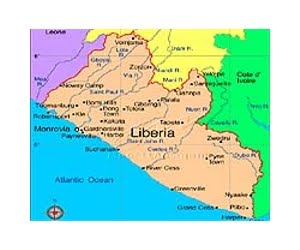
    For a variety of reasons, Liberia is the one country in West Africa that I have tracked for over thirty years.  It has never had the resources to properly initiate a working middle class large enough and strong enough to initiate a sustaining economic build out under effective middle class government.  It may now but this story tells us now hard it is.
    The national debt is an albatross used for whatever and never funded earning assets able to pay taxes.  Its existence simply prevents additional access to foreign capital.
    The country needs successful private enterprise from foreign sources able to bring their own capital as happened in the early days in China.
    They appear to presently have honest government in place.  Hopefully that can last.  I know friends of mine who are restarting an initiative aimed at exploring for conventional oil.  Something like that would bring plenty of large paychecks and get it going.
    For Americans, it is the most congenial country in West Africa so with the changes now taking place throughout, it should soon experience a mini boom of foreign investment.  It is time to take it seriously again.
    Progress, frustration as Liberia rebuilds from scratch
    by Staff Writers

    Monrovia (AFP) March 25, 2010

    Giant potholes make way for smooth streets, freshly painted buildings have appeared among those pitted with bullet holes and lights flicker on as electricity returns to Liberia’s war-torn capital.

    Yet the improvements, seven years after the end of a 14-year civil war which shattered the country’s infrastructure, have had little impact on the lives of ordinary Monrovia residents, who remain mired in extreme poverty and 80 percent unemployment.

    Half of the roads around Monrovia have been rebuilt and the capital now has running water, but the snail’s pace of reconstruction of the electricity grid has hampered economic recovery and development.

    “Basic infrastructure and service delivery to the Liberian people have become extremely limited, thereby undermining the possibility for economic growth,” Samuel Kofi Woods, Liberia‘s public works minister, told AFP.

    Euphoria swept the country in 2006 after Liberians elected Africa‘s first female president — and the arrival of foreign-sponsored electricity generators shortly after Ellen Johnson Sirleaf took office.

    Under an emergency power supply project called “Small Light Today, Big Light Tomorrow”, generators funded by the United States and the European Union were installed throughout the city to light up streets, business centers and private homes.

    But the “Big Light” has yet to arrive.

    Foday Kamara, 27, fixes shoes for a living which puts him through night school where he has just reached the fifth grade. His parents were among some 270,000 killed in one of Africa‘s bloodiest wars.
    “There’s no current. So we can’t use the machine for fixing the shoes. No current, no water,” he said.

    “Since the end of the war we’re just managing. People bring in their shoes — sometimes we get material or sometimes we don’t — we’re just living by the grace of God.”
    — ‘Hardship has increased” —

    ——————————

    And, mostly, living in the dark.

    Since the end of the civil conflict in 2003, electricity coverage has gone from zero — after rebels bombed the Mount Coffee hydro-electric plant in 1990 — to between five and ten percent, according to Augustus Goanue of the Rural Renewable Energy Agency.

    He said progress was going “very slowly … (the) national grid is totally restricted to Monrovia and it has very low capacity.”

    “It actually affects our ability to target poverty, economic development. It affects our delivery of basic social services, health and education, even agriculture and industrial development,” Goanue added.
    For the president, as well as international donors, expanding the electricity network is the next big step.

    “We’ve said over and over again, that electricity is one of our key priorities but it’s not an activity that can be done right overnight, we’ve got to be able to get the generation, the transmission in place, we’ve got to get the distribution in place,” Sirleaf has said.

    But heavily laden with foreign debt of some 1.6 billion dollars, Liberia urgently needs investment from the private sector to meet its energy requirements.

    Mount Coffee is only expected to be back on line by 2012 as it undergoes multi-million dollar renovations funded by the United States.

    In peacetime, “hardship should be alleviated but hardship has increased,” said 35-year-old Joseph.

    “There are no jobs,” he complained while playing draughts on an old bench as Chinese-built hotel rises up nearby along the main road.

    “They told us that companies were coming and everybody around here is prepared to go look for jobs one way or the other and there’s nothing going on — we’re just living on promises,” he said.
  • Lost Planet 2 beta keys being given out by Capcom

    Capcom sure is very generous to their fans. Word has it that they are currently giving away keys for the demo of Lost Planet 2, for both the Xbox 360 and the PS3.


  • Yahoo Login Still Preferred by Mainstream Users

    There are two big names when it comes to login platforms these days, Google and Facebook, with Twitter sometimes thrown in. But hype doesn’t always translate into usage, as data from comment-platform provider Echo would suggest. It found that, when given the choice, most people preferred Yahoo Login over Facebook Connect or Google Friend Connect. … (read more)

  • DS homebrew – DS Paint v1.5

    Homebrew coder Frizo has released a new version of his simple drawing app for the Nintendo DS, DS Paint. The latest update of the brew now allows you to change colors and also includes an intro screen.
     
     
    Download:

  • Crytek: Scaling CryEngine 3 to consoles was ‘problematic’

    In a recent interveiw wtih GameReactor, Crytek CEO Cevat Yerli disclosed that the much-awaited arrival of CryEngine 3 to the consoles did not take an easy path. Yes, you fans may not know it, but scaling the

  • Once Again, For The 2012 Olympics, Police Get Special Powers To Enter Homes And Remove Signage

    Late last year, before the Vancouver Olympics, there was widespread concern about a special law that was passed that allowed Vancouver police the right to enter homes and remove signs that the Olympics doesn’t like (specifically, “marketing” signs). That seemed to trample on basic civil rights, even as the police tried to downplay the likelihood that they would use such a tool. However, it looks like the London police have been given the exact same rights as well. An anonymous reader sent over an article about the 2012 Olympics in London, which has a section towards the end highlighting similar questionable powers given to police:


    Police will have powers to enter private homes and seize posters, and will be able to stop people carrying non-sponsor items to sporting events.

    This has many people questioning why the government has tossed away their civil rights in favor of the now crassly commercial Olympics.

    Permalink | Comments | Email This Story


  • Mikami’s secret project unveiled: Krieg – a PS3 exclusive

    Resident Evil creator, Shinji Mikami, has finally unveiled his latest and long-awaited project via Japanese magazine Famitsu. Get ready for hair-raising, spine-chilling apocalypse as Krieg arrives.


  • simalube applications in vegetable processing companies.

    The clean lubricant dispenser for the food industry

    Around 30 simalube lubricant dispensers have been installed at the medium-sized vegetable processing company Spavetti AG in Kerzers (Switzerland). As a full-service provider, Spavetti AG produces and refines fresh vegetables which it then supplies direct to end customers. The washing facilities lubricated with simalube clean the stored vegetables such as carrots, potatoes, onions etc. The dispenser is
    set to a 12-month cycle as Spavetti offers the entire range of fresh vegetables all year round thanks to its international network of suppliers. The simalube supplies the lubrication points reliably with the SL10 food grease. simatec also offers a food oil, the SL18. These two lubricants are NSF certified and H1-conform food lubricants.

    Reducing costs

    «simalube has made the daily, complex, manual lubrication superfluous», confirms Spavetti AG operating services employee Ulrich Baumann. He can now use his team for profitable tasks in the value added chain. «This automatic lubricant dispenser is a very efficient and reliable maintenance product for us which greatly reduces the time required for maintenance».

    Increasing operating reliability

    Unforeseen or unplanned machine downtimes are a thing of the past. Thanks to the exact and continuous supply of lubricant, simalube ensures optimum lubrication. «There is less damage to bearings and longer machine operating times, thus leading to higher production output», explains Ulrich Baumann
    with great satisfaction.

    Versatile use

    Thanks to the flexible installation options, the simalube can be used on a number of machines. Typical applications in the food industry are:
    – Washing facilities for vegetables
    – Processing machines (peeling, pressing, chopping)
    – Cooling aggregates/ventilation systems
    – Conveyor systems (e.g. conveyor belts or roller conveyors etc.)
    – Packing and labelling machines
    – Palletizers

    Advantages of the dispenser

    In addition to cost savings, operating reliability and flexibility, the simalube® offers many further advantages:
    – the dispenser can be filled with almost all food greases/oils
    – simalube provides the optimum quantity of lubricant at the right place, a fact which makes ecological and economic sense
    – using simalube saves time with other tasks
    – ecologically problem-free disposal possible
    – the various dispenser sizes (30, 60, 125 and 250 ml) cover many applications
    – no over or under greasing – thus extending the bearing live

  • Washer faced wing nuts

    BÜLTE washer faced wing nut is now included in the enlarged range of Bülte plastics’ nuts.
    It is the fastener of choice where hand tightening is required.

    Wing faced nuts need no tools thanks to the wings which allow manual tightening. The integral washer removes the need for a separate washer and reduces assembly time (even load distribution and surface protection).

    BÜLTE washer faced wing nuts are available in M6.
    The thickness of the washer is 2 mm and the diameter 21 mm.

    Polyamide 6.6 natural is the standard material, which offers many advantages in comparison with steel: it doesn’t rust, is clean and insulating, and also extremely light. The excellent resistance to traction and heat, plus the elasticity and excellent electrical and chemical resisting characteristics mean that Bülte’ polyamide products are increasingly being specified throughout industry.
    The nuts have a working temperature range from -30 to + 100°C.
    They are suitable for all sectors of industry, such as electronics, electrical, automotive, food processing, plastics, metalworking, furniture, sports, medical, printing, shipbuilding…

    Alternative materials are available on request, such as Polyethylene and Polypropylene (these materials are recommended for their good food and medical qualities).
    Other colours (blue, black) are available on request.

    A catalogue will be sent to you free of charge on request. Samples and prices available on request.

  • Aeroflex Launches Handset Capability for the TM500 DC-HSDPA Test Mobile

    Aeroflex announced that its TM500 Test Mobile is the first to market to support multiple UE (user equipment, or handset) emulation in conjunction with measurements for the 3GPP W-CDMA Release 8 DC-HSDPA (Dual Cell High-Speed Download Packet Access) standard.
    The TM500 DC-HSDPA Multi-UE Test Mobile enables 3G infrastructure equipment manufacturers to perform rigorous load testing. With the TM500, they can test the performance of their DC-HSDPA base stations under conditions of increasing user demand, speeding up the development of infrastructure equipment and its deployment in networks.
    When emulating a single handset, the Aeroflex TM500 DC-HSDPA Test Mobile provides low-level control and configuration; it combines detailed measurement data required by infrastructure engineers for rapid diagnosis of engineering issues. However, testing a base station against a single handset is not sufficient. Scheduling algorithms must be optimized, and the base station must be load tested.
    The TM500 DC-HSDPA Multi-UE Test Mobile now supports the ability to test a base station and network against a multiple handset configuration. The TM500 enables base station and core network designs to be load tested, stressed, and optimized to ensure that robust, flexible and high-performance products are delivered to network operators.
    The Aeroflex TM500 Test Mobile family has established itself as the “gold standard” for cellular infrastructure equipment manufacturers worldwide. Manufacturers must test network equipment under realistic operating conditions. All the major infrastructure vendors, as well as a majority of femtocell manufacturers, currently use the TM500 Test Mobile. The Multi-UE DC-HSDPA model is the latest in the TM500 family, which includes support for 3G and 4G standards from HSDPA through HSUPA, HSPA+, and DC-HSDPA to LTE. The TM500 Test Mobile offers all the capabilities of a mobile handset or set of mobile handsets, with advanced test functionality for comprehensive 3GPP verification, validation, and optimization.

  • Photovoltaic Technology Show: new and proven conveyor and handling solutions

    From 27 to 29 April 2010, the Photovoltaic Technology Show visitors will find the full range of Montech’s belt conveyors specifically designed for the solar industry, in Hall 4, Stand J22: solar conveyors, unloading conveyors, swiveling conveyors, centering conveyors, removal module, process conveyors and vacuum conveyors. The new conveyor for modules will also be exhibited.

    To carry thin film modules and panels between different processing stations, Montech offers a conveyor with two, three or four lanes with toothed belts. The conveyor for modules is available with two different drives with spur gear motor and two control modes, one by inverter and one by inverter plus point-to-point positioning. The smooth and delicate handling of modules is guaranteed by accurate acceleration and braking curves.

    The Solar conveyor is Montech’s first specific product for the solar industry, deployed as feeding and discharge belt on production plants or to link different manufacturing lines. The conveyor consists of a chassis with two synchronized belts.

    The unloading conveyor is a double-belt system including a fixed section and a sliding section with 160 mm stroke. The sliding section runs into the carrier driven by a pneumatic cylinder.
    The removal module allows rotating wafers and cells by 90 degrees thanks to its vertical motion capability. “The most significant innovation for is that wafers are no longer picked from above, thus avoiding the risk of micro cracks,” explains Gianluca Aloisi, Director Sales at Montech.

    Other Montech solutions for the photovoltaic industry include the swiveling conveyor, which allows discarding defective parts without slowing down production, and the centering conveyor for accurate wafer alignment during transport. These are complemented by the process conveyor to check wafer edges and the vacuum conveyor that, compared to the Solar conveyor, offers more dynamic acceleration and braking curves and higher travel speed.

  • SPIROL INDUSTRIES EXTENDS COMPRESSION LIMITER LINE

    Spirol Industries has introduced the new Series CL500 and CL550 compression limiters for moulded in applications. The CL500 Series has radial grooves along the length that offer maximum retention in the plastic. Designed around standard industry accepted clearances for 6MM and 8MM bolts and the CL550 Series provide additional clearance around the bolts to accommodate greater positional tolerances.

    Spirol compression limiters are used to preserve a threaded joint’s integrity when fastening plastic-to-plastic assemblies, or plastic-to-metal assemblies. As a bolt is tightened to achieve the required friction between threads, the plastic is compressed. Without the compression limiter, plastic will creep, resulting in the loosening and eventual failure of the joint. The compression limiter absorbs the load generated when the bolt has been tightened to its recommended value. The plastic is isolated from excessive compressive loads and plastic creep is not a factor in ensuring that the joint remains intact throughout the life of the product.

    The new series are available in standard low carbon steel with a zinc plate finish for corrosion protection. They join Spirol’s existing Series CL200 and CL250 (split seam) and Series CL101 and CL111 (solid knurled) designs.

    Spirol Industries Limited is a leading manufacturer of a diverse line of engineered fasteners, including coiled and slotted spring pins, solid pins, spacers and other tubular products, as well as threaded inserts, milled brass nuts, shims, pin and insert installation equipment and vibratory parts feeders.

  • Taiwan SOCO Booster Bender – 1D Bending & Low Wall Thinning

    Supplying manifolds and exhausts systems for Mitsubishi Motors translates to a lot of hard work and rigorous requirements. Not surprisingly, Taiwan’s largest supplier for such parts (Shye Shyang) faced between choosing bending 1D Radius or keeping its wall thinning under 15% of the original wall thickness. Anything else would require either a larger bending radius or thinner walls, both options that were not acceptable by the Japanese manufacturer. So they called SOCO to discuss their options.

    The requirements were anything but simple: short clamping distances, short lengths, wall thinning concerns, with different radiuses on the same tube, all of which were close to 1D bending. On the other hand, the solution was clearer: SOCO offered the booster bender, a CNC 12 axis, tube bending machine with Material Booster (Center Line Radius Booster).

    Its design met the demands: capacity for up 76 m/m X 2.1 m/m mild steel tubing, with radius at 1 times the tube diameter (1D); 3 stacks of tooling and last bend boosting capability, with ability to bend tubes with short lengths; short clamping distances were met with 3D (compound) tooling; on top of it all, it prevented excessive wall thinning with its material boosting design, keeping the wall thinning ratio under 15% of the original wall while still performing 1D bending, and under 12% for radiuses of 1.5 D.

    Addressing other needs, SOCO engineers understood that precision, stability and production time were vital factors in a production environment, which meant that bending accuracy was a must with minimal tooling setup. With electric servo controlled feeding, rotating and transversal movement, combined with hydraulic proportional servo valves for the bending, pressure die assistant and material boosting axes, this machine ensured bending repeatability at 0.1 degrees. A powerful cooling system controlled the hydraulic system’s temperature and flow, resulting in stability and low maintenance needs.

    Typically, wall thinning and tight radius bending are required in the production of various automotive parts and boiler tubing, and SOCO’s booster has been developed to address such needs. After inspection of the first machine, the same customer had two more of the same tube bender in the works.

  • Hedwin and Filamatic Working Together

    Hedwin and Filamatic are working together to make the packaging process as seamless as possible, providing you with a single source solution for Cubtainer applications .

    From concept to marketplace, Hedwin’s services include package design, custom manufacturing, and regulatory compliance with the flexible and sustainable Cubtainer. Whether you are currently using rigid packaging (pails) or Bag-In-Box, switching to the Cubitainer will provide cost savings, customizable packaging, and environmentally friendly containers.

    Filamatic then provides liquid filling, capping, and integrated systems expertise, customizing the Cubtainer Filling System to meet your production needs and expectations. Filamatic can be a resource for liquid filling applications that require semi-automatic filling, automatic filling, automatic filling and capping, fully integrated Cubitainer line, or capping.

  • cross roller bearings used in industiral robotics

    We Luoyang Precision Bearing Co.,Ltd have succesfully developed cross roller bearings with super precision recently. Our main products are SX series, RA, RB, RE, RU series, XU series, XR series, etc. The precision is P0(ABEC1), P6(ABEC3), P4(ABEC7), P5(ABEC5). The minimum order quantity is 1pcs. And we also have amount of stock in our warehouse. such as SX011814, SX011818, SX011820, SX011824, SX011828, SX011832, SX011836, SX011840, SX011848, SX011860, SX011861, SX0118/500, RU66UUCCO, RU42, RU124, RB20025, RB30025, RB25025, RB40025, RB50025, RB60040, RA2008, RB3010, RB5008, etc. PRS cross roller bearings are mainly used in industrial robotics, turntable, generators, reducers motor, platform, etc.

    We promise Quality is the first of existence. At the same time,our prices are most competitive.
    Brand: PRS
    Welcome you visit our factory!!!

  • CUISSON SV 31

    Vacuum packing machine, it is the flagship of Orved production as far as the restaurant industry and the vacuum cooking technique are concerned. This chamber machine of last generation is in fact equipped with all possible options, such as the dater, which allows the printing of the date of the packing and the number of lot on the border of the bag, by simply placing the vacuum bag between the pad and the stamp. The dater is positioned between the vacuum chamber wall and the sealing bar, thus leaving the resistance free. Dater can be easily removed from its “sledge” position to manually change the “date” or the “code” which has to be printed on the borders of the bags.

    The particular shape of the vacuum chamber facilitates the packing of liquids inside the vacuum bags. Once you place the bag in the appropriate chamber, it stands vertically, thus allowing the liquids to be positioned – thanks to the force of gravity – at the bottom of the bag itself and consequently avoiding their suction during the cycle of vacuum creation.

    The sealing bar is attached to the vacuum chamber through two levers which allow its lifting; the operator can therefore easily access to the vacuum chamber ensuring a better cleaning and a higher hygienic level.

  • GW 121 H – Low Vibration – Maximum Power

    Low Vibrations – 1,52 m/s²
    The new powerful angle grinder GW 121 H reduces the harmful vibrations to hand and arm

    – maintenance friendly
    – additional hand grip can be mounted on both sides
    – safety valve according to norm EN 792
    – Automatic out-of-balance compensation
    – Vibration value below 2,5 m / sec
    – built-in speed governor
    – low angle head design

  • Butter filling and wrapping machine for big sizes

    Development of packaging machine ARM for high filling weights (400-500g) with new brick shape is finished. Machine can fill and wrap butter, margarine or similar products.
    Brick shape is bar with pack size 195x63x43 mm or 195x53x53 mm (other sizes optional according respective market requirements).
    There are an option to connect to butter case packer.