 |
The conventional dairy lobby is currently pressing for some major regulatory changes that would further deceive the public into buying unhealthy, processed foods laced with hidden artificial sweetening chemicals. And the public only has until May 21 to prevent this assault… |
Author: Serkadis
-
Tell the FDA to keep hidden aspartame out of dairy products
-
Stress – The modern poison that is making us fat, bald, crazy and extremely unhealthy

The term stress is tossed around freely in this modern age and has become a casual buzzword for just about any predicament that we find unpleasant. Yet how it truly effects health and well-being in substantial ways is rarely acknowledged. Linked with a range of degenerative… -
Following a ‘Western-style’ diet will cause you to age faster, die younger: Research

The food choices you make today will have a direct impact on how gracefully you age and how long you live. These are the findings of a comprehensive new research study published in The American Journal of Medicine, which found that people who stick primarily to a “Western… -
Cayenne pepper is a lot more than just a hot herb

Cayenne pepper may not be overwhelmingly used in America but it certainly deserves to be given a lot more attention considering the many health benefits associated to eating it. This very spicy herb has many advantages such as helping the cardiovascular system; preventing… -
Microsoft releases Switch to Windows Phone, but you won’t want to
 Well, it’s May 1 somewhere, which perhaps explains why Switch to Windows Phone popped up on Google Play tonight with the date. The concept is simple: Microsoft tries to ease the transition between platforms, or at least help evaluate if such move is workable. But the app-matcher comes up short and can’t resolve something more fundamental: People with money invested in apps won’t be quick to rebuy them elsewhere.
StWF is easy enough to use once installed; letting it scan and match on my Nexus claims to match 85 percent of the Android apps. But like most of the people reviewing the app, there’s no way I see to view the list. Could it be the app posted early and the supporting services aren’t switched on, or did Microsoft simply muck up?
According to the FAQ: “Your app match list will be saved to a private Windows Azure cloud service that’s just for the Switch to Windows Phone app. Your matched app list can only be accessed using the Switch to Windows Phone app along with your Microsoft Account email and password”. There’s no option I see on Android, and I couldn’t find a Windows Phone version on Microsoft’s mobile store. Surely people want to know which apps match before committing to a new platform.
The reviews are scathing, and few in number as I write since the app is live for a short time. Out of 48 reviews, 37 are one star, giving awe-inspiring 1.7 stars.
Brandon Hull calls the app “garbage. People want to know which apps with work with Windows Phone 8. A simple percentage is useless unless users are told which apps can also be found on Windows Phone 8”.
“Worthless”, Joel Sacco blames. “It basically gives you an arbitrary percentage of apps which are compatible based on your installed apps. Doesn’t actually give you a list or show any useful information past that. If you really wanted me to switch to WP8, you might want to make the data you provide a little more informative”.
Eric Weiss: “Can you imagine the meeting where this was pitched and approved? ‘How can we get people to switch to Windows Phone’. ‘An Android app that lies to them?’ ‘That’s perfect!’ Give that guy a raise!”
Luis Escobedo calls Switch to Windows Phone “downright embarrassing”.
For the record, I used the app four times, each instance getting an 85 percent but not being presented (that I could find) with option to see which ones. Again, I wonder if something isn’t working yet. That’s best case scenario, a simple screw-up releasing StWP before the Azure service is on. Otherwise, yeah, this is a helluva cock-up and makes Microsoft look stupid. Too bad, because “The Wedding” commercial airing yesterday makes the company look so smart.
-
Not taking your medication, or taking waaay too much? The data knows …
While cost tends to dominate discussions about prescriptions drugs and health care policy, lawmakers probably shouldn’t overlook the economic problems caused by abuse and misuse. According to prescription-management specialist Express Scripts, people selling or obtaining prescription drugs illegally or not taking them according to the directions combine for more than $500 billion in wasted health care spending each year. But, armed with a boatload of data, Express Scripts is trying to get those problems under control.
If Express Scripts’ numbers are correct, the abuse and misuse (which the company calls “nonadherence”) of prescription drugs can have a pretty staggering effect on the health care market. Nonadherence, the company claims, results in expenditures of $317.4 billion a year treating conditions that could have been avoided had people just taken their prescriptions as directed. Every dollar spent on potentially abused drugs results in an additional $41 spent on associated claims, and the health care system loses between 3 and 10 percent of every dollar — or about $224 billion — to fraud and abuse every year.
Express Scripts’ strategy for solving the problem is all about data. Because it manages 1.4 billion prescriptions each year covering about 100 million Americans and 65,000 pharmacies, the company is able to identify patterns that signal potential problems. But it’s also using data to try solving some cases before it ever has to spot them. Here’s how Express Scripts does what it does.
No one needs 20,000 pills
When it comes to fighting fraud and abuse, there’s not a whole lot anyone can do to stem the tide of issues that cause those behaviors, but data analysis can certainly help flag problems and eliminate them from the system. Having such a large dataset to analyze helps Express Scripts easily spot outliers in patient behavior, explained Michael Klein, a senior manager in the company’s program integrity division. Prescriptions for narcotics, for example, often include limitations on the amount that any given pharmacy can dispense in a month, so individuals addicted to those drugs might seek multiple prescriptions from multiple physicians and try filling them at multiple pharmacies, often geographically distant from one another.

In one instance, Express Scripts’ models helped Klein and his team identify a husband-and-wife team that had obtained approximately 7,000 pills — worth about $150,000 in total — by using 17 doctors and pharmacies in different cities. They had actually signed multiple exclusivity contracts with doctors, stating they would only get narcotics prescriptions from those doctors. In another case, an Express Scripts flagged an individual who had received 808 days’ worth of narcotics in one year, with the pills spread across 21 pharmacies, 19 doctors and multiple schedule 2 controlled substances.
And where there’s addiction, there will always be people trying to make a buck by feeding it. Although the number of individuals abusing prescription drugs or trying to defraud the system to make money is a difficult problem to tackle in terms of sheer scale, Klein noted, there’s an equally important problem around what he calls “pill mills.” As the name term implies, these are essentially doctors who overprescribe medication. “A line of people … go into their office and they just write those prescriptions,” Klein explained.
Express Scripts uses its models to track doctors’ prescription activity across its entire network of pharmacies and patients, but a sheer quantity of prescriptions or even dosage doesn’t necessarily prove there’s anything insiduous going on. Rather, Klein said, the company also looks at things such as the types of medications they’re prescribing and even what people are saying about doctors online. If a doctor’s behavior raises a red flag, there’s a chance — surprisingly high, in fact — that he or she has been mentioned on an online forum as a good person to see if you need drugs.
Jo-Ellen Abou Nader, a senior director for program integrity at Express Scripts, noted that, much like with other criminal networks, identifying one member in a pill mill scheme can help uncover a much bigger picture. One particularly high-profile case involved a single doctor prescribing an average of 55 pills per day to 30 patients over the course of a year — that’s an average of 20,000 apiece and more than 600,000 in total. That’s more than anyone could ever take, she said, and just flagging one of those recipients could be enough to expose the entire operation.
However, not everyone prescribing too much medication is trying to profit from the system, and not everyone trying to profit from the system is involved with dealing drugs. Abou Nader explained that Express Scripts has models to flag Medicare Part D fraud, in which people sell Medicare IDs to pharmacies that then issue claims for pills they never dispensed, as well as plain old waste. The latter, which the company defines as “overfilling,” can look like small-scale fraud, she said, only doctors or pharmacies are unintentionally doling out too much medication.
We have (or will have) ways to make you follow directions
As big of a problem as waste, fraud and abuse combine to be, nonadherence is an even bigger problem in terms of extra costs. According to Bob Nease, chief scientist at Express Scripts, people who don’t properly take their prescriptions make up a more-expensive medical condition than heart disease, cancer and diabetes combined. “Those are the statistics we tell to scare people,” he said.
What might be even scarier for Express Scripts’ clients, however, is that the problem is still very difficult to prevent. Human beings just aren’t wired to remember to take pills at the same time every day, Nease explained, and there’s an instrumentation problem when it comes to spotting missed medication times as they’re happening. “Right now,” he said, “the only way we know someone isn’t taking their prescriptions as prescribed … is looking at refill patterns.”

This is somewhat problematic because it can be difficult to tell the difference between someone who takes their pills regularly but just forgot to refill on time and someone who consistently skips days altogether. So what Nease would really like to see is a way to incorporate sensors into the prescription process, perhaps like a Bluetooth-enabled cap could that communicate with a person’s smartphone to alert him if he hasn’t opened the bottle today or that it’s time to take medicine (GlowCaps are probably a good starting point). Sensors that measure weight or volume could give people like Nease a better sense of when people are taking medicine and how much they’re taking.
It’s this latter type of information — how actual medication-taking behavior relates to improvements or deteriorations in health — that Nease really wants to know. Express Scripts uses the FDA definition of “adherence,” which means taking medication as prescribed 80 percent of the time, but Nease says no one really knows the difference between someone moving from 50 percent to 60 percent adherence or from 70 percent to 80 percent. For some conditions, he posited, small improvements might actually be medically significant even if the patient never approaches that 80 percent threshold.
But for now, Express Scripts relies pretty heavily on models that Nease said are more than 90 percent accurate at predicting whether someone will get lax on following directions.
Most people who are nonadherent will naturally become more adherent over time (and vice versa), Nease said, with rates waning and waxing by about 20 percent. Using simple methods such as beepers that go off when it’s time to take a medication or bottles that remind someone whether or not they’ve taken their medication, people who Express Scripts predict have a mid-range probability of nonadherence see their adherence rates rise an additional 14 percent on average.
“It’s not earth shattering,” Nease admits, “but it’s better than anything else we’ve got.”
Those models turn out to be pretty interesting, however, taking into account some 400 variables including classic demographic information, the types and numbers of prescriptions someone is getting, and even whether people respond to Express Scripts’ letters and phone calls.
The most surprising variable, one that Nease says is material to every nonadherence model Express Scripts builds, might be how a person rates as a consumer. The company buys data from a consumer marketing agency that categorizes people as belonging to 1 of 66 separate microsegments such as “young digerati,” which is how the university-area-living, cord-cutting, high-speed-internet-having and fifty-something Nease is categorized. “It turns out these general consumer behaviors tend to bleed over into these health behaviors,” Nease said, “but not in a consistent fashion.”
And although no single variable has too big an effect on its own, how they interact with each other turns out to be rather important. For example, Nease explained, the patient’s gender and doctor’s gender can be relatively telling depending on the patient’s ZIP code. Male patients living in lower-income areas and seeing female doctors tend to have higher nonadherence rates than do otherwise similar patients in higher-income areas.
Of course, he added, “It really doesn’t matter to us whether someone is high-risk or low-risk unless we can do something about it.”
Feature image courtesy of Shutterstock user pogonici.

Related research and analysis from GigaOM Pro:
Subscriber content. Sign up for a free trial.- What’s driving the next phase of the e-commerce evolution
- GigaOM Research highs and lows from CES 2013
- How HR can make the case for workforce analytics


-
Belkin’s internet of things dreams extend to energy and water management
Belkin, the maker of myriad Apple accessories, USB widgets and even the WeMo connected outlets, has a big business in industrial products as well. And today it announced a series of sensors aimed at helping commercial companies and utilities better manage electricity and water usage.
It has a pilot project with the Department of Defense related to the electric sensor technology as well as an exclusive partnership on the water side with HydroPoint Data Systems, a company that helps companies analyze and monitor water usage. The Belkin sensors are one of 22 projects that the DoD selected to pilot, and those 22 were selected from 468 proposals.
To learn more about these sensors, branded Echo Water and Echo Electricity, I spoke with Kevin Ashton, the general manager, global product management for Belkin Business, and the guy who says he coined the term “internet of things.” Ashton joined Belkin when it acquired his startup, Zensi, three years ago. Now he’s excited to share the last three years of his work with the world.
There are two elements to the Echo sensors: a water management platform and an electricity management platform. Customers deploy sensors in buildings or on pipes to measure electricity by tracking voltage and a few other elements to determine what’s sucking power and how it’s behaving, and then the sensors send that data to the cloud. On the water side, sensors located under a sink detect pressure and vibration to understand water usage, and sends that information to a cloud-based service.
Once the data is collected, Belkin runs algorithms to figure out if things are behaving properly, where energy savings might be had and general patterns around usage that might help companies or homeowners optimize their appliances or even behaviors. At Zensi, the original plan for the voltage-reading technology was to create an itemized electric bill for different apartments or even different gadgets inside the home.
Now, Ashton said the system is still as precise, but the use case is still evolving. He said that the plan is to open this data up to utilities and other services eventually, but right now the focus is on getting this deployed and in use in different buildings. Ashton said that so far partners and Belkin are fielding calls from commercial customers but also new homebuilders, who see this as a good way to help “green” new homes for high-end clients.
Of course, the real power for these sensors — the algorithms, data and insights they produce — is linking them to other gadgets, perhaps enabling a true demand-response system between a customer and utility or even helping a homeowner set devices to react to the cost of power. Aston realizes this, which is why he’s a proponent of open standards and making it easy for people to switch out devices and talk to management systems. “We hope to let the magic happen with well implemented open standards,” Ashton said in an interview. “The value in this system may be in places we don’t expect.”
I’m pretty confident that the value is in the algorithms that Belkin’s Echo sensors use to glean insights, but I’m glad Belkin’s planning to let others build on those smarts to make the overall information exchange even better.

Related research and analysis from GigaOM Pro:
Subscriber content. Sign up for a free trial.- How to Make Cloud Computing Greener
- The Internet of Things: What It Is, Why It Matters
- Smart Algorithms: The Future of the Energy Industry

-
Here’s Google’s New ‘Getting Started’ Video For Glass
It seems like only yesterday that Google was showing us the concept video for Glass, and now here we are with the “getting started” video showing people how to use it, because it exists.
While still not available to consumers (just the lucky chosen few), there are plenty of the devices out in the wild, and developers are working hard building apps.
Here’s a quick tutorial for how to basically use Glass that you could enjoy if you had the privilege of having one.
-
Google+ Sign-In tempts developers with better search reach

Some days, I look at Google and my mind’s eye sees Microsoft. This is one of them. Developers adopting Google+ Sign-In will get a big benefit in search results. The tie-in — to monopoly search — feels oh-so like Microsoft tactics to woo and keep developers on Windows during the 1980s and 90s. Yeah, I feel déjà vu right about now.
In February, the search and information giant added Google+ Sign-In as an option developers can include with their apps. In my news analysis then, I called the authentication service “bold and disruptive” and a “Facebook killer“. The direct search tie-in makes my early sentiment a gross understatement. Google gives developers every reason to prefer its authentication mechanism, which hugely benefits the social network. The monopoly product is used to extend reach into an adjacent market. Say, didn’t trustbusters on two continents prosecute Microsoft for tying together Windows and browser?
The potential benefits to developers are indisputable. “Soon, if you search for a site or app on Google.com (and that app has integrated with Google+ Sign-In app activities), you’ll see popular and aggregate user activity to the right of search results”, Seth Sternberg, director of Google+ product marketing, explains. “Searching for Fandango, for example, will show the top movies among Google users. And when you click on a movie, you’ll go directly to its page on Fandango”.
Google will roll out the search changes over the next couple weeks. Among the first developers: Deezer, Fandango, Flixster, Slacker Radio, Songza, SoundCloud and TuneIn. Other developers adopting Google+ Sign-In will follow.
In many markets, Google search share exceeds 70 percent — in some, reaches 90 percent. Google’s U.S. share was 67.1 percent in March, according to comScore. However, when including all products “powered by Google”, search share was 69.2 percent. The point: Google is the place to be, and developers can improve their visibility, if they support Google+ Sign-In.
Microsoft got in trouble for integrating Internet Explorer into Windows, a tactic government trustbusters viewed as leveraging monopoly to squash a rival platform. Microsoft developers had no choice. IE was there. Likewise, while agreed somewhat different circumstances, Google requires one thing for another. To get that extra search edge, developers must support Google+ Sign-In.
The approach personifies Google’s core business and product strategy since Larry Page returned as CEO in April 2011. There is tighter product and service cross-integration everywhere, particularly search leveraged to boost adoption of other things. Look at how much the Google search page has changed, too — the company’s other services are far more visible.
Google+ is by far one of the biggest beneficiaries, and increasingly, as the company ties more other stuff to the social network. Chrome, Maps and YouTube are the other three major beneficiaries, but they’re not alone. Drive, Gmail, News and Play are others.
The question to ask: Google and developers benefit, but do you? Please answer up in comments below.
Image Credit: Google
-
Fierce competition in 7-inch tablet range is destroying profits

-
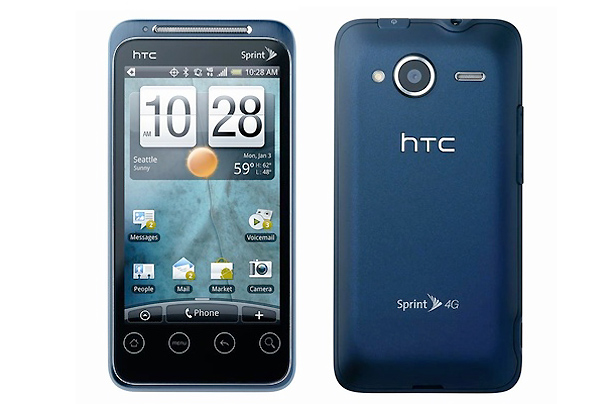
Overheating HTC Evo Shift Burns Owner

A Columbus, Ohio woman found that her HTC Evo Shift had branded her after overheating while it was under her waistband. The woman, Jennifer Grago, reported that she was using the phone’s FM radio while she did yard work.
“I didn’t have pockets so I just put the phone in the band of my sweats. Seemed like an alright option… I felt my phone getting warm so I moved it and trucked on. Figured sweatpants and 70 some degrees was a factor. Went to move it again and it hurt like a #%&@! and skin with it. I swear to god I almost passed out,” she wrote.
Best Buy, where she purchased the phone, told her that phones need “correct ventilation” and should be placed in form-fitting casing.
The phone left a clear outline of the casing on her skin. Phones, which are in essence compact radios, can easily overheat for various reasons but for a device to overheat so egregiously is frightening. The phone is two years old and is currently available for free with contract on Sprint’s network.
-
Big Data News: Actian Acquires ParAccel
Here’s our review of some of this week’s noteworthy links for big data:
Actian acquires ParAccel. Big data management company Actian announced it has acquired high-performance analytics company ParAccel. ”ParAccel is being used by many of the world’s leading companies including Amazon, The Royal Bank of Scotland, OfficeMax and MicroStrategy to set them apart from their competition through analytics,” said Chuck Berger, CEO of ParAccel. “With Actian, they have immediate access to a broader portfolio of solutions to turn their data into value.” The acquisition furthers Actian’s mission in building an innovative end-to-end database, integration and analytics solution. Joint customers of Actian and ParAccel already experience the value of the combined solution set. “As a provider of right-time business intelligence as a service to innovative automotive manufacturers and dealerships, Autometrics aggregates data from 150 sites totaling millions of records per day, which must be deduplicated, loaded, analyzed and validated in shorter and shorter timeframes to drive clients’ critical business decisions,” said Stephen Shaw, Autometrics’ CEO. “With the myriad of data integration capabilities from Actian and the ParAccel Analytic Database, we are able to give automotive manufacturers rapid measures of lower funnel demand to optimize their marketing initiatives, sales incentives and inventory management.”
Teradata launches SAS Analytics Model 720. At the SAS Global Forum 2013 Teradata (TDC) announced the availability of the Teradata Appliance for SAS High-Performance Analytics Model 720. The appliance was designed with SAS and supports the newly announced SAS High-Performance Analytics offerings and SAS Visual Analytics. SAS Visual Analytics on Teradata quickly uncovers patterns and trends from massive volumes of data and presents these insights rapidly in graphical form throughout the enterprise, including via mobile devices. The speed and integration offered by the Teradata 720 Appliance results from its seamless integration of in-memory analytics within the Teradata warehouse environment. “I find the extreme performance of the Teradata 720 for SAS exciting, and believe it opens many new opportunities for companies on the cutting edge, improving data governance and unifying data and analytics in an integrated environment,” said Manuel Sevilla, Chief Technology Officer for Business Information Management at Capgemini. “In addition, the pairing of SAS and Teradata is a great value proposition for faster time-to-value while reducing the latency from the capture and provision of new data to the output of analytic intelligence.” Teradata also recently announced large data warehouse customer wins from the largest local bank in Southwest China, and the Bank of Ningbo in China.
Qubole closes Series A funding. Quobole announced the completion of a Series A funding round. This brings the total investment to $7 million from Charles River Ventures and Lightspeed Ventures as well as angel investment from Venky Harinarayan and Anand Rajaram. Based on Hadoop and founded by the creators of Apache Hive and Facebook’s analytics platform, Quobole Data Service is heavily optimized for the Cloud and is focused on making analytics easy and accessible to businesses of all sizes. Its data engine takes data from multiple sources – on premise, cloud structured and unstructured – and provides instant access through analytic tools like Tableau, Excel and R. Additionally, its self-service user interface and the library of connectors to SQL sources, NoSQL sources, and MPP platforms make it easy for analysts and data teams to combine, correlate, and create actionable insights from their data sets. “We have reached a critical poitn where our model has been validated by customers and investors alike,” said Quoble CEO Ashish Thusoo. “A half petabyte of data processed demonstrates Quobole’s growth and viability and we are very excited to raise the bar again as we continue to innovate on behalf of our users.”
-
3DLT Launches The First Store For Printable 3D Objects

Cincinnati, Ohio is best known for the Bengals, Bootsy Collins, and Skyline Chili but it’s about to become famous as one of the first cities with a true market for 3D printable designs. 3DLT, a small company based in Cincy and founded by a team of programmers, is bringing the free-for-all world of 3D modellers into line and essentially making an Etsy for ABS.
The team consists of Pablo Arellano, John Hauer, Colin Klayer, and Tim Maggart and has raised $10,000 in personal investment thus far. Today they’ve announced a plan to give away $10 million in free 3D object credit. They are also going to build a network of 3D printers across the country to allow users to connect with printers who can build their purchases on demand.
“We’re big fans of Graphic River, iStockPhoto and other content marketplaces,” said Arellano. “We felt that when 3D printing became viable, a market for 3D printable content would be needed.”
“We are disruptive in two ways: We will accelerate the adoption of 3D printed products by the everyday consumer by offering a wide selection of well-organized, curated designs across multiple categories. We also make it easy for consumers – from your grandmother to your grandson – to purchase 3D designs they can print at home, online, or at a local 3D print shop,” he said.
They also aim to commoditize 3D printing and make it more “financially accessible” by partnering with 3D print providers.The company launched on stage today at Disrupt in New York.
“3D printing is already being used extensively in the $23 billion prototyping market and quickly gaining traction in automotive, fashion, toys and many other areas. In the near future, everyday items, from frames to furniture, sneakers to stilettos, will be 3D printed. 3DLT is what the industry needs to cause a tipping point,” said Arellano.
-
Hogan On Gawker: They Are ‘Flagrantly’ Violating A Court Order
Hulk Hogan and his lawyers filed a motion to hold Gawker in contempt of court for disobeying a court order to remove an article about the infamous Hulk Hogan sex tape. Again, that’s the article, not just the video.
The filing alleges that Gawker is “flagrantly” violating the court order, which Gawker has appealed.
In a post called, “A Judge Told Us to Take Down Our Hulk Hogan Sex Tape Post. We Won’t,” Gawker’s John Cook wrote:
It requires us to remove the video as well as “the written narrative describing activities occurring during he private sexual encounter, including: (a) all descriptions of visual images and sounds captured on the Sex Tape or any other video of this private sexual encounter, and (b) all direct quotations of words spoken during this private sexual encounter and recorded on the Sex Tape or any other video of this private sexual encounter.” Campbell, who represented the parents of Terri Schiavo in their effort to portray their daughter as conscious and alert and was appointed to the bench by former Florida Gov. Jeb Bush, described her order as serving “the public interest.” She stated very clearly during the hearing that she had never watched, and did not intend to watch, the video that she was ordering us to remove: “I’m not going to look at the tape. I don’t think at this point in time I need to look at the tape.”
We publish all manner of stories here. Some are serious, some are frivolous, some are dumb. I am not going to make a case that the future of the Republic rises or falls on the ability of the general public to watch a video of Hulk Hogan fucking his friend’s ex-wife. But the Constitution does unambiguously accord us the right to publish true things about public figures. And Campbell’s order requiring us to take down not only a very brief, highly edited video excerpt from a 30-minute Hulk Hogan fucking session but also a lengthy written account from someone who had watched the entirety of that fucking session, is risible and contemptuous of centuries of First Amendment jurisprudence.
Here, you can see the latest filing in its entirety:
Plaintiff's Motion for OSC Re. Contempt – Signed (00011437)[1] by Eriq Gardner
Where this goes from here is anybody’s guess.
Image: Gremlins Wiki
-
HP Unveils Complete Software-Defined Network Fabric
HP unveiled a series of hardware and software solutions Tuesday designed to make networks simpler, scalable and automated. HP (HPQ) launched a data center network fabric built on HP FlexNetwork architecture designed to boost scalability and reduce network provisioning time from months to minutes.
“For the past 20 years, data center networks have lagged in supporting new enterprise demands for cloud, virtualization and big data,” said Bethany Mayer, senior vice president and general manager, Networking, HP. “Only HP is positioned to deliver the industry’s most complete software-defined data center network fabric with innovations that enable our customers to create a network foundation that will meet their needs today and well into the future.”
FlexFabric
HP announced the new FlexFabric Virtual Switch 5900v software, in conjunction with the HP FlexFabric 5900 physical switch, delivering advanced network functionalities such as policies and quality of service to a VMware environment. Separation of server and network administrations for operational simplicity is granted through the 5900 integrated Virtual Ethernet Port Aggregator (VEPA) technology. The Virtualized Services Router (VSR) lets services be delivered on a virtual machine, eliminating unnecessary hardware, by leveraging a carrier-class software-based Network Function Virtualization.
“Today’s data center networks are somewhat static and limiting in their ability to scale — they are also complex and require manual provisioning for cloud and virtualized applications,” said Rohit Mehra, vice president,Network Infrastructure, IDC. “HP’s portfolio of physical and virtual switches, as well as its SDN-enabled network fabric, indicates its readiness to address many of these challenges, providing clients simplicity, scalability and automation to enable new services and applications for the data center.”
Additional FlexFabric switches and routers continue to address the simpler, scalable and automated mantras. The FlexFabric 1190 is an Open Flow-enabled aggregation switch that delivers 10/40 GbE connectivity for blade servers and Virtual Connect FlexFabric modules, enabling flexible and cost-effective deployment for data centers. The 11908 switch series is the first to support the recently released OpenFlow 1.3.
The FlexFabric 12900 switch series manages bandwidth spikes with built-in networking standard Transparent Interconnection of Lots of Links (TRILL). With up to 768 10 GbE ports and 36 Tbps of non-blocking fabric, the 12900 provides up to 2x switching capacity and 3x 40GbE density when compared to Nexus 7018 and Nexus 7010 modules. The HP HSR 6800 router series combines comprehensive routing, firewall and VPN with a 2 Tbps backplane, into one device that supports thousands of end users.
Rounding out the HP complete, scalable SDN fabric is HP Intelligent Management Center (IMC) Virtual Application Network Resource Automation Manager software. Simplifying management of SDN and traditional network infrastructure operations is achieved with HP IMC SDN Manager, a single tool for configuration monitoring and policy management that spans campus, branch and data center networks.
To help guide customers through the process of making network architecture simpler, scalable and automated, HP has launched three new services. The HP Connectivity Transformation Experience Workshop helps customers achieve network scale and agility with a defined strategy for network transformation that aligns business and IT goals. A IPv6 Roadmap Service helps to develop a transition roadmap to IPv6 by considering all six of the domains affected by this transition – the network, security, infrastructure, applications, governance and finance. Finally, HP Data center Care for Networking offers a single point of contact for reactive support and proactive services that enable customers to quickly resolve network issues, evolve the network to meet changing business needs and reduce IT administrative tasks, allowing them to focus on technology innovation.
-
Teen girls less successful than boys at quitting meth in UCLA pilot research study
A UCLA-led study of adolescents receiving treatment for methamphetamine dependence has found that girls are more likely to continue using the drug during treatment than boys, suggesting that new approaches are needed for treating meth abuse among teen girls.Results from the study, conducted by the UCLA Center for Behavioral and Addiction Medicine and the community-based substance abuse treatment program Behavioral Health Services Inc., are published in the April edition of the Journal of Adolescent Health.“The greater severity of methamphetamine problems in adolescent girls compared to boys, combined with results of studies in adults that also found women to be more susceptible to methamphetamine than men, suggests that the gender differences in methamphetamine addiction observed in adults may actually begin in adolescence,” said the study’s lead author, Dr. Keith Heinzerling, a health sciences assistant clinical professor of family medicine at the David Geffen School of Medicine at UCLA.The clinical trial focused on use of the antidepressant bupropion for treating methamphetamine addiction. Nineteen adolescents — nine boys and 10 girls — with meth addiction who were receiving counseling at Behavioral Health Services were given either bupropion or placebo pills. The average age of participants was approximately 17.5 years.The researchers found that the study subjects who received the antidepressant provided significantly fewer meth-free urine samples than those who were given placebos, suggesting that bupropion was an ineffective treatment for addiction in this small sample.Overall, boys in both groups provided more than twice as many meth-free urine drug tests during treatment as girls in both groups.While the results did not support continued research into the use of bupropion for methamphetamine addiction, they did suggest the need for research to develop new interventions to improve the outcomes of treatment for addiction in adolescent girls, the researchers said.Heinzerling noted the importance of collaborations such as the one between UCLA and Behavioral Health Services.“It shows that partnerships between researchers and community organizations are critical to insuring that research is translated into improvements in the health of real people,” he said.Additional researchers on the study included Janette Gadzhyan, James McCracken and Steven Shoptaw, all of UCLA, and Henry van Oudheusden and Felipe Rodriguez of Behavioral Health Services Inc.The research was funded by the National Institute on Drug Abuse (grant 5 R21 DA26513).Behavioral Health Services Inc. is a not-for-profit community-based health care organization providing substance abuse, mental health, drug-free transitional living, older adult, HIV/AIDS education and prevention, and related health services to the residents of Southern California.The UCLA Center for Behavioral and Addiction Medicine aims to advance the prevention and treatment of chronic illnesses, especially in communities with health care disparities. This includes internationally recognized research to advance the science behind addiction medicine in order to develop safer and more effective treatments for addiction. Treatment for methamphetamine addiction is available through the center at its clinics in Santa Monica and Hollywood.The UCLA Department of Family Medicine provides comprehensive primary care to entire families from newborns to seniors. It provides low risk obstetrical services and prenatal and inpatient care at UCLA Medical Center Santa Monica, and outpatient care at the University Family Health Center in Santa Monica and the Mid-Valley Family Health Center, which is located in a Los Angeles County Health Center in Van Nuys, Calif. The department is also a leader in family medicine education, for both medical students and residents, and houses a significant research unit focusing on health care disparities among immigrant families and minority communities and other underserved populations in Los Angeles and California.For more news, visit the UCLA Newsroom and follow us on Twitter. -
Rumor has it the new FCC chair is Tom Wheeler, a former cable lobbyist
The Wall Street Journal is reporting that President Obama will nominate Tom Wheeler as the next chairman of the Federal Communications Commission, a choice that has been anticipated for weeks. Wheeler was the top choice to replace Julius Ganachowski, who said he would step down in late March.
Wheeler’s history as a former cable and wireless lobbyist (he was the president of the National Cable Television Association and as well as the former CEO of the Cellular Telecommunications & Internet Association) might give some pause, although other chairpersons have had close industry ties, including Genachowski, who was an entrepreneur but also a former executive for media company head Barry Diller — an area regulated by the FCC. Wheeler is currently a managing director at D.C.-based firm Core Capital Partners.
So, rather than presend the revolving door between politics and industry doesn’t exist, we’ll point out that Wheeler has the backing of some influential people in the telecommunications regulatory environment from both sides of the aisle. From a letter to President Obama endorsing Wheeler signed by 11 former regulators and industry veterans:
Tom has had an impressive career in the telecommunications and high-tech field that makeshim eminently qualified for this position. He has consistently fought on the side of increasingcompetition, including representing the cable television and wireless industries in their early years whenthey were the insurgents challenging the established players. He has started or helped to start multiplenew, high-tech companies that created quality American jobs while pushing the frontiers of technological innovation. He understands the importance of reclaiming the pro-competition, pro-innovation, pro-growth regulatory ideal.
From our perspective at GigaOM, what’s most important here is what Wheeler will have to face in his upcoming session, should he get approved by Congress. He’ll be dealing with a controversial spectrum auction that seeks to get broadcast TV owners to give up their spectrum for mobile data use, as well the transition from a copper-based wireline network to an all IP-based network. He has written a blog (the last post was in December), so go check it out for perhaps deeper insights on how he may regulate the internet going forward.

Related research and analysis from GigaOM Pro:
Subscriber content. Sign up for a free trial.- Netflix may suffer from limited mobility
- Confused about the wireless markets? Here’s a breakdown
- Facebook’s tactical retreat on privacy

-
The Tim Tebow Situation (Taiwanese Animation Style)
Taiwanese animation firm Next Media Animation has a special style when it comes to covering events in popular culture. We’ve seen provocative takes on the Presidential Election, the Super Bowl halftime show, and the firing of Groupon CEO Andrew Mason, to name a few.
With quarterback Tim Tebow being released from the Jets this week, it was inevitable that NMA would take on the news. So, here you go:
-
AT&T kicks off trade-in program, offers $100 or more credit for used smartphones
Thinking of upgrading to the latest smartphone? Sprint is already offering a $100 smartphone credit if you port your number to the network, but AT&T appears to be fighting back. The carrier announced a new AT&T Trade-In Program on Tuesday. Starting on May 1, you can turn in an old smartphone and get at least a $100 credit towards your next smartphone, effectively cutting in half the up-front contract price of a Samsung Galaxy S 4 or HTC One.
 AT&T says you’ll get a minimum credit of $100 and if the phone is worth more, it will increase the credit accordingly. Once the smartphone is turned in and evaluated, customers can use the credit immediately in three ways: “towards an accessory purchase, apply it to an existing bill, or even donate it to AT&T’s charitable cause Cell Phones for Soldiers.” As long as the phone is no more than three years old and in good working condition, AT&T will accept it. (Maybe I’ll dig out my old Palm Pre!) According to an AT&T representative, it will even take phones from other carriers.
These deals reinforce that the cellular market is all about the services and ongoing revenue per user. Carriers generally don’t make money on hardware sales unless contract customers continue using their hardware after the contract period. T-Mobile is the exception to that rule, having branded itself the “uncarrier” and by separating the cost of hardware and services: Once you pay your hardware off with T-Mobile, your monthly bill is reduced to just the service plan.
I won’t say that AT&T just completely trumped Sprint’s $100 deal, but it’s likely going to take the wind of Sprint’s promotion. AT&T currently has LTE service in far more areas than Sprint. And even better — if you use AT&T’s network, that is — fallback service drops to HSPA+ which can be nearly as fast as LTE. Sprint’s fallback outside of LTE is EV-DO service, topping out around 1.5 Mbps.

Related research and analysis from GigaOM Pro:
Subscriber content. Sign up for a free trial.- Carrier IQ and the continued erosion of operator trust
- The fourth quarter of 2012 in mobile
- What to watch in mobile in 2013

-
World’s first web page brought back from the dead for 20th anniversary