
Author: Serkadis
-
Consumer Reports: Apple outshines rivals once again in customer support
-
Big in Texas: CyrusOne Sees Massive Growth in Dallas

The open space inside CyrusOne’s 680,000 square foot facility in Carrollton, Texas, along with one of the golf carts used to transport staff across the vast expanse of space. (Photo: Rich Miller)
CARROLLTON, Texas – If the air is whooshing past your ears inside the data center, it usually means it’s time to turn down the airflow from the CRAC units.
But in this case, at the CyrusOne data center north of Dallas, the whooshing noise is from the speed of the HoverBoard scooters that staffers use to zoom across the huge expanse of open space inside the 680,000 square-foot facility.
The need for scooters and a brigade of golf carts is a sign of the scale of CyrusOne ‘s ambitions with the facility in Carrollton, which has just opened its first phase of colocation space. The 47,000 square-foot data hall is the first of six phases planned for the enormous facility. The data hall is housed in the rear of the building, hence the need for speedy transport across the nearly quarter-mile distance to the office space at the front of the building.
Success Story Rooted in Texas
Texans like to build big. And perhaps no company knows the Texas market better than CyrusOne, which operates nine data centers at campuses in Houston, Austin, San Antonio and Dallas.
“We feel good about committing to an asset like this when we have a success story in a given market, and we have that in Dallas,” said Kevin Timmons, the CTO of CyrusOne.
The Carrollton data center is the showpiece for Timmons’ “massively modular” approach to design, which seeks to take the scale and advanced design of the largest web-scale data centers and bring them to enterprise customers in a multi-tenant environment.
It’s a large canvas on which to paint. The Carrollton data center is more than 1,428 feet long and 480 feet across. It’s large enough to house six 747 airplanes, four football fields, a dozen space shuttles, or two Washington Monuments. It could eventually support up to 60 megawatts of critical IT load.
CyrusOne has moved quickly to bring the facility online and begin leasing space. It took just 14 weeks from the start of work to commissioning the first phase of the data center. Several customers have already been installed.
Big Facilities for Growing Markets
It’s been a whirlwind year for CyrusOne, which had its IPO in January and is making a big bet on big campuses. In Phoenix the company has opened the first data center on a new campus designed to house seven facilities and more than 1 million square feet of space. In Houston,CyrusOne has just purchased another 32 acres of land to expand its campus, which is being built around the infrastructure requirements of the oil and gas industry.
And then there’s Dallas, where CyrusOne is rolling out a massive facility in one of the nation’s most competitive markets. The company offers both colocation and wholesale data center suites, and has recently introduced an interconnection offering, allowing it to play on several levels of the complex Dallas market.
CyrusOne isn’t alone in its confidence in demand in the Dallas market One of its major competitors believes that demand for wholesale space continues to outpace supply in Dallas.
-
Verizon to spend $100M on solar panels, fuel cells for facilities
Telecom giant Verizon is expected to announce on Tuesday that it plans to spend $100 million on clean power projects, including installing solar panels and fuel cells at 19 locations to help power its buildings and network infrastructure. Verizon’s Chief Sustainability Officer James Gowen plans to make the announcement at Fortune’s Brainstorm Green conference on Tuesday.
 Verizon plans to buy fuel cells from ClearEdge Power and solar panels from SunPower. The amount of power from the solar panels and fuel cells, which will be installed across seven states, will be 70 million kilowatt hours of electricity. That’s enough to power 6,000 homes per year.
Fuel cells look like industrial refrigerators, and they use a chemical reaction to produce electricity and heat. They are filled with large stacks that are lined with catalysts (a metal, sometimes platinum), and a fuel (commonly natural gas) is inserted in one side and runs over the stack. Electricity and heat flow out the other side. The benefits of fuel cells are that the electricity can be created on site where it is used, and if the fuel used is biogas, then the electricity is also free of carbon emissions.
Verizon has been using a small amount of solar and fuel cell technology for awhile, but this move represents the company’s largest commitment to clean power projects to date. Verizon is looking to cut its carbon emissions footprint substantially by 2020.
Gowen told me in an interview that this initiative is being driven both by the desire to add energy resiliency to Verizon’s facilities as well as the company’s sustainability goals. During superstorm Sandy, a fuel cell installation that Verizon had in Long Island that powered a switching station (using fuel cells from UTC Power, which was acquired by ClearEdge Power) never went down. Gowen said he wanted that type of off-grid resiliency through out Verizon’s facilities.
All of the solar panel installations in 2013 will be pretty large ones. For example, Verizon is putting solar panels on the roof of a data center in New Jersey, as well as on the ground next to the data center. The return on investment for the combined clean power projects is supposed to be around ten years, said Gowen.

Deploying clean power technologies — both solar panels and fuel cells — at data centers is a growing trend for internet and telecom companies in the U.S. Apple (a AAPL), Google, eBay, and Microsoft are all deploying clean power at data centers to help add off grid resiliency, as well as lower carbon emissions.
Apple is building its own solar panel farms and fuel cell farms at its data center in Maiden, North Carolina. Google has spent over a $1 billion investing in clean power projects and recently started working with Duke Energy on a clean power initiative in North Carolina. AT&T has large fuel cell farms powering its operations in California and Connecticut, using technology from Bloom Energy.
In a call last week, ClearEdge Power’s CEO David Wright called Verizon’s commitment to clean power technology “a stake in the ground for other technology companies.”

Related research and analysis from GigaOM Pro:
Subscriber content. Sign up for a free trial.


-
As Apple readies entry-level iPhone, low-cost smartphone market predicted to explode

-
paidContent Live Re-Run: David Karp on Tumblr in the media landscape
Tumblr founder and CEO David Karp took part in our recent paidContent Live show earlier this month, and spoke about his company’s evolving role in the media world. In this Q&A with Mathew Ingram, Karp talks about some of the success Tumblr-ers have found on the platform, including the 70 book deals that have sprung from its digital pages.
Listen in to the full interview from the session, and check out all of our coverage from the event.
Subscribe to the GigaOM Podcasts RSS
SHOW NOTES:
Host: Mathew Ingram, Sr. Writer, paidContent/GigaOM
Guest: David Karp, Founder and CEO, TumblrPREVIOUS pC LIVE SHOWS:
Blogging Elite with Andrew Sullivan, Maria Popova, Tim Ferris and Andrew Ross Sorkin
Related research and analysis from GigaOM Pro:
Subscriber content. Sign up for a free trial.- The fourth quarter of 2012 in mobile
- Work media tools in 2012 and beyond
- Flash analysis: future opportunities for Pinterest

-
Action Alert: Demand that Similac take GMOs out of its infant formulas

Recognizing the fact that Americans are becoming increasingly uneasy about the unlabeled presence of genetically-modified organisms (GMOs) throughout the food supply, the shareholders of a major U.S.-based pharmaceutical and nutritional products company are now considering… -
Los Angeles County now targeting low-income, uninsured residents with ‘free’ vaccine jabs

A media-induced panic has apparently set in across Los Angeles following the recent death of a West Hollywood lawyer due to bacterial meningitis. According to reports, both the AIDS Healthcare Foundation and Los Angeles County are now busy jabbing as many local residents… -
How DuPont profits from drought: Half the rainfall, double the profits

When there are drought conditions, you might think that an agri-business corporation’s bottom line would suffer, but not so for chemical giant DuPont, whose quarterly profits more than doubled despite the worst dry spell in decades. According to Reuters, DuPont’s… -
Toxins in sexual health products

With most couples using personal lubricants and over 80% of women using sexual products, chances are that you and/or your partner(s) have encountered toxins in them. Most consumers are shocked to learn that because most sexual products are labeled as novelty items there… -
UCLA’s Blum Center hosts event on improving health, reducing poverty in Latin America
WHAT:The newly formed UCLA Blum Center on Poverty and Health in Latin America, a multidisciplinary institute at UCLA that partners with other organizations to conduct research, develop training programs and promote policy solutions aimed at addressing key social and health-related issues in Latin America, will host a daylong, campus-wide symposium at UCLA.“Informing Responses to Reduce Poverty and Improve Health in Latin America” will feature speakers and panels discussing interdisciplinary efforts in the U.S. and across borders to improve health in the region. Participants will examine the social and economic factors that contribute to health inequalities; differences in approaches to these inequalities; innovative policy and programmatic solutions to reduce poverty and health inequalities; and potential areas for government investment in public health expenditures.For a detailed symposium schedule and to register, please visit the event website.WHEN:9 a.m. to 3 p.m. on Wednesday, May 1WHERE:UCLA’s De Neve Commons Lecture Auditorium (map)351 Charles E. Young Dr. WestWHO:The symposium’s keynote speaker will be:Dr. Jaime SepulvedaSepulveda, the former director of the National Institutes of Health of Mexico and executive director of UC San Francisco Global Health Sciences, will discuss financing mechanisms to improve health in Latin America.Other speakers and panelists will include:Dr. Michael RodriguezDirector of the UCLA Blum Center and professor of family medicineEmma AguilaRAND Center for Latin American Social PolicyDr. Timothy Brewer
UCLA vice provost for interdisciplinary and cross-campus affairsThomas CoatesDirector of the UCLA Center for World HealthLinda DelpDirector of UCLA’s Labor Occupational Safety and Health programAlessandro DurantiDean of the social sciences division, UCLA College of Letters and ScienceLeo EstradaDirector of the North American Integration and Development Center, UCLA Luskin School of Public AffairsCindy FanUCLA interim vice provost for international studiesDavid Hayes-BautistaDirector of UCLA’s Center for the Study of Latino Health and CultureDr. Jody HeymannDean of the UCLA Fielding School of Public HealthRachel MoranDean of the UCLA School of LawAdeline NyamathiUCLA associate dean for international research and scholarly activitiesDavid SchabergDean of the humanities division, UCLA College of Letters and ScienceLara StempleDirector of the Health and Human Rights Law Project, UCLA School of LawRoger WaldingerUCLA distinguished professor of sociologySteven WallaceChair of community health sciences, UCLA Fielding School of Public HealthScott L. WaughUCLA executive vice chancellor and provostBACKGROUND:The UCLA Blum Center takes an interdisciplinary approach toward analyzing the key factors that influence poverty and the social determinants of health in Latin America, including government practices and policies, community action, social justice, human rights, race, ethnicity, socioeconomic status, religion, foreign policies and more. The center draws on the expertise of schools and colleges across UCLA, including the humanities and social sciences divisions of the College of Letters and Science, the David Geffen School of Medicine, the Fielding School of Public Health, the Graduate School of Education and Information Studies, the Luskin School of Public Affairs, the School of Dentistry, the School of Law, the School of Nursing, and the Department of Sociology, as well as, the UCLA Center for World Health, the UC Center of Expertise in Women’s Health and Empowerment, the UC Center of Expertise on Migration and Health, UCLA’s Chicano Studies Research Center, the UCLA Latin American Institute, and the UCLA Program on International Migration.PARKING:Parking will available in Structure DD, 409 Charles E. Young Dr. West (map).Call media contact for parking instructions.MEDIA CONTACT:Enrique Rivero, UCLA Health Sciences Media Relations[email protected] | 310-794-2273 | on day of event: 310-597-5768 (cell) -
Facebook Talks Android Testing At Google Conference
Google recently held its Test Automation Conference (GTAC), and Facebook was among the attending companies discussing developer strategies.
Facebook’s Simon Stewart gave a 45-minute presentation on how Facebook tests Facebook for Android. He discussed how Facebook manages its code, its approaches to testing, and of course, dogfooding.
You can see the slides from his presentation here.
-
Netflix Shares Behind-The-Scenes Looks At Hemlock Grove
Netflix uploaded a trio of behind-the-scenes videos for its new show Hemlock Grove to YouTube. If you’re a fan of the show, check them out:
Netflix said last week that Hemlock Grove attracted more debut weekend subscribers than even the -popular House of Cards, though reviews haven’t been quite so favorable.
-
Google Talk Deals With Building The Virtual Brain
Google Tech Talks always cover come interesting topics. This time, it’s the Virtual Brain – a project that involves the construction of a simulation of the human brain.
-
Remember: DOE rejected most of the electric car startups that wanted loans
The Fisker debacle is shining a spotlight on the influence that venture capitalists have had — or have attempted to have — on government support. The Wall Street Journal published a piece late last week highlighting emails from Kleiner Perkins partner Ray Lane asking for movement on approval of a loan from the Department of Energy for fuel efficient car startup Next AutoWorks (formerly called V-Vehicle).

Next AutoWorks didn’t receive the loan. And rightly so. Next AutoWorks made Fisker look like a good idea (both companies were backed by Kleiner Perkins, by the way). The company struggled right out of the gate with its gas-sipping, low cost, plastic car, and never went anywhere with it.
But there were another almost half dozen alternative vehicle startups that asked the DOE for loans out of the Advanced Technology Vehicle Manufacturing Program (created in 2007 and funded in 2008) but that didn’t receive loans: Bright Automotive, Aptera, Coda, Think, and Carbon Motors. And these are just companies that publicly discussed the loans with the media.
Car startup Loan status Car Cars produced Private backers Tesla Motors Awarded, $465M, full payment received. All electric sedan the Model S. Previously made all electric Roadster. Have reached a rate of 20K Model S cars per year DFJ, VantagePoint, DBL Investors. Fisker Automotive Awarded, $529M, $192M received. Extended range electric car the Karma, and lower priced Atlantic. 2K Karmas made, zero Atlantics Kleiner Perkins, NEA, broker Advanced Equities. Bright Automotive Not awarded, applied for $450M loan. plug-in hybrid IDEA light cargo fleet vehicle None, shut down Feb 2012 spinoff non-profit Rocky Mountain Institute, GM Ventures Aptera Not awarded, applied for a $150M loan. 3-wheeled and 4-wheeled all-electric tear drop shaped car None, shut down Dec. 2011 Idea Lab, NRG Energy, Google.org Next AutoWorks (formerly V-Vehicle) Not awarded, applied for $321M loan. Fuel efficient, cheap, plastic four-seater None, cancelled factory late 2011. Google Ventures, T. Boone Pickens, Kleiner Perkins Coda Not awarded, applied for $334M loan. All electric sedan. Unclear, reportedly less than 100. Hit with layoffs, a recall. Partners with Chinese battery maker Lishen and deal with Chineses automaker Great Wall Motors Company. Think Not awarded. The all electric Think City. Unclear, dozens. Went bankrupt for the fourth time in 2 decades. GE, A123 Systems, Ener1, Element Partners, RockPort Capital Partners, Kleiner Perkins Carbon Motors Not awarded, applied for $310 million. Diesel car for fleets. Unclear, but company seems to be MIA. Unclear. Tesla and Fisker were the only startups that received funding from the ATVM program, and half of Fisker’s loan was withheld. The close to $200 million that went to Fisker represents around 2 percent of the entire ATVM loan portfolio advocated. The bulk of the loans went to the big automakers, Nissan and Ford. The DOE became much more cautious with this program in 2011 (coinciding with Solyndra’s struggles), and has since frozen the remaining $16.6 billion of the $25 billion program.

All in all, the DOE was actually pretty cautious and conservative with the ATVM loan funding. The program definitely had problems, to be sure, including some things I outlined in this previous post: miscommunication with companies, and better early due diligence. It’s also questionable whether the government should be giving such sizable amounts to single companies, instead of putting those funds into other incentives like tax breaks.
But the ATVM program wasn’t an example of massive misspending from the DOE; it was a program that was stalled before it was really even started.

Related research and analysis from GigaOM Pro:
Subscriber content. Sign up for a free trial.- Ups and downs for cleantech in Q1
- Tesla’s Model X could make the electric SUV a hit
- Green IT 2011: China Marches Towards Greentech Dominance

-
Need a Chromebook Pixel case or sleeve? Try the Apple Store
One of the more common complaints I hear from Chromebook owners is that Google doesn’t offer any accessories such as cases or sleeves. Honestly, when I spent $449 last year on the Samsung Series 5 550 Chromebook, which is solid but mostly plastic, I didn’t give that much thought to protecting the device. I feel a bit differently with the Chromebook Pixel with LTE, however, since it cost me $1,449. So what’s a Chromebook Pixel owner to do?
 Turns out that the Apple Store is a great source for cases and sleeves to fit a Pixel. That’s ironic as my purchase decision came down to a Mac Book Pro with Retina Display or a Chromebook Pixel. I bought Google’s laptop, but I shopped in Apple’s store for a sleeve. Check before you buy, but most sleeves and cases made for the 13-inch MacBook Pro should work nicely with the Pixel, even though the latter machine has a 3:2 aspect ratio screen.
This works out well because the two devices are similar enough in size. Apple’s device is 12.35 inches x 8.62 inches x 0.75 inches, for example, while Google’s Chromebook Pixel measures in at 11.72 inches x 8.84 inches x 0.64 inches. I suppose you could order a custom case for the Pixel, but that’s likely going to be costly.
 I ended up settling on the neoprense and faux fur Incase Sleeve for $39.99. My Chromebook Pixel fits it well and I like how the sleeve has three zippers: Two work together to close the sleeve up while a third opens up one corner of the sleeve to expose the laptop’s power port. This way, I can slip the Pixel in the case for protection and charge the device’s battery at the same time. I opted for a sleeve because I recently bought a new messenger bag that doesn’t have padding.
Got any more Chromebook case suggestions? Drop a comment, and we might just share them on our weekly GigaOM Chrome Show podcast.

Related research and analysis from GigaOM Pro:
Subscriber content. Sign up for a free trial.- Podcast: Mobile winners and losers in 2012 and what to expect in 2013
- Analyzing the wearable computing market
- Defining the mobile wallet: what it is, why it matters

-
iOS 7 again said to feature UI redesign, may be ‘unsettling’ to longtime users

-
Microsoft wins first-time smartphone buyers
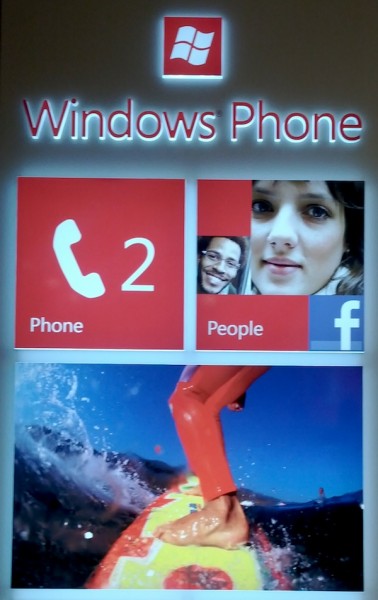 “Windows strength appears to be the ability to attract first time smartphone buyers, upgrading from a feature phone”, Mary-Ann Parlato, Kantar Worldpanel ComTech analyst, says about the U.S. handset market for the three months ended in February. “Of those who changed their phone over the last year to a Windows smartphone, 52 percent had previously owned a feature phone”.
 End of story, or could be, if not for something else. Fifty-five percent of iOS buyers, and 51 percent for Android, are repeat smartphone purchasers. The two more popular platforms, while growing because of their larger bases, sell more to existing customers, which make up a more finite market. “With over half of the U.S. market still owning a feature phone, it’s likely that many will upgrade over the coming year, which will ultimately contribute to more growth for the Windows brand”, Parlato emphasizes.
Right now, Android and iOS own the U.S. smartphone market, with 93 percent combined share. Windows Phone: 5.6 percent. There’s small room for a third platform and potentially bigger space given the untapped feature phone segment. In a rapid-growth market, anything can happen — as repeatedly mistaken analyst forecasts prove. Consider Windows Phone maker Nokia, which share in Q1 reached 4 percent. While seemingly small, that’s up from 1 percent a year earlier. Small gains, big percentage growth.
Like Gartner, but using other metrics, Kantar Worldpanel data is for actual phone sales, which offer better view into the market than analyst firms counting shipments. The difference is handsets going to carriers and dealers that may or may not be sold versus those going to end-user buyers. The latter measure is more reliable. Kantar Worldpanel puts Android sales share ahead of iOS — 49.3 percent to 43.7 percent.
Carrier share reveals a disturbing trend: T-Mobile smartphone sales share declined 3.2 points to 9.5 percent, the only one of the big four to suffer losses. The real measure of Pink’s success will be the period ending in March, following first iPhone 5 sales and introduction of new unlimited talk, text and web plans. Additionally, T-Mobile’s MetroPCS merger is official May 1, amid major LTE network expansion.
As for the others, their respective smartphone sales share: Verizon, 37.2 percent; AT&T, 27.9 percent; Sprint, 12.3 percent. By the way, three of the four largest carriers sell Windows Phone. But AT&T has exclusive U.S. distribution for Nokia flagship Lumia 920.
Photo Credit: Joe Wilcox
-
Matt Cutts On The SEO Mistakes You’re Making
In the latest Webmaster Help video from Google, Matt Cutts discusses the biggest mistakes that a lot of webmasters are making when it comes to SEO.
The top mistake, he says, is not making your site crawlable, which includes not having a domain.
After that, it’s not including the right words on the page. Think about what the user is going to type, and include those words, he says. Going further, also have the things that people would be likely to look for on the page. For example, include your business hours. If you’re a restaurant, inlclude a menu in plain text – not just a PDF.
The third thing is that people are thinking too much about “link building” when they should really just be thinking about creating compelling content and maketing (including things like talking to newspaper reporters).
The fourth thing is the lack of good titles and descriptions. Make sure you include something that makes people actually want to click on the search result, and something that will be helpful, should users bookmark the site. “Something that lets them know you’re going to have the answer they’re looking for – something that makes them understand this is a good resource,” says Cutts.
Finally, the other big mistake is not taking advantage of webmaster resources, including (but not limited to) Google’s own Webmaster Tools. Cutts also suggests following Google’s blogs and webmaster videos, attending search conferences, talking to people online (including in Google’s forums), and even mentions Blekko’s link tool. Basically, just follow the SEO industry.
-
Check Out This Shining-Inspired Film Ink Ad
Stanley Kubrick’s masterpiece The Shining continues to influence pop culture on a regular basis, and an ad from Australian film magazine Film Ink is the latest example.
The hype around the documentary Room 237 has no doubt played a role in much of the recent interest in the film, but The Shining will continue to inspire countless pieces of Internet fun for years to come, without a doubt.
With the new Film Ink ad, we can’t help but be reminded of this Channel 4 ad for The Stanley Kubrick Season from a few years back:
[via The Overlook Hotel]
-
Wikimedia Launches Wikimedia Commons App For Android, iOS
The Wikimedia Foundation announced the launch of a new app for Android and iOS, which allows you to quickly upload photos to to Wikimedia Commons, its free image repository.
The app enables you to upload multiple files and share uploads through social media sites. The Android version lets you add categories as well. If you enable “GPS Tag,” you can tag your photos geographically.
Wikimedia’s Maryana Pinchuk said in a blog post, “Your contributions to Commons can help illustrate the world’s largest encyclopedia and make knowledge come to life for millions of readers around the globe.”
“In the future, we hope to add more features and make it easier to browse and discover all the great content Commons has to offer,” added Pinchuk. “We also look forward to being able to run more campaigns like Wiki Loves Monuments, encouraging expert Commons users and people new to Wikimedia projects alike to contribute to high-need content areas.”
“By uploading your photos, you can help further the goal of spreading free knowledge around the world,” the app description says. “You won’t just be sharing your images with your friends – you’ll be sharing them with Wikipedia’s billions of readers around the globe.”
The app contains no ads, and it is free to download. It’s available in Google Play and in the App Store.

