I know I heard from folks who were glad to hear about the Lifeline program last time I posted something. So, I thought I’d post this too…
The Rural Broadband Policy Group (RBPG), a working group from the National Rural Assembly, would like to make you aware of a last-minute opportunity to support the federal Lifeline program.
Lifeline is a government benefit program that provides discounts on monthly telephone service for eligible low-income consumers to help ensure they have the opportunities and security that telephone service affords, including being able to connect to jobs, family, and 911 services. In rural, Tribal, and low-income communities, Lifeline is literally a lifeline for residents. However, Lifeline has recently come under attack and cuts to the program have been proposed.
Tomorrow, the Subcommittee on Communications and Technology will host a hearing on the Lifeline program. RBPG would like to encourage you to share your opinion about the program and how it impacts your community.
Annually, the program helps millions of families across the country afford a basic telephone line. Lifeline is essential to the success of our country because it ensures that even the most unserved areas are safe, able to communicate, and included. RBPG believes that any cuts to Lifeline will leave rural communities more vulnerable and locked out from full participation.
There were no winners for the $2 million Match 5 Power Play prize. The $1 million Match 5 prize saw winners in California, Illinois, Texas and Virginia.
For Saturday’s drawing, there were a total of 630,441 winners winning non-jackpot prizes totaling $10,089,088.
Odds of winning the jackpot, according to the Multi-State Lottery Association, are 1 in 175,223,510.
The next drawing is tonight.
As usual, people are talking about the drawing on Twitter:
@zachbraff when I win powerball tonight I will donate the rest of your goal!
Some webmasters are afraid to link to their own content, for fear of Google penalizing them. Google’s Matt Cutts addresses the following question in today’s Webmaster Help video:
Suppose I have a site that covers fishing overall (A) & I make another fishing site that solely focuses on lure fishing (B). Does linking to A from B violate guidelines? I’ll make sure both have high quality content & disclose that they’re both owned by me.
“Just linking from A to B is not a violation of our quality guidelines,” says Cutts. “If you only have two sites, they’re thematically related, a person on A would be interested in B…then it makes perfect sense to link those two sites. The problem gets into [when] you don’t have two sites, but you have fifty sites, or eighty sites, or a hundred and fifty sites, and then suddenly linking all of those sites starts to look a lot more like a link network and something that’s really artificial, as opposed to something that’s organic.”
“So if you really do have just a small number of sites – you can count them on one hand – and they’re all very related to each other, it can make perfect sense to link those together,” he continues. “It’s when you start to get a lot more sites – you know, you don’t need 222 sites about car insurance. It looks a little weird if you have howdoigetmycarinsurance.net and wheresthecheapcarinsurance.com…I’m making these domain names up, so I’m not saying these particular site owners are bad – maybe they’re great. Who knows? But if you have 222 different copies of that, usually you’re not putting as much work into each individual site, and so as a result, you’ll end up with shallow or superficial sites, lower quality content, you’re more likely to see doorways…that sort of thing.”
This isn’t the first question Cutts has addressed regarding people linking to their own content in recent days. In another video, the user asked about internal links leading to lower rankings because of the Penguin update. See his response here.
These questions being addressed a year after the Penguin update came out shows that people are being really cautious, and perhaps fearful of Google when it comes to simply linking to their own stuff.
Earlier this month, news came out that the European Union accepted a proposal from Google to settle a lengthy antitrust investigation. Google reportedly agreed to clearly lavel search results from its own properties, and show links from rival search engines. It would also provide sites a way to keep their content out of Google’s specialized search engines, while still leaving content in regular Google results.
The proposal, however, was said to be subject to a market test, so those complaining about Google (mainly its competitors) can provide feedback.
FairSearch, the group of Google competitors that regularly lobbies against Google’s practices, has issued a statement about this so-called “market test”.
“The most important remedy to Google’s abuse of dominance is to require the search monopoly, which controls 94 percent of the market in Europe, to subject its own products and services to the same policy it uses to rank and display all other Websites,” says FairSearch. “Since it has taken a year to extract a final proposal from Google, FairSearch believes the ‘market test’ should last three months to ensure that interested parties have enough time to carefully provide the European Commission with their expertise on the effectiveness of Google’s proposal. As we have said, we will comment on Google’s proposed remedies after the Commission shares them.”
The organization goes on to say:
European Commission Vice President Joaquin Almunia has set a high bar that any proposal from Google must meet to pre-empt formal proceedings against the company, including:
1) Will it end Google’s diversion of traffic away from other sites through preferential treatment for Google’s own properties?
2) Will it swiftly restore consumers’ access to a truly competitive marketplace for search and related online services?
3) Will an independent third party be able to verify that Google is not circumventing its own proposed commitments?
The coalition says its member intend to study the “effects” of Google’s proposal, and imply they”ll have more suggestions for the search giant. It will be interesting to see how long this drags on.
Google added a number of new software features in the developer build of Chrome OS this week, with at least one indicating the company could be looking at new form factors for the Chrome OS platform. Google had to pull the release due to an unrelated bug, but in the release notes, it said Chrome OS now supports screen rotation. That’s a feature typically reserved for devices that are used in both portrait and landscape, such as tablets.
Since Google pulled the release, I haven’t been able to install the software on my Chromebook Pixel for testing but I will as soon as I can to verify the function. Still, the wording seems pretty clear: the notes say you can “rotate the screen on all Chromebooks” with this software update.
I can’t really think of a reason I’d want to rotate the screen on my Pixel — or any of the other Chromebooks currently available — so I’m thinking either a Chrome OS tablet or a Chromebook with rotating touchscreen is the works. Perhaps we’ll hear more at Google I/O next month?
Although this might be a stretch on my part, I see another sign of new form factors or Chrome OS tablets. The updated Chrome OS build adds a “New Immersive browsing mode – browse the web with only 4px of Chrome.” While this will be handy on any Chromebook, it can help maximize the screen space of a smaller tablet. However, I may be reading into that function too much.
Still, I could see Google pushing the envelope when it comes to Chrome OS hardware. Heck, it just did that with the Chromebook Pixel, bringing a premium Chrome OS experience at a premium price. How could Google continue down this path? A Chrome OS tablet with docking keyboard, similar to Microsoft’s Surface hardware would be my best guess.
That design would bring the desktop browser experience to a more mobile device while still allowing users to work on a laptop-like computer with a dock or keyboard attachment. The touchscreen feature originally pioneered on the Pixel would come in handy for such a device although Chrome OS would need an on-screen keyboard. Guess what? A peek at the Chromium source code from two weeks ago shows that Google is working on just that: A software-based touch keyboard for Chrome OS.
Interestingly, past Chrome tablet rumors have turned out be to that: Simply rumors. In fact, Google’s vice president of engineering Linus Upson told TechRadar in May of 2012 “We are not working on a Chrome OS tablet.” But that was then and this is now. We’ve already seen a major shakeup at Google when Sundar Pichai, SVP of Google Chrome and Apps, took over Android from Andy Rubin last month. Perhaps this is all related to a new direction for Chrome OS?
It’s worth noting also in the new Chrome OS software are the improvements to the Files app that we discussed on our GigaOM Chrome Show podcast this morning. Users of Chromebooks and Chromeboxes can expect to see file options for recently viewed files, shared files and files that are marked for offline use.
Yesterday I attended the Minnesota Broadband Task Force meeting. They heard from several folks who offer reduced rate packages (broadband, computers and training) in Minnesota. They also heard from two ARRA-funded broadband adoption programs.
There was some talk about policy. It boiled down to two issues that remain open. First the establishment of an Office of Broadband Deployment – the big question is where it will land and who will do the hiring. Second is the Dig Once issue.
Comcast Internet Essentials: Carlie
According to FCC – 92% of households have access to broadband but 35% aren’t adopting. We realized that we could close the gap by targeting low income households.
People needed to understand how and why to use technology safely.
Works with all ages, has had sessions in schools. We’ve had more targeted outreach. Have a new partnership with PCs for People. We work with outreach via phone customers. And that’s been successful. We work to refine local partners.
We’ve heard from people that the access to computer is still a big issue.
Eligibility
Qualify for lifeline
Qualify for free lunch
Lessons Learned
We are working with multi-dwelling, low income housing partners.
We’ve tried to make our collateral more community focused/looking than sales-focused.
Having a dedicated retail person has been helpful
A challenge can be finding the right demographic. A booth at the State Fair can be fun – but you can’t serve most of the people who stop by.
It’s a high touch process – usually three contacts before someone becomes a customer
About 1700 families participating in Minnesota.
C2C : Dick Sjoberg
C2C and MIRC projects in Thief River Falls
Similar experience as Comcast & CenturyLink
Lessons Learned
You have to be proactive. People won’t come to you; they don’t see the relevance. It’s a very hands-on process.
We did 2 projects in MIRC; we worked with community partner who knew low income community. A lot of work was done one-on-one.
Eligibility
Free lunch with 6th graders to seniors
Had to sign up for 8 hours of training
We didn’t worry about credit issues – we worked with customers with outstanding bills. This had been an issue.
MIRC Service
9.95/month
Free cable modem
Free computers from PCs for People
One year after the fact 11 of 13 customers continued with service even after having to pay for it.
We also created a little Geek Squad with 9 kids at risk. Provided mentoring. Asked them to learn skills required. They would give quick training to each family that got a new computer. They got paid for their work. All kids graduated. (Spent less than $1000 over a couple of semesters.)
C2C is now working on EveryOneOn.
QUESTIONS
Are these programs sustainable financially?
They are social opportunities that get more people online. And people do better when they are online.
Broadband Access Project—James DeSota
$3 million from ARRA funding and matching funds from the University.
It was developed from community partners (Minnesota Multicultural Media Consortium)
Results
3 new and 9 improved PCCs (public computer centers) – 143 workstations in Mpls/St Paul
More than 15,000 of computer training provided (Internet safety was a popular topic – especially in Somali community)
More than 90,000 Public Computer Center visits
Lessons Learned
Relationships and Institutions are key
Forced the University to make shared decisions, which was a good thing
Outreach is key – got a guidebook from the feds but it wasn’t as helpful with our targeted population. Creating partnerships who did work with target population was helpful.
The apprentice program was successful but it was an interesting look at the importance of trust. When a new cohort of apprentices started there was an immediate drop off in response – which was fairly quickly regained when the new cohort became known to participants.
Here’s a video from the program:
And a video of James’ presentation:
QUESTIONS
Who provided the connectivity?
The grant paid for some Comcast connections – at a slightly reduced rate.
Provide a one-stop-shop for families and elders. Strive to bring broadband access to all ages.
Challenges:
Cost & Accessibility
Language Barriers
Generational Divide
Relevancy
Confidentiality: Personal Security and Safety
Effective Strategies
Community-based partnerships
Intergenerational approach
Culturally and linguistically appropriate training & outreach
Sustainable, relevant programming
Legislative remarks from Margaret Anderson Kelliher
Future Appointees
We should be getting 2 maybe 3 new members of the Task Force before the next meeting.
Two hot issues:
Establishment of Office of Broadband is moving forward – about ready to go to conference committee.
There are outstanding issues – where will the office reside? Who will make staffing decisions
There are concerns with Dig Once. Laura Ziegler is here to speak more.
There is an issue with sales tax. We had proposed a reduction in sales tax for broadband deployment. The Governor had made a larger decision to expand business taxes.
Funding from e911 for broadband deployment is a dead issue with the Legislature.
12:05-12:30 Lunch/Closed small group legislative discussion
Subgroups “Broadband Adoption” – Shirley Walz
Continuing work on Why Broadband site
Targeting outreach
Are there demographics we should be hitting? Such as AARP?
We want to gather what’s happening.
Look at top 10 states and determine what they’re doing.
Look at Connect MN surveys.
Legislative and upcoming events update – MAK
Discussion on Office of Broadband Deployment
MNDot – they already have a database of construction. So adding that aspect didn’t make a lot of sense.
Location of Office – is being discussed at a high level. Departments are discussing it with Governors. Right now it really seems that it will land in Commerce. The question right now is who should appoint the staff.
DEED is Department of Employment – we think of this as Economic Development issue so Commerce has emerged as the place to fit the office of broadband.
House Bill does not require regular updates on fiber database.
Policymakers sometimes want to make policy – we just advise.
Discussion on Incentives:
Incentive issues will probably die in this session. The discussion on e911 became problematic.
Discussion on Taxes
Sales tax exemption – we wanted to expand the tax exemption. Unfortunately things are moving in a different direction. It might be helpful to voice an opinion once this goes to farther. Maybe we could give an example from Dick Sjoberg.
This would further delay Minnesota’s ability to reach the broadband goals.
Subgroups “Best Practices/Incentives” – Dick Sjoberg
What are the other states and countries doing to encourage private development and adoption?
We need to review Katz study for more ideas
We need to discuss how aggressive the Task Force should be about engaging the Governor’s Office and Legislature on our issues. If we don’t advocate, who?
What more can we do to help the schools libraries and minority community?
Prepare a list of three “top” choices for our advocacy
Facilitate a meeting with CEOs, CFOs, and VPs of Plant and Technology to discuss how providers can be motivated to build the un-served areas of the state
Learn what is in the Senate bill and react/act.
Work on an incentive plan for the Adoption group’s recommendations.
Question from Maureen
We heard from Personal Health Record of the Future – in Health Committee. It might be nice to get that here as well.
It might be nice to have a healthcare themed meeting. Maybe at North Memorial next month – May 14
During the Consumer Electronics Show in January, Microsoft set up a countdown clock to the E3 game show in Los Angeles. Major Nelson (aka Larry Hryb) posted the timer, and, being Mr. Xbox, led to lots of speculation that’s when the next-gen console would be announced. Apparently not.
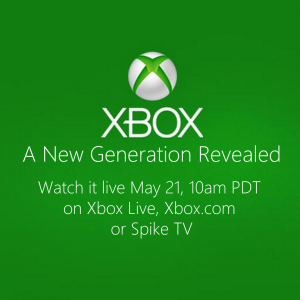
Today, the software giant invites you, me and everyone else to a special shindig on May 21. Select press get invites (I’m not among them) for onsite, while the rest of us can watch online or, in the United States, Spike TV. “On that day, we’ll share our vision for Xbox, and give you a real taste of the future”, Hryb says.
“Then, 19-days later at the Electronic Entertainment Expo (E3) in Los Angeles, we’ll continue the conversation and showcase our full lineup of blockbuster games”, he continues.
Microsoft promotes hashtag #XboxReveal, which already is busy churning Twitter tweats.
My question: What do you expect from the next Xbox, and what would you like from it?
Samsung on Wednesday issued a statement suggesting the Galaxy S4 may be somewhat difficult to find following its launch later this week. “Due to overwhelming global demand of Galaxy S4, the initial supply may be limited,” Samsung said in a statement issued to the media. “We expect to fulfill inventory to meet demands in the coming weeks.” Samsung’s hotly anticipated new flagship phone, which features a quad-core processor, a 5-inch HD display and a 13-megapixel camera, is set to launch on seven U.S. carriers by the end of May. BGR reviewed the Galaxy S4 on Wednesday and called it better than its predecessor in every possible way.
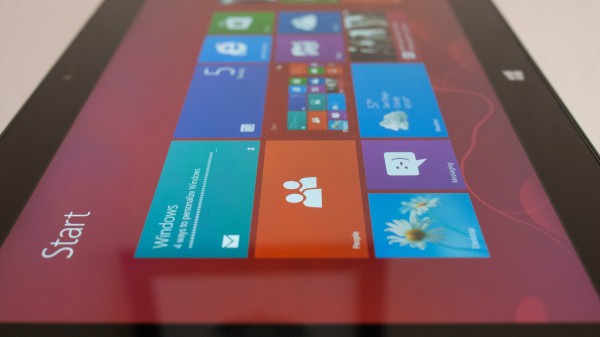
During first quarter, Windows captured 7.5 percent global branded tablet market share, according to Strategy Analytics. That’s up from zero a year earlier. Unit shipments: 3 million. Right now, Microsoft is the major seller of branded Windows tablets. Granted there are others, like Acer, ASUS, Dell, HP and Samsung.
Actually, Strategy Analytics notes that limited distribution, apps selection and market confusion — not Android or iOS competition — hold back Windows tablets. If Microsoft and partners get their ducks in a row, the tablet market could look dramatically different in a year. The point: The software giant may prove to be right after all; many buyers want to run a real operating system, one proven to handle the tasks of robust applications, rather than one migrated up from smartphones.
The ecosystem around Windows 8, and RT, is far from mature, which is the barrier to bigger sales success. There, despite all the controversy about Modern UI, Microsoft made the right choice — that is if Windows tablet share gains continue.
“We built Windows 8 with touch and mobility at the center of the experience, which positions us well in this new era”, Microsoft CFO Peter Klein tells financial analysts last week. “However, the transition is complicated, given the size of our hardware and software ecosystem. We still have an immense amount of work to do, yet we feel good about the foundation we have laid and are optimistic about the long term success of Windows”.
Something else: Windows 8/RT will come to smaller devices this year, which, according to NPD DisplaySearch is where the tablet market is headed. Microsoft is “working closely with OEMs on a new suite of small touch devices powered by Windows. These devices will have competitive price points, partly enabled by our latest OEM offerings designed specifically for these smaller devices, and will be available in the coming months”, Klein says.
Strategy Analytics data shows there is demand for Windows tablets and validates Microsoft’s emphasis on touch. Klein is right: “Consumers and businesses are increasingly shifting their focus to touch and mobility”. I love Surface Pro, which experience is so good, I came to really like Windows again.
As Microsoft ramps up Surface distribution and partners bring more touch-Windows devices to market, greater share gains are attainable. How much depends on other factors. My expectation is with autumn release of Windows 8.1 nearly certain, Microsoft and partners will invade the market with many touch devices for Christmas.
Global Tablet Operating System Shipments and Market Share
Global Branded Tablet OS Shipments (Millions of Units)
Q1 ’12
Q1 ’13
Apple iOS
11.8
19.5
Android
6.4
17.6
Windows
0.0
3.0
Others
0.5
0.4
Total
18.7
40.6
Global Branded Tablet OS Marketshare %
Q1 ’12
Q1 ’13
Apple iOS
63.1%
48.2%
Android
34.2%
43.4%
Windows
0.0%
7.5%
Others
2.7%
1.0%
Total
100%
100%
Growth Year-over-Year %
146%
117%
Challenges are ahead. During first quarter, iPad captured 48.2 percent tablet market share, according to Strategy Analytics, while Androids took 43.4 percent. However, when including unbranded, white-box devices, Android tablets lead with 52 percent share to iPad’s 41 percent. Windows slates face an uphill road, and yet seen another way downhill.
The discreet tablet market isn’t the only measure of success. Most analysts agree that tablets are a major reason for about 10 quarters of PC shipment declines, with Q1 being the worst since IDC started tabulating numbers in 1994. Given that the majority of PCs sold or in-market run Windows and the majority of tablets do not, Android and iOS gains take away from Microsoft’s platform. So the measure of that 7.5 percent market share, and any gains to follow, is an iceberg. The number is bigger than it appears. Sales below the surface represent people going from Windows to Windows rather than Windows to something else.
Apple’s earnings report was as action-packed as ever on Tuesday evening. The company’s stock soared as it beat the Street’s consensus and announced that it will return $100 billion to investors by end of 2015, and then it got pummeled when CEO Tim Cook suggested that we won’t see any big new product launches in the June quarter this year. Volatility in the market aside, Apple still turned in a huge, huge quarter despite seeing profits plunge 18% thanks to tightening margins. Looking at the numbers on paper is one thing, but SplatF’s Dan Frommer put together put together a quick “Apple earnings dashboard” that charts key data points as compared to historical data to help tell a more complete story. A few charts follow below and the full dashboard can be found on Frommer’s blog.
A year ago today, webmasters and spammers (especially spammers) were rocked by un expected update from Google which has affectionately become known as Penguin.
Initially referred to as the “webspam update,” it didn’t take long for Google to give the name of another black and white animal to associate with the algorithm. The update was designed to algorithmically enforce Google’s quality guidelines, and dealt blows to numerous sites that did not abide. Of course not everyone affected believes they were truly doing anything wrong. The whole thing also sent waves of panic throughout the web, leading to excessive link removal requests.
There have only been two additional Penguin updates since the first one. One came in May, and the other in October. Google has indicated that another big one is on the way.
Peruse our coverage of Google’s Penguin update from the past year here.
Today is the day that Fisker founder Henrik Fisker, his co-founder Bernhard Koehler, and a couple others will testify before the House Committee on Oversight and Government Reform (they have a live stream video at 2PM EST). If you didn’t catch the Solyndra hearings, the whole thing is a spectacle; all of the testimony is drafted and circulated in advance, and the committee members use the time after the testimony to publicly grill the panelists.
It’s scripted to the extent that the Oversight and Government Reform Committee already sent me a quote that’s supposed to sum up the hearing before it occurs. Committee Chairman Jim Jordan, R-Ohio, said:
It is hard to understand why the Department of Energy ever thought Fisker was a viable company that should receive taxpayer money. The Obama Administration owes the American taxpayer an explanation as to why this bad loan was made in the first place, and what they are going to do to minimize the loss that taxpayers face.
Well, I do agree with that statement, even if I don’t agree with the need to conduct a long hunt for some political cronysism between Fisker and the DOE over the loan. As I said in my piece on Fisker published last week (A Look Under the Hood: Why Electric Car Startup Fisker Crashed and Burned), I think the search for political cronyism is actually distracting from the disturbing financial story of Fisker’s now defunct broker Advanced Equities, which worked with Fisker’s VCs to raise over $1 billion without much value to show at the end of the company.
Reading through Henrik Fisker’s prepared testimony this morning, it’s also interesting to see his perspective on Fisker now that he’s not working with the company any more. He mentions numerous times in his testimonial that the company sold 2,000 Fisker Karmas that “perform well and customers love them,” and are “operating smoothly and continue to receive fantastic customer reviews.”
That’s not necessarily true. Fisker customers have been coming out of the woodwork and complaining about problems with the cars, and how they’re having trouble dealing with these problems now that the company is in financial dire straits. In March, Karma customer Kelly Stewart actually filed a lawsuit against Fisker and a dealership in Greenbelt, Maryland called Capital Cadillac Company claiming that the car was not performing as expected (the complaint and an exhibit letter embedded below).
Ms. Stewart bought a Karma in March 2012, and three weeks later she said she had electrical, battery, alignment, and heating and cooling problems. In the letter (Exihibit B) from the Maryland dealership to Fisker the dealership exec wrote:
It [the Karma] has been out of service for 87 days even though it is less than 9 months old and has less than 8,000 miles on it. To date the dealer has been unable to correct the problems and it is out understanding that these problems are systemic with these cars.
Problems with the Karma cars have also been documented by Consumer Reports’ second review (the one it did again after the first Karma car it bought almost immediately died), and Consumer Report’s review gave the Karma a failing grade.
Back in October, Deutsche Telekom and MetroPCS Communications announced that they had signed an agreement to combine T-Mobile and MetroPCS. The new company would retain the T-Mobile name and branding.
Today, Reuters reports that MetroPCS shareholders voted to approve the merger after Deutsche Telekom “sweetened its terms under pressure for activist shareholders”.
Deutsche Telekom reportedly agreed to reduce the combined company’s debt. Lisa Maria Garza reports:
Activist shareholder P. Schoenfeld Asset Management had led a proxy battle against the original deal, while biggest MetroPCS shareholder Paulson & Co had also threatened to vote against it. Both investors have said they were pleased with the improved terms.
The percentage of shareholders who voted in favor of the merger is unknown.
According to Bloomberg, the transaction is likely to be completed by the beginning of May.
Reviews of the Samsung Galaxy S 4 smartphone indicate this new handset is packed with functions, but something’s missing: Actual phones for two U.S. carriers. On Wednesday, both Sprint and T-Mobile announced delays in availability for Samsung’s new flagship phone, which was expected to arrive in stores before month end.
The official word from Sprint via email suggests that Samsung can’t deliver the required inventory in time:
“Sprint is excited to launch the new Samsung Galaxy 4. We had planned to launch this next generation of the award-winning Samsung Galaxy line-up on Saturday, April 27. Unfortunately, due to unexpected inventory challenges from Samsung, we will be slightly delayed with our full product launch. Sprint is one of Samsung’s largest partners and we are working closely with them to launch in all Sprint channels as soon as possible. We expect to make Galaxy S 4 available at www.sprint.com and Telesales (1-800-SPRINT1) as planned on Saturday with Sprint retail stores and other channels receiving devices as inventory becomes available.”
“We know customers are really looking forward to getting their new Samsung Galaxy S 4 soon. However, due to an unexpected delay with inventory deliveries, the Galaxy S 4 will not be available on www.T-Mobile.com as planned on Wednesday, April 24. Instead, online availability is expected to begin on Monday, April 29. We apologize for any inconvenience and are working with Samsung to deliver the device to T-Mobile customers as soon as possible.”
AT&T began taking pre-orders for the Android phone on April 16 and its website currently shows April 30 as the shipping date for Galaxy S 4 orders. I noticed that date did change over the past few days — I saw an April 24 ship date at one point — but the carrier didn’t issue a formal statement on phone availability. Verizon has yet to announce launch details and is widely expected to do so by May.
The inventory delay of a few days won’t likely hurt the Galaxy S 4, which is competing in the Android space against the HTC One. That phone also experienced delays, which the company really didn’t need. HTC builds a great phone, but it lacks the marketing power and brand awareness that Samsung enjoys. As a result, it has watched its share of sales drop while Samsung has gone on to rival Apple.
Update at 8:56am PT:Per a tweet from Ken Muche, Verizon PR: Verizon Wireless is opening Galaxy S 4 pre-orders on April 25 for $199 with contract and after a $50 mail in rebate, but the phones won’t be in stores until May 30. Thanks to PhoneScoop for spotting the tweet.
Google announced today that it has improved maps in Thailand and Indonesia as part of a project called Ground Truth, which it started back inn 2008. The project is simply Google’s initiative to prove more comprehensive and accurate maps.
“Through this project, we use high-quality map data from authoritative sources around the world and then apply a mix of advanced algorithms, supplemental data (including satellite, aerial and Street View imagery), and human input to help create a map that mirrors the real world as closely as possible,” explains Brian McClendon, VP Google Maps and Google Earth.
“For example, the updated map for Thailand now provides more comprehensive information about the Bangkok city center,” adds McClendon. ” So next time you happen to find yourself needing to cross the Chao Phraya River, you’ll be able to see that many ferry routes across the river are now mapped in greater detail, with route names shown and piers clearly marked. You can also pinpoint nearby points of interest, such as the Grand Palace and other sites like Wat Pho (the Temple of the Reclining Buddha).”
Google has added more info to the maps as well, including improved local language labels and more detailed coverage of prominent places, such as universities and hospitals.
Additionally, Google is now including more of Thailand and Indonesia’s natural geography. Many of Indonesia’s 17,000 islands, for example, are appearing on Google Maps for the first time. This includes Komodo Island.
Tuesday evening’s Apple results were beyond dramatic. The company buried a massive 18% drop in profits under an even bigger pile of cash, announcing that it will take on debt and create value for investors by increasing its stock buyback and dividend programs to return $100 billion to investors between now and 2015. The stock immediately shot up by more than 4.5% in after-hours trading, but those gains were completely wiped away when CEO Tim Cook announced that Apple doesn’t have plans to launch any exciting new products until this coming fall. Quite the roller coaster ride, indeed.
Google has begun to show a doodle honoring Ella Fitzgerald on its homepage in regions where the date has already changed to April 25th. Thursday would have been her 96th birthday.
This excludes Australia and New Zealand, as Google chooses to honor Anzac Day instead, with a small flower image:
Anzac Day is a national day of remembrance in these countries, commemorating Australians and New Zealanders who served and died in all wars, conflicts, and peacekeeping operations.
Google is sometimes criticized for its choice of doodles when it falls on the same day as another significant day in history. For example, Google celebrated the opening of the first drive-in theater last year, some people complained that Google chose this over a D Day doodle, but Google has indicated various times that it likes to keep doodles more about upbeat kinds of events. That’s probably why the company elected to go with the simple flower rather than a full-on doodle for Anzac Day.
Elsewhere in the world, however, it’s about Ella Fitzgerald’s birthday. She was born on April 25, 1917, and died on June 15, 1996 at the age of 79. She is commonly known as the “First Lady of Song” and the “Queen of Jazz”.
The Fitzgerald doodle can currently be seen at Google.com.fj, and no doubt on other Google international properties as the hours move forward.
Amazon put out its annual list of the top twenty most well-read cities in America today.
While number one is the same as it was last year, there are some differences. Cambridge, for example, fell from number 2 to number 4. Berkley fell from number 3 to number 7. Boulder, which was last year’s number 5, is not even on the list this year.
New additions include: Vancouver, Dayton, Clearwater,and Tallahassee.
“The results of our annual Most Well-Read Cities list is proof that people across the country are reading, and also that we’re still seeing the popularity of Fifty Shades of Grey,” said Sara Nelson, Editorial Director of Books and Kindle. “It’s fun for us to see facts like the citizens of Cambridge are buying the most books in the business category or that one of our favorite novels of 2012, Gone Girl, is the best-selling book in the Most Well-Read City, Alexandria.”
Ranking was determined by compiling sales data of books, magazines and newspapers in print and Kindle format since June 1, 2012, on a per capita basis, in cities with over 100,000 residents.
Apple posted its March-quarter earnings on Tuesday afternoon, which means the flood gates are open for market research firms looking to detail the global smartphone and tablet markets in Q1 2013. Strategy Analytics was among the first to start pushing out numbers and tablets took center stage in a report released late on Tuesday. While Apple managed a great quarter where iPad sales are concerned, it wasn’t enough to stave off the growing army of low-cost Android slates and Apple saw big losses this past quarter in terms of global market share.
FreedomPop has been promising to bring mostly free 4G internet access to the masses for over a year now, but those ambitions have been hampered by partner Clearwire’s spotty WiMax coverage — there are sizable swaths of the country where you just can’t get service. That won’t be the case for much longer though, as FreedomPop has just started taking orders its first Sprint-friendly wireless hotspot.
Granted, it’s not exactly a new one. The $40 Overdrive Pro first hit Sprint shelves back in early 2011, but at least the dual-mode device allows FreedomPop users to tap into Sprint’s sizable nationwide 3G network when WiMAX isn’t available. As always, FreedomPop users are given 500MB of free wireless network access per month, but the company offers a slew of monthly rate plans and features in hopes of generating some additional revenue. It seems to be working well enough so far — FreedomPop CEO Stephen Stokols told FierceWireless that nearly half of the service’s existing users have made some sort of additional purchase.
Frankly, it’s about time. FreedomPop first announced that it would migrate to Sprint’s CDMA/LTE service last July, and since then the Niklas Zennstrom-backed company has dutifully pushed out WiMAX devices while talking up the eventual switch.
In the event that you’ve already thrown down some cash on one of FreedomPop’s earlier doodads, you can contact customer service to coordinate a swap, though you should know that the company is also hoping to roll out some devices capable of running on Sprint’s growing LTE network in the months to come. Among those forthcoming LTE devices is a nifty clip that physically attaches to tablets, and FreedomPop previously confirmed that it plans to flesh out its existing hardware lineup with a slew of wireless data cases for Android devices like Samsung’s Galaxy S III. It’s worth noting though that the iPhone sleeve that garnered plenty of early attention in the company still hasn’t seen the light of day because the FCC has qualms about its design, so these sorts of device-specific hotspots may need some more fine-tuning before FreedomPop pushes them out the door.


 During the Consumer Electronics Show in January,