Author: Serkadis

  • Dzhokhar Tsarnaev Tells Authorities Tamerlan Masterminded Boston Bombing

    The remaining suspect in the Boston bombings is blaming the whole thing on the dead suspect.

    Dzhokhar Tsarnaev has been talking to authorities (or writing rather, as he can’t talk because of a gunshot wound to the throat), and says that his brother, the late Tamerlan Tsarnaev, masterminded the whole thing.

    According to a report from CNN, Tsarnaev told authorities that there is not any international terrorist group involved, and that his brother orchestrated the attack. CNN’s Jake Tapper and Matt Smith report:

    Tsarnaev has conveyed to investigators that Tamerlan’s motivation stemmed from jihadist thought and the idea that Islam is under attack, and jihadists need to fight back, the source said Monday.

    The government source cautioned that the interviews were preliminary, and that Tsarnaev’s account needs to be checked out and followed up on by investigators.

    So far, officials have not found evidence that the suspects collaborated with other people on the attacks, though Tamerlan had taken a long trip to Russia last year. The details of this trip are unclear, though he had posted and taken down a YouTube video of Islamic militant Abu Dujana, who was killed in a gun battle with Russian security forces a few months after Tamerlan’s trip.

    Dzhokhar Tsarnaev was charged on Monday with one count of using and conspiring to use a weapon of mass destruction (an improvised explosive device) against persons and property within the United States resulting in death, and one count of malicious destruction of property by means of an explosive device resulting in death. He could face, upon conviction, the death penalty or life imprisonment.

    More details about Tsarnaev’s conversations with authorities will no doubt emerge in time.

  • Tim Cook vs. Steve Ballmer

    Tim Cook vs. Steve Ballmer
    As Apple prepares to file its March-quarter earnings report on Tuesday afternoon after the bell, the company finds itself in a position it hasn’t been in for quite some time. Apple shares have lost more than 40% of their value since hitting a record high in late September and a growing mob of Apple bears is beginning to question whether or not the company should seek a replacement for CEO Tim Cook. Bulls immediately dismiss the idea as lunacy — it does seem pretty crazy, considering Apple’s revenue and profit are still growing despite soured investor sentiment — but The New York Times took a step back on Tuesday to draw some interesting parallels between Tim Cook and another CEO who is no stranger to angry mobs brandishing pitch forks: Microsoft’s Steve Ballmer.

    Continue reading…

  • Visualization startup Datahero opens its doors and delivers data analysis for the masses

    When I first met Datahero Co-founder Chris Neumann a year ago, I was pretty excited about what he claimed his new company was going to do. Essentially, he told me, it was going to offer a simple, cloud-based data analysis and visualization service that anyone could use. About a month later, in late May, I got a demo of a very-early-stage Datahero and was impressed with the vision. On Tuesday, the company is officially opening its service to a public beta, and the more-finished product still strikes the right chord.

    Before evaluating Datahero, though, it’s important to know what it’s not. Namely: it’s not enterprise software, it’s not even business intelligence software and it’s not designed for people who hope to run complex analyses. Neumann nicely summed up what Datahero is during a recent call: “We’re gonna make it usable by the masses,” he said, which means there are going to be some things advanced users want that the service doesn’t do.

    By and large, what I wrote in May about the company’s vision and product holds true today (although the product is obviously more polished in terms of aesthetics and functionality). The service’s “data decoder” — which Neumann said received a majority of the development resources over the past year — does a good job characterizing data types and determining whether they’re quantities, dates, email addresses, currencies or whatever else they might be. As I explained in my “data for dummies” post in January, formatting data can be a pain, sometimes even after it’s uploaded to a service, so easing that burden is critical.

    Now's your chance to correct the data decoder's choices.

    Now’s your chance to correct the data decoder’s choices.

    Probably the biggest difference since last May is the addition of an import feature from data sources that lots of Datahero’s core audience of individual developers, startup employees, and other resource- and analytics-skill-strapped professionals are likely to use. These include Salesforce.com, Google Drive, Stripe, Github, MailChimp, Box and Dropbox. Really, Neumann explained about the decision-making process, the Datahero team just asked “what were the ones [its users] were clicking ‘export to Excel’ on the most.”

    Salesforce.com easily has the most difficult APIs to work with when it came to building an easy import process, Neumann said, but it was necessary to connect with “if only because so many people use Salesforce and so many people hate it.” It’s pretty much held together with duct tape, he joked, and the recommended process for building a report is essentially to dump everything into Excel and go from there.

    Once you’re actually visualizing, though, it’s quite literally as simple as drag, drop and maybe a few mouse clicks to filter stuff. Using a process Neumann and co-founder Jeff Zabel call “chart magic,” Datahero suggests certain charts based on the data set or let users make their own. Then, the app automatically creates what it thinks is the best chart for visualizng those particular variables (although switching to other types is really easy). Neumann said this capability is the result of lots of research about best practices for visualization, as well as the company’s own user testing and a little common sense.

    Charting the frequency of terrorism incidents in the U.S. by year and target.

    Charting the frequency of terrorism incidents in the U.S. by year and target.

    “Every time I would think something is simple and intuitive, [Zabel] would say, ‘You’re crazy, you don’t know what you’re talking about,’” Neumann joked. And, overall, Datahero’s Odd Couple approach to building an analytics service (Neumann is a data engineer who cut his teeth at Aster Data, while Zabel is a UI specialist formerly at BMW) seems to be working out.

    Among planned features for later iterations is the ability to personalize chart selections based on a user’s past decisions and transitions from chart to chart.

    But nothing’s perfect. After experimenting with it, other things that would be nice to have include the ability annotate points on a graph and perhaps to embed finished charts rather than just export as an image file (although perhaps that shortcoming is just in the pre-release version I have been using). And although Datahero isn’t trying to compete with Platfora in big data visualization or ClearStory in business analytics, it could take a page from their playbooks and render charts in HTML5 to make them easier to slice, dice, zoom in on and generally interact with.

    Still, Datahero by and large does what it claims to do, and that’s important as we transition into a society consumed by data. But even with more and more data available, it will be more a dictatorship than a democracy if only a few people control the means to analyze it. I think Datahero, along with statistics-focused startup Statwing, fills a necessary place on the spectrum between Infogram and Tableau Public in terms of offering a simple product for doing analytics that does more than just make charts.

    It’s not yet the easiest place to make a living, but that could change as more people get interested in digging into the piles of data they’re generating on their own terms.

    You can check out the gallery below for a step-by-step process of the Datahero service and some example visualizations. I used two data sets from the Guardian’s DataBlog to experiment with — one on the 100 most-followed musicians on Twitter, and another on terrorism in the United States between 1970 and 2011.

    Related research and analysis from GigaOM Pro:
    Subscriber content. Sign up for a free trial.


  • St. George’s Day 2013 Celebrated With Google Doodle

    Google is celebrating St. George’s Day 2013 in the UK with a doodle on its homepage.

    The day represents the feast day of Saint George, and is celebrated by Christian churches in several countries, though the doodle appears to be unique to Google’s UK site.

    Wikipedia provides a little more background on the day:

    As Easter often falls close to Saint George’s Day, the church celebration of the feast may be moved from 23 April. In England, where it is the National Saint’s Day, for 2011 and 2014 the Anglican and Catholic calendars celebrate Saint George’s Day on the first Monday after Easter Week (2 May and 28 April, respectively). Similarly, the Eastern Orthodox celebration of the feast moves accordingly to the first Monday after Easter or, as it is sometimes called, to the Monday of Bright Week.

    The doodle itself is interesting, showing St. George protecting a princess from a dragon. Here’s an oil painting called “Saint George and the Dragon” (via Wikimedia commons) depicting a similar scene:

    St. George's Day 2013

    More recent Google Doodles here.

  • It’s a big market for little chips: 2.6B ARM chips shipped last quarter

    ARM Holdings, the U.K.-based company that architects the small chips powering most smartphones and tablets these days, is reaping huge benefits from the mobile market. On Tuesday, the company reported a 44 percent boost in pre-tax profits for the first quarter of 2013 and a 26 percent jump in revenues from the year ago quarter. Two data points explain the rise: 2.6 billion ARM-based chips where shipped in the first three months of the year while ARM’s Mali graphics chips have seen a five-fold increase in sales from a year ago.

    Apple Event 10/4 - Phil Schiller introduces the A5 chip in the iPhone 4SUnlike Intel at the other end of silicon spectrum, ARM doesn’t build or fabricate chips. Instead, it designs the chip architecture and receives license and royalty fees from companies that use the designs. Apple’s A-line processors, Samsung’s Exynos and Qualcomm’s Snapdragon chips, for example, are all based on ARM designs. Essentially, every new smartphone or tablet — with a few rare exceptions — runs on a ARM-based chip.

    As a result of high demand for mobile computers, the shipment of ARM chips is up 35 percent from a year ago. That figure shows a sharp contrast with higher-performance desktop and laptop computers: smartphone sales passed those of the PC sales in 2011 and I’m on record suggesting that tablet sales will do the same later this year. Is it any wonder that some are dubious about Intel’s future in the mobile market, given that ARM-based chips have it wrapped it up for now?

    Intel is making some progress with its Atom chips but ARM continues to dominate and grow the mobile segment. The company now has 973 revenue-generating licensees, with 22 of them signed this past quarter. If the market for wearable gadgets takes off — as I suspect it will, although it’s really just getting started — ARM seems poised to continue powering most mobiles for some time yet.

    Related research and analysis from GigaOM Pro:
    Subscriber content. Sign up for a free trial.


  • The R. Gauthier Logical One Brings Old Tech Into A New Century

    Logical_One-red_gold

    It’s a surprisingly rare treat to see inside a very expensive and very unique timepiece. Although the video below is a render, it shows almost every important part of this wild watch including something called the chain-and-fusee, a method used for centuries to improve the accuracy of watches by ensuring constant force is applied to the balance wheel over time.

    The watch will be shown at Basel, the annual, 10-day marathon watch show in Switzerland. I’ll be bringing a few of the most interesting pieces to your attention.

    Before we get into the science of this thing, just understand that the chain you see is handmade and assembled and each link is made of sapphire to (ostensibly) reduce fiction. It’s a fairly basic watch – it has a power reserve function and just tells the time – but the engineering is what’s most important. Expect it to sell for over $100,000 (although I could see this selling for a bit under the $100K mark).

    Now for the watch nerdery. The fussee is a spindle attached to a chain that winds the mainspring barrel. The fussee allows the proper amount of force to be meted out to the “transmission” over time because as a spring uncoils it loses a bit of its power. This system, created by Breguet in the late 1700s, has been in use since then.

    This new fusee uses a snail cam that unwinds as evenly as the spindle but allows for a thicker, more robust chain and smoother motion. It’s a very minor change but it’s the first time I’ve seen this sort of cam in a fussee watch.

    Arguably this is not a cure for cancer or a moonshot, but R. Gauthier is a perfect example of a hardware startup that works in a very rarified sphere. Building a mar rover is cool, but redesigning something that has existed for 300 years is arguably just a tich cooler. At this price, however, you can either feed your family for most of a decade or visit the website for purchasing information.


  • Google Penalizes Mozilla For Web Spam

    Google has penalized Mozilla.org, the nonprofit site of the organization that provides the Firefox browser. This doesn’t appear to be an accident like what recently happened with Digg. This was a real manual web spam penalty.

    Mozilla Web Production Manager Christopher More posted about it in Google’s Webmaster Help forum (hat tip to Barry Schwartz), where he shared the message he got from Google:

    Google has detected user-generated spam on your site. Typically, this kind of spam is found on forum pages, guestbook pages, or in user profiles. As a result, Google has applied a manual spam action to your site.

    “I am unable to find any spam on http://www.mozilla.org,” said More. “I have tried a site:www.mozilla.org [spam terms] and nothing is showing up on the domain. I did find a spammy page on a old version of the website, but that is 301 redirected to an archive website.”

    Google Webmaster Trends analyst John Mueller responded:

    To some extent, we will manually remove any particularly egregious spam from our search results that we find, so some of those pages may not be directly visible in Google’s web-search anymore. Looking at the whole domain, I see some pages similar to those that Pelagic (thanks!) mentioned: https://www.google.com/search?q=site:mozilla.org+cheap+payday+seo (you’ll usually also find them with pharmaceutical brand-names among other terms).

    In addition to the add-ons, there are a few blogs hosted on mozilla.org that appear to have little or no moderation on the comments, for example http://blog.mozilla.org/respindola/about/ looks particularly bad. For these kinds of sites, it may make sense to allow the community to help with comment moderation (eg. allow them to flag or vote-down spam), and to use the rel=nofollow link microformat to let search engines know that you don’t endorse the links in those unmoderated comments.

    For more tips on handling UGC (and I realize you all probably have a lot of experience in this already) are at http://support.google.com/webmasters/bin/answer.py?hl=en&answer=81749

    Also keep in mind that we work to be as granular as possible with our manual actions. Personally, I think it’s good to react to a message like that by looking into ways of catching and resolving the cases that get through your existing UGC infrastructure, but in this particular case, this message does not mean that your site on a whole is critically negatively affected in our search results.

    Let this be a lesson to all webmasters and bloggers. Keep your comments cleaned up.

    Mozilla still appears to be showing up in key search results like for “mozilla” and for “web browser”. It’s not as bad as when Google had to penalize its own Chrome browser for paid links.

  • 3D printing startup Shapeways raises $30M led by Andreessen Horowitz

    Venture capital firm Andreessen Horowitz is making a bet on 3D printing in a big way. On Tuesday 3D printing startup Shapeways announced that it’s raised a $30 million Series C round, led by Andreessen Horowitz, and also including existing investors Lux Capital, Index Ventures and Union Square Ventures.

    New York-based Shapeways sells 3D printing services to designers and makers and also has an Etsy-like marketplace for creators. The startup, a transplant from the Netherlands, was printing more than 100,000 products a month and had over 150,000 users inside its community last year, so has no doubt grown that audience and volume since then.

    Shapeways

    Last month Shapeways debuted their new API which enables developers to create consumer facing applications that can tap into the Shapeways printing network and marketplace. That’s important because, as GigaOM Pro analyst Mike Wolf explained it, the API gives Shapeways greater access to the bigger, non-maker audience who want access to 3D printed objects but don’t want to learn how to use sophisticated 3D design software.

    Shapeways has been planning to expand through its new New York factory, which is supposed to occupy up to 30,000 feet in Long Island City. Previously, much of the printing work was being done in Europe at its Eindhoven factory in the Netherlands or through partners.

    Check out our Field Guide to 3D Printing on GigaOM Pro (subscription required), which defines 3D printing as:

    [A] process that produces physical 3D objects by adding layer upon layer of material. Direct from a computer model, objects are “grown.” These objects can be almost anything: engineering prototypes of automotive components, tooling for manufacturing, medical implants, architectural models and sellable goods for end users.

    We’ll be digging into 3D printing more at our RoadMap conference on connected design in November in San Francisco. To be the first to register for this event sign up here.

    Related research and analysis from GigaOM Pro:
    Subscriber content. Sign up for a free trial.


  • Google Launches Biggest-Ever Update To Street View

    Google announced today that it has added its 50th country to Street View with the addition of imagery from Hungary and Lesotho.

    In addition to the two new countries, Google is expanding its Street View imagery in Poland and Romania, among other locations – nearly 350,000 miles of roads across 14 countries. This happens to be the largest single update Google has ever made to Street View.

    “We’re also refreshing and expanding existing Street View coverage in France, Italy, Poland, Romania, Russia, Singapore and Thailand,” says Street View product manager Ulf Spitzer. “And, we’ve added new special collections of a host of picturesque spots—using our Street View Trike technology — that include Portugal’s Pena National Palace, or the Sha Tin Che Kung Temple in Hong Kong or the Kilkenny Castle in Ireland.”

    “From the first handful of U.S. cities, to the now thousands of cities and villages worldwide, we’ve spent the past six years updating Google Maps for you,” he adds. “From Antarctica to Australia, from South Korea to South Africa, from the snow-capped peaks of Everest to the Great Barrier Reef, you can navigate more than 5 million miles of the world, without ever leaving home.”

    Let’s take a look at some of the new imagery:

    Hungarian Parliament Building

    Street View update

    Chain Bridge

    Street View update

    Széchenyi Thermal Bath

    Street View update

    Buda Castle

    Street View update

    Lesotho Evangelical Church

    Street View update

  • Hadoop startup Qubole raises $7M for Hive as a Service

    Qubole, the startup from former Facebook engineers Ashish Thusoo and Joydeep Sen Sarma,  just closed a Series A investment round for its service, which lets users run Hive jobs in the Amazon Web Services cloud. Hive is the data warehouse system and SQL-like language for Hadoop that Thusoo and Sen Sarma helped create while at the social-networking company. Charles River Ventures and Lightspeed Ventures led the round, which brings the company’s total venture capital investment to $7 million, including its seed round in late 2012.

    Qubole launched in June 2012 and opened its platform for public consumption in December, Thusoo told me, and has processed about half a petabyte of customer data since then. Thus far, the platform’s biggest users have been in the advertising technology, e-commerce and application-development spaces. A common use case (and one detailed in a blog post by Qubole customer MediaMath) is to create pipelines that use Hive to process unstructured data before pushing it into relational databases such as MySQL, Vertica or Infobright for more-traditional business-intelligence applications.

    Structure Data 2013 Ashish Thusoo Quobole

    Ashish Thusoo at Structure: Data 2013, (c) Albert Chau, itsmebert.com

    However, Thusoo added, Qubole also has connectors for getting data out of certain other data stores, such as MongoDB, and is working on letting customers import data via API from services such as Omniture and Google analytics.

    Being in the cloud — especially Amazon’s cloud — could actually pay big dividends, too, and not just because it lets Qubole scale clusters automatically and lets users avoid the operational headaches of maintaining a Hadoop cluster. Companies are already using Amazon S3 to store a lot of data — more than 2 trillion objects at this point — and that’s Qubole’s choice for a storage system, as well. As companies move more of their big data workloads to the cloud, S3 serves as a cheap, easy and generic storage platform to which they can connect various services and applications.

    In January, for example, Netflix detailed its cloud-based Hadoop platform that consists of numerous services but relies on Amazon S3 as the source-of-truth data store.

    Netflix's Hadoop architecture.

    Netflix’s Hadoop architecture.

    If there’s one big question about Qubole, though, it has to be the emergence of a rather-large SQL-on-Hadoop market since the company launched. Although Hive has been an important part of the Hadoop stack over the past few years, its MapReduce foundation is beginning to show its age in terms of query speed, and the new breed of database startups pushing SQL analytics atop Hadoop are quick to point this out.

    Thusoo has certainly noticed this activity, but he stills sees Qubole as being in a good position. For starters, he said, the company is looking at interactive analytics projects such as Impala and Shark to see how they might integrate with the Qubole platform, and Hadoop startup Hortonworks is leading the Stinger project to drastically boost the speed of Hive itself.

    Further, there’s the fact that Qubole itself has already optimized its platform to run, on average, about five times faster than Hive would normally run on Amazon Elastic MapReduce alone.

    “We’re also keeping a close tab on other projects in our space,” Thusoo said. “We have a lot of options … to play with.”

    Related research and analysis from GigaOM Pro:
    Subscriber content. Sign up for a free trial.


  • Apple’s Q1 smartphone market share reportedly sinks as Samsung dominates

    Apple's Q1 market share reportedly sinks as Samsung gains
    While most market research firms will want to wait for Apple to post iPhone numbers on Tuesday before releasing their Q1 smartphone market share estimates, China-based firm TrendForce is confident enough in its sources that it went live with its numbers on Monday morning. While some analysts think iPhone sales during the March quarter came in as low as 33-34 million units, TrendForce’s chip division DRAMeXchange suggests Apple shipped 37.5 million iPhones in the first quarter this year. The figure would represent only modest growth compared to the 35.1 million iPhones Apple sold in the same quarter last year, but investors might be happy with any growth from Apple in light of the ridiculous estimates we’ve seen leading up to the company’s earnings report.

    Continue reading…

  • As Internet gets faster, Hong Kong & South Korea lead the broadband speed derby

    The internet saw its average peak connection speed jump almost 35 percent at the end of last year, even as more and more people started accessing vital (and trivial) internet services through their mobile devices, according to the latest edition of Akamai’s State of the Internet report for the three months ending December 31, 2012. Akamai calculates the speeds and other data included in the report based on activity on the Akamai network.

    Here are some broadband highlights for the fourth quarter of 2012 from Akamai’s official press release

    • Quarter-over-quarter, the global average connection speed rose 5 percent to 2.9 Mbps
    • On a year-over-year basis, average connection speeds grew by 25 percent. South Korea had an average speed of 14 Mbps while Japan came in second with 10.8 Mbps and the U.S. came in the eighth spot with 7.4 Mbps.
    • Year-over-year, global average peak connection speeds once again demonstrated significant improvement, rising 35 percent. Hong Kong came in first with peak speed of 57.5 Mbps while South Korea came in at 49.3 Mbps. The United States came in 13th at 31.5 Mbps.
    • Global broadband adoption rates are closer to 42 percent while high broadband (higher than 10 Mbps) adoption rates are at 11 percent. In South Korea, nearly 49 percent of connections qualify as high-broadband, followed by Japan with 39 percent and the U.S. at 19 percent. South Korea has 86 percent broadband penetration, while the U.S. stands at 64 percent.
    • The average connection speeds on surveyed mobile networks ranged from just over 8.0 Mbps to 345 kbps.
    • Ericsson, which partners with Akamai, said that mobile data traffic doubled from the fourth quarter of 2011 to the fourth quarter of 2012. It was up a whopping 28 percent between the third and fourth quarter of 2012.
    • In Europe, Romania lead the charts with a fourth quarter average peak connection speed of 42.6 Mbps, followed by Switzerland with 34.2 Mbps and Belgium at 33.4 Mbps. In comparison, Hong Kong average peak connection clocked in at 57.5 Mbps.
    • About 23 percent of Swiss connections are 10 Mbps or higher, followed by Netherlands which has 21 percent high-broadband adoption rate, just ahead of Sweden with 19 percent.

    Here is a look at the U.S. broadband scenario.

    • Vermont is the fastest state with average connection speed of 10.8 Mbps, followed by Delaware with 10.6 Mbps.
    • Akamai sayid that the average peak connection speed increased by 1.7 percent in the fourth quarter of 2012 to 43.1 Mbps, with Vermont again topping the charts with 41.4 Mbps.
    • When it comes to high-broadband, nearly 34 percent of broadband connections in New Hampshire are above 10 Mbps, followed by Washington D.C. with 33 percent and New Jersey, also at 33 percent. Thanks to the presence of Verizon FiOS, New Jersey saw a 12 percent quarter over quarter growth in high-broadband connections.
    • In terms of broadband adoption, Delaware is tops with 87 percent of its connections faster than 4 Mbps, followed by New Hampshire (87 percent) and Rhode Island (83 percent.)

    As you might have noticed: if you are a small country (or a smaller state), you can have really high broadband adoption because it is easier to build out your broadband infrastructure. Of course, it also helps if there are people willing to spend money on this stuff.

    Related research and analysis from GigaOM Pro:
    Subscriber content. Sign up for a free trial.


  • Fisker fails to deliver 1st government loan payment, DOE has already taken $21M

    Electric car startup Fisker Automotive did not pay its first $10 million loan payment due to the Department of Energy on Monday, reports the LA Times. At the same time, the DOE has already seized $21 million from Fisker from a reserve account close to two weeks ago anticipating a default on the loan, according to the Wall Street Journal.

    The bad news is the latest in a string of problems for Fisker, which has also seen lawsuits pile up in recent weeks, and laid off 75 percent of its staff earlier this month. According to several media reports, Fisker has been prepping bankruptcy documents, but at the same time has also been trying to raise funds to restart production of its first car the Karma.

    Fisker on DOE Loan Timeline (Next Month) and Pulling Out of Michigan

    We detailed Fisker’s long disturbing story in our lengthy piece: A look under the hood: why electric car startup Fisker crashed and burned. On Wednesday the Committee on Oversight & Government Reform has scheduled a hearing where Fisker founders Henrik Fisker and Bernard Koehler are expected to testify and Fisker CEO Tony Posawatz has been invited.

    Fisker raised $1.2 billion from over a thousand investors, including venture capitalists Kleiner Perkins and NEA, and drew down on a close to $200 million loan from the DOE. Fisker owes the DOE another $171 million. If Fisker files for bankruptcy, it will be one of the biggest losses in venture capital history.

    Related research and analysis from GigaOM Pro:
    Subscriber content. Sign up for a free trial.


  • Data centers are getting more sophisticated, so why aren’t our metrics keeping up?

    The word is out. Legislators in Iowa say Facebook is the company behind what could be a $1.5 billion data center project in Altoona, Iowa, that will result in 1.4 million square feet of data center space for the social network. Not only is that a lot of money and a lot of space, it’s also mind boggling to think about a company spending $1.5 billion on physical infrastructure when it pulled in just $5.01 billion in revenue in 2012.

    But the servers, storage and networking gear inside the millions of square footage that Facebook has dedicated to data centers are where the bits that comprise Facebook’s online products are assembled. Every click, every upload and every message sent via the web passes through a data center somewhere.

    An economy built on digital bits

    And the relationships are getting more complicated with the rise of cloud computing and federated applications comprised of multiple services wrapped up in one program. So a data visualization service that ties your company’s Salesforce data with internal business data relies on servers hosted by Salesforce, possibly located in-house or, if the data visualization app is suing Amazon as its back end, one of Amazon’s data centers.

    Facebook data center in Prineville, Ore.

    Facebook data center in Prineville, Ore.

    This is no longer a call and response approach, where I call up a web site and a server sends it to me. And the value of those services is increasing in line with their complexity. Intel’s purchase of Mashery last week, for an example, was evidence of the chip giant realizing that this web of relationships is the new digital supply chain. And the ports of call are the data centers, as Mark Thiele an EVP of technology at Switch told me.

    So what does this have to do with Facebook? Or Google? In many ways they have pioneered the creation of a new model of data center and computing, where the data center is the computer. They did this because when offering a web-based service, their cost of goods was directly tied to their infrastructure. Knowing how much it costs servers to perform and deliver each search result is as important for Google as knowing what the cost of gas is for an airline.

    And yet… for the most part, how we discuss and think about data centers has not become more sophisticated beyond saying it’s a room full of servers. Yes, we have data such as power usage effectiveness ratios, but that’s not the most important metric for everyone. If data centers really are going to be the manufacturing floor of the digital economy, we need to start thinking about them at a higher level.

    Fortunately, some people already are. Here are two places we can start: understanding the operators and defining the metrics associated with success.

    Understanding the market

    Transformer switch to power data center

    Transformer switch to power data center

    All data centers are not equal. For years people have broken down data centers based on their redundancy and security, with a Tier-1 class of data center defined as a high-availability data center that has lots of redundancy and secured premises. This is where you host your financial information and NSA files, and it’s also the most expensive to build.

    But there’s another breakdown worth exploring and that’s the party that is building and oeprating the data center. Just like there are different types of computing out there requiring different gear and performance, there are also different types of data centers. I’ve broken it down into three categories, but I am on the fence if there should instead be four.

    • Master of their domain: This includes Google, Facebook and even enterprise customers. These operators control the hardware, the building and the apps running on the hardware so they can optimize the heck out of their infrastructure. Facebook and Google are the best known for doing this, but there’s no reason anyone who has the ability to control everything at a big enough scale can’t learn from Facebook and apply its tequiniques to their corporate operations. In the case of banks looking at Open Compute, this is already happening.
    • Master of their servers: This includes most hosting companies, like Peer1, Rackspace and others, who can build out their own hardware and servers but can’t control what people run on them. I’m struggling a little with this category because I’m not sure if Amazon Web Services or Microsoft Azure fits into this category, because they don’t control the end applications. However, they are able to limit the services they offer in such a way that their infrastructure is optimized for them, putting them on similar footing as the masters of their domain.
    • Masters of their cages:Companies such as Equinix, Switch and Digital Reality Trust that operate co-location space fall into the last category. These companies operate huge data centers that are like server hotels. People lease space, buy connectivity and pop their own gear into the space. They tend to offer customers multiple providers for connectivity or easy interconnects to other data centers. For example Equinix has a program where it can offer a direct connection to AWS. This cuts the distance digital goods have to travel and can also offer some additional guarantees.

    Defining the metrics for success

    google data center
    Once you break out the different builders of data centers, it’s possible to try to figure out the right metrics associated with how they run their data centers. David O’Hara, a GigaOM Research Analyst and consultant in the data center space, breaks this down into three sections:

    • Capital expenditures: How much does this data center costs to build a data center, per megawatt?
    • Operational expenditures: How much does it it cost me to run the data center, per megawatt?
    • Availability and redundancy: What is the availability in the data center in terms of networking, power and cooling?

    He suggested companies start thinking of data centers as a portfolio that should match the value and needs of the services they are trying to run. For example, he pointed to Apple’s data center in Maiden, N.C. as a beautiful, state-of-the-art data center with high reliability. However, building such data centers is expensive, so a service that doesn’t need high availability doesn’t need to be hosted there. So showing someone a trailer for an iTunes movie might be better off served fromm a less reliable data center while transaction processing should occur in Maiden.

    A company that is way ahead of the pack on this front is eBay, which has broken down its applications into specific workloads and assigned values to them to develop its miles per gallon or MPG for data centers. While the rest of the industry is obsessing over power usage effectiveness ratios (which matter to the companies operating their own data centers for cost reasons), eBay is tracking code, servers and overall infrastructure efficiency related to transactions (specifically URL requests) associated with users’ buying and selling on the site.

    So if Facebook is prepping to spent 30 percent of last year’s revenue on a new data center in Altoona, as the Iowa legislators maintain (Facebook didn’t return my request for comment), let’s start talking about data centers not just as a room full of servers, but as the manufacturing floor for the digital economy. To do that, we need to develop a better understanding of the different operators, the right metrics for each business and start collecting more data on them overall.

    Related research and analysis from GigaOM Pro:
    Subscriber content. Sign up for a free trial.


  • How a Star Trek convention explains the secret to selling more stuff

    Star Trek conventions are diverse places. There are young children, old women, and, generally speaking, people from any number of different countries and backgrounds. At a recent convention in Chicago, there also was IBM Director of Business Analytics Erick Brethenoux.

    Surrounded by people he didn’t know, Brethenoux says he felt closer even than he sometimes does with members of his own family. At one point, he made eye contact with a young woman and both knew exactly what the other was thinking; her boyfriend wasn’t in on the mind meld. “During those two hours,” Brethenoux told me recently, “I had that feeling of belonging that was a little disturbing.”

    And, he added, replicating that feeling is exactly what good advertisers should be looking to big data to accomplish. “How can you take that concept and build trust around it?” he asked. The answer to his rhetorical question is that you have to listen completely to what customers are talking about online and figure out their emotional attachments to certain things.

    Manufacturing kinship

    Only most marketing folks looking at sales data, for example, can’t tell if there’s Star Trek convention going on in within their customer bases; they just see a gathering of people at a convention center. Brethenoux preaches something he calls  the “kin” theory in order to figure out what’s bringing this cluster of people together and, better yet, to figure out how to be the company bringing them all together.

    Done successfully, he said, “the attachment to the brand becomes very Apple-like.” The theory is that consumers will hold a special place in their hearts (or at least their subconscious) for brands they associate with the sense of kinship they experienced, and they’ll be more willing to become repeat customers. Some customers might share a sense of kinship around one topic, while others will rally around something completely different, but it’s that sense of belonging to a group that matters in the end.

    Erick Brethenoux

    Erick Brethenoux

    When he was working in the insurance industry, Brethenoux explained, the company discovered a group of young men under 25 years old who owned sports cars and were surprisingly low-risk drivers. This, of course, goes against the conventional wisdom that young men in fast cars are about the least-insurable people on the road. It turns out they were all sports-car aficionados who housed their cars in safe places, didn’t drive them in bad weather and made all their repairs themselves (this was good because it meant fewer expensive trips to the garage).

    The company reacted by creating a special policy category tailored to avid car collectors, one that Brethenoux said spread like wildfire and helped the company earn its money back about tenfold. And although, admittedly, the insurance company just cared that these guys took care of their cars, the insured felt like the company really understood their passion.

    In the realm of athletic shoes, Brethenoux added, a marketer might look beyond just a shoe’s functionality (i.e., what sport it was designed for) and start looking at what the people who buy it are doing when they’re not wearing shoes. I can’t help but think of number of teenagers sportings Airwalks and Vans in the 1990s, or my yuppie brethren of today sporting barefoot running shoes from REI. The easy conclusion to draw is that we all participate in a certain activity, but the harder part is digging deeper to find out if there are other, more personal interests we might share.

    Those ’90s teenagers might be wearing skateboarding shoes, but a love of indie music might be the real tie that binds. My fellow yuppies might all like trail running, but a large number of us might also be into microbrewing and craft beers. It’s capitalizing on this knowledge, Brethenoux said, that really forms a bond between brand and consumer.

    Big, social data says a lot

    And thanks to all the data people are giving away for free with their web-browsing behavior, as well as on social media, forums, user reviews and other places, brands can drill down pretty deeply, Brethenoux said. The consumer’s voice about who they really are and what they really like is louder than ever.

    In the case of Brethenoux’s Star Trek obsession, he said, a marketer might have been able to piece together his affinity for the franchise from other data points. As he explained it, a guy who spends a fortune on Star Trek Lego sets and digital content, who’s a member of the National Space Society but works in software rather than space exploration, and who prefers exploratory video games to first-person shooters, likely feels a strong connection to Star Trek.

    Although, he noted, despite all the hype about using analyzing social media data, most companies are still pretty unsophisticated, using it for simplistic and not-too-valuable insights such as overall brand sentiment. “We talk a good game about social data,” he said. “Very few actually leverage it effectively today.”

    But hotel and airlines companies, in particular, might want to pay better attention to what’s actually possible. “A little increment in a market that’s so aggressive in terms of competition,” Brethenoux said, “is where a little difference can make the biggest difference.”

    Feature image courtesy of Flickr user Magic Madzik.

    Related research and analysis from GigaOM Pro:
    Subscriber content. Sign up for a free trial.


  • Why do you use Windows Phone?

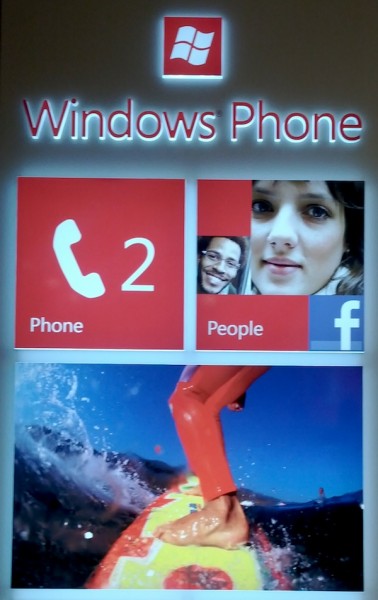
    I am thinking about doing one of my weird experiments, by switching to Windows Phone for 30 days. This would be cold feet for me. I asked Microsoft for a loaner in December 2011 and was promised a device but never received one. So with the exception of scattered minutes inside the local Microsoft Store, I have little experience with the platform. That’s not right.

    This morning, I emailed the PR person who helped me more than a year ago, but the message bounced; perhaps she moved on to another job. Meantime, while figuring out whom to contact, I have a question for those of you using Windows Phone: Why? For others choosing (or switching to) something else: Why not? Your responses will be excellent start to this journey.

    My plan is to coordinate with Surface Pro, which resumes role as my primary PC. I will move from Android and share about that experience, also offering some how-to tips for anyone else looking to make similar move. I could review a device, but my priority is software, services, apps and the general Microsoft lifestyle user experience. I’ll migrate completely to Microsoft products and services during the 30 days, so the stories I write will be more expansive than just Windows Phone.

    Specifically to Windows Phone, I have several objectives:

    • See how well the platform lives up to the “glance-and-go” philosophy
    • Assess how satisfying is the overall user experience, especially NUI concepts
    • Experience firsthand the apps ecosystem and how it compares to Android and iOS
    • Determine how well Microsoft syncs apps, content and services across platforms and devices
    • Discover where Windows Phone fits as a digital lifestyle platform alternative to the big two

    I’m sure other things will come to mind as the experiment progresses, or if. I still need to obtain a device, whether loaner or purchased outright.

    Sadly, the tempting Lumia 920, which colleague Mihaita Bamburic raves about today, isn’t really an otpion. I just finished moving the entire family to T-Mobile from AT&T. So, lest I misunderstand, that means either Nokia 810 or HTC Windows Phone 8X.

    When I mentioned the idea of the 30-day switch in group chat today, Mihiata told me not to bother if using anything but the Lumia 920. He has experience with all the phones. Surely can get adequate apps, operating system and services experience, regardless of the handset. Right? You tell me, if using any of these devices and Windows Phone 8.

    Having been a huge Nokia fan in the past and seeing the apps and services the company brings to the platform, Lumia 810 appeals more to me. Granted, it’s kind of an ugly brick, but perhaps plain is great contrast that makes the colorful OS pop even more. If the 8X, I must admit that red really appeals.

    For now, I debate about which phone and must obtain one, of course. I’d like your advice for which one and reasons why (or why not) you use Windows Phone. Please answer in comments.

    Photo Credit: Joe Wilcox

  • Still no Galaxy S4 launch date from Verizon, but sign up page is now live

    Still no Galaxy S4 launch date from Verizon, but sign up page is now live
    While AT&T, Sprint and T-Mobile subscribers gear up for the Galaxy S4 debut later this week, Verizon Wireless is still nowhere to be found. Customers on the three aforementioned carriers will all be able to buy Samsung’s latest and greatest beginning this week, but the nation’s top wireless carrier has yet to announce any news as far as when its customers might be able to purchase the Galaxy S4. In fact, Verizon hasn’t even shared any launch details for the HTC One either, and it’s already available from other U.S. carriers and in other markets around the world. Despite the troubling trend, Verizon customers can at least sign up on Verizon’s website now to be notified as soon as more info becomes available regarding when the Samsung Galaxy S4 might launch.

  • Netflix shares go up 25 percent, and the website goes down

    Earnings season can be quite the roller coaster ride. You never know what investors will do. Today, in after-market trading they rewarded Netflix by driving up shares about 25 percent. As I write, the furor is calmer, with the stock only up by 24.39 percent, or $42.53, to $216.90. Netflix closed at $174.37 today.

    The video service beat the Street and returned to profitability during first calendar quarter. Perhaps the excitement explains intermittent problems handling traffic, resulting in network errors late this afternoon at Netflix’s website.

    Excluding refinancing and tax charges, earnings reached $19 million or 31 cents a share, in line with Wall Street consensus. Including charges: $3 million and 5 cents EPS.

    In the United States, during Q1, Netflix gained 2.03 million streaming subscribers, up from 1.74 million new adds a year earlier but down slightly from the 2.05 million gains in fourth quarter. “Our international membership grew by 1 million during the quarter to a total of 7.1 million, generating 14 percent of global revenue”, the company states in its quarterly letter to investors. “During Q4 2012, we added 1.8 million net international members and 1.2 million during Q1 2012”. Overall, Netflix added 3 million streaming subscribers, bringing the global total to 36 million.

    Looking ahead to second quarter, Netflix expects earnings to be between $14 million and $29 million, or between 23 cents and 48 cents a share. Additionally, the company expects total streaming subscribers to range from 36.7 million to 38.4 million.

    Service tier addition is coming. “A few members with large families run into our 2-simultaneous-stream limit”, Netflix says. “To best serve these members, we’re shortly adding a 4-stream plan, at $11.99 in the U.S., and we expect fewer than 1 percent of members to take it”. By my math, that’s conservatively another $1.4 million in revenue.

    The video service provider dismissed concerns about original programming:

    Our decision to launch all episodes at once created enormous media and social buzz, reinforcing our brand attribute of giving consumers complete control over how and when they enjoy their entertainment. Some investors worried that the ‘House of Cards’ fans would take advantage of our free trial, watch the show, and then cancel. However, there was very little free-trial gaming — less than 8,000 people did this — out of millions of free trials in the quarter.

    The original series debuted February 1, with all 13 episodes at once. My response after watching “House of Cards” two days later: “I predict that Netflix has here what HBO did with ‘The Sopranos’ in 1999, an industry-changing series”.

    On Friday (April 19), Netflix debuted another original series, “Hemlock Grove,” with 13 episodes. Re-imaging of “Arrested Development” arrives May 26, officially the fourth season with 15 episodes.

    Original programming puts Netflix at the vanguard of the future, which perhaps more than anything else drives investor excitement tonight. The question isn’t so much if but when and by how many original programs Netflix earns classification as television network.

    The service isn’t alone seeking such distinction. On Friday, Amazon debuted 14 original pilots, some of which will become full-fledged series. Which and how many depends on viewer response. The pilots accounted for eight out of the 10 most streamed Amazon Instant Videos over the weekend.

  • Apple needs a COO, not new CEO

    A rather fanciful and irresponsible commentary at Forbes today asserts Apple is looking for a new chief executive. “Some Wall Street sources close to some Apple executives say such a move is afoot”, contributor Gene Marcial writes, without offering any more meaningful identification in that. What? Were the boys talking between toilet stalls again?

    At the very best, his sources are second-hand. Hearsay. Regardless, replacing Tim Cook is the wrong solution because his management isn’t the problem, nor should he be ousted simply because the stock is in freefall. The fruit-logo company is a money machine, enormous in his hands compared to predecessor Steve Jobs. What Cook lacks is what Jobs had: a chief operating officer. Apple needs to find one — now — and public COO search might even boost investor confidence, which lacking perplexes me, given how much money this company mints.

    Monster Money

    Starting in 2010, Apple saw tremendous — simply astounding — revenue and profit gains, nearly doubling in one year from $13.5 billion to $24.7 billion and $3.1 billion to $6 billion, respectively. During fiscal 2010, Apple generated $65.23 billion in revenue. 2011: $108.25 billion. For fiscal 2012, which closed end of September: $156.51 billion. Apple revenue is up 140 percent from fiscal 2010. During the same time period, Apple’s net income rose from $14.01 billion to $25.92 billion to $41.733 billion.

    Looked at differently, for all calendar 2012, Apple generated $164.68 billion in revenue. That’s more than twice Microsoft ($73.2 billion). Two years ago, the software giant’s revenue exceed the fruit-logo company quarter for quarter. By calendar Q4 2011, iPhone revenue alone exceeded all of Microsoft.

    During fiscal first quarter 2013, Apple generated $54.5 billion revenue and $13.81 earnings per share. Analyst consensus for fiscal Q2 is $42.49 billion, up 8.4 percent year over year, and EPS of $10.07, which compares to $12.30 a year earlier. Apple reveals second quarter results tomorrow.

    Two Men, One Mind

    Cook largely deserves credit for Apple’s amazing success for more than three years. As COO for most of the time, and CEO since August 2011, he managed day-to-day operations. Jobs’ role changed starting with his first medical leave in January 2009. Critics, and even many Apple supporters, don’t give Cook the credit he deserves.

    Jobs and Cook worked as a team. My favorite analogy for the pair is Captain Kirk and Mr. Spock. Kirk, like Jobs, is more emotional, intuitive, risk-taking. Cook is more like Spock, making logical, logistical decisions that maximize margins. Under Jobs, Apple released category-creating, or redefining products, that left people breathless — and wanting to buy. Cook brought Appleware to market and wrung every cent the supply chain would give.

    Jobs may have had the vision with iPhone, which launched in June 2007, but Cook executed on it, particularly in 2010 and 2011, with launches of iPad and iPad 2 and iPhone 4 and 4S, and further in 2012 with iPad mini and iPhone 5. At the end of calendar 2011, Apple had 315 million cumulative iOS device sales. 2012: 500 million, all from zero four-and-a-half years earlier.

    Cook’s problem: He is now half of a whole, a man responsible for two jobs: Vision and management, and he does neither as well as he could just one. A COO, and the right one — a compliment to Cook’s weaknesses — could make a crucial difference as Apple prepares for the next big thing.

    Stock Crash

    The market clamors for Apple’s next big thing, and wanting perceptions about its absence feeds negative perceptions that have little to do with revenue and performance reality. Just look at the numbers above.

    Jobs’ legacy is part of Cook’s problem. For years, Apple was a perception stock, largely buoyed by smart marketing and Jobs’ ability to cast the so-called “Reality Distortion Field“, while generating cult-leader like adoration. For most of his time running Apple during the so-called second coming, shares rose more because of positive perceptions, and overly-given attention from the Apple Fan Club of analysts, bloggers, reporters and other writers. Funny thing: Apple is no longer a perception stock but performance one. Recent punditry about falling shares feeds an anti-reality distortion field.

    Seemingly anyone who is no one speculates about the great Apple disaster. If bumper crop is definition of crisis, gimme some of that, please. The stock’s declines should be viewed independently from the company’s real performance, or Cook’s. At market close today, Apple shares were down 43.5 percent from their all-time high, in September, of $705.07.

    Shares, already in freefall, plunged further following January’s fiscal first quarter announcement. How will they be after tomorrow’s announcement? Worse, likely, given the Street’s response to Apple. All based on negative perceptions that ignore market realities.

    Cook’s first problem is no COO. Second: no compliment, like Jobs. Third: the next big thing and his failure to deliver it. But the last is urban legend. Cook actually is doing right by Apple and shareholders by staying the course, at least for a time.

    One Less Thing

    Under Jobs, Apple launched new categories and saw them to maturity. You can see this process everywhere. First is the category definer, the new thing for the company. Then there is a process of iteration, where Apple improves features while keeping prices the same and sometimes lowering them near the end of the product cycle before something new in that category comes along. Pick any Apple product. The first several generations of iPod look similar (2001-2003), then Apple changed up with iPod mini (2004), nano (2005) and touch (2007) and completely refreshed the lineup (2012). The music player is an end-of-life category that will receive nominal reinvestment of time.

    iPhone and iPad track similarly, and not nearly as far along. Right now, Cook’s charge is managing two relatively new product lines, which make up the bulk of profits. During fiscal Q1, iOS devices represented close to three-quarters of all revenue. His first responsibility is to manage these maturing businesses before committing Apple to some new or redefining category. But investors want the feel-good thing that creates allusions, or perhaps
    illusions, about Apple as sitting-at-the-right-hand-of-God innovator.

    Apple shouldn’t replace Cook, whose managerial performance is exemplary, but instead give him a helping hand, by appointing a chief operating officer. Ousting Cook would be fool’s play. Jobs brought positive perceptions to Apple, but Cook manages a performer — a burden his predecessor never really carried.

    Some Context

    Here are a few of my recent stories related to this analysis:

    They’re a meme about a company in perception crisis, which is far different from Apple in decline or collapse.

    Photo Credit: nui7711/Shutterstock