Author: Alan Buckingham

  • Meet the latest ‘Nexus’ device: an HTC One

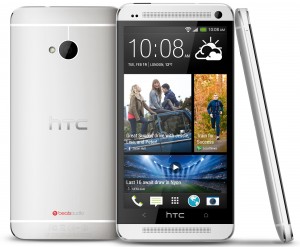
    Remember the days when Google Nexus-experience phones were slim pickings? The days of one “Nexus” branded device are now gone, as Google continues to pull new handsets into the family — granted, it is not really under the Nexus name, but they function as such. Now Chrome and Android chief Sundar Pichai announces that the pure Galaxy S4 unveiled at Google I/O will be joined by the HTC One.

    Appearing on stage at the All Things D D11 conference, Pichai was asked by co-host Walt Mossberg about his current hardware and responded “I’m carrying an HTC One in my pocket. This is running the core UI on Nexus phones as well”, in reference to hardware makers junking up current devices.

    Mossberg then prodded Pichai “are you going to sell that”? The response to this key question is “it’s going to be available on Google Play on June 26 for $599”.

    “This is the strength of Android, it can be customized. But we want a sense of commonality when you switch phones”, he went on to explain.

    Google has clearly made up its mind to try and end the long-standing contention that its mobile operating system is fragmented. The search giant wishes to unify things and is reaching out to hardware makers in an effort to pull this off. Customers will soon have a choice between the LG Nexus 4, Galaxy S4 and HTC One. You can watch the full video below.
  • Evernote promises improved security

    It seems that security has become a daily news story now, with multiple high-profile attacks. Evernote has had previous security problems, but today the company wishes to alleviate a few of those issues. Having already been apart of one of the headlines, the note-taking service would rather not be included as part of the crowd in the future.

    Today the company announces three new security features, beginning with two-factor verification. This requires a verification code whenever you are asked to provide your username and password. This will usually only happen when you log into Evernote Web or install it on a new device. It simply means that you will receive a new text message on your phone with a code that must be entered, in addition to your password — something that many other services like Google, Microsoft and Facebook already do, and that Twitter does poorly. The feature is optional.

    Second up is Authorized Applications. According to Evernote’s Seth Hitchings, “we want you to open an Evernote app and then quickly accomplish your task. To make that possible, we rarely ask you to sign in. That helps you get your work done, but can be a problem if you lose your phone or computer. Now, you can revoke any version of Evernote from your Evernote Web Account Settings. Once revoked, an app will request a password the next time its launched”.

    Finally, there is Access History. This shows you a running list of every time your account was accessed over the past thirty days, and includes all versions and includes locations and IP addresses.

    It seems that Evernote has all of this done right, but it will take some knocking on both from hackers and security researches to know for sure. Given that the last hack resulted in no compromised user accounts, thanks to passwords being salted and hashed, I have high confidence in the company. Let us see if it upholds my hopes.

  • Google takes business photos on vacation to Europe and Asia

    If you have ever searched for a business on Google, you’ll have noted some have images available — carefully staged ones of course. These are especially popular with hotels and restaurants who wish to portray their establishments in the best light.

    Google’s Business Photos program makes this possible by letting firms hire one of the Trusted Photographers or Agencies to grab the images and get them up online. The service uses Google Street View technology to create panoramic images from the photo shoot and upload them. These results can be found on Google.com, Google Maps, Google Maps for Mobile and on the Google+ page or Places for Business listing. Photographers can also sign up to become ‘Google verified’.

    “The Business Photos program enables merchants to create 360-degree, interactive tours of their establishments. This imagery is published on Google so potential customers can look inside and explore businesses before they go”, Deborah Schenker, Program Manager for Google Business Photos explains.

    It’s clearly popular as from today the search giant is expanding the program globally with seven new countries, spread out across both Europe and Asia. New nations include Belgium. Czech Republic, Germany, Poland, Russia, Singapore and Switzerland. You can find out more on the Business Photos page.

  • Tweet a photo, pray you don’t get hacked!

    Last week it was pointed out that in the latest Twitter update, the implementation of two-factor verification that we mentioned here, was less than solid. Now, as opposed to working to solve these issues, the company instead concentrates on its latest mobile apps updates.

    Today Misha Lushin of Twitter announces that the social network has “just released updates to our iPhone and Android apps. Tweeting is now even easier and more seamless”.

    Now when customers add a photo to the Tweet, they will see a full preview of that photo, not just the cropped version.  Customers can also add photos more easily from the camera roll by simply clicking the photo icon on the bottom right corner of the Tweet box.

    The company also adds that, when a customer composes a Tweet, he or she will see their avatar and username to give a better sense of how the Tweet will actually appear. In addition, it is now easier to select an account by tapping an avatar, as well as promising richer notifications and the removal of the borders around timelines.

    The updates are very nice, but not a single one will prevent a customer from being hacked. Let us hope these are better vetted than last week’s update. Perhaps next Twitter may focus its energy on that little problem.

  • Google brings tabs to Gmail for web, iOS and Android

    A move to Gmail frequently results in temporary disorientation. The labels feature takes getting used to, especially for those arriving from Outlook, which allows for the creation of folders. Now Google aims to clean things up a bit and help customers be better organized with the load of email received daily.
    Itamar Gilad, Product Manager at Google, announces that “on the desktop, the new inbox groups your mail into categories which appear as different tabs. You simply choose which categories you want and voilà! Your inbox is organized in a way that lets you see what’s new at a glance and decide which emails you want to read when”.

    The new tabs will be completely customizable — users can create them, as well as drag and drop messages between them. Customers can also set certain senders to always appear in a particular tab and star messages so that they will appear in the Primary tab as well.

    With the new mobile Gmail, which arrives for Android and iOS devices, wireless customers will get the Primary mail tab when the app is opened, but will also be able to easily navigate to the other tabs.

    If you like your Google email the way it is, then Classic View will switch off these new features and return you to the old days. The desktop, Android and iOS versions will become available within the next few weeks, but Google tells us that users can try it out sooner by keeping an eye on the gear menu and selecting Configure inbox when it appears in the Settings options.

  • Amazon Prime unveils winners in original shows popularity contest

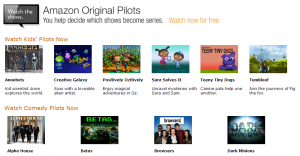
    Back in April Amazon released 14 original TV shows, exclusive to Prime customers. The company, through its video production studio, promised to take the most popular of these and turn them into series. The viewers spoke, and now the retail giant today announces those results.

    Five of the original 14 pilots have been accepted — Alpha House, Betas, Annebots, Creative Galaxy and Tumbleaf all make the final cut. Meanwhile, one of the hot favorites, Zombieland, was not picked up. It became much less popular after customers actually watched it.

    “We are thrilled at the enthusiastic customer response to our first original pilots,” says Roy Price, Director of Amazon Studios. “We built Amazon Studios so that customers could help decide which stories would make the very best movies and TV shows. It’s exciting to see the process in motion, doing exactly what we set out to do. The success of this first set of pilots has given us the push to try this approach with even more shows—this is just the beginning” he promises.

    The new episodes will begin airing exclusively on Prime Instant Video later this year and in early 2014. An exact number of episodes for the three comedies and two childrens shows was not announced. Since launch in November 2010, Amazon Studios claims more than 15,000 movie scripts and 3,600 series pilot scripts have been submitted.

  • Microsoft scales Mount Everest

    Google gets a lot of attention for its Street View adventures — it’s travelled from the Great Barrier Reef to the Grand Canyon — but Microsoft is not taking this lying down. The software giant has teamed up with David Breashears and his non-profit, GlacierWorks, to scale the heights of the Himalayas.

    The IE10 team, Microsoft Research, and the developers at Pixel Lab have come together to create a multi-touch experience that allows users to explore the work of David Breashears, who has spent considerable time exploring and photographing the world’s tallest mountain chain.

    Microsoft’s Roger Caprioti announces “renowned explorer, filmmaker and photographer, David began chronicling the changes to the glaciers of Mount Everest and the greater Himalayan region in 2007 when he first matched an iconic image taken in 1921 by explorer George Mallory. David’s photo revealed the stark changes occurred to this glacier during the 86 years since Mallory took his photo”.

    Using Gigapixel images and video, a simple tap or pan lets you fly across panoramic views of Everest and zoom into images composed of billions of pixels to discover the region in great detail. “If you want to explore an area, a peak or basecamp on the mountain, you simply draw a circle around a piece of the photo and the site will automatically zoom to what you want to explore” explains Caprioti.

    This is built with Internet Explorer 10 in mind, but the “browser you loved to hate” is not necessary in order to explore Mount Everest. You can check it out at GlacierWorks. Take that Google Street View!

  • Microsoft still stamping out used games fire

    This past Tuesday Microsoft did its long-awaited Xbox reveal, though the company did not unveil every bit of information that customers were waiting for. For instance, we still do not know pricing or release date. However, the biggest urban legend in circulation — that of used games — is under attack from the console maker.

    On the day of the big reveal, Larry Hryb took to his blog to assure users “While there have been many potential scenarios discussed, today we have only confirmed that we designed Xbox One to enable our customers to trade in and resell games at retail”.

    These rumors came to head after Adam Orth of Microsoft Studios committed career suicide on Twitter while discussing the possibility of an always-connected console. The spectre of this addition to the next-generation gaming device raises the issue of users no longer being able to play used games, or even game while their internet connection is down.

    Now Hryb goes further to reassure customers with an official statement from his company. “The ability to trade in and resell games is important to gamers and to Xbox. Xbox One is designed to support the trade in and resale of games. Reports about our policies for trade in and resale are inaccurate and incomplete. We will disclose more information in the near future”, the statement reads.

    It is not a ringing endorsement, but it is, at least, promising. We will learn more during the time before the retail release, but potential customers should be able to breath a collective sigh of relief for the moment.

  • STOP: Twitter two-factor verification can be hacked in less than 140 characters

    Fans of social media were reassured this week as Twitter finally rolled out two-step verification, ostensibly making the service more secure for its millions of customers. This is a feature that other major companies like Microsoft, Google, and Facebook have already implemented and, on the surface, seemed a victory.
    Not so fast. Security researchers at F-Secure are taking a closer look and deem the implementation “not great”. The problem, according to Sean Sullivan, is that “an attacker could use SMS spoofing to disable 2FA if he knows the target’s phone number”.

    “The STOP command removes the phone number from the account — and that in turn disables Twitter’s 2FA”, says Sullivan, who did extensive testing on this.

    The problem is this: Twitter uses SMS as a way to send and receive Tweets. The social network also makes use of SMS for its new authentication service. However, in a statement BetaNews received from Mr. Sullivan, it is pointed out that “Microsoft uses SMS for 2FA, but Twitter is trying to have its cake and eat it too: social security. Twitter added 2FA SMS, but *didn’t* adjust how it uses SMS for Tweeting”.

    Sullivan went on to also point out that “Facebook confirms with a code when you add a phone and it shifted focus from posting status messages via SMS a few years ago”. He wraps up his statement by explaining “Microsoft, Google, and Facebook all have account recovery processes. Twitter has just a password reset page. Nothing else. No security words. Nothing”.

    Twitter, in the course of its announcement, points out this feature is a means of paving the way for future security enhancements. Perhaps those will be better implemented than what has rolled out this week.

    Image Credit: ShutterstockDenis Belyaevskiy

  • Box takes more strides towards IT acceptance

    The cloud has become a battleground these days between heavyweight companies, and Box has remained in the fight. Today the company takes another step towards securing its location in the corporate future with three new features in the Box admin console designed to make the service easier to deploy.
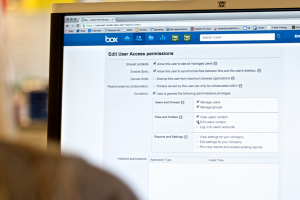
    An improved content manager, granular co-admin permission options, and the ability to prevent users from permanently deleting content are all heading the way of IT administrators.

    According to Box’s Annie Pearl, “we’re continuing this momentum today with three powerful new features that make managing a complex, enterprise-wide deployment dead simple”.

    Content manager is an optional tab contained in the admin console and available exclusively only to those in the beta program. This helps admins view the content each user has access to and also search for specific files and folders. The Quick Note feature is not yet available, but Box promises that if you contact the company, it can be enabled for testing.

    Finally, Box also releases tools for fine-tuning permissions and the ability to prevent users from permanently deleting items they’ve moved to the trash.

    Box is hoping that these three tools will help customers get past the complexity of managing content, users and roles in today’s highly connected organizations. It also, of course, hopes this keeps the cloud service in the race with rivals like Dropbox, which announced Single Sign-on yesterday, and other competitors such as Google, Amazon, and Microsoft.

  • Evernote adds Reminders for the absent minded

    Evernote continues to evolve in its quest to keep up with (and even outpace) Microsoft’s OneNote. The service is already available on all the major platforms, and today adds a new feature which a lot of users have been asking about for some time — Reminders.
    “For the millions and millions of people around the world that use Evernote everyday to achieve their goals, we’re excited to announce a new part of Evernote that will keep you on track every step of the way. Reminders are here”, says Evernote’s Andrew Sinkov.

    This update contains what Sinkov terms the company’s three most requested features: in-app and email alarms, quick note-based to-do lists, and the ability to pin notes to the top of your adjacent list. Users can also now add a Reminder to a note by simply tapping on the alarm clock icon located at the top of the document on Mac and Web, or at the bottom of it on iPhone and iPad. If you like, you can set a date and time for when this task must be completed. Now you will get an in-app alarm and, optionally, an email on the day that a Reminder is due.

    The company also points out that “to keep your Reminders nicely organized, we’ve made them notebook-based. Whenever you add a Reminder to a note, it will appear in the Reminder section within that notebook”.

    So, if you are like me and tend to forget important things, like what to pick up at the store, a friend’s birthday or…oh say…your anniversary (just for example, of course) then this new functionality will make Evernote a life-saver.

  • Surprise! Skype will be a big part of Xbox One

    Microsoft has announced the long-awaited successor to the Xbox 360, naming it the Xbox One, but news does not stop there. Major game announcements at E3 were alluded to during the presentation, and today subsidiary Skype officially throws its hat in the ring, announcing it will bring additional functionality to the next-generation console.
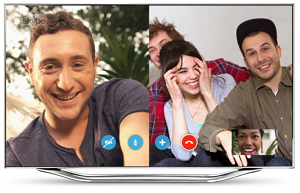
    This may not be a surprise, but Skype explains its plans for the new Xbox and those ideas are ambitious. “Skype for Xbox One lets you enjoy your Xbox games, apps and live TV with friends and family as if they were right there with you in the living room, all through features such as group video calling and Snap”, says Microsoft’s Tony Bates.

    Bates also tells us that Skype for Xbox One uses the new Kinect camera and your broadband connection to send one-to-one Skype video calls in full 1080p HD resolution. The camera has a wide-angle field of view, attempting to let everyone sit and chat comfortably, and the microphone is directional to block out ambient noise. Finally, Skype will work with the voice control showed off during the announcement.

    Skype does nothing to clear the air about when the new console will arrive, but does give us more information on the capabilities that we can expect from this upcoming release.

  • Google rolls out a ‘smoother’ Drive app for Android

    The competition for your cloud business continues between Google, Amazon, Microsoft, Dropbox, Box and other competitors. Today Google takes its next step, with an attempt to make the experience better for Android customers with, what it terms, a “smoother” experience.

    The search giant claims that Drive files will now be displayed in a clean, simple card-style. This will allow users to swipe between files to see large previews that will permit them to quickly review and discover the information they are looking for. If a customer wishes to keep some Drive files on his or her Android device, they will now be able to “download a copy” from the actions menu inside settings.

    The new version of the app also contains a “Scan” feature that will enable customers to track paper documents like receipts, letters, and billing statements. OCR will take care of the rest, turning the document into a PDF.

    Finally Google enhances the editing capabilities in Sheets, with the ability to adjust font types and sizes for a spreadsheet and tweak the cell text colors and cell alignment right from the app.

    “The process of creating and accessing your stuff shouldn’t be, well…a process. Today, the Drive app for Android is getting several improvements to make creating and accessing your stuff on-the-go even easier”, says Denis Teplyashin, Software Engineer for Google. The update is available now.

  • Don’t see enough ads on your Smart TV? Opera wants to change that

    Connected living room devices are here to stay. Smart TV’s, set-top boxes like Apple TV, Roku and Google TV all aim to make sure of this. Opera, known mostly as a web browser, has been branching out into this market as well, with its Mediaworks project. However, instead of apps, and despite the name, Mediaworks is an advertising network.
    Now the company’s subsidiary, AdMarvel, announces what it calls “a forward step in the evolution of online video advertising into the connected TV space”. Opera explains that “AdMarvel for Connected TVs will provide publishers and advertisers with a dynamic, rich ad-serving platform combined with sophisticated ad exchange, ad serving and ad management functionality on connected TVs”.

    While more ads is never what a customer wants to hear, Opera promises that by helping publishers and developers find the right buyers at the right price for their inventory it will provide more relevant targeted ads for the end-user, which I suppose could be considered a plus, if you happen to be in the market for a particular item.

    Mediaworks is already the largest mobile ad-serving network. Connected TV’s is the next logical step, as the market has been growing quickly. “As connected TV households worldwide reach critical mass in the coming couple of years, the TV screen will become the next frontier in delivering relevant advertising to consumers,” says Mahi de Silva, CEO of Opera Mediaworks.

    With the growth of these devices, it was inevitable that there would be a market for capitalizing on the customers. For now, the Opera TV Store ships on Sony Bravia TVs, Blu-ray disc players and devices such as TCL, Humax and MediaTek. This will certainly expand as device growth continues.

  • The NFL is not only arriving on Xbox One, but also Surface

    It may not be entirely what we hoped for, but today the NFL makes strides towards greeting the twenty-first century. Earlier we saw the big Xbox reveal which, among other things, reveals a partnership with the National Football League. The sport is the last holdout of major U.S. leagues to embrace the internet, but better late than never, I suppose.
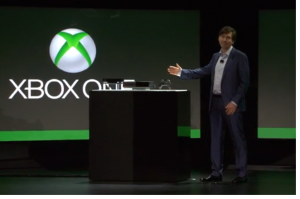
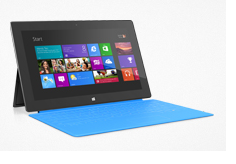
    Today’s show in Redmond, Wash. features a short video-taped appearance by commissioner Roger Goodell to talk of the new features that Xbox One customers can expect. However, it is only half of the story. Later in the day, the Surface team announces that the NFL will also be available to customers of the Microsoft tablet.

    “The NFL is a great stage for Surface because Surface has the chance to help change the game — including how medical staff take care of players, coaches strategize, players learn, and referees, um, referee. This is a partnership that we’re excited to embark on” the Surface team tells us.

    “The NFL is a great stage for Surface because Surface has the chance to help change the game – including how medical staff take care of players, coaches strategize, players learn, and referees, um, referee. This is a partnership that we’re excited to embark on” the company points out.

    Now, of course, it is up to the league to make this work, and it has failed in the past to show that it has much knowledge of the web. Perhaps a new page has been turned.

  • Microsoft debuts Xbox One

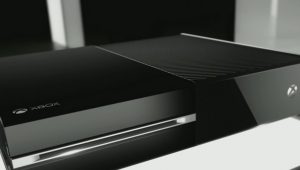
    The Xbox 360 has been around since 2005 and, despite retaining its popularity, the console grows long in the tooth. That changes today, as Microsoft announces a new generation of its stealth living room takeover device. Speculation around what was coming has been growing for sometime and reached a crescendo when the company finally unveiled the event date.

    Don Mattrick, President of the Interactive Entertainment Business at Microsoft, kicked off the event unveiling the Xbox One, a name that dispelled many myths about Infinity, 720 and 8.

    The console packs in 8 gigabytes of RAM, USB 3.0 and a Blu-ray player. All solid hardware inclusions to be sure, but hardly the most impressive part of the event. That was the TV pass-through and incredibly fast voice control, which was shown off in great detail during the course of the show.

    TV pass-through works similar to Google TV: customers can plug their cable or satellite box into the Xbox One and out to the TV, eliminating the need for switching inputs. Changing is controlled by simply speaking a command — “Xbox go to guide”, for instance, shows the guide info for your service. Movies, games, music, and live TV can all be controlled with simple spoken commands.

    ESPN will now include player tracking, enabling users to easily call up their fantasy team roster and check real time stats to keep track of how players are are faring for your team.

    The new Xbox One will also feature trending statistics for games, TV and movies; allow for gesture control; and feature four new sports games from EA — UFC, Madden, NBA and FIFA. Microsoft Studios also plans to release 15 games within the first year, eight of which will be new franchises, and will kick off with Forza Motorsport 5 available at launch.

    Microsoft also unveiled an exclusive TV series, bringing it into direct competition with services such as Netflix and Amazon. The Halo TV show will be directed by Steven Spielberg.

    Perhaps the biggest announcement comes in conjunction with Roger Goodell, as Microsoft announces the NFL on Xbox — an exclusive partnership that will include a range of content.

    The new console will arrive “later this year” and pricing was not revealed, but the show did wrap up with a debut of the next Call of Duty, called COD: Ghosts, which will be another exclusive game for the next-generation Microsoft box.

  • Pandora introduces Premieres with early access to new releases

    Today, one of the best music streaming services (excuse the opinion) gets just a bit better. Pandora has been around since 2000, offering customers free and paid solutions for creating custom stations and discovering new music. Now the streaming service wishes to offer more to its customers.

    Pandora founder Tim Westergram announces the debut of Pandora Premieres, a new station that brings unreleased music to customers a week in advance.

    “Pandora Premieres is a new kind of station for us that lets listeners enjoy on-demand access to early album releases from a variety of artists before they go on-sale,” Westergram tells us. The station debuts with upcoming releases from former CCR singer John Fogerty and also English folk musician Laura Marling.

    Once you add the Pandora Premieres station you will be able to choose any track on the featured albums, and play them in any order and as many times as you wish. The company promises new albums each week and also additional exclusive content like video interviews.

    Pandora Premieres works with both free and One accounts. One is $3.99 per month, but allows for unlimited streaming and blocks all ads during streaming. The company plans to feature both established and emerging artists.

  • The next Xbox is coming: Watch the announcement on Windows Phone 8

    The big day is almost here. Microsoft reveals the new Xbox at an event held on its Redmond, Wash.-based campus tomorrow, and speculation runs rampant around the web. We do not even know the name of this next-generation console, let alone what capabilities the device will come with.

    However, if you can not wait for the news stories to break then there is good news if you should happen to be a Windows Phone 8 user. The software giant announces a special app for its smartphone operating system that enables users to watch the event live right from wherever they happen to be — which will be the workplace for many. Sorry employers.

    “If you have a @WindowsPhone 8 device, download this special app to watch the #XboxReveal event tomorrow”, announces Xbox Live chief Larry Hryb on Twitter.

    The app, so far, is successful, with a five-star rating and positive comments such as Jeremy’s — “glorious idea! You should evolve this to be a standard live stream app that you can use for all of Microsoft’s various events in the future”. For the sake of the company, let us hope it is still this popular after the event.

    So what do all of you expect to see tomorrow? Will it truly be an “always-on” device? What will Microsoft call its new entry into the gaming console market? When will the company release it? Give us your thoughts in the comments.

    Image Credit: Christos Georghiou/Shutterstock

  • Fiat brings Windows Embedded 8 to its cars

    When I was young, and I dare not discuss when that was, I owned a Fiat X1/9.  The relationship with that car ended badly, but I shall always remember it as the car I was driving when I met my wife. Fast-forward a few (okay, more than a few) years and the car company is regaining popularity, but no longer as the little sports car I referred to as the “poor man’s Ferrari”. Today the company announces a new partnership with Microsoft to bring Windows 8 Embedded to its vehicles.

    Despite the polarized reactions to Windows 8, Microsoft continues to see success with the Embedded version of the operating system, with Home Depot announcing adoption, and now the Italian car maker.

    Fiat is using the “Blue and Me” technology (no not ‘Windows Blue’) in its 500 model, and has been since 2006. However, the company wants a new and improved version of this technology, according to the Microsoft announcement. “Fiat wanted a new version of Blue&Me that reflected both of these changes. It wanted an infotainment system that was affordable, flexible and would work equally well across more than 15 car models under the Fiat, Lancia, Alfa Romeo, Dodge and Chrysler brands, as well as on the company’s line of commercial vehicles” Microsoft informs us.

    For affordability, the new system is powered by a smaller processor and requires reduced storage space. For flexibility it supports multiple device types, enabling the use of applications such as eco:Drive, that support the use of touch and hands-free capabilities through voice recognition, and can be updated to support new devices and applications in the future.

    “Candido Peterlini, director of Product Planning Infotainment for Fiat, says the company’s plans were based on an intimate understanding of customer needs”. Well, it certainly is no longer my 1985 X1/9, but it does not make me miss the car any less!

  • Soccer, ah football, comes to Windows 8

    It may not be ‘America’s pastime’, but Microsoft still proudly announces that it is making a deal with Major League Soccer to bring the sport to its Windows 8 customers.  The sport known as soccer in the US, but football to most of the rest of the world, joins the National Basketball Association, Major League Baseball and the National Hockey Leagues on Microsoft’s latest operating system.

    The announcement came at yesterday’s game between the Los Angeles Galaxy and New York Red Bulls held at Red Bull Arena. The MLS Match Day app is not new, only “improved”. This new version features exclusive content and this season’s schedule, standings, highlights, play-by-play, roster lineups, game stats, goals, cards and substitutions.

    There is also Live Tile integration that allows users to customize to their favorite team in order to see updates of news, current scores and more.

    “MLS supporters are young and active, and technology plays a central role in their lives,” says Kathy Carter, president of Soccer United Marketing, MLS’ commercial arm. “This new partnership with Windows 8 will allow MLS fans to interact with best-in-class software, new devices and apps that will super-serve their fandom” she goes on to point out.

    In addition to giving soccer fans, who happen to be Windows 8 customers, a new experience, Microsoft has another motive in this partnership. Fans will be able to try out Windows 8 on the Microsoft Surface tablet in-stadium at more than 40 games during the course of the season.

    With the NBA, MLB, NHL and MLS all on board it seems time for the NFL to get into the internet era. The league still remains a holdout on game-streaming, despite other leagues embracing the concept. Instead, users must rely on third-party services, such as ESPN to get scores.

    Photo: KatAlekStudio/Shutterstock