Author: Alan Buckingham

  • Office 2013 launches January 29 in NYC

    Microsoft is announcing something Office-related tomorrow, January 29th. That much is clear given all of the evidence that popped up over the weekend and has continued to mount today. Still, the company likes to hold some secrets and stating something emphatically would be inappropriate reporting on my part. However, trying to connect the dots is a fun exercise that we certainly can do.

    First, over the weekend a new website from Microsoft appeared with a teaser message —  “Coming January 29th. More time to do the things you want. #timeto365”.

    Then today, John Callaham reported on Neowin that actress Felicity Huffman, of Desperate Housewives fame,  had posted a tweet that stated “Packing up to brave the cold in NYC to help launch MS Office 365, use it, love it. Excited to see some plays”. Okay that last sentence is irrelevant to this story, but it was part of the entire quote. Even Microsoft’s own Twitter account tweets teasers.

    We also have heard that Office 2013, which is integrated with the online Office 365, will launch in early 2013 — we even have received pricing details.

    Still, as I stated earlier, Microsoft is playing the Apple game these days. Attempting to keep secrets and hold big press events. When I reached out earlier to a spokesperson I was told, despite all of this, that “we have nothing more to share at this time”. So, we wait until tomorrow for what seems obvious, but can not yet be called official, despite the best evidence and hunches.

    Oh, hell, surely the official Office Twitter account is confirmation enough. Could Microsoft be any less obvious?
  • Test driving BitTorrent Sync

    Who outside Hollywood doesn’t like BitTorrent? There’s another reason for you to, with the new PC-to-PC file synchronization app. It is free, but for now “pre-alpha”, meaning users should beware of the potential dangers — bugs, crashes. You know the routine. It is also only available in private beta, so if you are interested then you will need to request an invitation.
    Once you gain access then you will find the app is available for Windows, OS X and even Linux. The download file is small — just under 500 KB for the Windows version.

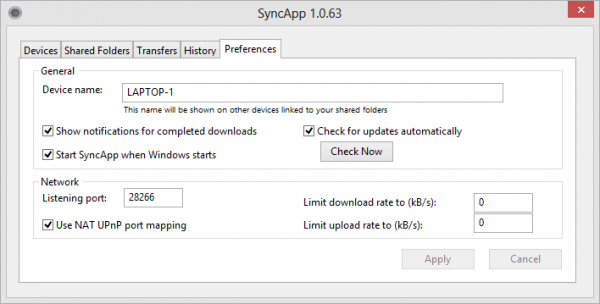
    When you get it installed you will discover a fairly straight-forward app with several tabs across the top that can be used to set up and control the app. While there is Devices, Shared Folders, Transfers, History and Preferences, users will really only need to concern themselves with two of these options.

    First you need to setup your sync, which is done from within Shared Folders. Simply click the Add button to begin. The first thing you will notice: a “key” is generated, or, as BitTorrent refers to it — “Shared Secret”. Write this down because you will need it for your other computer(s). Once you accomplish this then you can browse to the folder(s) you wish to keep synchronized. Depending on your file size the indexing could take some time. Coffee break!

    The other tab that will concern most users: Preferences. Here you can make some personalization options, like starting the app when Windows boots and checking for updates.

    When you move to other computers you will only need to enter the key that was generated on the first device. BitTorrent also takes security into consideration. The invitation includes some details — “Sync synchronizes your files through peer-to-peer (p2p) protocol. The devices in sync are connected directly using UDP, NAT traversal, UPnP port mapping, and relay server. If your devices are in a local network, Sync will use LAN for faster synchronisation. For better security all the traffic between devices is encrypted with AES 256 using private key created on the base of your Secret — a random key that is different for every folder”.

    Bear in mind that this software is not yet ready for general release. However, I didn’t find any real problems with it, aside from rather slow indexing of my shared folder, but that is likely due to the file size. There is no word yet on when BitTorrent Sync will launch for general use.

    Photo Credit: Modella/Shutterstock

  • BitTorrent gets bold, moves into the PC sync business

    BitTorrent has a bad reputation. While it is largely considered a haven for people sharing and downloading illegal files from movies to music to software, it is also a legitimate service. Many Linux distros, for instance, are made available through the network thanks to the easy peer-to-peer sharing methods utilized.

    Now BitTorrent is looking to get into the PC-to-PC syncing business, an area Microsoft just left when it killed off Live Mesh. In a post earlier today the company announced a “pre-alpha” version of BitTorrent Sync is available through the Labs service. However, the release comes with a rather important caveat —  “If you’re comfortable using early, incomplete software, and if you’re committed to helping us figure out a better way to sync, we want to hear from you”.

    With that rather nice way of explaining that the app could crash and, worse, cause other system issues, the service is officially launched.

    But, don’t expect to rush over and use it just yet. When you visit the site you will be asked to fill out a brief form and then told that you will receive an email invitation. Eventually. This is not something that you can expect to show up in your email in five minutes. You will need to wait and be patient.

    As for how the service works, there are really no details in the announcement and my invitation had failed to arrive as of this writing. However, it is probably safe to assume it will be similar to other sync programs like Live Mesh and SyncBack. I will report back when I have had the chance to use it.

    Photo Credit:  Inq/Shutterstock

  • Get Android ICS natively on Windows 7 and 8

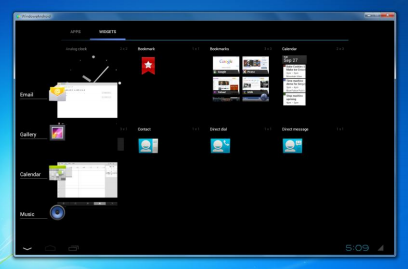
    Running Android on Windows is not a new concept. It has been possible for sometime now, but it required the use of something like Virtual Box, or rival virtual machines. Now version 4.0.3, known more familiarly as Ice Cream Sandwich, has been ported to both Windows 7 and Windows 8. It runs natively, no virtual anything needed.

    This is not exactly for everyone. For one thing, there is no Google Play Store, although the developers are working to add this rather important feature. For now you can side-load apps using the APK file.

    Getting Android for Windows is also not as easy as it should be. You will need to fill out a short form and then wait for an email with the download link. Despite being a rather small file, the download is slow, perhaps due to demand. I also had some issues with “corrupt file” messages and I had to redownload the program a couple of times.

    However, once those obstacles are overcome, you will have a full running version of Android in a window right on your desktop. This is new, and certainly not without issues, but it could shape up to be a great tool for developers once all of the kinks are worked out. Trust me, in my brief experience I found a lot of kinks. It is certainly not ready for prime time, but I have hopes it will get there.

    In fact, as I write this, it has crashed and is failing to restart…


  • Sony Entertainment Network launches with movies, games and TV shows

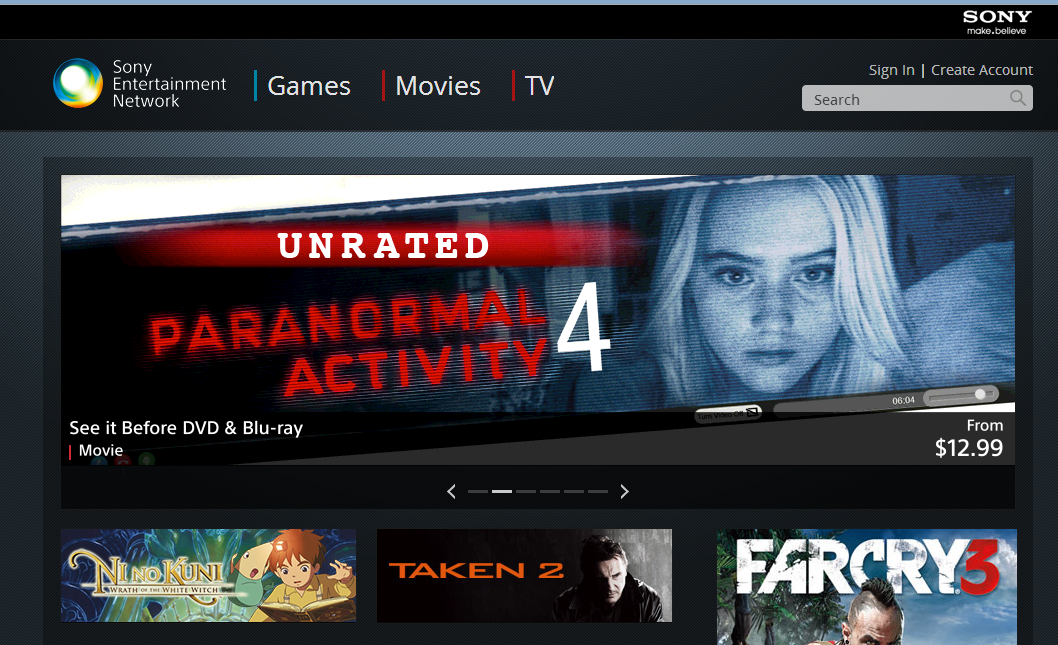
    If you are looking to cut the cord to your cable or satellite provider, you have an ever-increasing number of options to fill that sudden void. There’s Hulu, Netflix and the recent Redbox Instant, and that’s just a few of the big players. And now there’s another option. Sony, still a giant in the entertainment business despite lagging profits, has launched its Entertainment Network in the United States, Canada, Mexico, and Brazil.
    Sony has previously made some of its content available via its Crackle service, which can be accessed both online and through a mobile app. However, that service has a pretty limited amount of material, especially when compared to the new Sony Entertainment Network.

    There’s not just movies and TV shows here, but games as well. Movies are available for both rental and purchase and there are even some bonuses — Paranormal Activity 4, for instance, is available for purchase (for $12.99) even though it is not yet out on DVD or Blu-Ray.

    Clicking a movie or TV show displays a star rating, a list of actors and a brief plot synopsis. Games give similar information, and in many cases are available at a discounted price. Little Big Planet Karting, as an example, is regularly sold for $19.99, but priced here for $10. There are also demos and betas to try out.

    Obviously all available material is from Sony — there aren’t currently any partnerships with other studios — however, Sony has a massive catalog, so there’s definitely no shortage of choices here.

  • Guess which country leads the world in botnets?

    Botnets are frequently in the news, most recently with Red October. Many of us think, perhaps smugly, that these things are based in locations like China and Russia, but the truth is, while some of the computers themselves may be there, these massive, distributed networks are being controlled from a location much closer to home for many of us — the United States.

    Benjamin Cruz of McAfee reports that the United States not only leads the world in this category, but has more than double the number of Russia and China combined. In fact, the two nations we frequently blame for attacks fall into fourth and tenth place on the list that Cruz published. British Virgin Islands and the Netherlands trail the United States, respectively.

    How does McAfee know this? Cruz explains that “with millions of McAfee endpoints and network security appliances sending information to McAfee Global Threat Intelligence (GTI) in the cloud, coupled with a vast collection of malicious binary and proactive research, McAfee Labs has a clear view of botnet threats around the world”.

    Why the United States? That question is not answered in the report, so speculating would be useless. However botnets are frequently used for sending spam email and spreading viruses, both of which generate revenue and the country does have a great history of “entrepreneurship”. 

    Organized crime has also made the jump to the cyber world, using many of the same strong-arm tactics it used in the past. Threatening to take down sites with a DDOS attack if “protection” money isn’t paid. And yes, with the right sites, it works — a person running a gambling site does not want to go down on Superbowl Sunday.

    Occasionally these botnets are taken down in a high-profile, newsworthy way. However, it is perhaps an endless battle that will not be won until users learn to secure computers better and operating system and software makers work out the final kinks in the code. Or, in other words, probably never.

    Photo Credit: Oxlock/Shutterstock