Author: Big Gav

  • Water Adds New Constraints to Power

    The NYT has an article on how water availability is becoming a constraining factor for the development of new power generation capacity (except for solar PV and wind power, which don’t require any) – Water Adds New Constraints to Power.

    In the Mojave Desert, solar developers are scrambling to secure permits to build vast expanses of new generating capacity. But they are discovering that cost and carbon emissions are not the only limiting factors in new energy decisions in California. They are bumping up against water scarcity.

    In the United States, thermoelectric power generation — mainly coal, nuclear and natural gas — accounted for 41 percent of U.S. freshwater withdrawals in 2005, U.S. Geological Society data show.

    “Typically, project developers have wanted to use water for cooling because it’s more efficient and capital costs are less,” said Terry O’Brien, the California Energy Commission’s deputy director for power plant licensing. “That makes the project more economic.”

    But there is a growing awareness in California and throughout the United States that the use of water for energy generation may be reaching its limits.

    California has extensive experience with water shortages, resulting in its adoption of a policy, included in the energy commission’s 2003 Integrated Energy Policy Report, that discourages freshwater use for power plant cooling. The commission’s regularly updated reports provide current data and set the parameters for state energy and conservation policies.

    “It’s just not possible anymore in California, and increasingly anywhere, to find unlimited water for the old water-intensive cooling systems,” said Peter Gleick, president of the Pacific Institute, which researches water issues and advises on policy. “If you want to build a big central power plant, whether it’s oil, gas or nuclear, you can’t take the water for granted.”

    In the past decade, water availability has increasingly had an effect on the reliability of power supplies in many countries, with droughts leading to temporary closings of nuclear plants in Australia, France, Germany, Romania and Spain. Similar shutdowns have been threatened in the United States.

    For a thermoelectric plant, the cooling technology used is the biggest factor in its water needs.

    Once-through cooling, an inexpensive, energy-efficient and therefore widely used process, sucks up huge quantities of river, lake, or sea water. A typical 500-megawatt power plant takes in almost 19 million gallons, or 72 million liters, an hour, according to a 2005 report from the U.S. Department of Energy.

    After running through the plant, almost all of this is returned to the river, lake or ocean. The used water, however, may be polluted, and the heat that it has absorbed can be lethal to fish, while the intake can kill wildlife and microorganisms. Research of the environmental consequences has led to tighter regulations in recent years, making it nearly impossible to get permits for new plants using once-through cooling anywhere in the United States.

    The California state water board, going further, adopted rules this month tightening environmental protection requirements for existing coastal once-through plants — a step toward phasing out the technology at 19 plants. The U.S. Environmental Protection Agency is evaluating whether to follow California’s lead.

    As once-through cooling has fallen out of favor, wet cooling, which exploits the chilling effect of evaporation, has become more common. It uses only about 3 percent of the water needed for once-through cooling — but it loses 90 percent of that to vapor. Wet-cooling systems are more expensive to build than once-through and consume as much as 3 percent of the energy generated by the plant. But a point in their favor is that they can use non-freshwater sources, like wastewater or mine pools.

    Recent government data show that 56 percent of U.S. thermoelectric generating capacity is now wet-cooled, against 43 percent using once-through systems.

    A newer process, dry cooling, which uses fans to push waste heat into the atmosphere instead of into water, is still more expensive and less efficient. On hot days, as much as 15 percent of the energy generated by a plant may be expended on cooling, according to the Electric Power Research Institute, a research body funded by the energy industry.


  • Greenies and business unite on climate action

    The SMH reports that some sectors of the Australian business community are demanding action on climate change (not that either of the major parties seems inclined to listen – dumb and dumber) – Greenies and business unite on climate action.

    BUSINESSES are planning an unlikely alliance with the Australian Conservation Foundation to prod the nation’s leaders into fundamental action on climate change.

    The federal government’s decision to shelve its carbon emissions trading scheme has jeopardised investment worth hundreds of millions of dollars, driving some companies to plan a climate circuit-breaker.

    One plan under review is a revival of the Australian Business Roundtable on Climate Change, which emerged four years ago when the Howard government was baulking at action.

    The roundtable was remarkable for teaming an environmental group, the Australian Conservation Foundation, with six big members of the corporate world: Westpac, the re-insurer Swiss Re, Insurance Australia Group, Origin Energy, Visy Industries and BP Australasia.

    The group’s landmark report of 2006 warned of grave economic harm if Australia did not take early action on global warming – a view that ” took courage” at the time, one of the founding members recalled this week.

    ”Between them the chief executives of these companies lobbied all the east coast premiers, the then prime minister, and the opposition leader. A lot of senior-level heavy lifting went on behind the scenes after the launch of our report, and that probably had more effect than the report itself.”

    When the Howard government reluctantly moved to adopt an emissions trading scheme, the group faded, thinking its work done.

    But the decision to delay the emissions trading scheme raised the prospect of a new alliance.

    ” We have got some early feelers out to resuscitate something like the roundtable,” a key player told the Herald.


  • DOE funding energy storage research for solar thermal power

    Grist has an article on some DOE research funding for energy storage for solar thermal powerA hot technology: Feds push solar solution to coal addiction.

    The Obama administration last week gave a $62 million boost to efforts to make solar power truly competitive with coal.

    “The projects announced today will seek to improve component and system designs to extend operation [of concentrated solar power projects] to an average of about 18 hours per day, a level of production that would make it possible for these plants to displace traditional coal-burning power plants,” the Department of Energy said in a statement announcing cash grants that are being doled out over the next five years.

    The recipients are companies developing technology to store energy generated by solar thermal plants so that it can be used at night or when the sun doesn’t shine. In the utility biz, that’s called baseload power. (Solar thermal plants typically use vast arrays of mirrors to focus the sun on a liquid-filled boiler to create steam that drives an electricity-generating turbine.)

    It’s hardly a huge amount of cash. But it’s going to a mix of startups and big old-line tech companies — many in California — that are working on some potentially game-changing technology.

    But how much of the game needs to be changed? That question seems heretical — we’ll have achieved renewable-energy nirvana when solar farms grow electrons 24/7, right? But it was raised by J.D. Sitton, chief executive of Infinia, a solar startup backed by prominent green-tech venture capitalist Khosla Ventures as well as eSolar founder Bill Gross’ Idealab and Vulcan Capital, the Seattle investment firm run by Microsoft cofounder Paul Allen.

    “There’s a raging debate in the solar thermal business about how much is storage worth and how much it matters,” says Sitton, whose, Kennewick, Wash., company, scored $3 million from the Department of Energy to create storage technology for its Stirling solar dish.

    Resembling a large mirrored satellite receiver, Infinia’s 21-foot-tall PowerDish focuses the sun on a Stirling engine suspended on an arm over the center of the device. The heat causes a gas inside the engine to expand and drive a piston that generates electricity.

    The DOE grant — and others Infinia has received from the federal government — will allow the company to integrate storage capacity into the dish apparatus. Sitton says that will involve some form of molten salt that will store PowerDish-generated heat that can be released to drive the Stirling engine when the sun is not shining.


  • UK Wave Hub Project on Track

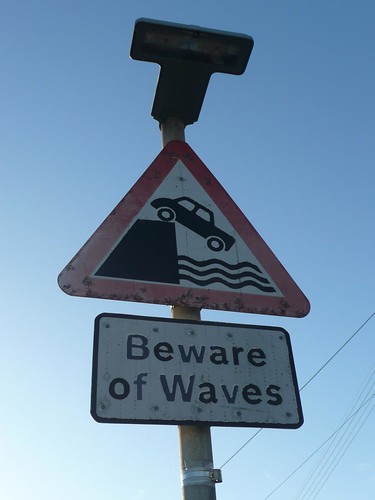
    REW reports the UK wave power testbed in Cornwall is due to be completed next year – Wave Hub Marine Hydro Project on Track for Summer 2011 Deployment .

    Wave Hub, a marine renewable infrastructure project that will create the world’s largest test site for wave energy technology, is on course to be deployed by summer 2011, with fabrication of subsea cables and the hub itself nearing completion, developers reported.

    Wave Hub is being developed by the South West RDA (Regional Development Agency). It is situated on the seabed in some 50 meters of sea water approximately 16 kilometers off the coast of Cornwall and connected to the national grid via a subsea cable. Wave Hub will create a test site for wave energy technology by building a grid-connected socket on the seabed, to which wave power devices can be connected and their performance evaluated

    Hartlepool-based JDR Cable Systems is constructing the armored 25- kilometer subsea cable that will connect Wave Hub to the grid and the hub structure that will sit on the seabed. Work also is progressing on the hub assembly, which will provide a connection between the main cable from the shore and the tails leading to the wave energy devic


  • Queensland farmers call for moratorium on coal seam gas mining

    The Courier Mail reports that Queensland farmers continue to be unhappy about coal seam gas developments on mining land – Surat Basin farmers call for moratorium on coal seam gas mining.

    MORE than 500 farmers who attended a protest meeting called for the government to place a moratorium on coal seam gas mining.

    Growers lined up one kilometre of farm machinery at a paddock at Cecil Plains west of Toowoomba in a show of strength to demonstrate they are capable of blocking mining company access to their land.

    The farmers face up to 40,000 gas wells being drilled across some of the state’s best food-producing land.

    Protest organiser Dave Armstrong said famers were gearing up for the fight of their lives. “What other choice do we have?” Mr Armstrong asked. “They have put us in a corner.”


  • Geothermal could meet Canada’s power needs

    Tyler Hamilton has an article in the Toronto Star about a study into the potential of geothermal energy in Canada – Geothermal could meet Canada’s power needs.

    Canada could technically meet all its electricity needs and dramatically lower greenhouse-gas emissions if it moved aggressively to develop enhanced geothermal power projects, according to the first comprehensive assessment of the country’s deep geothermal resources.

    The study, published online in the Journal of Geophysics and Geoengineering, reports on the potential of using enhanced geothermal systems (EGS) to tap hot temperatures kilometres below the earth’s surface as a way of generating clean electricity.

    It found that the most promising Canadian sites are located in parts of British Columbia, Alberta and Saskatchewan at depths ranging from 3.5 to 6.5 kilometres. Drill deeper, however, and the potential extends right across the country – including parts of Ontario.

    “At 10 kilometres we can expect EGS temperatures in the 150 to 200 degrees C range across most of Canada, except some areas of the Canadian shield,” wrote Stephen Grasby, a geologist with the Geological Survey of Canada, and co-author Jacek Majorowicz, an Alberta-based geothermal consultant.

    “Given the widespread distribution of geothermal energy, and the high energy content, the potential geothermal resource in Canada is significant,” they concluded.

    The findings aren’t surprising – I’ve been pounding on this drum for several years now. But it’s encouraging to finally see it expressed in a peer-reviewed journal. Canada, shamefully, is the only country along the so-called Pacific Ring of Fire that has yet to switch on a conventional geothermal power plant.

    The irony is that Canada is home to several of the continent’s leading geothermal power developers. Problem is they’re mostly developing in Nevada, California, Nicaragua, Iceland, Chile – everywhere except Canada, where no formal development program exists.

    Maybe now the federal and provincial governments will take the issue more seriously.

    This new Canadian study comes three years after the release of a groundbreaking U.S. study led by experts at the Massachusetts Institute of Technology. Their research suggested EGS in the United States could realistically supply about 100,000 megawatts of power generation capacity by 2050, assuming the proper policies and R&D investments were committed.

    For comparison, 100,000 megawatts – or 100 gigawatts—is roughly 80 per cent of Canada’s current power generation capacity. It’s about one-twelfth of current U.S. capacity. And the MIT-led group predicted it could be built less expensively than building new nuclear plants or investing in carbon capture and storage technologies for coal plants.


  • Glenn Beck holds up Maurice Strong as evidence of ‘global government’ conspiracy

    The Guardian has now sunk to the level of Peak Energy circa 1997, devoting valuable column inches to conspiracy theories about Maurice Strong (why bother quoting an imbecile like Glenn Beck – if you want good tinfoil about Maurice, read Jeff Wells who does a much classier take on him) – Glenn Beck holds up Maurice Strong as evidence of ‘global government’ conspiracy. I guess debunking the quote about collapsing industrial civilisation does need to be done occasionally though…

    Lock up your children: the bogey man cometh. We know this because Fox News rabble-rouser Glenn Beck has kindly forewarned us. Yesterday, he informed his devoted followers that they should be on the look out for the approaching tentacles of a “global government”. The contention of many ideologically fuelled climate sceptics, such as Beck, is that global warming is being used by malevolent, socialist forces lurking in the shadows to usher in a “new world order”. The commies have invented this faked, jumped-up “science” as a Trojan horse to achieve their master plan. Or something like that, anyway.

    Beck has obviously been thumbing through the catalogue of conspiracy theories online because he decided to use a quote from a man called Maurice Strong which has been bouncing around unchallenged in the sceptic echo chamber for years as evidence that the heralding of a global government is a clear and present danger. Here’s what Strong, a former executive director of the United Nations Environment Programme is said to have told a reporter in 1990:

    What if a small group of these world leaders were to conclude that the principal risk to the Earth comes from the actions of the rich countries? In order to save the planet, the group decides: Isn’t the only hope for the planet that the industrialized civilizations collapse? Isn’t it our responsibility to bring this about?

    Beck responds to this quote with his trademark “humour”:

    Now, I want to be very clear here, because we talked to the reporter that did this interview in 1990 up in Canada. And I want to be very clear: He [Strong] was fantasizing about a plot of a novel he was thinking about writing. [Pause.] Yeah.

    Beck then reveals to his audience that Strong has not actually written any novels since 1990 – or ever.

    You know what? He’s been busy – he’s got this great novel idea, but he hasn’t had time to do it because he’s involved in collapsing the global economies into the hands of a global government. Isn’t that interesting? It’s almost like his book. Hmm. Maybe it’s performance art.

    Media Matters has already performed a detailed take-down of Beck’s “analysis”, but, needless to say, this is unlikely to influence Beck’s legion of truthers who, judging by the fact that the term “Maurice Strong” is now trending on Twitter, have evidently rushed online to find out the real deal about this – in their lingo – “watermelon” evildoer. When they throw his name into the search engines they will also see that his name has been linked to the Illuminati, the Bilderberg group and the “Jewish banking conspiracy”. Frankly, it’s a bit of a surprise that this 81-year-old Canadian hasn’t been accused of lurking in the undergrowth on the grassy knoll in Dallas on 22 November 1963. (What isn’t a surprise, though, is that the Maurice Strong meme is also being perpetuated by the likes of our dear friends Lord Monckton and James Delingpole – both of whom have appeared on the Glenn Beck show.)

    Glenn Beck did not include Strong in his show and I wonder how many of Beck’s viewers will bother to visit Maurice Strong’s own website where he actually goes to the bother of responding to the many accusations that have been tossed his way over the years?


  • Pesticide link to hyperactivity: study

    The SMH has an article on a study linking pesticide use to ADHD – Pesticide link to hyperactivity: study.

    Children exposed to higher levels of pesticide found on commercially grown fruit and vegetables in the United States were more likely to have attention deficit/hyper-activity disorder (ADHD), according to a study published on Monday.

    Researchers in the United States and Canada studied data from 1139 children aged between eight and 15 and found children with higher residue levels of pesticides known as organophosphates were roughly twice as likely to have ADHD, the study in the journal Pediatrics found.

    “The present study adds to the accumulating evidence linking higher levels of pesticide exposure to adverse developmental outcomes,” the study concluded.

    Roughly 40 organophosphate pesticides are registered with the US Environmental Protection Agency for use in the United States, and about 33.11 million kilograms of the pesticides were used in agricultural and residential settings in 2001, figures cited in the study said.

    Although residential pesticide use is common, the National Academy of Sciences found that the major source of exposure for infants and children comes through the diet, the study added.

    According to a 2008 report cited by the study, detectable levels of pesticides were found in a range of vegetables. A sample of produce tested found 28 per cent of frozen blueberries, 20 per cent of celery and 25 per cent of strawberries contained traces of one organophospate, known as malathion.

    Other types of pesticides were found in 27 per cent of green beans, 17 per cent of peaches and 8 per cent of broccoli.


  • Giant Plumes of Oil Forming Under the Gulf

    The NYT reports that huge columns of oil are floating under the surface of the Gulf of Mexico – Giant Plumes of Oil Forming Under the Gulf.

    Scientists are finding enormous oil plumes in the deep waters of the Gulf of Mexico, including one as large as 10 miles long, 3 miles wide and 300 feet thick in spots. The discovery is fresh evidence that the leak from the broken undersea well could be substantially worse than estimates that the government and BP have given.

    “There’s a shocking amount of oil in the deep water, relative to what you see in the surface water,” said Samantha Joye, a researcher at the University of Georgia who is involved in one of the first scientific missions to gather details about what is happening in the gulf. “There’s a tremendous amount of oil in multiple layers, three or four or five layers deep in the water column.”

    The plumes are depleting the oxygen dissolved in the gulf, worrying scientists, who fear that the oxygen level could eventually fall so low as to kill off much of the sea life near the plumes.

    Dr. Joye said the oxygen had already dropped 30 percent near some of the plumes in the month that the broken oil well had been flowing. “If you keep those kinds of rates up, you could draw the oxygen down to very low levels that are dangerous to animals in a couple of months,” she said Saturday. “That is alarming.”

    The plumes were discovered by scientists from several universities working aboard the research vessel Pelican, which sailed from Cocodrie, La., on May 3 and has gathered extensive samples and information about the disaster in the gulf.

    Scientists studying video of the gushing oil well have tentatively calculated that it could be flowing at a rate of 25,000 to 80,000 barrels of oil a day. The latter figure would be 3.4 million gallons a day. But the government, working from satellite images of the ocean surface, has calculated a flow rate of only 5,000 barrels a day.

    BP has resisted entreaties from scientists that they be allowed to use sophisticated instruments at the ocean floor that would give a far more accurate picture of how much oil is really gushing from the well.

    “The answer is no to that,” a BP spokesman, Tom Mueller, said on Saturday. “We’re not going to take any extra efforts now to calculate flow there at this point. It’s not relevant to the response effort, and it might even detract from the response effort.”

    The undersea plumes may go a long way toward explaining the discrepancy between the flow estimates, suggesting that much of the oil emerging from the well could be lingering far below the sea surface.

    The scientists on the Pelican mission, which is backed by the National Oceanic and Atmospheric Administration, the federal agency that monitors the health of the oceans, are not certain why that would be. They say they suspect the heavy use of chemical dispersants, which BP has injected into the stream of oil emerging from the well, may have broken the oil up into droplets too small to rise rapidly.


  • Solar power could produce 25% of global electricity by 2050, IEA studies say

    The LA Times has a post on some (unambitious) studies into solar power generation growth over the next 40 years – Solar power could produce 25% of global electricity by 2050, studies say.

    By 2050, the world could be getting a quarter of its electricity from solar power, the International Energy Agency said Wednesday.

    Releasing two “roadmaps” for photovoltaics technology and concentrating solar power, the agency said that the two technologies could generate 9,000 terawatt hours of energy within four decades.

    At the Mediterranean Solar Plan Conference in Valencia, Spain, agency officials said that the combination could enhance energy security while cutting carbon dioxide emissions by almost 6 billion metric tons per year by 2050. …

    Concentrating solar power, which focuses solar radiation onto a small area and is usually applied in large-scale plants under clear skies and bright sun, will be dominated by sunny regions such as North America, North Africa and India. The agency’s Renewable Energy Division said it will be able to compete with coal and nuclear power plants by 2030. …

    The study, which was requested by the G8 member nations in a 2008 meeting as part of a series of 19 energy technologies, covers the science, financing and policy necessary to make photovoltaics an integral part of the global power infrastructure. …

    The agency recommends that governments establish long-term targets and policies around the technology to encourage investments and installations. Incentives and financing schemes, such as funding opportunities for rural projects in developing countries, would also help.

    Right now, just four countries can produce more than 1 gigawatt from installed photovoltaics systems: Germany, Spain, Japan and the U.S. But countries such as Australia, China, France, Greece and India are catching up.

    In many regions by 2020, power from photovoltaics is expected to be about as cheap as electricity from existing sources – a pricing point known as grid parity.

    Global photovoltaics capacity has already been ballooning by an average of 40% each year since 2000. And public expenditures around the world for photovoltaics research and development have doubled over the same period from $250 million in 2000 to $500 million in 2007.


  • Running low on batteries ? Tap harder !

    Technology Review has an article on efforts to capture energy when users press the touch-screens of mobile devices – Self-Powered Flexible Electronics.

    Now researchers at Samsung and Sungkyunkwan University in Korea have come up with a way to capture power when a touch screen flexes under a user’s touch. The researchers have integrated flexible, transparent electrodes with an energy-scavenging material to make a film that could provide supplementary power for portable electronics. The film can be printed over large areas using roll-to-roll processes, but are at least five years from the market.

    The screens take advantage of the piezoelectric effect–the tendency of some materials to generate an electrical potential when they’re mechanically stressed. Materials scientists are developing devices that use nanoscale piezoelectronics to scavenge mechanical energy, such as the vibrations caused by footsteps. But the field is young, and some major challenges remain. The power output of a single piezoelectric nanowire is quite small (around a picowatt), so harvesting significant power requires integrating many wires into a large array; materials scientists are still experimenting with how to engineer these screens to make larger devices.


  • GE to Tap Demand for Smart Meters in $200 Billion Global Market

    BusinessWeek has a report on GE’s interest in the smart meter / smart grid market – GE to Tap Demand for Smart Meters in $200 Billion Global Market.

    General Electric Co. is poised to tap the $200 billion smart-meter market as nations upgrade more power meters to improve electricity use and lower costs.

    More than a billion electricity measuring units may be changed to “smart meters” in the next two decades, said Luke Clemente, general manager for GE Energy’s digital energy business. A smart meter system may cost $100 to $200 a unit, depending on the technology used, and the business may be worth as much as $200 billion excluding add-on systems and devices, based on calculations from GE data. …

    The company is targeting U.K., Portugal, Spain, Germany and France as the European Union plans to replace 80 percent of their meters by 2020, the Atlanta-based GE official said. Smart grid installations may grow at “double digits” every year, he said, without giving details.

    The U.S., which announced an $8 billion upgrade to the nation’s grid in October, plans to replace about 40 million of its 120 million meters with smart ones over three years. …

    China, where GE built a smart grid demonstration center in Yangzhou, plans to replace 400 million meters in five years, Clemente said. South Korea, Asia’s fourth-largest energy user, said in January that it may spend about 27.5 trillion won ($24.5 billion) by 2030 building so-called smart power grids.


  • Australian UCG Industry aiming for commercial power generation

    The SMH has an article on the slowly emerging UCG industry in Australia (making progress towards commercialisation despite resistance from the coal seam gas industry) – Technology to help fuel the future.

    The coming of age for UCG has been lengthy. The technology was first developed in the 19th century and encouraged in Joseph Stalin’s Soviet Union. The process works by injecting oxidants down a production well and over non-mined coal seams. The combustion results in gas that is transported up a second well, where it can then be used as a fuel, a chemical feedstock or for power generation.

    Cougar Energy managing director Len Walker, one of the pioneers of UCG in Australia, says rising energy demand has put the technology in play.

    ”When I founded Linc Energy in 1996, or even when I founded Cougar more than two years ago, there was very limited interest in UCG,” Dr Walker says. ”There was also very little going on overseas at the time. Apart from Linc Energy, Carbon Energy and ourselves, which are the big three in the space, I have counted six or seven other listed companies that have recently popped up and which are all promoting UCG in different ways.

    ”I have never seen anything like it in the 30 years that I have been involved in UCG. The genie is out of the bottle and it is unlikely to be put back in the bottle again.”

    Walker says an important difference between UCG and coal seam gas is that the latter is produced for conversion into liquefied natural gas and the export market, while the former is aimed at domestic supply.

    ”It would take far too much effort to convert underground coal gasification for export,” Walker says. ”Everyone can see energy prices going up but if we can bring this to market, and clearly I am a firm believer in that eventuating, then we will be underpinning the price of gas in Australia.”

    Last month Cougar announced ignition of its flagship Kingaroy project in south-east Queensland and the successful production of synthetic gas (or syngas).

    The company will soon undertake a series of trials, underground and on the surface, that will be used for a pre-feasibility study and a subsequent bankable feasibility.

    The composition and variability of the gas will determine the final design for Cougar’s planned 400-megawatt power station, producing enough energy to power 400,000 homes for at least 30 years. Walker is hopeful of securing $300 million in combined debt and equity funding by early next year. The proceeds will fund its 200-megawatt stage 1 project to be completed by 2013.

    Travel about 125 kilometres south-west of Kingaroy and you will find Linc’s Chinchilla project, which has a slightly different take on UCG. It uses the process to convert coal to liquids, which it has been doing for about 10 years, and its goal is to produce 20,000 barrels a day – 10 per cent of Australia’s current fuel consumption.

    Linc chief executive Peter Bond says the company is looking at branching into power generation. ”What UCG is eventually used for is really driven by geography. So in Vietnam, for instance, power is in short supply so you wouldn’t do anything else but power,” he says.

    ”We are hopeful of putting in a power station in South Australia, which is being pushed through at a rate of knots because South Australia is really short on power supply. That would be a 200 to 400-megawatt commitment, with construction to start by the end of next year.”

    Neighbouring Linc’s tenements in the Surat Basin is Carbon Energy. Having completed its pilot burn more than a year ago, Carbon Energy is targeting a five-megawatt plant, which will be operational by midyear and be the first of its kind in the world.


  • Better Place “on time and budget” for its EV recharge and battery swap site rollout

    Go Auto has an article on Better Place Australia and their plans to start rolling out their network in 2011 – Better Place “on time and budget” for its EV recharge and battery swap site rollout.

    BETTER Place Australia CEO Evan Thornley says the electric vehicle infrastructure company will prove sceptics wrong by ‘building it’ rather than ‘dreaming it’ when it starts rolling out its battery-swap and recharge stations in Australia, starting in Canberra in 2011.

    Mr Thornley said Better Place was well advanced on its network plan for battery switch sites around the country, with at least one “in key districts and then more detailed site acquisitions to occur” as the rollout of EVs gathered pace.

    “Most of those will occur in the second half of 2011 or early in 2012,” he said.

    Speaking in Tokyo at the opening of Better Place’s world-first taxi battery swap station, Mr Thornley said he had overcome every obstacle put in his way.

    He said opponents of Better Place’s pledge to ‘rid the world’s addiction to oil’ only had fear, uncertainty and doubt to rely on, and the company had continued to grow and attract investment, despite the global financial crisis and the massive trough the world’s car industry was in.

    The company believes this momentum will continue as more Australians grasp the fact that – based on average mileages for vehicles – it will actually be significantly cheaper to switch from fossil fuel to electricity when mainstream EV sales commence. …

    Accessing ‘clean’ electricity that does not require brown coal or other carbon-releasing methods to make it is also one of Better Place Australia’s core goals.

    Mr Thornley – a former Victorian Labor politician – explained that although wind power would probably be the company’s primary electricity source for Australia, the fact that it can come from a variety of generators without impacting the EV infrastructure or the car itself was another benefit.

    These other sources will include geo thermal (“certainly if that is brought to industrial scale”), solar thermal, and clean coal technology “if that comes good”.

    “We certainly don’t see the availability of premium electricity as a barrier at all,” he said. “We are very confident about plenty of renewable electricity being available.

    “That’s an important point about EVs – your energy source is independent. You can move from one form of zero emissions electricity source to another without a single dollar of new investment in the car fleet or the charge network.”

    However, Better Place Australia would not comment on whether it supports nuclear power sourcing.

    “That’s not for us to comment. If the community decides that is the path it wants to go down, then it does. We are not in the business of advocating one way or another,” Mr Thornley said.

    “We see plenty of zero emissions energy sources available today – and on a practical matter there’s not a snowball’s chance in hell of any nuclear power being available in this country within the next 15 years anyway, so if or when it happens we will deal with that then.”


  • The Next Empire

    The Atlantic has a look at Africa and China’s interest in the continent’s resources, asking “Do China’s grand designs promise the transformation,at last, of a star-crossed continent? Or merely its exploitation?” – The Next Empire.

    I was about to embark on one of the world’s great train rides, a journey from this muggy Indian Ocean port city, the commercial capital of Tanzania, to the edge of the Zambian Copper Belt, deep in the heart of southern Africa. The official who’d sold me my ticket had seemed puzzled when I asked when the train would arrive at its final destination, and he refused to guess; in recent years, the 1,156-mile trip has been known to take anywhere from its originally scheduled two days to an entire week.

    The railroad—known as the Tazara line—was built by China in the early 1970s, at a cost of nearly $500 million, an extraordinary expenditure in the thick of the Cultural Revolution, and a symbol of Beijing’s determination to hold its own with Washington and Moscow in an era when Cold War competition over Africa raged fierce. At the time of its construction, it was the third-largest infrastructure project ever undertaken in Africa, after the Aswan Dam in Egypt and the Volta Dam in Ghana.

    Today the Tazara is a talisman of faded hopes and failed economic schemes, an old and unreliable railway with too few working locomotives. Only briefly a thriving commercial artery, it has been diminished by its own decay and by the roads and air routes that have sprung up around it. Maintenance costs have saddled Tanzania and Zambia with debts reportedly as high as $700 million in total, and the line now has only about 300 of the 2,000 wagons it needs to function normally, according to Zambian news reports.

    Yet the railway traces a path through a region where hopes have risen again, rekindled by a new sort of development also driven by China—and on an unprecedented scale. All across the continent, Chinese companies are signing deals that dwarf the old railroad project. The most heavily reported involve oil production; since the turn of the millennium, Chinese companies have muscled in on lucrative oil markets in places like Angola, Nigeria, Algeria, and Sudan. But oil is neither the largest nor the fastest-growing part of the story. Chinese firms are striking giant mining deals in places like Zambia and the Democratic Republic of the Congo, and building what is being touted as the world’s largest iron mine in Gabon. They are prospecting for land on which to build huge agribusinesses. And to get these minerals and crops to market, they are building major new ports and thousands of miles of highway.

    In most of Africa’s capital cities and commercial centers, it’s hard to miss China’s new presence and influence. In Dar, one morning before my train trip, I made my way to the roof of my hotel for a bird’s-eye view of the city below. A British construction foreman, there to oversee the hotel’s expansion, pointed out the V-shaped port that the British navy had seized after a brief battle with the Germans early in the First World War. From there, the British-built portion of the city extended primly inland, along a handful of long avenues. For the most part, downtown Dar was built long ago, and its low-slung concrete buildings, long exposed to the moisture of the tropics, have taken on a musty shade of gray.

    “Do you see all the tall buildings coming up over there?” the foreman asked, a hint of envy in his voice as his arm described an arc along the waterfront that shimmered in the distance. “That’s the new Dar es Salaam, and most of it is Chinese-built.”


  • Daylesford wind farm goes ahead

    The Age has an article on a community owned wind farm being built in Victoria – Daylesford wind farm goes ahead.

    AS big energy companies bemoan a lack of certainty to invest in new power plants, a central Victorian town last night celebrated a deal that will build Australia’s first community-owned wind farm.

    After five years of planning, contracts were signed yesterday to build the two-turbine Hepburn Community Wind Park at Leonards Hill, about 10 kilometres from Daylesford.

    According to the co-operative behind the project, it will generate 12,200 megawatt hours a year – significantly more than is needed to power the town’s 1887 homes.

    Hepburn Wind chairman Simon Holmes a Court said more than 1100 members had invested $7.5 million. Together with a $975,000 state government grant and the backing of Bendigo and Adelaide Bank, it was enough to sign a contract with German manufacturer REpower systems to build the $12.9 million farm.

    Mr Holmes a Court said the project was based on the Denmark model of small communities owning boutique wind farms. ”Most Australians want to see a meaningful response to the threat of climate change, but many aren’t sure what constructive role they can play,” he said.

    ”By pooling resources, [we] have developed a model for the low-carbon future that is both low cost – at least four times cheaper than rooftop solar photovoltaics – and brings a significant new business to town.”


  • BP Gulf of Mexico oil slick declared a national disaster

    The Australian has an update on BP’s disaster in the GOM – BP Gulf of Mexico oil slick declared a national disaster. More at BP under fire as Gulf of Mexico oil spill costs soar and Obama acts to mop up Lousiana oil spill overflow.

    THE giant Gulf of Mexico oil slick has been declared a national disaster, as it nears the Louisiana coast and threatens economic and environmental devastation. Louisiana governor Bobby Jindal declared a state of emergency and called for urgent help to prevent fragile wetlands and vital fishing communities along the coast from pollution on a massive scale.

    The wind started to strengthen and blow the 1550 sq km slick directly onto the coast, where a rich variety of wildlife were at risk in the maze of marshes that amounts to 40 per cent of the US wetlands.

    “Satellite imagery from this morning indicates the western edge of the oil is 7-8 miles from the (Mississippi) Delta,” the US government’s National Oceanographic and Atmospheric Administration said. “Shoreline impacts become increasingly likely later in the day and into Friday with the strengthening onshore winds.”

    Despite frantic efforts to stave off an environmental catastrophe many of those dependent on the region’s vital fisheries and nature reserves had already given up hope due to strong onshore squalls forecast for several days to come. “It is a question of when, not if, the oil is going to come on shore,” Doug Helton, NOAA’s incident operations coordinator, told AFP. …

    With 11 workers dead and an environmental disaster brewing along the shoreline of four US states, dealing with the aftermath of the deadly blast on the Deepwater Horizon rig is likely to be the biggest challenge of his career – and one of the greatest in the 101-year history of Britain’s most famous company.

    So far it is not going well. Anger is mounting in the US over BP’s refusal publicly to acknowledge the true scale of the catastrophe unfolding in the Gulf of Mexico.

    About 10 billion pounds has been wiped off BP’s value since the explosion, much of it yesterday, when its shares fell 40.8p, or 6.5 per cent, to 584p as investors took fright at the spill’s potentially enormous scale, costs and consequences.


  • U.S. Electrical Grid Undergoes Massive Transition to Connect to Renewables

    Scientific American has an article on smart grid evolution in the US – U.S. Electrical Grid Undergoes Massive Transition to Connect to Renewables.

    The U.S. electrical grid is the largest interconnected machine on Earth: 200,000 miles of high-voltage transmission lines and 5.5 million miles of local distribution lines, linking thousands of generating plants to factories, homes and businesses. The National Academy of Engineering ranks it as the greatest engineering achievement of the 20th century. What it cannot do is support the massive shift to low-carbon power that scientists warn will be needed to avoid catastrophic climate change impacts.

    To shrink the electricity sector’s carbon footprint, experts say, the nation needs to build thousands of miles of new transmission lines over the next 20 years to connect more renewable resources to electricity demand centers. A 21st-century grid will also have to balance fluctuating power flows from wind and solar generation, small-scale distributed sources, and plug-in electric vehicles. And it must be interactive so that customers can manage their electricity use.

    The transition is already under way, although it means different things for different companies. Firms that operate long-distance transmission lines, such as the Independent System Operators that manage regional grids in New York, New England and the Midwest, are adding sensors, phasors, and other devices invisible to non-engineers, that give them much more precise control over the system. Better control will help utilities add more renewable power, a challenge now because wind and solar energy are intermittent sources, and grid operators can’t always react quickly when their output fluctuates.

    “The whole power system is engineered to balance demand and supply at every second, which means that control over generators is really important,” said energy consultant Peter Fox-Penner, a principal with The Brattle Group and author of Smart Power: Climate Change, the Smart Grid, and the Future of Electric Utilities (Island Press, 2010). “But if you have really up-to-date information on all the flows on your grid, you can tolerate a little more variability. The smart grid will monitor everything at a very, very fine level of detail and reacts really fast, so operators will have time to fire up another plant if wind speed drops or a big cloud formation reduces solar output.”

    Suppliers such as utilities that deliver power directly to homes and businesses are focusing on a more visible element of the smart grid: meters. Today the grid transmits information one way – from utility to customer – and most meters only show power usage for the current billing period. What’s more, power companies charge the same rate for every kilowatt-hour of electricity that’s consumed, even though the cost of generating electricity can change dramatically during the day. Since users don’t see how much power they are using or how much it costs in real time to generate it, they have little incentive to conserve energy or shift their use to off-peak hours.

    To crack this problem retail power suppliers are installing advanced metering systems (smart meters and wireless communications systems and databases to support them). Advanced metering lets utilities show customers how much electricity they use at different times of day and how much that power costs. With regulators’ approval, power companies can also use time-based pricing, charging customers based on the actual cost of power. There are many ways to structure time-based pricing: some suppliers charge more for certain blocks of time when demand is typically high, like weekday afternoons, while others raise prices sharply on selected days when the grid is under heavy stress, as on the hottest days of summer. But all of these programs aim to shift consumption away from high-demand periods. …

    The main reason for peak-shifting is economic, Fox-Penner said: It reduces the utility’s cost to provide power at high-demand times. But peak-shifting can also reduce carbon emissions, although the climate impact depends on what kind of plants utilities would otherwise call into service to meet peak demand. BGE’s peak reductions, for instance, will reduce the need to call on old and relatively dirty coal plants, eliminating significant carbon emissions, Case said.

    The bigger climate payoff from smart metering comes as customers reduce electricity consumption throughout the year. Studies in the U.S., Canada and Australia have shown that providing real-time information about electricity use and costs can reduce energy use, although some customers are more receptive than others to smart metering and time-based pricing.


  • Iran Adds 3 Supertankers To Storage Fleet

    Iran Daily reports that the Iranians are increasing oil storage in super-tankers once again – Iran Adds 3 Supertankers To Storage Fleet.

    Iran, OPEC’s second-biggest oil producer, added three supertankers to its fleet of vessels storing crude, matching a similar program in 2008 that helped freight rates to triple, ship tracking data show.

    At least 15 such vessels are idling in the Persian Gulf, Gulf of Oman and Gulf of Suez, according to data from the ships collected by AISLive Ltd. The tankers can store a combined 30 million barrels of oil, more than a week of national output, Bloomberg reported.

    Two years ago, Iran used as many as 15 tankers for storage, constricting vessel supply and helping to more than triple freight rates in less than three months.

    Iran is likely storing oil because of weakening demand as refineries across Asia, accounting for almost two-thirds of global demand for supertankers, carry out maintenance. National Iranian Tanker Co., which operates the supertankers, also has a laden suezmax tanker idling off Iran, ship-tracking data show. A suezmax can hold about 1 million barrels of oil.

    “They don’t want to shut down their production,” said Ole-Rikard Hammer, an analyst at Pareto Securities ASA in Oslo who’s tracked tanker markets for more than two decades. “The refining clients are buying less because of maintenance and the Iranians seem to prefer to keep oil in floating storage.”

    The discount on Iran Heavy crude compared with Oman and Dubai petroleum is at its widest in more than a year, according to data compiled by Bloomberg. The discounts on Iran’s Forozan, Soroush and Norouz crudes have also widened.

    National Iranian Tanker has a fleet of 28 supertankers, according to Lloyd’s Register-Fairplay data on Bloomberg. The remaining 13 carriers are all either moving or have been at their present locations for less than two weeks, according to the tracking data.


  • Floating LNG plant to be built near East Timor

    The ABC reports that Woodside are looking to build a floating LNG production platform for the Sunrise field between Darwin and East Timor (with the East Timorese continuing to lobby vigorously for the plant to be built there) – Floating LNG plant to be built near East Timor

    After years of speculation, the Sunrise Joint Venture has finally announced it will build a floating liquefied natural gas processing plant in the Timor Sea. The Greater Sunrise field is in both Australian and Timorese waters, about 700 kilometres north-west of Darwin, and the two countries will have an equal share of royalties.

    The floating rig means Darwin will miss out on having a multi-billion dollar plant built there. Operator Woodside Petroleum says after considering on-shore LNG processing in both Darwin and East Timor, the joint venture partners, which include Osaka Gas, Shell and ConocoPhillips, decided a floating plant was the most viable.

    Woodside CEO Don Voelte says the decision is a boon for the new but impoverished democracy. “We expect that the selection of a floating LNG processing option will, in addition to generating significant long-term petroleum revenue, provide a broad range of social investment, employment and training opportunities for Timor-Leste.”