
Author: Brad Reed
-
Reddit user claims to have invested ‘entire retirement and savings’ in Bitcoin
Do skyrocketing Bitcoin prices mean that the virtual currency is in the midst of a speculative bubble? Don’t tell that to Reddit user anon_bitcoin_gambler, who claims to have invested his “entire retirement and savings” in Bitcoin. The user, who has so far refused to reveal his identity, says that he is “quite poor” at the moment but has “good credit” that has allowed him to receive “over $30,000 USD in credit card 0% balance transfer cash” that he has “slowly been investing in bitcoin for the past two months.”
-
Apple reportedly close to finishing ‘iRadio’ deal with two major labels
Sorry, Pandora — you won’t be able to escape Apple’s (AAPL) iRadio after all. CNET reports that Apple is close to signing a deal with two major record labels that would pay the labels half the per-song royalties that they receive from Pandora but would also add sweeteners to the deal that would give the labels added revenues. Among other things, CNET says that Apple will provide “a quick way for consumers to buy a song they hear, potentially boosting download sales from iTunes” and also give the record labels “a revenue share of new audio ads Apple is planning to add to the free service.” Given that the service will be centered around iTunes and available on all iOS devices, it seems that the labels are willing to take less in per-song royalties in exchange for potentially much wider exposure than what they get from Pandora.
-
Rovio plans to move beyond games, become Finland’s answer to Disney
Could Rovio’s Angry Birds one day have the global brand recognition that Mickey Mouse and Donald Duck once had? That’s apparently the Finnish mobile gaming company’s ultimate goal, as The Wall Street Journal reports that Rovio plans to move beyond only developing games and become “a global entertainment powerhouse.”
-
Windows 8 is no Vista, but still considered polarizing
We’ve long said that it’s unfair to slap Windows 8 with the dreaded Vista comparison and now we have some data to back it up. ZDNet’s Ed Bott this week took a look at Amazon (AMZN) customer ratings for several versions of Microsoft’s (MSFT) operating system and found that while Windows 8 has its share of haters, it also has even more people who enthusiastically support the platform. Overall, 50% of Windows 8 users gave the platform four or five-star reviews while 40% gave it a one or two-star rating. This contrasts very favorably with Vista, which received one and two-star ratings from 50% of users while receiving four and five-star ratings from just 37% of users. The ratings also show that dislike of Vista was remarkably intense, with 42% of users giving it a one-star rating that Bott describes as a “middle finger” to the platform.
-
Next-generation Xbox reportedly requires Internet connection just to play games
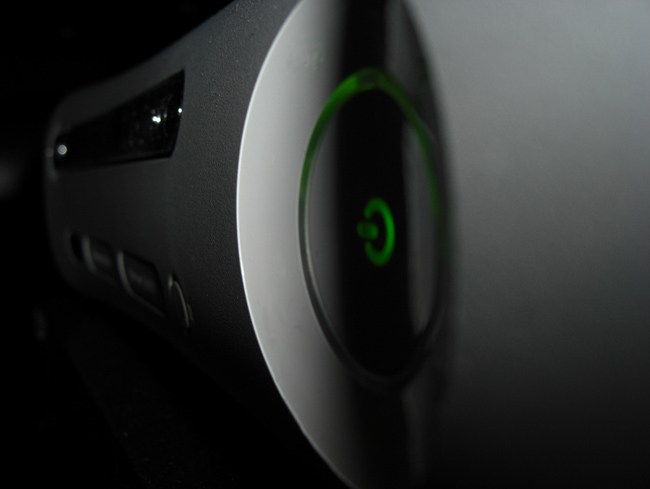
Given Electronic Arts’ (EA) recent misadventures with requiring always-on Internet connectivity to play SimCity, you might think that Microsoft (MSFT) would be more cautious about implementing such a scheme for its next-generation Xbox. But unnamed sources have told Kotaku that Microsoft’s new Xbox “must have an active Internet connection to be used” and will only let users continue to play games on their consoles if their connection is disrupted for less than three minutes. To make matters worse, one source tells Kotaku that “no games or apps can be started” without an Internet connection, meaning that console will essentially be useless unless it’s hooked up to the web. We’d previously heard rumors that Microsoft would require an Internet connection when playing new games so that it could verify their activation codes and prevent users from playing used games, but this is the first time we’ve heard that the new Xbox will require an Internet connection just to function.
-
Apple’s long-term edge in the tablet market seen as ‘highly unlikely’ to erode
Apple’s (AAPL) iPad has one big advantage going for it that the iPhone can’t match: it doesn’t rely on wireless carriers to be distributors. Barron’s points us to a new note from Bernstein Research analyst Toni Sacconaghi outlining the reasons why it’s “highly unlikely” that Apple’s share of the tablet market will ever fall to the level of its smartphone market share. The most important factor, writes Sacconaghi, is that “the iPad has stronger global distribution through Apple stores, carrier partners and network of resellers, including third-party retail outlets (e.g., Best Buy, Wal-Mart, carrier stores) and third-party websites (e.g., Amazon.com).” In contrast, the iPhone is distributed by just 240 carriers worldwide, which Sacconaghi notes is “significantly lower than Samsung (005930) and Nokia (NOK), which have essentially global distribution, and Blackberry (BBRY), which is distributed by >2x the number of carriers.”
-
Facebook, HTC announce the HTC First
Although Facebook (FB) spent most of its time Thursday talking about its new Facebook Home software that puts Facebook at the center of the Android operating system, the company also announced a new smartphone with HTC (2498) that will be the first to use Home. The appropriately named HTC First will be available in four different colors and will be available on AT&T (T).
Developing…
-
Gartner: Microsoft risks becoming irrelevant if Windows Phone, tablet efforts fail
In case you haven’t noticed, tablet and smartphone sales have been surging lately as PC sales have started to tank. The latest research from Gartner shows that this trend won’t change anytime soon and the firm projects that PC shipments will shrink from 315 million in 2013 to 302 million in 2014, and down to just 272 million in 2017. Tablet shipments, on the other hand, are expected to explode from 197 million in 2013 to 468 million in 2017, while smartphone shipments are expected to rise from 1.9 billion in 2012 to 2.1 billion in 2013.
-
Facebook, mobile games account for half the time spent on iOS, Android devices
Maybe Facebook (FB) is onto something after all with its notion that people want their smartphones to be centered more around its social network. Flurry Analytics released a new report on Wednesday showing that iOS and Android users spend roughly half their time either playing mobile games, which accounted for 32% of all time spent on both platforms, or using Facebook’s mobile app, which accounted for 18% of all time spent. The report, which used both Flurry’s own data as well as data from comScore and NetMarketShare, found that mobile users spend 80% of their time using some kind of mobile app on their devices and spend just 20% of their time using some kind of mobile browser.
-
Safari expands mobile browser share lead despite heated competition
Apple (AAPL) may be under more competitive pressure than it’s faced in a while but that doesn’t mean its iPhones and iPads aren’t still the dominant devices for browsing the mobile web. The latest numbers from NetMarketShare show that Apple’s Safari browser has actually increased its lead among smartphone and tablet users and now accounts for 62% of mobile web browsing, followed by Google’s (GOOG) Android browser at 22% and Opera Mini at 8%. Safari’s share actually marks a significant increase from the previous month when it accounted for 55% of mobile browsing, so it seems that Apple’s dominance of the mobile web isn’t in danger of shrinking anytime soon.
-
Apple told to produce an ‘iPhablet’ or risk losing ‘a lot of market share’
Nokia (NOK) should take solace because it’s not the only company getting panicky advice from analysts who want it to produce a “phablet” within the coming year. Per Barron’s, ISI Group analyst Brian Marshall, who maintains a Strong Buy rating on Apple shares, told CNBC on Wednesday that Apple needs to “migrate to the 5-inch screen iPhone this summer” or the company will “lose a lot of market share.” Marshall noted that at Mobile World Congress this year, “every major high-end smartphone was had a larger screen” and claimed that “most people are migrating to five inches” for smartphones in the future. Even more dramatically, Marshall said that the “phablet” craze presents a “do or die moment” for Apple. As we’ve noted in the past, it seems that having the world’s best-selling smartphone just isn’t enough anymore for some Apple analysts.
-
Samsung continues to inch away from Google, teams with Mozilla on browser engine
Samsung (005930) would love to lessen its dependence on Google (GOOG) services and now the company plans to team with Mozilla to create a next-generation browser engine that will presumably power non-Google web browsers on future Samsung devices. Mozilla says that the new engine, dubbed Servo, “is an attempt to rebuild the Web browser from the ground up on modern hardware” that entails “addressing the causes of security vulnerabilities while designing a platform that can fully utilize the performance of tomorrow’s massively parallel hardware to enable new and richer experiences on the Web.” Needless to say, giving a Servo-powered future version of Firefox a prominent place on Samsung devices would do wonders for Mozilla’s mobile browser market share and would give Samsung an alternative to both the default Android browser and Google’s Chrome on its smartphones and tablets.
-
At 40 years old, the cellphone has become the world’s most important consumer tech product
Like a lot of important consumer technology, the cellphone got its start as a luxury item for businesspeople who wanted the ability to take important phone calls while out of the office. But 40 years after its invention, the cellphone has become the single most important piece of consumer electronics in the world, acting not only as a communications device for voice calls but as a low-cost way for millions of people around the world to access the Internet without needing more expensive personal computers. As companies such as Samsung (005930), BlackBerry (BBRY), Nokia (NOK) and perhaps even Apple (AAPL) move more aggressively to bring low-cost smartphones to emerging markets, it’s easy to see how mobile phones have become the key to spreading Internet connectivity around the world and giving people access to vital information that had previously been much harder to come by.
-
Google engineers’ robocall-blocking scheme wins kudos from FTC
Election years have become nightmares for many Americans, who are not only subjected to an endless stream of campaign ads but must also put up with campaigns and third-party advocacy groups overloading their phone lines with annoying robocalls. The Federal Trade Commission this week announced the winners of its “Robocall Challenge” competition to find ways to stop robocalls and gave special kudos to Google (GOOG) engineers Daniel Klein and Dean Jackson, who proposed “the creation of a system that allows users to report, to an online database system, the originating telephone number of unwanted solicitations, advertisements or robotically placed calls.” If the Google engineers’ system is successfully implemented, blocking robocalls could soon become as simple as blocking unwanted spam messages in Gmail accounts, which is certainly a welcome prospect for Americans who are tired of having their dinners interrupted by automated messages.
-
As Bitcoin prices surge, worries about a speculative bubble mount
Prices of virtual currency Bitcoin have been absolutely surging lately but one analyst thinks such a rapid rise is more indicative of a bubble than a genuine boom. ConvergEx Group Chief Market Strategist Nick Colas tells Business Insider that the reaction from his clients “has been pretty uniform: it must be a bubble.” Colas goes on to say that the price increase in Bitcoins has been “too far, too fast, too new” and exhibits all the signs of a classic speculative bubble. Colas also notes that “it’s very hard to short Bitcoins, so there’s no real way to express that pessimistic point of view,” which means that the price of the virtual currency may continue to rise until it experiences a hard landing. The price of Bitcoins, which remained at under $20 for all of 2012, has recently spiked to more than $110 over the span of just a few weeks.
-
Nokia told to make a ‘phablet’ or again risk being left behind
Does the world really need another “phablet?” Maybe not, but that doesn’t mean it would be a bad idea for Nokia (NOK) to release an oversized smartphone of its own. In an interview with Bloomberg, IDC analyst Francisco Jeronimo says that big-screen devices are “a trend that can’t be missed” because “people are using smartphones in different ways now, consuming media by streaming over faster mobile networks.” CCS Insight research director Ben Wood similarly thinks that “phablets” are an important trend and tells Bloomberg that “Nokia needs to make sure they don’t miss the boat” by not building one of their own.
-
MetroPCS merger said to be in trouble unless T-Mobile ‘sweetens’ deal
T-Mobile CEO John Legere has shown he can trash-talk, but he may soon have to show that he can sweet-talk as well. Per Bloomberg, New Street Research analyst Jonathan Chaplin says that T-Mobile and MetroPCS (PCS) right now “don’t have enough votes” among MetroPCS shareholders to get their proposed merger approved. The merger’s prospects are apparently so bad right now that Chaplin says T-Mobile parent company Deutsche Telekom “would be crazy to let it go to a vote” and that it will have to “sweeten” its offer if it hopes to win shareholder approval. MetroPCS shareholders are scheduled to vote on the proposed merger at a special meeting on April 12th.
-
Microsoft could push down Windows RT prices to compete with cheap Android tablets
With consumers largely ignoring Windows RT so far, Microsoft (MSFT) may be considering cutting licensing fees to make Windows RT tablets cheaper and help them compete with low-cost Android tablets. Topeka Capital analyst Brian White has released a new research note claiming that Microsoft is planning to release a cheaper version of Windows RT that could result in “a 35-40% price reduction” in Windows RT tablets going forward. News that Microsoft plans to push low-cost Windows tablets comes after the company made some changes to its Windows 8 hardware certification guidelines last week that significantly lowered the minimum resolution requirements for devices, thus potentially paving the way for OEMs to make smaller 7-inch tablets.
-
Apple could free itself from Samsung chips as early as June
Apple (AAPL) has been trying to rapidly separate itself from longtime-partner-turned-nemesis Samsung (005930) and now Taiwan’s Economic Daily News reports that Apple could be free of its commitment to use Samsung as a chip supplier as soon as this June. Unnamed sources tell the site that Samsung’s exclusive agreement to produce Apple processors will expire in June and that Apple will be free to use other manufacturers to produce its next-generation A7 processor. This gels with earlier reports we heard last year that Apple stopped collaborating with Samsung while designing the A6 chipset as a precursor to ditching the company all together this year.
-
T-Mobile hooking up unlocked iPhone subscribers with LTE this week
If you’re a T-Mobile subscriber who’s been accessing the carrier’s HSPA+ network with an unlocked iPhone 5, don’t worry about having to buy a whole new device to use its recently launched LTE network. TmoNews reports that T-Mobile will push out an update to its unlocked iPhone 5 subscribers on April 5th that will give the device access to the AWS spectrum bands used for T-Mobile’s LTE services. Of course, since T-Mobile’s LTE network is only live in seven markets right now, you’ll probably still be relying on HSPA+ connectivity even after installing the update this week. TmoNews also says that the update will also give unlocked iPhone 5 users access to Visual Voicemail “among other features.”