
Author: Brad Reed
-
Microsoft’s market share said to ‘gradually deteriorate’ without changes
IDC’s report on plummeting PC shipments has hit Microsoft (MSFT) hard and now Goldman Sachs analyst Heather Bellini has downgraded the company from Hold to Sell while predicting that its market share will “gradually deteriorate” unless it makes bold changes to turn itself around. Per Bloomberg, Bellini writes that Microsoft “faces critical secular challenges given the deteriorating PC demand backdrop” and that its market share will “gradually deteriorate unless Microsoft successfully repositions itself as a more meaningful participant in the new era of consumer compute” that includes tablets and smartphones. Bellini’s note is very similar to a note released Wednesday by BGC analyst Colin Gillis, who said that Microsoft’s “minimal participation” in the mobile market represented “an increasingly urgent problem that may prove difficult to reverse.”
-
Samsung unleashes new Galaxy Mega line with monstrous 5.8-inch and 6.3-inch displays
At this rate, Samsung (005930) looks likely to give one of its televisions voice-calling capabilities and still call it a smartphone. Until then, fans of big phones will have to make do with the Samsung Galaxy Mega lineup, a monstrous new “phablet” line that comes with display sizes of 5.8 and 6.3 inches. JK Shin, the CEO of Samsung’s mobile business, said that the new phablets tap into “a great potential in the bigger screen for extensive viewing multimedia, web browsing, and more.” The 6.3-inch version of the Mega features a dual-core 1.7GHz processor, Android 4.2 Jelly Bean, a 3,200 mAh battery and an 8-megapixel front-facing camera, while the 5.8-inch version features a 1.4GHz dual-core processor, Android 4.2 and an 8-megapixel front-facing camera. Samsung hasn’t announced pricing for the Mega models yet but it says the devices will launch in May in Europe before expanding to other markets later in the year. Samsung’s full press release is posted below.
-
U.S. BlackBerry Z10 sales said to have ‘started poorly’ with ‘returns now exceeding sales’
While we’ve heard encouraging reports on BlackBerry Z10 sales from other countries, here in the United States the picture looks decidedly gloomier. With one major wireless carrier providing next to no marketing push, sales of BlackBerry’s (BBRY) flagship phone in the U.S. have apparently gotten off to a very slow start and are showing few signs of picking up anytime soon. Per The Wall Street Journal, two analysts on Thursday added to reports of slow early U.S. sales and painted a very dire picture of BlackBerry’s future prospects in the American smartphone market.
-
Dear Microsoft: Giving the next Xbox an always-online requirement might be suicidal
The stunning decline in PC shipments reported by IDC this week shows that Microsoft (MSFT) is really on the ropes in the consumer electronics market. What makes IDC’s report particularly cringe-worthy for Microsoft is that it pins some of the blame for poor PC sales on the drastic changes that Microsoft made to its Windows operating system with Windows 8. While Windows 8 may not be as universally hated as Vista was, it has still proven polarizing at a time when Microsoft faces stiff competition from mobile devices based on the hugely popular iOS and Android operating systems.
-
Survey: 71% of consumers say ‘nothing’ could get them to buy a BlackBerry
Consumer surveys haven’t been very kind to BlackBerry (BBRY) this week. In the wake an earlier survey showing that 83% of Americans had no idea BlackBerry 10 had even launched, AllThingsD points us to a new survey from research firm Raymond James showing that 71.4% of consumers would never buy a BlackBerry under any circumstances. For comparison, just 19.7% of consumers surveyed said that nothing could convince them to buy an iPhone while just 31.3% said the same of Android phones. It goes without saying that this only underscores the challenges that BlackBerry faces in trying to win over consumers who are already very attached to both iOS and Android and suggests that the company faces a pretty low ceiling for how high its market share can climb.
-
PlayStation 4, Xbox 720 not seen curing ‘sick market for old-school gaming’
It’s not only financial analysts who are bearish on the prospects of new gaming consoles from Microsoft (MSFT) and Sony (SNE) — gaming industry pioneers aren’t too optimistic either. In an interview with Gamespot, Bioware cofounder Dr. Greg Zeschuk said that neither the next Xbox nor the PlayStation 4 are likely to fix the “sick market for old-school gaming” that the industry has found itself trapped in recently. Zeschuk, who cofounded the company responsible for the popular Mass Effect and Dragon Age series, went onto say “that unless Microsoft or Sony pull something magically out of a hat, it’s pretty much the same old, same old repackaged,” and that the new consoles will have a minimal impact on the retail market for high-end games.
-
Latest OS X update confirms gigabit Wi-Fi coming to new Macs
If Apple (AAPL) does release its next-generation MacBooks this spring, it seems they’ll come with super-fast Wi-Fi capabilities. 9to5Mac reports that the latest version of OS X that Apple seeded to developers this week contains code supporting the 802.11ac standard, also known as “5G Wi-Fi,” that is capable of delivering theoretical peak speeds of 1.3Gbps and is a major step forward in the evolution of Wi-Fi. The added code confirms a report from earlier this year about Apple and Broadcom (BRCM) teaming up to bring gigabit-speed 802.11ac chips to the 2013 Mac lineup. Asus (2357) became the first company to produce a notebook with 802.11ac connectivity last year with its G75VW gaming laptop.
-
Google’s Babel messaging service rumored to ‘eventually’ support Google Voice
If you were hoping that Google’s (GOOG) upcoming Babel cross-platform messaging service would integrate your Google Voice account, you’re out of luck for at least a little while. According to Droid-Life, Babel will “eventually” support Google Voice as one of its services but is most likely to launch only with support for Google Talk, Google Hangouts and Google Messenger. Droid-Life also says that Babel will likely launch with “synced notifications, cross-platform conversation experiences, a new UI, photo sharing, quick access to live video chats, and on-the-record chat history viewing from anywhere,” making it a truly comprehensive messaging service that will be available on both Android and iOS.
-
Apple’s desire to dump Google services sends it fleeing to Yahoo
Just because Apple’s (AAPL) plan to ditch Google Maps has been a bust so far doesn’t mean that the company has given up on decreasing its devices’ dependence on Google’s (GOOG) mobile services. The Wall Street Journal reports that Apple and Yahoo (YHOO) “have been discussing how more of Yahoo’s services can play a prominent role on Apple’s iPhone and iPad devices,” including increased integration into Siri, Apple’s virtual personal assistant. The Journal’s sources also say that the companies are discussing “possible deals to get more content from Yahoo News and its other Web properties loaded onto Apple devices,” although no deal is imminent at this time. The Journal notes that some Apple executives, including senior vice president of Internet Software and Services Eddy Cue, have been reluctant to drop Google entirely because its search results remain superior to those of its competitors.
-
IDC: Windows 8 has actually made PCs ‘a less attractive alternative to tablets’
While Microsoft’s (MSFT) launch of Windows 8 was supposed to be the big change that the company needed to help personal computers keep pace with touch-based devices such as tablets and smartphones, new research from IDC suggests it has so far had the opposite effect. According to IDC’s latest numbers, PC shipments posted their “steepest decline ever in a single quarter” in Q1 2013, as the 76.3 million PCs shipped represented a 13.9% decline from Q1 2012. To make matters worse, IDC analyst Bob O’Donnell says that Windows 8 bears at least some of the blame for the accelerated decline in PC shipments.
-
Microsoft’s ‘minimal participation’ in mobile market called increasingly ‘difficult to reverse’
Microsoft’s (MSFT) Windows Phone 8 hasn’t exactly lit the world on fire since its release last fall and the company could face trouble gaining traction if things don’t turn around soon. Per Barron’s, BGC analyst Colin Gillis has released a new research note that casts doubts on Microsoft’s future in the mobile computing market despite the fact that he remains “supportive of the quality and innovation of Microsoft’s software to power phones and tablets.” The big issue for Microsoft, Gillis says, is that the company hasn’t figured out how to make people care enough to buy its mobile products, no matter how good they might be.
-
Next-generation Xbox will reportedly take over TVs with deep set-top box integration
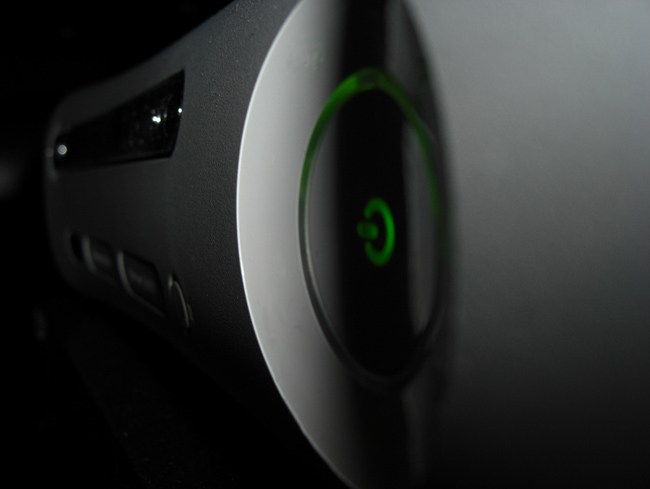
It’s becoming clear that Microsoft (MSFT) doesn’t want its next-generation Xbox to be just a gaming console. Unnamed sources have told The Verge that Microsoft will “introduce a feature that lets its next-generation console take over a TV and set-top box in a similar way to Google TV” that “will work by taking a cable box signal and passing it through to the Xbox via HDMI, allowing Microsoft’s console to overlay a UI and features on top of an existing TV channel.” Since Google’s (GOOG) Google TV platform has largely been a dud so far, it will be interesting to see what Microsoft plans to make the Xbox appeal more to consumers who are primarily interested in enhancing their TV experience. The Verge’s sources claim that the console “will go a step further than Google’s TV implementation thanks to Microsoft’s partnerships with content providers,” although it’s not clear what this next step entails.
-
First Galaxy S4 ads skip Apple bashing, focus on new features [video]
The world’s top smartphone vendor has decided it would rather tug on our heart-strings than tickle our funny bones for its first Galaxy S4 ads. Samsung (005930), whose ads have often generated laughs at the expense of rival Apple (AAPL), released three new television spots on Wednesday that focus solely on three key new Galaxy S4 features: the S Translator that provides instant voice-enabled translations into different languages, the Sound Shot camera feature that lets users embed audio files into their pictures and the Group Play feature that lets users quickly sync up audio playing on all their devices to create a more amplified sound from multiple smartphone speakers. All of these features were important parts of Samsung’s tap-dancing Broadway unveiling of the Galaxy S4 last month and the company apparently thinks that they’ll be winners with consumers by featuring them so prominently in their first television ads. Videos for all three ads are posted below.
-
‘Disappointing’ iPhone sales lead to 19% revenue decline at Foxconn
Just because the iPhone is still the world’s best-selling smartphone, that doesn’t mean its sales can’t be disappointing relative to expectations. Reuters reports that iPhone manufacturer Hon Hai, which trades publicly as Foxconn, reported a 19% decline in revenue compared to a year ago. What’s more, Reuters says that the decline is due primarily to “disappointing” iPhone sales over the past quarter and notes that revenue from building iPhones and iPads typically account for at least 60% of Foxconn’s sales. Recent estimates have suggested that Apple’s (AAPL) iPhone 5 has been selling below expectations but that the company is still in line to meet or exceed overall iPhone sales targets due to the continued strong demand for iPhone 4 and 4S models.
-
T-Mobile offers iPhone 5 for $0 down to carrier-switching iPhone users
Watch out, rival carriers: T-Mobile has its eyes on your iPhone subscribers. The so-called “un-carrier” on Wednesday announced that it would give new customers an iPhone 5 for $0 down if they trade in their iPhone 4 and iPhone 4S models. The iPhone 5 won’t be completely free, however, because customers will still have to pay monthly charges over a two-year period to pay off the cost of the device. That said, iPhone users who switch from other carriers will still be getting an iPhone 5 for $99 less than current T-Mobile subscribers who want to buy the device and for $199 less than what they’d pay on other carriers. T-Mobile’s full press release is posted below.
-
Startup gets funding to bring high-risk margin trades to Bitcoin
If you thought the Bitcoin market was crazy before, just wait until traders get the ability to make leveraged bets on the virtual currency’s future price. From the what-could-possibly-go-wrong department, TechCrunch reports that New York-based startup Coinsetter has received $500,000 in seed funding to set up a Bitcoin trading platform that will allow for high-risk margin trades and short selling of Bitcoins. Coinsetter co-founder Jaron Lukasiewicz tells TechCrunch that the ability to make leveraged trades is vital to every major financial market and that giving owners the ability to trade Bitcoins in this way will help the virtual currency establish itself as a legitimate alternative to government-issued money.
-
Three LulzSec hackers plead guilty to attacking U.S., U.K. websites
The lulz are over for three hackers who have pleaded guilty to conducting cyberattacks against high-profile websites in the United States and the United Kingdom. The Guardian reports that three British hackers from the LulzSec collective — Ryan Ackroyd, 26; Jake Davis, 20; and Mustafa Al-Bassam, 18 — admitted to hacking websites belonging to Sony (SNE), News International and the U.K.’s National Health Service. The three hackers are set to receive their sentences on May 14th along with fellow LulzSec hacker Ryan Cleary, who last year pleaded guilty to hacking into websites for the Pentagon, the CIA, the NHS, News International, PBS, Sony, Nintendo and the 20th Century Fox film studio.
-
BlackBerry Q10 comes to Canada on April 30th, U.S. launch still up in the air
Canadian BlackBerry (BBRY) fans who want a new device with a full QWERTY keyboard won’t have much longer to wait. MobileSyrup has captured a screenshot from a Rogers Wireless internal document showing that the QWERTY-equipped BlackBerry Q10 smartphone will launch on April 30th. While Canadians will get the new device by the end of the month, we still have no official word on when Americans will be able to buy the Q10, although recent rumors have claimed that it will launch on T-Mobile at some point in May. The Q10, which is designed to look more like iconic pre-touchscreen BlackBerry phones, includes 3.5-inch display, a 1.5GHz dual-core processor, an 8-megapixel rear-facing camera, a 2-megapixel front-facing camera, 2GB RAM, 16GB internal storage and a 2,100 mAh battery.
-
Survey: 83% of Americans have no idea BlackBerry 10 has launched
If you want to understand the major challenges that BlackBerry (BBRY) faces in the American market, look no further than a new survey commissioned by MKM Partners showing that most Americans don’t even know that BlackBerry 10 has launched yet. Per Barron’s, the survey of 1,500 American consumers shows that 82.6% did not know that BlackBerry released its newly revamped operating system earlier this year, while 68% said they had no interest in buying a BlackBerry 10 smartphone. By contrast, Microsoft’s (MSFT) Windows Phone 8 operating system has significantly higher brand recognition, as just 60.5% of American consumers did not know that Windows Phone 8 devices were available to buy. Smartphone owners accounted for 51% of respondents in the MKM survey, so it seems to have a reasonably good sample of tech-savvy consumers.
-
T-Mobile exec claims ‘UNcarrier’ initiative has led to surge in interest
T-Mobile CEO John Legere’s attempted populist revolt against the major wireless carriers has apparently sparked some consumer interest. In an interview with CNET, T-Mobile executive David Carey claims that “traffic was up in all of the stores he visited after the carrier made its switch [to ditching wireless contracts] late last month and announced the changes during a high-profile event in New York.” T-Mobile in March announced that it was abandoning contracts for its wireless plans and would give customers the option to either buy new smartphones at full price or to buy them for $99 up front followed by a series of $20 payments over the span of two years. Early estimates have shown that the carrier’s new plans could be big money savers for individual subscribers.