Author: Darren Rickard

  • RTT NEWS: Kraft Foods Lifts FY09 Earnings Outlook – Update

    1/12/2010 9:53 PM ET

    Fishpond
    SPONSOR

    (RTTNews) – Packaged foods company Kraft Foods Inc. (KFT: News ), which has made a hostile takeover bid for U.K.-based confectioner Cadbury plc (CBY: News ,CBRY.L: News ), raised its earnings outlook for fiscal year 2009 Tuesday evening, citing strong operating gains as well as a significant increase in marketing investments compared to the prior year. Kraft’s announcement comes after Cadbury rejected its bid earlier in the day, citing its own “outstanding” financial performance in 2009 and expectations of a strong business momentum in 2010.

    Kraft now forecasts earnings of at least $2.00 per share, up from its prior expectation of at least $1.97 per share. On average, ten analysts polled by Thomson Reuters expect the company to report earnings of $2.00 per share for the full year. Analysts’ estimates typically exclude special items.

    Irene Rosenfeld, Chairman and CEO of Kraft Foods said, “As we complete our turnaround, we’re delivering high-quality earnings growth, despite the difficult economic environment, and we’re doing this while continuing to invest in our brands and businesses. As a result, we’re well positioned to deliver sustainable top-tier performance, with or without Cadbury.”

    Although the tough economy has reflected on all sectors, food makers are benefiting from the eat-at-home trend. The reduction in ingredient costs is another positive factor for these companies. Northfield, Illinois-based Kraft manufactures packaged food products and grocery products. Its offerings include Kraft cheeses, Oscar Mayer meats, Philadelphia cream cheese, Maxwell House and Jacobs coffee, Milka chocolates and LU biscuits. Kraft, with about 100,000 employees and annual revenues of $42 billion, is the world’s second largest food company.

    Among Kraft’s peers, ConAgra Foods Inc. (CAG: News ) in mid-December raised its earnings outlook for fiscal year 2010, citing the company’s strong performance in the first half of the year. ConAgra raised its forecast for earnings from continuing operations, excluding items impacting comparability, to nearly $1.73 per share from the prior outlook of nearly $1.70 per share.

    In early November, Kraft reported a 39.5% decline in profit for the third quarter from the prior year, when results were boosted by huge gains from the divestiture of discontinued operations. The company’s net income for the third quarter dropped to $824 million or $0.55 per share from $1.4 billion or $0.91 per share in the year-ago quarter. Net revenue for the quarter declined 5.7% to $9.80 billion from $10.40 billion in the same quarter last year, hurt mainly by the impact of a stronger U.S. dollar.

    At that time, Kraft had raised its earnings guidance for 2009 to at least $1.97 per share from the prior guidance of at least $1.93 per share, to reflect strong year-to-date profit performance and a reduction in its full-year effective tax rate.

    About a week later, Kraft announced its firm intention to make an offer to acquire the whole of the issued and to be issued share capital of Cadbury. Kraft offered to acquire Cadbury for 300 pence in cash and 0.2589 new Kraft shares for each Cadbury share. The company’s offer valued Cadbury at GBP 9.8 billion, or $16.3 billion, below the GBP 10.2 billion offered earlier in September, before Kraft shares slid and the dollar slumped badly versus the sterling.

    Cadbury immediately rejected the “derisory offer” and encouraged shareholders to turn down the bid, noting it is worse than a previous offer due to the fall in the Kraft share price since September.

    In early January, Warren Buffett’s Berkshire Hathaway Inc. (BRK-A, BRK-B), Kraft’s largest shareholder, said it voted “no” on Kraft’s proposal to authorize the issuance of up to 370 million shares to facilitate the acquisition of Cadbury, as it believes that the Kraft share is a very expensive “currency” to be used in an acquisition. Kraft had said that it would sell the assets of its North American pizza business to Nestle (NSRGY.PK, NSTR.L) for a total consideration of $3.7 billion and would use the net proceeds to increase the cash portion of the offer to Cadbury shareholders.

    Kraft must make its final offer for Cadbury by January 19. Cadbury shareholders have until February 2 to decide whether to accept Kraft’s bid.
    Earlier on Tuesday, Cadbury once again said that its board has unanimously rejected the “wholly inadequate offer” from Kraft and continues to urge its shareholders not to take any action in relation to the offer.

    Cadbury’s decision followed its “outstanding” financial performance in 2009 as well as the company’s expectation of a strong business momentum in 2010. The company also said it believes that its standalone value has risen further since Kraft’s approach on September 4.

    This was the second response document from the board of Cadbury after Kraft’s formal offer on December 4, 2009. Stating further reasons to reject Kraft offer, Cadbury said its 2009 performance was helped by strong growth in the fourth quarter and the savings generated by the company’s Vision into Action business plan.

    (RTTNews) – Media reports last week had said that Italian chocolate maker Ferrero SpA was in talks with Hershey Co. (HSY) about a possible takeover bid for Cadbury. Ferrero was also said to be discussing the possibility of a joint offer with buyout firms including Blackstone Group (BX).

    KFT closed Tuesday’s regular trading session at $29.29, up $0.49 or 1.70% on a volume of 19.56 million shares. In the past 52 weeks, the stock has been trading in a range of $20.81-$29.84.

    Share Investor Links

    Share Investor Blog – Stockmarket & Business commentary
    Share Investor New Zealand Business News– Get more business news
    Discuss this topic @ Share Investor ForumRegister free
    Share Investor’s Daily Forex Updates

    Recommended Amazon Reading

    The Snowball: Warren Buffett and the Business of Life The Snowball: Warren Buffett and the Business of Life by Alice Schroeder
    Buy new: $13.60 / Used from: $11.94
    Usually ships in 24 hours
    The Essays of Warren Buffett: Lessons for Corporate America, Second Edition The Essays of Warren Buffett: Lessons for Corporate America, Second Edition by Warren E. Buffett
    Buy new: $26.01 / Used from: $29.93
    Usually ships in 24 hours

    Bookmark and Share


  • POPULAR MECHANICS: China’s Wide-Eyed Dream of Building U.S. Electric Vehicles


    The Chinese BYD E6 electric car is displayed during the the second press preview day at the 2010 North American International


    A China invasion of the U.S. auto industry has been anticipated with fear and loathing for a decade. If companies enter the U.S. with impossibly cheap cars, the worries go, they could grab the attention and imagination of car buyers, especially the next generation of car buyer who have a more global view of culture and brands than their parents and grandparents. Havoc would then be wreaked upon Detroit and the established Japanese imports.


    Of course, it is clear that the U.S. auto industry did not need Chinese imports to run it off the road. The casino environment of Wall Street, an over-fed housing market, a collapse in the credit markets and management inertia in Detroit took care of that. And as the industry picks itself off the pavement in 2010, the Chinese will be here, though not in the way we have been led to believe.

    As the North American International Auto Show is in full-swing, Chinese automaker Geely is in the midst of closing its deal to acquire Volvo from Ford Motor Co. In the wake of this acquisition, every Volvo owner and buyer dropping off their XC90 or S80 at the dealer for service will soon be doing business with the Chinese in the U.S., even if China-built Volvos are still years off. And Hummer owners will henceforth be doing business with Sichuan Tengzhong Heavy Industrial Machinery Co., which is the new owner of the former GM SUV brand.

    A year ago at the NAIAS, management at Chinese automakers BYD and Brilliance both declared their starts in the U.S. market would be made on clean sheets of paper: no entry by acquisition despite the availability at that time of Saturn and Saab. And they have stayed true to their words, though they also seem no closer to selling cars in the U.S.—now beaten to the punch by Geely and Sichuan—in reaching U.S. consumers.

    Still, it is BYD that continues to raise the most interest and is the only Chinese automaker with a press briefing at the auto show this week. The intrigue with BYD has been stirred by a $230 million investment in 2008 from Warren Buffet’s Berkshire Hathaway, giving the Chinese battery-maker-turned-car-company an aura of credibility most other Chinese automakers lack.

    BYD says it will be ready to launch electric vehicles in the U.S. by the end of 2010, albeit in small numbers, and likely through a pilot leasing plan in California. The company, though, may have created more skepticism than anticipation at the NAIAS when its executives said they had no dealers signed up yet, and they had only just begun the process of getting safety and engineering clearances from the Department of Transportation for its cars. “We are preparing our applications and are confident of getting approvals,” says Henry Li, general manager of BYD’s export division. “We recently completed all approvals from the Chinese government, and our design and engineering was done with the U.S. market very much in mind.”

    If BYD’s plans don’t yet throw fear into the hearts of Ford, GM and Toyota, it is because there seems to be an almost willful and collective lack of understanding by Chinese management about the complexity of selling vehicles in the U.S. “The two hardest things for a new car company to get right are meeting all the Federal safety and emissions regulations, and putting together a credible and quality distribution network, and the Chinese managements don’t seem prepared to tackle either one properly on their own,” says industry consultant Jim Hall of 2953 Analytics, Birmingham, MI.

    Though BYD’s aspirations revolve around electric and hybrid vehicles for North America, in China, selling gas-powered vehicles is currently the main driver for growth. BYD’s F3 compact car was the best-selling model in China in August, outpacing perennial leaders like the Hyundai Elantra and the Buick Excelle. Of the 450,000 cars BYD sold in 2009, only a few hundred were electrics. The top seller is the F3, priced at $9,500—about the price of an early 1990’s-era Toyota Corolla.

    At last year’s Shanghai auto show, BYD showed the e6, a multi-purpose vehicle capable of seating five which purports to go 205 miles on a single charge. It also promises to have a top speed of 100 mph and accelerate from 0-60 in eight seconds. BYD sold a few hundred to Chinese institutions in late 2009 after government certification was granted. It is important to remember, though, that China’s safety and emissions standards are nothing compared with the U.S.’s standards.

    Indeed, one of the reasons Geely is acquiring Volvo is that it has a mostly exclusive dealer network in the U.S. and Europe, as well as an impeccable safety engineering track record that Geely is hoping to leverage to make its own China-built vehicles competitive worldwide. Eventually, the company will likely move to build Volvos in China or the U.S., or both, because Volvo sales are perennially disadvantaged in the U.S. when the dollar is weak.

    Expectations around BYD still remain higher than around Geely and Tengzhong because of its rapid growth and technological prowess. The company’s shares gained 700 percent in the past year based in part on the company’s growth as a potential battery supplier to other automakers as well as its supply of batteries to mobile phone makers like Nokia and Motorola.

    Founded in 1995 by Wang Chuanfu as a pure battery company, BYD acquired a tiny, bankrupt carmaker in North Central China to wade into the auto industry and eventually become a vertically integrated maker of electric and hybrid vehicles. Chuanfu’s business model is Honda, which started out as and remains a world-class engine company that eventually developed its own products—cars, motorcycle, scooters and agricultural equipment that run off the company’s engines. BYD exports its vehicles to Africa, South America and the Middle East where engineering standards are as non-existent as they are in China.

    The engine power control unit of the new BYD E6 electric vehicle on display at the 2010 Detroit International Auto Show. (Photograph by Bill Pugliano/Getty Images)

    Industry and marketing consultants caution BYD and other Chinese automakers about being too secretive, or, conversely, promising too much to soon. “There is a huge cultural divide between Chinese companies and the U.S. marketplace,” says independent marketing consultant Dennis Keene who has worked with Chinese companies on export strategies. “In the auto sector, we have seen several companies enter into dubious contracts with fringe distribution operators, and the results have been litigation, loss of credibility and lack of any progress,” says Keene. Chery Automobile had some kind of agreement with Yugo America founder Malcolm Bricklin that broke down and is in litigation. And Nanjing Automotive started building MG sports cars in England, and had plans to build them in the U.S. as well. “I keep waiting for these companies to make serious business moves with serious people and serious products instead of playing games,” says Keene.

    Chinese car companies stand largely where they were last year when they were predicting U.S. entry. Their gas powered vehicles aren’t competitive yet with even entry-level vehicles from Detroit, Japan and Korea. And so far its electric technology faces the same affordability issue as every other company (BYD’s all-electric e6 multi-activity vehicle costs about $40,000, while Chevy plans to sell the Volt for less than that.) For the forseeable future, parking home-grown Chinese vehicles in U.S. garages in any numbers that would concern Detroit remains as likely as affordable fuel-cell vehicles.


    Share Investor Links

    Share Investor Blog – Stockmarket & Business commentary

    Share Investor New Zealand Business News– Get more business news

    Discuss this topic @ Share Investor ForumRegister free

    Share Investor’s Daily Forex Updates

    Recommended Amazon Reading

    The Snowball: Warren Buffett and the Business of Life The Snowball: Warren Buffett and the Business of Life by Alice Schroeder

    Buy new: $13.60 / Used from: $11.94

    Usually ships in 24 hours
    The Essays of Warren Buffett: Lessons for Corporate America, Second Edition The Essays of Warren Buffett: Lessons for Corporate America, Second Edition by Warren E. Buffett

    Buy new: $26.01 / Used from: $29.93

    Usually ships in 24 hours


    Bookmark and Share


  • WALL STREET JOURNAL: BYD May Expand Electric-Car Lineup

    Associated Press

    Fishpond
    SPONSOR

    DETROIT — Chinese auto maker BYD Co., which plans to sell an all-electric crossover vehicle in North America by year’s end, said it may expand its lineup in coming years.

    Fred Ni, a general manager with BYD, said the China-built crossover dubbed the e6 will be “very affordable.” He declined to disclose the price, but said it would be comparable to gas-powered cars of similar size.

    “We are considering other vehicles for introduction as well, but that has not been finalized,” Mr. Ni said following the company’s presentation at the North American International Auto Show.

    byd

    Getty Images

    Fred Ni of BYD shows off the new BYD E6 all-electric vehicle at the North American International Auto Show in Detroit.

    BYD, which stands for Build Your Dreams, has the backing of billionaire investor Warren Buffett. The company sold 450,000 vehicles in China last year and said it wants to raises sales to be 800,000 this year in its home market.

    BYD said the five-seat e6 headed for the North American market has a top speed of 87 mph and can travel up to 205 miles on a single charge. BYD said it will take about one hour to fully charge at a dedicated station or longer at a standard home outlet.

    Aaron Bragman, an auto analyst for IHS Global Insight in Troy, Mich., said BYD will have a difficult time selling cars in the U.S. because its designs look older than Americans are accustomed to, and the quality of body panel assembly and paint don’t measure up to U.S. standards.

    But he said it won’t be long until BYD and other Chinese auto makers raise their games and will be competitive in the U.S. Mr. Bragman also said BYD had its hands full satisfying huge sales demand and high growth potential at home, and he doubts it will want to be distracted by selling cars in the U.S.

    BYD plans to use partnerships to establish a dealer network in the U.S. to sell and service the e6, but locations and other details haven’t been finalized. BYD said the e6 also is expected to be sold soon in China.

    BYD started out building conventional cars. In 2008, it became the first auto maker to launch mass production of a plug-in hybrid electric vehicle — the F3DM — that’s sold in China and can be charged off a standard home outlet.

    BYD started as a battery manufacturer and has top-notch battery chemistry that could interest other automakers or could give it an edge over U.S. manufacturers. On Tuesday, BYD said partnership was a possibility.

    “We hope to join forces with manufacturers to promote electric vehicles,” said Henry Z. Li, general manager of BYD’s auto export division.

    Share Investor Links

    Share Investor Blog – Stockmarket & Business commentary
    Share Investor New Zealand Business News– Get more business news
    Discuss this topic @ Share Investor ForumRegister free
    Share Investor’s Daily Forex Updates

    Recommended Amazon Reading

    The Snowball: Warren Buffett and the Business of Life The Snowball: Warren Buffett and the Business of Life by Alice Schroeder
    Buy new: $13.60 / Used from: $11.94
    Usually ships in 24 hours
    The Essays of Warren Buffett: Lessons for Corporate America, Second Edition The Essays of Warren Buffett: Lessons for Corporate America, Second Edition by Warren E. Buffett
    Buy new: $26.01 / Used from: $29.93
    Usually ships in 24 hours


    Bookmark and Share


  • REUTERS: Chinese motorcycle maker denies Buffett interest reports

    Tue Jan 12, 2010 8:14am EST

    Fishpond
    SPONSOR

    HONG KONG (Reuters) – Shares in Chinese motorcycle maker Zongshen Power Machinery (001696.SZ) extended gains on Tuesday despite a denial by the company over media reports that U.S. investor Warren Buffett had shown interest in the company.

    Zongshen had no contact with Buffett and had not held any discussions related to his possible investment in the company, the company said in a statement to the Shenzhen stock exchange late on Monday.

    “The company also guarantees that in the next six months, it will not have any cooperation with Buffett on investment in new energy motorcycles,” the statement said.

    A rumor that Zongshen Chairman Zuo Zongshen will visit the United States to meet Buffett on January 25 saw the company’s shares climb by their 10 percent trading limit on Monday.

    Zongshen did not deny a meeting between Buffett and Zuo but quoted company secretary Huang Peiguo’s reply to media queries that he was not responsible for Zuo’s overseas visits and was not sure who he would meet.

    The stock hit a two-year high of 21.98 yuan on Tuesday before steadying at 21.18 yuan, up 5.4 percent at 0146 GMT.

    Buffet’s Berkshire Hathaway (BRKa.N) (BRKb.N) previously bought a 10 percent stake in electric car and battery maker BYD Co (1211.HK), sending the stock up more than seven-fold over the last year.

    (Reporting by Alison Leung; Editing by Chris Lewi

    Share Investor Links

    Share Investor Blog – Stockmarket & Business commentary
    Share Investor New Zealand Business News– Get more business news
    Discuss this topic @ Share Investor ForumRegister free
    Share Investor’s Daily Forex Updates

    Recommended Amazon Reading

    The Snowball: Warren Buffett and the Business of Life The Snowball: Warren Buffett and the Business of Life by Alice Schroeder
    Buy new: $13.60 / Used from: $11.94
    Usually ships in 24 hours
    The Essays of Warren Buffett: Lessons for Corporate America, Second Edition The Essays of Warren Buffett: Lessons for Corporate America, Second Edition by Warren E. Buffett
    Buy new: $26.01 / Used from: $29.93
    Usually ships in 24 hours


    Bookmark and Share


  • BUSINESSWEEK: Buffett-Backed BYD Sees U.S. as Pivotal for Electric-Car Growth

    January 11, 2010, 08:10 PM EST

    By Alan Ohnsman

    Fishpond
    SPONSOR

    Jan. 12 (Bloomberg) — BYD Co., the Chinese auto- and battery maker backed by Warren Buffett, may sell a rechargeable electric car in the U.S. as soon as this year to meet demand for fuel-efficient models, the company’s founder said.

    “The U.S. is a very important market for BYD in the future, and the electric vehicle is our future,” Chairman Wang Chuanfu said yesterday in an interview at the Detroit auto show. “We will start toward the market in the second half.”

    Starting U.S. sales in 2010 would accelerate the timetable BYD set last year, when the Shenzhen, China-based automaker targeted a 2011 debut. Buffett’s Omaha, Nebraska-based Berkshire Hathaway Inc. owns a 10 percent stake in the company.

    BYD sees a chance to reach U.S. buyers who want cars that use little or no gasoline and cut emissions of greenhouse gases, and it faces pressure in China to develop electric vehicles for energy security, Wang said.

    China’s auto market grew to 13.6 million units in 2009, surpassing the U.S. for the first time, and “it’s possible over the next five years it will grow to 20 million,” Wang said. “We’ll consume a huge amount of oil that China doesn’t have and may not be able to buy.”

    Wang, 43, is to discuss details of BYD’s plans for the U.S. later today at a press conference at the North American International Auto Show. While overall auto sales in China grew 53 percent last year, Wang said BYD’s deliveries jumped 160 percent to about 450,000.

    Buffett, 79, has yet to visit BYD’s factories in China, Wang said.

    “I hope he’ll come,” he said.

    –With assistance from Tian Ying in Beijing. Editors: Ed Dufner, Jamie Butters

    Share Investor Links

    Share Investor Blog – Stockmarket & Business commentary
    Share Investor New Zealand Business News– Get more business news
    Discuss this topic @ Share Investor ForumRegister free
    Share Investor’s Daily Forex Updates

    Recommended Amazon Reading

    The Snowball: Warren Buffett and the Business of Life The Snowball: Warren Buffett and the Business of Life by Alice Schroeder
    Buy new: $13.60 / Used from: $11.94
    Usually ships in 24 hours
    The Essays of Warren Buffett: Lessons for Corporate America, Second Edition The Essays of Warren Buffett: Lessons for Corporate America, Second Edition by Warren E. Buffett
    Buy new: $26.01 / Used from: $29.93
    Usually ships in 24 hours


    Bookmark and Share


  • VALUE EXPECTATIONS: If Warren Buffett Only Read ValueExpectations.com – Burlington Northern Santa Fe (NYSE:BNI) Kraft Foods Inc. (NYSE:KFT)

    Fishpond
    SPONSOR

    In a previous post back in September, ValueExpectations.com provided an analysis of the main holdings from Berkshire Hathaway and how each company was viewed according to The Applied Finance Group’s (AFG’s) valuation model and Economic margin methodology. The 29 top holdings of Berkshire were divided into 3 buckets (Attractive, Fairly Valued and Unattractive) based on how each company ranked according to key AFG criteria including valuation.

    Thus far each bucket of companies has performed just as expected.

    Return Information from 9-29-09 to 1-7-10:

    Attractive Co’s = 10.60%

    Fairly Valued Co’s= 7.59%

    S&P500 = 7.16%

    Unattractive Co’s= 6.57%

    The companies AFG labeled as attractive outperformed both other buckets, the fairly valued companies performed in-line with the S&P 500 and the unattractive companies underperformed the rest.

    Click here to view the original article with the breakdown of Berkshire’s 29 top holdings.

    Also we recently issued articles discussing Warren Buffett’s acquisition of BNI and his decision to oppose Kraft’s bid to issue more shares to fund its deal to acquire British candy maker Cadbury. ValueExpectations.com presented the case for each acquisition, both of which ultimately came to the same conclusion as Buffett.

    Berkshire’s acquisition of BNI (which had been a holding in The AFG 50 that was purchased in June of 2004 with a target price of $120) is one of the few that we approved of given AFG’s extensive background in acquisition analysis. More often than not the acquiring company pays too high a premium for the target company, resulting in excessive expectations that may not be attainable. However, we have to agree with Buffett in the BNI acquisition as Berkshire was buying a great company at a price justified by very reasonable future expectations.

    Also VE.com released a few articles discussing disapproval for Kraft’s bid to acquire Cadbury saying the deal made no sense as what Kraft offered was much higher than the expected benefits Kraft would receive by acquiring Cadbury. Our thoughts on this deal were then backed up by Buffett’s opposition to the deal a few weeks later.

    We think Buffett ought to take some well-deserved time off to play bridge with Bill Gates, and leave it to VE.com to provide valuable insights on the equity market.

    Share Investor Links

    Share Investor Blog – Stockmarket & Business commentary
    Share Investor New Zealand Business News– Get more business news
    Discuss this topic @ Share Investor ForumRegister free
    Share Investor’s Daily Forex Updates

    Recommended Amazon Reading

    The Snowball: Warren Buffett and the Business of Life The Snowball: Warren Buffett and the Business of Life by Alice Schroeder
    Buy new: $13.60 / Used from: $11.94
    Usually ships in 24 hours
    The Essays of Warren Buffett: Lessons for Corporate America, Second Edition The Essays of Warren Buffett: Lessons for Corporate America, Second Edition by Warren E. Buffett
    Buy new: $26.01 / Used from: $29.93
    Usually ships in 24 hours


    Bookmark and Share


  • FORBES: Chocolate And Cheese

    Alexandra Zendrian, 01.12.10, 06:00 AM EST

    Fishpond
    SPONSOR

    The Kraft/Cadbury deal might look good on the outside, but it has the potential to be soft on the inside.

    Investors watching the Kraft and Cadbury merger dance might be salivating, but there’s reason to believe that it’s all much ado about nougat and that it could fall apart like a crème egg on Easter Sunday.

    In the latest news on the potential chocolate and cheese combination, Kraft Foods Inc. ( KFT news people ) sold one of its American pizza units to Nestle ( NSRGY.PK news people ) for $3.7 billion. This cash can be put toward its acquisition of Cadbury ( CBY news people ). Kraft has been working to sweeten its offer to Cadbury and will approach the chocolate company with a new bid before Jan. 16. (See “Cash For Cadbury, Pizza For Nestle.”)

    For Cadbury, a merger would helpful.

    “With cocoa having moved from 2200 metric tons to 3244 metric tons in the last year, any economies of scale through size and efficiencies would make rising commodity prices less of a factor,” says LPL Financial Chief Investment Officer Burt White. This might even allow Cadbury to better set prices in the market and undercut its competitors, he adds.

    Share Investor Links

    Share Investor Blog – Stockmarket & Business commentary
    Share Investor New Zealand Business News– Get more business news
    Discuss this topic @ Share Investor ForumRegister free
    Share Investor’s Daily Forex Updates

    Recommended Amazon Reading

    Security Analysis: Sixth Edition, Foreword by Warren Buffett (Security Analysis Prior Editions) Security Analysis: Sixth Edition, Foreword by Warren Buffett (Security Analysis Prior Editions) by Benjamin Graham
    Buy new: $47.25 / Used from: $46.96
    Usually ships in 9 to 11 days
    The Four Filters Invention of Warren Buffett and Charlie Munger The Four Filters Invention of Warren Buffett and Charlie Munger by Bud Labitan
    Buy new: $33.25 / Used from: $43.89
    Usually ships in 24 hours


    Bookmark and Share


  • HANDY SHIPPING GUIDE: US Rail Freight Under The Spotlight This Month

    Declining Revenues Affect All the Major Carriers

    12 January 2010

    Fishpond
    SPONSOR

    Shipping News Feature

    US – The decreased demand for coal has been a factor crucial to profits for the country’s rail carriers for the past few months. Those whose business relies heavily on transporting the fuel for the nations power stations will demonstrate over the next few weeks how successful they have been in keeping shareholders happy in the light of reduced revenues across the rail freight sector and the results are likely to be interpreted as favourable compared to many of the larger truck operators and sea freight carriers, despite the trials and tribulations in the sector.

    There isn’t much good news however when one considers the situation as a whole, although the rail carriers appear to be making the best of a bad job with less to work with. The next major rail corporation report is due with a conference call by the CSX Corporation who will speak to shareholders at 8.30 am on 20th January to analyse Q4 figures announced the previous evening.

    Third quarter figures for the group saw a 15% decline in volume with revenues down 23% to $2.3 billion. Operating ratio was up to a record level and this produced earnings of 74 cents per share, down from 93 cents the previous year, this, on earnings of just $293 million compared to 2008’s $380 million. Analysts are predicting earnings per share will be about the same level this time, around 76 cents, again against an 11% drop in revenue to around $237 million.

    What is worrying is the underlying trend downward for year on year figures, but most observers feel that the market has now bottomed out although no one is expecting a rapid recovery to anything like previous levels.

    The CSX figures are, as is usual with the large corporations, clouded by previous write downs and adjustments, often making it impossible for all but the most closely involved experts to put a truly balanced analysis together. It would seem that CSX, third largest rail freight transporter by turnover, are likely to have achieved better results than some of their closest rivals.

    When Warren Buffet “bet the farm” on the purchase of the Burlington Northern Santa Fe Corporation, one position up in the revenue volume table from CSX, many investors began to look closely at the sector. Now, with results from the company due the same day as opponents Union Pacific on 21st January, observers are bound to draw comparisons. Both are likely to post disappointing results with predictions of reduced revenues, down around 18% for BNSF and 12% for UP, according to reports. The Norfolk Southern Corporation are due to post their figures before the month end and similar drops in revenue and returns are also anticipated.

    Buffet however is playing the long game and management changes were announced this week at BNSF, there will be a stockholders meeting on the 11th February to vote on the $44 billion merger and the company is now a wholly owned subsidiary of Buffet’s Berkshire Hathaway investment group. Rather than diminishing its rivals the deal has reinforced confidence in the sector at a time of lower returns for most investors.

    Carriage of bulk agricultural products will always be a mainstay for the rail groups and simple logic means people will always need to eat, so grain products are a staple in every sense of the word. Whether home grown or imported there is a steady supply of freight trucks ferrying produce and this supports a large part of the rail freight market. Look, however, for an increased intermodal challenge from the major rail companies in the coming years. By developing profitable multi modal depots, something the US lacks considering its size, plus their own in house local trucking capabilities, the rail carriers can counter the parts of their market which have reduced, and may continue to fall off. BNSF claim to carry coal which supplies 10% of the nation’s electricity. With demands being made to reduce emissions across the board, the continuing shortfall of revenue for the rail groups from their power generating supply divisions must be made up by attacking the long haul truck market with increased vigour. The ongoing trend in the push for more efficiency and cleaner air may well result in more rail company owned logistics facilities in a country with ample space to accommodate them.

    Share Investor Links

    Share Investor Blog – Stockmarket & Business commentary
    Share Investor New Zealand Business News– Get more business news
    Discuss this topic @ Share Investor ForumRegister free
    Share Investor’s Daily Forex Updates

    Recommended Amazon Reading

    The Snowball: Warren Buffett and the Business of Life The Snowball: Warren Buffett and the Business of Life by Alice Schroeder
    Buy new: $13.60 / Used from: $11.94
    Usually ships in 24 hours
    The Essays of Warren Buffett: Lessons for Corporate America, Second Edition The Essays of Warren Buffett: Lessons for Corporate America, Second Edition by Warren E. Buffett
    Buy new: $26.01 / Used from: $29.93
    Usually ships in 24 hours


    Bookmark and Share


  • MARKETWATCH: Cadbury: strong 2009 makes Kraft offer even less attractive

    By Simon Kennedy, MarketWatch

    Fishpond
    SPONSOR

    LONDON (MarketWatch) — Cadbury said Tuesday that its 2009 performance was “well ahead” of market expectations as the U.K. chocolate maker reiterated its rejection of a 10.5 billion pound ($16.9 billion) takeover bid from Kraft Foods.

    The company said revenue rose around 11% in 2009 and would have been up 5% excluding the impact of currency fluctuations. The trading margin also improved by 1.55 percentage points to 13.5%, with its performance helped by a strong fourth quarter and the contribution from its restructuring program.

    Cadbury’s Roger Carr said the performance meant Kraft’s offer is “even more unattractive today than it was when Kraft made its formal offer in December.”

    “Don’t let Kraft steal your company with its derisory offer,” Carr said in a message to shareholders.

    Low multiple

    In its second defense document against the bid, Cadbury said the offer is worth around 12 times its 2009 earnings before interest, taxes, depreciation and amortization. That is lower than any comparable transaction in the sector, the group added.

    The company also noted that the shares of its peers have risen around 12% since the offer was made as markets have recovered.

    Kraft’s bid is worth 300 pence plus 0.2589 Kraft shares for every Cadbury share, which valued the offer at 763 pence a share, or 10.5 billion pounds at Monday’s closing prices.

    Cadbury shares dipped 0.3% to 779 pence Tuesday.

    Cadbury, which has already lifted its medium-term growth forecasts as part of its defense against the bid, is targeting sales growth of 5% to 7% over the next four years and a margin of 16% to 18% by 2013.

    The group said Tuesday that the full-year dividend is expected to grow by 10% to around 18 pence a share. Cadbury will announce further details on its 2009 performance later in the week.

    Door still open

    Cadbury’s latest defense came shortly after Warren Buffett’s Berkshire Hathaway (BRK.A 99,999, -301.00, -0.30%) (BRK.B 3,325, +2.99, +0.09%) said it planned to vote against a proposal to fund the deal by issuing millions of new shares.

    Buffett’s investment vehicle, which controls around 9.4% of Kraft’s stock, said it was worried about the fall in Kraft’s share price and wouldn’t give the company a blank check to pay for the deal. See story on Warren Buffett’s concerns.

    Cadbury’s Carr said on a conference call Tuesday that Buffett “is clearly getting an iron grip on the Kraft management,” but that the U.S. billionaire’s statement didn’t change Cadbury’s position at all.

    Separately Tuesday, Italy’s Il Messaggero newspaper reported that UniCredit and Mediobanca are ready to provide a loan to Italian chocolate maker Ferrero to fund a possible joint bid with Hershey Co. (HSY 36.18, -0.20, -0.55%) .

    Both companies have previously said they might be interested in bidding for Cadbury and are seen as the only potential rival to Kraft after Switzerland’s Nestle (CH:NESN 48.90, -0.30, -0.61%) said it wouldn’t make an offer.

    “We have made it clear that this is an open door for people that can make sensible offers,” Carr said on the conference call.

    Simon Kennedy is the City correspondent for MarketWatch in London.

    Share Investor Links

    Share Investor Blog – Stockmarket & Business commentary
    Share Investor New Zealand Business News– Get more business news
    Discuss this topic @ Share Investor ForumRegister free
    Share Investor’s Daily Forex Updates

    Recommended Amazon Reading

    The Snowball: Warren Buffett and the Business of Life The Snowball: Warren Buffett and the Business of Life by Alice Schroeder
    Buy new: $13.60 / Used from: $11.94
    Usually ships in 24 hours
    The Essays of Warren Buffett: Lessons for Corporate America, Second Edition The Essays of Warren Buffett: Lessons for Corporate America, Second Edition by Warren E. Buffett
    Buy new: $26.01 / Used from: $29.93
    Usually ships in 24 hours


    Bookmark and Share


  • BLOOMBERG: Cadbury Asks Investors to Reject Bid as Profit Rises

    By Andrew Cleary

    Jan. 12 (Bloomberg) — Cadbury Plc, the U.K. confectioner fighting a hostile bid from Kraft Foods Inc., urged shareholders to reject the U.S. foodmaker’s “wholly inadequate” offer after posting a surge in 2009 profit.

    Fishpond
    SPONSOR

    Operating profit rose 27 percent to 808 million pounds ($1.3 billion), the Uxbridge, England-based company said in a statement today. Sales rose 11 percent to 6 billion pounds. Analysts anticipated profit of 806 million pounds and revenue of 6 billion pounds, according to estimates compiled by Bloomberg.

    The results may encourage shareholders to hold firm for a higher offer, said Jon Cox at Kepler Capital Markets. Kraft’s “derisory” offer values Cadbury at 12 times 2009 earnings before interest, tax, depreciation and amortization, lower than similar transactions, the U.K. company said. The shares of rival companies have risen an average of 12 percent since Kraft made its approach, it said.

    “It’s a good, crackerjack set of figures but does it really change anything too much? I’m not so sure,” said Cox in a Bloomberg Television interview today.

    Kepler’s Cox Interview
    Jan. 12 (Bloomberg) — Jon Cox, analyst at Kepler Capital Markets, talks about Cadbury Plc’s 2009 sales performance and the hostile bid from Kraft Foods Inc. The U.K. confectioner said sales and profitability rose in 2009 and urged shareholders to reject the U.S. foodmaker’s offer on valuation grounds. Cox speaks with Bloomberg’s Francine Lacqua and Poppy Trowbridge in London.

    Cadbury’s shares were unchanged at 781 pence in London today. Kraft’s Kraft’s cash-and-stock offer is currently worth about 763 pence.

    The confectioner’s shares briefly fell below the offer price last week after Hershey Co.’s executives and board members were said to be divided about whether to make a bid for Cadbury. Warren Buffett’sBerkshire Hathaway Inc. also said it will vote against Kraft’s plans to issue new shares to fund part of the deal.

    Dividend Increase

    Cadbury’s full-year dividend rose 10 percent to 18 pence. The company has forecast a “double-digit” increase in annual dividends over the medium term.

    The defense document “doesn’t add anything new to the debate in our view,” Nomura International analyst Alex Smith wrote in a note to clients today. “We still see a majority probability of a successful Kraft takeover at a higher price of around 840 pence.”

    Similar takeovers in the industry have been done at between 14.3 times earnings and 18.5 times, Cadbury said in the statement. Food industry takeovers have been down at an average multiple of about 16.2 times earnings, according to Sanford C. Bernstein research. Nestle SA last week bought Kraft’s pizza business for 12.5 times earnings.

    “Applying any of the comparable multiples would imply a price per share far above Kraft’s offer,” Cadbury Chairman Roger Carr said in the statement. “Kraft’s offer is even more unattractive today than it was when Kraft made its formal offer in December.”

    Cadbury’s 2009 operating margin rose 1.6 percentage points to 13.5 percent, wider than the company’s Dec. 14 forecast of “at least” 13.3 percent. Cadbury’s 2009 earnings before interest, tax, depreciation and amortization were 1.02 billion pounds.

    The confectioner today forecast 2010 revenue growth within its 5 percent to 7 percent range, driven by the release of new products.

    Share Investor Links

    Share Investor Blog – Stockmarket & Business commentary
    Share Investor New Zealand Business News– Get more business news
    Discuss this topic @ Share Investor ForumRegister free
    Share Investor’s Daily Forex Updates

    Recommended Amazon Reading

    The Snowball: Warren Buffett and the Business of Life The Snowball: Warren Buffett and the Business of Life by Alice Schroeder
    Buy new: $13.60 / Used from: $11.94
    Usually ships in 24 hours
    The Essays of Warren Buffett: Lessons for Corporate America, Second Edition The Essays of Warren Buffett: Lessons for Corporate America, Second Edition by Warren E. Buffett
    Buy new: $26.01 / Used from: $29.93
    Usually ships in 24 hours


    Bookmark and Share


  • THE GUARDIAN: Cadbury upbeat on trading as it hits out at Kraft’s hostile offer

    Posted by Nick Fletcher Tuesday 12 January 2010 09.01 GMT


    Fishpond
    SPONSOR

    Cadbury has again rejected Kraft’s hostile £10.5bn bid for the company, but left the door open for a “sensible” offer.

    In its final defence document Cadbury said it had an outstanding 2009, with sales up 5% and a higher than expected operating margin of 13.5%. It said its dividend would rise by 10%. The usual “derisory offer” and “don’t let Kraft steal your company” comments were also present and correct.

    On a conference call Cadbury chief executive Todd Stitzer said:

    People set strategy, and people get results. The fundamental decision for shareholders is which team of people can deliver what they say they will do.

    And chairman Roger Carr described Kraft’s board as a management team with “a track record of over-promising and under-delivering”.

    Kraft’s offer includes a mixture of cash and shares – the former set to be boosted by the proceeds of a recent sale of Kraft’s pizza business – but there have been rumblings from the likes of Warren Buffett, a Kraft investor, about not overpaying.

    Kraft’s offer currently values Cadbury at around 762p a share, compared to the current price of 780.5p, down 0.5p. Analysts reckon any successful bid needs to start with an 8. Investors are also waiting for the next move from Ferrero, the Italian chocolate maker which could make its own offer, perhaps in tandem with US group Hershey. Nestle has already ruled itself out. Analyst Graham Jones at Panmure Gordon said:

    Cadbury’s 2009 results show 5% LFL sales growth and margins up by 160 basis points to 13.5%, slightly ahead of previous guidance. Cadbury states that it has ‘excellent momentum going into 2010’, although has been unable to give any margin guidance for 2010, merely repeating its objective of 16-18% margins by 2013.

    Kraft’s offer values Cadbury at 12 times EBITDA for 2009, significantly below comparable transactions which have ranged from 14.3 times to 18.5 times EBITDA. This implies a value of 900p+, although given the amount of risk-arbitrage ownership, we suspect that an increased offer in the range of 825p-850p could well be sufficient to clinch the deal. Given Kraft’s cash proceeds from its pizza sale, we believe it can afford to raise the cash element in order to raise the offer to within this range, at the same time as offering less shares than initially planned and therefore appeasing Warren Buffet.

    Martin Deboo at Investec said:

    The beat will not be unhelpful to Cadbury’s cause, but the numbers reflect a slowing of both sales and margin progression in the fourth quarter. Meanwhile we concur with Cadbury’s observations on the inadequacy of Kraft’s current offer.

    Our view in the round is that today’s disclosures are neutral to positive for Cadbury’s valuation and we re-state our target price of 795p and advice to shareholders to sit on the shares. We continue to think that Kraft will need to come up with an offer north of £8 and with a significantly enhanced cash component to take out Cadbury. We think this is less than certain and our target price is based on a weighted average of the potential outcomes.

    Share Investor Links

    Share Investor Blog – Stockmarket & Business commentary
    Share Investor New Zealand Business News– Get more business news
    Discuss this topic @ Share Investor ForumRegister free
    Share Investor’s Daily Forex Updates

    Recommended Amazon Reading

    Security Analysis: Sixth Edition, Foreword by Warren Buffett (Security Analysis Prior Editions) Security Analysis: Sixth Edition, Foreword by Warren Buffett (Security Analysis Prior Editions) by Benjamin Graham
    Buy new: $47.25 / Used from: $46.96
    Usually ships in 9 to 11 days
    The Four Filters Invention of Warren Buffett and Charlie Munger The Four Filters Invention of Warren Buffett and Charlie Munger by Bud Labitan
    Buy new: $33.25 / Used from: $43.89
    Usually ships in 24 hours


    Bookmark and Share


  • REUTERS: Cadbury rejects Kraft, reports robust trading


    LONDON (Reuters) – Britain’s Cadbury Plc reported robust 2009 results and an upbeat 2010 outlook on Tuesday in its last bid to escape from Kraft Foods’ 10.5 billion pound ($17 billion) hostile bid.

    In its final defense document, the British confectioner says Kraft’s offer remain derisory, with the price valuing Cadbury lower than any comparable deal in the sector and added that its standalone value had risen since the Kraft bid emerged.

    Cadbury has been fighting off Kraft’s cash and share bid since early September which is currently worth 762 pence a share compared to a Cadbury closing price of 781p on Monday with investors saying a winning bid needs to be 800p or above. Cadbury’s vociferous Chairman Roger Carr has been quick to dismiss Kraft’s offer and has questioned the ability of Kraft’s CEO Irene Rosenfeld to raise her bid after Kraft’s top shareholder Warren Buffet warned Kraft last week not to overpay.

    “Don’t let Kraft steal your company with its derisory offer,” Carr said in Cadbury’s final defense document.

    (Reporting by David Jones)

    Share Investor Links

    Share Investor Blog – Stockmarket & Business commentary
    Share Investor New Zealand Business News– Get more business news
    Discuss this topic @ Share Investor ForumRegister free
    Share Investor’s Daily Forex Updates

    Recommended Amazon Reading

    Security Analysis: Sixth Edition, Foreword by Warren Buffett (Security Analysis Prior Editions) Security Analysis: Sixth Edition, Foreword by Warren Buffett (Security Analysis Prior Editions) by Benjamin Graham
    Buy new: $47.25 / Used from: $46.96
    Usually ships in 9 to 11 days
    The Four Filters Invention of Warren Buffett and Charlie Munger The Four Filters Invention of Warren Buffett and Charlie Munger by Bud Labitan
    Buy new: $33.25 / Used from: $43.89
    Usually ships in 24 hours


    Bookmark and Share


  • CADBURY.COM: Cadbury publishes further reasons to reject Kraft’s Offer

    12 January 2010

    Fishpond
    SPONSOR

    Includes headlines of outstanding 2009 financial performance

    Sets out why Kraft’s Offer remains fundamentally unattractive


    The Board of Cadbury plc (“Cadbury” or the “Company”) is today publishing its second response document (the “Response Document”) following the offer (the “Offer”) posted by Kraft Foods Inc. (“Kraft”) on 4 December 2009. The Board has unanimously rejected Kraft’s wholly inadequate Offer and continues to recommend that shareholders take no action in relation to the Offer.


    The Response Document published today sets out the latest estimate of our outstanding financial performance for 2009 and highlights our strong business momentum going into 2010.

    Highlights of Cadbury’s 2009 performance

    · 2009 performance is well ahead of market expectations, driven by strong growth in the fourth quarter and the savings generated by Cadbury’s Vision into Action business plan

    o 5% base business revenue growth; up 11% on an actual currency basis‡^

    o Trading margin of 13.5%; up 155 bps on a constant currency basis and 160 bps on an actual currency basis*^

    o Full year dividend growth expected to be 10%

    o Further evidence of our management team’s strong track record of delivery

    · Strong second half performance and excellent momentum going into 2010

    o 6% base business revenue growth for the second half of 2009‡

    o Sustained investment to support our long-term revenue growth target of 5-7% through investments in key growth drivers including our emerging market businesses and innovation capabilities

    o Specific activities to drive margin improvement in 2010, including additional benefits from the manufacturing reconfiguration programme and continuing SG&A reduction initiatives

    · Strong business momentum, combined with 6% compound average growth in revenues from 2004 to 2009 and 370 bps margin improvement since 2007*, provides the foundation for our enhanced long-term targets

    Commenting on the 2009 performance, Todd Stitzer, Cadbury’s CEO said: “Our performance in 2009 was outstanding. We generated good revenue growth despite the weakest economic conditions in 80 years. At the same time, our Vision into Action plan drove a 160 basis point improvement in margin to 13.5%*‡, on an actual currency basis, delivering over 70% of our original target in half the time.”


    Looking forward to 2010, we are targeting revenue growth within our 5-7% goal range, led by new product innovations across our categories and supported by incremental investment in marketing. We expect benefits from our restructuring and reconfiguration actions in 2010 to drive continued progress to achieve our targets of good mid-teens margin by 2011 and 16-18% margin by 2013.”


    The Response Document also sets out further reasons why Cadbury believes Kraft’s Offer is even more unattractive today than it was when they published the Offer in December.

    Kraft’s Offer remains derisory

    · The Offer price values Cadbury at only 12.0 times 2009 EBITDA*‡

    o Lower than any comparable transaction in the sector (14.3 – 18.5 times EBITDA)

    o A significant discount to Kraft’s own publicly stated branded food benchmark of 14 times EBITDA

    · Since Kraft’s approach on 4 September, the Board believes that Cadbury’s standalone value has risen further

    o Cadbury’s 2009 financial performance is ahead of previously upgraded expectations

    o Cadbury has set out upgraded targets for the next four years of its Vision into Action plan, including 5-7% revenue growth, 16-18% margin by 2013 and significantly higher levels of cash generation and returns

    o Equity markets globally have risen substantially

    o The share prices of Cadbury’s peers have increased on average by 12%

    · The majority of the Offer consideration comprises Kraft’s shares; this is unappealing given Kraft’s unattractive business model and poor track record of delivery

    o Kraft has an unfocused, conglomerate business model with significant exposure to lower growth categories and a track record of missed financial targets

    o Kraft shares have significantly underperformed; down 42% compared to its peers since its IPO in June 2001

    The Board of Cadbury is committed to maximising shareholder value and, against the background of the Kraft bid, believes that this is best achieved through the strong continuing performance of an independent Cadbury.


    Roger Carr, Chairman of Cadbury, said: “Kraft’s Offer is even more unattractive today than it was when Kraft made its formal offer in December. Our 2009 performance is ahead of our previously upgraded expectations and we have excellent momentum going into 2010.”

    “Kraft’s offer is very significantly below all comparable transactions in the sector; applying any of the comparable multiples would imply a price per share far above Kraft’s offer. Over half the offer consideration is in the form of Kraft shares, exposing our shareholders to Kraft’s low growth conglomerate business model, its long history of underperformance and its track record of missed targets.”

    “Don’t let Kraft steal your company with its derisory offer.”

    2009 summary unaudited financial performance to be published on 14 January 2010

    As set out in the announcement of 7 January 2010, Cadbury will be publishing information on 2009 summary unaudited financial performance following the UK market close on 14 January 2010. The 2009 financial information will be incorporated into an update of the Response Document published today, along with certain supporting explanatory detail, which will be posted to shareholders as soon as possible thereafter.

    * This statement includes a profit estimate based on the results included in the unaudited management accounts for the eleven months ended 30 November 2009 and the Cadbury Directors’ estimate of the results for the one month ended 31 December 2009, which take account of the Group’s preliminary view of sales and underlying profit from operations for that month. This statement is a profit estimate for the purpose of Rule 28 of the City Code. As such, it is a requirement that this statement be reported on by the Company’s reporting accountants and financial advisers in accordance with Rule 28 of the City Code. The bases and assumptions behind the reports of the reporting accountant and financial advisers are set out in Appendix 2 of the Response Document. The reporting accountant and financial advisers have given and not withdrawn their consent to publication.

    † Neither this press release nor the Response Document constitutes or includes the Company’s preliminary statement of annual results (for the purposes of the Listing Rules made by the UK Listing Authority) or statutory accounts for the financial year ended 31 December 2009.

    ‡ Estimate to be confirmed or revised in the updated document that will be published after the market close on 14 January

    ^ Base business revenue is stated at constant currency and before acquisitions and disposals. Constant currency excludes the impact of exchange rate movements during the period.

    For Further Information:

    Cadbury plc

    +44 1895 615000

    http://www.cadbury.com

    Capital Market Enquiries

    +44 1895 615124

    John Dawson, Michelle Rees and Basak Kotler

    Media Enquiries

    Cadbury

    +44 1895 615011

    Trevor Datson

    Finsbury

    +44 20 7251 3801

    Rollo Head

    Finsbury US

    +1 212 303 7600

    Andy Merrill and Jeremy Fielding

    Notes to the editor:

    About Cadbury

    Cadbury is one of the world’s largest confectionery businesses with number one or number two positions in over 20 of the world’s 50 biggest confectionery markets. It also has the largest and most broadly spread emerging markets business of any confectionery company. With origins stretching back nearly 200 years, Cadbury’s brands include many global, regional and local favourites including Cadbury Dairy Milk, Flake, Creme Egg and Green & Black’s in chocolate; Trident, Dentyne, Hollywood and Bubbaloo in gum; and Halls, Cadbury Eclairs, Bassett’s and The Natural Confectionery Co. in candy.

    Forward Looking Statements

    Except for historical information and discussions contained herein, certain statements in this document are “forward looking statements”. Forward looking statements are generally identifiable by the fact that they do not relate only to historical or current facts or by the use of the words “may”, “will”, “should”, “plan”, “expect”, “anticipate”, “estimate”, “believe”, “intend”, “project”, “goal” or “target” or the negative of these words or other variations on these words or comparable terminology. Forward looking statements involve a number of known and unknown risks, uncertainties and other factors that could cause our or our industry’s actual results, levels of activity, performance or achievements to be materially different from any future results, levels of activity, performance or achievements expressed or implied by such forward looking statements. These forward looking statements are based on numerous assumptions regarding the present and future strategies of each business and the environment in which they will operate in the future. Cadbury does not undertake publicly to update or revise any forward looking statement that may be made in these materials, whether as a result of new information, future events or otherwise. All subsequent oral or written forward-looking statements attributable to Cadbury or any person acting on their behalf are expressly qualified in their entirety by the cautionary statements above.

    In evaluating forward looking statements, you should consider general economic conditions in the markets in which we operate, as well as the risk factors outlined in our most recent Form 20-F filed with the US Securities and Exchange Commission (“SEC”) and posted on Cadbury’s website www.cadbury.com. These materials should be viewed in conjunction with our periodic half yearly and annual reports and other filings filed with or furnished to the SEC, copies of which are available from Cadbury plc, Cadbury House, Uxbridge Business Park, Sanderson Road, Uxbridge UB8 1DH, UK and from the SEC’s website at www.sec.gov.

    Sources and Bases

    For sources of information and bases of calculation please refer to the second Response Document published on 12 January 2010.

    Additional Information

    Each of Goldman Sachs International, Morgan Stanley & Co. Limited and UBS Limited is acting exclusively for Cadbury and for no-one else in connection with the matters referred to in this announcement and will not be responsible to anyone other than Cadbury for providing the protections afforded to their respective clients or for providing advice in relation to such matters.

    In response to the Offer, Cadbury has filed a Solicitation/Recommendation Statement on Schedule 14D-9 with the SEC. Holders of Cadbury Ordinary Shares and Cadbury American Depository Shares are advised to read the Solicitation/Recommendation Statement on Schedule 14D-9 because it contains important information. Copies of the Schedule 14D-9 and other related documents filed by Cadbury are available free of charge on the SEC’s website at www.sec.gov. In addition, documents filed with the SEC by Cadbury may be obtained free of charge by contacting Cadbury’s media or investor relations departments at Cadbury House, Uxbridge Business Park, Sanderson Road, Uxbridge UB8 1DH, United Kingdom or on Cadbury’s website at www.cadbury.com.

    Frequently Asked Questions

    Cadbury has updated its microsite today with a question and answer section addressing shareholders’ frequently asked questions (“FAQs”). The FAQs relate to Kraft’s Offer and Cadbury’s response documents and are designed to assist Cadbury shareholders in understanding the current situation. The microsite is part of Cadbury’s website at www.cadburyinvestors.com.

    Publication on Cadbury Website

    A copy of this announcement will be made available for inspection on Cadbury’s website (www.cadbury.com) free of charge.

    Share Investor Links

    Share Investor Blog – Stockmarket & Business commentary
    Share Investor New Zealand Business News– Get more business news
    Discuss this topic @ Share Investor ForumRegister free
    Share Investor’s Daily Forex Updates

    Recommended Amazon Reading

    Security Analysis: Sixth Edition, Foreword by Warren Buffett (Security Analysis Prior Editions) Security Analysis: Sixth Edition, Foreword by Warren Buffett (Security Analysis Prior Editions) by Benjamin Graham
    Buy new: $47.25 / Used from: $46.96
    Usually ships in 9 to 11 days
    The Four Filters Invention of Warren Buffett and Charlie Munger The Four Filters Invention of Warren Buffett and Charlie Munger by Bud Labitan
    Buy new: $33.25 / Used from: $43.89
    Usually ships in 24 hours


    Bookmark and Share


  • BOOK REVIEW: Warren Buffett on Business

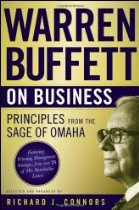
    What is better than reading a book about Warren Buffett but a book by Warrren Buffett himself. Warren Buffett on Business: Principles from the Sage of Omaha, by Richard J. Connors is the new book containing excerpts of annual letters from Warren Buffett himself to his Berkshire Hathaway shareholders.

    I am a Buffett devotee, and I was caught from the first word but there is stuff there for every investor to read and most importantly to learn from.

    Amongst his various witty anecdotes and cute quotes, is advice about ethics, morals, managing businesses, investing in companies long term and stressing the ability of everyone to strive by hard work, invest early and in the right way, eventually, and of course in the long term it will pay off for you.

    Buffett’s words and advice are easy to follow and are not cluttered with the usual business or financial gobbledygook that other financial books usually contain.

    The excerpts compiled by Connors are memorable and highly readable but there is some serious repetition there of the same stuff and even a glaring error where the same paragraph is repeated not long after the original.

    I had an advance copy so it could have been an error in the first print run.

    Having said that the book is still highly readable with classic advice for investors that Buffett has stuck to over 70 years of investing and it will never be out of fashion.

    It is by no means the best book on or by Warren Buffett but is worth buying to read and refer back to when you need to be reminded on what you might want to do when it comes to investing your hard earned moola.

    8 out of 10.

    Thanks to Adrianna Johnson from John Wiley & Sons for supplying a copy of the book to review.

    Buy the book from Amazon

    Warren Buffett on Business: Principles from the Sage of Omaha Warren Buffett on Business: Principles from the Sage of Omaha by Richard J. Connors
    Buy new: $16.47 / Used from: $11.25
    Usually ships in 24 hours


    Bookmark and Share


  • PR NEWSWIRE: Cadbury Bidding war bad for UK Workers and Business, Unite Will Advise Parliament

    LONDON, January 12 /PRNewswire/ —

    Fishpond
    SPONSOR

    Unite, the leading union in the food industry, will today (Tuesday) repeat that a bidding war is bad for Cadbury and its workforce as rumours intensify about the future ownership of the chocolate maker.

    The union is to give evidence to the influential Business, Innovation and Skills Select Committee of the House of Commons today which is conducting an emergency inquiry into the attempted acquisition of Cadbury.

    Unite wants a stronger voice to be given to workers during the takeover process. Cadbury is already subject to a takeover bid from US-based transnational Kraft, which Unite fears could be paid for in job losses and cuts in pay and conditions for the UK and Ireland workforce. Speculation is now growing that Ferrero-Rocher is also in the process of finalising an offer for Cadbury, adding to Unite’s concerns that the interests of the UK and Irish workforce will be lost as a bidding war erupts between companies based in two separate continents.

    Unite says that the bids for Cadbury underscore the ease with which otherwise stable UK companies can be subject to hostile acquisition. Speaking ahead of the Select Committee session at which he will give evidence, Unite’s deputy general secretary Jack Dromey, said:

    “Takeover policy is shrouded in secrecy and tilted towards profiteering, not the public interest, so much so that the interests of banks and far-off boardrooms come before those of loyal workers and communities. Billion-dollar buy-up packages are put together without any need to guarantee jobs and investment.

    “UK and Irish workers, and UK businesses, certainly do not benefit and they will continue to lose out if bidding wars, like the one unfolding for Cadbury, are allowed to determine the future of our companies and country.”

    Also set to appear before the Select Committee, Jennie Formby, Unite’s national officer for food and drink, added:

    “The speed with which Cadbury has gone from “Not for Sale” to “Under Offer” is startling. Once the speculators started to hover, a great UK and Irish company, a household name with products loved by generations of consumers, was plunged into uncertainty.

    “Two months on from Kraft’s initial interest, we are still none the wiser as to Kraft’s plans for Cadbury. Thousands of workers are in the dark about their jobs and it cannot be right that they will remain so until any deal, whether with Kraft or another bidder, is done and dusted.”

    Despite continued pressure on the company, Unite has failed to secure further information from Kraft on it intentions towards Cadbury’s workforce. With analysts predicting that Kraft will be seeking to generate up to $1.5 billion in savings, and fears growing that much of these could be made through mass redundancies and restructuring, Unite is pushing for commitments on minimum employment protections, including no compulsory redundancies or site closures, and protection for pensions.

    Unite says it also wants Kraft to be much clearer about its plans for all sites in the UK and Ireland, and for details of the business plans for the combined company as a whole.

    The union says it will continue to engage in discussion with Kraft and any other company mounting a bid for Cadbury, including Ferrero-Rocher. Last month, Unite launched its “Keep Cadbury Independent” campaign to win security in any takeover for workers in the UK and Ireland.

    Notes: Jack Dromey, Unite’s deputy general secretary, and Jennie Formby, Unite’s national officer for food and drink, will give evidence to the Business, Innovation and Skills Select Committee of the House of Commons tomorrow, Tuesday (12th January). The Committee is sitting in Portcullis House and will begin its evidence session at 10.30am.

    Distributed by PR Newswire on behalf of Unite the Union

    Share Investor Links

    Share Investor Blog – Stockmarket & Business commentary
    Share Investor New Zealand Business News– Get more business news
    Discuss this topic @ Share Investor ForumRegister free
    Share Investor’s Daily Forex Updates

    Recommended Amazon Reading

    Security Analysis: Sixth Edition, Foreword by Warren Buffett (Security Analysis Prior Editions) Security Analysis: Sixth Edition, Foreword by Warren Buffett (Security Analysis Prior Editions) by Benjamin Graham
    Buy new: $47.25 / Used from: $46.96
    Usually ships in 9 to 11 days
    The Four Filters Invention of Warren Buffett and Charlie Munger The Four Filters Invention of Warren Buffett and Charlie Munger by Bud Labitan
    Buy new: $33.25 / Used from: $43.89
    Usually ships in 24 hours


    Bookmark and Share


  • TIMES ONLINE: Top Cadbury investors snub meeting with Kraft’s chief

    January 12, 2010


    Fishpond
    SPONSOR

    Irene Rosenfeld, the chief executive of Kraft, has been dealt an extraordinary snub by two leading shareholders in Cadbury after trying to launch a charm offensive.

    Ms Rosenfeld has sought to meet a number of institutional investors in the British confectionery group before next week’s final deadline for Kraft to raise its hostile £10.5 billion takeover bid for Cadbury.

    However, it is understood that at least two of the shareholders have told Kraft that they are uninterested in meeting Ms Rosenfeld, arguing that there would be little point in their doing so until she was prepared to contemplate raising Kraft’s offer for Cadbury. The Times has been told that one of these was Deutsche Bank’s asset management division.

    A number of other shareholders, including Legal & General and Scottish Widows Investment Partnership, have agreed to take part in the meetings, which have been scheduled for tomorrow and Thursday. But it is understood that they, too, have made clear that they have no intention of accepting Kraft’s offer while it remains pitched at the existing price.

    One person familiar with their thinking said last night: “They have said they will see her, but they will be giving her some very forthright opinions.”

    Others that have been invited to meet Kraft include Standard Life, AXA and the Universities Superannuation Scheme.

    Ms Rosenfeld’s trip to London is significant because it is the first contact that she has sought with Cadbury’s shareholders since Kraft made its takeover bid on September 7 last year. During the takeover battle, Ms Rosenfeld has taken a methodical approach to the bidding process, insisting that Kraft would “maintain a disciplined approach” and arguing that she was certain of Cadbury’s intrinsic value.

    Market insiders believe that her offer to meet Cadbury shareholders represents something of a U-turn from this standpoint. Most Cadbury shareholders have made clear that Kraft’s cash-and-shares offer, which last night was worth 757p per Cadbury share, would have to be raised to at least 800p — and possibly to 820p — to be taken seriously. Cadbury shares closed up 3p at 781p.

    One shareholder said that they thought that Ms Rosenfeld was meeting shareholders in an early attempt to “test the water” before raising Kraft’s terms in a way acceptable to Cadbury shareholders and Warren Buffett, Kraft’s biggest shareholder. He said last week that he was opposed to the US food conglomerate’s plans to issue new shares to help to finance a takeover on the grounds that it represented a “blank cheque”.

    The shareholder said: “They must be trying to ascertain what they can do before going back to check with Buffett [that this will be acceptable to him].”

    Another insider claimed that Ms Rosenfeld’s visits had probably always been part of Kraft’s game plan: “Kraft were always planning to send her to London at this stage. The reason she hasn’t spoken to the investors yet is because, until now, she hasn’t had anything to say to them.”

    Cadbury will issue its latest defence against Kraft this morning. It has been given a further three days by the Takeover Panel, giving it until Friday in which to unveil its 2009 trading update, which is also expected to form a key plank in its fight to remain independent. Kraft has until Tuesday next week in which to improve the terms of its offer.

    Hershey, the American confectionery group, and Ferrero, the Italian chocolatier, have been given until January 23 to come up with a fully financed bid for Cadbury. Italian newspapers reported at the weekend that Ferrero was seeking to raise a $4.5 billion loan to help to fund a possible bid.

    Ferrero, whose brands include Ferrero Rocher, Tic-Tac and Nutella, is not expected to make an offer without a partner such as Hershey, which would also struggle to fund an offer on its own.

    Ferrero is also thought to have spoken to private equity firms, including Blackstone Group, about its intentions towards Cadbury.

    Wrapping up

    Roger Carr, Cadbury’s chairman, will launch a volley of anti-Kraft rhetoric today, asking investors why they would want shares in the underperforming US food group (Helen Power writes). Mr Carr is expected to revisit comments about the mixed performance of Kraft’s share price since its IPO nine years ago as he makes a penultimate defence against the US raider. Todd Stitzer, Cadbury’s chief executive, will announce an increased dividend for 2009. Cadbury has brought forward its 2009 full-year results to Thursday, when it will present its final defence in advance of next Tuesday, when Kraft must make its best and final offer.

    Share Investor Links

    Share Investor Blog – Stockmarket & Business commentary
    Share Investor New Zealand Business News– Get more business news
    Discuss this topic @ Share Investor ForumRegister free
    Share Investor’s Daily Forex Updates

    Recommended Amazon Reading

    Security Analysis: Sixth Edition, Foreword by Warren Buffett (Security Analysis Prior Editions) Security Analysis: Sixth Edition, Foreword by Warren Buffett (Security Analysis Prior Editions) by Benjamin Graham
    Buy new: $47.25 / Used from: $46.96
    Usually ships in 9 to 11 days
    The Four Filters Invention of Warren Buffett and Charlie Munger The Four Filters Invention of Warren Buffett and Charlie Munger by Bud Labitan
    Buy new: $33.25 / Used from: $43.89
    Usually ships in 24 hours


  • STREET CAPITALIST.COM: Is Berkshire Hathaway Undervalued?

    Jan 11, 2010

    Fishpond
    SPONSOR

    With Warren Buffett recently warning Kraft (NYSE:KFT) about issuing too many shares in pursuit of acquiring Cadbury, Andrew Bary over at Barron’s has an article regarding Berkshire Hathaway’s (NYSE:BRK.A) own share issuance related to its acquisition of Burlington Northern Santa Fe (NYSE:BNI). One of the areas that Bary touches on, is whether or not Berkshire itself is undervalued:

    Based on earnings and book value, Berkshire fans consider the Class A very attractive now, at around $100,000 a share. After rising just 3% in 2009, the stock, which is way below its late 2007 peak of $149,000, fetches a mere 1.2 times our estimate of the company’s year-end 2009 book value of $84,500 a share — compared with an average 1.65 times in the past decade. The stock rarely has been cheaper, relative to book value, in 15 years…

    Book value, moreover, understates what Buffett calls Berkshire’s intrinsic value: the discounted value of its cash flow. Buffett won’t estimate this, but has stated that it “significantly” exceeds book value, because auto insurer Geico and some other businesses are worth more than their carrying value on Berkshire’s balance sheet.

    Berkshire’s book value could hit $92,000 to $95,000 a share this year if the financial markets stay strong. Thus, Berkshire may be trading below its 1.1 times forward book value. Why, then, is Buffett willing to issue equity for Burlington? He declined to comment last week, but he likes the railroad business, having accumulated a 22% stake in Burlington prior to the deal. In the past, he’s called the transaction “an all-in wager on the economic future of the United States.” And he’s said that, while he’s not enthusiastic about issuing more shares, the deal is too large to be all-cash and that he wants to give Burlington shareholders a tax-free option. Some think the 79-year-old investor wants to trim Berkshire’s $24 billion in cash to cut the pressure on his successor to make investments.

    Still, Berkshire is paying a full price for Burlington — 18 times projected 2010 profits for a capital-intensive business. Other major rail companies are valued at about 15 times estimated 2010 earnings. One saving grace: Berkshire is using cash on its balance sheet and an estimated $8 billion in cheap financing for the deal, which uses a 60/40 mix of cash and stock.

    The Buffett Paradox (Barron’s)

    Bary goes on to note that it is interesting that Buffett is so willing to issue shares for Burlington as Berkshire trades around historically low price to book value multiples. He gives the General Re acquisition as a possible example where Buffett used his expensive stock as currency, at the time Berkshire traded at 3 times book value.

    Berkshire Hathaway appears undervalued as it stands and I think that the decision to issue shares stems mainly from a need to acquire Burlington Northern. For Berkshire, the deal makes a lot of sense. Berkshire will get a large business to add to its other lines and help create a new cash flow stream and become less reliant on the company’s financial division. The long-term economics of the rail business seem positive enough to warrant buying the company without a discount and the $8B cheap financing is not very much when one considers the current dividend that Burlington Northern already pays out. Buffett always refers to Berkshire Hathaway as his masterpiece and this acquisition should ensure that the company is built to last through good and bad economic periods, without being so reliant on one key leader like himself.

    Share Investor Links

    Share Investor Blog – Stockmarket & Business commentary
    Share Investor New Zealand Business News– Get more business news
    Discuss this topic @ Share Investor ForumRegister free
    Share Investor’s Daily Forex Updates

    Recommended Amazon Reading

    Security Analysis: Sixth Edition, Foreword by Warren Buffett (Security Analysis Prior Editions) Security Analysis: Sixth Edition, Foreword by Warren Buffett (Security Analysis Prior Editions) by Benjamin Graham
    Buy new: $47.25 / Used from: $46.96
    Usually ships in 9 to 11 days
    The Four Filters Invention of Warren Buffett and Charlie Munger The Four Filters Invention of Warren Buffett and Charlie Munger by Bud Labitan
    Buy new: $33.25 / Used from: $43.89
    Usually ships in 24 hours


    Bookmark and Share


  • SKY NEWS: Ferrero Looks To Spoil Kraft’s Cadbury Bid

    2:16pm UK, Monday January 11, 2010

    Fishpond
    SPONSOR

    Dharshini David, Business correspondent

    As Cadbury prepares its final defence against a hostile bid from America’s Kraft, Italian manufacturer Ferrero appears to have secured a loan that would allow it make an offer for the 200-year old confectioner – with or without Hershey.

    Over the weekend, Cadbury’s chairman, Roger Carr, accused Kraft of merely being a puppet of key shareholder Warren Buffett, who’s warned Kraft against paying too much for Cadbury.

    Tomorrow Cadbury will set out its final argument against Kraft – basically a call to shareholders not to allow it to fall into the hands of the makers of Philadelphia cheese.

    It will update figures for last year and claim that Kraft undervalues its prospects for growth. Kraft itself, by contrast, it will say is a low -growth prospect; the very reason it wants to get its hands on Dairy Milk and Cadbury’s other coveted brands

    Shareholders ultimately will decide whether Cadbury succumbs to Kraft. But the battle has to be played out to a timetable is dictated by Takeover Panel rules:

    January 12 The last day Cadbury can mount a defence, and publish key financial details.

    January 15 Cadbury won a three-day extension which means it can publishes more financial details after markets close ( but it failed to win an extension for its defence documents)

    January 19 The last day Kraft can raise its offer – unless other bidders move in

    January 23 Deadline other who have already expressed interest in Cadbury such as Hershey and Italy’s Ferrero, to submit a fully financed bid. If not, they have to wait another six months to mount a bid.

    February Deadline for votes from Cadbury shareholders if Kraft is going to exceed the 50% it needs to win. If Kraft fails, it has to wait 12 months before bidding again for Cadbury. Also the deadline for a new bidder to throw their hat into the ring.

    Cadbury may feel that with Tuesday’s document, they have persuaded shareholders that they need to see a bid far in excess of 800p per share and so convince them to turn their back on Kraft (which is offering 769p).

    But the next couple of weeks could mean an eventful ride for the company – with plenty of scope for others to enter the fray.

    If it is not someone who’s already expressed an interest – like Hershey and Ferrero – then the timetable starts again.

    When the music finally stops, Cadbury could yet find itself in different hands.


    Share Investor Links

    Share Investor Blog – Stockmarket & Business commentary
    Share Investor New Zealand Business News– Get more business news
    Discuss this topic @ Share Investor ForumRegister free
    Share Investor’s Daily Forex Updates

    Recommended Amazon Reading

    Security Analysis: Sixth Edition, Foreword by Warren Buffett (Security Analysis Prior Editions) Security Analysis: Sixth Edition, Foreword by Warren Buffett (Security Analysis Prior Editions) by Benjamin Graham
    Buy new: $47.25 / Used from: $46.96
    Usually ships in 9 to 11 days
    The Four Filters Invention of Warren Buffett and Charlie Munger The Four Filters Invention of Warren Buffett and Charlie Munger by Bud Labitan
    Buy new: $33.25 / Used from: $43.89
    Usually ships in 24 hours


    Bookmark and Share


  • IRELAND ONLINE: Ferrero may enter Cadbury bidding fray

    11/01/2010 – 09:02:54

    Fishpond
    SPONSOR

    Chocolate firm Ferrero has moved a step closer to joining the Cadbury bidding war after lining up a loan that could be used to back an offer, it was reported today.

    Ferrero, which makes Ferrero Rocher and Kinder chocolate eggs, has discussed a $4.5bn loan with Italian bank Mediobanca, according to The Times in England.

    Cadbury is currently the subject of a hostile bid from US firm Kraft and shareholders have until February 2 to accept its offer valuing the British confectioner at 764p a share, or €11.6bn.

    Ferrero, which has already revealed a possible interest in a bid, is thought to be more likely to join forces with another bidder – possibly US chocolate firm Hershey – to try and rival the Kraft bid.

    The difficulties of negotiating a partnership with another company and lining up funding are understood to have dampened enthusiasm for a rival offer, but the details of Ferrero’s loan indicates it is still possible.

    According to The Times, which cites local reports in Italy, Ferrero had still not made up its mind about whether or not to throw its hat into the ring.

    The number of potential bidders for Cadbury has dwindled recently after KitKat firm Nestle ruled out a counter-bid.

    Cadbury has fought vehemently against the Kraft attempt for months, dismissing the offer as “derisory” and urging shareholders to support the company as an independent entity.

    This week the Dairy Milk maker will publish trading figures showing strong sales for 2009, as it looks to convince investors of the firm’s strength.

    Its last defence document saw it up long-term performance targets and issue higher profit margins guidance.

    Kraft has until January 19 to decide whether to raise its bid further and an offer of more than 800p is thought to have more of a chance of enticing Cadbury shareholders.

    But the Dairylea and Toblerone firm would need the support of Warren Buffett, whose Omaha-based Berkshire Hathaway investment vehicle owns almost 10% of Kraft, to up its offer.

    Mr Buffet has already warned Kraft not to overpay for Cadbury and last week said shareholders should not be asked to write a “blank cheque” by issuing 370 million new Kraft shares to finance the bid.

    Share Investor Links

    Share Investor Blog – Stockmarket & Business commentary
    Share Investor New Zealand Business News– Get more business news
    Discuss this topic @ Share Investor ForumRegister free
    Share Investor’s Daily Forex Updates

    Recommended Amazon Reading

    Security Analysis: Sixth Edition, Foreword by Warren Buffett (Security Analysis Prior Editions) Security Analysis: Sixth Edition, Foreword by Warren Buffett (Security Analysis Prior Editions) by Benjamin Graham
    Buy new: $47.25 / Used from: $46.96
    Usually ships in 9 to 11 days
    The Four Filters Invention of Warren Buffett and Charlie Munger The Four Filters Invention of Warren Buffett and Charlie Munger by Bud Labitan
    Buy new: $33.25 / Used from: $43.89
    Usually ships in 24 hours


    Bookmark and Share


  • BUSINESSWEEK: Cadbury Set to Step Up Kraft Defense With Sales, Profit Gains

    January 11, 2010, 03:52 AM EST

    By Sarah Shannon

    Fishpond
    SPONSOR

    Jan. 11 (Bloomberg) — Cadbury Plc, the world’s second- largest confectioner, will probably step up its defense against Kraft Foods Inc.’s hostile 10.9 billion-pound ($17.6 billion) bid tomorrow by posting increases in 2009 sales and earnings.

    Revenue climbed 12 percent to 6 billion pounds in the year through Dec. 31, according to the median of nine analysts’ estimates compiled by Bloomberg. So-called underlying profit from operations probably rose to 806 million pounds from 638 million pounds, the median of four estimates shows.

    Cadbury is due to issue preliminary figures as it seeks to fend off Kraft, whose offer it has described as “derisory.” In December, the U.K. candy maker raised guidance for so-called organic sales growth to between 5 and 7 percent annually through 2013, and lifted its profitability forecast. Cadbury has yet to receive a competing offer from Hershey Co. or Ferrero SpA, which have both said they are exploring options.

    “We will get a very upbeat trading update from Cadbury,” Jeremy Batstone-Carr, an analyst at Charles Stanley, said by phone. “Emerging markets are ploughing ahead remorselessly,” said the analyst, who has a “reduce” recommendation.

    Chief Executive Officer Todd Stitzer said in December that businesses in India, South America, the Middle East and Africa continued to show “strong momentum.” Emerging markets will grow sales at a quicker pace than the company average over the medium-term, with organic revenue to increase by 10 percent to 12 percent annually, he said.

    Western Europe and the U.S. “are proving more sluggish” for Cadbury, Batstone-Carr said. “It remains to be seen whether they will be able to maintain that momentum in 12 months time.”

    Kraft Plan Opposed

    Spokesman Trevor Datson declined to comment before the release of the preliminary figures.

    Cadbury shares briefly fell below the value of the cash- and-stock bid for the first time last week after Kraft’s biggest shareholder, Warren Buffett’s Berkshire Hathaway Inc., went public with opposition to Kraft’s plan to issue new shares to fund the offer and Nestle SA ruled itself out of bidding. Northfield, Illinois-based Kraft raised the cash component of its bid on Jan. 6 and has until Jan. 19 to boost its offer.

    Cadbury shares fell 1 penny to 777 pence at 8:27 a.m. in London trading, compared with an offer value of 764.5 pence.

    The candy maker will issue its second document to the Takeover Panel outlining its bid defense tomorrow. An updated version to include unaudited 2009 financial performance of the business will be published Jan. 14, the company has said.

    –Editors: Paul Jarvis, Celeste Perri.

    Share Investor Links

    Share Investor Blog – Stockmarket & Business commentary
    Share Investor New Zealand Business News– Get more business news
    Discuss this topic @ Share Investor ForumRegister free
    Share Investor’s Daily Forex Updates

    Recommended Amazon Reading

    Security Analysis: Sixth Edition, Foreword by Warren Buffett (Security Analysis Prior Editions) Security Analysis: Sixth Edition, Foreword by Warren Buffett (Security Analysis Prior Editions) by Benjamin Graham
    Buy new: $47.25 / Used from: $46.96
    Usually ships in 9 to 11 days
    The Four Filters Invention of Warren Buffett and Charlie Munger The Four Filters Invention of Warren Buffett and Charlie Munger by Bud Labitan
    Buy new: $33.25 / Used from: $43.89
    Usually ships in 24 hours


    Bookmark and Share