Author: Darren Rickard

  • TRADING MARKETS.COM: DJ CADBURY WATCH: Kraft Bid Worth 764P A Share As Of Jan 8

    NPosted on: Mon, 11 Jan 2010 02:43:49 EST

    Symbols: NSRGF

    Fishpond
    SPONSOR

    LONDON, Jan 11, 2010 U.K. confectioner Cadbury PLC (CBY) Jan. 5 dismissed an altered offer from Kraft Foods Inc. (KFT), after the U.S. food giant offered a greater percentage of cash as part of the GBP10 billion bid.

    “Kraft has once again missed the point,” a Cadbury spokesman said. “Despite this tinkering, the Kraft offer remains unchanged and derisory with less than half the consideration in cash.”

    Following an agreement Kraft reached to sell its U.S. and Canadian frozen pizza business to Nestle S.A. (NESN.VX), the Swiss consumer giant, for $3.7 billion, Kraft said it is going to give Cadbury shareholders a “partial cash alternative” to its existing offer.

    The new bid offers 60 pence per Cadbury share, bringing the cash part of the deal to 360 a share. Kraft did not say how much the stock element of the cash-and-shares bid would reduce by, but insisted that the increased cash element did not represent a “raised offer.” This suggests the stock element of the deal will be cut.

    The previous bid is still the only formal one on the table, offering Cadbury shareholders 300 pence in cash and 0.2589 new Kraft shares for each Cadbury share. It is made up of 60% stock and 40% cash.

    Since the alternative cash-share mix was offered, the E.U. has cleared Kraft to make a bid, Nestle has dropped out of the running for Cadbury, and Warren Buffett said Berkshire Hathaway Inc. (BRKA, BRKB), his holding company, wouldn’t support the issuance of new Kraft shares to pay for a Cadbury deal.

    These developments sent Kraft shares almost 5% higher and Cadbury’s 4% lower, meaning that Cadbury shares slipped to within pennies of Kraft’s offer price.

    Kraft’s stock closed up 0.6% at $28.93 Friday, which means its bid for Cadbury is now worth 764 pence a share and values the U.K. company at GBP10.5 billion, or $16.9 billion. Cadbury shares closed up 0.19% at 778 pence.

    Hershey Co (HSY) and Italy’s Ferrero SpA are now in talks over a possible deal for Cadbury, and an offer could be announced as early as Jan 23.

    (END) Dow Jones Newswires

    01-11-10 0243ET

    For full details on (NSRGF) NSRGF. (NSRGF) has Short Term PowerRatings at TradingMarkets. Details on (NSRGF) Short Term PowerRatings is available at This Link.

    Share Investor Links

    Share Investor Blog – Stockmarket & Business commentary
    Share Investor New Zealand Business News– Get more business news
    Discuss this topic @ Share Investor ForumRegister free
    Share Investor’s Daily Forex Updates

    Recommended Amazon Reading

    Security Analysis: Sixth Edition, Foreword by Warren Buffett (Security Analysis Prior Editions) Security Analysis: Sixth Edition, Foreword by Warren Buffett (Security Analysis Prior Editions) by Benjamin Graham
    Buy new: $47.25 / Used from: $46.96
    Usually ships in 9 to 11 days
    The Four Filters Invention of Warren Buffett and Charlie Munger The Four Filters Invention of Warren Buffett and Charlie Munger by Bud Labitan
    Buy new: $33.25 / Used from: $43.89
    Usually ships in 24 hours


    Bookmark and Share


  • BUSINESSWEEK: Buffett’s Kraft Rebuke Signals Berkshire Closer to Full Value

    January 11, 2010, 12:18 AM EST

    Fishpond
    SPONSOR

    By Andrew Frye

    Jan. 11 (Bloomberg) — Warren Buffett, who scolded Kraft Foods Inc. over its plan to issue stock for an acquisition, is using shares of his Berkshire Hathaway Inc. to pay for his biggest buyout. The apparent inconsistency may signal that Berkshire’s shares are more fully valued than Kraft’s.

    Buffett wants to issue about $10 billion of Berkshire stock to help finance the $26 billion acquisition of railroad Burlington Northern Santa Fe Corp. As the largest investor in Kraft, Buffett registered Berkshire’s 138 million votes against the foodmaker’s plan to fund its bid for Cadbury Plc, saying that Kraft’s shares are worth more than their current price suggests. Neither takeover target, he has said, is coming cheap.

    “It does seem to raise a contradiction,” said David Kass, a professor at the University of Maryland’s Robert H. Smith School of Business. “He may be thinking that Berkshire shares are less undervalued than Kraft.”

    “It does seem to raise a contradiction,” said David Kass, a professor at the University of Maryland’s Robert H. Smith School of Business. “He may be thinking that Berkshire shares are less undervalued than Kraft.”

    Kraft stock is “very expensive currency,” Buffett said in a statement last week. Still, the billionaire takeover expert is planning to fund the Burlington Northern deal with Berkshire stock that’s fallen by a third from its 2007 high to $100,300 on Jan. 8. That’s led analysts and Charles Ortel of Newport Value Partners to ask why Buffett is willing to issue so many Berkshire shares.

    “You don’t sell stock if you think it’s at a low, you sell stock if you think it’s fully valued,” said Ortel, managing director of New York-based Newport, who has advised clients to bet against Berkshire. “He could certainly raise the money without equity if he wanted to.”

    No Bargain

    Berkshire isn’t getting “a bargain” in the Burlington Northern deal, Buffett told Charlie Rose in an interview on PBS in November. Still, the railroad’s stock may be cheap enough to justify using Berkshire shares that trade for less than their true value, said Tom Russo, partner at Gardner Russo & Gardner, which has an investment in Omaha, Nebraska-based Berkshire.

    “I think it says he believes he’s getting one heck of a deal at the price agreed upon for Burlington,” Russo said in an interview. The Burlington Northern offer “is sufficiently undervalued to justify issuing shares of stock, which is something he’s long avoided.” The railroad fell about 15 percent to $76.07 in the 12 months before Buffett agreed to pay $100 a share.

    ‘True Business Value’

    Buffett said in the statement last week that when evaluating acquisitions, “the true business value of what is given is as important as the true business value of what is received.”

    Berkshire reserved the right to reverse its decision on the Kraft vote when the foodmaker announces its final Cadbury offer, which is expected by Jan. 19. A vote by Berkshire shareholders on a 50-for-1 split of the company’s Class B stock and an increase in the authorized number of shares is scheduled for Jan. 20.

    Buffett declined to comment through his assistant, Debbie Bosanek. Buffett, who is chairman and chief executive officer of Berkshire, has refused in the past to answer shareholders’ questions about the value of Berkshire shares.

    “You can ask me almost anything, but that’s one I never answer,” Buffett, 79, said in an interview with Bloomberg Television last year. “I never tell people to buy or sell Berkshire. I’ve never sold a share myself, I would tell you that.”

    Two analysts tracked by Bloomberg have price forecasts on the stock averaging $125,000. A third, Meyer Shields of Stifel Nicolaus & Co., said in an interview he expects the stock to reach $113,000 in 12 months.

    Worst Year in Decade

    Buffett’s acquisitions and stock picks propelled Berkshire’s shares to an increase of more than 30 fold in 20 years. He’s finding it harder to maintain that pace as his company expands from insurance to energy and manufacturing. Berkshire advanced 2.7 percent on the New York Stock Exchange last year, compared with the 23 percent rise in the Standard & Poor’s 500 Index, the company’s worst performance against the index in 10 years.

    Investors last week paid $1.23 for every $1 of net assets Buffett and Vice Chairman Charles Munger, 86, have assembled at Berkshire over four decades. That’s about 7 percent more than the figure for the financial companies in the S&P 500. Berkshire’s multiple to book value, or assets minus liabilities, has averaged 1.76 over that past 15 years, compared with 2.17 for the S&P 500 financial firms.

    “The market doesn’t seem to appreciate Berkshire’s growth and value as much as it used to,” said Morningstar Inc.’s Bill Bergman, a Chicago-based analyst, who estimates Berkshire shares to be worth $131,000 each. The company “has been built up by Warren Buffett and Charlie Munger to be something that will live beyond their years, and that’s something I think the market hasn’t appreciated.”

    Compounding an Error

    Buffett has warned investors about the dangers of stock- fueled takeovers. He typically shuns debt financing too, preferring to shop with cash from stock dividends and bond coupons from Berkshire’s investment portfolio, and earnings from businesses he’s already acquired. Revenue from Geico car insurance and Dairy Queen ice cream helped Buffett pay $4 billion for Israeli toolmaker Iscar Metalworking Cos. in 2006.

    He’s called his all-stock purchase of shoemaker Dexter in 1993 a waste of shareholder funds, saying that the advantages he thought the company had over rivals quickly vanished. Using $433 million of Berkshire shares, Buffett wrote in his 2007 annual report, “compounded this error hugely.”

    ‘Worthless Business’

    “That move made the cost to Berkshire shareholders not $400 million, but rather $3.5 billion,” he wrote. “In essence, I gave away 1.6% of a wonderful business – one now valued at $220 billion – to buy a worthless business.” Berkshire’s market capitalization has since fallen to about $155 billion.

    Buffett again used stock in the 1998 takeover of insurer General Re for about $18 billion. Berkshire shares closed at a then-record high of $80,900 less than an hour before the two companies announced the agreement. The stock fell 27 percent in three months and didn’t recover to its record for five years.

    While on the board of Coca-Cola Co., Buffett helped scuttle the soft-drink company’s proposed $15.3 billion stock swap for Quaker Oats, the maker of Gatorade, in 2000. Buffett, whose company still owns Coca-Cola shares, argued the price was too high because it meant giving up more than 10 percent of the soft-drink maker, board member James Williams said in an interview about three years later.

    “From time to time he issues his own stock,” said Guy Spier, principal at hedge fund Aquamarine Funds LLC, which owns Berkshire shares. “But he really doesn’t like it when other companies issue their own stock.”

    ‘Blank Check’

    Kraft offered a mixture of cash and stock for Cadbury, the Uxbridge, England-based maker of Creme Eggs and Trident gum, in a deal it values at about 10.6 billion pounds ($17 billion). Last week, Buffett said the equity financing plan amounted to a “blank check,” enabling Kraft CEO Irene Rosenfeld to increase the offer without further shareholder approval. Cadbury has called the bid insufficient.

    Kraft stock has fallen about 17 percent in the two years ended Dec. 31, and Buffett chided Rosenfeld for seeking to issue equity below the $33 price at which the firm repurchased shares in 2007. Berkshire owns about 9.4 percent of Kraft’s stock.

    Kraft rose 5.5 percent in the four trading days since Buffett’s announcement, while Cadbury has slipped 3.4 percent on speculation that a higher bid is less likely to emerge.

    Buffett has called the Burlington Northern deal an “all-in wager” on the U.S. economy that brings about 37,000 workers and a share of a regulated industry. Berkshire expects to own the railroad for the next century and get “a decent return,” Buffett told Charlie Rose.

    –With assistance from Betty Liu and Zachary R. Mider in New York. Editors: Erik Holm, Dan Kraut

    Share Investor Links

    Share Investor Blog – Stockmarket & Business commentary
    Share Investor New Zealand Business News– Get more business news
    Discuss this topic @ Share Investor ForumRegister free
    Share Investor’s Daily Forex Updates

    Recommended Amazon Reading

    Security Analysis: Sixth Edition, Foreword by Warren Buffett (Security Analysis Prior Editions) Security Analysis: Sixth Edition, Foreword by Warren Buffett (Security Analysis Prior Editions) by Benjamin Graham
    Buy new: $47.25 / Used from: $46.96
    Usually ships in 9 to 11 days


    The Intelligent Investor: The Definitive Book on Value Investing. A Book of Practical Counsel (Revised Edition) by Benjamin Graham
    Buy new: $14.95 / Used from: $6.99
    Usually ships in 24 hours
    The Intelligent Investor: The Definitive Book on Value Investing. A Book of Practical Counsel (Revised Edition)


    Bookmark and Share


  • NEW YORK TIMES: Goldman Sachs Weighs Requirement for Charity

    Published: January 10, 2010

    Fishpond
    SPONSOR

    As it prepares to pay out big bonuses to employees, Goldman Sachs is considering expanding a program that would require executives and top managers to give a certain percentage of their earnings to charity.

    The move would be the latest in a series of initiatives by Goldman to soften criticism over the size of its bonuses, which are expected to be among the largest on Wall Street, bringing average pay to about $595,000 for each employee — with far higher amounts for top performers.

    Goldman set aside $16.7 billion for compensation in the first nine months of 2009, and in good years, the firm dedicates about three-quarters of its compensation budget to year-end bonuses. The firm is expected to report later this month what could be record profit of about $12 billion for 2009, according to analysts’ estimates, compared with $11.7 billion in 2007. Its final compensation pool and executive bonuses will be announced then.

    The firm said last month that its 30 most senior executives would be paid bonuses all in stock, but the bank placed no limit on how large those bonuses might be.

    While the details of the latest charity initiative are still under discussion, the firm’s executives have been looking at expanding their current charitable requirements for months and trying to understand whether such gestures would damp public anger over pay, according to a person familiar with the matter who did not want to be identified because of the delicacy of the pay issue.

    The charity idea would be similar to a decades-long program at the failed investment bank Bear Stearns, which required more than 1,000 of its top workers to give 4 percent of their pay to charity each year and then checked their tax returns to ensure compliance.

    Assuming a similar percentage and level of participation, that would mean Goldman’s top employees would commit to giving hundreds of millions of dollars to charity, though the precise amount would depend on the level of contributions and the number of workers who are required to take part.

    It could not be determined whether Goldman would create a new program for its mandated giving or run it through Goldman Sachs Gives, which oversees donor-directed charity funds for Goldman workers. That program was created in 2007, weeks before Goldman paid its chief executive, Lloyd C. Blankfein, $68 million for that year. It required Goldman’s 400 or so partners to give an undisclosed amount to charity each year on their own or through the program.

    Goldman declined to comment.

    Amid a growing public outcry over big bonuses at Goldman and other Wall Street banks, Goldman in October said the firm itself would donate $200 million to its charitable foundation, nearly doubling its size. (The foundation is separate from GS Gives.) It also created a $500 million fund to lend to small businesses, a sector that has suffered in the tight credit environment. The plan will be overseen in part by Warren E. Buffett, who is a large Goldman investor.

    Moreover, the firm — which initially was on track to pay closer to $650,000 to $700,000 on average to its workers — has scaled back planned bonuses by cutting the amount of revenue set aside for compensation, apparently in response to negative public reaction. People familiar with the matter said that Goldman was planning to further reduce the portion of revenue dedicated to compensation in the fourth quarter.

    Still, these moves have done little to quell criticism of banker bonuses, and it is unclear if Goldman’s latest idea, if adopted, would alter the public mood and the feeling in Washington that big pay packages are inappropriate given the troubled economy.

    On Sunday, Christina D. Romer, head of the president’s top economic council, said on CNN’s “State of the Union” that it was “ridiculous” that banks planned to pay out billions in bonuses for last year.

    The payout, she said, “is going to offend the American people. It offends me.”

    For their work in 2008, 953 Goldman employees were paid more than $1 million each; the bank accepted $10 billion in federal bailout cash, though it has since repaid the money, as have most other banks, freeing them of government limits on compensation.

    Goldman, like its peers, is caught between conflicting constituencies. The bank cut worker pay somewhat last year, and some employees may leave for hedge funds or private equity firms if they are not paid handsomely for their contributions to the firm’s profits. Some shareholders, however, want the bank to divert more of its money to them as dividends, though others think it should pay to keep workers happy.

    In the meantime, the public has little sympathy for bankers expecting compensation to return to previous levels.

    The most important public relations tactic Goldman and other banks may use, headhunters said, is to instruct their employees to keep their heads down.

    “They’ll try to make sure their people aren’t going out and celebrating their financial wins,” said Maurice Toueg, a recruiter with Capstone Partnership.

    Share Investor Links

    Share Investor Blog – Stockmarket & Business commentary
    Share Investor New Zealand Business News– Get more business news
    Discuss this topic @ Share Investor ForumRegister free
    Share Investor’s Daily Forex Updates

    Recommended Amazon Reading

    Security Analysis: Sixth Edition, Foreword by Warren Buffett (Security Analysis Prior Editions) Security Analysis: Sixth Edition, Foreword by Warren Buffett (Security Analysis Prior Editions) by Benjamin Graham
    Buy new: $47.25 / Used from: $46.96
    Usually ships in 9 to 11 days
    The Four Filters Invention of Warren Buffett and Charlie Munger The Four Filters Invention of Warren Buffett and Charlie Munger by Bud Labitan
    Buy new: $33.25 / Used from: $43.89
    Usually ships in 24 hours


    Bookmark and Share


  • FINANCIAL TIMES: Cadbury prepares for final defence

    By Jenny Wiggins, Consumer Industries Correspondent

    Published: January 11 2010 02:00 | Last updated: January 11 2010 02:00

    Fishpond
    Sponsor

    Cadbury plans to release robust 2009 sales and profit figures this week as it steps up its defence against a £10.5bn hostile takeover bid from Kraft, the US food conglomerate.

    The UK-based confectionery group, which has been trying to fend off Kraft since late August when the US group made an unsolicited approach, will issue a final defence document tomorrow.

    Cadbury is expected to argue that it has healthy growth prospects as an independent company, particularly in emerging markets, but is not planning on releasing new sales or profit targets or detailed figures for 2010.

    The group revised its targets in December to try to win shareholder support.

    It aims for revenue growth of 5 to 7 per cent between 2010 and 2013 and profit margins of 16 to 18 per cent by 2013.

    Roger Carr, Cadbury’s chairman, is expected to argue that the group is positioned to deliver the stretching targets and that Kraft will have difficulty affording an acceptable offer after warnings from Warren Buffett, the investor, that the US group should not overpay.

    Kraft, which last week increased the cash component of its proposed cash-and-stock offer from 300p to 360p, is understood to be thinking of adding more cash.

    The US group believes that if it makes an offer valuing Cadbury at more than 800p, the UK confectioner’s board will need to consider the bid seriously.

    Kraft’s offer values Cadbury, whose shares closed at 778p on Friday, at about 768p a share.

    US-based Hershey and Italy’s Ferrero, which have been considering counter-offers, are running out of time before a UK Takeover Panel deadline for counterbids in late January.

    It is understood that there is as yet no consensus from either Hershey or Ferrero

    on whether to proceed with offers jointly or separately.

    Additional reporting by Rachel Sanderson in London

    Share Investor Links

    Share Investor Blog – Stockmarket & Business commentary
    Share Investor New Zealand Business News– Get more business news
    Discuss this topic @ Share Investor ForumRegister free
    Share Investor’s Daily Forex Updates

    Recommended Amazon Reading

    Security Analysis: Sixth Edition, Foreword by Warren Buffett (Security Analysis Prior Editions) Security Analysis: Sixth Edition, Foreword by Warren Buffett (Security Analysis Prior Editions) by Benjamin Graham
    Buy new: $47.25 / Used from: $46.96
    Usually ships in 9 to 11 days
    The Four Filters Invention of Warren Buffett and Charlie Munger The Four Filters Invention of Warren Buffett and Charlie Munger by Bud Labitan
    Buy new: $33.25 / Used from: $43.89
    Usually ships in 24 hours


    Bookmark and Share


  • SCOTSMAN.COM: Kraft ignores claim Buffett is in charge of Cadbury takeover bid

    Published Date: 11 January 2010

    KRAFT Food was understood to be privately dismissive yesterday of bid-target Cadbury’s allegations at the weekend that the American predator was essentially a “puppet” of its leading shareholder, Warren Buffett.

    Buffett – the legendary investor known as the “Sage of Omaha” – used his Berkshire Hathaway investment vehicle to publicly warn Kraft not to overpay for the British confectioner last week.

    Buffett owns 9.4 per cent of the US company hunting Cadbury. The move led Cadbury chairman Roger Carr to say at the weekend: “It was hugely embarrassing for Kraft to be reprimanded in public. It is very evident the real boss of Kraft lives in Omaha.”

    Kraft would not comment yesterday. But one source close to the contested takeover bid said: “This really is a bit of a sideshow. Both Cadbury and Kraft have to act in the best interests of their shareholders.

    “For Kraft, Buffett is a shareholder and an important one. It is really no different the company listening to his views as Cadbury listening to the views of their shareholders.”

    The crossfire over Buffett’s influence at Kraft and the potential that he will limit any “material” improvement in the Kraft offer for Cadbury comes as the UK firm is due to produce a trading update for 2009 at the end of this week.

    City food analysts say Cadbury is virtually certain to ramp up its previous forecasts for a 2009 operating margin of 13.3 per cent and underlying sales growth last year of about 5 per cent.

    Carr, meanwhile, denied Cadbury would be tempted to over-egg the forecasts, saying management knew its reputation depended on them delivering on any public targets.

    Kraft’s cash-and-shares bid is worth about 767p per Cadbury share, 11p below the target firm’s price in the market.

    Several City analysts believe Kraft, led by Irene Rosenfeld, will have to increase its bid to at least 800p a share to win the battle. Under takeover rules, the American firm has until 19 January to improve the bid.

    Share Investor Links

    Share Investor Blog – Stockmarket & Business commentary
    Share Investor New Zealand Business News– Get more business news
    Discuss this topic @ Share Investor ForumRegister free
    Share Investor’s Daily Forex Updates

    Recommended Amazon Reading

    Security Analysis: Sixth Edition, Foreword by Warren Buffett (Security Analysis Prior Editions) Security Analysis: Sixth Edition, Foreword by Warren Buffett (Security Analysis Prior Editions) by Benjamin Graham
    Buy new: $47.25 / Used from: $46.96
    Usually ships in 9 to 11 days
    The Four Filters Invention of Warren Buffett and Charlie Munger The Four Filters Invention of Warren Buffett and Charlie Munger by Bud Labitan
    Buy new: $33.25 / Used from: $43.89
    Usually ships in 24 hours

    Bookmark and Share


  • BUSINESSWEEK: Posco Pursues $30 Billion Expansion to Catch China’s Baosteel

    January 10, 2010, 10:50 AM EST

    By Sungwoo Park

    Jan. 11 (Bloomberg) — Posco, Asia’s most profitable steelmaker, is set to report the highest net income in six quarters as prices recover. Further growth depends on $30 billion in overseas expansion.

    Chief Executive Officer Chung Joon Yang last week added plans for a $7 billion plant in India’s Karnataka state to a $12 billion project in Orissa in the south Asian nation and a $6 billion Indonesian plant. Together with an investment in Vietnam, the South Korea-based company may leap from fifth-place to regain its spot as Asia’s largest steelmaker.

    Chung, 61, who took the helm in February, wants to regain ground lost to China’s Baosteel Group Corp. Three years of delay at the Orissa project and slowing domestic growth weighed on the stock, with Posco lagging behind ArcelorMittal, the world’s largest mill.

    “Posco has to show that it is a growing company,” said Kim Do Joon, a Seoul-based fund manager who helps manage $1.5 billion of assets including Posco shares at Hanwha Investment Trust Management Co. “They cannot expect a growth momentum from the local market.”

    Shares of Posco, which counts Warren Buffett’s Berkshire Hathaway Inc. as a stakeholder, gained 63 percent in Seoul trading last year. ArcelorMittal jumped 89 percent. China’s Baoshan Iron & Steel Co. and local rival Hyundai Steel Co. doubled.

    Profit at the Pohang-based company may almost double to 1.37 trillion won ($1.2 billion) in the three months ended Dec. 31, according to the median estimate of 23 analysts compiled by Bloomberg. It may be the largest quarterly gain in three years. Chung will announce results at 4 p.m. Seoul time on Jan. 14.

    Fresher Look

    “I’ll try to boost the future competitiveness of the company through investments and M&As,” Chung, a 35-year Posco veteran, said in February when he took over the job. He declined to be interviewed for this story on his first full-year earnings result as CEO.

    In the past year, Chung has acquired Asia Stainless Corp. in Vietnam, TaihanST Corp. in Korea, and is in talks to buy Thailand’s Thainox Stainless Pcl. He’s approved U.S. and Chinese expansion and is studying a bid for Daewoo International Corp., which has a Myanmar gas project worth at least $4 billion.

    “Scale is pivotal for competitiveness,” Choi Doo Jin, a Posco spokesman, said in an interview. “We’re going into India and Indonesia with a main focus on resources and into Vietnam on markets.”

    Three-Prong Expansions

    Those expansions will add 28 million metric tons of capacity, or 85 percent of Posco’s 33.1 million tons crude steel output in 2008. The Orissa and Indonesian projects alone may add 60,000 won to Posco’s stock price, said Kim Gyung Jung, an analyst with Samsung Securities Co.

    Chung, who studied at the nation’s top Seoul National University, was head of Posco Engineering & Construction Co. when he was picked to be CEO. The metal engineer, who snowboards and plays the saxophone, has spent most of his career in production after joining Posco in 1975.

    Like Buffett, Chung is seeking to take advantage of the crisis to expand. Posco is the only steelmaker among the 10 biggest that didn’t report a loss in any quarter in the 12 months ended Sept. 30, according to data compiled by Bloomberg.

    “You have to invest when others don’t,” Samsung’s Kim said. “You can avoid competition and pre-occupy markets, leaving little room for latecomers.”

    ‘Aggressive Investments’

    Steel demand may grow 9.2 percent this year as the global economy rebounds from the recession, the World Steel Association forecast in October.

    Posco will be able to maintain its risk profile during the course of “aggressive investments,” Standard & Poor’s said Dec. 14. It has 8 trillion won ($7 billion) in cash, near-cash items, short-term investments and receivables as of Sept. 30.

    Posco is pressing ahead in Orissa after winning government approval to acquire 88 percent of the land needed, spokeswoman Choi Youn Joung said Jan. 4. The project has been delayed since 2007 when construction was to start. It still needs approval from remaining villagers and a permit to mine iron ore, required to feed its steel plant. The delays won’t affect plans for the 6-million-ton plant in Karnataka that were revealed last week.

    Chung also has to progress Posco’s $5 billion investment in Vietnam, where the government in 2008 told the company to seek a new location for its plant.

    Right Thing

    “Targeting India, Vietnam and Indonesia is the right thing to do to prepare for the future as demand outlook for the emerging markets is quite good,” said Im Jeong Jae, a Seoul- based fund manager at Shinhan BNP Paribas Asset Management Co., which manages about $26 billion in assets including Posco shares.

    Southeast Asia is the world’s biggest net importing steel market with demand expected to grow 9.2 percent a year, according to Posco’s Research Institute.

    Posco dropped to sixth in global steelmaking in 2008, overtaken by Baosteel and Hebei Iron & Steel Group. China plans to create one or two producers the size of ArcelorMittal. The world’s largest steelmaker had 101.6 million tons of output in 2008, three times Posco’s production.

    “Bigger Chinese rivals may eventually threaten Posco’s edge in high-end products such as automotive steel,” said Chung Ji Yun, an analyst with HI Investment & Securities Co. in Seoul.

    –With assistance from Cesilia Han and Shinhye Kang in Seoul. Editors: Tan Hwee Ann, Andrew Hobbs

    -0- Jan/10/2010 15:00 GMT

    Share Investor Links

    Share Investor Blog – Stockmarket & Business commentary
    Share Investor New Zealand Business News– Get more business news
    Discuss this topic @ Share Investor ForumRegister free
    Share Investor’s Daily Forex Updates

    Recommended Amazon Reading

    Security Analysis: Sixth Edition, Foreword by Warren Buffett (Security Analysis Prior Editions) Security Analysis: Sixth Edition, Foreword by Warren Buffett (Security Analysis Prior Editions) by Benjamin Graham
    Buy new: $47.25 / Used from: $46.96
    Usually ships in 9 to 11 days
    The Four Filters Invention of Warren Buffett and Charlie Munger The Four Filters Invention of Warren Buffett and Charlie Munger by Bud Labitan
    Buy new: $33.25 / Used from: $43.89
    Usually ships in 24 hours


    Bookmark and Share


  • TELEGRAPH.CO.UK: Cadbury scornful of Kraft’s ability to raise offer

    Cadbury believes that Kraft will struggle to make a “materially” better offer for the British confectionery firm following Warren Buffet’s attack on the amount of stock the American giant was planning to issue as part of the bid.

    By Kamal Ahmed and Amy Wilson
    Published: 10:28PM GMT 09 Jan 2010

    Roger Carr, the chairman of Cadbury, told The Sunday Telegraph that Mr Buffett’s interjection last week was “embarrassing” for Irene Rosenfeld, the chief executive of Kraft and had weakened its position.

    Mr Buffett, whose company Berkshire Hathaway is Kraft’s largest shareholder, last week announced that Kraft shareholders should not write a “blank cheque” by agreeing to issue 370m new Kraft shares to finance the bid.

    “More than anything it must have been very embarrassing for the Kraft management e_SEnD they were clearly given a dressing down in public by their major shareholder,” Mr Carr said.

    “I think it demonstrates what authority Warren Buffett has over the business and the significance of his view in the way that Kraft is run. I think what he did was to impose some pretty heavy restraints on the management. He knows that the rating agencies are applying the same pressure on the debt model.

    “The constraint of both of these pressure points would appear to limit the ability of Kraft to make a material change in their offer.”

    Mr Carr’s comments come ahead of a crucial week in the battle between Kraft and Cadbury. The American conglomerate’s £10.2bn bid for the British confectionery firm has been dismissed as “derisory” by Cadbury.

    This week Cadbury will produce both its defence document against the bid and its end-of-year trading statement which is predicted to show strong sales and growth throughout 2009.

    It will then be left to Kraft to make a final offer to be considered by the Cadbury board and shareholders before January 19. Indications are that Kraft will have to increase its bid to at least 800p a share to have a chance of being successful. At present the offer is valued at about 760p a share.

    Mr Carr dismissed some analysts’ suggestions that Cadbury was in danger of over-egging its future projections to maintain its position against Kraft.

    “The management is clear that whatever performance commitments they have given to the market, it is these numbers on which they will be judged and on which their reputations will stand or fall,” he said.

    Mr Carr added that Kraft’s sale of its North American pizza business last week had also weakened its position even though its share price had risen.

    “The Kraft share price movement isn’t a reflection of it being a better business overnight e_SEnD in fact, you could argue that the sale of the pizza business makes it a little worse,” he said. “The position of the Kraft price and the Cadbury share price today is not the relevant comparison. The only relevant number is their final offer relative to the real worth of Cadbury.”

    The markets are sending contradictory messages about the deal. According to Data Explorers, about 1.6pc of Cadbury’s stock was out on loan to short sellers last week, down from 3.7pc in late November, suggesting the number of people betting a deal will happen has increased.

    Some hedge funds were not willing to take the risk – US fund Mason Capital exited its entire stake in Cadbury, reportedly at a loss. JGD Management also reduced its stake. But Franklin Resources, which bought into Cadbury because it saw the company as a takeover candidate before Kraft’s approach, raised its stake by more than 2m shares.

    Share Investor Links

    Share Investor Blog – Stockmarket & Business commentary
    Share Investor New Zealand Business News– Get more business news
    Discuss this topic @ Share Investor ForumRegister free
    Share Investor’s Daily Forex Updates

    Recommended Amazon Reading

    Security Analysis: Sixth Edition, Foreword by Warren Buffett (Security Analysis Prior Editions) Security Analysis: Sixth Edition, Foreword by Warren Buffett (Security Analysis Prior Editions) by Benjamin Graham
    Buy new: $47.25 / Used from: $46.96
    Usually ships in 9 to 11 days
    The Four Filters Invention of Warren Buffett and Charlie Munger The Four Filters Invention of Warren Buffett and Charlie Munger by Bud Labitan
    Buy new: $33.25 / Used from: $43.89
    Usually ships in 24 hours

    Bookmark and Share


  • DAILY MAIL: Gloves come off in the battle for Cadbury as the confectioner hits out at Kraft boss

    By Lisa Buckingham and Sarah Bridge

    Last updated at 10:42 PM on 09th January 2010

    The gloves have come off in the battle for Cadbury, with the British confectioner accusing Kraft Foods boss Irene Rosenfeld of not being truly in control of her American company.

    Cadbury chairman Roger Carr said Rosenfeld ‘may be the chief executive, but the executive chairman is in Omaha’.

    He was referring to billionaire investor Warren Buffett, the ‘Sage of Omaha’ whose Berkshire Hathaway investment company is based in Omaha, Nebraska.

    War: There are several firms batting for Cadburys, but Kraft is still the favourite if a takeover is to happen

    War: There are several firms batting for Cadburys, but Kraft is still the favourite if a takeover is to happen

    Last week, he openly hit out at plans by Kraft to issue new shares to fund its £10.3billion hostile takeover.

    Buffett, who owns 9.4 per cent of the Oreo cookies-to-Dairylea manufacturer, warned against hurting shareholder value and urged Kraft to keep a lid on the spiralling acquisition price.

    Carr said: ‘He’s boxed her in and the ratings agencies will stop her borrowing more. It must have been extremely embarrassing for Kraft to have been so publicly reprimanded by its largest shareholder.’

    On Tuesday, Cadbury will launch its final defence, which will focus on future performance and its long-term strategic value. Cadbury also has until Friday to give a detailed update on trading over Christmas.

    The figures are expected to show that margins have improved consistently through 2009 and the trend should ensure the company comfortably meets tough new trading targets of good, mid-teen margins by 2011.

    ‘They’re not going to disappoint,’ said a source close to the company. Cadbury, which has repeatedly said Kraft is trying to ‘steal the company on the cheap’, wants to ensure its shareholders know the likely growth in underlying value that should be the starting point for the Kraft offer.

    A source at Kraft said the company would watch Cadbury’s statements ‘with interest’ but added that reported talks between Cadbury and US chocolate maker Hershey indicated that Cadbury had ‘already given up thoughts of independence’.

    Sources close to Cadbury believe a rival bid is now unlikely, though Carr insists ‘the door is open to a fully financed’ bid.

    Kraft has until January 19 to give more information about its bid and raise its offer, thought likely to go up to 800p.

    Kraft’s cash and shares bid was worth 768p on Friday. Cadbury shares closed at 778p. Shareholders have until February 2 to accept or reject Kraft’s offer unless a rival bid emerges.

    Share Investor Links

    Share Investor Blog – Stockmarket & Business commentary
    Share Investor New Zealand Business News– Get more business news
    Discuss this topic @ Share Investor ForumRegister free
    Share Investor’s Daily Forex Updates

    Recommended Amazon Reading

    Security Analysis: Sixth Edition, Foreword by Warren Buffett (Security Analysis Prior Editions) Security Analysis: Sixth Edition, Foreword by Warren Buffett (Security Analysis Prior Editions) by Benjamin Graham
    Buy new: $47.25 / Used from: $46.96
    Usually ships in 9 to 11 days
    The Four Filters Invention of Warren Buffett and Charlie Munger The Four Filters Invention of Warren Buffett and Charlie Munger by Bud Labitan
    Buy new: $33.25 / Used from: $43.89
    Usually ships in 24 hours


    Bookmark and Share


  • BARRONS: The Buffett Paradox

    By ANDREW BARY | MORE ARTICLES BY AUTHOR

    Berkshire won’t let Kraft dilute its shares to buy Cadbury. So why is Warren Buffett willing to issue new shares to buy Burlington Northern?

    WARREN BUFFETT THREW COLD WATER LAST week on Kraft Foods‘ bid for British candy maker Cadbury. But in doing so, he seems to be saying: “Do as I say, not as I do.”

    Buffett’s Berkshire Hathaway (ticker: BRKA), Kraft’s largest shareholder, with a 9% stake, voted against a proposal that would let Kraft (KFT) sharply boost its share count to facilitate a higher bid for Cadbury (CBY) — which has rejected Kraft’s original offer. Buffett views Kraft stock as undervalued, and issuing more shares dilutes existing stockholders’ stakes.


    berk

    Reuters/Carlos Barria

    Berkshire Hathaway is issuing $10 billion in stock for Buffett’s “all-in-wager” on America’s future.

    Yet Berkshire is issuing $10 billion in shares of its own stock, which some investors view as quite undervalued, for its $34 billion cash-and-stock acquisition of Burlington Northern Sante Fe railroad (BNI), at $100 a share.

    This could be a factor keeping Berkshire stock trailing the market, despite a strong 2010 profit outlook, stemming in part from Buffett’s smart high-yield investments in Goldman Sachs (GS), General Electric (GE) and other companies during the financial crisis. Berkshire made over $20 billion in such investments, and the $2 billion in resulting annual income could help lift its operating profits to a record $6,000 per Class A share this year, from an estimated $4,900 in 2009.

    Based on earnings and book value, Berkshire fans consider the Class A very attractive now, at around $100,000 a share. After rising just 3% in 2009, the stock, which is way below its late 2007 peak of $149,000, fetches a mere 1.2 times our estimate of the company’s year-end 2009 book value of $84,500 a share — compared with an average 1.65 times in the past decade. The stock rarely has been cheaper, relative to book value, in 15 years.

    Says one longtime Berkshire holder: “Buffett appears to be giving up a piece of a very cheap company to buy one that is fairly priced. He is not so happy when his investment companies do the same thing.”

    [berkcha]

    Book value, moreover, understates what Buffett calls Berkshire’s intrinsic value: the discounted value of its cash flow. Buffett won’t estimate this, but has stated that it “significantly” exceeds book value, because auto insurer Geico and some other businesses are worth more than their carrying value on Berkshire’s balance sheet.

    Berkshire’s book value could hit $92,000 to $95,000 a share this year if the financial markets stay strong. Thus, Berkshire may be trading below its 1.1 times forward book value. Why, then, is Buffett willing to issue equity for Burlington? He declined to comment last week, but he likes the railroad business, having accumulated a 22% stake in Burlington prior to the deal. In the past, he’s called the transaction “an all-in wager on the economic future of the United States.” And he’s said that, while he’s not enthusiastic about issuing more shares, the deal is too large to be all-cash and that he wants to give Burlington shareholders a tax-free option. Some think the 79-year-old investor wants to trim Berkshire’s $24 billion in cash to cut the pressure on his successor to make investments.

    [chart]

    Still, Berkshire is paying a full price for Burlington — 18 times projected 2010 profits for a capital-intensive business. Other major rail companies are valued at about 15 times estimated 2010 earnings. One saving grace: Berkshire is using cash on its balance sheet and an estimated $8 billion in cheap financing for the deal, which uses a 60/40 mix of cash and stock.

    The last time Berkshire did a major all-stock deal — the $22 billion purchase of reinsurer Gen Re in 1998 — its shares were at a lofty three times book value, a far cry from the currently low price/book ratio. If Berkshire’s intrinsic value is $125,000, as some bulls assert, Burlington holders will get about $110 a share in value for their stock, which was trading near 99 late last week.

    Berkshire watchers say the stock may be depressed from arbitrage activity ahead of the deal’s closing, expected in the current quarter. The stock may get a lift subsequently, because arbitrage pressure will end and because Berkshire’s Class B shares, now trading around $3,320, will become more accessible to individuals after a 50-for-1 split that will drop the price to about $66.

    The Bottom Line

    Berkshire Hathaway looks undervalued, while Burlington Northern seems fully valued. The railroad’s holders are getting a surprisingly better deal than many realize.

    It’s possible that Berkshire could be added to the S&P 500 when Burlington is removed, assuming that the deal clears antitrust hurdles. S&P has kept Berkshire out of the index due to concern about the stock’s liquidity. But the Burlington exit may give S&P an opportunity to reconsider. Joining the S&P 500 probably would boost Berkshire’s share price, as index funds, whose holdings mirror the index, buy the stock.

    The Burlington deal doesn’t dent the investment case for Berkshire, which has a stock-market value of $155 billion. But it’s surprising to see Buffett parting with a stock that is at its lowest valuation in a decade to buy an asset that seems fairly valued, at best. Maybe the railroad business has better prospects than most people think.

    Share Investor LinksShare Investor Blog – Stockmarket & Business commentary
    Share Investor New Zealand Business News– Get more business news
    Discuss this topic @ Share Investor ForumRegister free
    Share Investor’s Daily Forex Updates

    Recommended Amazon Reading

    Security Analysis: Sixth Edition, Foreword by Warren Buffett (Security Analysis Prior Editions) Security Analysis: Sixth Edition, Foreword by Warren Buffett (Security Analysis Prior Editions) by Benjamin Graham
    Buy new: $47.25 / Used from: $46.96
    Usually ships in 9 to 11 days
    The Four Filters Invention of Warren Buffett and Charlie Munger The Four Filters Invention of Warren Buffett and Charlie Munger by Bud Labitan
    Buy new: $33.25 / Used from: $43.89
    Usually ships in 24 hours


    Bookmark and Share


  • FINANCIAL TIMES: Queen Kraft closes in for decisive move on King Cadbury

    By Jenny Wiggins

    Published: January 9 2010 02:00 | Last updated: January 9 2010 02:00

    As the end game for Cadbury nears, Irene Rosenfeld, Kraft’s chief executive, may soon be able to call checkmate.

    Following a week of twists in the takeover battle, with Nestlé ruling itself out as a potential counter bidder and Warren Buffett, Kraft’s largest investor, urging the food group not to overpay, Ms Rosenfeld appears to be one move ahead on the chessboard.

    “Clearly, the stakes have moved in Irene Rosenfeld’s favour,” says Simon Marshall-Lockyer, analyst at Jefferies International. “Nestlé was always the kingmaker in a possible joint bid with Hershey.”

    The Swiss food group has said it will not make or even participate in a counter bid for Cadbury after acquiring Kraft’s US pizza business for $3.7bn. With Nestlé out of the game, Hershey will have a tougher time coming up with the cash for a counter offer.

    Although the US confectionery group is still considering a counter bid, analysts believe the chances of one materialising are slim.

    Martin Deboo, analyst at Investec, gives a 10 per cent probability to a counter bid from Hershey. He says the maker of Reese’s peanut butter cups and Hershey’s kisses cannot borrow enough to take on Cadbury alone and would struggle to get the help of Ferrero, the privately held Italian confectionery group, before the UK Takeover Panel-imposed deadline for competing bids. That is likely to be in the final week of January, while Cadbury investors have until February 2 to accept the Kraft bid.

    Meanwhile, analysts say that Mr Buffett’s warnings are something of a red herring. He said that he would vote against the issue of 370m new Kraft shares to fund the deal. However, analysts point out that the credit markets have improved since early September, when Kraft went public with an unsolicited offer for Cadbury, making it easier for Kraft to raise additional debt should it need extra cash.

    “The risk circumstances have changed dramatically,” argues Mr Marshall-Lockyer. “Warren Buffett is telling Irene Rosenfeld to go back to the banks and tell these people to put up some more risk.”

    Kraft says it has the funds to buy Cadbury. Its bid initially comprised 40 per cent in cash and 60 per cent in shares.

    Last week, under pressure from Cadbury investors wary of owning too much Kraft stock (the US group’s shares have sharply underperformed the Dow Jones Industrial Average over the past five years), Kraft sweetened the cash portion from 300p to 360p. But with Kraft’s offer now valuing Cadbury shares at about 768p, the cash element is still less than half of the total.

    Analysts say Kraft could afford to lift the overall value of its bid to above 800p per Cadbury share and increase the cash portion to around 60 per cent to win over investors.

    Cadbury investors rejected Kraft’s first offer, with 1.5 per cent tendering their shares ahead of an initial deadline on January 5, which Kraft extended.

    Although investors have said publicly they want Kraft to come back with an offer of between 850p and 900p, analysts believe institutional investors, as well as Cadbury’s board, will consider offers above 800p.

    Cadbury’s shares, which yesterday closed up 0.5p at 777p, had been trading close to 800p until Berkshire Hathaway, Mr Buffett’s investment vehicle, issued its warning on Tuesday.

    The shares fell as expectations of a knock-out offer from Kraft faded. Meanwhile, Kraft’s shares, which closed at $27.43 in New York on Monday, rose to trade at $28.81 in New York yesterday afternoon.

    Kraft has not ruled out a higher offer, but it must do so by a Takeover Panel deadline on January 19. The US food group is expected to wait for two financial updates from Cadbury, due next week, before making any changes to its offer.

    On Tuesday, Cadbury will provide estimates of its 2009 sales and underlying profits for the 11 months ending in November, as well as December trading figures. It will also discuss its outlook for 2010. On Thursday, following the extension of a panel deadline, it will release more details on its 2009 performance.

    Last week, Cadbury denied its board had approached Hershey to encourage a counter offer, claiming: “We are not looking for a white knight.”

    Although Todd Stitzer, Cadbury’s chief executive, has suggested he would prefer a takeover by Hershey because of the two companies’ cultural similarities, Roger Carr, Cadbury’s chairman, has said the success of any offer would be determined on value.

    Without a higher offer, Cadbury investors are likely to also reject Kraft’s sweetened bid, leaving the confectioner independent – at least until another suitor knocks on its door. But Ms Rosenfeld shows no signs of abandoning the game.

    What lies ahead for Cadbury

    Kraft buys Cadbury

    A successful takeover by Kraft has become more likely after Nestlé’s withdrawal as a potential counter-bidder, because the Swiss group can no longer give Hershey financial help for a competing bid.

    With Kraft’s bid the only offer on the table, the US food group has now only to come up with the right price.

    Analysts say Kraft needs to come up with more than 800p a share and possibly more cash to get the support of Cadbury’s board. Although it has not ruled out a higher offer, and has more cash available after selling its US pizza business to Nestlé last week, it hasn’t yet delivered a knock-out bid.

    However, Kraft’s position has been complicated by the intervention of Warren Buffett, who owns a 9.4 per cent stake in the company. He has said he may vote against the issue of 370m shares to fund the deal

    Cadbury stays independent

    Cadbury still has a chance of remaining independent because Kraft may not be willing to pay the price investors want. Some shareholders say that they are holding out for a bid of more than 900p a share.

    Cadbury’s defence strategy to date has been to stress its value as a stand-alone company.

    It has been supported in its task by trade unions and Midlands MPs, who have voiced opposition to the Kraft offer.

    Although it has not publicly sought a white knight – and has claimed it is not looking for one – chief executive Todd Stitzer has pointed out the cultural similarities between Hershey and Cadbury, suggesting that he would like to see a counter-offer emerge.

    Analysts believe that Cadbury’s stand-alone value is about 750p a share, slightly less than the market value of Kraft’s current offer

    Hershey buys Cadbury

    Hershey has sound reasons for wanting to buy Cadbury. The two companies operate in different parts of the world, with Hershey strong in the US and Cadbury strong in Europe and some emerging markets.

    However, it faces formidable obstacles. It has less firepower to buy Cadbury than Kraft does because it is a much smaller company, with a market capitalisation of some $8.31bn compared with Kraft’s $42.6bn.

    It is also run by a charitable trust that would be heavily diluted if a large share issue were required for a deal and could lose control of the company.

    Analysts say that Hershey would have to take on “prohibitive” levels of debt and leverage up to 5.4 times earnings before interest, tax, depreciation and amortisation, or to look for equity investors to buy Cadbury

    Hershey/Ferrero buys Cadbury

    Hershey could team up with privately held Ferrero to buy Cadbury.

    Although Ferrero is the market leader in Germany, Spain, Italy and France, it has only a tiny market share in the UK and would like to pick up some of Cadbury’s brands. In the past, Cadbury has also expressed interest in buying Ferrero if it could convince the family run company to sell.

    The Italian confectioner and maker of Ferrero Rocher chocolates, Kinder Eggs and Nutella chocolate spread has annual net sales of €6bn, but has never been involved in a major M&A transaction.

    Although it has held talks with Hershey about a Cadbury bid, and owner Michele Ferrero is believed to be Italy’s richest man with a personal wealth of €9.5bn, he is publicity shy and appears reluctant to get involved in a messy takeover battle.

    Share Investor Links

    Share Investor Blog – Stockmarket & Business commentary
    Share Investor New Zealand Business News– Get more business news
    Discuss this topic @ Share Investor ForumRegister free
    Share Investor’s Daily Forex Updates

    Recommended Amazon Reading

    Security Analysis: Sixth Edition, Foreword by Warren Buffett (Security Analysis Prior Editions) Security Analysis: Sixth Edition, Foreword by Warren Buffett (Security Analysis Prior Editions) by Benjamin Graham
    Buy new: $47.25 / Used from: $46.96
    Usually ships in 9 to 11 days
    The Four Filters Invention of Warren Buffett and Charlie Munger The Four Filters Invention of Warren Buffett and Charlie Munger by Bud Labitan
    Buy new: $33.25 / Used from: $43.89
    Usually ships in 24 hours


    Bookmark and Share


  • NEWS RECORD: PTI Airport lands new flight simulator

    Friday, January 8, 2010

    (Updated 1:13 pm)

    GREENSBORO — The company that will train pilots to fly Honda Aircraft Co.’s new corporate jet has agreed to train some of those pilots here.

    FlightSafety International will put its first simulator inside Honda’s plant, which is under construction at Piedmont Triad International Airport. The simulator will begin training pilots in December 2011, just as the first customers take ownership of the new jets.

    The company will benefit from a sales tax exemption on flight simulators that North Carolina lawmakers passed last summer.

    The simulators can range in price from $8 million to $12 million. When the legislation passed, state Commerce Department officials estimated the exemption would cost the state up to $128,000 in one-time revenue.

    Greensboro was competing with several other locations where FlightSafety has training operations, including Atlanta. Georgia passed a similar tax break early in 2009.

    “We wanted those dollars to stay in North Carolina and that exemption was the best way to do that,” said Dan Lynch, president of the Greensboro Economic Development Alliance.

    Although the state will lose the one-time sales tax on the simulators themselves, the airport will gain from 25 to 30 jobs a simulator. All pilots, co-pilots and chief mechanics will have to be trained before they’re allowed to operate one of the jets. And those pilots will also have to return for annual retraining, Lynch said.

    State and local developers have been trying to build up Greensboro’s aviation sector, building on the presence of companies like HondaJet and FedEx. Lynch said local leaders had spoken with other areas that had developed aviation clusters.

    “To a person, they would encourage us to try to get a flight safety operation in Greensboro. That is a key component of the infrastructure,” Lynch said.

    FlightSafety is the largest such company in the world, according to its spokesman. It has 40 training centers and trains 75,000 people every year.

    Formed in 1951, the company is owned by Berkshire Hathaway and trains pilots for other aircraft companies such as Gulfstream and Cessna.

    Local economic development officials hope that this first flight simulator will build into a training base for other companies’ products.

    There has been some hope on the part of economic developers that FlightSafety would put two HondaJet simulators in Greensboro.

    But company officials said they were unsure where their second simulator would be located.

    “We’re not sure exactly where it’s going to be located at this point,” said FlightSafety spokesman Steve Phillips. “It will probably be in Europe but that’s still to be determined.”

    The location, he said, would be determined by customer demand.

    Asked if the sales tax break helped lure the company, Phillips said it did.

    “That was certainly a factor,” Phillips said.

    Passing the tax break was a priority for the Guilford County legislative delegation and drew the support of Gov. Bev Perdue’s administration. Commerce Secretary Keith Crisco lobbied for the measure, even appearing at an ad hoc committee meeting called on the floor of the House during the last minute rush to pass bills before the end of session.

    Perdue herself traveled to New York to meet with company officials, Lynch said. Lynch and Crisco met with company officials at the Paris Air Show in June.

    Share Investor Links

    Share Investor Blog – Stockmarket & Business commentary
    Share Investor New Zealand Business News– Get more business news
    Discuss this topic @ Share Investor ForumRegister free
    Share Investor’s Daily Forex Updates

    Recommended Amazon Reading

    Security Analysis: Sixth Edition, Foreword by Warren Buffett (Security Analysis Prior Editions) Security Analysis: Sixth Edition, Foreword by Warren Buffett (Security Analysis Prior Editions) by Benjamin Graham
    Buy new: $47.25 / Used from: $46.96
    Usually ships in 9 to 11 days
    The Four Filters Invention of Warren Buffett and Charlie Munger The Four Filters Invention of Warren Buffett and Charlie Munger by Bud Labitan
    Buy new: $33.25 / Used from: $43.89
    Usually ships in 24 hours


    Bookmark and Share


  • CIVITAS REVIEW: State Gives (Another) Tax Break to Warren Buffett

    by Chris Hayes, posted on January 8, 2010 at 09:52

    As every person in North Carolina saw their tax bill increase last year, the State of NC was busy granting a tax break to a company owned by the world’s 2nd richest man — Warren Buffett.

    The Greensboro News & Record today reveals that flight simulator company FlightSafety is expanding operations to Greensboro will receive a $128,000 sales tax break on the purchase of the flight simulators.

    FlightSafety is the largest such company in the world, according to its spokesman. It has 40 training centers and trains 75,000 people every year.

    Formed in 1951, the company is owned by Berkshire Hathaway and trains pilots for other aircraft companies such as Gulfstream and Cessna.

    This marks the second time in eight months that North Carolina has given incentives to a Berkshire Hathaway subsidiary. In April 2009, MiTek industries was given $28,000 in cash to expand its operations in Edenton, NC.

    The sales tax break was contained in SB 1057 which passed the NC Senate unanimously (46-0) and passed the NC House by an 80-32 vote.

    I guess the leaders of NC are concerned that Mr. Buffett had fallen to #2 on the World’s Richest Man list and wanted to give him a little extra cash to help get him back above Bill Gates.

    Share Investor Links

    Share Investor Blog – Stockmarket & Business commentary
    Share Investor New Zealand Business News– Get more business news
    Discuss this topic @ Share Investor ForumRegister free
    Share Investor’s Daily Forex Updates

    Recommended Amazon Reading

    Security Analysis: Sixth Edition, Foreword by Warren Buffett (Security Analysis Prior Editions) Security Analysis: Sixth Edition, Foreword by Warren Buffett (Security Analysis Prior Editions) by Benjamin Graham
    Buy new: $47.25 / Used from: $46.96
    Usually ships in 9 to 11 days
    The Four Filters Invention of Warren Buffett and Charlie Munger The Four Filters Invention of Warren Buffett and Charlie Munger by Bud Labitan
    Buy new: $33.25 / Used from: $43.89
    Usually ships in 24 hours


    Bookmark and Share


  • FORTUNE: Kraft’s cheesy math


    By Colin Barr, senior writer

    NEW YORK (Fortune) — In the strange but true department, a recent securities filing by Kraft Foods seems to stretch the value stock investors are willing to place on the company.

    A proxy statement filed with regulators last month presents a statement of Kraft’s (KFT, Fortune 500) financials as of the end of the third quarter. Near the bottom of that table, on page 16, the company lists its period-end price-to-earnings ratio as 17.

    That calculation reflects the Northfield, Ill., company’s Sept. 30 closing stock price, $26.27, divided by its per-share earnings, $1.56, for the first nine months of the year.

    But wait — aren’t P/E ratios usually calculated using annual earnings, or the equivalent, for the purpose of comparing the stock price to the company’s annual profitability?

    Indeed they are. And because Kraft made 43 cents a share in last year’s fourth quarter (this year’s numbers haven’t yet been reported), the company’s earnings for the last 12 months are $1.99 a share.

    That puts Kraft’s P/E at a more pedestrian 13 — which is below its level of previous years (see chart above) and below the multiple of the S&P 500 index of big companies.

    Investor discontent over Kraft’s slow growth is no secret. Indeed, CEO Irene Rosenfeld alluded to those concerns in September, when the company launched a $17 billion bid for U.K. candy maker Cadbury (CBY).

    “This proposed combination is about growth,” Rosenfeld said.

    But Kraft’s slow growth isn’t the only thing chafing some investors. Warren Buffett, the CEO of Berkshire Hathaway (BRKA, Fortune 500), released a letter this week objecting to Kraft’s plans to issue hundreds of millions of new shares in the deal.

    Buffett, whose firm owns 9.4% of Kraft (purchased mostly at higher prices than prevail now) and is the company’s biggest shareholder, said he views Kraft shares as undervalued and thus unsuitable for heavy issuance in a merger.

    Oddly, Kraft seemed to concur. The company announced plans this week to sell its frozen pizza business to Nestle in order to raise cash that will be used instead of stock should the Cadbury deal come to fruition.

    That move surprised some analysts.

    “While a divestiture is not a complete shock, we admit to being caught off guard by the nature of this specific transaction,” Stifel Nicolaus analyst Christopher Growe wrote in a note to clients this week. “The frozen pizza business was widely regarded as a key growth pillar for Kraft, one of the company’s fastest growing businesses in our view and thus likely not the first choice for sale.”

    What’s more, Kraft called its stock “undervalued” in a press statement and added that “its share price is depressed as a consequence of a number of short term factors which it believes will dissipate once the uncertainty surrounding its Offer for Cadbury is resolved.”

    Though it seems clear Kraft has been feeling pressure on its valuation, the company says the calculations in its filings weren’t tweaked for the sake of presenting a rosier picture.

    “It is simply a nine-month number, like all the other numbers presented for 2009,” said Kraft spokesman Mike Mitchell. “There’s no sense of manipulation.”

    The strange P/E calculation comes in a proxy filing that was mailed last month to shareholders who will soon vote on plans tied to the Cadbury bid.

    Misstatements in proxy filings can attract the interest of securities lawyers and regulators, though there is no sign as yet that anyone is objecting to Kraft’s figures.

    That doesn’t make the whole episode any less odd, however.

    “It does seem out of the ordinary,” said Eleanor Bloxham, who runs the Value Alliance corporate governance watchdog in Westerville, Ohio. “This is an M&A issue so it’s a bigger deal.” To top of page

    Share Investor Links

    Share Investor Blog – Stockmarket & Business commentary
    Share Investor New Zealand Business News– Get more business news
    Discuss this topic @ Share Investor ForumRegister free
    Share Investor’s Daily Forex Updates

    Recommended Amazon Reading

    Security Analysis: Sixth Edition, Foreword by Warren Buffett (Security Analysis Prior Editions) Security Analysis: Sixth Edition, Foreword by Warren Buffett (Security Analysis Prior Editions) by Benjamin Graham
    Buy new: $47.25 / Used from: $46.96
    Usually ships in 9 to 11 days
    The Four Filters Invention of Warren Buffett and Charlie Munger The Four Filters Invention of Warren Buffett and Charlie Munger by Bud Labitan
    Buy new: $33.25 / Used from: $43.89
    Usually ships in 24 hours


  • REUTERS: Cadbury to focus on value in final Kraft defense

    (Reuters) – British bid target Cadbury (CBRY.L) will paint an upbeat picture for 2010 and upgrade 2009 forecasts next week in a final attempt to fight off a hostile bid from Kraft Foods (KFT.N), analysts said on Friday.

    But a small rise in Kraft’s hostile 10.5 billion pound ($16.8 billion) bid will be enough to win over Cadbury shareholders, most analysts and investors believe, even if good Christmas trading and cost cutting allow the confectioner to beat its guidance for underlying 2009 sales growth and margin.

    “The key will be what Cadbury can say to boost the long-term strategic value of the business and how much more Kraft will be willing to pay,” an industry analyst said.

    Cadbury is likely to upgrade previous forecasts for a 2009 operating margin of 13.3 percent and underlying sales growth of around 5 percent, analysts said, adding they will be scanning what it says about sales, margins and input costs for 2010.

    The company is due to give the bulk of its final argument for staying independent on January 12, the 39th day of Britain’s 60-day takeover process but the Takeover Panel has allowed Cadbury to provide extra detail shortly after the London market closes on January 14, given the proximity of its December 31 financial year end.

    Termed Cadbury’s second response document after its first defense statement in mid-December, Cadbury is expected to focus on its position after Christmas trading and Kraft’s bid.

    Kraft’s cash and shares bid, launched in September, has gained in value over the past few days as the U.S. food company’s stock has risen and the dollar strengthened to make the offer worth 768 pence against a Cadbury share price down 0.1 percent at 776 pence by 8:20 a.m. EST.

    Many analysts and investors say Kraft will have to raise the bid to at least 800 pence to succeed. It has until January 19 to change its bid while Cadbury shareholders have until February 2 to accept.

    “The focus will be on the value of Cadbury rather than looking for any white knight bidders,” said another analyst.

    Earlier this week, Swiss food group Nestle (NESN.VX) ruled itself out from a Cadbury auction while hopes have faded for counterbids from Hershey (HSY.N) and Italy’s Ferrero, who have both expressed interest.

    Ferrero’s interest in Cadbury has cooled, sources familiar with the situation said on Thursday, while analysts say it will be difficult for Hershey to mount a bid without the potential financial backing of Nestle.

    Kraft chief executive Irene Rosenfeld has stuck to her guns, refusing to increase the overall price of the Cadbury bid since it emerged in early September, while Cadbury chairman Roger Carr has been equally firm in rejecting the bid, terming it derisory.

    Rosenfeld’s predicament was highlighted this week when Kraft’s biggest shareholder, Warren Buffett, told her not to overpay with a large issue of new Kraft shares.

    Cadbury has already forecast 2009 sales rising 11 percent to 6 billion pounds, underlying operating profit up 24 percent to 794 million, and EBITDA 21 percent ahead to 1.004 billion.

    It has also forecast underlying 2009 sales growth in the middle of its 4-6 percent target range and an operating margin of 13.3 percent from 2008’s 11.9 percent. Analysts say these figures could be upgraded to as much as 5.3 percent and 13.6 percent.

    Last month, Cadbury announced longer-term targets to look for annual sales growth of 5-7 percent from 2010, operating margins to rise to 16-18 percent by 2013 and double-digit dividend growth for 2010 and beyond.

    For a graphic on the share price performance see here

    (Reporting by David Jones; Editing by Dan Lalor)

    ($1 = 0.6269 pound)

    Share Investor Links

    Share Investor Blog – Stockmarket & Business commentary
    Share Investor New Zealand Business News– Get more business news
    Discuss this topic @ Share Investor ForumRegister free
    Share Investor’s Daily Forex Updates

    Recommended Amazon Reading

    Security Analysis: Sixth Edition, Foreword by Warren Buffett (Security Analysis Prior Editions) Security Analysis: Sixth Edition, Foreword by Warren Buffett (Security Analysis Prior Editions) by Benjamin Graham
    Buy new: $47.25 / Used from: $46.96
    Usually ships in 9 to 11 days
    The Four Filters Invention of Warren Buffett and Charlie Munger The Four Filters Invention of Warren Buffett and Charlie Munger by Bud Labitan
    Buy new: $33.25 / Used from: $43.89
    Usually ships in 24 hours

    Bookmark and Share


  • BUSINESSWEEK: Buffett’s Big Task: Bringing Berkshire Back Up to Speed

    By Ben Steverman

    January 7, 2010, 9:39PM EST

    Bloomberg BusinessWeek asked investing pros for insights on what’s next for the soon-to-be-octogenarian investor

    At a time when Warren Buffett has never been more famous, his future—and that of Berkshire Hathaway (BRK/A:US), the company he heads—has never been more uncertain.

    Buffett’s fame multiplied after the central role he played in the financial crisis, which included lending a helping hand to Goldman Sachs (GS) and General Electric (GE) and reassuring the investing public he was buying stocks after 2008’s market crash.

    Talk to close watchers of Buffett and you find that all the publicity of the past year failed to fully answer key questions: Where is this renowned value investor going to find bargains after stock prices have advanced 67% in nine months? Why is Buffett making the biggest acquisition of his career, railroad Burlington Northern (BNI), at a price even he admits isn’t cheap?

    And, perhaps most important, what will Berkshire look like after Buffett? Though still apparently in good health, Buffett, the company’s chairman and chief executive, turns 80 on Aug. 30, 2010.

    The questions might not vex investors so much if Berkshire Hathaway hadn’t lost some stock market respect in recent years. For 15 of the last 22 years, Berkshire stock has beaten the broad Standard & Poor’s 500-stock index.

    But in 2008, shares tumbled 32%. They failed to rise more than 2.7% in 2009—20 percentage points behind the S&P 500 last year. Worsening any recent feelings of lost prestige, Moody’s Investors Service took away Berkshire’s prized AAA credit rating in April 2009, and debt from the Burlington Northern deal could threaten the AAA credit rating from Standard & Poor’s.

    The Most Trusted Investor

    The $26 billion Burlington Northern acquisition, announced in November, adds to Berkshire’s empire, which ranges from insurance to retail, utilities, and manufacturing. As part of the deal, Buffett is ending a Berkshire idiosyncrasy: Each share of its “B” class of stock (BRK/B:US), the so-called Baby Berkshires now priced at $3,320 per share, will be split into 50 shares—consequently offered at a lower, more market-friendly price—if shareholders approve the plan Jan. 20.

    But by far the most notable thing about Berkshire Hathaway is not its sky-high share prices, but Buffett himself, who remains firmly in control of the company he built from a troubled textile manufacturer into a giant conglomerate. Buffett did not respond to requests for comment for this story.

    Whitney Tilson, managing director of Tilson Capital Partners, expects Buffett to remain on the job for at least five years. “He loves what he does and he’s playing it at the highest level he’s ever played,” says Tilson, who owns Berkshire shares. “He gets better with age.”

    “No one can invest like Warren Buffett,” says Gabriel Wisdom, managing director of American Money Management.

    It’s not just Buffett’s abilities as a manager and stockpicker that have earned impressive returns. It’s also his role as the most famous, and most trusted, investor in the world—the man who got countless calls for help and advice from politicians and Wall Street executives during the financial crisis. “He has a celebrity and marquee [name] that opens doors for him,” says Wisdom, who owns Berkshire shares.

    Whenever Buffett steps down, Berkshire loses that public face.

    “Warren Buffett Premium”

    Some worry there is a big “Warren Buffett premium” built into Berkshire’s stock price, which could be deflated when he leaves.

    “The stock will not do well when he steps down or passes away,” says Douglas Famigletti, portfolio manager at Griffin Asset Management, though he believes Berkshire’s well-managed businesses could continue to prosper. Famigletti’s funds own Berkshire shares.

    Others, like Robert Cheney, founder and chief executive of Westridge Wealth Strategies, don’t see signs of a Buffett premium. He says the stock seems to trade at a reasonable valuation compared to the company’s book value.

    But the lack of a Buffett premium raises another question, Cheney says: If the stock market already recognizes Buffett is leaving sooner or later, “why hasn’t a succession plan been [made] more concrete?”

    Several Buffett-watchers say they’re expecting more details about Buffett’s successors in 2010, if only to ease uncertainty plaguing Berkshire’s stock.

    Bloomberg BusinessWeek asked Buffett experts what else Buffett might have on his “to do” list in 2010:

    Not much, says Wisdom. Burlington Northern “will be the last big acquisition of his career,” he says. “He’s clearly playing it conservatively because he’s already wealthy.”

    Commercial Real Estate Move?

    Digesting the Burlington Northern deal could take some time, says James Potkul, portfolio manager of the Bread & Butter Fund (BABFX), which owns Berkshire shares. For value investors looking for cheap stocks, there are fewer available in today’s “fairly valued” market, Potkul says. “It’s going to be a very quiet year for [Buffett].”

    Berkshire’s huge size makes it tough to deploy capital, because it forces him to focus only on large deals that can make a big impact, Tilson says. Instead of reaching for other big deals in 2010, he expects Buffett to focus on rebuilding his cash holdings after the Burlington Northern deal, in an effort to win back Berkshire’s top credit rating.

    Yet, as the financial crisis showed, Buffett often jumps on opportunities if they come his way. One frequently mentioned area where Buffett can find deals in 2010 could be commercial real estate.

    “There is a lot of opportunity out there because rents are down and vacancies are up,” says Timothy Parker, president of Hudson Capital Management. With holders of real estate facing a tough year, “I can see [Buffett] going on a bit of a spree and buying up real estate assets.”

    One possible vehicle for Buffett’s move into commercial real estate could be Berkadia Commercial Mortgage, a joint venture of Berkshire and Leucadia National (LUK), Potkul says.

    Buying Stocks Mid-Crisis

    According to SEC filings from Berkshire, during the market decline of late 2008 and early 2009, Buffett was indeed buying stocks—as he said in a New York Times op-ed at the height of the financial crisis. He opened up positions in ExxonMobil (XOM) and Nestlé (NSRGY), and added to holdings in Wells Fargo (WFC) and Wal-Mart (WMT).

    Still, some were surprised he didn’t buy more common equity shares—and get more of a pop from the market’s explosive rally that began in March. “He didn’t go out and just buy a lot of stocks,” Wisdom says. Instead, Buffett had cash left over for the railroad acquisition in November.

    Buffett is careful not to tip his hand when it comes to his next stock market moves, but Buffett experts look at the past year’s buys for clues to 2010.

    Berkshire is already heavily tilted toward the financial sector, through its insurance business and through holdings in American Express (AXP), Wells Fargo, Goldman, and others.

    As a result, he may be looking elsewhere. “I wouldn’t be surprised if he continues to increase his exposure to health care,” Famigletti says. “I see a lot of value there,” where stocks are relatively cheap but continue to generate cash and significant dividends, he says. Berkshire already owns 1.3% of Johnson & Johnson (JNJ), and has smaller holdings in Unitedhealth Group (UNH), Becton, Dickinson & Co. (BDX), Sanofi-Aventis (SNY) and GlaxoSmithKline (GSK).

    Long-Term Prosperity

    It’s hard to predict what Buffett will do from year to year, because he rarely reacts to the crisis or strategy of the moment.

    To many, the purchase of Burlington Northern seemed like an odd move given other, arguably cheaper opportunities in the market. But, Tilson says, “He is buying Burlington Northern to own it forever. He’s looking out 50 or 100 years.”

    For Buffett, the most important task in 2010 won’t be reviving Berkshire’s stock price or negotiating lucrative but relatively small deals like his Goldman investment. Rather, Buffett has more monumental concerns: In what are probably his last several years at the helm, he is trying to build Berkshire Hathaway into a company that will prosper long after he is gone.

    Steverman is a reporter for BusinessWeek’s Investing channel.

    Share Investor Links

    Share Investor Blog – Stockmarket & Business commentary
    Share Investor New Zealand Business News– Get more business news
    Discuss this topic @ Share Investor ForumRegister free
    Share Investor’s Daily Forex Updates

    Recommended Amazon Reading
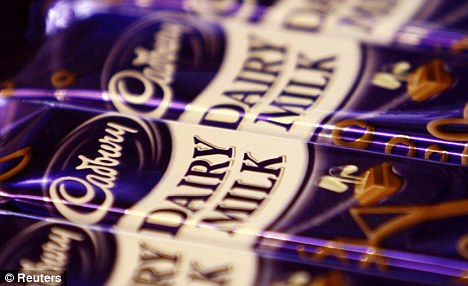
    Security Analysis: Sixth Edition, Foreword by Warren Buffett (Security Analysis Prior Editions) Security Analysis: Sixth Edition, Foreword by Warren Buffett (Security Analysis Prior Editions) by Benjamin Graham
    Buy new: $47.25 / Used from: $46.96
    Usually ships in 9 to 11 days
    The Four Filters Invention of Warren Buffett and Charlie Munger The Four Filters Invention of Warren Buffett and Charlie Munger by Bud Labitan
    Buy new: $33.25 / Used from: $43.89
    Usually ships in 24 hours


  • UPI.COM: Buffett supports healthcare reform bill

    Published: Jan. 7, 2010 at 7:33 PM

    LINCOLN, Neb., Jan. 7 (UPI) — Billionaire investor Warren Buffett said Thursday he supports the U.S. Senate’s healthcare reform bill, even though it is not “perfect.”

    “The perfect is always the enemy of the good,” he told the Lincoln (Neb.) Journal Star, “and the unknown scares people.”

    But tackling healthcare reform is “the right thing for the country,” he said.

    The current system “is not working well,” Buffett told the newspaper. “Healthcare costs have galloped up as a percentage of (gross domestic product) and we haven’t covered the population the way a rich country should.”

    If the United States doesn’t “get more efficient in delivering healthcare, we’re going to exacerbate any competitive advantage we may have in many industries as compared to the rest of the world,” he told the newspaper.

    The chairman and chief executive officer of Berkshire Hathaway Inc. noted healthcare was a huge expense at his company — “and our competitors around the world don’t bear the same cost.”

    He said the healthcare bill that will result from reconciling the House and Senate versions “is not going to be perfect. There will be some unintended consequences and some surprises.”

    But it’s time to start and then modify the legislation as needed, he said.

    Buffett — often called the “Oracle of Omaha” and noted for his adherence to “value investing” and for his personal frugality despite his immense wealth — has been a supporter of U.S. President Barack Obama.

    Share Investor Links

    Share Investor Blog – Stockmarket & Business commentary
    Share Investor New Zealand Business News– Get more business news
    Discuss this topic @ Share Investor ForumRegister free
    Share Investor’s Daily Forex Updates

    Recommended Amazon Reading

    Security Analysis: Sixth Edition, Foreword by Warren Buffett (Security Analysis Prior Editions) Security Analysis: Sixth Edition, Foreword by Warren Buffett (Security Analysis Prior Editions) by Benjamin Graham
    Buy new: $47.25 / Used from: $46.96
    Usually ships in 9 to 11 days
    The Four Filters Invention of Warren Buffett and Charlie Munger The Four Filters Invention of Warren Buffett and Charlie Munger by Bud Labitan
    Buy new: $33.25 / Used from: $43.89
    Usually ships in 24 hours


  • TMCNET.COM : Warren Buffett Sends a Letter to TMC’s Tracey Schelmetic

    About Me (Full Bio)
    CEO

    As publishers, we get our share of feedback and we love it. Negative feedback is great because it allows us to improve, while positive is nice as it reinforces what you are doing right. As you might expect, most of our feedback comes from people either buying or selling technology products or services, the typical readers of our publications. Occasionally, you receive feedback from someone so well-known and respected that you do a quadruple-take.

    Such was the case yesterday when I was shown a letter to Tracey Schelmetic, the Editorial Director of Customer Interaction Solutions Magazine, from none other than Warren Buffett. Mr. Buffett is a personal hero of mine; unlike others, he amassed a huge fortune for himself and shareholders by investing in a deliberate and steady manner while steering clear of the volatile technology sector. And unlike others, he didn’t bet the farm on Amazon or Yahoo and bail four months later.

    He has a portfolio of companies that have outperformed virtually all others, but that portfolio is practically devoid of technology holdings. He may be one of the most-imitated investors around.

    Getting back to the letter. Tracey wrote an excellent article on Geico recently and received the following from Mr. Buffett himself:

    Tracey Schelmetic
    Editorial Director
    Customer Interaction Solutions Magazine

    One Technology Plaza


    Norwalk, CT 06854

    Dear Tracey,

    I’ve just read your July 27th (2004) commentary about GEICO on TMCnet.

    Naturally, I love both your conclusions and your writing style. In fact, I’m Tempted to have you write the Berkshire Hathaway annual report — but the improvement would be so noticeable that our shareholders would all catch on.

    Thanks for all the kind words. You are definitely our policyholder of the year. Sincerely,
    Warren Buffet

    Here is the actual letter:

    So I would like to publicly praise Tracey for an article well done and thank Mr. Buffett for taking the time to read TMCnet.com and send us this most-appreciated letter.


    Share Investor Links

    Share Investor Blog – Stockmarket & Business commentary
    Share Investor New Zealand Business News– Get more business news
    Discuss this topic @ Share Investor ForumRegister free
    Share Investor’s Daily Forex Updates

    Recommended Amazon Reading

    Security Analysis: Sixth Edition, Foreword by Warren Buffett (Security Analysis Prior Editions) Security Analysis: Sixth Edition, Foreword by Warren Buffett (Security Analysis Prior Editions) by Benjamin Graham
    Buy new: $47.25 / Used from: $46.96
    Usually ships in 9 to 11 days
    The Four Filters Invention of Warren Buffett and Charlie Munger The Four Filters Invention of Warren Buffett and Charlie Munger by Bud Labitan
    Buy new: $33.25 / Used from: $43.89
    Usually ships in 24 hours

    From Amazon – Apple iPod touch 32 GB (3rd Generation) NEWEST MODEL


  • BUSINESS & MEDIA INSTITUTE: Rolling Stone Attacks ‘Climate Killers’ ‘Derailing Efforts to Curb Global Warming’

    Magazine attacks Warren Buffett, Rupert Murdoch and 15 other ‘polluters and deniers.’

    By Julia A. Seymour
    Business & Media Institute
    1/7/2010 1:36:45 PM

    Even popular liberals can come under fire from the media if they offer heretical views on global warming, which many in the media promote with near-religious fervor.

    .” Topping the list was Berkshire Hathaway CEO, Obama supporter and media darling Warren BuffettThe magazine criticized Buffett for “doing far more than bad-mouthing climate legislation – he’s literally banking on its failure” by adding 1.28 million shares of ExxonMobil to his books and acquiring a railroad that hauls coal.

    Rolling Stone editor Eric Bates also told MSNBC’s “Morning Joe” that Buffett “trashed climate change legislation calling it a huge tax saying it will cost jobs.”


    That’s not even news, CBSNews.com reported in September that the Obama administration said cap and trade “would cost American taxpayers up to $200 billion a year.” But Obama dudn’t make the list of Climate Killers.

    The Heritage Foundation estimated that capping carbon would act as an energy tax of nearly $2,000 on every American household. Myron Ebell of the Competitive Enterprise Institute has said “it would destroy tens of millions of good-paying jobs.”

    Also on the Rolling Stone list were a number of predictable targets for left-wing vitriol, from News Corp. CEO Rupert Murdoch and ExxonMobil’s Rex Tillerson to Sen. James Inhofe and retired physicist Fred Singer. Each was given a nasty moniker like “the Fake Protestor” or “The Know Nothing.”

    With this sidebar to its “As the World Burns” cover story, Rolling Stone continued its one-sided crusade to stop global warming. On Nov. 11, 2009 writer Naomi Klein made the case for climate reparations in the magazine. Back in 2007, Rolling Stone was entertaining predictions from climate extremist James Lovelock (founder of the Gaia theory) who said that by 2100 global warming will kill 6 billion.

    The Business & Media Institute has documented how a number of media outlets favor global warming alarmism rather than including other viewpoints in new reports. For every dissenter appearing on the networks, there were 13 alarmists airing their views. By censoring the global warming debate, the news media often leave viewers with the impression that the “science is settled.”

    Those same networks ignored the November 2009 climate e-mail scandal “ClimateGate” for two weeks despite the looming climate conference in Copenhagen, Denmark.

    Related Links

    Read ClimateGate Emails

    Related Amazon Reading

    Expelled: No Intelligence Allowed
    Expelled: No Intelligence Allowed
    Buy new: $19.99 / Used from: $3.43
    Usually ships in 24 hours

    The Great Global Warming Swindle (DVD)
    The Great Global Warming Swindle (DVD)

    Air Con: The Seriously Inconvenient Truth About Global Warming
    Air Con: The Seriously Inconvenient Truth About Global Warming by Ian Wishart
    Buy new: $16.93 / Used from: $11.14
    Usually ships in 24 hours


  • CNN MONEY: Ben Stein: More from my dinner with Warren

    By Ben Stein, contributor


    NEW YORK (Fortune) — Man doth not live by financial capital alone but also by human capital. And, of course, Warren Buffett had a lot to say about that, too, when he took Phil DeMuth and me to dinner a couple of weeks ago in bitterly cold, snowy Omaha.

    “It’s vital to be able to communicate well,” he said. “Just being able to communicate with others on the job adds at least 50% to your value.” Apt words indeed from the man whose annual report (I would guess) is read by more people than all of the other annual reports in the world combined, and whose words have probably saved more lives than any book except the Bible.

    “It’s also incredibly important to get along with people,” Buffett also said. He talked at length about his early days working with Ben Graham’s firm and how he made it a point to not only work very hard but to get along well with everyone he worked with, and still makes it a point. He spoke highly of an old standard, Dale Carnegie’s “How To Win Friends and Influence People” — a book that still teaches me and one that I consult almost every day.

    I asked him about the problems of having a significant part of the labor force that has little intellectual aptitude and learns very little in schools. “For some of them,” he said, “there will be better and better tools, tools that allow even people with modest skills to do useful work.”

    But when I pressed him about the segment of the population that does not really care to learn at all, such as members of violent gangs or others who just refused to learn, he sighed and said that the government would have to come up with some make-work projects for them, projects that paid a modest wage and allowed such people to have some feeling of self-esteem. (I wonder whether they would rather do those jobs than what they are doing….)

    But what about people who refused to learn how to do work that is a way to convert human capital into financial capital, i.e., people who refuse to learn to do value investing? He threw up his hands. “I learned it right away when Ben Graham said it,” he said. “It was like a vaccination that just took right away. Some people can get the same shot and it doesn’t take at all. Some do get it right away.” (I am paraphrasing.)

    He was kind enough to sign a copy of his famous article, “The Superinvestors of Graham-and-Doddsville,” about value investing compared with other forms of investment, “To Ben Stein, who understood this a long time ago,” and I only wish it were true.

    In my case, the vaccination only works sporadically. (Buffett has also famously said that in any card game there’s always one sucker and if you don’t know who it is, it’s probably you. I do know who it is, and it’s definitely usually little me…except when it isn’t.)

    The overall vibe I get from Warren Buffett, besides his astonishing kindness, mind-boggling intelligence, and perfect, self-deprecating humor, is a reminiscence of something once said by a childhood neighbor who knew Ted Williams. The great baseball player, said my neighbor, had vision so good he could see the stitches on a fastball zooming towards him. No matter how much he might try to explain to you how to do it, if you did not have the natural talent to do it, you couldn’t do it.

    But what if you could have made a wager on how many home runs Williams would hit? Or what if, for a few dollars, you could have gotten a share of Ted Williams endorsements? That’s what astute people could have done with Buffett, and it was a rare opportunity.

    In the meantime, value investing starts at home, with building up your own value as an earner, enough so that you can some day be a Superinvestor of your ownville. To top of page

    Share Investor Links

    Share Investor Blog – Stockmarket & Business commentary
    Share Investor New Zealand Business News– Get more business news
    Discuss this topic @ Share Investor ForumRegister free
    Share Investor’s Daily Forex Updates

    Recommended Amazon Reading

    A Modern Approach to Graham and Dodd Investing (Wiley Finance) A Modern Approach to Graham and Dodd Investing (Wiley Finance) by Thomas P. Au
    Buy new: $47.41 / Used from: $49.80
    Usually ships in 2 to 4 weeks
    Security Analysis: Sixth Edition, Foreword by Warren Buffett (Security Analysis Prior Editions) Security Analysis: Sixth Edition, Foreword by Warren Buffett (Security Analysis Prior Editions) by Benjamin Graham
    Buy new: $47.25 / Used from: $46.94
    Usually ships in 9 to 11 days
    Security Analysis: The Classic 1940 Edition Security Analysis: The Classic 1940 Edition by Benjamin Graham
    Buy new: $32.07 / Used from: $28.66
    Usually ships in 24 hours


  • BARRONS: NYPost: Buffett In Trouble Over Kraft Maneuvers?

    By Tiernan Ray

    Is Warren Buffett in trouble with the government? That’s the suggestion from The New York Post’s Josh Kosman, who this morning writes that the move by his Berkshire Hathaway (BRKA) on Monday to stop Kraft (KFT) from issuing new shares in its bid for Cadbury PLC (CBY) seems foul. The move may have been designed to protect Buffett’s holdings in privately held Mars, another candy maker, according to “sources familiar,” Kosman writes.

    Buffett loaned Mars $4.4 billion in 2008 for the company to purchase Wrigley, and lent a further $2 billion following that, Kosman notes.

    The article doesn’t actually say anyone from the U.S. Federal Trade Commission is looking into the matter, it merely quotes anti-trust lawyers who see a risk of that happening.

    In any case, Berkshire’s “A” shares this morning are off by $118, a fraction of a percent, at $99,731. Kraft shares are down 4 cents at $28.93, and Cadbury is down 25 cents, half a percent, at $49.52, after last night’s Wall Street Journal story saying Cadbury’s board has been talking with Hershey (HSY) as a “White Knight” to make a rival bid to push out Kraft.

    Share Investor Links

    Share Investor Blog – Stockmarket & Business commentary
    Share Investor New Zealand Business News– Get more business news
    Discuss this topic @ Share Investor ForumRegister free
    Share Investor’s Daily Forex Updates

    Recommended Amazon Reading

    Of Permanent Value: The Story of Warren Buffett, 2006 Literary Edition Of Permanent Value: The Story of Warren Buffett, 2006 Literary Edition by Andrew Kilpatrick
    Buy new: $35.00 / Used from: $15.00
    Usually ships in 24 hours
    The New Buffettology: The Proven Techniques for Investing Successfully in Changing Markets That Have Made Warren Buffett the World's Most Famous Investor The New Buffettology: The Proven Techniques for Investing Successfully in Changing Markets That Have Made Warren Buffett the World’s Most Famous Investor by Mary Buffett
    Buy new: $21.60 / Used from: $9.45
    Usually ships in 24 hours

    From Amazon – Apple iPod touch 32 GB (3rd Generation) NEWEST MODEL


    Bookmark and Share