Author: Harvard Gazette Online

  • In their words

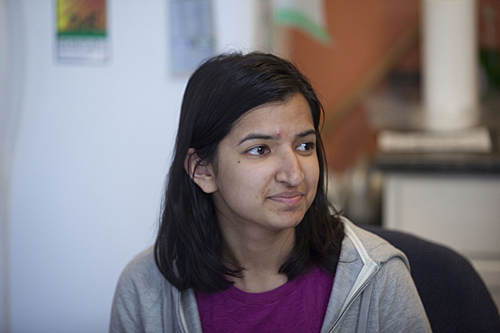
    Clifton Dawson '07

    Clifton Dawson ’07
    Gentilly, New Orleans
    I thought it would be a great chance to get back to do something for this community and to regain that affiliation with Harvard. To be a part of Harvard even after I’ve left has been very important to me.

    Emmett Kistler ’11
    Hayneville, Ala.
    You get down here and it’s revitalizing. You can get back to Earth and see what’s important. It’s a refocusing on what matters.

    Charles Liu ’11

    Charles Liu ’11
    Broadmoor, New Orleans
    On public service trips being fun too: “I don’t know that this is necessarily less fun than going to a beach somewhere. We have free time and we’re in a really cool place.”

    Terry Ding ’11
    Broadmoor, New Orleans
    On helping in a neighborhood devastated by Hurricane Katrina: “When I first found out about the neighborhood and their story and the kind of struggle they’ve gone through, it made me angry and inspired. And every year when we recruit people for this trip we tell them during the interview about the Broadmoor story. It conjures up those same emotions every time.”

    Lisa Akorli ’12

    Lisa Akorli ’12
    Broadmoor, New Orleans
    On being so active in community service when in high school: “I miss that part of my life. It’s rewarding to give back. A lot of us are in such privileged positions.”
    On spring break alternatives for foreign students: “Going home [to the Netherlands] wouldn’t really be feasible for me now. So I thought that was a great alternative to that.”

    Sabrina Lee ’12
    Broadmoor, New Orleans
    “I invest a lot of my time during the school year in social justice and service work. Having a vacation doesn’t really change what I want to do with my time.”

    Sarah Legrand ’10

    Sarah Legrand ’10
    Broadmoor, New Orleans
    “I know that I want to work in the longer term in a public service capacity, and it’s nice to be able to see a model of service.”

    Obi Okwara ’12
    Broadmoor, New Orleans
    “There’s one type of learning that takes place in the classroom, which is valuable. But there’s another type of learning that takes place through experience and that requires going outside the classroom. And an alternative spring break trip is a great way to do that. You’re learning about things that only take place in the real world.”

    George Thampy ’10

    George Thampy ’10
    Hayneville, Ala.
    People stop by every day to encourage us. I feel very blessed on this trip.

    Lawrence Barchok ’12
    Broadmoor, New Orleans
    “I was really interested in seeing how a community can come up together to determine their future. Most of the time, especially in a developing country, you’ll find that most people depend on the government to deliver everything. This is a different type of model, a bottom-to-top approach to development. I wanted to learn more about it.”

    Mercedes Franklin, D.D.M. ’74

    Mercedes Franklin, D.D.M. ’74
    Board of HAA, public service task force
    Gentilly, New Orleans
    This is my first time doing something out of my profession that is much needed. We think it will have great impact on this community. We’re hoping that we have an ongoing relationship, so we can come back.

    Jyoti Jasrasaria ’12
    Broadmoor, New Orleans
    I know I’m not on a beach. But it’s exciting to be somewhere different.

    Elizabeth “Liz” DeLucia, Ed.M. ’01
    Gentilly, New Orleans
    “It was really nice to plug into something that was organized, and tap into an affiliation I have with the extended Harvard family when I only had a week to give.”

  • Comparative Theology: Deep Learning Across Religious Borders

    Clooney, the Parkman Professor of Divinity and Professor of Comparative Theology, extracts wealth from his 30 years of work in comparative theology and proffers this field guide.

  • (Re)(Organize) for Resilience: Putting Customers at the Center of Your Business

    The customer is always right, but we’re always getting taken. Gulati, the Jaime and Josefina Chua Tiampo Professor of Business Administration, prods businesses to readjust their resilience and mend the bridge connecting consumers with companies.

  • The ripple effect

    Judith Dollenmayer ’63 was in the first class at Radcliffe College to receive Harvard degrees. And she was the first woman president at the Harvard Club of Washington, D.C.

    Now, the former congressional aide has added a different sort of first. Last month, she was in New Orleans on the first public service trip for Harvard alumni co-sponsored with the Phillips Brooks House Association (PBHA).

    More such alumni events are already planned for next year, one of many indicators that service trips are a growing movement at Harvard, among present and former students alike. “All the trends we see here are increasing drastically,” said Gene Corbin, executive director of PBHA, Harvard’s largest undergraduate group and the source of year-round regional public service.

    Alternative spring breaks at Harvard College grew from one trip in 2001 to nearly a dozen this year. Harvard’s professional Schools are funding more initiatives that combine learning with doing good. Trips abroad increasingly combine scholarship and assistance.

    And Harvard’s January intercession, new this year, immediately became a vehicle for prolonged service trips. Students went to Uganda to fight malnutrition, to El Salvador to promote literacy, and to the Dominican Republic for a water purification project. Even sports played a role. The Harvard women’s squash team traveled to northern India to combine court instruction with academic tutoring.

    Last month, the Harvard Alumni Association (HAA) teamed up with PBHA and PBHA-Alumni, which is one of the HAA’s 35 “shared interest groups.” The resulting working trip to New Orleans was for Harvard alumni who embrace the idea of travel combined with good deeds. The HAA also has designated April as its first Global Month of Service.

    “Public service has been a critical activity for Harvard alumni for generations, and we wanted to recognize it this year,” said Philip W. Lovejoy, the HAA’s deputy executive director.

    Destination January

    For next year, said PBHA’s Corbin, there’s already strong interest in shifting some of the alternative spring break trips to January, a move that would allow for longer service and better justify the expense of traveling to faraway places.

    Last month, 85 undergraduates took alternative spring break trips to 10 domestic sites and a Habitat for Humanity location in El Salvador.

    The public service trend is fueled in part by the spotlight shown on the issue by Harvard President Drew Faust, said Corbin. “Faust is using the bully pulpit of the Harvard presidency to say: Public service is valued at Harvard. It’s an important use of your time while in school, and public interest careers represent a valuable use of your Harvard education.”

    Adding momentum to the efforts, Harvard held its first Public Service Week last fall. Events and activities highlighted the University’s service history, celebrated its present, and encouraged a future of doing more.

    Harvard’s Schools are expanding their service roles as well. In February, Harvard Law School created a new Public Service Venture Fund that awards grants to students pursuing careers in public service.

    Starting April 5, there will be a Public Service Week at the Harvard Kennedy School (HKS), five days of panels and programs on health care, public sector careers, race, poverty, human rights, urban schools, employment, and other issues. HKS students have historically brought their scholarship and energy to local municipalities. They also maintain a Student Public Service Collaborative to integrate service into the School’s culture.

    Then there is the growing alumni effort. Last May, the HAA co-sponsored Harvard’s first Global Day of Service with the Harvard Graduate School of Education. About 300 alumni and students volunteered for projects in 13 cities.

    Last month’s alumni work trip to New Orleans was a warm-up for the HAA’s Global Month of Service (April 1-30), one of four “Harvard Serves” initiatives. This month, there will be more than 75 volunteer opportunities in 20 cities on four continents. Volunteers will help to clean up riverbanks, tutor schoolchildren, work at rescue missions, and build houses.

    Starting this week (April 2), the HAA will launch its “Public Service on the Map” Web site so that alumni, students, faculty, and staff can register their projects. Said Lovejoy, “We’re billing it as an instant connection to Harvard’s public service community throughout the world.” The site will include listings of volunteer opportunities, internships, and jobs.

    Teresita Alvarez-Bjelland ’76, M.B.A. ’79, president of the HAA this year and a resident of Oslo, Norway, has made Harvard’s global public service the theme of her tenure. As to the breadth of the projects around the world, she said, “I am thrilled and proud.”

    Among Harvard graduates, the potential for doing good is enormous. There are nearly 365,000 Harvard alumni worldwide, and 181 Harvard clubs (105 in the United States and 76 in other countries).

    The plight of Gentilly

    During the alumni work trip in New Orleans last month, 22 alumni and friends gathered in a sun-parched lot in Gentilly. In 2005, Hurricane Katrina had turned a vibrant neighborhood into a fetid lake 5 feet deep. Today, every third house is still abandoned, adults scramble for work, and children wander restlessly after school.

    The Harvard volunteers spent six days sprucing up two narrow frame houses owned by the Pentecost Baptist Church, which lost half its congregation after Katrina. The volunteers scraped, painted, washed, fixed, and gardened. They ate box lunches and slept in college dorms. On their last day, though New Orleans is famous for fun, they elected to stay on the job.

    Corbin was there, in a T-shirt and shorts, brushing on paint and nailing boards. After six days, the two houses looked “markedly different” even from a block away. “It makes an enormous contribution to a neighborhood struggling to rebound following the devastation of Hurricane Katrina,” he said.

    Dollenmayer, the alumna who is now a freelance writer and editor, climbed a stepladder to reach a painted-over stained glass window. “I was happy to come and help, and I’m having a great time,” she said in a YouTube video posted by an alumni trip blogger, “though this task is maddening.”

    The work site on Harrison Avenue, in a part of Gentilly called Pilotland, contains two low houses, a sweep of grass, a parking lot, and a one-story church, where the high-water flood mark once reached the height of a man.

    The Rev. Lionel Davis Sr., the 54-year-old pastor of Pentecost, watched the Harvard volunteers work. Dressed in a black suit and a New Orleans Saints ball cap, he contemplated the devastation. Once teeming and vital, he said, the neighborhood now is “one of those communities where you have to bring them from nowhere to get them somewhere.”

    Nick Harris, compact and affable, stood near the New Orleans work site. He’s assistant vice president for community and economic development at Dillard University, and helped to coordinate the HAA volunteers. “The benefit of having Harvard come in speaks volumes — to what’s not been done in this area since 2005,” he said. Having Harvard here, added Davis, “allows the community to have a bigger voice.”

    Bringing his share of hope was Clifton Dawson ’07, an alumni volunteer. Fresh out of three seasons as an NFL running back, the highest-yardage Ivy League ball carrier has his sights set on Harvard Business School in the fall. Meanwhile, he was managing a painting crew.

    “I thought it would be a good way to give back,” he said of the alumni trip, “and to reconnect with Harvard.”

    The same benefits

    Young and old, graduates and students, the volunteers talk about the same benefits: the satisfaction of moral effort, the value of immersion in other cultures, the thrill of camaraderie, and the sense that learning does not come from books alone — that not all competence can be measured by a grade.

    The undergraduates noticed those benefits and contrasts. In New York City, New Orleans, rural Alabama, and elsewhere last month, Harvard’s future doctors, lawyers, politicians, financiers, teachers, and diplomats got a glimpse at the challenge and exactitude of laying tile, hanging sheetrock, installing siding, and working with wood. Other volunteers tutored at-risk students, helped with legal tasks, or joined ambulance crews.

    In New Orleans, Octabio Garcia ’12, a Winthrop House math concentrator, was tutoring fourth-graders at the Andrew H. Wilson Elementary School, the kindergarten to sixth-grade bedrock of the Broadmoor neighborhood. Some students, just days from critical state tests, still couldn’t write a four-paragraph essay.

    Tutoring writing in the same school was freshman Schuyler Milender ’13, who blogged nightly about her experiences. Appreciating the immensity of resources at Harvard, she said, made it imperative for her to give something back.

    “I have been given so much, and these people are so underserved,” said Milender of students who can’t write paragraphs and who have lost pivotal schooling because of Katrina, and all against a backdrop of abandoned houses. “I feel like I’m learning a lot. It’s putting things in perspective for me,” she said. “I wanted to lend my support, even for a week. ‘’

    Such short-term help has its critics, who suggest it doesn’t make a difference. But student volunteers do important work, said Hal Roark, executive director of the Broadmoor Development Corporation. He said they establish frameworks for future action, provide continuity, and assure an ongoing sequence of eager volunteers. Roark draws help from students at Harvard, Yale University, and Bard College, many of whom return as summer or even yearlong fellows.

    A few feet from Roark’s office, in a rambling frame house, eight Harvard undergraduates hunched over computer screens to prepare for the next day’s work. Four were navigating the legal system that can delay rebuilding blighted houses. The others worked on a project to help seniors weatherize their houses, part of a Salvation Army program called EnviRenew.

    “I’m not a big beach person,” said Sarah Legrand ’10, part of the second group, explaining why she was there. “Time-limited but immersive experiences” during school breaks are important. “I’m glad to take advantage of it.”

    Community gratitude

    Gratitude for these service trips takes many forms. In Hayneville, Ala., Martin McCall Sr., pastor of the 78-member Hayneville Church of Christ, watched Harvard undergraduates put the finishing touches on the congregation’s new church. (The first burned in a 2008 fire.)

    The volunteers, who spent six days tiling, painting, and staining, are “angels from heaven,” said the 57-year-old mason, who grew up in the segregated Jim Crow South. “They’ve got good manners, they catch on, they’re eager to learn. They’ve been putting forth a great effort here.”

    And the benefits are mutual, said Marcel Moran ’11, a pre-med student and one of four co-leaders on the Hayneville trip. He peeled off his work gloves and surveyed the busy work site. He said that he has made his best friends on these trips, that he has learned to break out of solitary learning to work cooperatively, and that there are special rewards in doing physical work that demands its own kind of precision.

    Said Moran, “It’s using your brain in a whole new way.”

    For reflections: Students and alums share thoughts on service

  • A historic year for Harvard admissions

    For the first time in Harvard’s history, more than 30,000 students applied to the College, leading to an admission rate of 6.9 percent for the Class of 2014. Letters of admission (and e-mail notifications) were sent on April 1 to 2,110 of the 30,489 applicants. More than 60 percent of the admitted students will receive need-based scholarships averaging $40,000, benefiting from a record $158 million in financial aid. Families with students on scholarship are expected to contribute an average of $11,500 annually toward the cost of a Harvard education.

    A number of factors contributed to such unprecedented results. “In these uncertain economic times, prospective students and their families have been particularly drawn to the excellence of Harvard’s faculty and students, and its remarkable academic programs,” said William R. Fitzsimmons, dean of admissions and financial aid. “Harvard’s new School of Engineering and Applied Sciences has underscored Harvard’s commitment to expanding opportunities in engineering and all the sciences. The University is also highly focused on fostering closer relationships between the College and Harvard’s rich array of graduate and professional Schools, as well as its numerous research and regional centers. These University resources, many of which focus on national and international public policy issues, greatly expand and enrich the experience for Harvard College students,” he said.

    Applications to Harvard have doubled since 1994, and about half the increase has come since the University implemented a series of financial aid initiatives over the past five years to ensure that a Harvard education remains accessible and affordable for the best students from all economic backgrounds. “Financial aid has never been more important to students aspiring to higher education,” said Fitzsimmons. “The unwavering commitment of President Drew Faust, Dean of the Faculty of Arts and Sciences Michael Smith, and Dean of the College Evelynn Hammonds to keeping Harvard’s doors open to all talented students sends a powerful message that reaches far beyond our campus,” he said. Seventy percent of undergraduates receive some form of financial aid.

    In 2004, Harvard introduced the first in a series of financial aid initiatives that have greatly expanded its appeal to students from a wide range of backgrounds. For the first time, more than 25 percent of admitted students are eligible for this program that asks for no parental contribution from those with annual incomes under $60,000, and reduces contributions from families with incomes of $60,000 to $80,000. “The search for talented students from modest economic backgrounds is more intense than ever before — a public policy result that is of significant benefit to our nation,” said  Fitzsimmons. “We hope the current economic environment, which is particularly challenging for families of modest means and for the school districts in which many of them live, will not discourage students from reaching their full potential and slow the progress evidenced in the past few years.”

    Many additional students are eligible for the expanded aid, announced in December 2007, for middle- and upper-middle income families. Families with incomes up to $180,000 a year and typical assets are now asked to contribute from zero to 10 percent of their income; home equity is removed from financial aid calculations; and loans have been eliminated for all students.

    By standard measures of academic talent, including test scores and academic performance, this year’s applicant pool reflects an unprecedented level of excellence. For example, more than 3,000 applicants scored a perfect 800 on the SAT Critical Reading Test; 4,100 scored 800 on the SAT Math Test; and nearly 3,600 were ranked first in their high school classes.

    More than half of the applicant pool and more than half (52.4 percent) of those admitted are men. Last year, both the pool and the admitted group were also comprised of more males, but the matriculating class had slightly more women, because a higher percentage of them accepted their offer of admission.

    Minority representation remained strong in this year’s admitted group, and similar to last year’s numbers, although it is difficult to make precise comparisons to previous years because of changes in federal requirements concerning the collection and reporting of race and ethnicity information. A total of 18.2 percent of the admitted students indicated they were Asian-American (17.5 percent last year), 11.3 percent African-American (10.4 percent last year), 10.3 percent Latino (10.6 percent last year), 2.7 percent Native American (1.1 percent last year) and 0.4 percent Native Hawaiian (0.2 percent last year).

    Geographic representation remained similar to last year’s figures. Nearly 24 percent of the admitted students are from the mid-Atlantic states, 21 percent from the Western and Mountain states, 18 percent from the South, 16 percent from New England, 11 percent from the Midwest, and 10 percent from the U.S. territories and abroad.

    Foreign citizens make up 9 percent of the admitted students. In addition, a significant number of other entering students will bring an international perspective, including 135 U.S. dual citizens, 92 U.S. permanent residents, and many Americans who have lived abroad. Together, foreign citizens, U.S. duals, and U.S. permanent residents constitute nearly 20 percent of the class. There are 79 countries represented in the Class of 2014. “Students with international living experiences add immensely to the education of their college classmates,” said Robin M. Worth, director of international admissions.

    2010 Concentrations

    Students’ academic interests shifted somewhat this year. Nearly one-quarter (24.9 percent) of the admitted students intend to concentrate in the humanities, compared with  22.7 percent last year. Engineering attracted 12.2 percent, (10.2 percent last year), while students expressing an interest in the social sciences constituted 21.3 percent, (24.6 percent last year). Other choices remained similar to those made last year, with 24.3 percent planning a biological sciences concentration, 8.3 percent physical sciences, 6.8 percent mathematics, 2 percent computer science, and 0.2 percent undecided.

    The Class of 2014 will bring extraordinary extracurricular talents to Harvard across a wide range of endeavors. Major activities cited by students as extracurricular interests are music and other expressive and performing arts (46 percent), debate and political activities, including student government (34 percent), writing and journalism (21 percent), and social service (21 percent). In addition, 58 percent of the class expects to participate in recreational, intramural, or intercollegiate athletics.

    “The help of alumni/ae interviewers is more important than ever as the Admissions Committee chooses a small number of students from an ever-increasing applicant pool,” said Marlyn E. McGrath, director of admissions. “Personal qualities and character remain central to each and every admissions decision. Our 10,000 alumni/ae volunteers around the world make a huge difference to us in many other ways as well — attending college nights, visiting schools, and calling newly admitted students and hosting gatherings for them in April. We can never thank them enough for their loyalty and devotion to Harvard,” she said. Added James Wigdahl, liaison to the Alumni/ae Schools and Scholarship Committees, “We are particularly grateful to our alumni/ae volunteers for their patience and hard work in making our new electronic system function so well, a change that enabled interviews to be submitted in a much more timely and effective manner, even as the number of applications has risen.”

    Recruitment is the foundation of Harvard’s strength. Nearly 70 percent of all admitted students and 90 percent of minority students appeared on the original College Board Search List that helped launch Harvard’s outreach program for the Class of 2014. Staff will visit 60 cities this spring, targeting the high school juniors who may eventually join the Class of 2015. Joint travel trips will be conducted with Duke, Georgetown, Penn, and Stanford universities. “Joint travel is the fundamental element of our recruitment. Last spring and fall, Harvard admissions officers visited all 50 states, the U.S. Virgin Islands, and Puerto Rico, where we saw 40,000 high school students and parents. We also met with more than 3,000 high school guidance counselors,” said Angela Flygh, director of the Joint Travel Program. In addition, Harvard students visited some of these areas and others to speak at high schools.

    Eliminating Early Action two years ago allowed more time in the fall for staff to communicate with students who might not have otherwise thought about applying to Harvard. Joint outreach events with Princeton University and the University of Virginia (both of which also eliminated early admission) met with an overwhelming reception in November, previously a time when all three institutions were off the road conducting early-admission selection meetings. Harvard once again will visit nearly 20 cities with this group.

    “Undergraduate recruitment has a long and distinguished history at Harvard,” said Roger Banks, director of undergraduate recruitment. “Members of the Undergraduate Minority Recruitment Program [UMRP] and the Harvard Financial Aid Initiative [HFAI] played a crucial role in attracting this year’s record pool of admitted students.” Members of both organizations telephoned and sent e-mail messages and letters to prospective applicants. They also conducted recruitment trips to various parts of the country and met with middle school and high school student groups who visited campus.

    “HFAI is one of Harvard’s highest priorities, and once again we were able to attract outstanding students from families with annual incomes under $60,000 and $80,000,” said Patrick Griffin, director of HFAI. Precious Eboigbe, HFAI assistant director, noted, “Undergraduates worked closely with staff and alumni/ae, forming a partnership that enabled us to reach out to talented students from modest economic backgrounds.” Monica Del Toro-Brown, the other assistant director, added, “HFAI opens up new worlds that many students never dreamed were possible.”

    Fitzsimmons and McGrath again praised the efforts of the Undergraduate Admissions Council (UAC) and the undergraduate tour guides and greeters who work throughout the year with visitors to Cambridge — leading tours, hosting prospective applicants overnight, and visiting high schools. David L. Evans, director of the UAC, noted that “prospective students are extremely interested in meeting current undergraduates to learn firsthand about the Harvard experience.” Added Elise Eggart, UAC associate director, “UAC members extend a warm welcome to students interested in Harvard. Their hospitality and thoughtfulness are greatly appreciated, both by prospective students and their families.”

    Elizabeth Pabst, director of the Undergraduate Tour Program, said, “Our tour guides and greeters welcome students to campus throughout the year. They love to share personal anecdotes about life at Harvard, both inside and outside the classroom. They often are the first Harvard students a prospective applicant meets, and they introduce college life with grace, humor, and enthusiasm.” Added Devery Doran, assistant director of the program, “Rain or shine, in small groups or large, you’ll find them walking backward through Harvard Yard, leading groups of prospective students and their families from around the world.”

    McGrath emphasized the important role of the teaching faculty in the admissions process. Faculty members speak with many prospective students in person or on the phone and answer their letters and e-mail inquiries. “Faculty accessibility is a clear demonstration of Harvard’s commitment to undergraduate education. In addition, faculty members read hundreds of applications, evaluate academic research of all kinds, and assess portfolios across a range of academic disciplines,” she said.

    Members of the teaching faculty serving on the Admissions Committee are: Peter J. Burgard, John E. Dowling, Edward L. Glaeser, Benedict H. Gross, Guido Guidotti, Evelynn M. Hammonds, Joseph D. Harris, J. Woodland Hastings, Eric N. Jacobsen, Thomas Jehn, Harry R. Lewis, Richard M. Losick, David R. McCann, Michael D. Mitzenmacher, Cherry Murray, Richard J. O’Connell, Orlando Patterson, Frans Spaepen, Christopher Stubbs, Steven C. Wofsy, Robert M. Woollacott, and Amir Yacoby.

    Personal contact with admitted students will be important over the next few weeks. Members of the Undergraduate Admissions Council, the Undergraduate Minority Recruitment Program, the Harvard Financial Aid Initiative, the admissions and financial aid staff, and the teaching faculty will telephone and meet with admitted students.

    For the seventh year, the Admissions Office hosted message boards for students throughout the year. In addition, chat sessions in April will provide an opportunity for admitted students to speak with Harvard undergraduates and one another. Danielle Early, director of Internet communications, said, “The chat sessions and message boards extend our outreach and recruitment to students across the world.” Prospective Harvard students can post questions to Harvard undergraduates and admissions representatives on the message board. “The boards provide yet another way for students to meet and make connections with future classmates,” said Early.

    To give admitted students the opportunity to experience Harvard life and meet their future professors and classmates, a Visiting Program for admitted students is scheduled for April 24-26. In addition to visiting classes, students will attend faculty panel discussions, concerts, receptions, department open houses, symposia, and dozens of events organized by extracurricular organizations. More than 1,300 admitted students will visit during April, and 1,100 will be here during the Visiting Program. “We know that contact with current undergraduates and faculty is critically important to students as they evaluate their college options. Students often cite the Visiting Program as pivotal in their decision to choose Harvard,” said Visiting Program Director Valerie Beilenson.

    Sarah C. Donahue, director of financial aid, and her colleagues will be available to talk with admitted students and their families on weekdays during April from 8 a.m. to 8 p.m. EDT. “Especially in these challenging economic times, we look forward to talking with students and parents who have concerns or questions about how to finance a Harvard education, including families who may not have applied for financial aid but who are interested in the wide range of available payment options. Our program offers assistance to all students and families, ranging from full financial aid to a number of financing alternatives: a monthly payment plan, the opportunity to prepay tuition at current rates, and a variety of parent loan programs that extend payments up to 15 years,” she said.

    “Students and their families should know that there are other forms of financial assistance, such as the Faculty Aide Program, the Harvard College Research Program, and the Dean’s Summer Research Program, which enable students to create paid partnerships with faculty members on academic projects of mutual interest,” said Meg Brooks Swift, director of student employment and the Harvard College Research Program.

    Admitted students have until May 1 to accept their offers of admission.

  • Super consumer advocate

    There were pizzas and plenty of curious students at the Harvard Law School (HLS) on Tuesday (March 30) for a luncheon talk sponsored by the School’s American Constitution Society. The only thing missing at first was the speaker.

    So many people crammed the Austin Hall classroom that late arrivals stood in the doorway or sat on the stairs. The busy scholar arrived shortly. It was understandable that she was running a bit behind schedule. The professor in question was Elizabeth Warren, who these days has massive demands on her time.

    Warren, Leo Gottlieb Professor of Law at HLS, chairs the Congressional Oversight Panel for the Troubled Asset Relief Program (TARP), the  $700 billion rescue program for the country’s finance industry.

    In her characteristically straightforward style — a recent New York Times article noted Warren’s husband “describes her as a grandmother that can make grown men cry” — she explained her work with the TARP, and delivered a stern warning to the audience about abuses in the financial industry.

    “If you are carrying a balance on your credit card, you are in danger,” said Warren.

    Looking out for consumers has long been a priority for the expert on bankruptcy and consumer finance, who also is a driving force behind plans for a new consumer financial protection agency, a proposal supported by the Obama administration and currently before Congress. The House has approved the plan, which is now before the Senate. Many supporters are hopeful that Warren would run the new body.

    During her comments, Warren offered a historic perspective on the country’s financial troubles.

    In the past, state usury laws protected consumers from inflated interest rates, she said. But in 1979 a Supreme Court ruling began a chain reaction that led to states repealing their caps on the interest rates that banks could charge when lending.  With that decision, she said, “The game quickly becomes unraveled.”

    “What starts to happen over time … is that the model shifts for how to make money,” Warren said, noting the explosive expansion of the credit card industry and how lenders began to rely on what she called “the tricks and traps in the back,” including hidden fees, complicated pricing structures, and interest rates that can change without warning.

    The result, she said, is that when consumers “can’t really price the item and can’t really do comparison shopping  … it’s not a functional market.”

    Previous attempts to “outlaw bad practices” through congressional regulation, she said, had proven “powerfully ineffective.”

    Warren’s proposed solution would be an agency much like the Food and Drug Administration or the Environmental Protection Agency, one that could implement basic safety regulations for financial products. Such an agency, she said, could level the playing field for consumers by addressing the root of the problem, eliminating complex financial contracts that leave people “unable to evaluate the cost of the product.”

    Warren said such an agency could regulate standard credit card contracts, making them no longer than two pages, and “readable by someone with a high school education, in 4 minutes, with 95 percent comprehension.”

    “Complexity not only hides true cost,” said Warren, “it lets us hide it from ourselves.”

  • Humor where it’s rarely found

    Did you hear the one about the Jew and the Palestinian at Harvard? It seems that making jokes about deadly serious situations underscores how laughter crosses ethnic and cultural boundaries.

    OK, so it’s not exactly ushering in world peace. But it’s a start, and that was enough for the organizers of “Israel & Palestine: Embracing Humor; Respecting Humanity,” a comedy show and panel discussion held March 25 at the John F. Kennedy Jr. Forum at the Institute of Politics.

    “I could be the only person that’s really hopeful about the situation in the Middle East,” said host Jimmy Tingle HKS ’10, a comedian, activist, and all-purpose funnyman, who spearheaded the event. “Because it is the home of the three major religions in the world … they all focus on the spiritual principles of love, justice, peace, forgiveness, compassion, loving one another.”

    A funny thing happened on the way to the forum — and yes, the comedians could not pass up that obvious one-liner — and that was how people of different religious backgrounds could laugh together.

    Maysoon Zayid, a Palestinian-American comedian, brought down the house with fearless zingers in unsettling territory about her upbringing, her cerebral palsy, her virginity, and her foil of a fiancé.

    “I am THE most oppressed person in the entire world. I am female. I am Muslim. I’m a virgin. I’m an Arab, and I live in New Jersey,” Zayid quipped.

    At age 33 — the equivalent, she said, of age 67 in the Arab world — she got engaged. “This is how I did it. I went to the perfect place to find a guy. I went to Gaza,” she said. “You know why? ’Cause they got no place to run!”

    Jewish-American comedian Scott Blakeman talked about bringing together two enemy camps, Yankee and Red Sox fans. He needled former Attorney General Michael Mukasey for his position on torture, saying that while it was nice to see an observant Jew as attorney general, “Why can’t you observe the Sabbath AND the Geneva Convention?”

    In the wake of health care reform, he suggested putting health insurance companies to work in the Defense Department: “ ‘I’d like to bomb that country.’ ‘Sorry, not covered.’ ‘How about sending more troops in Afghanistan?’ ‘Nope. Pre-existing war.’ ”

    The evening took a more serious turn in the second half with a panel discussion, moderated by Marshall Ganz, Harvard lecturer in public policy.

    Wassim Khazmo, a Palestinian from Jerusalem and a Kennedy School public administration midcareer student, described growing up during the Intifada, or Palestinian uprising, of the late 1980s, “when all I wanted to do was play football,” and how Israeli authorities cracked down violently on a Palestinian rally welcoming South African Nobel Peace Prize laureate Desmond Tutu, a memory he carried “along with me through the years.”

    Barak Loozon, an Israeli Wexner fellow at the Kennedy School, told of being brought up by a father who said, “Never trust an Arab,” of serving in the Israeli army, and of the psychological trauma his sister experienced when she survived a suicide bombing of a pub that seriously injured her boyfriend.

    Yet both men indicated they would work toward a resolution of Middle East violence, though both were somber about the difficulties faced. “Barak and I can talk logically, but we have our differences,” Khazmo said. Loozon said, “Hope is not enough. There is a lot to do.”

    Indeed, pressed for details on what a Middle East peace would look like, both men were hesitant. Khazmo emphasized that Palestinians needed justice; Loozon said a third party was needed to mediate.

    Ganz, however, struck a more optimistic note by characterizing the event as a “success before it even began” by the sheer fact of bringing different parties together. The forum was, he acknowledged, an “unlikely event. But it’s often to the unlikely we turn when we’re stuck.”

  • Snapshots of China

    In a black-and-white photograph from 1959, a smiling Mao Zedong stands surrounded by a crowd of happy men in business suits. Art historian Claire Roberts, a Radcliffe Institute fellow this year, said the picture, titled “Chairman Mao Meets with VIPs from Asia, Africa, and Latin America,” was widely circulated at the time as celebrating being “liberated from oppression.” She pointed out that the photo was taken during China’s worst famine, believed to have killed between 15 million and 43 million people. “Photography is a medium that can mess with our eyes and mind,” she said. “It gives us the appearance of truth, and yet what we see in a photograph can never be the truth.”

    Roberts gave a rapid tour of 150 years of Chinese photography during her March 24 lecture in the Radcliffe Gymnasium, with a focus on portrait photography of Chinese people. A research fellow at the Australian National University and senior curator of Asian arts and design at the Powerhouse Museum in Sydney, Roberts has conducted research for many years on Hedda Hammer Morrison, a German-born photographer who lived and worked in Beijing in the 1930s and ’40s and was the most important female photographer in pre-1949 China.

    During her year at the Radcliffe Institute, Roberts and her Radcliffe research partners, Harvard undergraduates Sophia Wong Chesrow ’12 and Sharon Wang ’10, have studied Morrison’s photography in the Harvard-Yenching Library, which contains some 10,000 of her negatives. This work inspired Roberts to begin writing a history book.

    There’s currently no historical overview of photography in China, even though photography became available there in the mid-19th century, said Judith Vichniac, associate dean of the Radcliffe Institute Fellowship Program, in her introduction of Roberts.

    Many of the early Chinese photographers were commercial artists who learned their trade from visiting foreign travelers. Photographers adapted the new technology to the pictorial conventions of Chinese painters, creating, for example, lifelike portraits that were “better able to allow the spirit of a person’s expression to be transmitted into the future,” Roberts said.

    The first pictures by Chinese photographers are believed to be self-portraits, in which the photographers perform for the camera. Zou Boqi (1819–1869), a scientist from Nanhai, southwest of Guangzhou, created the first Chinese camera, which dates from the period 1863 to 1866.

    One of the early pictures that Roberts showed is by the photographer Afong, who opened a studio in Hong Kong in 1859. His commemorative photo of businessmen from Russell & Co., one of the earliest and most successful American companies trading in silk, tea, opium, and other goods, is in the collection of the Peabody Essex Museum in Salem, Mass.

    By the late 1800s, Shanghai had become a center for photography, and remained so for many years. In the 1920s and ’30s, the city was known as the “Paris of the East,” producing popular magazines and newspapers that were richly illustrated with photographs.

    After the Communist Party came to power in China in 1949, the line between news and art photography became blurred as the party used images for propaganda. Roberts said that during the Cultural Revolution, from 1966 to 1976, “codified ways of seeing continued in an even more heightened form.” She showed images from the Harvard-Yenching Library that were taken by professional photographers in northern China. “What is striking,” she said, “is their standardization: the formal poses, the prominence of revolutionary symbolism, and the serious expressions.”

    A moment of transition occurred in 1976, when Chinese Premier Zhou Enlai died. An amateur photographer named Luo Xiaoyun recorded the thousands of people who gathered in Tiananmen Square on the traditional early April day to commemorate the dead, to mourn Zhou’s passing.  But the demonstration was seen as an act of defiance against the Gang of Four, a group of leftist Chinese Communist Party officials. “Regarded as subversive, the negative for this and many other images were hidden,” Roberts said. After Mao died and the Gang of Four fell from power, the April demonstration was “rehabilitated” as a positive event, and the photos by Luo Xiaoyun and others were published in a book designed to promote the new regime. “Photographs that were dissident reportage were co-opted as official images of commemoration,” said Roberts.

    After the events of the late 1970s, many amateur photographers turned away from reportage and explored forms of photography that couldn’t be so easily co-opted by the state. An exhibition titled “Nature, Society, and Man,” held in Beijing in 1979, was organized by the April Photo Society, the name of which made a direct link with the events of April 1976.

    Roberts concluded her survey with the work of a contemporary photographer, Liu Xiao Xian, who was born in Beijing and who has lived and worked in Sydney since 1990. She showed one of his photos, called “Home-London,” which shows a Chinese family posed in front of a painted backdrop of Tiananmen Square, obscuring a postcard view of Buckingham Palace with additions of guards on horseback and a blue sky, made in Photoshop. Roberts, who knows the photographer, said that the group in the photograph is Liu’s own extended family and that the photograph was taken in Tiananmen Square.

    “With its travel snapshot guise and Photoshop-ed perfection,  ‘Home-London’ is a poignant contemporary portrait,” Roberts said, “and a playful comment on blurred boundaries between local and global, the past and the present, painting and photography, truth and reality.”

    During her year at the Radcliffe Institute, Roberts (above) and her Radcliffe research partners, Harvard undergrads Sophia Wong Chesrow ’12 and Sharon Wang ’10, have studied Hedda Hammer Morrison’s photography in the Harvard-Yenching Library, which contains some 10,000 of her negatives. (Photo by Stephanie Mitchell/Harvard Staff Photographer)

  • Alzheimer’s for humans only

    Of the millions of animals on Earth, including the relative handful that are considered the most intelligent — including apes, whales, crows, and owls — only humans experience the severe age-related decline in mental abilities marked by Alzheimer’s disease.

    To Bruce Yankner, professor of pathology and neurology at Harvard Medical School (HMS), it’s pretty clear that evolution is to blame.

    “Something has occurred in evolution that makes our brain susceptible to age-related change,” Yankner said in a talk Thursday night (March 25) sponsored by the Harvard Museum of Natural History as part of its “Evolution Matters” lecture series.

    Yankner, whose HMS lab studies brain aging and how getting old gives rise to the pathology of Alzheimer’s and Parkinson’s diseases, said Alzheimer’s is one of the most rapidly emerging diseases of this century. As medical science lengthens human lifespan, the proportion of the population that is elderly is growing. Considering that as many as half of those over age 85 develop Alzheimer’s, there is a growing urgency to understand the disease more fully and to develop more effective interventions.

    “It is clear that cognitive impairment and decline is one of the emerging health threats of the 21st century,” Yankner said.

    Yankner said that scientific evidence shows that some cognitive decline — beginning in middle age and accelerating after age 70 — is normal as we grow older. This decline is also seen in other animals, including mice and monkeys. It is marked by wide variation among individuals, with some individuals maintaining cognitive abilities similar to those much younger.

    The puzzling question, Yankner said, is why humans develop the severe disabilities of Alzheimer’s disease. Studies of other creatures show no sign of similar conditions even in our closest animal relatives. That means susceptibility to Alzheimer’s evolved recently, likely during a period marked by a rapid increase in our brain size. Size alone probably isn’t the determining factor, though, Yankner said, since other animals are known to have even larger brains, including whales, elephants, and even our extinct relative the Neanderthal.

    Instead, he said, it is likely that brain complexity and the new large number of cells in the human brain have something to do with it.

    Recent research, in Yankner’s lab and elsewhere, has used genetic tools to probe the differences between young and old brains in humans, monkeys, and mice. The work shows that gene function in the aging brain slows — dramatically in ones with Alzheimer’s — and that the genes that shut off the most are those that protect the brain against genetic damage from environmental and other factors.

    Yankner said he believes that cognitive decline is due to a slow accumulation of genetic damage in the aging brain, with Alzheimer’s showing the most severe form of this damage, called double strand breaks. Though the source of the damage is not yet clear, one culprit, he said, may be the accumulation of metals in the brain over time, particularly iron.

    Neurons use more energy than most other cells, Yankner said. With the brain’s increase in complexity over time, its energy demands also rose. Iron plays a key role in a cell’s energy-producing mitochondria, and so iron accumulation leading to genetic damage could be a byproduct of our neuron-rich, energy-gobbling brains.

    “Aging is a balance between wear and tear and repair. Where you wind up in that balance determines how you do,” Yankner said.

  • House masters appointed

    Harvard College Dean Evelynn M. Hammonds, the Barbara Gutmann Rosenkrantz Professor of the History of Science and of African and African-American Studies, today (March 26) announced the appointment of three House masters. Rakesh and Stephanie Khurana will become master and co-master of Cabot House. Douglas Melton and Gail O’Keefe will assume those roles at Eliot House, while Christie McDonald and Michael David Rosengarten will oversee Mather House.

    Last month, James L. Cavallaro, clinical professor of law at Harvard Law School (HLS) and executive director of the HLS Human Rights Program, and his wife, Nadejda Marques, were appointed interim master and co-master of Harvard College’s Currier House for the 2010-11 academic year.

    “I’m tremendously pleased that such outstanding scholars — and talented, enthusiastic members of the Harvard community — will be taking on these important and influential roles,” Hammonds said. “Each of the new masters — Professors Rakesh Khurana, Doug Melton, and Christie McDonald — are leading scholars in their fields. But more important than their scholarly contributions, they are, alongside their spouses, wonderful, outgoing people who have a passion for working with and mentoring students.

    “Harvard’s House system is both unique and has been central to the College’s undergraduate experience since the 1930s,” Hammonds continued. “Rakesh, Doug, and Christie will live up to the traditions of their many predecessors, while bringing new life and ideas to Cabot, Eliot, and Mather Houses. Please join me in welcoming them to each of these House communities.”

    Professor Rakesh Khurana and Stephanie Khurana (Cabot House)

    Rakesh Khurana is the Marvin Bower Professor of Leadership Development at the Harvard Business School. He teaches a doctoral seminar on “Management and Markets and the Board of Directors and Corporate Governance” in the M.B.A. program.

    Khurana received his B.S. from Cornell University in Ithaca, N.Y., and his A.M. in sociology and his Ph.D. in organization behavior from Harvard. Prior to attending graduate school, he worked as a founding member of Cambridge Technology Partners.

    His research uses a sociological perspective to focus on the processes by which elites and leaders are selected and developed. He has written extensively about the CEO labor market and business education.

    His wife, Stephanie, is acting executive director for the Tobin Project, an alliance of the nation’s leading academics committed to pursuing transformative ideas that improve the lives of fellow citizens. She previously was co-founder, CEO, and director of Surebridge Inc.

    She received a B.S. in applied economics from Cornell University, an M.B.A. from the Harvard Business School, and an M.P.P. from the Harvard Kennedy School. She has served on the Cornell Advisory Board for Dean of Students and the President’s Council of Cornell Women. Her career includes receipt of a “Top 40 Under 40” award from the Boston Business Journal. She also serves on the board of Step Into Art, a nonprofit that provides art education for inner-city children.

    The couple have three children: Sonia (13), Nalini (11), and Jai (7).

    Professor Douglas Melton and Gail O’Keefe (Eliot House)

    Douglas Melton is the Thomas Dudley Cabot Professor of the Natural Sciences at Harvard and an investigator at the Howard Hughes Medical Institute. He is also a co-director of the Harvard Stem Cell Institute, and has become a leading researcher and public advocate in stem cell research.

    He earned a bachelor’s degree in biology from the University of Illinois and then went to Cambridge University in England as a Marshall Scholar, where he received a B.A. in history and philosophy of science and a Ph.D. in molecular biology at Trinity College, Cambridge, and the MRC Laboratory of Molecular Biology. He teaches undergraduates, graduate students, and medical students at Harvard in courses ranging from basic developmental biology to bioethics.

    As an educational consultant, Gail O’Keefe works with parents to help them gain an understanding of the learning issues that their children face, advocating for services, placement assistance, and working to improve parent-child relationships. She also works with EDCO, a voluntary collaborative of 21 urban and suburban school districts serving Greater Boston, to ensure that educational opportunities remain available for children in state custody.

    O’Keefe earned a B.S. in biology from the University of Connecticut, studied at Tufts University’s Department of Urban and Environmental Policy, and received an M.A. in applied developmental and educational psychology from Boston College.

    Professor Christie McDonald and Michael Rosengarten (Mather House)

    Christie McDonald, who grew up in New York City, received her B.A. from Mount Holyoke College (having previously studied for a year in Paris) and her Ph.D. from Yale University. She is the Smith Professor of French Language and Literature and professor of comparative literature in the Department of Romance Languages and Literatures, where she served as chair from 2000 to 2006. Her research and teaching focus on the dialogue of literature with the social sciences and the arts. Two of her most recent collaborative projects will be published this year, “Rousseau and Freedom” and “French Global: A New Approach to French Literary History.”

    A native of Montreal, Michael David Rosengarten is associate dean of the Center for Continuing Health Professional Education and associate professor of medicine at McGill University. He earned a bachelor of electrical engineering from McGill before moving to the University of Ottawa, where he received his M.D. degree. Since 1980, Rosengarten has held numerous appointments at McGill and the Montreal General Hospital. A longtime cardiologist specializing in electrophysiology, he combined his medical experience with his computer and Web skills to lead McGill’s continuing medical education in distance learning.

    The two have spent more than 15 years commuting between Montreal and Cambridge, often meeting at their home in northern Vermont near the Canadian border. They will reside together at Mather House. They have four grown children in Montreal, Seattle, Atlanta, and Lowell, Mass.

  • Performance as art

    In Andrea Fraser’s provocative 2003 video “Untitled,” the performance artist films a sexual encounter with a private collector who paid tens of thousands of dollars to be part of her work.

    “He said he wanted to participate in an artwork beyond writing a check,” Fraser told a Harvard crowd on Wednesday (March 24). “That became very meaningful to me, and something that I took very seriously.”

    For the artist — who was well-established in the art world by the time she made the controversial video — the work became a metaphor for the selling of art as prostitution, where the artist becomes the prostitute. Rejecting the notion that she was exploited, Fraser said the piece was a reflection of a capitalist society where “all human relations get reduced to relations of economic exchange,” and represented those societal dynamics in a “very literal way, to an extreme, so as to hopefully encourage people to think about it and reflect on it.”

    The public can reflect on some of Fraser’s other works that are now on view at the Carpenter Center for the Visual Arts at Harvard University. The current installation, “Andrea Fraser: Boxed Set,” consists of five video works made between 1989 and 2001. Each involves the concept of institutional critique, a cornerstone of Fraser’s performance work that casts a critical eye on art institutions such as galleries and museums, and frequently on the nature of art itself.

    The works on display were originally produced for specific sites and situations. “Museum Highlights” and “Welcome to the Wadsworth,” two of the five, were live performance tours of the Philadelphia Museum of Art and the Wadsworth Atheneum in Hartford, Conn. Fraser explained that the performances in the “Boxed Set” built on her experience with appropriation art. But where she had previously borrowed images and texts for her artwork, in her live performances she instead appropriated “positions and functions within specific contexts and settings.”

    In an attempt to define the public’s relationships to “institutions and how we experience them,” Fraser adopts the role of a docent in “Museum Highlights,” using inflated language to describe not only the building’s art but also mundane aspects such as its water fountain and men’s room.

    Much of the work came out of what she described as a “fairly desperate psychological need to feel like I could pass.” A high school dropout, Fraser said she mimicked the language, posture, diction, and gestures of art critics and museum guides in her work in an effort to understand the “legitimate culture” of the art institutions that were foreign to her when she first moved to New York.

    It “had everything to do with my very painful sense of illegitimacy in relationship to these institutions.”

    Fraser’s work often elicits both laughter and tears, said Helen Molesworth, chief curator at the Institute of Contemporary Art in Boston, who took part in a discussion with the artist at the Barker Center. Molesworth, formerly the head of the Harvard Art Museum’s Department of Modern and Contemporary Art and its Maisie K. and James R. Houghton Curator of Contemporary Art, said she noted a Brechtian quality in the artist’s performance work, one that “balances on a knife edge” between humor and “deep psychological places of shame.”

    Yet while Fraser’s work often falls into the category of institutional critique, a trend that emerged in the late 1960s as a type of artist-against-institution movement, the artist said her performance work, which began in that vein, has morphed into a “defense of the function of art.”

    By staging her performances within those institutions, her work was a way of “defending” those sites as places of critique, culture, and critical self-reflection.

    “Andrea Fraser: Boxed Set” will be on view at the Carpenter Center through April 4.

    Marjorie Garber, William R. Kenan Jr. Professor of English and of Visual and Environmental Studies and director of Harvard’s Carpenter Center for the Visual Arts, also took part in the discussion. The talk was part of “The Church of What’s Happening Now: New Art, New Artists,” a series co-sponsored by the Harvard Art Museum and the Humanities Center at Harvard.

    The next lecture in the series will take place April 28 in Room 202, Harvard Hall, at 6 p.m., featuring artist Allan Sekula in conversation with Harvard’s Homi Bhabha, Anne F. Rothenberg Professor of the Humanities and director of the Humanities Center, and Benjamin Buchloh, Andrew W. Mellon Professor of Modern Art. The event is free and open to the public but seating is limited. For more information

  • Forge ahead, and build your brand

    Now that the recession is officially over in Massachusetts, according to economists if not the public, it’s time to take stock. And the message from speakers at a Harvard Extension School panel Wednesday (March 24) was that people should not wait for economic reforms, but instead should build their own brands and skills in order to prosper.

    The panel was the third of four celebrating the Extension School’s centennial. Titled “Doing Business in the Post-Meltdown Economy,” the symposium drew a large and engaged audience to Lowell Hall.

    Each of the three speakers viewed the question quite differently. The first, Richard Parker, a lecturer in public policy and a senior fellow at the Joan Shorenstein Center on the Press, Politics and Public Policy at Harvard Kennedy School, took a broad approach, voicing his concern that, in the three years since the financial meltdown began, little headway has been made toward adequate national reform. While many Americans “have suffered losses in our IRAs,” said Parker, and others have lost their jobs and homes, “it’s important to think globally” as the recession increases malnourishment and child mortality worldwide.

    “The criticism I have of the modern economy is that it has lost its way,” he said, since it has tended to turn away from Keynesian economics, which includes an active role for government, to a point where “the markets were supremely efficient.” The distribution of wealth has grown consistently more unequal, he said, and “I can’t begin to record the ways in which these inequalities harm our society.”

    Harvard and the Extension School have a moral duty to “create a nation of opportunity and justice,” he said. “Knowledge is the antidote to greed and shortsightedness.”

    The other two panelists looked at the question from a more personal point of view.

    Stuart Sadick, a partner at the executive search organization Heidrick & Struggles who heads the company’s Global Consulting and Advisory Services sector, examined what individuals can do to get back on their feet, post-recession.

    “It’s all about you,” he said, “managing your talent, your career, and your brand.”

    Taking a more optimistic view, Sadick said, “I think I have a problem with the word ‘meltdown.’ I think it was a profound, very scary adjustment.”

    In speaking with dozens of job seekers over the past year, he said, he has found that many people took their job loss as an opportunity to redefine themselves. “The people who are doing better now are the ones who saw possibility, as opposed to doom and gloom,” he said. “When everyone zigs, you better learn to zag.”

    If job seekers simply respond to employment ads on Monster.com and other Web sites, for example, they won’t get very far because everyone else is doing that. The people “who really understand what they are about — and why they are particularly valuable to any organization they go to — don’t wait for the job listing,” he said. They use today’s ubiquitous social networking and their own agility to reinvent themselves, “both inside and outside the organization.” Often the people who kept their jobs during the recession, he added, were those who didn’t say, “It’s not my job,” but rather, “I have an idea.”

    Sadick conducted a small survey in which he found that 60 percent of respondents said their careers had been affected by the financial meltdown. Of those, 70 percent said they had been affected for the worse. But those very people were the ones who often ended up happier in their new situations. “They bit the bullet, shrugged off corporate life forever, started their own firms, became more focused on building relationships, rethought their career directions. The message from these respondents is people do see tremendous opportunities and possibilities.”

    Stephen A. Greyser, the Richard P. Chapman Professor of Business Administration Emeritus at Harvard Business School, examined brand reputation in a trust-intensive era, examining well-known case studies ranging from Toyota to Tiger Woods, with stops at Martha Stewart, the International Olympic Committee, and Arthur Andersen along the way.

    He presented antidotes for those who may find themselves amid public relations crises. “Find the facts,” he said. “Tell the truth about them. Address the problems, even if it’s expensive to do so, and work to regain that eroded trust, even if it involves changing corporate behavior.”

    The next centennial panel event, “Sustaining Our Earth’s Ecosystems,” will be 4 p.m. April 14, Lowell Lecture Hall, Kirkland and Oxford streets. Key environmentalists share their passion and commitment to their life’s work.

  • It’s lights out

    For the second consecutive year, Harvard University will join in the city of Boston by turning out the lights for “Earth Hour,” a major community awareness event about climate change, taking place in Boston and cities worldwide. Earth Hour is organized by the World Wildlife Fund with the purpose of raising awareness about climate change and to showcase how individual contributions collectively add to the larger solution.

    Earth Hour 2010 will take place on Saturday (March 27) from 8:30 to 9:30 p.m. Participants are asked to extinguish nonessential lighting during this hour. Last year, every School at Harvard and all major units participated.

    Earth Hour gives members of the Harvard community an opportunity to join more than 1,000 cities in 116 countries around the world to demonstrate how universities, businesses, and civic leaders are partners working together to reduce the risks of climate change and encourage individual action.

    As a leader in campus sustainability, Harvard is encouraging its community to participate by turning off nonessential lights in highly visible locations during this hour.

    In addition, students are encouraged to not use computers and nonessential energy during this hour, and faculty and staff members are asked to turn off nonessential lights and their computers before leaving for the weekend, as well as at home.

    For more information, visit the Earth Hour 2010 Web site.

  • A.R.T. announces two new executive appointments

    Two prominent theater producers, one from London’s famed Royal Court Theatre and one from Broadway and Broadway Across America, have been named to new leadership posts at Harvard’s American Repertory Theater (A.R.T.) by Artistic Director Diane Paulus. Diane Borger has been named A.R.T. producer and Tiffani Gavin has been named the director of finance and administration at the A.R.T.

    Diane Borger joined the A.R.T. last fall as the executive producer for “Sleep No More,” and will now be taking on the full-time position of producer for the A.R.T. Borger spent over a decade as general manager at the Royal Court Theatre in London, where she produced more than 150 productions, including “The Seagull,” “Rock’n’Roll,” and “The Weir,” which she also transferred to Broadway in New York.Previously, Borger spent 13 years as deputy head of the Great Britain’s National Theatre of Studio, where she oversaw the readings and workshops and classes for some of the most prominent playwrights, actors, and directors in the United Kingdom. Borger has a master of arts in theater from Ohio State University. Now, 30 years after moving to London to begin a career in British theater, she returns to the United States to take on the mantle of producer.

    Tiffani Gavin most recently served as the senior director of professional licensing at Theatrical Rights Worldwide, where she engaged in strategic planning, branding the company in a competitive marketplace and marketing the artists’ work represented by the company.

    Prior to that work, Gavin was the executive producer for Clear Channel Entertainment, where she focused on business development and was responsible for executing the day-to-day activities of administering Clear Channel’s Broadway and off-Broadway shows. She was the architect of the “Urban Broadway Series” project that focused on reaching out to and introducing more diverse audiences to the theater. After graduating from Brown University, Gavin began her theater career at the New York Shakespeare Festival/Public Theater. Later, she was company manager for Blue Man Group and spent two seasons as engagement manager for the multiple national tours of “Phantom of the Opera.”

    Borger and Gavin are joining the A.R.T. at a key juncture as the theater rides on the success of Paulus’ inaugural season as artistic director and gears up for “Johnny Baseball,” the world premiere of the new musical about the Red Sox, among other plans for next season.

    “After an extensive national search, and the review of literally hundreds of highly qualified candidates, I am honored to be moving forward with an executive team of this caliber and experience. I have every confidence that Diane and Tiffani are the right people to lead the theater in this transformational moment,” said Paulus. “As we work towards expanding the boundaries of theater, and revolutionizing the theater experience, I am so thrilled to have Diane and Tiffani as part of the leadership of the A.R.T.”

  • Post-traumatic stress

    The diagnosis and treatment of post-traumatic stress disorder has come a long way since the 1970s, with research now showing it is both more common and more treatable than once thought.

    While early doubters dismissed the condition as a Western phenomenon that arose because researchers pathologized a nonmedical condition, subsequent research identified physiological changes to the brain because of extreme trauma and led to the development of a consistent ability to diagnose the condition, both in Western and other nations.

    In fact, while surveys show that 7.8 percent of Americans have experienced post-traumatic stress disorder (PTSD), the numbers are far higher in some other nations, particularly those that have experienced intense violence. In Algeria and Cambodia, for example, which suffered through long civil wars, 37 percent and 28 percent of their populations, respectively, have experienced PTSD, studies say.

    Terry Keane, a longtime PTSD researcher, Boston University psychiatry professor, and associate chief of staff for research and development at the Veterans Affairs Boston Healthcare System, described progress in recent decades in understanding PTSD during a talk at the Harvard School of Public Health (HSPH) Tuesday (March 23). Keane delivered his remarks as part of the Barry R. Bloom Public Health Practice Leadership Speaker Series, sponsored by the HSPH Division of Public Health Practice.

    Though rates of PTSD are not as high in the United States as in some war-torn nations, Keane said surveys show that PTSD is nonetheless a significant problem. Further, he said, studies show that the numbers and the levels of disability of those suffering from PTSD are higher than those of conditions such as major depression and obsessive-compulsive disorder.

    In the United States, women tend to develop PTSD at higher rates than men, something Keane said is not fully understood but that may be related to the personal nature of violence against women. About 60.7 percent of men experience trauma severe enough to potentially trigger PTSD during their lifetimes, with 8.1 percent of them developing PTSD. For women, 51.2 percent experience trauma, with 20.4 percent developing PTSD.

    PTSD is caused by an extreme trauma, which Keane described as a “massively disturbing event” that sparks intense alarm, anger, or distress. The condition is marked by apprehension and avoidance behaviors.

    PTSD also imposes an economic burden on society, Keane said, with its sufferers missing 3.6 days a month from work, costing an estimated $3 billion in lost productivity annually.

    “Can you imagine trying to hold down a job when you miss one day a week?” Keane asked.

    The biggest cause of PTSD is the sudden and unexpected death of a loved one, Keane said. In that case, PTSD is different from the normal grieving that such a loss would cause and is triggered by particularly horrific or difficult conditions surrounding the death. Other major causes of the ailment are wartime combat, sexual violence, and community violence.

    Those suffering PTSD can feel its effects for decades, Keane said. Progress in treating the condition has resulted in several therapeutic approaches and medicines that can help. Keane said he is very hopeful about the prospects of identifying and treating patients. One of the biggest challenges, though, is education to raise awareness.

    “I am so hopeful,” Keane said. “[We can] turn around a devastating condition, a costly condition … if we can just get this [information] out.”

  • Earthwatch comes to Allston

    On a recent rainy afternoon in March, a dozen people gathered in Allston, bearing a plan to turn a warren of offices into the new world headquarters of Earthwatch Institute.

    As early as April 26, more than 50 staffers from the nonprofit environmental group will occupy 15,000 square feet of a Harvard-owned building at 114 Western Ave. The move from suburban Maynard, Mass., opens new possibilities for Earthwatch, one of the world’s leading citizen science organizations.

    The move will mean lectures, open houses, and other outreach to the Allston and Cambridge communities. To kick-start that involvement, Earthwatch will offer fellowships for three Allston teachers to participate in one of its 100 international expeditions.

    The move also will mean re-energized collaborations with Harvard faculty, expanding a research relationship that goes back almost to the group’s founding in 1971. (The original Earthwatch headquarters were in Watertown, Mass.)

    “We certainly want to have a public face,” said Earthwatch CEO Ed Wilson, a British-trained geographer and former military officer. The group’s research projects on climate change, oceans, ecosystems, endangered species, and other issues could translate into a public lecture series, he said, and could prompt environmental education programs benefiting schools in Allston, Brighton, and Cambridge.

    The lease agreement between Harvard and Earthwatch highlights the University’s continuing stewardship of its Allston properties and active engagement with the Allston community. Last year, President Drew Faust pledged “aggressive and effective leasing of vacant or partially vacant Harvard properties,” and other measures to improve community vitality.

    While its main mission spans the globe, Earthwatch already is involved in Greater Boston. Scores of Boston Public School teachers and students have participated in its expeditions in the past several years to promote science literacy and global citizenship. Bringing experiential science opportunities to students and teachers can help to reverse science literacy shortcomings that are endemic in the United States, said Wilson, and even “change the way magic happens in the classroom.”

    During his 12 years with Earthwatch, he has sampled some of that magic firsthand, digging for mammoth bones in the Gobi Desert, for instance, and catching snakes in the Tian Shan Mountains of Central Asia.

    As for Harvard, Wilson said that Earthwatch’s new Allston address will mean greater access for the University to a worldwide network of 1,000 scientists and to new opportunities for collaborative research, funding, and student involvement.

    Wilson, CEO for the last five years, wants to reach out to the Harvard Business School to discuss ways in which the nonprofit sector can engage its corporate counterpart in solving environmental problems. “The changes we want to see in the world,” said Wilson, “are not going to come from government.”

    Earthwatch depends on volunteers, philanthropists, and foundation and corporate partners to fulfill its mission. Noted as a top charity by the U.N. Global Compact for engaging the corporate sector, Earthwatch delivers unique programs, together with leading multinationals such as HSBC, Cadbury Schweppes, Starbucks, and Ernst & Young.

    He also hopes that Earthwatch’s “very effective experiential teaching model” will be of interest to the Harvard Graduate School of Education.

    The group, which has about 150 employees worldwide and an annual operating budget of more than $25 million, creates opportunities for 4,000 global volunteers a year who become short-term (one to three weeks) research assistants on scientific expeditions in more than 50 countries. Earthwatch also has offices in the United Kingdom, Australia, and Japan, as well as field offices in China, India, Brazil, Costa Rica, and Kenya.

    Since 1971, Earthwatch has sponsored about 3,000 expeditions, distributed about $80 million in research funding, and has attracted more than 100,000 citizen scientists.

    “You need hands, and eyes, and ears, people who can take photographs and take measurements,” said Earthwatch founder Brian A. Rosborough, who joined the tour of 114 Western Ave.

    These international volunteers represent about half the number of Peace Corps volunteers deployed each year. “Not big numbers,” said Rosborough, but numbers big enough to prompt “ripple effects” that change minds and change policy. “Problems owned are problems solved.”

    He mentioned a hypothetical trip to Greenland, where global warming could be causing drastic changes, and how witnesses returning home could testify to the severity of the problem.

    Wilson called the volunteer model a powerful engine for change. “You can have all the science in the world. You can have journals stacked up to the ceiling,” he said. “But if you’re not getting people involved, it’s not going to take hold.”

    Rosborough said his group’s “strong relationships” with Harvard go back to the 1970s. The group’s first four test projects in 1971 involved Smithsonian Institution geologists. But Harvard researchers soon signed on too, including the late Roger Revelle, the first scientist to study global warming and an early inspiration for Harvard graduate and former Vice President Al Gore, a leading advocate of climate protection.

    The first formal Earthwatch-Harvard collaboration came in 1973, involving Harvard astronomer Donald Menzel, who studied a total eclipse of the sun from Mauritania in western Africa.

    After the move to Allston, said Rosborough, “Our presumption is that Earthwatch will develop close alliances to the academic community.”

    At the center of these new Earthwatch-Harvard-community opportunities is 114 Western Ave., a modern and modest three-story building that once housed the offices of public broadcasting station WGBH.

    During the two-month renovation, tiny offices and gridlike corridors will be replaced by workspaces without walls. The second-floor layout will be similar to Earthwatch’s present headquarters in Maynard, said Wilson. “This kind of open structure helps create a sense of community.”

    Reconstruction will be minimal, as walls and old carpets are removed, said architect Jeffrey W. Brown to the visitors, since “a lot of this project is demolition.”

    A conference room lined with windows will open onto a dining area that, despite its compact size, was once a cafeteria that fed 600 WGBH employees daily.

    Skylights, in place already, will brighten the atrium. “We were keen to get as much daylight in here as possible,” said Brown, whose offices are in Watertown. “We’re trying to make the place look way open.”

    Rosborough peered into a small break room, and thought of the Earthwatch staff.

    “It’ll be fun,” he said of the new Allston space, alive with possibilities for collaborations with Harvard and its neighbors. “It’s a big move for us.”

  • Charting the leatherbacks

    In February 2008, Jennifer Bremer spent 10 days on the beach in Playa Grande, Costa Rica. Daytime temperatures hovered in the high 80s.

    But for Bremer, a veteran middle school math teacher, it was not your average beach vacation. She traveled to remote northwestern Costa Rica as a fellow with the Earthwatch Institute, an international nonprofit that specializes in matching citizen scientists with professionals leading field expeditions around the world.

    The institute, among the largest of its kind, just moved its headquarters into a Harvard-owned building in Allston, Mass., bringing with it more access for area schoolchildren and teachers to its fellowships and other resources.

    On her work trip, Bremer slept in a bunk bed and ate two meals a day while collecting data for biologists interested in the nesting habits of leatherback turtles, an endangered species whose young emerge from eggs laid on Costa Rican beaches.

    At night, Bremer and other volunteers slipped quietly onto the beach to lie behind the 450-pound reptiles. They counted the turtles’ ball-like eggs as they dropped into deep sandy nests. The volunteers also recorded the size of the creatures and tagged the newcomers. They also tracked the fate of hand-size hatchlings, which had to run a gauntlet of predators — crabs and birds — to reach the sea.

    Leatherback turtles, whose winglike flippers can span 9 feet, are “pretty much dinosaurs,” said Bremer. “Big, solid, and stubborn.” They lumbered onto the beach to dig their nests, leaving behind tracks as wide as a farm tractor’s.

    The Earthwatch expedition brought adventure, knowledge, and ecological thrills, said Bremer, who teaches in Framingham, Mass. While at the research site, she blogged about her experience, and readers chimed in from the United States, Canada, Mexico, and Brazil. She also taught daytime lessons via Skype for her students. They practiced math skills by charting temperatures, and by doing metric conversions on distances from sea to nest.

    When she returned to school, “I was the coolest thing, for a month or two,” said Bremer of the students’ reactions. “All of a sudden, I was everybody’s hero.”

    The experience inspired Bremer to deliver talks at other schools, to develop new lesson plans, and to take a summer seminar for teachers at Boston College’s Urban Ecology Institute. “They really got that ball rolling,” she said of Earthwatch. “There’s so much we can do with kids. They get excited when we are excited.”

    – Corydon Ireland

  • Earthwatch Institute moves world headquarters to Harvard property in Allston

    CAMBRIDGE, Mass. — Earthwatch Institute, a leading international nonprofit environmental organization, will move its world headquarters to the Allston neighborhood of Boston this spring, Harvard University announced today (March 24).

    Earthwatch, an organization committed to scientific research and environmental education, has a staff of approximately 50 and will occupy 15,000 square feet of Harvard-owned property at 114 Western Ave. that once served as the headquarters of WGBH media. The move is scheduled for April 26.

    To celebrate its arrival in the community, Earthwatch will offer three fellowships for Allston/Brighton public school teachers, who will be able to join one of its research expeditions to advance public understanding of science and the changing environment. Earthwatch also envisions lectures, open houses, and other forms of outreach to neighboring communities starting in June.

    The lease agreement between Harvard and Earthwatch highlights the University’s continuing stewardship of its properties and active engagement with the Allston community.

    Last December, President Drew Faust said Harvard would focus on “aggressive and effective leasing of vacant or partially vacant Harvard properties, and community engagement,” in an effort to improve neighborhood vitality.

    Earlier this year, Harvard opened a free, temporary indoor ice rink in a formerly vacant Allston property that has resulted in more than 2,000 visits in less than two months. Harvard continues to market available properties aggressively, seeking tenants that can enliven the community through new services or public programming.

    “In Earthwatch, we’ve found an organization that will be an important presence in Allston and an exciting addition to the growing green jobs sector in Boston,” said Katie Lapp, Harvard’s executive vice president. “Earthwatch is a respected, research-based organization with an interest in building stronger ties with Harvard, Allston, and Boston. We’re delighted to be the catalyst for their move.”

    “The need for objective science-based information about our world has never been greater, and we are poised to develop and deliver practical, sensible solutions that work and connect individuals to help make a difference,” said Ed Wilson, CEO and president of Earthwatch.

    “We see our move to across the street from Harvard Business School and into the hub of Boston as critical to our ability to expand our reach to citizens and scientists. We look forward to new partnerships with Boston businesses, schools, and organizations invested in the conservation of our environment,” Wilson said.

    A pioneer of citizen science, Earthwatch is one of the world’s largest private funders of research expeditions, with a portfolio of nearly 100 projects in 40 countries that focuses on four priorities: preservation of water and the oceans, understanding the impacts of climate change, conservation of ecosystem services, and protection of cultural heritage. Earthwatch works with employee teams representing more than 30 Fortune 500 companies and has earned a reputation for engaging citizens of all ages in scientific research, especially teachers and students in education programs designed to improve math and science literacy.

    “Anytime Harvard finds tenants for its properties that are vacant or partially filled, it’s an encouraging sign. Harvard has made it clear that filling these buildings with viable tenants is a priority, so it’s good to see them continuing on that track,” said Paul Berkeley, chairman of the Allston Civic Association and a Harvard Allston Task Force member. “Bringing Earthwatch to this neighborhood not only fills a vacancy, it brings a notable environmental organization to Allston that could also provide programming that can serve this neighborhood.”

    The move to Allston completes the first phase of Earthwatch’s strategic plan to expand the reach of its international research and environmental education programs over the next decade.

    It is also the latest chapter in a series of Harvard connections that began in 1972, when Earthwatch founder Brian Rosborough was called to support the eclipse expeditions of Harvard solar astronomer Donald Menzel in Nova Scotia and Mauritania.  That expedition launched Earthwatch’s unique approach to social venture capital. Since then, nine Harvard scientists, including noted biologist E.O. Wilson, have served as science advisers. More than a dozen Harvard scientists have been principal investigators for Earthwatch since its founding.

    Earthwatch will host open houses in the new Allston headquarters in June to introduce itself to its Allston and Harvard neighbors, as it explores ways to strengthen its local ties and engage the surrounding community in its mission.

    For more information on Earthwatch and its Harvard connections.

  • Painkillers may lower risk of breast and ovarian cancers: Harvard researchers

    It is thought the painkillers reduce levels of the female hormone oestrogen in the system which can fuel certain forms of cancer.

    A team from Harvard investigated 740 women and found that those who took painkillers for 15 days per month had on average, oestrogen levels 10 per cent lower, than non-users…

    Read more here

  • Harvard opens classes to all, online

    Ever think about dropping in on a Harvard University lecture on law, loss or metaphysics?

    Now you can, for free, and from your couch.

    Harvard University yesterday launched its own version of iTunes U, on a dedicated portion of iTunes…

    Read more here