Author: Harvard Gazette Online

  • Over there, over here

    Before they were Harvard, they were military.

    As many as 150 students across the University have seen combat in Iraq and Afghanistan. They have real-world stories to tell and pragmatic perspectives to contribute to academia. For them, America’s long-running wars are more than the stuff of newspaper headlines, network video, or armchair arguments. They are crucibles of experience that are, were, and always will be vivid and real.

    Interviews with more than two dozen of these veterans suggest that these wars have brought to Harvard combat soldiers, airmen, and Marines who have high levels of discipline, judgment, maturity, and leadership.

    Most of these student veterans are in three graduate programs, as approximate numbers show: business (70), government (50), and law (15). Two Harvard College undergraduates served in Iraq, both in the Marines. A few others are students at the Harvard Extension School.

    Joshua Miles, A.L.B. ’10, took his first Harvard course online while running a war zone communications shack in Iraq. To study, he sat outside on a concrete pad littered with machine-gun shells.

    Students who are veterans say they bring a unique perspective to Harvard. Some of it is academic, and some emotional.

    When it comes to classes about history, foreign policy, or national security, “We have specific, formal experience in these two major wars,” said Christopher Cannon, M.P.A. ’11, a Harvard Kennedy School student who served tours in Iraq and Afghanistan. He said veterans contribute a hard-won pragmatism, because of “the judgments we all had to make.”

    Often those judgments had to be fast and immediate, and could have fatal consequences. Decision-making had to be pragmatic and ethical at the same time, with a built-in awareness that people would be affected by the outcome.

    “We talk a lot of theory here,” said Hagan Scotten, 34, a third-year student at Harvard Law School who had three combat tours in Iraq as a U.S. Army Special Forces officer. “You realize there’s a lot more out there.”

    When student veterans talk about Iraq and Afghanistan, they begin with a powerful fact: They were there, and their memories are fresh.

    Sean Barney, M.P.A. ’11, will graduate from Yale Law School next year, as well. For two months in 2006, he was a Marine rifleman patrolling the narrow alleys and crooked, crowded streets of Fallujah, Iraq.

    On May 12 of that year, a sniper shot him in the neck. The bullet severed his carotid artery. Stunned, his head buzzing, Barney ran for cover before collapsing. He awoke two days later in a hospital in Washington, D.C., another miracle of modern combat medicine.

    David Dixon, Ed.M. ’11, a captain still on active duty in the Marines, flew 250 combat missions in Iraq, piloting an AH-1W Super Cobra attack helicopter bristling with missiles and rocket pods. A thousand feet in the air, he recalled, western Anbar Province looked as barren and empty as an ocean. On the ground, the region was alternately frigid and roasting, a weather-whipped cauldron of sudden sandstorms, lightning, and torrential rains.

    Jared Esselman, M.P.P. ’11, traveled the world in the Air Force, often in C-17 transport aircraft, where he was a loadmaster. (He managed aircraft from the pilot’s seat to the plane’s tail, with responsibilities for passengers, fuel, hydraulics, center-of-gravity cargo, and combat off-loading.)

    Esselman was in Iraq in March 2003 in the earliest days of the shooting war. His aircraft was the second C-17 to land in Baghdad, where resistance remained stiff. Bombs flashed and blue-tailed missiles streaked past. “Red tracers from anti-aircraft fire [were] just littering the sky,” he said. “It looked like lightning.” He went on to fly nearly 300 combat sorties.

    One feature of combat is that those who survive “bring a sense of caring about other people,” said Esselman, whose pre-service experience included herding cattle and working in a factory. “It’s hard for veterans to switch off that mode. It’s genuine caring.” Back home, “That translates over some to the classroom. You care about your classmates,” he said, “because you did the same thing on the battlefield.”

    Several veterans said they contribute something else to Harvard: a kind of diversity that widens the idea of combining different, even divergent, backgrounds and opinions to multiply the strength of an institution.

    “Harvard preaches diversity,” generally applying the concept to race, gender, or ethnicity, said Dixon, who read the Bible every day while overseas. “Diversity of experience and diversity of insight is just as, if not more, important.”

    He recalled a recent survey of political beliefs in one of his classes. Out of 30 students, there was one communist and one conservative Republican, said Dixon, who did the Texas two-step with Jessica Simpson on the country dance team in high school. The rest identified as Democrats. (He said he was one of the two outliers, and invited a guess as to which.)

    Having veterans in the classroom is also important because of the gravity of America’s current wars, said Dixon, who echoed comments from other Harvard veterans. After all, “Many students are the future leaders of the country,” he said, “and I think it is paramount that they personally know who is fighting for their freedoms.”

    Harvard’s veterans also include women, who attest to gender diversity in the armed forces. (About a fifth of those in the U.S. armed services are women.) Tammy Brignoli, M.P.A. ’10, a major whose next post will be at the Pentagon, is only 38, but already has 21 years in the Army, counting time in the Reserves. She joined at 17, in the summer before her senior year in high school in Texas.

    As an officer in airborne units, Brignoli served in Iraq and Afghanistan in capacities directly supporting combat units. “I’m really glad the military has changed the way it has,” said the mother of three, whose youngest son’s name is Valor. “It allows women to make a name for themselves.” At Harvard, she said, “I’m building bridges.”

    Several veterans said one insight they brought with them to campus was that high test scores and book learning do not necessarily equate to everyday competence. They have seen that intelligence takes many forms.

    “I appreciate other people’s beliefs and norms and values,” Jose Rios, Ed.M. ’10, said of the military’s democratizing effect. When he arrived at Harvard’s Graduate School of Education, he brought along a respect for other cultures, opinions, and backgrounds that he gained in the Marine Corps, including on two tours in Iraq with an aviation unit.

    The University’s veterans say combat also instills a perspective beyond academics or social settings. It sharpens the sense of what matters, and in what order.

    Aaron Scheinberg, M.P.A./ID ’11, who is working on a joint degree, including business at Columbia University, spent a year as an Army officer patrolling Iraq’s Sunni Triangle. He finds that he doesn’t get annoyed anymore when standing in line for, say, coffee. That likely has something to do with the dozen times his combat vehicles were hit by IEDs (improvised explosive devices). To this day he remembers the bright flash, the choking dust, and the chemical taste.

    “You catch yourself,” said Scheinberg, an Arabic-speaking graduate of the U.S. Military Academy at West Point who appreciates where he is now. “Look, this is not a bad deal. You can step back and say: We’re at Harvard, the best school in the world.”

    Yes, it can be a struggle to pull an all-nighter to get ready for a final exam, said Thomas Rubel ’13, a 23-year-old freshman who served two combat tours in Iraq with the Marines. But then along comes perspective. “I’m warm,” he said. “No one is shooting at me.”

    Erik Malmstrom, M.P.P./M.B.A. ’12, who blogs about his wartime experiences for the New York Times, embraces the same kind of perspective. He was an Army platoon leader in northeast Afghanistan’s remote and rugged Waigul Valley, where in a year he lost six comrades. The pain still glitters in his eyes.

    “The main thing, and the most important thing: We bring a dose of reality,” said Malmstrom. “We’re educating people in many ways.”

    Jake Cusack, M.P.P./M.B.A. ’12, who was a Marine sniper platoon commander in Iraq, said that veterans educate those around them, in part by demonstrating the power of context. To get results, he said, theory often must be strained through reality.

    “When you talk in a classroom about executing ‘comprehensive counterinsurgency policies’ in Afghanistan or Iraq, it’s one thing to use those words and to imagine what they might be in an academic setting,” Cusack said. “But it’s another to be able to execute those policies when you’re tired, it’s 110 degrees, and you’re angry because one of your friends was wounded or killed the day before.”

    It’s important to bring context to the classroom, agreed Malmstrom, but it’s also important to bring a sense of humility. Seeing, up close, the complexities of executing policy, he said, “makes me much more thoughtful and mature about how I view military power.”

    Cusack added a caveat, mentioning another form of humility. Veterans are not the only ones at Harvard with the real-world perspective gained from living in austere conditions and dangerous places. Students who have had field experience with nongovernmental organizations or the Peace Corps, for instance, often have gotten the same jolt from reality, he said.

    Melissa Hammerle, M.B.A. ’10, was an Army officer in Baghdad’s Green Zone, where periodic mortar rounds would loop in and explode. She remembers the New Year’s Eve leading into 2006, when she was on a night convoy in the Sunni Triangle. “The fireworks,” she said, “were real.”

    Hammerle said that many classmates have had little involvement with the military, and that some have never met anyone in the service — a disconnect that concerns many veterans. In a military system without a draft, said Malmstrom, many Americans have been generally unaffected by the wars that have torn through nearly a decade.

    At Harvard, which has deep historical connections to the military, that disconnect is fairly recent.

    During the Revolutionary War, Gen. George Washington garrisoned troops in Harvard Yard, and Holden Chapel became a storehouse for arms. During the Civil War, more than 1,500 Harvard students left to serve — 257 of them for the Confederacy. During World War I, students drilled with rifles on campus. Decades later, the University contributed to atomic bomb research.

    The Vietnam War strained the College’s centuries-long military affiliations, and the current military policy toward gay members of the armed forces has been criticized as being at odds with the University’s antidiscrimination policies.

    Still, there are signs that Harvard and the military are renewing some old ties.

    Last year at Commencement, President Drew Faust presided over the Reserve Officers Training Corps’ commissioning ceremony. Gen. David Petraeus, former commander of coalition forces in Iraq and architect of the troop surge there, was the guest of honor.

    During the ceremony, Faust announced that Harvard College, all of Harvard’s graduate and professional schools, and the Harvard Extension School will help to pay tuition costs for veterans by participating in the new federal Yellow Ribbon GI Education Enhancement Program. She called the program, which is aiding about 120 students this year, “an opportunity for us to show our gratitude to the citizen-soldiers who have given so much for our nation.”

    And on Veterans Day last fall, Faust spoke during a ceremony at the Memorial Church honoring Harvard’s 16 Medal of Honor recipients. She cited the military’s “courage, character, and … profound sense of obligation to service and citizenship.” Delivering the keynote address was Gen. George W. Casey Jr., chief of staff of the U.S. Army, whose father, Gen. George William Casey ’45, died in Vietnam.

    The pews were crowded with uniformed veterans, including Seth Moulton ’01, M.P.A./M.B.A. ’11, who completed four tours in Iraq. “There’s a war still going on in America, yet people … are disconnected from it,” he said later. “We offer a connection.”

    The military “is a proud community, and one that would like to retain its place at Harvard,” said Barney, the Marine wounded in Fallujah, who sees hope in the recent interactions. Something important is developing, he said — the concept of “renewing the idea of military service as public service.”

  • Women’s squash wins 17 Ivy title

    The No. 1-ranked Harvard women’s squash team clinched their 17th Ivy League title on Saturday (Feb. 13) with a 7-2 victory over No. 5 Yale, and, after finishing the season with a perfect 9-0 (6-0 Ivy League) record, there is no doubt that college squash’s best team resides in Cambridge.

    Although the road to perfection appears to have been an easy one (the Crimson’s closest victory was a 6-3 win over Princeton), Harvard’s schedule couldn’t have been any tougher. Each of their nine wins were against top-10 teams — their most impressive being a 7-2 road win at Trinity.

    Along with the Ivy League title, Harvard’s first since 2006, the Crimson also receives the Barhite Award, presented to the team with the best dual match record in the nation. It is the 11th time in program history Harvard has won the award, which dates back to 1986.

    The Crimson will take the court again Feb. 26-28 in search of their 12th College Squash Association National Team Championship when they travel to New Haven, Conn. Last year, Harvard came one win shy of No. 12, falling to two-time champion Princeton in the national final, 5-4.

  • HMS names William W. Chin new executive dean for research

    William W. Chin has been named the executive dean for research at Harvard Medical School. In the newly created senior position he will have the overarching responsibility of overseeing biomedical research at HMS. Chin, who will start on May 1, comes to HMS from Eli Lilly and Co., where he was senior vice president for discovery research and clinical investigation.

    In his new role, Chin will spearhead efforts to design and implement a vision for research at HMS, with special emphasis on interdisciplinary research that crosses departmental and institutional boundaries.

    “There are very few people capable of rising to such a challenge,” Jeffrey Flier, dean of Harvard Medical School, wrote in a letter to the Harvard community, “and it is for this reason that I am thrilled that Bill will be joining the HMS leadership team.”

    One of Chin’s priorities will be to conceptualize and develop new research initiatives, such as the therapeutics discovery initiative, which focuses on bringing together the enormous expertise within the HMS community to find effective new ways of transforming the world’s most vital biomedical research into therapies that can directly improve human health.

    To read the full release, visit the Harvard Medical School Web site.

  • Admissions process

    The tradition of careful, individual review of applications to Harvard College goes back to its earliest days. Each application receives as many as four readings prior to selection meetings. This month, 20 subcommittees meet for three to five days — each discussing an applicant for as long as an hour. Decisions are made by majority vote and are referred to the full committee, which makes the admission offers next month.

    Bill Fitzsimmons, the dean of admissions, said eager applicants sometimes augment the process with extra material. Musically talented applicants each year submit 2,500 recordings, which are sent to the Music Department faculty for review.

    Other applicants have sent in material ranging from the quirky to the outrageous: cookies and date bread, monogrammed pencils urging admission, mock issues of Time magazine with candidates as persons of the year, and photos of applicants in bedrooms freshly painted crimson. Perhaps the most shocking delivery was the life-size plaster of paris casting of an applicant.

    File under

    File under “A” for admissions

    Thousands of applications pour in and filers like Malensky Oscar (left) of Long Island University and Joyce Zhang ’13 help shoulder the administrative burden of filing. Dean of Admissions and Financial Aid William Fitzsimmons watches their work and assesses his impending workload.

    Projecting the future

    Projecting the future

    Sally White Harty, senior admissions and financial aid officer for Harvard College, projects student application essays for review during an admissions meeting. Each application receives as many as four readings prior to selection meetings.

    Group effort

    Group effort

    Associate Director of Financial Aid Kathryn Vidra (from left, pink shirt) helps Fitzsimmons and others review applications and materials.

    Long process

    Long process

    Behind the scenes, admissions decisions are made by majority vote, with offers made in March.

    Under review

    Under review

    David Evans (left), an admissions and financial aid senior specialist, considers applications in one of many meetings he’ll attend where applicants are often discussed for as long as one hour.

    Extra credit

    Extra credit

    Fitzsimmons said eager applicants sometimes augment the process with extra material ranging from the quirky to the outrageous: One applicant sent in a life-size plaster casting of herself.

    Photo slideshow: The admissions process

    Kris Snibbe/Harvard Staff Photographer

  • Henry Ehrenreich

    Henry Ehrenreich was born in Frankfurt on May 11, 1928, the only child of Frieda and Nathan—a prominent pianist, choral conductor, and music critic.  It was not an auspicious time to be born a Jew in Germany.

    First, in 1934, Henry’s father lost his positions. Then, in November 1938, a week after Kristallnacht, he was arrested by the Gestapo and sent to Dachau.  A few weeks later, on December 7, 1938, he was released with orders to leave Germany immediately. On December 17, after a series of operations for injuries sustained at Dachau, he fled to a refugee camp in Holland.  Henry recalled all these events vividly.

    Six months after Nathan fled, on June 20, 1939, Frieda entrusted 11-year-old Henry to the Kindertransport, the rescue mission that delivered about 10,000 children from Nazi Germany to foster homes in England during the nine months preceding World War II.  The visa on which Henry traveled, and which saved his life, had been issued to a distant cousin whose family passed it on to Henry when they decided to stick together.  In the following months, Henry was sent from a children’s refugee camp in Margate to a Bayswater boarding school to a foster home in London.  When not in school, he and two friends from the Kindertransport practiced English and explored the London Tube.  When the British evacuated children from London, they placed Henry in Letchworth with a German-speaking family that harbored Nazi sympathies and maltreated him.  Henry was desolate.

    On August 24, 1939, Frieda took one of the last flights to London from Frankfurt before war was declared.  She obtained work as a housekeeper in Sussex and found Henry a home with a gardener and his family in Ditchling, near enough by that she and Henry could easily visit.  The gardener, a compassionate fellow of limited means, was a self-taught pianist and composer.  During Henry’s Ditchling stay, his love for music—long suppressed in Germany—was reawakened.

    In the late fall of 1939, U.S. visas, for which the family had applied in early 1935, were issued, and Nathan arrived in New York City on December 5, 1939.  In March 1940, sixteen months after Nathan had fled Germany and nine months after Henry had escaped Frankfurt, the family was reunited in New York. In 1942, they moved to Buffalo, where Nathan was employed as a choral conductor and Henry entered high school.

    Three years later, Henry concluded his valedictory speech at graduation by calling on listeners to “… at all times think clearly, judge tolerantly, and act wisely…for this is our solemn duty to our country and to mankind.”

    In 1946, having won a New York State Scholarship, Henry entered Cornell.  He graduated in 1950, alongside a distinguished group of non-fraternity classmates self-labeled the “gefilte phi.”  During those four years, he composed a string quartet, served as a teaching assistant in mathematics, and concluded that he would pursue a career in theoretical physics.  Thoughts of plying his father’s profession were set aside.  In 1949, he met and began his courtship of Tema Hasnas, his wife from 1953 until he passed away on January 20, 2008.

    In the fall of 1951, after an academic year at Columbia, Henry returned to Cornell, to Tema, and to teaching assistantships in sections that included rambunctious future Nobelists Sheldon Glashow and Steven Weinberg.

    By then, interest in semiconductor science had spread widely, fanned by the invention at Bell Laboratories in 1947 of a germanium solid-state amplifier—the transistor.  To understand the properties of germanium and silicon detailed studies of their complex electronic band structures, their lattice vibrations and their imperfections were needed.  The challenging problems of electron transport posed by semiconductors attracted Henry.  As Albert Overhauser’s first doctoral student, Henry set to work on one of them: the scattering of holes in germanium by lattice vibrations. He completed his thesis and received his Ph.D. in Physics in 1955.

    From Ithaca, Henry took a second small step eastward to Schenectady, NY, to the General Electric Research Laboratory, the nation’s first industrial laboratory.  In 1955, this was the home of forefront research groups in surface science, solid state science, and nuclear engineering. In collaboration with colleagues and visitors, he investigated electron-phonon interactions and electron transport in compound semiconductors (e.g., gallium arsenide); sound absorption in insulators; and, in an extensive and influential series of papers, the optical properties of metals, semiconductors, and insulators.  While Henry and Tema were at Schenectady, their three children, Paul, Beth, and Robert, were born.

    In the fall of 1960, Henry and his family spent a term in Harvard’s Division of Engineering and Applied Physics, then led by Dean Harvey Brooks, who had come to Harvard from General Electric (GE) in 1950.  Three years later, in 1963, he accepted an invitation to join the Division’s faculty as a Professor.  This third small eastward move (to Cambridge and Belmont and in summers to the Cape) would be his last:  Harvard remained his home base until he passed away as Clowes Professor of Science, Emeritus, a few months before his 80th birthday.

    As applications of semiconductor devices expanded explosively, so too—informally and through papers and editorial activities—did Ehrenreich’s stature as a master whose calculations and insights explained and predicted the electronic and optical properties of the ever more complex ingredients these devices contained.  Over forty-five years he authored more than 200 papers and reviews and co-edited (first with Frederick Seitz and David Turnbull, who came from GE to Harvard in 1962, and subsequently with Frans Spaepen) over 30 volumes of Solid State Physics, a renowned and widely consulted annual review of major advances in solid state science and technology.

    More than 30 years ago, during the “first” oil crisis, Ehrenreich was asked to assess solar photovoltaic cells.  He headed the American Physical Society’s Study Group on Solar Photovoltaic Energy Conversion from 1977-81, served on the Department of Energy’s Photovoltaic Advisory Committee, and testified before Congress in 1985.

    Over four decades he served and chaired innumerable national and international committees including the Solid State Commission of the International Union of Pure and Applied Physics for ten years and the Department of Defense’s DARPA Materials Council for twenty years. In 1991, he spent a term working with the Director of the Office of Science and Technology Policy at the White House.

    Henry approached every activity—whether for Harvard or others, and whether research, educational, or administrative—with singleness of purpose, attention to details, and alertness to eventualities.  He took care to touch bases and to rehearse presentations—his own, his students’, and those of the committees and groups he chaired.

    He educated and mentored many students—far more than the two dozen doctoral candidates and dozen graduate students whose research he directed demandingly and whose welfare he nurtured devotedly.  With the Commonwealth’s sanction, he presided at the wedding of one of his students and one of his teaching fellows!

    When his day of no-nonsense work ended, he was ready to relax.  The short ride home to Belmont brought a martini or two and music.  Music was an important part of his life.  He was an avid pianist, attended many concerts, and often discussed music with the many students, colleagues, and others who enjoyed the warm hospitality of the Ehrenreich’s Belmont home.  His close friends included performers, conductors, and scholars of music.  And the Mozart he played as students streamed into his Core course was intended for him as much as for them.

    The imaginative courses (graduate, undergraduate, Core courses, and freshman seminars) that Henry developed covered a broad range of topics: solid state physics; energy and environmental science and public policy; physics and music; and the history of science.  His interest in the history of science led to his appointment as a trustee of the Dibner Institute for the History of Science and Technology.

    Henry took special pride in bringing together students and other faculty from physics, chemistry, and engineering in the first multi-departmental, multidisciplinary course on materials and devices.  The course was a natural complement to his efforts, as Director of Harvard’s Materials Research Laboratory (now Materials Research Science and Engineering Center) from 1982-90, to foster strong and enduring multidisciplinary research programs.

    As concerns about pollution and climate change grew, he spent more time working on the science and the economics of alternative energy sources—especially solar and wind.

    As chair of the Science Center Executive Committee and of the Core Committee on Science from 1987–1999, Henry was broadly involved in promoting and improving Harvard undergraduate education in science and engineering.  He was continually engaged in recruiting other faculty and working with them on lectures and courses.

    His widely recognized concern for others made it natural that, as a Professor Emeritus, he be invited to serve, and that he agree to serve, as the University’s first Ombudsman.

    In addition to Tema and his three children, Henry leaves ten grandchildren.

    Respectfully submitted,

    Michael B. McElroy
    Peter S. Pershan
    Frans A. Spaepen
    Paul C. Martin, Chair

  • David Maybury-Lewis

    When David Maybury-Lewis died on December 2, 2007, the discipline of anthropology lost one of its most distinguished members. David was not only a brilliant thinker with an international reputation, fluent in nine languages, but was also recognized as a humane defender of the rights of indigenous peoples. He had been an intrepid field-worker in the jungles of the Amazon, in Brazil, under conditions that would have dismayed, if not terrified, ordinary souls. He had also held generations of Harvard students in thrall with his inimitable lectures full of wit and learning delivered in his mellifluous voice.

    David was born on May 5, 1929, in Hyderabad, Sindh, in what is today Pakistan, then under the British Raj. His father was a civil engineer in the Indian Civil Service working on dams and irrigation in the Sindhi deserts. The young David was sent as a boarder for his early education to King’s School, Canterbury, in England. He served in the British Army in Vienna in the years after the war from 1948 to 1949. He first became interested in the Indians of South America as an undergraduate in Cambridge when attending a course on the discovery, conquest, and settlement of the “New World.”

    After Cambridge, David went on to the Institute of Social Anthropology at Oxford for his graduate studies. He chose to devote himself to the challenging work among the still notoriously bellicose tribes of the Amazon. He soon encountered the work of Claude Lévi-Strauss, who had also been working in the Amazon. Les structures élémentaires de la parenté, an ambitious and surprising analysis of kinship systems, had appeared in 1949. Lévi-Strauss posed challenging questions about fundamental conceptual categories, especially concerned with structure, mythology, and other cognitive domains. David disputed some of Lévi-Strauss’s central premises by emphasizing the heuristic character of the “structures” they had both described.

    David’s experiences in the Amazon are described in two superb studies, The Savage and the Innocent and Akwe-Shavante Society. The selfless tenacity of David and his wife, Pia Maybury-Lewis, in difficult circumstances is astonishing. Akwe-Shavante Society is a lucid, detailed, and comprehensive fieldwork monograph, a masterly account of great theoretical precision that describes the structure and organization of the several small communities in the eastern highlands of Brazil.

    Upon completing this field research, David was invited to Harvard in 1960, where he soon began the Harvard-Central Brazil Project, an ambitious endeavor focused on comparing the societies of the Gê- speaking peoples of the Amazon. The Harvard team worked in close collaboration with Dr. Roberto Cardoso de Oliveira of the National Museum in Rio de Janeiro. David, with the collaboration of Cardoso de Oliveira, founded anthropology departments in Rio de Janeiro and Recife, which then, with Harvard, trained the top social scientists who went on to do critical work in Brazil and in South America.

    It was in the course of his experiences in the Amazon that David and Pia decided to help small communities being driven out of their traditional territories. They founded the Cultural Survival organization in 1972 in order to draw attention to the destruction taking place where they had worked and in many other parts of the Amazon. They initiated the pioneering movement that put the language of human rights, of sustainable development, and of environmentalism at the service of indigenous people.

    These considerations led David to create an M.A. in Anthropology and Development at Harvard. He was also involved in recruiting faculty associated with the Harvard Institute for International Development, and in developing educational programs concerned not only with establishing guidelines for appropriate development for small-scale indigenous communities, but programs that addressed a broad range of related issues in development for all of Brazil. Many of his students have become leaders in the massive global effort that goes by the name “international development.”

    At the time of his death, David was working on a major undertaking, a book on the state of the native peoples of the Americas, which begins with the arrival of Christopher Columbus, Hernando Cortez, and Francisco Pizarro and follows Indian history up to the modern era. One can glimpse what he had in mind in a brilliant piece in the Bulletin of the American Academy, “A New World Dilemma: The Indian Question in the Americas” (April 1993). He writes:

    “In fact, the Americas since the conquest have been a vast laboratory for the eradication of indigenous cultures…. The effort to destroy these cultures (ethnocide) was sometimes accompanied by an attempt to destroy the indigenous populations themselves (genocide).”

    David joined Harvard’s Faculty of Arts and Sciences in 1960 as an instructor in social anthropology. He spent his distinguished career at Harvard until his retirement in 2004. For his pioneering research and his contributions to higher education in Brazil, he was awarded the Grand Cross of the Order of Scientific Merit, Brazil’s highest academic honor, in 1997. The Brazilian ambassador personally traveled to Harvard, amid much pomp and ceremony, to place the magnificent blue-ribboned medal upon David’s shoulders. David, along with Pia, had already received the American Anthropological Association’s Franz Boas Distinguished Service Award in 1988. He had been a Fellow of the American Academy of Arts and Sciences since 1977. In 1998 he was also honored with the Anders Retzuis Gold Medal of the Swedish Society of Anthropology and Geography bestowed by the King of Sweden.

    David and Pia created a lively intellectual circle through their regular Sunday open house parties in their home in Cambridge. Both the annual spring fest and the more private dinners were keenly appreciated by all who had the privilege to sit at their table and be regaled with fabulous stories and hilarious exchanges. Visitors from far-off lands, graduate students, and undergraduates are unlikely to forget the generosity expressed on these occasions.

    David will also be fondly remembered at Adams House, where it had become a Christmas tradition for him to read Winnie-the-Pooh to students in his august Oxford accent.

    David Maybury-Lewis is survived by his wife, Pia; sons Biorn and Anthony; and four grandchildren.

    Respectfully submitted,

    William Fash

    Byron Good

    Jean E. Jackson (Massachusetts Institute of Technology)

    J. Lorand Matory (Duke University)

    Nur Yalman, Chair

  • Islamic treasures a click away

    The Islamic Heritage Project, a unique and extensive collection of Harvard’s vast Islamic material — including more than 260 lushly illustrated manuscripts, 50 maps portraying the world as once imagined, and 270 rare printed texts — is now easily accessible through the Internet.

    Gathered from across Harvard’s libraries and museums, the collection offers rich insights into a complex culture and history, in an innovative collaboration between the Harvard University Library Open Collections Program and the Prince Alwaleed Bin Talal Islamic Studies Program (ISP).

    Founded in 2005, with support from Prince Alwaleed Bin Talal, ISP enhances Harvard’s ability to keep pace with increasing demands for knowledge and understanding of the Islamic tradition. By bringing together faculty, students, and researchers from across the University and coordinating their activities through a program in the Faculty of Arts and Sciences, and in close cooperation with the Harvard Divinity School and other faculties, the Islamic Studies Program demonstrates Harvard’s strong commitment to the study of various religious traditions.

    A Harvard faculty committee comprised of Islamic experts culled through the University’s vast holdings to assemble the collection, which includes more than 145,000 pages of material from the 13th to the 20th centuries.

    Searchers can browse the comprehensive database by selected topics that include mathematics, grammar, logic, and literature. Locations represented in the collection range from Saudi Arabia and North Africa to Iran, Iraq, and Central Asia. Languages in the collection include Arabic, Persian, Malay, Urdu, Ottoman Turkish, and a few Western ones.

    The collection is intended to share an important facet of Harvard’s intellectual treasures on a digital platform that organizers say will support teaching and research in Islamic studies and in all the world’s religious traditions.

    “For me, it’s so crucial for people around the world, who don’t have easy access to the kinds of resources that we have at Harvard, to be able to take advantage of our rich collection of materials,” said William Graham, Albertson Professor of Middle Eastern Studies in the Faculty of Arts and Sciences, and O’Brian Professor and dean of Harvard Divinity School. “This kind of project is emblematic of what Harvard is truly about, advancing knowledge and making new knowledge and materials available freely in the scholarly world, and using our resources to help everybody in the field.”

    Every item in the online collection was reviewed and catalogued; some also received conservation treatments at the library system’s Weissman Preservation Center.

    The new collection is a treasure trove of ancient documents that offer a window to history. A search on the Ottoman Empire reveals, for example, a colorfully delineated chart of the Turkish Empire in Europe, Asia, and Africa printed in England in the early 1700s. A section of the chart, covered in elegant script, reads, “The Turks oppress the Arabians with Tribute, and Govern ’em with great Cruelty, which has made them several times attempt to throw off their Yoke, but in Vain.”

    Searchers looking for poems can find a collection of work from 1278 written by Mahmud Afandi al-Jaza’iri. Translated, the work’s title reads: “This is a collection of extraordinary poems in rhymed couplets and elegant and cherished odes on love which refresh the hearts of lovers and for which every longing man pines in joy.”

    The collection is “an important scholarly tool and an important tool for the visual book culture of the world,” said Roy Mottahedeh, Gurney Professor of History and founding director of the Prince Alwaleed Bin Talal program. He noted that materials in the database also reveal the far reach of Islamic literary culture.

    An 18th century Indian copy of the Persian national epic “Shāhnāmah” by the Persian poet Firdawsi, for instance, is “an interesting testament to the way in which earlier traditions of international languages helped to transmit cultural ideas such as epic poetry.”

    Since its official launch late last year, the site has had more than 6,000 unique visitors. For January, the countries with the most visitors to the site were the United States, Saudi Arabia, Iran, Kuwait, Canada, the United Arab Emirates, Turkey, and Morocco, with each country logging more than 1,000 page views.

    To access the collection, visit the Prince Alwaleed Bin Talal Islamic Studies Program Web site.

  • Around the Schools: Harvard Extension School

    To help celebrate the final semester of the Harvard University Extension School’s centennial, the Harvard Extension Student Association (HESA) invited young, successful CEOs to participate in a panel discussion called “Young Millionaire CEOs: Emerging Leaders” on Feb. 12.

    The panel discussed entrepreneurial vision and gave voice to representatives of the next generation of business leaders. The event invited students to take a closer look at what it takes to become a successful entrepreneur.

    The panel featured Randal Pinkett, 38, who won season 4 of NBC’s “The Apprentice”; Ephren Taylor, 27, the youngest African-American CEO of a publicly traded company; Adam Stewart, 29, the CEO of Sandals Resorts International, via satellite; and Andrew Morrison, president of Small Business Camp. Sal V. Perisano, CEO of iParty and one of the Extension School’s most successful alumni, moderated the discussion. Almost 400 people attended, including students from other Harvard Schools.

    Several of the executive panelists are African-American. “Though it was not by design, it seemed appropriate that it evolved that way, given that it is Black History Month,” said Andre Bisasor, the first African-American male elected student government president at the Extension School.

    For more information about the event, including photos and video, and for upcoming events, visit the HESA Web site.

    — Michelle Lynn Campbell

  • Fight or flight

    Life, with its endless barrage of conflicts, may have just gotten a bit easier thanks to Robert Mnookin.

    Mnookin, the Samuel Williston Professor of Law at Harvard Law School and chair of its Program on Negotiation (PON), has authored “Bargaining with the Devil: When to Negotiate, When to Fight,” a book that analyzes some of history’s most tumultuous conflicts while offering invaluable guidance on everything from business disputes to messy divorces.

    Focusing on unfair, even evil, actions — such as blackmail, labor disputes, extortion, theft — and the adversaries behind them, Mnookin dissects the trappings that interfere with rational thinking and reveals pragmatic approaches to elicit resolution and results.

    “Should you bargain with the devil?” Mnookin wondered. “My question, and this book, have their roots in Sept. 11.” A month after the attacks, the PON sponsored a debate about whether President George W. Bush should negotiate with the Taliban.

    “This debate led me to begin thinking about a more general question: In any particular conflict, how should you decide whether or not it makes sense to negotiate?”

    Mnookin examines the historical and political perils of the Holocaust and South African apartheid to illustrate the reasons why Britain’s Winston Churchill chose not to negotiate with Germany, while South Africa’s Nelson Mandela opted to bargain with a white government that had imposed horrific restrictions. According to Mnookin, both were groundbreaking tactical judgments, and are relevant to today’s fraught global arena.

    But everyday conflicts are featured, too. In 10 digestible chapters, Mnookin offers real-life scenarios that feature, for example, family members at odds with each other over an inherited vacation home.

    “Before you resort to coercive measures — such as warfare or litigation — you should try to resolve the problem,” said Mnookin. “To negotiate doesn’t mean you must give up all that is important to you. It only requires that you be willing to sit down with your adversary and see whether you can make a deal that serves your interests better than your best alternative does. You can’t hope to make peace with your enemies unless you are willing to negotiate.”

  • Giving back

    Marie Trottier’s job is to ensure that people with disabilities at Harvard are being served. But in her spare time she’s also working to serve others.

    A 21-year veteran as the University’s disability coordinator, Trottier certifies that accessibility requirements are met for Harvard’s students, staff, faculty, and visitors. From events planning to wheelchair convenience to learning-disability services, Trottier’s hands touch many aspects of campus life, but her own agenda extends beyond the University’s ivied gates.

    Trottier is trying to establish a regional Hospice House, a unique facility that incorporates hospice services in a hospital environment. She was drawn to the concept two years ago when her husband, Allan Macurdy, became ill. Contacting a hospice — an end-of-life service that focuses on comfort, family, and palliative care — was the next step, but Macurdy still required hospitalization and, surprisingly, there was no nearby facility that incorporated the two forms of care.

    “So I did what any good Harvardian does,” Trottier recalled, “which was to try to find a connection at Harvard to help.”

    After a long night of research, Trottier e-mailed JoAnne Nowak, an instructor at Harvard Medical School and medical director of the Partners Hospice and Palliative Care program in Boston.

    Nowak offered to take a look at Macurdy’s case, which resulted in negotiations between hospice and Macurdy’s hospital, where he went on to receive hospice care for the last months of his life.

    “Part of what was so amazing was that hospice was there for me,” Trottier said. “Not only was there a team of people for Allan, but I had my own team. I had my own social worker, bereavement counselors … and, after fighting so hard and after going through the worst grief of my life, it was comforting to know that I could pick up the phone or send an e-mail, and Hospice would respond.”

    Since her husband’s death in June, Trottier has teamed up with Nowak to establish a Boston-based Hospice House. They’ve begun fundraising, meeting with interested parties, and spreading the word.

    “Hospice responded to me in such a way that I didn’t want to lose that connection,” said Trottier. “I was like, ‘What can I do in Allan’s honor, in Allan’s memory, to help give back?’”

    In between her work at Harvard and her efforts for a Hospice House, Trottier finds time for a creative release: She’s also an actor.

    A member of the Screen Actors Guild, Trottier has appeared in music videos, films, and commercials. After a hiatus, she has resurrected her performing life, and says she is more in demand than ever. Trottier has achondroplasia, the most common cause of dwarfism. And at 4 feet, “There’s minimal competition for a woman of short stature,” Trottier said. “There are some opportunities that will only come my way.”

    But after her heart-rending loss, Trottier is more focused on utilizing her time creatively and positively, determined to give back to the community in the form of a Hospice House.

    “For people who can die at home, that’s wonderful. But Allan couldn’t, and there will be another Allan someday,” Trottier said. “And I want to use my experience, and Allan’s story, because that’s what he’d want me to do.”

    Donations for the Hospice House can be made to: Partners Hospice, Attn: Hospice House, 281 Winter St., Suite 200, Waltham, MA 02451.

  • Ibuprofen May Help Stave Off Parkinson’s

    WEDNESDAY, Feb. 17 (HealthDay News) — Regular use of ibuprofen, a common anti-inflammatory drug, significantly lowers the risk for developing Parkinson’s disease, Harvard researchers report.

    People who took three or more tablets a week showed a 40 percent lower risk than those who didn’t take the common pain reliever, their study found.

    Study author Dr. Xiang Gao, an instructor and epidemiologist at Harvard Medical School and Brigham and Women’s Hospital in Boston, said the findings are important for anyone at increased risk for Parkinson’s because most people with the disease eventually become severely disabled…

    Read more here

  • Stem Cell Experiment Reverses Aging In Rare Disease

    WASHINGTON (Reuters) – In a surprise result that can help in the understanding of both aging and cancer, researchers working with an engineered type of stem cell said they reversed the aging process in a rare genetic disease.

    The team at Children’s Hospital Boston and the Harvard Stem Cell Institute were working with a new type of cell called induced pluripotent stem cells or iPS cells, which closely resemble embryonic stem cells but are made from ordinary skin cells…

    Read more here

  • Night shift, Port-au-Prince


  • Souter to speak at Commencement

    David H. Souter, a native New Englander and Harvard alumnus who served nearly two decades on the U.S. Supreme Court before stepping down in 2009, will be the principal speaker at the Afternoon Exercises of Harvard’s 359th Commencement on May 27.

    “During his years on the nation’s highest court, Justice Souter approached the vital work of judging with a deep sense of independence and fairness, a close attention to the facts of each case, and a clear concern for the effects of the court’s decisions on the lives of real people,” said Harvard President Drew Faust. “The dedication, humility, and commitment to learning with which he has pursued his calling should be an inspiration to any young man or woman contemplating a career in public service.”

    Souter was appointed to the high court by President George H.W. Bush in 1990. The extensive legal experience he brought to the position, and his polite but persistent questioning of the lawyers who appeared before the court, helped to shape many of the most closely watched cases of our time.

    “Many of the people who will be joining the ranks of Harvard alumni on May 27 are eager to make a difference in the world, through the arts and sciences or through community service or engaging in public affairs,” said Teresita Alvarez-Bjelland, president of the Harvard Alumni Association. “Justice Souter is a prime example of someone who has made a profound contribution to society not by seeking the limelight but by selflessly devoting himself to serving the public good.”

    Souter was born in Melrose, Mass., in 1939 and moved to New Hampshire at age 11. He graduated from Harvard College in 1961 and studied at Magdalen College, Oxford, as a Rhodes Scholar, after which he returned to Harvard and received a degree from the Law School in 1966.

    After two years in private practice, he was named an assistant attorney general of New Hampshire, and he became the state’s attorney general in 1976. He served on the Superior Court of New Hampshire and that state’s Supreme Court before being named to the U.S. Court of Appeals for the First Circuit. Soon after, Bush tapped Souter to replace Justice William J. Brennan Jr. on the Supreme Court.

    While he was on the court, Souter was known to return whenever he could to his farmhouse in Weare, N.H., favoring hiking in the nearby mountains and quiet time for reading over the public speaking circuit.

    While maintaining a low-key public profile, he developed a reputation for long hours in his chambers and careful study of the issues brought before the court. When Souter announced his intention to retire, President Barack Obama said he had shown what it means to be a “fair-minded and independent judge.”

    “He approached judging as he approaches life,’’ the president said, “with a feverish work ethic and a good sense of humor, with integrity, equanimity, and compassion — the hallmark of not just being a good judge, but of being a good person.”

    Souter will speak during Commencement day’s Afternoon Exercises, which serve as the annual meeting of the Harvard Alumni Association. The exercises will take place in the Tercentenary Theatre of Harvard Yard.

  • Class Day speaker chosen

    Christiane Amanpour, chief international correspondent with CNN and anchor of the daily interview program “Amanpour,” has been selected as the 2010 Senior Class Day speaker. She will address Harvard College graduates and their guests on May 26 at 2 p.m. in Tercentenary Theatre in Harvard Yard.

    “Christiane has reported from every major crisis of our generation,” said Nworah Ayogu ’10, first marshal of the Class of 2010. “Based on her life experience and perspective, we are extremely excited for her speech. The Class of 2010 is honored to have one of the greatest journalists of our time as our Class Day speaker.”

    Senior Class Day is a student-focused, somewhat informal celebration that takes place the day before Commencement. In addition to a featured speaker selected by the Senior Class Committee, the exercises include award presentations and undergraduate orations.

    In her work as an internationally renowned journalist, Amanpour has covered stories on the Gulf War, the occupation of Iraq and Afghanistan since 9/11, and Hurricane Katrina. She has reported on crises in the Palestinian territories, Pakistan, Somalia, and Rwanda.

    Throughout her career — which has spanned a quarter century — Amanpour has interviewed many world leaders, including Iranian presidents Mohammad Khatami and Mahmoud Ahmadinejad, the late Palestinian leader Yasser Arafat, and the presidents of Afghanistan, Sudan, and Syria. She was the first international correspondent to interview British Prime Minister Tony Blair, French President Jacques Chirac, and Pakistani President Pervez Musharraf after 9/11.

    In recognition of her coverage of the Bosnian war, the city of Sarajevo named Amanpour an honorary citizen in 1998.

    Amanpour has received nine news and documentary Emmys, four George Foster Peabody Awards, three Alfred I. duPont-Columbia University Awards, the Courage in Journalism Award, an Edward R. Murrow award, and an inaugural Television Academy Honor. She has received honorary degrees from the American University of Paris, Georgetown University, New York University, Smith College, Emory University, and the University of Michigan.

    Amanpour started her career at CNN in 1983. She graduated from the University of Rhode Island with a bachelor’s degree in journalism. She lives in New York City.

    For more information on Harvard’s 359th Commencement, including its schedule.

  • Botox in study helped relieve some migraines

    NEW YORK – Botox, given in the doses used to reduce facial wrinkles, may reduce certain kinds of migraines that patients describe as crushing or “eye-popping’’ more than other types, a study found…

    Researchers don’t know how Botox works to stop migraine pain, said study co-author Rami Burstein, a professor of anesthesia at Harvard Medical School…

    Read more here

  • Aspirin may combat cancer, study suggests

    Could the humble aspirin prevent breast cancer survivors from suffering a second bout of the disease or even dying from it? It is a strategy worth further consideration, suggests a provocative Boston study published yesterday.

    Scientists from several Harvard-affiliated institutions reported that women who took aspirin after completing breast cancer treatment were half as likely to die from the disease as women who did not regularly use aspirin…

    Read more here

  • Nearly $37K raised for Haiti

    The vibrant, dynamic performances at the Harvard for Haiti concert on Feb. 12 made for a stark contrast with the reality of the Jan. 12 earthquake disaster in Haiti. But Harvard College students raised almost $37,000 at their sold-out benefit show at Sanders Theatre.

    The production was wholly underwritten by Harvard University, meaning all of the money raised will go to Partners In Health, a Harvard-affiliated nongovernmental organization that has been working in Haiti for more than 20 years.

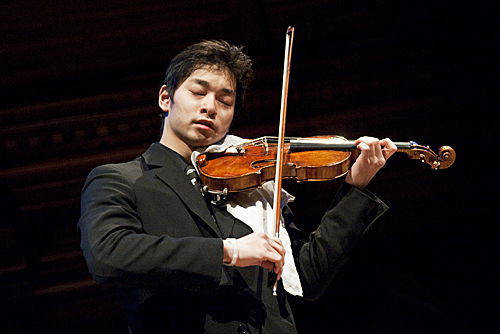
    The concert, produced and performed by the students, featured performances that were varied in style but uniformly moving. Violinist Ryu Goto ‘10 played with such passion that he frayed his bow.

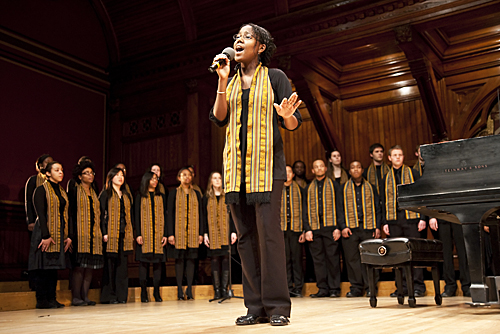
    The Pan-African Dance and Music Ensemble got the audience moving and clapping along in their seats during a performance of “Drum Call.” Following a reflection by Harvard College Dean Evelynn Hammonds, the Kuumba Singers ended the evening with modern and traditional gospel songs about community and resilience.

    Sanders was filled to the rafters, as President Drew Faust noted in her welcoming remarks.  But the audience extended far beyond the theater, as almost 3,500 watched live via Webcast.  The online audience donated to the cause via the Harvard for Haiti  Web site.

    After the concert, the Student Alliance for Global Health hosted a reception at the Queen’s Head Pub in Harvard Yard to help concertgoers learn more about the health implications of the disaster and what else they can do get involved.

    The University has established a relief fund for Harvard faculty and staff directly affected by the earthquake in Haiti. Donations can be made online, in person, or by mail through the Harvard Credit Union.


    Classic moment

    Classic moment

    The Harvard for Haiti Benefit Concert at Sanders Theatre included student performers from across campus. Ryu Goto ’11 performs Paganiniana Variations for Solo Violin.

    Magic in motion

    Magic in motion

    The Caribbean Club Dance Team performs “Simplement Danse,” choreographed by Akilah Crichlow ’10.

    HHI, iPhone connection

    HHI, iPhone connection

    Michael VanRooyen, director of the Harvard Humanitarian Initiative, addressed the audience … also mentioning a special iPhone app that was used in the rescue effort.

    Moore's dance

    Moore’s dance

    Merritt Moore ’10 performs a dance titled “A Day Without Rain” to the capacity crowd at Sanders Theatre.

    Kuumba contribution

    Kuumba contribution

    The Harvard for Haiti Benefit Concert at Sanders Theatre included the Kuumba Singers of Harvard College.

    Piano man

    Piano man

    Charlie Albright ’11 performs two pieces during the benefit concert.

    Photo slideshow: Harvard for Haiti Benefit Concert

    Photos by Jon Chase/Harvard Staff Photographer

  • Digging deep into diamonds

    By creating diamond-based nanowire devices, a team at Harvard University has taken another step toward making applications based on quantum science and technology possible.

    The new device offers a bright, stable source of single photons at room temperature, an essential element in making fast and secure computing with light practical.

    The finding could lead to a new class of nanostructured diamond devices suitable for quantum communication and computing, as well as advance areas ranging from biological and chemical sensing to scientific imaging.

    Published in the Feb. 14 issue of Nature Nanotechnology, researchers led by Marko Loncar, assistant professor of electrical engineering at Harvard’s School of Engineering and Applied Sciences (SEAS), found that the performance of a single photon source based on a light-emitting defect (color center) in a diamond could be improved by nanostructuring the diamond and embedding the defect within a diamond nanowire.

    Scientists, in fact, first began exploiting the properties of natural diamonds after learning how to manipulate the electron spin, or intrinsic angular momentum, associated with the nitrogen vacancy (NV) color center of the gem. The quantum (qubit) state can be initialized and measured using light.

    The color center “communicates” by emitting and absorbing photons. The flow of photons emitted from the color center provides a means to carry the resulting information, making the control, capture, and storage of photons essential for any kind of practical communication or computation. Gathering photons efficiently, however, is difficult since color centers are embedded deep inside the diamond.

    “This presents a major problem if you want to interface a color center and integrate it into real-world applications,” explains Loncar. “What was missing was an interface that connects the nano-world of a color center with the macro-world of optical fibers and lenses.”

    The diamond nanowire device offers a solution, providing a natural and efficient interface to probe an individual color center, making it brighter and increasing its sensitivity. The resulting enhanced optical properties increase photon collection by nearly a factor of ten relative to natural diamond devices.

    “Our nanowire device can channel the photons that are emitted and direct them in a convenient way,” says lead author Thomas Babinec, a graduate student at SEAS.

    Further, the diamond nanowire is designed to overcome hurdles that have challenged other state-of-the-art systems — such as those based on fluorescent dye molecules, quantum dots, and carbon nanotubes — as the device can be readily replicated and integrated with a variety of nano-machined structures.

    The researchers used a top-down nanofabrication technique to embed color centers into a variety of machined structures. By creating large device arrays rather than just “one-of-a-kind” designs, the realization of quantum networks and systems, which require the integration and manipulation of many devices in parallel, is more likely.

    “We consider this an important step in enabling technology towards more practical optical systems based on this exciting material platform,” says Loncar. “Starting with these synthetic, nanostructured diamond samples, we can start dreaming about the diamond-based devices and systems that could one day lead to applications in quantum science and technology as well as in sensing and imaging.”

    Loncar and Babinec’s co-authors included research scholar Birgit Hausmann, graduate student Yinan Zhang, and postdoctoral student Mughees Khan, all at SEAS; graduate student Jero Maze in the Department of Physics at Harvard; and faculty member Phil R. Hemmer at Texas A&M University.

    The researchers acknowledge the following support: Nanoscale Interdisciplinary Research Team (NIRT) grant from National Science Foundation (NSF), the NSF-funded Nanoscale Science and Engineering Center at Harvard (NSEC); the Defense Advanced Research Projects Agency (DARPA); and a National Defense Science and Engineering Graduate Fellowship and NSF Graduate Fellowship. All devices have been fabricated at the Center for Nanoscale Systems (CNS) at Harvard.

  • Harvard Thinks Big

    The prospect of hearing 10 top Harvard instructors lecture for 10 minutes each on the subjects that they care most deeply about drew an overflow crowd to Sanders Theatre on Thursday (Feb. 11).

    Harvard Thinks Big, a student-organized discussion that paired leading lecturers with eager listeners, attracted these great minds to help explore and inspire new ways of thinking, in the first session of what organizers hope will become an annual experience.

    “It’s an effort to epitomize what’s best about Harvard and [remind people] why we came here in the first place: to hear incredible professors talking about the things that they know best, and to be inspired,” said senior Derek Flanzraich, who conceived of the event along with Peter Davis ’12.

    The format was based on the popular Technology, Entertainment, Design (TED) talks, lectures given at the annual TED conference that follow the same tight format, and which have become online sensations.

    Before the series of 10-minute talks began, a line of students extended out to the Science Center, patiently hoping to get into the theater, undaunted by a long wait on a cold night.

    Gaining a lucky seat close to the front, sophomore Avinash Joshi was eager to listen to his Currier House master, Richard Wrangham, the Ruth Moore Professor of Biological Anthropology in Harvard’s Faculty of Arts and Sciences, as well as the other speakers.

    “I think the coolest idea is that they have to explain what they are most passionate about in 10 minutes … what they really care about, deep in their hearts. It’s going to come out tonight, and that’s why I am here.”

    Hundreds of students put their studies aside for the two-hour-plus discussion that touched on a range of topics, including violence, evolution, fairy tales, fire, religion, and hip-hop.

    Presentation styles ranged from subdued podium deliveries to ones infused with drama, such as the one by Andrew Berry, lecturer on organismic and evolutionary biology, who moved around the stage in a brief “drunken” stumble to help illustrate the confused arc of an important genetic mutation in human evolution.

    Lecturer on computer science David Malan ripped a phone book in two at one point, and worked up a sweat as he paced in front of the crowd, discussing the magic of making “machines do your bidding.” He encouraged students to explore fields that they might never have considered, the way he did as a Harvard undergraduate when he took a computer course outside his original government track.

    Diana Eck’s big idea was pluralism. Eck, professor of comparative religion and Indian studies and director of Harvard’s Pluralism Project, said she was there to recruit students to study religion, particularly pluralism, the broader engagement and understanding of other people’s faiths.

    “The ‘we’ in ‘we the people’ has become far more complex than ever before,” she said. “It will require stretching exercises. It will require all of us to know a lot more about each other.”

    For Daniel Gilbert, global warming isn’t happening fast enough to prompt a strong human response. The professor of psychology told the crowd that the reason the world is so slow to act on climate change is because the danger it poses isn’t intentional, immoral, imminent, or instantaneous. He outlined his theory on how the human brain responds to threats. If, in keeping with his “immoral” theory, “eating puppies” caused global warming, Gilbert said, people would be massing in the streets.

    Timothy McCarthy, lecturer on history and literature, adjunct lecturer on public policy, and director of the Human Rights and Social Movements Program at the Carr Center for Human Rights Policy at the Harvard Kennedy School, delivered an impassioned talk about the future of protest. He challenged students to embrace the protest spirit of people like Harvard graduate and Civil War Col. Robert Gould Shaw, the commander of the all-black 54th Regiment, who died and was buried with his men.

    McCarthy pointed to Gould’s statue in the hall and encouraged the students to “transform their privilege into passion.”

    “Brothers and sisters, if we are to have a future filled with freedom and hope and equality, rather than hatred and fear and exclusion, we must act now. Let us rededicate ourselves to [Abraham Lincoln’s] ‘better angels of our nature’ and bring about a new birth of protest.”

    The speakers were chosen largely by student request as part of a survey distributed to all undergraduates by the College Events Board in the fall. Harvard Undergraduate Television recorded the event and will post it on the studio’s Web site. Harvard’s Undergraduate Council also helped to plan the program.

    Davis and the president of the Undergraduate Council, Johnny Bowman ’11, hosted the evening, and Dean of Harvard College Evelynn M. Hammonds, the Barbara Gutmann Rosenkrantz Professor of the History of Science and of African and African American Studies, encouraged the students in the audience to explore their own big ideas.

    “All of us here want you to find your own passion.”

    One noticeable absence from the lineup was Michael Sandel, a popular speaker and the Anne T. and Robert M. Bass Professor of Government. He was unable to attend because of a prior engagement. He is a speaker at this year’s TED conference in Long Beach, Calif.