Author: Harvard Gazette Online

  • It’s all about the numbers

    Alexander Ahmed was 5 years old when he started playing a board game called Strat-O-Matic Baseball. Armed with stats cards from seasons going back to 1911, players roll dice to pitch, swing, and make defensive plays. “It simulates real-life baseball pretty well,” said the senior from suburban Springfield, Mass.

    For Ahmed, Strat-O-Matic combined two early passions: sports play and statistics. Growing up, he studied box scores, and kept stats on every game he played. In high school, Ahmed was a three-sport varsity athlete who excelled in science and math too. At Harvard, there was ample opportunity to put the two worlds together.

    On the sports side, Ahmed, an applied mathematics concentrator at Winthrop House, played junior varsity baseball for his first two years. He then masterminded the transformation of the struggling team from junior varsity status to the Harvard Baseball Club, where his batting average (.490) was second on the team this year.

    Then there are all those intramural sports. “I try to do as many as I can,” said Ahmed. “It’s what I do for exercise.” Those included soccer, flag football, volleyball, ultimate Frisbee, basketball, softball, crew, swimming, and ice hockey. Of the last, he said, “I learned to skate last year so I could play.”

    Ahmed also has explored the mathematical and scientific dimensions that sport offers. His senior thesis — 63 pages of narrative, equations, and appendices — uses a statistical modeling tool called the Markov Chain to estimate “run expectancy” in baseball.

    He also belongs to the 20-member Harvard Sports Analysis Collective, where weekly meetings draw in concentrators from fields such as math, statistics, economics, and psychology. “We try to ask interesting questions that any sports fan would ask,” said Ahmed, “then try to answer them with the tools that we have from our studies.”

    In his sophomore year, he was one of seven students in the club who wrote a paper for the online Journal of Quantitative Analysis in Sports on “park factors,” the ways to adjust statistics based on the qualities of baseball venues. One example is the “Green Monster,” the famously high wall in Fenway Park’s left field. Ahmed also did a second-year independent study project for the Arizona Diamondbacks on pitching rotations.

    Then there are the courses that Ahmed has taken that cross science with sports, such as this semester’s comparative biomechanics. (He wrote his final paper on the biomechanics of throwing.) “They’re difficult classes,” said Ahmed, but they left him with a solid life skill in problem solving.

    In April, he was turned down for stats jobs with the Red Sox and the Cleveland Indians. But teaching math is an option too, something Ahmed tried out last year in a summer school program for rising eighth-graders who were struggling in math and science.

    Ahmed and undergraduates from the Massachusetts Institute of Technology were paid to bring baseball into lessons in the mornings and coach baseball in the afternoons. One class on projectile motion used hardball throws to calculate velocity. Another, on probability, used major league statistics.

    On field trips, the youngsters visited work settings that combined sport and science, including bat-testing engineers at the University of Massachusetts Lowell’s Baseball Research Center. “It was cool for the kids to see that,” said Ahmed. “It showed that if you want to go into engineering, you can partner it with something that you love, like baseball.”

    Then there is the Harvard University Band, a social constant for four years. It taught him leadership skills (he managed the band last year), let him play trombone (an instrument he took up in fifth grade), and allowed for a lot of sports viewing (football, hockey, basketball, and more).

    “The older alums love the band the most,” said Ahmed. “They sing along with the fight songs.”

  • Alumni support financial aid

    For the first time in Harvard’s history, more than 30,000 students applied to the College; 2,110 were accepted into the Class of 2014. More than 60 percent of the admitted students, benefiting from a record $158 million in financial aid, will receive need-based scholarships — a demonstration of Harvard’s commitment to providing access to a Harvard education to promising students from across the globe.

    “When alumni and friends give immediate-use funds in support of financial aid at Harvard, they are providing what are, in many ways, the most valuable gifts that we receive,” said William R. Fitzsimmons, dean of admissions and financial aid at Harvard College. “This same generosity made it possible for me to attend Harvard, and I see the gratitude that I felt in the extraordinary students whom we admit each year and support through financial aid.”

    While large current-use gifts intended specifically for financial aid were previously relatively rare, alumni now recognize and focus on aid as a primary goal and priority. Longtime financial aid benefactors Beatrice Liu ’81, M.B.A. ’87, and Philip Lovett ’83, M.B.A. ’87, led the way, providing early support for this vital student resource, and more donors are following suit.

    Despite increasing costs and growing student need in the current economic climate, Harvard is determined to continue providing access for talented students. Offering this level of support would not be possible without the many contributions from alumni, including significant immediate-use gifts toward financial aid from Michael Kerr ’81, M.B.A. ’85, Sumner Redstone ’44, LL.B. ’47, and Joseph O’Donnell ’67, M.B.A. ’71. All of these gifts help increase access to Harvard for students across the income spectrum.

    “Such gifts,” said Fitzsimmons, “demonstrate the unwavering and generous dedication of alumni in sharing Harvard with future generations of students. It’s inspiring to see, and we are enormously grateful for their continued support.”

    In addition to providing direct support to students, current-use gifts are also used to enrich the student experience, channeling funding to unique courses, new faculty initiatives, and undergraduate research opportunities.

    The immediate-use funds contributed to Harvard’s financial aid program help individual students through the Harvard College Fund Scholars Program. As part of this program, donors can connect directly to the students who benefit immediately from their generosity.

    “Giving exceptional students the opportunity to access all that Harvard has to offer is one of my primary responsibilities as an alumnus,” said O’Donnell. “By making a current-use contribution in support of the financial aid program, I know that I can start helping students right away.”

  • Benefiting society, scholarship

    For more than two decades, the Graduate School of Arts and Sciences (GSAS) has awarded its Centennial Medal to a select group of graduates who have made significant contributions to society and scholarship. This year’s recipients: one of the world’s foremost scholars of Shakespeare and Renaissance drama; the founder, publisher, and principal editor of a scholarly journal; an economist and a 2007 Nobel laureate; and one of the most eminent of American philosophers.

    Receiving the medal today (May 27) are David Bevington, Stephen Fischer-Galati, Eric Maskin, and Martha Nussbaum.

    David Bevington ’52, Ph.D. ’59, English
    David Bevington is the Phyllis Fay Horton Distinguished Service Professor Emeritus in the Humanities at the University of Chicago, where he has taught since 1967. One of the world’s foremost scholars of Shakespeare and Renaissance drama, Bevington has written or edited more than 30 volumes on Shakespeare and his contemporaries. His authored books include “From ‘Mankind’ to Marlowe: Growth of Structure in the Popular Drama of Tudor England” (1962), “Action Is Eloquence: Shakespeare’s Language of Gesture” (1985), and “Shakespeare’s Ideas: More Things in Heaven and Earth” (2008). His new book, forthcoming from Oxford University Press, is “Murder Most Foul: The History of Hamlet.” Bevington has edited the Bantam Shakespeare, in 29 volumes (1988, now being re-edited), and Longman’s “Complete Works of Shakespeare,” sixth edition (2009). He is the former president of the Medieval and Renaissance Drama Society (1981-86), the Shakespeare Association of America (1976-77 and 1995-96), and the Renaissance English Text Society (1977-80). He is senior editor of the Revels Plays (Manchester University Press), which publishes critical editions of plays of Shakespeare’s contemporaries, and the Revels Student Editions. He was senior editor of the “Norton Anthology of Renaissance Drama” (2002) and is one of three senior editors of a forthcoming Cambridge edition of “The Works of Ben Jonson.”

    Stephen Fischer-Galati ’46, Ph.D. ’49, history
    Stephen Fischer-Galati is Distinguished Professor Emeritus of History at the University of Colorado. He is the founder, publisher, and principal editor of the scholarly journal East European Quarterly and the scholarly series East European Monographs, which has put out more than 700 scholarly books on East-Central Europe in collaboration with Columbia University Press. Fischer-Galati is one of the world’s foremost specialists on East European history and civilization, exploring the evolution of East-West relations and the intersection of Western and Eastern political and cultural developments. He has also published extensively on Balkan issues and guerilla warfare in the region. Born in Romania, Fischer-Galati escaped the country as a teenager during the early stages of World War II, finishing his high school studies in Massachusetts before going on to Harvard. His books include “Romania: A Historic Perspective,” “Eastern Europe and the Cold War: Perceptions and Perspectives,” and “Man, State, and Society in East European History,” and he has authored more than 250 articles. He holds several honorary degrees and major grants and fellowships from American and international scholarly foundations. He is also the president of the International Commission of East European and Slavic Studies of the International Congress of Historical Studies.

    Eric Maskin ’72, Ph.D. ’76, applied mathematics
    Eric Stark Maskin is an economist and a 2007 Nobel laureate recognized (along with Leonid Hurwicz and Roger B. Myerson) “for having laid the foundations of mechanism design theory.” Among other critical applications, that theory has helped economists identify efficient trading mechanisms, regulation schemes, and voting procedures. Maskin is the Albert O. Hirschman Professor of Social Science at the Institute for Advanced Study and a visiting lecturer with the rank of professor at Princeton University. After earning his doctorate at Harvard, Maskin went to the University of Cambridge in 1976, where he was a research fellow at Jesus College, and then taught at the Massachusetts Institute of Technology (1977-84) and at Harvard (1985-2000), where he was the Louis Berkman Professor of Economics. His work in economic theory, including game theory, the economics of incentives, and contract theory, has deeply influenced diverse areas of economics, politics, and law. He is particularly well-known for his papers on mechanism design/implementation theory and dynamic games. His current research projects include comparing different electoral rules, examining the causes of inequality, and studying coalition formation. He is a fellow of the American Academy of Arts and Sciences, the Econometric Society, and the European Economic Association, and he is a corresponding fellow of the British Academy. He was president of the Econometric Society in 2003.

    Martha Nussbaum, Ph.D. ’75, classical philology
    Martha Nussbaum is the Ernst Freund Distinguished Service Professor of Law and Ethics at the University of Chicago, with appointments in the Law School, the Philosophy Department, and the Divinity School. Among the most eminent of American philosophers, her wide-ranging interests include ancient notions of ethics, feminism, religious equality, gender and sexuality law, global justice, and notions of disgust, shame, and other emotions and their various effects on the law. She has taught at Harvard, Brown, and Oxford universities. Among her many books the most recent are “The Clash Within: Democracy, Religious Violence, and India’s Future” (2007), “Liberty of Conscience: In Defense of America’s Tradition of Religious Equality” (2008), and “From Disgust to Humanity: Sexual Orientation and Constitutional Law” (2010). From 1986 to 1993, Nussbaum was a research adviser at the World Institute for Development Economics Research, Helsinki, a part of the United Nations University. She is former president of the Central Division of the American Philosophical Association, and she has chaired the Association’s Committee on International Cooperation, its Committee on the Status of Women, and its Committee on Public Philosophy. Nussbaum is a member of the American Academy of Arts and Sciences and the American Philosophical Society, which in 2009 awarded her its Henry M. Phillips Prize in Jurisprudence.

  • Honorary degrees awarded

    Harvard will confer 10 honorary degrees today (May 27) during the Morning Exercises.


    David H. Souter
    Doctor of Laws

    David H. Souter was an associate justice of the U.S. Supreme Court for 19 years before retiring in June 2009. Souter, who graduated from Harvard College in 1961 and Harvard Law School in 1966, will be the principal speaker at the Afternoon Exercises at this year’s Commencement.

    Harvard President Drew Faust hailed Souter’s “deep sense of independence and fairness” and “clear concern for the effects of the court’s decisions on the lives of real people” in making the Commencement speaker announcement. She said his “dedication, humility, and commitment to learning” should be an inspiration to anyone contemplating a career in public service.

    Souter was also a Rhodes Scholar, earning an M.A. from Magdalen College in Oxford in 1963.

    Nominated by President George H.W. Bush, Souter came to the court after spending many years at posts in the New Hampshire legal system. Born in Massachusetts, he moved to New Hampshire as a boy. After graduating from Harvard Law School, he began his legal career in private practice. In 1968, he was named assistant attorney general of New Hampshire. In 1971, he became deputy attorney general, and, in 1976, attorney general. He became a state Superior Court associate justice two years later and was appointed to the state Supreme Court as an associate justice in 1983. He became a judge of the U.S. Court of Appeals for the First Circuit in 1990, shortly before his nomination to the U.S. Supreme Court.

    Thomas R. Cech
    Doctor of Science
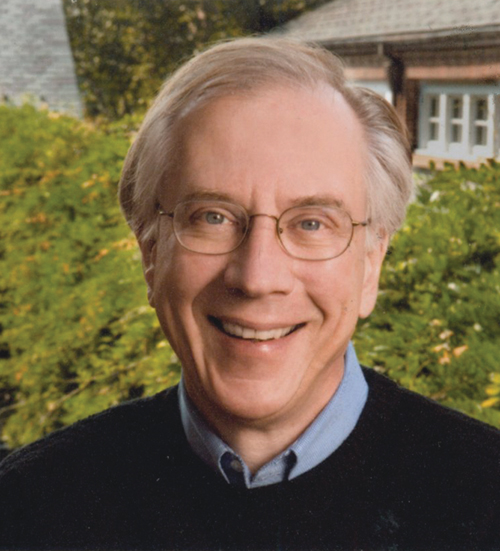
    Thomas R. Cech, director of the Colorado Institute for Molecular Biotechnology at the University of Colorado, has made important contributions to understanding RNA, findings that won him the Nobel Prize in chemistry in 1989.

    Cech was awarded the Nobel for revelations that RNA, ribonucleic acid, has functions beyond its role as a carrier of genetic information. In a single-celled organism, Tetrahymena thermophila, Cech discovered that RNA can also function as an enzyme, a function that had previously been thought to be the exclusive domain of proteins. These RNA enzymes are called ribozymes.

    Cech grew up in Iowa and earned a bachelor’s degree in chemistry from Grinnell College in 1970. He received a doctorate in chemistry from the University of California, Berkeley, and did postdoctoral research at the Massachusetts Institute of Technology. He joined the University of Colorado faculty in 1978 and became a Howard Hughes Medical Institute investigator in 1988 and distinguished professor of chemistry and biochemistry in 1990.

    In 2000, Cech became the president of the Howard Hughes Medical Institute and led that organization until 2009, when he returned to the University of Colorado as director of the Colorado Institute for Molecular Biotechnology.

    In addition to the Nobel Prize, Cech has won numerous awards and honors, including the Albert Lasker Basic Medical Research Award in 1988, the National Medal of Science in 1995, and the Heineken Prize of the Royal Netherlands Academy of Sciences in 1988. In 1987, Cech was elected to the U.S. National Academy of Sciences and was awarded a lifetime professorship by the American Cancer Society.

    Renée C. Fox
    Doctor of Laws
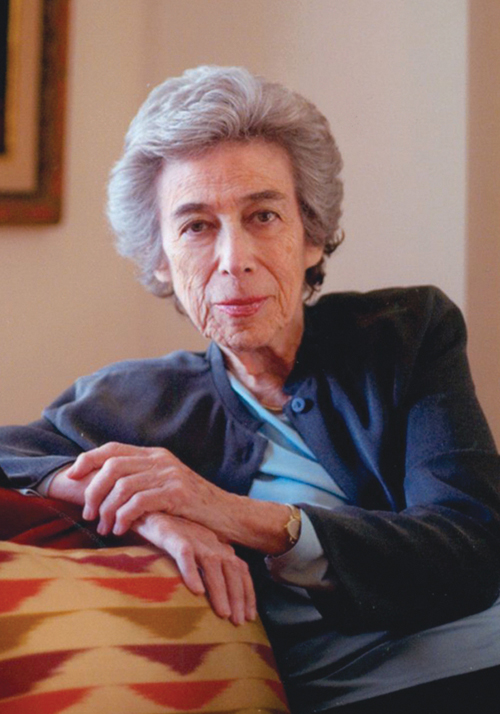
    Renée C. Fox’s studies in the sociology of medicine, medical ethics, medical research, and medical education have led her to Belgium, the Democratic Republic of the Congo, China, and the United States, and have resulted in nine books and numerous articles.

    Fox earned a doctorate in sociology from Harvard in 1954. She received a bachelor’s degree summa cum laude from Smith College. She joined the faculty at the University of Pennsylvania in 1969, where she is Annenberg Professor Emerita of the Social Sciences.

    Before joining the University of Pennsylvania’s faculty, Fox was a member of the Columbia University Bureau of Applied Social Research. She taught for 12 years at Barnard College and then was a visiting lecturer for two years at Harvard’s Department of Social Relations. At Pennsylvania, she was a professor in the Sociology Department with joint secondary appointments in the Departments of Psychiatry and Medicine, and in the School of Nursing. She also held an interdisciplinary chair as the Annenberg Professor of the Social Sciences.

    Her best-known books are “Experiment Perilous: Physicians and Patients Facing the Unknown,” “The Courage to Fail: A Social View of Organ Transplants and Dialysis,” “Spare Parts: Organ Replacement in American Society,” “The Sociology of Medicine: A Participant Observer’s View,” and “In the Belgian Chateau: The Spirit and Culture of a European Society in an Age of Change.” She is working on a book about her life as a sociologist.

    Fox is a member of the American Academy of Arts and Sciences and of the Institute of Medicine of the National Academy of Sciences. She is a fellow of the American Association for the Advancement of Science. She has received a Radcliffe Graduate School Medal and a Centennial Medal from the Harvard Graduate School of Arts and Sciences. She has won several teaching awards, holds nine honorary degrees, and in 2007 received the Lifetime Achievement Award of the American Society for Bioethics and Humanities.

    Freeman A. Hrabowski III
    Doctor of Laws

    Freeman A. Hrabowski III is committed to rigorous academic standards and challenging students to excel. The president of the University of Maryland, Baltimore County (UMBC), who chose to fund a championship chess team at the school instead of a football program, has built a career devoted to education and to helping minorities succeed in science, technology, engineering, and math.

    In 1988 he co-founded the Meyerhoff Scholarship Program at UMBC with the goal of increasing the diversity of future leaders in science, technology, engineering, and related fields. Originally geared toward African-American males, the program has expanded to students of all races and both genders, and has been recognized by the National Science Foundation as a national model.

    Called a “tireless academic cheerleader,” he was associate dean of graduate studies and associate professor of statistics and research at Alabama A&M University from 1976 to 1977. He was a professor of mathematics at Coppin State College in Baltimore for 10 years, and served as dean of arts and sciences from 1977 to 1981. He was the school’s vice president for academic affairs from 1981 to 1987. He went to the UMBC as vice provost in 1987, and was appointed president in 1993.

    The son of teachers, Hrabowski was jailed for a week at age 12 after marching against school segregation in his home city of Birmingham, Ala. “The experience taught me that the more we expect of children, the more they can do,” he said in a 2008 interview with U.S. News & World Report, which named him one of America’s best leaders.

    An early academic standout, he skipped two grades and graduated from high school at age 15. Four years later he graduated from Hampton Institute with the highest honors in mathematics. He received his master’s in mathematics in 1971 and his Ph.D. in higher education administration and educational statistics in 1975 from the University of Illinois, Urbana-Champaign.

    He is a member of several boards, including the Alfred P. Sloan Foundation and the Carnegie Foundation for the Advancement of Teaching. He is the co-author of “Beating the Odds: Raising Academically Successful African American Males.” In 2009, Time magazine named Hrabowski one of America’s 10 best college presidents.

    Susan Lindquist
    Doctor of Science

    Understanding how malformed proteins affect the human body, and how they are involved in evolution, is the realm of biologist Susan Lindquist, Howard Hughes Medical Institute investigator and professor of biology at the Massachusetts Institute of Technology.

    Lindquist, an authority on the complex molecular phenomenon called protein folding, explores how misfolded proteins play a role in diseases such as cancer, cystic fibrosis, Parkinson’s, and Huntington’s. She uses yeast-based models of such protein-folded diseases to develop new approaches to therapy.

    One area of Lindquist’s research examines the “chaperone” heat shock proteins that assist in protein folding and help to buffer genetic mutations. When such chaperone systems are overwhelmed, misfolding and disease states can result. The former director of the Whitehead Institute for Biomedical Research also has explored how such misfolded proteins affect some evolutionary changes.

    “One implication of our work is that the protein-folding problem isn’t always a problem,” notes Lindquist’s lab home page. “The very same types of misfoldings that cause dreadful diseases in some circumstances can have beneficial effects in others. The protein-folding problem is as ancient as life itself; it makes sense that evolution would occasionally, perhaps even often, use it to advantage.”

    As a Radcliffe Fellow in 2007-08, Lindquist continued her investigations into the connections between genomics and medicine.

    Lindquist received her undergraduate degree in microbiology from the University of Illinois in 1971. She received her Ph.D. in biology from Harvard University in 1976. In 1999 she was named the Albert D. Lasker Professor of Medical Sciences at the University of Chicago.

    Her awards include the Dickson Prize in Medicine, the Centennial Medal of the Harvard University Graduate School of Arts and Sciences, the Otto-Warburg Prize, and the Genetics Society of America Medal. She is an associate member of the Broad Institute, a member of the Whitehead Institute for Biomedical Research, and an elected member of the American Academy of Arts and Sciences and the National Academy of Sciences. She is the co-founder of the Cambridge-based FoldRx Pharmaceuticals Inc.

    Thomas Nagel
    Doctor of Laws

    American philosopher of the mind Thomas Nagel is known for “What Is It Like to Be a Bat?” This rumination on the idea of consciousness — and the limits of science for explaining it — was published in the October 1974 issue of The Philosophical Review.

    The article articulates a central concern of Nagel, who said that humans instinctually want to make sense of the world, but adopting a unified, purely objective worldview can lead to error. In fact, relying on scientific objectivity alone leaves out some essential component of understanding ourselves.

    Since 1980, Nagel has taught at New York University, where he is University Professor of Philosophy and Law. His other interests include political philosophy and ethics. He published his first philosophy paper in 1959 and his first book, “The Possibility of Altruism,” in 1970. Subsequent books include “Moral Questions” (1979), “What Does It All Mean?” (1987), “The Myth of Ownership: Taxes and Justice” (2002, with Liam Murphy), and the recent “Secular Philosophy and Religious Temperament” (2009), a book of essays.

    Nagel was born in 1937 in Belgrade, in present-day Serbia, and as a young child moved to the United States. He earned a B.A. in 1958 from Cornell University, a B.Phil. from Corpus Christi College, Oxford, in 1960, and a Ph.D. from Harvard, where he was a student of philosopher John Rawls, in 1963.

    He taught at the University of California, Berkeley, (1963-66) and at Princeton University (1966-80) and has lectured at Stanford, Oxford, Johns Hopkins, Harvard, and Yale universities. In 2008, Nagel received both the Rolf Schock Prize in Logic and Philosophy and the Balzan Prize in Moral Philosophy.

    Nagel is a fellow of the American Academy of Sciences, a corresponding fellow of the British Academy, and a member of the American Philosophical Society. In 2008, he received an honorary D.Litt. from Oxford.

    David G. Nathan
    Doctor of Science

    David G. Nathan, the Robert A. Stranahan Distinguished Professor of Pediatrics at Harvard Medical School, former physician-in-chief at Harvard-affiliated Children’s Hospital, and former president of the Harvard-affiliated Dana-Farber Cancer Institute, has had a career of discovery, teaching, and leadership that has not only pushed back the frontiers of knowledge of blood-based disorders but also fostered a generation of leaders who are guiding the field into the future.

    Nathan, who graduated from Harvard College in 1951 and from Harvard Medical School in 1955, is an authority on blood disorders. His discoveries have shed light on anemia and the hemoglobin disorder thalassemia. He won the National Medal of Science in 1990 “for his contributions to the understanding of the pathophysiology, diagnosis and treatment of thalassemia; for his contributions to the understanding of disorders of red cell permeability; for his contributions to the understanding of the regulation of erythropoiesis; and for his contributions to the training of a generation of hematologists and oncologists.”

    Nathan has won many awards and honors over his career, including the John Howland Medal of the American Pediatric Society and the Kober Medal of the Association of American Physicians. He is one of three physicians to win both.

    Nathan’s medical career began as an intern and senior resident at what was then the Peter Bent Brigham Hospital. He spent two years as a clinical associate at the National Cancer Institute. From 1959 to 1966, he was a hematologist at Brigham Hospital, and then became chief of the Division of Hematology and Oncology at Children’s Hospital and the Dana-Farber Cancer Institute. In 1985, he was physician-in-chief at Children’s Hospital, a position he held until 1995, when he was named president of the Dana-Farber Cancer Institute. He served as Dana-Farber’s president until 2000.

    He is the author of “Hematology of Infancy and Childhood,” which is the leading text in the field.

    The Baroness Onora O’Neill of Bengarve
    Doctor of Laws

    Scholar and politician Onora O’Neill, Baroness O’Neill of Bengarve, studied philosophy, psychology, and physiology at Oxford University before earning her philosophy doctorate at Harvard in 1969.

    Her mentor and dissertation adviser was American philosopher John Rawls, the one-time James Bryant Conant University Professor at Harvard whose signature work, “A Theory of Justice” is still a primary text in political philosophy.

    A native of Northern Ireland, O’Neill has written widely and influentially on political philosophy and ethics, as well as on international justice, bioethics, media ethics, and the philosophy of Emmanuel Kant. Her work concerns issues of trust, consent, and respect for autonomy, in particular in the context of complex medical decision-making.

    A veteran instructor at universities in the United Kingdom and the United States, she teaches philosophy at the University of Cambridge, where she was principal at Newnham College from 1992 to 2006.

    O’Neill is the author of seven books and co-author of an eighth. Her works include “Acting on Principle” (1975), “Towards Justice and Virtue” (1996), “Bounds of Justice” (2000), and “Autonomy and Trust in Bioethics” (2001), the last being her Gifford Lectures in book form. (The prestigious Gifford Lectures, a tradition at Scottish universities, are designed to explore the idea of “natural theology,” that is, theology supported by science.)

    O’Neill, a life peer, is a “crossbench” (nonparty) member of the British House of Lords. She has served on committees concerning stem cell research, genomic medicine, and nanotechnology and food.

    O’Neill’s advisory work reflects her academic interests. In the United Kingdom, she has been a member of the Animal Procedures Committee, the Human Genetics Advisory Commission, and the Nuffield Council on Bioethics, which she chairs.

    Richard Serra
    Doctor of Arts

    Minimalist sculptor and experimental video artist Richard Serra is famous for his monumental works in steel — a favorite medium — and for his experimental films, beginning with “Hand Catching Lead” in 1968. He is associated with the process art movement of the mid-1960s. It celebrates the serendipity of art (the drip painting of Jackson Pollock, for instance) as well as the process of making art (rather than the art itself).

    His first sculptures in the 1960s were made out of nontraditional materials such as fiberglass, neon, and rubber. But he soon graduated to his lifelong fascination with metals.

    Born in 1939, Serra worked at steel mills to support himself while studying English literature at the University of California, Berkeley, and then at the University of California, Santa Barbara, where he received a bachelor’s degree. From 1961 to 1964, Serra studied painting at Yale University, earning both a B.F.A. and an M.F.A.

    From 1968 to 1970, he executed a series of “splash pieces” in which molten lead was splashed against walls. Serra moved to “prop pieces,” metal sculptures held together solely by balance and the force of gravity. In 1970, Serra began experimenting with large-scale sculptures that played off urban landscapes. Many were made of spirals and curving lines — counterpoints to the right angles that dominate city skylines.

    He is best known for his looming minimalist constructions made from rolls of Cor-Ten steel. They were once dismissed as artifacts from an arrogant art world. Serra’s 120-foot-long Tilted Arc, installed in Manhattan’s Federal Plaza in 1981, was dismantled eight years later. But in 2007, The New York Times called Serra “a titan of sculpture, one of the last great modernists.” That year, four massive sculptures with the same whimsical curves were the centerpieces of a Serra retrospective at New York’s Museum of Modern Art.

    Meryl Streep
    Doctor of Arts
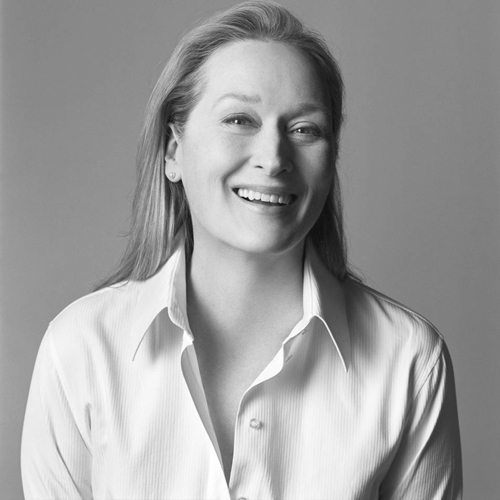
    Academy Award-winning actress Meryl Streep has won fans around the world and the acting industry’s highest awards for her versatility, her ability to master accents and personas, and her ease with both dramatic and comedic roles.

    Considered one of the country’s greatest living actresses, Streep has been nominated 16 times for an Oscar, winning two, and 25 times for a Golden Globe, winning seven. She is the most nominated performer for either award.

    Born in New Jersey in 1949, Streep’s initial artistic interest was opera, but she eventually gravitated toward theater, graduating with a bachelor’s degree in drama from Vassar College in 1971. She earned an M.F.A. from the Yale School of Drama in 1975.

    Her early career involved the New York stage and included work with the New York Shakespeare Festival, as well as on Broadway. In 1978 she won an Emmy Award for her role in the television miniseries “Holocaust.”

    Streep’s movie career blossomed with her role in the 1978 film “The Deer Hunter.” She received her first Academy Award nomination and has worked steadily in films since.

    Two years later she won the Academy Award for best supporting actress for her role as a struggling mother in “Kramer vs. Kramer,” and won for best actress in 1983 for her portrayal of a tormented Holocaust survivor in “Sophie’s Choice.”

    Streep’s other films include “The French Lieutenant’s Woman,” “Out of Africa,” “Silkwood,” “The River Wild,” “Adaptation,” “The Hours,” “The Devil Wears Prada,” and “Julie and Julia.”

    Streep also is an environmental health activist. In 1989 she helped to found Mothers and Others, a consumer group advocating sustainable agriculture and increased pesticide regulations.

    Among her many honors are a Commandeur de l’Ordre des Arts et des Lettres from the French government and a Lifetime Achievement Award from the 
American Film Institute.

    — Compiled by Corydon Ireland, Alvin Powell, and Colleen Walsh

  • DRCLAS sponsors summer travel in Latin American Studies

    The David Rockefeller Center for Latin American Studies (DRCLAS) is sponsoring more than 160 students to travel to Latin America for work, research, and study this summer.

    The DRCLAS awarded research travel grants to nine undergraduates for senior thesis research and 32 graduate students for dissertation research in Latin America. DRCLAS also provided grants to 10 undergraduates and five graduate students for independent internships in Latin America.

    The center’s Summer Internship Program (SIP) places students in Argentina, Chile, Peru, and Uruguay to work with organizations that align with their personal or career interests. Under the coordination of the DRCLAS Regional Office in Santiago, Chile, students are housed with host families and participate in seminars, lectures, and excursions during their stay. A total of 48 undergraduates will take part in SIP, with 23 traveling to Argentina, 16 to Chile, seven to Peru, and two to Uruguay.

    This year, 47 students will travel to Latin America to take part in four new DRCLAS summer programs: six will participate in the Public Policy Internship Program in Brazil, 15 will participate in the Health and Spanish Immersion Course in Chile, 13 will participate in the Spanish and Community Service Course in Peru, and 13 will participate in the Summer Internship Program on Sustainable Development in Mexico.

    The DRCLAS awarded seven grants to undergraduates working for WorldTeach this summer. Five students will teach in Costa Rica and three will teach in Ecuador.

    For more information, visit the DRCLAS Web site.

  • Alumni rally behind public service

    When Harvard Alumni Association (HAA) President Teresita Alvarez-Bjelland ’76, M.B.A. ’79, took office last year, she had a specific goal in mind: bring together the network of Harvard alumni worldwide to highlight the important role that public service plays in the Harvard community. Over the past year, the HAA joined with thousands of alumni, students, and faculty to celebrate Harvard’s long-standing commitment to public service.

    “Service is a unifying cause for alumni,” said Alvarez-Bjelland. “As the umbrella organization for all Harvard alumni, the HAA focuses on public service that enables us to participate in worthy projects while also showcasing University-wide initiatives.” Alvarez-Bjelland, who is the HAA’s first Hispanic president and only the second international leader in the role, emphasized the need for Harvard’s continued commitment to service, not just in Cambridge, but nationally and abroad. During her tenure, she met with alumni around the world and spoke with students on campus, spreading the message about public service opportunities available through the HAA.

    Under the banner “Harvard Serves,” the HAA worked through the year on public service initiatives, including a “Global Month of Service” in April. The HAA travel office integrated this theme into its activities, collaborating with the Phillips Brooks House Association-Alumni (PBHA-A) on a service trip to New Orleans. In addition, the HAA Alumni Education office partnered with the PBHA-A to develop a series of Cambridge-based panel discussions that featured Harvard alumni working toward positive social change.

    To spotlight Harvard’s commitment to public service while making use of new technologies, the HAA partnered with the Harvard Office of Public Affairs and Communications to create “Public Service on the Map” an interactive Web site where members of the Harvard community list their public service activities and connect with others engaged in public service. Launched as a beta test in April, the map already lists hundreds of public service activities, from all Schools, and on six continents.

    “For me,” said Alvarez-Bjelland, “it has truly been an inspiring year. Alumni around the world embraced the theme of public service, from recent graduates to alumni who have never been actively engaged with the HAA before.”

    Incoming HAA President Robert R. Bowie Jr. ’73 plans to continue strengthening the alumni community by exploring some untapped power in the Harvard network. He believes that members of Harvard’s alumni community “are instantly part of a worldwide network of shared experiences and a common history. The HAA is a platform for leveraging the power of that network to help one another, to support lifelong learning, and to engage with the University.”

    Bowie, a founding member of the law firm Bowie & Jensen LLC and an active participant in the HAA, has served as vice president of both the University-wide and College clusters, as a member-at-large of the executive committee, and as co-chair of the schools and scholarship committee. He is the current first vice president of the HAA. He is also a playwright and poet.

    Alvarez-Bjelland highlighted key attributes that Bowie will bring to the HAA. “Bob is a loyal alum with years of involvement,” she said. “His dedication and his drive will strengthen the HAA and bring the alumni closer together.”

    Bowie looks forward to continuing his collaboration with Alvarez-Bjelland in the coming year, as well as with the other past HAA presidents on the executive committee, the HAA board, committees, and staff. “Teresita has included me in a very generous way throughout the past year,” said Bowie, “and I am grateful to be able to draw on the wealth of resources that she and all of the past HAA presidents bring to the HAA.”

    Bowie plans to combine his commitment to Harvard with his passion for storytelling in the coming year, collecting and sharing alumni experiences through engagement activities across the HAA. These stories will highlight the unique, yet inextricably linked, threads that alumni contribute to Harvard’s social fabric and emphasize the untapped resources that each alumnus/alumna’s experience can provide. The HAA will serve as a conduit through which the diverse members of the alumni community can enrich their own connections with the University and with one another.

  • When the past is present

    “Language is identity, language is history, language is culture, language is education, and language is a bridge between the past, present, and future,” said Marcus Briggs-Cloud, a graduating master’s student at Harvard Divinity School, addressing a recent meeting of the United Nations Permanent Forum on Indigenous Issues.

    Whenever he introduces himself, Briggs-Cloud does so in Maskoke, a melodic language now spoken by only a few thousand people.

    Language has been a key to the Florida native’s understanding of his cultural identity and of his ancestors’ fractured history. Using his master of theological studies degree, Briggs-Cloud hopes to preserve his native language, and build a bridge of knowledge and support for the Maskoke Nation.

    For his undergraduate education, the son of the Wind Clan people and grandson of the Bird Clan people chose the University of Oklahoma, partly because of its indigenous studies program, but also to explore the genealogical and cultural connections to the descendants of his ancestors who had been displaced by the Indian Removal Act of 1830.

    “I wanted to see if the language and the ceremonial continuity was there from what was familiar to me, what we had maintained in Florida, even though we had been separated for 170 years.”

    Briggs-Cloud described a moving meeting with relatives of his great-great-grandfather, George Cloud.

    “It was an evocative encounter for me,” he recalled, “especially since my great-aunt, who just died at the age of 96, always wondered, with immense emotional pain, if her people ever made it westward on that long road of suffering.”

    In Oklahoma, Briggs-Cloud also found something else, a young urban Indian population sadly out of touch with its heritage. “They don’t know where they come from,” he said. “None of them are speakers of their language, and they are mostly disconnected from their communities.”

    According to Briggs-Cloud, the disconnect is largely a product of the federal government’s effort during the 19th and 20th centuries to remove Native American Indian children from their homes and educate them in Christian boarding schools.

    By the time the practice finally ended in the 1970s, he said, generations of indigenous peoples had been affected, with many suffering from “post-traumatic stress.” Parents no longer wanted to speak their native language or teach it to their children for fear of social repercussions. The critical sense of community that a language helps to foster, said Briggs-Cloud, frequently dissolved in a haze of alcoholism, drug abuse, domestic violence, and even suicide.

    He stayed at the University of Oklahoma after graduation, teaching Maskoke language and philosophy in the university’s anthropology department, counseling high school Indian youth, and working with organizations that support indigenous communities. His hope was to mobilize grassroots projects around community engagement — but there were obstacles.

    “The irony is that my own people would listen to an anthropologist from Harvard before they would listen to our own elders,” said Briggs-Cloud, a slender young man who wears his dark hair in a long braid and a turquoise earring in each ear to represent balance. “The only thing for me to do was to get that credential. So I applied to only one school.”

    Harvard Divinity School allowed him to “really do what I wanted to do,” he said: “liberation theology, decolonization, gender theory — those kinds of areas that I am interested in.”

    Building on his Harvard work, Briggs-Cloud developed a curriculum for the course he plans to teach back in Oklahoma at the College of the Muscogee Nation. It involves a critical analysis of theories on decolonization, gender, politics, and epistemology, as well as the theology and philosophy of the Maskoke people. Instrumental to the course will be studying language.

    “The decolonization of the mind for indigenous peoples begins with language acquisition,” said Briggs-Cloud. “All of our worldviews are encompassed in our respective languages.”

    While at Harvard, he took part in forums in the Harvard University Native American Program, and helped to organize its annual powwow. He was also closely involved with the Harvard Indian Intertribal Dance Troupe.

    A self-taught musician, Briggs-Cloud plays the piano, violin, and hand drum, and is an accomplished singer with an album “Pum Vculvke Vrakkuecetv” (“To Honor Our Elders”) to his credit. After graduation, he hopes to pursue a Ph.D. closer to home in Oklahoma, where he now resides. Life on the East Coast has taken him too far away from his community and his tribal duties, he said, which include leading ceremonial dances and songs.

    “My ceremonial ground is there,” said Briggs-Cloud. “That’s where my priorities are.”

  • The good ol’ days

    Surgeon John Norman says the difficulty doesn’t come in recalling his Harvard memories, but in stopping himself from talking about them all.

    A member of the Class of 1950, Norman refers to himself and his one-time housemates as the “Dunster funsters,” and recalls that Radcliffe and Emerson colleges were their “happy hunting grounds to chase girls.”

    Dunster House was ever rife with activity, even then. Thursday evenings, according to Norman, were reserved for after-dinner chocolate ice cream — no doubt a luxury for burgeoning academic minds — while high tea, demitasse, and coffee were standards for the lads. House Master Gordon M. Fair, then an associate professor of sanitary engineering, oversaw the in-house tutorial staff and undergraduates.

    Norman, who went on to graduate from Harvard Medical School (HMS) in 1954, recalls a study technique from classmate Mitch Rabkin ’49, M.D. ’55, who “continued to hone and refine a mnemonic to recall the cranial nerves described in Alfred Sherwood Romer’s comparative anatomy text, ‘The Vertebrate Body.’ ”

    After Harvard, Norman completed his postgraduate training at hospitals in New York City, England, and Ann Arbor, Mich., before becoming an associate professor back at HMS. From there, he left for Texas, helping to establish the Cardiovascular Surgical Research Laboratories at the Texas Heart Institute, among many endeavors.

    But in the 60th Anniversary Report for the Class of 1950, where alumni update classmates on the happenings in their lives, Norman, who now lives in Concord, Mass., recalls his “memorable clinical encounters” — including meetings with actor Spencer Tracy; Richard Nixon’s secretary of state Alexander Haig; Edith Piaf, “the diminutive chanteuse, away from her native Paris and wistfully lonely in New York City”; Herbert Hoover, “as a private citizen and engineer, decades after his U.S. presidency”; even actress Elizabeth Taylor with producer Mike Todd, “after her performance in the film ‘National Velvet’ and before his making ‘Around the World in 80 Days.’”

    William Opel ’50 credits his alma mater with sparking his lifelong quest of seeking out and understanding other cultures (not to mention with meeting his wife of 58 years, Nina Emerson, Radcliffe ’50).

    As an undergraduate, Opel pursued the new social relations concentration, led by psychologist and faculty member Gordon Allport. “Its multifaceted approach seemed to be the most appropriate in opening up my understanding of the way individuals, groups, and culture worked,” remembers Opel. “It did just that.”

    “At Harvard, I had come from a small Midwest town with pervasive racial and religious prejudices. It was not until I had the opportunity to study with Allport on the source and nature of prejudice that a final coffin nail was put into my own inherited prejudices,” he says.

    Opel claims that he “spent as much time singing as I did studying.” He was a member of the Harvard Glee Club, the Sunday choir, and the daily chapel choir, noting that the club and Radcliffe Choral Society were the performing choruses for the Boston Symphony Orchestra (BSO).

    “Most memorable was a performance of Mahler’s ‘Second Symphony’ by the BSO under the direction of the young Leonard Bernstein,” remembers Opel. “When he entered Symphony Hall for a rehearsal in a bright yellow turtleneck and tousled black hair, an audible sigh went up from the Radcliffe Choral Society.

    “I am told by my wife that some of the members of the Radcliffe Chorus returned to Moors Hall [inside Pforzheimer House] and immediately formed the ‘I Love Leonard Bernstein Fan Club!’ ”

    During his thirties, Opel joined the Peace Corps and traveled to Africa as a staff member for nearly four years in the late 1960s. He became an Episcopal priest and educator before retiring in Eastham, Mass. Now a secular humanist, Opel says he “has a deep appreciation for the role of myth and an evolving religion orientation in creating, articulating, preserving, and challenging cultural values and institutions.”

    Both Norman and Opel are just two in a legion of worldwide Harvard alumni who travel annually to attend reunions in the Yard and who continue to spread their wealth of experiences personally and professionally, in ways big and small, locally and around the globe.

    They have high hopes for the Class of 2010, and a message.

    “We older Harvards will always be with you,” says Norman. “We hope that the next 60 years will be as good to you as the past 60 have been to us. You have our every good wish for continued success.”

    “Join the Peace Corps!” Opel advocates. “But if you can’t, travel widely. Eschew the four- and five-star hotels and travel second- or third-class and walk, walk, walk. In meeting people from other cultures, you may be lucky enough to meet yourself.”

  • Harvard Business School honors eight for service to society

    Eight members of the Harvard Business School (HBS) M.B.A. Class of 2010 have been named winners of the School’s prestigious Dean’s Award. The recipients, who will be recognized by HBS Dean Jay Light at Commencement ceremonies on the HBS campus, are Maya A. Babu, Sean A. Cameron, John W. Coleman, Robert M. Daly Jr., Andrew D. Klaber, Whitney F. Petersmeyer, and the team of Richard Chung and Philip Wong.

    Established in 1997, this annual award celebrates the extraordinary achievements of graduating students who have made a positive impact on Harvard, HBS, and broader communities. True to the M.B.A. program’s mission, they have also contributed to the well-being of society through their leadership. Nominations come from the HBS community, and the recipients are chosen by a committee of faculty, administrators, and students.

    “This award reflects the remarkable activities and achievements of our students outside the classroom,” said Light. “Recipients have set their sights on making our campus and the world a better place. We are happy to honor their accomplishments and confident that this kind of leadership and stewardship will continue throughout their lives.”

    Maya A. Babu: Bridging business and health care

    A joint-degree candidate at Harvard Medical School and the Business School, Maya A. Babu has demonstrated extraordinary ability, leadership, energy, and charisma while making significant contributions to the Harvard community, the state, and the nation.

    Babu plans to practice neurosurgery as well as shape government health policy. At HBS, Babu was on the board of directors of the weekly student newspaper, The Harbus, focusing on strategic issues facing the publication. She also served as one of the paper’s section representatives and wrote several articles, including one on the H1N1 virus.

    She also entered the HBS Business Plan Contest with a social venture entry called the Hope Project, which aims to pair mentors with at-risk high school students to help them gain entrance to college.

    While at Harvard, Babu co-founded a chapter of AcademyHealth, a leading professional society for academicians, professors, researchers, and statisticians interested in health policy. The Harvard chapter features a monthly speaker series, networking opportunities, and training sessions on topics such as statistics and data interpretation.

    Babu served as national chair of the American College of Physicians Council of Student Members, representing more than 22,000 medical students. Additionally, as chair of the Global Health and Policy Committee of the American Medical Association (AMA), she worked with AMA leaders to develop service projects and provide funding for World AIDS Day.

    She is currently a delegate to the Massachusetts Medical Society’s Finance Committee, where she helps oversee investments, investment policy, and the organization’s multimillion-dollar budget. She is the longest-serving student on the Committee of Legislation, which takes positions on laws affecting public health and medicine.

    For the past two years, Babu has participated in research at the Massachusetts General Hospital, working with a team of neurosurgeons exploring whether socioeconomic status has an impact on the nature of trauma patient care. In keeping with her research interests, she has been the lead author of three articles, including one in the April issue of the Journal of Health and Life Sciences Law titled “Undocumented Immigrants, Healthcare Access, and Medical Repatriation Following Serious Medical Illness,” an examination of diminished access to care for underserved populations.

    Sean A. Cameron: Raising the bar

    No more than an hour after being elected “ed rep” (as in education representative) for his first-year section in the fall of 2008, Sean A. Cameron appeared at the door of an HBS administrator to discuss possibilities for making the classroom experience better. His zeal and focus on learning have never wavered during his two years in the M.B.A. program.

    The ed rep’s role is to maximize the educational experience of the rep’s section, a diverse group of 90 students who take all first-year required courses together.

    Cameron led and organized successful section review sessions for midterms and finals, worked one-on-one with students, and offered resources to enhance learning. He provided an important avenue for students to share feedback with HBS faculty members on course content and process. One faculty member said he was particularly impressed by Cameron’s initiative to engage his section on various educational issues.

    And this year, as chair of the Education Committee, Cameron advised, mentored, and motivated a group of first-year ed reps. He also made significant innovations and improvements in their training.

    Cameron served as co-president of the HBS Investment Club and as a finance and economics tutor to first-year M.B.A. students. He also designed and taught a new tutorial course to Harvard undergraduate students on financial investments.

    During the January term, Cameron and two other M.B.A. students traveled to the Philippines, working on a research project to find ways to use the country’s hydropower efficiently to enhance rural electrification.

    Richard Chung and Philip Wong: Enriching experiential learning

    Hundreds of students have participated in the School’s faculty-led international Immersion Experience Programs (IXP) since they began four years ago, but Richard Chung and Phil Wong decided to take the School’s offerings in a new direction.

    They worked together to create the Global Impact Experience (GIX), a student-led program that focuses on the identification of market-based solutions to global poverty. Chung’s vision was the driving force behind the program. During his first year at the School, he was intrigued by the idea of leveraging business skills to create sustainable solutions to the challenges of international development. In 2009, he started a pilot version of the eventual program in which three teams of students consulted for the U.S. Agency for International Development in the Philippines, Morocco, and Jordan on business development-related projects. A faculty member who supported Chung’s nomination characterized him as “the perfect person” to help catalyze student action to address global development issues.

    Wong joined Chung in leading the planning and management of the GIX program during its second year, when the program was officially integrated into the Business School’s 2010 January term offerings. With his passion and energy, Wong worked to improve and institutionalize GIX processes. The two student leaders connected participants with faculty mentors, gained the support of the School’s librarians to provide pre-trip research preparation, and created mechanisms to ensure the program’s sustainability under a new leadership team that would succeed them. Throughout their efforts, their objective remained making sure that student learning and community impact remained a central feature of the program.

    Indeed, the program has now enabled first- and second-year students with a passion for international development to use their business acumen on a real-world project abroad. Students have worked on projects to design government incentives for private-sector investment in wind power and improve the supply chain of an oil cooperative in Morocco, to analyze the impact of privatizing hydroelectric plants in the Philippines, to create a framework for evaluating public-private partnerships in Bangladesh and Uganda, and to assess the value of green building standards and develop a new incentive program for newly privatized public utilities in Jordan.

    John W. Coleman: Leading the way

    John W. Coleman has taken on numerous leadership roles and had an enormous impact on the lives of many members of the Harvard community during his three years as a joint-degree candidate at the Business School and the Harvard Kennedy School.

    He has been active in HBS student government as a member of the HBS Senate. In that role, he led the Community Impact Fund, a Student Association initiative that provides financial support for student-led initiatives that have direct and tangible impact outside the School.

    Coleman also served as the Business School’s representative to the Harvard Graduate Council, a student government body for all Harvard graduate and professional Schools that aims to foster a sense of community and enhance the quality of life of graduate students University-wide. In addition, he was president of the HBS Business, Industry and Government Club and an active member of the HBS Christian Fellowship, where he is helping to create an official Christian Fellowship Alumni Organization to better connect HBS students and graduates.

    For the past three years, as a founder and member of the Board of Advisers of the Leadership Institute at Harvard College, an organization dedicated to fostering leadership skills among undergraduates, Coleman spent countless hours mentoring students, leading instructional programs, and moderating panel discussions.

    An HBS Social Enterprise Summer Fellow, Coleman worked last summer at the Housing Partnership Network in Boston to help stabilize families and communities affected by the financial crisis.

    Reflecting his longstanding interest in communications and speech, Coleman was the M.B.A. Class of 2010’s Class Day student speaker, and he is now collaborating with two other HBS students to collect and edit material for a book titled “Regaining Leadership: How a New Breed of MBAs Is Rebuilding Capitalism from Within.”

    Robert M. Daly Jr.: Making A BETTER world

    As a student in Harvard’s M.D./M.B.A. Program, Robert M. Daly Jr. has already left his mark on far more than the Business and Medical School campuses. He has put his education and talents to good use to help disenfranchised communities receive quality medical care, including sexual minorities — gay and transgender individuals — in India.

    After completing the first-year of the HBS curriculum in 2006, Daly began his medical studies and learned of a nonprofit organization in Mumbai called the Humsafar Trust that focused on the needs of sexual minorities and needed help developing a five-year strategic plan to improve its impact in the face of numerous challenges, including an ever-growing number of HIV-positive and AIDS cases.

    He traveled to India to learn of the trust’s efforts firsthand and began work on what came to be a 55-page document that was implemented in 2007 and that helped the organization reach higher levels of efficiency and effectiveness. The number of HIV tests it now performs each month, for example, has doubled from 250 to 500. It distributes more than 700,000 condoms a year and reaches out to 60,000 gay individuals with a variety of educational programs. Daly also advised the trust on budgeting and devised tools to help it measure results — something that philanthropies cared about when they were considering grants.

    While working with the trust, Daly also addressed the difficulties faced by the hijra community, a group that traces its origins to cultural roles in India in the fifth century B.C. and whose closest Western analogy is the male-to-female transgender community. Stigmatized by society and turned away by most hospitals, members of this community commonly resort to prostitution to survive. Almost 70 percent of those in Mumbai’s hijra community have contracted HIV/AIDS.

    According to a fellow student who nominated Daly for the Dean’s Award, “Bobby responded by working with the Humsafar Trust and two other Harvard Medical School students to create an innovative solution — a business plan for mobile testing vans equipped to provide hijras with HIV education and on-site testing, treatment, and counseling for sexually transmitted infections.”

    In the midst of all this, plus intensive course work and preparation for his medical boards, Daly has also been a leader of the Harvard Medical School Entrepreneurial Society, advised fellow medical students on the advantages of the dual-degree program, and helped answer questions about the residency process. This summer he will begin his residency in internal medicine at the New York Presbyterian Hospital Weill Cornell Medical Center in Manhattan.

    Andrew D. Klaber: A multitude of interests

    Andrew D. Klaber is a J.D./M.B.A. candidate with a deep commitment to public service and leadership. Indeed, one HBS faculty member who nominated Klaber for the Dean’s Award described him as “the most exceptional social entrepreneur I have met during my time at the School.” Klaber is a person of many extraordinary accomplishments who has had a remarkable impact on many people.

    At HBS, Klaber was active as a leader in student clubs and other activities. He was co-president of the Harvard J.D./M.B.A. Association and the HBS Jewish Student Association. In the former role, he played a key part in organizing a 40th anniversary celebration for the dual-degree program.

    Klaber continues to serve as president of Orphans Against AIDS (OAA), an all-volunteer organization he founded while an undergraduate at Yale. Today, this international nonprofit provides academic scholarships and health care to more than 600 children who have been orphaned or made vulnerable by HIV/AIDS in Africa and Asia. His HBS section donated part of the proceeds of a charity auction to OAA. And Klaber did some strenuous fundraising of his own. Last year, he ran the Boston and New York City marathons to raise money.

    Klaber started the organization after he spent a summer in northern Thailand, where he was shocked to see many teenage girls forced into prostitution after their parents had died of AIDS. As a young leader working to bring positive change to the developing world, he was invited to speak at the 2008 World Economic Forum in Davos, Switzerland — a gathering that brings together top business, political, and intellectual leaders to discuss the world’s most pressing issues.

    Klaber was a founding member of Harvard Business School’s M.B.A. Oath, a voluntary HBS student-crafted pledge that asks graduating M.B.A.s at Harvard and elsewhere to re-examine and reaffirm the obligations they hold in the business world. No stranger to rowing (he was a member of Yale’s national championship lightweight crew), he captained the combined Law School and Business School eight that won the International Graduate School Regatta and was the top graduate school finisher at the Head of the Charles Regatta from 2006 to 2009.

    After Commencement, Klaber will work in investment management.

    Whitney F. Petersmeyer: important issues

    Whitney F. Petersmeyer has spent much of her extracurricular time at Harvard Business School “promoting integrity, trust, and the ambition to make a difference” — the watchwords of the 20-member Leadership and Values (L&V) Committee to which she was elected as a first-year student and that she headed during her second year.

    As head of the committee, Petersmeyer effectively ran weekly meetings and provided advice and guidance for her colleagues. But she went far beyond that. She revitalized a speaker series on L&V issues, provided formal opportunities for end-of-year reflection, and updated a handbook for her successors detailing the chair’s tasks and responsibilities. In addition, last fall she worked with the School’s Joint Committee on Diversity to organize and facilitate a training session for all newly elected section officers.

    Petersmeyer complemented her efforts on behalf of leadership and values with her advocacy of the M.B.A. Oath, a pledge “to create value responsibly and ethically” that was developed by a group of HBS students in 2009 and has been signed by business school students around the world since then. Petersmeyer argued eloquently for its adoption in a Bloomberg BusinessWeek op-ed she co-authored last December. “We see the M.B.A. Oath as an important ‘first step’ of a long journey toward improved business leadership,” the editorial said.

    Petersmeyer also was a two-time participant in the New Orleans Immersion Experience, a yearly on-site effort by Business School students, faculty, and staff members to help the city continue its recovery from the ravages of Hurricane Katrina.

    The U.S. education system got her full attention last summer, when she worked as a research analyst for Teach for America, an organization dedicated to improving the quality of urban and rural public schools. Recently named an HBS Leadership Fellow (a Business School program that encourages M.B.A. students to take jobs in nonprofit and public-sector organizations by partially subsidizing their salaries for a year), she will return to Teach for America after graduation.

  • Tom Harkin presented with HSPH’s Healthy Cup Award

    The Harvard School of Public Health’s (HSPH) Nutrition Round Table recently presented Sen. Tom Harkin from Iowa with the third annual Healthy Cup Award on May 18 for “his leadership in developing policies that support and promote good nutrition, healthier lifestyles, and disease prevention” and for playing a key role in the national health care reform bill signed in March.

    The Nutrition Round Table is a group that helps to bridge the gap between scientific advances and sustainable changes in food policy, practices, and products, with a focus on obesity, healthy lifestyles, global nutrition, and chronic diseases.

    Harkin, who succeeded the late Sen. Edward Kennedy as chair of the Health, Education, Labor and Pension Oversight Committee in September 2009, was presented the award as part of a lecture and reception at the School, and was cited for his efforts to address obesity issues in children, cardiovascular disease, and women’s health issues, as well as other efforts to lead the way toward a healthier country.

    “We couldn’t have asked for a better person to follow in this important role,” said Walter Willett, chair of the HSPH Department of Nutrition, who presented the award. Harkin has shown “tremendous leadership over the years, putting wellness and health on the American agenda.” To read the full story, visit the Harvard School of Public Health Web site.

  • Alfred Pope

    Dr. Alfred Pope, Professor of Neuropathology, Emeritus, at HMS and Senior Neuropathologist at McLean Hospital, died on February 13th 2009, at Fox Hill Village in Westwood, aged 94.

    Dr. Pope was born in Cleveland, Ohio, on January 23rd, 1915. His natural intellectual talents, curiosity and drive, led him to pursue and complete, with distinction, the best education available: Milton Academy 1932, Harvard College 1937, and Harvard Medical School 1941. In 1946, after postgraduate training in pathology and biochemistry at the Children’s Hospital-Boston, the Massachusetts General Hospital, the Harvard Medical School Department of Biological Chemistry, and the Montreal Neurological Institute, he was recruited to the staff of McLean Hospital. There he became one of the world’s most eminent neuropathologists and served the institution brilliantly for more than six decades.

    Throughout his life, Alfred Pope never forgot his debt to his distinguished mentors: A. Baird Hastings Ph.D., Chairman of the Department of Biological Chemistry at HMS; Sidney Farber M.D., Pathologist and Chairman of the Division of Laboratories and Research at Children’s Hospital; Stanley Cobb M.D., Bullard Professor of Neuropathology and Chief of the Psychiatric Service at MGH; and Raymond Adams M.D., Chief of the Neurology Service and Bullard Professor of Neuropathology at the MGH.

    At the end of the Second World War, the US government instituted federal programs to fund opportunities for advanced medical research based on the success of the recent military research funding which had helped win the war. The chairman of the Board of Trustees of the Massachusetts General Hospital, Francis C. Gray, and Ralph Lowell, trustee of the McLean Hospital, aware of the McLean research tradition exemplified by the psychological research of the 1890s and the biochemical research of Otto Folin (later appointed the first professor of biological chemistry at Harvard Medical School in 1908) in the early 1900s, decided to establish the Biological Research Laboratory on the McLean campus in 1946 and recruited Jordi Folch Pi, M.D. and Alfred Pope M.D. as its leaders.

    The measure of the determination of McLean’s leaders to enhance McLean’s scientific and academic activities can be gleaned from the fact that much of the funding for the construction of the laboratory came from money saved during the war by the then director, W. Franklin Wood M.D., for the purpose of improving the patients’ buildings.

    Alfred came to McLean and worked diligently for six decades during which he was deeply devoted to two things:

    The first was Maria Lorenz, a beautiful and talented psychiatrist with a brilliant intellect whom he met at McLean. Alfred and Maria had an unshakable marriage of both hearts and minds that sustained their love for almost 50 years. They shared a deep love of music and faithfully attended the weekly concerts of the Boston Symphony Orchestra.

    The second area to which Dr. Pope was devoted was scientific research. He tried to find neurobiological mechanisms that could help us understand and treat devastating mental disorders, such as schizophrenia. He developed a novel method for measuring the chemical composition of very small samples of human brain that made it possible to observe discrete subregional changes in the cellular and chemical composition of the human brain.

    Dr. Pope was one of the first to recognize that the dorsolateral prefrontal cortex was much more intricate in humans than in subhuman species. He believed that this difference was not only crucial to high level cognitive function but also to the pathology of psychiatric illness. He has been proved right in studies of psychotic and affective disorders. Alfred Pope was the first to observe a reduction in the number of cholinergic neurons and the activity of choline acetyltransferase in Alzheimer’s disease and other late–life dementing illnesses. These discoveries led to the therapeutic administration of anticholinesterases to increase cholinergic neurotransmission. This continues to be one of the mainstays in the treatment of the Alzheimer type dementias.

    Alfred may have been one of the last “gentlemen scientists.” He worked on projects that were small– not in their importance, but in their need for funding resources. He did not lead a large team of scientists nor did his work require large and expensive equipment. His work was typically precise, deliberate and complex requiring long hours of individual effort. While his bibliography may not have been long, his publications were of considerable significance.

    He reached out to young investigators and provided them with encouragement and mentoring. He and Maria had lunch most days in the hospital cafeteria where he would interact with junior faculty who would tell him about their recent findings and their ideas about future projects. Many significant results were analyzed and promising studies planned at that table. Young investigators would also drop in to see him at his office where he would help them with the design of their studies and the interpretation of their data. He was a scientist to the core, in spite of his standard garb consisting of a dark three-piece suit and a traditional striped tie. His very dignified appearance and demeanor belied the fact that he loved working in the laboratory as a creative bench scientist working at the cutting edge of his field. Whenever he met a colleague or a friend he was warm, animated and full of novel and interesting information.

    Alfred had two other passions: the Harvard Medical School and McLean Hospital. He was deeply grateful, interested in and loyal to both these institutions and contributed to them in important ways.

    At HMS he became a member of the Medical Library Committee, beginning in 1964, and served as chairman from 1970 to 1983. He also served on the Joint Countway Library Committee from 1970 to 1983. During his tenure, either as a member or chairman of these committees, Alfred was acutely aware of the importance of these libraries and of the Boston Medical Library to the medical community and worked diligently and effectively to improve the relationship between them during difficult periods. He served on the HMS Committee on Admission of Students from 1965 to 1970, and on at least fifteen Ad Hoc Committees to evaluate promotion to Professorship at HMS [chairman of seven]. Dr. Pope was Chairman of the Executive Committee of the Department of Neurology at the Medical School from 1970 to 1983. Alfred Pope remained active as an HMS alumnus and chaired his 60th reunion. In 2002, after his wife Maria died, he established at HMS the Alfred and Maria Lorenz Pope Research Fund to support basic research for the advancement of knowledge concerning the function of the human cerebrum in health and disease. In appreciation of Alfred’s generosity, the Dean of HMS, Dr. Joseph Martin, presented him with a beautiful, crystal sailing boat in recognition of his lifelong interest in sailing. As a child Alfred spent the summers at Christmas Cove in Maine where he loved to sail and throughout his life he collected sailing magazines and studied the different kind of boats depicted.

    At Mclean Hospital Dr. Pope occupied a number of leadership positions, including the chairmanship of the Research Committee from 1963 to 1996, and chairman of the Human Studies Committee [1965-1973]. In 1977, the Mailman Research Center was dedicated, and the original Biological Research Laboratory, was named the Ralph Lowell Laboratory with Alfred Pope as its first Director, serving until he retired in 1983.

    Alfred Pope’s contributions to the hospital went beyond these named positions. Throughout the years, the leaders of McLean Hospital relied on Alfred’s excellent judgment, sensitivity, intelligence, common sense and loyalty to formulate plans for growth, development and diversification. These characteristics were fully displayed and enormously helpful in two of the HMS Ad Hoc Committees, mentioned earlier which were appointed to select the hospital Psychiatrist in Chief in 1972 and 1984. He influenced major events in his own quiet way through civil and intelligent discourse, never engaging personally in the sometimes ugly aspects of academic and institutional politics. In gratitude to him McLean Hospital established in 1992 the Alfred Pope Award for Young Investigators. And, on December 12th 1996, the Trustees of the hospital voted to express “their deep appreciation to Dr. Pope for his half-century of distinguished service as a researcher and educator and their gratitude for his continued contributions in research and training.”

    On the national stage, Dr. Pope served on the Editorial Boards of several distinguished professional journals including the Journal of Neurochemistry, Neurology, and the Archives of Neurology. He served on countless national committees of scientific organizations and universities and on several Study Sections of the National Institutes of Health. He was a lifetime member of many professional and honorary societies, including the American Association for the Advancement of Science, the distinguished American Academy of Arts and Science, and the New York Academy of Sciences. Together with other scientists in the Boston area, Dr. Pope was the prime mover in creating the Society for Neuroscience. Dr Pope was the principal author of more than 60 scintific papers and three books.

    After his official “retirement” in 1983, Alfred continued to do research, teach and occupy his office at McLean, but his later years were clouded by the fact that his book, his magnum opus, The Human Dorsolateral Prefrontal Cortex, summarizing a lifetime of his scientific progress, scholarship and thinking, had not been published. This was due to a number of factors, including the fact that Alfred was a perfectionist who was  always improving the text to include more up to date information before submitting the manuscript for publication. Sadly, as the years went by, his ability to do this diminished. Eventually, with the assistance of several of Alfred’s colleagues and friends at McLean, including members of this Memorial Minute Committee, the book was published in 2008. The book, reflecting the integration of his life and work, is not just an exceptional tour of the part of the brain which makes us most human, but a remarkable example of the clear and precise scientific thinking of one great human mind. When Alfred’s book was published and presented to him he was overwhelmed with emotion and gratitude.  He said “Thank you, thank you I thought this moment would never come.”

    After Maria died, Alfred continued to live at Fox Hill Village. Even as conversation became more difficult, his curiosity and interest in happenings at McLean and Harvard Medical School were undiminished. He enjoyed reminiscing about past events he had been involved in and often Alfred’s subdued sense of humor surfaced.

    When Alfred died on February 13th, 2009, we lost not only a great scientist, a colleague, and a friend but a true and remarkable gentleman.

    Respectfully submitted,

    Francine Benes
    Terry Bragg
    Bruce Cohen
    E. Tessa Hedley-Whyte
    Peter Paskevich
    Francis de Marneffe, Chair

  • James Houghton: ‘I had the best time in the world’

    James R. Houghton, the Harvard Corporation’s senior fellow, member of the College Class of 1958 and of Harvard Business School’s Class of 1962, will step down in June after 15 years on Harvard’s executive governing board. The Gazette chatted with Houghton to gain his perspective on more than a half century’s association with Harvard:

    Q I’m sure you have plenty of interesting stories. Why don’t we start at the beginning?

    A. First of all, I come from a Harvard family. My grandfather went here, my father went here, my brothers went here, my wife went to Radcliffe. Other relatives, too.  My daughter got into Harvard but chose to go to Stanford. We’ve never forgiven her.

    Q. How has the University changed since you first arrived in 1954?

    A. It’s just gotten much bigger, more complex, more engaged with the world. Obviously, the Yard is pretty much the same. But there wasn’t a Kennedy School then, or the Science Center, or Holyoke. I think our budget, when I first went on the Corporation [in 1995], was a little over $1 billion. And it’s now almost $4 billion.  It’s just a different place. But at the same time, I look around here, and I feel very comfortable that parts of the University look and feel exactly the same as they did then.  The great thing about this place is that it’s constantly reinventing itself, there’s always something new.  But there’s also always something reassuringly familiar, and there’s the same commitment to what really matters: excellent education and research.

    Q. Do you have a favorite memory of your undergraduate times?

    A. Every time I come to the campus, I look up into Thayer North, where I was for my freshman year, and I get a great feeling of joy. That was really fun and a great year.  I went from there to Lowell House for the next three years — another happy experience because it was so central. I had the best time in the world as an undergraduate. I went to the Business School too, but my focus after graduation has generally been on the college and on the undergraduate side.

    Q. Did you participate in sports here as a student?

    A: I rowed on the freshman crew. Let me qualify that — I rowed on a freshman crew.  The problem with me was that I was too heavy for the lights, and too light for the heavies, so I never was a particularly good oarsman.  I also played JV hockey here.  I was a goalie.

    Q. Have things turned out as you expected when you graduated in 1958?

    A. Well, when I got out in ’58 I didn’t have a clue what I was going to do. I went on to the Harvard Business School. I worked briefly in the investment banking industry, and debated whether I should stay in financial services or go to Corning, which is really my home base, given our family’s long association with the company.  I finally decided that the best thing to do was to go to Corning, which I did. I was there from 1962 until this last year.

    When I was here, I was the treasurer of our class.  Over time I participated in several committees, including one on Asia, which I chaired for a while. And I actually ran for the Overseers and lost. And then when they asked me to go on the Corporation, the timing was very good because I was about to step down as the chairman at Corning in the next year.

    Q. If you were able to go back in time, what would your 21-year-old self say about you now? Would you be surprised at how things turned out?

    A. [I’d be] surprised. I couldn’t have imagined the idea of being on the Corporation, or anything like that, when I was 21.

    Q. What trends or priorities do you see for the University going forward? Do you see Harvard getting much larger?

    A. I think Harvard will get bigger, selectively (especially with its international focus), but I don’t see us branching out and adding many more new schools. I think we have a very good balance.

    One of the things that President Faust is trying to do is help strengthen the Schools individually, but also build on the “one University” concept. Her emphasis on “one University” and crossing disciplines, the emphasis on innovative science, the emphasis on making the arts more central, and the developments on the international side, I think these are all very healthy. The recent focus on global health is a fine example of how some of these come together. So there are some very interesting initiatives, to say nothing of what Drew has done to make our financial aid program so strong.

    Q. Is it mandatory today that Harvard become a more international institution?

    A. Oh, I think so. It’s more important than ever for us to attract really talented international students here.  At the same time, it’s good we’re taking David Rockefeller’s advice and financial help to see how many people we can send abroad as part of their experience here. But I also feel that Harvard should not aspire to be twice as big as it is. We’re doing just fine, and, incrementally, we should be more international, but not at the expense of quality.

    Q. What is your assessment of the last couple of years and Harvard’s financial struggles?

    A. We’ve been working our way through a challenging time, but most everybody else has too Many of our peers had similar results. But if you look back over the last five, 10, 20 years, Harvard’s investments have outperformed the averages by a lot. So we’ve done very well over time, and we’ll keep working our way through the downturn.

    Q. How well is Harvard positioned for the future?

    A. Very well. I think Drew and her team have their eyes on the right opportunities and the right challenges. We are getting the best students. I expect we will continue to get the best faculty. I think we have a superb president. I think we’re in very good shape for the years ahead.

    Q. How would you describe the Corporation’s role?

    A. I look upon it as being very much like a normal board of directors, not running the place but [providing] oversight, setting the right strategy, making sure that the place is financially healthy, being a sounding board for the president.

    Q. How has the experience been of serving on the Corporation?

    A. It’s been fascinating. I think if you had a clean sheet of paper, you probably wouldn’t start with the governing structures that we have today. This goes back, however, to 1650, and any significant changes we might make need to be carefully considered.  We’re doing a review of the Corporation and the governance of the University to see what we should or might change.

    I think we will make some changes. One area we have our eye on, for example, is how the Fellows connect with the rest of the community.  We should get out and around more, be more visible, talk to more people in the different Schools.  It’s a big, complicated, constantly changing place, and there’s always a lot to learn.

    Q. So that’s something you’d like to see changed?

    A. It’s certainly one of the areas where we’re talking about how we can do more.  Another example involves the Overseers.   When I first went on the Corporation, we had very little contact with the Overseers. And one of the things I’ve tried to push is much more interaction between the two boards. Now we tend to meet every time the Overseers come to town. Several of us go to the Overseers plenary sessions.  We have a number of joint committees.  We meet from time to time with the Overseers executive committee.   And we’re doing more and more with them, which is wonderful. You’ve got 30 people on the Overseers who are highly talented and love Harvard. We’re trying to figure out how to best work together in the future.

    Q. What are your future plans?

    A. The person who worries the most about that is my wife, because she’s terrified I’m going to be around. I’m trying to reassure her that I will find things to do. We have an apartment in Boston. I think I’ll spend quite a bit of time here still. So I’m not worried about what I will do. There are lots of fascinating opportunities.

    Q. Is there anything else you want to add?

    A. Let me just say it’s been a wonderful, wonderful experience serving on the Corporation, and an enormous honor. I think the Corporation has contributed a lot to this University. I think it will continue to do so. You have a wonderful new senior fellow in Bob Reischauer. He’s first-rate. And I’m going to stay in touch. I’m going to be just across the river in our apartment some of the time. So I will definitely not let Harvard out of my mind, and I stand ready to help if needed.

    Q. Is there a message in your experiences to graduating seniors this year?

    A. Well, my message to graduating seniors is, “Don’t take yourself too seriously; don’t commit yourself to any set career before you’re ready.” I think the wonderful thing about a liberal arts education is it should be just that. And it should allow people to have all sorts of doubts and try different tracks, because they’ll sort it out eventually.

    I always despair of the high school senior who knows exactly what they’re going to be doing 30 years from now. I just think that’s too bad. The great thing about Harvard is you can try all these different things before you have to set a definitive course in your life.

  • The art of science

    After earning a biochemistry degree from Harvard College in 1983, Susan Mango was on the path to becoming a scientist. She loved thinking about puzzles, the beauty of scientific questions, and the elegance of experimental design. Graduate school in biological science was the clear next step.

    Then Mango spent a postgraduate year doing something completely different: She took a job at the National Gallery of Art in Washington, D.C., working on conservation of artworks.

    “Taking that time, not having set a rigid trajectory from undergraduate science student to full professor, was liberating,” Mango said. “I think it helped keep science fun.”

    Mango, who rejoined Harvard this academic year as professor of molecular and cellular biology in the Faculty of Arts and Sciences, says her interest in art naturally complements her interest in science.

    “Art and biology just aren’t that different,” she said. “I realized sometime in graduate school that I think about biology differently from some scientists. For me it’s very grounded in visual and spatial representation.”

    “Biology is all about puzzles and imagining processes,” she added. “I like puzzles. They’re fun.”

    Mango’s unorthodox approach to experimental research has led to the kind of creative, elegant studies that push the limits of biology. Her work on pharynx (a cavity area behind the mouth) development in nematode worms has provided biologists with one of their most robust models of organ formation.

    In 2008 her ingenuity was rewarded when the MacArthur Foundation phoned out of the blue to award her one of its “genius grants,” which carries with it $500,000 in no-strings-attached funding. Mango said that call — notable for the MacArthur representative’s dogged insistence that he really was who he said he was, and not some prankster — triggered an enjoyable, days-long process of reconnecting with long-lost friends, colleagues, and mentors who read of her honor.

    Mango grew up in New York, London, and Washington, the daughter of a peripatetic professor of Byzantine history. She in effect “rebelled” against her humanist parents by cultivating an interest in science. Her own career has taken her all over the country. From Harvard, she went to Princeton to complete graduate work, moved on to a postdoctoral fellowship at the University of Wisconsin, and eventually landed on the faculty of the University of Utah’s School of Medicine and Huntsman Cancer Institute.

    While in Utah, Mango developed a reputation for forward-thinking research. High-impact journals have regularly published her groundbreaking work on organogenesis. Mango’s approach to puzzling out questions in biology not only lets her think about old questions in new ways, but also allows her to find new questions in old subjects.

    After decades in the lab, biological experimentation continues to intrigue her, she said, because “you think the answer is going to be black or white, but it’s always some shade of gray.”

    Now, her Harvard appointment brings Mango full circle, into an office next door to her freshman biology professor, Richard Losick, the Maria Moors Cabot Professor of Biology.

    “It’s good to be back,” she said. “This is the next step. It’s an adventure.”

  • Raymond D. Adams

    Raymond Delacy Adams, considered by his peers the pre-eminent neurologist of the twentieth century and Bullard Professor of Neuropathology Emeritus at Harvard Medical School died on Oct. 18, 2008 at Brigham and Women’s Hospital. Dr. Adams was born in spare circumstances in a rural area near Portland, Oregon in 1911, the first child of William Henry Adams, an oil truck driver and Union Pacific baggage clerk, and Eva Mabel Morriss.

    Dr. Adams’s childhood was spent outdoors in sports, a harbinger of his vigorous adult pursuits of tennis and golf, but he began to work at physically demanding jobs from an early age. After graduating high school at 17 he crewed on an oil tanker from Alaska to Salvador. His first aspiration was to become a professional baseball pitcher but at the insistence of his parents he entered University of Oregon and chose to study psychology. While digging ditches to make money in Monmouth Oregon he eloped with Margaret Elinor Clark, a teacher in a one-room schoolhouse, who was orphaned and brought up by aunts.

    He attended the new Duke University School of Medicine in its third class by serendipity and remained a great supporter of the school. It required great effort to make ends meet while studying during the depression. He and a classmate were offered rooms in a janitor’s closet under the amphitheater in exchange for cutting large blocks of ice for the cafeteria and men’s bathrooms.

    Dr. Adams began his training in psychiatry as a Rockefeller fellow, first at the Massachusetts General Hospital and later at Yale. He could not reconcile the then grip of psychoanalysis with what he knew of brain diseases and he left for Boston City Hospital to study the physiological causes of mental and neurological diseases under Dr. Derek Denny-Brown. Relegated to the neuropathology laboratory, over ten years and thousands of gross and microscopic brain examinations, he developed the basis for modern clinicopathological correlation that was to establish HMS and MGH as the academic centers of American Neurology at the time.

    He came to prominence as a neuropathologist and neurologist during a ten year career at Boston City Hospital. He was recruited to the Massachusetts General Hospital in 1951, where he directed the neurology program for over 25 years. Adams was a spectacularly successful builder of institutions. When he took over the department at Massachusetts General Hospital, the entire neurology staff amounted to a handful. He built the first large program in pediatric neurology with specialized faculty, residency training, and new research laboratories. As a part of this effort he founded the Eunice K. Shriver Center for mental retardation research and patient care. His combined staff numbered in the hundreds by his retirement. The birth of the Neuroscience Study Program, with founders at MIT, the creation of the Department of Neurobiology, and the emergence of a general university doctoral program in Neuroscience at HMS were all supported by Dr. Adams.

    His HMS course in neuropathology was legendary in its breadth for a generation of medical students. He relished teaching, all from slides he had collected and distributed to each student, abandoning this role only when he felt the curriculum no longer accorded adequate time for his efforts.

    Raymond Adams and his close friend and colleague C Miller Fisher lead the clinical service and residency training program as a team. A sense of their presence, the force of their intellect, character and intensive concern for clinical analysis, patient care and the preparation of their residents were pervasive. For those who trained with Raymond Adams, it was an experience of unremitting effort and attention. His was an insistence upon “the details” essential to a coherent narrative of disease that was structured with a theory of disease process. There was no place for “dualistic copout” in his view that whatever we feel, think and do – the brain does it. He was dispassionately skeptical of his own formulations. He drew conscientiously upon contributions of our predecessors in clinical neuroscience with no barriers across the major Western European languages that were the reservoirs of our history. He placed great importance upon a test of ideas and observations through discussion with colleagues and his residents. His presentations whether in the informal rush and go of the patient’s bedside or in public, were never “a performance.”

    In an interview, he stated “when I arrived at the Massachusetts General Hospital as chief of the service, the field of neurology was extremely narrow.” It was important to “determine more precisely what the natural limits of neurology were.” “It was necessary to redefine the specialty of neurology.” He wanted to make it “inclusive of all diseases in which there was a lesion in the nervous system, or by inference from genetic and special clinical data, one could predict a lesion would be found by the development of refined methods.” Thus muscle disease, child neurology, mental retardation, developmental diseases and metabolic diseases created by medical problems, i.e., renal disease, hepatic disease, pulmonary disease, inflammatory and degenerative disease “were as much neurology as medicine.” He had the wisdom to, as chief of service, find “gifted people to develop subspecialty fields such as these far beyond my reach.”

    Many of his academic contributions were seminal. In cerebrovascular disease, he and Miller Fisher determined that the major cause of ischemic stroke was embolus rather than thrombosis and that the principal source was the heart. This laid the groundwork for attention to atrial fibrillation and the necessity of anticoagulant prophylaxis. Other contributions in the field of vascular disorders included a detailed elaboration of the syndrome of basilar occlusion and aortic dissection. His studies of a range of bacterial infectious processes and of syphilis directed attention to the leptomeninges as the primary site of disease that secondarily led to vascular damage and infarctions. He ascertained the features clinically and cytopathologically in a wide spectrum of hepatic disorders including encephalopathy following upon Eck fistula undertaken surgically for cirrhosis and varices that is now called hepatic encephalopathy. Studies of liver disease arose naturally out of a wider attention shared with Maurice Victor to the various syndromes with differential topographic expression associated with alcoholism and where they emphasized the importance of underlying nutritional deficiency and in particular deficiency of B vitamins. With Joseph M. Foley, he described asterixis.

    Other contributions include characterization of the clinical and pathological features of primary CNS lymphoma, designating them as reticulum sarcoma; a range of inflammatory, metabolic and degenerative disorders of muscle and peripheral nerve; the establishment of the clinical characteristics and concept of normal pressure hydrocephalus (NPH); and his initiative in the neurology of the developing fetus and child. The creative and productive career of Raymond Adams must be viewed as the conceptual platform for the era of molecular neurobiology, imaging and computational cognitive neuroscience. He strongly supported an eclectic view of psychiatric disease, considering them to be problems of the brain, and stood behind numerous psychiatrists who had been ostracized from the community, at the time dominated by psychoanalysts.

    Dr. Adams published over 250 original papers and seven monographs. His lasting influence on American medicine began as one of the founding editors of Harrison’s Principles of Internal Medicine, for which continued to write almost all the neurology material through six editions. The other editors chided Ray gently that his neurological treatises in the book led them to consider renaming it to the “Principles of Internal Medicine and the Details of Neurology.” Ray took their advice and he and Maurice Victor wrote Principles of Neurology, the true classic of the field now in its 9th edition and considered by far the leading textbook in the field.

    Dr. Adams recognized the need for an international neurology community and regularly visited laboratories in Europe and elsewhere. He developed an abiding relationship with the American University of Beirut and extended himself to take residents from there and many sites abroad. Dr. Adams knitted together solid professional and personal relationships among residents and their mentors at MGH and abroad that endured over the half century that followed.

    All his trainees have remarked on Ray’s personal availability and his dedication to teaching. He was demanding, direct and honest, and always courteous. Team morale and collegiality were pervasive as result of his model behavior, looming personal presence, and work ethic. All were aware that they were part of an enterprise inspired by Ray Adams that constructed the core for the intellectual growth of neurology in the second part of the twentieth century. He is widely credited with establishing neurology’s and neurosciences’ place in modern medicine. He will be greatly missed.

    Respectfully submitted,

    Joseph B. Martin, chairperson
    Verne Caviness
    J. Philip Kistler
    Allan Ropper
    Philip Wolf
    Anne Young

  • Looking for his big break

    Derek Mueller sang and acted his way through four years at Harvard, and now, with Commencement looming, he’s taking his show on the road.

    Mueller, a senior psychology concentrator and Mather House resident, spent the past three years as a member of the Hasty Pudding Theatricals, the nation’s oldest collegiate theatrical troupe, known for its annual burlesque show and for its traditional roasts of a Man and Woman of the Year, selected from the ranks of the world’s top entertainers.

    For the past year, Mueller served as Hasty Pudding’s cast vice president, helping guide the creative process that led to this year’s production, “Commie Dearest,” a heartfelt tale (not really) about a young girl (a man) in the 1950s suburbs, joining forces with communists to fight misogyny and win the American Dream. Mueller played “Olive Lucy,” the owner of the local bowling alley (what could be more American?) where the townspeople congregated.

    With work on next year’s production beginning in the spring, Mueller said Hasty Pudding dominated his time at Harvard, though he also spent his freshman year with the Krokodiloes, Harvard’s oldest a cappella singing group. Mueller said the Krokodiloes’ extensive summer tour allowed him to see countries on six continents.

    The Hasty Pudding Theatricals experience is so consuming that each spring when the year’s performance — which includes a spring break tour to New York and Bermuda — is over, Mueller said he finds himself at loose ends.

    “After the show ends and I get back from Bermuda, I don’t know what to do with my time. I wander about like a lost puppy,” Mueller said.

    Of course this year, with graduation looming, Mueller has a bit more to contemplate. When asked his plans, Mueller said without hesitation, “I want to be a pop singer.” He plans to embrace the vagaries of fame, fortune, and the entertainment industry and head west after graduation to Los Angeles, where he’ll work the phones and Internet and see what happens.

    After describing his plan, Mueller, who hails from Cincinnati, hastens to say that he’s not normally as impulsive as the plan sounds, but that it’s time for him to make this kind of a move and it’s one he’s excited about.

    Mueller has been interested in music since he was young. On arriving at Harvard, he decided not to pursue a music degree because it is focused on theory and he is more interested in performance. Psychology allows him to understand people better, which helps in acting. In addition to his time with the Krokodiloes and Hasty Pudding Theatricals, Mueller composed, sang, and played piano on his own. He acknowledges that the Hasty Pudding’s style is different from his own music, but he relishes the Pudding experience nonetheless.

    When asked what advice he’d give incoming freshmen, Mueller advises them not to listen to any.

    “Make your own mistakes,” Mueller said. “Trying to apply what others learned from their mistakes will short-circuit your own experience.”

  • Daily battle to improve health

    Lyle Ignace had been working for the Indian Health Service for years, providing care as an internist at a Navajo health facility in New Mexico and rising to the level of department head.

    Though his patients were getting adequate care, he felt he didn’t know enough — whether about administration and health systems, or to provide leadership to improve the overall care of the Native American community.

    “I was trained to treat the person in front of you,” Ignace said. “I came to realize I didn’t have the knowledge, skills, or tools to tackle those [broader] issues.”

    Ignace’s search for that knowledge brought him to the Harvard School of Public Health.

    Ignace is just the second member of Idaho’s Coeur d’Alene tribe to become a physician. The first is his father, Gerald, who is still practicing and to whom Ignace still turns for advice. Ignace said he became interested in medicine and passionate about the health problems facing Native Americans while watching his father work over the years.

    Ignace, who received his M.D. from the University of Minnesota School of Medicine in 1996, took a one-year leave from his job at the Gallup Indian Medical Center, where he was chief of internal medicine, to come to Harvard. He received the Commonwealth Fund/Harvard University Fellowship in Minority Health Policy, which has had him making appearances and speaking to young people in addition to his studies.

    Though returning to school after practicing for so many years was difficult, Ignace said that as Commencement approaches, there are still several classes he wished he’d been able to take. But he said the respite that the yearlong master’s in public health program provided him, together with the knowledge from the classes he took, have him ready to return to the daily battle to improve health.

    “The last time I’d opened a biostatistics book was in medical school, so it had been awhile,” Ignace said. “But I’ve always been interested in developing new skills.”

    Ignace said he is now considering several options within the Indian Health Service and could also return to Gallup. In all, he said, he wants to play a more active role in improving Indian health broadly.

    When he thinks about the future, Ignace said he hopes to be able to look back on his career and know that he helped to bring Native American health to a par with that of the rest of the country. Native American communities today experience higher levels of a variety of ailments, including diabetes, childhood obesity, high blood pressure, kidney failure, drug and alcohol abuse, and lower life expectancy. There are interventions, he said, that could start making a difference in five to 10 years, though they might take longer to show up in statistics such as life expectancy.

    “I’d like to think that native people have the same advantages as everyone else, the same health status, the same life expectancy as everyone else in the country,” Ignace said. “I’m really excited about the future potential of Indian health.”

  • Faust emphasizes public service

    The academic year that draws to a close today saw renewed emphasis on public service across Harvard. In her Commencement address, President Drew Faust will underscore the University’s mission to serve the common good and will announce enhanced support for students seeking service opportunities, including new Presidential Public Service Fellowships.

    “It is a fundamental purpose of the modern research university to develop talent in service of a better world. This commitment is at the heart of all we do and at the heart of what we celebrate today,” Faust said in prepared remarks that also highlight the contributions that students, faculty, and staff make every day. “We as a University live under the protection of the public trust, [and] it is our obligation to … serve that trust — creating the people and the ideas that can change the world.”

    The highly selective presidential fellowships will enable 10 students from across the University to spend a summer working with a public service organization of their choice or on a service project of their own creation. These students also will have the opportunity to participate in symposia and other learning experiences related to public service throughout the academic year.

    In addition, Faust said that the goals of an anticipated University fundraising campaign would include doubling funds for undergraduate summer service opportunities and significantly increasing service opportunities for students in the graduate and professional Schools. The University also plans to create a public service Web site that will serve as a single entry point for students seeking information about career and volunteer opportunities.

    The array of public service activities involving faculty, students, staff, and alumni this academic year was sweeping in its diversity: Students took advantage of the new winter recess to fight malnutrition in Uganda and promote literacy in El Salvador, and when they fanned out from New York City to the Deep South to perform community service on annual alternative spring break trips, they were joined for the first time by a group of alumni in the ongoing effort to rebuild New Orleans after Hurricane Katrina.

    Harvard Law School (HLS) announced new funding to support postgraduate work in public service, the Graduate School of Design (GSD) put the creative talents of its students to work designing a library in Boston’s Chinatown, and scores of people from across the University volunteered at the Greater Boston Food Bank.

    The University’s tradition of service dates to the 17th century. In 1636, the “College at Newtowne” was founded to provide the Massachusetts Bay Colony with the ministers needed in what was perceived as a wilderness. Six of the nine members of Harvard’s first graduating class became ministers, at least part time. Three of the six also were physicians.

    By the early 17th century, Harvard’s Puritan origins had been supplanted by Unitarian leanings that secularized the University but allowed it to retain its sense of service to the greater good. When author Charles Dickens visited the United States in 1842, he castigated the young nation for its rapacious capitalism, calling America “a vast counting house” and Boston a place that worshipped the “golden calf” of mercantilism. But Dickens thought better of Harvard, writing that by serving the common good it represented “a whole Pantheon of better gods.”

    Harvard’s “better gods”

    Those better gods are evident in full measure now at Harvard, where every discipline is informed by the idea of public service. The Schools of medicine, public health, law, government, business, design, divinity, and education all have classes, clubs, initiatives, research, and projects devoted to the idea that every occupation can in some way spur service.

    “If you’re at Harvard, you have privilege,” said Kaitlin “Katie” Koga ’11, president of Phillips Brooks House Association (PBHA). “That’s something you should be cognizant of. We want people to think about living a life of service, in whatever they do.”

    The effort to institutionalize public service at Harvard builds on a tradition exemplified by the Phillips Brooks House Association, the University’s signature social service club, which was founded in 1904. Today, there are about 1,400 active members — close to a quarter of the undergraduates.

    PBHA alumni include former U.S. Supreme Court Justice David H. Souter (who is delivering today’s Afternoon Exercises address), U.S. Secretary of Education Arne Duncan, Massachusetts Gov. Deval Patrick, President Franklin Delano Roosevelt, and Roger Baldwin, founder of the American Civil Liberties Union.

    Some supporters call PBHA “Harvard’s best course,” because it offers not just opportunities to give back, but also first-rate leadership and management experience for its student officers, who can put 30 hours or more into their jobs each week.

    The group is adding eight programs, in a sign of the widening interest in public service University-wide, with more service-related classes, club activities, and School-supported fellowships.

    “The millennial generation’s strong interest in service is well-documented,” said Gene Corbin, PBHA’s Class of 1955 Executive Director, “and we are doing everything we can at Harvard to support and encourage this inclination.”

    The recent financial crisis has prompted this new generation to embrace priorities beyond simply building wealth, he said. “Our students are now more passionate about how they can make the world a better place.”

    There are other signs of the rising commitment to the ideal of commonweal. Last fall, the University held its first Public Service Week. Events and activities highlighted Harvard’s service history, celebrated its present, and encouraged a future of doing more.

    There are many avenues to public service along with PBHA, including the Center for Public Interest Careers at Harvard College (CPIC). As many as 40 postgraduate students a year get full-time public interest fellowships from CPIC, which networks with 250 alumni and nonprofit groups nationally.

    The group’s goal, said director Amanda Sonis Glynn, J.D. ’03, is to help students find a place for public service in every life choice or career.

    The fellowships pay at least $30,000 a year, plus benefits, but students can choose from a range of paid summer fellowships as well — in the arts, journalism, education, medicine, public health, and housing and urban development. Last year, CPIC received more than 350 applications; 160 students took part in its programs, including 39 full-year, postgraduate fellows.

    Elsewhere at Harvard, doing public service can mean volunteer work. For one, the Graduate School of Arts and Sciences — the seedbed of Harvard’s newest science and humanities Ph.D.s — has its own volunteerism arm, Dudley House Public Service. Its reach is wide, from mentoring and letter-writing campaigns, to blood drives, themed fundraisers, and a walk for hunger.

    The Harvard Alumni Association (HAA) has a public service task force that helps identify ways for graduates to volunteer around the world. In April, HAA held a Global Month of Service, sparking service events in North and South America, Africa, Europe, Asia, and Australia.

    Shared-interest groups at HAA often take the same tack. One is PBHA-Alumni, a network of Harvard graduates who are amid service careers or who simply want to help out. With HAA, the group co-sponsored its first alternative spring break service trip in March to New Orleans.

    More than 20 alumni and friends spent a week sprucing up buildings at the Pentecost Baptist Church in Gentilly, a neighborhood heavily damaged by Hurricane Katrina. Nearly five years later, the area still has gutted shotgun houses, but busy construction sites too.

    Mary Brownlow ’74, associate pastor at Norwich Congregational Church in rural Vermont, was among Harvard alumni repainting a community center at Pentecost Baptist. Sweating and shaded by a wide-brim hat, she said of her good life at home: “You want to break out of that bubble once in a while.”

    At Harvard College, alternative spring break expanded from one trip in 2001 to nearly a dozen this year. In March, 85 undergraduates served in 10 domestic locations and one in El Salvador.

    Emmett Kistler ’11 helped to rebuild a church in rural Hayneville, Ala., a few miles south of where Civil Rights activists marched from Selma to Montgomery in 1965. “You get down here, and it’s revitalizing,” he said. “You can get back to Earth and see what’s important.”

    Harvard’s winter recess, new this year, quickly became a vehicle for service trips. Students went to Uganda to fight malnutrition, to northern India to tutor, and to El Salvador to promote literacy.

    Harvard undergraduates traveled to the Dominican Republic as part of a 10-day water purification project, bringing with them a low-tech bucket-and-valve chlorination system.

    For a time, the students quickly shifted their focus to Haitian relief following the devastating earthquake there. Back on campus, students organized concerts and collected funds for the Haitian aid effort.

    “Everything has gone up”

    At the Faculty of Arts and Sciences, PBHA remains the most robust expression of the Harvard service ideal. It runs 12 summer camps, along with programs in adult literacy, tutoring, housing, community health, and other areas. (PBHA also oversees the only student-run homeless shelter in the nation.) The group’s programs number nearly 100 now, the most ever.

    Koga was a freshman in the fall of 2007 when she got in on the ground floor of the North Cambridge after-school program. Ten tutors and 10 students jammed into a tiny school library room three days a week. Today, 60 tutors meet with students four days a week in two spacious community rooms in an apartment complex.

    “You learn to think at Harvard,” said Koga, a Kirkland House junior from Hawaii. But public service teaches you to act, to manage, and even to see the career potential of doing good. “It’s incredibly experiential.”

    Professional and graduate Schools at Harvard also report more interest in public service options, in the classroom and out.

    “Everything has gone up,” said Alexa Shabecoff, assistant dean for public service at the Bernard Koteen Office of Public Interest Advising at the Law School. “Numbers of students doing public service over the summer have gone up, numbers doing postgraduate work as a first job, numbers doing clinics have gone up.”

    In addition, she said, HLS is committing more financial resources to public service activities, including winter-recess funding, clinics, loan repayment, and postgraduate fellowships. In February, the School created a Public Service Venture Fund that awards grants to students pursuing service careers.

    At Harvard Business School (HBS), courses and research devoted to nonprofits have risen steadily since 1993, when the Social Enterprise Initiative was established. There are now 95 faculty members involved in related research, said initiative director Laura Moon, and 400 case studies and case teaching notes have been developed. “Across a range of dimensions, we’ve seen increasing numbers.”

    More than half of all second-year students took social enterprise electives last year, she said, and the related student club, with around 400 members, is one of the largest at HBS, where 7 percent of recent graduates entered the nonprofit sector. The School’s student-led Social Enterprise Conference draws about 1,000 attendees every year.

    HBS alumni are highly engaged too, said Moon. About a third actively serve on nonprofit boards, and contribute $4 million in pro bono consulting annually.

    This year, HBS also offered its first international immersion program, in Rwanda, and celebrated its fifth year of offering a similar short-term consulting program in New Orleans.

    Harvard’s Schools of law and business have active fellowship programs relating to public service or the nonprofit world. The Social Enterprise Summer Fellowship program at HBS, for one, has provided support to more than 1,000 students since its founding in 1982.

    In May, HLS awarded its first Redstone Fellowships to 26 students for postgraduate service work. The fellowships are supported by a gift from Sumner M. Redstone ’47, who donated $1 million to be used by the Law School and the College to support students committed to such work.

    At Harvard Medical School, officials have provided $1.5 million in debt relief to graduates entering public service fields. More than 60 percent of students there already participate in service programs.

    Institutions old and new

    Some of Harvard’s graduate Schools embraced public service from the beginning.

    The Harvard Divinity School (HDS), founded in 1816, continues the mandate of 1636 to educate leaders in religious thought whose purpose is to minister and teach. “Public service is an important part of the culture here,” said HDS spokesman Jonathan Beasley.

    At the Harvard Kennedy School (HKS), “public service has always been at the core of the mission,” said Dean David T. Ellwood. The Student Public Service Collaborative works to integrate service into the School’s culture.

    In April, HKS held a Public Service Week, with panels and programs on health care, public sector careers, race, poverty, human rights, urban schools, employment, and other issues.

    At the Graduate School of Design, architecture students and alumni last summer started the China Storefront project, a library with 39 volunteers and two paid staff members. GSD students created the space in a vacant commercial storefront.

    GSD offers the Community Service Fellowship program, in which funding is available for 10-week summer internships in the Boston area or for international travel throughout the year. Proposed projects have to address public and community needs on a local scale.

    There has been a similar, and related, upward trend in human rights programs, course work, policymaking, and advocacy.

    Trevor Bakker ’10, a pre-law student, shows the modern face of public service. Working at the Hayneville, Ala., site in March, wearing kneepads and spattered with mortar, he had earlier learned to cut floor tile. “We have both a moral obligation and an intellectual imperative to put the books down once in a while,” he said, “and give of our time and resources to those who can use our help.”

    Includes reporting by staff writer Corydon Ireland.

  • Harvard Rituals: Class Day

    There were fond farewells, a few chuckles, and best wishes for the future at the annual Class Day ceremonies in Harvard Yard on Wednesday (May 26), the day before Commencement Exercises lay the pomp and circumstance on thickly.

    Featuring CNN correspondent Christiane Amanpour as the main speaker, Class Day brought graduating seniors together in Harvard Yard’s Tercentenary Theatre, the tree-shaded space between the Memorial Church and Widener Library, for an afternoon ceremony and a speaker selected by class members.

    Traditionally less formal than the morning and afternoon Commencement Exercises on Thursday (May 27), Class Day features several student speakers, delivering the Ivy and Harvard orations. It provides a chance for Dean of Harvard College Evelynn Hammonds to address the class, which the tight pacing of the Commencement Day program doesn’t allow.

    Students left Class Day ceremonies to attend House masters’ receptions for seniors and their guests, and then returned to the Yard for an evening concert by the Radcliffe Choral Society, the Harvard Glee Club, and the Harvard University Band.

    CNN, reporting in

    CNN, reporting in

    International television correspondent Christiane Amanpour was the main speaker for this year’s Class Day ceremonies, traditionally organized by the seniors and held the day before Commencement.

    Getting the message

    Getting the message

    Christopher Miller ’10 listens to Amanpour’s words of advice to the senior class.

    Sea of listeners

    Sea of listeners

    Seniors and their families gather in Tercentenary Theatre for Class Day festivities.

    Friends and families

    Friends and families

    Audience members pay close attention to the speakers.

    Having a heat wave

    Having a heat wave

    A.C. Gomez ’13 waits for empty water containers to be picked up.

    Temperature up, jacket off

    Temperature up, jacket off

    Featured speaker Christiane Amanpour succumbs to the heat and removes her jacket.

    The lighter side

    The lighter side

    Jose Robles (from left), Silvia Robles, and Victoria Robles enjoy the speeches.

    Ode to Harvard

    Ode to Harvard

    Senior MacKenzie Sigalos delivers one of two Harvard orations, a Class Day tradition. The occasion also featured the humorous Ivy orations.

    Graduation gathering

    Graduation gathering

    Sanjey Sivanesan ’10 (from left), Kaartiga Sivanesan ’06, and their mother, Renuka Sivanesan, listen carefully.

    Moments for memories

    Moments for memories

    Amanpour poses for photographs with seniors and their families.

    Tune time

    Tune time

    Audience members listen to the Harvard Band at the close of the day’s ceremonies.

    An audience request

    An audience request

    Seniors Caitlin Lewarch, Anne Calkins, and Laura Garvin playfully gesture for the band to play the second stanza of “Ten Thousand Men of Harvard.”

    Photo slideshow: Class Day 2010

    Rose Lincoln, Stephanie Mitchell/Harvard Staff Photographers

  • ‘Remarkable teachers’

    Historian Maya Jasanoff and chemist Tobias Ritter are this year’s winners of the Roslyn Abramson Award, given annually to assistant or associate professors for excellence in undergraduate teaching.

    The award, which includes funding for summer salary or research, goes to “a faculty member in the Faculty of Arts and Sciences [FAS] in recognition of his or her excellence and sensitivity in teaching undergraduates.”

    “The greatest teachers continue to shape their students for many years after graduation,” said FAS Dean Michael D. Smith, the John H. Finley Jr. Professor of Engineering and Applied Sciences. “By all accounts, Maya Jasanoff and Tobias Ritter are among those elite educators whose impact will be profound, if not lifelong. Their great enthusiasm for their subject matter is always tempered by keen sensitivity to their students’ interests and needs. I offer my heartiest congratulations to these remarkable teachers and scholars on receiving the Abramson Award.”

    Maya Jasanoff

    “I believe in bringing out the ‘story’ within history,” said Jasanoff, an associate professor of history who teaches courses on Britain and the British Empire. “My lectures tend to focus on particular individuals and episodes as a way of bringing to life otherwise abstract forces and trends.”

    One of the great pleasures of teaching British history, she said, is that no language barrier separates American students from British historical sources. Her courses draw on a rich variety of materials — fiction, paintings, archival footage, and music — to enrich students’ understanding of the past, and their ability to analyze various sources.

    “I believe that teaching and studying the past can make us more informed, responsible citizens in the present,” Jasanoff said. “I hope that students come away from my courses not only with a clear understanding of specific historical moments, but also with a better understanding of what we have inherited from the past — and how we may in turn be shaping legacies for the future.”

    A member of the Harvard faculty since 2007, Jasanoff has taught “Britain Since 1760: Island, Europe, Empire,” a General Education course titled “The British Empire,” and an undergraduate reading seminar on “The Rise of the British Empire, 1757-1857.”

    “Students continually raise challenging questions and ideas that make me think about my subject from new angles,” Jasanoff said. “In fact, I am currently designing a seminar related to my next book project, ‘The Worlds of Joseph Conrad,’ partly for the selfish reason that I want to hear Harvard students’ insights on the subject.”

    Jasanoff, who said the digital age has opened fresh possibilities in teaching history, hopes to use the Abramson Award to explore new ways of incorporating tailor-made digital materials into her teaching.

    Tobias Ritter

    Tobias Ritter, who teaches in the notoriously challenging field of organic chemistry, admits he sets a high bar for his students.

    On the five-point scale students use to assess courses in the registrar’s Q evaluations, “my difficulty rating has never been below 4.5,” said the assistant professor of chemistry and chemical biology.

    Ritter eases the way for his students by striving to be clear when teaching and by taking all student questions seriously. He encourages his teaching staff to work as a team to provide students with as much support as possible.

    “But at the end of the day, the students themselves need to work very hard to succeed in my classes,” Ritter said. “I know that I am asking a lot and that I am tough when it comes to achieving set goals for a class. But I am very explicit about it from the beginning, and I believe the students appreciate that honesty and transparency.”

    Ritter, who has taught at Harvard since 2006 and is currently preparing a new advanced class on organometallics in organic synthesis, said he is motivated by the excitement of students and their insightful questions.

    “It is rewarding to see that students like what I also care about deeply,” he said.

    Ritter plans to use the money accompanying the Abramson Award to benefit the undergraduates in his research group.

  • Fighting modern slave trade

    The day after graduating from Brown University, Katherine Chon and a friend packed a U-Haul trailer and moved to Washington, D.C. It was the summer of 2002, and they were on a mission: to take on the modern slave trade.

    It seemed like a mission impossible. Human trafficking was the fastest-growing criminal enterprise in the world eight years ago. Today, only arms sales and drugs bring in more money worldwide. “It’s highly profitable — in the billions,” said Chon, who graduates today (May 27) from the Harvard Kennedy School with a midcareer master’s degree in public administration.

    Definitions are difficult, she said, though slavery generally means confining people for labor or the sex trade by means of force, fraud, or coercion. Fighting it means taking up the cause of 21st century abolition. “We’re talking about basic freedoms, what it means to be human,” said Chon.

    Commencement marks the end of a yearlong hiatus for the Brown graduate, who for close to a decade has been toiling in the trenches in a largely hidden universe of misery. Worldwide, she said, 27 million humans are in some sort of bondage, and that’s a conservative estimate.

    Chon is president and co-founder (with Derek Ellerman) of the Polaris Project, a nonprofit named after the North Star that once guided American slaves to freedom on the Underground Railroad. It’s one of the largest anti-slavery operations in the United States and Japan.

    “Our main objective is to create a world without slavery through social change,” said Chon, whose group has offices in Washington, D.C., Tokyo, and in Newark, N.J. “It’s important for us to begin by impacting individual lives.” That involves working with and training police officers, teachers, emergency room doctors, and community partners to identify, rescue, and help victims of slavery.

    On the national level, Polaris has helped to steer policy, pass three federal laws, and persuade 35 states to pass protective laws.

    “It’s such a dark issue,” said Chon. “I came here very burnt-out from the weight of it. But it was a very healing year.”

    Harvard’s sense of community helped, she said, and the academic work did too. Chon praised her courses on adaptive leadership, as well as a Harvard Business School course that opened her eyes to the for-profit world.

    Chon also praised Marshall Ganz’s public narrative class, “on how to build and engage and grow a movement,” she said. “That’s what we need right now. We’re at the very beginning of a social justice movement.”

    Most human trafficking occurs in developing countries, she said, but the United States is not exempt. About 17,500 foreign nationals are trafficked into the country every year. An estimated 100,000 American citizens are enslaved every year too, and that’s just in the sex trade.

    Modern-day American slavery is not confined to cities. A few weeks ago, a multistate federal raid of massage parlors included slavery operations in affluent suburban Massachusetts — in Newton, Watertown, and Wellesley.

    It was a similar raid, a few miles from where she lived in Providence, R.I., that inspired Chon — shocked her — into taking on what she calls the biggest human rights issue of the century. Six Korean women had been living like slaves in a massage parlor.

    “Their stories resonated,” said the Korea-born Chon. “I thought: That could have been me.”

    She grew up in quiet Salem, N.H., where such trafficking seemed as remote as the moon. But slavery was one of the issues that came up in her senior year at Brown, when her classmates — shaken by the 9/11 terrorist attacks — fell into fervent conversations about the state of the world. “I was aware of the needs of the community, but I barely read the newspaper, or understood what was going on in the world,” said Chon of the days before 9/11. “It had an awakening effect.”

    There were earlier awakenings too. In the spring of her senior year in high school, Chon was in an English class where listless students had lapsed into silence while discussing a social issue. Suddenly, her frustrated teacher shouted: “What is your outrage? There are so many things happening in the world, and if you’re not outraged about something, you’re not paying attention.”

    It was a question that haunted Chon, but feeling outrage was elusive, she said. “It wasn’t until I heard about human trafficking that I thought: This is it.”