Author: Harvard Gazette Online

  • Rolling back the forest canopy

    Forests are declining in all six New England states for the first time in 150 years, threatened by urban sprawl in the south and by recreational development and forest ownership fragmentation in the north, according to a new report released by researchers at the Harvard Forest.

    The report, “Wildlands & Woodlands: A Vision for the New England Landscape,” was authored by 20 researchers at a dozen institutions. Released Wednesday (May 19), the report calls for renewed conservation efforts with the goal of protecting 70 percent of the region’s forests from development over the next 50 years, mainly through voluntary conservation easements given by private landowners.

    The report’s authors, including eight from Harvard, said New England’s forests began to rebound from their original clear-cutting in the mid-1800s, as agricultural production moved west and the region industrialized. After a century and a half of expansion, the forests today represent an amazing success story, covering 80 percent of the region’s landscape.

    Though today’s forests are predominantly second growth and different in character from the region’s original forests, researchers said area residents have a second chance to decide their forests’ fate. The first Colonial-era settlers decided to cut them down, but now that the forests have re-grown, it’s our turn to make a similar choice.

    The report’s findings and recommendations were presented at a press conference by David Foster, Harvard Forest director; Robert Lilieholm, associate professor of forest policy at the University of Maine; and James Levitt, director of the Harvard Forest’s Program on Conservation Innovation.

    Protecting 70 percent of the region’s forests will require doubling the current pace of conservation activity, Foster said. The report envisions two main types of conservation status. Most of the land — 90 percent, or 27 million acres — would be in what the report terms woodlands, which would maintain forest but allow timber harvesting, recreation, and other uses. The other 10 percent, totaling 3 million acres, or 7 percent of New England’s landscape, would be preserved as wildlands, free from human disturbance and management, and allowed to develop naturally.

    Roughly twice the property under development would be open to future development, Foster said. Though that’s a smaller percentage than the land that would be conserved as forest, there would be plenty left for development, especially since old mill towns and declining urban neighborhoods can be rebuilt as well.

    Forest threats today — houses and shopping malls — tend to be more permanent than past threats — pastures and fields, according to Lilieholm. In Connecticut, Rhode Island, and Massachusetts, forest threats mainly stem from urban sprawl, meaning residential development and building on the coastlines.

    In the northern states of Maine, New Hampshire, and Vermont, the threat is from development for leisure purposes such as second homes on otherwise pristine lakefronts. Another looming threat is fragmentation of ownership of the large tracts of forest in the northern part of these states, particularly in Maine.

    As recently as the 1990s, Lilieholm said, large chunks of northern forest were owned by forestry companies, which periodically cut the trees and then let the forest regrow. Today, a significant portion of that land has been purchased by financial entities such as pension funds and real estate investment trusts, which hold onto them as investments to lower portfolio risk. These companies, Lilieholm said, only expect to hold onto the land for 10 to 15 years and then can sell it off as smaller parcels, possibly with the lakefront land sold separately to people seeking second homes.

    New England’s forests have value far beyond aesthetics and their use as wildlife habitat, the report’s authors said. Forests provide a range of services valuable to humans, such as ensuring clean water and, perhaps most pertinent in this age of global climate change, binding up carbon dioxide in wood and soil.

    The group called for cooperation across the region, in both the public and private sectors, to bring the report’s vision to reality. The Wildlands and Woodlands Partnership already has a network of about 60 conservation organizations. While cooperation is needed, increased public funding also will be important, since many property owners in rural areas are “land rich” but not wealthy and so can’t turn over land or development rights without compensation.

  • Leading the way

    On May 27, thousands of students are graduating from Harvard. Each has a successful past to relate, and a promising future to embrace. In a series of profiles, Gazette writers showcase some of these stellar graduates.

    As a young computer whiz, Lahiru Jayatilaka learned a lasting lesson about the importance of precision.

    His father agreed to let him build a computer for their home, so the eager teen confidently studied “how to” tips, then set about connecting the intricate, costly hardware. In the final step, he quickly inserted a small component into the system’s main control panel. Triumphantly, Jayatilaka pressed the start button, and then watched the “blue screen of death” appear.

    Everything seemed to be in order, but when he re-examined the final piece, Jayatilaka noticed an arrow and three little words: This side up. “The most important part of the machine had been inserted the wrong way,” and every part had to be bought again, he recalled. “I’ll never forget that.”

    Jayatilaka brought that lesson with him to Harvard. As an undergraduate computer science concentrator, the Currier House resident helped to build robotic devices for detecting land mines. It was work in which precision was everything. “I have learned that going slow, taking time, following instructions, and taking a step back are very important,” he said.

    Jayatilaka grew up in Sri Lanka, the son of an engineer and a lawyer, and was largely sheltered from the civil war raging between the government and the separatist Tamil Tigers. But at Harvard, he began to understand the repercussions of the conflict, which ended last year, and in particular the brutal legacy of land mines.

    After a chance encounter at dinner, Jayatilaka spent two years collaborating with Thrishantha Nanayakkara, a one-time Radcliffe Fellow and member of the Scholars at Risk program, administered by the Harvard University Committee on Human Rights Studies, on a robot that would detect land mines. The process deepened his understanding of the explosive devices, which carry sweeping social costs.

    “Children can’t play or roam freely, farmers can’t farm their land and don’t have ways to feed their family, the government can’t support the number of people suffering from injuries and disabilities,” he said of the “frozen societies” that mines create, “not to mention the thousands of refugees displaced from their lands.”

    The work on robots was exciting. But its prohibitive costs, and the challenges of using the technology in such rugged terrain and difficult weather, meant its immediate applications were limited. Wanting to address the problem in the near term, Jayatilaka wrote his senior thesis on patterns of land mine detection.

    His research has produced a visual interface that may enable workers searching for mines to determine the type and location of buried objects with significantly more precision than is possible with currently available equipment.

    He hopes to continue his work with Harvard’s School of Engineering and Applied Sciences next year, to test his prototype mine detector in the field, and to start a Ph.D. in computer science at Harvard.

    But Harvard doesn’t fit into Jayatilaka’s longest-range plans. Sri Lanka does.

    “I have strong opinions about where the country needs to go,” said Jayatilaka, who is interested in politics. “There need to be certain fundamental changes in the way we approach electing our leaders, and the way our leaders approach leading our country.”

    The irony is, he never planned to come to Harvard. His mother submitted the application for him.

    “I didn’t think it was the right fit,” said Jayatilaka, who assumed his mechanical background would be better suited for a certain engineering school farther down Massachusetts Avenue.

    But today, Jayatilaka wouldn’t change a thing, acknowledging that Harvard’s broad exposure to the liberal arts has led to “one of the most formative experiences of my life.”

    He used his time to pursue his passion for computers, but also to dive into courses in government, politics, and economics. That helped him to understand the conflict and unrest in his own country, said Jayatilaka. He also relished exploring history, literature, and philosophy.

    He credits the experience with reshaping the way he channeled his skills as an engineer. “It has pushed me to be more practical and hands-on in addressing an issue,” said Jayatilaka, “rather than being in love with the abstract and theoretical.”

    Next in the series: Loren Galler Rabinowitz — from the ice to Harvard.

  • Radcliffe Institute awards Captain Jonathan Fay Prize to Diana C. Wise

    The Radcliffe Institute for Advanced Study at Harvard University has awarded its 2010 Captain Jonathan Fay Prize to Diana C. Wise, a Harvard senior concentrating in history and literature. Wise was selected for her thesis “Mere Trifles: Lord Hervey’s ‘Memoirs’ and the Significance of the Insignificant,” an incisive analysis of the writings, life, and sociopolitical environment of John, Lord Hervey, an 18th century English courtier of King George II and Queen Caroline. Radcliffe Institute Dean Barbara J. Grosz will present the Fay Prize at Radcliffe’s annual Strawberry Tea, today (May 19), from 3 to 5 p.m. in the Faculty Room at Harvard University Hall (attendance by invitation only). Harvard seniors Daniel Bear and Molly Siegel will receive honorable mention for their outstanding theses in molecular and cellular biology and history of science, respectively.

    “The Radcliffe Institute is delighted to honor Diana Wise for her trenchant and thought-provoking analysis of Lord Hervey’s ‘Memoirs’ and the elegant prose with which she unveils the importance of the seemingly insignificant,” said Grosz, who is also Higgins Professor of Natural Sciences in Harvard’s School of Engineering and Applied Sciences. “This work, which is at once history, philosophy, and literature, is of publishable quality and makes us eager to see Wise’s future scholarly contributions.”

    The Radcliffe Institute annually awards the Fay Prize to a graduating Harvard College senior who has produced the most outstanding imaginative work or original research in any field. Candidates for the Fay Prize are chosen from the winners of Harvard College’s Thomas T. Hoopes Prize for outstanding scholarly work or research. Winners of the Hoopes Prize, which is funded by the estate of Thomas T. Hoopes ’19, can be found at the Faculty of Arts and Sciences Office of the Secretary Web site.

    Fay Prize Winner

    Wise’s thesis, lauded as a “stunning piece of work” by the 2010 Fay Prize selection committee, is a close analysis of trifles, as described in Lord Hervey’s 900-page “Memoirs” and as identified by Wise in the life of the author himself. After obtaining permission from the Royal Archives at Windsor Castle to examine the original manuscript of the “Memoirs,” Wise scrutinized Hervey’s observations of minutiae in the court of King George II and Queen Caroline against prevailing notions of the trivial in 18th century Britain. Her thesis renders Hervey’s seemingly pointless obsessions a revelatory window onto the man and his time, demonstrating how apparently inconsequential matters give rise to momentous events.

    According to Wise’s adviser James Engell, “‘Mere Trifles’ evinces the work of a gifted young historian blessed with a literary style that carries with it sheer verbal pleasure but also a heightened sense of judgment, of mature interpretation concerning human motivation and its historical record.” Engell is Gurney Professor of English Literature and a professor of comparative literature in Harvard’s Faculty of Arts and Sciences.

    Wise said, “By a splendid coincidence, I received the news [of the award] on the afternoon of my birthday, and it was the perfect birthday present: completely unexpected and an immense honor. Lord Hervey, I think, would be gratified.”

    After graduating from the College on May 27, Wise, who also won a 2010 Bowdoin Prize for Undergraduate Essays in the English Language, plans to spend the summer traveling in China and Africa before beginning an M.Phil. program in medieval history at Cambridge University’s Trinity College (U.K.), supported by the Herchel Smith Harvard Postgraduate Scholarship.

    Fay Prize Honorable Mentions

    Bear received honorable mention for his thesis “Genome-wide and Single-cell Analysis of Neuronal Activity-regulated Gene Expression,” which also garnered him the 2010 Lawrence J. Henderson Prize. By homing in on cellular-level genetics, he discovered that the more activity there is in a neuron, the greater the changes in gene expression. The journals Nature and Neuron have published the results of this research, which he did as part of a team in the lab of Michael E. Greenberg, chair of the Neurobiology Department and Nathan Marsh Pusey Professor of Neurobiology at Harvard Medical School.

    The Fay Prize selection committee noted, “Daniel’s work is significant because it shows that, in brain development, nature and nurture work in partnership; there is not a dichotomy between the two.”

    After graduation, Bear will pursue a Ph.D. in neuroscience at Harvard.

    Siegel earned honorable mention for her thesis “‘Beyond the Boundaries of My Brain’: Reinterpreting W.H.R. Rivers and the Psychological Trauma of World War I,” in which she reanalyzes the work of Rivers to produce a more nuanced and complete picture of the idealized psychiatrist and his treatment methods and positions on ethnography and the Great War. She reveals, for example, that Rivers neither opposed the war nor subscribed fully to Freudian treatments for shell shock. Siegel’s adviser was Elizabeth Yale, College Fellow in the Department of the History of Science.

    The Fay Prize selection committee recognized Siegel for “a solidly researched and well-written reinterpretation of W.H.R. Rivers” and for “providing unique insights capable of transforming existing narratives.”

    Following graduation, Siegel will conduct research at the Eating Disorders Research Unit at Columbia Medical Center in New York City.

  • Hardened Arteries, Elderly Falls Linked

    A stiffening of the aging brain’s blood vessels reduces their ability to respond to changes in blood pressure, increasing the risk of falls by as much as 70%, researchers reported Monday…

    Dr. Farzaneh A. Sorond, a neurologist at Harvard University’s Institute for Aging Research, and her colleagues studied 420 people over the age of 65. The team used ultrasound to measure the flow of blood in the patients’ brains while they were at rest and when they were breathing rapidly…

    Read more here

  • Faust calls global health one of her main priorities

    Declaring the University’s efforts to improve the state of global health knowledge, education, and capacity building to be one of her “very highest priorities” as president of Harvard, Drew Faust today (May 18) announced the appointment of Sue J. Goldie, Roger Irving Lee Professor of Public Health and director of the Center for Health Decision Science at the Harvard School of Public Health, as the director of the Harvard Institute for Global Health (HIGH).

    Faust also announced that the work of HIGH is so integral to the long-term focus and goals of Harvard that the organization that began its existence as an experimental faculty “initiative” has been granted permanent institute status.

    “I believe that this is truly a moment of special possibility for global health, both in the world and here at Harvard,” said Faust. “If we needed to be reminded of this, we have been this past year, first with the global H1N1 pandemic, and then when the earthquake struck Haiti and we saw the world come together.

    “We need to engage and equip our students, who are telling us in ever increasing numbers that they want to engage in the global health effort,” Faust continued. “We need to support the very best researchers and the work of our outstanding faculty, in fields stretching across the spectrum of inquiry from immunology to epidemiology, health policy, history, molecular biology, and philosophy. I have every confidence that Sue Goldie, who has already demonstrated her outstanding scholarship, leadership, and collaborative skills, is the person to lead this special effort.”

    The appointment of Goldie, a MacArthur Foundation “genius award” recipient, marks the end of a yearlong, international search for a new director for HIGH. Goldie has been involved with HIGH since 2007, and as co-director of the executive committee worked to bring faculty from all parts of the University together, consistently advocating on behalf of junior faculty interested in global health.

    Because HIGH is above all a collaborative organization dedicated to educating and training the next generation of global health leaders, Faust also appointed two faculty leaders to direct the critically important educational and training efforts.

    Paul Farmer, the Maude and Lillian Presley Professor of Global Health and Social Medicine at Harvard Medical School (HMS), will oversee global health medical education and physician training. Farmer, also a MacArthur Fellowship winner, is chair of the Department of Global Health and Social Medicine at HMS, professor in the Department of Global Health and Population at the Harvard School of Public Health, chief of the Division of Global Health Equity at Brigham and Women’s Hospital, and is perhaps best known internationally as a co-founder of the global nonprofit Partners In Health.

    David Cutler, the Otto Eckstein Professor of Applied Economics in Harvard’s Department of Economics and a member of the faculty of the Harvard Kennedy School, will direct undergraduate and graduate programs in global health. Cutler, who worked on health care reform in the Clinton administration and served as a health care adviser to the Obama campaign, is a member of HIGH’s faculty executive committee, served as HIGH’s interim director for the past year, and led the effort to create a secondary concentration in global health at Harvard College.

    Goldie said, “Strong leadership in global health already resides in the faculty of the Medical School, School of Public Health, and academic hospitals. As the faculty director for the Harvard Institute for Global Health, I see myself principally as a coordinator, facilitator, and collaborator. With a leadership team comprised of myself, Paul Farmer, and David Cutler, I am confident we can create a University-wide community that is bound by a sense of shared mission.”

    “Global health is an intellectual and practical topic of tremendous interest to our undergraduate and graduate students,” said Michael D. Smith, dean of the Faculty of Arts and Sciences and John H. Finley Jr. Professor of Engineering and Applied Sciences. “Professors Goldie, Farmer, and Cutler are exactly the kind of seasoned leaders we need for such an important, University-wide institute. I am also thrilled that each brings to the institute a deep commitment to Harvard’s extensive educational offerings in global health.”

    Harvard Provost Steven E. Hyman said that granting institute status to HIGH and appointing Goldie “mark a very significant step along what has been a 15-year journey toward a truly collaborative and more interdisciplinary Harvard. Global health is an area in which we already have world-class researchers, clinicians, teachers, and students,” Hyman said. “By bringing them all together as parts of a coordinated whole, without boundaries or silos, we expect to have far more impact than we would expect from the already considerable sum of the many parts of our global health effort.”

    “It is my conviction that for Harvard to remain a leader in the burgeoning field of global health, we must invest heavily in linking service to training and research,” Farmer said. “Since global health is not a discipline, but rather a collection of problems, we need to draw on the strengths of the Medical School, the School of Public Health, and the teaching hospitals — and especially on the work of our partner sites — to help tackle the biggest challenge of our time: understanding and improving delivery of services in this country and in others. Global health is a new paradigm and very different from its predecessor paradigm, international health. Boston is on the globe, too,” Farmer noted.

    Cutler said he sees HIGH coordinating the teaching and training of students at all levels. “For undergraduates, this means having courses for those who want to learn a little, up to those who want to make global health their life’s focus,” he said. “It also means providing students with the ability to interact with the world and practice what they learn. For graduate students, this involves direct training in global health issues, access to people and research sites, and integration of the skills of many different disciplines. It will take a collaboration of faculty all across Harvard to make this happen. I know the faculty are eager to participate, and I look forward to helping organize them.”

    The global health leadership appointments were praised by both Julio Frenk, dean of the Harvard School of Public Health, and Jeffrey Flier, dean of Harvard Medical School.

    “Sue Goldie, Paul Farmer, and David Cutler are uniquely qualified to lead HIGH to a new stage of development,” Frenk said. “The key to achieving successfully the institute’s mission will continue to be the ability to build bridges across the amazing intellectual capital of the entire University. Professors Goldie, Farmer, and Cutler have exceptional skills in team building and mentoring. They are also deeply committed to the educational mission of HIGH, as demonstrated by their crucial role in expanding the course offerings in global health and by their own dedication to teaching.”

    Flier said, “This is a signal moment in our effort to bring together under a single banner the disparate parts of a world-class program in global health. I have no doubt that Sue Goldie, Paul Farmer, and David Cutler have the vision, collaborative instincts, and determination to bring people together in this common cause, and that together they will create a truly collaborative, interdisciplinary program that will benefit not only all the world’s peoples, but also will benefit Harvard as a university.”

    Trained as a physician, decision scientist, and public health researcher, Goldie has broad interests that include using evidence-based policy to narrow the gap between rich and poor, leveraging science and technology as tools for global diplomacy, strengthening capacity through sustainable nonexploitative partnerships, and fostering innovation in education locally and globally. Drawn to health problems in the most vulnerable populations, she conducts rigorous analysis using the methods and tools of decision science, which uses mathematics to solve resource problems, to inform complex and difficult policy decisions. Her analytic work relates to a wide range of topics — from vaccine-preventable diseases to maternal mortality — in many settings, from disparities in the United States to broad failures of public health delivery in the poorest countries.

    An accomplished scientist, Goldie has published 150 original research papers and has been principal investigator on awards from the National Institutes of Health, the Centers for Disease Control, the Bill & Melinda Gates Foundation, the Doris Duke Foundation, and the MacArthur Foundation, which in 2005 awarded her its grant “for genius and creativity” in applying the tools of decision science to combat major public health problems.

    She has received numerous teaching and mentorship awards, including the Harvard School of Public Health mentoring award and the Everett Mendelsohn Excellence in Mentoring Award from Harvard University. She serves on the Standing Committee on Health Policy, teaches one of the largest classes at the School of Public Health in decision science, and this year also taught a new undergraduate class as part of the Gen Ed curriculum.

    A member of the Institute of Medicine, Goldie is a graduate of Union College and Albany Medical College. She completed her internship and residency in internal medicine at Yale-New Haven Hospital, Yale University School of Medicine, and earned her M.P.H. from the Harvard School of Public Health in 1997. She joined the faculty of the School of Public Health in 1998.
  • Trudeau Foundation awards scholarship to Lisa Kelly of HLS

    Harvard Law School doctoral candidate Lisa Kelly has been named one of the 15 recipients of this year’s Trudeau Foundation scholarships, presented by the Pierre Elliott Trudeau Foundation.

    The prestigious doctoral award offers each Trudeau Scholar up to $180,000 to advance his or her research into critical issues such as labor, mental health, conflict resolution, and the environment, by subsidizing tuition fees and living expenses and allowing recipients to travel for research and scholarly networking and knowledge dissemination. The scholarships are among the most coveted awards of their kind in Canada.

    A native of Fernie, British Columbia, Kelly will focus her doctoral research on the legal regulation of children and adolescents at home, at school, and in detention.

    In addition to receiving financial support, Trudeau Scholars benefit from the expertise and knowledge of Trudeau fellows and mentors, highly accomplished individuals in the Trudeau Foundation community who are leaders in both academic and nonacademic settings. Interaction with nonacademic milieus, including public policy networks and the public at large, is a key component of the Trudeau Scholarship program.

    For more information about Kelly and her research, visit the Trudeau Foundation Web site.

  • Trees tell of shifting world

    Rising global temperatures could cause the vast Amazonian rainforest — sometimes viewed as the lungs of the Earth — to give off significant carbon dioxide, worsening the climate-changing problem of greenhouse gases in the atmosphere, an authority on tropical forests said Thursday (April 29).

    Deborah Clark, a researcher at the University of Missouri-St. Louis, said temperature observations have shown a quarter-degree Celsius rise in tropical temperatures for each of the last three decades. Most worrisome, however, is that the photosynthetic process that drives the consumption of carbon dioxide by trees begins to decline when temperatures get too high. In that case, the trees’ respiration — in which carbon dioxide is emitted — becomes greater than the carbon dioxide uptake in photosynthesis.

    “Tropical climate has already started changing, quite strongly and quite rapidly,” Clark said. “Conditions for tropical forests into the future are going to become more stressful.”

    Clark was among a group of authorities from around the world that came to Harvard for the Sixth Annual Harvard Plant Biology Symposium. The event, “Trees and the Global Environment,” was hosted by the Plant Biology Initiative and organized by Noel Michele Holbrook, the Bullard Professor of Forestry, and Stuart Davies, director of Asian programs at the Arnold Arboretum.

    “There’s a recognition — certainly at the Arboretum — that understanding the whole spectrum of how forests and trees interact with the environment hasn’t been addressed so well,” Davies said.

    The two-day event, held at the American Academy of Arts and Sciences in Cambridge, Mass., brought together researchers with a wide range of expertise, including computer modeling of how trees fit into the global environment, tree physiology, population biology, and community scale interactions.

    Clark said that people tend to discount the importance of trees and plants and their role as the foundation of the ecosystem. Tropical forests alone, for example, hold 25 percent of the carbon in the terrestrial biosphere and process enormous quantities of carbon daily. Further, the natural world, mainly through plants and the ocean, has been humanity’s ally in the fight against climate change, storing away about half of the carbon dioxide humanity has emitted, said Clark.

    Clark said she is most concerned about the effect of climate change on lowland tropical forests, which grow in places that already have high temperatures. A continued increase in temperatures could push these trees past the tipping point where the carbon dioxide taken in through photosynthesis drops below that lost in respiration, making them net carbon dioxide emitters. One study showed that tipping point to be about 28 degrees Celsius, or 82 Fahrenheit. Another study showed that the average temperature in the Costa Rican rainforest she studies reaching that point by 2020, meaning much higher temperatures in the daytime, as well as higher nighttime temperatures.

    Hand in hand with higher temperatures comes the fear of increased drought.  Though the trees are adapted to periodic such conditions, severe droughts can reduce leaf area and kill off trees, Clark said.

    “We’re quite concerned about … how warming is going to impinge on these forests,” Clark said.

    One caveat on those fears, Clark said, is the possibility that higher CO2 levels will have a fertilizing effect on the trees, allowing them to withstand less favorable conditions. Though there is hope of a fertilizer effect, her studies haven’t detected one.

    “I’d say there’s no evidence of a CO2 fertilization effect coming to the rescue,” Clark said.

    One potential area of positive news could be nearby, in the Harvard Forest. Steven Wofsy, the Rotch Professor of Atmospheric and Environmental Science, discussed results of his own studies at the forest in Petersham, as well as in the Amazon.

    Wofsy said the Harvard Forest, which has been studied for decades, continues to grow, taking up carbon dioxide as it does. Like much of the forest covering New England, the original forest was cleared for farmland in earlier centuries and is growing back. Harvard Forest is a transitional forest, affected by a variety of factors, some climactic, some not.

    The forest, he said, was pasture in the mid-1800s, then abandoned between 1830 and 1890. Even as it has grown, the forest has experienced many shocks, each of which can open the area to tree regrowth. Gypsy moth infestations and ice storms have killed trees, opening the canopy for new trees. The legacy of past pollution like acid rain and the land’s farming history are likely also at play as the forest continues to mature and deadfall accumulates, holding carbon until it decomposes.

    Another possible factor, Wofsy said, is that the forests’ growing season has increased since he began studying it in 1990, rising from between 100 and 135 days to closer to 145 to 150 days.

    “That’s a big impact,” Wofsy said.

    Wofsy said forest growth in April is vigorous enough that it takes up carbon dioxide overall, something it didn’t do years ago. With warmer temperatures, the evergreen white pines in the forest can kick right into action, while the deciduous trees are still putting out their leaves.

    Temperatures have climbed about three-fourths of a degree Celsius, something else that would affect the trees.

    Wofsy’s Amazonian studies haven’t provided answers as dramatic. His measurements indicate hopes that the Amazonian forest would be a sink of carbon dioxide, removing excess from the atmosphere to sequester in tree trunks, roots, and leaves, do not bear fruit. Instead, he said, they show a near carbon balance.

    “You hardly ever see anything where the Amazon is sucking CO2 out of the atmosphere. It just doesn’t do that,” Wofsy said.

    Wofsy said the future carbon dioxide uptake of the Amazonian and New England forests can’t be predicted at this point.

    “I really think nobody knows what a forest like Harvard Forest can be under current conditions,” Wofsy said.

  • Helping Haiti

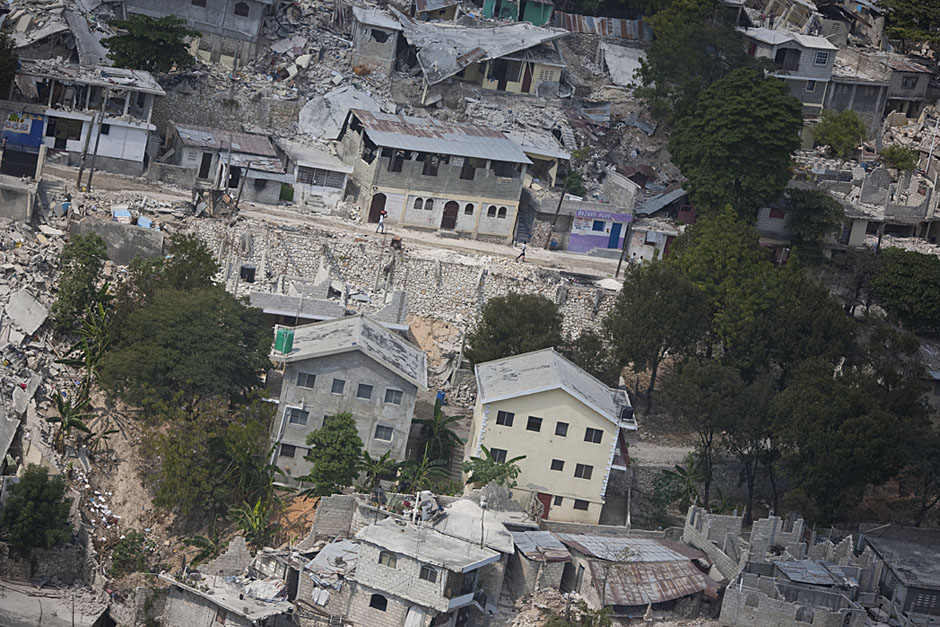
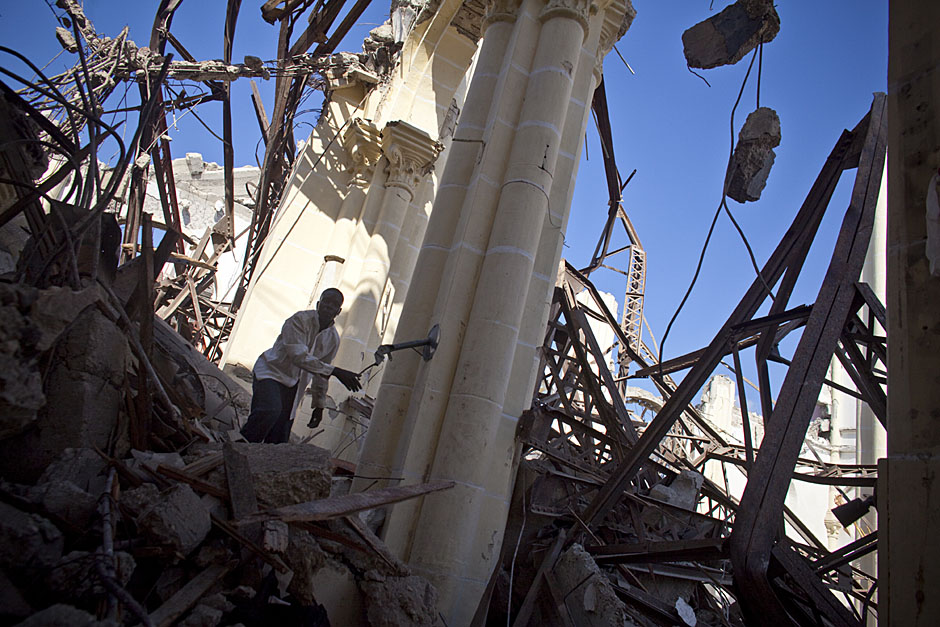
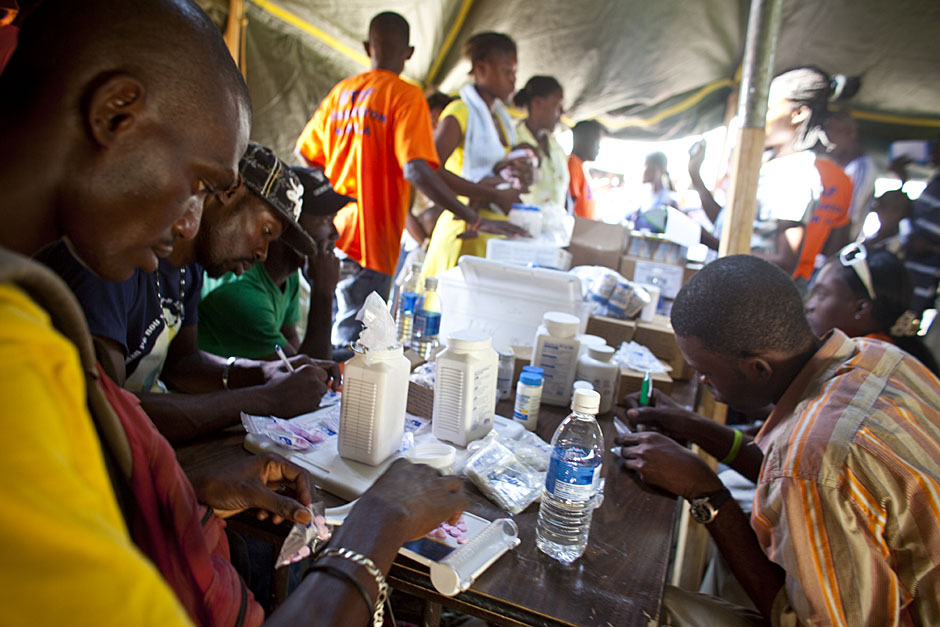
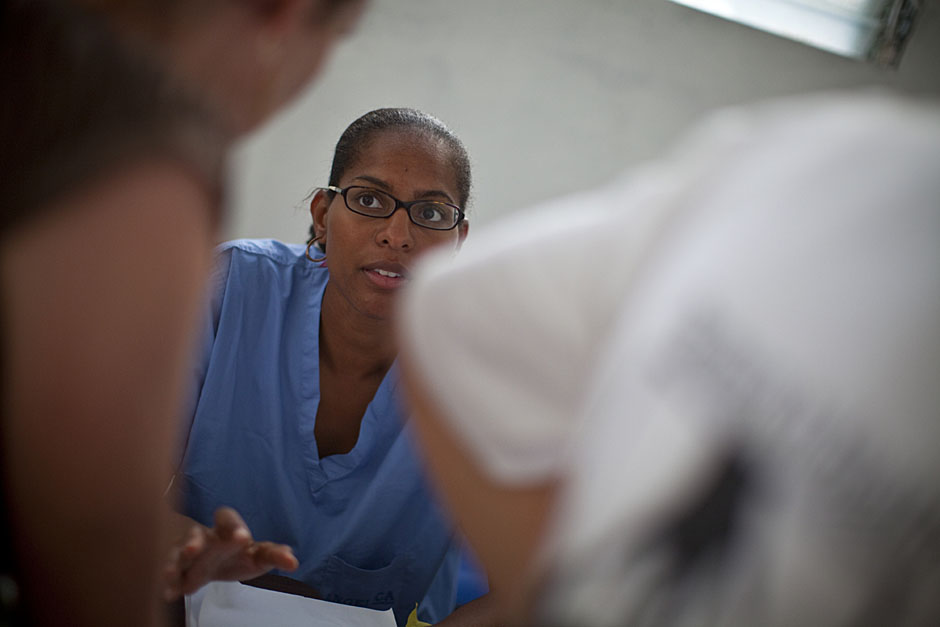
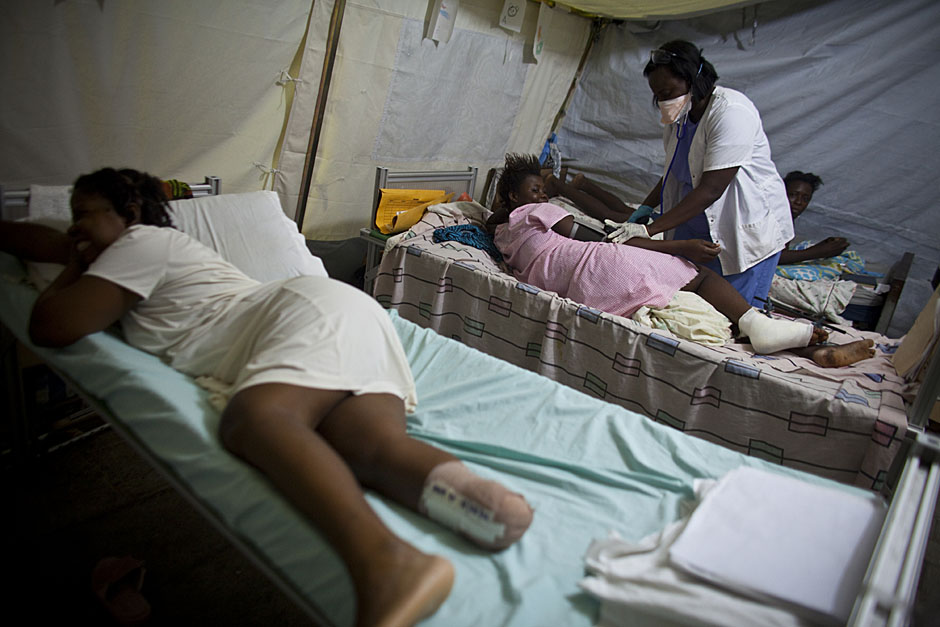
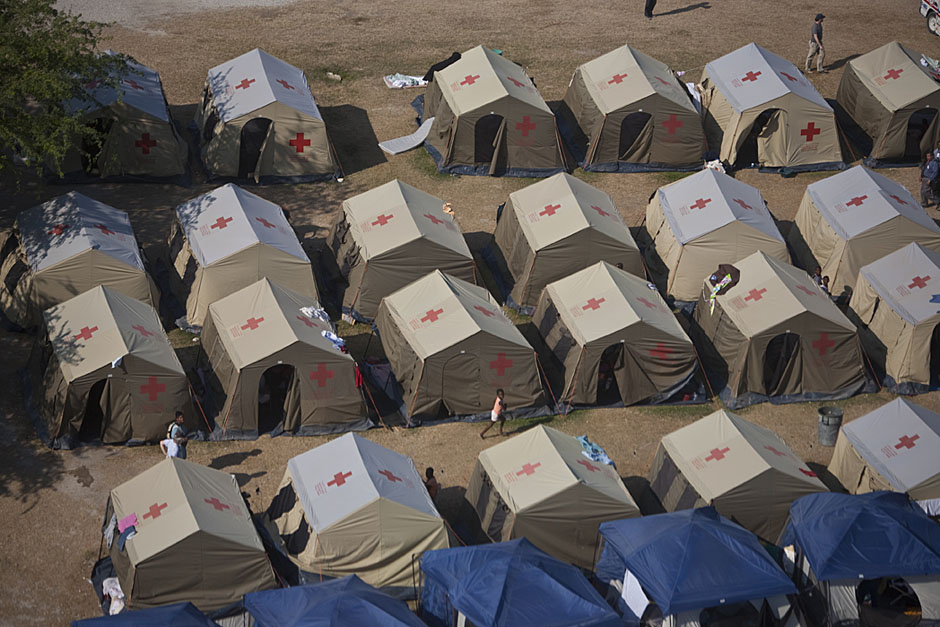
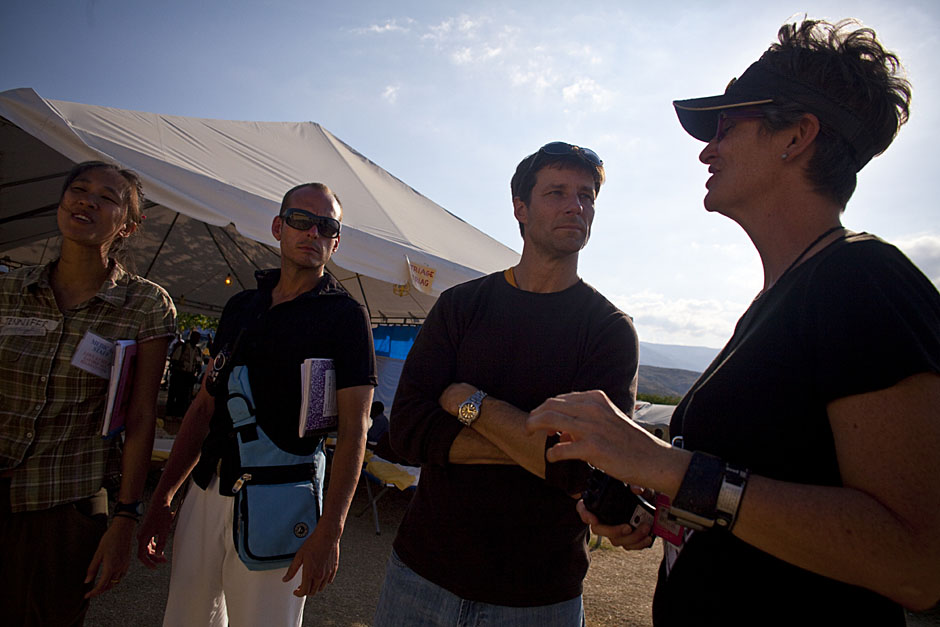
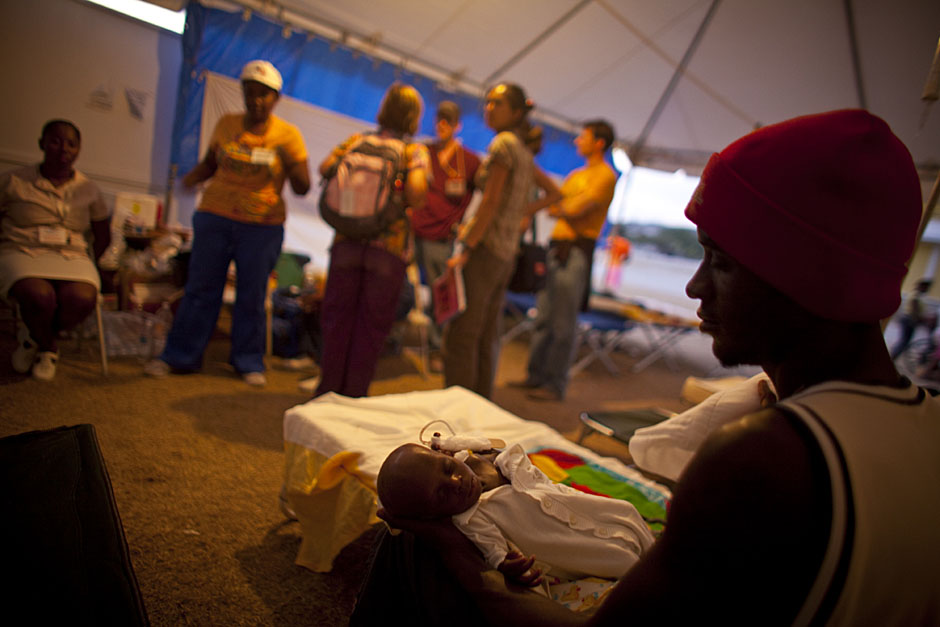
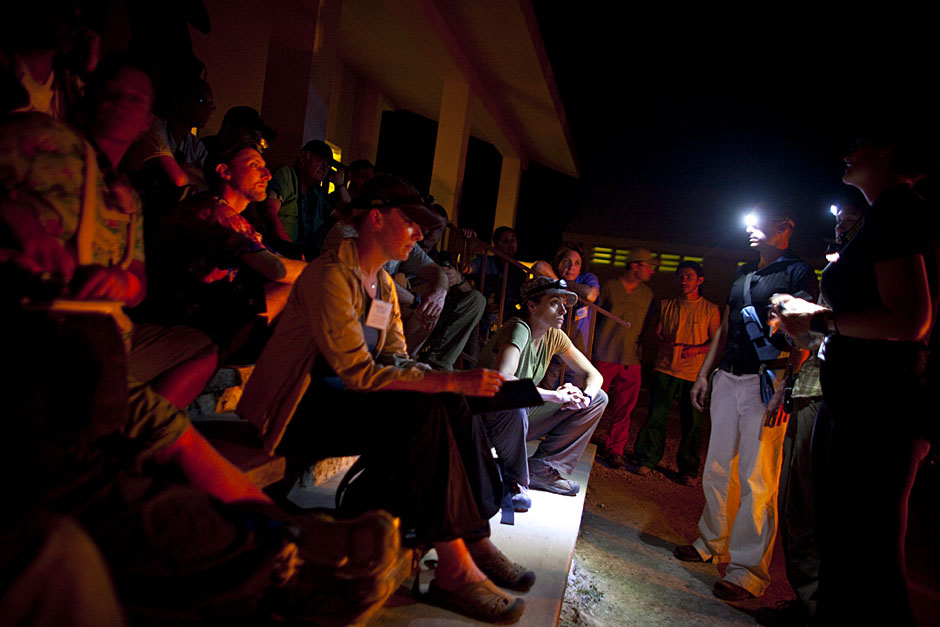
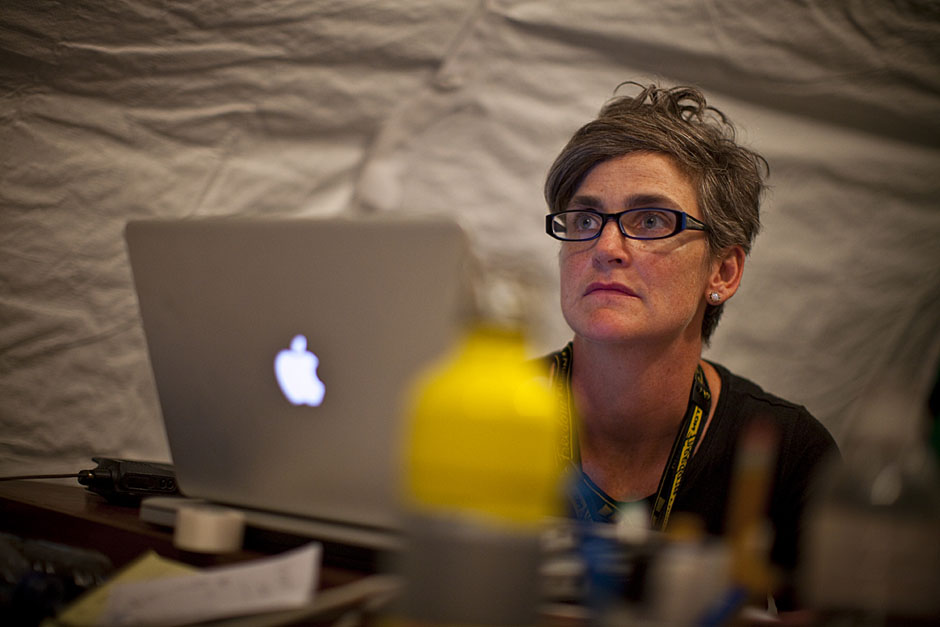
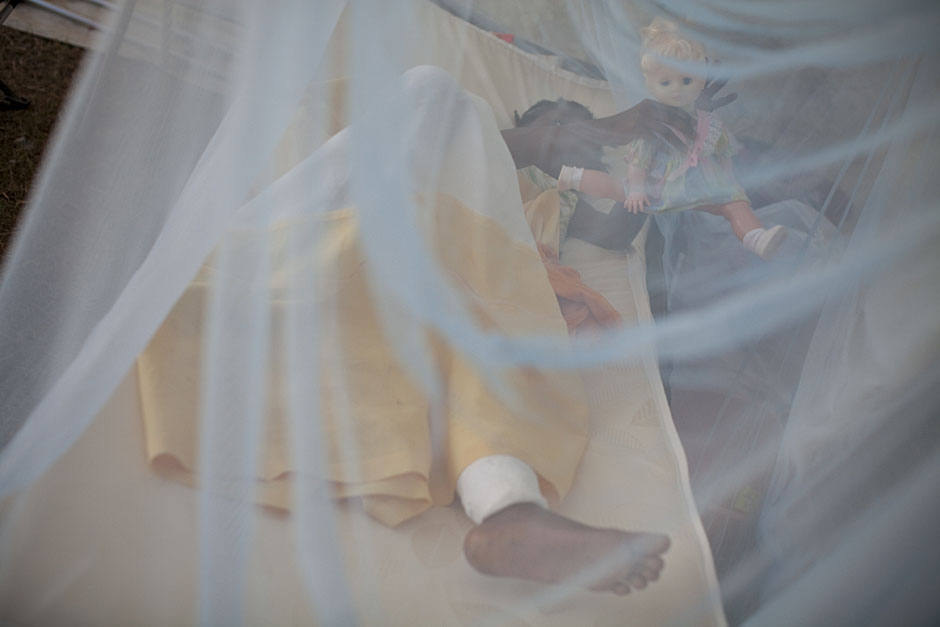
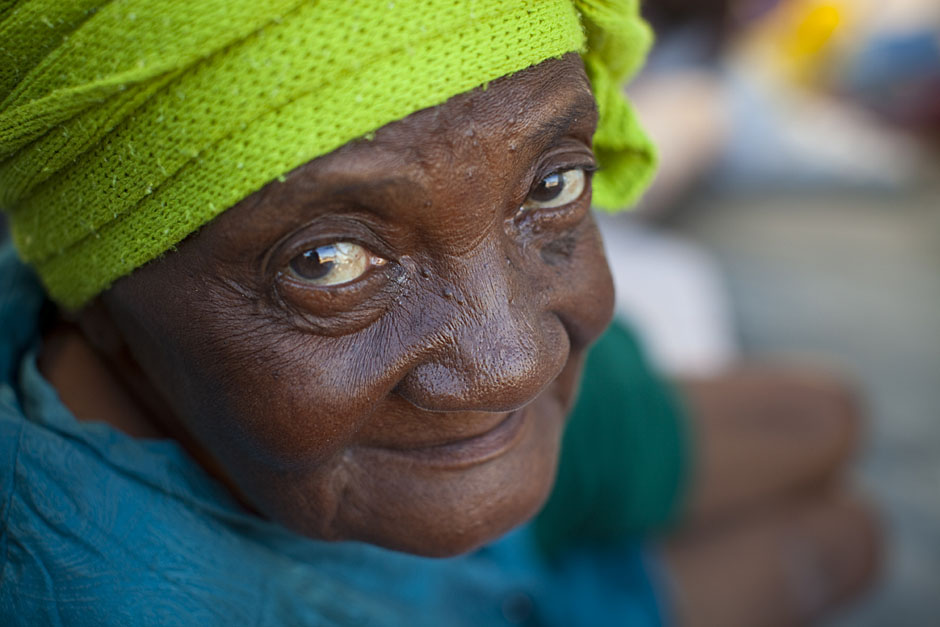
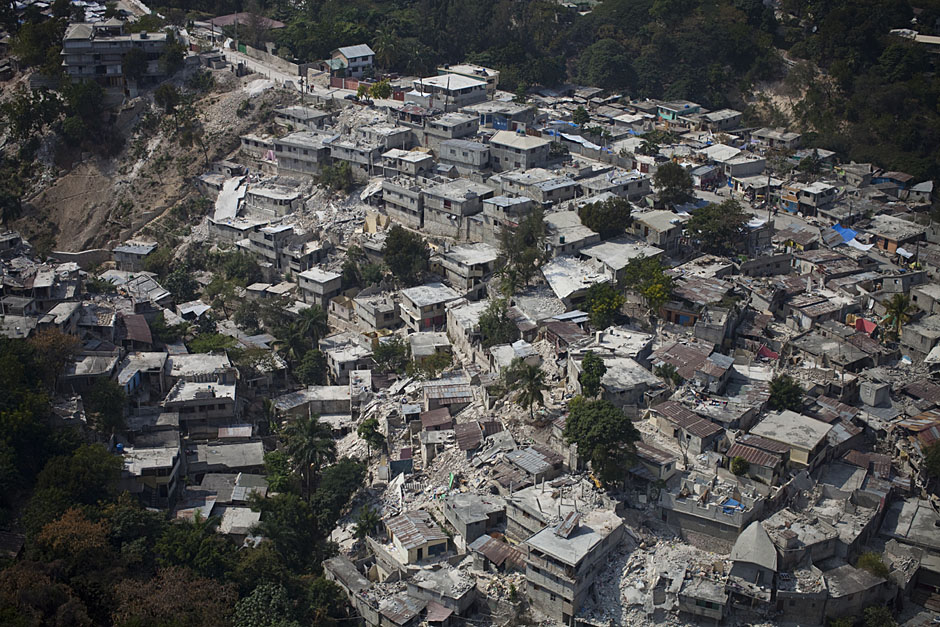
    The world mobilized to help Haiti after that country suffered the deadliest earthquake in this hemisphere in over a century on Jan. 12, 2010. Faculty, staff, and other members of the Harvard community, including affiliates of Partners In Health and the Harvard Humanitarian Initiative, played a pivotal role in the worldwide effort to provide aid.


  • Triple appointment for historian

    Award-winning historian Annette Gordon-Reed, J.D. ’84, will become a professor at Harvard Law School (HLS) and a professor of history in the Faculty of Arts and Sciences in July. She also will become the Carol K. Pforzheimer Professor at the Radcliffe Institute for Advanced Study.

    Gordon-Reed — recipient of the National Book Award, the Pulitzer Prize in history, and a National Humanities Medal — comes to Harvard from the New York Law School, where she was the Wallace Stevens Professor of Law, and from Rutgers University, Newark, where she was the Board of Governors Professor of History. She served as the Charles Warren Visiting Professor of American Legal History during the fall of 2009 at Harvard Law School. During this spring term, she served as a visiting professor of law at New York University School of Law.

    Gordon-Reed said, “I am enormously pleased to become a part of the Harvard community once again. I look forward to working with the students and faculty members at the Law School and in the History Department, and to experiencing the rich interdisciplinary environment at the Radcliffe Institute.”

    “I celebrate the fact that Annette Gordon-Reed has accepted our invitation to join the Harvard Law School faculty,” said Dean Martha Minow. “Her extraordinary scholarship combines intensive archival research, brilliant lawyerly analysis, and tremendous historical imagination, as well as a gift for writing riveting prose. Long proud of our own graduate, we here at the Law School are delighted she will join our faculty and also participate in the life of the University through affiliations with Radcliffe and the History Department. Colleagues, students, and aspiring scholars rejoice over the chance to work with her as she deepens historical understanding of law, slavery, and the human experience.”

    Barbara J. Grosz, dean of the Radcliffe Institute for Advanced Study, said, “I’m thrilled that Annette Gordon-Reed will join us as the Carol K. Pforzheimer Professor at the Radcliffe Institute.” Reflecting on Gordon-Reed’s interest in the institute’s cross-disciplinary community of scholars, scientists, and artists, Grosz said, “I very much look forward to her participation in the institute’s Fellowship Program and the activities of our Academic Engagement Programs.”

    “I’m very pleased that a scholar of Annette Gordon-Reed’s ability and depth will be joining the History Department,” said Michael D. Smith, dean of the Faculty of Arts and Sciences. “And I am excited that Harvard College students will have the opportunity to learn directly from an award-winning historian and renowned legal scholar.”

    Gordon-Reed is the author of  “Thomas Jefferson and Sally Hemings: An American Controversy” (1997), which examines the scholarly writing on the relationships between Thomas Jefferson and Sally Hemings. The book was a finalist for the annual Library of Virginia Awards. Gordon-Reed’s most recent book, “The Hemingses of Monticello” (2008), which traces the lives of four generations of a slave family, won numerous awards, including, in addition to the National Book Award and the Pulitzer, the Society for Historians of the Early American Republic Book Award, the George Washington Book Prize, the Anisfield-Wolf Book Award, the New Jersey Council of the Humanities Book Award, the Frederick Douglass Book Prize, the Library of Virginia Literary Award, and the Southern Historical Association Owsley Award. The book was also a finalist for the 2009 National Book Critics Circle Award. Two more books, “Jefferson: A Reader on Race” and “Andrew Johnson,” are forthcoming.

    Gordon-Reed is also the co-author of “Vernon Can Read!: A Memoir” (2001), which was written with Vernon Jordan Jr. and received the Anisfield-Wolf Book Award. She is editor of “Race on Trial: Law and Justice in American History” (2002).

    Gordon-Reed is a member of the Council of Foreign Relations. Prior to becoming an academic, she was counsel to the New York City Board of Correction from 1987 to 1992. In this capacity, she helped to formulate policies, grievance procedures, and legislation affecting inmates. After graduating from HLS, Gordon-Reed was an associate at Cahill Gordon & Reindel in New York.

    While a student at Harvard Law School, Gordon-Reed served as an editor for the Harvard Law Review. In addition to her J.D., she holds an A.B. from Dartmouth College in history and an honorary doctor of letters from Ramapo College. She will receive an honorary degree from the College of William & Mary in mid-May.

  • The nature of reality

    A panel discussion with photographer/artist/essayist Allan Sekula quickly turned into a discourse on the nature of reality, a direction that fazed neither those presenting the conversation nor those listening in Emerson Hall.

    Indeed, Sekula, who explores questions of capitalism, globalization, and social reality in a variety of media, characterized his approach as “realism in a time of lies” during a conversation April 28 with Homi Bhabha, the Anne F. Rothenberg Professor of the Humanities and director of the Humanities Center, and Benjamin Buchloh, the Andrew W. Mellon Professor of Modern Art.

    As part of “The Church of What’s Happening Now” event sponsored by the Humanities Center and the Harvard Art Museum, Sekula showed clips from a film-in-process and discussed his seminal works such as “Fish Story,” an exhibit and book exploring maritime issues, “Waiting for Tear Gas,” about the Seattle protests against the World Trade Organization, and “This Ain’t China,” a riff on factory work.

    Sekula’s work “resists nostalgia and heroism in an attempt to portray the quotidian horror of what it takes simply to survive,” Bhabha said.

    In his remarks, Sekula noted with horrified glee the President George W. Bush-era attacks on the so-called “reality-based community.” He asked, “What does it mean that we live in a culture that thinks it can bomb peasants into modernity?”

    Reality is even an issue within art world. “One of the problems of the latest in modernism is the suppression of realism,” Sekula said. “And yet there is another reading of modernism which allows us to see realism as a kind of marginalized and potentially subversive strand within modernism.”

    Now based at the California Institute of the Arts, Sekula, the recipient of a Guggenheim fellowship, began his artistic career within the conceptual art movement, which is now much derided.

    “As much as you attack, contest, criticize, and denigrate that legacy, I think it is still interesting for us to think about that exchange moment from which you emerged in the late 1970s,” Buchloh said. Sekula, he noted, was among those who “redefined the history of photography in terms of our thinking on photographic representation.”

    Buchloh particularly cited the artistic performance by Sekula in which he threw stolen raw steaks onto a busy California freeway. Also, Bhabha told Sekula that raw meat or rawness “seems to be a real motif of your work.”

    Sekula seemed to regard the meat incident as an act of juvenile exuberance, an effort to create a “profane act.” But, he added, he recently saw the movie “The Wrestler,” and was struck with how the broken-down fighter played by Mickey Rourke said, “I’m just a used-up hunk of meat. The film is really about that.”

    Seeing in the audience Robin Kelsey, the Shirley Carter Burden Professor of Photography and director of graduate studies in the History of Art and Architecture Department, Bhabha invited him onto the stage. Kelsey asked Sekula why he moved away from still photography into filmmaking.

    Sekula said that he had to switch to film to capture what he was witnessing. He found that he could not, for example, capture the frenetic nature of a particular Japanese fish market with still photos. “I borrowed a camera and read the manual at 1 in the morning, and I started filming at 3 in the morning.”

    An audience member, Coco Segaller, a student at the School of the Museum of Fine Arts in Boston, asked Sekula to distinguish reality from among his work’s social, artistic, and political narratives.

    Sekula, only half joking, responded, “You want an objective definition of reality?”

    Segaller tried again: “What is the reality in the realm of conflicting narratives?”

    “One way to answer is to say what the lies are,” Sekula said. “You can only make your own story. You can only make your own external truth.”

    But, he added, turning serious, “The biggest lie is the lie of marketization — that everything can be marketized.”

    Bhabha singled out Sekula’s 2006 movie “A Short Film for Laos,” in which “very simple acts of survival, even transitional moments, are always so central.” Sekula’s work can be interpreted as metaphor on many levels, “yet somehow when you talk, people feel that it is much more object-driven or content-driven,” Bhabha said.

    “Well, you should never trust what an artist says,” Sekula replied, to great laughter.

  • Hogarty named Vice President for Campus Services

    Lisa Hogarty, a seasoned administrator with experience in academia and the health care industry, has been named Vice President for Campus Services at Harvard University.

    “This position demands an executive who can manage the daily operations of a large institution while pursuing a strategic vision that bolsters the University’s teaching and research mission,” said Executive Vice President Katherine N. Lapp, who announced Hogarty’s hiring today (April 29). “Lisa has the perfect mix of leadership skills for the job.”

    Hogarty comes to Harvard after nearly eight years at Columbia University, where she served most recently as chief operating officer of the Columbia University Medical Center.

    She assumes responsibility of a newly configured department with 1,600 employees and oversight of essential operations at the University’s Schools and central units, as well as its emergency management program.

    “I am thrilled to join Katie Lapp’s team,” said Hogarty, who added that advancing efforts to integrate procurement and increasing coordination among the Campus Services units would be among her early priorities.

    “The most impressive thing to me is that many of these departments really perform at the best-practices standard, if not the gold standard,” she said. “How do we leverage that exceptional service and take advantage of the real leadership talent in place so that we can take it to the next level?”

    The Vice President for Campus Services reports to the Executive Vice President and oversees Harvard University Hospitality and Dining Services, Harvard Real Estate, and the University Operations Center. Hogarty also will have responsibility for the administrative and financial operations of Harvard Magazine.

    As part of her duties, she will manage Environmental Health and Safety and lead the University’s Incident Support Team, a cross-departmental group of senior managers charged with coordinating activities in response to any campus crisis.

    Hogarty joined Columbia in 2002 as executive vice president for student and administrative services, a role in which she oversaw the construction of a new campus teaching and learning center, redesigned many of the university’s business processes, and led the implementation of an electronic health record system.

    She was named chief operating officer of the Medical Center in 2007 and played a key role in restructuring critical areas of university operations. During her tenure, she oversaw the creation of a combined help line for information technology, human resources, and facility support, and the inauguration of an online application process for student housing.

    Prior to joining Columbia, Hogarty oversaw hospital operations, capital projects, procurement, and emergency preparedness for the Continuum Healthcare system in New York City and worked at Mount Sinai Medical Center. She holds a master of science degree from New York University and a bachelor of fine arts from Colby-Sawyer College.

  • A key player on the field and off

    Ask Melissa Schellberg ’10 why she is so passionate about community service, and she won’t give you a calculated plan or vision for change. She’ll keep it simple.

    “I’ve always liked helping people, but I never really thought of myself as one of those people who will save the world,” laughed the Harvard softball co-captain. Even so, she has brought about change.

    Sensing a need for more service opportunities for Harvard athletes, as service chair of the Student-Athlete Advisory Council (SAAC) last year, Schellberg worked with Nathan Fry, associate director of athletics, to create a community service coordinator position, in order to better match Harvard student-athletes with activities to deepen their community impact.

    “It was suggested that teams do community service, but never required [for teams] unless the coach is really on them,” Schellberg said. “But coaches have a lot to do, and I wanted to help out, meet with coaches, and be the facilitator and coordinator of their projects.”

    With the support of Fry and Harvard Athletics, she created and served in the role, developing relationships with nonprofit groups in the Boston area to create a more structured program of service opportunities for Harvard’s varsity teams.

    Last year, one of Schellberg’s collaborative initiatives with SAAC was “Bench Press for Breast Cancer,” a fundraising event that invited all 41 varsity teams to participate. The event raised more than $6,000 for the Susan G. Komen Breast Cancer Foundation to support cancer research.

    It wasn’t long before word spread about Schellberg’s service work. Athletes for a Better World took notice, and this past December she was named one of six collegiate finalists nationally for the prestigious Coach Wooden Citizenship Cup, which is given to the student athlete who has “made the greatest positive influence in the lives of others.”

    With her success off the field and within the athletic community, it would be easy to gloss over the impact the Las Vegas native has had on Harvard softball as a whole.

    Schellberg, who has started nearly every game of her college career, has been one of Harvard’s top offensive and defensive contributors on the diamond. As a freshman in 2006, she finished fourth on the team with a .311 batting average, and helped Harvard to its first Ivy League championship in five years. This season she is third on the team in hits, second in fielding percentage, leads in fielding assists, and is on pace to finish fourth all-time in assists.

    “She’s been obviously an incredible member of the team … a very strong defensive third baseman, a clutch hitter for us, a very focused player, works hard, and is very diligent in her skill work,” said Harvard head coach Jenny Allard, who is in her 16th season with the Crimson.

    At this point in the season, the Harvard softball team is in the driver’s seat for an Ivy League championship push, and one of the key reasons is the senior slugger, who will trade in her batting helmet and jersey for a cap and gown in less than a month.

    “I honestly can’t believe it’s ending. I can’t believe I have, maximum, a month left to play college softball,” said Schellberg, who has been playing the game since she was 9. “It’s been a really good ride. And I know when I look back on it, it’s going to be full of really fond memories, and I’m not going to have any regrets.”

    “In my career, Melissa’s been one of the players who has impacted the totality of the program the most,” said Allard. “In all aspects, Melissa ranks high in terms of what she’s been able to do here.

    “My comment to all of my players, and specifically to every class, is to always leave the program better than the way you found it. I think Melissa is a reigning example of that. She’s looked for ways to make the team better, have people grow and develop, and I think that’s a characteristic of a great leader.”

    And so, although Schellberg may not have changed the world in her four years at Harvard, she can certainly say she’s left her mark.

  • Teaching as ‘a secular pulpit’

    When David Damrosch was in ninth grade, a teacher gave him a copy of the novel “Tristam Shandy” because she thought it would appeal to his sense of humor. “I was blown away by it,” he said. “Tristam talks at one point about his favorite writers, and if he’d said Defoe and Chaucer, I probably would have become an English professor like my older brother Leo, who’s on the faculty here.”

    Instead, Tristam mentioned “my dear Rabelais and my dearer Cervantes.” Damrosch, just 15 at the time, thought, “I don’t know who these guys are, but if Tristam likes them, I’ll like them too.” He went out and bought some Penguin Classics and “fell in love with the broader panorama of literature.”

    He especially liked satirical novels, so when he saw “The Divine Comedy” listed in the back of one of those Penguin Classics, he went out and grabbed a copy. “I soon found Dante wasn’t quite the thigh-slapper I was expecting,” he said, “but I was hooked.”

    By the time he arrived at Yale as an undergraduate, his interests had expanded beyond European literature to ancient languages and cultures. “I’m a preacher’s kid with Jewish roots in the family,” said the Episcopal priest’s son, “so I was interested in the Bible.” He also had a roommate who signed up for an Egyptian archaeology course, to which Damrosch tagged along. “I was really interested in languages,” he said, “and thought: Here’s a chance to learn a language that doesn’t work like the languages I know.” He eventually dipped his toes into Middle High German, Old Norse, and Aztec poetry, finding that once he fell in love with the literature, he tended to want to learn more about the language. He has studied 12 languages, so far.

    “The most interesting case was the Nahuatl language” spoken by the Aztecs. “In graduate school, I found the language was being offered in the anthropology department. The class’s enrollment doubled when I signed up, and my director of graduate studies in comparative literature threatened to throw me out the window when I asked for course credit.”

    The adviser, he adds, thought “some hiring committees might feel I was just doing arabesques around the literary tradition.”

    At the time, he wasn’t sure whether he’d go into academia or become a writer or Foreign Service officer. The path he ultimately chose has provided the best of all three worlds, allowing travel and immersion in foreign cultures, time to write, and the chance to open the world of comparative literature to young people.

    “To me, teaching is like a secular pulpit,” said Damrosch, who is a professor of comparative literature and the department chair of literature and comparative literature in the Faculty of Arts and Sciences. “I have a very evangelical sense of literature as a mode of experiencing the world as aesthetic pleasure that I love to communicate to students.”

    His most recent title was “The Buried Book: The Loss and Rediscovery of the Great Epic of Gilgamesh,” and he’s at work on another popular nonfiction title about the cultural history of the conquest of Mexico.

    After spending almost three decades at Columbia University, in his hometown of Manhattan, Damrosch decided to make the move to Harvard when the department invited him to help with its new, more global focus. “In terms of being at Harvard,” he said, “it’s both a matter of helping build a more global department and also integrating the undergrad literature concentration and the graduate comparative literature program. We’ve now created a truly unified department that I think represents global comparative literature better.”

    It didn’t hurt that his older brother, Leo Damrosch, has been at Harvard since 1989, or that his middle brother, Tom, is a parish priest in western Massachusetts, but scholarship was the real draw.

    “Every quarter century or so, it’s nice to try something fresh,” he said. “I felt there was a chance to do some innovative work here with some very, very collegial colleagues and excellent students.”

  • Living the lessons we have learned

    Engraved on a large slate plaque affixed to Matthews Hall in Harvard Yard is the story of Native Americans’ past and the narrative of our future. That is the site of the original Indian College, Harvard’s first brick building, where more than 350 years ago Caleb Cheeshahteaumuck and Joel Iacoomes of the Wampanoag Tribe of Aquinnah on Martha’s Vineyard lived and studied alongside English students. Caleb was the first Native American to graduate from Harvard, in 1665.

    The Indian College also housed the College’s printing press, on which the first Bible in North America was printed. The Bible was a translation into the Algonquian Indian language.

    Behind the plaque’s inscription is a faint, incised representation of a turtle, a powerful symbol in Native American creation stories. The turtle represents many things. One is a creative source, the most powerful force we possess. The turtle also embodies a sense of being well-grounded, self-contained, with a steady approach to life. These qualities resonate with many of the lessons learned at Harvard.

    I soon will be an unlikely graduate of the University. My grandfather, a member of the Standing Rock Sioux Tribe in North Dakota, experienced a precarious childhood. Grinding poverty, disease, and despair had taken root across the reservation in the early 1900s. Often there was not enough food or fuel. His brother, along with thousands of other Indian children, was taken from his family and sent far away to an Indian boarding school in Carlisle, Penn. Boarding schools were part of the federal government’s assimilationist policies aimed at severing Indians’ ties to the land.

    Like so many Indian children, my grandfather grew up with his feet in two worlds. One foot was in the Indian world, rich with traditions and ceremonies, a language that nurtured his spirit and heart, and a homeland that gave him a sense of place. His other foot was in the fast-paced white world of trains and cars and different habits. Like so many Indian children of that time, he grew up confused about his identity and indefinite place in American society.

    I delved into this history as a law student. It was very disturbing to learn that two generations later things had not greatly improved in Indian country. The wholesale removal of Indian children from their homes and the displacement of their families continued well into the 1970s. This has been the most tragic aspect of Indian life today. Children everywhere deserve to grow up in a safe, stable, and nurturing environment.

    I decided then to work for the rights of Native American tribes to be self-determined and self-sufficient, and to help improve conditions on Indian reservations. This work, like development work throughout the world, requires a turtle approach: One must be creative, well-grounded, and have steadfast determination, even in the face of daunting obstacles or discouragement. (After graduation, I plan to return to Vermillion, S.D., where I teach federal Indian law and direct the Institute of American Indian Studies at the University of South Dakota.)

    Constancy served Caleb well at Harvard. Despite the hardships of being away from his family and the contradictions of living in the white man’s world, he earned honors in his studies. Sadly, his life, like Joel’s, was cut short by the perils of the time. After Caleb graduated, there was no identifiable Native American presence at Harvard for more than 250 years. Now, about 120 Native American students from 40 tribes study at Harvard every year.

    Many Native American students at Harvard still struggle with the contradictions that Caleb and Joel faced. We still have our feet in two worlds. One day we are in our jeans studying economic theory, and the next we are in our jingle dresses dancing at the powwow. Soon we will be in the Yard receiving our degrees, and shortly after we will be fishing or hunting to feed the community. What matters is that we have persisted — that our language, traditions, and culture have endured. While our time at Harvard has given us a sense of place here, what we have learned will extend far beyond these ivy-covered walls. It will reach across all of our borders and become a part of our communities.

    Culture mattered then and matters today. The diversity of our cultures is the underpinning of our human bonds, and of our intolerance and prejudice as well. Caleb and Joel lived and studied alongside their ethnic English classmates at a time when the two cultures disputed one another’s right to exist on the continent. Three centuries later, we persist, mostly intact, and determined as ever.

    Diversity abounds at Harvard today. Diversity in race and ethnicities, of different religious beliefs and spiritual practices, and in widely varied talents and interests. This diversity, spurred many years ago by Caleb and Joel, not only invigorates the vitality of our learning experience, it cultivates a broader and more insightful view of the world.

    The lessons gleaned from the plaque affixed to Matthews Hall continue to inspire us to know the human value of the world and to place ourselves within it. There is certainty in the lessons we have learned from the past, of being creative, well-grounded, and steadfast. Let us not linger, for there is no time to spare. So let us begin.

  • How to engineer change

    Editor’s note: This is the fourth in an occasional series of stories on the measures that individual Schools at Harvard are using to reduce greenhouse gas emissions.

    Harvard’s School of Engineering and Applied Sciences (SEAS) is a rigorous world of applied mathematics, materials science, bioengineering, and other demanding disciplines.

    But it is also a world in which nearly every common space includes green laminate signs or motion-control sensors to turn off lighting. The collective message: Be green.

    Turn off the lights, wear a sweater, shut the sash on your fume hood. It’s not rocket science. Or, as they say at SEAS: It’s not quantum physics.

    But simple steps like these — along with exacting building standards and other technical measures — have helped SEAS to reduce its greenhouse gas (GHG) emissions 11 percent from fiscal 2006 to fiscal 2009. That kind of progress also owes a lot to University-wide measures to save energy, said Edward P. Jackson, SEAS director of physical resources.

    That number puts the School on track to meet the University’s ambitious GHG emissions goal of a 30 percent reduction by 2016, inclusive of growth, with 2006 as the baseline year.

    SEAS tightened the University-wide standard for temperature set points by adjusting heating and cooling systems to start later and finish earlier. “We did it, and waited for complaints,” said SEAS manager of facilities Donald Claflin. “And there weren’t many.”

    Saving energy is everybody’s business, from big energy systems to students who pause to shut off the lights. “It’s a lot of little pieces,” he said. “Everybody’s involved. Everybody’s a player.”

    On the technical side, SEAS has installed efficient lighting in its five buildings, and on the two floors it leases at 60 Oxford St. It has also implemented an automated energy management system in the Maxwell Dworkin building, and examined its operating system through the lens of energy savings. By this fall, SEAS will have motion-detection sensors on lights in all of its operation.

    “It’s many small steps,” said Fawwaz Habbal, SEAS executive dean. “Little drops of water on a stone will eventually make a mark.”

    This kind of effort — assess, innovate, invent — is perfect for engineers, he added. “You give us a problem and we solve it.”

    SEAS students, faculty, and staff also are exploring other pathways to sustainability. Some are personal-scale pathways. Custodian Joanne Carson sets aside coffee grounds in a composting bowl in the kitchen at Pierce Hall. People take them home for their gardens, she said.

    Other pathways are on a bigger scale. For one, in fiscal 2009, SEAS recovered 60 percent of its recyclable waste, piling up 73 tons for the blue bin.

    All SEAS buildings are covered by a green cleaning program that minimizes chemical use. And four LEED projects are under way at SEAS; one more is complete. (LEED stands for Leadership in Energy and Environmental Design, a professional U.S. rating system for sustainable building.)

    The SEAS Computing and Information Technology office has already been converted from 2,000 square feet of lounge space to three energy-efficient offices in Maxwell Dworkin.

    At SEAS Northwest Labs B1, a LEED project now under construction will bring together researchers in medicine, engineering, biology, and applied sciences.

    Renovations are ongoing at the SEAS Vlassak Lab and the Weitz Lab, both in the Gordon McKay Laboratory of Applied Science on Oxford Street. LEED-standard renovations are also taking place in two engineering science laboratories at 58 Oxford St.

    “Labs are really challenging,” said Habbal. At SEAS, they are energy-intensive hives of complicated gear, from computers, fume hoods, and imaging systems to quantum-cascade lasers.

    In addition, SEAS researchers there are looking into new sources of energy, African water resources, efficient computing, carbon sequestration, and the chemistry of climate change.

    Sustainability, said SEAS administrative director Jennifer Casasanto, “is part of our dialogue.”

    Sustainability is also about encouraging ideas. That means student involvement.

    SEAS is part of an arts-science collaboration that helps students and faculty turn their ideas — many of them about green technology — into practical reality. The Laboratory at Harvard, located in the Northwest Science Building, is run by SEAS faculty member David Edwards, Gordon McKay Professor of the Practice of Biomedical Engineering, along with SEAS staff member Hugo Van Vuuren.

    A couple of ideas have already reached reality. One is the sOccket, a portable energy-making device shaped like a soccer ball. Kick, dribble, or throw it around, and the sOccket — rigged with inductive coil technology — stores energy. Prototypes have been tested in South Africa and Kenya.

    Also, SEAS student Henry Xie ’11 developed the Harvard Reuse List, an online supply swap for students and staff.

    Traditional classroom work touches on sustainability, as well. The oldest such class — and “a capstone experience for students,” said Habbal — is Engineering Science (ES) 96.

    Students take on real-world issues at Harvard, then produce book-length recommendations for action. Past examples include energy use at Pierce Hall, the Blackstone complex, and Harvard athletic facilities and Houses.

    SEAS classes in applied mathematics, environmental engineering, and climate studies deal with sustainability too.

    It’s an issue that requires cooperation, awareness, collective action, and intensive study. “The bottom line,” said Habbal, “is mindset.”

  • Getting a bird’s-eye view of the past

    Sometimes, you have to step back to see the big picture.

    That’s the lesson that archaeology students are sharing with the public through a new exhibit at the Peabody Museum of Archaeology and Ethnology.

    The exhibit, “Spying on the Past: Declassified Satellite Images and Archaeology,” opens April 29 with a 5 p.m. reception, presenting four case studies of how satellite images can illuminate archaeologically important landscape features that might not be visible from the ground. The examples are from sites in Syria, Iraq, Iran, and Peru. They reveal evidence of cities, trackways, irrigation canals, and even traces of nomadic travels.

    Ruth Pimentel, a student in the Anthropology Department’s sophomore tutorial in archaeology, said she’s thrilled to be able to share the excitement she felt in learning how to use satellite photos as archaeological tools.

    “While I was doing the research this semester, I kept seizing my hapless roommates, showing them pictures on my computer and talking them through the method, just because I couldn’t keep to myself how cool it was,” Pimentel said. “Having gallery space in the Peabody means everyone in the class will get to explain how awesome and exciting this material is, and with much bigger pictures.”

    The students’ work stems from more than a decade’s effort by Jason Ur, associate professor of anthropology, who has long used satellite photos to track elusive details of ancient civilizations and interpret them to gain new understanding of old ways of life (detailed in features such as irrigation canals) and connections between communities (elucidated by long-lost roadways).

    “The way humans modify their landscapes often has a pattern or regularity, whether intentional or unintentional, that cannot be appreciated from the ground,” Ur said. “I find the emergent order of networks of tracks or patterns of irrigation fields to be almost hypnotic from above.”

    Guided by Ur, students in the sophomore tutorial in archaeology first learned the techniques of analyzing satellite photos and then applied them to several archaeologically rich areas. Pimentel worked on the Assyrian Irrigation Project, which focused on northern Iraq near the Turkish border. She examined photographs of the remains of canals built under Assyrian emperors before the empire crumbled in the seventh century B.C.

    “We propose that the canals were partly displays of power — the extra water allowing for elaborate royal gardens, for example — and partly large-scale efforts to support agriculture for the increasingly concentrated population,” Pimentel said. “The canals are now mostly obscured by modern farms and towns. But on the satellite images, we’re able to see faint lines on a huge scale across the landscape, evidence of the massive earthworks once there.”

    Pimentel said some of the features were so faint that she had to train her eyes to detect them in the photos. There were some photos, however, in which the canals were immediately evident, she said.

    “We get excited about those images. They’re our showstoppers,” Pimentel said.

    In conducting his own research, satellite photos are just a starting point for Ur. He scours the images for patterns and follows that examination by traveling to a site to inspect the features of interest from the ground. He then goes back to the photos, reinspecting them with a new understanding of the landscape. There are times when, looking at the photos, features are difficult to discern, but there are other times when it’s clear something’s there, making interpretation the challenge.

    Ur draws photos from various sources. He even hails Google Earth as an excellent tool for an armchair archaeologist because it can fly you to the Great Pyramids and Stonehenge without leaving the office. Most valuable, though, are older photos, such as those from the CORONA spy satellites, declassified in the 1990s and available from the U.S. Geological Survey. Because CORONA flew in the 1960s and 1970s, the photos are less expensive than images from modern satellites, but Ur said even more important is that they allow him to look back in time. Forty years ago, there was much less development in some key areas, making features visible that might be obscured now.

    For visitors to the gallery, Ur said he hopes they understand that archaeology is more than just digging and more than just ancient cities. And Ur and his students said they hope viewers will understand that development is endangering many landscapes.

    “I hope visitors come away learning something new about the ancient cultures of Peru, of course, but also that archaeological sites are fragile places in a changing landscape,” said Adam Stack, a graduate student in archaeology who took the course and studied the Chan Chan site on Peru’s north coast. “It will take more than archaeologists to protect the past.”

  • HKS establishes professorship on the international financial system

    With the world’s attention focused on global financial reform and responsibility, the Harvard Kennedy School (HKS) is establishing a professorship dedicated to addressing the challenges of the international financial system. Launched with gifts totaling $4 million, the professorship is named for international financial consultant and HKS alumnus Minos A. Zombanakis, M.P.A. ’56, A.M. ’57. The Minos A. Zombanakis Professorship of the International Financial System will inaugurate a new area of interdisciplinary study at the Kennedy School.

    The Zombanakis Professorship will support a professor and visiting professors of practice whose research and teaching illuminate major policy issues and challenges of the international financial system and serve as a platform for addressing the international monetary system and financial regulation, the role of multilateral institutions including the International Monetary Fund and World Bank, and vehicles for international cooperation such as the G-20 (Group of Twenty Finance Ministers and Central Bank Governors) forum. The Harvard University Professorship Challenge Fund has provided a $1 million matching contribution.

    “Harvard Kennedy School is deeply grateful to Mr. Zombanakis and his many friends for this endeavor,” said David T. Ellwood, Scott M. Black Professor of Political Economy and dean of HKS. “Addressing the global financial challenges of today is a top priority for policymakers throughout the world. In establishing this timely professorship, the Kennedy School will better prepare and teach future leaders and professionals as they grapple with the complexities of global markets, regulation, and international finance.”

    To read the full story, visit the Harvard Kennedy School Web site.

  • Murty family gift establishes Murty Classical Library of India series

    Harvard University and Harvard University Press (HUP) announced recently that the Murty family of Bangalore, India, has established a new publication series, the Murty Classical Library of India, with a generous gift of $5.2 million. The dual-language series aims both to serve the needs of the general reading public and to enhance scholarship in the field.

    Harvard Provost Steven E. Hyman noted that the Murty family gift will enable HUP to present the literary cultures of India to a global readership in an unprecedented manner. “The Murty Classical Library of India will make the classical heritage of India accessible worldwide for generations to come,” said Hyman. “We are truly grateful to the Murty family for their vision and leadership in making this historic initiative a reality.”

    The Murty family’s endowed series will serve to bring the classical literature of India, much of which remains locked in its original language, to a global audience, making many works available for the first time in English and showcasing the contributions of Indian literature to world civilization. Narayana Murty said of the new series, “I am happy that Harvard University Press is anchoring this publishing project.” His wife, Sudha, agreed: “We are happy to participate in this exciting project of bringing the rich literary heritage of India to far corners of the world.”

    Under the direction of General Editor Sheldon Pollock, William B. Ransford Professor of Sanskrit and Indian Studies at Columbia University, and aided by an international editorial board composed of distinguished scholars, translators will provide contemporary English versions of works originally composed in Bengali, Gujarati, Kannada, Marathi, Persian, Punjabi, Sanskrit, Tamil, Telugu, Urdu, and other Indian languages.

    Each volume will present the English translation with the original text in the appropriate Indic script on the facing page. The books will be supplemented by scholarly introductions, expert commentary, and textual notes, all with the goal of establishing Murty Classical Library volumes as the most authoritative editions available.

    The Murty family’s vision has already begun to impress notable scholars, such as Harvard’s Thomas W. Lamont University Professor and Professor of Economics and Philosophy Amartya Sen, who expressed his appreciation for the initiative. “There are few intellectual gaps in the world that are as glaring as the abysmal ignorance of Indian classics in the Western world. It is wonderful that the Murty Classical Library of India is taking up the challenge of filling this gap, through a new commitment of the Harvard University Press, backed by the discerning enthusiasm of the Murty family, and the excellent leadership of Sheldon Pollock — an outstanding Sanskritist and classical scholar. This will be a big contribution to advancing global understanding that is so much needed in the world today.”

    HUP plans to make the works available in both print and digital formats. The first volumes are scheduled for publication in fall 2013. An Indian edition is being planned.

    Founded in 1913, Harvard University Press is a major publisher of nonfiction, scholarly, and general interest books with offices in Cambridge (Mass.), New York, and London.

  • Five from Harvard win DCPS case competition

    The District of Columbia Public Schools (DCPS) has announced that a team of five Harvard graduate students — Jonathan Bailey, Christopher Cummings, Marvin Figueroa, Kendall Fitch, and Hanseul Kang — were named the 2010 winners of The Urban Education Redesign Challenge, for their public engagement and mobilization strategy for DCPS.

    The challenge is a case competition, showcasing a critical and pressing issue and offering graduate students the opportunity to propose innovative solutions and strategies within the context of urban education reform at DCPS.

    The Harvard team’s first-place finish comes with a $5,000 prize, a meeting with the DCPS Chancellor Michelle Rhee, and an offer to join the Urban Education Leaders Internship Program for the summer, which comes with a stipend.

  • Rebels to some, achievers to others

    What do the American Revolution, public education, HIV/AIDS research, the living wage, and rock ’n’ roll have in common? For Timothy Patrick McCarthy and John McMillian, the answer is clear: They’re samples of the many achievements by radicals.

    Activism has long been a subject of interest for the two Quincy House residents and instructors.

    “We have both been profoundly moved by the challenges that historians have posed to the traditional, so-called ‘great man’ version of history, where social change comes from the top down rather than the bottom up,” said McCarthy, lecturer on history and literature in the Faculty of Arts and Sciences and adjunct lecturer on public policy and director of the Human Rights and Social Movements Program at the Harvard Kennedy School. “We very much believe that social change comes from the grassroots, from the margins, and from the people.”

    McCarthy and McMillian met 15 years ago as graduate students at Columbia University. While separately teaching a popular course there on the American radical tradition headed by Eric Foner, both recognized the need for a single anthology of primary sources tracing the history of radical movements in the United States from the country’s founding to the present. This teaching experience eventually led to their collaboration on “The Radical Reader: A Documentary History of the American Radical Tradition” (The New Press, 2003), now in its second printing.

    McCarthy and McMillian, a continuing education and special programs instructor, have since co-edited a second volume, “Protest Nation: Words that Inspired a Century of American Radicalism” (The New Press, 2010). The compendium, which focuses on the 20th century, includes 29 documents, each introduced by the editors, ranging from speeches by Malcolm X and Harvey Milk to manifestos, letters, and essays on gay rights and civil rights, feminism, economic and environmental justice, and animal liberation.

    McMillian, who has served as a lecturer in history and literature, hopes that the book will encourage a more charitable understanding of the history of American radicalism.

    “It’s astonishing to look back at these movements led by people who were despised and faced incredible criticism from the dominant culture, and yet today we celebrate them as heroes,” he said.

    “We set out to restore the integrity of radicalism,” added McCarthy, “to say that these kinds of grassroots mobilizations and critiques from the margin have not only authority, but integrity. It’s important to understand this radical tradition and to convey to students and readers that listening to these voices and taking them seriously is required of us if we’re really going to understand history in its fullest dimensions.”

    Since 2002 McCarthy, along with John Stauffer, professor of English and of African and African American Studies, has taught “American Protest Literature from Tom Paine to Tupac,” a course also offered through the Harvard Extension School that is on track to become a General Education course next year.

    McCarthy and McMillian worry about the future of social movements. The campaign to abolish slavery lasted roughly 35 years. Continually inundated with new images and information, the current generation, they said, may not have the attention span or risk-taking spirit to start and sustain such a long movement.

    “We have thought that maybe we would see a rekindling of activism of the type we saw in the 1960s,” said McMillian. “There is a grassroots social protest movement happening, but it’s coming from the right. The left has not been mobilized quite as vigorously.”

    “Protest Nation” serves as a “field manual” of sorts for progressive activists who seek to place themselves within a history of rebellion.

    “There is no shortage of things in the world that are wrong, that need people to act in courageous ways,” said McCarthy. “This generation is searching for its calling, and there is no shortage of things to call them. Whether or not they will take up these issues is another question. I think that’s the question for every generation.”