Author: Heritage

  • Parents’ Influence on Adolescents’ Sexual Behavior

    On 02.23.10 10:00 AM posted by Collette Caprara

    For the first time in more than a decade, the rate of pregnancies among 18- and 19-year-olds <ahref="http://www.washingtonpost.com/wp-dyn/content/article/2010/01/25/AR2010012503957.html">is on the rise.

    Unwed mothers and children born outside of marriage are more likely to be poor, increasing likelihood of dependence on government welfare. If we seek limited government, we need solutions to reduce the trend of unwed pregnancy.

    As far as school instruction and programs for teens are concerned, the good news is that a recent report shows programs that teach abstinence exclusively (without “safe sex” caveats) are effective in delaying adolescents’ sexual debut and decreasing the likelihood sexual activity and engaging with <ahref="http://archpedi.ama-assn.org/cgi/content/abstract/164/2/152 ">multiple sexual partners.<spanid="more-27063"></span>

    Yet factors that influence adolescents’ sexual behavior and life changes also lie closer to home—in the actions and attitudes exhibited by parents. Specifically, parents’ examples that convey the messages that it is best to wait until marriage to have children and that marriage should be a bond of commitment can decrease the likelihood that teens will be sexually active.

    Youths whose parents talk with them about the social and moral consequences of being sexually active and convey clear standards regarding sexual behavior are more likely to be abstinent. Adolescents’ very* perception that their parents would disapprove of their becoming sexually active reduces the likelihood that they would contract a sexually transmitted disease. And teens whose parents indicate a concern about their behavior via monitoring and involvement are less likely to be sexually active.

    Likewise, messages sent through parents’ own example has an impact on the sexual behavior of their children. Teens who were born out of wedlock are more likely to be sexually active than peers whose parents were married at the time of their birth. In addition, youths whose parents do not marry or whose marriages end in dissolution are more likely to be sexually active and to have more sexual partners. In fact, the number of transitions in family structure that teen girls experience is related to an increase in the likelihood that they will become pregnant before they reach their twenties.

    Regardless of the impact of culture or peers, parents can and do have an effect on their children’s sexual behavior and related prospects for the future.

    http://blog.heritage.org/2010/02/23/…xual-behavior/

  • States Make Strides in School Choice While D.C. Gets Left Behind

    On 02.23.10 11:00 AM posted by Sarah Torre

    </p>School districts and legislatures in Rhode Island, New Jersey, and Virginia are demonstrating a commitment to greater educational opportunities for students and families by challenging the status quo of mediocre and failing public schools.

    While many East Coast states spent the weekend focused on snow removal, the town of Central Falls, Rhode Island focused on the <ahref="http://www.projo.com/education/content/central_falls_teachers.1_02-13-10_A8HEI7Q_v61.3a65218.html">removal of almost 100 teachers from one of the state’s worst performing schools. Superintendent Frances Gallo will fire all Central Falls High School teachers after union leaders refused proposed reforms that included increasing the school day by 25 minutes, requiring teachers to eat lunch with students once a week, and mandatory teacher training and planning sessions outside of school hours.

    Gallo was <ahref="http://www.projo.com/news/content/central_falls_update_02-11-10_5HHDMPV_v52.398afed.html ">prepared to pay $30 an hour for the two weeks of summer training and $30 an hour, pending grant acquisition, for weekly, 90-minute teacher meetings to discuss student academic achievement. The Central Falls Teacher Union, however, rejected the changes, citing a lack of monetary compensation. Central Falls High School, located in a low-income district and perennially plagued by low test scores, currently pays its teachers $72,000- $78,000 annually. Defending her decision to fire all the high school’s teachers, with the option of later rehiring up to half, Gallo also demonstrated a <ahref="http://www.projo.com/news/content/central_falls_update_02-11-10_5HHDMPV_v52.398afed.html ">commitment to providing a quality education rather than maintaining the status quo of ineffectual schools:<spanid="more-27088"></span>

    ‘We have a graduation rate of 48 percent. I have 19-year-olds in classes with 14-year-olds. It’s the middle of the school year and 50 percent of the students at the high school are failing all of their classes,’ Gallo said. ‘We need these changes so we can move from where we are to where we need to be for the health and safety of the whole state. We have to meet these students where they are, bring these students up and lift the bar.’

    Placing the academic needs of students above the demands of interest groups and traditional bureaucratic structures is a trend influencing many school administrators and state legislatures across the country. New Jersey assemblywomen Mila Jasey and Joan Voss, both Democrats, have <ahref="http://www.edweek.org/ew/articles/2010/02/14/331237njxgrlegislativepreview_ap.html ">introduced an open enrollment measure that would allow families the opportunity to choose a public school based on educational quality rather than zip code. Similarly, the Virginia legislature is expected to vote on proposals to <ahref="http://www.edweek.org/ew/articles/2010/02/14/331237njxgrlegislativepreview_ap.html">establish virtual schools and increase the number of charter schools in the state.

    Unlike Rhode Island, New Jersey, Virginia, and many other states that have opted for reform and school choice, Washington, D.C. can afford no such luxury to the thousands of students both enrolled and eligible for the D.C. Opportunity Scholarship. Even though students in the District’s voucher system have shown <ahref="http://www.heritage.org/Research/Education/wm1965.cfm ">increased achievement and experienced greater safety, the academic opportunities provided by the scholarship are continually sacrificed at the altar of political expediency. While the rest of America continues the path to educational equality, children in the nation’s capital are being relegated to the failing status quo.

    http://blog.heritage.org/2010/02/23/…s-left-behind/

  • Fighting Terrorism with One Hand behind Our Backs

    On 02.23.10 12:00 PM posted by Jessica Zuckerman

    <ahref="http://blog.heritage.org/wp-content/uploads/wainstein1.jpg"></p>On December 25th there was a clear failure to connect the dots that could have prevented Umar Farouk Abdulmutallab from boarding a plane bound for the U.S with a bomb strapped to his body. However, as explained last week at Heritage by former Homeland Security Advisor, the Hon. Kenneth Wainstein, the U.S. would not have even been in the position to try and piece together this intelligence information before the Patriot Act lowered the walls between intelligence and law enforcement.

    Immediately after 9/11, intelligence operators realized that they possessed too small of a tool shed to effectively fight terrorism. As Mr. Wainstein explained, Congress can take a lot of credit for responding with the 2001 passage of the Patriot Act and subsequent amendments of the Foreign Intelligence Surveillance Act (FISA). Yet, there is no way to say that the intelligence and law enforcement community have every tool they need, because the terrorist threat is evolving every day. Add to this fact that criminal investigators often have more powers than national security investigators, due to historic fears of abuse of authority and lack of sufficient oversight, and the result is that in many cases the U.S. is fighting terrorism with one hand behind our backs.<spanid="more-27096"></span>

    Now, many of the tools created in response to 9/11 are beginning to weaken even further. For example, on February 28th three key provisions of the Patriot Act are due to expire following a 60-day extension. To avoid another 9/11 or other tragedy Mr. Wainstein suggests several legislative proposals such as making these key provisions permanent. Fighting the long war against terrorism truly demands a “Time for Certainty in Counterterrorism Policies.”

    http://blog.heritage.org/2010/02/23/…ind-our-backs/

  • Michele Bachmann?s Recommended Reading

    On 02.23.10 01:00 PM posted by Ken McIntyre

    </p>What author wouldn’t cherish a plug of his book by an attractive, poised public speaker who really knows how to excite and inspire a crowd?

    And we don’t mean President Barack Obama citing “The Defining Moment,” Jonathan Alter’s book on FDR. This was Rep. Michele Bachmann, revving up CPAC with a speech that wound up quoting, um, liberally from*“<ahref="http://www.westillholdthesetruths.org/">We Still Hold These Truths,” Heritage scholar Matthew Spalding’s book on America’s founding principles.

    The Minnesota Republican, as this clip shows, *apparently likes how <ahref="http://www.heritage.org/about/staff/MatthewSpalding.cfm">Spalding describes a very different defining moment: the choice Americans face between continuing down the road to centralized government and decline*or *the road back to limited government and greatness.<spanid="more-27101"></span>

    Bachmann, speaking Friday, not only gave props to Spalding by noting both his book’s title and his affiliation with Heritage. She then quoted two key anecdotes pulled from the book to illustrate what truths*motivated men and women in 1776 to risk all in seeking independence from Great Britain.

    When she was done, FrumForum.com’s live-blogger Tim Mak gave an A to the history lesson from “Professor Bachmann,” <ahref="http://www.frumforum.com/frumforum-liveblogs-bachmann-at-cpac">gushing:

    Surprising amount of genuine feeling, passionate story-telling by Michele Bachmann, and on interesting topics. Given my low expectations going into the speech, I was actually impressed!”

    Citing Spalding’s book, Bachmann also*quoted a speech by*Dr. Joseph Warren in Boston on March 6, 1775, in the aftermath of the Boston Massacre. The congresswoman found her four-word closing exhortation in Spalding’s excerpt from Warren:

    Our country is in danger, but not to be despaired of. Our enemies are numerous and powerful; but we have many friends, determining to be free, and heaven and earth will aid the resolution. On you depend the fortunes of America. You are to decide the important question, on which rest the happiness and liberty of millions yet unborn. Act worthy of yourselves.”

    The plug from Bachmann followed two other good notices* for “We Still Hold These Truths” this month in major reviews in The Weekly Standard and National Review.* Not to mention <ahref="http://nrd.nationalreview.com/article/?q=NTNkMjM0ZTAwMDQ4MmRmYmUwODc0YjRmMTlhNGEyNGM=">S palding’s own piece in NR on the opening for conservatives created by the Left’s overreach.

    Spalding, director of Heritage’s B. Kenneth Simon Center for American Studies, also spoke at CPAC on a panel that tackled the topic “Saving Freedom: Defending the Constitution.” His upcoming travel to talk about the resilience of founding principles includes a stop March 3 in Chapel Hill, N.C. He’ll help Heritage President Ed Feulner launch this organization’s 13th regional arm—the <ahref="http://www.myheritage.org/committees/north-carolina/">North Carolina Committee for Heritage.

    Go <ahref="http://www.youtube.com/watch?v=2R7OtHZbxNc">here to see Bachmann’s entire speech, or the rest of her*reading from*the Spalding book (final seven minutes).

    http://blog.heritage.org/2010/02/23/…ended-reading/

  • War on the West II

    On 02.23.10 02:00 PM posted by Robert Gordon

    <ahref="http://blog.heritage.org/wp-content/uploads/Grand-Staircase100223.jpg"><imgsrc="http://blog.heritage.org/wp-content/uploads/Grand-Staircase100223.jpg" alt="Grand Staircase National Monument" title="Grand-Staircase100223" width="300" height="350" class="alignnone size-full wp-image-27122" /></p>In 1996, President Clinton created an outcry in western states with <atitle="blocked::http://www.gpo.gov/fdsys/pkg/FR-1996…l/96-24716.htm http://www.gpo.gov/fdsys/pkg/FR-1996-09-24/html/96-24716.htm" href="http://www.gpo.gov/fdsys/pkg/FR-1996-09-24/html/96-24716.htm">the words:

    NOW, THEREFORE, I WILLIAM J. CLINTON, President of the United States of America, by the authority vested in me by section 2 of the [Antiquities] Act of June 8, 1906 (34 Stat. 225, 16 U.S.C. 431), do proclaim that there are hereby set apart and reserved as the Grand Staircase-Escalante National Monument, for the purpose of protecting the objects identified above, all lands and interests in lands owned or controlled by the United States within the boundaries of the area described on the document entitled “Grand Staircase-Escalante National Monument” attached to and forming a part of this proclamation

    By presidential proclamation he set nearly 1,700 square miles of Bureau of Land Management lands in Utah off limits with his surprise designation of the Grand Staircase – Escalante National Monument and, with it, access to over <atitle="blocked::http://geology.utah.gov/online/c/c-93/gsenmcir.htm http://geology.utah.gov/online/c/c-93/gsenmcir.htm" href="http://geology.utah.gov/online/c/c-93/gsenmcir.htm">11 billion tons of recoverable, low sulfur, high btu (energy) coal. Several more such designations followed in what many felt was a War on the West.<spanid="more-27110"></span>

    A recently revealed Department of Interior “<ahref="http://thf_media.s3.amazonaws.com/2010/pdf/AntiquitiesActDocument.pdf ">internal working document” has set off similar fire alarms across the West. It identifies BLM lands as potential sites for designation as new national monuments, as possibly meriting “special conservation” status or as targets of “land rationalization”. Unlike a national park or national wildlife refuge, these actions are carried out by the Executive Branch without any need for Congressional approval.

    The Department of Interior document in question *- <atitle="blocked::http://www.nytimes.com/2010/02/20/us…cs/20utah.html http://www.nytimes.com/2010/02/20/us/politics/20utah.html" href="http://www.nytimes.com/2010/02/20/us/politics/20utah.html">reportedly drafted at the behest of Obama’s Interior Secretary <atitle="blocked::http://topics.nytimes.com/top/refere…inline=nyt-per http://topics.nytimes.com/top/refere…inline=nyt-per blocked::http://topics.nytimes.com/top/reference" href="http://topics.nytimes.com/top/reference/timestopics/people/s/ken_salazar/index.html?inline=nyt-per">Ken Salazar – identifies more than six times the land area locked up in the Grand Staircase designation and, like it, has the potential to thwart access to a wealth of natural resources including oil, gas, gold and timber. The document’s brief descriptions of the potential national monuments in AZ, CA, CO, MT, NM, OR, UT and WA does not include acreage figures for all of the14 BLM sites. The total for where figures are given is 13,535,000 acres, an area larger than Maryland and Delaware combined. In counties with land bases predominately held by the BLM, eliminating access to natural resources on these lands can be near mortal economic wounds.

    For one Nevada site, the document’s narrative justifying its inclusion states that it is “…a center of climate change research…” while for another site it states that the possible national monument location “…contains 30% of the lesser prairie chicken habitat in southeastern New Mexico.” Two of the possible monument sites cover another 1,474,000 acres of Utah. Harkening back to the Clinton era national monument designation, Utah Representative Rob Bishop, the head of the Congressional Western Caucus in the House of Representatives, <atitle="blocked::http://www.sltrib.com/ci_14426730?source=most_viewed http://www.sltrib.com/ci_14426730?source=most_viewed" href="http://www.sltrib.com/ci_14426730?source=most_viewed">told his state’s largest paper, “We’ve been burned before, and I want to make sure we’re not burned again.”

    While the document’s section addressing possible national monuments has garnered most of the attention, other sections address areas that may be suitable for “Conservation Designations” or fall under the heading “Cost Estimates: High Priority Land Rationalization.” Three areas are identified as possible targets for a conservation designation, one in Wyoming and two in Alaska. If a conservation designation is conferred upon one of the later, Bristol Bay, it could serve as a club for those seeking to stymie development of a mine in Alaska. The ore deposits there are estimated to contain <atitle="blocked::http://www.pebblepartnership.com/pag…t-overview.php http://www.pebblepartnership.com/pages/project-information/project-overview.php" href="http://www.pebblepartnership.com/pages/project-information/project-overview.php">94 million ounces of gold and 72 billion pounds of copper. Opponents of developing the mine <atitle="blocked::http://www.renewableresourcescoaliti…ebble_mine.htm http://www.renewableresourcescoalition.org/pebble_mine.htm" href="http://www.renewableresourcescoalition.org/pebble_mine.htm">claim it is a threat to Bristol Bay.

    Like the monuments and conservation designations, the “land rationalization” efforts would focus on western lands – CA, CO, ID, MT, NV, OR, UT and WY – and include states through which National Historic and Scenic Trails traverse. The document anticipates lands that would augment the trails being targeted with an “aggressive willing seller program”. *For a land rationalization effort in the Upper Green River Valley of Wyoming, the document targets a “…stretch [that] features a small number of very large privately-owned ranches…” By the Interior Department’s own back of envelop calculations, the cost of Federal government absorbing just these Wyoming ranches would be around $2.4 billion.

    Why, when we are broke and the Federal government already owns more land than the total area of Mexico and Spain combined, do we need to acquire more? Why do we need more in a state like Wyoming where the Federal Government already owns about half of everything?* How is spending the equivalent of more than 50,000 times the <atitle="blocked::http://www.ers.usda.gov/data/unemplo…ist2.asp?st=wy http://www.ers.usda.gov/data/unemployment/rdlist2.asp?st=wy" href="http://www.ers.usda.gov/data/unemployment/rdlist2.asp?st=wy">median income of a Wyoming family to rid the state of a few “large private” ranches a good idea? In this economic climate what rational can the Obama Administration offer to spend tax dollars on these ranches or to lock up land that “contains 30% of the lesser prairie chicken habitat in southeastern New Mexico”? (Not to be confused with land harboring <atitle="blocked::http://ecos.fws.gov/speciesProfile/p…on?spcode=B00O http://ecos.fws.gov/speciesProfile/profile/speciesProfile.action?spcode=B00O" href="http://ecos.fws.gov/speciesProfile/profile/speciesProfile.action?spcode=B00O">greater prairie chickens or with <atitle="blocked::http://ecos.fws.gov/speciesProfile/p…on?spcode=B0AZ http://ecos.fws.gov/speciesProfile/profile/speciesProfile.action?spcode=B0AZ" href="http://ecos.fws.gov/speciesProfile/profile/speciesProfile.action?spcode=B0AZ">lesser prairie chicken habitat elsewhere in New Mexico, Texas and Oklahoma.)

    In the case of the lesser prairie chicken the document opines that putting this area off limits is the best chance to avoid adding the prairie chicken to the endangered species list, implying that by doing so the burdens of the Endangered Species Act – like putting land off limits – could be avoided. *Elsewhere the document mentions promoting ecotourism and “unique” sailing and sea kayaking opportunities. Perhaps the millions of newly unemployed can spend their free time searching for lesser prairie chickens or sea-kayaking. Westerners are right to ring the alarm bells about War on the West II.

    http://blog.heritage.org/2010/02/23/war-on-the-west-ii/

  • Timing is Everything: EPA Delays CO2 Regulations

    On 02.23.10 02:30 PM posted by Nick Loris

    <ahref="http://blog.heritage.org/wp-content/uploads/epa-sign100223.jpg"></p>Let’s wait until the economy recovers a little before we step on it with costly environmental regulations. That was the message from Environmental Protection Agency’s (EPA) Administrator Lisa Jackson in a response to eight Democratic senators from industrial coal states the authority of the EPA to regulate greenhouse gases. Administrator Jackson <ahref="http://online.wsj.com/article/SB10001424052748704454304575082004106469086.html?m od=WSJ_hpp_MIDDLTopStories">said by April she will “take actions to ensure that no stationary source will be required to get a Clean Air Act permit to cover its greenhouse gas emissions in calendar year 2010.”

    As the Clean Air Act is currently written, the EPA could regulate sources or establishments that emit 100 or 250 tons or more of a pollutant per year. The EPA is proposing a “tailoring rule” that would amend the CAA so that only entities that emit 25,000 tons of carbon dioxide equivalent per year would be affected. But even the 25,000 ton threshold is subject to change said Jackson: “I expect the threshold for permitting will be substantially higher than the 25,000-ton limit that EPA originally proposed.” These regulations for the largest of emitters are expected to take place between the latter half of 2011 and 2013.

    <spanid="more-27127"></span>

    Smaller entities would be exempt from carbon dioxide regulations – for now. Schools, farms, restaurants, hospitals, apartment complexes, churches, and anything with a motor–from motor vehicles to lawnmowers, jet skis, and leaf blowers–could be subject to regulations – but no sooner than 2016 said Jackson.

    Although Jackson is delaying the regulatory pain, the business uncertainty the EPA is creating is preventing economic recovery today. Lisa Murkowski (R-AK), in a response to Lisa Jackson’s statement, <ahref="http://murkowski.senate.gov/public/index.cfm?p=PressReleases&ContentRecord_id=18df918 d-cc1c-446d-9d54-52c99f892b8d&ContentType_id=b94acc28-404a-4fc6-b143-a9e15bf92da4&Group_id=c01df158-d935-4d7a-895d-f694ddf41624&MonthDisplay=2&YearDisplay=2010">said , “Until the specter of command-and-control regulations goes away, it will remain a counterproductive threat hanging over the work that must be done to find common ground.” A December 2009 National Federation of Independent Business (NFIB) survey of small and independent business owners asked owners to rank the single most important problem they faced. Behind poor sales, taxes and government regulations/red tape finished second and third, respectively. Government regulations and red tape jumped three spots from a year ago.

    Even without regulations, the prospect of them is enough to impose economic harm. Rising uncertainty can drive down investments in riskier projects and prohibit expansion. The EPA may be delaying carbon dioxide regulations but they’re also delaying a quicker economic recovery with looming uncertainty.

    http://blog.heritage.org/2010/02/23/…2-regulations/

  • In the Green Room: Former Bush Speechwriter Marc Thiessen Defends ?Enhanced Interroga

    On 02.23.10 02:34 PM posted by Brandon Stewart

    </p>Marc Thiessen, former Bush White House official and author of the new book “<ahref="http://www.courtingdisaster.com/">Courting Disaster: How the*CIA Kept America Safe and how Barack Obama is Inviting the Next Attack“, gave <ahref="http://www.heritage.org/Press/Events/ev022310b.cfm">a public lecture at The Heritage Foundation today. In his speech, he highlighted portions of his book and provided a spirited defense of President Bush’s prosecution of the War on Terror. He also explained why he thinks President Obama’s decisions have made America less safe.

    Before his speech, Thiessen sat down with us for <ahref="http://www.youtube.com/watch?v=z_q10-0g0mc">a short interview. He spoke about his concerns with our current national security effort and why he views the “enhanced*interrogation*techniques” that were used under the Bush Administration as not only effective, but also moral. *Describing the CIA interrogation program as “most effective tool that we had in the War on Terror,” Thiessen went on to argue:<spanid="more-27116"></span>

    We stopped attacks on our consulate in Karachi, they were planning to blow up our Marine camp in Djibouti, they were planning on repeating 9/11 in Europe by flying airplanes into Heathrow airport in downtown London they were planning on flying a plane into Library Tower in Los Angeles and other planned attacks that were foiled as a result of this program. If you think about it … under the Bush Administration we went 2,688 days without another terrorist attack. So there’s only two possibilties as to why that’s the case: either the terrorists lost interest in attacking our country or we found out what their plans were and stopped them. Now clearly the latter is the case.

    Visit <ahref="http://www.heritage.org/Press/Events/ev022310b.cfm">our event archives to watch the speech in its entirety or*browse the <ahref="http://www.foundry.org/tag/in-the-green-room">Foundry archives for more “In the Green Room” interviews.

    http://blog.heritage.org/2010/02/23/…interrogation/

  • Morning Bell: Can They Make Obamacare Worse? Yes They Can!

    On 02.23.10 06:30 AM posted by Conn Carroll

    Flacking for President Barack Obama’s “new” health care plan, White House Press Secretary Robert Gibbs told reporters assembled for yesterday’s press briefing: “The president posted ideas of his on the White House website today. We hope Republicans will post their ideas either on their website, or we’d be happy to post them on ours, so that the American people could come to one location and find out the parameters of what will largely be discussed on Thursday.” And this might have been a small bit of successful Obama administration gamesmanship on health care and transparency in government except for one small problem: reality. Not only do House Republicans already have their own health care plan, not only is it already available online, but the White House’s own website already links to it!

    And speaking of the President’s behind-closed-doors plan, don’t believe any of those headlines showing a $950 billion price tag. That is an Obama administration-created number that should not be afforded any more credibility than Gibbs’ grasp of the contents of his own website. In fact, the independent Congressional Budget Office (CBO) published this about the President’s new plan yesterday:

    Preparing a cost estimate requires very detailed specifications of numerous provisions, and the materials that were released this morning do not provide sufficient detail on all of the provisions. Therefore, CBO cannot provide a cost estimate for the proposal without additional detail, and, even if such detail were provided, analyzing the proposal would be a time-consuming process that could not be completed this week.

    In other words, even with over a year to prepare for the moment they would finally release their own plan, the White House could only manage to obtain an “incomplete” grade from the official budget scorekeeper in Washington. So every time you hear the President say “my plan is paid for” or “my plan reduces the deficit,” just remember you are going to have to take his word for it.

    And where the President’s plan is more firm than fuzzy, it only makes the scheme worse:

    Cornhusker Kickback for All: Instead of just eliminating the Cornhusker Kickback, the White House chose to solve their Medicaid problem by extending the deal to all 50 states. Now all new Medicaid spending through 2017 and 90% after 2020 will be picked up by the feds.

    Weakens and Delays Cost Control: The White House’s proposal is silent on whether all collective bargaining agreements will be exempt from Obamacare’s new health insurance tax, but the new plan does go ahead and weaken what was the only thing in the entire bill that even liberal health care experts thought had a chance of containing health care costs. The plan delays implementation of the new tax until 2018 (when President Obama is well out of office) and raises the threshold for taxation to $27,000.

    Steals More Money from Medicare: To pay for Cornhusker Kickbacks for all, increased subsidies for health insurance, and the health insurance tax delay, the White House raises the Medicare payroll tax and extends it for the first time ever to investment income. The least they could have done is slate this new $120 billion in taxes to help plug Medicare’s existing $38 trillion unfunded liability, not fund a brand new entitlement.

    Creates New Price Control Authority: The President’s plan also creates a new Federal Health Insurance Rate Authority, which would provide federal “assistance and oversight” to the states conducting reviews of “ unreasonable rate increases” and “unfair practices” of health insurance plans. This, of course, establishes for the first time a legislative basis for the imposition of price controls on health insurance. If government can control both health benefits and health care pricing, that’s the proverbial ball game. Private health care is private in name only.

    Providing an overview for the President’s new plan, the Associated Press reports: “Starting over on health care, President Barack Obama knows his chances aren’t looking much more promising. A year after he called for a far-reaching overhaul, Obama unveiled his most detailed plan yet on Monday. Realistically, he’s just hoping to win a big enough slice to silence the talk of a failing presidency.” The problem is, the plan the President released yesterday is not a “start over” … it is just a continuation and expansion of the same Washington-centric policies that the American people have clearly rejected over the past year. There still is a chance for Obama to save his presidency, but yesterday’s plan will not do it.

    Quick Hits:

    http://blog.heritage.org/2010/02/23/…-yes-they-can/

  • Even Obama Can?t Open Cuba?s Clenched Fist

    On 02.23.10 07:00 AM posted by Ray Walser

    Cuba’s communist regime lashed out at the Obama Administration over the weekend following bilateral meetings in Havana.

    A visit by a senior State Department official — Principal Deputy Assistant Secretary Craig Kelly – marked the highest-level contact thus far. The chief aim of the visit: a discussion of migration issues.

    Ambassador Kelly also tested the political waters by meeting with prominent Cuban dissidents and civil society figures.

    The Cuban reaction was swift and predictable.* The Castro regime fulminated:

    from the very day he [Kelly] arrived in the country, [he] was warned that a visit with dissidents would not be tolerated.* *This meeting ”demonstrated anew that (U.S.) priorities are more related to supporting the counterrevolution and the promotion of subversion to destabilize the Cuban revolution than with the creation of a climate conducive to real solutions to bilateral problems.

    To reinforce its message of repression, the regime prevented prominent dissident Jorge Luis Garcia Perez “Antunez” from attending the Kelly meeting; roughed up demonstrators supporting the 76-day hunger strike of gravely-ill prisoner of conscience Oscar Zapata Tamayo, and continued to hold U.S. citizen and government contractor Alan Gross on trumped-up spying charges.

    The Obama Administration’s attempt at better relations with Cuba flounders upon rocky shoals. *Like its predecessors, the Administration is unable to make headway against a regime committed to defending the absolutism of its Marxist-Leninist system and preserving the unchecked rule of the Castro brothers.

    Cuba’s broadside against Ambassador Kelly again demonstrates the real limits of engagement with the gaggle of anti-American tyrants stretching from Havana and Caracas to Damascus and Tehran.

    http://blog.heritage.org/2010/02/23/…clenched-fist/

  • Uncertainty From Washington Hampering Job Creation

    On 02.23.10 08:00 AM posted by Patrick Tyrrell

    Businesses have to deal with nearly unprecedented levels of uncertainty due to Washington’s inability to give them a clear roadmap of what policy changes lay ahead. A large part of this uncertainty is about the level of future taxes and increased regulations.* Businesses are reluctant to hire when they could be facing additional labor costs due to government policies.* This, at a particularly vulnerable time due to the credit crunch and financial crisis, spells a death sentence for many small businesses, and stunts the growth of others. The health care debate typifies what has become all too clear to political observers—that liberals in Washington will jam through Congress whatever high-tax-and-spend legislation they can. Whether or not the American people want the new rules and regulations to them is of no concern. Most importantly, this leaves the small business owner in the dark when preparing for the future.

    The problem is that businesses don’t know if liberals will get their way or not. Unforeseen circumstances such as the recount that brought Al Franken to power in Minnesota, or the upset victory of Scott Brown in Massachusetts can not be predicted before they occur. Those events changed what type of laws Congress could legislate with a disregard of the willingness of the American people, and changed the political landscape that small business owners have to deal with. Will they have to pay thousands of dollars extra per employee for government mandated health insurance or won’t they?* Will they have to pay a 45 percent death tax on their business’s assets when they die, or will they pay a zero percent death tax? Whether or not the healthcare bill will be enacted into law, or whether financial regulations will be tightened to prevent future financial crises, will at least indirectly affect small business owners who must plan for the future, which is currently uncertain and unpredictable. It makes a difference regarding how much money business owners have to hold in rainy day funds for rain that may never arrive. If the rain isn’t coming, these business owners would gladly invest in growing their businesses instead.

    Until there is a sense of predictability of exactly what major legislation is going to be enacted into law, businesses will simply remain on the sidelines, biding their time, and waiting to expand their companies and hire new workers. High productivity from the critical workers who have not lost their jobs means that businesses can delay hiring with little consequences. This is not the attitude that we need from the private sector when the unemployment rate is hovering at 10 percent. This pending legislation could make the cost of labor more expensive. Small business’s reluctance to hire means no jobs will be created until Washington removes the problematic uncertainty and the American people will continue to struggle with a crisis of confidence.

    Increasingly, policy experts are concerned about the effect Washington’s policies are having on the economy. There has been a chorus of support for clarifying what future red tape business owners may or may not have to face. Afterall, one in 6.25 small business owners (PDF) who say now is not a good time to expand their businesses say the uncertain political climate is the reason.

    Narayan R. Kocherlakota, the president of the Federal Reserve Bank of Minneapolis recently lamented: “I see two areas of concern. First, there is a great deal of uncertainty related to major policy initiatives under consideration in Washington. Congress is considering proposals for enormous changes in health care and in the structure of financial regulation. These proposals have generated a great deal of uncertainty, for the capricious winds of politics seem to change them on a near-daily basis. As bankers, you know that too much uncertainty in a business plan makes for a risky loan. The same is true for the economy as a whole. I see this kind of political uncertainty as problematic for the prospects of rapid recovery.”

    Meryl Witmer, General Partner at Eagle Capital Partners recently told Barron’s magazine,

    “What is it going to cost? In the past six months, whenever I have talked to a company I asked the chief executive or chief financial officer what it would take to bring jobs here. They said, ‘You know, the workforce isn’t that good, and there is so much regulation. I’m moving jobs out of the U.S.’ The government needs to cut back on regulation and taxes and open things up for business, or the jobs will continue to leave.”

    Maine Senator Olympia Snowe asked U.S. Secretary Timothy Geithner this on February 2: “Would you put your money on the line? That’s the issue,” she said. “And I heard it over and over again, and rightfully so. So until we get certainty on taxes, on regulation, on the issue of health care and how that’s, you know, boomeranging off the walls here between the House and Senate, we’re not going to experience job creation.”

    Finally, this from Dennis P. Lockhart, the President and Chief Executive Officer of the Federal Reserve Bank of Atlanta speaking on February 18, 2010:

    “I’ve heard anecdotal comments from retailers that they have been willing to forgo sales to avoid an unwanted building of inventory. This inventory caution could very well continue. On the other hand, if uncertainties lift, businesses may be less inclined to give up revenues for inventory cost savings. If significant inventory replenishment does occur, growth could be much stronger this year than my forecast suggests.

    A second factor is just the atmosphere of uncertainty and the effect this has on business investment. What are the uncertainties weighing on business decisions, especially capital expenditure decisions? I would cite problems in the commercial real estate sector that could compromise the repair of credit markets and banks and, as a consequence, business access to credit. I would also cite public policy coming out of Washington in areas such as health care, tax, regulation, and the federal deficit.

    Business spending slowly trended up through 2009 from a quite negative growth rate at the beginning of the year to a barely positive growth rate at the end of the year. Because of the cloud of uncertainty, my forecast does not include much further improvement of capital spending in 2010. But again, if some of that uncertainty lifts, business spending could push the economy higher.”

    This blog post was co-authored by Aleksey Gladyshev.

    http://blog.heritage.org/2010/02/23/…-job-creation/

  • Answering DeLong, Yglesias, and Collender

    On 02.23.10 08:12 AM posted by Brian Riedl

    My Corner post from last Wednesday*— pointing out that government “stimulus” spending does not add new purchasing power to the economy because the government must first borrow that purchasing power out of the economy — caused a stir among liberal bloggers Brad DeLong, Matt Yglesias and Stan Collender. Their posts suggest they likely didn’t actually read the report I linked to — which anticipated and answered their counterarguments.

    Brad DeLong predictably relied more on insults than analysis. Eventually, he asserted that my point that government “stimulus” cannot alter short-term demand must be false, since it would also mean that demand (and therefore income and spending) must always be fixed, making economic growth impossible. But this ignores that demand growth can come from sources other than fiscal policy.

    Recovering from a recession requires first correcting the imbalances that caused the recession. Thereafter, economic growth is a function of productivity and labor supply. Rather than raising immediate productivity or labor supply, government spending (and tax rebates) typically redistributes existing demand from one group of people to another. This is zero-sum.

    Yet demand can still grow other ways. Demand is nothing more than purchasing power, which is a function of goods and services provided and sold. Income, by definition, results from productive activity. When productivity increases (thus increasing employment and eventually wages), income increases and demand increases, all in tandem. So the key to increasing demand is to allow the economy to correct its imbalances and then to encourage productivity and labor supply.

    Matt Yglesias argued that, during a recession, government spending can put unused resources to work. The problem is that, even in a recession, the spending must be financed by borrowed dollars that would have otherwise been employed elsewhere in the economy. Congress can borrow $10 million from the residents of Anytown to re-open an idle factory in Flint, Michigan. But this leaves Anytown’s residents with $10 million less to spend, which (by the same logic) will cause the idling of resources there. So rather than create new economic activity and multiplier effects, the stimulus has merely transferred them to a new town (my report covers the case of foreign borrowing as well).

    Stan Collender asserted that people and businesses aren’t spending their money, so Congress can increase demand by transferring it from “savers” to “spenders.” This argument — which I dealt with at length in my report — ignores the existence of the financial system. Savings do not drop out of the economy. Nearly all people invest their savings, or put it in banks, which lend it out to others to spend. Thus, the financial system transfers one person’s savings to someone else who can spend it. The only savings that drop out of the economy are those hoarded in mattresses and safes.

    Collender may contend that recession-weary banks are hoarding savings well beyond the legal minimum reserves. Yet even when banks hesitate to lend their deposits, they invest them in Treasury bills to keep them circulating through the economy and earning interest. In fact, the federal funds market — where banks lend each other any excess cash at the end of the day — exists because banks refuse to sit on unused cash even overnight. Thus, even in recessions, one person’s savings quickly finance another person’s spending.

    Yes, we hear about “excess reserves” in the banking system. But those aren’t customer deposits being hoarded in massive bank vaults. Rather, they represent a glut of new dollars held at that Federal Reserve that have not yet been injected into the economy. Held at the Fed, those reserves are not financing the stimulus (more here and here).

    Stimulus spending advocates like Collender must be able to show that nearly all the money lent to Washington would have otherwise sat idle in mattresses and bank safes (where it could not be consumed, invested, or deposited in banks for investment spending). Otherwise, Washington is merely a middleman transferring purchasing power from one part of the economy to another — and the justification for government spending as stimulus collapses.

    Cross-posted at The Corner.

    http://blog.heritage.org/2010/02/23/…and-collender/

  • Hurting the U.S. in the “Muslim World”

    On 02.22.10 03:00 PM posted by Brett Schaefer

    In 2006 University of South Florida computer-science professor Sami al-Arian pled guilty to aiding Palestinian Islamic Jihad and was sentenced to more than four years in prison. At the time of al-Arian’s arrest, then Attorney General John Ashcroft called it “one of the most violent terrorist organizations in the world.”

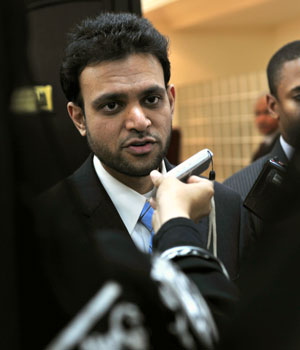
    Before al-Arian pled guilty, Rashad Hussain (appointed Deputy Associate Counsel to President Obama in January 2009) told a 2004 panel discussion on civil rights at a Muslim Students Association conference in Chicago that al-Arian’s very prosecution was “a travesty of justice” that fit a “common pattern … of politically-motivated prosecutions.” When President Obama recently appointed Hussain to be to be his special envoy to the Organization of the Islamic Conference (OIC), Hussain first denied he ever made the statement, and then after confronted with evidence he did, changed his entire story.

    Leaving aside the choice of Hussain for a moment, the wisdom of even having a special envoy to the OIC in the first place must be questioned. President George Bush first established the position of an American envoy to the OIC to “listen to and learn from representatives from Muslim states, and … share with them America’s views and values

    But the decision has resulted in little discernable improvement in OIC behavior. For instance, the OIC remains obsessed with demonizing Israel at the UN Human Rights Council and the organization supports constraints on freedom of speech and freedom of religion in the Human Rights Council and in the General Assembly through their Defamation of Religions efforts.

    If the United States is to have an envoy to the OIC at all, it should be filled by an outspoken advocate for America and its interests. He or she should be an unabashed proponent of fundamental rights and freedoms that are constrained in many OIC countries and a knowledgeable and forceful defender of America’s values and policies (including America’s anti-terrorism policies) that frequently are criticized by the OIC as discriminatory or insensitive toward Muslims or inconsistent with Islam. With this purpose in mind, the recent revelations about Rashad Hussein make him a particularly poor choice.

    However, even if President Obama had chosen an ideal representative as envoy to the OIC, it is unlikely that he or she would be able to engender a reevaluation by the OIC or its more recalcitrant member states of their long-standing animosity toward Israel and America or their decade long effort to undermine basic rights and freedoms in order to “protect” Islam from criticism, ridicule, or other statements deemed blasphemous. The positions of the OIC are often driven by its more extreme elements in the Human Rights Council and the General Assembly. A public effort by a U.S. envoy to modify OIC policy is more likely to strengthen the voice of the more extreme members of the OIC, like Iran or Saudi Arabia, than it is to strengthen more moderate voices like Jordan or Indonesia.

    A for more fruitful strategy would be to approach OIC members bilaterally and seek to encourage them to moderate the tone of the organization in off-line negotiations. An envoy to the OIC is largely superfluous to these efforts.

    In the end, it’s hard not to see the decision to establish a U.S. envoy to the OIC as another tepid, politically correct attempt to demonstrate that the U.S. does not “hate” Muslims. The very notion is ridiculous – the U.S. has taken great pains to distinguish and separate the issue of Islamic terrorism from the more than one billion Muslims who rightly abhor such actions. America should never be ashamed of defending its lawful actions to combat terrorism or of championing fundamental human rights and freedoms at the UN.

    http://blog.heritage.org/2010/02/22/…orld%e2%80%9d/

  • Trouble Brewing in South Atlantic Over Control of Falklands

    On 02.22.10 03:30 PM posted by Ray Walser

    Possession of the Falkland/Malvinas Islands in the South Atlantic is again being disputed. The United Kingdom’s 180-year control over the islands and the will of its English-speaking inhabitants as well as the sacrifice of British blood and treasure that reversed the 1982 Argentine aggression give the UK clear possession of the islands.

    Nonetheless, Argentina rejects what it calls “a colonial enclave.” Last year, it laid claim to vast amount of the South American continental shelf.

    The current bone of contention involves oil. Exploration begun by British firms this month will assess just how large are deposits locked in waters around the Falklands. Optimists claim figures runs in the tens of billions of barrels, triggering a clash of competing interests in London and Buenos Aires.

    Pummeled politically and economically, Christina Fernandez de Kirchner’s government is milking the dispute for political advantage. While Argentina says it intends to stick to peaceful means, it has begun a provocative escalation. The Argentine requirement that “ships that want to travel from ports on the Argentine mainland to the Islas Malvinas, South Georgia and the South Sandwich Islands must first ask for permission from the Argentine government” constitutes a serious threat to freedom of the seas and risks U.K.-Argentine confrontations.

    The Argentines want to enlist the United Nations and Latin American neighbors to back their claims. Hot heads like Venezuela’s populist authoritarian president Hugo Chavez are busy whipping up nationalism and old-fashion anti-colonialism against the British,

    While promising to show forceful leadership in the Western Hemisphere, the Obama Administration has thus far has ducked the opportunity to speak out on sovereignty and freedom of the seas issues involving a close ally. As it did during the Honduras crisis last year, the Administration seems willing to follow the Latin American consensus and keep silent in an emerging crisis.

    http://blog.heritage.org/2010/02/22/…-of-falklands/

  • Dumping Airborne Laser Leaves America Vulnerable

    On 02.22.10 09:00 AM posted by James Carafano

    <ahref="http://blog.heritage.org/wp-content/uploads/100212-airborne-laser-plane1.jpg"></p>At 8:44 p.m. PST Feb. 11, 2010 … for just a second … man made night into day. A short-range ballistic missile launched from a sea-based platform off California’s Point Mugu Naval Air Warfare Center. Moments later, the Airborne Laser carried aloft in a specially modified 747 detected it.

    Then it cranked up the high-energy laser. That beam struck home, burning a small hole in the missile. A split-second later, its structural integrity destroyed, the missile vaporized in a tumbling corkscrew.

    Within two minutes of launch time, it was all over.

    Not bad for a defensive weapon once ridiculed as science fiction. Skeptics even persuaded the Obama administration to slot the airborne laser for the ninth circle of procurement hell — a pit for dead-end research and development programs. But this month’s dramatic success has put the critics on their heels.

    The Point Mugu exercise was what engineers call a “proof of principle” test. They tested it. It is proven.<spanid="more-26929"></span>

    But don’t expect high-fiving in the White House. The administration already passed on the option to build a second test aircraft. Rather than add the ABL to the military’s arsenal, the administration seems more than willing to let the project end as a successful science experiment.

    It will argue laser missile defense makes no sense because the weapon’s range is limited to a few hundred kilometers. That would put the lumbering aircraft well within the range of air defense systems fielded by the likes of North Korea and Iran.

    On the other hand, here is what the administration won’t admit. There are other threats already out there that the Airborne Laser is well-suited to counter. One such danger is the “Scud in bucket” scenario.

    Scud missiles are shorter-range weapons, originally manufactured and proliferated worldwide by the Soviets. Today, several other countries make their own versions. These missiles are so readily available — and cheap — that several years ago a U.S. arms collector bought one and tried to ship it home.

    Iran’s Shahab-3, an advanced Scud variant, seems capable of traveling 1,000 kilometers and carrying as much as a 10-kiloton warhead. It couldn’t reach Washington from Tehran, but then, it wouldn’t have to. Iran could easily extend the missile’s reach simply by moving it to a commercial freighter and firing it from nearby using an improvised vertical launch tube disguised as cargo.

    In many ways, Scud in a bucket is the ultimate weapon. It could sail close to U.S. waters without being subject to inspection by the Coast Guard or Customs. The enemy could fire the missile and scuttle the ship, leaving no record of who launched the attack.

    If Iran has one missile and nuclear weapon, it might have two. It could detonate one over New York in a low-altitude air burst that would kill up to a half-million and cripple Manhattan forever.

    Iran could fire a second at high altitude over the mid-Atlantic states, creating an electro-magnetic pulse that would take down a large portion of the national grid and plunge Washington, D.C., into permanent darkness.

    America would be crippled in a flash, with no obvious enemy at which to shoot back.

    An ABL could help neutralize this threat, and others. Advancing the technology alone will give the U.S. a dramatic advantage over potential adversaries.

    But if the administration has its way, we’ll see the ABL in the Smithsonian, rather than defending our coasts.

    <ahref="http://www.washingtonexaminer.com/opinion/columns/Dumping-Airborne-Laser-leaves-America-vulnerable-84912847.html">Cross-posted at <ahref="http://www.washingtonexaminer.com/">The Washington Examiner.

    http://blog.heritage.org/2010/02/22/…ca-vulnerable/

  • New But Unimproved: Abortion Funding in the White House Health Plan

    On 02.22.10 10:25 AM posted by Chuck Donovan

    <ahref="http://blog.heritage.org/wp-content/uploads/capital_drawing0202102.jpg"></p>The President promised that under health reform taxpayers would not be forced to fund abortion. Not true.

    The new <ahref="http://www.whitehouse.gov/sites/default/files/summary-presidents-proposal.pdf">health care outline posted by the White House this morning appears to aggravate concerns about a new abortion funding scheme that is not covered by any limitation, including the traditional Hyde amendment governing annual appropriations to the Department of Health and Human Services and the <ahref="http://politics.theatlantic.com/2009/11/stupak_on_the_stupak_amendment.php">Stupak-Pitts amendment adopted by the House of Representative last November in its version of health reform. Instead, the White House plan would invest $11 billion in an expansion of Community Health Centers, others known as <ahref="http://www.raconline.org/info_guides/clinics/fqhcfaq.php#services">Federally Qualified Health Centers (FQHCs), with no limitation at all.

    This $11 billion price tag is $2.5 billion higher than called for by the Senate bill approved on Christmas Eve. That legislation provided for $7 billion in fresh appropriations for operating funds and another $1.5 billion in spending for construction of FQHCs (both sums over five years). Because this money would be directly appropriated if the Senate bill is adopted and signed into law, it does not need to be included in the annual Labor-Health and Human Services spending bill. As a result, the Hyde Amendment abortion funding limit <ahref="http://www.nrlc.org/AHC/NRLCmemoCommHealth.pdf">would not apply to these FQHC funds. Nor would the comprehensive Stupak-Pitts funding limit, unless the House-passed language of that amendment is specifically included in the Senate bill updated by today’s White House proposal.<spanid="more-26944"></span>

    The 11-page White House summary of President Obama’s proposal does not mention inclusion of the Stupak-Pitts amendment in any final bill. Given the <ahref="http://capwiz.com/nrlc/issues/alert/?alertid=13157881">opposition of Democratic leaders to the amendment, it is reasonable to assume that the dramatic expansion of FQHC’s, which already number 1,250, could go hand in hand with the expansion of abortion at these centers. The FQHCs <ahref="http://www.reproductiveaccess.org/getting_started/faq.htm">are being lobbied to include abortion among their “prevention” services, and <ahref="http://blog.heritage.org/2010/01/14/more-taxpayer-funding-of-abortion-in-the-senate-health-bill/">the underlying federal authorizing statute does not bar them from doing so. Therefore, the impact of this new and independent funding stream on expanding taxpayer-funded abortion could be immense.

    http://blog.heritage.org/2010/02/22/…e-health-plan/

  • A First Look at the President’s Health Summit Proposal: Liberal Proposal Number Three

    On 02.22.10 10:47 AM posted by Bob Moffit

    <ahref="http://blog.heritage.org/wp-content/uploads/Obama_Rhetoric0904132.jpg"></p>In the run-up to his proposed health care summit, President Barack Obama this morning unveiled an <ahref="http://www.whitehouse.gov/sites/default/files/summary-presidents-proposal.pdf">11-page outline of his health care proposal. Within the outline, there are 33 specific policy changes. Of course, there is no legislative text yet, so the full impact of what the President is proposing will not be known for some time.

    The President’s revisions are based on the Senate bill, as amended by Senate majority Leader Harry Reid (D-NV), and enacted last Christmas Eve. According to the February 22, 2010, edition of Congress Daily, on paper, at least, the President’s outline would increase the cost of the Senate bill from $871 billion to $950 billion over ten years. Of course, the real costs depend upon the years of implementation, counting both the revenues and the benefits together.

    Bridging the Gap between House and Senate Liberals. The President describes his proposal as a set of policy changes that would “ bridge the gap” between the unpopular House and Senate health care bills. The President stresses that his proposal “… adds new provisions to crack down on waste, fraud and abuse.” He also says that his proposal “puts American families and small business owners in control, of their own health care.” This latter claim is, in point of fact, disingenuous. Americans would have less control over health care decisions today, what kind of plans and benefits they get, and Washington would exercise even more control over health care financing and delivery than it does today.

    <spanid="more-26951"></span>Same Policy Direction. Given that the President’s proposal builds off of the Senate bill, that means that a number of features of the Senate bill that many , if not most, of Americans find objectionable are going to be retained. For example, the President insists on an individual mandate for Americans to buy health insurance coverage that is approved by federal authorities. The President’s proposal adopts the Senate approach to imposing an individual mandate but lowers the tax assessments. He also insists on the imposition of an employer mandate, though he would soften it to some extent by providing $40 billion worth of tax credits to small businesses. Consistent with the Senate bill, he would exempt small firms with less than 50 employees from the employer mandate.

    Even more important is what the outline does not spell out. Assuming that the proposals are to be meshed with the Senate bill as the preferred vehicle for enactment, that means that the key mechanisms for federal control are retained: federal control over the content of health benefits packages, including new benefit mandates that federal authorities may improve over time ; the federal mandates on the states to establish a federally-designed health insurance exchange for health insurance; the creation of new powers for the U.S. Office of Personnel management (OPM) to <ahref="http://www.heritage.org/Research/HealthCare/hl1145.cfm">sponsor two health plans nationwide to compete against private health plans (the Senate version of the “public plan”); and the Senate language ( the Reid-Nelson compromise) that provides for taxpayer funding of abortion.

    Some Tweaks. The President’s proposal would cancel the “Cornhusker Kickback”- *the federal taxpayer funding for Nebraska’s Medicaid expansion – but increase more federal taxpayer funding for all of the states. He would close the congressionally-created Medicare drug “donut hole” that is a gap in insurance coverage for seniors enrolled in the Medicare drug entitlement; and increase the Cadillac-tax threshold for high cost health plans from plans valued at $23,000 per years to $27,500 per year, starting in 2018.

    New Federal Powers. In his outline, the President would add to the federal powers embodied in the Senate bill. The most important one is a new Federal Health Insurance rate Authority, which would provide federal “assistance and oversight” to the states conducting reviews of “ unreasonable rate increases” and “unfair practices” of health insurance plans. This, of course, establishes for the first time a legislative basis for the imposition of price controls on health insurance. If government can control both health benefits and health care pricing, that’s the proverbial ball game. Private health care is private in name only.

    Co-authored by Nina Owcharenko

    http://blog.heritage.org/2010/02/22/…-number-three/

  • President?s Proposal Introduces ?AIG Risk? in Federal Insurance Rate Regulation

    On 02.22.10 12:00 PM posted by Edmund Haislmaier

    <ahref="http://blog.heritage.org/wp-content/uploads/2009/07/the_white_house.gif"></p>The White House has just issued <ahref="http://www.whitehouse.gov/sites/default/files/summary-presidents-proposal.pdf">an 11 page concept paper (PDF) for yet another health care bill that, among other items, includes a proposed new Federal “Health Insurance Rate Authority.”* The Administration has yet to provide any legislative language on how this new Federal regulatory regime would operate, but based on statements by the President and other officials, as well as similar provisions included in the bills already passed by the House and Senate, there is good reason for concern as to whether the President and Congress really know what they are doing in this regard.

    The President and the Congressional leadership assert that health insurer rate increases are unjustified and point to some cases of recent double-digit increases announced by certain insurers.* But so far they have offered no explanation of what portion of those increases they think are unjustified or their reasons for taking such a position.<spanid="more-26969"></span>

    In reality, there are a number of reasons why health insurers raise their rates, and so-called “insurer price-gouging” is one of the least likely causes.* The biggest reason is growth in the price and volume of medical care that the plans pay for.* If policyholders consume more medical care and/or if doctors and hospitals charge higher fees, then insurers must—obviously—raise their premiums to cover the added costs.

    Another reason, and one that is particularly relevant this year, is that during recessionary periods some individuals in good health figure that they can save money by temporarily dropping health insurance coverage.* They are betting that they will stay healthy and that, once the economy and their personal situation improve, they can buy coverage again.* Of course, that means that insurers face a drop in premium income and need to raise rates on their remaining policyholders to cover the difference.

    What is most disturbing about the President’s latest proposal, and similar ones in Congress, is the apparent lack of understanding that one of the most basic purposes of insurer financial regulation is not to prevent “price-gouging,” but rather to prevent the problems that occur if insurers under-price their products.* Specifically, if an insurer fails to charge enough in premiums to cover its expected claims costs, then it is at risk of being unable to make good on the promises made to its customers.* That can leave policyholders with worthless coverage or spark demands for government bailouts that impose on taxpayers the cost of covering the losses.

    It was precisely such problems that led states more than a century ago to start regulating insurance.* As in any other market, competing insurers try to attract customers by offering lower—not higher—prices (premiums).* But “consumer protection” in insurance rate regulation means ensuring that insurers are financially sound enough to make good on the promises made to their customers.* Thus, a primary objective of insurance law and regulation is to ensure that insurance companies charge enough in premiums, and set aside enough in reserves, to be able to pay the claims that they have promised to pay.

    The whole AIG debacle is a good illustration of what can go wrong if an insurer is allowed to under-price coverage.* What AIG essentially did was to sell banks insurance against their loans going bad.* But because it structured what were really insurance policies as financing instruments, AIG was able to avoid insurance regulator oversight and instead have the products regulated by banking regulators who weren’t experts in insurance.

    The result was that AIG underestimated the size of its potential liabilities, under-priced the coverage (which made banks even more willing to buy it, since the “premiums” were cheap), and failed to set aside sufficient reserves against claims.* When the banks’ loans went bad, AIG was faced with tens of billions of dollars in claims that it simply couldn’t pay.* Congress had a choice of either telling the banks, “Sorry, you bought worthless insurance,” or sticking the taxpayers with the tab to bailout AIG so that it could payoff the banks’ claims.* In the end, Congress, worried about the collapse of the banking sector, stuck taxpayers with the bill and bailed out AIG so that it could pay off the banks.

    A President and Congress that want to regulate health insurance rates, but either don’t understand or don’t care about the potential costs and damage of allowing—or even forcing—insures to under-price their coverage, and who seem to have learned nothing from the AIG experience, is something that all Americans should be very worried about.

    http://blog.heritage.org/2010/02/22/…te-regulation/

  • Traditional Public Schools Are Not the Model of Inclusion Proponents Think

    On 02.22.10 01:00 PM posted by Alex Adrianson

    <ahref="http://blog.heritage.org/wp-content/uploads/highschool-locker-100222.jpg"></p>“Vouchers drain money from public schools so that some students can go to private schools.” Somewhere in the vicinity of that declarative sentence – which school choice critics regard as some sort of argument -lurks the thought that vouchers must equal special advantages for some students that are denied to others. Guess what? That’s what the system of public schools is.

    A new report from the Thomas B. Fordham Institute has identified 2,817 public schools around the country that serve very few poor students. These “private public schools,” as the Fordham report calls them, are either elementary schools where students eligible for free or reduced-price lunches make up less than 5 percent of the school’s enrollment, or middle schools or high schools where fewer than 3 percent of students are reported to be poor. Nationwide, 44 percent of public school students are eligible for free or reduced-price lunches. In total, these “private public schools” serve 4 percent of all public school students.

    <spanid="more-26981"></span>

    These schools also tend to be racially segregated. Nationwide, 17 percent of primary school students are African-American and 21 percent are Hispanic. But in the 2,817 “private public schools” identified by Fordham, only 3 percent of students are African-American and only 12 percent are Hispanic. It’s not an accident that so many public schools end up with skewed demographics. As the authors of the report, Michael Petrilli and Janie Scull, point out, “[these schools’] demographics generally are products of public policies and community decisions.” Remember, many students live in states that require them to attend their district school.

    It should be obvious that there is a public policy option that is ready-made to provide opportunities for children in poor neighborhoods to attend a better school: school choice. Those who want a more inclusive school system should support school choice.

    See <ahref="http://edexcellence.net/doc/201002_PrivatePublicSchool_final.pdf">“America’s Private Public Schools,” by Michael J. Petrilli and Janie Scull, published by the Thomas B. Fordham Institute, February 2010.

    <ahref="http://www.insideronline.org/blogarchive.cfm?month=2&year=2010&blogid=E71F32FA-C7E7-C643-1B140D1B352F1F1F">Cross-posted at InsiderOnline.

    http://blog.heritage.org/2010/02/22/…ponents-think/

  • Prepare for the Next Bubble…For a Made Up Commodity

    On 02.22.10 01:30 PM posted by Nick Loris

    <ahref="http://blog.heritage.org/wp-content/uploads/co2_100222.jpg"><imgsrc="http://blog.heritage.org/wp-content/uploads/co2_100222.jpg" alt="Carbon Dioxide" title="co2_100222" width="275" height="200" class="alignnone size-full wp-image-26982" /></p>At least when there was a housing bubble, there were actual houses involved. The next bubble could ostensibly be a carbon dioxide bubble; the newly-created, artificial market for a clear, odorless gas is growing at rapid rates. According <ahref="http://citizensclimatelobby.org/files/Conning-the-Climate.pdf">to a new article from Mark Shapiro in Harper’s:

    Carbon trading is now the fastest-growing commodities market on earth. Since 2005, when major greenhouse-gas polluters among the Kyoto signatories were issued caps on their emissions and permitted to buy credits to meet those caps, there have been more than $300 billion worth of carbon transactions.

    Major financial institutions such as Goldman Sachs, Barclays, and Citibank now host carbon trading desks in London; traders who once speculated on oil and gas are betting on the most insidious side effects of our fossil fuel–based economy. Over the next decade, if President Obama and other advocates can institute a cap-and-trade system in the United States, the demand for carbon credits could explode into a $2 to $3 trillion market, according to the market-analysis firm Point Carbon.”

    <spanid="more-26978"></span>

    The Kyoto Protocol allows companies to purchase offsets to reduce greenhouse gas emissions. Offsets allow carbon-emitting businesses to pay others to reduce their greenhouse gas emissions. Multinational firms hire carbon developers and carbon assessors to seek out carbon reduction projects all over the world. Businesses that have nothing to do with energy issues are diversifying. Shapiro, for instance, highlights one firm that primarily focused on product inspection, but once the opportunity arose to profit from carbon transactions the business took full advantage. These companies go around and evaluate the number of tons of carbon dioxide the project would eliminate from the atmosphere. One composting project in Brazil would reduce the equivalent of 67,000 tons of CO2 by turning food waste from grocery stores into organic fertilizer. The project is then subject to United Nations approval. If approved, at a carbon trading price of $22 a ton, the project would collect nearly $1.5 million.

    Projects like this exist all over the world and are highly susceptible to fraud. A company could build a coal plant and say they’ve created offsets because they were going to build a dirtier one or claim that they were going to cut trees down when in fact they weren’t in the first place. Bryan Leyland, chairman of the economic panel of the New Zealand Climate Science Coalition, <ahref="http://www.scoop.co.nz/stories/SC0711/S00060.htm">said, “I first heard about carbon trading at a conference more than 10 years ago. I got up and said ‘If I was the financial adviser to the Mafia, I would advise them to get into carbon trading.’ Nothing that has happened since then changes my opinion – rather the reverse.”

    The failures to pass cap and trade legislation in the United States and to reach CO2 reduction concessions at the climate accord in Copenhagen may pop this bubble sooner than expected. <ahref="http://www.guardian.co.uk/environment/2010/jan/24/carbon-emissions-green-copenhagen-banks">According to the UK’s Guardian, “Banks and investors are pulling out of the carbon market after the failure to make progress at Copenhagen on reaching new emissions targets after 2012. Carbon financiers have already begun leaving banks in London because of the lack of activity and the drop-off in investment demand. The Guardian has been told that backers have this month pulled out of a large planned clean-energy project in the developing world because of the expected fall in emissions credits after 2012.”

    Given the recent scientific setbacks, the long-existing scientific dissent, and the insignificant effects these carbon reduction schemes would have on the earth’s temperature, it’s better to shut this plan of trading carbon emissions down before it evolves into multi-trillion dollar market that will likely have the bottom drop out of it just like the real estate market.

    http://blog.heritage.org/2010/02/22/…-up-commodity/

  • In the Green Room: NATO?s Admiral Giampaolo Di Paola

    On 02.22.10 02:00 PM posted by Brandon Stewart

    </p>Today, Admiral Giampaolo Di Paola, Chairman of NATO’s Military Committee, stopped by The Heritage Foundation for a lecture titled, “<ahref="http://www.heritage.org/Press/Events/ev022210a.cfm">NATO and the Fight for Security in a Dangerous World“.

    Afterwards, he joined us for a segment of <ahref="http://www.foundry.org/tag/in-the-green-room">In the Green Room where he discussed current NATO successes and the future of the organization.

    To find out more details about Admiral Di Paola’s speech or to watch it in its entirety, <ahref="http://www.heritage.org/Press/Events/ev022210a.cfm">visit the Heritage website. Visit <ahref="http://www.foundry.org/tag/in-the-green-room">the archives for more “In the Green Room” interviews.

    <spanid="more-26989"></span>

    http://blog.heritage.org/2010/02/22/…aolo-di-paola/