Author: Heritage

  • Honest Abe and the Golden Apple

    On 02.14.10 11:07 AM posted by Tamas Bako

    <ahref="http://blog.heritage.org/wp-content/uploads/2009/02/lincoln090212.jpg"></p>February 12th marks the 201st birthday of Abraham Lincoln. There is much that we can learn today from this great champion of the Constitution and of the principles of the American founding.

    This is especially true today, when our founding principles are under relentless attack. Even in Lincoln’s time, these principles were “denied, and evaded, with no small show of success,” <ahref="http://teachingamericanhistory.org/library/index.asp?documentprint=101">as Lincoln himself put it . Lincoln dedicated all of his public life to the preservation of these principles, and we should aspire to live up to his example.

    Lincoln knew that the eternal truths of the Declaration must be guarded by the carefully balanced republic of the Constitution. <ahref="http://www.ashbrook.org/constitution/fragment.html">His beautiful analogy for the relationship between the Declaration and the Constitution, where he likened the former to a golden apple and the latter to a “picture of silver, framed around it,” is well worth quoting: “The picture was made, not to conceal, or destroy the apple; but to adorn, and preserve it. The picture was made for the apple-not the apple for the picture.”

    It fell upon Lincoln, as a matter of historical circumstance, to guide the nation through a bloody civil war to eradicate the evil of slavery and to forge the two divergent regions into “a more perfect Union.” It is easy to underestimate the gravity of the choices Lincoln had to make, treading carefully between the Scylla of letting the Union fall apart, and the Charybdis of maintaining it at the cost of the Constitutional Republic.

    Lincoln wanted freedom for the slaves, but he was no progressive. He was a prudent statesman, <ahref="http://www.heritage.org/Research/Thought/fp14.cfm">as Allen C. Guelzo points out in a First Principles essay, and in this prudence lies the essence of his conservatism. He recognized the inherent flaws and limitations of human nature. He did not want to somehow “supersede” or “go beyond” the Constitution, as progressives do. He instead wanted to see his beloved country live up to its founding principles, while upholding the Constitution.

    We are not alone in the fight to preserve the self-evident truths that are the foundations of this nation. Nor is our fight new, or unique. We are but the newest carriers of the torch of American liberty in the midst of the darkness of despotism. It is a sometimes daunting but always honorable duty, one in which we have Honest Abe as a most shining example. So let us act as he did, with the goal “that neither picture, or apple shall ever be blurred, or bruised or broken.”

    http://blog.heritage.org/2010/02/14/…-golden-apple/

  • Chen, Butler and Schroeder: Three Judicial Nominees Up In Senate

    On 02.13.10 09:00 AM posted by John Park

    At its Executive Business Meeting on February 4, 2010, the Senate Judiciary Committee sent the nominations of Edward Chen, Louis Butler, Mary Smith, and Christopher Schroeder to the floor for consideration by the Senate. President Obama resubmitted those nominations in January after the Senate adjourned in December without acting on them.

    Chen, who has been nominated for a judgeship in the Northern District of California, was sent forward on a party line 12-7 vote. After three years in private practice, he worked as a staff attorney for the American Civil Liberties Union from 1985 to 2001, when he became a federal magistrate judge. While with the ACLU, Chen participated in unsuccessful challenges to an Arizona referendum calling for the State’s official business to be conducted in English, a California referendum that eliminated so-called “bilingual education” and implemented other measures for teaching English to nonnative students, and a California ban on racial preferences in state education, employment, and contracting.

    While a federal magistrate judge, Chen objected to the singing of “America the Beautiful” at a funeral, citing his “feelings of ambivalence and cynicism when confronted by appeals to patriotism.” He has also endorsed the notion that judges should draw on their experiences, including “one’s ethnic and racial background,” in judging.

    Butler, who has been nominated for a judgeship in the Western District of Wisconsin, also went forward on a 12-7 party line vote. In 2000, he ran for the Wisconsin Supreme Court, challenging the then-incumbent Diane Sykes, but got only 34% of the votes and did not carry a single county. When Sykes was confirmed to a federal judgeship on the Seventh Circuit Court of Appeals, Wisconsin’s Democratic Governor appointed Butler to finish out her term. While on the Wisconsin Supreme Court, Butler helped to expand the rights of criminals and the scope of potential liability for businesses. He also helped to strike down legislatively-enacted limits on punitive damages in medical malpractice lawsuits. In 2008, the voters of Wisconsin declined to elect him to the court in his own right. Apparently, Wisconsin’s Democratic Senators, who sent Butler’s name forward, believe that they know more than the voters of Wisconsin, who had two opportunities to consider Butler’s qualifications, about who will be a good judge.

    Smith, who has been nominated to head the Tax Division at the Department of Justice, likewise went forward on a 12-7 vote. Smith was nominated for this position notwithstanding that she has not held a job specializing in tax law, written or spoken on tax issues, or taken a continuing legal education course in tax law. According to the Department of Justice, while she is neither “a traditional tax lawyer [n]or a tax specialist,” she does have “extensive experience in financial litigation, both for and against the government.” Senator Kyl, who voted against the nomination, pointed out that there must be “thousands of highly experienced tax lawyers who would love to have a job like this.”

    Schroeder, formerly chief counsel for the Democrats on the Senate Judiciary Committee and now a law professor at Duke, went forward on a 16-3 vote. Schroeder has been nominated to head the Office of Legal Policy at DOJ. In his writings, he has objected to the use of cost-benefit analysis in the review of proposed federal regulations, and he told the Judiciary Committee that empathy is one of the qualities that should be part of a judge’s decision-making process. While voting to send the nomination forward, Senator Sessions observed that Schroeder is a “very strong partisan” and encouraged him to “be careful about that.”

    Each of these nominees must be confirmed by the Senate before they can begin serving. The Senate will have to consider them carefully given the concerns raised in the Judiciary Committee.

    http://blog.heritage.org/2010/02/13/…-up-in-senate/

  • Senate Moves to Bolster Freedom in Iran

    On 02.13.10 09:48 AM posted by Helle Dale

    Congress has become increasingly restive about the Obama Administration’s lack of leadership on supporting opposition forces that seek to advance freedom and human rights in Iran. On Thursday Senators John Cornyn (R-TX) and Sam Brownback (R-KS) sought to make up for the administration’s lack of initiative by introducing the “Iran Democratic Transition Act of 2010

    The bill details the Iranian regime’s human rights abuses, cites Iran as the world’s leading state sponsor of terrorism and notes Iran’s troublesome pursuit of nuclear weapons. It states that U.S. policy should be to support the Iranian people in their efforts to oppose and remove the current regime and replace it with a freely elected democratic government in Iran. The bill provides four primary means towards these policy ends:

    • It would authorize support for democratic opposition groups by providing them non-military assistance, as well as humanitarian assistance to victims of the current regime.
    • It would create a Special Envoy for Democracy and Human Rights in Iran with the rank of ambassador to coordinate the U.S. government’s efforts.
    • It proposes that the Obama Administration should explore the concept of a regional framework on human rights, modeled on the Organization for Security and Cooperation in Europe and the Helsinki process.
    • And it would require two reports to Congress from the White House: 1) a clear plan for implementation of this act, and 2) once a transitional government is in place, a comprehensive plan for U.S. support of the Iranian people as they move towards democracy.

    Congress has limited latitude in pushing for a specific foreign policy if the White House does not share the same priorities. But there can be no more important a cause than to show unflagging commitment to political and individual freedoms, which will certainly win more hearts and minds in Iran than the Obama Administration’s out stretched hand to Iran’s oppressive rulers.

    The long term success of Iran’s “Green Movement” opposition could well depend on the support it is given from aboard. In the case of both Ukraine’s Orange Revolution and Lebanon’s Cedar Revolution, action by the United States and its allies was critical to ensure open elections. Last year the United States again had the opportunity to support a freedom and democracy movement supported by millions of Iranians, but the Obama Administration failed the test.

    Congress appears to be increasingly motivated to undertake principled leadership on Iran that the Obama Administration has neglected to provide. Both the Senate and the House have voted to impose new sanctions on Iran’s dictators in the last two months over the objections of the White House.

    If Iran’s Green Movement is ever to join the ranks of the successful “color revolutions”, it may have to look to the U.S. Congress, not the White House.

    This post was co-authored by James Philips

    http://blog.heritage.org/2010/02/13/…eedom-in-iran/

  • Haiti: A Month after the Tragedy

    On 02.12.10 12:46 PM posted by Ray Walser

    <ahref="http://blog.heritage.org/wp-content/uploads/HaitiCommemoration100212.jpg"><imgsrc="http://blog.heritage.org/wp-content/uploads/HaitiCommemoration100212.jpg" alt="Haiti Earthquake Commemoration 02/12/10" title="HaitiCommemoration100212" width="400" height="300" class="alignnone size-full wp-image-26439" /></p>Haiti marks on February 12, the first month after the horrific January 12 earthquake, with a day of national mourning.* According to Haitian officials the death toll stands at between <ahref="http://www.abc.net.au/news/stories/2010/02/12/2817479.htm?section=justin">217,000 and 230,000, a staggering figure equaling that of the 2004 Indian Ocean tsunami. It is an occasion to reflect also upon the needs of Haitians injured, orphaned, and made homeless in the disaster.

    February 12 is also a day to recognize the swift and generous bipartisan response of the U.S. to the earthquake. *The actions of Americans in response to the Haitian tragedy reflect our undiminished capacity to respond in the face of one of the most severe humanitarian crises in the 21st century.

    <ahref="http://www.google.com/hostednews/afp/article/ALeqM5gK8LVjGRUVnhje5NqQrMqme1iqfQ">U.S. military personnel deployed offshore or in Haiti during Operation Unified Response are beginning to return home.* At the height of operations as many as 23,000 U.S. service personnel were involved in Haiti duties ranging from air control and logistical operations to search and rescue, food distribution, and emergency medical care. *Roughly 13,000 troops are still serving there.

    With the full panoply of military instruments from the hospital ship USNS Comfort to aircraft carrier Carl Vinson and the 24th Marine Expeditionary Unit, the U.S. *demonstrated its unrivaled prowess in meeting an unanticipated challenge.<spanid="more-26413"></span>

    As the U.S. military’s role in Haiti diminishes, the Obama Administration must galvanize the U.S. foreign aid bureaucracy to start afresh with innovative concepts to deliver sustainable official development assistance that is focused on building Haitian government institutions staffed with officials who take ownership of and accountability for Haiti’s problems.* The goal must be a Haiti that becomes more resilient, more decentralized, and more equitable with a commitment to fighting corruption and providing market opportunities as well as security for people and property.* The U.S. Government should also encourage greater cooperation between Haiti and its more successful island neighbor, the Dominican Republic.

    The coming months will also test the staying power of U.S. civil society, church groups and private companies whose actions in Haiti merit praise but must be continued.* The remarkable outpouring of U.S. sympathy and support for Haiti needs to be sustained once the celebrities, the media, and instant pundits decamp for more newsworthy destinations.

    http://blog.heritage.org/2010/02/12/…r-the-tragedy/

  • The Audacity of Hypocrisy: Success in Iraq

    On 02.12.10 01:30 PM posted by Todd Thurman

    <ahref="http://blog.heritage.org/wp-content/uploads/2009/05/bidenmoron090514.jpg"></p>Yesterday, on Larry King Live, Vice President Joe Biden <ahref="http://www.swamppolitics.com/news/politics/blog/2010/02/joe_biden_twostate_solution_fo.html">stated that the Iraq war could be one of the greatest successes of the Obama Administration. That is quite a shift of opinion. Considering that the success of Iraq is largely due to the <ahref="http://www.heritage.org/Research/NationalSecurity/hl1068.cfm">“surge” that was ordered by President Bush and President Barack Obama and Biden have been the chief critics of the* surge.

    In 2007 then Senator Barack Obama said that the surge would <ahref="http://firstread.msnbc.msn.com/archive/2007/08/21/325917.aspx">not work. In fact, he <ahref="http://www.youtube.com/watch?v=P_igpyewuzQ">stated in an MSNBC interview that the surge would actually increase violence in Iraq. Obama played coy, only saying that he did not think the surge would work. Whereas, Biden* <ahref="http://www.huffingtonpost.com/2008/04/05/joe-biden-the-surge-is-a_n_95221.html">stated that the surge was a failure:

    The purpose of the surge was to bring violence in Iraq down so that its leaders could come together politically. Violence has come down, but the Iraqis have not come together… There is little evidence the Iraqis will settle their differences peacefully any time soon.<spanid="more-26335"></span>

    In 2007, General Petraeus testified before Congress saying that the surge <ahref="http://www.defense.gov/news/newsarticle.aspx?id=47384">was starting to work and that there could be military reductions as soon as summer of 2008. This is when Obama started to change his tune, saying that the surge <ahref="http://marcambinder.theatlantic.com/archives/2008/07/obama_concedes_that_surge_didn.php">did not go as he expected. Luckily, for us, and the US military, Obama was wrong on the surge. While on the campaign trail Obama further conceded that the success of the surge was beyond his “<ahref="http://www.bloomberg.com/apps/news?pid=20601087&sid=aSPSq3q1shRI&refer=home">wil dest dreams” stating:

    The surge has succeeded in ways that nobody anticipated

    Well, almost nobody. President Bush and General Petraeus thought that there was a good chance that the surge could work, and that is why they proceeded with it. Now that violence in Iraq is down and a seemingly stable government, Biden is lauding the Obama Administration’s success in being able to bring troops home this summer. Trouble is, that is what the plan was before Obama got into office. <ahref="http://topics.nytimes.com/topics/news/international/countriesandterritories/iraq/status-of-forces-agreement/index.html">The Status of Armed Forces Agreement was ratified by the Iraqi Parliament in November of 2008 when George Bush was still in office. The agreement called for the removal of troops in most Iraqi cities by 2009 and a complete withdrawal of US Troops by the end of 2011. The Obama Administration loves to point out things that were “inherited” from the Bush Administration, but they seem to be taking credit for something good that they truly did inherit.

    http://blog.heritage.org/2010/02/12/…ccess-in-iraq/

  • VIDEO: Obamacare Doesn?t Help Young Adults

    On 02.12.10 02:00 PM posted by Mike Brownfield

    </p>President Obama says the health care reform bills before Congress will make health insurance more affordable and accessible for young Americans. Think again.

    As Heritage’s Paul Winfree explains, some of the promises the President makes are too good to be true. That truth involves higher costs and stiff penalties.

    Watch Winfree’s video, and be sure to share it with others. What do you think about the President’s promises? Join the debate in our comments section below.

    http://blog.heritage.org/2010/02/12/…-young-adults/

  • Mukasey Ends Obama?s Miranda Misinformation

    On 02.12.10 02:30 PM posted by Conn Carroll

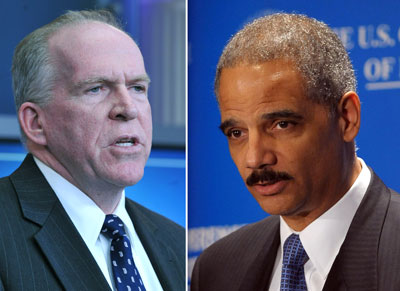
    <ahref="http://blog.heritage.org/wp-content/uploads/100212-brennan-holder.jpg"></p>The Obama administration has been excoriated by <ahref="http://thehill.com/blogs/blog-briefing-room/news/79589-lincoln-more-democrats-could-support-bill-barring-terror-trials">Democrats, <ahref="http://washingtontimes.com/news/2010/jan/27/911-panel-chiefs-fault-handling-of-bomb-suspect/">Republicans, and the media for their <ahref="http://www.washingtonpost.com/wp-dyn/content/article/2010/01/22/AR2010012204349.html">myopic, irresponsible, potentially dangerous, and <ahref="http://blogs.usatoday.com/oped/2010/02/debate-on-war-on-terror-our-view-national-security-team-fails-to-inspire-confidence.html">amateur handling of Failed Flight 253 Bomber Umar Farouk Abdulmutallab. Refusing to acknowledge the reality of their failure, the Obama administration has instead chosen to make a series of fantastic claims that have no basis in reality.

    In a <ahref="http://www.justice.gov/cjs/docs/ag-letter-2-3-10.pdf">letter dated February 3, 2010, Attorney General Eric Holder writes:* “Across many Administrations, both before and after 9/11, the consistent, well-known, lawful, and publicly-stated policy of the FBI has been to provide Miranda warnings prior to any custodial interrogation conducted inside the United States. The FBI’s current Miranda policy, adopted during the prior Administration, provides explicitly that ‘[w]ithin the United States, Miranda warnings are required to be given prior to custodial interviews . . . .’”

    The Obama administration repeated this claim in a <ahref="http://blogs.usatoday.com/oped/2010/02/opposing-view-we-need-no-lectures.html?csp=34">USA Today op-ed by Deputy National Security Adviser for Homeland Security and Counterterrorism John Brennan who claimed: “The most important breakthrough occurred after Abdulmutallab was read his rights, a long-standing FBI policy that was reaffirmed under Michael Mukasey, President Bush’s attorney general.”

    As former Attorney General Mukasey details in today’s <ahref="http://www.washingtonpost.com/wp-dyn/content/article/2010/02/11/AR2010021103331.html">Washington Post these claims are false:<spanid="more-26415"></span>

    Contrary to what the White House homeland security adviser and the attorney general have suggested, if not said outright, not only was there no authority or policy in place under the Bush administration requiring that all those detained in the United States be treated as criminal defendants, but relevant authority was and is the opposite. The Supreme Court held in Hamdi v. Rumsfeld that “indefinite detention for the purpose of interrogation is not authorized” but also said in the same case that detention for the purpose of neutralizing an unlawful enemy combatant is permissible and that the only right of such a combatant — even if he is a citizen, and Abdulmutallab is not — is to challenge his classification as such a combatant in a habeas corpus proceeding. This does not include the right to remain silent or the right to a lawyer, but only such legal assistance as may be necessary to file a habeas corpus petition within a reasonable time. That was the basis for my ruling in Padilla v. Rumsfeld that, as a convenience to the court and not for any constitutionally based reason, he had to consult with a lawyer for the limited purpose of filing a habeas petition, but that interrogation need not stop.

    Stuart Taylor of National Journal has also reviewed the facts and law and concludes in an article title <ahref="http://www.nationaljournal.com/njmagazine/print_friendly.php?ID=or_20100213_5175">More Miranda Idiocy:

    Reasonable people disagree about how much coercion interrogators should use to extract potentially lifesaving information from terrorists. (None at all, President Obama unwisely ordered soon after taking office.)

    But no reasonable person could doubt that starting out with “you have the right to remain silent” is not the way to save lives.

    Yet this is essentially the policy into which the Obama administration has locked itself by insisting that it did the right thing when it read Umar Farouk Abdulmutallab, the would-be Christmas Day bomber, his Miranda rights after only 50 minutes of questioning and a hospital visit.

    Holder claimed in a February 3 letter to Senate Republicans that it is “far from clear” that the government has the legal authority to hold a suspected enemy combatant captured in the United States without access to an attorney. He said that Mukasey, in his previous role as a U.S. District judge, had ruled that a detainee named Jose Padilla “must be allowed to meet with his lawyer,” and that a federal Appeals Court in New York had later found the military detention of Padilla to be unlawful.

    Holder misleadingly omitted critical facts. First, Padilla was a U.S. citizen. Second, Mukasey’s ruling did not involve Padilla’s initial interrogation but rather his right — after more than eight months in military detention — to have a lawyer’s help in petitioning for release. Third, the Supreme Court reversed the Appeals Court ruling for Padilla on jurisdictional grounds in 2004. Fourth, the justices held the same day, in the case of Yaser Esam Hamdi, that a U.S. citizen captured abroad and linked to “forces hostile to the United States” can be held in this country without charges as an enemy combatant. Fifth, another federal Appeals Court, in Richmond, Va., later upheld the military detention of Padilla in the U.S. and also (as Holder noted in passing) of Ali Saleh Kahlah al-Marri, a suspected Al Qaeda agent from Qatar who was arrested in Peoria, Ill.

    The votes in these cases were close, and it’s fair to say that the law on long-term military detention of suspected enemy combatants captured in the United States is not settled. But the weight of legal precedent is that the Obama administration had ample authority to subject Abdulmutallab to days or even weeks of incommunicado interrogation. It chose to Mirandize him instead.

    http://blog.heritage.org/2010/02/12/…isinformation/

  • Lisbon Treaty Already Undermining U.S. National Security

    On 02.12.10 03:00 PM posted by Sally McNamara

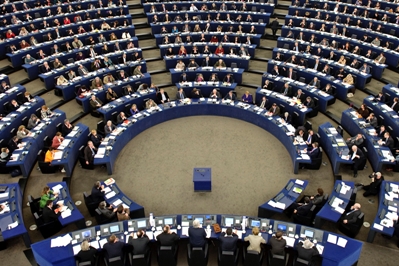
    <ahref="http://blog.heritage.org/wp-content/uploads/europeanparliament.jpg"></p>Following the introduction of the EU’s Lisbon Treaty, the European Parliament has claimed its first scalp thanks to the increased powers bestowed upon it by the Treaty; and it has a distinctly anti-American flavor. Voting in Strasbourg, <ahref="http://www.washingtonpost.com/wp-dyn/content/article/2010/02/11/AR2010021102139.html">Parliamentarians voted down an EU-US agreement on tracking terrorist financing which was agreed in November 2009, before the passage of the Lisbon Treaty.

    Top Administration officials, including Secretary of State Hillary Clinton are reportedly furious. The Terrorism Finance Tracking Project, introduced after the 9/11 terrorist attacks, is now in jeopardy. This comes in the wake of the attempted al-Qaeda terrorist bombing of flight 253 from Amsterdam-Detroit on Christmas Day. So much for “nous sommes tous Americains.”<spanid="more-26446"></span>

    The European Parliament is an endemically anti-American institution which has relentlessly prosecuted the American-led war on terrorism. In 2006, it formed a temporary committee to investigate America’s extraordinary rendition program, with some MEP’s comparing U.S. detention sites with the Soviet gulags.

    There is intense <atitle="http://www.heritage.org/Research/Europe/wm2474.cfm" href="http://www.heritage.org/Research/Europe/wm2474.cfm">dissatisfaction and disillusionment among Europeans with the Parliament, resulting in the lowest turnout for Europe-wide elections last June. That dissatisfaction is clearly spreading to the U.S. now, despite President Obama’s massive commitment to improving America’s image in Europe. The Administration should rue the day that it congratulated the EU on the <atitle="http://www.heritage.org/Research/Europe/tst12152009a.cfm" href="http://www.heritage.org/Research/Europe/tst12152009a.cfm">passage of the Lisbon Treaty.

    http://blog.heritage.org/2010/02/12/…onal-security/

  • Outside the Beltway: AZ Rejects Economy Killing Energy Taxes

    On 02.12.10 04:00 PM posted by Conn Carroll

    <ahref="http://blog.heritage.org/wp-content/uploads/AZ66.jpg"></p><ahref="http://blog.heritage.org/2010/02/12/beyond-the-beltway-utah-questions-climate-science/">Utah is not the only Western state that is rejecting the left’s global warming regulation policies. This week Arizona Gov. Jan Brewer (R) signed an executive order stating that Arizona will not endorse any emission-control plan that could raise costs for consumers and businesses. <ahref="http://www.azcentral.com/12news/news/articles/2010/02/11/20100211climate-brewer0211-CP.html">The Arizona Republic reports:

    Arizona will no longer participate in a groundbreaking attempt to limit greenhouse-gas emissions across the West, a change in policy by Gov. Jan Brewer that will include a review of all the state’s efforts to combat climate change.

    State officials said the policy shift was rooted in concerns that the controversial emissions plan would slow the state’s economic recovery.<spanid="more-26288"></span>

    The governor’s order is another blow to the Western Climate Initiative, a group of seven states and four Canadian provinces that joined forces in 2007 after growing impatient with the federal government to address climate change.

    The economic costs of cap and trade for the nation as a whole are bad enough. A study by The Heritage Foundation’s Center for Data Analysis <ahref="http://www.heritage.org/Research/EnergyandEnvironment/cda0904.cfm">found that a national cap and trade program would make the United States about $9.4 trillion poorer by 2035. Much of this decline would be from reduced economic productivity and job loss. Under the House legislation there would be 1.15 million fewer jobs on average than without a cap-and-trade bill. And as Heritage fellow Ben Lieberman has <ahref="http://www.heritage.org/research/energyandenvironment/tst081009a.cfm">testified, Western states would be particularly hard hit:

    Coal mining will be very hard-hit, so Montana and Wyoming and other coal-producing states will see this important sector of their economies shrink significantly. Western oil and natural gas producers will face higher costs as well. The promise of oil shale in Colorado, Utah, and Wyoming will never be realized under Waxman-Markey. As I mentioned, agriculture is hard-hit, and that particularly includes things common in parts of the West that are not well positioned to partially defray their costs by availing themselves of offsets, like ranching on federal lands, fruits and vegetables, and potatoes. And of course the long distances rural Westerners have to drive in the course of each day means that gasoline and diesel price increases hurt them more than other Americans.

    http://blog.heritage.org/2010/02/12/…mate-endeavor/

  • Morning Bell: The President Must Stop Voting ?Present? on Iran

    On 02.12.10 06:50 AM posted by Conn Carroll

    Yesterday in <ahref="http://news.bbc.co.uk/2/low/middle_east/8509765.stm">Tehran’s Azadi Square, <ahref="http://www.washingtonpost.com/wp-dyn/content/article/2010/02/11/AR2010021100456.html">hundreds of thousands of Iranians turned out to listen to President Mahmoud Ahmadinejad’s speech marking the 31st anniversary of the Islamic Revolution. Ahmadinejad did not disappoint the adoring crowd, defiantly announcing that Iran had become a “nuclear state,” <ahref="http://www.washingtonpost.com/wp-dyn/content/article/2010/02/11/AR2010021100456.html">adding: “The Iranian nation is brave enough that if one day we wanted to create an atomic bomb, we would announce it publicly and would create it.”

    But the Iranian nation is not nearly as unified behind the current regime as yesterday’s production was meant to show. The supporters in Azadi Square had actually been <ahref="http://news.bbc.co.uk/2/low/middle_east/8509765.stm">bussed in by the regime from around the country. For weeks before the anniversary, the government had <ahref="http://www.nytimes.com/2010/02/10/world/middleeast/10arrests.html?ref=todayspaper">arrested students, photographers and journalists in an effort to disrupt the Green Movement which had <ahref="http://blog.heritage.org/2009/12/28/iranian-protesters-are-dying-for-freedom-%E2%80%93-where-is-barack-obama/">successfully organized mass opposition demonstrations last year following <ahref="http://blog.heritage.org/2009/06/15/morning-bell-sham-elections-expose-obamas-iran-policy/">Ahmadinejad’s fraudulent reelection. The government also <ahref="http://www.nytimes.com/2010/02/11/world/middleeast/11tehran.html?ref=todayspaper">slowed Internet service and shut down some social networking services to disrupt opposition communications. But even that wasn’t enough. When the Green Movement did manage to stage smaller counter-demonstrations, the <ahref="http://www.nytimes.com/2010/02/12/world/middleeast/12iran.html?ref=todayspaper">Iranian Revolutionary Guards and Basij militia fired tear gas and beat them with clubs until the crowds dispersed.

    And Ahmadinejad’s nuclear claims also might not be all they are cracked up to be. Former U.S. officials and independent nuclear experts tell <ahref="http://www.washingtonpost.com/wp-dyn/content/article/2010/02/10/AR2010021003988.html">The Washington Post that Iran’s main uranium enrichment facility at Natanz has experienced declining output levels due to possible technical problems and possibly sabotage. Ahmadinejad’s “nuclear state” shows that <ahref="http://blog.heritage.org/2010/02/11/iran%E2%80%99s-natanz-nuclear-facility-suffers-growing-pains/">the regime is determined to push ahead with its nuclear program despite international opposition. And it is clear that Iran continues to increase its stockpile of enriched uranium, which it could use to build a nuclear weapon.<spanid="more-26304"></span>

    That is a nuclear weapon which, coupled with <ahref="http://blog.heritage.org/2010/02/08/the-increasing-ballistic-missile-threat/">Iran’s growing ballistic missile capability, <ahref="http://www.heritage.org/Research/MiddleEast/bg2361.cfm">could annihilate Israel. And Ahmadinejad did not ignore Israel on Tehran’s 31st anniversary. In a <ahref="http://www.reuters.com/article/idUSTRE61A1ER20100211">call to Syrian leader Bashar Assad, he warned Israel against attacking Syria, Lebanon or elsewhere in the region. Ahmadinejad’s phone call is a pointed signal to Israel that if it launches a preventive strike at Iran’s nuclear program, then <ahref="http://blog.heritage.org/2010/02/11/ahmadinejad-iran-is-a-%E2%80%9Cnuclear-state%E2%80%9D/">Tehran will order Hezbollah to launch terrorist and rocket attacks against Israel. As Heritage scholar James Phillips has detailed, an <ahref="http://www.heritage.org/Research/MiddleEast/bg2361.cfm">Israeli strike on Iran would have serious implications for U.S. national security.

    It is far past time for the Obama administration to admit its <ahref="http://blog.heritage.org/2010/02/11/time-for-regime-change-in-iran/">“don’t rock the boat” approach to the Iranian regime has failed. The Obama administration’s efforts to seek sanctions through the United Nations are a nice thought, but considering guaranteed opposition from China and Russia, any realistic strategy must also look outside the United Nations. <ahref="http://blog.heritage.org/2010/02/11/ahmadinejad-iran-is-a-%E2%80%9Cnuclear-state%E2%80%9D/">Washington therefore must think outside the U.N. box and press its allies and other countries to impose stronger sanctions outside the U.N. framework. Iran would be hard hit by bans on foreign investment, gasoline exports, trade with firms affiliated with the Islamic Revolutionary Guard Corps, and other measures undertaken by the European Union, Japan, India, the Gulf Cooperation Council or other countries.

    The Obama administration should also take a lesson from Ronald Reagan and step-up its public diplomacy efforts to support the Green Movement. <ahref="http://blog.heritage.org/2010/02/11/time-for-regime-change-in-iran/">The U.S. government should announce that regime change is official U.S. policy, step-up support for Radio Free Iran, and continue to work with Iranians abroad setting up pro-democracy Web sites. The administration’s current course is heading to a dangerous place. The President cannot keep doing the bare minimum and hope the Iranian regime plays nice.

    Quick Hits:

    • According to the <ahref=" http://online.wsj.com/article/SB10001424052748703382904575059424289353714.html?m od=WSJ_hpp_LEFTWhatsNewsCollection">Wall Street Journal forecasting survey, about a quarter of the 8.4 million jobs eliminated since the recession began won’t be coming back.
    • According to the <ahref="http://news.yahoo.com/s/ap/20100211/ap_on_bi_ge/us_what_jobs">Associated Press, there is one small problem with the “bipartisan” Obama’s Second Stimulus emerging from the Senate: It won’t create many jobs.
    • Despite campaigning on a firm promise not to raise taxes on the middle class, President Obama is <ahref=" http://www.businessweek.com/news/2010-02-11/obama-agnostic-on-deficit-cuts-won-t-prejudge-tax-increases.html">now “agnostic” about raising taxes on households making less than $250,000.
    • According to the latest Rasmussen Reports poll, <ahref="http://www.rasmussenreports.com/public_content/politics/current_events/healthcare/september_2009/health_care_reform">61% of U.S. voters say Congress should scrap the health care plan that has been working its way through the House and Senate and start over.
    • Admitting that the nation rejected his preference for a civilian trial in New York City, <ahref="http://www.washingtonpost.com/wp-dyn/content/article/2010/02/11/AR2010021105011.html">President Obama will now decide where to try Khalid Sheik Mohammed, and Attorney General Eric Holder even suggested a military commission was a possibility.

    http://blog.heritage.org/2010/02/12/…esent-on-iran/

  • Outside the Beltway: Utah Questions Climate Science

    On 02.12.10 08:01 AM posted by Nick Loris

    <ahref="http://blog.heritage.org/wp-content/uploads/100212-utah-ntlpark.jpg"></p>Utah’s House Legislature took a strong stance against cap and trade as well as the alleged scientific consensus by passing a nonbinding resolution yesterday 56-17. Specifically, the <ahref="http://newmexico.watchdog.org/2010/02/11/utah-votes-no-on-global-warming-with-implications-for-the-debate-in-new-mexico/">resolution “urges the United States Environmental Protection Agency to halt its carbon dioxide reduction policies and programs and with its “Endangerment Finding” and related regulations until a full and independent investigation of the climate data conspiracy and global warming science can be substantiated.

    Most state representatives are not only questioning the scientific consensus but also the economic implications of cap and trade or similar carbon dioxide regulations. “I’m afraid of what could happen to our economy, to our rural life, to our agriculture, if such a detrimental policy continues to be pursued for political reasons,” said Rep. Kerry Gibson.<spanid="more-26329"></span>

    Heritage economists <ahref="http://www.heritage.org/research/energyandenvironment/upload/wm_2585-ut.pdf">modeled the economic effects of a cap and trade system by state. By 2035, Americans living in the state of Utah will see their electricity prices rise by $805.04 and their gasoline prices rise by $1.26 per gallon solely because of the Waxman-Markey cap and trade bill passed in the House. As the economy adjusts to rising energy prices, employment will take a big hit in Utah. Beginning in 2012, job losses will be 14,875 higher than without a cap-and-trade bill in place. And the number of jobs lost will only go up, increasing to 23,962 by 2035.

    Jim Scarantino, editor of the New Mexico Watchdog, hopes the Land of Enchantment follows suit. Scarantino <ahref="http://newmexico.watchdog.org/2010/02/11/utah-votes-no-on-global-warming-with-implications-for-the-debate-in-new-mexico/">writes, “Although proposed legislation to give the Environment Department and the Environmental Improvement Board authority to work on implementing a cap and trade regime for New Mexico has died in this legislature, the EIB is moving forward to consider a petition by New Energy Economy of Santa Fe and other environmental groups to impose a cap on C02 emissions statewide.”

    If a federal plan to reduce carbon dioxide won’t do anything to reduce the earth’s temperature, you can imagine what a state plan would do. Nothing but create economic hardships for the state of New Mexico.

    Utah’s rejection of the scientific consensus is a welcoming step and echoes many Congressional calls for an investigation and more scientific integrity. Capping carbon dioxide emissions will cost money and jobs and to cap CO2 based on inconclusive evidence makes it that much worse.

    And maybe *it’s time to take a second look at the Western Climate Initiative. The initiative includes both Utah and New Mexico, along with Arizona, California, Montana, Oregon, and Washington, and the Canadian provinces of British Columbia, Manitoba, Ontario, and Quebec and the goal is to reduce greenhouse gas emissions 15 percent below 2005 levels by 2020. When Senior Policy Analyst Ben Lieberman testified before the House and Senate Western Caucus last year, he <ahref="http://www.heritage.org/research/energyandenvironment/tst081009a.cfm">warned that cap and trade would disproportionably affect the West. <ahref="http://www.nytimes.com/2010/02/12/science/earth/12climate.html">In fact, “Citing financial worries, the State of Arizona has backed out of a broad regional effort to limit greenhouse gas emissions in the West through a cap-and-trade system.”

    The West is getting it. When will Washington?

    http://blog.heritage.org/2010/02/12/…imate-science/

  • The Senate Still Doesn’t Get the Message

    On 02.12.10 09:15 AM posted by J.D. Foster

    <ahref="http://blog.heritage.org/wp-content/uploads/100212-sen-reid-wistful.jpg"></p><ahref="http://www.washingtonpost.com/wp-dyn/content/article/2010/02/11/AR2010021104716.html">Senate Majority Leader Harry Reid (D-NV) says “the American people need a message. The message that they need is that we are doing something on jobs.” Reid’s real message is to confirm what is now obvious to all, which is that he and his congressional allies have nary a clue as to how an economy creates jobs.

    In lieu of an ineffectual bi-partisan compromise bill crafted by Chairman Baucus (D-MT) and Senator Grassley (R-IA), Reid has reportedly developed a slimmed down, equally ineffectual bill including a new payroll tax exemption plus extensions to three existing programs – Build America Bonds, small business expensing, and a one-year extension of the highway program.

    To get a sense of how nonsensical this is, suppose the Federal government actually had an effective stimulus program somewhere, and suppose it was slated to expire. Extending the program would not create any new jobs, but would merely preserve the jobs already created. Calling such an extension a “jobs bill” demonstrates messaging once again trumping substance. Yet this is essentially what is happening with the three existing programs reported to be included in the Reid bill, except of course that two of the three have little or nothing to do with employment one way or the other. Only the small business expensing clearly is a job creator. <spanid="more-26341"></span>

    So the only new element of the Reid jobs bill that offers a glimmer of hope for creating jobs is a payroll tax exemption. This exemption would encourage businesses to create some jobs but <ahref="http://www.heritage.org/Research/Taxes/wm2791.cfm">only if paid for by cutting spending. Whatever job gains it might create would be lost if the exemption were paid for through more borrowing or through harmful tax hikes on other taxpayers. And even <ahref="http://www.cbo.gov/ftpdocs/110xx/doc11042/02-03-CaseyLetter.pdf">analysis by the Congressional Budget Office, which casts a disturbingly benign eye on such proposals, suggests that $10 billion in payroll tax relief would create as little as 80,000 jobs. To put that in perspective, that’s creating 1 job for every 100 jobs lost thus far, and again even that figure ignores the actions Congress would be taken simultaneously to destroy jobs.

    Whether the Reid mini-bill, the Baucus-Grassley compromise, or last year’s $872 billion monster stimulus, the result is the same – failure. And these bills fail because they ignore the processes by which the private sector creates jobs. Jobs are created when businesses are hopeful about the future. When they see opportunity and are confident enough to take the risks in pursuit of gain.

    The American economy is a fountain of opportunities for new businesses, growing businesses, and jobs. The entrepreneurial spirit is alive and willing. But it is not foolish. American businesses see Washington awash in conflict, its leaders messaging on jobs while threatening higher taxes and more regulations. They see an endless train of trillion dollar budget deficits. They worry about resurgent inflation.

    Risk and uncertainty are fundamental to business investment. Without risk, there would be no reward. But businesses considering the investments that lead to hiring today must weigh the risks emanating from Washington along with the risks inherent in business. If Senator Reid and his colleagues want a message on jobs, a good one would be: We get it. We’re the problem.

    He would then vow to oppose any tax hikes for the balance of this Congress, and offer legislation delaying the tax hikes scheduled for 2011 for at least 5 years. President Obama would join in by telling his bureaucracies to freeze all regulatory projects that involve imposing more risks and more burdens on business. And together with Republicans, they would slash federal spending to restore some sense of fiscal discipline to the federal budget.

    According to a <ahref="http://www.cbsnews.com/htdocs/pdf/poll_Obama_Congress_021110.pdf">CBS/NY Times poll out this morning, only 1 voter in 8 approves of the job Congress is doing. The Reid bill is a good of example of the source of the voters’ ire.

    http://blog.heritage.org/2010/02/12/…t-the-message/

  • Video: Airborne Laser Destroys Ballistic Missile

    On 02.12.10 09:20 AM posted by Brandon Stewart

    </p>The U.S. Missle Defense Agency (MDA)*<ahref="http://www.mda.mil/news/10news0002.html">reports that its airborne laser successfully shot down its first ballistic*missile*last night over Ventura, California.

    The MDA’s press release explains that the airborne laser “successfully destroyed a boosting ballistic missile”*and “the entire engagement occurred within two minutes of the target missile launch”.

    According to Reuters, the laser system, called a “Airborne Laser Testbed (ALTB)” is being developed by Boeing Corporation and the MDA and is essentially a “modified 747 jumbo jet” with a “higher-energy laser” attached to the nose of the plane.<spanid="more-26332"></span>

    Unfortunately the Obama administration has slated <ahref="http://www.heritage.org/Research/BallisticMissileDefense/sr0058.cfm">the Airborne Laser program for budget cuts. And these are not the only Obama cuts to our nation’s multi-layered missile defense system. The Obama Administration has proposed: to cap at 30 the number of fielded interceptors for countering long-range missiles; to terminate the Multiple Kill Vehicle (MKV) program for defeating counter-measures in the midcourse stage of flight; and to terminate the Kinetic Energy Interceptor (KEI) program for intercepting ballistic missiles in the boost-phase stage of flight.

    Heritage F.M. Kirby Research Fellow in National Security Policy Baker Spring adds:

    Although the U.S. Department of Defense and its industry partners work constantly to advance and improve defense technology, it is a rare occurrence when one such program can be described as a breakthrough. Mark your calendars, because just such an occurrence took place on February 11, 2009, off the coast of California. That day the Missile Defense Agency announced that a modified Boeing 747 aircraft carrying a high energy laser had tested the laser against a boosting ballistic missile and successfully intercepted and destroy the target missile (http://www.mda.mil/news/10news0002.html).

    It is understandable that the America people may have believed that using a laser to shoot down a launching ballistic missile is the stuff of science fiction. Clearly that used to be case, but today it is just science and no longer fiction. The Missile Defense Agency attached pictures and videos of the test to its on-line announcement and must be seen to be believed. The Missile Defense Agency and its contractor team, which included Boeing, Northrop Grumman and Lockheed Martin, deserve the heartfelt congratulations of the American people for this achievement.

    It also important for the American people to recognize what this means for ballistic missile defense. It demonstrated a system that is capable of destroying a ballistic missile in the boost phase, before it releases decoys and other countermeasures that are able to confuse or overwhelm missile defense systems that intercept their targets later in flight, at the speed of light. Clearly, this breakthrough will lead to further refinements of directed energy weapons technology, including for purposes other than ballistic missile defense. It should be recognized, however, that it was the ballistic missile defense program that brought about this extraordinary technological breakthrough. Accordingly, it would be foolish for the Obama Administration to curtail this program and others developing this class of technologies.

    To see the full range of the government’s Ballistic Missile Defense System, consult the MDA’s <ahref="http://www.mda.mil/system/system.html">interactive graphic. For those interested in the importance of American ballistic missile defense, check out Heritage’s <ahref="http://www.33-minutes.com/33-minutes/">33 Minutes documentary.

    Update: As John notes in the comments, the MDA has just released the official video from yesterday’s test. We’ve updated the video.

    http://blog.heritage.org/2010/02/12/…g-latest-test/

  • AP: President Obama?s Jobs Bill Won?t Create Many Jobs

    On 02.12.10 11:00 AM posted by Mike Brownfield

    <ahref="http://blog.heritage.org/wp-content/uploads/Going_out_of_Business090203.jpg"></p>The Associated Press <ahref="http://news.yahoo.com/s/ap/20100211/ap_on_bi_ge/us_what_jobs">reported yesterday that “There’s a problem with the bipartisan jobs bill emerging in the Senate: It won’t create many jobs.” Given the President’s track record, that shouldn’t be a surprise.

    One feature of the President’s jobs bill is a tax cut for businesses that hire unemployed workers. The AP writes that “even the Obama administration acknowledges [the tax cut] would only work on the margins.” Here’s why, according to the AP:<spanid="more-26358"></span>

    Tax experts and business leaders said companies are unlikely to hire workers just to receive a tax break. Before businesses start hiring, they need increased demand for their products, more work for their employees and more revenue to pay those workers.

    “We’re skeptical that it’s going to be a big job creator,” said Bill Rys, tax counsel for the National Federation of Independent Business. “There’s certainly nothing wrong with giving a tax break to a business that’s hired a new worker, especially in these tough times. But in terms of being an incentive to hire a lot of workers, we’re skeptical.”

    There’s good reason to be skeptical.

    The Obama administration already has a <ahref="http://blog.heritage.org/2010/01/12/morning-bell-787-billion-in-stimulus-zero-jobs-created-or-saved/">less-than-stellar reputation for not creating jobs, as evidenced by the fact that despite approving a <ahref="http://www.washingtontimes.com/news/2010/jan/27/stimulus-price-tag-soars-as-jobless-rate-rises/">$862 billion stimulus bill and promising*<ahref="http://www.reuters.com/article/idUSTRE54A5W120090511"> to save or create 3.5 million jobs by the end of 2010; as of this January employment had actually dropped by <ahref="http://blog.heritage.org/2010/01/08/jobs-decline-in-december-as-obama-jobs-deficit-continues-to-climb/ ">3.4 million jobs.

    Perhaps that’s why the President’s <ahref="http://www.washingtonpost.com/wp-dyn/content/article/2010/02/11/AR2010021104655.html">economic report shows “the economy is projected to add jobs this year at a pace too sluggish to make much of a dent in unemployment,” <ahref="http://www.washingtonpost.com/wp-dyn/content/article/2010/02/11/AR2010021104655.html">as the Washington Post reports:

    The nation will add an average of 95,000 jobs a month this year, according to the forecast, a bit below the number that economists think needs to be generated just to keep up with population growth. The unemployment rate is projected to come down quite slowly after that, averaging 8.2 percent in 2012, when Obama will be up for reelection.

    That report stands in stark contrast to the President’s bold prediction last year.

    Heritage Foundation President Dr. Edwin Feulner has some <ahref="http://www.jobsandfreedom.com/?p=39">suggestions to get the economy moving again:

    You need to give main street businesses and banks—our real job creators—some certainty by eliminating the threat of higher taxes, spiraling debt, and suffocating regulation. Make the tax cuts on the books permanent, to encourage more saving and investment.

    Urge Congress to reform the bankruptcy laws so that supposedly “too big to fail” companies can be restructured in an orderly way rather than bailed out or regulated to a slow death. Denationalize General Motors. And please, end the TARP bailout slush fund.

    There are bold things the President could do to create jobs, and he could start by reducing the barriers to business and job growth.

    http://blog.heritage.org/2010/02/12/…ate-many-jobs/

  • Nigeria Fills an Executive Void

    On 02.12.10 12:00 PM posted by Morgan Roach

    <ahref="http://blog.heritage.org/wp-content/uploads/Goodluck-Jonathan.jpg"></p>Nigeria regained a president on February 9, 2010, when the <ahref="http://www.reuters.com/article/idUSTRE61B1G420100212?type=politicsNews">parliamen t voted a provisional transfer of executive power to Vice President Goodluck Jonathan.* Nigeria’s elected president Umaru Yar’Adua, suffers from chronic illness and left Nigeria for medical treatment in Saudi Arabia in late November 2009.

    Jonathan, a former university professor and governor of southern Bayelsa state, is now the acting president and commander in chief of the armed forces until Yar’adua is fit enough to return and resume his duties.

    The action is not without critics.* Opponents claim the move is illegal because the Constitution requires that the president inform the Senate and House of Representatives of a medical leave before they can appoint an acting leader.* Yar’Adua failed to do this so Jonathan’s appointment is viewed by strict constructionists as a constitutional breach.<spanid="more-26393"></span>

    Another factor contributing to opposition is religion.* Yar’Adua is a Muslim; Jonathan is a Christian.* Jonathan’s appointment has split the People’s Democratic Party which maintains an unwritten power-sharing agreement that the presidency alternates between a Muslim and a Christian so as not to breach the delicate balance between the Muslim North and the Christian South.* Yar’Adua’s <ahref="http://www.latimes.com/news/nation-and-world/la-fg-nigeria-goodluck11-2010feb11,0,1487893.story">northern supporters see Jonathan’s appointment as an infringement of this deal.

    Since Yar’Adua’s absence, Nigeria lacked government leadership and its relations with the United States have been severely strained.* On Christmas Day a 23 year old Nigerian, Umar Farouk Abdulmutallab attempted to blow up a landing passenger airliner which has led to increased security and Nigeria being added to the U.S. terror watch list.* Then, in January more than 300 people were killed in clashes between Muslims and Christians.

    Nigeria needs leadership.* With an ailing president and a vacuum in executive leadership, good governance had begun to suffer. *While Nigeria is far from a model for democratic practices, the capacity of the National Assembly to demonstrate constitutional leadership ought to be lauded. **Nigeria is an important trade partner and regional leader, critical to U.S. interests in West Africa.

    http://blog.heritage.org/2010/02/12/…xecutive-void/

  • Obama?s Very Weak Hand: When All Else Fails, Try Bipartisanship

    On 02.12.10 12:30 PM posted by James Capretta

    <ahref="http://blog.heritage.org/wp-content/uploads/Obama_edu090310.jpg"></p>Suddenly,*bipartisanship is all the rage at the Obama White House.
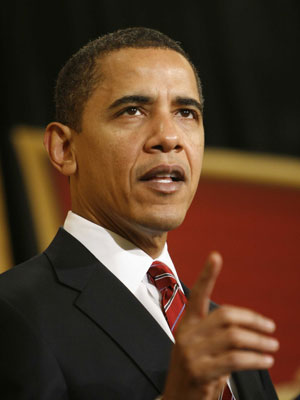
    The president has announced that he will hold <ahref="http://prescriptions.blogs.nytimes.com/2010/02/08/risks-and-perhaps-rewards-in-obamas-health-summit/">a bipartisan gathering on February 25 at Blair House, across the street from the White House, in an effort to get the health-care legislative effort out of the political ditch it is now in. Plans are also under way to stand up a <ahref="http://politics.theatlantic.com/2010/02/obama_pushing_for_deficit_commission.php">bipartis an Debt Commission by executive order. The commission’s mandate would be to report back to the president and Congress on how to get the nation’s fiscal house in order — with a rather convenient reporting deadline of just after the November midterm elections.

    In the daily back-and-forth of political news coverage, it is easy to lose sight of what a stunning turnabout this renewed interest in bipartisanship represents for Barack Obama. For more than a year, his administration attempted to govern based on an entirely different approach. The Democrats in the White House and on Capitol Hill welcomed any Republican willing to jump aboard their legislative plans. But, as the president and his top advisers repeatedly said, they were going to move ahead with “their agenda” — with or without willing Republican participation.

    And it seemed to work — at least initially. Just after getting sworn into office, the president signed the so-called “stimulus” bill. It was heavy on additional federal spending, reflecting the prevailing sentiment among congressional Democrats that what was needed to put people back to work was another heavy dose of governmental activism. Three Senate Republicans (although one is now a Democrat) lent their support to the effort and provided the crucial last votes that delivered to the president his early-in-the-term, momentum-building victory.<spanid="more-26407"></span>

    The stimulus effort provided the template for how the White House planned to move ahead with the rest of its first-term agenda. To run off a string of additional victories, Democrats would need only to hold their sizeable majorities together around plans reflecting their party’s governing priorities. With Democrats united and determined, moderate Republicans would see legislative passage of something as all but inevitable and decide to join the process rather than be left entirely out of “historic” legislative efforts.

    On health care, all seemed to be running according to plan through the spring and early summer. The president gave a series of speeches intended to build momentum and let Democrats know that this was the year to finally “get it done.” And some Republicans, especially in the Senate, sensing that something indeed would pass, were willing to at least sit down with their Democratic counterparts to see if their participation would make a difference in the outcome.

    But then reality hit. Specifically, the legislative clock was ticking, and the Democrats had to finally unveil what they actually had in mind on health care. From the moment the first versions of the House bill were made public in mid-July 2009, voter sentiment turned steadily and decisively against the entire effort.

    The president had promised a non-threatening plan that would painlessly root out wasteful spending, provide almost free coverage to millions, and entail minimal disruption of existing arrangements. But once the actual legislation emerged, it was clear that what the Democrats actually planned to deliver was something entirely different from what had been advertised. The bills drafted in Congress would create another massively expensive entitlement program, financed with burdensome taxes, heavy-handed and job-killing mandates, and arbitrary cuts in Medicare. Moreover, it was clear that the Democrats wanted the federal government eventually to call all of the shots in the health-care sector, which most voters rightly view as a recipe for counterproductive bureaucracy and lower-quality care.As the details became known, widespread public opposition to Obamacare spontaneously swept the nation and was on full display in the August town-hall meetings. But the president and his allies in Congress decided in September that it was too late to turn back. So they ignored what voters were telling them and doubled down on their bet that their coalition would hold together long enough to get a bill to final passage. And if it did, they would be able to lock into place another middle-class entitlement that would be near impossible to reverse later. The political risk was high, but so would be the reward. And so they pressed ahead.

    It almost worked. Almost.

    After Scott Brown’s stunning victory in the Massachusetts special election last month, it is now clear that the coalition President Obama was counting on to pass his health-care bill and follow-on legislation is in absolute tatters. The strain of the effort to ram health care through despite intense public opposition has taken a very heavy toll. Independent voters remain outraged at the arrogance of it all, and have swung decisively toward GOP candidates in recent contests. Congressional Democrats now know they are in peril, and are behaving accordingly. They are in no mood to take any more tough votes on behalf of a president’s agenda that their constituents have plainly rejected. Indeed, in the current environment, it’s hard to see how the House could pass the same health-care bill that it passed just last November.

    This puts the president in a terrible bind, especially given the difficult budgetary choices now confronting him. <ahref="http://www.whitehouse.gov/omb/budget/fy2011/assets/tables.pdf">His 2011 budget submission to Congress shows deficits rising to $1 trillion by the end of the decade and continuing thereafter. From 1789 through 2008, the U.S. government borrowed $5.8 trillion. If the Obama budget were adopted in full, government borrowing would exceed $18 trillion by the end of the decade. Debt accumulation at such a pace would almost certainly precipitate an economic crisis.

    In their heart of hearts, most Democrats think the solution to the nation’s budget problem is a massive tax increase; if they had succeeded on health care, some might have been willing to use that momentum to propose one. But in the current environment, with so much distaste for out-of-control government, the White House and congressional Democrats know full well that it would be complete political suicide for them to push a tax increase at this stage.

    Which brings us back to the president’s renewed interest in having Republicans share in, as he put it, “the burdens of governing.”

    Unfortunately for him, he is now holding a very weak hand as he heads into discussions with his adversaries. His health-care program is so unpopular that Democrats themselves are walking away from it. He promised voters he wouldn’t raise taxes on the middle class, and his Democratic allies want to expand government, not contain or shrink it. So, unless he changes course, he is stuck with presiding over an unprecedented borrowing binge that threatens to cripple his administration.

    Indeed, the president’s capacity to govern by relying just, or mainly, on his own partisan supporters has been so impaired that he is facing the very real prospect of having spent not just one but two years in office with almost nothing to show for it.

    To get out of this box, the president is belatedly trying to draw a larger number of Republicans into taking some of the blame for enacting controversial legislation. But if the president can’t get his own team to support a government-centric health-care program or a massive tax increase, there’s virtually no chance he will get Republicans to do so.

    In the aftermath of Massachusetts, there is an opportunity for renewed bipartisan cooperation. But it won’t be to pass a liberal agenda that even Democrats won’t defend at this point. To accomplish more, the president will have to change the substance as well as the marketing — which so far he seems unwilling to do.

    Cross-Posted at <ahref="http://nationalreview.com/">National Review

    http://blog.heritage.org/2010/02/12/…ipartisanship/

  • Iran’s Natanz Nuclear Facility Suffers Growing Pains

    On 02.11.10 04:00 PM posted by James Phillips

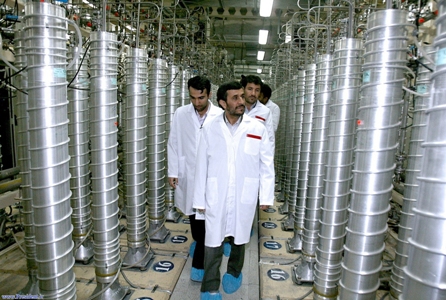
    Despite Iranian President Ahmadinejad’s gloating that Iran is a “nuclear state”, Iran reportedly has encountered problems in expanding its uranium enrichment program at an ambitious rate. According to an article in today’s Washington Post, the uranium enrichment facility at Natanz has experienced declining output levels due to possible technical problems with the centrifuges used to process the uranium. So many centrifuges at Natanz have broken down or been sidelined for unknown reasons that less than half of the 8,700 centrifuges were working in November – a little more than 3,900 machines, down from 5,000 last May.

    Experts have speculated that the problems at Natanz may be caused by the use of old centrifuges, poor maintenance practices, and a rush to expand the numbers of centrifuges installed without fully testing them. But Iran is known to be installing a new generation of centrifuges and it could be under-reporting the numbers of centrifuges in operation and their output.

    It is unclear whether Tehran deliberately reduced the number of centrifuges in operation to mask its true capabilities or it was forced to do so by technical difficulties. But either way, Tehran’s defiant announcement that it is further enriching uranium to 20 percent shows that it is determined to push ahead with its nuclear program despite international opposition. And it is clear that Iran continues to increase its stockpile of enriched uranium which it could use to build a nuclear weapon.

    http://blog.heritage.org/2010/02/11/…growing-pains/

  • Severe Weather Warning for Commercial Real Estate: New TARP Not the Answer

    On 02.11.10 07:20 PM posted by James Gattuso

    The Congressional Oversight Panel (COP), the watchdog board created by Congress to oversee the TARP program, yesterday issued the equivalent of a severe weather warning for commercial real estate markets. Like the residential market before it, the markets for retail, apartment, and other business properties are facing a wave of defaults which, says the panel, “would trigger economic damage that could touch the lives of nearly every American.”

    The numbers are grim. According to the COP, over the next four years $1.4 trillion in commercial real estate loans will come due, of which half are currently underwater, sunk by a 40 percent drop in values since 2007. Total losses could be some $300-400 billion. These losses would be in large part borne by mid-sized and community banks, who tend to invest most heavily in to the commercial market.

    Certainly, the negative effects of such a meltdown would be significant. The question, however, is how to address it. The COP admits that there is no easy answer.

    Possible steps, according to COP, include using government funds to provide fresh capital for affected banks, buying the troubled assets from the banks, and creating a guarantee funds for loans. In other words, extend the TARP bailout program – or key components of it – beyond its current October expiration date to address the problem.

    Policymakers should stop, however, before going down this particular rabbit hole again. As a first matter, this is not the sort of threat TARP was created to address. While economically painful, the situation does not threaten a sudden, catastrophic failure that would endanger the functioning of financial markets. None of the banks at risk would threaten the financial system by their failure. And the effects would be spread out over a number of years.

    By contrast, TARP-like intervention would impede the ability of markets to function properly. The COP itself warns of the dangers, saying:

    “Any government capital support program can create as much moral hazard for small banks as for large financial institutions, and government interference in the marketplace could result in bailing out the imprudent, upsetting the credit allocation function of the capital markets, or protecting developers and investors from the consequences of their
    decisions.”

    And that’s only the start of the problems. Would intervention lead to federal control of pay and other business decisions at hundreds more banks? To long-term government ownership? To Americans weary of the side effects of the original TARP, these are real concerns.

    Perhaps worst of all, intervention would not address the underlying problem: the fact the value of commercial real estate has dropped. No amount of government cash would change that fact.

    Ultimately, the best way for policymakers to address problems in the commercial real estate market — and help the financial institutions and the average Americans that would be hurt by its travails, is to improve the economy on which it depends. And that means reducing, not increasing, government intervention in that economy.

    http://blog.heritage.org/2010/02/11/…ot-the-answer/

  • A Very Special Anniversary

    On 02.11.10 08:31 AM posted by Peter Brookes

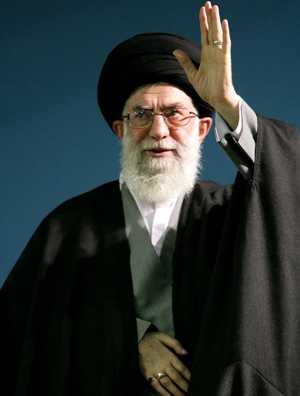
    <ahref="http://blog.heritage.org/wp-content/uploads/Ayatollah-Ali-Khamenei.jpg"></p>Over at National Review Online they asked experts to weigh in on the <ahref="http://blog.heritage.org/2010/02/10/iran%E2%80%99s-supreme-leader-promises-a-stunning-%E2%80%9Cpunch%E2%80%9D/">situation with Iran and Heritage Expert Peter Brookes was asked to share his thoughts.

    Hey, Mr. President, how’s that engagement policy with Iran working out for you? Not so well, from what I can tell.

    While you were busy hoping for a breakthrough, holding fast to the Pollyannaish foreign-policy notion that “if we’re nice to them, they’ll be nice to us,” the situation in Iran has only gotten worse over the last year — and precipitously so.

    The Iranians are kicking up <ahref="http://article.nationalreview.com/424665/a-very-special-anniversary/nro-symposium#" target="_blank">uranium enrichment beyond what is needed for reactor fuel; their ballistic-missile programs, which could carry dangerous payloads, are advancing; Tehran is re-arming Hezbollah; and the regime continues to hammer the opposition movement — one which could have changed the dynamic in Tehran but which you failed to support.<spanid="more-26228"></span>

    Despite missing many opportunities to get tough with Iran since you took office — were you expecting the regime to see the longstanding errors of its ways? — it’s still not clear today whether we have a policy for dealing with Tehran other than hoping for the best.

    By the way, hope is no basis for a national-security strategy.

    Unfortunately, allowing the Iranian regime to believe it can act with impunity — at home or abroad — will only lead to bigger, more serious problems as Tehran gains confidence and asserts itself in ways inimical to American interests.
    It’s likely that the 31st anniversary of the Iranian Revolution, set for February 11, will give us a fresh look into just how bad things have gotten — and will, in all likelihood, keep getting.

    Cross-Posted at <ahref="http://article.nationalreview.com/424665/a-very-special-anniversary/nro-symposium">NRO’s Symposium

    http://blog.heritage.org/2010/02/11/…l-anniversary/

  • Climate and Rent-Seeking

    On 02.11.10 09:00 AM posted by David Kreutzer

    <ahref="http://blog.heritage.org/wp-content/uploads/100211-cop15.jpg"></p>Data show 2009 was a record year for lobbying on energy issues.* 1747 clients (firms and groups) hired lobbyists to work in the area of <ahref="http://www.opensecrets.org/lobby/issuesum.php?year=2009&lname=Energy+%26+Nuclear+Po wer&id=">energy and nuclear power. This is a stunning 93 percent increase from 2006.

    This increase may be stunning, but it isn’t surprising.* With literally trillions of dollars put into play by various cap-and-trade bills over the last three years, it would have been surprising if lobbying hadn’t grown by leaps and bounds.

    Though initially offered as legislation to fight global-warming, the justifications for cap and trade followed the polls (from global warming to climate change to energy security to economic stimulus to green jobs to who knows what’s next) and the bills’ provisions followed the money.* Effectively a huge energy tax, early proposals kept the trillions in new taxes for federal spending.* In the end, the only bill to pass either house of Congress, the Waxman-Markey bill, gave virtually all of the revenue away to a grab bag of special interests.<spanid="more-26214"></span>

    This evolution perfectly fits the theory of Professors Gordon Tullock and Nobel Laureate James Buchanan who developed public choice theory—a sub discipline of economics that investigates the self-interested use of the political process.* Public choice theory predicts the regulatory process will be bent toward the goals of private enrichment as politicians and rent-seekers (a term coined by Anne Krueger in her 1974 analysis of this behavior in India and Turkey) do what economists assume all business owners and consumers do—look out for themselves.

    So legislation and regulations that promise billions in taxes for some energy companies (and their customers) and offer billions in benefits to others will get both sides excited and generate the demand for lobbyists that we have now seen.

    For instance, the Climate Action Partnership strongly supports cap-and-trade legislation, especially if its members get big chunks of the tax revenue.* Among the founding corporate members, Duke Energy, BP, Honeywell International, NRG Energy, Shell Oil, Dow Chemical, and Alcoa rank in the top 50 most active clients lobbying in the energy area.

    As current and proposed policies offer billions in subsidies to both wind and nuclear power, it’s another dog-bites-man story when we find representatives of the wind and nuclear power industries in the top 50 as well.* Of course those expecting big losses from the proposed regulations and taxes are lobbying hard to stave them off.* So coal and refining interests are also well represented in the top 50.

    Stricter rules on lobbying can change the form the lobbying takes (indeed the numbers above only reflect official use of registered lobbyists), but reducing government control of the economy reduces the root cause of the lobbying and is the one solution to controlling the growth of rent-seekers and their mouthpieces on K Street.

    http://blog.heritage.org/2010/02/11/…-rent-seeking/