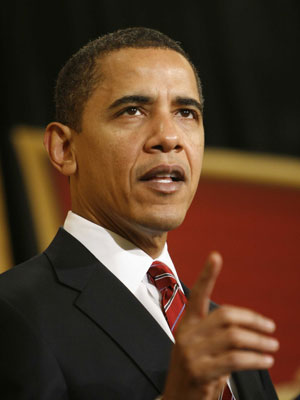
Author: Heritage

  • Iran’s Supreme Leader Promises a Stunning “Punch”

    On 02.10.10 01:00 PM posted by James Phillips

    <ahref="http://blog.heritage.org/wp-content/uploads/Ayatollah-Ali-Khamenei.jpg"></p>Tensions continue to build within Iran ahead of the annual celebration of the 1979 Islamic revolution on February 11. Supreme Leader Ayatollah Ali Khamenei <ahref="http://www.breitbart.com/article.php?id=CNG.e0b08e9e64fe15a987c1cf73dd8c5fe 2.521&show_article=1">called on Monday for unity and vowed that Iran would “punch the arrogance” on the anniversary: “The Iranian nation, with its unity and God’s grace, will punch the arrogance (Western powers) on the 22nd of Bahman (February 11) in a way that will leave them stunned.”

    Washington responded to the heightened Iranian rhetoric by increasing sanctions on the revolutionary guards and lamenting the hypocrisy of Iran’s ruling regime. On Wednesday the Treasury Department <ahref="http://www.ustreas.gov/press/releases/tg539.htm">announced that it was adding one individual and four companies to the list of entities affiliated with Iran’s Islamic Revolutionary Guard Corps that are targeted for financial sanctions.

    The chief American representative at the International Atomic Energy Agency, Glyn Davies, told the <ahref="http://www.google.com/hostednews/ap/article/ALeqM5iRqjZV1Meppj40hTs8IBOv4DdsQwD9DPCRR00">Assoc iated Press that it is “callous and chilling” that Iran’s government, which claims to be enriching uranium for civilian purposes, has rejected the offer to refuel its nuclear research reactor: “Why is Tehran gambling with the health and lives of 850,000 Iranian cancer patients in pursuit of ever more dangerous nuclear technology?” asked Davies.<spanid="more-26133"></span>

    Meanwhile, Iran’s ruthless regime made it clear that if Iran’s Green Movement opposition forces try to infiltrate the pro-government rallies tomorrow to give them an anti-government spin, then they will be jeopardizing their health and possibly their lives. Iranian police <ahref="http://news.bbc.co.uk/2/low/middle_east/8508813.stm">rounded up opposition activists in advance of the celebrations.

    Moreover, the Iranian government has stepped up its efforts to <ahref="http://www.cnn.com/2010/WORLD/meast/02/10/iran.information.blockade/index.html">block communication between opposition groups and the Iranian people by interfering with internet speeds and blocking text messaging services.

    In addition to using street thugs to intimidate Iranian protesters, the regime also has dispatched members of the Basij militia to stage “student demonstrations” in front of the <ahref="http://www.reuters.com/article/idUSTRE6183OX20100209">French and Italian embassies, charging the two western nations with interfering in Iran’s internal affairs.

    Despite growing threats of intimidation Iran’s opposition leaders remain determined to mobilize their supporters to demonstrate tomorrow. Both sides appear to be girding for a potentially violent showdown.

    http://blog.heritage.org/2010/02/10/…unch%e2%80%9d/

  • Economic Impact of Stimulus Spending: A Response to Menzie Chinn

    On 02.10.10 01:25 PM posted by Karen Campbell

    <ahref="http://blog.heritage.org/wp-content/uploads/money_stacks090211.jpg"></p>At <ahref="http://www.econbrowser.com/archives/2010/02/the_heritage_fo.html">Econbrowser, Dr. Menzie Chinn provides a succinct summary of <ahref="http://www.heritage.org/Research/Economy/wm2799.cfm">my critique of CEA’s “Economic Impact of the Stimulus” report when he writes, “…these implied increments to growth rates do not jibe with the inferences drawn by Dr. Campbell — that the impact on GDP is much smaller than CEA asserts when using forecasts from the other agencies and firms.” (italics mine).

    My critique was that the CEA’s method for estimating the economic impact of the American Recovery and Reinvestment Act (ARRA) cannot be used to make a meaningful inference about the economic impact of ARRA quantitatively (or qualitatively).

    The CEA admits, as does Dr. Chinn, that numerous other events and actions were taking place that could explain the difference between the forecast and actual data. The economic analysis undertaken by the CEA either needed to use econometric tools to separate out and isolate the ARRA effect in the difference between the forecast and actual or they needed to run an impulse response of ARRA on their VAR model (a counterfactual analysis). That is, if they were going to use a VAR approach to study the impact of ARRA they needed to establish the baseline and then introduce ARRA to that same VAR model. For example, Christine Romer and David Romer used such an approach in their paper <ahref="http://www.nber.org/tmp/3985-w13264.pdf">“The Macroeconomic Effects Of Tax Changes: Estimates Based On A New Measure Of Fiscal Shocks”.<spanid="more-26147"></span>

    My point is simple and hardly “difficult to understand”: the Administration approach did not, in fact, estimate the impact of ARRA.

    The CEA just subtracted actual quarterly results for 2009 from the forecasted quarterly results. That’s a bad analytical move for at least two reasons: (1) Any number of things could explain the difference between a forecast and actual results. It is the job of the economist to separate out these effects in a statistically meaningful way. (2) The fact that using different forecasts provides different quantitative results shows that this methodology is inadequate for estimating the impact of ARRA.

    Dr. Chinn’s criticism of picking forecasts before the stimulus was enacted is moot since I am not trying to show the impact of ARRA but rather the inadequacy of simply producing a forecast and subtracting the difference. However, the choice of forecast was intentional. If the forecast was not made before the stimulus bill passed, then the forecast would have included the impact of the stimulus and thus could not be used as a “counterfactual” of what would have happened without the stimulus.

    http://blog.heritage.org/2010/02/10/…-menzie-chinn/

  • Could Trillion Dollar Debt Kill Obama Health Care Reform?

    On 02.09.10 02:00 PM posted by Kathryn Nix

    It seems the President’s spending habits have finally caught up with him, threatening to kill a government overhaul of health care. Though President Obama and congressional Democrats continue to insist that health care reform is on the horizon, the increasing national concern over the rising public debt presents an undeniable obstacle.

    James Capretta, a Fellow at the Ethics and Public Policy Center, outlines why this is the case in a recent article for Kaiser Health News. First of all, President Obama is responsible for raising the debt to unprecedented levels. Capretta explains, “From 1789 through 2008, the U.S. government borrowed a total of $5.8 trillion. In 2009, the federal budget deficit exceeded $1.4 trillion. The administration now expects the 2010 deficit to break that record, topping $1.6 trillion. And in 2011, it would only fall to about $1.3 trillion. Thus, in just three years, the debt will have jumped an astonishing $4.2 trillion.”

    This outlook will making passing a budget-buster like the Senate health care bill difficult. By 2020, the President’s budget would raise the federal debt to $18.6 trillion. This includes the adoption of a health care bill, which falsely relies on $150 billion in budget deficit reductions between now and 2019. The only problem is that the bill would not reduce the deficit at all—rather, it would add to it substantially. A recent letter from the Congressional Budget Office to Senator Jeff Sessions (R-AL) explains this.

    And then there is the question of how President Obama will tackle the nation’s impending fiscal crisis. The President’s plan is to pass health care reform and address deficit spending later through a weak and likely inconsequential bipartisan deficit reduction commission. This commission would present its proposals to Congress for a vote after the 2010 election, meaning voters’ decisions at the polls would not affect the fate of this vital legislation. This is unlikely to satisfy Americans’ concerns over the sustainability of federal spending.

    Congress’ last possible plan is to pass the Senate bill in the House, accompanied by a second bill of amendments to appease House members. The Senate would use reconciliation to forego a filibuster which could kill the bill thanks to newly-seated Senator Scott Brown (R-MA). But, as Capretta puts it, “Reconciliation measures are supposed to address budgetary matters. How could amendments to something that is not yet in law change outlays or revenues in any rational way?”

    Capretta points out that, in general, the release of a new budget marks the start of a fresh legislative session. It will be difficult for Congress and the President to backtrack to include health care reform in its plans for 2010, as the Congressional Budget Office will have reset its baseline and the congressional budget committees with have already begun to write new budget resolutions.

    Because of all this, not to mention the myriad of unintended consequences the Senate bill would unleash on health care, the economy, and every American family, President Obama should wipe the slate clean and start afresh in reforming health care. This time, the President should work with both sides of the aisle and embrace step-by-step reforms that all can agree will have a positive affect on lowering costs and covering the uninsured.

    http://blog.heritage.org/2010/02/09/…h-care-reform/

  • Obama?s ?Reset? Button Quickly Changing to ?Panic?

    On 02.09.10 02:30 PM posted by Conn Carroll

    Given Iran’s well established pattern of behavior (and Russia’s, and China’s) we were highly skeptical about President Barack Obama’s “Reset Button” approach to U.S. diplomacy.

    And now it seems that the failure of Obama administration’s Iranian engagement strategy is about to shift the focus of U.S. diplomacy from “reset” to “panic.” Reuters reports:

    The United States wants the U.N. Security Council to approve a resolution within weeks, not months, laying the ground for new sanctions against Iran over its nuclear programme, the Pentagon said on Tuesday.

    U.S. Defense Secretary Robert Gates spoke to leaders in Turkey, Italy and France about the “urgent need” to move forward on sanctions as soon as possible, Pentagon press secretary Geoff Morrell told reporters.

    http://blog.heritage.org/2010/02/09/…ging-to-panic/

  • Bravo Costa Rica!

    On 02.09.10 03:00 PM posted by Ray Walser

    The election of Laura Chinchilla of the National Liberation Party on February 7 to the presidency of Costa Rica is an important milestone for Central America. President-elect Chinchilla has become Costa Rica’s first female president and the fifth woman elected president of a Latin America state since 1990. Her election represents a further blunting of the populist Left’s mythical invincibility in the region, and offers a pleasing counterpoise to the likes of anti-American machismo of Venezuelan president Hugo Chavez. In Panama, Honduras, Chile, and now Costa Rica, leaders of the center or center-right are winning elections, helping curb the march toward the radical Left.

    President-elect Chinchilla, a former vice president, considers herself a staunch democrat and will likely continue Costa Rica’s leadership in advancing democracy, respect for human rights, a free press, and economic opportunity in the region.

    In this way, she would continue the legacy of two-time Costa Rican president and Nobel Peace Prize winner Oscar Arias, who will now assume a place in history alongside the legendary founder of modern Costa Rican democracy, “Pepe” Figueres. Arias helped to end the Central American wars of the 1980s; he challenged the Latin American tendency to blame the U.S. for the region’s economic and social shortcomings; and he helped negotiate a peaceful settlement of the Honduran presidential and constitutional crisis.

    It’s a record that will take courage and conviction to follow, but Chinchilla appears ready. She has promised to pursue free market strategies, to fight crime and drug trafficking in Central America, and to work cooperatively with the United States. And that deserves a welcome response from Washington, indeed.

    http://blog.heritage.org/2010/02/09/bravo-costa-rica/

  • Don?t Let EU Army Undermine NATO

    On 02.09.10 08:00 AM posted by Sally McNamara

    At the annual Munich Security Conference, German foreign minister Guido Westerwelle has called for the creation of a European army. Following the introduction of the Lisbon Treaty, the EU thinks that it is ready for the big time, ready to assume the burdens of international leadership. Last February, they sent a six-page letter to President Obama, seeking to play a greater role on the international stage.

    But the United States should be in no hurry to relin*quish its transatlantic leadership role to the Euro*pean Union. Lady Thatcher described the creation of an EU army as “a piece of monumental folly that puts our security at risk in order to satisfy political vanity.” Rather than representing a genuine attempt to increase Europe’s military contribution to vital missions, such as Afghanistan, the EU is merely seeking to advance its own political ambitions. Rather than realizing America’s need for Europe to take on more of its own security burden, a European army is more likely to drain the already limited military capabilities of member states, and draw resources away from NATO.

    The Lisbon Treaty has not created a stronger Europe capable of handling global, or even regional, security. As the Haitian earthquake demonstrated, the EU will continue to stand impotent before crises, incapable of independently mounting major humanitarian or security operations.

    A cross-party group of former senior British min*isters commented in 2000 that the creation of an EU army was “an openly political project.” Now, as then, no additional troops are available for this paper army. Either troops already committed to NATO will be counted twice, or, in the worst case scenario, troops will be withdrawn from existing NATO missions, such as Afghanistan.

    Foreign policy is an attribute of statehood that must remain at the nation-state level if it is to be meaningful or effective. If the United States wishes to continue enjoying the benefits of its long-stand*ing relationships with the countries of Europe, it must oppose the creation of a supranational EU foreign policy and the undermining of NATO by the European Union.

    http://blog.heritage.org/2010/02/09/…european-army/

  • Outside the Beltway: Americans Angry, But Also Engaged

    On 02.09.10 08:59 AM posted by Brandon Stewart

    Yesterday’s Rasmussen poll reveals what anyone who has been watching the news for the past year already knows — Americans are angry. They are angry at their government and its failures to provide solutions to the current problems. According to today’s poll, 75% of likely voters are “at least somewhat angry at the government’s current policies”. The poll also found that a whopping 45% of respondents were in the “Very Angry” category a nine percent increase from earlier this fall.

    What the poll didn’t show was that many Americans are not just sitting in their houses stewing. They are getting out of their houses and getting involved. The rise of the Tea Party movement this year is a great example.

    Take Tucson, Arizona, where a group of conservative activists took the city’s budget deficits head on in a creative video last month. The City Council has spent the past few months trying to figure out to deal with the shortfalls and these activists have a suggestion — cut unnecessary spending.

    The video highlights a program that gave Priuses to each of the member of the city council as well as*the efforts of Tucson City Councilman Steve Kozachik (who declined a Prius) to find other areas of the budget to cut.

    The video is an effective example of how ordinary citizens armed with video cameras can argue for conservative principles and hold their government accountable. It also highlights how Americans are not just angry, they are also on the move.

    http://blog.heritage.org/2010/02/09/…rol-in-tuscon/

  • Obama’s Faith-Based Office Shouldn’t Put So Much Faith In Government

    On 02.09.10 10:00 AM posted by Ryan Messmore

    A recent Washington Post article reports that several faith leaders are sensing a new tone from President Barack Obama’s office on faith-based initiatives. According to Stanley Carlson-Thies, who has worked closely with the office under both Presidents Bush and Obama, rather than creating a fair playing field for the good works of faith-based groups, the attitude now is: “We’re the government, doing wonderful things, YOU can come join US.”

    Attitudes and expectations about government are important. They shape how citizens respond to poverty and injustice.

    That’s why we’d propose a different view of government’s role in meeting people’s needs: the government protects what civil society provides.

    A new resource from The Heritage Foundation called Seek Social Justice: Transforming Lives in Need explains this perspective. This innovative DVD small group study guide articulates a framework for understanding the roots of human need and social breakdown and what to do about them. Effective assistance tends to come not from the federal government but from those closest to the problem.

    As the guide’s third lesson documents, congregations and faith-based groups are especially suited to offer comprehensive care and responsibility. The White House should ask what it can do to protect their capacity to serve, not the other way around.

    Government plays the important role of securing conditions in which individuals and civil society institutions can meet people’s needs. That’s much different than saying, “We’re the government, doing wonderful things, YOU can come join US.” One approach assumes that the government should help people by directly providing them money or jobs. The other assumes that government is more helpful when safeguarding conditions that foster personal and mutual responsibility and upward mobility by enabling businesses to grow and create new jobs.

    The former approach fosters the attitude that government is the place to turn to solve social challenges directly. The latter approach looks to government to protect the social space in which problems are tackled by those who are better equipped for the job—whether they be families, churches, businesses, charitable organizations, or a vast range of private-sector groups, clubs, teams, and associations.

    In the midst of rising unemployment and other economic difficulties, many people are looking for a place to turn for help. Now more than ever we need to understand which spheres of society are responsible and equipped to provide that help most effectively. Seek Social Justice addresses this question in a thoughtful, engaging way. (All six videos and the corresponding study guide can be viewed online or ordered for delivery at www.seeksocialjustice.com.)

    http://blog.heritage.org/2010/02/09/…in-government/

  • Obama?s Health-Care Summit – Gimmick or Negotiation?

    On 02.09.10 11:00 AM posted by Brian Darling

    On February 25th, the White House has proposed a bipartisan, half-day televised summit on health care. It is unclear as to whether this is a publicity stunt by the Obama Administration or a good faith effort to negotiate with Republicans to come up with a bipartisan health care reform bill. The Washington Post reports today many Republicans are pushing back and urging the White House to scrap Obamacare as a precondition to any negotiation. House Minority Leader John Boehner (R-OH) and Whip Eric Cantor (R-VA) sent a letter to White House Chief of Staff Rahm Emanuel objecting to the House and Senate versions of Obamacare being the base line bills of the negotiations. Hopefully, this summit meeting is more than the President checking off a campaign promise to have all health care negotiations on C-SPAN.

    If this summit is a genuine start to bipartisan negotiations, then a few issues need to be settled before the meeting:

    1. Start Over – The American people have rejected Obamacare and they want Congress and the Obama Administration to start over from scratch. The election of Scott Brown as Senator from Massachusetts was a strong message, from a liberal state, that Obamacare is not popular with the American people. An NBC News/Wall Street Journal Poll indicates that 31% think the President’s health care plan is a good idea v. 46% a bad idea. CNN/Opinion Research has the numbers at 38% in favor and 58% opposed. It is clear that a minority in Congress is representing the will of a majority of Americans who think Obamacare is a bad idea and it is time for liberals in Congress and the Obama Administration to start listening to the American people. With the overwhelming weight of polling data and election results in Massachusetts indicating widespread opposition, it is time to start over.

    2. Take Reconciliation off the Table – The President needs to state publicly that he will not support partisan efforts in Congress to use reconciliation procedures as a mechanism to railroad through pending versions of Obamacare. Reconciliation, commonly referred to as the Nuclear Option in the Senate, allows the supporters of Obamacare to avoid a filibuster in the Senate and ignore the traditional rules that would allow extended debate and amendment. Using reconciliation and relying on one party’s votes to pass an unpopular approach to health care reform would not translate into a bipartisan solution to comprehensive health care reform.

    3. Transparency – Transparency has to be any part of a summit and it does not begin and end with the publicly broadcast meeting. First, what may be necessary is for the Obama Administration, Republican Leaders, Democrat Leaders and Moderate Democrats have a private meeting, before any planned public summit to clear the air. There is nothing wrong with having a private meeting to provide an opportunity for members to speak freely and build some needed trust. Right now, there is no trust and there has been a complete breakdown in communication. Maybe they could sit and discuss the core elements of a true bipartisan plan in private, and then have a public summit to air any agreement over a half day. A meeting and summit does not mitigate the need for public hearings in Congress and other means to transparently consider any new elements of a health care bill. The White House had been actively engaged in closed door negotiations as recently as the first week of this year with lobbyists and congressional leaders in a manner that excluded moderate Democrats, Republicans and the American people. This needs to end. It is reasonable for members of Congress to have informal negotiations at times, yet the work product should be subject to transparent hearings in the House and Senate committees of jurisdiction. Any deal should be vetted with the American people and subject to a transparent process.

    The great danger in this process is that the Obama Administration checks off a campaign promise then goes on with business as usual. This summit can’t merely be a gimmick where the President lectures Republicans and Republicans lecture the President, then the President forges forward with the same Obamacare bill that has been rejected by the American people. This summit should be where the President starts the process over and engages in real negotiations with a broad audience.

    http://blog.heritage.org/2010/02/09/…r-negotiation/

  • The Canadian Patients’ Remedy for Health Care: Go to America!

    On 02.09.10 12:00 PM posted by Vikram Srinivasan

    One common assertion among the left is that other industrialized nations, such as Canada, achieved great success in health care within their collectivist framework. This, then, begs the question: why is the head of an east coast Canadian province coming to the United States for medical treatment?

    Newfoundland Premier Danny Williams is seeking heart surgery in the United States, drawing criticism from “local bloggers and people calling in to the province’s immensely popular open-line radio shows.” Yet his actions are hardly unusual for world leaders. Saudi Arabian King Abdullah bin Abdulaziz is known to have his checkups at the prestigious Mayo Clinic in Rochester, Minn. Italian Prime Minister Silvio Berlusconi had heart surgery at the Cleveland Clinic in 2006 . Even middle-class Canadians are utilizing their proximity to the United States to seek treatment here.

    A study by Steven Katz, Diana Verilli, and Morris Barer in Health Affairs examining the Ontario Health Insurance Plan from 1987 to 1995 found “evidence of cross-border care seeking for cardiovascular and orthopedic procedures, mental health services, and cancer treatments,” although not widespread. Examples include the governments of British Columbia and Quebec sending patients to the United States for coronary artery surgery and cancer treatment. Shona Holmes, a Kingston, Ontario resident in need of an endocrinologist and neurologist, crossed the border when she was told to wait “four months for one specialist and six months for the other.” Karen Jepp delivered identical quadruplets in Montana “because of a shortage of neonatal beds in Canada,” with the Calgary health system picking up the tab.

    Perhaps Canadians’ health care migration patterns are a result of their own centralized system of government health care planning and “free care” crashing into the government’s budget constraints. The annual study “Paying More: Getting Less“*produced by the Fraser Institute, a Canadian think tank, found that government-run monopolies established in each province of Canada (simultaneously barring private operators from competing for the delivery of public health services) produce rates of growth in government health care spending that are “not financially sustainable through public means alone.” Each province’s policy of insulating consumers from price signals, such as premiums, co-payments and deductibles, has naturally led to over-consumption of medical treatment. Thus provincial governments, encountering fiscal restraints, must resort to long queues and the rationing of care.

    And wait patients must. A hospital survey of five countries (United States, Canada, New Zealand, United Kingdom and Australia), conducted by Robert Blendon and colleagues in Health Affairs found that “waits of*six months or more for elective surgeries were reported to occur ‘very often’ or ‘often’*by 26–57 percent of executives in the four non-U.S. countries; only 1 percent of*U.S. hospitals reported this. Half of all Canadian hospitals reported an average waiting time of over six months for a 65-year-old male requiring a routine hip replacement; no American hospital administrators reported waits this long.

    Perhaps if Canadian provinces adopted a free-market approach to health care, more of their citizens (and politicians) would seek treatment within their borders. This leaves just one question: if the United States adopts government-run health care system, even remotely like that of Canada, with government control of benefits and financing, plus reams of rules specifying what we can and cannot get, which border are we going to cross to get the care we need?

    Vivek Rajasekhar currently is a member of the Young Leaders Program at the Heritage Foundation. For more information on interning at Heritage, please visit:*http://www.heritage.org/about/departments/ylp.cfm

    http://blog.heritage.org/2010/02/09/…go-to-america/

  • Government?s New Climate Service Shouldn?t Be Used as Doomsday Device

    On 02.09.10 12:13 PM posted by Nick Loris

    The Washington Post reports that The National Oceanic and Atmospheric Administration (NOAA) has proposed to create a new climate service and website that would provide the public with information and predictions about the impact of global warming. If this turns out to be yet one more source of apocalyptic government press releases and other such hype, it’s the last thing we need. Just look at the cover of NOAA’s already-existing National Climate Data Center report showing a photoshopped house under water to get a sense of how much are tax dollars are already being wasted on NOAA scares, not to mention those from NASA, EPA and other bureaucracies with a piece of the climate action.

    What we really need is more scrutiny of such scary claims. Climategate – the release of emails showing exaggerated temperature increases and other misconduct among key contributors to the UN’s major global warming report, may well implicate some of NOAA’s work. But don’t expect to hear too much of that on the new website. Recent revelations show that claims of Himayalan glaciers melting and hurricane damage increasing due to global warming are also suspect, but again this is the kind of thing federal global warming researchers are busy trying to ignore. Rather than focus on bringing truth and transparency to the scientific debate on climate change, the government officials continually push that the science is settled and to save the planet we need resembling the actions of Audi’s “Green Police” commercial.

    For those who haven’t seen the ad, (available here), green cops arrest average citizens for small environmental infractions. The ad even includes a super-sniffing anteater and Cheap Trick rerecording “Dream Police” into “Green Police” as the theme song. Some of the infractions are quite over the top but many are either punishable by fine today or are currently being proposed. Some cities, including Washington D.C., have implemented a plastic bag tax. The phase-out of incandescent light bulb will commence in 2012. There are some who want to ban bottled water because it creates too much waste and uses too much energy. San Francisco passed a law that says if residents or businesses do not recycle properly, they would be hit with fines and could have their garbage collection stopped. San Francisco Mayor Gavin Newsom said, “We don’t want to find people. We want to change their behavior.” And that’s the legitimate problem with overreaching environmental policies that limit personal freedoms.

    Jonah Goldberg said of the green police ad: “The commercials arrive at precisely the moment when that inevitability is unraveling like an old pair of hemp socks. The global warming industry is imploding from scientific scandals, inconvenient weather, economic anxiety and surging popular skepticism.” Let’s hope NOAA’s new climate service isn’t another avenue to reignite the doomsday scenarios to protect the government’s iron grip on the scientific consensus.

    Senior Policy Analyst Ben Lieberman co-authored this blog.

    http://blog.heritage.org/2010/02/09/…omsday-device/

  • Guest Blogger: Message for John Brennan: First Rule of Holes Is ? Stop Digging

    On 02.09.10 12:30 PM posted by Marc Thiessen
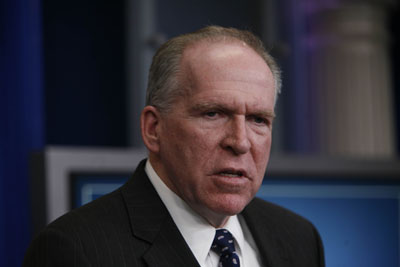
    In USA Today this morning, Obama’s top counter-terrorism advisor lashes out at those criticizing the administration’s bungling of the Christmas Day bomber interrogation.* Brennan accuses critics of “[p]olitically motivated criticism and unfounded fear-mongering” which he declares “only serve the goals of al-Qaeda.”

    My goodness.

    Only one problem for Brennan.* The criticism to which he refers is not from Dick Cheney and commentators on the right.* His op-ed was a reply to an editorial from USA Today, published side by side with his own, which is entitled: “Our view on war on terror: National security team fails to inspire confidence. Officials’ handling of Christmas Day attack looks like amateur hour.”

    Ouch.

    USA Today is not alone in its criticism.* The Washington Post, that right-wing bastion, has also taken the administration to task in the Abdulmutallab case.* After first defending the White House on the Christmas Day interrogation, the Post reversed course once the facts emerged, writing: “We originally supported the administration’s judgment in the Abdulmutallab case, assuming that it had been made after due consideration. *But the decision to try Mr. Abdulmutallab turns out to have resulted not from a deliberative process but as a knee-jerk default to a crime-and-punishment model.”* The Post called the Administration’s handling of Abdulmutallab “myopic, irresponsible and potentially dangerous.”

    Ouch again.

    Were the Post and USA Today engaged in “fear-mongering” in service to the “goals of al Qaeda”?

    The fact is the Obama administration — and Brennan in particular — are on the defensive over the mishandling of Abdulmutallab, and with good reason. *So they are flailing about, lashing out at their detractors and coming up with a series of confused, contradictory, and demonstrably false excuses for their egregious string of errors.

    This weekend, for example, Brennan claimed on Meet the Press that he informed key Republican members of Congress that the Christmas bomber was in FBI custody, and said “They knew that ‘in FBI custody’ means that there’s a process then you follow as far as Mirandizing and presenting him in front of a magistrate. None of those individuals raised any concerns with me at that point.”

    He forgot to mention that in August 2009 the Obama administration had informed Congress and the press that terrorists questioned by the FBI, as part of its High-Value Interrogation Group, would not automatically be Mirandized. *According to the Washington Post, “Interrogators will not necessarily read detainees their rights before questioning, instead making that decision on a case-by-case basis, officials said. *… ‘It’s not going to, certainly, be automatic in any regard that they are going to be Mirandized,’ one official said, referring to the practice of reading defendants their rights. ‘Nor will it be automatic that they are not Mirandized.’”* Whoops.

    This is only the first of many whoppers Brennan has told since the scandal broke.* In his USA Today op-ed, writes: “Would-be shoe bomber Richard Reid was read his Miranda rights five minutes after being taken off a plane he tried to blow up. The same people who criticize the president today were silent back then.”* He fails to mention that Reid was captured just a few weeks after the 9/11 attacks, when they system of military commissions was not yet up and running, and the authority to hold terrorists captured inside the U.S. as enemy combatants had not yet been affirmed.* (And, by the way, since when is “we’re doing the same thing as Bush” the mantra of the Obama administration anyway?* Didn’t Bush leave them a big “mess” on detainees that Obama had to clean up?* Forgive us for being confused)

    Then Brennan writes: “There have been three convictions of terrorists in the military tribunal system since 9/11, and hundreds in the criminal justice system — including high-profile terrorists such as Reid and 9/11 plotter Zacarias Moussaoui.”* He fails explain why there have been only three convictions in the military tribunal system.* The military commissions did not begin functioning until 2008 because of all the legal challenges from left-wing lawyers, including Eric Holder’s law firm, Covington & Burling (which, as I point out in Courting Disaster, donated about $1.2 million in free legal services to terrorist at Guantanamo Bay in 2007 alone).* As for the argument that hundreds were convicted in the criminal justice system, it has been decimated by Andy McCarthy over at National Review Online.* Apparently that number includes every junior extremist who got a parking ticket outside a radical mosque.

    Brennan claims that reading terrorists Miranda rights was standard FBI policy under Michael Mukasey.* But he neglects to mention that Mukasey forcefully affirmed the President’s wartime authority to detain terrorists captured in the United States —*including U.S. citizens —*as enemy combatants, both as Attorney General and as a federal judge.

    Brennan claims that terrorists like Padilla and al-Marri “did not cooperate when transferred to military custody.”* Release the interrogation reports and prove it.* These are the same people who told us the CIA interrogation program did not work, until the declassified intelligence proved those claims to be completely wrong.

    Brennan claims that “Immediately after the failed Christmas Day attack, Umar Farouk Abdulmutallab was thoroughly interrogated and provided important information.”* If he was so “thoroughly” interrogated during that 50 minutes of questioning, why are we questioning him again today after he broke his five weeks of silence? *Either we got everything we needed (as the Administration conveniently argued when Abdulmutallab was not speaking), or he has more information (as the administration claims now that he is speaking).* Seems that initial interrogation was not so “thorough” after all.

    And why on earth are they telling us that he is talking, much less what he is talking about?* By sharing this information with the press, they are also sharing it with al Qaeda.* The surprisingly candid explanation came from White House Deputy Press Secretary Bill Burton, who told reporters: “Ideally this information would not necessarily come out … but we made the determination that it was a good idea to make sure that people knew …*that our methods here were working.”* In other words, “ideally” we would not share with al Qaeda that Abdulmutallab was talking, but since we are under fire from critics for screwing this up we thought it was a “good idea” to share intelligence with the enemy.

    And Brennan accuses his critics of being “politically motivated”?

    And it goes on.

    The fact is, the bungling of Abdulmutallab’s questioning will one day he taught in interrogation school as a case study in how not to do it.* Telling this high-value terrorist he had the “right to remain silent” —*a right he exercised for five weeks —*cost us irreplaceable counterterrorism opportunities. *And telling us when he began talking again gave the enemy a heads-up to cover his tracks further.

    It is hard not to agree with USA Today’s assessment: *It’s “amateur hour” at the White House.* Unfortunately, that hour comes in a time of war.

    Marc Thiessen is a former speechwriter for President George W. Bush and author*of the New York Times bestseller Courting Disaster: How the CIA Kept America Safe and How Barack Obama Is Inviting the Next Attack.

    The views expressed by guest bloggers on the Foundry do not necessarily reflect the views of the Heritage Foundation.

    http://blog.heritage.org/2010/02/09/…-stop-digging/
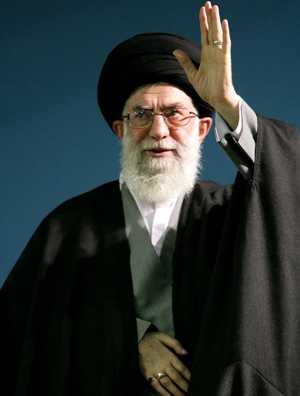
  • From NRO?s The Corner: Brennan Embarrasses Himself

    On 02.09.10 12:46 PM posted by Rory Cooper

    Earlier this weekend, former Alaska governor Sarah Palin told Chris Wallace in a Fox News interview that the Obama administration’s position on dissent is that detractors should “sit down and shut up.” The Huffington Post crowd immediately jumped on the statement, saying it couldn’t be supported.

    Well, 24 hours later, White House homeland-security adviser John Brennan put this argument to rest by publishing a blog in USA Today that not only tells Americans to sit down and shut up but also accuses them of “serv[ing] the goals of al-Qaeda” if they question the president’s national-security strategy — as if two-sided political discourse is al-Qaeda’s ultimate goal.

    In fewer than 400 words, Brennan embarrasses himself with half-truths, selective omissions, and name-calling hysteria. But more importantly, he identifies one of the major problems facing the Obama White House: They lack a credible leader on homeland security that the American people fully trust. This problem clearly began when DHS Secretary Janet Napolitano came out days after Christmas saying “the system worked.”

    Napolitano was quickly sent to a cabinet timeout, where she joined HHS Secretary Kathleen Sebelius, whose leadership has been noticeably absent from the health-care debate. The administration scrambled to find a public face for their damage control, and John Brennan drew the short straw. Since then, Brennan has lashed out at former Vice President Dick Cheney and other critics with a level of petulance unbecoming an adviser in his role.

    In his blog, Brennan says Umar Farouk Abdulmutallab was “thoroughly interrogated” immediately after his failed bombing attempt. However, even Brennan has stated that the interrogation lasted 50 minutes. Under no plausible scenario is 50 minutes of interrogation “thorough.”

    Brennan goes on to say the “most important breakthrough occurred after Abdulmutallab was read his rights.” He fails to mention how many weeks that took, nor why we even know about this. Based on what can be gathered from administration officials, Abdulmutallab began cooperating long after intelligence was still actionable. White House officials leaked this conversation, putting Abdulmutallab’s profoundly cooperative family at risk and signaling to al-Qaeda that anything operational this foot soldier knows should be revised.

    Brennan also delivers the overused line that, because shoe bomber Richard Reid was given Miranda rights, so should Abdulmutallab. Reid’s arrest took place in December 2001. John Brennan should remember that December 2001 wasn’t exactly our most organized hour as a nation. The White House Office of Homeland Security was just being stood up, anthrax attacks were being investigated, the sites of the 9/11 attacks were still smoldering, and Americans were rightly worried about the next attack. We didn’t have the luxury of second-guessing our arrest methods. We do now. Military tribunals were not yet congressionally authorized for this purpose.

    Brennan accuses the president’s opponents of “fear-mongering” and says, “We need no lectures about the fact that this nation is at war.” On the bright side, administration officials have regularly failed to call our efforts against terrorists a war, so at least this brazen acknowledgement is progress. But they do in fact deserve a lecture.

    Constitutional rights are not automatically granted to anyone who attempts to enter our nation, let alone to someone whose motivation is not to enter the nation but to direct a suicide bomb at its citizens. When Abdulmutallab was arrested, “senior counterterrorism officials from the White House, the intelligence community and the military” were not in fact consulted before “he was Mirandized” — unless Brennan is accusing Director of National Intelligence Dennis Blair of lying to Congress. (Blair said he “was not consulted.”)

    Conservatives have every ounce of available faith in our intelligence services and our law-enforcement community. We do not have the same confidence in the leaders who have spent the better part of the past year denigrating the work of the CIA and offering the false choice of waterboarding or civilian trial, with nothing in between.

    This administration has attempted to build a narrative that if we don’t try Khalid Sheikh Mohammed in New York, if we don’t close Gitmo, if we don’t read foreign enemy combatants their Miranda rights, than we embolden our enemies. The only problem with this narrative is that al-Qaeda terrorists simply don’t care about it. They want to destroy us regardless of these actions or who is in the White House.

    Americans are not keeping score on political points, nor are Republicans in Washington. The only place the political scoreboard exists seems to be in the West Wing, where ugly demagoguery is the only winning play.

    I have worked for four of Brennan’s five predecessors in his job. Each and every one of them — from former Pennsylvania governor Tom Ridge, to Admiral Steve Abbot, to General John Gordon, to Fran Townsend — served admirably, professionally, and with integrity. Their first mission was not to denigrate political opponents but to prevent future attacks on our soil, and they were all hugely successful. John Brennan has failed to live up to the expectations his predecessors set in practice and rhetoric. President Obama should demand better, immediately.

    Rory Cooper is Director of Strategic Communications at The Heritage Foundation. He served in the White House Homeland Security Council between 2001 and 2004. You can follow him on Twitter @rorycooper.

    This article was originally published in National Review’sThe Corner, and can be found here.

    http://blog.heritage.org/2010/02/09/…asses-himself/

  • $58,000 Solar Investment for a $21 Carbon Credit a Bright Idea?

    On 02.09.10 01:24 PM posted by Nick Loris

    We can see the t-shirt slogan already: I paid $58,000 for solar panels and all I got was a $21 carbon credit that bought me this t-shirt. It’s not very catchy, but that’s the story of a Harrisburg couple, Tami and Randy Wilson, who installed solar panels in their home to reduce their electricity bill:

    The Pennsylvania couple has sold the world’s first carbon credit awarded for a reduction in personal carbon emissions. About 1,800 others have signed up to follow suit – underlining the US public’s readiness to press ahead on the issue. The Wilsons began by getting rid of their son’s heated water bed, turning off power to computers and televisions when not in use, changing to energy-efficient light bulbs, hang-drying their laundry and, finally, investing $58,000 in a solar panel system – until they reduced their electricity bill to zero.

    Then they signed up on the MyEmissionsExchange.com site to have their energy savings calculated. They found that they had already saved one tonne of carbon, which earned them a carbon credit. The exchange sold the credit for $21.50 to Molten Metal Equipment Innovations of Ohio, taking a 20 per cent commission.”

    Make that $17.20 for the t-shirt after subtracting the exchange’s take. But if we wanted to have some truth to a t-shirt for the Wilsons, it would read: Thank you taxpayers for paying for $36,000 of our investment and thanks federal government for creating an artificial market for carbon dioxide credits. The Wilsons received an $18,000 federal tax credit and an $18,000 rebate check from Pennsylvania’s state government and also expect to collect $2,700 in renewable energy certificates.

    If the Wilsons or any other family wants to invest in solar panels or windmills to save money, they should be permitted to do. But they shouldn’t do it with the taxpayers’ help. There’s a reason renewable energy only meets a very small portion of our energy needs. Wind and solar cannot survive without preferential treatment through subsidies, mandates and tax breaks. Take away those government handouts; do the Wilsons still make that $58,000 investment? There’s a big difference between a $19,000 investment and a $58,000 investment.

    Tami Wilson said, “It takes a trigger point to get people involved. For us it was the announcement of a 30 per cent increase in our electricity bill.” That’s the point of government policies like cap and trade; after all, President Obama said that under his cap and trade plan, “electricity prices would necessarily skyrocket.” The goal is not only to raise the price of energy high enough for people to use less of it, but also to distort the market in such a way to make renewable energy prices able to compete in the market.

    The Wilsons expect to sell renewable energy certificates to carbon-emitting companies that need to meet government mandates and will recover their investment in six years. Unfortunately, the American taxpayers cannot make such a claim.

    http://blog.heritage.org/2010/02/09/…a-bright-idea/

  • Morning Bell: Snow Slows Obama?s Second Stimulus

    On 02.09.10 06:52 AM posted by Conn Carroll

    The snowstorms that have already dumped over two feet of snow on the nation’s Capitol and that are threatening to dump*another 12 to 16 inches, have grounded the legislative process to a halt. But that might not be such a bad thing. Senate Democrats had hoped they could pass President Barack Obama’s second stimulus today, but with only three of the Senate’s 100 lawmakers able to make it to the chamber, that vote has been postponed indefinitely. And the more we learn about what might be in President Obama’s second stimulus, the better a little delay looks.

    The Las Vegas Sun reported this weekend that big labor leaders are pushing to include their long-sought “card check” provisions into Obama’s Second Stimulus. This legislation would effectively end a worker’s right to fight unionization through secret ballot elections, would give the federal government the power to run small businesses and would*cost the American economy thousands of jobs.

    The other major provisions of Obama’s second stimulus are also job killers. The $5,000 new worker tax credit does not create any incentive for already-struggling companies to begin long-term hiring. What’s worse, it could even increase unemployment; companies would delay existing plans to create jobs so they could take advantage of the tax credit. And it would add to our national debt. Then there’s the TARP-funded government-subsidized loans for small businesses. It’s a big-government program destined to fail since*the Small Business Administration has a terrible record of effectively allocating capital to the private sector.

    For months, the American people and small businesses have been trying to tell the White House and Democrats in Congress that federal regulations and spending are part of the problem, not part of the solution. According to the latest National Federation of Independent Businesses survey, small business owners identified high taxes and government regulation as two of the top three problems facing their business.

    Instead of piling on more debt and more regulations, the federal government should move in the opposite direction. For example, suspending the Davis-Bacon rules for the construction industry could fund 160,000 new jobs. Rescinding the unspent dollars from Obama’s first failed stimulus would signal business owners that they will not face crippling new taxes enacted to cover the deficit. Killing the economically-devastating cap-and-trade legislation and prohibiting the EPA from regulating carbon-dioxide under the Clean Air Act would stabilize the regulatory environment so businesses could safely make long term decisions again.

    There are things this Congress could do to help spur job creation. Notably, those job-creating ideas do not include more regulations and more deficit spending. Maybe a good thaw is what Washington needs to get back on the same page as the American people.

    Quick Hits:

    http://blog.heritage.org/2010/02/09/…cond-stimulus/

  • No More Talking Points ? It?s Time for Economic Freedom

    On 02.08.10 02:03 PM posted by Anthony B. Kim

    <ahref="http://www.jobsandfreedom.com/wp-content/uploads/2010/02/statue-of-liberty.jpg"></p>Last week, Secretary of Commerce Gary Locke delivered a speech at the National Press Club titled “Back to Basics: A Blueprint for Exports-Driven Job Growth,” and remarked that “[President Obama’s National Export Initiative] will correct an economic blind spot that has allowed other countries to chip away at America’s international competitiveness.” The secretary also stated that “The United States is the most open major economy in the world…And that’s not going to change!”

    Well, unfortunately, “empirical reality” tells us a different story. According to the <ahref="http://www.heritage.org/index">2010 Index of Economic Freedom, a data-driven study by The Heritage Foundation and The Wall Street Journal, the U.S. economy has fallen from the top tier “free” category. Recent years’ economic policies have dramatically accelerated this decadency. Falling behind Canada, the United States is now a “mostly free” economy.

    <spanid="more-25951"></span>Indeed, our economic strength is being weakened by many “blind spots,” and our global competitiveness is losing ground. While many countries around the world continue on the path of increasing competitiveness and flexibility, the United States is, in many respects, moving in the opposite direction, simultaneously burdening its economy with increasing government spending, uncompetitive tax rates, and barriers to trade and investment that stifle entrepreneurship and dynamic growth.

    Without causing further delays by fleshing out talking points, it is the time to reverse the slide in our economic freedom. A good stepping stone to that would be to restore our credibility in international trade by moving forward three currently-stalled free trade agreements with Panama, Colombia and South Korea.

    http://blog.heritage.org/2010/02/08/…nomic-freedom/

  • Iran Announces Plans for Highly Enriched Uranium

    On 02.08.10 02:05 PM posted by James Phillips

    </p>Iran’s government <ahref="http://www.csmonitor.com/USA/Foreign-Policy/2010/0208/Iran-nuclear-program-takes-another-step-up-escalation-ladder">announced that it was pushing ahead with plans to enrich uranium to 20 percent levels, ostensibly to fuel a research reactor.

    The latest Iranian zig zag came only days after President Mahmoud Ahmadinejad claimed that Iran was open to a deal on exchanging some of its stockpile of low enriched uranium for fuel for a research reactor that the United Nations offered last year. Ahmadinejad suggested that he had made the decision to escalate Iran’s enrichment efforts because <ahref="http://www.reuters.com/article/idUSLDE61607220100207">western powers failed to accept Iran’s counter-offer: “We gave them two-to-three months’ time for such a deal. They started a new game and now I (ask) Dr Salehi to start work on the production of 20 percent fuel using centrifuges.” Salehi was in the audience at the ceremony.

    Iranian nuclear official Ali Asghar Soltanieh today told the <ahref="http://www.google.com/hostednews/canadianpress/article/ALeqM5i-q_8W5xs-iBgD78ndQJWGZWcEsA">Associated Press that Tehran will shortly begin to further enrich some of its 1.8 ton stockpile of low enriched uranium to produce fuel for a research reactor that it claims produces medical isotopes. Such a step would also bring Iran much closer to producing more highly enriched uranium that could be used to arm a nuclear weapon.<spanid="more-25947"></span>

    By threatening to expand its uranium enrichment program by enriching at higher levels, the Iranian regime deliberately flaunts its defiance of five United Nations Security Council resolutions and three sets of sanctions. French Foreign Minister Bernard Kouchner reacted strongly to the latest Iranian ploy: “This is real blackmail. The only thing that we can do, alas, is apply sanctions given that negotiations are not possible.” U.S. Defense Secretary Robert Gates, who was meeting with French officials in Paris, also expressed exasperation with Tehran. Gates stated that the Obama Administration still wanted to “try and find a peaceful way to resolve this issue” but <ahref="http://news.bbc.co.uk/2/low/middle_east/8504637.stm">added: “The only path that is left to us at this point, it seems to me, is that pressure track, but it will require all of the international community to work together.”

    Meanwhile Iran’s government remains acutely aware that some western officials may see a different path ahead for dealing with Iran’s nuclear program. Air Force commander Heshmatollah Kassiri announced that Iran is developing a <ahref="http://in.reuters.com/article/worldNews/idINIndia-45987720100208">sophisticated air defense system that will be unveiled “in the near future.” Kassiri warned that: “The country’s air defenses are strong enough to confront the enemies … and we will never let them get close to our sensitive nuclear centers.”

    http://blog.heritage.org/2010/02/08/…iched-uranium/

  • Single European Currency: Single European Disaster

    On 02.08.10 08:14 AM posted by Sally McNamara

    </p>Although the feckless spending of successive Labour Governments has resulted in <ahref="http://www.heritage.org/Research/Europe/sr0076.cfm">massive decline for Britain, there is one thing that Gordon Brown got right on the economics front: he denied Tony Blair’s plans to take Britain into the single European currency.

    Launched in 1999, the Euro has been the bedrock of European elites’ dream for a United States of Europe. And there’s the rub: founding a major economic program on the basis of a supranational political dream meant there was surely trouble ahead. Nowhere is this more visible than in Greece today (and in Portugal and Spain), where their governments’ desperately need national monetary and fiscal controls to restore some semblance of confidence in their economy. Instead, Greece is forced to endure the same interest rate as Germany, Cyprus, Finland, France, and Slovenia among others; unable to devalue their currency or enact measures that will restore economic competitiveness.

    <spanid="more-25893"></span>EU leaders argue that the United States of America has a wildly successful single currency and Europe needs the same. However, the reason why a single currency works for America is precisely the reason why it won’t work for Europe – because America’s success is borne from its primary inherent strength: America is a single nation with one government, one language and despite political wrangling, one citizenry prepared to accept governance at each other’s hands. <ahref="http://article.nationalreview.com/331038/brave-new-europe/nile-gardiner-and-sally-mcnamara">Europe is not – and never will be – a single country. It is surely only a matter of time before the single currency comes up against this reality with truly disastrous results.

    http://blog.heritage.org/2010/02/08/…pean-disaster/

  • Will FEMA Bail Out State Budgets?

    On 02.08.10 09:00 AM posted by Matt Mayer

    <ahref="http://blog.heritage.org/wp-content/uploads/snowman-100112.jpg"></p>In an article today titled, “<ahref="http://cbs3.com/local/deldot.snow.winter.2.1471014.html">Cash-Strapped States Feeling Burden of Snow,” Delaware and New Jersey lament how much money they have spent on snow removal this winter.* With budget deficits hitting most states, those two states aren’t the only ones who will be looking for <ahref="http://cbs3.com/local/deldot.snow.winter.2.1471014.html">cash to pay for the snow removal. One source may by the Federal Emergency Management Agency (FEMA) given its recent history of issuing declarations for these type of routine events.

    In its entire 57 year history, FEMA has issued 293 declarations for “<ahref="http://www.fema.gov/femaNews/disasterSearch.do;jsessionid=B5D3ABC3C476D105FF73F 9BFB0B6EDC7.WorkerPublic2">Winter Storms“. From 1953 to 1992, FEMA only issued 37 declarations for Winter Storms. These declarations accounted for only 13% of all Winter Storms declarations in FEMA’s history. As we have <ahref="http://author.heritage.org/Research/HomelandSecurity/images/b2256_chart1.gif">documented, starting in 1993, FEMA began issuing declarations for more and more events that historically had been handled <ahref="http://www.heritage.org/Research/HomelandSecurity/bg2323.cfm">entirely by the <ahref="http://www.heritage.org/Research/HomelandDefense/bg2032.cfm">states.

    The remaining 87% of Winter Storm FEMA declarations were issued over the last 17 years. Specifically, during Bill Clinton’s eight years in office, FEMA issued 108 declarations for Winter Storms; George W. Bush issued 128 FEMA declarations for Winter Storms in his eight years; and Barack Obama has issued 20 FEMA declarations in his first year in office, which would put him on track for roughly 160 FEMA declarations for Winter Storms should he serve two terms. Given the federal budget deficits, FEMA can’t afford to cover 75% of the costs of state snow removal either. It is high time for this federalization of routine events to come to a halt and for states to plan and budget for what are known events every year.

    http://blog.heritage.org/2010/02/08/…state-budgets/

  • The Increasing Ballistic Missile Threat

    On 02.08.10 10:00 AM posted by Jeffrey Chatterton

    </p>The Pentagon’s release of the <ahref="http://www.defense.gov/bmdr/BMDR%20as%20of%2026JAN10%200630_for%20web.pdf">Bal listic Missile Defense Review confirmed that North Korea could be able to deploy a nuclear-tipped ballistic missile capable of striking the United States within the next decade.

    <ahref="http://www.washingtontimes.com/news/2010/feb/04/nuclear-missile-threats-to-us-mount//print/">The Washington Times reports that the review expressed serious concern over North Korea’s two underground tests and its attempt to develop a long-range missile.

    The Pentagon’s review also highlighted U.S. intelligence’s concerns about the Iranian nuclear program and their pursuit of “long-range ballistic missiles.” The report comes a day after Iran announced that it had launched a rocket into space, calling attention to the regime’s serious efforts to gain this dangerous technology.<spanid="more-25894"></span>

    The real concern is over how the United States can protect against such threats and ensure a credible deterrent to promote regional stability in the Middle East and East Asia. Secretary of Defense Robert Gates has requested $8.4 billion dollars for the Missile Defense Agency. The internal structure of this budget will serve to shift the U.S. missile defense posture away from defending against long-range missile attacks and toward countering short- and medium-range missiles. This plan is further outlined in the Ballistic Missile Defense Review Report.

    Despite Iran’s nuclear ambitions and the intelligence estimates that North Korea could reach the U.S. with a missile within the decade, the Pentagon plan to deploy advanced variants of the SM-3 missiles will have “some capability to knock out long-range missile warheads” and will not be ready until 2020.

    Regarding the canceled deployment of interceptors in Easter Europe, the Heritage Foundation’s Baker Spring <ahref="http://www.heritage.org/Research/BallisticMissileDefense/wm2624.cfm">writes, “The plan sets up a false choice between long- and short-range defenses in terms of sequencing, when the U.S. needs to field defenses against both short-range and longer-range missiles immediately.”

    http://blog.heritage.org/2010/02/08/…issile-threat/