<ahref="http://blog.heritage.org/wp-content/uploads/piggybank.jpg"> </p>Hundreds of thousands of recession-induced retirements are proving to be terrible news for the Social Security Administration, leading to the total decimation of its annual surplus for the first time in 25 years, <ahref="http://www.usatoday.com/news/washington/2010-02-07-social-security-red-retirements_N.htm">according to USA Today. But this morning’s headline really doesn’t qualify as “news,” per se, given that Social Security has been headed toward dark territory for <ahref="http://blog.heritage.org/2009/03/26/sayonara-social-security-surpluses/">quite some time.
The chief actuary for the Social Security Administration said of today’s “news” that, “Things are a little bit worse than had been expected.”*He understates the true extent of the problem.
This year marks a tipping point for Social Security – for the first time in 25 years, Social Security outlays will exceed revenue, according to Congressional Budget Office (CBO) reports. What’s more, <ahref="http://www.heritage.org/Research/SocialSecurity/wm2632.cfm">as The Heritage Foundation has warned, Social Security will begin running permanent deficits by 2016.
<spanid="more-25921"></span>There is more bad news on the horizon for the Social Security Administration, as USA Today reports:
The impact of the recession is likely to hit the giant retirement system even harder this year and next. The Congressional Budget Office had projected it would operate in the red in 2010 and 2011, but a deeper economic slump could make those losses larger than anticipated.
If that weren’t enough, even more trouble abounds. As the recession pushes more Americans into early retirement (and with unemployment, less tax revenue is collected to support the program), the Social Security Administration will also have to grapple with the retirement of the Baby Boomer generation, who will begin drawing benefits. In short, <ahref="http://blog.heritage.org/2010/02/02/social-security-bailouts-begin-in-2010/">Social Security will need a taxpayer-funded bailout, unless, of course, government embraces policy solutions to right the ship.
Heritage expert David C. John says there are <ahref="http://www.heritage.org/Research/SocialSecurity/wm2632.cfm">three short-term solutions for fixing Social Security, including reducing benefits, increasing retirement savings and raising taxes. John writes that the first two options will take time, but could be effective, while raising taxes is merely an easy way out that should be avoided:
The first two will take years to have a real effect. Accounts of any size need to grow for about 20-25 years before they are large enough to pay much in the way of retirement benefits. Moreover, benefit changes are politically feasible only if current retirees and those close to retirement are not affected, which means that it would be several years before benefit changes start to take effect.
On the other hand, some prefer tax increases because they would immediately pump money into Social Security. But that band-aid would just delay the start of real long-term reform and make it much more likely that Congress would keep taking the easy way out by raising taxes.
Today’s news – or “reminder” – should be a wake-up call for the Obama administration and Congress. The Social Security system needs help, and it’s time to look at real solutions to the problem.
 </p>A year ago, President Obama warned the American people that the financial crisis was dire and required <ahref="http://www.usatoday.com/money/economy/2009-01-08-obama-economy_N.htm">a whole new approach to government spending. Obama argued that the government must help America spend its way out of the recession, and <ahref="http://otrans.3cdn.net/45593e8ecbd339d074_l3m6bt1te.pdf">his economists, using Keynesian multipliers, argued the stimulus would keep unemployment below 8.2 percent (PDF).

 </p>Irans firebrand president, Mahmoud Ahmadinejad, has been unusually active this week in the run-up to the February 11th anniversary of Irans 1979 revolution. On Sunday <ahref=" http://www.presstv.ir/detail/117545.htm?sectionid=351020101">he proclaimed that Iran will deliver a harsh blow to Global Arrogance (the United States) on the anniversary, a remark that has spurred speculation as to what he intends to do then.



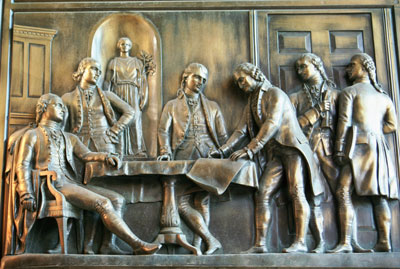

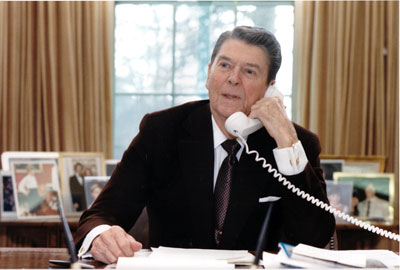 </p>Tomorrow, Feb. 6, is the 99th anniversary of the birth of Ronald Reagan, the 40th president of the United States. Although it has been 21 years since President Reagan completed his second term and left the White House, he still remains a figure of great interest to many Americans, including a large number of young people who were not even born during the time he was president.
 </p>Toyotas bad press has been for its sticky pedal incident certainly isnt surprising, but is all the negative attention warranted? When asked about the Toyota recalls, Transportation Secretary Ray LaHood responded by <ahref="http://www.nydailynews.com/money/2010/02/04/2010-02-04_untitled__toyota04m.html">saying, My advice to anyone who owns one of these vehicles is stop driving it, and take it to the Toyota dealership because they believe they have the fix for it and <ahref="http://www.cnbc.com/id/35208812">that were not finished with Toyota. Hood later toned down his remarks but immediately after his stop driving comment, Toyotas stocks plummeted. Even after recovering some, the <ahref="http://www.nydailynews.com/money/2010/02/04/2010-02-04_untitled__toyota04m.html">stock closed down 6% that day.
 </p>A*<ahref="http://www.washingtonpost.com/wp-dyn/content/article/2010/02/03/AR2010020303619.html">short piece in todays Washington Post examines President Obamas religious faith. The occasion of the article is the Presidents remarks today to <ahref="http://en.wikipedia.org/wiki/National_Prayer_Breakfast">the National Prayer Breakfast, an annual event held at this time of year in the capital. Interestingly, the article does not attempt to distinguish among the usages of prayer in the life of the Commander in Chief whether he prays for strength or fortitude or policy guidance or just a peaceful day. In fact, the Post reports, President Obama consults religious tradition and teaching for insights into issues of governance: