Author: Joe Wilcox

  • Apple market capitalization tops Microsoft

    By Joe Wilcox, Betanews

    For weeks, pundits predicted what happened today: Apple’s value exceeded Microsoft’s. While writing post “The Windows era is over” early this afternoon, Apple’s market capitalization was $227.95 billion and Microsoft’s $228.47 billion, or just $520 million separating them. By the time I posted, at 2:56 pm, Apple’s market cap was $225.98 billion and Microsoft’s was $225.32 billion.

    In the 20 minutes after, the two companies went on a roller coaster ride of sorts, with Microsoft failing to near $221 billion and Apple rising above $228 billion.

    For Apple, there has been dramatic change since stock markets collapsed in autumn 2008. Apple’s market cap was $88.68 billion on Oct. 2, 2008 and Microsoft’s was $228.35 billion on Sept. 29, 2008. Mmmm, do you see a difference? Microsoft hasn’t much changed, while Apple, boasted by surging share price, has rapidly gone up. About six weeks before the crash, on Aug. 13, 2008, Apple’s market cap was $158.84 billion compared to $254.83 billion for Microsoft.

    From one perspective, market valuation doesn’t mean much. It’s mitigated by several factors, including the number of shares publicly traded. But its symbolic significance cannot be understated, particularly considering the long rivalry between Apple and Microsoft and Apple’s near-death experience during the mid 1990s.

    Apple market cap

    Something else: Apple and Microsoft were founded about the same time and both companies played important roles launching the mainstream PC industry in the 1980s. But since 2000, Microsoft’s stock has been moribund. Apple shares started a slow surge around 2003, which the September 2008 financial collapse reversed. But throughout 2009, Apple shares rose and rose and rose. Apple shares closed at $100.10 on Oct. 28, 2008. As I write, Apple is trading at $248.15.

    A more meaningful comparison of the companies — at least as rivals — is revenue and profit. During first calendar quarter, Apple closed the revenue and profit gap with Microsoft to just $1 billion dollars. A year earlier, Apple revenue trailed Microsoft by $4.57 billion and net income by $1.36 billion. In the same quarter in 2005, the difference between the two: $7.01 billion by revenue and $3.6 billion by net income.

    Microsoft market cap

    Update after 4 pm market close: In the closing half hour of trading, volumes for Apple and Microsoft were unusually high. Apple closed at $244.11 a share, down $1.11 from the previous close. The stock opened at $250.20 today. Microsoft closed at $25.01 a share, down $1.06 from the previous close. Microsoft opened at $26.24 a share. Despite the roller coaster trading, Apple ended trading with a market cap above Microsoft: $222.12 billion to $219.18 billion. But with market caps so close, Microsoft easily could top Apple in another day’s trading.

    Copyright Betanews, Inc. 2010


    Add to digg
    Add to Google
    Add to Slashdot
    Add to Twitter
    Add to del.icio.us
    Add to Facebook
    Add to Technorati


    MicrosoftAppleMarket capitalizationStock marketBusiness

  • The Windows era is over

    By Joe Wilcox, Betanews

    About five years ago, when blogging as an analyst, I asserted that computing and informational relevance had started shifting from the Windows desktop to cloud services delivered anytime, anywhere and on anything. The day of Windows’ reckoning is come: 2010 will mark dramatic shifts away from Microsoft’s monopoly to something else. Change is inevitable, and like IBM in the 1980s, Microsoft can’t hold back its destiny during this decade. The Windows era is over.

    What’s surprising: New competition encroaching on Microsoft’s Windows territory. Mobile device-to-cloud competition’s shifting relevance bears striking similarities to the move from mainframes to PCs, and it is a long, ongoing trend. Microsoft’s newer problem is sudden and unexpected: Competing operating systems moving up from smartphones to PCs or PC-like devices. Apple’s iPhone OS on iPad is one example. More startling: HP’s acquisition of Palm and plans to release WebOS tablets this year; and Android’s push upwards to Sony TVs.

    Some readers of this post will balk at such assertion. Windows is a huge, profitable monopoly coming off version 7’s successful launch. Windows & Windows Live accounted for 48 percent of the five Microsoft divisions’ combined operating profit during fiscal 2010 third quarter — that’s without factoring in expenses or other charges.

    Windows is a cash machine. But so was the IBM mainframe monopoly before the dawn of the PC era and for many years afterwards. The DOS/Windows PC didn’t destroy IBM or its mainframe monopoly, but simply diminish its computing and informational relevance. Windows is on the same track. The mobile device-to-cloud applications stack will merely displace Windows’ relevance. It’s inevitable.

    Before the PC, computers were large and expensive. Only large corporations really could afford them. The PC extended computational and informational utility to more people, and at much lower cost. Information could be accessed in many more places, too. IBM’s mainframe monopoly made the company slow moving to adaptation, even when launching its own personal computer in 1981. The company’s huge ecosystem and customer base made executives cautious, with many decisions made for fear of losing customers.

    Nearly three decades later, Microsoft’s situation is so similar to IBM at the height of its mainframe monopoly’s dominance. Microsoft’s main business is reselling to the same corporate customers running the company’s software, much the same as IBM 30 years ago. Many Microsoft business strategies follow a similar track: Making concessions and avoiding risks to keep existing customers coming back for more.

    Sudden Changes are Long Coming

    Still, it might not be obvious to many people that the Windows cash machine could run out. That’s because change can be dramatic and sudden, although the causes and progression tend to be long-time coming. The Berlin Wall fell suddenly in 1989, but not without Perestroika and a warming of the Cold War preceding it. Similarly, Windows’ dominance will seemingly change suddenly and, I predict, during the first half of this decade. A new era dawns.

    Microsoft has long known this day would come. It’s why the company fought the browser wars with Netscape. During the US antitrust case, Microsoft repeatedly asserted it faced competition, not that the US Justice Department, suing state attorneys general or presiding judge believed it. The trial ignored how much Microsoft invested on sales, marketing and its huge channel of partners. The competition Microsoft feared has come, and there is some irony to it. Last week, Google announced the Chrome Web Store, which makes reality what Microsoft feared in the late 1990s: The browser as competing applications platform to Windows.

    Microsoft lumbers along, avoiding risks, clinging to Office and Windows revenues.  Meanwhile, companies without Microsoft’s existing monopoly-bound customers drive change, and they are willing to take risks. The mobile-to-cloud service platform is to the PC what the PC was to the mainframe: It extends computational and informational utility to more people and places — and for lower cost. The Windows era is giving way to the anytime, anywhere, on-anything era. The most dynamic innovations are occurring outside the Windows monopoly.

    Perhaps it’s no coincidence that 2005, the year Microsoft originally planned to release Windows XP’s successor, marks the beginning of dramatic changes affecting the company today. This month, YouTube celebrated its fifth anniversary — of posting the first video, anyway. The service opened to the public in late 2005. In August 2005, Google bought Android, while seemingly innocuous then it is hugely problematic for Microsoft today. In 2006, Facebook opened to the public and Twitter launched. In the vacuum left by Windows, innovators, well, innovated. Most of the popular transforming cloud services in use today didn’t exist before 2006. Then there is iPhone (released in June 2007) and Apple’s App Store (launched in July 2008). Google followed with Android and Chrome in autumn 2008.

    The numbers show how dramatically computing and informational relevance is shifting to the mobile device-to-cloud app stack and how suddenly change can come:

    • Firefox launched in late 2004; according to Net Applications, its usage share was 24.59 percent in April.
    • Internet Explorer usage share dropped from around 95 percent six years ago to 59.95 percent in April, according to Net Applications.
    • Android and iPhone OS outsell Windows Mobile on smartphones; Windows Mobile was ranked fifth in Q1 by Gartner.
    • Google claims 100,000 new Android activations per day. Apple’s iPhone run rate is close but just a little behind based on first-quarter phone sales.
    • App Store has more than 200,000 applications, and the Android Marketplace more than 50,000.
    • Facebook has close to 500 million subscribers, up from 30 million in July 2007.
    • Americans watched 31.2 billion videos in March, 42 percent of them at YouTube, according to ComScore.
    • Apple’s market capitalization is $227.95 billion and Microsoft’s $228.47 billion. Apple’s market cap was $88.68 billion on Oct. 2, 2008 and Microsoft’s was $228.35 billion on Sept. 29, 2008. Mmmm, do you see a difference?

    Unsurprisingly, all this competition — and innovation — is beyond Windows, much as the PC ecosystem was to the IBM mainframe during the 1980s.

    Loyal Partners Go Rogue

    Microsoft has a much bigger problem. Competition from without is to be expected. Competition from once loyal partners is something else. Nokia and Intel are partnering on MeeGo, which the companies plan to bring to mobile devices. In March I declared the end to the Wintel (Windows-Intel) hegemony when asking: “Which is eviler? Apple, Facebook and Google?” — all Microsoft competitors. Microsoft can no longer count on Intel’s loyalty, which has been in doubt since Apple shipped the first Intel-based Macs in 2006.

    But matters are worse. Compaq was Microsoft’s most important partner. In the 1980s, Compaq popularized the IBM PC clone, which allowed Microsoft to broadly license DOS and later Windows. HP assumed the loyal partner role after acquiring Compaq, particularly for servers. Now, because of the Palm acquisition, HP is a turncoat.

    Microsoft CEO Steve Ballmer should have listened to me. In December, I gave 10 reasons why Microsoft should buy Palm. Had he bought Palm, Microsoft’s future phone strategy would be stronger and Windows wouldn’t be weakened by a major partner adopting an alternative-OS strategy.

    HP already has announced a WebOS-based tablet. HP’s next, logical step is to release a laptop running WebOS. Losing HP is bad, but there may be more trouble coming. Sony is yet another traitor in the making. Last week, Sony announced plans to support Google TV by offering a television running Android. As part of a recent reorganization, Sony execs responsible for VAIO PCs are in charge of TVs. OS migration from Sony smartphone (the Xperia X10) or Google TV-based television to tablet or PC is logical next step. What about Dell, which already has adopted Android for smartphones? Windows is bloated and moribund compared to these lither mobile OSes pushing up into the PC market.

    I’m making my proclamation today that the Windows era is over. But perhaps it’s slightly premature. The defining moment, where people look back and say, “Ah, ha!”, likely will be when Apple’s market capitalization exceeds Microsoft’s. As I write, $520 million separates the companies. How unbelievable is that?

    [Update: Almost as soon as I posted, Apple’s market cap exceeded Microsoft’s — $225.98 billion to $225.32 billion.]

    Copyright Betanews, Inc. 2010


    Add to digg
    Add to Google
    Add to Slashdot
    Add to Twitter
    Add to del.icio.us
    Add to Facebook
    Add to Technorati


    MicrosoftAppleWindows MobileIBMGoogle

  • 10 reasons I dumped iPhone 3GS for Nexus One

    By Joe Wilcox, Betanews

    On April 24, I put aside my Google Nexus One and purchased a white 32GB iPhone 3GS from AT&T. Two days ago, I returned the Apple smartphone and cancelled the service. My reasons should interest anyone considering AT&T and iPhone between now and June 1st, especially, and after June 7th. The first date is when AT&T jacks up early termination fees; the second, when Apple is expected to announce the iPhone 4G.

    Let me start by saying that I won’t pull a Dan Lyons. The Newsweek columnist and Steve Jobs wannabe also is switching from iPhone to Nexus One. But he unleashed one helluva venomous diatribe explaining why. I’ve got no venom to spew. I really enjoyed the iPhone 3GS and will miss using the device. My reasons are more pragmatic.

    First some background: In October 2009, I moved my family from AT&T to T-Mobile, putting aside iPhone in the process. I had been an AT&T customer for about six years. My simple reason: Too many dropped calls. Six or more a day was a common number, with about as many failed outgoing calls. By comparison, I used T-Mobile for nearly five months before dropping a call.

    But following Apple’s April 8th iPhone OS 4 announcement, I reconsidered the switch. My major gripe with iPhone is multitasking, something Apple should fix well enough with iPhone OS 4. I hadn’t tested iPhone apps for many months and wanted to prep for Apple’s newest mobile operating system. Also, I didn’t having a portable music player or good stereo digital recorder for doing interviews. Apple’s smartphone could fill in for both.

    So I finally decided to buy a new iPhone 3GS and start fresh with AT&T. In California, the buyer’s remorse period is 30 days; I would have plenty of time to evaluate AT&T and iPhone 3GS. I also would be coming off the Nexus One, which would be a great comparison to the iPhone 3GS. To be clear: I planned on the switch being permanent; I ported my number to AT&T. But it was not to be. Here are my 10 reasons for dumping iPhone 3GS and AT&T (again), in no order of importance:

    1. Dropped calls. During my first two weeks back with AT&T, I experienced fewer dropped or failed calls than before my departure in October 2009. Then the experience deteriorated. Last week, dropped and failed calls returned with a vengeance. For example, in conversations with my father-in-law and The Loops’s Jim Dalrymple over one 15 minute period, calls dropped six times. I simply gave up talking to both men.

    By the way, when I returned the iPhone, the AT&T rep asked where I live. She laughed and said that everybody at the store knows that my zipcode has some of the worst AT&T service in San Diego. “Oh?” I asked. “Then why when I asked about reception before, AT&T reps said it was strong in my area?” She didn’t answer that question, but instead offered me an AT&T MicroCell. “We normally charge $150, but it’s free to people in your area,” she said. Basically, MicroCell acts as a local 3G hub connected to the home’s broadband. Ah, no thanks.

    2. Google is leapfrogging Apple. That’s the story headline from Gizmodo on May 20, and I so totally agree. Apple’s yearly iPhone release cycle simply isn’t fast enough to stay competitive. Google has taken Android from version 1 to 2.2 since the T-Mobile G1 shipped in autumn 2008; Google is rapidly innovating by iteration. The pace reminds me of the browser wars, where Netscape lumbered along while Microsoft lept ahead.

    The numbers tell part of the story. According to Gartner, Android handset sales rose to 5.2 million units during first quarter from 575,300 a year earlier. Last week, Google revealed 100,000 Android phone activations a day, which over one quarter puts units at 9 million — or more than the number of iPhones sold during first quarter.

    3. Android 2.2. The new operating system is chock full of exciting features, many of which either close the gap on iPhone OS or push ahead of it. Installation of apps onto memory card, Web-based app store, better suport for multiple e-mail accounts and faster Chrome browser are among the new features that turned me away from iPhone, even when anticipating v4. Then there is support for Adobe Flash, which Apple CEO Steve Jobs disses. He can keep iPhone. The real Web runs Flash.

    4. Android notifications bar. Sometimes the simplest user interface feature can change everything. Good example is TiVo’s program guide grid, which opened up the digital video recording market. Time-shifting wasn’t a new concept. People could record shows on VHS tapes long before TiVo. But the program guide proved to be a simpler and much better motif. I say the same about Android’s notifications bar, which by its placement, pull-down access and audible zing leaps way ahead of iPhone notifications. It’s one of Android’s killer features.

    5. Desktop widgets. Returning to using the iPhone 3GS at first felt like returning to something old after using something new. The Nokia N900 and Nexus One spoiled me with their widgetized home screens. For example, while iPhone forced me to use various news apps, Nexus One provides a Google News widget accessing thousands of news sites. Nexus One kept me more informed than iPhone. Widgets make what is important readily available and updated in real time.

    6. AT&T termination fees. On June 1st, AT&T will raise early termination fees from $175 to $325. I simply didn’t want to be locked in to AT&T. I got to wondering why the increase, too. What is it that we don’t know yet about iPhone 4G? Is Apple charging AT&T more for the new device? Is AT&T concerned about churn to other services, like Verizon and its two-for-one Android smartphone deal? Could AT&T and Apple be planning to lower iPhone’s purchase price, increasing the carrier’s subsidy while paying same price for the phone? Or perhaps could lower monthly subscription fees be coming? Is iPhone coming to other carriers and AT&T proactively acting to keep customers? As a journalist, I’m interested in the answers. As a consumer, with the number of dropped calls, I wasn’t willing to be locked in for $325.

    7. My wife loves the Nexus One. My beloved is an artist and non-geek. She simply doesn’t like gadgets — but she loves her Nexus One. After switching to iPhone 3GS, I offered her the Nexus One, not really expecting her to take to it; for starters, I find the Google phone to be kind of ugly compared to iPhone. What got her: The aspect of the user interface I also found appealing — the notifications bar (see #4). Now she does e-mail and Facebook on her phone, because of the notifications. My wife had used an iPhone 3G in autumn 2008 and asked me to return it, which I did within the 30-day buyer’s remorse period. She’s keeping the Nexus One. I had to buy another, and it arrived while I was writing this post. By the way, nearly two weeks ago there was big noise about Google stopping Nexus One direct sales. Oh, yeah? When? I ordered my phone from Google on Sunday (May 23rd).

    8. Blue Mikey. Like iPod Classic, when I had one, iPhone 3GS was to be my digital recorder with attached microphone. I purchased the Blue Mikey, which records in stereo on iPhone 3GS in airplane mode. I also purchased from the iTunes App Store $9.99 “FiRe – Field Recorder.” But when I connected the iPhone to my computer, the recorded audio files wouldn’t transfer. According to the FiRe’s support site: “You cannot transfer your recordings using ‘Sync’ because it is proprietary to Apple.” Say what? I was presented with ridiculous options like browser access over same WiFi network (which I couldn’t make work) or uploading to FTP site. Frak that. When I’m recording interviews at events, there’s no time to muck around with FTP sites. If sync isn’t good enough, the product isn’t good enough.

    9. Service costs. I have five lines on T-Mobile, four of them with unlimited phone, Web and text. These five lines cost me less per month than four did on the AT&T 2,100-minute family plan. I paid more for Nexus One ($529) versus iPhone 3GS ($299), but Nexus One is unlocked and the extra AT&T monthly fees would close the price difference in less than two months of service.

    10. I prefer the real Web to apps. With iPhone, there are too many disparate applications. Nexus One presents the real Web, which will be more real with Android 2.2. Google also presents the real Web in a really useful way, in the browser and with supporting app services. The emphasis is search and location — what people need where they are. During the iPhone OS launch in April, Jobs asserted: “Search is not happening on phones.” What alternate universe is he living? Search is one of the principle benefits of smartphones.

    By the way, of course I do use apps. Amazon’s release of Kindle for Android also factored into my decision, which leads to something else. Nexus One is all the tablet I need — better because it’s always with me. So also with the switch back to Nexus One came something else: Yesterday I sold my iPad to a good friend. As asserted last week, iPad isn’t for everyone, and that includes me.

    Copyright Betanews, Inc. 2010


    Add to digg
    Add to Google
    Add to Slashdot
    Add to Twitter
    Add to del.icio.us
    Add to Facebook
    Add to Technorati


    AppleiPhoneNexus OneSteve JobsMicrosoft

  • J Allard and Robbie Bach are out, in doomed Microsoft Entertainment & Devices shake-up

    By Joe Wilcox, Betanews

    Today, Microsoft doomed its Entertainment and Devices division to failure, in a sudden shake-up removing key creative leaders. Timing is simply terrible. Microsoft is engaged in a pitched battle with Apple and Google in several strategic entertainment and mobile categories. It’s like Microsoft changed generals on the eve of a major and quite possibly war-outcome-defining engagement.

    Out are Robbie Bach, president of the Entertainment and Devices division, and J Allard, Microsoft’s Apple Jony Ive wannabe. In expanded roles: Andrew Lees, senior veep of the Mobile Communications Business, and Don Mattrick, senior veep of E&D’s Interactive Entertainment Business. Bach will stay on through autumn in an advisory role, but the move leaves one of Microsoft’s five major business units without a president. Allard is leaving. Period. Although Microsoft claims he will remain in an advisory role to CEO Steve Ballmer.

    The question to ask: Are Allard and Bach creative bozos who failed Microsoft’s consumer strategy or are they creative visionaries crushed by the Office-Windows machine? I think the answer lies somewhere between, with the latter being more reason than the other. Allard is clearly some kind of casualty. Bach is quoted in Microsoft’s press release. Allard is not.

    Last week, Mary Jo Foley asked: “Where in the world is J Allard?” Foley’s sources indicated that Allard and Ballmer had a falling out over Courier, Microsoft’s long-rumored tablet. Nearly a month ago, Microsoft confirmed Courier’s existence and cancelled it in the same statement. At the time I wondered: “Why confirm something exists only to kill it?” Microsoft could have quietly pulled the plug, unless there was something else going on behind the scenes — like the alleged Allard-Ballmer scuffle.

    Somebody did right by silencing Courier, which two-panel design simply made no sense. It’s not rocket science to see the usability problems and potential high manufacturing/component costs associated with a two-touchscreen design, particularly compared against Apple’s iPad, which appeal is simpler single-slate design and reasonably low purchase price. How could Microsoft conceivably offer a two-panel tablet for $499? If Allard was too attached to Courier, he has lost his creative mind.

    Then there is Robbie Bach, who really can’t be blamed for many of Entertainment and Devices division’s problems. Ballmer made the decision to launch Xbox as a money-losing product designed to steal market share away from Nintendo and Sony. That strategy worked. But the division never really left the pattern of generating loads of revenue with little return profit. For example, during fiscal 2009, E&D generated $169 million operating income from $7.76 billion in revenue.

    The division also was charged with pushing Microsoft products into the living room, a strategy that has repeatedly failed. While Xbox succeeded, other products did not. Windows Media Center stuck in a niche, which is unsurprising giving the advantages of incumbents, mainly cable and teleco providers; they built DVR and on-demand services into their set-top boxes. Last week, Google announced Google TV, which surely wasn’t received well among Microsoft’s upper echelons. Is Google TV perhaps a catalyst driving the reorg?

    Microsoft’s mobile device strategy is the Britannic torpedoed. Research in Motion has consistently gained mobile market share, despite Microsoft’s push-mail and other push-service efforts. Meanwhile Apple and Google storm the smartphone markets. Windows Mobile worldwide smartphone OS market share dropped to 6.8 percent in first quarter down from 10.2 percent a year earlier. Windows Mobile ranked fifth, behind iPhone OS (third) and Android (fourth). Meanwhile the catch-up strategy isn’t looking great. Reviewers generally panned Microsoft’s two KIN phones, which debuted earlier this month. Windows Phone 7 will come to market too late. Android phone sales are tracking to be 9 million units per quarter and rising, about the same as iPhone. Windows Mobile is stuck in the 3.7 million range.

    For years, Microsoft has talked up a three-screen strategy: Windows PC, TV and mobile phone. The company has real success with PCs, reasonably good success with game consoles and near failure with mobile phones. Even where there is success there’s no real synchronicity.

    Given Microsoft’s meager mobile and three-screen advancements, Lees’ performance should be questioned as much as Allard’s or Bach’s. If the old blood is so bad, where’s the life-reviving transfusion? On July 1, Lees will report directly to Ballmer, who views the world in enterprise business-shaded glasses. In December, I explained how Microsoft had lost its consumer edge, as the company shifts more resources to enterprise products leveraged off Office, Windows and Windows Server. Before assuming his Mobile Communications Business role in February 2008, Lees worked on Server and Tools division sales. Entertainment and Devices needs something more consumer not something corporate.

    Then there is the entertainment product horizon. Microsoft just launched KIN, Windows Phone 7 is coming in autumn, Project Natal also is due in autumn and Windows Live Wave 4 is just beginning its rollout. Microsoft mixes it up with another leadership shakeup. Microsoft made E&D organizational changes in January 2010 and February 2009 — at least those are the ones I remember. How many more will there be?

    By the bean counter’s measure, Entertainment and Devices is a failure; the profits aren’t there. But from a creative and new market perspectives, E&D is a colossal success. The division opened new markets after many earlier failed attempts to push beyond Office and Windows.

    Today’s reorganization announcement is the bloodletting of Microsoft key creatives, while replacing them with an incomplete organizational structure too closely tied to the old monopoly leadership. For anyone thinking things were bad, they’re about to get worse.

    Copyright Betanews, Inc. 2010


    Add to digg
    Add to Google
    Add to Slashdot
    Add to Twitter
    Add to del.icio.us
    Add to Facebook
    Add to Technorati


    MicrosoftGoogleRobbie BachXboxiPhone

  • Apple’s five stages of Google grieving

    By Joe Wilcox, Betanews

    Grief typically follows any breakup, whether by the living separating or death taking one away. Apple’s response to the disillusion of its Google relationship is near textbook case of the five stages of grief: denial, anger, bargaining, depression and acceptance. Apple is slowly coming to terms with life after Google, and like any grieving the process hasn’t been easy.

    Denial. Two years before Apple released iPhone, Google bought Android. From the August 2005 acquisition, it was clear that Google would make mobile a priority, and surely that a phone would follow. “We did not enter the search business. They entered the phone business,” Apple CEO Steve Jobs told employees during a March meeting. Google released Android OS about 18 months after iPhone launched in June 2007, but the product was foreseeable. Jobs’ retort is classic denial behavior.

    Jobs’ claim that Apple “did not enter the search business” is another form of denial. Google’s search business is all about monetization through advertising. Apple’s iAd is such potential advertising competition to Google that last week the US Federal Trade Commission cleared way for Google’s AdMob acquisition; before Apple announced iAd, the agency indicated the acquisition could be blocked.

    Anger. Jobs’ temper is renown around Silicon Valley. Apple’s anger against Google is simply undeniable; there are so many examples. Jobs has personally attacked Google in e-mails to Apple customers and partners and through public statements. In March, Jobs reportedly said that Google’s oft-quoted “You can make money without doing evil” is “bullshit.” Some of those angry statements exhibit deep denial, too, such as Jobs’ early April assertion that: “Search is not happening on phones.” Who is he fooling but himself?

    Apple’s HTC lawsuit is a form of repressed anger. While Apple sued HTC, the claims are really about Android and Google. Can you say passive-aggressive behavior?

    Bargaining. Google’s advances on Apple extend beyond the phone. There is the browser; according to Net Applications, Chrome usage now exceeds Safari. Google released Chrome about the same time as Android, rapidly iterating on the browser — now approaching version 5 — for technology developed first by Apple; Chrome is based on WebKit. In a clear swipe against Chrome innovations, Apple bargained with developers during the iPhone 4 OS announcement, on April 8, with new Safari features that extended some of Chrome’s best capabilities. Chrome sandboxes tabs to improve performance and to minimize crashes’ effects. Apple will go further with kernel-level multi-processing.

    Jobs’ “Thoughts on Flash” is more bargaining. While seemingly all about Adobe, Apple’s anti-Flash campaign is as much about Google. As I explained last month, Apple and Google are taking two different, fundamentally clashing approaches to the mobile Web. Apple’s approach is more applications-centric, while Google puts greater emphasis on the browser. Google supports Flash, which is coming with Android 2.2 (some people have already; you lucky bastards). Google arguably will embrace the real Web, not the one Jobs is bargaining to makeover.

    Depression. Jobs has been remarkably prolific over the last couple months responding to customer and developer e-mails. It’s commendable that such a prominent CEO is taking such an active role in such an unorthodox way. C`mon, how often do you read about the chief executives of GM, Microsoft or Pepsico responding to so many customer or partner e-mails? But the timing indicates post-Google breakup depression. Jobs’ prolific responses started after Schmidt resigned from Apple’s board (late summer 2009) and Apple-Google sniping reached public levels (early 2010). Actually, the e-mails are mixed denial, anger and depression.

    Acceptance. The e-mails also signal Apple’s acceptance — that Google is a competitor in mobile operating systems and Web browsers, and that the two companies will clash over customers, developers and other partners. In response to a May 22nd e-mail about last week’s Gizmodo article asserting that “Google is leapfrogging Apple,” Jobs reportedly responded: “Not a chance!” Google is buddy no more, but the enemy. If there was a sixth stage to grief, betrayal, Apple could be said to exhibit it, too.

    Apple’s HTML 5 push is another form of acceptance, but more self-destructive. While Apple positions HTML 5 as an alternative to Flash, the technology looks to benefit Google much more than Apple. Already Google has used HTML 5 to circumvent Google Voice’s prohibition from the iTunes App Store.

    Do you have more examples of Apple’s five stages of Google grieving? Please offer them up in comments.

    Copyright Betanews, Inc. 2010


    Add to digg
    Add to Google
    Add to Slashdot
    Add to Twitter
    Add to del.icio.us
    Add to Facebook
    Add to Technorati


  • Google TV is all about blood sucking television ad spending

    By Joe Wilcox, Betanews

    Did you hear the news? The Internet is coming to your TV. It’s going to be this big platform for which developers create applications. Pundits are saying the strategy is really impressive. Get this: Major television set manufacturers are going to support the platform, so you get the best of TV and the Internet. Oh you did hear about it. Google TV, right? Wrong! I just described variations of Microsoft’s television strategy as announced over the years: Web TV, Windows Media Center, Mediaroom and Mediaroom for Xbox.

    Did Google execs not hear about Microsoft’s mostly failed living room strategy, which Google TV shockingly sounds like? Several former Microsofties are now Googlers. Surely somebody knew about Microsoft’s past TV bungles. If Microsoft couldn’t make Internet TV work, why should Google do any better? Google’s strategy sounds so similar that I’m stunned by some pundit’s early cooing over the strategy.

    Early Google TV partners include Intel and Sony. Google claims that Google TV won’t replace but augment cable or telco services. But that’s really a load of bull. As I will better explain in a few paragraphs, Google is really launching a TV advertising platform — and that sure as hell will compete with ads carried on cable and network television.

    Google TV will run on Android 2.1, bringing along supporting apps and the Chrome browser, too. Much of the rest of the strategy — the program guide, the DVR, the developer opportunity, the Web-meets-the-living-room mumbo jumbo — is tried and tired. Companies from Dell to Microsoft to TiVo — hell, even Apple — have talked up that big settop box augmenting but not really replacing the programming experience consumers get today. Each strategy is stamped with a big “Fail.” From software, services or platform development perspectives, Google isn’t saying much new. Even the marketing tagline has a familiar ring: “TV meets Web. Web meets TV.” Yeah, I’m just blowing my brains out with enthusiasm for this same old failed thing.

    It’s All About Advertising

    What Google wants from the living room is very different from Microsoft, although the fundamental concept is the same: To extend and preserve the existing monopoly — Windows for Microsoft and search/online advertising for Google. But Google is looking to cash in on a market with major players, who are likely to resist the informational giant’s embrace. For all the buzz in recent years about the decline of newspaper, magazines and radio, TV has remained largely immune to declining ad dollars — or at least massive shift online.

    For years, television has been Google’s holy grail. Company executives have talked, often privately, about the importance of TV ad dollars shifting online. Google had its search and ad platform bucket out to catch those dollars, but they never really came. Google scooped up some advertising moving from print or radio to online, while waiting for TV advertising to do the same. It came only in trickles. So if the ad dollars won’t come to Google then, holy hell, the company will go get them. That’s really what Google TV is all about, scooping up television advertising.

    In January, Forrester Research forecast that US TV advertising spending would rise slightly in 2010 to $69.5 billion. A month later, the analyst firm warned that, based on a survey of 100 national advertisers, media buyers were showing increasing dissatisfaction with television:

    • Sixty-two percent of advertisers complain there is too much clutter; they want fewer ads, and there is renewed interest in 30-second spots.
    • Seventy-eight percent of advertisers want targeted ads, but only 59 percent want to pay for them.
    • The majority of advertisers want new metrics; reach and frequency aren’t enough.

    Forrester’s report might as well be a blueprint for Google TV. Google’s advertising business is all about targeting and metrics and delivered for low cost. Google could offer national advertisers what they want and something more: Better flexibility integrating ad campaigns across media categories. Microsoft talks about a three-screen strategy. Google has one, too — delivering search and advertising to mobile phones, PCs and TVs.

    Who Will Give Up the Living Room to Google?

    For comparison, US advertisers spent $22.7 billion online in 2009, down 3.4 percent year over year, according to IAB and PricewaterhouseCoopers. Online ad spending accounted for 17 percent of all US advertising in 2009. For this year, eMarketer forecasts US online spending will reach $25.1 billion — while an 11 percent increase, revenue falls far behind TV.

    To push into the living room, Google is going to have to push somebody out. As Microsoft learned — and even TiVo — that’s not so easy. Cable and telco providers covet their subscription fees and local advertising revenues. Surely the big networks will fight against Google’s free economy, which could reduce the value of their ad space. Why pay networks big bucks when Google will sell ad space for much less?

    Networks and cable and teleco providers have reason to worry, given YouTube’s popularity and some surprising data from the IAB and PricewaterhouseCoopers report. US online video ad revenues rose 39 percent to about $1 billion last year. YouTube may yet be a big revenue generator for Google, which already offers rental content.

    Would you stop paying big bucks to a cable or telco provider if Google TV could bundle up a tidy subscription price for good programming? Say 30 bucks a month? I would, but Google will have to get Hollywood to cough up the content against network and cable and telco provider resistance. That all circles back to Microsoft’s mostly failed attempts to conquer the living room, against less resistance. Can Google really do better? You tell me, please, in comments.

    Copyright Betanews, Inc. 2010


    Add to digg
    Add to Google
    Add to Slashdot
    Add to Twitter
    Add to del.icio.us
    Add to Facebook
    Add to Technorati


    GoogleAppleSonyMicrosoftTelevision

  • Is iPad cannibalizing Windows PC sales?

    By Joe Wilcox, Betanews

    About a month ago I asked: “Will iPad cannibalize Mac sales?” Today’s report that iPad is outselling the Mac is another reason to ask. The answer may not come until Apple releases second calendar quarter results, to see whether there’s cannibalization or new revenue. Oh, but I can speculate, meantime.

    RBC Capital Markets analyst Mike Abramsky released a report indicating that Apple is now selling about 200,000 iPads a week, compared to 246,000 iPhone 3GSes and 110,000 Macs. Data is for United States. That puts iPad’s sales rate nearly double the Mac, and that’s with constrained tablet supplies. How much greater could they be if Apple met demand.

    I first saw the report in a post by All Things Digital’s John Paczkowski, earlier today. On May 17, Paczkowski answered my question, or perhaps thought he did, with post: “Is the iPad Cannibalizing Mac Sales? Not Really.” Piper Jaffray analyst Gene Munster asserted that, based on April US retail sales, “iPad has a minimal cannibalization impact on Mac sales, and could be slightly cannibalizing iPod sales.”

    But I wonder. Sales of a new product category typically come from completely new buyers or those buying the new thing instead of something else. The something else could be Macs, or even Windows PCs. As I asserted in late January: “iPad fills a gaping hole in the Mac product line between the aforementioned $399 and $999.” Various iPad models sell between $429 and $829. “Apple now offers portable computers — and that’s how I classify iPhone, iPod touch and iPad along with Macs — ranging from $99 to $2,499. From a pricing strategy perspective, iPad is a brilliant product, because it fills the gap between iPhone/iPod touch and Macbook without price cuts or risk to the Mac’s premium brand status.”

    The cheapest Mac you can buy today is iPad. It’s reasonable to ask if people who might otherwise buy a cheap Windows laptop are instead picking up iPad. It’s also reasonable to presume that iPad will also cannibalize some Mac sales, particularly as education sales begin to kick in later in the quarter. But it’s too early for there to be meaningful substantiating data, because:

    • Second calendar quarter tends to be stronger for Mac sales because of back-school-buying. However, iPad could reasonably appeal to educational institutions, particularly with budget cuts, as Macs.
    • About 45 percent of Apple sales are international, but iPad has only been available in the United States. The one market isn’t measure enough to long-term gauge whether or not iPad will eat away global Mac sales.
    • Apple is heavily marketing iPad, but not Macs. Early marketing could be just as likely to generate new sales as take them away from some other Apple product.
    • Second quarter typically is slowest of the year for Windows PC sales, although it’s typically strongest for Microsoft because of software license sales to businesses. Typical channel checks likely wouldn’t yet reveal whether sales sluggishness, if any, would be seasonal or lost sales to iPad.
    • Recent stories about iPad cannibalizing netbook sales are probably wrong. I’ve looked over the data, and netbook sales declines started around the release of Windows 7. At least through April, cheap Windows 7 laptops almost certainly sucked away sales from netbooks. The question: What happened since?

    So, I don’t yet have a definitive answer to either question. For Apple, the best two scenarios would be iPad opening a whole new revenue stream without cannibalizing Mac sales and/or iPad taking away new Windows PC sales. My educated guess based on years covering Apple: iPad is opening a new revenue stream and pulling in new sales from Windows users who couldn’t justifying $999 or more for a Mac. Additionally, I predict that iPad will cannibalize future Mac sales; people satisfied with the device will augment their existing Mac, delaying its replacement.

    Copyright Betanews, Inc. 2010


    Add to digg
    Add to Google
    Add to Slashdot
    Add to Twitter
    Add to del.icio.us
    Add to Facebook
    Add to Technorati


  • Five reasons why Google’s Web apps store makes sense

    By Joe Wilcox, Betanews

    Yesterday, Google announced that, later this year, it will release the Chrome Web Store. The idea isn’t complex and philosophically compliments the app store for Google Docs and even Android Marketplace: Provide a marketplace for third-party apps. The strategy is sensible for Google, given its heavy orientation around the browser and cloud services.

    Early last month I explained how Apple and Google are battling for the future of the mobile Web. Both companies are looking to capitalize on the shift from the PC client-server applications stack to the mobile device and cloud service stack. Apple’s approach makes the mobile app primary, pushing up to the cloud, while Google pushes services down from cloud to device, mainly the browser. Already, Apple has built a huge application and developer ecosystem around App Store. Google needs to counter, but leveraging its cloud services strengths.

    By the way, about six years ago, I first directly told Microsoft executives that the company should develop an applications store for Windows. The idea: Utilize Windows product activation and update architectures to provide a means for developers to directly sell applications through the operating system. The mechanism would pay developers and combat rampant piracy, particularly for smaller developers. That’s pretty much what Apple did with App Store nearly two years ago. I’m convinced that Microsoft’s position with developers would be stronger had executives followed the advice.

    Now for those five reasons:

    1. Google is launching a new operating system. Google says the app store will support both Chrome browser and OS. There is a chicken-and-egg scenario that applies to new operating systems, and many have failed because of it: Which comes first? The OS or the applications? Generally, people won’t adopt an operating system unless there are applications, but developers tend not to support an OS unless there are users. By launching a dual-platform app store, Google can woo developers, providing base applications (along with its own many services) to jumpstart adoption.

    2. Applications can drive up Chrome browser adoption faster. The dual-platform strategy can work because Google’s browser is rapidly gaining usage share, while Firefox usage has leveled off and Internet Explorer declines. Good applications could give more people more reasons to adopt Chrome. It only takes one killer application to drive massive adoption. By the way, this is exactly the kind of scenario Microsoft tired to prevent during the late-`90s browser wars with Netscape: The Web browser becoming a pseudo operating system around which developers build applications and services.

    3. Developers can get paid for their Web work. Right now, the app stores where developers get paid are tied to mobile operating system supporting services, like Android Marketplace or Apple App Store, among others. None of the major computer OS developers offers integrated app stores, nor does any major service provider offer one for browsers (emphasis on major provider). Google is in position to provide developers a place to sell rich Internet applications and supporting services for browsers, which reach would be broader than just mobile phones. Google Checkout, or perhaps a new payment system, would get developers paid for their work. LOL, how strange if Flash developers could get paid by Google. What a stick up Apple’s no-Flash policy that would be.

    4. Chrome Web Store can drive search usage and advertising dollars. Surely some developers will offer free apps, around which Google could bundle advertising — something like what it already does and extended to something like Apple plans for its iAd advertising platform for iPhone OS 4. Based on Google’s current behavior, its platform would offer developers more freedom than would Apple’s. Google executives insinuate that applications could work with any browser, and that could arguably be the case for other Webkit-based browsers or applications supporting HTML 5. If so, Chrome Web Store would provide developers even more places to monetize their apps and for Google to drive its advertising and search businesses.

    5. Browser users already are accustomed to installing browser plug-ins. End users shouldn’t have to learn new behavior. Based on what little information Google has disclosed, the app store would be about as easy to use as installing a browser plug-in. Assuming Google uses Checkout, people with accounts would need no onerous extra steps to purchase applications.

    Do you have reasons to add? Please offer them up in comments.

    Copyright Betanews, Inc. 2010


    Add to digg
    Add to Google
    Add to Slashdot
    Add to Twitter
    Add to del.icio.us
    Add to Facebook
    Add to Technorati


  • Research in Motion surges to No. 4 in global mobile phone sales, Apple to No. 7

    By Joe Wilcox, Betanews

    Today, Gartner released first quarter 2010 worldwide mobile phone sales data, and it’s the set that matters. Unlike IDC or manufacturers like Apple, Gartner tracks actual sales to users rather than shipments to carriers or retailers. Shipment data is less accurate, because of unsold inventory in the channel. Based on sales, Apple ranked No. 7 in worldwide mobile handset sales, just behind sagging Motorola. That’s for all phones, not just smartphones.

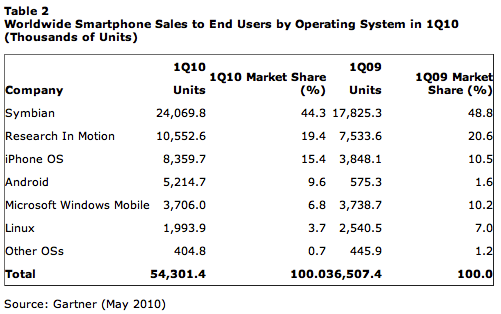
    For smartphones, Android and iPhone OS made huge gains, with Gartner describing them as the “winners” for the quarter. Android rose from 575,300 unit sales to 5.2 million year over year, pushing Windows Mobile down into the fifth position. Because there already is a fair amount of misreporting, such as Apple pushing ahead of Motorola, I will continue the main portion of this post with some quick — and in some instances — corrective facts:

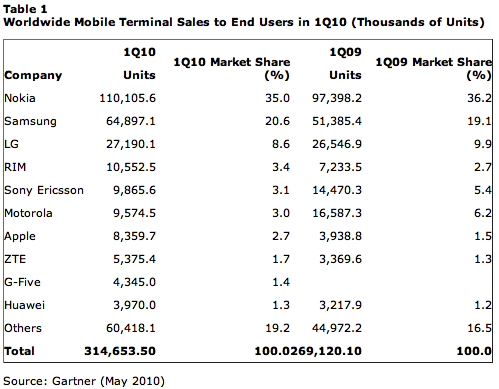
    1. Nokia is not in rapid decline. While the manufacturer’s market share dipped 1.2 percent, to 35 percent, unit sales rose by 12.7 million to 110.1 million.

    2. Apple did not outsell Motorola. But I’ve been reading this heresy for weeks based on unit shipments. Based on actual sales, Motorola is No. 6 worldwide.

    3. Motorola is rapidly declining, however. Year over year, unit shipments plunged from 16.6 million to 9.6 million.

    4. Research in Motion moved into the top five, at No. 4, for worldwide phone sales. That’s while competing against cheaper handsets from competitors like Nokia. While growing less than Apple, 45.9 percent year over year compared to 112.2 percent, RIM sales are much stronger.

    5. White box competition is sucking sales from major manufacturers. Combined top-five share dropped from 73.3 percent to 70.7 percent year over year. White box manufacturers are mostly shipping from Asia, and some are mimicking handsets like iPhone, while offering more features, such as dual-SIM capabilities.

    Gartner Q0110 mobiles

    6. Like early early iPhones, Android-based phone sales are strong in North America — up 707 percent year over year.

    7. Distribution mattered to Apple. “Growth came partly from new communication service providers in established markets, such as the UK, and stronger sales in new markets such as China and South Korea,” Carolina Milanesi, Gartner research vice president, said in a statement.

    8. Only Android and iPhone OS made year-over-year market share gains among the top-five smartphone operating systems.

    9. The quarter’s best performers controlled hardware, software and services — essentially an end-to-end stack, except for carriers. Apple, Nokia and RIM are end-to-end providers.

    10. Windows Mobile market share declines are somewhat deceptive. While smartphone OS market share fell from 10.2 percent to 6.8 percent, unit sales were flat year over year. Windows Mobile is more standing still than moving backwards, as competitors race by.

    Gartner Q0110 mobiles

    Now for some additional data points and quotes from Gartner analysts. Mobile handset sales rose 17 percent year of year to 314.7 million. Smartphone sales rose 48.7 percent to 54.3 million. Smartphones accounted for 17.3 percent of all mobile phones sales in first quarter, up from 13.6 percent a year earlier.

    “Increasing sales of white-box products in some emerging regions, in particular India, also drove sales of mobile phones upward. We expect sales of white-box products to remain very healthy for the remainder of 2010, especially outside of China,” Milanesi said in the statement.

    What this means: India is one of Nokia’s strongest markets worldwide. Increasing white box popularity could drive down Nokia’s share in India. For all major manufacturers, there will be increasing pressure to stay ahead of white box phone makers and, related, those imitating big-five designs.

    “To compete in such a crowded [smartphone] market, manufacturers need to tightly integrate hardware, user interface, and cloud and social networking services if their solutions are to appeal to users,” Roberta Cozza, Gartner principal research analyst said in a statement. “Just adding a qwerty keyboard will not make a device fit the communication’s habits of today’s various consumer segments.”

    What this means: Apple, Nokia and RIM have potentially stronger positions, the latter two only if they pull together weak services strategies. Google needs to standardize all Android handsets on one OS version and set of supporting services; even then, Google doesn’t control enough of the stack.

    Copyright Betanews, Inc. 2010


    Add to digg
    Add to Google
    Add to Slashdot
    Add to Twitter
    Add to del.icio.us
    Add to Facebook
    Add to Technorati


  • Would you like a mSpot music streaming private beta invite?

    By Joe Wilcox, Betanews

    Betanews has 500 of them. One could be yours.

    The mSpot private beta opened today. The concept is simple: Your music available, anytime, anywhere on anything. The streaming service initially offers clients for Mac, PC and Android 2.1 phones, so mSpot is still working on the anywhere. Perhaps that’s good reason for the private beta.

    I’ve been asserting for years that the future of computing will be cloud services delivering anytime, anywhere access to anything — with the primary emphasis shifting to mobile devices. In the 1980s, computing and informational relevance shifted from the mainframe to the PC because of lower costs and broader availability. The same factors are driving the shift away from the traditional PC client-server model to mobile devices and cloud services.

    With mSpot, users sync their music library to the cloud, then stream it back to any device supporting the service. I like the concept, but a full-streaming, no-upload service would be better — where users verify ownership that unlocks music already available in the cloud. Of course, music licensing restrictions limit what mSpot can do. Such an approach would better align with mSpot’s movie streaming service, which I see as being a much more accessible anytime, anywhere, on-anything service; granted there are additional fees.

    My music library is over 80GB, which would mean paying for upgrades. How large is your music library? The private beta limit is supposed to be 2GB. Services don’t always strictly enforce such limits during private betas. We’ll see what mSpot does. The service also syncs playlists, which is a must-have feature for a service like this one.

    With that brief introduction, I send you off to mSpot. Just go to the Website and use “betanews” to register for the private beta, which is scheduled to lift sometime in the second half of June. Happy streaming — well, for the lucky, first 500 registrants.

    Copyright Betanews, Inc. 2010


    Add to digg
    Add to Google
    Add to Slashdot
    Add to Twitter
    Add to del.icio.us
    Add to Facebook
    Add to Technorati


    mSpotPersonal computerStreaming mediaAndroidCloud computing

  • Bogus is one way to describe Microsoft’s patent claims against Salesforce.com

    By Joe Wilcox, Betanews

    Three words sum up Microsoft’s patent infringement suit against Salesforce.com: Competition by litigation. Microsoft knows plenty about competition by litigation, having been its victim through major antitrust cases on two continents. It’s simply shameful action from a company which executies rightly wagged accusing fingers at litigating competitors over the years. Microsoft’s “do unto them like they did unto us” approach cheapens the company. The proof is in the patents, which are hugely broad scope.

    Qualifying that I am no patent attorney, I have applied layman’s eyes to the patents that Microsoft alleges Salesforce.com violates. The nine patents read to me as being very broad in scope and potentially applicable to many forms of end user to computer or Web browser interactions — or none at all. If any of these patents are enforceable, the US patent system really does need some reform.

    I purposely did not read Microsoft’s description of the patents and Salesforce.com’s alleged violations from the 9-page patent infringement lawsuit. Instead, I looked over the actual patents, reading them as they are and looking at them in context of Salesforce.com’s business, as I understand it. I see huge PR value for Microsoft in filing this lawsuit, possibly inflicting damage against a successful competitor. The patent violations are sure to create FUD (fear, uncertainty and doubt) about Salesforce.com’s future business and may even cause some customers to look elsewhere — ah, like Microsoft. However, I see nothing among the nine patents, based on a careful non-lawyerly review, that remotely suggests Salesforce.com has grossly violated Microsoft intellectual property rights.

    Now for the nine patents:

    7,251,653: “Method and system for mapping between logical data and physical data,” granted July 31, 2007, describes interaction between data in columns and their storage. The patent clearly was intended for spreadsheets.

    5,742,768: “System and method for providing and displaying a web page having an embedded menu,” granted April 29, 1998, describes the execution of menus in a Web browser by using an applet; Java is used as an example of applet delivering an “embedded menu” class. The patent was assigned to Silicon Graphics.

    5,644,737: “Method and system for stacking toolbars in a computer display,” granted July 1, 1997, describes the display of stacked toolbars on computer operating systems, like Windows. Right, but Saleforce.com serves data to a Web browser. If Salesforce.com violates the patent, I have to ask: What service using toolbars on the Web doesn’t?

    6,263,352: “Automated web site creation using template driven generation of active server page applications,” granted July 17, 2001, describes a method for merchants to use hypertext links retrieved from “Active Server Pages.” Say what? When did Salesforce.com become a merchant selling goods? What? Salesforce.com uses ASP.NET — and not licensed with Windows Server? Gosh, and I thought the service was a Linux shop. 🙂

    6,122,558: “Aggregation of system settings into objects,” granted Sept. 19, 2000, describes a method for adjusting settings in a “desktop environment.” From the background of the invention section: “The Microsoft Windows, version 3.1, operating system, sold by Microsoft Corporation of Redmond, Wash., provides a control panel that allows a user to adjust various system settings, such as the color settings for the graphical user interface.” Someone explain how a patent applied to the Windows control panel applies to cloud service Salesforce.com.

    6,542,164: “Timing and velocity control for displaying graphical information,” granted April 1, 2003, is yet another toolbar patent. This one applies to the interaction of a cursor and “graphical objects.” It’s hugely broad, even though the patent claims the “limitations of the prior art are overcome by the present invention.” If Salesforce.com truly has violated this patent, the question should be: “Who else hasn’t?” The interaction described is a fundamental in computing systems using cursors and graphical objects. Surely, some other companies’ patents overlap this one.

    6,281,879: “Timing and velocity control for displaying graphical information,” granted Aug. 28, 2001, is nearly identical to 6,542,164. Same arguments against the other apply to this one. Inventors are the same. The inclusion of two near-identical patents by the same inventor so stinks of competition by litigation.

    5,845,077: “Method and system for identifying and obtaining computer software from a remote computer,” granted Dec. 1, 1998, describes a method for distributing software updates to computers over a connection, such as Internet Service Provider. The method describes how Microsoft might use Windows Update. Last I checked — and it has been awhile — Salesforce.com updates server software rather than pushing updates out to remote software. Am I wrong?

    5,941,947: “System and method for controlling access to data entities in a computer network,” granted Aug. 24, 1999, describes the differentiating of access rights for “on-line services.” From the background: “The present invention is directed generally to the problem of flexibly and efficiently controlling the access rights of a large number of users to a large number of objects or other data entities.” Of the nine patents, this is the one most seemingly applicable to Salesforce.com. However, 5,941,947 specifically refers to the definition of “on-line services” contained in Microsoft patent 5,774,668. By my reading, the definition doesn’t apply to cloud service Salesforce.com. Moreover, Microsoft did not include 5,774,668 in its lawsuit, which raises doubts about 5,941,947’s applicability to Salesforce.com.

    Copyright Betanews, Inc. 2010


    Add to digg
    Add to Google
    Add to Slashdot
    Add to Twitter
    Add to del.icio.us
    Add to Facebook
    Add to Technorati


    Salesforce.comIntellectual propertyMicrosoftLawsuitPatent infringement

  • iPad isn’t for everyone, so deal with it

    By Joe Wilcox, Betanews

    Thirty-two days ago, I purchased Apple’s iPad, after proclaiming that I wouldn’t. A gadget like this one should be tested if repeatedly blogged about. I would have used a for-reviews loaner, but I’m on the same fraked list as Gizmodo. I bought my own. A month-or-so usage later, I agree with Tumblr and Instapaper developer Marco Arment, who asked about iPad yesterday: “What’s it for, really? Logically, it doesn’t make a lot of sense for most computer owners…most people will have trouble justifying the $500 entry price.”

    My problem is similar to Arment’s: I like the iPad, but can’t find a use for it. The tablet is too big to replace a cell phone and it’s not functional enough to displace my laptop (singletasking is one of the major reasons for that). I would never buy the butt-ugly Amazon Kindle or slow-as-cold-molasses Barnes and Noble Nook, yet I find iPad to be a so-so satisfactory substitute e-book reader. I managed to reread Orson Scott Card’s excellent Ender’s Game and am trudging through sequel Speaker for the Dead. But it’s reading for convenience, not joy.

    “A gadget just needs to be good at something that you need or want to do,” Arment writes. Yeah exactly. He has found a few good-at-somethings, but I assert nothing that he couldn’t do as well — or better — on a laptop. “It’s the perfect living-room computer that lives on the coffee table and can be used to quickly look up a fact, find a restaurant, check mail, browse news, and play a game,” he asserts. So is my smartphone, which doesn’t cost $499 to $829.

    The personal computer succeeded in part because it is versatile, multi-use, all-purpose device. The PC does many things fairly well. Ubiquity is why the PC is ubiquitous. But as I predicted, Apple’s tablet isn’t really good enough to replace PC or smartphone. Arment writes:

    Accepting that the iPad isn’t an all-purpose computing device is going to be a slow process for everyone, including Apple. They can’t quite explain what it’s for, either, which is why the launch marketing, software, and accessories are a bit scatterbrained. For instance, if you’re using a hardware keyboard with the iPad very often, you’d probably be much better served by a MacBook Air.

    So what is iPad good for then? Arment and I agree on something else. Eleven days ago my post “Usability expert faults iPad user interface, calls it ‘whacky’” dinged Apple’s tablet. But in iPad’s defense, I explained: “There also is UX, or user experience, which is as much emotive as it is functional…iPhone is more a joy to use [than Google Nexus One]. There’s something about UI design and tactile, responsiveness of the screen that make me feel good. I can say the same about using iPad.”

    Arment describes using iPad as “satisfying and delightful.” I totally agree. It’s the main reason I have resisted selling mine. Functionally, my iPad isn’t good enough at anything to justifying keeping it. But emotionally, I’m hooked. I find parting with iPad to be difficult. Sitting down to use the tablet, I suddenly get girlie giggly. It’s a happy experience. If you asked me why, I would say it has something to do with the the user interface’s beauty and how it responds to my touch. But that kind of intellectual evaluation just doesn’t nail down why.

    Yesterday, Nokia’s Joe Gallo tweeted: “Can anyone explain to me why this video is funny http://bit.ly/hoXKj.” Gallo referred to YouTube video “Charlie bit my finger — again!,” which has 191,352,797 views, as I write. I resisted laughing but couldn’t stop on second viewing. “By that last tweet, I meant, I was cracking up and had no idea why!” Gallo later tweeted. In assessing my response to iPad, I have similar reaction. I can’t put my finger on why (no pun intended) using iPad makes me happy.

    There are lots worse reasons for using a product than it makes you happy, and many product designers would kill to have that kind of customer problem. “Ah, our product gives you joy even though you can’t fathom a use for it, and you’re going to keep it even though you’ve got no use for it?”

    I’ll use iPad for awhile longer to test the apps and to see whether this happy thing wears off. I’ve already had several good offers to buy the Apple tablet. But my answers have been nos. Functionally, iPad isn’t for everyone, and it’s probably not for most people. Too many features overlap the smartphone below and laptop above. Nevertheless, here’s a question for potential buyers: How much joy can you get for $500 — iPad’s starting price? Stated another way, how much joy is worth spending $500?

    I giggle every time I turn the damn thing on. Who knows? Maybe someday I’ll find a real use for iPad. For now, a little joy is reason enough.

    Copyright Betanews, Inc. 2010


    Add to digg
    Add to Google
    Add to Slashdot
    Add to Twitter
    Add to del.icio.us
    Add to Facebook
    Add to Technorati


  • If you think Facebook privacy is so bad, the open Web is worse

    By Joe Wilcox, Betanews

    It seems like anyone who wants to be anybody is whacking Facebook over its loose — or rather loosening — privacy policies. Earlier this month, with disregard to the grammer momma taught me, I asked: “Which is Eviler? Apple, Facebook or Google?” Even I whacked CEO Mark Zuckerberg aside the head about Facebook privacy.  As bad as pundits make out Facebook privacy to be, people can, and do, reveal plenty of information on the Web, too. Which place do they reveal more? I set out to find out in a non-scientific experiment, looking for publicly available information about one of my sisters.

    I got to rethinking Facebook privacy over the weekend, after reading New York Times post “World’s Largest Social Network: The Open Web” by Randall Stross. “The links on the trillion Web addresses found by Google, and within the billions of Tweets that have followed, form an incomparably vast, truly worldwide, web of recommendations, supplied by fellow humans,” Stross writes. “In this sense, the open Web has a strong claim to being more ‘social’ than does Facebook.”

    I’ll go further: Because of search engines’ effectiveness and how many sites allow Bing-, Google- or rival-bot crawling, many people already expose lots of information — and often without knowing. So I decided to compare Facebook to the Web. Just how much information is exposed?

    Information Exposed by the Web

    One of my sisters is a missionary in Central America. She is an experienced computer user — actually works parttime for an IT support company — keeps a blog and uses Facebook. My quest: Could I easily and quickly find as much information about her on the Web as she reveals on Facebook? I chose this sister because missionary work takes her out of the mainstream.

    I Googled her name, which pulled up as top hit: the results from a New York state bike race from the early 2000s — and a walking race from a few years earlier later on the first page. Additional race information from other years suggested that she participates in an annual event. So there is one day of the year, where I know where she will be. I then searched for her name and missionary country, finding a blog revealing her full name, confirming her husband’s name (from the earlier search) and providing additional personal information and photos, which helped to identify her and her husband as the searches continued. The initial search also led to a Facebook athletic group.

    Bing did better with her name, by pulling up as first hit a service called “My Life.” Without registering for “My Life,” I got her age, middle name and permanent US address. Another service, “ZoomInfo,” revealed where she works (as corroborated by information revealed by other searches). Other race results confirmed the US address as being valid. But Bing fumbled her name and missionary country search, leading to no usable results in the first five pages.

    I circled back to my sister’s blog, and clicked through links to three Christian ministries — one of them in Central America. That missionary group page had a pastor’s blog that included photos of my sister (matching the likeness on her blog) and identifying her role working for the ministry as recently as 2008. Another link revealed that she is affiliated with all three ministries, provided an e-mail address and exposed her telephone number, as contained in a recent newsletter.

    So, without ever using Facebook, and following the trail of search breadcrumbs, I got her full name, name of her husband, permanent US address, current location (but not physical address) in Central America, past (or possibly current) employer, names of three ministries she currently works with in Central America, e-mail address and phone number. I also identified several annual races she participates in, one which later in the search turned out to be affiliated with one of ministries, and a Facebook group she belongs to. All of this took about 45 minutes using Bing and Google.

    Even More From Facebook

    What does my sister reveal on Facebook? OMG! Privacy? What is privacy? I set up a fake Facebook account (which should cancel out as I didn’t verify the e-mail) and immediately searched for my sister. Since the fake account had no friends, I observed just how much personal information she  exposes. Available to any Facebook account holder is a treasure trove of personal information. “[Sister’s name] only shares some of her profile information with everyone,” according to her profile page. Some?

    Publicly available on her profile page: Name, two of her children’s names, mother’s name, sisters’ names, her location in Central America, list of nearly 250 friends and Wall post galore. A fan page confirmes her place of parttime employment and the previously identified athletic group fan page. Wall posts reveal that she is attending a conference and where and identifies where her husband will be next month. So on and so on. My Facebook data mining took about 5 minutes. My sister has some control over what information is disclosed on Facebook. Most of the information I found in Web searches came from someone else. She really has no control over that at all.

    What Facebook didn’t expose, the Web searches provided. My sister’s Facebook profile picture is a childhood photo, but her blog and the pastor’s blog have current pics. The missionary site disclosed my sister’s e-mail address and phone number. My sister tends to be guarded about her personal data, or so she thinks. For someone less guarded, I should have easily gotten more personally identifiable information — even from just a Web search. I presume that like many Facebook users, my sister extends privileges to friends of friends. I could have gotten even more information had I friended one of her friends (Oh I was tempted!).

    I’ll have to ring my sister and explain that all her Wall posts are public. Perhaps because of something in my settings (I should check), I am not listed with my other siblings as being related to her. Then, again, maybe I’m disowned — or will be after she reads this post. Perhaps my sister will forgive me, because I respected her privacy enough not to disclose her name. Perhaps. My public Facebook profile is pretty barebones right now, and nowhere do I see any public Wall posts that would reveal my sister’s identity. Facebook friends probably could ferret out her name, though.

    So my question for you: Does Facebook reveal too much information? Hell, do Bing and Google? One way to answer: Conduct an exercise similar to mine and see how much information you can find out fast about a relative — or even yourself — through Web search and Facebook. Please answer the questions in comments.

    Copyright Betanews, Inc. 2010


    Add to digg
    Add to Google
    Add to Slashdot
    Add to Twitter
    Add to del.icio.us
    Add to Facebook
    Add to Technorati


    FacebookGoogleMark ZuckerbergCentral AmericaNew York

  • The real reasons why Apple silenced Lala (and bought it, too)

    By Joe Wilcox, Betanews

    As dorky character Ned Ryerson said in movie “Groundhog Day”: “Am I right or am I right? Or am I right? Am I right?” Apple is shuttering the Lala service on May 31. While pundits galore said Apple was moving into the streaming music business, I asserted something else: That Apple bought Lala to improve music discovery and to combat Google music search.

    Apple announced the Lala acquisition in December, when I blogged “Lala could make iTunes’ Genius smarter.” As I explained then, the acquisition is about “improving iTunes music discovery and competitively combating Google search.” About two months before Apple bought Lala, Google improved its music search capabilities, which included free streams from various services, including Lala.

    I sometimes complain about how bloated iTunes has become, but Apple can’t be much faulted for music discovery. The iTunes player-store combination is simply one of the best mechanism’s for new music discovery. However, Google music search put that discovery and underlying revenue stream at risk. Googling, say, Green Day or Ke$ha leads to free Lala streams of four songs. Lala charges for streams, too — just 10 cents, which can be applied to purchase of the track.

    Or Lala did. The service has stopped taking new subscribers, according to a notice on the Website: “Lala is shutting down. The Lala service will be shut down on May 31st, 2010. Unfortunately, we are no longer accepting new users.” By buying Lala, Apple set the stage to remove a cheaper streaming alternative, with option to buy, backed by the power of Google search.

    But Apple also acquired technology it can use to improve music discovery. One option: Within iTunes, offer one full-length stream per track, instead of the 30-second sample. Streaming then wouldn’t be a separate business but means of improving the music purchase experience and even generate more sales.

    In the days and weeks that followed the Lala acquisition announcement, commentator after commentator pontificated about how Apple would move into the streaming music business, ala Lala. But that business makes no sense for Apple, which generates revenue from selling music — not giving it away or streaming it on the cheap. More importantly, streaming offers limited benefits to iPhone OS devices. Apple already sells low-margin content to generate sales of high-margin devices. Streaming doesn’t make sense, particularly when Apple has done so well with content people own — or in the case of movies, sometimes rent.

    However, a TV subscription service would make sense because of its potential to disrupt how people consume the content. Hulu shows there is demand. If Apple offered the long-rumored TV subscription service for the rumored 30 bucks a month — heck, even $50 — I’d cancel my AT&T U-verse account the same day. Cheap portable TV is the logical next stage beyond DVRs. Apple has the devices to do just that, whether the content is streamed, downloaded with DRM protection — or both.

    For Apple, a TV or other video subscription service is a more logical use of Lala technology and staff than music streaming. I would watch for TV subscriptions long before Apple would set up a music streaming service. So that makes a third major reason — and one I didn’t give in December — for Apple acquiring Lala.

    I think Apple Watchers don’t seriously enough regard how big Apple’s plans may be for Lala. In December, I explained:

    There is something about this deal that reminds me of late 2000. That summer, Apple released new iMacs missing something: CD-RW drives. Windows PC manufacturers were going CD-RW, but not Apple, which stuck with DVD drives. In August 2000, I wrote for CNET News.com: Apple misses the tune on CD-RW drives.” The Mac community flamed me. I got more than 200 e-mails (CNET didn’t have comments back then), most of which essentially called me an idiot for not understanding that Apple was about movies not music.

    Not long after my CNET News.com story posted, Apple bought SoundJam, which technology became the core of iTunes, which Apple announced in January 2001. The first iPod followed about 10 months later. My intuition is that Lala could be as big for Apple as SoundJam was — and it’s not for running a streaming music service but something much more.

    Copyright Betanews, Inc. 2010


    Add to digg
    Add to Google
    Add to Slashdot
    Add to Twitter
    Add to del.icio.us
    Add to Facebook
    Add to Technorati


  • Steve Jobs’ ‘Thoughts on Flash’ is just smoke

    By Joe Wilcox, Betanews

    Apple CEO Steve Jobs’ “Thoughts on Flash” memo is a rare glimpse into the mind of the rarest breed: A high-tech, cult figure who isn’t a geek. Apple posted the nearly 1,700-word essay earlier today, in response to the ongoing debate about Adobe Flash on iPhone OS devices. Or perhaps more directly: Adobe’s April 20 announcement that it had abandoned Flash development for iPhone OS devices; primary focus is shifting to Android.

    The Flash debate got ugly earlier this month after Apple announced iPhone OS 4 would not support the Adobe technology and made developer agreement changes that prohibited use of cross-platform tools that could enable rival platforms like Adobe’s. Last week, Mike Chambers, Adobe’s Flash platform Principal Product Manager for developer relations, sounded the retreat in a blog post.

    He wrote about the cross-platform tools: “We will still be shipping the ability to target the iPhone and iPad in Flash CS5. However, we are not currently planning any additional investments in that feature.” Adobe had already baked the feature into Creative Suite 5, which was announced on April 12. Additionally: “Personally, I am going to shift all of my mobile focus from iPhone to Android based devices (I am particularly interested in the Android based tablets coming out this year) and not focus on the iPhone stuff as much anymore.”

    Adobe’s retreat seemingly should have been end of story, so why then did Apple’s CEO write a long essay giving six reasons why Flash is prohibited from the iPhone? I surmise two main reasons, although there are surely others:

    • The Flash cross-platform tools will still be available with Creative Suite 5.
    • Apple is still getting pushback from somewhere, presumably from developers who want more options on iPhone OS.

    Letter of Lost Love

    So Jobs penned a memo laying out reasons why no Flash on iPhone OS devices. In first reading “Thoughts on Flash,” the tone struck me as whiny. But in rereading I discerned something more complex, and I can’t detect whether it’s sincere or deliberate — the latter for marketing gain. The memo reads like a forlorn letter of lost love — like “if only” punctuates each of Jobs six points. If only you could be more “open,” we could be together. If only you embraced the “full Web,” we would never have parted. If only you would do things my way, I could embrace you.

    Jobs sets the lost love tone right from the essay’s start:

    Apple has a long relationship with Adobe. In fact, we met Adobe’s founders when they were in their proverbial garage. Apple was their first big customer, adopting their Postscript language for our new Laserwriter printer. Apple invested in Adobe and owned around 20 percent of the company for many years. The two companies worked closely together to pioneer desktop publishing and there were many good times.

    Since that golden era, the companies have grown apart. Apple went through its near death experience, and Adobe was drawn to the corporate market with their Acrobat products. Today the two companies still work together to serve their joint creative customers — Mac users buy around half of Adobe’s Creative Suite products — but beyond that there are few joint interests.

    The “if only,” lost love theme permeates the entire essay, which makes Apple’s Flash divorce seem so reasonable — all with a strong emotional undercurrent. But Jobs presents a one-sided argument, which is anti-social in a computing era of commenting and crowdsourcing. His essay is posted to the PR section of Apple’s Website. No comments are possible. By comparison, Chambers posted to his blog, where comments are enabled. Chambers’ post encourages dialog and interaction. Jobs’ essay discourages it.

    The one-sidedness also seeps through nearly all of Jobs’ six no-Flash justifications. I don’t doubt his sincerity about wanting to protect the iPhone OS device user experience, but there’s more. Apple calls iPad “magical and revolutionary,” but the same phrase applies to Jobs’ ability to make so reasonable arguments that emphasize the positives benefitting Apple products, while de-emphasizing or even ignoring the negatives. He is deservedly called a master marketer — more like master marketing magician.

    Which Platform is More Closed?

    I won’t critique all six no-Flash reasons but grab a couple to make the point: The reality Jobs evokes isn’t the only viewpoint. Jobs begins with “Open”:

    Adobe’s Flash products are 100-percent proprietary. They are only available from Adobe, and Adobe has sole authority as to their future enhancement, pricing, etc. While Adobe’s Flash products are widely available, this does not mean they are open, since they are controlled entirely by Adobe and available only from Adobe. By almost any definition, Flash is a closed system.

    Now I’ll rewrite the same paragraph applied to Apple:

    Apple’s iPhone OS products are 100-percent proprietary. They are only available from Apple, and Apple has sole authority as to their future enhancement, pricing, etc. While iPhone OS products are widely available, this does not mean they are open, since they are controlled entirely by Apple and available only from Apple. By almost any definition, iPhone/iPod touch/iPad is a closed system.

    By Jobs’ logic, iPhone OS and devices running it are more closed. Adobe’s cross-platform approach lets developers directly distribute Flash content or applications on major browsers and operating systems. Development for iPhone requires Apple’s approval for App Store, and distribution is limited to three product categories — all controlled by Apple.

    What About Adopted Standards?

    “We strongly believe that all standards pertaining to the Web should be open,” Jobs writes. He doesn’t say pertaining to the iPhone platform. Jobs continues: “Rather than use Flash, Apple has adopted HTML5, CSS and JavaScript — all open standards.” For that position on open standards Apple should be praised. But Jobs’ open-closed argument ignores an important reality: There is little practical difference between adopted standards and open standards, particularly when there are no onerous licensing fees attached to the adopted standards.

    In fact, adopted standards are more commonly used everywhere. Flash is an adopted standard used by millions of Websites, and Apple has chosen to make content and interactive features unavailable to iPhone OS device users. How is the issue any more complicated than that? Flash is everywhere on the Web, but not Apple’s mobile Web.

    Jobs writes: “Adobe has repeatedly said that Apple mobile devices cannot access ‘the full Web’ because 75 percent of video on the Web is in Flash. What they don’t say is that almost all this video is also available in a more modern format, H.264, and viewable on iPhones, iPods and iPads.”

    What Jobs ignores: Flash has supported H.264 since autumn 2007, with Flash 9 update 3. Also, H.264 is not an open standard. Like Flash, it is a proprietary adopted standard, for which license MPEG LA manages. By my count, there are 26 H.264 patent holders, among which is Apple.

    H.264 isn’t free, either. In March, CNET’s Stephen Shankland asked: “Is H.264 a minefield for video pros?” Shankland wondered about licensing fees for H.264 content produced by Adobe or Apple products. In contacting MPEG LA he learned there are fees, depending on circumstances — hence the “minefield” reference. Something else: Firefox doesn’t support H.264, because Mozilla won’t pay the licensing fees. In January, after YouTube and Vimeo announced HTML5 support for video, Mozilla’s Mike Shaver posted:

    Vimeo and YouTube seem to believe that reliance on proprietary plugins for video is a problem on the web. Mozilla believes that reliance on patent-encumbered formats is a problem on the Web…For Mozilla, H.264 is not currently a suitable technology choice. In many countries, it is a patented technology, meaning that it is illegal to use without paying license fees to the MPEG-LA.

    The point isn’t rocket science: Licensing fees will affect H.264 adoption, and to places where Flash content already is available. Flash that Apple won’t support on its iPhone OS platform.

    H.264 isn’t a Competing Platform

    The difference between Flash and H.264 is important to Apple. Flash is a development platform, whereas H.264 is not. Then there is Apple being one of the H.264 patent holders. Jobs’ essay isn’t difficult to interpret, when viewed logically rather than as presented: Apple is pushing open standards where it benefits, as Microsoft did at the turn of century, mainly around the browser and where HTML5 preserves and extends the iPhone OS platform. But Apple is closed where it most benefits iPhone OS and App Store.

    Jobs makes a reasonable argument about technical issues, such as Flash’s impact on battery life. He also reasonably explains why Apple doesn’t want Flash or any other third-party development platform on iPhone OS:

    If developers grow dependent on third party development libraries and tools, they can only take advantage of platform enhancements if and when the third party chooses to adopt the new features. We cannot be at the mercy of a third party deciding if and when they will make our enhancements available to our developers.

    I won’t quibble that reasoning, but must add perspective. Isn’t what Jobs’ describes the reality of iPhone developers? They are “at the mercy” of Apple deciding “if and when” it will make enhancements available to them. Apple also exercises editorial control over which applications are approved and even sets rules around their development.

    Why is this developers’ situation? Because the iPhone OS platform is closed — at least as much as Flash, and in some ways much more. Plain, pure and simple.

    [Editor’s Note: Headline was changed from “Steve Jobs’ ‘Thoughts on Flash’ is a snow job.” There was concern some readers wouldn’t understand snow job definition.]

    Copyright Betanews, Inc. 2010


    Add to digg
    Add to Google
    Add to Slashdot
    Add to Twitter
    Add to del.icio.us
    Add to Facebook
    Add to Technorati


  • Google’s good news: Microsoft cannibalizes Yahoo search share

    By Joe Wilcox, Betanews

    Microsoft sure is gaining search share fast. Too bad it’s cannibalizing Yahoo rather than gaining on Google.

    Today, Nielsen released March 2010 US search share numbers, and, whoa, are they good news-bad news for Microsoft. The good news: Microsoft search share is 12.2 percent. The bad news: Microsoft closed the gap on Yahoo to within 1.2 percent. Yahoo’s search share is 13.4 percent.

    A year ago, these gains would have been great cheering within the hallowed halls of Microsoft’s campus. But Yahoo is Microsoft’s new search partner. The two companies announced the deal, which will eventually hand over responsibility for Yahoo search to Microsoft, in July 2009. Cannibalization is not good for Yahoo, either. How can Yahoo make gobs of money from its Microsoft-powered search deal if Microsoft gobbles up search share?

    How much Pac-Man-like gobbling is that? According to Nielsen, in April 2009, Yahoo’s US search share was a healthier 16.3 percent, while Microsoft had 9.9 percent share. Microsoft’s month-on-month search share increases — cannibalization of Yahoo share — are much stronger in 2010 than December 2009. More problematic, Microsoft gains are taking nothing from Google. In April 2009, Microsoft and Yahoo had combined search share of 26.2 percent. March 2010: 25.6 percent. Google: 64 percent in April 2009 and 65.7 percent in March 2010. But the gains aren’t all cannibalization. Microsoft also appears to be nipping search share from some smaller search engines.

    For more perspective, Nielsen also released number of searches. Americans conducted 9.72 billion searches last month. Microsoft-Yahoo combined, for March 2010: About 2.5 billion searches. Google: 6.5 billion. Microsoft-Yahoo combined April 2009: 2.26 billion searches. Google: 5.5 billion searches. So searches at Microhoo were lower 11 months earlier, but search share higher.

    March 2010 US Search Share

    Oh, yeah, Bing advertising is helping Microsoft to convert search users. Too bad, most are coming from Microsoft’s new search partner and not its arch rival. In July 2009 post “Microsoft-Yahoo deal is Google’s Christmas-in-July present,” I warned that the search agreement would likely lead to search cannibalization. But even before the deal is complete, Microsoft is gobble, gobble, gobbling share because of its marketing, branding and search service success with Bing.

    Cannibalization already could be seen when the companies announced the search agreement. I wrote in July 2009:

    Further cannibalization is inevitable, and there is likely to be heaps of it. Matters would have been worse had Microsoft bought Yahoo and consolidated all search under a single brand. My prediction: Combined Microsoft-Yahoo share will be less than 20 percent within 12 months of the deal’s closing — and that’s my being somewhat generous so that I don’t get totally flamed in comments.

    Microsoft already is reaping benefits from its newfound search share. During fiscal 2010 third quarter, online advertising revenue rose 19 percent, or by $81 million, to $502 million. The company attributed most of the advertising sales increases to search share gains.

    April 2009 Search Share

    Increasing search cannibalization creates quandaries for both Microsoft and Yahoo. Microsoft is in process of logistically assuming responsibility for Yahoo search, with end of calendar year the target for US completion. But at the rate Yahoo is bleeding search share to its partner, will Microsoft end up paying too much to integrate with Yahoo search and for TAC (traffic acquisition costs)? Then there is Yahoo’s responsibility for premium search advertising for both services to consider.

    Then there is the larger question of whether Microsoft should have cut a deal with Yahoo at all. Perhaps the money would have been better spent improving Bing and buying more advertising. After all, Microsoft has made remarkable gains organically.

    More number crunching is warranted. This post is late-day posting. I want to go through the numbers fresh and also ask for analyst comments about the overall value or cost to either Microsoft or Yahoo.

    Copyright Betanews, Inc. 2010


    Add to digg
    Add to Google
    Add to Slashdot
    Add to Twitter
    Add to del.icio.us
    Add to Facebook
    Add to Technorati


  • HP buying Palm is like Ke$ha marrying John McCain

    By Joe Wilcox, Betanews

    Exactly, what do they have in common? HP-Palm is a merger of necessity. HP needs to jumpstart (for the umpteenth time) its mobile strategy and Palm needs to be bought by anybody or perhaps die. Hey, there is anybody and then there’s anybody else would be better. In a parallel universe the situation is different. HP is doing what I said Microsoft should: Buy Palm, and what a steal HP is getting for $1.2 billion.

    Perhaps I’m missing something about things in common. While I was writing this post, Walter Lounsbery tweeted to me: “HP and Palm both share that has-been entrepreneurial spirit.” Ouch! Get the Neosporin! And a Band-Aid! Alex Scoble poured salt on the wound. In a response to me at FriendFeed: “They both sell mobile devices…just no one knows that HP sells mobile devices.” Whoa, put away that baseball bat, Alex!

    Adam Hall sees the glass as being half full (as opposed to my half-empty — OK, nearly empty — perspective). He tweeted: “Isn’t it what Palm and HP don’t have in common that makes this interesting? I see potential, but can they realize it?” HP must realize something to plunk down $1.2 billion. Hey, there is one more thing in common. Mark Kéy-Balchin tweeted: “Interestingly enough, the other thing they share in common is Tom Bradley, former CEO of Palm and current VP of HP’s PC group.”

    When I think HP, enterprise comes to mind. When I think Palm — at least its latest post-PDA life — I think consumer. HP: Stodgy handheld/phone design reminiscent of my college roommate’s first calculator. Can you say black and grey? Palm: Curvy, round smartphone that reminds of a Sephora make-up compact. HP: Builds the hardware, licenses the software from Microsoft. Palm: Delightfully designs hardware and software. Ultimately, I worry that craggy old business-oriented HP will suck all the vitality out of the fresh, new Palm — at least as run (or run into the ground) — by Jon Rubinstein. Think: lifeforce-sucking Wraiths from cancelled TV series Stargate Atlantis.”

    Yes, HP sells to consumers, and, I must admit, does a good job marketing to them. The Palm PDA once was an enterprise mainstay of 1990s business users. Maybe Hall is right and these differences mean something. Certainly they mean the end of Palm as everyone knows it. Look what happened when HP gobbled up Compaq, which was a huge brand at the time. Now Compaq is the name HP sticks on its cheapest-selling notebooks and keeps around because in some dark corner of the IT world there are people desperately clinging to the Compaq name. Say, it’s the 21st Century, dude. You can let go and move on now.

    It’s not rocket science to see why HP would want a Palm merger. The smartphone market is so smoking everyone wants a whiff. Late last year, IDC rightly predicted that major PC manufacturers would move aggressively into the smartphone market this year. Well, Dell has cued up Flash, Smoke and Thunder — names evocative of the smoking smartphone market and the PC manufacturer’s determination to scorch it. HP has chosen to buy rather than build. The smartphone and other mobiles are destined to replace the PC as the dominate Web-connected device, by 2015, according to Morgan Stanley. I believe. Do you?

    Anyone thinking HP can do much right by Palm should look no further than the waylaid Compaq brand, current HP PDA/phone lineup or disastrous iPod distribution deal. What? You don’t remember that HP once sold iPod, right alongside Apple? Your memory answers just how badly it went (You can be sure Apple CEO Steve Jobs wishes everyone would forget that deal). I’ve read absolutely nothing about the HP-Palm shotgun merger other than the press release, so I wouldn’t be influenced by anybody else’s thinking. But I expect to read lots of punditry about how much Palm handsets and software will benefit from HP’s huge retail channel. Oh, yeah? It did diddly squat for iPod. Apple had to build out its own channel.

    HP is a great technology company, as is Palm. HP needs to jumpstart its handset strategy, and Palm needs a white knight. In fairytales, the princess must kiss a frog for him to become her prince, her white knight. In fairytale mergers, the princess’ kiss turns one — or both — into a frog.

    [Editor’s Note: For closeted, out-of-touch geeks, here is the relief from your confusion. Ke$ha is a hugely successful, 23-year-old party-girl rock star. John McCain is a 73-year-old, war hero and US Senator who ran for president in 2008.]

    Copyright Betanews, Inc. 2010


    Add to digg
    Add to Google
    Add to Slashdot
    Add to Twitter
    Add to del.icio.us
    Add to Facebook
    Add to Technorati


  • 10 reasons to get excited about the Nokia N8

    By Joe Wilcox, Betanews

    Move over Apple, Nokia isn’t ready to give up its market share leading position just yet. After two failed flagship smartphone attempts — the N97 and N900 — Nokia has cued up the drool-worthy N8 for third quarter release. I’m suddenly excited about a Nokia handset again, and you should be, too. The N8 might also be the Nokia handset to crack the US market.

    Nokia is leaning on its strengths in hardware innovation, while improving software and services. The handset manufacturer has long excelled at hardware, whereas Apple does much better with software. For example, Nokia shipped cell phones with great cameras years before Apple sold one iPhone. But Nokia has struggled to extend steller photo and video capabilities into the capacitive touchscreen era.

    The N8 may change all that. Apple watchers might want to watch this Nokia smartphone, which should be available around the same time as or soon after the next iPhone. Now for those reasons:

    1. Symbian^3. American bloggers may pine for iPhone OS 4, but Symbian is a maturer mobile operating system. Symbian^3 is all about social connections and capable widgets running in the background (not makeshift multitasking like the iPhone).

    2. 12-megapixel camera. Nokia N-Series cameraphones are legendary for quality optics and sensor size. Nokia Conversations posted the first sample photos yesterday, and they are simply stunning and unedited straight from the handset. Click through the pics to the full-size images to see the detail captured and surprising low amount of distortion for a camerphone — or many compact digital cameras. (My daughter has the same bike, but in red.)

    Nokia N8 camera sample

    Sample image from Nokia N8 smartphone. Click thru for full size.

    3. Xenon flash. Nokia aficionados have debated N-Series flash since release of the N82, which packed Xenon rather than the typical single- or dual-LED. Old as the N82 is, Nokia fan sites continue to do flash and image quality comparisons between the cameraphone and newer N-Series smartphones. The N82 remains the gold standard for Nokia image quality, although the N8 promises much more.

    4. 720p video. Now that YouTube supports HD, 640×480 simply isn’t good enough. Apple’s fourth-generation iPhone is rumored to have 720p, too. But will Apple’s smartphone have Carl Zeiss optics and big sensor (for a handset)? The sample video below simply stunned me. It’s simply the best quality I’ve seen produced by any cameraphone and most compact digital cameras.

    Nokia N8 camera sample

    Another sample image from Nokia N8. Click thru to see amazing facial detail.

    5. Support for AT&T and T-Mobile. Nokia has shortchanged American users for way too long. Most handsets support AT&T 3G frequencies, while there is limited support for T-Mobile (Nuron and N900). The N8 adds support for the 1700MHz band, which along with 2100MHz, would allow the smartphone to use T-Mobile 3G. Could this be the Nokia smartphone that either US carrier carries at a reasonably affordable subsidized price?

    6. Five colors. Kodak pioneered the five-color gadget concept during the late 1920s among several series of compact film cameras. Apple brought the five-color concept to new millennium gadgets with the iPod mini and later the iPod nano. Nokia will apply the concept to smartphones, with the N8, which will be available in black, silver, green, orange and blue. What’s not to like about that?

    7. Capacitive display. Apple popularized smartphone capacitive touchscreens (which respond to electrical impulses in the fingers), while Nokia largely stuck with resistive touchscreens (which require physical touch). Too few Nokia handsets ship with capacitive displays today. Nokia is a latecomer, and it’s about time that one of the company’s flagship phones used capacitive instead of resistive touchsreen.

    Nokia N8 first HD video sample from Nokia Conversations on Vimeo.

    8. HDMI. Given the 12-megapixel camera and 720p video capture capabilities, HDMI output is a sensible necessity.

    9. Unified social networking. Already, Nokia’s newer smartphones offer some of the best social networking features available on any handset. Apple is behind in this area in part because of its applications focus and iPhone’s stunted multitasking. HTC also offers great out-of-the-box social with its Sense UI. Motorola’s MotoBlur is another social-networking skin, and the Sony Ericsson Xperia X10 also offers social connections. N8 promises to be the social ladder climber of the summer (at least until the next, great smartphone announcement comes from somewhere else). As for iPhone, third party developers will have to do what Apple hasn’t.

    10. Price. Nokia has priced the N8 at €370, unsubsidized. At today’s exchange rate, that’s about US $486. The N8 looks to be Nokia’s lowest-cost flagship smartphone ever. Unsubsidized, the 16GB N8 would cost about $110 less than what Apple charges carriers for the 16GB iPhone 3GS. However, to be truly competitive with iPhone 3GS or Android-based smartphones, Nokia needs subsidized US carrier distribution.

    Regardless, photo and video capture quality promise to make the N8 a reasonable replacement for digital camera and pocket videocam. From that perspective, there is plenty of potential value in the one device to replace others. Oh, yeah, the N8 makes phone calls, too. 🙂

    Copyright Betanews, Inc. 2010


    Add to digg
    Add to Google
    Add to Slashdot
    Add to Twitter
    Add to del.icio.us
    Add to Facebook
    Add to Technorati


  • Readers react to police raid on Gizmodo editor’s home

    By Joe Wilcox, Betanews

    Yesterday, I asked Betanews readers: “Should the police have been allowed to raid [Jason] Chen’s home and confiscate his computers?” How did you answer? I’ve randomly picked some of the responses — hoping to filter out some of the noise for better readability (There are more than 135 comments as I write this post).

    But first a quick recap of what happened and some of the broader reaction: Yesterday, Gizmodo revealed that on Friday evening, police searched and seized computers from Chen’s home. Chen is a Gizmodo editor and writer of the first story about Apple’s so-called “next iPhone,” which the tech blog paid $5,000 to obtain. Gizmodo has since returned the prototype to Apple.

    There has been huge debate over the last 24 hours about whether the search and seizure was legal. Some folks say certainly yes, because the police are investigating a crime. Others contend that journalist shield laws should have protected Chen. Here’s where I stand: As I blogged last week, somebody almost certainly broke the law, either as defined by California Penal Code or Uniform Trade Secrets Act. The lost phone could be considered stolen when the finder sold the phone after making no reasonable attempt to return the device to Apple.

    However, I don’t agree with the search and seizure, because it violates federal and state journalist shield laws. These shield laws are designed to protect journalists’ sources by way of protecting the journalists from being forced to divulge confidential sources or have documents, computers or other information removed by law enforcement. By taking all Chen’s computers, police have access to confidential sources — the majority of whom have nothing to do with the stolen iPhone prototype. I would react differently had the police only taken information pertaining to the one source and specifically to the phone.

    No surprise, Apple apologist John Gruber sides with law enforcement:

    Journalist shield laws are about journalists being able to protect sources who may have committed crimes. They’re not a license for journalists to commit crimes themselves. Gawker is making an argument that is beside the point. They’re arguing, ‘Hey, bloggers are journalists.’ The state of California is arguing ‘Hey, you committed a felony.’

    Today, at All Things Digital Peter Kafka writes:

    Does the San Mateo District Attorney’s office believe that Gizmodo Editor Jason Chen committed a crime by buying a prototype iPhone for $5,000? If they do, then the California shield law Chen’s bosses at Gawker Media are citing won’t do them much good. Because the law doesn’t give journalists the ability to commit crimes.

    But if authorities are really pursuing the guy who sold Chen the phone, then the shield law should protect Chen and his employers. Because keeping the cops from busting down your door so they can uncover your sources is one of the things the shield law is supposed to do.

    I should point out that Gawker CEO Nick Denton already has admitted that his organization paid $5,000 for the iPhone prototype, which story of lost and found Gizmodo told last week. If there was a crime, there already is admission of guilt. But there are no charges, just search and seizure from Chen’s home.

    The Electronic Frontier Foundation offers a clinical, legal analysis asserting numerous problems with the warrant and its execution. Simply put: “Under California and federal law, this warrant should never have issued.” It’s a long analysis; do read it.

    What Do You Say?

    So here’s the reader response portion of today’s program. I’m skipping the “Joe is an idiot” comments; you can delight in those privately.

    mcg1969:

    Joe, I agree with your analysis of the purpose of the shield law — to protect sources. But it does not give a journalist a blanket pass to commit felonies…Moving forward, what this means for sources is that they need to choose journalists who are reputable and honest. Obviously there is a small risk that they will get busted for something unrelated. But Gizmodo has a demonstrated track record of unprofessional behavior.

    godofbiscuits: “Joe, It’s GAWKER. It’s Nick Denton. Only journalists vet things. Nick’s said plainly he’s not a journalist. He’s an anti-journalist, if anything. D-E-N-T-O-N. You might want to google that.”

    Harry Taint:

    Gizmodo, Chen and the thief who failed to return the ‘lost’ iphone to the bar are sh!$%ing in their pants right now. Shield law does not prevent the DA from prosecuting felonies relating to selling/receiving stolen goods. ‘No officer, I can buy this missing Picasso because I hyperventilate about art online!’ Anyone using that logic is seriously mentally challenged. It may take months until the case is more clear, but as an attorney this much is clear to me, Gizmodo cannot afford the legal defense that it is going to need. They are going to be thrown under the bus, and no matter what the ACLU and other groups claim as ‘Freedom of the press.’

    devstar:

    It’s not so straightforward. Remember that in many cases the protecting of a source would be a crime if the the protector was not a journalist. The question is, is receiving stolen goods a crime for a journalist? I’d argue that if the journalist did not commission it, then it is not.

    For example, if NBC gets a hold of a memo that an Obama senior staffer dropped on the ground. This memo details how Bin Laden had been captured and they were going to reveal this in the coming weeks. Should NBC refuse this memo, or is it fair game? I’d argue that it is fair game, although technically the memo is stolen. As long as the journalist is publishing a legit newsstory based on the information, it should be fine. And clearly, at least based on page hits, Giz’s story was legit.

    aduffbrew: “Seems the San Mateo DA’s office is confirming the investigation is being put on hold as they review the potential application of shield laws to the seizure of Chen’s equipment. How this all proceeds will prove interesting.”

    raback:
    “Free information and trade secrets. Each one is trying to pull the blanket on its side. Do we really need/deserve a such small blanket?”

    OneToOne:

    Gizmodo is not bound to guard Apple’s trade secrets by any agreement or law. It is not their business to be Apple’s nanny and keep their secrets away from the public — in fact, if they find any item, they can do whatever they please, including publishing photos, internal details, and so on. And Apple cannot do a single thing about it, because there is no law that says a third party must protect Apple’s trade secrets. It is Apple’s fault for losing the item, and on one else’s.

    FalKirk:

    The purpose of the raid was to preserve evidence — to keep the computers from being wiped — and while the identity of the person who sold the phone to Gizmodo might have been one of the targets of the investigation, I think that the police are primarily interested in gathering evidence that can be used against the real culprit — Gizmodo.

    ACMESalesRep:

    If this is about ‘naming sources,’ why wasn’t Engadget also raided? They published photos of the phone, obtained from the same person that sold it to Gizmodo, but refused to deal with him/her because of legal concerns. Presumably they’d have just as much contact information as Chen does. This isn’t about finding who sold the phone; it’s about building a felony case against Chen himself (and possibly his superiors at Gizmodo) for buying something that he could have reasonably assumed to be stolen.

    tommydokc: “So this gives cops a right to break down your door over a g**d*** phone? I think not. what is this, Germany pre wwII?”

    Copyright Betanews, Inc. 2010
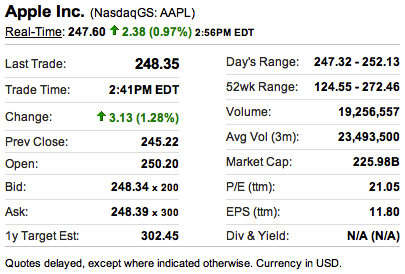


    Add to digg
    Add to Google
    Add to Slashdot
    Add to Twitter
    Add to del.icio.us
    Add to Facebook
    Add to Technorati


  • Cops raid Gizmodo editor home — you don’t mess with Steve Jobs

    By Joe Wilcox, Betanews

    Gizmodo’s big “next iPhone” scoop has generated more than pageviews. Now it’s the police raid. Late this afternoon — actually at stock market close — the gadget blog posted about the police raid, which occurred Friday night at the residence of Gizmodo editor Jason Chen. Law enforcement exercised a search warrant before confiscating — count `em — four PCs and two servers.

    The timing (Friday night) and location (Chen’s home) are oh-so revealing. Somebody wants to send a message to reporters about obtaining information and items that might belong to a big corporation — say, Apple. While I’ve publicly scolded Gizmodo for scooping stolen goods (pun intended), the situation as recounted by the tech blog (and not yet corroborated) chills my soul. The action as described stinks of harassment, intended to scare off the free press.

    Otherwise, why wasn’t the search warrant issued during business hours at a Gizmodo office? The tech blog never said that Chen paid $5,000 for the iPhone prototype. Nick Denton, CEO of parent company Gawker, is on record stating the company paid for the device. If there is criminal negligence, shouldn’t it be further up the corporate ladder than the editor first writing about Apple’s smartphone?

    It’s true that Chen works from home, but surely Gawker has well-documented everything related to the iPhone prototype. Surely there is a clear e-mail trail on company servers — then there are legal considerations. Surely Gawker’s legal department vetted everything before allowing one word, photo or video to be posted about the iPhone prototype. Obviously, Chen’s home is more vulnerable than a company’s offices. Chen’s home office is located in California, while Gawker offices are in New York. Apple is located in California, too.

    There’s a message here: You don’t mess with Apple CEO Steve Jobs. Apple keeps its secrets until Jobs is ready to reveal them. The free press be damned. Singling out Chen is harassment designed to scare off other reporters. I say that being strongly of the opinion that Gizmodo did in fact receive stolen goods under the California Penal Code. The tech blog likely violated California’s Uniform Trade Secrets Act. But the harassment of an editor/reporter/blogger to discourage him or his peers from exercising free speech shouldn’t be mingled with Gizmodo’s culpability — or not.

    Then there are the direct assaults on free speech. Journalists in California are supposed to be protected from search and seizure. Gawker COO Gaby Darbyshire e-mailed the police detective responsible for the search and seizure, citing California Penal Code Seciton 1524(g): “No warrant shall issue for any item or items described in Section 1070 of the Evidence Code.”

    California Evidence Code Section 1070 reads:

    (a) A publisher, editor, reporter, or other person connected with or employed upon a newspaper, magazine, or other periodical publication, or by a press association or wire service, or any person who has been so connected or employed, cannot be adjudged in contempt by a judicial, legislative, administrative body, or any other body having the power to issue subpoenas, for refusing to disclose, in any proceeding as defined in Section 901, the source of any information procured while so connected or employed for publication in a newspaper, magazine or other periodical publication, or for refusing to disclose any unpublished information obtained or prepared in gathering, receiving or processing of information for communication to the public….

    (c) As used in this section, “unpublished information” includes information not disseminated to the public by the person from whom disclosure is sought, whether or not related information has been disseminated and includes, but is not limited to, all notes, outtakes, photographs, tapes or other data of whatever sort not itself disseminated to the public through a medium of communication, whether or not published information based upon or related to such material has been disseminated.

    But do these protections extend to Gizmodo? Denton’s Twitter bio identifies him as a “gossip merchant,” and Gizmodo is regarded as a tech blog. Do the same laws that protect journalists apply to bloggers? It’s a question I hear often asked.

    For certain, Chen’s computers and servers are chock full of sources — named and not. Should the police be able to raid a blogger’s home (Chen is a Gizmodo editor, by title) and violate those sources’ rights to privacy? Can the press truly be free, if the police have such free reign. I’m a journalist. I’m biased here. So I pose the question to you: Should the police have been allowed to raid Chen’s home and confiscate his computers? Please respond in comments.

    Copyright Betanews, Inc. 2010
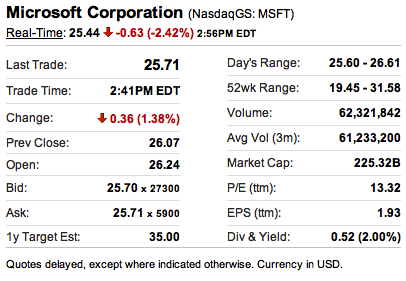


    Add to digg
    Add to Google
    Add to Slashdot
    Add to Twitter
    Add to del.icio.us
    Add to Facebook
    Add to Technorati