Author: Kate Torgovnick

  • The 10 best robots at TED

    Robots-redo

    Begin your countdown to TED2013: “The Young. The Wise. The Undiscovered” kicks off in just 23 days. We at the TED Blog will be reporting live from the event, bringing you news, fresh talks, Q&As, photos and much, much more.

    There is so much to look forward to at TED2013: powerful talks from the 34 speakers discovered via our worldwide talent search, not to mention talks from Bono, Peter Gabriel and Amanda Palmer. But there is one thing that we in the TED Office are secretly look forward to: the robots.

    Nearly every year at TED, we get a peek at the incredible advances going on in the fields of robotics. Below, the best robots from TED events past in reverse chronological order, to help you get ready for TED2013 — whether you’re there in person, watching via TED Live or reading our coverage.

    Vijay Kumar: Robots that fly ... and cooperateVijay Kumar: Robots that fly … and cooperate
    Vijay Kumar: Robots that fly … and cooperate
    The Event: TED2012
    The Robots: Autonomous agile aerial robots
    What it does: These tiny, 8-inch flying quadrotors know where they are without GPS, and their small size makes them able to turn, circle and flip — extremely quickly. But these bots can also work together. Forming teams, they can transport cargo, build things, assess damage after disasters — even map radiation and leaks in unsafe areas.
    See it in action: Watch them flip at 3:46. Watch one navigate obstacles at 7:17. And fast-forward to 10:05 to see a choreographed swarm.
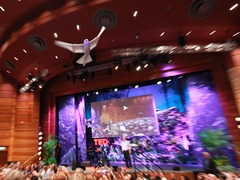
    A robot that flies like a birdA robot that flies like a bird
    A robot that flies like a bird
    The Event: TEDGlobal 2011
    The Robot: SmartBird
    What it does: Modeled after a seagull, this robot is light and aerodynamic. And it flies by flapping its wings, allowing engineers to study what we can learn from bird motion.
    See it in action: Watch it start flapping and take off at 2:08, taking several flying loops around the TEDGlobal theater.
    Péter Fankhauser: Meet Rezero, the dancing ballbotPéter Fankhauser: Meet Rezero, the dancing ballbot
    Peter Fankhauser: Meet Rezero, the dancing ballbot
    The Event: TEDGlobal 2011
    The Robot: Rezero
    What it does: This robot can dance. Technically a ballbot, he balances on a single, large ball rather than on multiple wheels — which allows for ballet-like movement. These robots could be used in a hospital to carry equipment, or could even be a form of transportation.
    See it in action: See Rezero’s balance checked at 1:48. And watch him full-out dance and pirouette at 3:57.
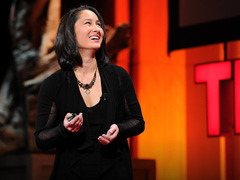
    Cynthia Breazeal: The rise of personal robotsCynthia Breazeal: The rise of personal robots
    Cynthia Breazeal: The rise of personal robots
    The Event: TEDWomen 2010
    The Robots: Kismet, Leo and Autumn
    What it does: Meet the world’s first social robots, able to learn from us, listen to us and even teach us how they interact. The cutest robot around, furry Leo reacts to social cues as he is presented with an unfamiliar object – much like a child, he looks to people to learn how he should react. Autumn is a diet and exercise coach who can motivate you to set healthy goals. These social robots can be used to get kids away from screens and playing physically – as the characters go back and forth between the screen and the real world.
    See it in action: Watch Kismet listening to one of Breazeal’s teammates at 1:31. See Leo learn in real time at 2:34. Get a glimpse of Autumn at 8:44. And at 11:33, watch the playful robots move between realities.
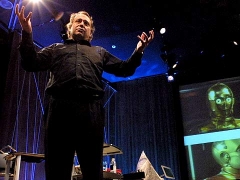
    Heather Knight: Silicon-based comedyHeather Knight: Silicon-based comedy
    Heather Knight: Silicon-based comedy
    The Event: TEDWomen2010
    The Robot: Data
    What it does: This robot has jokes — and lots of them. Using a database of humor, Data creates stand-up routines on the fly. It learns from laughter and applause, figuring out what is working and what isn’t — and tailors its humor based on the reaction.
    See it in action: Get ready to laugh at 3:30.
    David Hanson: Robots that "show emotion"David Hanson: Robots that "show emotion"
    David Hanson: Robots that “show emotion”
    The Event: TED2009
    The Robot: Einstein
    What it does:  This robot has empathy. Rather than bleeping, a la R2-D2, Hanson’s robots have faces — made of Frubber — making them look and act as if they were human. These robots show emotions and react to the expressions of others with facial gestures of their own.
    See it in action: See Einstein brought back to life at 2:10.
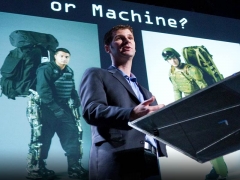
    PW Singer on military robots and the future of warPW Singer on military robots and the future of war
    PW Singer on military robots and the future of wars
    The Event: TED2009
    The Robots: PackBot, robotic tanks, drones
    What it does: These robots go to war zones and perform tasks that are too dangerous for humans. Singer begins his talk with the story of PackBot, a robot who went to Iraq to investigate IEDs and lost his life in a blast. In this prescient talk from early 2009, Singer predicts we may see tens of thousands of robots both fighting wars and keeping peace alongside living soldiers.
    See it in action: At 3:45, see images of the robots currently in use in war zones.
    Hod Lipson builds "self-aware" robotsHod Lipson builds "self-aware" robots
    Hod Lipson builds “self-aware” robots
    The Event:
    TED2007
    The Robots: Self-aware robots
    What it does: These robots evolve. Hod Lipson applied natural selection to robots – rewarding those that succeeded in moving forward, and denying those that did not. As a result, they’ve gradually become more advanced. Some of these models do not know their shape, initially, but learn how to move through processes of elimination. They use programmed “self-models” to understand a unique, unprogrammed way to move.
    See it in action: Watch a robot learn how to move at 3:57. And at 5:23, watch robots whose form of reward is self-replication — it grows as it absorbs other robots.
    Rodney Brooks says robots will invade our livesRodney Brooks says robots will invade our lives
    Rodney Brooks says robots will invade our lives
    The Event: TED2003
    The Robots: Roomba, PackBot and Kismet
    What it does: Roomba, the vacuum cleaner ‘bot, easily navigates around objects and learns where to clean as it goes. More complex is PackBot, also described above, which catalogues local information and has the ability to communicate from areas too dangerous to search for survivors. Also, get another demonstration of Kismet’s ability to react and communicate.
    See it in action: At 2:51, see a demonstration of Roomba at work. Watch 5:00, for PackBot. And cut to 11:02 for Kismet’s response to social cues.
    And: Rodney Brooks is bringing his newest robot, Baxter, to TED2013.
    Dean Kamen on inventing and givingDean Kamen on inventing and giving
    Dean Kamen on inventing and giving
    The Event: TED2002
    The Robot: The Segway
    What it does: These robots help you get around, without expending energy, relying on gas or requiring a parking spot. The idea: efficiency in a motorized platform that is the size of a person.
    See it in action: Watch it all. Kamen gives his entire talk aboard a Segway.

    Tune in to the TED Blog for live coverage of TED2013 beginning on February 25. Watch out for Rodney Brooks’ talk in session 1, where we hope he’ll unveil his newest robot —Baxter.

  • 7 talks on ideas for life without water

    The glittering skyline of Doha, the capital of Qatar, has become famous in recent years. But as Fahad Al-Attiya points out in today’s talk, the ability for any city to grow in Qatar is surprising. After all, this is a country without any water.

    Al-Attiya, the chair of Qatar’s National Food Security Programme, reveals that in the 1940s only about 11,000 people lived in Qatar — and there was no water or electricity. But in 1939, oil was discovered in the country and, after World War II, extraction of it began. Today, 1.7 million people live in Qatar and consume 430 liters of water per capita a year — one of the highest rates in the world.

    But still, Qatar gets very little rainfall and no bodies of fresh water. Pointing at an image of desalination plant at work, Al-Attiya says, “That is our lake, that is our river … This is the best technology this region could have.”

    Qatar has only two days worth of water reserve and imports 90 percent of its food, shares Al-Attiya. And this, of course, presents many risks. To hear how the nation is approaching these challenges — by putting to use the fact that they get 300 days of sunlight a year — listen to Al Attiya’s talk.

    And below, six more talks on innovations for areas where water is a scarce resource.

    Anupam Mishra: The ancient ingenuity of water harvesting Anupam Mishra: The ancient ingenuity of water harvesting Anupam Mishra: The ancient ingenuity of water harvesting
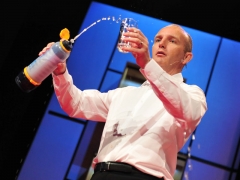
    India’s Golden Desert receives very little precipitation — just 9 inches a year — and its groundwater is 300 feet deep. As Anupam Mishra shares, this one case where old methods simply work better than newer technology. At TEDIndia 2009, he reveals the ingenious feats of engineering that were created centuries ago and are still in use today.
    Michael Pritchard: How to make filthy water drinkableMichael Pritchard: How to make filthy water drinkableMichael Pritchard: How to make filthy water drinkable
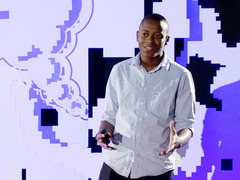
    Many, many people in the world get their water from unclean sources, making them highly susceptible to illness. Michael Pritchard has come up with a solution — a portable water-filtering bottle that can make highly contaminated water safe to drink. In this demo from TEDGlobal 2009, he has TED curator Chris Anderson test it out.
    Ludwick Marishane: A bath without waterLudwick Marishane: A bath without waterLudwicke Marishane: Bath without water
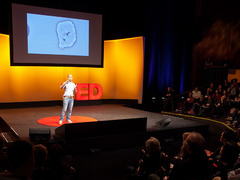
    In the small towns of Limpopo, South Africa, the water supply is as unpredictable as the weather. In this talk from TED@Johannesburg, young entrepreneur Ludwick Marishane tells the funny story of how he created DryBath, a cheap and convenient soap that doesn’t require water. Fun fact: He did the formula research and wrote his 40-page business plan all on his cell phone.
    Damian Palin: Mining minerals from seawaterDamian Palin: Mining minerals from seawaterDamian Palin: Mining minerals from seawater
    Access to clean drinking water is a huge problem around the globe — and one of the most common solutions is desalination. But can we do anything with the salty material left behind in this process? In this talk from TED2012, Damian Palin shows how bacteria can interact with it and create minerals. His idea: biologically “mine” this desalination brine.
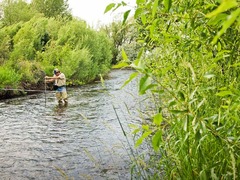
    Rob Harmon: How the market can keep streams flowingRob Harmon: How the market can keep streams flowingRob Harmon: How the market can keep streams flowing
    The United States may not seem like a place where water is scarce but, as Ron Harmon shares at TEDxRainer, streams and creeks are drying up because of over-usage. In this talk, he shares the story of Prickly Pear Creek, where beer makers — who use a ton of water in producing a single glass — and farmers are given incentives to turn back the damage.
    Sonaar Luthra: Meet the Water Canary Sonaar Luthra: Meet the Water Canary Sonaar Luthra: Meet the Water Canary
    After a disaster, it is far too hard to tell if the water is safe to drink, and thousands die as a result. TED Fellow Sonaar Luthra has createed a simple tool which can help, by testing water safety in seconds. At TEDGlobal 2011, he shares how this amazing Water Canary works.


  • Caine Monroy of Caine’s Arcade takes the TEDx stage

    It’s just a beautiful story: a 9-year-old creates a homemade arcade out of cardboard and invites the world to come play with him. Filmmaker Nirvan Mullick was thoroughly transfixed when he stumbled upon young entrepreneur Caine Monroy’s arcade, located in his father’s auto parts store, and made a short documentary about it. Mullick’s initial goal was to raise a $25,000 scholarship fund for Monroy.

    Caine is now 10 and, in November, appeared at TEDxYouth@SantaMonica alongside Mullick. There Mullick revealed that his doc, Caine’s Arcade, got a million views and raised $60K on the very first day it was posted. In the Q&A above, the pair share how they decided to help other kids with the vast sums they were receiving by launching the Imagination Foundation. Their idea is to find, foster and fund creative entrepreneurship in kids through initiatives like the Cardboard Challenge.

    In an amazing moment in the video above, Monroy shares the five rules he’s learned from his journey. Number 2: “Do a business that is fun.” And Number 5: “Use recycled stuff.”

  • On our reading list: Al Gore takes a look at The Future

    Al Gore: Averting the climate crisisAl Gore: Averting the climate crisisAl Gore posits an intriguing question in his newest book, on shelves tomorrow, January 29: can we change the future? But this book isn’t about peering into a crystal ball.  In The Future: Six Drivers of Global Change, Gore — who’s spoken at TED multiple times — breaks down the factors that are changing our world at an unprecedented pace, leaving many of us feeling something akin to temporal whiplash. As Gore outlines, these forces are: ever-increasing economic globalization, the development of a “global mind” via instant communication, a global balance of power with multiple centers, an economic compass pointing toward unsustainable growth, revolutions in the field of genomics and biotech,Al Gore: New thinking on the climate crisisAl Gore: New thinking on the climate crisis and a disruption of the relationship between people and the earth’s ecosystems.
    “What do you think about when you hear the phrase ‘the future?’ Is it a hopeful place? Is it a little scary? Does it seem like things are speeding up more than in the past?” Gore asks in a trailer for the book, above. “Well, they are. There are large forces that are shaping and reordering the world we’ve always known.”

    But he promises that the tome isn’t all doom and gloom.Al Gore warns on latest climate trendsAl Gore warns on latest climate trends

    “No matter where in the world we live, we face a choice—either to be swept along by the powerful currents of technological change and economic determinism into a future that may threaten our deepest values. Or shape the future in ways that protect human dignity and reflect the aspirations of people and nations throughout the world,” he says. “Mapping the future is a risky undertaking. Perhaps the only thing riskier is doing nothing.”

  • Talks to celebrate the 200th anniversary of Pride and Prejudice

    Jane-Austen

    Two hundred years ago today, Jane Austen published Pride and Prejudice, the classic tale of Elizabeth Bennett. Though the book has now sold more than 20 million copies worldwide, Austen (above) received £110 for the copyright from publisher T. Egerton, according to the San Francisco Chronicle.

    While Pride and Prejudice was published in 1813, just four years before Austen’s death, she lives on in TED Talks. Here, five speakers who’ve mentioned Austen on stage:

  • 7 talks with big ideas for hiring

    Some employees can work 9am to 5pm, five days a week. Others are available on evenings and weekends. But in today’s talk, filmed at the TEDSalon in London, entrepreneur Wingham Rowan describes another type of worker — one who has a highly unpredictable schedule.

    “Think of someone who has a recurring but unpredictable medical condition, somebody who’s caring for a dependent adult, or a parent with complex childcare needs — their availability for work can be such that it’s ‘[I can do a] few hours today’ and ‘Maybe I can work tomorrow, but I don’t if and when yet,’” says Rowan. “It’s extraordinarily difficult for these people to find the work that they so often need very badly. Which is a tragedy because there are employers who can use pools of very flexible, local people booked completely ad hoc.”

    Rowan says that he is encouraged by websites like Task Rabbit, which allow people to pick up odd jobs. But he pictures a far more wide-reaching effort to employ flexible workers, beginning with his website Slivers of Time.

    His big idea: instead of giving people at the bottom of the economic order online tools that are essentially glorified classifieds, could they use complex analytic tools –  more like what a Wall Street trader deals with — to chart their economic opportunities? And could governments help on this front? Rowan reveals that there is actually a precedent for this — lottery systems, which governments across the globe have approved. To hear how flexible employment would work on the same model, watch this talk.

    Below, more TED speakers with big ideas on hiring.

    Misha Glenny: Hire the hackers!
    Hackers are, generally, thought of as common criminals. But there is another way to treat coders who use their talents to point out flaws in cyber-security measures rather than to steal money, says underworld investigator Misha Glenny. At TEDGlobal 2011, he suggests a bold reversal: instead of prosecuting hackers, engage them and even put them to work.

    Andrew McAfee: Are droids taking our jobs?
    With unemployment high, people are very concerned with the question, “Are robots and computer programs taking over jobs that people could be doing?” At TEDxBoston, Andrew McAfee admits that, yes, they are. But this is no reason to despair, McAfee says. Because human beings will always excel in one area that digital technology cannot compete: coming up with new ideas.

    Maria van der Heijden: Jobs for 1 million women
    In India, an estimated 700 to 800 million people live on less than two dollars a day. Maria van der Heijden, who founded Women on Wings, shares a vision for how to change this equation — by hiring women for jobs that pay a living wage. In this talk from TEDxDelft, van der Heijden shares how she hopes to employ a million women by connecting their handiwork with global markets.

    Majora Carter: 3 stories of local eco-entrepreneurship
    Brenda Palms-Barber of Chicago, Illinois, took an interesting approach when she started a line of skincare products made from honey. She hired ex-convicts to care for the bees. The idea was to give them employment experience and teach them life skills that could keep them from returning to prison. In this talk from TEDxMidwest, Majora Carter looks at Palms-Barber’s approach — as well as the approaches of two others — to work toward a greener planet and, in the process, hire local workers.

    Heiko Fischer: The future of work
    A stunning number of people don’t feel like they have any control over how things work at their place of employment, says Heiko Fischer. In this talk from TEDxKoeln, he shares a vision for turning human resources on its head and thinking about employees as resourceful humans. Because companies need their best work — and innovative ideas — in order to stay competitive.

    Clay Shirky: Institutions vs. collaboration
    There are two ways to accomplish a business goal, says Clay Shirky at TEDGlobal 2005. You can build an institution with employees, and then layers on top of those employees to manage them. Or you can build a mechanism that allows for collaboration, and harness the spirit of hobbyists and volunteers. In this talk, Shirky explores the upsides and downsides of hiring versus coordinating.

  • TED Weekends offers simple solutions to heal the masses

    PhoneCould the telephone be used as a healthcare device? Mathematician Max Little believed that it could. Max Little: A test for Parkinson’s with a phone callMax Little: A test for Parkinson’s with a phone callBecause Parkinson’s disease causes unusual tremors in the voice, Little realized that a 30-second phone call could be all that’s needed to diagnose the disease, which devastates 6.3 million people worldwide. As Little shared at TEDGlobal 2012, in trials, this test appears to be 99 percent accurate. But he needed 100,000 Good Sumaritans to call the Parkinson’s Voice Initiative and help refine the tool. Luckily, they did.
    It’s inspiring to think that the most simple of ideas could save lives and spare pain all across the world. That’s the idea that today’s TED Weekends on the Huffington Post is dedicated to. Here, three of the great essays that are available now for your reading pleasure. 

    Max Little: How Math Could Improve Life for Nearly 6 Million People with Parkinson’s

    I’m a mathematician and am constantly amazed that the world around us can be described mathematically. All it takes is a combination of a handful of simple mathematical concepts. I’m insatiably curious, and I want to understand how things fit together, so, I get involved in many kinds of scientific problems — everything from the changing statistics of extreme rainfall, to the behavior of life at the scale of molecules, to analyzing voice and speech recordings for forensics. But there’s one project, on Parkinson’s disease that has occupied me for the last seven years. I fell into it almost by accident.

    It is estimated that between 4 and 6 million people worldwide have Parkinson’s. Because the disease is more likely to affect older people than younger, and because the population is aging and growing, that figure is expected to rise. Parkinson’s primarily affects movement, the ‘classic’ symptoms are uncontrollable and unwanted motion in the limbs, which looks like shaking or tremors.

    I can only imagine what it is like to suffer from a neurological disease. Read the full essay » 

    Alvaro Fernandez: Retooling Brain Care with Low-Cost, Data-Driven Technologies

    While sophisticated neuroimaging techniques such as fMRI (functional magnetic resonance imaging) provide a significant boost in our understanding of the brain — and sexy research frequently reported all over the media — they are extremely costly. This makes it difficult to reach the mass scale required to conduct clinically meaningful research and to improve the brain care of millions if not billions of individuals around the globe.

    Good news is, we are witnessing an explosion of new methods that make use of low cost, already ubiquitous technologies to inform brain health prevention, diagnoses and treatments on a wide scale. Read the full essay » 

    Maura O’Neill: Disruptive Innovation Often Comes from Unexpected Places

    As a mathematician, Max Little hasn’t spent most of his career in a doctor’s office or a hospital, but with a pad and pencil or behind a laptop. And yet it is he who has crafted a radically lower cost and more ubiquitous method for diagnosing Parkinson’s.

    Steve Jobs loved music, but hadn’t spent his life as a disc jockey. He was not a professional musician or a stereo hardware designer and he didn’t focus on music marketing. That is, until he and his team at Apple released the iPod. What Jobs did have was a deep respect for the consumer music experience, and with his knowledge on business and technology, he devised a business model that forever changed the industry and its customers. Read the full essay » 

  • As combat ban is lifted for women, watch this talk from a female master sergeant

    The Pentagon announced earlier this week that it was lifting the ban on women in combat positions in the U.S. military. And today Defense Secretary Leon E. Panetta and General Martin E. Dempsey shared with The New York Times why they made this historic decision. For both of them, it came down having met and talked to many women capably and bravely performing difficult posts. Said Panetta, “To go out now and to see women performing the roles that they are performing and doing a great job at it, I think it just encouraged me. I think it encouraged all of us that everybody should have a chance to perform at any mission, if they can meet the qualifications.”

    These words made me think of this powerful TEDx talk from airwoman Jennifer J. Allara, an Explosive Ordnance Disposal Technician at Dover Air Force Base in Delaware.

    “Iraq and Afghanistan — if you’ve been there, you have a story,” says Master Sergeant Allara in this talk given at TEDxScottAFB. “Mine starts at zero three thirty. For those of you who don’t know military time, that’s 3:30 am.”

    In this talk, Allara tells the story of her final mission in Afghanistan, the comrade who didn’t make it through and how that day has affected her for years to come. She tells this emotional story to stress the importance of soldiers recognizing when they are not okay and need to seek help for the complicated emotions and thoughts that swirl around them. Allara encourages people to simply ask each other: are you okay?

    TEDxScottAFB is one of several TEDx events held at military locations. We recommend watching more talks from the event, and checking out TEDxPentagon. Or watch the playlist “War Stories” » 

  • 5 brave personal stories of domestic abuse

    Leslie Morgan Steiner thought that she’d found true love in her early 20s. Instead, she found herself married to a man who repeatedly pointed a gun at her head and threatened to kill her.

    In today’s brave talk, given at TEDxRainier, Steiner tells the story of how she — a Harvard-educated magazine editor turned businesswoman — fell into an abusive relationship. She seeks to answer the question people always ask about women who are being abused: Why does she stay?

    Steiner calls the phenomenon “crazy love.” Like many other women and men experience each year, her relationship started with adoration, moved on to isolation, and culminated in extreme manipulation — and violence.

    “As it turns out, I’m a very typical domestic abuse victim … Domestic violence happens to everyone. All races, all religions, all income and education levels,” says Steiner. “Why did I stay? The answer is easy. I didn’t know he was abusing me. Even though he held those loaded guns to my head, pushed me downstairs, threatened to kill our dog, pulled the key out of the car ignition as I drove down the highway, poured coffee grinds on my head as I dressed for a job interview, I never once thought of myself as a battered wife. Instead, I was a very strong woman in love with a deeply troubled man and I was the only person on earth who could help him face his demons.”

    To hear Steiner’s terrifying story — and how she finally got out by going public and talking to everyone she could about what was happening behind closed doors — listen to this powerful talk. And below, four more speakers brave enough to share their similar personal experiences and let others know they are not alone.

    Theresa Flores: Find a voice with soap
    Theresa Flores was your average girl from the Michigan suburbs. And through a simple crush on a classmate, was manipulated into something very dark — human trafficking. In this talk from TEDxColumbus 2011, she recalls how she became stuck in a cycle of abuse by men much older than her. And she shares how, years late, when returning to a motel where she had been abused, she had an idea — putting an 800 number for the National Human Trafficking Hotline on the bars of soap in the bathroom. She now gives this soap to motels for free in areas where trafficking is common, in hopes that girls like her will find it in the bathroom and call.

    Javier Espinoza: Turning pain into power
    Javier Espinoza parents expressed nothing but tenderness and love to him. But in their dealings with each other, they fought terribly — and his father often beat his mother. In this talk from TEDxOrangeCoastWomen, Espinoza shares just how angry he felt at his father. And how, eventually, he found a way to channel his emotions into a program called “In a Box,” which provides women and kids in domestic violence shelters with the little things that they need.

    Pamela Taylor: Creating a safe space for the empowerment of women
    Pamela Taylor is known as the co-founder of Dress for Success, the nonprofit which helps disadvantaged women build the skills they need to get jobs. In this talk, she shares why this is her passion — because she was abused for years herself. In this talk from TEDxSanAntonio, she shares how she was attacked by her husband, often in public, and felt so disheartened that no one came to her aid.

    Tony Porter: A call to men
    Growing up, Tony Porter says that he got message loud and clear: that men are in charge — women are not — and that anger is the only emotion it’s okay to express. At TEDWomen, Porter calls this “twisted,” because how could it not lead to the disrespect, mistreatment and abuse of women? In this talk, Porter asks men to get out of this “man box” and boldly act in ways counter to what they’ve been taught.

  • Which TEDxBeaconStreet audience member lived on camel milk for 9 days? Which gets mistaken for the prince of Norway?

    2137_TedxBeaconStreet_stage2.jpg-628x250

    TEDxBeaconStreet brought you today’s talk from Steven Schwaitzberg, “A universal translator for surgeons,” as well as Colin Stoke’s “How movies teach manhood.” But the organizers behind the event know that the speakers on stage only scratch the surface of the stories to tell in the greater Boston area. “We place equal value on our speakers and audience,” explains organizer John Werner. “We look for proactive ways to build community and broaden the TEDx experience beyond the day of the event.”

    One example: as people registered for TEDxBeaconStreet 2012, they were asked to tell a fun fact about themselves. Facts for almost all of the 1600 attendees were compiled into a gigantic list—more than 12 pages long—which was emailed out before the event. Below, read a small selection of it. Werner says that audience members loved getting to know each other in this way, and that people reached out to him for an introduction to a person whose fact sparked their interest.

    TEDxBeaconStreet-audience-facts

    The TEDxBeaconStreet organizers also asked each attendee to choose words from a list that best described themselves. They then created a word cloud showing the most popular answers.

    TEDxBeaconStreet-word-cloud

    And finally, they asked software engineer Daniel LaLiberte, who currently works at Google on Google Charts, to create a visualization of 400 members of the TEDxBeaconStreet community. Take a closer look at it by clicking through on the image below. Each person at the event is represented by a white circle, and the words they chose to describe themselves are colored circles. Click on a circle to see how that person or word intersects with others in the audience. Take some time to play with this unique tool » 

    TEDxBeaconStreet-visualization

  • 8 talks about advances in surgery

    Regardless of what you might see on shows like Grey’s Anatomy, teaching surgery is very difficult. This is a fact that Dr. Steven Schwaitzberg stresses in today’s talk.

    Schwaitzberg, who spoke at TEDxBeaconStreet in November, is a pioneer in the field of minimally invasive surgery, which is less painful for patients and allows them to get back to normal life faster than traditional surgery. Schwaitzberg has spent his career not only helping to develop the techniques for laparoscopic surgery, but teaching the skills needed to perform it to others. As Schwaitzberg explains in this talk, the first step was developing a certification test for surgeons in the U.S. wishing to perform minimally invasive surgery. Now, this training and certification program is going global.

    “Surgeons are not born. Surgeons are trained one step at a time,” explains Schwaitzberg. “But we have a problem—distance. We can’t travel everywhere.”

    And there’s another problem, too—the language barrier. “Language is one of the most profound things that separates us,” says Schwaitzberg. “This examination is really hard. Even those who say they speak English [as a second language], only 14% pass this test. Because for them it’s not a surgery test—it’s an English test.”

    This challenge has led Schwaitzberg and his colleagues on a hunt for a technology that will allow them to bridge both distance and language. And with the help of the IBM Accessibility Center, they have come up with something very cool — a Tower of Babel-defying tool that allows for translation in 11 languages.

    To see a demo of this tool, which allows an instructor to teach complicated skills over video in real-time, with their words being translated into the student’s native language as they go, watch this inspiring talk.

    Here, more talks on fascinating advances in the field of surgery.

    Catherine Mohr: Surgery's past, present and robotic futureCatherine Mohr: Surgery's past, present and robotic futureCatherine Mohr: Surgery’s past, present and robotic future
    “Surgeons are the tailors, the plumbers, the carpenters and some would say the butchers of the medical world: cutting, reshaping, reforming, bypassing, fixing,” says surgeon and inventor Catherine Mohr. At TED2009, she shows how far the field has come in 10,000 years — peaking with laparoscopic surgery, where the fixing is done via long needles in small incisions as doctors chart progress on a screen. She also gives a look at where the field is going — robots which allow surgeons to make tiny-but-complex maneuvers without any errors of the hand.
    Quyen Nguyen: Color-coded surgeryQuyen Nguyen: Color-coded surgeryQuyen Nguyen: Color-coded surgery
    Surgery isn’t as simple as it looks in medical textbooks, where different types of tissues are given different colors to differentiate them. Nope, inside the body, it is dark and hard to see, and the parts don’t look nearly as distinct. In this talk from TEDMed 2011, surgeon Quyen Nguyen introduces us to florescent markers that make tumors light up — making it much easier to for surgeons to operate and get all the cancerous tissue.
    Yoav Medan: Ultrasound surgery -- healing without cutsYoav Medan: Ultrasound surgery — healing without cutsYoav Medan: Ultrasound surgery — healing without cuts
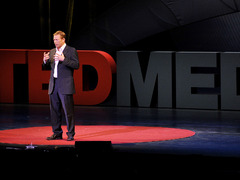
    We’ve talked about minimally invasive surgery, but what about non-invasive surgery? In this talk from TEDMed 2011, medical inventor Yoav Medan shares a surgical technique that requires no cuts at all. It’s all about shaping ultrasound, and using it to treat issues like brain lesions and some cancerous growths … from outside the body.
    Ed Gavagan: A story about knots and surgeonsEd Gavagan: A story about knots and surgeonsEd Gavagan: A story about knots and surgeons
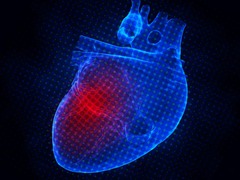
    Ed Gavagan had an emotional moment watching two medical students practicing their surgical knots on the subway. That’s because, years before, he was brutally stabbed on a city street and survived against all odds thanks to a highly-skilled surgical team. This talk from TEDMed 2012 is a love letter to the skills surgeons must master — as simple as tying knots but with the power to save lives.
    Tal Golesworthy: How I repaired my own heartTal Golesworthy: How I repaired my own heartTal Golesworthy: How I repaired my own heart
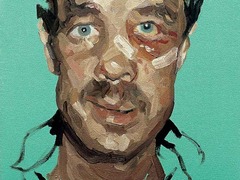
    A boiler engineer, Tal Golesworthy has a deep understanding of how pipes work.  When he found out that he required a risky surgery on his aorta, he made an analogy to his work and recognized it as a plumbing problem. In this talk from TEDxKrakow, he tells the story of how his plumbing knowledge informed a new surgical procedure.
    Erica Frenkel: The universal anesthesia machineErica Frenkel: The universal anesthesia machineErica Frenkel: The universal anesthesia machine
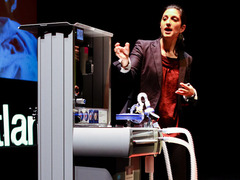
    It’s a medical nightmare no one likes to imagine: what if the power goes out while a patient is getting surgery, and their anesthesia stops flowing? In this talk from TEDxMidAtlantic, medical technologist Erica Frankel shows that these machines are too prone to disruptions and demos a new machine that could solve the problem.
    Iain Hutchison: Saving facesIain Hutchison: Saving facesIain Hutchison: Saving faces
    Iain Hutchison is a facial surgeon. But he’s not one you go to when you want plumper lips — he works with people whose faces have been severely disfigured. In this talk from TEDGlobal 2010 — which is not at all for the squeamish — he shares how advancing techniques have the ability to affect quality of life.

  • TED speakers discuss the 125th anniversary of National Geographic

    National-Geographic

    Happy birthday, National Geographic. The intrepid magazine turns 125-years-old this month. Yesterday, NPR’s Talk of the Nation invited TED speakers Robert Ballard and Sarah Parcak on the air to discuss the notable anniversary.

    Robert Ballard on exploring the oceansRobert Ballard on exploring the oceansBallard, who is a National Geographic explorer-in-residence, talked about a recent expedition to the Black Sea, where he discovered a very well-preserved shipwreck. Ballard, who gave the TED Talk “On exploring oceans,” told host Neal Conan, “The deep sea is the largest museum in the world. It has more history in it than all the museums of the world combined.”

    Ballard also proved that he has a photographic memory for National Geographic issues, telling a caller who described his favorite story that it came out in December 1981.

    Sarah Parcak: Archeology from spaceSarah Parcak: Archeology from spaceTED Fellow Sarah Parcak, who gave the talk “Archeology from space,” also joined the program to talk about her work as one of National Geographic’s emerging explorers.

    “When you think about the scale of human populations all over the world and the fact that there’s so much here, really the only way to be able to visualize that is to pull back in space … It allows us to see hidden temples and tombs and pyramids and even entire settlements,” she says. “What satellites help to show us is we’ve actually only found a fraction of a percent of ancient settlements and sites all over the world. … It’s the most exciting time in history to be an archaeologist.”

    Parcak said that, growing up, she kept every National Geographic issue that contained images of Egypt. “It’s both Indiana Jones and National Geographic that inspired me to be an Egyptologist,” she said.

    To hear much more about the magazine — like how its second president, Alexander Graham Bell, caused a scandal when he decided to publish pictures — listen to the full interview on NPR’s website » 

  • 5 talks from and about military generals

    According to Colin Powell, the retired four-star general and former United States Secretary of State, learning to give a salute can be life changing.

    Geoff Mulgan: A short intro to the Studio SchoolGeoff Mulgan: A short intro to the Studio SchoolAt TED, many have shared what they believe to be missing from our current education system — Ken Robinson says its space for kids to flex their creative muscles while Geoff Mulgan argues it’s a lack of hands-on doing. But in today’s talk, given at TEDxMidAtlantic, Powell gives a very different answer. He says that what kids really crave is structure.
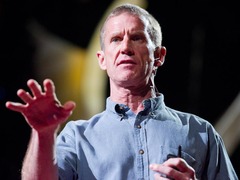
    To explain what he means, Powell tells his own story of growing up in the New York public school system. He admits that he wasn’t a very good student.

    “I didn’t do well at all … straight ‘C’ everywhere,” says Powell, revealing that he felt lucky to be accepted into the City College of New York given his grades. “Then I found ROTC. I found something that I did well and something that I loved doing … From there, my whole life was dedicated to ROTC and the military.”

    Powell says that it was the army’s sense of order that allowed him to change his course and become one of CCNY’s most famous graduates. And it’s a phenomenon he sees repeated whenever a new class of shows up for boot camp.

    “The first thing we do is put them in an environment of structure — put them in ranks, make them all wear the same clothes,  cut all their hair off so they look alike … teach them to obey instructions and understand the consequences of not obeying,” says Powell. “The most amazing thing happens over that time. Once that structure is developed, once they understand the reasoning … in 18 weeks they have a skill, they are matured … We need more of this kind of structure and respect in the lives of our children.”

    To hear Powell’s ideas on how to provide structure, and the importance of “the gift of a good start,” listen to his talk. And here, watch more talks by and about military generals.

    Stanley McChrystal: Listen, learn ... then leadStanley McChrystal: Listen, learn … then leadStanley McChrystal: Listen, learn … then lead
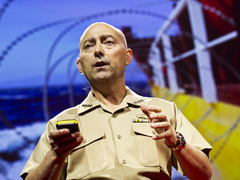
    A fellow retired U.S. Army four-star general, in this talk from TED2011, Stanley McChrystal gives unexpected thoughts on leadership. His take? That it’s as much about absorbing the wisdom of the people around you as it is about giving orders.
    James Stavridis: A Navy Admiral's thoughts on global securityJames Stavridis: A Navy Admiral's thoughts on global securityJames Stavridis: A Navy Admiral’s thoughts on global security

    In the U.S. Navy, admiral is the equivalent rank to general. Here, a talk from admiral James Stavridis, one of the few high-ranking military officers in the United States who tweets and blogs. In this talk from TEDGlobal 2012, he shares why he believes the security of the future will be built with bridges rather than with walls.
    Peter van Uhm: Why I chose a gunPeter van Uhm: Why I chose a gunPeter van Uhm: Why I chose the gun
    A retired four-star general in the Royal Netherlands Army, as well as his country’s former Chief of Defence, Peter van Uhm says that his career path has been motivated by a deep love of peace rather than a hunger for war. In this talk from TEDxAmsterdam, he shares his story.
    Jennifer 8. Lee hunts for General TsoJennifer 8. Lee hunts for General TsoJennifer 8. Lee hunts for General Tso
    You may know him as a tasty plate of fried chicken in sauce — but who was General Tso? Was he even a real general? Journalist Jennifer 8. Lee investigates the origins of popular “Chinese food” dishes in America, including General Tso’s Chicken. In this talk, she tracks down the background of the Qing dynasty military hero and visits his distant relatives — who were shocked that the dish named after the icon was even considered Chinese.

  • Why you need to fail to have a great career

    At TEDxUW 2011, economics professor Larry Smith gave a memorable talk titled, “Why you will fail to have a great career.” Larry Smith: Why you will fail to have a great careerLarry Smith: Why you will fail to have a great careerThe hilarious talk takes aim at people and the incredible excuses they dream up for not pursuing their passions, from “It’s too hard” to “But I value human relationships more than my work.” His talk was a call for people to get out of their own way and at least try.

    At this year’s event, entrepreneur Michael Litt gave his reaction to Smith’s talk, titled, “Why you have to fail to have a great career.” His idea: that failure provides the ultimate experience needed for success — learning to get up and dust yourself off after a fall. Watch above to hear Litt’s candid telling of a time he failed professionally, big time. Since being posting on December 23, this talk has been watched more than 41,000 times — and with good reason.

  • Jehane Noujaim’s “The Square” premieres at the Sundance Film Festival


    On January 25, 2011, nearly 50,000 Egyptians took to the streets, occupying Tahrir Square. One of their most powerful weapons: cameras, both still and video, to share their story with the rest of the world. Jehane Noujaim wishes for a global day of filmJehane Noujaim wishes for a global day of filmHowever, many of these cameras were captured during violent clashes.
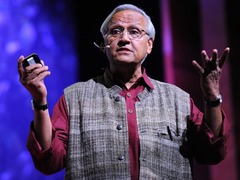
    Filmmaker Jehane Noujaim — who won the TED Prize in 2006 and wished for a global day of film — seeks to tell the story of these protestors in her new documentary, The Square. The film combines the shocking and powerful footage taken by the protestors themselves, along with Noujaim’s interviews. The Square premiered at the Sundance Film Festival on Sunday and received a standing ovation. It is in the running for the film festival’s World Cinema Documentary Competition.

    But Noujaim does not want The Square to be a closed book. She has taken to Kickstarter to raise funds to finish the film.

    The Square is a film about a group of young Egyptians brought together by a revolution, and who — together — find a new sense of hope for their country … [But] two years in, the revolution is far from over,” the Kickstarter page explains. “We are asking you, the Kickstarter community, to help finish our film. There are so many ways we want to make sure this film really comes to life after it debuts at Sundance … in Egypt, in the USA, and really around the world … Bunker Roy: Learning from a barefoot movementBunker Roy: Learning from a barefoot movementAt this very moment our team members are on the ground in Egypt, continuing to capture footage of history as it unfolds — to be included in the final final edit of the film. We  wrapped up our Sundance edit only days ago, but we have more work to do. Your funding will help.”

    The Square isn’t the only film of Noujaim’s to show at Sundance this year. Her documentary Rafea: Solar Mama is showing as a part of the festival’s “Stories of Change” program this week. This film follows a Jordanian woman who attends Bunker Roy’s revolutionary Barefoot College in India, the subject of his 2011 TED Talk.

    The-Square-still

  • Goodbye to sugar? Homaro Cantu on how to trick your taste buds


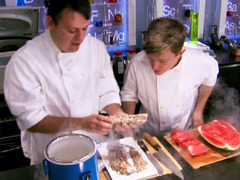
    Homaro Cantu and Ben Roche can only be described as the mad scientists of food. These two pioneer unique food delivery systems — think maki rolls printed on flavored paper, a dessert disguised as nachos  and a bleeding veggie burger — at their Chicago restaurants, Moto and iNG. At TED 2011, the pair spoke about their science-lab approach to food in the talk “Cooking as alchemy.”

    Homaro Cantu + Ben Roche: Cooking as alchemy  Homaro Cantu + Ben Roche: Cooking as alchemy Embedded in this talk is a crazy idea — using “miracle berries” to trick taste buds into thinking that sour foods are sweet. As Cantu explains, these berries contain a glycoprotein which could be used to make healthy junk food. Cantu explains in the talk, “We could eliminate sugar across the board for all confectionary products and sodas, and we can replace it with all-natural fresh fruit.”

    Last week, Cantu wrote on his talk page, “After eight long years everyone, I have finally completed my first step towards the end of refined sugar.” He has released a cookbook called The Miracle Berry Diet Cookbook. It shares food trickery like how a lemon can be made to taste like lemonade, and a delicious ice cream that can be made with zero sugar. Watch above as Cantu discusses some of these fascinating recipes on the TV show “Windy City Live.”

    Cantu wants to show exactly how he and his chefs cooked up these taste bud-bending recipes. He is raising funds for an online series called “Cooking Under Pressure.” Check out the promo for the show below and fund the series via Kickstarter.