Author: Main Feed – Environmental Defense

  • Nitrates: An ounce of prevention is worth a pound of cure… and a dollar of savings

    Eric Holst is Managing Director of EDF’s Center for Conservation Incentives

    A guest blog post by Eric Holst, Managing Director of EDF's Center for Conservation Incentives.

    Nitrate pollution in groundwater is a critical and under-reported problem associated with food production in California—an issue that journalists Julia Scott, Sasha Khokha, Christopher Beaver and Lisa Pickoff-White have reported on over the past week.

    Nitrate is a reactive form of nitrogen that can leach into groundwater as a result of a number of agricultural practices including over-application of nitrogen fertilizer or manure on crops, and pastures. Additionally, discharges from wastewater treatment plants and septic tank leakage can lead to nitrate pollution in surface and groundwater supplies. Excessive levels of nitrate in groundwater threaten California’s drinking water supplies, public health and the environment.

    Nitrogen, like water, is an essential input to agriculture. In fact, Nitrogen is among the most abundant elements on earth; virtually inert nitrogen gas (N2) makes up nearly 80% of the air we breathe. However, under natural conditions, reactive forms of nitrogen (nitrates) would be much less abundant. The availability of reactive nitrogen, like nitrate, is one of the key factors controlling crop and other plant growth. Fertilizers are industrially produced to overcome the limited availability of natural reactive nitrogen needed by plants to provide the extensive crop production that sustains the world’s population today. But, if not managed properly, reactive forms of nitrogen can have a variety of negative impacts by elevating risks to public health and the environment.

    Nitrate in groundwater is a particularly troublesome problem because it is difficult if not impossible to clean up. The best way to ensure clean groundwater is to prevent or minimize nitrate leaching to begin with. This can be accomplished in two ways: 1) by applying fertilizer and manure more efficiently to crops and 2) by filtering the runoff of irrigation water through natural filters such as vegetative filters and wetlands.

    EDF’s Center for Conservation Incentives works in partnership with farmers throughout the US to show that both approaches are feasible, economically viable, and allow farmers to maintain profitability while reducing environmental impact. Farmers in the Chesapeake Bay, in North Carolina, and Western Lake Erie Basin participate in the On-Farm Network®, a voluntary program designed originally by the Iowa Soybean Association. The On-Farm Network® provides farmers with site specific information about the nitrogen needs of crops and creates a forum for sharing this information within groups of farmers in the same area. Farmers enrolled in the On-Farm Network® have experienced an average of 20% reduction in nitrogen use with no impact on yield and in so doing have saved substantially on input costs.

    A range of state and federal programs exist to help farmers install vegetative filters on and around farms. Nitrogen laden runoff effectively fertilizes plants in riparian and wetland buffers transferring the nitrogen from the water to the plants and storing it for long periods of time. More importantly, bacteria associated with plant roots remove the nitrate by converting it into N2, a benign end product, through a process known as denitrification. Many farmers in the California’s San Joaquin Valley are installing tailwater retention ponds (tailwater is the excess water that leaves the farm after irrigation) to help them comply with surface water quality rules. When surrounded by native wetland vegetation, these ponds can act as effective nitrate filters and provide wildlife habitat at the same time. Valley farmers are eligible to receive financial support from the US Department of Agriculture to install tailwater ponds.

    These are just a few of the incentives for good environmental management that EDF is committed to implementing in California and beyond.

  • Senator Shelby Makes Right Call Requesting Gulf Fishery Disaster Designation Addressing Oil Spill

    Yesterday U.S. Senator Shelby requested a Gulf of Mexico fisheries disaster declaration from the Secretary of Commerce in the face of the Deepwater Horizon oil spill.
    EDF fully supports this action and encourages U.S. Secretary of Commerce Gary Locke to grant the request.
    The Gulf coast economy is closely tied to the well-being of its oceans. The […]

  • Top Climate News from the Past Few Days

    On E2, an environmental coalition asks the White House to step up its support for clean energy and climate legislation. Here is an excerpt:

    “Mr. President, we ask you to urgently convene all stakeholders and lead the effort to craft a comprehensive clean energy and climate policy that will be enacted this year and will move America toward energy independence built on clean American power.” The coalition includes the World Wildlife Fund, the Sierra Club, the Natural Resources Defense Council, the Pew Environment Group and others.

    On Grist, Scott Luthcke, a NASA climate scientist, explains how he has spent the last 6 years weighing Greenland. And she has been losing a lot of weight – an average of 183 gigatons, per year, for the last six years – due to ice melt.

    Dave Roberts of Grist makes the case for supporting the American Power Act.

    “So is it worth doing? Is the bill worth fighting for with the kind of passion that was brought to health care or even the presidential election? I believe the answer to that question is an absolute, unqualified, overwhelming yes. However flawed and inadequate, Kerry's bill would represent a sea change in American life. It would lend desperately needed momentum to the global fight against climate change. Failure would be a tragedy and passage a huge, vital victory.”

    Grist also tackles the pressing issue of how the American Power Act will affect farmers.

    “Last year, the Environmental Protection Agency predicted that such a program could provide annual net benefits to farmers as high as $18 billion — an amount that could fundamentally change the way America farms.”

    On Green we learn that the United Nations has chosen a new head of the climate secretariat: Christina Figueres of Costa Rica.

    Climate Progress highlights new NASA data showing that 2010 has had the hottest January to April temperatures on record. A new NOAA report with similar findings is highlighted here on E2.

    Ezra Klein explains the implications of the proposal currently being discussed in the Senate which would limit EPA’s ability to regulate carbon.

    “Murkowski's bill would disagree with the EPA's finding that carbon is a danger and needs to be regulated.”

  • 10 Things We Like about the American Power Act

    1. The American Power Act will help us research and develop innovative renewable energy sources here in America.

    • The bill will unleash billions of dollars of private-sector investment in clean energy jobs and projects here in America. Jeff Immelt, Chairman and CEO of General Electric puts it best: “National policy – including an effective price on carbon and a strong, nationwide clean energy standard – is needed to drive increased investment, which in turn creates new technologies and jobs.”

    2. The American Power Act was crafted with the intention of rising above partisan politics. This bill is not about choosing sides or playing favorites, is it about finding real solutions to our climate and energy problems and laying the foundation for an international climate treaty.

    3. The American Power Act will help America become the world leader in clean energy investment and technology, a title currently held by China.

    • According to Information Technology and Innovation Foundation “Asia’s rising “clean technology tigers” – China, Japan, and South Korea – have already passed the United States in the production of virtually all clean energy technologies, and over the next five years, the governments of these nations will out-invest the United States three-to-one in these sectors."

    4. The American Power Act is good for American manufacturers. The balanced energy strategy that includes development of alternative energy such as wind and solar as well as investment in new domestic energy sources will create jobs in clean technology manufacturing.

    • The bill includes a $5 billion expansion of the clean energy manufacturing tax credit.

    5. The America Power Act will create jobs, at least twice as many as an energy-only bill.

    6. The American Power Act will cut carbon pollution 17% by 2020 and 80% by 2050.

    7. The American Power Act will cut our dependence on foreign oil and help us break the cycle of sending a billion dollars a day to countries that hate us.

    • Included in the bill are significant tax incentives for conversion of trucks to natural gas vehicles.
    • There is $7 billion annually earmarked for improving transportation efficiencies and mass transit systems.

    8. The American Power Act is good for business. It will create predictability in the market, spurring clean energy investment and job creation.

    • The APA sets a hard price collar of $12 to $25 for carbon. The tight $13 range is a vast improvement over the $18 range suggested in the House bill. A smaller range limits wild price fluctuations and leads to higher investor confidence levels.

    9. The American Power Act will protect Americans, especially low-income Americans, by ensuring that energy costs stay under control and that revenues collected from utilities under a carbon cap will be rebated to consumers.

    10. The American Power Act will help domestic agriculture and forestry by providing farmers, ranchers and forest owners with opportunities for new revenue streams in the off-set market.

    • USDA will have authority over the domestic offset program which will ensure wide-spread participation and that benefits are shared across the industry.

  • South Carolina Fisherman Wants Catch Shares, Not Closures

    A recent op-ed by Chris Conklin in The Sun News of Myrtle Beach, South Carolina, voiced frustration over the cascading closures now hitting the Southeast. Conklin comes from a fishing family and wonders if he’ll be able to stay in the fishing industry unless catch shares are instituted. The South Atlantic Fishery Management Council is considering a number of options – including catch shares – to reduce fishing closures and get fishermen back on the water.

    Read the full post »

  • Climate and Energy Bill Introduced; Gulf Oil Disaster Has Changed Politics

    Featuring:
    Fred Krupp
    , President
    Steve Cochran, Director, National Climate Campaign

    Will the oil disaster in the Gulf help or hinder the passage of an historic climate and energy bill? What are the prospects for winning bipartisan support? What can we expect to hear from the bill’s opponents?

    Listen to this discussion:

    Download mp3 | Subscribe in iTunes

  • The Electrification of Corporate Fleets: Challenges and opportunities

    How will the introduction of plug-in hybrids and other electric vehicles impact commercial fleets? Light-and-medium duty electric vehicles are either now on the market or soon will be. Companies with vehicle fleets have opportunities to help develop the market for these vehicles and make strides toward achieving their corporate sustainability goals.

    Environmental Defense Fund is hosting a call series to explore opportunities to cut greenhouse gas emissions from corporate fleets. Please join us for the next call in our series when we will look towards the coming years and ask: What models are now or will soon be available for fleet use? Which duty-cycles match-up best with these vehicles? Are there challenges that are unique to corporate fleets in deploying electric vehicles?

    Leading this discussion will be Mike Millikin, founder and editor of the online publication Green Car Congress (GCC).

    The call is on May 24th at 12pm ET. To join, call:

    • Phone number: +1 (213) 289-0500
    • Code: 267-6815

    We look forward to having you join us in tackling these tough questions.

  • EDF Climate Corps: Building a movement for energy efficiency in business

    This summer, 51 Climate Corps fellows will take their places on the front lines of a new movement for energy efficiency in business – a movement grounded in smart economics and fueled by the talents of the next generation of business leaders.

    It’s a movement whose time has come. Climate change is the environmental challenge of our generation, and the need for action has never been greater. The catastrophic oil spill in the Gulf of Mexico has focused the nation on the need to confront our reliance on fossil fuels. And that has renewed hope for swift action in the Senate on a climate bill.

    But there’s one solution to the climate crisis that we don’t need to wait for — energy efficiency. The opportunity is enormous: a 2009 McKinsey report estimates that by 2020, the United States could reduce its annual energy consumption by 23% through energy efficiency measures alone. This would cut greenhouse gas emissions by over a gigaton – that’s a billion tons – and cumulatively save companies and consumers over a trillion dollars.

    Energy efficiency is doable right now, it’s cost-effective, and it’s absolutely critical to slowing climate change. But it’s not happening fast enough. To truly take energy efficiency to scale, we need a national movement that captures the imagination of people from dorm rooms to boardrooms across the country.

    That’s why Environmental Defense Fund created EDF Climate Corps. The heart of the program is the EDF Climate Corps fellow. With our partner Net Impact, we recruit students from top-tier MBA programs, provide them with intensive training and embed them in companies around the country. For 10-12 weeks, the fellows serve as champions of energy efficiency, developing customized investment plans that help their companies cut costs and greenhouse gas emissions.

    In the first two years of the program, Climate Corps fellows identified almost $90 million in net operating cost savings, and 280 million kilowatt hours of energy savings – enough to power 24,000 homes annually. Even more impressive: companies report that they are implementing projects accounting for 84% of the energy savings identified by the fellows.

    With results like these, it’s no wonder that the program has grown by leaps and bounds, from 7 fellows in 2008 to 51 fellows this summer. We have 47 companies on board this year, across industries from telecommunications (AT&T and Verizon), to IT (Cisco and Sungard), e-commerce (eBay and Yahoo!) retail (Target and JCPenney) and financial services (Bank of America and Wells Fargo). Several companies are returning to Climate Corps for a second year – Cisco for a third.

    The beauty of EDF Climate Corps is that it gives tomorrow’s business leaders a chance to change the world today. That’s what attracted Jeremy Dommu, a 2010 fellow from George Washington University, to the program. As Jeremy writes in a blog for Business Week, “I look forward to a summer in which I am tasked with making suggestions that will have a positive impact on both the planet and a company's bottom line.”

    So to Jeremy, and to our other 50 champions of energy efficiency: welcome to Climate Corps!

    Sign up to receive further updates on Climate Corps 2010, including regular blog posts by our fellows.

  • New England Groundfish Sectors: Things to Look for 2 1/2 Weeks In

    New England groundfish sectors, a kind of a catch share management system, are entering their third week of operation. It’s far too early to pass judgment, but here’s what we’re watching for: 1) The ability of individual fishermen to maximize their profits and minimize their costs, and 2) The total 2010 harvest of groundfish compared to annual catch limits (ACLs). An article from SeafoodNews.com that we cited last week discussed these two measures, but was criticized for comparing the first week of landings versus last year’s harvest. However, since fishermen fishing under sectors no longer have any time constraints to their harvests, weekly landings are not a meaningful measure of success or failure.

    Read the full post »

  • Compounding the problem: Why aren’t we using the safest and most effective dispersants in the Gulf?

    Richard Denison, Ph.D., is a Senior Scientist.

    Imagine learning you have a serious disease. You doctor decides to treat you with a drug, noting it could have some bad side effects. He also plans to inject you with the drug, even though it’s only been used orally before now. That makes you nervous enough to ask for the name of the drug. “Sorry, I can’t tell you,” he says. “It’s proprietary.” Even if you trust your doctor, you’re now left with no way to investigate the risks and tradeoffs you’re facing.

    Imagine how mad you’d be if you learned your doctor hadn’t told you there were other drugs that not only had fewer side effects, but were more effective in treating your condition. And then you learn he’s on the Board of Directors of the company that makes the drug he prescribed.

    Now consider that the patient is the Gulf of Mexico, the doctor is BP, and the drug is the oil dispersants, sold by Nalco under the trade name Corexit®, more than 500,000 gallons of which have been applied to date, with no end in sight. The known side effects include short-term aquatic toxicity, but the potential for long-term effects has never been studied. Nor have the effects of injecting it into deep water, an “unprecedented” method just been approved by NOAA and EPA after hastily arranged tests conducted over the last few days. (Elizabeth Grossman has posted an excellent piece exploring the potential for adverse health effects among spill responders from both the oil and the dispersants.)

    The information being withheld (in this case from the public) is the identity of the main active ingredient in the dispersants – listed only as an “organic sulfonic acid salt” on Nalco’s material safety data sheets – which comprises 10-30% of the dispersant formula. (One observer maintains the unidentified ingredient is actually described in this 2001 patent, though its composition is quite variable.)

    As part of the National Oil and Hazardous Substances Pollution Contingency Plan, EPA has tested 18 different dispersants for short-term toxicity to fish and shrimp. EPA has also tested the effectiveness of surface spraying in dispersing South Louisiana crude oil. How do the two Corexit® dispersants stack up against the competition? Not very well, it turns out. They rank 13th and 16th in effectiveness, 15th and 18th in fish toxicity, and 7th and 10th in shrimp toxicity. At least six dispersants are both more effective and less toxic than the Corexit® dispersants.

    There’s no question the ongoing spill at Deepwater Horizon is a life-threatening condition, and emergency measures are in order. And BP has said it chose Corexit® because of the large stockpile, though its cozy relationship with Nalco has been invoked as a factor as well.

    Considering the massive public costs of this unfolding environmental disaster in the Gulf, we should seriously question why, despite the clear opportunity for foresight via the contingency plan, BP is being allowed to use dispersants that are neither the most effective nor the safest.

    And we should also question why EPA hasn’t used its emergency powers to force disclosure of all of the components of the Corexit® dispersants. There couldn’t be a clearer case of the need for EPA to exercise its mandate to disclose proprietary information when necessary to protect public health and the environment.

    Given not only the scale but the experimental nature of the use of dispersants at Deepwater Horizon, responders and the public have a right to know to what chemicals they and the environment are being exposed. And those who will have to monitor and assess the health and ecological damages also need to know.

    Both of these problems – a failure to drive the use of safer chemicals, and excessive allowances for trade secret protections – can be traced to underlying flaws in the main U.S. law governing chemical safety, the Toxic Substances Control Act (TSCA). Among TSCA’s many flaws, documented by the Government Accountability Office and many others, it denies EPA the authority to develop even basic safety information for chemicals entering or already on the market, or to require the replacement of those shown to be dangerous. And it bars EPA from sharing most data it does obtain, not only with the public but even with state and local governments.

    Happily, change is on the horizon. Environmental Defense Fund and more than 200 other health and environmental organizations are part of the Safer Chemicals, Healthy Families coalition, which is supporting and seeking to further strengthen the Safe Chemicals Act of 2010, S. 3209, introduced on April 15 by Senator Lautenberg. Join us.

  • Fishery Research Accelerated by Oil Spill

    EDF staff recently had the privilege to participate in a university-fishing industry research expedition conducted by graduate students from the University of West Florida, on Captain Gary Jarvis’ boat, the Back Down 2, in Destin, Florida. Underwater surveys explored reef fish populations and their habitat. They were originally scheduled throughout summer, but have been sped-up to serve as baseline samples in case the oil spill spreads as far as Alabama and Florida.

    Read the full post »

  • New England Auction Managers Question Reports of Positive First Week Under Catch Shares

    As published by John Sackton on SeafoodNews.com: SEAFOOD.COM NEWS, May 12, 2010 – New Bedford, Boston, and Gloucester Auction owners question reports that suggest the first week of New England Fisheries under catch share managment were good. In a May 11, 2010 report on the first week of landing reports under catch shares, Seafood News reported that offshore boats are thriving under new catch share rules in New England with regional landings up 4% in the first week.

    Read the full post »

  • “Dirty Air Act” – Worse than Nothing

    Wouldn't it be great if members of congress would follow a Hippocratic Oath for legislators – first, don't pass bad laws? The Gulf Coast oil disaster proves once again that our over-dependence on fossil fuels comes with a huge human and environmental price. The best way to unleash our clean energy future and transition off oil and other fossil fuels is to cut America's carbon dioxide pollution.

    Unfortunately, some in Congress don't seem to get it. Instead of supporting a strong climate and energy bill, the Senate is considering a resolution sponsored by Sen. Lisa Murkowski (R-AK) that would set new restrictions on EPA's ability to cut pollution. This is worse than doing nothing and would take away an important tool in promoting a declining cap on America's global warming pollution and unleash our clean energy future.

    Please take action now to urge your Senators to oppose the misguided Murkowski bill.

  • EDFix Call #9 Afterthoughts: Reconnecting with The Commons

    EDFix Call #9 – Summary (10 min.)

    Download MP3Subscribe in iTunes

    EDFix Call #9 – Full (54 min.)

    Download MP3Subscribe in iTunes

    Get Call Updates by Email

    An archaic German word — allmände — refers to goods used jointly by members of a community. This call was an exploration of such goods with German Commons activist Silke Helfrich.

    Five years ago, Helfrich helped organize a conference in Mexico that brought together experts in agriculture, biodiversity, genetics and more. An Argentine participant asked about folding in the concepts of open source software, precipitating a useful discussion about Common Pool Resources and their governance (you may remember CPRs from EDFix #5, with Charlotte Hess).

    Three notions bubbled out of those conversations, relative to these shared resources: access, usage rights and control. The culture of open source software gives everyone the right to read, write and use the code. Why was that kind of governance not happening with land, water, seeds and other resources needed for biodiversity? Duke professor James Boyle and others have described what's happened to The Commons as a second enclosure movement.

    During the first Enclosure movement, many physical Commons were replaced with private landholdings, but often with some loopholes to soften the blow. For example, the Magna Carta has a little-known companion document, the Charter of the Forest, which gave commoners access to enclosed lands for firewood, grazing their pigs and a little more. Historian Peter Linebaugh has a marvelous, slow-burning talk about this forgotten charter.

    This quick historical background is a platform for Helfrich's thesis: that we have become accustomed to delegating responsibility for these Commons to the State or the Market, and we need to regain the capacity to talk about The Commons and re-engage in its governance.

    Our earlier call with Charlotte Hess taught us that the people closest to a Commons are most likely to understand how to govern it. Helfrich believes we need to share our knowledge better, so people are better equipped to make wise governance choices. We also need to make some important vocabulary distinctions. One she finds critical is between property, which is permanent (until sold or transferred), and possession, which is temporary.

    What Governments and the Market will do depends largely on what society honors and rewards. Is the best company the one with the most patents, or the one that creates the most good with its innovations? (Think GreenXchange, from EDFix Call #6.) How, asks Helfrich, do we change the reward system?

    Commoning is not easy. It takes time and patience. There's no panacea. Each solution will be different, but the core notions are the same. Commoning is a social process that can reconnect the relevant stakeholders in ways that are beneficial in the long term.

    Many foundations, institutions and research centers are changing how they handle intellectual property, but Commoning doesn't fit comfortably into most of their charters. One useful step forward would be to reexamine their charters and missions to incorporate these ways of seeing and acting.

  • Oil Spill Exposes the Flaws of Gulf Recreational Fishing Management

    As a massive oil spill and its underwater plumes continue to threaten fisheries in parts of the Gulf, charter captains are in an immediate pinch: their prized red snapper season is about to open on June 1 for just 53 days, but clients are foregoing fishing trips because they are worried about whether it is safe to visit the coast and fish in the Gulf during the oil spill. Offshore fishing outside the closed spill area remains good, and fishing captains are ready to accommodate customers.

    Read the full post »

  • Blog highlights from the past few days

    On the Council on Foreign Relations, Michael Levi defends carbon capture and sequestration(CCS) in response to Robert Bryce’s op-ed in the New York Times where Bryce expressed his skepticism of CCS as a viable option for emissions reductions.

    Green compares the House and Senate climate bills and concludes that the tighter carbon price collar in the Senate bill (a range of $13 in the Senate bill versus $18 in the House bill) is better for investors.

    Grist shares some strategies on how to support international climate action. They remind us that

    “It is critical that the U.S. become a strong component of international efforts to address global warming by passing a climate and energy bill this year.”

  • Louisiana Oil Spill to Seriously Impact Marine Life and Fishing Communities in the Gulf; Federal Government Must Act Swiftly

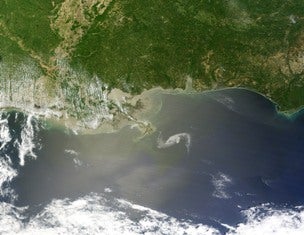
    The ocean ecosystems and fishing communities in the Gulf of Mexico face potentially catastrophic impacts as a result of the 5,000 barrels of oil a day spewing out of the sub-seabed and into the waters off the coast of Louisiana. Oil moving throughout vast expanses of Gulf waters and ocean habitat and coming ashore on the massive Gulf Coast wetlands directly threatens not just the reef fish, oysters, crabs and shrimp that actually live there, but also many other species that use the reefs, marshes and other wetlands as nurseries, or that depend upon them for prey which lives or develops there.

    Read the full post »

  • The New and Improved Climate 411

    In order to better serve our readers, Climate 411 has introduced a new feature: blog highlights. The blog highlights lists the top climate stories of the moment with our comments and expert insights.

    We have a team of experts who will be both regularly commenting on relevant stories and contributing original posts when possible. Please let us know what you think of our new format.

    A word on our experts:

    Mark Brownstein is deputy director of Environmental Defense Fund's national energy program. Mark leads EDF's efforts on smart grid deployment, transmission development, wholesale and retail electric market design, and the environmentally sustainable siting of both renewable and conventional utility scale generation. Prior to joining EDF, Mark was director of Enterprise Strategy for Public Service Enterprise Group (PSEG), where he worked directly with PSEG's senior leadership in crafting and implementing the corporation's business strategy. Mark was also an active member of the U.S. EPA's Clean Air Act Advisory Committee and New Jersey’s Renewable Energy Task Force. Aside from PSEG, Mark's career includes time as an attorney in private environmental practice, a regulator with the New Jersey Department of Environmental Protection, and an aide to then-Congressman Robert G. Torricelli (D–NJ). Mark holds a J.D. from the University of Michigan Law School and a B.A. from Vassar College.

    Nathaniel Keohane is Director of Economic Policy and Analysis at Environmental Defense Fund, a leading nonprofit advocacy organization based in New York. Dr. Keohane oversees EDF’s analytical work on the economics of climate policy, and helps to develop and advocate the organization’s policy positions on global warming. His research in environmental economics has appeared in prominent academic journals, and he is the co-author of Markets and the Environment (Island Press, 2007), and co-editor of Economics of Environmental Law (Edward Elgar, 2009). Before coming to EDF, he was Associate Professor of Economics at the Yale School of Management. He lives in New York City with his wife and two daughters. Dr. Keohane received his Ph.D. from Harvard University in 2001, and his B.A. from Yale College in 1993.

    John Mimikakis works to develop global warming solutions within transportation, power-generation and agricultural sectors, by raising support on Capitol Hill for effective greenhouse gas emissions reduction policies. From 2001 to 2006, John was Deputy Chief of Staff for the Committee on Science in the U.S. House of Representatives where he was involved in legislation on a variety of issues, including energy, environment, space exploration and technology policy. Prior to that, John served as a legislative advisor to U.S. Congressman Sherwood Boehlert (R-NY) on environmental, energy, and agriculture issues. In 1997, John was the American Chemical Society’s Congressional Science Fellow. He holds a P.H.D. in Biochemistry from the University of Wisconsin and a B.S. from Tulane University.

    Gernot Wagner is an economist in the Climate and Air Program. He focuses on carbon finance and works on developing and applying economically sound climate policy in the U.S. and internationally. Prior to EDF, he wrote for the editorial board of the Financial Times and worked at the Boston Consulting Group. Gernot holds a Ph.D. in Political Economy and Government from Harvard and an M.A. in Economics from Stanford.

  • Comments on ‘American Power Act’ op-ed

    In his New York Times op-ed, David Brooks compares the current climate surrounding energy legislation with the struggle to build the transcontinental railroad. He notes that

    “energy innovation is the railroad legislation of today. This country is studded with venture capitalists, scientists, corporate executives and environmental activists atremble over the great opportunities they see ahead. The energy revolution is a material project that arouses moral fervor — exactly the sort of enterprise at which Americans excel.”

    He goes on to say:

    “the best vehicle now is the American Power Act, drawn up by John Kerry, Joe Lieberman and Lindsey Graham.”

    We believe, based on what we've seen the press, that the American Power Act is not just the best option, but also a great option its own right. It does incorporate its fair share of compromises however it also achieves what no other climate and energy legislation put forth to date has managed to do: it cuts pollution, spurs clean energy investment and provides a real path to 60 votes in the Senate.

    Brooks acknowledges the bill’s imperfections as well as its strengths. He highlights the importance of America’s need to develop clean energy sources at home and asserts that that will only happen once regulations are firmly in place. He describes the clean energy investment market as a would-be juggernaut currently fettered by Congress.

    Hopefully Washington will hear Brooks's message, stop with the “political gamesmanship” as he calls it, and start taking the first steps towards our clean energy future by passing the American Power Act and putting a price on carbon.

  • Innovative Fisheries Management Tools Can Help Further Protect Glover’s Reef and Other Areas in Belize

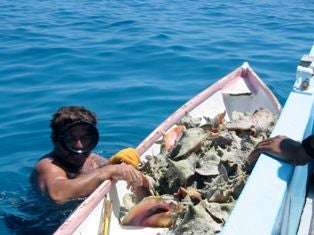
    Erik Olsen presents a balanced perspective on management and conditions a Glover’s Reef Marine Reserve in Belize in “Protected Reef Offers Model for Conservation” (New York Times, Science, April 27, 2010) and “On Patrol with the Reef Ranger” (New York Times, Green Blog, April 27, 2010). The Government of Belize has worked well with NGOs and fishermen to establish and maintain this reserve, no easy task when resources are limited. The abundant sea life and recovering sharks and rays are evidence of excellent performance at this site. But, Glover’s Reef and other areas in Belize are under increasing pressure from overfishing.

    Read the full post »