Author: Main Feed – Environmental Defense

  • Yesterday’s blog highlights

    The Financial Times reports that China may be greening its economy. China’s philosophy is moving “from ‘climate change is bad, but development is our first priority’ towards ‘development is our first priority, and climate change may threaten that’.”

    The New York Times reported that Obama is hoping the Senate will take on the climate bill after financial reform. “’This is one of these foundational priorities from my perspective that has to be done soon,’ Obama said of the climate bill”

    Senator Kerry goes over the fine points of the climate bill in this video posted on Treehugger. Kerry explains that “the bill will put a price on carbon but not through a cap-and-trade system.”

  • A low carbon economy: the gift that keeps on giving

    A Practical Guide To A Prosperous, Low Carbon Europe is the latest McKinsey study to show how it is eminently affordable to achieve the transition to a low-carbon world. The headline on a post by Financial Times climate über-scribe Fiona Harvey puts it best: “Europe’s energy in 2050: Cutting CO2 by 80% no more expensive than business as usual.”

    How is that possible?

    Initial capital expenditures are higher for renewable energy but operational cost savings along the way make up the difference. It’s the gift that keeps on giving.

    To be sure, there are some very clear obstacles. The old economists’ mantra applies here as well: if it’s so cheap, why aren’t we doing it already? Well, we ought to be. The obstacles are largely political, driven by vested interests. If you are just now building a new coal plant and haven’t put much thought into carbon capture and storage technology, you may be less inclined to cheer than your neighbor investing in wind and solar.

    McKinsey isn’t saying that everyone wins in this new world. The ones who see the future and act accordingly do. Most importantly, society and the planet win as well.

  • Blog Snapshot

    Grist “Google climate change chief wants price on carbon” Google wants a price on carbon “for lofty reasons like combating global warming, but also because it could be good for business.”

    Climate Progress Senate bipartisan climate bill to launch April 26th Senator Graham on why it is not being released on Earth Day – “We don’t want to mix messages here. I’m all for protecting the Earth but this is about energy independence.”

    Washington Post “Congress worked out health care. Is climate change next?” Steven Pearlstein shares his balanced and thoughtful perspective on the state of the climate bill. He points out that "While there are still some details to be ironed about, there is a good chance that the bill will gain the support of oil giants BP, Shell and ConocoPhillips, along with major electric utilities and industrial corporations."

    Mother Jones “Another Good Reason to Cut Oil Use” US military is "concerned that there simply won't be enough oil available in the near future, which could fuel conflict and instability around the world."

  • Joe Romm’s ‘Straight Up’ is a great resource for fact seekers on climate

    Joseph Romm is the author of ClimateProgess.org and was voted the “Web’s most influential climate-change blogger” in 2009. His new work is titled Straight Up-America’s fiercest climate blogger takes on the status-quo media, politicians, and clean energy solutions.

    Straight Up is well-researched, provides insightful political analysis, and showcases compelling data on the economic benefits of climate change solutions. As Joe notes:

    “So the bottom line is that the economic cost of action is low, whereas the cost of inaction is incalculably greater-what exactly is the ‘price’ of 5 feet of sea level rise in 2100…and losing all of the inland glaciers that provide a significant fraction of water to a billion people? Or the price of losing half the world’s species?”

    “China has a excellent track record of achieving gains in energy efficiency and has begun to ramp up its efficiency efforts and aggressively expand its carbon-free electricity targets(recently committing, for instance, to triple its wind goal to 100,000 MW by 2020).”

    "…will the United States be a global leader in creating jobs and exports in clean energy technologies or will we be importing them from Europe, Japan, and the likely clean energy leader in our absence, China."

    "A 20 percent reduction in global emissions might be possible in a quarter century with net economic benefits!"

    Purchase Straight Up by Joseph J. Romm

  • Five barriers to energy efficiency savings – and how smart companies can overcome them

    Here’s a business conundrum for you: energy efficiency saves serious money, cuts carbon pollution, requires low tech solutions, and is a known quotient, having been around since the 1970s. So why are so many companies still not taking the necessary steps to identify and eliminate these inefficiencies?

    “What we learned in Econ 101 doesn’t hold true when it comes to energy efficiency – the notion of perfect markets, where information flows freely and people are maximizing their value,” notes Environmental Defense Fund’s Gwen Ruta. “Instead, it’s as if companies across the globe are walking around with a hole in their pocket with coins dribbling out nonstop.”

    How is it that smart companies who are vigilant about monitoring the bottom line, stock price, customer satisfaction and much more let this wasteful “dribbling” occur? This question launched a robust discussion at a Fortune Brainstorm Green session last week titled “A Trillion Dollar Opportunity: The Hunt for Energy Efficiency.” Gwen Ruta was joined on the panel by Gretchen Hancock, Project Manager for Corporate Environmental Programs at GE; Bill Weihl, Google’s Green Energy Czar and Beth Trask, Deputy Director of EDF’s Innovation Exchange. GE and Google have made huge strides around energy efficiencies in past years, with still more work to do on the horizon and still some barriers of their own to break down.

    So what are the main barriers to energy efficiency and how can companies try to overcome them?

    Barrier #1: Information overload and lack of focus. There’s a ton of information out there about energy efficiency – and what companies should do to reap the savings – but it’s diffuse and challenging to wade through. Companies need help focusing in on the right tools and content and prioritizing where and how to begin. GE conducts through regular energy “treasure hunts” inside a given company where selected employees come together for a jam-packed three-day working session to identify energy efficiency savings at a chosen manufacturing site. The results are impressive – each treasure hunt typically identifies opportunities to reduce energy spent by 20% – and proves that when people have the information, data and focused time to spend on this challenge, huge savings can be found.

    Barrier #2: Structural limitations. This is a big one. Companies of all sizes suffer from a siloed approach to business, where business units and operational departments are managed by separate budgets, performance timelines, product cycles and more. Finding energy efficiency savings requires employees throughout the company to share information and make trade offs in order to achieve strong results. For example, there may be an increase in cost to the R&D budget around energy efficiency efforts, but balanced by a result in savings that will show up in the facilities management budget. Most likely, these two divisions communicate rarely and have little in common – including different bosses who may not communicate well among themselves, either. Why would one take on a cost for the other to reap the savings? Google takes a “total cost approach” that is geared to precisely avoid this problem. And GE’s treasure hunts bring cross-functional teams together over the three-day activity which by definition helps break down silos. According to Gretchen Hancock, the more people from different departments are involved, the better the results of these treasure hunts are.

    Barrier #3: The solutions are small and diffuse, not few and mighty. There is no single “gee whiz” step that companies can take to ensure they are reaping all the benefits of energy efficiency for their organizations. It takes time for companies to unearth where and how they can save both cash and carbon through energy efficiency. Some employees may be attracted by bigger, more appealing sustainability projects or cost savings efforts that are being considered or launched by their company. To avoid this problem, the hunt for energy efficiency savings should be institutionalized throughout companies as a continuous process, not one-off events. Energy efficiency savings should be one of the metrics that business units are evaluated on, and therefore, regularly measured and reported on.

    Barrier #4: Cultural resistance within companies. As Gretchen Hancock noted, some companies hear the phrase energy efficiency and think, “Didn’t we tackle this problem in the 1970s?” In companies where innovation and excellence is the expectation and the norm, executives may believe that the “low hanging fruit” of energy efficiency is either too low-tech to consider or has been dealt with decades ago. But the fact is that energy efficiencies exist where even super bright executives might not expect to find them. Aging equipment can cause inefficiencies, new technology enables new savings and employees need to be trained and retrained on efficiency issues and practices.

    Barrier #5: Those super-short ROI expectations. We all know how Wall Street expects speedy ROI for corporations across the board. As a result, public companies have a strong disincentive to invest in processes, products or technologies where recouping the costs may take anywhere from 1 to 5 years. This short-term thinking leads to short-term strategies, and serious money being left on the table

    There are other ways companies can encourage energy efficiency savings. One way is to engage the supply chain and provide incentives to find the energy cuts in various ways. Another potentially powerful strategy is to use social influence and competition to ensure results – having different office locations “race” to find the biggest savings, engage local schools to help with the hunt for energy efficiency in their communities, among other things. Once we see how quickly those coins can add up, we’re all likely to join in the race.

    What other powerful ideas can companies consider as they embark on the hunt for energy efficiency?

  • An Interview with Julie Wormser, New England and Mid-Atlantic Regional Director for EDF’s Oceans Program

    EDF's Oceans program team is comprised of knowledgeable people with a wide range of experience in fisheries, marine sciences and oceans policy. In continuing with our spotlight on EDF's passionate and talented Oceans staff, we invite you to learn a little more about our New England and Mid-Atlantic Regional Director, Julie Wormser.
    Where are you from? I was […]

  • A minimum data set: Who needs it?

    Richard Denison, Ph.D., is a Senior Scientist.

    Sound chemicals management and control demands sound information. The Safer Chemicals Healthy Families coalition believes information sufficient to determine a chemical’s safety needs to be provided for all chemicals, as a condition for them to enter (for new chemicals) or remain (for existing chemicals) on the market.

    Needed chemical information is not limited to test data, and even for types of data that can be derived from testing, alternative sources and approaches may be appropriately used. Given the large number of chemicals for which information is needed, the availability of various sources of information, and the desirability of minimizing cost and use of laboratory animals, all reasonable efforts should be made to use existing information and data derived from the use of validated alternative methods – as long as the information they provide is current and scientifically reliable.

    But who needs such information?

    Of course, EPA needs chemical data for several purposes:

    • to identify chemicals that meet – or don’t meet – specific criteria used to identify chemicals of concern; for example, to identify persistent, bioaccumulative and toxic (PBTs) chemicals;
    • to prioritize chemicals to determine the timing and sequence by which they should be subject to safety determinations; and
    • to actually conduct safety determinations. 

    We already know enough about many chemicals to identify them as chemicals of concern or otherwise prioritize them, so EPA does not need to wait for more data to start these processes. As they are developed, however, such data can help to identify additional chemicals of concern or to refine prioritization decisions.

    However, EPA is far from the only potential user of chemical information:

    • The market needs better data, to inform the myriad decisions made every day by companies and institutions that make, use, sell and buy chemicals and chemical products. 
    • Downstream users in particular are demanding better data and evidence of safety.
    • State and local governments need data to inform their own chemical programs.
    • Consumers can use this information to inform their purchasing decisions.
    • Academic, industry and government scientists can use this information to guide their research.
    • Workers have a right to know about chemicals to which they may be exposed.
    • The general public has a right to know about chemicals to which they may be exposed.
    • Good information and access to it is a critical need for a transparent and accountable system of chemicals management. 

     The job of ensuring chemical safety is too big for EPA to do alone; only by enlisting all those who make chemical decisions and have a stake in them, and empowering them with good information, will the overall system deliver the protection we need.

    I’ll have more to say in future posts about the nature, extent and types of chemical information all of these players need, and how TSCA can and should deliver it.

  • Part Three: AB 32 Economic Analysis: Impacts on Household Incomes

    On March 24th, California’s Air Resources Board (ARB) published findings from its study on how the state's Global Warming Solutions Act of 2006 (AB 32) could impact California's economy. 

    This post looks at the findings specific to the impact on household income. It follows earlier posts summarizing the analytical methods used and findings specific to gross state product and jobs. Future posts will cover: 

    • energy price "shock risk" reduction
    • how CARB's work compares to other analyses

    How will AB 32 impact household income?

    ARB’s analysis looks at more than 70 measures in the AB 32 Scoping Plan that will be used to reduce greenhouse gas emissions (GHG) as directed under the act. The measures fall into six categories and are expected to account for reductions of 60 million metric tons (MMT), which is about 60% of the reductions needed to meet the goal of cutting 2020 emissions to 1990 levels. 

    Measure Total GHG Reductions in 2020 (MMT of CO2eq)
    33% Renewable Energy Portfolio Standard 20
    Energy efficiency investments 12
    Combined Heat and Power 5
    Vehicle Emissions Standards (Pavley II) 4
    Low Carbon Fuel Standard 14
    Reduced Vehicle Miles of Travel (due to SB 375) 5

    It's critical that ARB has clear and effective ways to reduce GHG emissions. It's also key to note that many of these measures will save households and businesses money on transportation and energy.

    AB 32 implementation is expected to improve household income at all income levels except for the very top level (see graph below) 

    Smilar to the economic impact on jobs, the aggregate-statewide effect of AB 32 on household income is small. The ARB found that the AB 32 plans will provide a 0.1% improvement in personal income.

     Figure 1 – Household Income with and without AB 32 implementation


    How can it be that energy users save when fuel prices rise?

    ARB estimates that while the cost for each unit of energy will rise as a result of AB 32, we will use less because of efficiency. As efficiencies increase, it is likely that monthly bills will decrease.

    For example, ARB modeling indicates AB 32 will inspire additional residential sector investments of more than $1.5 billion on devices, processes and operations in 2020, with sector savings of more than $2.2 billion in avoided household and transportation fuel expenditures. Devices include more efficient appliances, such as compact fluorescent light bulbs, new refrigerators and programmable thermostats. Processes include better utility outreach programs geared for low-income ratepayers. Operations can include automatically adjusting lighting and temperature controls and water-moisture gauges that activate drip irrigation. AB 32 is also expected to save drivers $4 billion on fuel expenditures by 2020.

    ARB based these findings on the assumption that California's cap-and-trade program will involve some buying and selling of pollution permits, and that all the permit value will remain in California and be returned to households. ARB is developing a program (details will be released later this spring) that will likely combine administrative distribution and auctioning of permits. A core goal of the program is to protect consumers and avoid “leakage” (i.e., loss of emissions and jobs to other regulatory jurisdictions).

  • Not just kids’ play any more: TSCA reform gets serious

    Richard Denison, Ph.D., is a Senior Scientist.

    Today, at long last, legislation to reform the Toxic Substances Control Act (TSCA) hit the streets. A bill, the Safe Chemicals Act of 2010, was introduced by Senator Lautenberg in the U.S. Senate. And just to keep things interesting and all of us on our toes, Congressmen Rush and Waxman today released the Toxic Chemicals Safety Act of 2010 that is similar but not identical and is in the form of a discussion draft, rather than a bill.

    It’s been a long road to get here, but of course this is only the end of the beginning.

    EDF and the Safer Chemicals Healthy Families coalition support the new legislative language and believe it includes most of the elements needed to move our outdated and broken chemical safety system into the 21st century. We also will be seeking improvements in several areas as the bill moves forward.

    For our coalition's initial perspective on the positive aspects as well as some of the shortcomings of the legislative proposals, see the news release we issued today. We will also soon be posting an analysis that aligns the bill’s and discussion draft’s provisions with the planks of our platform, and I’ll provide an update with a link here.

    I’ll certainly be posting frequently going forward on specific aspects of the legislation, but what can be said at the outset? I’ll start with the obvious question: How would life under this rewrite compare with life under current TSCA?

    It simply must be said that, relative to the status quo, the legislation and discussion draft would represent a major sea change in the way we manage chemical safety in the U.S. 

    The table below highlights some of the big changes. Over the coming days, I’ll explore these and other issues in more detail, comparing and contrasting the Senate and House versions, and identifying a number of areas where I think improvements are needed to ensure the legislation adequately protects people and the environment.

    Currently under TSCA Under the Safe Chemicals Act of 2010
    Few chemicals are required to be tested and no minimum data set is required even for new chemicals. A minimum data set (MDS) on all new and existing chemicals sufficient to determine safetywould be required to be developed and made public. 
    EPA is required to prove harm before it can regulate a chemical. Industry bears the burden of proving their chemicals are safe.
    No mandate exists to assess the safety of existing chemicals. New chemicals undergo a severely time-limited and highly data-constrained review. All chemicals, new and existing, would be subject to a full safety determination.
    The “unreasonable risk” standard under TSCA is not health-based but rather requires extensive cost-benefit considerations. The safety standard would be a strictly health-based standard, “Reasonable certainty of no harm,” adapted from our pesticide safety laws.
    Where the rare chemical assessment is undertaken, there is no requirement to assess exposure to all sources of exposure to a chemical, or to assess risk to vulnerable subpopulations. The safety standard requires the assessment of a chemical to account for aggregate exposure to all sources of exposure to the chemical, and to ensure protection of vulnerable subpopulations that may be especially susceptible to chemical effects (e.g., children, the developing fetus) or subject to disproportionately high exposure (e.g., low-income communities living near contaminated site or chemical production facilities).
    Even chemicals of highest concern, such as asbestos, have not been able to be regulated under TSCA’s unreasonable risk standard. Instead, assessments often drag on indefinitely without conclusion or decision. Chemicals of highest concern would be subject to expedited safety determinations and/or actions to reduce their use or exposure to them.
    Companies are free to claim, often without providing any justification, most information they submit to EPA to be confidential business information (CBI), denying access to the public and even to state and local government. EPA is not required to review such claims, and the claims never expire. All CBI claims would have to be justified up front. EPA would be required to review them, and only approved claims would stand. Approved claims would expire after a period of time. Other levels of government would have access to CBI.
    To require testing or take other actions, EPA must promulgate regulations that take many years and resources to develop. In addition to the MDS requirement, EPA would have authority to issue an order rather than a regulation to require existing data to be reported or additional testing to be done.

  • The Cost-Saving Potential of Renewable Energy

    EDF’s Renewable Energy Specialist Colin Meehan recently examined a scenario about how the mix of wind, coal, and natural gas affects Austin’s energy costs. The post is pretty technical for the lay reader, but it makes the case for investment in renewable energy as a key cost-saving measure:

    Whether greenhouse gas regulations from the EPA or Congress, we now know that they are coming within the next year. This fact makes past and future Austin Energy's investments in renewable energy an important cost-saving measure for Austinites as fossil fuel generation costs continue to increase for a number of reasons.

    Read Colin's full post on the Texas Energy Exchange blog.

  • Use Night-Vision Goggles to Uncover Innovations through Sustainability

    This morning, I spoke on a panel called “Driving Innovation Through Sustainability” at the Fortune Brainstorm Green conference. Given that the panel was held at the eye-popping hour of 8 AM, it’s testament to the topic that the room was overflowing. Or perhaps the draw was my fellow panelists – Matt Kistler, Senior Vice President of Sustainability for Walmart, Rick Rommel, Senior Vice President for Emerging Business at Best Buy and Scott Elrod, Vice President of the Hardware Systems Laboratory at the Palo Alto Research Center – and our moderator, Roger Ballentine, President of Green Strategies.

    Roger started us off by saying that a sustainability agenda can act like a pair of night-vision goggles, helping corporate managers and executives find innovation where they couldn’t see it before. That certainly resonated with me – I’ve seen that pattern over and over again in the companies with which we work. In fact, I’m often asked of our partners, “Why did they need you to find an innovation that’s clearly good for their business?” I think it’s because in many ways Environmental Defense Fund provides those night-vision goggles Roger was talking about, bringing a new green lens to business as usual.

    The analogy seems to work, especially when it comes to finding efficiencies within a company’s operations and even for greening a supply chain. Matt had some great examples about how that works with moving innovations “up the value chain” to Walmart suppliers and, increasingly, “down to consumers.” Rick added a great point about how moving innovation does not go in a straight line but rather a loop, especially when you start to bring in innovations in product take-backs.

    Things got even more interesting when we got to talking about how to move innovations horizontally across industry sectors. Scott postulated that innovations can move even when the intellectual property is owned by one company if that company has the incentive to build market share. The kinds of barriers we see to quick adoption are generally not about intellectual property but rather basic market failures: How can companies become more aware of the innovations applicable to them? How often do companies pass up beneficial innovations simply because someone else thought of them first?

    Perhaps the most interesting conversation came toward the end of the session when we explored what it takes to create a culture of innovation within a company. Can we, Rick asked, import some of the characteristics of the venture capital community – quick failures, competitive capital – into a corporate bureaucracy? Or is it more important to understand the cultural values that already exist in your company and link the sustainability agenda to the drivers you already have in place?

    What would it take to bring night-vision goggles to your company?

  • Dear CEOs, Stand up Now for Climate Legislation. Sincerely, Planet Earth

    At the opening panel discussion of the third annual Fortune Brainstorm Green conference, moderator and green business guru Marc Gunther gave the leaders of four major environmental groups a golden opportunity – a clear platform to tell businesses what they really want. The answer from all four leaders was unanimous, loud and clear – business needs to stand up now and support climate legislation that would place a mandatory cap on carbon emission and unleash innovation and clean technology solutions.

    The discussion between the heads of Environmental Defense Fund, The Nature Conservancy, NRDC and the Sierra Club followed a one-on-one session with Time Inc.’s Editor-in-Chief John Huey and former Walmart CEO Lee Scott about Walmart’s path towards sustainability over the past several years. The substantive work that Walmart has done on this front was a perfect backdrop to the environmentalists’ panel by proving that businesses can play a pivotal role in creating a more sustainable planet for us all.

    “[Every business] should think hard about [its] core business capabilities – every business can have good environmental outcomes and good business outcomes,” noted Mark Tercek of the Nature Conservancy.

    Other points of discussion and debate included the odds of Congress passing a climate bill by this time next year (about 50%, according to three out of the four panelists), the promise and pitfalls of ramping up nuclear energy in this country and why environmental concerns continue to rank low among Americans. A quick wrap-up question probed the environmental issues and trends businesses should be tracking in the near future, which include water consumption, resource efficiency and energy production costs, among others.

    Energy efficiency, the “low hanging fruit” of environmental sustainability, continues to present a major opportunity for business. When you see a company like Walmart saving so much around energy efficiency, it makes you wonder why all companies aren't taking advantage of these opportunities to slash costs, increase productivity and minimize carbon and waste. “At what point does dealing with wasted energy become a fiduciary responsibility for corporate boards?” queried David Yarnold, executive director of EDF.
    See more from David Yarnold in his interview with Poppy Harlow of CNN.

    What other trends should smart businesses watch for in coming months and years? Send us your ideas, and we’ll share them here at Brainstorm Green this week.

    This is the first of several posts from our staff attending Brainstorm Green.

  • Catch Shares Not for Private Anglers – Part of EDF’s Comments on NOAA’s Draft Catch Share Policy

    EDF recently submitted comments to NOAA on its draft catch share policy. In the letter we address how catch shares are better than fishery closures; how they improve fishing jobs and restore the resource; and how they are locally designed to meet specific biological, economic and social goals. We also address the importance of stakeholder input in the design of a catch share program.

    Read the full post »

  • U.N. Climate Negotiators Facing Crucial Test

    United Nations climate change negotiators proposed Sunday to consider holding more sessions aimed at bridging differences left unresolved by last December's contentious talks in Copenhagen.

    While some developing nations signaled support this week for the accord reached in Copenhagen, others questioned the role of the accord in future talks.

    EDF’s International Counsel Annie Petsonk, who monitored the talks in Bonn this weekend, said:

    The U.N. climate negotiations are facing a crucial test over whether this process can serve as the global guidance system for tackling climate change.

    There is still momentum in the U.N. process, but it is fragmenting. In the absence of U.S. legislation, and with the corresponding slow progress in the U.N., there is a new focus on national action as talks continue toward a global agreement.

    This fragmentation presents challenges, but it also creates opportunities, as nations that move swiftly to embrace carbon regulation position themselves for economic growth in the 21st century. That competition presents an even greater imperative for the Obama administration to make a serious push for a balanced energy-climate bill in the U.S. Senate.

    For more details about the Bonn climate talks, read wrap-up stories from Reuters, Bloomberg and AFP.

  • Why the media loves Earth Day, and why that’s not enough

    I’ve been getting more phone calls than usual from reporters, and I was wondering about it a bit until it struck me – of course! Earth Day is coming.

    April 22, 2010 will mark the 40th anniversary of Earth Day. As the Earth Day Network says, “Forty years after the first Earth Day, the world is in greater peril than ever. While climate change is the greatest challenge of our time, it also presents the greatest opportunity – an unprecedented opportunity to build a healthy, prosperous, clean energy economy now and for the future.”

    Building a healthy and prosperous economy sounds like the kind of thing that deserves media attention. So call me a grumpy environmentalist, but why do we have to wait for April 22 each year to hear about it? Practically every day there are companies building wind farms and solar cells across the country, scientists making break-through discoveries in vehicle and energy technology and citizens choosing to get involved.

    Why do we have to wait for April 22 each year to hear about companies acting on sustainability?

    And while it’s true that many companies pitch environmental stories on Earth Day – it’s their best chance of getting coverage – more and more of them are acting on it every day.

    A recent study by the Boston College Center for Corporate Citizenship revealed that, despite the recession, an increasing number of American businesses are expanding environmental efforts like greening of products, services and operations and integrating citizenship into their business strategy, with 75% of CEOs leading the agenda.

    Why? There are many reasons – a renewed focus on cost management, opportunities to capture market share, supplier pressures and a new level of corporate transparency, to name just a few. Or perhaps it’s just that it makes good business sense to understand how your products and operations impact and are impacted by the world around you. When natural resources are running scarce and prices for basic business necessities like water, fuel and raw materials are so volatile, smart execs know that environmental innovation must be a core part of their business strategy.

    This is reinforced in a new report by the management consultants at A. T Kearny, which showed that companies focused on sustainability outperformed their peers by 15% during the financial crisis. I’d love to see a story written on April 23rd about that trend!

  • EDFix Call #8 afterthoughts: Building “Plumbing” for Business Sustainability

    EDFix Call #8 – Summary (12 min.)

    Download MP3 | Subscribe in iTunes

    EDFix Call #8 – Full (52 min.)

    Download MP3 | Subscribe in iTunes

    Get Call Updates by Email

    Brian Behlendorf of Collabnet, Apache Foundation and most recently the US Government's Connect project, joined our EDFix call on March 22 to talk about open source approaches to addressing social problems. (I apologize for the poor audio quality on the recording of this very interesting call. Future recordings will be better.)

    Two key insights I garnered from the call:

    Active Community Building

    When US CTO Aneesh Chopra invited Brian to join the Connect project it was already underway and, in fact, had released an open source software package. What Brian started to work on was building an open source community to encourage use and contributions by others, ranging from the 26 government agencies that share health data to the many different constituencies, large and small, in industry. To build an engaged community, Brian focused on using an open development process including public coding "sprints", using open development tools for managing code releases, issue tracking and building a public discussion stream that anyone could join. He also reached out to those constituencies, including taking a trip to Houston for the recent HIMSS conference where he participated in a showcase with 50 other Connect users.

    Shared Code Is Plumbing

    I'm interested in better understanding commercial interests in open sourcing products and how this might serve business sustainability. Brian suggested that open source infrastructure can be developed to solve generic problems — problems where companies would prefer to "split the cost". This infrastructure is "just the plumbing" that sits underneath products the commercial sector does compete with.

    Moving On — To Transportation

    Though we may dip back into the Sustainability Commons periodically, calls 8 and 9 are the formal conclusion of that module of the EDFix Conference Calls.

    Starting with the April 12 call (at 9am PT), we'll switch to a module on Sustainability and Transportation Priorities, during which we'll be focusing on the opportunities for improving environmental performance in the transportation space. Corporate truck fleets are a major opportunity for greening business. The first call will be with my EDF colleague, Jason Mathers, who will describe the lay of the land. Don't miss it!

  • Are we ready to get sensible about triclosan use?

    Cal Baier-AndersonCal Baier-Anderson, Ph.D., is a Health Scientist.

    Yesterday the Washington Post reported that the Food and Drug Administration (FDA) is acknowledging that new research raises "valid concerns" about the possible health effects of triclosan, an antimicrobial chemical that can be found in dozens of consumer products as diverse as soaps, personal care products, cutting boards, plastic sandals and even bath towels.

    Originally developed as a surgical scrub for use by doctors and nurses, the burgeoning uses of this pesticidal chemical have hugely expanded human and environmental exposures. With little evidence of any actual public health benefits from such uses, FDA along with the Environmental Protection Agency (EPA) and the Consumer Product Safety Commission (CPSC) should move quickly to limit triclosan use. Only those uses that have a demonstrable public health benefit, when weighed against potential health and environmental risks, should be allowed.

    Valid Human and Environmental Health Concerns

    Studies have demonstrated that triclosan can have hormone-disrupting effects. This is of great concern for both humans and the environment because hormones play important roles in all biological functions, including reproduction, development and metabolism. Recent studies have shown that triclosan can alter hormone levels in laboratory animals (e.g., see here, here and here). Fish exposure studies, which were the first to identify triclosan's hormone-disrupting potential, demonstrate delays and reductions in hatching success, changes in sex ratio and even malformations following triclosan exposure (e.g., see here, here and here).

    There is also growing evidence that triclosan can accelerate the development of bacteria that are resistant to antibiotics, a significant public health concern (e.g., see here, here, here, here and here).

    Widespread Human Exposure

    In 2003-2004, scientists from the Centers for Disease Control and Prevention detected in nearly 75% of the 2,517 people aged 6 years and older tested as part of its nationwide survey, called the National Health and Nutrition Examination Survey (NHANES). Triclosan has also been detected in human breast milk (see here, here and here). And this finding indicating that hormone-sensitive breast tissues can come into contact with triclosan means the impact of triclosan on human breast cells requires more scrutiny.

    Widespread Environmental Contamination

    Recent studies by the United States Geological Survey (USGS) document the presence of triclosan in U.S. ground and surface waters, in addition to other suspected hormone-disrupting compounds. Both triclosan and triclocarban (a similar chemical used in many cosmetics to prevent bacterial growth) can bioaccumulate and are extremely toxic to algae, important constituents of aquatic food webs.

    These compounds are also found in sewage sludge and there is evidence that triclosan can leach from the sludge into surrounding soil and groundwater and be taken up by organisms.

    Triclosan has now been detected in the blood of bottlenose dolphins, providing disturbing evidence of the broad extent of environmental contamination.

    Questionable Benefits of Triclosan

    FDA acknowledges that there are few if any public health benefits from using some of the most common triclosan-containing products. FDA states: “At this time, the agency does not have evidence that triclosan in antibacterial soaps and body washes provides any benefit over washing with regular soap and water.”

    Who Regulates Triclosan?

    The multiplicity of products in which triclosan is used, and its detection in aquatic ecosystems and drinking water, means that the regulation of triclosan falls under many jurisdictions. For example, when triclosan is used in toothpaste, it is regulated by the FDA, but it must also be approved for use by EPA’s Office of Pesticide Programs because as an anti-microbial it is classified as a pesticide. 

    When triclosan-containing toothpaste is used, it is washed down the drain and ultimately some of it passes through sewage treatment plants. In aquatic ecosystems, concerns about potential effects of triclosan would fall under the Clean Water Act, administered by EPA’s Office of Water. Because it can also be a drinking water contaminant, the Office of Water has regulatory responsibility under the Safe Drinking Water Act.

    Such a complex regulatory system serves as an impediment to taking a comprehensive approach to triclosan regulation, and has fostered its cavalier use. 

    A More Sensible Approach is Needed

    Antimicrobials such as triclosan may have serve a legitimate purpose in some types of products, but only where benefits can be documented and clearly outweigh potential harm.

    For most products, this calculation just doesn’t add up: Without any demonstrated public health benefit, the potential risks from hormone-modifying effects in conjunction with widespread human and environmental exposures simply cannot be justified. 

    It is time for a wholesale re-evaluation of triclosan use. Triclosan is a pesticide and should be treated as such: It should only be used carefully and strategically. It has no business being used in products – such as personal soaps, body washes, dish soaps, cutting boards, bath towels and sandals – where it provides no public health benefit.

  • Inquiring minds want to know what’s going on with your fleet greening initiatives

    Are you actively measuring your fleet emissions? Thinking about using medium-duty hybrid trucks?

    We want to know what's going on with your fleet greening initiatives! To that end, we're asking everyone we know that has a fleet to take 5 minutes to fill out the 2010 PHH survey on fleets and the environment.

    Now in is fourth year, the survey has become a valuable tool for tracking trends in fleet environmental management. For example, thanks to the survey, we know that the percentage of fleets measuring their emissions has been growing each year, which is good news for those businesses as well as for the environment.

    The survey is open to both private and government fleets. PHH notes that “it only takes about 5 minutes to fill out, and your entry will make you eligible to win a Netbook companion PC.” Seems like a good deal to us.

    You can fill out the survey here: http://www.fleetsurveys.net/se.ashx?s=494072C148D12D51

    Thanks in advance for your participation. We look forward to seeing the results when they are released in June.

    For more information on EDF's work with fleets, visit http://edf.org/greenfleet

  • World Bank Vote for Coal Power Plant a Setback for Low-Carbon Development

    The World Bank voted today to approve a $3.75 billion loan to South Africa’s public utility Eskom, the bulk of which would finance construction of what will be the world’s seventh-largest coal plant. The United States abstained from the vote.

    EDF’s Climate and Air Program Director Peter Goldmark said in EDF’s news release:

    Giving the go-ahead to the Medupi coal plant, which will release massive amounts of greenhouse gases for decades, without a clear South African plan to level off and then decrease emissions amounts to a step backward when the world is moving forward to a clean energy future.

    This was a missed opportunity for the U.S. and the World Bank to move away from a traditional focus on fossil-fueled growth and toward a new model of low-carbon economic development.

    An abstention is a weak position for the U.S. to take in defense of its own proposal. Next time, the U.S. and others must vote no if we’re really going to reverse the headlong stampede to build coal plants in the developing world. The coal lending guidelines are a good start — but now the Bank should adopt them and Treasury must show, at a minimum, that it is willing to act on them.

    The problem here is not giving South African citizens access to cheap energy – we all want that. The challenge is to do that within a framework that clearly puts South Africa, and the world, on a course where greenhouse gas emissions will peak and then decline. South Africa has not explained how the Medupi plant, or the successor coal plant right behind it, fits into a realistic program to level off and then decline the level of greenhouse gas emissions.

    The U.S. Treasury Department issued a statement today, saying:

    the United States is concerned about the project since it would produce significant greenhouse gas emissions, and uncertainty remains about future mitigation efforts. Without actions to offset the carbon emissions of the Medupi plant, the project is incompatible with the World Bank's strategy to help countries pursue economic growth and poverty reduction in ways that are environmentally sustainable. We also remain concerned about other facets of the project, including the inconsistency of Eskom's procurement process with the World Bank's Procurement Guidelines, deficiencies in the environmental impact assessment, and potentially inadequate efforts to mitigate local pollution. The project is also inconsistent with new guidelines on coal lending adopted by the United States in December 2009.

    In a larger sense, this decision highlights the challenge the World Bank is facing in adhering to its own Development and Climate Change Strategic Framework, which looks to “support sustainable development and poverty reduction at the national, regional, and local levels, as additional climate risks and climate-related economic opportunities arise.” The vote also apparently conflicts with the leaders’ statement from the September 2009 Pittsburgh meeting of the G-20, of which South Africa is a member. That statement commits all members to “phase out and rationalize over the medium term inefficient fossil fuel subsidies” that “encourage wasteful consumption.”

    EDF’s 2009 report “Foreclosing the Future: Coal, Climate and International Public Finance” urged multilateral development banks, including the World Bank, to hasten the shift to renewable energy by adopting recommendations like deploying public international finance in support of renewable energy, energy efficiency and other alternatives to coal.

    As the World Bank, International Monetary Fund, and other multilateral financial institutions seek a capital increase from the U.S. Congress, they will be faced with a decision as to when cheap, dirty development will finally take a backseat to clean, sustainable alternatives.

    EDF strongly encourages the U.S. Congress and Treasury to help shift World Bank resources and strategy towards a fundamental rethinking of development priorities – both by providing sufficient funding for the Bank’s dedicated Clean Investment Funds and by reorienting the Bank’s overall lending portfolio toward low-carbon development.

    Read more in EDF's news release.

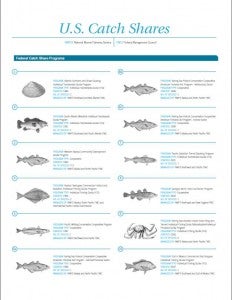
  • How Many Catch Shares are Here in the U.S.?

    People ask us this question all the time and the answer is 22, as compiled in a new infographic. That’s not quite the answer to the ultimate question, but it’s still impressive. There are 16 catch share programs in federal water and 6 in state waters covering more than 50 species.

    Read the full post »