Author: Main Feed – Environmental Defense

  • Light-duty fleets: The next ten years

    Companies have made significant strides over the past several years in reducing greenhouse gas emissions from their vehicle fleets. Most of the reductions we have seen have come from right-sizing efforts, such as moving from a 6 cylinder engine to a 4 cylinder one. Other efforts, such as adopting fuel-smart driving behaviors, are starting to catch on too. Still, there are a lot of emissions left to cut.

    Environmental Defense Fund is hosting a call series to explore opportunities to cut greenhouse gas emissions from fleets. Please join us for the next call in our series when we will look out over the coming years and ask: What opportunities remain for fleets to reduce ghg emissions? What are fleets doing today and what strategies are up-and-coming? What barriers to do we need to tear down to reduce ghg emissions? Leading this discussion will be Jim Motavalli, a regular contributor to the New York Times Wheels blog, BNet, and the Mother Nature Network among many others sites.

    The call is on May 3rd at 12pm Eastern time. To join, call:

    Phone number: +1 (213) 289-0500

    Code: 267-6815

    The upcoming calls in this series will be:

    • A look into the opportunities and challenges specific to vocational trucks;
    • A deep dive into electrifying commercial fleets; and
    • A deep dive into low-carbon fuels and commercial fleets

    You can keep up with the rest of the call schedule as well as other conferences and events on the Innovation Exchange Calendar.

  • Comments on yesterday’s top blogs

    On E2, Nike, eBay and others are asking Senators to “get stalled climate and energy legislation back on track.”

    Reuters reports that the U.S. Environmental Protection Agency will start analyzing the comprehensive climate and clean energy bill. “The EPA analysis is an important step in the legislative process.” “We are sending the bill to be modeled now with Lindsey Graham’s consent,” Senator Kerry told reporters.

    Green Inc. focuses on a new EPA report released yesterday called “Climate Change Indicators in the United States.” The report is full of interesting data points and graphics including:

    • “The portion of North America covered by snow has generally decreased since 1972, although there has been much year-to-year variability. Snow covered an average of 3.18 million square miles of North America during the years 2000 to 2008, compared with 3.43 million square miles during the 1970s.”
    • “In the United States, greenhouse gas emissions caused by human activities increased by 14 percent from 1990 to 2008.”

    Gernot Wagner, EDF economist notes:

    “The EPA report is a terrific reminder of the fact that climate change is not some distant phenomenon our grand kids may or may not experience. We can already see some of the direct effects all around us. It's also good reminder of the certainties among the sea of uncertainties surrounding climate change. We don't know all the details, but the general direction has become increasingly clear. And the parts we don't know are even scarier."

    Graph from EPA report Climate Change Indicators in the United States

  • Statement of Sally McGee, EDF New England Fisheries Policy Director and NEFMC member, on Today’s Council Actions

    Today, Sally McGee, EDF’s New England Fisheries Policy Director released the following statement on today’s NE Council actions. “I am pleased to support recommendations today for modifications to the skate and the red crab fisheries which will increase flexibility and likely lead to increased profitability for many New England fishermen … “

    Read the full post »

  • How can clean energy investment help solve the Greek financial crisis?

    Last week, Greek Prime Minister George Papandreou asked to activate a financial lifeline for his struggling country, requesting as much as 45 billion euros ($60 billion) in aide from the European Union and the International Monetary Fund. It will take time for Greece to get back on its financial feet, and the ripple effects of this crisis are being felt in European capitals from London to Berlin.

    Beyond the difficult and immediate impacts this will have on the citizens and businesses in Greece and elsewhere, as an environmentalist, I’m also wondering what it will mean for the EU member states’ commitment to cut emissions 80% below 1990 levels by 2050?

    A new report – authored by the European Climate Foundation with technical and economic analysis by Imperial College London, KEMA, Oxford Economics, McKinsey & Company, E3G and the Energy Research Centre of the Netherlands – has some surprising answers. The analysis, called Roadmap 2050, found that in each of the low or no carbon pathways it examined, projected electricity costs are comparable to costs using current carbon-intensive infrastructure. In other words, we can either cut our carbon footprint and mitigate environmental impacts or not, for the same price!

    How is that possible? It turns out that the capital cost of building new renewable power facilities will be huge, but the operating costs of renewable power generation are far lower than for conventional power stations. And Europe’s aging energy infrastructure will have to be updated no matter what. An update that includes wind turbines, solar farms and smart grid technology looks good when compared with replacing crumbling coal plants.

    The common myth is that increasing dependence on renewable energy would be unreliable, overly expensive and would require not-yet- available technology breakthroughs. On the contrary, Roadmap 2050, “has found all of these assertions to be incorrect.”

    As European leaders grapple with where and how to make investments that will create jobs and lead to a more prosperous future, I hope they’ll consider Roadmap 2050 as their travel guide.

  • Valero’s Dirty Profits

    It’s earnings time in the corporate world and guess what? Texas-based oil refiner Valero Energy yesterday reported a 27 percent increase in retail profit for the first quarter of 2010 and gave its CEO a 64 percent raise to $10.9 million a year. Valero’s announcement has special resonance for California fans of clean air, California jobs, and American energy independence. There’s a big clean energy showdown taking place here in California, and Valero is right in the dirty middle of it.

    Valero—one of the worst polluters in the country-is the largest funder to date in a political campaign to reverse decades of California environmental leadership and keep our air dirty. It's paying to gather signatures for a November ballot proposition that would “suspend” California’s clean energy and climate policy (AB 32) until the state’s unemployment drops to levels seen just three times in 30 years – a good definition of “when the cows come home.”

    Rather than directing its profits into cleaning up the pollution from its refineries, Valero is pumping them into this Dirty Energy Proposition.

    Big Oil’s morally repugnant initiative comes at a crucial moment. Thanks to AB 32 and similar clean energy policy, California leads the nation in policies that link protecting our environment to growing our economy. Far from threatening jobs, as the oil companies charge, AB 32 promises to create a flood of new jobs in America’s largest and growing clean energy economy. A clean energy future scares the daylight out of polluters, which is whey they’re fighting it tooth and nail.

    “Suspending” AB 32 until the cows come home would kill hundreds of thousands of jobs and chill billions of dollars of new green investment in California. According to the non-partisan, independent state Legislative Analyst’s Office, the suspension of AB 32 could: “delay…longer-run savings, dampen…investments in…green jobs by private firms, [and] result in less economic activity than would otherwise be the case.”

    Big Texas oil companies are blowing cigar smoke in our faces – trying to buy votes in November to reverse the tide of history so they can keep polluting our air. If Big Oil can buy a win in California, it can bulldoze progress wherever it wants.

    We can’t underestimate these special interests and the millions of dollars of profits they are funneling into California to roll back progress. Here in the Golden State, Job One is to prove not only that California is the national leader in growing its economy by protecting its environment, but also that Californians will stand up for their economic future in the voting booth. To do that, we must get the truth out to Californians. Please visit the campaign’s website, get the tools you need and get involved.

  • Disappointing Disconnect Between World Bank General Capital Increase, Need for Low-Carbon Development

    The World Bank announced Sunday at the end of its Spring Meetings its intent to seek more than $86 billion for a general capital increase from its donor countries with additional funds going toward new strategic priorities following the global recession.

    With the Bank having granted internal approval for the increase, the additional funding will now need to be approved by the finance ministries of the World Bank’s individual donor countries. (Funding from the United States is proposed by the U.S. Treasury and submitted to the U.S. Congress for approval.)

    While in its announcement the Bank included climate change among its areas for strategic focus, it did not address NGOs' call to condition capital increases in sustainable energy financing.

    In a statement released Sunday and distributed to finance ministries around the world, nearly 90 international organizations, including Environmental Defense Fund and development, environment, faith-based, science, women's, and indigenous groups, called for international financial institutions to stop using public resources to subsidize the fossil fuel industry.

    While World Bank funding is limited and the need for electricity for economic development is critical, funding should be directed towards renewable and sustainable energy sources.

    Until policies phasing out carbon-intensive infrastructure are approved, the statement says,

    countries should direct funds requested by the Bank and other institutions for general capital increases to other financing mechanisms for supporting sustainable development, poverty reduction and clean energy.

    EDF strongly encourages the U.S. Congress and Treasury to help shift World Bank resources and strategy towards a fundamental rethinking of development policies to favor strictly low- or no-carbon energy sources, both by providing sufficient funding for the Bank’s dedicated Clean Investment Funds and by reorienting the Bank’s overall lending portfolio toward low-carbon development.

  • Alaska Bering Sea Crabber Provides Insight and Lessons Learned from the Alaskan Crab Catch Share Program

    As New England’s groundfish fishery prepares to move to cooperative-based catch share management later this week, Jim Stone from the Alaska Bering Sea Crabbers provides insight and lessons learned from the Alaskan crab catch share program. In a column in the Juneau Empire, Jim, a 32-year fisherman, highlights the safety benefits, increased catch, and better jobs that have accompanied catch share management in Alaska’s crab fishery.

    Read the full post »

  • Highlights from top blogs and news stories in the last few days

    The Wonk Room draws attention to a new report that shows how climate legislation will boost the economy. “This CCS analysis finds that instead of slowing the economy, household wealth and jobs will grow faster in a green economy.

    Marc Gunther explores the potential of the growing wind power industry and how innovative companies are working to “capture high-altitude wind energy and turn it into electricity for off-the-grid users. Potential customers include the U.S. military, chic eco-resorts in remote locations and poor people in the global south in desperate need of power.”

    The Washington Post has an editorial stressing the importance of keeping the climate bill on the Senate agenda this year. The editorial board reminds us that “every year Congress waits to legislate, adequately curbing emissions will get harder and more expensive.”

  • First-ever Survey Tallies Green Jobs in California

    California's Employment Development Department (EDD) recently released a tally of green jobs in the state. The total? Nearly half a million workers spend at least half or part of their time on green products or services, according to the first-of-its-kind survey of 15,500 employers. The goal of the study was to establish baselines of green employment and green business practices in California.

    Jobs considered green are those that are categorized using the GREEN model:

    • Generating and restoring renewable energy
    • Recycling existing materials
    • Energy efficient product manufacturing, distribution, construction, installation and maintenance
    • Education, compliance and awareness
    • Natural and sustainable product manufacturing

    Top green employers are in recycling (25%), energy efficiency (24%) and sustainable product manufacturing (22%). Within these categories, manufacturing and construction industries have the most green jobs. This is a bright spot in sectors that have taken a hit during the recession.

    Thanks to groundbreaking measures such as California’s landmark Global Warming Solutions Act, companies have been able to maintain and grow their green workforce during the recession, even in industries that have suffered nationally.

    Industries with Most Green Jobs in California (as of 4/2010)

    Southern California stands out as the regional green jobs leader. It accounts for nearly half of California’s total green employment, followed closely by the San Francisco Bay Area, which boasts more than 130,000 green jobs. The rest of California’s green jobs are spread throughout the state's remaining seven regions. Although the type and number of green workers vary greatly by region, this latest study confirms that California has the largest green economy in the country.

    Another key finding: 63% of businesses surveyed use at least one sustainable business practice. A total of 80% recycle, 50% use recycled products and nearly 40% use energy efficiency practices. It is safe to say that California businesses understand that good environmental strategy is good for their bottom line. 

    On-the-job training is the method most often used (75%) by companies to prepare workers for green jobs, with in-house classroom training coming in second. Others use training programs offered at community colleges or by vendors.

    For workers who are interested in joining California's growing green economy, we recommend a few simple steps to get started. First, look at industry market trends to identify existing and future opportunities. Based on this survey, the top three areas of green expertise for which firms are expected to be hiring for in the near future are waste minimization, energy conservation and information technology. The survey also breaks down job types by region, which can be used to focus a job search based on where the most opportunities are.

    Second, research available off-the-job training programs. The largest state-sponsored one is The California Clean Energy Workforce Training Program, which has a website with links to valuable resources. Green for All also has a web site with links to green jobs listings.

    EDF will soon launch an online green jobs portal to help connect job seekers to training in these and other areas of expertise. Featuring a searchable green jobs training map, a digitized version of our Green Jobs Guidebook, and in-depth profiles of real people working in California’s green industry, EDF’s portal will help job seekers plot their green career path. This is the latest addition to EDF's mapping of the green economy in California that shows how 2000+ companies are benefiting from the state's leadership on fighting climate change and transitioning to a clean energy economy.

    California has the largest green economy in the country. In a period when unemployment is up to nearly 10% nationwide and many local jobs are going overseas, this survey confirms that California is reaping the economic benefits of strong energy and climate policies.

  • Solutions Labs 2010: Accelerating Green Innovation at Events Around the Country

    Leading-edge businesses such as IBM, GE, KKR, Walmart and many others are tackling environmental sustainability head on. They are finding profit and spurring innovation by looking through the "green lens" of environmental sustainability. Both business and the environment need more of this thinking from more people in more organizations in more sectors.

    The Solutions Labs 2010 are to here to help. This series of one-day events, kicking off on May 21 in New York City (hosted by Bloomberg), will bring together leading thinkers and "doers" from business, academia and a myriad of organizations to explore the next generation of business sustainability – one in which we can grow profits and positive benefits for the planet.

    The Solutions Labs are the version 2.0 of last year's "Green Innovation for Business Unconferences" held in Washington DC, Boston, San Jose and Austin. An even more diverse and interesting mix of partners are coming together to produce this year's series: Ashoka, Dig In, Environmental Defense Fund, GreenBiz.com, Net Impact, the Society for Organizational Learning, and Sony Pictures, among others.

    The organizers (this blogger included) have grand aspirations for growing the Solutions Labs into an incubator for big ideas. (Think a TED Conference for innovators in the environmentally-sustainable business space.) While that vision may take another year to two to come into focus, what we can promise now is a highly interactive and engaging gathering decidedly different from other green business conference.

    What can you expect? PowerPoint presentations? No. Lengthy speeches or panels? No. Using an "open space" format, each Lab and discussion topic will be slightly different, reflecting the interests of the participants in the room who collectively create the agenda (visit our wiki page where the agendas are created). All will have ample opportunity for networking, small breakout conversations and ad hoc brainstorming.

    So bring your big ideas (and the small ones too) and join us at a Solutions Lab near you:

    May 21 New York
    Bloomberg
    Register
    May 27 Washington, D.C.
    George Washington University
    Register
    June 17 Minneapolis
    Best Buy
    Register
    July 13 Fayetteville, Ark.
    University of Arkansas
    Register
    July 15 San Jose
    eBay
    Register
    Aug. 5 Chicago
    IIT Stuart School of Business
    Register
    Aug. 10 Seattle
    Seattle University
    Register
    Sept. 16 Boston
    Microsoft
    Register
    Sept. 29 Austin
    AMD
    Register

  • Private Equity as ‘Environmental Crusaders’? The Times They Are a-Changin’

    This is a guest post by Ian Bailey, Managing Partner of Capital C Partners, a strategic communications firm.

    What do mattress maker Sealy Corp., discount retailer Dollar General and consumer guides publisher PRIMEDIA all have in common? They’re all private equity-owned and have adopted new, environmentally sound business practices delivering millions of dollars in annual savings.

    Given the turbulent ride the financial services sector has endured over the past few years it seems counter-intuitive that anyone in the sector would be devoting special attention to environmental matters. The private equity industry has been beset with multiple issues, including constrained access to capital, overleveraged portfolio companies, a paucity of public market exits, the tax treatment of carried interest under scrutiny and growing calls by LPs for greater transparency. So it would seem the industry is a particularly unlikely candidate for embracing new thinking on environmental matters. However, that’s precisely what has happened.

    When we here at Capital C Partners first started working with Environmental Defense Fund (EDF) on its Green Returns program over six months ago, we reached out to a cross section of our contacts in the PE world to get a sanity check on just how receptive investment professionals might be to the concept that environmental measurement and management practices could deliver tangible bottom line value. The feedback was consistently equal parts of interest, skepticism, a need to see supporting data and ‘this just isn’t a priority when I’m worrying about potential covenant breaches…’ The final kicker from several of our PE friends was ‘my institutional investors really don’t care about this stuff, whatever they publicly say – it’s all about the returns.’

    Fast forward to today: Kohlberg Kravis Roberts & Co. (KKR) and The Carlyle Group (Carlyle), the world’s two largest private equity firms by assets under management, now both have dedicated programs specifically designed to ensure that environmental best practices are hard-wired into their processes. KKR’s Green Portfolio investment management program now extends across 20 percent of its global portfolio and Carlyle’s EcoValuScreen due diligence tool will be applied to all new investments in its U.S. and European buyout funds.

    EDF is now in conversation with many of the world’s leading PE firms about Green Returns and the conversations have moved from “why should I do this” to “how do I do this?”

    This change has not happened overnight, and there’s undoubtedly still much to be done. But private equity leaders such as KKR and Carlyle, through their collaborations with EDF, are providing the pathway and proof that many in the industry needed to see in order to take that first important step towards incorporating environmental management practices into their business processes and those of their portfolio companies.

    This video from The Deal.com – featuring conversations with EDF, Carlyle, KKR and Sealy – makes it clear that Green Returns now has all the hallmarks of an emerging industry trend – one with the potential to live up to EDF’s ambition that it become a new best practice for the entire private equity industry.

    For more information about EDF’s Green Returns initiatives, look for them at the Private Equity Insight Forum 2010 in London in May and SuperReturn US in Boston in June, or contact Tom Murray, managing director of corporate partnerships at EDF.

    This content is cross-posted on Greenbiz.com

  • Last Stop – Sea Breeze, NC

    During the past few months the Gullah/Geechee Sea Island Coalition and EDF have held listening sessions with African-American fishermen in the South Atlantic – from South Carolina to Florida and Georgia. The sessions provided us with the opportunity to listen and document the concerns of these fishermen working in commercial and subsistence fisheries. Our series of listening sessions concluded last weekend in Sea Breeze, North Carolina. Fitting of its name, Sea Breeze once hailed as a popular beach destination for African-Americans in the Wilmington area.

    Read the full post »

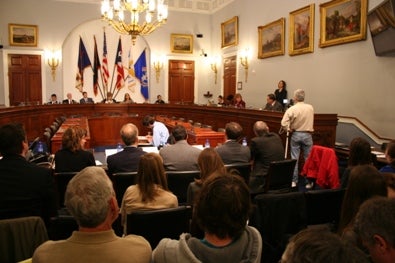
  • Congressional Hearing Presents Narrow View of Catch Shares

    U.S. House hearing room at the April 22, 2010 hearing on catch shares and communities.

    A hearing today in the House Committee on Natural Resources, Subcommittee on Insular Affairs, Oceans and Wildlife mostly overlooked evidence of the benefits of catch shares and instead zeroed in on fears. Out of the eight witnesses who testified, just one was a fisherman, Bob Dooley, who has actually fished in a catch share program …

    Read the full post raquo;

  • Highlights from yesterday’s top blogs

    On Grist, David Roberts advocates for a “diverse climate policy portfolio”. He explains that a “portfolio approach to climate change, which couples a carbon price with complementary policies, could yield a net benefit to the economy, and to most voters, from day one.”

    Gernot Wagner, EDF economist, had this to say on David Robert’s piece:

    “ Absolutely. Diversify the portfolio. Our strategy ought to be one of all-of-the-above. We need utility and grid reform, removal of subsidies, an emphasis on efficiency, etc. etc. etc.

    However. We also ought to keep our eyes on the ball. The goal is not to reform utilities for the sake of reforming utilities (although there might be other benefits to that as well). The goal is to avoid sending $1 billion a day abroad for our oil. This kind of large-scale transformation depends on a comprehensive approach, and that can’t be achieved piecemeal. We ought to limit global warming pollution to right the incentives and take the market path to a healthy planet and economy.”

    Green Inc. argues that the solar technology market is gaining momentum and points to the $129.4 million investment by a SiliconValley venture capital firm in solar company Amonix as proof.

  • Earth Day past and future: U.S. legislation should be next environmental victory

    To commemorate today's 40th anniversary of Earth Day, my friend David Bornstein over at dowser.org asked me two good questions about environmental achievements past and future, and I think they’re worth sharing.

    What's been the major achievement in the environmental field since Earth Day 1970?

    The decision by Europe to reduce its greenhouse gas emissions through a cap-and-trade system. Europe is today the only major geopolitical region that has plateau'd its greenhouse gas emissions and is now on a downward slope. That is where we all have to go. And they have helped to show us the way.

    What do you see as the next major step for the field?

    The next, and essential, critical step is for the U.S. to pass similar legislation this spring. Earth Day may well coincide this year with the release by three U.S. senators of a draft bipartisan bill to curb U.S. greenhouse gas emissions. As I write this, we do not know what the key provisions of this bill will be, and whether it will represent a reasonable compromise between the urgent need to move forward and some of the countervailing political trends it will be necessary to accommodate to get 60 votes. But passing a serious carbon bill and establishing a large global carbon market is the next major threshold for all of us.

    See responses of environmental leaders Gillian Caldwell of 1Sky and Majora Carter of the Majora Carter Group at Dowser’s Earth Day Exclusive.

  • A Bay-Delta Photo Tour

    The closest I've ever gotten to the Delta is a map. Until last week. While I've immersed myself in the intricacies of the Delta water policy—nothing compares to a visit to the Delta's labyrinth of islands.

    Last week I stood on the Delta's dirt levees, and looked down at farms below sea level. I saw red-winged black birds and blue herons. I drove through small towns like Isleton and big suburban developments like Rio Vista. I waited for drawbridges and walked out into the wetlands restoration site at Twitchell Island. I learned about The Nature Conservancy's corn farm on Staten Island that provides habitat to the endangered Sandhill Crane. I passed a farmworker driving a pesticide truck in a hazmat suit and cows grazing next to giant windmills.

    I learned that the Delta is more than just the hub of water controversy—more than just a map in my office. It's a one-of-a-kind gem. While I may be back at my computer, I'm re-invigorated to protect this special place.

    I look forward to my next visit (hopefully next time, by boat). Check out the photo essay above by my talented colleague, and Delta tour partner, Mathew Grimm.

  • Yesterday’s blog highlights

    Climate Progress reports on a new poll which shows that Latinos and African Americans support a bipartisan climate and clean energy bill. “Overwhelming majorities of Latino voters in Florida (80%), Nevada (67%) and Colorado (58%) say they are more likely to vote for a U.S. Senate candidate that supports proposals for fighting global warming.”

    Carol Browner, White House climate advisor, said the “administration backs protecting energy-intensive manufacturing sectors in climate legislation,” according to E2 Wire.

    On Treehugger, we learned that the solar industry created 17,000 US jobs in 2009, according to a new report released by the Solar Energies Industry Association.

  • A minimum data set: Why, what, how much and when?

    Richard Denison, Ph.D., is a Senior Scientist.

    As I noted in my last post, EDF and the Safer Chemicals Healthy Families coalition believe TSCA needs to ensure that basic safety data are developed and made available for all chemicals in commerce. Such information is:

    • a core element of the public’s right-to-know;
    • embodied in the “no data, no market” concept already in place under the EU’s REACH; and
    • most importantly, critical for identifying BOTH:
      •  chemicals of concern we have not yet identified, due to data gaps; and
      • chemicals presenting little or no concern, which may serve as safer alternatives to chemicals of concern but we need to be able to identify with greater confidence.

    The chemical industry’s opposition to comprehensive data requirements is an inherent contradiction: It is often the first to claim “regrettable substitution” when a chemical is restricted, asking: “How do we know the substitute is any better?” The answer is we often won’t – UNLESS we take a comprehensive approach to data development

    So what types of data, and how much, should comprise a minimum safety data set? And when should it be submitted?

    WHAT types of chemical information are needed

    Minimum data sets (MDS) need to contain a number of types of safety-relevant information, which Congress should specify as elements EPA must include in developing the specifics of the MDS:

    • Identifying information on the chemical, its name and identifying CAS number, its physical and chemical properties, impurities.
    • Manufacturing and processing information on what companies produce, import and make and process the chemical, in which quantities and at which locations.
    • Exposure-relevant information including the physical form and concentration of the chemical at sites of manufacture, processing and use, the number of workers potentially exposed,
    • Monitoring data that indicate the presence of the chemical in people, other organisms, food, drinking water and environmental media.
    • Use information on the function of the chemical, its commercial and consumer uses, its presence in article to which children may be exposed.
    • Post-use information on the disposal or other post-use management of the chemical or products containing it, and any by-products of such management.
    • Hazard information on the environmental and biological fate and transport of the chemical, acute and chronic health effects and ecotoxicity, potential for synergistic effects in combination with other chemicals.

    HOW MUCH chemical information is needed

    MDSs need not be one size fits all:

    • EPA should have authority to require more information for some types of chemicals than others, based on criteria indicating higher exposure (e.g., use in consumer products, higher production volume) or higher hazard (e.g., evidence indicating likelihood of particular types of toxicity, persistence and/or bioaccumulation potential).
    • Our proposal is that EPA be required to consider a broad range of potential impacts in making safety determinations, and to require submission of information sufficient for EPA to determine whether a chemical has these properties of concern. This is not the same as a long list of endpoints for which testing would always be required.
    • We also propose EPA have authority to “tier” testing requirements. This could be done to reflect the different exposure or hazard potentials described in the first bullet above. For some chemicals, it could also be used to initially apply screening tests, to be followed by more detailed tests should the screening tests raise red flags.
    • We further propose that EPA could develop and tailor MDSs for categories of chemicals that have similar properties, hazards, use profiles or exposure potential. 
    • Finally, EPA should also have authority to require MDSs for mixtures of chemicals as well as individual chemicals. In some cases, data on the mixture will be more useful in determining safety than data on the individual components.

    WHEN chemical information should be provided

    Because chemical information serves so many purposes (as I noted in my earlier post on this topic), its development and submission should be expedited as much as possible. And because such information changes over time, it needs to be updated with sufficient frequency to ensure users have current and timely information.

    Of course, EPA will need some time to develop a rule that specifies the details of MDSs, the methods to be used to develop the data, etc. And a reasonable period of time then needs to be provided for companies to develop and submit the data. Finally, chemicals that are prioritized will be subject to safety determinations sooner, so their MDSs will be needed to be developed and submitted sooner than those for other chemicals.

    We propose, therefore:

    • Companies should be required to submit information they already possess about a chemical’s identity, properties, production, use, hazards and exposure potential within one year of enactment.
    • Companies should update such information at a minimum every three years, and immediately whenever significant new information becomes available or significant changes in a chemical’s production or use occur.
    • EPA should develop and publish the MDS requirements within one year of enactment.
    • MDSs for all new chemicals should be submitted at the time companies submit notices of intent to manufacture them. (A transition for new chemicals may be needed during the period between enactment of legislation and EPA’s issuance of the details of the MDS).
    • MDSs for all existing chemicals should be submitted within either:
      • five years of enactment, or
      • for priority chemicals, 18 months after they are so identified,

    whichever comes first.

    • If significant time has passed between initial submission of the MDS for a chemical and when it comes up for its safety determination, companies should have an opportunity and mandate to update their MDSs, so that the most current information is available to EPA.

  • Major Economies Forum Meeting Helps Lays Groundwork for New International Framework to Cut Carbon

    Nations participating in the Major Economies Forum on Climate and Energy that ended in Washington yesterday reaffirmed their interest in moving forward on actions that could lay a foundation for a new international framework on cutting carbon emissions.

    Annie Petsonk, EDF’s international counsel, said:

    These countries recognize that the first to seize the initiative will have the greatest edge in the race for the low-carbon economy of the future.

    The rapid succession of high-level talks on climate change in various forums demonstrates the growing focus on the need for action.

    Reuters and the FT Energy Source blog (subscription required) have nice readouts of the State Department's concluding press briefing.

    Countries are acting already

    Actions that have put some nations in the forefront of international efforts include:

    Upcoming Meetings

    More high-level ministerial meetings are scheduled within the next few weeks; the next ministerial meetings will be convened by German Chancellor Angela Merkel in Petersburg, Germany from May 2-4 and by Norwegian Prime Minister Jens Stoltenberg in Oslo, Norway on May 27. High-level talks among Brazil, Russia, India and China (BRIC) concluded last week in Brasilia, Brazil.

    The UN Climate Treaty Parties are expected to conduct a ministerial meeting shortly after their next round of talks in Bonn, Germany, in June.

  • The Future of Corporate-NGO Partnerships: Insights from the Fortune 500

    Last week, we hosted an intimate lunch at the Fortune Brainstorm Green conference in Laguna Niguel to get the perspective of Fortune 500 firms on the future of Corporate-NGO Partnerships.

    Our Vice President of Corporate Partnerships, Gwen Ruta, kicked off the lunchtime conversation with an interesting insight: “20 years ago [when we partnered with McDonald’s], it was heresy that an NGO would partner with a company. Nowadays, nearly every large business has an NGO engagement strategy. Could it be that tomorrow’s heresy is that companies share environmental innovations and best practices with each other to solve environmental problems?”

    This probing question elicited some really astute ideas from the lunch attendees, and was too rich to include every detail here, but here’s a snapshot of some great comments that emerged on ways that Environmental Defense Fund might scale its impact:

    • “The key is to determine which areas of sustainability are truly competitive and which can be shared openly amongst companies. For example, if key green technologies are expensive, it’s to the benefit of all companies to work together to bring down those costs.”
    • “EDF can play a role in helping business-to-business collaborations (different from trade associations) set high level environmental goals.”
    • “Could EDF create an employee swap program where companies and NGOs trade employees for a year to embed sustainability thinking?”
    • “EDF needs to focus efforts on asking companies to do things that are really radical” (noting that at the time, asking McDonalds to phase out polystyrene containers was radical).
    • It was noted that Google’s employees may spend 20% of their time pursuing projects not directly related to their core job. “Could we replicate this at other companies and have that time directed to solving sustainability challenges?”

    As EDF evaluates its successes from the last two decades and makes plans for the future, we’ll be taking many of these ideas and thoughts to heart – and to the table for implementation.

    As one company noted, the central question is “When EDF looks back 10 years from now, what will it wish it had done?” What do you think the answer will be?

    <!–[if !mso]> <! st1\:*{behavior:url(#ieooui) } –>

    Last week, we hosted an intimate lunch at the Fortune Brainstorm Green Conference in Laguna Niguel to get the perspective of Fortune 500 firms on the future of Corporate-NGO Partnerships.

    Our VP of Corporate Partnerships, Gwen Ruta, kicked off the lunchtime conversation with an interesting insight: “20 years ago [when we partnered with McDonald’s], it was heresy that an NGO would partner with a company. Nowadays, nearly every large business has an NGO engagement strategy. Could it be that tomorrow’s heresy is that companies share environmental innovations and best practices with each other to solve environmental problems?”

    This probing question elicited some really astute ideas from the lunch attendees, and was too rich to include every detail here, but here’s a snapshot of some great comments that emerged on ways that EDF might scale its impact:

    · “The key is to determine which areas of sustainability are truly competitive and which can be shared openly amongst companies. For example, if key green technologies are expensive, it’s to the benefit of all companies to work together to bring down those costs.”

    · “EDF can play a role in helping business-to-business collaborations (different from trade associations) set high level environmental goals.”

    · “Could EDF create an employee swap program where companies and NGOs trade employees for a year to embed sustainability thinking?”

    · “EDF needs to focus efforts on asking companies to do things that are really radical” (noting that at the time, asking McDonalds to phase out polystyrene containers was radical).

    · It was noted that Google’s employees may spend 20% of their time pursuing projects not directly related to their core job. “Could we replicate this at other companies and have that time directed to solving sustainability challenges?”

    As EDF evaluates its successes from the last two decades and makes plans for the future, we’ll be taking many of these ideas and thoughts to heart – and to the table for implementation.

    As one company noted, the central question is “When EDF looks back 10 years from now, what will it wish it had done?” What do you think the answer will be?