Author: Matt Kelley

  • The Clemmons Case and the Blame Game

    The tragic shooting of four police officers in Washington this week has brought a Willie Horton firestorm down on Mike Huckabee and has once again set back progress nationwide toward smart sentencing and early release.

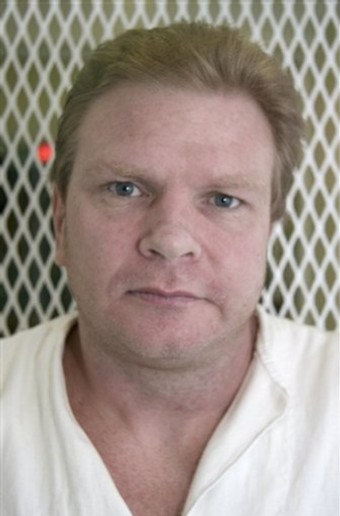
    Maurice Clemmons (right) caused this mess, of course. In an unfathomable act of violence, Clemmons allegedly walked into a restaurant on Sunday and shot four police officers to death. After a two-day search, Clemmons was shot dead by a police officer on Tuesday. It’s a terrible tragedy, and my thoughts go out to the victim’s families. My thoughts are also with all of the men and women who will be denied early release because of Clemmons’ terrible example.

    The case has raised some valid questions about the criminal justice system — like why two Washington judges released Clemmons on bond last month after he was charged with raping a 12-year-old female relative and assaulting a police officer. But far louder are the criticisms of Huckabee, who commuted an earlier Arkansas sentence for Clemmons from 108 years to 47 years in 2000. This tough-on-crime posturing is coming mostly from conservatives, and it’s being done for purely political reasons. Unfortunately, this is the kind of perfect storm that can hurt parole and early release efforts across the country.

    Huckabee (left) has stood his ground, with a column on Monday and in comments yesterday in Florida. I never thought I’d say this, but I’m proud of Huckabee for sticking to his philosophy in support of parole. Second chances work, and Huckabee made Clemmons parole-eligible to address an excessive sentence handed down when Clemmons was 16 years old. Huckabee couldn’t have known what Clemmons would do later.

    Huckabee’s words last night are encouraging: “I looked at the file. Every bit of it. And here was a case where a guy had been given 108 years. Now, if you think a 108-year sentence is an appropriate sentence for a 16-year-old for the crimes he committed, then you should run for governor of Arkansas.”

    (more…)

  • Saving Money — and Lives — with Drug Treatment

    The Massachusetts House of Representatives went into recess last month without voting on a pending bill that would offer parole to nonviolent prisoners convicted in drug cases.

    I wrote about this proposal after the state Senate okayed it, and I’m sad to report that the bill died on its way to the House.The bill addressed the sentences of people serving mandatory minimums, but it also sent a message that we’re making a mistake by focusing on punishment rather than treatment and prevention.

    An editorial in a suburban Boston paper this week expresses disappointment that the House failed to take action on this issue, pointing out that the state spends more on incarceration than higher education (like several others).

    Put aside the fact that substance abuse treatment saves the lives of people plagued by chronic addiction. The savings to taxpayers ought to be enough to force a reconsideration of policies that haven’t worked: It costs $48,000 a year to keep an addict in prison, compared to $4,000 to $5,000 for outpatient treatment.

    Alternatives to incarceration are working — programs like outpatient treatment and drug courts are saving money and lives — and the budget crunch has finally led some states to give them a shot. Hopefully successes in these states will continue to persuade states like Massachusetts to take the plunge.

    (more…)

  • AIDS Behind Bars

    Today is World AIDS Day and I’m thinking about the progress we’ve made in the last decade of so in fighting this disease, and the long road still before us. The issue of HIV and AIDS in American prisons serves as an example of the difficulty and the politics of fighting this disease around the world. And there aren’t many rays of hope when looking at AIDS in prison.

    More than 6% of prisoners in New York and 4% of prisoners in Florida are HIV-positive. A few months ago, I posted a map of HIV and AIDS rates in prisons across the country. Almost across the board, it’s higher than the national average.

    Health care is questionable in prison, but many prisoners weren’t getting proper care before being locked up — so prison provides access to AIDS drugs they never had. The most difficult treatment issue is their release. A study earlier this year found that 90 percent of prisoners would have an interruption of treatment within 30 days of their release.

    (more…)

  • Will Juries Kill the Death Penalty?

    A couple of interesting posts this week examine the public’s response to the possibility of executing an innocent man — and the conversation leads two criminal defense bloggers to very different conclusions.
    Bidish J. Sarma started the conversation, writing at A Criminal Enterprise that the recent Gallup numbers seem to suggest that even an clear-cut execution of an innocent person might not sway public support for capital punishment. He writes:

    The numbers also partly rebut the Marshall Hypothesis.  Former Supreme Court Justice Thurgood Marshall speculated that support for the death penalty would decline as people came to understand how the system breaks down at numerous points in the process.  The Gallup poll suggests that he may have been too hopeful.

    I wrote about the Gallup numbers a few weeks back, and I don’t think they’re as dire as Sarma suggests.  When life without parole is included as an option, for example, the public’s support for the death penalty drops from 65% to 47%. That’s significant. It won’t be just innocence that leads to the abolition of capital punishment, because executing guilty people is wrong (and ineffective and expensive), too.

    Jeff Gamso posted an insightful response to Sarma, and he makes a very important point: public opinion polls don’t matter. The poll that matters is the one of 12 people in a jury room. And the results there have been different in recent years.

    (more…)

  • 352 Cases Per Attorney

    A new report from the federal government looks at public defenders across the country in 2007 and finds a system with staggering caseloads — and some states handling the flood better than others.
    More than six million cases flowed through the nation’s public defense offices in 2007, and they were handled by about 17,000 attorneys — that’s an average of 352 cases per attorney that year. Public defense systems are structured differently across the country, and the numbers released by the Bureau of Justice Statistics look only at state and county public defense offices, setting aside appointed and contract attorneys.

    Looking at just felony and misdemeanor cases — eliminating civil cases and ordinance violations — public defenders in state-based systems averaged 88 felonies and 147 misdemeanors in 2007, still a hefty number of cases. And only half of the 20 or so states with statewide public defense systems reported that they impose caseload limits on attorneys. A few of the states without limits saw the greatest burden – Colorado, for example, has no limits and 229 felony cases per attorney.

    Get all the data here. (PDF)

    (more…)

  • Death Penalty: News from Russia, Vietnam and the US of A

    I’m on the road this weekend, so just a quick post: A few death penalty stories from the week I didn’t get a chance to share:

  • Will Texas Execute a Mentally Impaired Man?

    Bobby Woods is scheduled to be executed in Texas on Thursday. This is the case despite two important facts:

    — His IQ hovers at or below 70 — the accepted border of mental impairment.

    — The U.S. Supreme Court ruled in 2002 that it is unconstitutional to execute someone with a mental disability.

    Woods was sentenced to death for his role in the rape and murder of an 11-year-old girl. He disputes the facts, saying his cousin killed the girl. But the facts are beside the point now. Why is Texas ignoring the clear directive of the Supreme Court?

    Woods was represented for years by an incompetent attorney, appointed by the state, who squandered any chance of Woods seeking to fight his sentence based on his mental disability. His new attorney is seeking clemency from Gov. Rick Perry. But we know how Perry handles these things.

    Woods’ new attorney Maurie Levin is fighting for her client’s life with every tool available.

    “For the state of Texas to appoint a lawyer who they then removed from the list — who was being taken to task in a federal court at the very same time he’s being appointed to represent Bobby in his federal proceedings, and then for Bobby — a mentally retarded man — to suffer the consequences of that appointment is atrocious. It infuriates me,” she told the Texas Observer this week.

    Levin is trying to get the Texas Board of Pardon and Paroles to watch a video of Woods speaking so they can see the capacity of the man the state is planning to execute. Watch the video after the jump.

    (more…)

  • Five Reasons to Be Thankful This Year

    It’s been a good year for criminal justice reform, and we’ve seen groundwork laid for even more advances in the months ahead. I’m feeling thankful for all of the incredible activists I’ve had the pleasure of working with this year – there are so many talented, dedicated people fighting for reform in our criminal justice system that something’s gotta happen. Thanks to the change.org community for making 2009 great.

    Here are five advances in criminal justice reform to be thankful for this year:

    1. Drug Reform – There’s an energy around drug war reform that we haven’t felt in years. Massachusetts became the 13th state to decriminalize marijuana. The American Medical Association stepped back last month from its drug war rhetoric. The positive steps this year are too many to count, but Ethan Nadelmann recaps ’em pretty well here.

    2. Exonerations – The steady drumbeat of men and women walking out of prison based on DNA and other evidence of their innocence continued in 2009. Eighteen people have been exonerated so far this year through DNA tests, many more through other evidence. Reforms to prevent wrongful convictions — changing eyewitness identification practices, interrogation protocol and the use of informants — moved forward nationwide. This week at the Innocence Project, we asked five exonerees what they’re thankful for this year. Here’s what they said.

    3. Alternatives to Incarceration – The recession turned out to be a blessing in disguise for prison reform, and this year short-on-cash became the enemy of tough-on-crime. A Hawaii judge is trying short, sure sentences. A North Carolina town cut crime without prison. Michigan is reducing its prison population.

    (more…)

  • How About a Real Pardon?

    President Barack Obama continued the ridiculous tradition yesterday of pardoning a Thanksgiving turkey and sending it to Disneyland. New change.org Animal Welfare blogger had urged Obama to end this silly practice, but he didn’t listen.

    On top of it all, even the turkey pardon seems affected by the racial bias that pervades our criminal justice system. I linked last year to a blogger who had pointed out that George W. Bush only pardoned white turkeys. Now it looks like his successor is keeping that tradition going. Apparently, Harry S Truman was the last President to pardon a black turkey.

    On a more serious note, however, the turkey pardon reminds us that there are many people sitting behind bars today who could use a real pardon. One of them is occasional change.org guest blogger Michael Santos. Michael’s wife Carole wrote a blog post yesterday calling on the Obama administration to begin looking at some of the injustices festering within our federal prison system, and I can’t say it any better than her:

    (more…)

  • Thanksgiving is the #1 Drunk Driving Holiday

    Most people, when asked which holiday has the highest frequency of drunk driving fatalities in the U.S., will quickly say New Year’s Eve. They’re wrong — it’s Thanksgiving.

    Car travel is expected to rise this weekend over last year, with 38 million Americans traveling more than 50 miles for a Thanksgiving celebration.  Nearly 400 people died in crashes in the U.S. last year over the five-day Thanksgiving holiday and most of these accidents involved alcohol. Almost 16,000 people died in drunk-driving crashes last year alone.

    This holiday weekend is a wonderful time to be with family and friends, but please remember to be safe.

    There is a bright side to this story, though. This year has seen an increase in programs aimed at preventing driving under the influence — and there’s a good chance that DUI deaths will continue to fall in the year ahead. It appears that we’ve turned a corner on driving under the influence, and I think interlock devices have played a role in the progress.

    A new law signed this week in New York is an example of both good DUI prevention policies and the mistaken long sentences that got our criminal justice system into the mess it’s in.

    (more…)

  • A T-Shirt for a Good Cause

    Eric Volz, an American who spent a year in a Nicaraguan prison for a murder he didn’t commit before he was freed in 2007, is back in the U.S. but still fighting his wrongful conviction. And he’s enlisting our help in a very worthy project.

    Volz was convicted of the 2006 murder of an ex-girlfriend despite convincing evidence that he was two hours away at the time of the crime.  He was freed after a year when his conviction was overturned, but the Nicaraguan government has continued to appeal the decision and seek his return to prison.

    Now Volz is stepping up efforts to clear his name. He and supporters recently began selling T-shirts (one of the two designs by Adam Paredes is above left) to support efforts to build a new website where Volz can post original documents from the case and mount his defense in the public eye. They’re beautiful shirts for a good cause. Need a holiday gift? Buy one here.

    I asked Volz today why he’s launching this effort and what his goals are.

    “This experience of being falsely accused and imprisoned has started to talk back to me,” he said. “The truth about Doris Jimenez’s murder has been the subject of heated debate in many circles since the moment the crime was made public. The challenge has always been how to shape the story as engrossing narrative that people will take time to familiarize themselves with, while also intending that it will serve as a piece of evidence; an insider’s investigative report of an unsolved murder and the ongoing legal case surrounding it. This website is my attempt at a solution. “

    (more…)

  • UK Prisoners Go on Holiday

    As prisoners in the United Kingdom near the end of their sentences, they are sometimes eligible to leave prison for a week or more at a stretch to perform community service and begin the process of reconnecting to their families and communities. The program isn’t new, but it’s drawing fresh criticism because its use has tripled in the last three years.

    This holiday, however, doesn’t look much like the photo at left.

    The program isn’t markedly different from house arrest or conditional parole — prisoners often perform community service or stay with family under strict rules. Critics of the program are stuck in a world of long sentences set in stone, and that’s a mistake.

    Programs like this should be available to prison administrators to offer reentry prisoners opportunities to transition successfully back to society. It must be carefully targeted at prisoners who deserve the privilege, however, and it should also be accompanied by state services, as we’ve seen that the first 48 hours are critical to a successful reentry.

    (more…)

  • Picturing Prisons

    Prisons and prisoners are often invisible to the general public, and governments do everything they can to keep it that way. We usually won’t raise a stink over something — or somebody — we can’t see.

    For years, Nick Szuberla and his colleagues at Thousand Kites have worked tirelessly to bring prisoners’ stories to light through their radio shows and film projects. Now, they’re calling on all of us to help build a crowdsourced database of prison imagery — shining a light on the thousands of hidden, sprawling prisons and jails across our country.

    Thousand Kites’ Incarceration Nation project asks the community of criminal justice reformers to post images of prisons — exteriors, interiors and aerial images — to create a image bank for bloggers, researchers, activists and interested members of the public to draw upon. It aims to use technology such as Google Earth to pinpoint prisons and remind us what these human warehouses look like. If you have an image to contribute, please visit the Thousand Kites sites and post it — this project will only be a success if we participate.

    I discussed the project with Szuberla this week, and he told me that Incarceration Nation grew to fill a need for images of invisible spaces:

    After several years of being chased of by corrections officials for filming exteriors, at one point we rented a helicopter to get images, we decided to begin using available technologies, Google Earth, to explore the criminal justice stories.

    There are often strict regulations around film outside and certainly inside prisons.  We believe that sunlight is the best sanitizer for human rights violations, and it is often not in a state’s interest to provide access.  In Virginia, where we are based, they literally moved the prison gate back, from where you could film, as media scrutiny increased.  Prisons are often in rural, hard to reach places. One reason for this is to support faltering rural economies, but the other is an out of sight, out of mind mentality.

    (more…)

  • An Exit Strategy from the Drug War

    Just as important as working on how to bring about drug law reform is thinking about drug regulation will be managed when it happens. The UK’s Transform Drug Policy Foundation has done just this, with a new report titled: “After the War on Drugs: Blueprint for Regulation.”

    The report lays out — drug by drug — evidence based policies for drug management once we move past the destructive prohibition that has filled our prisons for three decades.

    There’s no chance we’ll legalize psychotropic drugs without an exit strategy. The rapid development of plans like this one from the TDPF will help even incremental policies like the decriminalization of marijuana possession, by offering empirical evidence of a successful transition.

    The TDPR offers five different forms of drug management, and breaks them down by substance:

    (more…)

  • Israel Outlaws Private Prisons

    Israel’s Supreme Court ruled on Thursday that the mere existence of private prisons in the country is a violation of prisoners’ constitutional rights.

    In an 8-1 decision, the court overruled a decision passed by the Knesset in 2004 to allow the state to outsource its incarceration to private companies. One company had already built a prison and begun to hire staff when the state issued an injunction against opening in March. The company is expected to sue the state for the cost of building the prison.

    The court explained that housing prisoners for profit is inherently a violation of their human rights. The decision brought to a close a case brought by the Academic College of Law in Ramat Gan more than two years ago.

    (more…)

  • Renting Cells, Outsourcing Incarceration

    Pennsylvania this week became the latest state to start sending prisoners out of state to ease overcrowding. Gov. Ed Rendell signed off on a plan to send away 2,000 prisoners starting January 1, and officials said some of them will end up in Michigan’s empty cells.

    Here are two states headed in opposite directions on criminal justice reform. Michigan’s incarceration rate is ninth in the U.S., but the state’s leaders are changing that by expanding parole opportunities for nonviolent prisoners and engaging in innovative alternative to incarceration programs.  In 2007, Michigan’s prison population shrunk by 2.4% while Pennsylvania’s grew by 3.7%. Rather than looking at alternatives to incarceration, Pennsylvania is shipping prisoners out of sight.

    (more…)

  • Death and Texas

    Another week, another refusal by Texas to reconsider a death row case. Actually, make that two refusals.

    Robert Lee Thompson, 34, was executed last night in Huntsville, just an hour after Gov. Rick Perry had declined to commute his sentence to life. Perry was presented a rare commutation recommendation from the state’s Board of Pardons and Parole, which had voted 5-2 in favor of a life sentence for Thompson, who was convicted under the “law of parties” — meaning he participated in the crime but didn’t pull the trigger. Perry decided to ignore the board and authorize the execution.

    In another case, the Texas Court of Criminal Appeals yesterday rejected an appeal from Max Soffar (left), who has been on the state’s death row for 28 years for a crime he says he didn’t commit. Soffar, who is mentally ill, was convicted of killing four people in 1980 after giving what he and advocates say was a false confession.

    (more…)

  • Crowdfunded Court Reporting

    This week, a reporter from San Francisco public radio station KALW is spending her days in Oakland courtrooms, taking in all of the action (and inaction). She’s reporting for a story funded by individuals through the website Spot.us, on the daily activity in a criminal court — and she’s blogging about what she sees, letting us in on both the process of reporting a story like this and the day-to-day workings of a court that the media usually misses in its 800-word story about a murder conviction.

    So far, reporter Rina Palta has seen some high-level cases, more than one might expect from the daily grind of a criminal court. She wrote on Tuesday about watching arguments from both sides of a death penalty sentencing hearing. The proceedings piqued her curiosity about jury selection and she spent the next day watching lawyers interview potential jurors in a case where the state was seeking to label a man a sexually violent predator, making him eligible for lifetime civil commitment.

    Together, Spot.us and KALW are exploring a new method of covering our criminal justice system, and there’s great potential here. Criminal justice reform can’t happen until the system’s failures and successes become human stories to which we can connect. Crowd-funded reporting offers a chance to shine a spotlight on the invisible people within the system.

    (more…)

  • Massachusetts Steps Away from Mandatory Minimums

    The Massachusetts Senate yesterday passed a bill that would open the possibility of parole for prisoners convicted of nonviolent drug crimes. Many were sentenced under mandatory minimum laws and aren’t currently eligible for parole. Finally, amidst budget difficulties, another state is seeing the light.

    On its website, Families Against Mandatory Minimums profiles Robert Anger, a Massachusetts prisoner who could potentially be eligible for parole if the bill becomes law. Anger, from Vermont, became addicted to OxyContin as a teenager and soon transitioned to heroin. He began selling cocaine to support his habit and was arrested in Massachusetts in 2004 buying cocaine worth $15,000. He was 22 when a judge sentenced him under mandatory statute to 15 years in prison, saying “I wish I had discretion” as he did it. His full story is here.

    (more…)

  • A Somali Judge’s Assassination and the Struggles of a Tattered System

    An excellent post yesterday from Daniel J Gerstle on the War and Peace blog offers important — and highly personal — background on the tragic story of a Somali judge’s recent assassination.

    Judge Sheikh Mohamad Abdi Aware was shot and killed outside his mosque last week, allegedly by separatist leaders or pirates angry with him for handing down harsh sentences to pirates and criminal kingpins.

    Daniel writes about the time he spent in Somalia conducting the first review of juvenile justice in the country got the UN. He writes that he struggled to come to grips with a weak, fledgling court system that was torn between traditional, Islamic and state law. His post makes clear the incredible courage of people like Judge Aware to stand up to violent factions when in an attempt to establish the rule of law in a war-torn land. Daniel writes:

    Judge Aware’s surviving colleagues have near their reach the reigns of law for northeastern Somalia. With success there, chances are better to bring greater rule of law to the south. But their number, those who can equally satisfy not only the state but also the Islamic and traditional leadership, which requires gravitas, are dwindling.

    (more…)