Author: Matt Kelley

  • Stand Up for Juvenile Justice

    On Thursday, the U.S. Senate Judiciary Committee will decide whether to take action on the reauthorization of the Juvenile Justice and Delinquency Prevention Act — a critical law that provides states with funding and requires them to follow a set of guidelines aimed at improving conditions for juvenile prisoners and reducing recidivism.

    The bill before the Judiciary Committee contains a list of improvements to the law, and it will take your voice to make sure these measures survive to the final version.

    Please join me in contacting lawmakers today to urge them to take action on this critical bill.

    (more…)

  • Injustice Overturned

    Two men walked out of prison yesterday across the country from one another, both victims of wrongful convictions. Their cases are quite different, but both shed light on a broken system that continues to incarcerate countless innocent people.

    Donald Eugene Gates was freed in Arizona yesterday after 28 years in federal prisons for a 1981 Washington, D.C., murder that DNA now shows he didn’t commit. He was convicted based largely on the testimony of an FBI forensic analyst whose work was later discredited. The analyst testified that hairs from the crime scene were “microscopically indistinguishable” from Gates’ hairs — a gross exaggeration of the possibilities of hair science.

    In Georgia, Michael Marshall was freed yesterday after serving two years in prison for a 2007 carjacking, based on DNA tests obtained by the Georgia Innocence Project showing that items left by the perpetrator did not belong to Marshall. The most disturbing part of Marshall’s case is that the items that now proved his innocence were available before his conviction, but nobody chose to test them. He pled guilty to the crime he didn’t commit “out of being scared,” he wrote to the Georgia Innocence Project. (Marshall is pictured at left leaving the courthouse yesterday with Georgia Innocence Project Intern Christina Rupp)

    These two exonerations are bittersweet — two men are free for the holidays and their wrongful incarcerations have come to an end, but their freedom came with an immense cost. And they aren’t alone.  Their exonerations demonstrate exactly why wrongful convictions are so common — and why they’ll continue if we don’t address the causes.

    (more…)

  • Ditching the Piles of Paper

    Many industries have been reluctant to embrace the digital revolution, but the law is one of the biggest luddites in the bunch.

    This is why I was pleased to learn recently that New York City is using a computerized system to send offender reports to judges before court dates. Computers!

    After tearing through 50 million pages of paper over the last decade, the city made the switch a year ago. There’s no printing piles of paper and running them all over town — and there are no more papercuts. Just as important, the initiative has improved the timeliness of information coming before judges.

    If only this achievement could be more widely copied.

    (more…)

  • The Vicious Cycle of the Census

    The 2010 U.S. Census is about to hit full swing, and it’s critical that we commit to counting everyone.

    The most directly pertinent census issue to the criminal justice system is the colossal mistake of counting prisoners where they’re incarcerated instead of where they’re from.

    As Elena Lavarreda wrote recently in an excellent piece on change.org, counting prisoners in rural districts gives undue political influence to farmlands while robbing power from poor inner-city populations. This is a critical issue and it needs to be addressed.

    But there’s a broader issue, too. Not only will poor urban communities be counted without their prisoners, they’ll also be missing more than a million people the census classifies as Hard to Count. This includes people with no fixed address, or people who stay in a public housing unit but aren’t on the lease. These are people who might not be around on the day the count happens, or might be suspicious of a guy from the government coming to count them. Every person the census misses means lost services for the community and exacerbates the cycle of poverty.

    (more…)

  • When “Life” Means Life

    About 1 in 10 American prisoners is serving a life sentence. Although most are technically eligible for parole at some point, many of those convicted of violent crimes will never see the outside of a prison. They are being judged not on their rehabilitation but on their original crime.

    A California case before the federal Ninth Circuit questions the legality of refusing parole based solely on a person’s crime. While a decision finding that states must consider rehabilitation could open doors nationwide to second chances, many fear that a negative ruling could be another nail in the lifer’s coffin.

    More than 140,000 people are serving life sentences in the U.S., according to a report this year from the Sentencing Project, up from 34,000 in 1984. California has between 27,000 and 34,000 lifers. Despite chronic overcrowding (and now court orders to reduce the prison population), prisoners with murder convictions are rarely granted parole in California. And if governors thought they were right before in denying parole despite evidence of rehabilitation, the Clemmons case in Washington will only strengthen that conviction. It’s a shame that one horrific crime can have such power over thousands of lives.

    The case before the Ninth Circuit involves prisoner Ronald Hayward’s application for parole 27 years after he was convicted of stabbing to death a gang member who had allegedly attempted to rape Hayward’s girlfriend. The question before the court is whether states must present evidence that a prisoner presents a current threat to society, beyond just showing that his original crime was heinous.

    (more…)

  • Brunch Behind Bars

    What’s more fitting for a Sunday than a post about brunch?

    There has been a trend in recent months for state corrections departments to cut back on the number of meals they serve to prisoners in a given week, by replacing breakfast and lunch with brunch on weekends. On its face, this sounds absurd. It seems like a sure violation of prisoner rights and a terrible move by the system to cut costs while letting prisoners go hungry. But many prisons already skimp on food, and brunches are the least of the problem.

    Ohio recently started serving a single brunch meal on all weekends and holidays, and the meal contains the same number of calories as the previous breakfast and lunch. State officials claim they made the switch because prisoners were choosing to skip weekend breakfasts anyway — less than one-third normally ate the early meal on weekends. I’m not able to verify this, but Ohio’s DOC claims that the switch will mean that more prisoners eat more food on weekends.

    In November, Indiana also started experimenting with brunch on Fridays and weekends in one facility, planning to expand the project if it worked. Indiana officials said eliminating a meal allowed for more classroom and recreation time. Some critics saw that claim as a thin veneer on a dangerous cost-cutting move.

    “We should treat our inmate population like human beings,” State Sen. Mike Delph told the Indianapolis Star. “Denying food or cutting back on meals is beneath the dignity of the state of Indiana and is not in sync with our Hoosier values. It is my hope that the corrections officials will come before us and reassure us that they are treating the prisoners in a humane way.”

    After the jump, check out Ohio’s prison brunch menu.

    (more…)

  • Iraq Steps Up Executions

    More than 900 people are facing immediate execution in Iraq, Amnesty International reports, and observers are worried that the ruling al-Da’wa party is using the death penalty to woo public support ahead of the 2010 elections.

    Iraq, which executed 34 people in 2008, has killed 120 so far this year and has sentenced more than 1,000 people to death since capital punishment was reinstated in 2004. The country’s court system is still in shambles, however, and there are real concerns that many of the prisoners on death row were tortured into making false confessions and were convicted based on less-than-solid evidence.

    (more…)

  • Welcoming Two New Bloggers

    I want to extend a warm welcome to two new regular bloggers in change.org’s criminal justice community. We’re excited to have Colin Starger and Chris Cassidy join the team –they bring unique perspectives and experience to the site and I hope you’ll enjoy reading their posts.

    Colin is an acting assistant professor of lawyering at NYU Law School and a former attorney at the Innocence Project. He posted this week on the imprisonment of defense attorney Lynne Stewart. Read his older posts here.

    Chris is the assistant director of communication at the American Constitution Society, where he writes about a wide range of issues at ACSblog and tackles all sorts of new media and legal challenges. Chris wrote last week about Ohio’s switch to a single-drug execution. Read Chris’ older posts here and follow him on twitter @citizencassidy.

    Please join me in welcoming them!

  • Why America is to Blame for Mexico’s Drug War

    I attended a debate recently in New York on the role of the U.S. in Mexico’s drug war — and I was happy to see most of the audience on my side. The U.S. is finally waking up to the destruction our drug war has caused outside of our borders, and we’re moving in the direction of a series of policy shifts that will transform our domestic drug problems and change the way we interact with the countries that supply our insatiable demand for drugs.

    The proposition of the debate — part of the Intelligence Squared series that runs on Bloomberg TV and NPR — was: “America is to Blame for Mexico’s Drug War.” Listen to the full debate here. Allow me to explain why I voted yes.

    (more…)

  • U.S. Prison Growth Is Slowing

    The Department of Justice released statistics this week on the prison population in 2008, and while it’s hard to look at 2.3 million people behind bars and see good news, that’s exactly what this is. Our prison population is showing signs of slowing down — finally — and we have the recession to thank.

    A few facts from the study:

    • The number of people in prison and jail still stands at an all-time record, but the growth in 2008 was slower than any year since 2000.
    • New admissions to prison were down in 2008 from the year before and releases were up 2 percent.
    • As we close this decade, comparing the growth rates across the last twenty years in particularly striking. The average annual growth in American prisons in the 1990s was 6.5 percent. From 2000 to 2008, it averaged 1.8 percent annually, and from 2007 to 2008 it was just 0.8 percent.
    • 20 states saw their prison populations decline in 2008.
    • The overall population under some form of correctional supervision grew by 0.5 percent in 2008, with 7.3 million people — 1 in 45 adults — on parole, probation or behind bars.

    More details are available from the Bureau of Justice Statistics.

    So what does all this mean?

    (more…)

  • Cutting the Cord on Failing Anti-Drug Ads

    Congress will cut the drug czar’s anti-drug advertising budget by more than a third next year, continuing a decline for the ads, which have been proven ineffective by repeated studies.

    House and Senate negotiators reached agreement on a 2010 Appropriations bill yesterday, and the bill includes $45 million for the National Youth Anti-Drug Media Campaign, a reduction of $25 million from last year (and less than half of what we were spending in 2006).

    Several studies have found problems with the anti-drug advertising campaigns, but the best known finding is an extensive report commissioned by the Government Accountability Office in 2006. The report found that not only did government anti-drug ads fail to have an impact on drug use, they actually made use seem more common and normal — perhaps leading more kids to try drugs. The full report is available here.

    (more…)

  • Five Ways to Have a Better Human Rights Day in 2010

    Today is International Human Rights Day, marking the 61st anniversary of the day the United Nations adopted the the Universal Declaration of Human Rights. The UDHR, while nonbinding, sets an aspirational standard for the way we treat one another around the world.  The UDHR is the most translated document in the world, but it isn’t universally followed.

    While there are many victories from this year and this decade to celebrate, there is plenty of work left to do. Here are five goals we can set to make sure human rights around the world gain more respect over the year ahead.

    1. A reduction in the U.S. prison population — The long sentences and mandatory minimums we’ve relied on for decades in the United States are a human rights violation. They’re compounded by still more abuses of human rights — overcrowded prisons, solitary confinement, private prisons. I’ve written extensively here about the wake-up call our enormous prison system has received in this recession. There are better ways, and states are showing promising signs through the end of mandatory minimums and the success of alternatives to incarceration. From Massachusetts to Michigan to California to Hawaii, we saw progress in 2009. Next year must see a continued commitment to reducing our prison population and addressing the rights of prisoners, and criminal justice advocates need to keep pressure on to make it happen.

    2. The American death penalty continues its decline in 2010 — This year saw the courageous abolition of the death penalty in New Mexico. Several states will be considering ending the practice of capital punishment in the year ahead, and the continued erosion of the death penalty map is a surefire way to bring about the end of executions in the US.

    3. Japan abolishes the death penalty — Although Japan’s death row population has skyrocketed in recent years and the mental health and treatment of prisoners is extremely questionable, capital punishment in Japan could be on the way out.  The appointment in September of an outspoken death penalty opponent as the country’s new Justice Minister has many hoping for a moratorium or outright abolition. This year saw Togo end the death penalty and Russia coming extremely close to abolition. Could Japan be next in 2010?

    (more…)

  • Backlash Grows Against Uganda’s Death Penalty for Homosexuality

    I’ve been following in recent weeks the horrifying bill in Uganda that would allow for death sentences for LGBT people with HIV and life sentences for others. While some are still predicting that the bill will pass, the international outrage over the proposal seems to be growing, and there’s still hope that Ugandan lawmakers will wake up to the human rights atrocity they’re committing and change course on this law.

    Protesters will rally against the bill tomorrow outside the Ugandan High Commission in London, on International Human Rights Day.

    Michael Jones wrote last week on the change.org Gay Rights blog that a high profile Ugandan Christian leader is urging leaders to abandon the bill, comparing it to a “gay genocide.” (And this is from a guy who calls homosexuality ‘unacceptable’ and ‘sinful’). Michael also reported that Sweden has announced it will cut aid to Uganda if the bill passes. Other countries should follow Sweden’s lead.

    The bill goes even further than the death and life sentences I mentioned above. It also includes prison sentences for people who fail to turn in LGBT acquaintances, and even for landlords who rent to LGBT people. It’s a witch hunt.

    (more…)

  • Does Global Warming Increase Violence?

    As world leaders are gathering this week Copenhagen to discuss cooperating on measures to address climate change, the solutions they seek might serve not only to make us safer from hurricanes and rising oceans, but from each other, too.

    Studies have shown that hot days — and hot cities — often have higher rates of violent crime than cooler days and cooler cities. As the world’s temperature rises, will violent crime rise, too?

    One study compared the murder rate with the annual average temperature and found a correlation. The research, done by psychologists at the University of Missouri and Iowa State found that over from 1950-1995, the violent crime rate has increased along with the temperature. When controlling for poverty, age shifts and the “general upward drift of violent crime,” the study found that for each degree Farenheit in the Earth’s average temperature, the U.S. murder rate rises by 3.68 per 100,000 people. That means for every degree we add, the U.S. will see nearly 10,000 additional murders a year. The study was published in 1998, so it’s a bit dusty.

    (more…)

  • Free Liu Xiaobo

    One year ago today, Chinese authorities seized Liu Xiaobo and tossed him in prison for his involvement with Charter 08, a manifesto calling for human rights and democracy in China. The charter was published online two days later, on December 10, 2008, the 60th anniversary of the passage of the Universal Declaration of Human Rights. Liu was eventually charged with “inciting subversion of state power” and he remains in custody today.

    Liu was held for six months under “residential surveillance” at an unknown location (aka, a secret prison). He has now been moved to a prison in Beijing, but no trial date has been set. Liu has been an outspoken critic of the Chinese government for decades and has been incarcerated for his views before. The charter has now been signed by more than 10,000 people inside and outside of China, but many of the 300 original signers have been arrested or harassed by Chinese authorities.

    China’s suppression of dissent is well documented, of course, and I’ve written before about the country’s continued use of secret prisons despite promises and claims to end the system. Today, as Chinese Premier Wen Jiabao prepares to travel to Copenhagen to talk with world leaders about climate change, his country is detaining countless people for suspected subversion and, in some cases, for nothing at all.

    (more…)

  • A Mandatory Minimum that Might Work

    South Carolina passed a law increasing sentences for driving under the influence earlier this year, including mandatory minimums beginning at the second offense.

    While regular readers know that I’m usually no fan of mandatory minimums and using punishment to deter crime, I think South Carolina is on the right track with a five-day mandatory minimum for a second DUI — and I wonder if the sentence might even work as a deterrent if applied to a first offense.

    I’ve written before about the success of short, immediate sentences in deterring probation violations in Hawaii. Mark A. R. Kleiman providean analysis of the Hawaii’s HOPE program and adds more data in his book “When Brute Force Fails,” showing that definite sentences deter crime. One study of drunk driving recidivism in Alberta suggested that five days might be too short, but found that the maximum deterrent effect may be reached around six months. Longer sentences had little impact on recidivism.

    Mandatory sentences of 10 years of longer for crimes like drug possession are outlandish and unnecessary for a variety of reasons. The perpetrators know there will be serious repercussions if they’re caught – they think they won’t be caught. And the sentence is so long and irrational that there’s a chance they’ll be able to beat it. But five days, no questions asked, for a Breathalyzer over the legal limit? That might work.

    (more…)

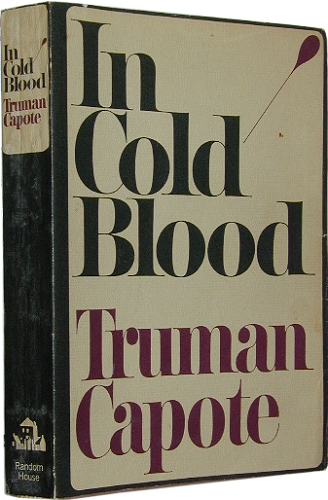
  • In Cold Blood, 50 Years Later

    This year marks the 50th anniversary of the publication of Truman Capote’s “In Cold Blood,” a classic work of non-fiction credited with creating the true crime genre we’re still obsessed with today.

    But the book does more than that. It’s one of my favorite books not only because it deals so thoughtfully with the issues of violence, prisons and the death penalty, but also because it’s a stunning work of storytelling. Capote was a master wordsmith and reporter, and this was his opus.

    Several stories this month have revisited Holcomb, Kansas, and the tale of the tragic murders of the Clutter family in 1959. The crime that shook a community, and the book that put the town on the map forever, still resonates in town.

    While readers and historians continue to celebrate Capote’s work, some in Holcomb still consider it an unnecessary, sensational and opportunistic book. They wish aloud that the book — and the movies that followed it — hadn’t forced the town to relive the crimes over and over for five decades.

    Holcomb residents — and readers around the world — also wonder if the Clutter murders would be so remarkable in 2009 or if they’d fade into the constant stream of violence and crime to which we’ve become accustomed. It’s a valid point.

    Writing in the Guardian last month, Ed Pilkington wondered why the book still resonates in an era that violent crime has become so routine:

    There are many reasons why In Cold Blood has become so ingrained. There is the precision of Capote’s writing, which resonates from the first sentence: “The village of Holcomb stands on the high wheat plains of western Kansas, a lonesome area that other Kansans call ‘out there’.” There is the depth of his research, which he carried on to the end as a witness at the killers’ hanging in 1965.

    There is also something monumental about the timing of the book. America in 1959 was at a crossroads. It was still bathing in the victory of the second world war and ensuing economic boom. The country was confident and secure, and the body blows of Vietnam still lay ahead.

    After the jump, a great 12-minute video posted by Newsweek last week with interviews with many of the key players in the case.

    (more…)

  • Empathy and the Death Penalty

    Is selective empathy better than no empathy at all?

    When does a person’s history mitigate the violence they committed, and when does it not?

    These are the questions asked in a must-read new column by former New York Times Supreme Court reporter Linda Greenhouse.

    In her piece, Greeenhouse contrasts two seemingly contradictory opinions handed down in the last month by the U.S. Supreme Court — one upholding an Ohio death sentence and the other overturning one in Florida.

    In a unanimous decision this week, the court overturned the sentence of George Porter Jr. (above left), who killed his former girlfriend and her new lover in 1986. The court ruled that Porter’s defense attorney failed to present evidence that he had seen heavy combat in the Korean War — 33 years before. In an unsigned opinion, the court wrote: “our nation has a long tradition of according leniency to veterans in recognition of their service, especially for those who fought on the front lines as Porter did.”

    Last month, however, in another unanimous per curium opinion, the Supremes reinstated the death penalty in the case of Robert Van Hook (above right). A lower federal court had found that Van Hook’s attorney made a critical error in failing to present mitigating evidence about Van Hook’s abusive upbringing. Van Hook is also a military veteran, he was convicted of robbing and killing a man he had met in a gay bar. The Supreme Court disagreed with the lower court and reinstated Van Hook’s death sentence.

    (more…)

  • An Infamous Mugshot, a Lawsuit, and a Life Turned Around

    Patrick Tribett was once the subject of Internet ridicule. In 2005, Tribett was arrested in Ohio after huffing paint and his mugshot showing the bottom half of his face covered in gold paint quickly spread across the interwebs.

    I’ve gratuitously reposted the photo here for you. T-shirts featuring Tribett’s image are for sale online, as well, referencing another popular web forward – a ridiculous news clip about a leprechaun sighting in Alabama.

    But there’s more to the story. Tribett is now clean, and the Wheeling, WV, Intelligencer reports that he has hired an attorney and is preparing to sue the retailers and manufacturers of merchandise featuring his image. Some pulled the products after Tribett’s lawyer sent a cease-and-desist letter.

    The case raises some interesting legal questions over who owns mugshots and the rights to commercialize one’s image. I believe the mugshot itself is in the public domain, but this analysis from Abovethelaw of a separate case involving Lindsay Lohan’s mugshot points out that 19 states have laws against the unauthorized use of one’s image for commercial gain.

    Putting the lawsuit aside for a moment, however, we see a true bright side to this story. Tribett is doing well, a run-in with a drug court helped to turn him around, and a great story in the Wheeling Intelligencer gives us a portrait of him as a real person — not just an Internet punchline.

    (more…)

  • More from Massachusetts: The Fight Goes On

    A quick update to my post yesterday on the bill to repeal mandatory minimums in Massachusetts. I wrote that the bill died on the way to the House. An important correction: the House did recess without acting on the Senate bill, but Barbara Dougan of Families Against Mandatory Minimums points out in the comments that the bill isn’t dead — the House can pick it up in the new year. She also added the link to the full Senate bill, which is here.

    Today also saw the release of a report from the Boston Foundation, detailing Massachusetts’ spiraling spending on corrections — and the negligible payback for the millions of taxpayer dollars spent to lock people up.

    The report shows that corrections spending in Massachusetts is higher than spending for higher education, social services or public health. In the last decade, the Department of Corrections budget grew 12% and spending on probation grew 163%. During the same period, the budget for higher education dropped by 7%.

    The report says these staggering numbers point to “the state’s willingness to pay nearly any amount for criminal justice policies currently in place without evidence of better outcomes” and raise some important questions, such as:

    (more…)