Author: Pan-African News Wire

  • Somalia Resistance Group May Attack Nairobi

    Shabab group threatens attack on Nairobi

    Web posted at: 1/21/2010 1:56:28
    Source AFP

    NAIROBI: Members of Somalia’s Islamist Shabab group yesterday released a song threatening to march on Nairobi in retaliation for a deadly Kenyan police crackdown on Muslims.

    “We have reached the border, we will enter Kenya, Inshallah we will get to Nairobi. Inshallah we will get to Nairobi,” says the insistent six-minute piece of a capella singing, interspersed with speeches and the sound of gunfire.

    “When we reach there, we will fight, we will kill, we have weapons, enough weapons. The army of faith is on the way, slowly we are advancing, Inshallah we will get there,” it goes on.

    The tinny recording, with a melody modelled on the nasheed (Islamic songs of praise) often posted on the Internet by jihadi groups, also mentions Shabab leader Sheikh Mukhtar Abu Zubeyr, who recently proclaimed his allegiance to Al Qaeda supremo Osama bin Laden.

    “Abu Zubeyr, let’s move foward, we will not retreat. Allah is with us. Abu Zubeyr we love you. Allah preserve you. Abu Zubeyr move on until we’re inside Rome,” says the song. The Shabab, who control large swathes of Somalia and have been engaged in a bruising insurgency against the internationally-backed transitional government, have repeatedly expressed their displeasure with Kenya’s stand on the conflict. Kenya, which shares a long and porous northeastern border with Somali and has offered assistance to government troops battling the insurgents, has frequently expressed fears that Shabab suicide bombers would strike in Kenya.

    On January 15, Muslims outside Nairobi’s main mosque demonstrated to demand the release of a radical Jamaican imam detained by police and were confronted by security forces.

    At least five people were killed in the ensuing riots.

    Kenyan Interior Minister George Saitoti accused the Shabab of infiltrating the demonstration and ordered a security sweep among the large Somali community during which hundreds were arrested.

    An introduction to the song posted on a website close to the Shabab said the song was motivated by the arrest three weeks ago of Jamaican preacher Abdulla Al Faisal, who has served time in Britain for inciting racial hatred. Kenya then attempted and repeatedly failed to deport him. “The mujahedin in Somalia were angered by the deportation of a renowned religious person,” the text explains.

    “After that incident took place, Muslims were displeased and took action. Then the non-Muslims massacred the angry Muslims,” it added.

    The website, an unofficial mouthpiece of the Shabab movement, made it clear the song was performed by Shabab members but it was not accompanied by an official statement from the group.

  • Angola Changes Constitution to Have President Elected by Parliamentary Vote

    Angola stops presidential polls

    Angola’s parliament has approved a new constitution which abolishes direct presidential elections.

    The head of state will now automatically be the leader of the party with the parliamentary majority.

    The main opposition, Unita, boycotted the vote, accusing the government of trying to destroy democracy.

    President Jose Eduardo dos Santos has been in power for more than three decades and the next polls are not expected until 2012.

    The oil-rich nation is recovering from a long civil war which ended in 2002.
    ————————————————————————–
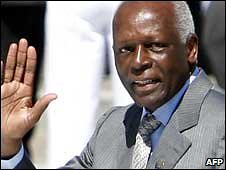
    JOSE EDUARDO DOS SANTOS
    In power since 1979 – Africa’s second-longest serving leader
    Joined the MPLA’s guerrilla army at the age of 19
    Trained in oil engineering and radar technology in the former Soviet Union
    —————————————————————————-
    The change was approved by 186 out of the 220 members of parliament, and drew loud applause and chants of “Angola, Angola!” from MPs in chamber, AFP news agency reports.

    The BBC’s Louise Redvers in the capital, Luanda, says under the new constitution, a president can only serve two five-year terms but he would start from scratch in 2012, meaning Mr dos Santos could remain in office until 2022.

    Our reporter says the vote on the new constitution had been expected in March.

    Angola is currently hosting the Africa Cup of Nations football tournament and some say the government deliberately rushed through the vote in a bid to avoid wider public debate, she reports.

    The new constitution also abolishes the role of prime minister, allowing the president to chose his own deputy to take on that role.

    The extension of the president’s powers has come in for criticism.

    “The ruling MPLA says the constitution will increase democracy, but by abolishing the presidential ballot and concentrating all the power on the president it will do exactly the opposite,” political analyst Fernando Macedo told Reuters news agency.

    Story from BBC NEWS:
    http://news.bbc.co.uk/go/pr/fr/-/2/hi/africa/8472127.stm
    Published: 2010/01/21 13:05:44 GMT

  • Sudan Extends Deadline For Election Nominations

    Sudan extends deadline for election nominations

    Thursday, 21 January 2010

    January 21, 2010 — Sudan has extended the deadline for nominations in the first multi-party vote in 24 years after candidates said they did not have enough time to prepare, election officials said on Wednesday.

    Elections would go ahead as scheduled on April 11 when Africa’s largest country, recovering from decades of war, will hold a poll already marred by accusations of fraud, vote-buying and intimidation during last year’s voter registration.

    “(The deadline for nominations is delayed) until the 27th January because we know that there are some who said the time is too short. But the elections will be on time,” Abu Bakr Waziri from the National Elections Commission told Reuters.

    The 10-day nomination period was announced just days before it began on January 12, and some prospective candidates were not given registration forms until much later, leaving little time to collect the signatures needed to be endorsed.

    “They wanted 15,000 signatures (for a candidate) to be nominated and that from 18 states with a minimum of 200 in each state,” said Abdel Aziz Khaled, a presidential candidate.

    He said he had met the requirements but that after decades of north-south war it would be difficult for many independent, mid-level or new political parties to garner support in both the north and south within the original tight timeframe.

    “They are making it difficult because (President Omar Hassan) al-Bashir doesn’t want many candidates to run because this will divide the vote and affect him in the first round to not get 50 plus percent,” Khaled said.

    If no presidential candidate gets 51 percent, it will force a second round between the two leading candidates.

    Khaled and others say they are determined to challenge Bashir despite widespread reports of fraud by his National Congress Party (NCP).

    On Wednesday the former southern rebel Sudan People’s Liberation Movement (SPLM), which signed a 2005 north-south peace deal and entered an uneasy coalition with the NCP, said vote buying and intimidation by the NCP had escalated.

    The NCP was targeting millions of largely uneducated and poor living in slum camps surrounding the capital, it said.

    “This will not be a way for a free and fair election,” said SPLM spokeswoman Keji Roman. “They are offering money or even threatening them…this is what makes it illegal and immoral.”

    Representatives of slum dwellers, who have little access to information and no electricity or running water, said NCP officials were using threats and bribery and also telling people the SPLM was supporting the NCP so they should vote for Bashir.

    NCP officials were not immediately available to comment but in the past have ridiculed allegations of fraud.

    Sudan’s civil war claimed 2 million lives and drove 4 million from their homes, destabilising much of east Africa. (Reuters)

    Last Updated ( Thursday, 21 January 2010 )

  • Outreach Suspended Indefinitely in Zimbabwe

    Outreach Suspended

    By Lloyd Gumbo

    THE constitution-making outreach programme has been suspended indefinitely following disagreements on the composition of the team that should collect views from the grassroots.

    The process has also been stymied by a funding crunch and at the time of writing it was not clear when normal business would resume.

    Reliable sources in the Constitutional Parliamentary Select Committee on Tuesday said they had failed to agree on the number of rapporteurs to accompany the outreach teams.

    It is also understood that there is feuding over who should be a rapporteur with some members of the management committee saying all of them should be bound by oaths of secrecy.

    The management committee is made up of negotiators to the Global Political Agreement, Cde Patrick Chinamasa (Zanu-PF), Mr Tendai Biti (MDC-T) and Professor Welshman Ncube (MDC), and members of the Select Committee.

    The sources said some members had suggested 210 rapporteurs with each party contributing 70, while others wanted 70 only.

    Seventy outreach teams are supposed to go round the country collating people’s views but disagreement over who will actually write these views down has become the latest sticking point.

    Select Committee co-chairpersons Cde Munyaradzi Paul Mangwana (Zanu-PF) and Mr Edward Mkhosi (MDC) confirmed the outreach was now on the back burner and were not certain when the programme would start.

    They said all constitution-making programmes were suspended by the management committee until next week when it meets to discuss the financial situation and other administrative issues.

    The management committee, they said, had indicated that it was better to delay the process than rush to produce a “half-baked” product.

    “All constitutional programmes have been suspended by the management committee. They felt there were other issues which needed attention before the outreach programme begins.

    “There are still disagreements on the composition of rapporteurs, but there are other more pressing issues, which have to be addressed like financial constraints.

    “Recording equipment is yet to be bought, cars haven’t been mobilised and rapporteurs are yet to be trained.

    “Therefore, we cannot give a timetable of when the actual outreach will start because some of the issues are beyond our control as the Select Committee,” Cde Mangwana said.

    He said the committee was going to engage the United Nations Development Fund and other financiers who pledged to bankroll the programme.

    Cde Mangwana said pledges fulfilled so far were enough to train outreach teams and parliamentarians but insufficient to kick-start the actual outreach.

    He said there was a possibility of the programme being moved to February depending on the availability of funds.

    Mr Mkhosi added that finances were a major stumbling block in getting the process off the ground.

    He said the management committee had asked the Select Committee to present an evaluation report on the latest developments.

    “The report which has been requested by the management committee will help

    determine when the outreach programme will start.

    “The evaluation will include financial and administrative issues. The way forward will be determined after the management committee meeting next week,” Mr Mkhosi said.

    Finance Minister Biti allocated US$43 million for the process in the 2010 National Budget, with funding coming largely from donors.

    The Select Committee has so far received about US$4 million, while a US$18 million pledge from the UNDP will be disbursed in phases.

    The constitutional programme appeared to have gathered momentum with the identification and training of thematic committee chairpersons, their deputies and outreach teams early this month.

    However, the process remains behind schedule.

    The GPA calls for a new constitution ahead of fresh elections with the process scheduled for completion in 18 months.

    This means a constitutional referendum should ideally be held around June this year but this is now highly unlikely to happen.

  • Haiti and the Struggle Against Imperialism

    Haiti and the Struggle Against Imperialism

    A History of Resistance to Slavery and Occupation

    by Abayomi Azikiwe
    Editor, Pan-African News Wire

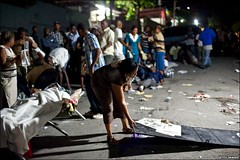
    A devastating earthquake struck the Caribbean nation of Haiti on January 12. The quake has left millions homeless and without food, shelter, clothing, medicines and water.

    Although various estimates indicate that anywhere between 100,000 and 500,000 people have died as a result of the quake, an accurate assessment of the disaster will take months to fully document. Messages of condolences, support and solidarity have poured into the country from throughout the world.

    Various states and organizations have responded to the current situation in Haiti. The Cubans already had over 400 medical personnel inside the country who are now operating field hospitals where care is being provided.

    China has sent rescue teams to assist in efforts aimed at finding people trapped under collapsed buildings and homes. Numerous states and non-governmental organizations are on the ground providing assistance to the Haitian people who are exercising a high degree of discipline and self-organization.

    Corporate media reports have sought to portray Haiti as a “failed state” with weak or non-existent institutions. The Obama administration’s initiative, which includes the deployment of 10,000 troops and the allocation of $100 million in humanitarian assistance, must be viewed within the broader historical context of U.S. foreign policy toward Haiti.

    Despite the pledges of U.S. governmental assistance, which will be coordinated by former Presidents Bill Clinton and George W. Bush, the role of the world’s leading imperialist power overall has not been supportive of the aspirations of the people of Haiti. The U.S. has a history of over two centuries of involvement in suppressing the right of self-determination and national independence of the Haitian people.

    The Significance of the Haitian Revolution

    Haiti was the most prosperous colony of all the French possessions during the period of slavery. The production of sugar, coffee, and other agricultural products brought tremendous profits to the colonial landowners on the island of Hispaniola, which today encompasses both the Dominican Republic and Haiti. At the time of the uprising on August 14, 1791, which was led by Boukmans, there were over 500,000 African slaves and thousands more free blacks and people of mixed race.

    During the rebellion of 1791, over 200 sugar plantations, 600 coffee plantations, 200 indigo plantations were liberated by the Haitian masses. In has been recorded that 12,000 people died during this period including 2,000 European settlers.

    The earliest European intervention on the island took place when it was visited by Columbus in his expeditions in the Caribbean during 1492 on behalf of the Spanish monarchy. When the Spanish colonialists occupied the island it already had a population of indigenous people who were divided into five kingdoms ruled by hereditary leaders.

    According to Ralph Korngold in his political biography of Haitian revolutionary leader Toussaint Louverture, entitled “Citizen Toussaint, he states that: “When Columbus discovered Haiti, the island, which is about the size of Ireland, had a population estimated at from 1 million to 3 million. When forty-three years later Oviedo visited the island, there were not over 500 of the original inhabitants left.”

    Korngold continues to illustrate the degree of cruelty and barbarism exercised against the indigenous people of Hispaniola. The writer says “What could have been the reason for the cruel extermination of a people of whom Las Casas says ‘they never committed against the Spaniards any one mortal offence punishable by the law of man’? The Spanish adventures who flocked to Haiti had only one aim in view: They wanted gold and colonial products.”(Korngold, pp. 5-6)

    Competition continued over the three centuries between the French, Spanish and British colonialists seeking dominance over the island. At the time of independence from France in 1804, the island was divided between Haiti and the eastern territory controlled by Spain.

    In regard to the fear instilled by the developments in Haiti during the period between 1790s and the first decade of the 19th century, the slaveowners of the United States and the British colonies in the Caribbean saw the Haitian revolution as a serious threat to the slave system. In 1799, the United States Consul General to the French colony in St. Domingo, the part of the island now called Haiti, Edward Stevens, wrote General Thomas Maitland, Commander in Chief of the British Expeditionary Force to the colony, warning that the colony of Jamaica and the United States were in danger of an invasion by the armed forces of General Toussant Louverture.

    Korngold noted in his biography of Toussaint said that “Since in 1812 the British did not find it difficult to land an army in the United States, there is reason to believe that with the aid of the French fleet Toussaint could have done the same. He might have proved a more formidable adversary than the British, since thousands of plantation slaves undoubtedly would have joined him.

    The writer continues by outlining the plot saying “The invasion plan included seizure of all ships in Haitian waters for use as transports. The American Government took the matter sufficiently to heart to forbid American ships to depart for Haitian ports.” (Korngold, p. x)

    After the proclamation of independence on January 1, 1804, the nation of Haiti was subjected to a blockade by France as well as the United States. Because of the French refusal to recognize the Republic of Haiti, in 1825 the Haitians began to pay “indemnity” to the former colonial power for the claims related to the destruction and seizure of the slavemaster’s property during the revolutionary period of 1791-1803.

    The defeat of the French in Haiti caused tremendous financial hardships for the colonial power. These events prompted the so-called Louisiana Purchase, enabling the United States to expand its territorial control over large sections of the South and West of the North American continent.

    In regard to the United States during the same time period, the political position of the government was exemplified in a statement made by South Carolina Sen. Robert V. Hayne who said that “Our policy with regard to Haiti is plain. We never can acknowledge her independence.” (Haiti: A Slave Revolution, p. 104)

    It was not until the period during the U.S. Civil War in 1862 that the recognition of Haiti became a reality. The French maintained economic dominance over Haiti during the 19th century. When the Haitian National Bank was established in the 1880s it was overseen by French officers and financed with capital from the former colonial power.

    France remained the principal neo-colonial power in Haiti until the United States invaded and occupied the country between 1915-1934. During this period a guerrilla campaign organized by the Haitian masses was crushed by the U.S. imperialists. Even after the Roosevelt administration withdrew from Haiti in 1934, the U.S. continued to have enormous influence inside the country.

    The regimes of Papa Doc and Baby Doc Duvalier further extended the process of labor exploitation and state militarization from the 1950s through the 1980s. The Haitian masses rose up in rebellion in February 1986 and forced the resignation of the Duvalier regime, however, the absence of a well-organized political party or coalition allowed the military to take power over the state.

    The social process that unfolded between 1986-1990 saw a sharpening of the political situation inside the country. In 1990 a former priest Jean Bertrand Aristide was elected to office with the overwhelming support of the working class and the poor.

    Nonetheless, before the Lavalas coalition could consolidate its hold on power, efforts were under way aimed at regime change in Haiti. Consequently, it was not surprising that President Aristide was overthrown by the U.S.-trained military, which was supported by the American Central Intelligence Agency in 1991.

    The Aristide government did not come to power through force of arms and the maintenance of popular para-military and guerrilla strategies. Yet, as soon as Aristide began to send volunteers to Scandinavian countries to train militarily, he was pushed aside by the army and the police, necessitating the U.S. to transport him out of the country into the mainland. Aristide continued to push for the restoration of his government while living in exile in the United States.

    A naval blockade of the country during the Bush Sr. administration in 1992, that was designed to prevent Haitians from entering Florida, was continued under the Clinton presidency and is still enforced until this day. The U.S. utilized the re-imposition of Aristide in 1994 as an excuse to continue its racist immigration policy towards Haiti.

    Even though Aristide was restored to office in 1994, it was with the understanding that he would only remain in office for one year. Haiti held another election in December 1995 that resulted in the eleciton of Rene Preval. However, the turnout for this election was very low with only 25% of the voters going to the polls.

    There were several reasons cited for the paucity of voter response to the 1995 elections. One observation was that the electorate was disillusioned with the agreement imposed on the country by the United States and the United Nations. Many also felt that the elections would not improve the swiftly deteriorating economic conditions in the country, which prompted numerous attempts at commandeering rafters to the U.S. in search of jobs.

    Aristide ran again and was elected in 2000 to the great consternation of the United States. In 2003, opposition parties supported by the U.S. engaged in a massive destablization campaign against the Aristide government. This anti-Aristide campaign involved military actions that attacked government offices and resulted in the creation of a coalition of organizations, known as the Group of 184, which opposed the democratically elected ruling party.

    On February 29, 2004, President Aristide was kidnapped by invading U.S. military forces and his government was deposed. Under the guise of a humanitarian mission thousands of imperialist troops occupied the country less than one year after the invasion of Iraq. President Aristide was taken to the Central African Republic. A coordinated campaign launched by the International Action Center and the Congressional Black Caucus Haiti Task Force demanded the released of Aristide leading to his re-location in the Republic of South Africa, where he remains to this day.

    The Republic of South Africa, led by the African National Congress, was the only state that supported Haiti during its 200 year celebrations in January 2004. The then President Thabo Mbeki traveled to Haiti under extremely dangerous circumstances to participate in the commemorations.

    Despite the fact that an aid package for Haiti had been passed by the United States Congress during this period, the Bush administration refused to release the money to the Aristide Government. The U.S. later convinced the United Nations to establish a mission in Haiti where thousands of so-called peacekeepers took over the occupation of the country. Numerous violations of the rights of Haitian people have occurred under the United Nations presence.

    The Present Occupation and Need for Another Revolutionary Upsurge

    After the coup against Aristide and the occupation of Haiti by the United States, France and Canada in 2004, the MINUSTAH forces targeted the members and supporters of the political party loyal to President Aristide, Fanmi Lavalas. Many of the supporters of President Aristide were harassed, imprisoned, driven into exile and even murdered.

    Moreover, the economy of Haiti continued to suffer as a result of the failed policies of the Preval government which faced severe political restrictions imposed as a result of the invasion and occupation of the country. The majority of the people in Haiti still supported Fanmi Lavalas during this period and the scheduled elections of 2007 were postponed due to natural disasters and political unrest in the country.

    In early 2008 unrest flared again as a result of the dire economic conditions prevailing in Haiti. This social situation was a manifestation of the deepening world crisis of finance capital that erupted during the previous year in the United States and throughout the capitalist countries.

    Food rebellions, strikes and clashes with the United Nations forces and the Haitian police gained international attention during this period. In addition, several hurricanes struck the country resulting in tremendous damage to property and the deaths of hundreds of Haitians.

    However, in the early months of 2009, general strikes took place in other parts of the Caribbean under French colonial control. In Guadeloupe and Martinique, workers shut down businesses that are largely owned by the French settlers demanding significant wage increases and the improvement of conditions for the class as a whole. The French dispatched riot police to break the strikes and in Guadeloupe one trade unionist was killed by the authorities.

    The strikes and rebellions in Guadeloupe and Martinique exposed the continuing role of French imperialism in the Caribbean. Nonetheless, as a result of the militancy of the trade union organizations and youth on these islands, workers won significant gains in regard to wage increases and the improvement of working conditions.

    In Haiti during this same time period, there were mass demonstrations commemorating the coup against Aristide that demanded the return of their legitimately elected president. On the anniversary of the removal of Aristide, 10,000 supporters of Fanmi Lavalas took to the streets demanding an end to the United Nations occupation and the restoration of the elected government that was overthrown five years before.

    During March 2009, and less than two weeks after the demonstrations acknowledging the fifth anniversary of the coup, another series of protests took place which sought to lift the ban on candidates who are supporters of exiled President Aristide. A United Nations fact-finding delegation visited the country in an effort to prevent another political crisis from erupting in the country.

    According to Haiti Action, a solidarity organization headquartered in the Bay Area of California, “Over 10,000 pro-democracy activists took to the streets of Haiti’s capital, once again, to demand the return of President Aristide, who was kidnapped by U.S. officials five years ago.” (Haitiaction.net, March 12, 20009)

    This statement went to say, “While the U.S. State Department assisted its escorts, an assortment of NGO personalities, in avoiding any contact with the largest political party in Haiti, Fanmi Lavalas simply converged on the National Palace from the surrounding neighborhoods.”

    While these events unfolded in Haiti, a deportation order in the United States against 30,000 Haitians was opposed by the International Action Center through an online petition drive. In the aftermath of the earthquake on January 12, President Barack Obama temporarily lifted the deportation order pending the outcome of the current humanitarian crisis.

    However, as a result of the quake and the presence of U.S. troops, the present situation in Haiti can only be resolved through the independent actions of the masses of workers and youth inside the country. Anti-imperialists and solidarity activists in the United States must demand that the deportation orders be lifted permanently against Haitians.

    In addition, those seeking to truly stabilize the political situation in Haiti should demand the restoration of President Aristide to power. In a statement by the President in the immediate aftermath of the quake, he stated from South Africa that he was prepared to return to Haiti as soon as possible.

    Haiti should be paid reparations for the years of exploitation and oppression imposed upon the country by the United States, France, Canada and the United Nations. Efforts by the imperialist states has severely hampered the ability of Haiti to become self-reliant and truly independent.

    The imperialist-imposed policies directed towards Haiti, which has underdeveloped the country for over two centuries, are at the root cause of poverty and unemployment. The collapse of the agricultural sector derives from the neo-colonial policies designed to preserve the country as a vast reservoir of cheap labor for the capitalist corporations operating in the country.

    With the erosion of agricultural production in the rural areas, the masses were forced to re-locate in the urban centers which has resulted in tremendous overcrowding along with an acute shortage of housing. With the earthquake of such magnitude and the efforts of the U.S. to dominate the relief efforts, poverty will inevitably increase in Haiti.

    Who will rebuild Haiti and on what basis? Any real progress toward reconstruction has to place the masses of workers and farmers at the center of the process. Although the earthquake has done tremendous damage to the Haitian people and its underdeveloped infrastructure, the current situation provides an opportunity for the workers and youth to exercise independent self-organization based upon its own class and national interests.

  • No Hope For Haiti Without Justice

    Tuesday, January 19, 2010
    14:55 Mecca time, 11:55 GMT

    No ‘hope for Haiti’ without justice

    By Mark LeVine

    Relief may be arriving but distribution to Haiti’s shocked population is difficult

    On Friday, the US’ leading entertainers will once again organise a star-studded telethon in order to raise money for victims of an almost incomprehensible tragedy – the third time they have done so in less than a decade.

    The first, in the aftermath of the September 11 attacks, understandably avoided any sort of critical political imagery or discourse in favour of uniting the country in support of the victims.

    The 2005 telethon in response to the devastation of New Orleans by Hurricane Katrina occurred at a tenser political moment, as violence was flaring in Iraq and Americans were beginning to question President Bush’s true motives for invading the country.

    The massive incompetence surrounding the government relief effort was already apparent, but apart from rapper Kanye West declaring – to much criticism – that “President Bush doesn’t care about black people,” none of the artists who performed or spoke addressed the glaring structural problems that allowed the hurricane to produce such unprecedented damage.

    Four-and-a-half years later, the endemic problems that exacerbated the hurricane’s damage remain largely unaddressed.

    But they are far from public view (aside from the poor and working class public of New Orleans, that is) and outside the cheery narrative of rebuilding and recovery symbolised by the success of the New Orleans’ football team, The Saints, who will host the city’s first Conference Championship game in the refurbished Superdome, which during the height of the Katrina disaster housed thousands of flood refugees.

    As the carnage of the largest earthquake to hit Haiti in 200 years comes into full view, the biggest stars of Hollywood and the music industry are coming together for a “Hope for Haiti” telethon.

    But there can be no hope for Haiti without justice, and no justice without an honest appraisal of the centuries-long history that set the country up for such a devastating political and social collapse in the wake of the earthquake.

    A history largely ignored

    The roots of this collapse are as deep as they are unknown – or unappreciated – by the majority of Americans – although it is widely discussed across the globe.

    Haiti, then Saint Dominigue, was among the first islands “discovered” by Columbus, and became France’s – and likely Europe’s – most profitable colony. Its more than 800,000 slaves produced upwards of half the sugar and coffee consumed in Europe.

    The discourse of freedom and equality underlying the American and French revolutions had a profound impact on the island’s African slave population, who led the first successful slave revolution in the Western hemisphere, creating the first free black republic in the wake of their successful independence struggle against Napoleon’s army.

    Far from embracing the new republic – the second independent country in the Americas – the administration of President Thomas Jefferson, under pressure from southern slave-holding politicians, refused to recognise Haiti.

    Just as Communist Cuba was deemed to constitute a grave threat to capitalist America a century and a half later, a revolutionary republic of free Africans set a very bad precedent for its huge neighbour to the Northeast, where slavery was still a major component of the economy.

    Rather than finding an ally in the still young US, Haiti was shackled with a crushing debt by France as the price of independence.

    From democracy to dictatorship

    After a century of alternating democratic and dictatorial rule, Haiti was invaded and occupied by US marines from 1915 to 1934, during which time the US overturned laws that restricted foreign ownership, allowing American corporations to gain a permanent foothold in the country’s agriculturally dominated economy.

    The first two decades of post-occupation politics saw as many coups, until stability of a sort was attained with the election of Francois Duvalier, known as “Papa Doc”, in 1957.

    But his rule quickly deteriorated into a brutal dictatorship, equalled in its corruption and violence only by that of his son, Jean-Claude (“Baby Doc”), who ruled from 1971 until 1986.

    Despite the intense brutality and corruption of the regime, the US supported Duvalier as a counterweight to neighbouring communist Cuba and because of his friendliness to US corporate interests.

    After widespread protests forced Duvalier from power, a series of military caretaker government reforms eventually led to the election of the former priest, Jean-Bertrande Aristide, in 1990 on a platform that included land reform and reforestation as well as aid to poor farmers and increased wages and rights for the increasing number of sweatshop workers.

    However, Aristide’s radical economic reforms alienated the country’s elite, who supported his overthrow and exile the next year, likely with US backing or at least acquiescence.

    Aristide returned to power under a US-backed UN mandate in 1994, and turned over power to a democratically elected successor, Rene Preval, in 1996.

    Aristide once again became president in 2000 under a cloud of political infighting and election irregularities.

    His new term was marred by violence and opposition accusations of violence and corruption, and he was ousted again in 2004 with the support of the administration of George Bush, who provided a military and diplomatic “escort” for his departure from Haiti, from which he still remains in exile in South Africa.

    Price of economic liberalisation

    As with most parts of the developing world, the present-day concentration of urban poverty in Haiti, which led to millions of people living in the ramshackle slums that literally disintegrated during the earthquake, owe their origins to policies of economic liberalisation and privatisation begun in the mid-1980s.

    Their goal was to open Haiti even further to foreign economic penetration and control in the age of globalisation (Jamaica underwent a similar process, as did other Caribbean countries, with almost as bad results).

    Repeating a process as old as industrial capitalism itself, the degradation of Haitian food production and the increased foreign control of land through peasant indebtedness led to the creation of a huge surplus labour pool that would become the engine of a low-cost labour-led export oriented economy controlled by the country’s elite and their US and European allies (particularly USAID) by the 2000s.

    Privatisation programmes imposed by the IMF, World Bank and other international lenders led to even greater control of the country’s agricultural sector land by US and other multinational corporations.

    This process was epitomised by the shift in agriculture from local production to export oriented crops and to the break-down of Haiti’s rural economy with the import of heavily subsidised American products – exemplified by “faux-cheap” American rice with which the locally produced rice could not compete.

    Even aid programmes intended to help desperately poor Haitian women provided credit to buy cheap foreign products, further undermining the fragile agricultural economy in the name of progress.

    One of the most fertile lands in the Western hemisphere suddenly became a net importer of many basic foodstuffs, leading to even more widespread poverty, malnutrition and an exodus of increasingly landless farmers to the cities in search of any kind of work. The growing unrest produced by this process was one of the factors that forced Baby Doc from power in this period.

    The first Aristide government tried to change this situation by coordinating rice production, providing seed and fertiliser to poor farmers, and managing imports so as to mitigate the impact of cheaper US-grown rice on the local market, but these policies were heavily opposed by American corporations operating in Haiti, backed by the US government and lenders such as the IMF.

    Together, they oversaw a regime in which Haitian peasants grew ever more indebted and, after Aristide was ousted, were according to analysts, “driven into the ground” as what little state support there was ended.

    This dynamic continued after his return, part of the price of which was clearly his markedly toning down his reform agenda and acquiescing to US-backed reforms that many Haitians deride as the “plan of death”.

    With his reform agenda crippled, his government became marred by charges of violence and toleration of drug-running and other criminal activities.

    A disappearing state

    Once of the most striking things about the aftermath of last week’s earthquake is the almost total absence of the Haitian state, which seemed to collapse with the parliament and presidential palace.

    But the absence of any kind of effective state response is not surprising; indeed, it is the result of deliberate policies set in place during the last three decades under the neoliberal structural reforms supervised by the US and international lenders.

    As one local agronomist put it 15 years ago: “In the neoliberal system they say the state should ‘be efficient,’ but that is not what they really want. They want the state to disappear.”

    Disappearing states is one of the hallmarks of the structural adjustment programmes pushed by the “Washington Consensus” model of liberalisation of economies across the developing world precisely because a robust state beholden to its people would never tolerate such policies.

    In Haiti this process has led to increased poverty, degradation of land (foreign corporations have much less interest in preserving the integrity and sustainability of the land and surrounding ecosystems then local farmers) and inequality almost everywhere it has been practiced.

    As in the “banana republics” of Central America in the first half of the 20th century, the overwhelming power of the “big brother” to the north – the US government and corporations tied to it – has made creating a healthy, balanced and self-sufficient economy impossible to imagine.

    And so, despite the fact that for centuries Haiti’s land has been among the richest and most fertile in the world, it remains “the poorest country in the Western hemisphere,” as foreign media routinely describe even in the best of times.

    Aristide’s US-backed removal in 2004 came on the heals of a US-imposed trade embargo after he began to balk at continuing to implement the demanded reforms which drove peasants and workers alike into even deeper poverty.

    The governments installed by the US – and, disgracefully, backed by the United Nations and an increasingly corporatised international NGO system that is largely unaccountable to ordinary Haitians – have proved even more corrupt than those of the pre-Aristide era.

    New vision, same old vision

    This dynamic is crucial, for when former US President Bill Clinton and other officials involved in Haiti’s perpetual “development process” speak of how the country was “turning a corner” or “on the verge” of renewed growth and stability, what they mean is that internal opposition to the disastrous neoliberal programmes supported by Presidents Bush, Clinton, Bush and now Obama, has been tamped down to the point where they can be implemented without too much resistance – in part by a UN ‘stabilisation mission’ that has been marred by violence against Haitians and the support of the country’s elite.

    Indeed, the Clinton-Obama vision for Haiti’s future, already in play before the earthquake, is to transform Haiti into another Caribbean US-satellite country, with a largely privatised and deregulated economy based on low-wage, ecologically dubious tourism and sweatshop industries and where, like its neighbour Jamaica, increasing poverty and inequality are largely hidden from view.

    Rather than invest in capital and local infrastructure to help build a self-sufficient economy, Clinton and other foreign policy-makers want to create “more jobs by lowering the cost of doing business,” which inevitably includes lower wages and relaxed labour and environmental laws.

    The last coup union organisers and other activists are routinely and often violently attacked by the government, while Aristide’s Lavalas party, the most popular in the country, remains barred.

    Ultimately, the policies of the last four US administrations have been successful in crushing most opposition to the reforms that laid the foundation for the disastrous consequences of the earthquake.

    In the wake of this unprecedented destruction what best-selling Shock Doctrine author Naomi Klein has described as “disaster capitalists” are already hovering like vultures over the human, ecological and economic wreckage, waiting to come in and complete the transformation of Haiti into another Caribbean theme park-slash-sweatshop, with an unprecedentedly desperate population unable to offer even the modicum of resistance offered during the last decade.

    Whitewashing history

    Haiti’s complex and, from an American point of view, largely unpleasant and unedifying history must be acknowledged if there is to be any hope that the country’s internationally financed reconstruction will not merely lay the groundwork for more poverty and disasters.

    Sadly, Obama, who famously admitted in his 2009 Cairo speech that the US had in fact overthrown the elected government in Iran, has so far said nothing about the even more extensive US history of meddling in Haiti.

    Instead, writing in Newsweek, the president declared that “at long last, after decades of conflict and instability, Haiti was showing hopeful signs of political and economic progress”.

    Needless to say, if there was any substantive progress, the state would not have utterly disappeared in the rubble of the temblor.

    Seemingly oblivious to the role of the US and UN in producing Haiti’s current woes, Obama declared that: “The United States will be there with the Haitian government and the United Nations every step of the way.”

    If the past is any guide, this does not augur well for the country’s future.

    Indeed, Gerald Zarr, the former USAID Haiti director, was more honest in explaining that “Haiti’s going to have to change” – which is code for being even more acquiescent to the kinds of reforms that helped produce the disastrous consequences of the earthquake in the first place.

    If there is a moment when the American and global publics could be forced to confront this dynamic it will be when George Clooney and other often-outspoken Hollywood stars, joined by Haitian-born hiphop legend Wyclef Jean and other musical artists, take to the airwaves to raise money for the country.

    Illusion of reconstruction

    Haiti certainly needs all the foreign aid it can get in this time of desperation. But if the telethon limits itself to showing heartbreaking images and calling for humanitarian aid without calling on the Obama administration, the UN and the world more broadly to address the structural dynamics that produced this disaster and radically reorient their policies towards Haiti, there is little doubt that most of the funds raised will wind up lining the pockets of the corrupt local elite and their US and international corporate and NGO allies.

    Ordinary Haitians will continue to suffer, reconstruction will be an illusion or confined to tourist destinations far from Port-au-Prince and the country will be ripe for the next man-made natural disaster.

    Friday is a chance for artists to assume their historically crucial role of speaking the truth to power and to the people, even when it is hard to digest.

    It will be interesting to see if Clooney, and artists such as Bono and Sting who have advocated so eloquently in the past for the rights of the poor and oppressed, use their immense social capital to educate the public and challenge political and corporate leaders finally to behave in a morally responsible manner towards a country that has known little hope, and even less justice, since its people began their still unfinished struggle for freedom and independence over two centuries ago.

    Mark LeVine is currently visiting professor at the Center for Middle Eastern Studies at Lund University, Sweden. His books include Heavy Metal Islam: Rock, Resistance, and the Struggle for the Soul of Islam and Impossible Peace: Israel/Palestine Since 1989.

    The views expressed in this article are the author’s own and do not necessarily reflect Al Jazeera’s editorial policy.

    Source: Al Jazeera

  • A Tale of Two Armies in Afghanistan

    A tale of two armies

    By John Catalinotto
    Published Jan 17, 2010 8:32 PM

    Despite the Pentagon’s unmatched high-tech weapons and firepower, the U.S. military is bogged down by glaring weaknesses rooted in the capitalist system it operates to defend. The resistance fighters, with far less firepower, have shown the ability to innovate and adapt their tactics to the needs of their war to liberate Afghanistan.

    The Pentagon’s difficulties in creating a special program to carry out colonial interventions in Afghanistan and Pakistan have exposed its weakness.

    Before Gen. Stanley McChrystal took charge of the Afghanistan occupation last year, he had chaired a special group of the Joint Chiefs of Staff that came up with the “Afghanistan-Pakistan Hands Program.” In November the Pentagon announced the program, saying it would create three units of 304 people each, 912 in total, to form the new corps.

    The program’s main innovation is that instead of the customary one-year rotation in the region, officers who volunteer or are assigned to it would expect to spend three to five years on duty there. They would start with 16-week training courses in Urdu, Pashtu or Dari, the three major languages in the region, and would become expert in the history and culture of the peoples living there.

    The order was that the Army, Navy, Air Force and Marine Corps appoint a proportional number of their “best people” to this program. These personnel would be involved as trainers, military planners and advisers to Afghan ministries. In other words, they would be the backbone of a colonial takeover of the countries and peoples.

    In theory, such a corps might become a weapon against any resistance or liberation movement. But so far, the Armed Forces have only come up with 172 officers ready to take on the assignment. In addition, according to a Jan. 6 New York Times article, Joint Chiefs chair Adm. Mike Mullen chewed out the heads of the four armed services in mid-December for failing to pick the most suitable people among the too few they sent.

    When a military force is serving the cause of building an empire, and the basic goal of the empire is to increase the profits of the banks and corporations, the military too adapts to these pressures. What is the major goal of the officers? It’s advancing their careers.

    Since advancement has always come through a succession of one-year assignments, the officers preferred to avoid the Afghanistan-Pakistan Hands Program.

    In turn, the top brass in each service were also reluctant to send their “best people” to this special unit. That meant giving up their most capable subordinates, the ones who would help the careers of the top officers. This too became an obstacle.

    In an attempt to redress this failure, Mullen criticized the top brass on the one hand and on the other hand promised that the careers of those in the special unit would advance. Whether this combination of stick-and-carrot will create the desired colonial corps is yet to be determined.

    The resistance army

    The resistance army can tell a completely different story. Resistance fighters already know the local languages and customs: They are part of the people. Even by the Pentagon’s reports they are growing in strength and influence, and the population sees them as the local fighters while it sees the U.S.-NATO forces as the invaders.

    The resistance has also been flexible in adapting its tactics. Perhaps nothing showed that more than the bombing strike on the CIA’s Forward Operating Base Chapman on Dec. 30, which killed seven CIA operatives, including some top officers, and a Jordanian officer along with the resistance agent. According to the latest version of the events, the resistance forces operating in Khost province decided it was necessary to strike back after unpiloted airplanes — drones — killed some of their leaders along with a lot of other people.

    They took the decision to sacrifice a skilled double agent, himself a Palestinian with Jordanian citizenship, who was serving the resistance out of idealism and hatred of imperialism. He didn’t hesitate. His choice was the complete opposite of worrying about a career move.

    There is no doubt the Pentagon can bring much destruction to the Afghanistan-Pakistan region and its people. There is plenty of reason to doubt it can vanquish the resistance.

    E-mail: [email protected]

    Articles copyright 1995-2010 Workers World. Verbatim copying and distribution of this entire article is permitted in any medium without royalty provided this notice is preserved.

    Workers World, 55 W. 17 St., NY, NY 10011
    Email: [email protected]
    Page printed from:
    http://www.workers.org/2010/world/pentagon_0121/

  • U.S. Mercenaries Charged With Long List of Crimes

    U.S. mercenaries charged with long list of crimes

    Published Jan 17, 2010 8:35 PM

    The murderous mercenary outfit formerly known as Blackwater and now called Xe has been making headlines all January, with most stories showing how deeply committed the CIA and Pentagon are to outsourcing a portion of the task of re-conquering the former colonial world.

    A U.S. court threw out murder charges against four Blackwater employees for a massacre of 17 unarmed civilians in Nisoor Square in Baghdad in September 2007 and wounding 20 more — but only because of “prosecutorial misconduct,” not because any evidence indicated they weren’t guilty. Even the Iraqi puppet regime complained when they were set free.

    Rep. Jan Schakowsky (D-Ill.), who has sponsored legislation that would prevent the government from outsourcing security to private military contractors, expressed her displeasure at the court’s decision. “A question I’ve been asking for a long time is, ‘Can these private military contractors actually get away with murder?’ This indicates that the answer is yes.” (Los Angeles Times, Jan. 8)

    In a civil case involving the same massacre, families of some of the Iraqis killed and some wounded Iraqis agreed to accept payments. They were not necessarily satisfied with the settlement, but accepted it after they were warned it might be the last chance to get anything from the courts.

    Two subcontracted Xe hirelings in Afghanistan were arrested there Jan. 7 and now face murder charges for gunning down two Afghan civilians and wounding a third last May in Kabul. In this case Xe terminated the mercenaries and dissociated itself from the case as much as possible. The two had been training the Afghan National Army.

    Two of the seven CIA agents killed at Forward Base Chapman in Khost province on Dec. 30 turned out to be mercenaries working for Xe, one a former Navy Seal and another a former Army Special Forces troop.

    That’s in the countries that the U.S. is occupying. In addition, January’s Vanity Fair reports that in 2004 the CIA apparently hired Xe contractors as hit men to carry out an assassination or assassinations in Germany.

    “Among the team’s targets, according to a source familiar with the program, was Mamoun Darkazanli, an al Qaeda financier living in Hamburg who had been on the agency’s radar for years because of his ties to three of the 9/11 hijackers and to operatives convicted of the 1998 bombings of U.S. embassies in East Africa,” writes Vanity Fair.

    “The CIA team supposedly went in ‘dark,’ meaning they did not notify their own station — much less the German government — of their presence; they then followed Darkazanli for weeks and worked through the logistics of how and where they would take him down,” continues Vanity Fair. That report has been repeatedly cited in the German media. Sentiment is already strong in Germany against being dragged into the U.S.-led occupation of Afghanistan.

    Perhaps the most blatant crime U.S. forces committed recently — it’s not known yet if these are U.S. troops or a special paramilitary unit consisting of soldiers of fortune — has not yet gotten the same publicity as the above cases within the U.S. It was reported in the Dec. 31 edition of the Times of London.

    According to that report, U.S.-led troops were accused of dragging innocent children from their beds on Dec. 27 and shooting them during a night raid that left 10 people dead. Eight schoolchildren were killed, according to Afghan government investigators. People from the local area told Jerome Starkey, the Times reporter, that some of the children were wearing handcuffs when they were shot.

    E-mail: [email protected]

    Articles copyright 1995-2010 Workers World. Verbatim copying and distribution of this entire article is permitted in any medium without royalty provided this notice is preserved.

    Workers World, 55 W. 17 St., NY, NY 10011
    Email: [email protected]
    Page printed from:
    http://www.workers.org/2010/world/mercenaries_0121/

  • Women: Zimbabwe’s Unsung Educators

    Women: Zim’s unsung educators

    By Joyce Jenje Makwenda
    Courtesy of the Zimbabwe Herald

    THERE are certain things that we wish to do in our lifetime, but because of circumstances beyond our control, we are sometimes not able to fulfil our dreams.

    Many women wish they could have had access to formal education, knowledge and skills.

    This reminds me of one day when I was on my way to Pretoria from Johannesburg.

    I had decided to take a train and I met immigration officers doing their routine checks.

    One of them asked me for my passport. I gave him the passport and he checked the visa whose condition was “To Study Masters in Music at Wits”. He said: “You are magogo student” (grandmother student). He called some of his colleagues and he said: “Look at magogo student.”

    Some of the officers asked me to sing, but one woman officer who had taken the passport, checked the visa again, while the other officers were asking me to sing.

    I explained to the other officers that the course was not just about singing. It was broader than they thought and singing/performing was just another component of the course.

    When I had finished explaining, the female officer who was quiet all along and had evidently travelled to another world although she was looking at my passport asked me: “Do you think it is possible for me that one day I will also be able to go to school and further my education, like you have done?

    ‘‘I have always wished to further my studies but I wonder if that day will ever come.”

    I was touched and I said: “If you really wish to go back to school, yes one day you will.”

    In one of my articles, I mentioned that I came to understand about music education through my parents who recognised my music talent at an early age, they encouraged me to perform and to take a music course on instrument playing at the College of Music, way back in the 1970s, but I did not then.

    I would have loved to but it was due to circumstances beyond me. In 1984, I was to embark on research and documentation of Zimbabwe township music and my parents gave me all the support as they realised that this was my calling.

    It is because of the research that I had embarked on, on township music from 1930s to today, that saw me lecturing and giving talks at institutions locally and internationally but I still wanted to further my “education”.

    When the opportunity to go to Wits and read for a masters degree came along I was happy to fulfil my dream, although I continued with lecturing in the music and media studies departments.

    I am not the only one who has always wanted to go back to school and advance my education, there are many women who have wanted to fulfil their dreams.

    Littah Hodzi, who went back to school when she was a mother of three, attributes her success to commitment and having focus.

    She did her Junior Certificate in 1976 and 1977, she had to space the course in order to accommodate her children, in each year she wrote three subjects.

    She did her Junior Certificate through correspondence, after that she went on to enrol for some courses so that she could be able to get a job, in order to be financially stable.

    While she was working as a secretary she realised that she needed O-Level qualifications in order for her to climb the corporate ladder.

    By this time she had eight children, and her three older children had finished their O-Levels, and the children became her teachers. “Tendai taught me English, Tsitsi taught me Shona, and Mildred taught me Commerce and I passed the subjects.”

    It is important for women to associate themselves with people who will support them in order to achieve their goals as surrounding themselves with people who do not support them can bring their spirits down and fail to finish whatever they would have endeavoured to do.

    Although she went to night school in order to get tuition, for Littah, her children became her “extra lesson teachers”.

    Alternative ways of learning, like night school and distance education can make it possible for women to get education as they will have time to continue with their lives with little interruption.

    Littah Hodzi did not stop at O-Level but went on to do a Diploma in Personnel Management and another Diploma in Industrial Labour Studies through distance education. Littah Hodzi says she is not going to stop until she gets to university. She had enrolled at one time but had to drop out for reasons beyond her control.

    Obviously, one of the reasons could have been that she failed to make time for school, since she is employed full- time.

    What I do not understand with our higher institutions is that an old woman like her (Littah Hodzi) is required to enrol for a three-year degree and sit in class with someone who has just finished her A-Level.

    This is disrespect by the education system to mothers who have nurtured the nation in order for it to be “educated”. What about the knowledge, wisdom, her experience of going to “school” while at the same time raising eight children, cooking, cleaning the house and also going to work outside the home?

    Is that not a remarkable achievement? Of her eight children, seven of them have degrees and diplomas, and when you talk to them they say that there were inspired by their mother. Is she not a professor?

    Why throw away the education, wisdom from our mothers, because we want to cling to the male-structured education system?

    It is the men mothers have raised who, when they are heading these institutions, craft laws which make it difficult for women to be part of.

    The structuring of our education system is aimed at destroying matriarchal structures by denying women public space, which they can access through high education institutions.

    Zimbabwe has remained a matriarchal society socially because women still teach in the home, but it has not been able to be a matriarchal society politically because of how women are not part of the important structures that run the country, like the education system.

    Are we going to deprive ourselves the knowledge that our mothers have because we look at them as not “educated”?

    This woman is way above the so-called “educated”, in terms of knowledge, wisdom and education.

    Instead she should be teaching in the departments that have to do with her experience or if there are no departments to do with what she has done, they should be created.

    She and other women should go straight to a masters and on an MA research programme and impart their knowledge through writing a thesis, which will be deposited at the university.

    They should also be encouraged to do a PhD, which is basically research and writing, and be given a doctorate. This is not affirmative action, nowhere near it, this is what I call “Mothers Taking Back Their Place in Society to Educate and Pass on Knowledge”. Their lives are enough research.

    The wealth of information these women have should benefit the nation through such programmes and also earning them some degrees. To enrol this woman for a three-year bachelor’s degree seems disrespectful and demoting them from being educators and mothers of our country who have given life to the nation.

    While the mothers are at these higher institutions of learning they will pass on knowledge and also acquire knowledge, it should be a two-way process and by so doing they will feel their worth in society.

    Evangelista Mberi explains education as a basket which includes a whole lot of things, including kukuya dovi (how to make peanut butter from peanuts using a grinding stone). “If you are taught kukuya dovi, then you have been educated in that discipline, that is what education is all about.”

    Our mothers have a basket full of education and knowledge that is waiting to be given away, but they are afraid to “educate” the “educated”.

    The education system should be user-friendly and bring out knowledge from people instead of suppressing it.

    The straitjacket kind of education will not benefit us if we are going to lose the knowledge and information that the older generation has to pass on. We might end up recycling outdated ways of learning that will not help us develop as a nation but only to get certificates, to display and get jobs.

    We appreciate what some universities are doing that of awarding recognition degrees to women who have contributed immeasurably in their particular fields and professions.

    This is very commendable of these institutions as this is a way to acknowledge women’s life achievements. Recently, the Africa Women University awarded recognition degrees to Mavis Moyo and Betty Mutero and others. Betty has contributed immensely in community development and politics, she was the first black councillor in the 1950s in Bulawayo and Mavis has made a name in the media industry and also community development, she is one of the longest-serving journalists.

    One wishes that these women could have their life histories documented as well. Having their biographies documented will help us know how they managed to get to where they are today.

    As they are taking it slowly on their work, this could be the right time for them to write their biographies and the nation can learn a great deal about them. These incredible women should also be invited as guest lecturers at learning institutions.

    I have interviewed Mavis Moyo and Betty Mutero and other journalists and researchers have; they have stories to tell.

    It will benefit the nation if the women could write their biographies, and the relevant institutions fund them to sit down to write, it is for the good of the country and for posterity. Our great-grandchildren need to know about their great-grandmothers and the books they write will add value to our lives.

    Some academics have attained their degrees through our mothers by interviewing them.

    There is nothing wrong with that, but the problem is that their work is part of an exclusive club, which does not reach the general public.

    We would like our mother’s biographies to be accessible across the board, in order to shape the thinking of our society as regards women.

    Women work towards changing the education system in order for you to be recognised for what you have already done, by giving to our nation in order for it to function, your role as educators should not just end in the home but taken to the highest level, institutions of higher learning.

    Women celebrate life, motherhood and womanhood. You are the greatest teachers and great tanks of knowledge!

    –Joyce Jenje Makwenda, a researcher, archivist, writer and producer, can be contacted on: [email protected]