Author: Pan-African News Wire

  • MLK Day in Detroit Serves as Springboard for Ongoing Struggles

    MLK Day in Detroit Serves as Springboard for Ongoing Struggles

    Rally and march calls for jobs, peace and justice

    By Abayomi Azikiwe
    Editor, Pan-African News Wire

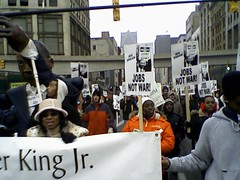
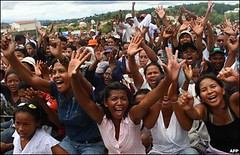
    DETROIT—On January 18 over 1,000 people gathered at the historic Central United Methodist Church for a rally and march in downtown Detroit to honor the 81st birthday of the martyred civil rights and anti-war activist Dr. Martin Luther King, Jr. This year represented the seventh annual demonstration in the city which recognizes the peace and social justice legacy of Dr. King.

    One of the keynote speakers for this year’s commemoration was Rev. Edward Pinkney, the president of the Benton Harbor Chapter of the National Association for the Advancement of Colored People (NAACP) and a recently-released political prisoner who served one year in detention for quoting biblical scriptures that were falsely interpreted by a Berrien County judge as a threat to another jurist’s life.

    Pinkney addressed the rally and emphasized that the legacy of Dr. King was very much alive and well. Pinkney outlined the details of his case and its relationship to the struggle against racism and police brutality in Benton Harbor.

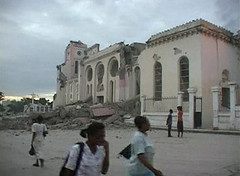
    Another keynote speaker at the MLK rally and march was Rev. Thomas Smith, pastor of the Monumental Baptist Church in the historic Hill District of Pittsburgh. Smith focused most of his speech on the humanitarian crisis facing Haiti, which was hit by an earthquake on January 12.

    Smith is also a leading member of the Inter-religious Foundation for Community Organizations/Pastors for Peace (IFCO). The organization challenges the U.S. blockade against Cuba every year by transporting material aid to the Caribbean nation located just 90 miles off the coast of Florida.

    Smith in conjunction with the Bailout the People Movement (BOPM) organized the National March for Jobs in Pittsburgh in September 2009 that kicked-off the protests surrounding the G20 Summit which was held in that same city.

    Sponsors of this year’s MLK Day events included City Councilwoman JoAnn Watson, who co-sponsored the event along with the Detroit MLK Day Committee, the Michigan Emergency Committee Against War & Injustice (MECAWI), the Moratorium NOW! Coalition, UAW Local 2334, the Matrix Theatre Company, Swords Into Plowshares, the Catholic Pastoral Alliance, the Detroit Wobbly Kitchen, among others.

    The event was co-chaired by Sandra Hines of MECAWI and the Moratorium NOW! Coalition.

    Other speakers and participants included the Detroit Ludington Middle School Choir, organizers for the Restaurant Opportunities Center (ROC), Maureen Taylor of the United States Social Forum (USSF) and the Michigan Welfare Rights Organization (MWRO), the Blaq Inc. Poets, Big A, Latinos Unidos and the Matrix Theatre puppets. The Detroit Wobbly Kitchen served over 350 meals to the march participants after they returned to the Church in the afternoon following the demonstration through downtown.

    Building Support for Ongoing Struggles

    The MLK Day events promoted various labor campaigns taking place in the Detroit metropolitan area. The ROC organizers have a major struggle where they are picketing a well-known restaurant for their unfair wage and labor practices. The Moratorium NOW! Coalition is still pressing for the declaration of an economic state of emergency in Detroit and the state of Michigan, which has the highest unemployment rate in the country.

    The day after, January 19, the Moratorium NOW! Coalition intervened in a tenants struggle where the residents were illegally locked out of their apartments on Delaware in the New Center area because of the failure of a landlord to make electrical repairs on the building. The Coalition is seeking to have the landlord pay damages to the residents and assist in their re-location.

    During the course of this campaign, Moratorium NOW! took the residents to the Detroit City Council to demand action from the City of Detroit. On January 26, the Coalition will go back to the City Council to request a resolution declaring an economic state of emergency in the city.

    On February 3, the Moratorium NOW! Coalition will be taking people to Lansing to keep the issues of unemployment, foreclosures and evictions in the forefront of the state legislature and the governor. This action will coincide with the annual state of the state address delivered by Gov. Jennifer Granholm.

    The Coalition will also be a co-sponsor for a statewide tour featuring FIST organizer Larry Hales during the week of February 1-5. The tour is designed to build the National Day of Action to Defend Public Education on March 4.

  • Haiti Can Lead Quake Recovery

    Haiti ‘can lead quake recovery’

    Haiti’s government can lead efforts to rebuild the country in the wake of its devastating earthquake, Prime Minister Jean-Max Bellerive has said.

    But Mr Bellerive told a meeting of world officials in the Canadian city of Montreal that “massive support” from the international community was needed.

    The Montreal meeting was held to assess the aid effort and plan the next steps.

    The delegates agreed to hold an international donors’ conference at the UN headquarters in New York in March.

    But Canadian Prime Stephen Harper warned that it would take a decade to rebuild Haiti.

    “It was not an exaggeration to say that at least 10 years of hard work awaits the world in Haiti,” Mr Harper said.

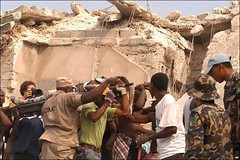
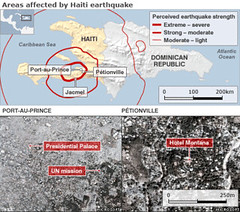
    It is believed the 7.0 magnitude quake on 12 January killed as many as 200,000 people. An estimated 1.5 million people have been left homeless.

    US Secretary of State Hillary Clinton is attending the conference along with delegates from 20 countries and representatives from the UN and the World Bank.

    ‘Vital needs’

    “The Haitian government is working in precarious conditions but it can provide the leadership that people expect,” Mr Bellerive said.

    “The top priority right now is to satisfy the vital needs of victims, like food and water, shelter and health care.”

    He added: “Haiti needs the massive support of its partners in the international community in the medium and long term. The extent of the task requires that we do more, that we do better and, without a doubt, that we work differently.”

    Canadian Foreign Minister Lawrence Cannon welcomed the US offer to host an international donors’ conference in March.

    “We now have the beginnings of a road map toward Haiti’s long-term reconstruction and a clear and sustained commitment to follow through,” Mr Cannon was quoted as saying by French news agency AFP.

    Mr Cannon said one goal was to “physically get the Haitian government back on its feet”.

    The quake destroyed key government buildings, including the National Palace.

    ‘Vanity parade’

    UK-based charity Oxfam has urged the international community to get Haiti’s foreign debts cancelled.

    It said about $900m (£557m) owed to donor countries and institutions should be written off.

    The World Bank has already announced that it is waiving Haiti’s debt payments for the next five years.

    And the Paris Club of creditor governments – including the US, UK, France and Germany – has called on other nations to follow its lead in cancelling debts to Haiti. Venezuela and Taiwan are the other biggest creditors.

    Although aid continues to flow into Haiti, the head of Italy’s civil protection service has strongly criticised the relief effort and the role of thousands of US troops sent there.

    Guido Bertolaso described the international aid operation as “a terrible situation that could have been managed much better”.

    “When there is an emergency, it triggers a vanity parade. Lots of people go there anxious to show that their country is big and important, showing solidarity,” he said on Sunday.

    Mr Bertolaso, an Italian government minister, said it was “commendable” for the US to lead relief efforts, but “too many officers” meant they had not been able to find a capable leader.

    Aid workers have also criticised Haitian government plans to relocate hundreds of thousands of people from the capital, Port-au-Prince, to large camps outside the city.

    Caroline Gluck, from Oxfam, told the BBC the move could be dangerous for the survivors.

    “In the past, experience has told us establishing some huge camps can cause all kinds of security problems, for example, robberies, rapes and kind of gang activities if the camps are kept too big,” she said.

    Oxfam was pressing for the camps to be smaller, she added.

    Story from BBC NEWS:
    http://news.bbc.co.uk/go/pr/fr/-/2/hi/americas/8479166.stm
    Published: 2010/01/26 03:54:16 GMT

  • South African Workers Stuck in Catastrophic Recession

    SA workers ‘stuck in catastrophic recession’

    MICHAEL HAMLYN | CAPE TOWN, SOUTH AFRICA – Jan 25 2010 15:05

    Workers have yet to see any proof of a recovery from the recession, despite what academics and the media are saying, according to Zwelinzima Vavi, general secretary of the Congress of South African Trade Unions (Cosatu).

    “On the contrary,” Vavi told a training workshop for the National Economic Development and Labour Council (Nedlac) Labour Sector School, “they are still stuck in a catastrophic recession, marked by rising unemployment, poverty and inequality. If there is any growth, it is certainly jobless growth.”

    He said that when Cosatu predicted that a million jobs would be lost during the course of 2009, it was accused of exaggerating. “But, tragically, our forecast was, if anything, modest, as there were nearly a million retrenchments in the first three-quarters of the year alone. When the 2009 final quarter’s figures are released, it could be well over a million lost jobs.”

    He added that unemployment has shot up, from 23,6% of the labour force in the second quarter, to 24,5% in the third quarter of 2009. “The more realistic expanded definition of unemployment, which includes those who have given up looking for work, climbed from 32,5% to 34,4% in the same period,” Vavi said. “This means that a staggering 4,7-million South Africans are now without work, way above the levels in any comparable country.”

    The general secretary said that the capitalists now say that the effects of the global crisis on South Africa have been muted. He observed that they may have been muted for the capitalist class, whose profits have been rising more than the economy throughout the lifespan of our democracy.

    “But for the workers it is a different story. The previous administration’s ‘sound and prudent’ policies — their name for anti-worker, free-market, neoliberal policies — were celebrated by bourgeois ideologues precisely because they boosted profits while cutting the working class’s share in the revenue from economic growth.

    “Because the purchasing power of the working class is shrinking, it will be harder for the economy to create new jobs. Despite rising profits, the incentive to invest is blunted by falling sales, due to the fall in working-class incomes.

    “So production shrinks and jobs continue to be lost. This process assumes a life of its own, and becomes self-reinforcing unless measures are put in place to arrest the decline in workers’ incomes and to pave a way for a recovery through stimulation of aggregate demand.

    Vavi acknowledged that the current slowdown in the South African economy is partly a result of the global slowdown, but he insisted it was also a result of mismanagement of the economy by the previous administration and the monetary authorities, particularly the South African Reserve Bank, with its overriding concern over inflation to the detriment of growth and employment.

    “By the fourth quarter of 2007, it was obvious that the economy’s growth rate was declining,” he said. “By then it was official that there was a global financial crisis, which is how every crisis of capitalism first appears. Yet the Reserve Bank continued to increase interest rates, putting further strain on the growth rate.”

    He added that the trade unions are increasingly nervous at the slow implementation of the ambitious framework plan for tackling the recession.

    “We need action,” he said, “and Nedlac has a central role to play in getting all the stakeholders, but especially government, to turn fine words into deeds and start to create quality jobs.”

    The same applies to the government’s promise to create 500 000 employment opportunities, which is faltering. “Much more needs to be done to make sure we achieve and preferably surpass this target,” Vavi said. “The fact that 73% of those currently unemployed are under 35, and the recent entry of over a million school leavers without any matric or other qualifications and virtually no possibility of a proper job, make it absolutely imperative that we take them off the streets and give them opportunities to work and train.

    “Another key issue facing Nedlac and the country in 2010 is the continuing decline in the quality of employment, with the persistent casualisation of labour, driven particularly by the labour brokers. More and more permanent, secure and at least relatively well-paid jobs are being replaced by temporary, insecure and generally low-paid jobs, where workers’ rights are flouted.

    “This super-exploitation of workers through casualisation must stop.” — I-Net Bridge

    Source: Mail & Guardian Online
    Web Address: http://www.mg.co.za/article/2010-01-25-cosatu-workers-stuck-in-a-catastrophic-recession

  • Untold Stories: Haiti, White Supremacy, US Foreign Policy and Corporate Media

    Untold Stories: Haiti, White Supremacy, US Foreign Policy and Corporate Media

    by Solomon Comissiong

    The U.S. corporate media has a difficult time covering the Haiti catastrophe. “Haiti’s poverty and economic desolation were largely made-in-America,” an inconvenient fact to transmit to American audiences. Corporate media’s “job is to invoke pity, confusion, and ignorance, as well as to uphold the benevolence of white supremacy.”

    On January 12 the people of Haiti were devastated by an uncontrollable force of nature, a massive earthquake. There is untold loss of life. The infrastructural destruction is enormous. People from all walks of life and from all corners of the globe are responding with aid relief as part of their humanitarian duty.

    Countries like Venezuela, Cuba, and China were among the first to respond to the catastrophic scene in and around Port Au Prince, Haiti. An earthquake of that magnitude (7.0 on the Richter scale) would cause significant damage to any nation; however in a country as economically poor as Haiti the impact is drastically worse.

    Despite being resource rich, Haiti is a nation that is home to many of the most impoverished people within the Western Hemisphere. The Western corporate media often discuss Haiti’s poverty without context, without background or explanation as to how they came to be so economically impoverished.

    Viewers are prevented from connecting with Haitians beyond a misguided paternalistic sentiment. This type of half-assed “journalism” is beyond unprofessional; it is rooted in racism and white supremacy. Such “coverage” robs the people of Haiti of an identity as well as a history, while the US government’s nefarious foreign policies continue unchallenged by the corporate “news.”

    I have been overcome with a number of emotions since first learning of the tremendous carnage and irreplaceable loss of life throughout Haiti. My initial emotions and feelings consisted of: hurt, pain, grief, and helplessness. However, as I began to watch the mainstream media’s coverage of the disaster in Haiti, the emotion of anger began to surface.

    Consistently, anchormen/women, from all major networks described Haiti and its people as if they were pathetic little children incapable of self rule or self determination, or as savages destined for poverty and plight. As if Haitians, when left to their own devices, chose lawlessness and governmental chaos.

    Just 24 hours after the earthquake hit these “descriptions” could be found everywhere from the racist Fox News Channel to the so-called “liberal” MSNBC. However, shame on me for briefly expecting more. I should have known better – that the role of the corporate media is not to provide critical analysis of important issues and events; it is to obfuscate and uphold the status quo.

    Far be it from the US corporate media to provide its audiences with insight and perspective as to why and how the people of Haiti got so poor. They clearly don’t have the morality or ethics to elucidate to their audiences why the Haitians have very little infrastructure (outside of Port-au-Prince) or rudimentary disaster relief services throughout the country. They don’t have the thoroughness and professionalism to explain to audiences why the Haitians have no 911 emergency services whatsoever.

    Corporate media’s objective is not to move their viewers towards understanding the root causes of Haiti’s poverty and why it exacerbates the effects of the earthquake. Their job is, unfortunately, not to explain how the Haitians have been catching hell from the likes of France and the US for centuries. Their job is to invoke pity, confusion, and ignorance, as well as to uphold the benevolence of white supremacy.

    Americans have been so dumbed down over the years that they don’t even ask themselves the question of how and why the Haitian people have been so impoverished for so long.

    Haitians of African ancestry have been catching hell dating back to their abduction by Europeans (Spanish and then French), forced transfer to the western part of Hispaniola, and their subsequent brutal enslavement. After the Spanish murdered the entire Arawak population, enslaved Africans became increasingly valuable to the shiftless and amoral Europeans. The resilient black Africans ultimately rebelled, led by the likes of Toussaint-Louverture and Jean-Jacques Dessalines, and gained their independence from the French in 1804.

    Throughout its history Haiti has stood as a partner in freedom to many oppressed nations. Haiti played a considerable role in assisting countries like Venezuela, Columbia and Ecuador in gaining their independence from Spain. Haiti became the first independent nation founded and established by formerly enslaved Africans. Haiti also became the first nation where former slaves were expected to pay reparations for their liberty.

    France demanded Haiti pay over 160 million francs for defeating Napoleon’s “mighty” military, as well as contributing to France’s subsequent loss of slave labor. The unwarranted debt, reduced to 60 million francs (plus interest), was finally paid off in 1947. This crime, in and of itself left Haiti and its people impoverished. Having to use close to 80 percent of its national budget on so-called reparations repayments crippled Haiti, as it would any country of that size.

    One of the reasons which made it virtually impossible for Haiti to fully recover was the continued illegal occupation by the US government by way of its imperialist military. For over a century the US has invaded, occupied, and supported coups throughout Haiti, in order to make it easier for the Americans to exploit the country.

    The US government has functioned like a loan shark to nations like Haiti, the world over. Washington uses the World Bank and International Monetary Fund to “strong arm” impoverished nations to stay in debt in perpetuity, all the while plundering their resources and cheap labor. The US has imposed Structural Adjustment Programs (SAPs) as a pretext to flood Haiti with cheap American rice, thus preventing Haitian farmers from being able to compete in their own country.

    These SAPs are similar to corrupt credit card policies with exorbitant interest rates and multiple strings attached. SAP’s “strings” prevent developing nations from using much of their revenue to build schools, hospitals and to invest in education. The World Bank and IMF are designed to promote unfettered capitalism and manipulate the resources of developing nations – America’s capitalistic idea of a “free market.”

    In a sick twist of irony the 42nd and 43rd US presidents (Bill Clinton and George W. Bush) have been asked by current US President Barack Obama to play high-profile roles in Haitian relief efforts, when in fact both men are hugely complicit in the destabilization of Haiti.

    No one could have prevented last week’s earthquake, however, Haiti’s poverty and economic desolation were largely made-in-America. Haitians are not cursed by the devil or God, despite what the morally challenged and demented televangelist Pat Robertson said. If there is a hell, the likes of Pat Robertson and Rush Limbaugh will have one-way tickets there upon leaving this earth. The only curses that have afflicted Haiti are the same ones that have afflicted most countries with people of color, and that is the curse and inherent evil of white supremacy, imperialism and neocolonialism.

    May we all have the courage to finally put an end to America’s nefarious foreign polices.
    ——————————————————————————————-
    Solomon Comissiong is an educator, community activist, author, public speaker and the host of the Your World News radio program (http://www.blogtalkradio.com/Your-World-News). He may be reached at: [email protected].
    ——————————————————————————————-

  • Commentary on Haiti by Norman (Otis) Richmond

    Haiti

    By Norman (Otis) Richmond

    Let’s call a spade a spade.

    Jorge Heine opinion piece, “After the mayhem, the real challenge is
    to fix Haiti “in the Toronto star, is disturbing to say the least.
    Heine opines, “A legacy of dictatorship, foreign intervention and
    environmental degradation has left its enormously talented and
    spirited people at the mercy of the worst kind of man-made and natural disasters.”

    Haiti’s problems are a result of imperialism, slavery and colonization.
    Heine maintains that the United States, Canada, and France (the “Big Three” as they are referred to in Haiti) on the one hand, and
    Argentina, Brazil and Chile (the “ABC”), as well as the members of MINUSTAH (the United Nations mission there) have made a serious effort to help Haiti pull itself up by its bootstraps, though always with limited resources.

    If the truth is to be told, it is the Big Three who are the problem.
    Secular humanists like myself have always maintained: “When the lion lays down with the lamb you get nothing but lamb chops.”

    France was the slave driver state that enslaved the heroic Haitian
    people until 1804. The former slave owners didn’t fully recognize and
    honor Haiti’s independence until 1838.

    Then they had the audacity to demand that Haiti pay 150 million gold francs as “compensation” for its “losses.”

    The United States, “the land of the tree and the home of the slave”,
    didn’t recognize Haiti until 1862.

    The “great” U.S. of A occupied Haiti from 1915 to 1934 after US
    Marines invaded the island.

    Popular resistance drove the Yankee imperialist out after 19 years.

    And recently, President Barack Obama promised $100 million in aid to Haiti. Recall, his inauguration cost $150 million.

    Canada’s record in Haiti is less than stellar. Both Liberals and
    Conservatives come up short on the Haiti question.

    The current Stephen Harper led government has boots on the ground in Haiti. It must never be forgotten that it was the Liberals that started the ball to rolling in Haiti.

    The 2004 coup against President Jean-Bertrand Aristide was planned in Canada. Yves Engler discusses this issue in great detail in his book, the Black Book of Canadian Foreign Policy.

    Engler points out: “Ottawa played an important role in consolidating
    the international forces that planned and carried out the coup. On January 31 and February 1, 2003, Jean Chretien’s liberal government organized the “Ottawa Initiative” on Haiti to discuss that country’s future.

    No Haitian officials were invited to this meeting at Meech Lake where high level U.S., Canadian and French governmental officials decided that Haiti’s elected president “must go”, that the army should be recreated, and that the country would be placed under U.N. trusteeship.”.

    “History is best qualified to reward our research” was one of Malcolm
    X’s favorite quotes. With this in mind, can the Haitian people trust
    “The Big Three”?

    For info: [email protected]

  • Ethiopian Jet Crashes Off Beirut

    Ethiopian jet crashes off Beirut

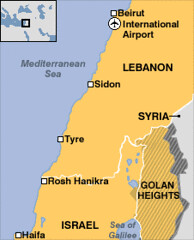
    An Ethiopian Airlines passenger plane with 89 people on board has crashed into the Mediterranean Sea shortly after take-off from Beirut airport.

    Eyewitnesses say they saw a ball of fire in the sky before the Addis Ababa-bound jet crashed into the sea after taking ff in a heavy rainstorm.

    Wreckage from Flight ET409 has been seen off the Lebanese coast.

    Most of the those on board were Lebanese and Ethiopian. Two Britons were also on the list, officials said.

    The other passengers included citizens of Turkey, France, Russia, Canada, Syria and Iraq, Ethiopian Airlines said in a statement on its website.

    Among them was the wife of the French ambassador in Beirut, Marla Pietton.

    The plane, a Boeing 737, was carrying 80 passengers and nine crew.

    It disappeared from radar screens some five minutes after take-off in stormy weather at about 0200 local time.

    The BBC’s Natalia Antelava, in Beirut, reports that the Lebanese transport minister and other officials say a rescue operation including helicopters and naval ships is now under way, but it is unclear if there are any survivors.

    An investigative team has been dispatched to the scene, Ethiopian Airlines said.

    Ethiopia and Lebanon share close business ties, and thousands of Ethiopians are employed as domestic helpers in Lebanon.

    Ethiopian Airlines operates a regular flight between Addis Ababa and Beirut.

    Are you in the region? If you have any information you wish to share with the BBC you can do so using the form below:

    Story from BBC NEWS:
    http://news.bbc.co.uk/go/pr/fr/-/2/hi/in_depth/8478060.stm
    Published: 2010/01/25 06:29:09 GMT

  • Hard Times as Madagascar Hangs in Political Limbo

    Hard times as Madagascar hangs in political limbo

    HENRIK LOMHOLT RASMUSSEN – Jan 22 2010 13:19

    A few months ago Tefy Edmond (30) had a steady job and a regular income as an employee in Madagascar’s then-thriving textile industry. But in November last year Edmond slumped back into the ranks of the poor that make up 70% of the island’s 20-million inhabitants.

    “I lost my job when the American buyer did not want to extend the contract with the factory where I worked, due to Madagascar’s political crisis and economic instability,” he says.

    The turmoil Edmond is referring to began nearly a year ago, in early 2009, when then-president Marc Ravalomanana was ousted by a 35-year-old media tycoon and former DJ, Andry Rajoelina.

    Since then the already fragile island state has been paralysed by a political deadlock over the formation of a transitional government.

    After nearly 10 months of Rajoelina’s rule, the situation has finally spiralled out of control. Just before Christmas United States President Barack Obama suspended the country’s trade benefits, days after security forces fired tear gas at opposition leaders and their supporters near the National Assembly.

    Last week the Southern African Development Community (SADC) said it would reject the rogue government’s plans to hold legislative elections in March 2010, calling for a resumption of power-sharing talks.

    Earlier this month a delegation in Addis Ababa representing the SADC, the African Union, the United Nations and the European Union again urged that the political parties accept a compromise solution.

    But, so far, Rajoelina seems reluctant to give up his tenuous hold on the nation.

    Next to nothing

    The crisis has left the country isolated — no state or institution has recognised Rajoelina’s self-proclaimed “high transitional authority”, with the SADC suspending the country from its bloc and calling for the international community to do the same.

    That Madagascar is technically bankrupt, with an estimated financial sustainability that will run out as early as June this year, does not help.

    “As long as the government can pay its civil servants, things will probably stay calm,” says Lydie Boka, a political analyst. “But if a solution to the crisis is not found before the money runs out, there is a risk of civil unrest and maybe even war. The population is desperate and tired of waiting.”

    Boka says that apart from the humanitarian aid and donor support that made up about 70% of Madagascar’s budget being cut off, foreign investors are also rapidly pulling out and an estimated 500 000 jobs in the tourism and textile industries have been lost. Among the many victims of this collapse is Edmond.

    “At the textile factory I earned 250 000 ariary (R890) a month while my wife, who worked at the same place, pocketed 150 000 ariary,” he says. “It gave us enough to secure us and our two small children a decent life and food every day. Now we have next to nothing.”

    Edmond survives by selling souvenirs at Madagascar’s largest craft market, La Digue, a few kilometres from the capital, Antananarivo.

    “If I am lucky I earn 2 000 ariary a day,” he says, juggling two wooden figures that he hopes to sell to a tourist.

    It will be hard. Only a few vazaha (Malagasy for whites) are checking out the handicrafts at La Digue’s stalls. Just like the foreign investors, tourists sought alternative destinations in 2009.

    Compared with 2008, when tourism is estimated to have brought in $400-million with 378 000 people visiting the former French colony, less than half that number came to Madagascar in 2009.

    The absence of tourists is evident on the northern island of Nosy Be, one of the country’s prime tourist destinations, with direct flights from Paris and Milan. In December just a handful of tourists were scattered along the coast enjoying the 30C weather and crystal-clear water of Ambatoloaka Beach. One of them was Monsieur Mamy, a businessman from Antananarivo who runs a bakery and a spare parts shop.

    “I am not exaggerating by saying that the turnover has been more than halved during 2009. People have no money and everything has come to a halt. It is hard times,” says Mamy, who returned to his native Madagascar from France in 2007. “Back then things looked prosperous, but the bright future was destroyed by the political crisis.”

    Despite the hardship, he has no plans of leaving, hoping for better times. “This is our homeland so we will stay.”

    Precious land

    Land was one of the main reasons Ravalomanana’s seven-year rule came to an end. After two decades of socialism and a failed command economy, Ravalomanana beat then-president Didier Ratsiraka (who came to power in a coup in 1975) in a controversial election in 2001.

    Ravalomanana subsequently turned Madagascar into a global financial player. Multinational foreign investments arrived, including a titanium dioxide mine developed by the Australian company Rio Tinto, estimated at more than $800-million, and a tar sands project by French Total. Offshore, several oil companies began exploration.

    Still, despite an annual growth of 7% under Ravalomanana, much of the progress was not felt by the majority of Malagasy — more than 70% of whom live on less than a $1(R7,30) a day.

    To them, rumours about Ravalomanana wanting to lease almost a million hectares in the south of the country to the Korean firm, Daewoo, which planned to grow half of South Korea’s corn requirements there, was the final straw. For the populace, letting go of so much land was treason.

    Rajoelina, who had been elected mayor of Antananarivo in December 2007, taking 63,3% of the vote and thoroughly beating Ravalomanana’s favoured candidate, accused Ravalomanana of selling Malagasy land to foreigners.

    He called his 60-year-old rival a tyrant who misspent public money and ran Madagascar as if it were his own business.

    Ravalomanana’s purchase of a $60-million private jet did nothing to counter such accusations. Neither did the suspension by Madagascar’s major donors, including the International Monetary Fund, the World Bank, the European Union and the African Development Bank, of their direct support because of budgetary misconduct in December 2008, which saw the president’s business interests mixed with state interests.

    While the president, a self-made dairy tycoon, earned a fortune during his rule, most Malagasy saw no improvement in their lives. At the same time, food and fuel became increasingly expensive because of Ravalomanana’s politics and the emerging global downturn.

    The final blow

    Unrest in Antananarivo broke out on January 26 last year, after Ravalomanana’s government banned Rajoelina’s TV channel, Viva, for broadcasting an interview with the president’s old rival, Ratsiraka. The interview was considered to be “disturbing the peace and security”. The station’s closure on December 17 was condemned by Reporters without Borders.

    Led by Rajoelina, who accused the government of opposing freedom of speech and threatening democracy, demonstrators set fire to the official broadcasting complex, shops were looted and several people were killed.

    On February 3 Ravalomanana sacked Rajoelina as mayor of Antananarivo. Four days later Ravalomanana’s presidential guard opened fire on demonstrators marching towards the presidential palace. An estimated 100 people were killed and many more wounded.

    According to some analysts, the crowd had been agitated by Rajoelina — they claim he knew he was sending the demonstrators, poor urban people, to their deaths to oust Ravalomanana.

    But the strategy worked. The army withdrew its support of Ravalomanana, who resigned and went into exile, first in Swaziland and then to Johannesburg, where he still lives. Rajoelina, almost unknown outside Antananarivo but now supported by the army, took power.

    Despite being six years too young to stand in a presidential election, according to the existing Constitution, the then-34-year-old was sworn in on March 17 last year, becoming the youngest president in Africa.

    The day after his inauguration he announced that the disputed land deal with Daewoo was off, telling reporters: “Madagascar’s land is neither for sale nor for rent.”

    Disappointment sets in

    After the excitement had subsided, and Rajoelina’s promises about improving the lives of the poor and the creation of jobs did not materialise, disappointment set in.

    “Rajoelina is no good,” says Monsieur Evariste, a tour guide in Parc National d’Andasibe-Mantadia, a three-hour drive east of Antananarivo. “He has not done anything for the country. Marc (Ravalomanana) was far from perfect but, on the contrary to many other African leaders, he actually did do a lot of good: roads and schools were built, children got educated, he opened up our economy to foreign investments just as he also took steps to protect our national parks and improve tourism. Now we have only a few visitors.”

    Despite the disappointment, Rajoelina is still firmly at the helm. In December he boycotted a meeting with three former Malagasy presidents in Mozambique. A few days later he sacked the prime minister, chosen by consensus by political leaders, and replaced him with a military officer. And shortly before Christmas, he called for parliamentary elections to be held on March 20, announcing that the new Parliament would also draw up a new Constitution.

    The French political analyst, Boka, expects the elections will take place as Rajoelina has planned. She predicts that the elections will pave the way for him to become the “elected” president of Madagascar.

    “Whoever is in power in an African state will win an election. Madagascar is no exception. Aided by the military, [they] will see that elections will be ‘properly organised’, Rajoelina will use the elections to consolidate his power, have the Constitution changed and take legal power,” she says, adding that this “new stability” is likely to bring donors and investors back to the country.

    “Then Rajoelina can show off by saying: ‘I took you, the Malagasy people, through hardships, but we fought our way through them. Now we are ready for a prosperous future.’”

    But elections or not, Mamy, the holidaying businessman, is pessimistic about the future.

    “This will not stop before our population becomes better educated and knows how to choose the right leader,” he says. “Until then we will continue to have power struggles between unscrupulous politicians who are interested only in filling their own pockets.

    “To me, it is irrelevant whether our president is Rajoelina or Ravalomanana.

    “They are both equally corrupt and the outlook of Madagascar having big oil reserves will just make all politicians more eager to fill their pockets.”

    The Rajoelina express
    Say “TGV” to a person from Madagascar and he or she will know immediately who you are talking about. Andry Rajoelina, the island state’s controversial young president since March 2009, got his nickname from the French express train, Train de Grande Vitesse, because of his high-speed career and uncompromising style, as much as from his political movement TGV (Determined Malagasy Youth).

    But not yet a year into his presidency, the pressure on Rajoelina is increasing. Besides being cut off from the international community, the country is on the edge of bankruptcy with enough economic stamina to take the government only through to June.

    “From an economic point, he has not achieved much,” says political analyst Lydie Boka, who is releasing a book about the political crisis in Madagascar.

    “To do this he must get the ban on the Agoa ­(African Growth and Opportunity Act) from December 15 lifted and show an ability to attract investors.”

    Boka says Rajoelina’s only triumph is that he has started reconciling Madagascar’s coastal people, who are mainly of African origin, with the highland Merinas.

    “Often underestimated, this aspect is important for uniting the Malagasy people,” says Boka.

    But she doubts Rajoelina is right for Madagascar, mostly because he is five years too young to be president, according to the country’s Constitution. But that’s not the only problem.

    “He still shows immaturity and amateurism at times, coupling populist views with a worrying ­religious inclination showing that he is a Catholic.”

    These are bad signals on an island characterised by multi-ethnicity and religious beliefs in everything from animism to the Apocalypse.

    Out of a relatively wealthy family in Antananarivo, Rajoelina became a DJ at night clubs in the capital at the age of 20.

    Soon he established a radio station, Viva, which attracted many listeners with its mix of foreign and Malagasy pop hits. Among his fans was one of the daughters of former president Marc Ravalomanana, with whom Rajoelina had a relationship. Inspired by the success of his station, Rajoelina set up a TV channel, also named Viva, and Injet, an advertising company.

    His popularity soared — and he used the support to enter politics, becoming mayor of Antananarivo in 2007 and then president, following a coup d’etat, which ousted Ravalomanana in March 2009.

    And although TGV seems determined to take his nation for a ride, it could all end up a train wreck.

    The paper trail

    Death threats and other forms of intimidation are today’s harsh realities for journalists who criticise Madagascar’s government. Which hasn’t made things easy for Volana Rasoanirainy, the editor-in-chief of the Madagascar Tribune, which is based in the capital, Antananarivo.

    “The idea of the press as the fourth state power does not exist in Madagascar, because freedom of speech is not respected,” says the 51-year-old editor. “To prevent all sorts of retaliation, such as death threats, journalists at the Tribune do not show clearly through their writing that they are against [Andry] Rajoelina,” says Rasoanirainy.

    So far her journalists have escaped arrest, but some of their colleagues haven’t been so lucky. In May last year a reporter from Radio Mada was arrested and forced to disclose the location from which his station was secretly broadcasting before he was released after 15 days in detention. A journalist working for the website madagate.com received several telephonic death threats after posting an article with photos of supporters of former president Marc Ravalomanana, who was ousted by Rajoelina in March last year. The manager of the radio station Fahazavana was arrested on June 27, accused of “funding demonstrations” ; he was interrogated for three days before being released because of lack of evidence, according to Reporters Without Borders. The French-based journalist organisation ranks Madagascar as number 134 on its Press Freedom Index for 2009; 40 places down from where it ranked in 2008.

    Rasoanirainy says violence and threats are not the only means used to strangle freedom of speech. More discreet methods are available, such as hitting the media in the pocketbook. “No ministry sends ads to our newspaper,” says Rasoanirainy. “So from an economical point of view you can say that the Tribune has been boycotted.”

    Source: Mail & Guardian Online
    Web Address: http://www.mg.co.za/article/2010-01-22-hard-times-as-madagascar-hangs-in-political-limbo

  • Cuba News Update: Haitians Describe U.S. Marine Landing as Occupation; Hospital Operating at Jacmel

    Havana January 20, 2010

    Haitians describe landing of yanki Marines as occupation

    PORT-AU-PRINCE, January 19— Hundreds of Haitians watched with a mixture of resignation and anger on Tuesday as several helicopters landed U.S. troops in the grounds of the Presidential Palace, an act considered by many Haitians as a loss of sovereignty, the AFP reported.

    “I haven’t seen them distributing food downtown, where the people urgently need water, food and medicine. This looks more like an occupation,” said Wilson Guillaume, a 25-year-old student.

    At least four helicopters brought 100 U.S. soldiers from the 82nd Airborne Division to the grounds, as hundreds of Haitians looked on stunned. Having lost their homes in the earthquake, they are living as refugees in the Palace gardens.

    As the U.S. troops left the Palace to guard Haiti’s general hospital, overflowing with injured people, many people yelled “Go home!” and “Don’t occupy us!”

    A fleet of amphibious craft also reached the coast of Haiti, transporting some 800 Marines expected to go ashore in the next few days to join the 2,000-plus soldiers already stationed in Haiti.

    Also today, the UN Security Council today unanimously approved increasing the number of international military and police forces in Haiti by 3,500 to reinforce security.

    Meanwhile, thousands of earthquake victims are trying to get onto buses to flee the hunger and violence of the destroyed capital, with the hope of finding food more easily in the countryside, AP reports.

    (Translated by Granma International)

    Havana January 22, 2010

    And miracles happen in Jacmel

    Leticia Martínez Hernández

    PORT-AU-PRINCE, Haiti.— Elizabeth lay under the rubble for one whole week. Just two weeks old, this tiny baby was trapped between the walls of her home when Haiti began to shake. Micheline Joassaint, her mother, had given her up for dead when a team of Colombian rescue workers found her.

    The baby had just been breastfed and was dropping off to sleep just at the point when the whole of Port-au-Prince and its outskirts began to shake. From that moment until Tuesday, January 19, she wasn’t seen again and the absence of any crying indicated that the baby had died.

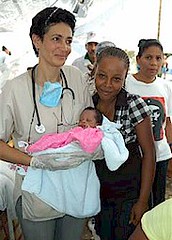
    Telling the story today is pediatrician Zilda del Toro from Guantánamo province, still amazed and overcome with emotion, who relates that Elizabeth arrived at the hospital in Jacmel dehydrated, suffering from hypothermia and hypoglycemia, despite the fact that the rescue workers had put her on a drip, administered dextrose and covered her fragile body with sufficient clothing to warm her up.

    “We started treatment straight away and the baby recovered. But even now, nobody can explain how Elizabeth is still alive, because she was alone the whole time, without receiving any liquids or warmth and she was wearing very light clothing. But the most surprising thing was that she hadn’t been hurt in any way. After we gave her liquid, she began to urinate, her hydration improved, her temperature regulated and she began to breastfeed. All of this happened in under an hour.”

    Today, Elizabeth is the miracle of Jacmel, a city situated 75 kilometers from the Haitian capital, where the Cuban doctors arrived some years ago and where they continue to save lives after the devastating earthquake. But Elizabeth is not the only miracle in this place. The establishment of a field hospital is a further addition to the labors of our doctors there, with sweat, intensive work, hours without sleeping and many other risks.

    IN JACMEL’S HOSPITAL

    Cuban orthopedist Daniel Lorie, head of the field hospital and a veteran of missions in Pakistan, Indonesia and Peru, tells us that they came here with a will to work hard and attend to people in need of medical attention.

    Our doctors were setting up an operating room when we arrived at the hospital in Jacmel. The second Cuban field hospital in Haiti was put together with blue tents. It seemed like a simple task but the transfer of an operating table – which according to those present weighs over 500lbs – started to complicate matters. It required seven men to move the heavy load up a steep, cobbled path.

    At the hospital in Jacmel, everyone was involved in all kinds of tasks, irrespective of their actual occupations, just attending to the emergencies that of the moment. Gynecologist Dionisio was cooking, Francisco – a specialist in internal medicine – was serving coffee, the Haitian students were erecting tents, pediatrician Zilda was looking after a dozen children, others were giving vaccinations…

    “Here, you just can’t get tired. We’ve erased that word from our vocabulary. You can see me sitting down right now, but I’m not tired, I’m thinking how we can make the hospital better, how to make it function better,” said Dr. Lorie.

    Likewise, moving from one part to another was Dr. Mercedes Cuello, head of the Jacmel brigade. I think that I’ll never forget this woman: she was the first person I interviewed while the ground was shaking. The second aftershock of the day surprised us while we were talking about the Cuban mission. When the first one happened, Mercedes was with several Haitian students giving vaccinations against tetanus, which is rife on the streets.

    When the tremors ended, Mercedes went on with her work as if nothing had happened: “We are in a recovery phase. Yesterday, orthopedists, surgeons, OR nurses, and a new group of Haitian residents studying in Cuba arrived. We began to carry out preventative work, provide lessons in sanitation and to vaccinate people.”

    Mercedes comments that the days after the earthquake were dire, that they were left homeless and, from that moment on, slept under canvas sheeting, but delights such as a birth on January 12 make them smile. It was the same with gynecologist Dionisio Fernández – who has carried out four Cesareans and attended seven normal deliveries since the earthquake occurred, some of which he was forced to perform in the most basic of conditions because there was no other option.

    For this reason, Dr. Lorie, a member of the Henry Reeve brigade, cannot fail to be proud of the doctors from his country, those who have recently arrived and those who felt the impact of the earthquake when it happened; that is what we have always done.

    Perhaps without intending to do so, Dr. Lorie acknowledges our doctors who are sleeping in tents and living alongside the population. These are the doctors who yesterday began operating on more than 30 Haitians who have been waiting for orthopedic surgery for eight days.

    Because of them, we can speak of miracles in Jacmel today.

    Translated by Granma International

    Havana January 22, 2010

    Haiti launches massive operation to house victims

    PORT-AU-PRINCE, January 21— Haiti launched yesterday a huge operation to rehouse in different part of the country thousands of people who lost their homes in the January 12 earthquake, AFP reported.

    Haiti launches massive operation to house victims”The government has provided free transportation for the population. It’s a massive operation: we are in the process of moving the homeless,” Haitian Interior Minister Paúl Antoine Bien-Aime stated.

    He explained that camps with the capacity to shelter up to 10,000 victims each are to be established.

    At least 500,000 people were left homeless just in the Haitian capital, where 447 improvised camps have been set up, according to the Geneva-based International Organization for Migration (IOM).

    “We have three priorities: the first is to continue providing humanitarian aid; the second is to provide security and stability for Haiti, and the third is to begin the reconstruction effort,” UN Secretary General Ban Ki-moon affirmed, according to Notimex.

    Prensa Latina reported that the Association of Caribbean States (ACS) has called on all Haiti’s international creditors to find ways of canceling the credit obligations of that devastated nation.

    Translated by Granma International

    Havana January 18, 2010

    With the Cuban doctors in Haiti: January 17

    The worst tragedy is not being able to do more

    Leticia Martínez Hernández

    PORT-AU-PRINCE, Haiti — The little boy, with a drip attached to his hand — although at that stage it wasn’t helping him very much — couldn’t stop trembling. The fluid that perhaps in other circumstances would give him some strength was not passing through his collapsed veins. Lying on a piece of cardboard, his life was ebbing away while, at his feet, a Cuban doctor lamented not being able to do more.

    “They brought this little angel in this morning. He was buried under the rubble for three days. A rescue team member brought him; he has no family and he’s unlikely to survive. We’ve given him everything, we’ve cleaned him up, we’ve treated his injuries, and I don’t know what else to do to help him. This tragedy has been merciless on the children, the pain is unbearable.”

    The doctors are working continuously and amputations are the most frequent operations.

    Aged 28, Sergio is already familiar with the face of death. These last few days have been terrible for this doctor from Santiago de Cuba who has left his country for the first time to save lives. When asked what was the worst, he fired off two aspects from his heart: the suffering of little ones and not being able to help them all. That was what Sergio Otero González said, while a woman with bruised face clung to his hand.

    It is time to move away from the little boy and attend to people arriving. When he comes back, maybe this nameless innocent will have stopped breathing, and he will have to accept having done everything possible to restore life to a child born marked by tragedy.

    Today, Haiti is replete with these sad stories. Hospital centers like Delma 33 (ironically called La Paiz) and La Renaissance have many horrors to recount, but the Cuban doctors there are intent on writing large the word LIFE, while news agencies are minimizing that effort or even refuting it, like the U.S. TV channel Fox News. Are we going to have to put speakers on the moon so that people know that Haiti has known Cuban doctors for many years before the earthquake struck?

    RENAISSANCE IN HAITI

    Paradoxes have taken hold of Haiti; with every glance I discover a contrast, another one…. I’d thought that the contradiction between the happy faces looking out from advertisement boards and the crumpled faces of those passing below them was the greatest irony, but I was wrong. Finding the words ‘Peace’ and ‘Renaissance’ on the façades of the most dismal hospitals that I have seen in my life, exceeded any incongruence… So I decided to find the answer in the fluttering of my country’s flag over their doorways.

    AN UNBEARABLE STENCH EMERGES FROM THE RUBBLE WHILE PEOPLE WANDER THE STREETS

    It would seem that the Haitians are coming to the hospitals where the Cubans are working to find peace. They arrive in an endless stream; everyone wants to be seen immediately, the intolerable pain of their bodies is mixed with a rooted lack of affection, which seems to be instantly cured when one of our doctors gently caresses them. Entire families are moving into the hospital grounds. They have set up their shelters, placed the sick person in the middle, piled up the few possessions left to them and the family, when there still is one, leaves to seek help. Others transport their injured on pieces of hardboard, boards, mattresses… until they virtually corner a doctor.

    An unbearable stench emerges from the rubble, as people wander the streets.

    There, among the many, I found the Doctor Madelaine in La Rennaissance hospital center. Reaching her was a balancing act. One foot first, then the other… stop to recover my balance: beneath me various Haitians writhing in agony, just to have touched them would have been unpardonable. However, the odyssey didn’t end there. Now I had to convince her to recount her experiences. This 32-year-old woman from Granma province is an expert in her work, but shakes when faced with a cassette recorder.

    “This cannot be compared to anything that I have ever seen. When I arrived, I was frightened but had no time to allow that fear to grow. I still haven’t forgotten the face of a little two-year-old who they pulled out of the rubble and who arrived in agony. They are bringing lots of people here, but when it’s a child, your heart is wrung even more.”

    Don’t you despair when you’re being called from all sides and at all times to help people?

    “They are desperate, what they have experienced is unthinkable. But we’ve learned to stay calm and treat them with delicacy even though we’re stressed. If you despair you’re not helping anyone and wind up being useless.”

    Surgeon Abrahana del Pilar Cisneros Depestre emerges from the improvised operating room with a similar equanimity. From inside, covered by sheets, a terrifying sound can be heard. “We’re amputating a leg,” she says and invites me in. But my strength doesn’t stretch that far, so I decide to wait for her outside to talk. The only thing that I know about her is that she ended her vacation early to return to Haiti and help.

    “Everything is so sad and desolate. The injuries are extremely grave. The most frequent are traumatalogies; many people come in virtually self-amputated, with their limbs almost torn off, with burns incompatible with life, like those of that girl who is looking after a neighbor right now because her mom died and no other family member has been found.”

    With the passing of days, the possibilities of salvation are minimal for those recently found, says this doctor, who has already lost count of the people who have passed through her hands. “On Friday (January 15) we operated on 15 people; today, Saturday, we’re on our 17th and the day’s not over, there’s one after the other. The severity of injuries is greater, the cases are extremely septic.”

    And the family members, doctor, what are they saying to you?

    “Many people come in alone, but when their families bring them, the pain and sadness is so much that they just look at us, I think that they say it all with that, there’s no need for the word thanks.”

    Are you tired?

    “It’s a fact that we’ve worked really hard, that the days have all merged into one another, but the desire to help is so great that we’re not allowing ourselves to feel tired; on the contrary, maybe we could manage to do more.”

    Injured people are constantly arriving. It is heartrending to see the large numbers of children.

    One might suspect that so much energy and desire to act are only happening here in La Renaissance. However, at the other extreme of the city, history is repeating itself.

    PEACE IN DELMA 33?

    In La Paiz University Hospital, known as Delma 33, other doctors confirm the words of Abrahana, Sergio and Madelaine. Another Cuba flag is waving there, and gives entry to an even more shocking scenario. Almost all the injured are to be found outside the hospital. The groans touch one’s heart, the tremendous wounds make you turn your face away, the desolation is pitiful, the looks seeking compassion pierce you to the bone. Everything would seem to ask: will such misfortune ever end?

    The aftershock of the night before made them flee in terror, a juncture “utilized” by the doctors to better organize the place and assess the strength of the building.

    When we arrived, the Cuban doctors were equipping new spaces, posting signs delimiting areas, disinfecting the floors, classifying the sick and admitting the gravest cases. It was surprising to see so many people helping. Chilean, Cuban, Spanish, Canadian and Mexican specialists were working shoulder to shoulder. They were all speaking one language: that of salvation. They all repeated the same phrase: teamwork.

    Cuban Dr. Carlos Guillén, director of the hospital, defined it in this way: “It’s been perfect cooperation; they come to us, seek us out spontaneously for making any decision; we have a meeting in the morning and another in the afternoon with the representatives of each nation, where we define what we are needing, what the priorities are and we are sharing everything.”

    Rescue work continues although possibilities of survival are diminishing.

    What most concerned Heriberto Pérez, a Chilean doctor, was the initial disorder, and for that reason, he defends that cohesion among everyone, no matter where they come from, because what really matters is saving lives.

    Rosalía, a nun, was caressing a little girl whose leg was in danger due to gangrene. She came from Spain to join the tremendous team, which also includes the Haitian resident Asmyrrehe Dollin. For this doctor, who graduated in Cuba, helping his compatriots is the greatest thing that life has bestowed on him. So he is grateful to the island for having given him the possibility to do so. Working together with the doctors who at one point were his professors, is an immense pride for him.

    It is only this closeness among the doctors that will alleviate Haiti’s pain. The injured will be back at dusk, but maybe tomorrow the groaning will be less. It will be a blessing when the placards saying “We need help,” placed everywhere like shadows, begin to disappear.

    Translated by Granma International

    Havana January 20, 2010

    Cuban Five send message to the Haitian people

    THE Cuban Five, held as political prisoners in the United States for fighting terrorism, have sent a message of encouragement and hope to the Haitian people, devastated by a powerful earthquake.

    The message, published on the CubaDebate website, emphasizes that at this tragic and painful time the Haitian people are experiencing, the Five send their condolences to the relatives of the victims of this catastrophe.

    “We are sure,” the message says, “that the determination of the Haitian people, together with international support, will make the recovery of your country possible. In that work, you will always have the help in solidarity of the Cuban people.”

    Ramón Labañino, René González, Gerardo Hernández, Fernando González and Antonio Guerrero ended their message with a warm and fraternal embrace for the long-suffering Haitian people.

    (Translated by Granma International)

  • Zimbabwe Vice-President Says New Constitution Must Reflect Liberation Struggle

    Craft true Zimbabwean constitution: VP Mujuru

    From Chakanetsa Chidyamatiyo in MT DARWIN
    Zimbabwe Sunday Mail

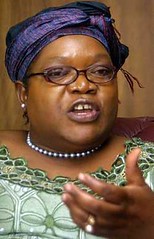
    VICE President Joice Mujuru yesterday said the new constitution should be people-oriented and reflect the history of the liberation struggle.

    Cde Mujuru made these remarks while addressing more than 2 500 delegates at the launch of the Zanu-PF national outreach programme on the constitution-making process in Mt Darwin.

    The programme, expected to spread to the other provinces, is expected to encourage people across the political divide to participate in the constitution-making process.

    Zanu-PF, Cde Mujuru said, was obliged to take a leading role in the crafting of the new constitution since it was the repository of knowledge on the country’s liberation struggle.

    “As Zanu-PF we have a rich history and understand where the country came from, where it is and where it is going.

    “No one or any other political party possesses such history better than you, so you should be instrumental in the constitution-making process,” she said.

    She emphasised that the new constitution should be for Zimbabweans by Zimbabweans.

    Cde Mujuru said the country was aware that its Western enemies were making frantic efforts to hijack the constitution-making process to their benefit. “We know the enemy is trying to interfere with the constitution-making process through some NGOs.

    “The new constitution should strictly be Zimbabwean and we should continuously remind each other so that we understand the constitutional issues,” she said.

    Cde Mujuru said the current Lancaster Constitution was re-built via 19 amendments, a clear reflection of its gross shortcomings.

    “We came up with the Lancaster Constitution in 1979 after neighbouring countries through the then Frontline States (now Sadc) pleaded with us to go to the negotiation table, as the war was spilling beyond our borders.

    “It, however, reflected the interests of Smith and his Western allies instead of the Zimbabwean.

    ‘That explains why it is riddled with 19 amendments,” she said.

    She urged the delegates attending the two-day workshop to come up with a common party position on the contents of the constitution, instead of fragmented and selfish ideologies.

    “As Zanu-PF we should go as a party and also hear what people want,” she said.

    Cde Mujuru said the idea of crafting the new constitution was not new, as it was one of the liberation war agendas.

    “With the new constitution we are merely fulfilling the unfinished business, since those who crafted the Lancaster Constitution did not appreciate our wishes,” she said.

    Cde Mujuru said Western countries should not teach Zimbabwe about democracy since they failed to do the same before the liberation struggle.

    “They tell us about democracy. Where was democracy before the war?

    “Democracy is a product of Cde Mugabe and the now late Vice-President Cde Joshua Nkomo, which came through the liberation war.”

    She said Western countries had finally revealed who was behind the sanctions imposed on Zimbabwe. “We have always been saying the sanctions were not imposed by the West but by the MDC-T,” she said.

    The workshop was attended by the Minister of Media Information and Publicity, Cde Webster Shamu; the Minister of Transport, Communication and Infrastructural Development, Cde Nicholas Goche; the Minister of Youth Development, Indigenisation and Empowerment, Cde Saviour Kasukuwere; the co-chairperson of the Parliamentary Select Committee on the Constitution, Cde Paul Mangwana; and Mashonaland Central Governor and Resident Minister Advocate Martin Dinha, among other officials.

  • African Union Commision Chair Urges Madagascar Leader to Accept Unity Government

    AU chief urges Madagascar leader to accept unity govt

    AFP

    ANTANANARIVO–The head of the African Union last Friday urged Madagascar’s leader, Andry Rajoelina, to accept a unity government to resolve a dragging political crisis, a day after he snubbed the offer.

    “We have made proposals for (the accords) Maputo I and Addis Ababa to go into effect,” Jean Ping said during a short visit to the Indian Ocean island.

    Rajoelina, who seized power in March 2009 with military backing, last Thursday rejected AU proposals to implement an August power-sharing deal with his rivals.

    The proposals, fine-tuned in the Mozambican and Ethiopian capitals, Maputo and Addis Ababa, also provide for the establishment of a presidential council and the posts of two co-presidents, both of whom will come from Rajoelina’s rival camps.

    Rajoelina, a former disc jockey and mayor of the capital Antananarivo, described the proposals as impossible.

    “In view of the evolving situation any power-sharing has become impossible because it has already become a source for a new crisis and the cause for serious troubles in our country recently,” a statement from the presidency said.

    “The experience of power-sharing, for the brief period when we tried it, has amply proven that this proposal cannot be a solution to the political crisis . . .”

    Disagreements between the island nation’s four main political groups have scuttled repeated efforts to end the impasse there, with de facto leader Rajoelina trampling on previous deals to form a unity government.

    Rajoelina last month fired a consensus prime minister and named a new one to replace him.

    Discord over sharing government posts and drawing up an election timetable by the four political parties have also hindered efforts to end the crisis. —

  • Guinea Leader Moves Quickly Toward National Elections

    Guinea leader eyes elections

    Sapa

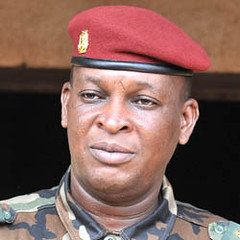
    Conakry–Guinea’s interim junta leader General Sekouba Konate said last Friday that he wants to organise quickly free elections in the beleaguered West African state.

    “We should move quickly, quickly, to organise these free and transparent elections,” General Sekouba Konate said in comments broadcast on national television and radio.

    Konate met last Friday with the Economic Community of West African States (Ecowas) president Mohamed Ibn Chambas, African Union representative Ibrahima Fall and Said Djinnit, the special representative of UN chief Ban Ki-moon.

    He said Guinea would need assistance to organise the elections, which should be held within six months under an accord reached last week to guide the military-ruled country out of a 13-month political and human rights crisis.

    “We are counting on you and you can count on us,” said Konate.

    Under the political transition deal an opposition politician, Jean-Marie Dore, was appointed as caretaker prime minister.

    Djinnit said the junta was bound by the deal, signed in the Burkina Faso capital Ouagadougou, not to put up candidates in the elections.

    “The general confirmed his determination to honour the Ouagadougou commitment to hand over power to democratically elected authorities at the end of the transition,” he said.

    A military coup was launched within hours of the death of long-time dictator General Lansana Conte on December 23 2008.

    A massacre of more than 150 opposition demonstrators during a rally in a Conakry stadium on September 28 plunged Guinea further into crisis.

    Captain Moussa Dadis Camara, who launched the coup, has agreed to stay out of the country after being wounded in a December attack by an aide that forced him to seek medical treatment abroad.

  • Haiti: A Shining Example of US-sponsored Regime Change

    Haiti: A shining example of US-sponsored regime change

    AFRICAN FOCUS By Tafataona P. Mahoso
    Courtesy of Zimbabwe Herald

    The African liberation movements of Southern Africa draw yet another huge lesson for their followers, especially for their youth, from the tragedy of the earthquake-shattered Haiti which happened as the highly celebrated but short-lived Orange Revolution of the Ukraine also collapsed.

    The two apparently unrelated events — one in the Caribbean in the western hemisphere and the other in Eastern Europe — provide for simple minds like ours the graphic lessons required to prove the ultimate bankruptcy of neoliberal capitalism and a dead-end for the Euro-American “democracy project” in the Sadc region which has been modelled on “regime changes” in Eastern Europe.

    I say Haiti and Ukraine present graphic lessons because a less graphic but more profound lesson appeared towards the end of 2007 and is still unfolding in the form of the so-called global financial tsunami or global recession.

    What makes these recent events profound for Zimbabwe and Southern Africa is the fact that the path which the political formations called the Movement for Democratic Change were supposed to travel in order to achieve regime change in Zimbabwe was mapped out and decked with all the imported sign-posts long before the MDC was launched in September 1999.

    The strategy of imperialism for regime change in Southern Africa consisted of the following:

    -Treating and depicting the African liberation movements in the Sadc region as mere followers or carbon copies of regimes in the former Soviet bloc.

    -Making it look inevitable that regime changes in the former Soviet bloc and elsewhere in the Third World would also follow in countries governed by African liberation movements.

    -Carefully separating those regime change cases, which were to be used as indicators of the inevitable “transition to democracy” in Southern Africa, away from those cases of regime change which were to be avoided or suppressed because they would harden the resistance to illegal regime change instead of making people agree to be swept along. Somalia, Haiti and Nicaragua were to be avoided because they showed either that there were no benefits to be derived by the people from the foreign-sponsored regime change or they showed how unpopular and hated the foreign sponsors were, or both.

    -Carefully sponsoring appropriate activist NGOs and activist media to orchestrate publicity around the desired events and signposts on the path of inevitable regime change while avoiding those which did not help the intrusive “democracy project”.

    In the case of Zimbabwe the media outlets and NGOs used included: Horizon magazine, The Financial Gazette, The Daily Gazette, The Zimbabwe Independent, The Daily News, The Daily Times, The Tribune, the Zimbabwe Congress of Trade Unions, the Catholic Commission on Peace and Justice, the Legal Resources Foundation, the National Constitutional Assembly, the Media Institute for Southern Africa and the Working People’s Convention.

    These were to serve as hatcheries and escort services for the MDC formations. But they were also meant to escort public opinion on behalf of the so-called “democracy project” and the MDC formations.

    The idea was to make people want or appear to want and expect that which the British, the Europeans and the North Americans were planning for the region in general and for Zimbabwe in particular. Even the illegal and racist sanctions had to be made to appear like a popular demand of the masses.

    So, when in October 1991 the United National Independence Party of Dr Kenneth David Kaunda was defeated by the Movement for Multiparty Democracy of Fredrick Chiluba in Zambia, the event was dutifully reported and interpreted by the relevant media outlets and NGO activists as a harbinger for the inevitable regime change in Zimbabwe.

    When on May 21 1998 the Western-backed dictator General Suharto of Indonesia was overthrown in massive “anti-IMF riots”, the pre-MDC opposition formations and their media in Zimbabwe made an arbitrary analogy between General Suharto and President Robert Mugabe, even though it was a common secret that Suharto, like Mobutu and Augusto Pinochet, was installed by the US Central Intelligence Agency and British intelligence agents.

    When on October 17 1998 General Augusto Pinochet was arrested in London after losing elections and being booted out of power in Chile, the pre-MDC opposition formations and their local and foreign media supporters frantically attempted to equate Pinochet with President Mugabe in the belief that the people of Zimbabwe did not know who Pinochet was.

    Pinochet was a right-wing general used by the CIA on September 11 1973 to overthrow the popularly and democratically elected Unity Movement government of President Salvador Allende in order to stop land redistribution and economic indigenisation and empowerment. Allende was murdered during the bombing of the presidential palace.

    When on December 7 2001, the Western powers “overthrew” the Taliban regime in Afghanistan and “replaced” it with that of CIA puppet Hamid Karzai, the MDC formations, through the Daily News, went ecstatic, announcing that President Robert Mugabe and the liberation war veterans were Zimbabwe’s Taliban whom British prime minister Tony Blair and US president George W. Bush would overthrow and chase out of Zimbabwe in the wake of the supposed “removal” of Afghanistan’s Taliban.

    The Daily News did not tell its readers that both Osama bin Laden and the Taliban were creations and one-time allies of the very same US and British forces which were now fighting them.

    When on September 24 2001 Yugoslav president Slobodan Milosevic lost a Western-rigged election after a whole year of Nato bombing of that country (1999-2000), the MDC formations and their media allies announced that they would soon execute “a Milosevic treatment” against President Mugabe. This analogy was taken so far that both Britain and the US transferred to Zimbabwe the very same ambassadors who had presided over the attacks on Yugoslavia and the rigged removal of Milosevic.

    When on November 21 2002 Viktor Yanukovych of Ukraine’s Orange Democratic Revolution replaced what was seen as a “pro-Russia” government, the “Orange Revolution” was immediately imitated both in Kenya (Raila Odinga) and Zimbabwe (Tsvangirai).

    Then on December 30 2002 former Kenyan president Daniel arap Moi’s Kenya African National Union was defeated by Mwai Kibaki’s Democratic Party (the Rainbow Coalition), which later split into Raila Odinga’s Orange Democratic Movement and Kibaki’s Party of National Unity. Immediately the MDC formations and the media supporting them here and abroad announced the formation of a “Rainbow Coalition” which would replace the African liberation movement, reverse land reform and remove President Mugabe.

    The Case of Ukraine

    The case of the collapse of Ukraine’s Orange Revolution has been downplayed in the Western media and deleted from the local regime change circles and their media because it signals the domino effect of the global rejection and condemnation of neoliberalism which has included Venezuela, Russia, Nicaragua, Ecuador, Bolivia, Zimbabwe and many others.

    The ideological rug has therefore been swept from under the feet of the false “democrats” and reformers in our region who include the two MDC formations and the racist Democratic Alliance of South Africa.

    By abandoning the G7 and G8 for the G20, and by engaging in statist economic “stimulus packages” or “rescue packages” in response to the global economic tsunami which began in 2007, the North Atlantic states themselves have quietly signalled the failure of neoliberal reform.

    This failure also explains why the ten billion pounds sterling aid package which the MDC formations expected from their “rich” sponsors upon getting into government is nowhere in sight. This means the MDC formations are currently holding positions in Parliament and in Government which were won through false promises to get sanctions removed immediately and to obtain massive Western aid which was supposed to make the economy of Zimbabwe recover instantly from the same illegal sanctions requested by the same MDC formations.

    The Haiti Case

    The history of Haitian independence is similar to that of Cuba, Zimbabwe and Vietnam in that it was won through armed struggle.

    But the other similarity is that after the original colonial power was defeated (France in Haiti and Vietnam, Spain in Cuba and Britain in Zimbabwe) the United States moved in directly or indirectly to try to reverse the revolution or to replace the original colonial power.

    The Haitian revolution of 1791 under Toussaint L’ Ouverture shocked the entire Western hemisphere. According to W. E. B. Du Bois, the revolution “intensified and defined the anti-slavery movement, became one of the causes, and probably the prime one, which led Napoleon Bonaparte to sell the colony of Louisiana to the US for a song . . . and rendered more certain the final prohibition of the slave trade in 1807”.

    According to John Hope Franklin: “North Americans were terrified at the news of what was happening in Haiti in 1791. For more than a decade after 1791 many North Americans were more concerned with (revolutionary) events in Haiti than with the life and death struggle that was going on between France and England.”

    So, when it became clear that France had given up its power in the Caribbean and the Americas, the US began to interfere directly in the affairs of Haiti.

    Therefore the case of Haiti as the most successful demonstration of US-sponsored “regime changes” has been suppressed by the MDC formations, the NGOs supporting illegal regime change in Zimbabwe, and the Western media. This is because Haiti is the one country where since 1910 the US has had a free hand to put in place all the human rights, democracy, development and good governance programmes which it has been trying and failing to impose on Zimbabwe through the MDC formations and Zidera.

    But what do we see exposed in Haiti through the recent earthquake disaster? We see:

    -A disaster where relief agencies are complaining that the US is pouring into Haiti more military forces and military infrastructure than relief. That is because the government which has been in charge in Haiti until this earthquake is a puppet of the US which is hated by its own people who are likely to use the earthquake as another opportunity to get rid of it and get rid of all the trappings of US interference.

    -The only existing democratically elected president of Haiti, Jean-Bertrand Aristide, is in South Africa where he has been exiled by the US and its puppet regime.

    -After more than 100 years of US-controlled regime changes and reforms, the January 2010 earthquake disaster exposes a most impoverished country where:

    -There is no civil protection agency;

    -There are no emergency relief services;

    -There are no building codes consistent with the hurricane and earthquake-prone environment;

    -There is no national navy, no air force, no effective or credible police force and no effective civil aviation authority; l There are no longer any effective ministries of agriculture, health, fisheries or industry because the country has been reduced to a transit trade bay, source of raw materials and source of Bantustan labour for US multinationals; and

    -There is no good governance or rule of law.

    In other words, there is nothing in Haiti which would make US-sponsored “reform” and regime change attractive to Zimbabweans. So this case of 100 years of US-sponsored regime change has had to be suppressed or distorted in order to hide its implications for the Euro-American “democracy project” in the form of the MDC formations.

  • Winnie Mandela: ‘We Have Lost the Soul of the ANC’

    Winnie: ‘We have lost the soul of the ANC’

    JOHANNESBURG, SOUTH AFRICA Jan 24 2010 14:49

    The power-struggle in the ANC-led alliance is “disgusting”, the Sunday Independent reported ANC stalwart Winnie Madikizela-Mandela as saying.

    “That is not my ANC, where positions have become so important,” Madikizela-Mandela said in an interview with newspaper.

    “The bickering is all about leadership. It is all about positions. That is the disgusting debate we are having. That is how much we have lost the soul of the ANC,” she said.

    Madikizela-Mandela also said it would be detrimental to former president Nelson Mandela if he knew about the tensions in the ruling alliance.

    “His children are sort of keeping him away from it all because I think that is what would quicken our journey to eternity,” she said.

    Madikizela-Mandela also said ANC Youth League president Julius Malema was her “product”.

    “His rebellious attitude is part of the process of growing up. And he will make a great leader one day.”

    Cracks surfaced last year in the alliance between the ANC, the South African Communist Party (SACP) and the Congress of South African Trade Unions (Cosatu).

    Alliance leaders called for unity at the ANC’s 98th anniversary celebrations in Kimberley in January.

    “Much more needs to be done to improve the alliance relations at national and sub-national levels,” said ANC president Jacob Zuma at the time.

    SACP general secretary Blade Nzimande echoed his words. “We want to say that at no stage of our history did we need to strengthen our alliance as we do now,” he said.

    At the same event Malema asserted the ANC’s central position in the alliance and political power in the country.

    Madikizela-Mandela called for ANC members to return to their roots.

    People must remember that the ANC is bigger than any of us. The ANC leads. We will overcome this,” she said.

    Alliance ‘alive and healthy’ in Gauteng

    Meanwhile, the party’s Gauteng provincial executive committee said on Sunday that the alliance was “alive and healthy”.

    Committee secretary David Makhura said however that the ANC was the leader and the strategic centre of power in the alliance.

    “This gives the ANC a responsibility to lead and ensure that all issues of disagreements are resolved in a comradely and amicable manner without resorting to public spats,” he said.

    Makhura told reporters that the committee had decided to hold an early provincial conference in May due to the Soccer World Cup.

    Holding the conference before June, he said, would enable the party to use the conference to prepare for this year’s events.

    “The process is also an important platform to debate and develop policies, renew and rejuvenate structures and elect leadership,” he said.

    Makhura said it was too early to say who would stand or not stand for re-election as the process was yet to begin.

    In March, he said branch members of the ANC would debate policy issues and elect their candidates to hold office in the provincial leadership.

    He also said that the party would use this year’s conference to right the wrongs of the past by developing clear guidelines to ensure lobbying was consistent with the party’s constitution.

    “Discussion documents will be developed and distributed to branches on the policy issues for consideration in preparation for the national general council,” Makhura said.

    The Soccer World Cup was one of the priorities of the party.

    “The PEC will lead a major campaign to mobilise our people in different sectors to support and participate in all the build-up festivities and actual events during this historic moment in the lifetime of our nation.” – Sapa

    Source: Mail & Guardian Online
    Web Address: http://www.mg.co.za/article/2010-01-24-winnie-we-have-lost-the-soul-of-anc

  • Nigerian Government Offers Haiti Support

    Nigerian Government Offers Haiti Support

    Sun Jan, 17 2010
    By PANA

    Nigeria has expressed its readiness to support the on-going global effort to provide rescue and relief assistance to earthquake-ravaged Haiti, PANA reported from here, quoting local Thisday newspaper of Saturday.

    A massive earthquake devastated the entire Port-au-Prince, capital of Haiti, early this week in which thousands of Haitians and other nationals, including United Nations officials lost their lives.

    An estimated 50,000 people have been killed with many buildings crushed to rubbles.

    Nigeria already has 121 officers and men of its police force, currently serving in Haiti as part of a United Nations Formed Police Unit.

    Nigeria’s Minister of Environment, John Odey, in a statement, lamented the monumental damage to lives and property caused by the quake, saying the situation in Haiti deserves urgent intervention by the international community to save the citizens from further trauma.

    Odey said the extent of the damage and loss resulting from the earthquake deserves international sympathy and action to assist the affected citizens to overcome the trauma and pains.

    “The Ministry of Environment in collaboration with other relief agencies will work towards providing assistance to affected citizens in Haiti to enable them over come this traumatic period,” he said.

    The minister said Nigerians received the news of the devastating earthquake in Haiti with so much pain.

    According to him, the threat posed by earthquake globally has further reinforced the need for all nations to cooperate on issues relating to the preservation and sustenance of our environment.

    “The environment is a common legacy which must be jointly protected in order to improve on the quality of life and avoid untold consequences to humanity,” Odey said.

    Meanwhile, Nigeria’s Inspector General of Police, Ogbonna Onovo, said in Abuja that all the country’s contingent to Haiti are safe, sound and in good health Onovo said he received a formal letter from the United Nations Security Agency, stating that entire 121-strong Nigerian police contingent was safe, ‘and in fact, is part of the rescue team helping victims of the earthquake in Haiti.’

    The IGP, who said this through the Deputy Force Public Relations Officer, Yemi Ajayi, a Chief Superintendent of Police at the Force Headquarters, Abuja, assured families of the police contingent that they are safe and sound.

    “At the moment, communication equipment in the earthquake ravaged part of the co untry is not functional to enable the families of the Nigerian police contingent communicate with their husbands to know the true position of their health,” Onovo said.

    Meanwhile, the US military Friday commenced massive distribution of first aid in an effort to help the quake-ravaged country.

    Aid groups have had trouble distributing aid because of blocked roads and other logistical obstacles.

    Hard-pressed government workers were burying thousands of bodies in mass graves.

    The Red Cross estimated 45,000 to 50,000 people were killed in Tuesday’s cataclysmic earthquake.

  • Nigerian Militants Reject Presidential Rehabilitation Plans

    Ex-militants Reject Presidential Rehabilitation Plans

    From Ahamefula Ogbu in Port Harcourt, 01.25.2010
    Nigerian Thisday

    Key militants in the Niger Delta under the aegis of Joint Revolutionary Council yesterday evening rose from a meeting called to take a position on the rehabilitation plans of the Presidential Committee on Amnesty and rejected it, saying it is favouring only the consultants and therefore against the interest of real freedom fighters.

    They also pointed out that a tour of the rehabilitation centres in Bayelsa, Port Harcourt and Uyo, Akwa Ibom State were seen as sub-standard and lacking in facilities to equip their boys, who have dropped their arms with skills to reintegrate into the society.

    Other factors that led to the rejection of the rehabilitation plans, according to the spokesperson of the JRC, Cynthia Whyte, are that in spite of the rehabilitation plans announced by the federal government, a large number of Niger Delta youths were still in detention, which amounted to double standard of pursuing peace and war at the same time.

    They are also contesting their numerical strength, which the Presidential Committee on Amnesty put at 20,000, saying it was over bloated and called for verifications from the militant leaders on the number of their followers.

    They further contended that trades in oil and gas were relegated in the PCA work plan while training centres were mere shades that lacked the capacity to train their youths.

    Whyte recalled that all poverty reduction and eradication efforts of the government were colossal failures and not to be trusted and warned against the government making another failure of the rehabilitation efforts.

    JRC commended the Niger Delta Development Commi-ssion (NDDC) for providing palliatives for the ex-militants while they pressed for support of Vice President Goodluck Jonathan whose non violent disposition nearly put him at loggerheads with freedom fighters in the past.

    A summary of their stand is follows:

    *In spite of the declaration of amnesty, a large number of Niger Delta youths are still in detention. This shows a double standard position of peace and war.

    *That more orientation and training camps be set up across the Niger Delta preferably in places like Cross Rivers State with large acres of virgin which can be equipped and transformed with temporary structures to contain the large numbers of trainees.

    *The institutions recommended by the PCA for training are a sham. Almost all of them are ill-equipped, non-accredited and non recognised.

    *We believe that the current stated numbers (20,000) of those who have accepted amnesty is far over blown. Current numbers should be verified from leaders of agitating groups.

    *Oil and gas training was not given adequate mention in the PCA work plan.

    *All training centres endorsed for training must have at least a National Accreditation that gives it authority to award appropriately recognized certificates which are acceptable at all levels of employment, and

    *World class oil and gas training centres such as Petro-Skills, Univation and Maritime Academy Oron should be co-opted to assist in the development of oil and gas training programmes.

    “We are aware that the Godwin Abbe-led PCA has accepted the recommendations and observations of the sub-committee. We hope this acceptance will be true and honest,” the statement said.

    Contacted on telephone, however, some key militants who were contacted by THISDAY said they were not informed about the meeting but later confirmed that the Spokesperson of the JRC was in attendance.

    Some other militants like Leader of the Niger Delta Vigilante Movement, Chief Ateke Tom and his second-in-command could not be reached on phone as their handsets were switched off while General Toru did not pick his calls.

  • Nigerian Christians Allege Genocide, Army Denies Bias in Jos

    Monday, January 25, 2010

    Christians allege genocide, Army denies bias in Jos

    From Isa Abdulsalami (Jos) and Mohammed Abubakar (Abuja)
    Nigerian Guardian

    ALLEGATIONS of bias by the military authorities in the deployment of troops in Jos, Plateau State have been refuted by the General Officer Commanding (GOC) 3 Armoured Division, Maj-Gen. Saleh Maina.

    Through his Public Relations Officer, Lt. Col. Galadima Shekari, the Army boss said yesterday that it was not true that soldiers from a particular religion were deployed in the crisis-torn state.

    He said: “You cannot but get such negative insinuations because every Nigerian will want us to deploy troops in front of his house. There is nothing like bias. We are the last hope of the people of this country and we cannot afford to be biased.”

    Also yesterday, a clarification came from the Army on the role of the police in the ongoing efforts to return law and order to the state.

    In a statement, the military authorities in Jos, denied allegations that the police had been withdrawn from the patrol of the streets and roads in the entire state.

    The Plateau State Christian Elders Consultative Forum, had yesterday accused Maina of genocide. The group alleged that Maina deployed only Moslem soldiers in Jos, who allegedly carried out acts of genocide.

    It therefore urged Vice President Goodluck Jonathan, the National Assembly and the United Nations (UN) to investigate Maina for genocide.

    On the alleged exclusion of the police in the peace operations, the Army said there were misinterpretation of a statement from a press conference held last Friday by Maina, where he said the Army had taken over internal security operations from the police following the breach of peace in some parts of Jos.

    The Army, in a statement signed by Brig. Gen. Donald Orji on behalf of the GOC, said the police were at no time directed to withdraw from their regular duties in the state.

    He explained that why the Army is in charge of the operations, the police are to offer assistance to the military and their participation co-ordinated by the military.

    According to him, the commissioner of police will continue to deploy his officers and men in line for their regular duties and assured that no policemen or military personnel would be sent out without arms. Orji ordered police, military and other securities agents not on duty to respect the curfew hours.

    As part of his peace initiative, Governor Jonah Jang, will today meet with more stakeholders in the state. Expected at the talks are former governors of the state, and their deputies, serving and former members of the National Assembly, present and former ministers, current and former principal officers of the state legislature, senior retired military, police and para-military officers.

    Others are former ambassadors and all chairmen of political parties, former secretaries to the state government and erstwhile head of service.

    The meeting is scheduled for 11 a.m. at the Main Conference Hall, Governor’s Officer, Rayfield.

    A statement by the Director of Press and Public Affairs, Mr. James Mannok, said the meeting was a continuation of the governor’s interactions with interest groups in the state towards sustaining and building on the peace process.

    Also, the state government has brought succour to the displaced corps members by presenting relief materials to the State Director of the NYSC, Nurudeen Baba Ahmed, for distribution to them.

    Chairman of the Relief Material Sub-Committee and Commissioner for Women Affairs, Mrs. Sarah Yusuf, who presented the items to Ahmed, assured that the government would ensure the safety of corps members in the state.

    Also, the United Nations Children’s Fund (UNICEF) Zone E from Bauchi State, has donated relief materials to the state government for distribution to the displaced persons. UNICEF Warehouse Assistant, Ajia Thomas, made the donation to the chairman of the State Relief Committee at Joseph Gomwalk Secretariat, Jos.

    The displaced persons are in 40 camps across the state.

    Meanwhile, Police Command has said its helicopters will begin patrol of Jos and the surrounding settlements. In a statement signed by Police Public Relations Officer (PPRO) Mohammed Lerama, the police advised residents to remain calm and law-abiding.

    The Christian leaders, who said Maina must face charges of genocide at the International Court of Justice, demanded a joint patrol of the police and the military as against “the only military patrol currently being organised by the power-hungry Maj.-Gen. Maina in the interest of national security.”

    In a statement issued in Abuja yesterday, Bishop Andersen Bok, national co-ordinator and Dr. Musa Pam, secretary-general of the forum, opposed an all-military patrol.

    “We want Maj.-Gen. Maina to face charges of genocide over Jos. We acknowledge the semblance of peace returning to Jos after a week of killing and mayhem but reject the efforts to militarise the state by withdrawing the police and imposing the Army.

    “Only last week, we raised alarm over the activities of the soldiers in Jos under the watchful eyes and command of a man who was an aide to former head of state, Maj.-Gen. Muhammadu Buhari and now the General Commanding Officer (GOC), 3 Armoured Division in Jos, Maj. Gen Saleh Maina.

    “For whatever hidden agenda, Maina has used his official position to organise the killing of Christians in this latest crisis in Jos. Instead of Maina mixing Christian soldiers with their Muslim counterparts in each patrol team, he has chosen to select only Muslim troops in patrol teams with the sole aim of carrying out a jihad.

    “These all-Muslim patrol teams are killing our people everyday. Last Saturday, a young boy was gunned down in front of his father’s house by members of this all-Muslim army patrol team in Tundun Wada, Jos, without any reason at about 6 p.m. These vengeful actions of the Muslim soldiers may spark fresh violence in Plateau State.

    “We hereby call on Vice President Goodluck Jonathan, the National Assembly and UN to investigate Maj.-Gen. Maina and let him face charges of genocide in an International Court of Justice. We also call for a joint patrol of police and military as against the only-military patrols currently organised by the power-hungry Maj.-Gen. Maina in the interest of national security,” Bok said.

  • Former Nigerian Oceanic Bank Director Engaged Unwanted Workers

    Ibru engaged 19,000 unwanted workers –CBN

    Written by Auwalu Umar, Kano
    Nigerian Daily Trust
    Sunday, 24 January 2010 22:33

    Embattled former managing director of Oceanic Bank Mrs Cecilia Ibru engaged 19,000 workers for the bank through a job consultancy firm fronting for her and the bank did not need such employees, according to Central Bank governor Sanusi Lamido Sanusi.

    Fielding questions on a Freedom Radio’s special programme in Kano at the weekend, Sanusi also said the bank at present had 199 branches spread all over the country that were yet to be completed. Of the number, he said, only 66 were approved by the central bank for their construction.

    The CBN boss said Mrs Ibru collected N20 billion as rent for the bank’s new branches that are under construction. Sanusi said the former bank chief executive also paid herself huge amount of money through the job consultancy company for the employment of workers who are yet to assume office in the bank’s new branches that are yet to be completed.

    Sanusi said the ongoing reforms in the country’s banking sector became imperative given the level of decay in the sector. He said CBN cannot allow corruption to continue there and doing so, he said, would indicate that the apex bank approves of the dirty deals in the financial sector.

    Giving more lights on the ongoing retrenchment in the country’s banks, the CBN governor said the exercise was in order because most banks used depositors’ monies to pay staff salary which he said was totally contrary to the banking ethics. He cited the example of Oceanic Bank that pays N4.2 billion every month as staff salary, saying the profits the banks generates are not enough to pay such huge monthly staff emoluments.

    He also said his major challenge today was to continue to develop the micro-finance institutions in order to tackle the problem of poverty in the country, saying Malaysia and Tunisia are today better off because of the impact the micro-finance institutions they established had made in poverty eradication.

  • Nigerian President Yar’Adua to Return Home This Week

    Yar’adua returns home this week

    Written by Abdul-Rahman Abubakar
    Nigeria Daily Trust
    Sunday, 24 January 2010 22:44

    President Umaru Yar’adua’s controversial two-month stay in a Saudi Arabian hospital will shortly come to an end when he returns to the country later this week, most likely on Friday, Daily Trust learnt from senior officials in Abuja and Jeddah last night. The sources said elaborate arrangements have been made for the president’s return, including a facelift of his office at the State House.

    Sources said in Jeddah said Nigerian diplomatic officials there have been running around in recent days making final preparations for the president’s impending departure. Although the officials said Yar’adua’s health has improved a lot, it was not clear whether his impending return was hastened by increasing political pressure at home, including the two-week deadline given to the Federal Executive Council by Chief Judge of the Federal High Court Justice Dan Abutu to take a position on the president’s ability to discharge his duties.

    Incidentally, the Senate will tomorrow hold a crucial debate on the relevant sections of the 1999 Constitution and take a final position on the ill health of President Umaru Musa Yar’adua, which has kept him out of the country for 62 days today.

    Chairman of the Senate Committee on Information and Media, Senator Ayogu Eze (PDP, Enugu North) told Daily Trust last night that the Senate would check what its powers are under the constitution and invoke the relevant sections to deal with the crisis.

    After a closed door meeting with the Secretary to the Government of the Federation (SGF) Mahmud Yayale Ahmed last Thursday, Daily Trust gathered that Senate gave a Tuesday deadline to the Federal Executive Council (FEC) to come up with a concrete solution to the president’s absence or face stiff legislative action.

    Some senators have been pushing for activation of Sections 143 or 144 of the 1999 Nigerian Constitution which could see the president either impeached for refusal to comply with Section 145 or have his health status investigated. Ahead of the debate, Senate has denied allegations that some members of the National Assembly have been bribed to compromise their stance in the matter. Reacting to reports that some lawmakers have been paid to influence their views during the debate, Chairman Senate Committee on Information and Media, Senator Ayogu Eze (PDP, Enugu North) said the allegation is false and unfounded.

    He said, “The Senate cannot be compromised. Besides, there is no issue to contemplate settling anybody, outside the few individuals who have become accustomed to the culture of being settled on every issue.”

    Eze also said, “This is false and the figment of the fertile minds of some fifth columnists who think that by discrediting the National Assembly, they will have a field day in the polity.

    “The Senate, being a responsible institution, is and will always be guided by the 1999 Constitution of the Federal Republic of Nigeria. I am aware that our constitution has guaranteed certain freedoms, including the information to hold and impart information. But in exercise of these freedoms we must have respect for other people’s freedom.”

    On the proposed debate on the Presidents’ health scheduled for tomorrow in the Senate, Eze said every member shall be entitled to his or her opinion “at the end of which we shall base our action on the aggregate view of all senators.

    Even then, we shall be guided by the constitution in whatever we shall do or say. I urge Nigerians to be patient and shun self-seeking people who will always exploit every situation for their selfish gains. I have no doubt that some of the views in the papers were sponsored to cause panic and thereby stampede some people to seek out people for settlement.”

    PDP tackles former President:Obasanjo is ridiculous

    Written by Muideen Olaniyi
    Nigerian Daily Trust
    Sunday, 24 January 2010 22:47

    The ruling Peoples Democratic Party (PDP) yesterday described the Chairman of its own Board of Trustees (BOT) Chief Olusegun Obasanjo as an insincere man and a subject of ridicule over his call last week on President Umaru Musa Yar’adua to resign from office due to ill-health.

    Obasanjo had during the 7th Trust Annual Dialogue held in Abuja last Thursday, advised ailing President Yar’adua to consider “taking the path of honour and the path of morality” by resigning from his office. He also berated the performance of the Federal Government in the power sector since Yar’adua took over, and he denied that he imposed a sick man on the nation as president in 2007.

    Speaking in Abuja yesterday, PDP’s National Publicity Secretary Prof. Rufai Ahmed Alkali said “General Obasanjo has been a subject of ridicule despite his pre-eminent position in society is unfortunate and indeed a great disservice to all the accolades he has garnered for himself over the years. It is even worse that the odium he currently faces from friends and foes alike is self inflicted because his comments are generally perceived as unwarranted and an insincere attempt at self exoneration.” Alkali wondered why “a revered statesman like the former President would prefer making unguarded statements on sensitive issues openly to using the party’s channel of communication.”

    He said as a major and undisputed beneficiary of Nigeria’s democracy, the minimum expected from General Obasanjo even in the face of provocation is a measured and calm demeanour, wise counsel and a demonstration of good faith aimed at enhancing national unity and stability.

    He also said the focus of the PDP BOT Chairman at this point in time should have been on the grave security situation in Jos, Plateau State where scores of innocent citizens were being killed or maimed in a senseless war of attrition by people who otherwise should have been their brothers’ keepers.

    Alkali, who said the party distanced itself from the BOT Chairman’s statements and would engage Obasanjo through the channels of communication it had with him, however ruled the possibility of engaging him on the issues he raised in public.

    He said, “When our attention was initially drawn to the remarks he made at the 7th Trust annual lecture, we dismissed it as mere speculations and that the former leader must have been quoted out of context. However, since General Obasanjo has not come out to deny these statements credited to him nearly one week after, we believe them to be a true reflection of what he said at that event.

    “It is regrettable, indeed sad that for the second time in less than a year, our Chairman of the BOT has chosen to abandon established channels of communication to comment on very sensitive matters which are capable of causing disharmony and disaffection in the country,” he further stated.

    Alkali added: “The general condemnation which his statement has attracted nationwide in the last few days shows that his comments are ill timed, in bad taste and have not in any way added value to the dominant issues of the day. The PDP therefore finds it difficult to understand what his motives are, and what he seeks to achieve by these needless pronouncements.

    “We however wish to distance our party from his statements and wish to advise all our leaders to weigh their opinions before they utter them in order not to undermine our democratic gains and expose our country to ridicule,” the PDP spokesperson stated.

    AC upbraids Obasanjo over Yar’adua

    Written by Muideen Olaniyi
    Nigerian Daily Trust
    Sunday, 24 January 2010 22:35

    The Action Congress (AC) yesterday criticised former President Olusegun Obasanjo for advising President Umaru Musa Yar’adua to take the path of honour and resign.

    AC National Publicity Secretary, Alhaji Lai Mohammed, said the former President was only trying to exonerate himself from the mess in which his self-centredness and lack of visionary leadership have landed Nigeria.

    Mohammed said Obasanjo is being clever by half by suddenly turning against President Yar’adua, whom he imposed on Nigerians.

    He said:“The old fox is at it again, trying to ride on the crest of widespread disenchantment with the constitutional crisis that has been created by President Yar’adua’s failure to legally transfer power to his deputy while on a prolonged medical treatment in Saudi Arabia.

    “Obasanjo cleverly waited until Nigerians have started massive demonstrations against the crisis, which has left Nigeria without a leader for nearly 60 days, before making his clearly cheeky statement in which he asked President Yar’Adua to take the path of honour and resign.

    “Obasanjo, ever willing to reap where he did not sow, waited until the courts have started ruling on the several cases aimed at ending the unnecessary crisis, before suddenly pitching his tent with Nigerians. In other words, he wanted to know where the tide will turn before taking a public stand on the issue. But Nigerians are not deceived.

    “Had Obasanjo himself taken a path of honour, he would have first apologised to his compatriots for short-changing them through the imposition of a sick and incompetent leadership; Had Obasanjo taken the path of honour, Nigeria would not have been in this mess in the first instance, because he would have allowed the people to freely elect their leader.

    “Therefore, let Obasanjo lead by example: He should take the path of honour by owning up to his shenanigans that left Nigerians saddled with a President consigned to spending a better part of his tenure attending to his own failing health rather than serving a country desperately in need of purposeful leadership,” he further stated.

  • Winnie Mandela Thanks Nigeria For Support During the South African Liberation Struggle

    Winnie Mandela thanks Nigeria for S/Africa’s liberation

    Written by Austine Odo
    Nigeria Daily Trust
    Sunday, 24 January 2010 21:54

    Legendary South African freedom fighter, Winnie Madikizela Mandela, has acknowledged Nigeria’s role in her country’s struggle for liberation from white dominance, saying her countrymen were not grateful enough to Nigeria.

    Expressing gratitude on behalf of her people, Winnie Mandela who spoke at the Media Trust 7th annual dialogue in Abuja Thursday said, ‘’I feel very guilty because I do not recall our country acknowledging the role played by this country (Nigeria) towards our liberation. My daughter and son, Danladen, reminded me that long ago, before the ‘coup’, His Excellency, Tafawa Balewa secretly donated 260 British pounds to the ANC, now our government, for the purchase of “hardware” or “AK 47” for our military wing of the ANC and the army continued to support us underground! We owe so much of our freedom to you! On behalf of South Africa, thank you Nigeria!”, she said.

    Winnie Mandela also showered praises on Nigeria’s former first lady, Maryam Babangida, with whom she said she had a “very special relationship”. She recalled that she met Maryam for the first time soon after her Nelson Mandela was released from Robben Island prison in 1990. She described Maryam as a strikingly warm and charismatic woman who embraced her as if they had known each other for years.

    “By the time we attended our first rally here, she had changed my wardrobe, from then on I had stunning outfits which she continued to send to me in South Africa to the extent that the outfit I am wearing before you was her last one to me when we were awarded doctorates together at Igbinedion University about four years ago”, she said.

    She said Maryam on the occasion spoke to her about her women’s development projects which she was extremely passionate about, and she promised to invite her to see these and other numerous welfare projects. Winnie said Maryam’s legacy should continue to live in everyone, especially Nigerians, and suggested official dialogue channels between South African women democratic structures and those of Nigeria to protect her rich legacy for the continent.

  • U.S. Imperialism: No Friend of Haiti

    U.S. Imperialism: No Friend of Haiti

    Humanitarian Mission or Military Occupation?

    by Abayomi Azikiwe
    Editor, Pan-African News Wire

    Editor’s Note: The following address was delivered at a public meeting on Haiti held on January 23, 2010. The event also featured several other speakers including Kris Hamel, managing editor of Workers World newspaper, Sandra Hines, organizer for the Moratorium NOW! Coalition, Bryan Pfeifer, organizer for the Union of Part-Time Faculty at Wayne State University, Andrea Egypt of the Michigan Emergency Committee Against War & Injustice (MECAWI), Kevin Carey of the Detroit People’s Task Force, and Ignacio Meneses of the U.S.-Cuba Labor Exchange. The meeting was chaired by Derek Grigsby of MECAWI.

    Many days after the January 12 earthquake in Haiti, thousands of tons of supplies and food are sitting at the airport in the capital Port-au-Prince and not being distributed to the people who need it desperately. Tens of thousands of injured people are losing limbs, becoming permanently disabled and dying because of the obstruction of aid delivery and the lack of a coordinated effort between states, aid agencies and the Haitian community leadership.

    At the epicenter of the quake people had not been provided with any outside assistance. U.S. helicopters fly over the area and drop pieces of bread to the thousands of survivors on the ground. As a result of this disconnect between the Haitian people and the western-based relief effort, anger is growing among many at the grassroots level.

    In an Associated Press article on January 22 it states that “As aftershocks still shook the city nine days later, aid workers streamed into Haiti with water, food, drugs, latrines, clothing, trucks, construction equipment, telephones and tons of other relief supplies. The international Red Cross called it the greatest deployment of emergency responders in its 91-year history.” (AP, Jan. 22)

    Nonetheless, the distribution of this assistance is extremely slow. The AP article continues by pointing out that “the built-in bottlenecks of this desperately poor, underdeveloped nation and the sheer scale of the catastrophe still left many of the hundreds of thousands of victims without help. The U.S. military reported a waiting list of 1,400 international relief flights seeking to land on Port-au-Prince’s single runway, where 12 to 140 flights were arriving daily.”

    Why after over an extended period of time since the quake and later aftershocks, that relief has not gotten to the Haitian people in mass? Why does the corporate-media seek out incidents to validate its claim that the Haitian people are incapable of handling their own affairs and determining the destiny of the country? The answer to these questions are to be found in the history and contemporary situation in Haiti and the Caribbean.

    As of late January 2010, the U.S. has announced the deployment of 11,000 troops from the army and the marines. Also the United Nations’ 9,000-person peacekeeping force will be increasing its presence with another 3,500 soldiers to bolster the Mission in Haiti (MINUSTAH). The Obama administration pledged $100 million in relief assistance but the appointment of Bill Clinton and George W. Bush to coordinate efforts sent the wrong signal for not only the people in Haiti and the Caribbean, but also those within the United States itself who vividly recall the role of both these presidents in invading the country.

    A myriad of other U.S., European and Canadian agencies have announced tens of millions of dollars in relief aid. Yet, from all credible accounts emanating from inside Haiti, the military forces deployed by U.S. imperialism are serving more as an impediment to helping the people than providing the type of assistance that is really needed.

    There have been news reports showing U.S. troops firing on Haitians who are simply trying to get food, water and supplies from destroyed businesses damaged in the earthquake. Such scenes provide the rationale for increased repression and containment of the majority of the people in Haiti. At the conclusion of one week after the quake, it was stated that hundreds of thousands of people would be relocated from Port-au-Prince to other regions of the country.

    Therefore, despite the presence of thousands of marines, army units and other U.S. personnel, the conditions of the Haitian people are worsening. The organizational capacity of the workers and youth are being stifled as a result of the dominance of the United States.

    A History of Rebellion and Revolution Against Slavery

    How did Haiti arrive in this social situation where it is often described as the “poorest country in the western hemisphere?” Absent of the series of hurricanes that hit the country over the last two years and the recent devastating earthquake that registered at 7.0 with a number of substantial aftershocks that did further damage to buildings, the character of Haitian political economy cannot be separated from the history of slavery, colonialism and neo-colonialism in the Caribbean.

    Western European contact with the island that became known as Hispaniola, where both Haiti and the Dominican Republic are located, was a traumatic one. The Spanish Monarchy sent Columbus in 1492 to pave the way for its imperial and colonial aims that resulted in the extermination of the indigenous people on the island.

    Ralph Korngold in his political biography of Toussaint Louverture,”Citizen Toussaint,” states with reference to the indigenous people in Hispaniola that “If the Indians perished by tens and by hundreds of thousands, the white colonists prospered. Mines and plantations were developed. The ports of the island were crowded with proud galleons bringing manufactured products from the mother country and carrying away rich colonial produce.” (Korngold, 1944, p.6)

    Korngold continues by noting the tremendous wealth the Spanish gained from the exploitation of the resources and people of Hispaniola. He states that “For many of the colonists the dream of wealth came true. Some returned to Spain and spent in riotous living the wealth wrung from the Indians. Others built fine houses, imported costly furniture and clothing and set out to found a colonial aristocracy.”

    The colony of Hispaniola began to rival its European capital in wealth and opulence. According to Oviedo, who wrote to Charles V saying “that there was not a city in Spain comparable with Santo Domingo City,…there were mansions surpassing in size, splendor and comfort the palaces in which royalty lived in the mother country.”

    Frederick Douglass, the former abolitionist and U.S. Minister to the Republic of Haiti delivered an address in Chicago during 1893 where he discussed the role of Spain in the conquering of Hispaniola. Douglass pointed to the role of the Church in this process and the contradictions between the principals of Christianity and the practice of the Spanish in their extermination of the Caribbean native people and the enslavement of the Africans.

    Douglass said in this speech that “In thinking of Haiti, a painful, perplexing and contradictory fact meets us at the outset. It is: that Negro slavery was brought to the New World by the same people from whom Haiti received her religion and her civilization. No people have ever shown greater religious zeal or have given more attention to the ordinances of the Christian church than have the Spaniards; yet no people were ever guilty of more injustice and blood-chilling cruelty to their fellowmen than these same religious Spaniards. Men more learned in the theory of religion than I am, may be able to explain and reconcile these two facts; but to me they seem to prove that men may be very pious, and yet pitiless; very religious and yet practice the foulest crimes. These Spanish Christians found in Haiti a million harmless men and women, and in less than sixty years they had murdered nearly all of them. With religion on their lips, the tiger in their hearts and the slave whip in their hands, they lashed these innocent natives to toil, death and extinction. When these pious souls had destroyed the natives, they opened the slave trade with Africa as a merciful device. Such, at least, is the testimony of history.” (Haiti: A Slave Revolution, 2004, pp. 77-78)

    Later the French, British and the Dutch would come seeking their fortunes on the island. The economic decline of the colony under Spain opened up the island to settlement by the French who took over the western region by the second decade of the 17th century.

    Beginning in the middle 17th century, the main products developed on the island were cocoa, indigo and tobacco. In 1644 Benjamin Dacosta brought in sugar cane production from Java which led to rapid growth in this industry throughout the island and the Caribbean.

    Korngold points out that “Sugar cane might have been profitably grown on small farms had independent mills been erected. But there appeared instead large sugar plantations that had their own mills and were manufactories as well as agricultural establishments. To produce sugar in this fashion required a great outlay of capital. Vast estates swallowed up the small farms.” (Korngold, p.11)

    By 1789 over one million Africans had been imported into Hispaniola as slaves. C.L.R. James wrote in the “Black Jacobins” in 1938 that “In 1789 the French West Indian colony of San Domingo (Haiti) supplied two-thirds of the overseas trade of France and was the greatest individual market for the European slave trade. It was an integral part of the economic life of the age, the greatest colony in the world, the pride of France, and the envy of every other imperialist nation. The whole structure rested on the labour of half-a-million slaves.” (James, Preface)

    James continues by recounting the sheer magnitude of the revolutionary struggle launched by the African people of Haiti beginning during the last decade of the 18th century. He says that “In August 1791, after two years of the French Revolution and its repercussions in San Domingo, the slaves revolted. The struggle lasted for 12 years. The slaves defeated in turn the local whites and the soldiers of the French monarchy, a Spanish invasion, a British expedition of some 60,000 men, and a French expedition of similar size under Bonaparte’s brother-in-law. The defeat of Bonaparte’s expedition in 1803 resulted in the establishment of the Negro state in Haiti which has lasted to this day.”

    The revolt and subsequent seizure of power in Haiti, is the only recorded revolution that was conceived, organized and carried out by a slave population in the entire history of human society. James says “The transformation of slaves, trembling in hundreds before a single white man, into a people able to organize themselves and defeat the most powerful European nations of their day, is one of the great epics of revolutionary struggle and achievement.”

    The Haitian Revolution had a tremendous impact on the United States. It struck fear into the slave master class in the South and the North who new from that point forward there was a real potential for the overthrow of the plantation owners and their dreaded system of exploitation and oppression. The revolutionary struggle in San Domingo rendered absurd the notion of the inherent superiority of the European and the inability of the African people to both rise up and defeat their rulers.

    Inside continental North America, the defeat of the French imperialist army in 1803 weakened its stranglehold on large sections of the territory. Korngold says that “It was not Toussaint’s intention to help the United States of America acquire the Louisiana Territory, which doubled the area of the country and made possible further expansion westward; but there is reason to believe that but for the Negro general the Territory might have remained a French colony. (Korngold, p. xii)

    In regard to the role of Toussaint, James says in the “Black Jacobins” that “The writer believes, and is confident the narrative will prove, that between 1789 and 1815, with the single exception of Bonaparte himself, no single figure appeared on the historical stage more greatly gifted than this Negro, a slave till he was 45. Yet Toussaint did not make the revolution. It was the revolution that made Toussaint. And even that is not the whole truth.” (James, p. x)

    As it relates to the role of the individual in history, James notes that “Today by a natural reaction we tend to a personification of the social forces, great men (women) being merely or nearly instruments in the hands of economic destiny. As so often the truth does not lie in between. Great men (women) make history, but only such history as it is possible for them to make. Their freedom of achievement is limited by the necessities of their environment. To portray the limits of those necessities and the realisation, complete or partial, of all possibilities, that is the true business of the historian.”

    A Chronology of Historical Events From 1803-2010

    As mentioned earlier, the role of the Haitian Revolution between 1791-1804 had a tremendous impact on the slave system in the United States. The fear of rebellion in the South, the Louisiana Purchase after the defeat of the French imperialist army in 1803 changed the economic and social character of the United States.

    Toussaint, however, would not live to see the triumph of the Revolution. He was betrayed and later deceived in discussions with the French that led to his arrest, deportation to France and eventual death in prison in 1803.

    Nonetheless, the Revolution continued under the leadership of Jean-Jacques Dessalines and the Republic of Haiti was proclaimed on January 1, 1804. Some two years later Dessalines was assassinated at Pont-Rouge.

    Both the United States and France refused to recognize the Haitian Republic. This did not stop the new nation from playing an important role in Caribbean and Latin American affairs during the 19th century.

    In 1815-1816 Simon Bolivar, the South American revolutionary, was granted asylum twice in Haiti where he gained support and military assistance in his campaign to liberate Latin America from Spanish colonial rule. Later in 1822 Haiti intervened in the Dominican Republic (Santo Domingo) resulting in the collapse of slavery on the island of Hispaniola. The Haitian occupation of the Dominican Republic lasted until 1844.

    In 1825 the French granted conditional recognition to Haiti after the Republic agreed to pay “indemnity” to the former colonial power for the property destroyed during the revolutionary war of 1791-1803. Haiti promised to pay 150 million gold francs as compensation resulting in full recognition in 1838.

    In 1861, the United States ruling class split over the question of slavery and several southern states withdrew from the Union leading to the civil war that lasted until 1865. At the time of the civil war, some 4 million Africans remained enslaved by the white ruling class. During the civil war approximately 176,000 Africans participated in the Union army in the fight to end slavery.

    It was during this period in 1862-63 that both the Emancipation Proclamation was issued and the formal recognition of Haiti was granted by the United States Government. It became obvious that the northern states under Lincoln could not win the war without the participation of the African people. In 1889 Fredrick Douglass was appointed as the U.S. Minister and Consul General to Haiti.

    During the turn of the 19th and 20th centuries, the United States escalated its drive to become the world’s leading imperialist power. The so-called Spanish-American War was in actuality a concerted effort to seize control of the Spanish colonies of Cuba, Puerto Rico and the Philippines. The U.S. would build a military base on the island of Cuba at Guantanamo Bay. The Platt Amendment was passed by the U.S. Congress which granted the imperialists a “legal right” to occupy this section of Cuba for decades to come.

    In 1914, world war erupted in Europe although the U.S. did not become directly involved until 1917. Nonetheless, the U.S. Marines invaded Haiti in 1915 and virtually re-enslaved the African masses. Eventually the brutal conditions and blatant racism led to the formation of a guerrilla army among the Haitian masses under the direction of Charlemagne Peralte, whose “cacos” would play an instrumental role in the withdrawal of U.S. troops during the Roosevelt administration.

    Another tragedy inflicted Haitians in 1937 when between 17,000 to 35,000 of its people, who were living in neighboring Dominican Republic, were massacred by the armed forces on the orders of President Rafael Trujillo. This massacre was endorsed by the United States when Secretary of State Cordell Hull declared that President Trujillo was one of the greatest people Latin America had produced.

    In 1957, the most well-known dictators and U.S. puppets, Francois “Papa Doc” Duvalier, became President of Haiti. In subsequent years, Duvalier attacked his opponents and drove many of them into exile. This reign of terror continued with the full backing of the U.S. until 1964 when Duvalier declared himself “President-for-Life.”

    Although “Papa Doc” Duvalier died in 1971, his son, “Baby Doc” took over the reigns of power in Haiti. During the 1970s and 1980s, thousands more Haitians fled the country and sought asylum inside the United States. The level of poverty and repression against the people accelerated with mass exploitation carried out against the people by many U.S.-based multi-national corporations.

    Between the years of 1982-84, the agricultural sector in Haiti was virtually destroyed when the U.S.-controlled Organization of American States and the State Department’s Agency for International Development oversaw the slaughter of livestock deemed to be carriers of “African Swine Fever.” The country has yet to recover from this tremendous set back to the peasant economy in Haiti. Consequently, many people were forced to leave the countryside and take up residence in the urban areas which became extremely overcrowded.

    Despite these repressive measures by the Duvalier regime backed by the United States under successive administrations, the masses in Haiti rose up through strikes and rebellions forcing the dictatorial regime of “Baby Doc” Duvalier to flee the country. The U.S. Air Force provided safe passage for Duvalier to take refuge in France. A military junta took charge, led by Gens. Henri Namphy and Williams Regala, largely due to the fact that no cohesive political party or coalition was in a position to effectively seize power.
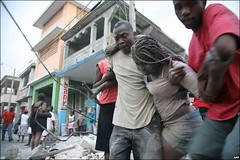
    Unrest in Haiti continued in 1987 when the landed elites engineered the mass killings of peasants who were demanding land reform in Jean-Rabel. In November 1987, the scheduled elections were canceled after the military and the para-military Tonton Macoutes, set up by the Duvalier regime, murdered opposition politicians and their supporters.

    By January 1988 there had been a military-controlled election that was boycotted by the Haitian masses. That election brought Leslie Manigat to power. In June Manigat was overthrown in a military coup by Gen. Namphy. By November Namphy was overthrown by Gen. Prosper Avril.

    These political and military actions did not appease the Haitian people. In early 1990 the military was forced to declare a state of siege. Avril was forced to resign in March of 1990. This resignation created the conditions for the formation of a Provisional Government led by Supreme Court Justice Ertha Pascal-Trouillot.

    Another round of elections were held in December 1990 where the former priest Jean-Bertrand Aristide was elected with 67.5% of the popular vote. The favorite candidate of the United States, Marc Bazin, finished second with only 14.2% of the vote.

    The election of Jean-Bertrand Aristide was opposed by the United States because he had become a symbol of political representation for the Haitian workers and peasants. As a result the Tonton Macoute attempted to stage a coup in January of 1991, but it was halted due to the actions of tens of thousands of Haitians who surrounded the National Palace and demanded the return of President Aristide.

    Aristide was sworn in as President of the Republic of Haiti on April 7, 1991. However, on September 30, another military coup overthrew Aristide who was forced into exile in Venezuela and later the United States. Between 1991-94, thousands of Haitians made attempts to leave the country and flee to the United States. Many of them were captured by the coastguard and returned, however, many others were able to land inside South Florida.

    In 1994, the military regime in Haiti resigned and President Aristide was returned to power in Haiti by the United States administration under Bill Clinton. Aristide’s return to power was carried out under unfavorable conditions for the Haitian masses. Aristide was forced to step down as leader after one year. He later returned to power in 2001 but was once again undermined by U.S. foreign policy.

    On February 29, 2004, the United States administration under George W. Bush invaded Haiti again and staged a coup against Aristide, forcing him into exile in the Central African Republic. With the intervention of the International Action Center and the Congressional Black Caucus Haiti Task Force, Aristide was released from Bangui, the capital of the Central African Republic, and is granted political asylum in the Republic of South Africa under the leadership of the African National Congress.

    Haiti, Cuba and the African Revolution

    In the most recent disaster to strike Haiti with the earthquake on January 12, other nations were there to lend assistance. Cuba had over 400 medical personnel in the country and set up field hospitals for the victims of the quake.

    The People’s Republic of China also sent rescue teams to help with the efforts to save lives and provide rehabilitation services to the victims. In Africa, there was a major mobilization to provide assistance to Haiti. Leading political and religious figures such as former Mozambican and South African first lady Graca Machel as well as former Archbishop Desmond Tutu have announced initiatives to collect humanitarian aid for the people of Haiti.

    In 1963, C.L.R. James wrote an appendix for the re-issued version of “Black Jacobins”, which had been published originally during the Great Depression when the author was making a transition from the United Kingdom to the U.S. In this appendix, which was entitled, “From Toussaint L’Ouverture to Fidel Castro,” James draws a direct line between the Haitian Revolution of 1804 and the Cuban Revolution of 1959.

    James says that “Castro’s revolution is of the twentieth century as much as Toussaint’s was of the eighteenth. But despite the distance of over a century and a half, both are West Indian. The people who made them, the problems and the attempts to solve them, are peculiarly West Indian, the product of a peculiar origin and a peculiar history. West Indians first became aware of themselves as a people in the Haitian Revolution. Whatever its ultimate fate, the Cuban Revolution marks the ultimate stage of a Caribbean quest for national identity. In a scattered series of disparate islands the process consists of a series of uncoordinated periods of drift, punctuated by spurts, leaps and catastrophes. But the inherent movement is clear and strong.” (James, Black Jacobins, p. 391)
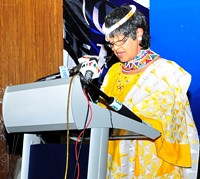
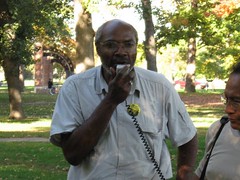
    The author goes on to look at the role of the sugar industry in the Caribbean as a source of labor exploitation and profit for the imperialists but also as a production center that played a key part in shaping the consciousness of the people of the region and consequently their contributions to the overall international working class struggle.

    James goes on to point out that “The history of the West Indies is governed by two factors, the sugar plantation and Negro slavery. That the majority of the population in Cuba was never slaves does not affect the underlying social identity. Wherever the sugar plantation and slavery existed, they imposed a pattern.”

    These two factors that have shaped the history and the class character of the Caribbean are rooted within the production process itself. James goes on to say that “The sugar plantation has been the most demoralising influence in West Indian development. When three centuries ago the slaves came to the West Indies, they entered directly into the large-scale agriculture of the sugar plantation, which was a modern system. It further required that the slaves live together in a social relations far closer than any proletariat of the time. The cane when reaped had to be rapidly transported to what was factory production. The product was shipped abroad for sale. Even the cloth the slaves wore and the food they ate was imported. The Negroes, therefore, from the very start lived a life that was in its essence a modern life. That is their history–as far as I have been able to discover, a unique history.” (James, p. 392)

    Even today in the aftermath of the quake, it is the United States–the leading imperialist power on the globe–that is dominating the political situation in Haiti. Why was it necessary to send thousands of U.S. marines and army personnel? In previous military occupations of Haiti, the people have suffered immensely. At the same time these periods within Haitian history where the people were subjected to military occupation, the masses have rose up in resistance.

    After the U.S. invasion on February 29, 2004 that deposed President Aristide and imposed a puppet regime that was allied with imperialism, the United Nations operation in Haiti carried out the foreign policy aims of the U.S. Therefore, when the corporate media and the capitalist state advances the notion of the inherent dependency of the Haitian masses and the altruistic motives of U.S. imperialism, the actual history of relations between the two countries must be considered.

    Workers and oppressed people in the United States have a role to play in the current crisis in Haiti. The anti-war and peace movement can also raise issues in the current debate around U.S. assistance to the Caribbean nation. The workers and the oppressed peoples through their organizations can demand that all direct aid to the Haitian people must be delivered immediately. They can demand that aid shipments be distributed in conjunction with grassroots community organizations operating on the ground in Haiti.

    The anti-war and peace organizations must call upon the Obama administration to cease and refrain from utilizing military force against the Haitian people. That the weapons carried by the army and marines be unloaded so that there can be some effort towards developing trust between aid distributors and the Haitian masses.

    All groups can call for the permanent lifting of deportation orders against Haitians. There should also be an immigration process for Haitian who wish to travel and live in the United States.

    What is one of the most significant outstanding issues involving U.S.-Haitian relations is the right of President Jean Bertrand Aristide to return to Haiti. Aristide in a statement after the quake, expressed his willingness to return to Haiti in order to assist in the reconstruction process.

    It was the African National Congress government in the Republic of South Africa that supported Aristide when he was under attack by the imperialist countries. Former South African President Thabo Mbeki supported the 200th anniversary independence celebrations held in Haiti on January 1, 2004. At great personal risk and amid threats to the South African state, President Mbeki refused to leave after his helicopter was fired on by counterrevolutionary elements operating in Haiti during this period.

    South Africa clearly understood the connection between the revolution that overthrew slavery in Haiti during the 18th century and early 19th centuries and the struggle to abolish apartheid and settler-colonialism in Southern Africa that reached fruition during the closing decades of the 20th century. Just as the Haitian Revolution drew the attention and support of African people outside of Hispaniola, the South African Revolution attracted the support of people through the African world and the international community as a whole.

    The Cuban government under the leadership of Fidel Castro sent over 250,000 of its own people to Angola between 1975-1989 to fight in solidarity with the African masses in their quest for the total liberation of the sub-continent. These joint efforts between Cuba, Angola, Namibia and the people of South Africa resulted in the defeat of the racist apartheid system that had been responsible for the oppression, destruction and deaths of millions throughout the region.

    Moreover, based upon the history of military intervention, labor exploitation and unwarranted interference in the internal affairs of Haiti, the United States, France and Canada all should pay large-scale reparations to the Haitian people that would serve as a mechanism to assist in the reconstruction of the country.