Author: Tim Conneally

  • Wal-Mart cuts iPhone 3G S price in half, continues Apple’s one-year smartphone life cycle

    By Tim Conneally, Betanews

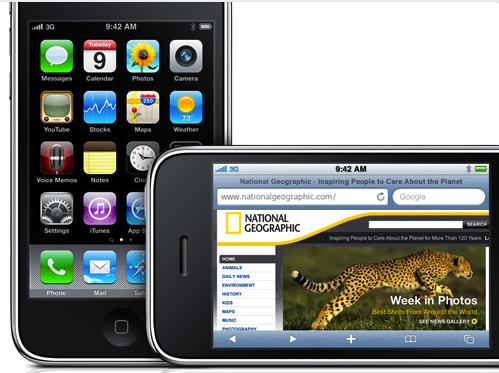
    iPhone 3gs

    The life cycle of smartphones has reached the point where a single year means the difference between cutting edge and cutout bin, and Apple looks to be following — if not driving — that trend.

    When the iPhone 3G S debuted last June, the price of the iPhone 3G was slashed to $99. Today, one year later, we’re seeing the same thing happen to the 3G S.

    Though the latest model in Apple’s iPhone line has not been unveiled yet, America’s biggest retailer Wal-Mart has dropped the price of the iPhone 16GB 3GS to just $97 with a two-year AT&T contract; less than half of its former retail price. The 32 GB version, however, remains its same price of $297 with a two-year contract.

    The price cut comes just two weeks before Apple’s Worldwide Developers Conference, where CEO Steve Jobs is scheduled to deliver the keynote, potentially to unveil the next generation iPhone, which has already been pried apart before the public.

    Copyright Betanews, Inc. 2010


    Add to digg
    Add to Google
    Add to Slashdot
    Add to Twitter
    Add to del.icio.us
    Add to Facebook
    Add to Technorati


    iPhoneAppleWal-MartSteve JobsSmartphone

  • To match the Nexus One’s speedy ‘FroYo’ update, T-Mobile rolls out faster network

    By Tim Conneally, Betanews

    Early this year, mobile network operator T-Mobile USA announced it would complete its HSPA+ network upgrade by mid-2010, bringing a theoretical maximum downlink speed of 21 Megabits per second to its entire 3G footprint.

    After testing the upgraded network technology in Philadelphia for the last year, T-Mobile today announced that the enhancement has gone live in the “Northeastern U.S,” which includes the New York City metropolitan area, New Jersey and Long Island, upstate New York (Albany, Buffalo, Rochester and Syracuse,) Connecticut (Hartford, New Haven, Milford and Stamford,) and Providence, R.I. Additionally, the HSPA+ network has gone live in Memphis, Tennessee and Las Vegas Nevada.

    T-Mobile says its HSPA+ network will expand into Boston and Washington, D.C. in the coming weeks.

    Only two days ago, one of T-Mobile’s premier Android devices, the HTC Nexus One, was the first consumer smartphone to receive the Android 2.2 “FroYo” update. The update reportedly boosts the device’s performance as much as 2 to 5 times.

    Though only rolled out to a small group initially, the Android team at Google this afternoon said they “expect a final build [of Android 2.2] to be available for OTA updates shortly.”

    So with the fastest version of Android yet, and much faster network at its disposal in a large section of the United States, T-Mobile’s Nexus One has significantly increased in value in just the last week.

    Copyright Betanews, Inc. 2010


    Add to digg
    Add to Google
    Add to Slashdot
    Add to Twitter
    Add to del.icio.us
    Add to Facebook
    Add to Technorati


  • I left a lightbulb on for one year straight, or: Why LED bulbs are about to change your life

    By Tim Conneally, Betanews

    I have left a lightbulb turned on for one year straight and I’m finally ready to talk about it.

    Three years ago, I started tinkering with Light Emitting Diodes (LEDs). They’re small, can be purchased for relatively little money, and require very little skill as an electrician to turn into fun toys. So little skill, in fact, that you can tape them to a button cell battery and they light up.

    Along with circuit bending, LED projects are some of the most rewarding in entry-level electronics. They’re cheap, they’re energy-efficient, and on a larger scale have proven to be extremely useful.

    For example, they’re commonly found as backlights for televisions or as bulbs in handheld torches, but there has never been a really affordable LED replacement for screw-in household lightbulbs.

    So when I started to see LED lightbulbs appear on the shelves of “big box” stores for as low as $2.60 per bulb, I jumped at the opportunity to try a widespread lighting upgrade. I had hoped these affordable LED bulbs would usher in an era of cheaper, more efficient household lighting.

    Unfortunately, I immediately learned that it was not to be.

    The 40 Watt bulbs barely put out enough light to even illuminate a closet. When I ran my first test at night with six bulbs going simultaneously, the 10′ x 20′ room was twilight at best.

    Put a 40 Watt LED bulb next to a 60 Watt CFL bulb, and it’s like comparing a match to a campfire.
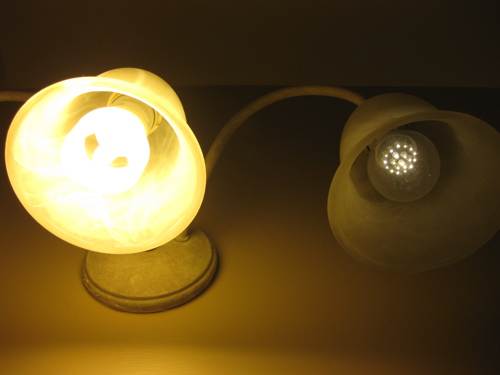
    60W Compact Flourescent Bulb versus 40W LED bulb.

    Worse than that, though, was that the light was not omnidirectional, and it was on the cold end of the spectrum. When I switched them on that first time, they formed small cones of cool, dim light instead of the warm, diffused spheres. Since then, I have found bulbs that utilize different LED arrays to address the directionality problem, but they were typically more costly per bulb and weren’t tremendously brighter.

    Testing LED bulb's brightness with light meter (1 Lux = 1 lumen/m2)

    On the plus side, the bulbs only consumed 1.4 Watts of power. So I redistributed the LEDs into supplementary fixtures, and stuck one in its own dedicated spotlight marked “LEAVE ON FOREVER,” to test its longevity and variance in LED color over time.

    At an estimated 16¢ a year, I figured it was an expense I could afford.

    E12 with LED bulb

    A couple of weeks ago, just a little more than a year into my experiment, Royal Phillips Electronics contacted Betanews to let us know they have finished the world’s first LED “replacement bulb.” That is, they have made the LED equivalent of the 60 Watt incandescent bulb found in half of the lighting fixtures in the world.

    They said they will produce 806 Lumens of 2700K (warm) light while using 12 Watts of power, with a lifetime of 25,000 hours.

    They said it is the “holy grail of home lighting.”

    I didn’t say anything about my experiment.

    Phillips 60W replacement LED bulbs

    This is because their new bulbs are quite different from the ones I have been testing. Instead of a simple cluster of phosphor LEDs mounted in a plastic lighbulb-shaped casing, Phillips uses something it calls “remote phosphor” technology.

    Similar to a fluorescent bulb in principle, Phillips uses blue LEDs to stimulate the phosphors on the outside of the bulb’s shell. This means you cannot see individual LEDs, and the surface of the bulb is actually distributing the light.

    “Of course, it’s easy to produce this level of light with LEDs, look at car headlamps,” Jim Anderson, Director of Innovation for Philips told me. ” But to have it be as cost-effective and efficient as it is bright is the challenge.”

    “Heat management, for example, is a huge issue with bright LEDs. Ninety percent of the Watts in an incandescent bulb are radiated out as infra-red heat. But with LEDs, there is no infra red, so the heat must be conducted away elsewhere. You only have a small envelope to work within [for standard lightbulbs,] that’s why there are heat sinks.”

    “You also have to provide consistent color and brightness from bulb to bulb and chip to chip, so we use a technology called Optiven to select the various LED color combinations and specific properties of phosphor,” Anderson said. “This means we had to set up the supply chain in a way that would let us deliver the most consistent product.”

    So the LEDs are coming from Phillips’ Lumileds in San Jose, and the bulbs are coming from Phillips Color Kinetics in Burlington, MA and Phillips Lighting Electronics in Rosemont, IL. Then they’re shipped to Shanghai for testing and assembly.

    “Consumers really don’t care about the mechanics of their lightbulbs, honestly.” Anderson confessed. “They just expect their new bulbs to do exactly what their old bulbs did.”

    Never mind the difficulty it takes to make this happen with an LED; and don’t even ask about the added difficulty of making these bulbs compatible with all the different kinds of dimmer switches.

    The bottom line is: If it’s affordable, consumers will upgrade. Though Phillips said these bulbs will be released in retail in the fourth quarter of this year, the company has not arrived at the price at which they’ll be sold.

    “As with everything, cost is the main barrier to consumer adoption,” said Anderson. “But what we’re seeing are LEDs that are bright enough and efficient enough that more effort can be put into driving down the cost [of bulbs]. The industry is in a great position.”

    Copyright Betanews, Inc. 2010


    Add to digg
    Add to Google
    Add to Slashdot
    Add to Twitter
    Add to del.icio.us
    Add to Facebook
    Add to Technorati


  • HP extends massive battery recall for overheating notebooks

    By Tim Conneally, Betanews

    The U.S. Consumer Product Safety Commission put out a bulletin this afternoon extending last year’s recall of HP and Compaq Li-Ion notebook batteries that were prone to overheating.

    The recall in May of last year included 70,000 potentially defective batteries, and today that has been extended to approximately 54,000 more.

    The extension of the recall is due in large part to consumer complaints of overheated and rupturing batteries. The commission said that HP has received 38 more reports of overheated batteries; with 31 resulting in minor property damage, and 11 resulting in minor human injury.

    The following notebooks are affected in this battery recall:

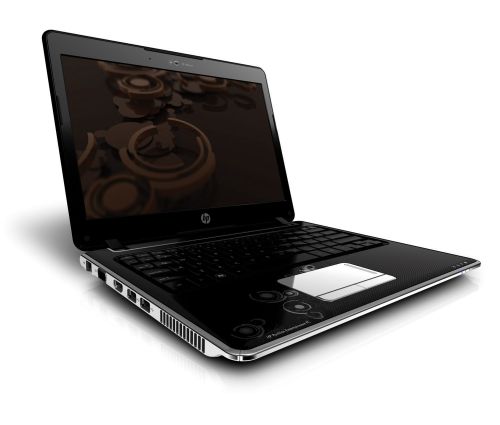
    HP Pavilion: dv2000, dv2500, dv2700 (body style pictured below), dv6000, dv6500, dv6700, dx6000, dx6500, dx6700, dv9000, dv9500, dv9700
    HP Pavilion dv2
    Compaq Presario: A900, C700, F500, F700, V3000, V3500, V3700, V6000, V6500, V6700
    HP: G6000, G7000
    HP Compaq: 6510b, 6515b, 6710b, 6710s, 6715b, 6715s, 6270s.

    Consumers with an affected battery should check out HP’s Battery Replacement Program site for further information.

    Copyright Betanews, Inc. 2010


    Add to digg
    Add to Google
    Add to Slashdot
    Add to Twitter
    Add to del.icio.us
    Add to Facebook
    Add to Technorati


  • Google unveils 10 huge improvements in ‘FroYo,’ Android 2.2

    By Tim Conneally, Betanews

    At Google I/O this morning, the topic of discussion was mobile; specifically, the Android mobile platform. As of this morning, there are more than 60 consumer devices running on Android, more than 100,000 new activations per day, 50,000 apps in the Android marketplace, and 180,000 registered developers working on apps. Not too shabby.

    As the platform continues its rapid growth, Google has announced a number of very significant improvements will be coming to the next version, numbered 2.2 but nicknamed “FroYo,” which address key issues Android has dealt with in the past.

    1) Improved Speed — Just as it was rumored, the next version of Android will have a JIT compiler, responsible for a significant (2x-5x) speed boost.

    2) Better Enterprise Support — The platform has lagged behind Windows Mobile and BlackBerry in terms of enterprise functionality, but FroYo will include over 20 new enterprise features. These include better Exchange support, with auto-discovery, improved security, and GAL lookup, and new device admin APIs.

    3) Cloud-to-Device API — Google services, Chrome extensions, and soon-to-be released Chrome apps will be able to sync with your Android device. If you need directions from Google Maps, it can be sent directly.

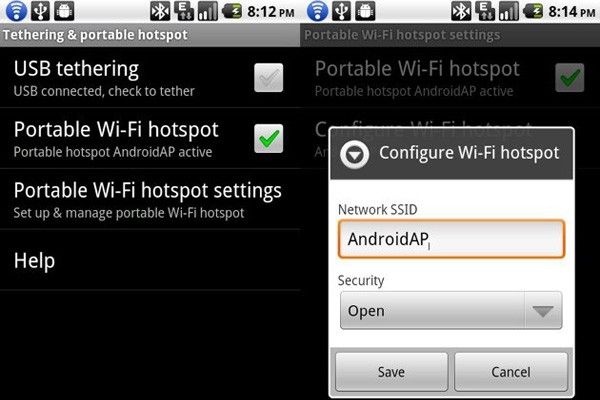
    4) Tethering — This was also a rumored feature for a few weeks. The feature will be in the “settings” menu, and clicking “portable wi-fi hotspot.”

    5) New Browser — The Javascript interpreter in Chrome will be used in FroYo’s native browser, offering a 2x-3x Javascript performance boost. Google’s Vic Gundotra said it will be the fastest mobile browser available.

    6) Install apps on SD memory — One of the main problems people had with Android was that you could not install apps on your removable memory card, you were limited to the device’s physical memory, which in some cases was quite limited. In FroYo, apps can be moved to, and launched from, the phone’s SD card.

    7) Flash 10.1 and AIR support — This one is not a surprise, as Adobe and Google have both said this would be coming.

    8) Web-based Android Market — Without a doubt one of the weakest aspects of consuming apps on the Android Platform was that you were limited to only seeing what was shown on your mobile device’s screen, which in most cases is not very appealing.

    9) App auto-updating — When an app you downloaded gets updated, you would get a notification that there was an update available in the Market. You’d have to navigate to the market and click OK three or four times per update just to get it installed. In FroYo, there will be an “Update All” icon, and the ability to check “allow automatic updating” when you download a new app. Apps can be purchased on the Web-based store and synced down to your Android device.

    10) Music Sync — Even though it’s got a decent media player, Android devices have never had the music power that iPhone has with its built-in iPod functionality. With FroYo, however, users will be able to sync their local music collection with their Android device and stream wirelessly.

    Copyright Betanews, Inc. 2010


    Add to digg
    Add to Google
    Add to Slashdot
    Add to Twitter
    Add to del.icio.us
    Add to Facebook
    Add to Technorati


  • Google announces open app store for ‘Installable Web apps’

    By Tim Conneally, Betanews

    Installable Web Apps

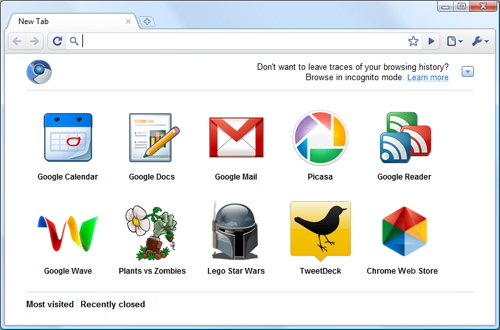
    Google has announced the upcoming availability of the Chrome Web Store, an open marketplace similar to the Android Market or iTunes App Store that deals exclusively in Web Apps.

    Chrome Web Store Icon
    This store doesn’t exist yet, but will open both to developers and to users “later this year.”

    The store will deal in the “installable Web apps,” that are expected to populate both the Google Chrome browser and the forthcoming Chrome OS. They can be run currently, but require a Windows Dev channel release of Google Chrome with a special command line flag.

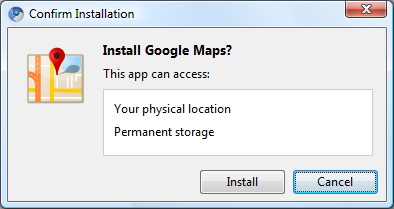
    According to their Google Code listing, “An installed web app could be separated visually from other tabs, could integrate better with the OS, and could be granted increased permissions. This special handling of web apps is exactly what we’re working on in Google Chrome…Installing a web app in Google Chrome is easy and quick, with no restart required. At its simplest, installing a web app is like creating a super-bookmark to it.”

    Installable Web App for Google Maps

    Interested developers can check out the preliminary documentation and join the discussion in the Google Group for Chromium Apps.

    Copyright Betanews, Inc. 2010


    Add to digg
    Add to Google
    Add to Slashdot
    Add to Twitter
    Add to del.icio.us
    Add to Facebook
    Add to Technorati


  • Google opens Wave to all, adds new features for developers

    By Tim Conneally, Betanews

    Google today began pushing its Wave collaboration tool again, hoping to attract both users and developers with new features.

    Firstly, for users, Google is dropping the “invitation-only” velvet rope from the collaboration tool, and now anybody can sign up just by going to wave.google.com and logging in with their gmail or Google account.

    Just about six months ago, Google opened the beta of Wave to about 100,000 users, and the new tool was swept up by the media and users alike, both of whom struggled to succinctly describe what, exactly, Google Wave was and who it was ideally suited for.

    In the official Wave blog, Stephanie Hannon, Product Manager on the Google Wave Team laid out five situations where Wave comes in handy: Business, Education, Creative Collaboration, Organizations and Conferences, and Journalism, and pushed out a video reminding us why Wave is useful.

    For developers, some announcements about Wave were made during Google I/O today. You can now: run robots on any server (not just in App Engine) in the language of your choice; Use a robot to manipulate and retrieve attachments within a wave; “Wave This,” which lets visitors to your site create waves out of your content; Fetch waves on behalf of users with Wave data APIs.

    Both Wave itself and its APIs are still in Google Labs, because, as Pamela Fox, Developer Relations, on the Google Wave Team said, “We think it’s important to stay flexible when creating a whole new paradigm in web based communication and collaboration. We want to be able to respond to your feedback, and we still have a lot left to do to make the vision a reality.”

    Copyright Betanews, Inc. 2010


    Add to digg
    Add to Google
    Add to Slashdot
    Add to Twitter
    Add to del.icio.us
    Add to Facebook
    Add to Technorati


  • Android and iPhone are turning the world into smartphone users, says research

    By Tim Conneally, Betanews

    Just over a week ago, NPD Group released its Wireless Market Research report for the United States, which showed BlackBerry devices leading the smartphone market with 36% penetration, then Android-based devices followed with 28%, and then Apple’s iPhone came in third with 21%.

    Today, IT research firm Gartner released its first quarter 2010 sales figures for the worldwide mobile device market, and we got a view of how the Smartphone OS market is changing.

    Indeed, Android’s explosive growth in the States is having an impact worldwide, but so is the iPhone’s growth outside of the U.S.

    “In the first quarter of 2010, smartphone sales to end users saw their strongest year-on-year increase since 2006,” said Carolina Milanesi, research vice president at Gartner. “This quarter saw RIM, a pure smartphone player, make its debut in the top five mobile devices manufacturers, and saw Apple increase its market share by 1.2 percentage points. Android’s momentum continued into the first quarter of 2010, particularly in North America, where sales of Android-based phones increased 707 per cent year-on-year.”

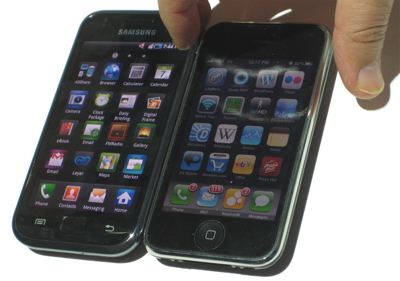
    Separated at Birth?  Samsung Galaxy S and Apple iPhone

    This puts Google’s mobile OS in fourth place globally behind Symbian, BlackBerry OS, and iPhone OS. Android’s rise to this position has placed it above Microsoft’s Windows Mobile for the first time.
    Android and iPhone OS were the only two mobile operating systems to globally increase their market share. Symbian dropped by 4.5% year over year, BlackBerry OS dropped by a modest 1.2%, Windows Mobile dropped by 3.2%, and Linux dropped by 3.3%.

    Apple managed to increase its mobile device sales by 112% during the quarter too, said Milanesi, “Partly from new communication service providers in established markets, such as the UK, and stronger sales in new markets such as China and South Korea.”

    Every smartphone combined still only amounts to 17.3% of the total mobile device market (54.3 million units,) but that market is growing quickly. The same period last year, only 13.9% (36.5 million units) of all phones sold were smartphones.

    With a new iPhone expected in the next quarter, and a major Android update coming soon, the smartphone market is poised to continue its growth as long as the two “app-centric” operating systems keep innovating and enticing users to adopt.

    Copyright Betanews, Inc. 2010


    Add to digg
    Add to Google
    Add to Slashdot
    Add to Twitter
    Add to del.icio.us
    Add to Facebook
    Add to Technorati


  • Yahoo acquires an army of 380,000 freelance journalists with Associated Content buy

    By Tim Conneally, Betanews

    Yesterday, Yahoo! Inc. announced it would be acquiring Associated Content Inc., and the transaction would cost the search company an estimated $100 million.

    Associated Content calls itself the “People’s Media Company,” and is a media outlet consisting of more than 380,000 freelancers publishing news, photos, video, and other content on subjects chosen by the site.

    “Combining our world-class editorial team with Associated Content’s makes this a game-changer,” said Carol Bartz, CEO, Yahoo! Inc. “Together, we’ll create more content around what we know our users care about, and open up new and creative avenues for advertisers to engage with consumers across our network. These are important aspects of building engaging consumer experiences on Yahoo!, and one of the reasons why we’re one of the most visited destinations online.”

    Since Yahoo signed its 10-year search agreement with Microsoft last year, effectively bowing out of the search business, the company has been working on strengthening its other properties. This acquisition is a move toward having more of its own original content, which will give advertisers more opportunities to target users.

    Associated Content will continue to run as it has been, with the same staff, but new people will be added to “augment platform development, programming, content programming and customer support.” Ultimately, the platform will move from being a U.S.-only entity to a global one.

    Copyright Betanews, Inc. 2010


    Add to digg
    Add to Google
    Add to Slashdot
    Add to Twitter
    Add to del.icio.us
    Add to Facebook
    Add to Technorati


    Associated ContentYahooCarol BartzMicrosoftBusiness

  • Data Google skimmed with street view cars gets destroyed in Ireland, but that’s not good enough for Germany

    By Tim Conneally, Betanews

    Last Friday, Google announced that its Street View cars had accidentally collected private data from unencrypted Wi-Fi networks while making their rounds, and the international response began in full force.

    The same day, the Irish Data Protection Authority asked Google to delete all of that payload that was collected in Ireland. Yesterday, Google wrote, “We can confirm that all data identified as being from Ireland was deleted over the weekend in the presence of an independent third party. We are reaching out to Data Protection Authorities in the other relevant countries about how to dispose of the remaining data as quickly as possible.”

    Independent security firm iSEC Partners Inc also confimed the deletion. Partner Alex Stamos said that Google had consolidated the Wi-Fi packet captures onto four hard drives, organized into folders corresponding to the nation of origin, and the data relevant to Ireland was then destroyed.

    “I created two new encryped volumes on separate hard drives, and copied over all of the data with the exception of the data that was identified as being captured within the Republic of Ireland,” Stamos wrote on Sunday, “I then witnessed the physical destruction of the original four hard drives.”

    Today, however, German data security representative Johannes Caspar said this would not be enough, and that Google has until May 26 to turn over the hard drive with German data on it, so the extent of the infraction can be inspected.

    Caspar told The Thuringer today that Google has to do anything it can to repair its tarnished reputation.

    “Before it can, we must be granted access to all of the collected data,” Caspar said. “Only then can it be clearly documented what kind of data was saved. Despite repeated demands, we’ve had no opportunity yet, to sift through a hard disk with all of the data.”

    Caspar has more meetings with Google this week in Hamburg.

    Copyright Betanews, Inc. 2010


    Add to digg
    Add to Google
    Add to Slashdot
    Add to Twitter
    Add to del.icio.us
    Add to Facebook
    Add to Technorati


  • Amazon announces Kindle for Android, a new hope dawns for Android tablets against the iPad

    By Tim Conneally, Betanews

    Kindle is, without a doubt, the highest profile e-reader platform running. With applications on iPhone, iPad, BlackBerry, Windows, and OS X as well as its own line of e-paper Kindle devices, Amazon had an estimated 90% share of the e-book sales market last year.

    Today, Amazon announced that a Kindle app will be launched on the Android mobile operating system this summer.

    Like the BlackBerry app, Android users will be able to purchase Amazon e-books inside the mobile app. That functionality is noticeably absent on the iPhone and iPad versions, where users must go to the browser to download new books.

    If Amazon were to include that functionality on the iPhone and iPad apps, a 30% commission for in-app purchases would have to be paid to Apple, which is not exactly the most economically feasible solution for Amazon.

    But what this means is that the bevy of Android tablets coming out this year will be able to offer the full Kindle experience where the iPad will not; and as we saw last month, some Android tablets are really suitable only as e-readers. Giving these devices unfettered access to the Kindle Store’s market-dominating 500,000+ e-books is a great boon to the platform.

    It is worth noting, however, that this version will only be compatible with Android 1.6 and up, and that subscriptions to newspapers, magazines, and blogs will not be supported when the app is released in the next few weeks.

    Copyright Betanews, Inc. 2010


    Add to digg
    Add to Google
    Add to Slashdot
    Add to Twitter
    Add to del.icio.us
    Add to Facebook
    Add to Technorati


  • New Hotmail lets you add bigger attachments, organize your inbox, edit documents

    By Tim Conneally, Betanews

    I’m constantly reminded how slow email actually is.

    On the homescreen of one of my smartphones, I’ve got the official Twitter widget and the official Facebook widget which are pretty much constantly refreshing. Likewise, my email inbox is set to refresh just as frequently. Every day, when someone sends me a message in Facebook or replies to a Tweet, the widgets tell me first, and then five minutes later I get the email alerting me again. Because of this, I have an email account just for social network updates that is overflowing with unread messages.

    My fast, immediate communications have been shifted to other services, but the more heavyweight content: presentations, photos, and documents are still being sent over email.

    Today, Microsoft announced it is releasing a new Windows Live Hotmail this summer to suit the “peoples’ email needs as of 2010,” which includes finding a way to organize all of that semi-relevant junkmail and a way to send even bigger attachments.

    Get Microsoft Silverlight

    The new Hotmail inbox will let users organize their emails in new ways. Where the old inbox just let you sort your emails by date, sender, subject, or size, the new inbox will also let you sort them by category. These categories include: messages from contacts, social network updates, or messages from groups and mailing lists. Because social network updates and mailing list posts are sometimes unwanted, you can sort them by category and push them into folders and out of your principal inbox.

    Microsoft is also tying in its SkyDrive cloud storage feature into Hotmail, letting users attach as many as 200 photos each 50MB in size to a single email. The same goes for Office documents like Word files, Excel spreadsheets or PowerPoint presentations, you can stick 10 GB of attachments to Live Hotmail email messages.

    With Office documents, a bit of productivity has been folded into Hotmail. Users can open the documents in Office Live, make changes, and push them back to the original sender with all the updates.

    The update this summer will also add enhanced account protection, full-session SSL, multiple email accounts, subfolders, contact management, and even more storage.

    Copyright Betanews, Inc. 2010


    Add to digg
    Add to Google
    Add to Slashdot
    Add to Twitter
    Add to del.icio.us
    Add to Facebook
    Add to Technorati


    MicrosoftFacebookWindows Live HotmailWindows Live SkyDriveSocial network

  • MySpace revamps privacy settings to counter Facebook’s muddled set of options

    By Tim Conneally, Betanews

    Facebook grew more popular than Myspace just about two years ago, and has been been enjoying steady growth while MySpace flounders trying to reinvent itself.

    But the recent attention brought to Facebook’s privacy issues -specifically the complaint filed with the US Federal Trade Commission by EPIC pointing out that Facebook data isn’t as private as it once was– has opened a door for MySpace to jam its foot into.

    The New York Times last week called Facebook’s privacy settings “A bewildering tangle of options,” with 50 settings menus with more than 170 options, and a privacy statement more than 1,200 words longer than the U.S. Constitution.

    MySpace Co-president Mike Jones seized on this opportunity to announce its “New, simpler privacy setting.”

    “We want our users to know we are planning the launch of a simplified privacy setting for our user profiles.  While we’ve had these plans in the works for some time, given the recent outcry over privacy concerns in the media, we felt it was important to unveil those plans to our users now,” Jones said. “We believe users want a simpler way to control their privacy. That’s why, in the coming weeks, MySpace will continue to simplify its privacy settings to create a simpler, more intuitive approach that gives users greater control over their information. Setting options will include public, friends only, or public to anyone 18 or over. In making this change, MySpace will default the setting to ‘friends only’ for any user who previously had any granular page setting to ‘friends only.’ Users can change this option with one click if they choose.”

    A small number of Facebook users with a disproportionately loud voice have pledged to shut down their Facebook profiles on May 31, the unofficial “Quit Facebook Day.”

    From the site’s sub-heading that explains why users are quitting, it says: “For a lot of people, quitting Facebook revolves around privacy. This is a legitimate concern, but we also think the privacy issue is just the symptom of a larger set of issues. The cumulative effects of what Facebook does now will not play out well in the future, and we care deeply about the future of the web as an open, safe and human place. We just can’t see Facebook’s current direction being aligned with any positive future for the web, so we’re leaving.”

    Maybe they can be enticed to get behind MySpace.

    Copyright Betanews, Inc. 2010


    Add to digg
    Add to Google
    Add to Slashdot
    Add to Twitter
    Add to del.icio.us
    Add to Facebook
    Add to Technorati


    PrivacyMike JonesMySpaceFacebookNew York Times

  • Android 2.2 rumors: blazing speed, tethering, full Flash support, and more

    By Tim Conneally, Betanews

    Last year at Google I/O, the search company’s annual developer conference, we got the first look at Android 2.0, also known as “Eclair.”

    On Wednesday this week, Google I/O 2010 will begin, and we’re sure to see the next version of Google’s mobile operating system: Android 2.2, also known as “FroYo.” Last week, the telltale giant dessert-themed sculpture representing 2.2 was rolled out onto the lawn of Google’s Mountain View headquarters, just as they have before previous versions were released.

    Right now, there are no official announcements regarding the content of Android 2.2, but recent rumors have suggested that there will be three killer upgrades in FroYo which I personally hope we get to see in action this week. These three improvements are:

    Android Tethering

    • Tethering — The ability to turn any Android phone running 2.2 into a USB 3G modem or into a 3G Wi-Fi hotspot.
    • Full Flash Support — The addition of Flash 10.1 that both Google and Adobe have repeatedly mentioned could finally equip Android with a full, desktop-style Flash experience.
    • 450% speed boost — A site called Android Police tested the Dalvik virtual machine in FroYo with benchmark software called Linpack, the build on a Nexus One tested at 6.5-7 MFLOPS versus an older build on an older HTC Hero which only hit 2 MFLOPS.

    The Frogurt is also Cursed.

    There are a number of other new features rumored to be included in Android 2.2, which are a bit less flashy. These include: More free RAM, a JIT compiler (a.k.a. “Just In Time” compiler, allows higher-speed code execution,) improved access to the OpenGL ES 2.0 library, FM Radio support, developer access to color LED in trackball, and improved cross-multitouch resolution.

    Again, none of these have been confirmed, but they are all plausible and would be welcome additions to the platform.

    Copyright Betanews, Inc. 2010


    Add to digg
    Add to Google
    Add to Slashdot
    Add to Twitter
    Add to del.icio.us
    Add to Facebook
    Add to Technorati


  • YouTube, now a cultural phenomenon, streams 2 billion videos every day

    By Tim Conneally, Betanews

    Youtube

    On its five year anniversary, popular video streaming site YouTube announced it streams two billion videos every day.

    “What started as a site for bedroom vloggers and viral videos has evolved into a global platform that supports HD and 3D, broadcasts entire sports seasons live to 200+ countries,” it said in the official YouTube Blog on Sunday. “We bring feature films from Hollywood studios and independent filmmakers to far-flung audiences. Activists document social unrest seeking to transform societies, and leading civic and political figures stream interviews to the world.”

    On Friday, audience metrics company Nielsen posted its report of Top Online Video Sites in the U.S. for April 2010, and YouTube had 97.1 million unique viewers for the month, a 1.1% month-over-month growth.

    YouTube’s closest competitor in the Neilsen rankings, Yahoo! video, had 27.6 million unique viewers for the month, so the size of YouTube’s audience is staggeringly higher than the rest of the market.

    But YouTube isn’t really competing with other video sharing sites, and it’s not competing with television either, because viewing habits on YouTube are very different from traditional television viewing.

    “The average user spends 15 minutes a day on YouTube, that’s tiny compared to the five hours a day people spend watching TV,” YouTube’s blog post said.

    Even though the site hasn’t been a profit machine for Google, it has had a huge impact on the way we share information as a community.

    Just last night, I experienced something that really cemented the importance of YouTube in our culture that I thought I’d share.

    Indie Singer/Songrwiter David Bazan is currently touring the United States playing only limited-capacity shows in people’s living rooms, and we booked his Baltimore show in one of our apartments. I had set up my video camera partially to test the audio capture of Bazan’s busker-style setup (no vocal amplification and a tiny practice amp to monitor his guitar sound) and partially to record just for posterity.

    After the show was over and I started to break down my camera, I was approached separately by a dozen people (nearly a quarter of the total audience) who each asked for my YouTube screen name. Some wanted to share the show with friends who couldn’t make it, some wanted to use the video for their blogs, but they all asked for YouTube first.

    When I was video taping shows twelve years ago, I would only be asked for copies on the rarest occasions. Now because of YouTube and tiny, high quality cameras, sharing video is part of the experience of an event.

    Copyright Betanews, Inc. 2010


    Add to digg
    Add to Google
    Add to Slashdot
    Add to Twitter
    Add to del.icio.us
    Add to Facebook
    Add to Technorati


    YouTubeGoogleUnited StatesTelevisionStreaming media

  • Roku adds UFC to streaming lineup, now has nearly 30 channels

    By Tim Conneally, Betanews

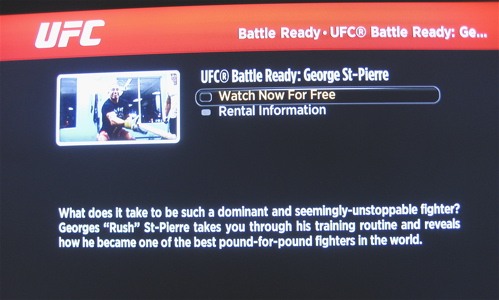
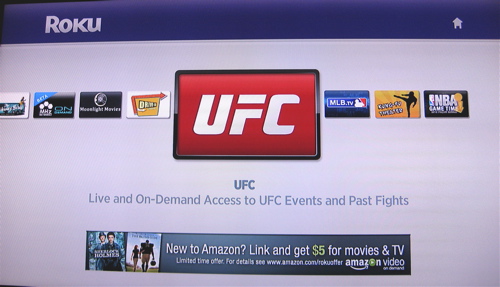
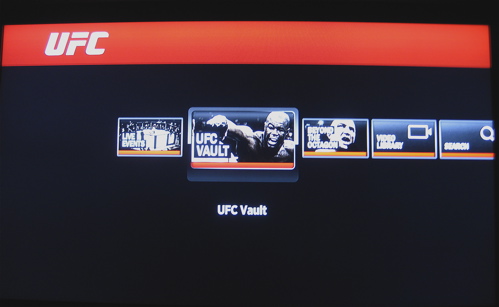
    UFC Channel on Roku
    Two years ago, Roku launched the first set top box dedicated to Netflix’s Instant Streaming. Since that time, Roku has added enough partnerships to make that $99 box into its own little a la carte TV service.

    In addition to the Netflix channel, the Roku streamer has Amazon Video on Demand, MLB.TV, NBA Game Time, Revision3, Blip.tv, DreamTV, Moonlight Movies, Kung-Fu Theater, Drive-In Classics, Cowboy Classics, Midwest Cage Championship, Pandora, Weiss Money Network, MediaFly, Motionbox, Twit.TV, Flickr, FrameChannel, MHz On Demand, Facebook Photos, Blubrry Podcast Community, MobileTribe, The Highway Girl, SmugMug, and Tech Podcasts Network. There are more than 50,000 instantly streamable movies, TV Shows, live sporting events, and podcasts available on Roku with more being added every day. Since it’s an open platform, users can even create and add their own stations.

    UFC Channel on Roku

    Later today, Roku will be pushing out another official sports network to round out the offerings from Major League Baseball and the National Basketball Association: The UFC (Ultimate Fighting Championship) Channel.

    Roku users will be able to add the UFC channel in the Roku Channel Store, and then be able to access the popular pay-per-view martial arts events (with a linked account on UFC.com.) Not only will users be able to watch live streaming events, but they will also be able to watch archived events, and behind-the-scenes bonus footage weigh-ins, pre-and-post fight press conferences, and interviews.

    UFC on Roku

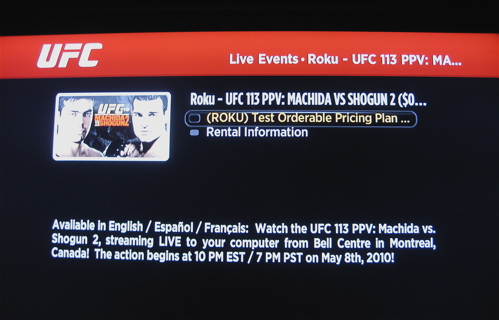
    The official first live streaming event on the channel will be UFC 114 on May 29th, but we got a sneak preview of the service with the broadcast of 113 just over a week ago.

    UFC on Roku

    In typical Roku fashion, the channel’s layout is clean and simple. Most importantly, though, the actual streaming was flawless and high quality. With an appropriate connection speed, you will be able to watch the contents in high definition.

    UFC on Roku

    Besides offering on-demand access to all the bonus footage, 1.) events you have paid for are saved to your UFC account and are permanently accessible, like Amazon Video on Demand 2.) You can perform keyword searches of the archives.
    The pay-per-view events cost the same on the Roku channel as they would through your cable provider.

    UFC Channel on Roku

    Copyright Betanews, Inc. 2010


    Add to digg
    Add to Google
    Add to Slashdot
    Add to Twitter
    Add to del.icio.us
    Add to Facebook
    Add to Technorati


    NetflixRokuNational Basketball AssociationSportMajor League Baseball

  • New beta unshackles Mac users from iTunes’ sync shortcomings

    By Tim Conneally, Betanews

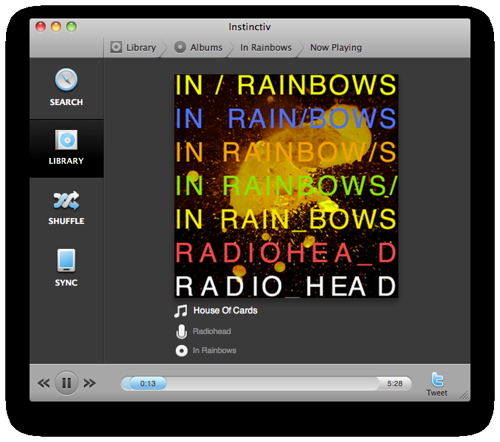
    Now Playing view on Instinctiv beta for Mac OS 10.5

    Windows users have a lot of alternatives to the “mainstream” media players (Windows Media Player and iTunes). However, Mac OS users are not so fortunate. Aside from a couple of minor exceptions, Mac OS is an iTunes-dominated platform.

    And as such, it means support for portable media players that don’t have an “i” at the beginning of their name is scarce.

    Mac users who carry a smartphone other than an iPhone or a media player other than an iPod don’t exactly have the easiest time organizing and shifting their content from their computer to their mobile device.

    It’s part of the problem I talked about last December, when I wrote about the three main issues that have prevented smartphones from completely replacing dedicated personal media players like the iPod.

    Among the three issues of limited battery life, limited storage capacity, and limited sync options, I consider sync to be the most important; and for Mac users, syncing a device other than an iPod or iPhone is really not an option.

    Today, Instinctiv launched the beta of a new media player for Mac OS which takes a serious stab at remedying this problem.

    The Instinctiv personalized media player supports portable devices that iTunes doesn’t –such as those running Android, BlackBerry, Windows Mobile, and Symbian– while supporting more than 50 file formats, including Windows Media files and those protected by Apple’s FairPlay DRM.

    This software is specifically geared toward Mac users who want to sync a device other than an iPod or iPhone.

    Actual Beta News feature banner“This market isn’t just underserved, it’s completely ignored!” Instinctiv CEO Aniq Rahman told us yesterday. “Apple has always given exclusive priority to their own products, but 85% of the international smartphone share is non-Apple devices. We’re trying to cater to everybody, so they can sync all their devices with their Macs.”

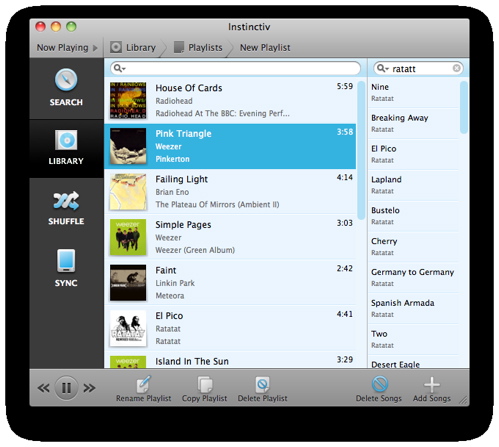
    But the software isn’t just meant to be a sync solution, it’s also a standalone player that automatically fetches missing cover art, renames misspelled or untagged songs, lets users create playlists, and analyzes the user’s listening behavior in shuffle mode with the company’s smart shuffle technology which it first debuted as an iPhone app last year.

    Create Playlist function on Instinctiv beta for Mac OS 10.5

    “Smart shuffle really eliminates the need to create playlists,” Rahman said. “With the standard, random shuffle feature of media players, users skip every 1.5 songs. With iTunes Genius-enabled shuffle, users skip once every four songs. With Instinctiv shuffle, users skip once every 31 songs.”

    Instinctiv’s smart shuffle can do a seeded shuffle which generates songs in a fashion similar to Pandora, or it can hone results as you go, based upon what you skip. For example, if you’re not in the mood to listen to the fast and loud song that comes up in shuffle, you’ll skip it and be given a song of a different mood.

    Furthermore, Instinctiv is clean, small and purpose-oriented. As iTunes continues to grow into a solution for organizing all media — music, HD video, apps, and now books — it is turning into a pretty big piece of software. If you only want to organize and consume music, Instinctiv is a streamlined solution to do so. It can act as a standalone player and manager for all of your music files or as a companion to iTunes, with automatic support for playlists created in iTunes.

    To download the beta of Instinctiv for Mac OS X 10.5+, visit Instinctiv’s download site.

    Copyright Betanews, Inc. 2010


    Add to digg
    Add to Google
    Add to Slashdot
    Add to Twitter
    Add to del.icio.us
    Add to Facebook
    Add to Technorati


  • Software update may turn all Kindle users into a cloud-based book club

    By Tim Conneally, Betanews

    Today, Amazon posted an overview of what Kindle owners can expect in its version 2.5 software update now slated for late May.

    This will be the first major feature upgrade to Amazon’s e-paper device line since the launch of the Kindle DX last year. After the launch of that model, there was a single software update, which moderately improved the user experience by stretching battery life and adding native .PDF support.

    But with that update, one hand gave while the other took away: It also turned off the default text-to-speech option, amid the disputes it caused with the Author’s Guild. In the meantime, however, Amazon was busy growing the Kindle platform with applications that allowed the consumption of Kindle-formatted e-books on iPhone, iPad, BlackBerry, Windows, and Mac OS devices.

    The slow pace of innovation for the e-reader made me wonder last month if Amazon was already forgetting about the hardware that launched the whole Kindle brand.

    Fortunately, it’s not. And the 2.5 software update will add exciting and long- overdue features to the device.

    Firstly, the native PDF reading function added in the v.2.3 software update was mostly useless because you could not pan and zoom within the frame to read your files. (I put a lot of vintage video game magazine scans in my Kindle, but they’re all unreadable because each page is zoomed to format the screen and the text is tiny.) With the v.2.5 update, PDF pan and zoom will be added.

    Secondly, the poorly-designed menu system will be upgraded to let you organize your books into collections. Currently, it’s just a single paginated list that you have to scroll through to reach your files, which are organized alphabetically. With the v.2.5 software, you will finally be able to group books by author, genre, or publication type.

    Finally, users will be able to share their highlighted passages with the rest of the world directly from their Kindle. They will be able to be posted on Facebook or Twitter, or will be counted in Amazon’s “Popular Highlights” of e-books. In other words, users will be able to see what the Kindle community thinks are the best lines from their books or books they’re looking to purchase.

    There will also be more font sizes added, improved image clarity, and a password protection option in the update. The update will be rolled out in a limited beta soon and will be released as an automatic OTA update to all Kindle 2 and DX units in late May.

    Copyright Betanews, Inc. 2010


    Add to digg
    Add to Google
    Add to Slashdot
    Add to Twitter
    Add to del.icio.us
    Add to Facebook
    Add to Technorati


  • Ubuntu 10.04 LTS gives Linux even more mainstream appeal

    By Tim Conneally, Betanews


    Download Ubuntu 10.04 “Lucid Lynx” LTS from Fileforum now.


    Ubuntu 10.04 "Lucid Lynx"

    As expected, Canonical today released the latest long-term support version of Ubuntu (v. 10.04, a.k.a., “Lucid Lynx”). This release carries considerably more weight than the usual bi-annual Desktop and Server updates because long-term support (LTS) come only biennially — once every two years. They typically don’t get treated to experimental feature additions, and are meant to be more stable. They do, however, include three years of package support for Ubuntu Desktop and five years for Ubuntu server. The last LTS versions Canonical released were “Dapper Drake” (4.0) in 2005 and “Hardy Heron” (8.04) in 2008.

    This version of Ubuntu comes with a new color palette that departs from the usual brown, and a couple of new features directed at the demands of the everyday user. The popular Linux distro is definitely going for widespread appeal with this release.

    One of the new features is the “Me Menu,” an interface for social Web sites like Twitter and Facebook built directly into the operating system. The tool is based on Gwibber and was originally intended to be a part of the “Karmic Koala” release, but did not make it into it, and was officially shown off as a part of Lucid Lynx last December.

    Another is the new Ubuntu music player which has a music store and the Ubuntu One cloud file-sharing interface built into it. With the Alpha 3 release, Lucid Lynx also got full support for iPod Touch and iPhone, adding even further to the distro’s mainstream appeal.

    FileForum user jcollake summed it up quite nicely today, “As for Ubuntu, I find it a highly valuable contribution to the Linux ‘sub-culture.’ It has introduced many new people to Linux and is an easy-to-use distribution. There are still areas — particularly in third-party hardware support — that aren’t quite as smooth as Windows, despite the best efforts of Ubuntu…but that’s not their fault…Bottom line is that they’ve done a good job, and it will work well for a lot of people — not everyone, but a lot.”

    Copyright Betanews, Inc. 2010


    Add to digg
    Add to Google
    Add to Slashdot
    Add to Twitter
    Add to del.icio.us
    Add to Facebook
    Add to Technorati


  • Yet another major browser hits Android as Skyfire 2.0 beta launches

    By Tim Conneally, Betanews

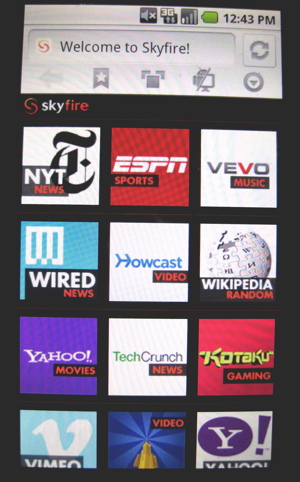
    Skyfire, the third party mobile browser famous for its ability to handle nearly every major browser plug-in and web technology has finally arrived in the Android Market today.

    Skyfire 2.0 Beta (Android)

    At the beginning of April, the browser was released in a very limited alpha program which received overwhelming interest from users. The Skyfire team said it had to stop taking email requests for the software almost immediately because of the sheer volume of messages. Well, those masses now have something they can sink their teeth into.

    Skyfire 2.0 has an actionable address bar across the top of the browser with buttons for favorites, bookmarks (both of which are imported from the default Android browser), browser tabs, options, and the interesting “load pages as” button, which lets you select “Android, Desktop, or iPhone.”

    Skyfire 2.0 Beta (Android) "load as"

    Across the bottom of the screen is where the hideable “SkyBar” resides.
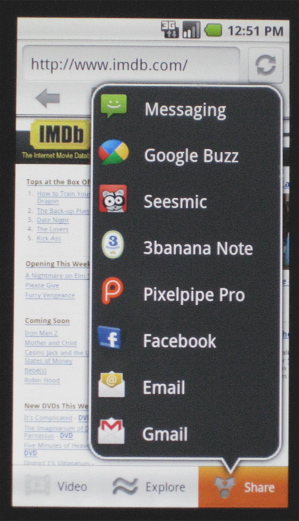
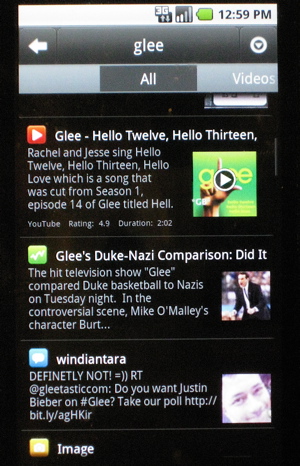
    Down there, is a link for compressing and playing Flash videos, an “explore” tab which can call up related information about your current page (videos, tweets, pictures, news stories, etc.) or lets you search, and a social sharing tab which links to all your social media and media sharing apps.

    Skyfire 2.0 Beta (Android) share tab

    Skyfire can handle up to eight browser tabs at a time, and devices running Android 2.0 and up are treated to pinch-to-zoom functionality. In the browser’s settings menu, the toolbars, screen settings, browser startup behavior, and privacy functions can be tweaked.

    Skyfire 2.0 Beta (Android) explore tab

    The browser’s banner feature is, of course, its ability to play Web media that most mobile browsers cannot.

    Skyfire’s Jeff Glueck today said, “You may hear Skyfire described as ‘making Flash run’ on mobile phones. Yet with Skyfire 2.0, we’re actually doing something distinct. We’re translating Flash videos (and soon others like Silverlight and WindowsMedia and Quicktime) into a format easier on your phone: html5 video. And beyond video, we believe that mobile has been missing features popular on desktop browsers, in toolbars, add-ons, and extensions. Before, these might have strained the device and network, but by using the power of a cloud platform, we can enable new features and do the hard processing work on our side.”

    Skyfire 2.0 Beta (Android) Flash video playback

    Glueck actually repeated the sentiment expressed by Steve Jobs in his dismissal of mobile Flash this morning, saying “This browser will not enable Flash games or applications, because we think there’s a quite healthy ecosystem of native games and applications on mobile, and the response times for a game that users expect don’t work well with the latency of cellular networks.”

    “But video is all about the latest content, and that means streaming,” Glueck continued. “And the big problem has been two-fold: How do you make videos play that today error out, but also do that without straining the overtaxed 2G and 3G networks? This is Skyfire’s wheelhouse. We compress video by an average of 70%, varying and adapting the stream to your network conditions. That means video that starts faster, plays smoothly without all that buffering, and more efficient use of the network and your battery.”

    While video is the focus of Skyfire, it was a shame to find out in our tests this morning that Hulu does not work.

    Even so, Skyfire is very fast, and immediately integrated into your Android environment (all settings are carried over, and when you click links embedded in messages, Android now presents you with the option to launch it in the default browser or in Skyfire, something none of the other third party browsers do.)

    With four or more browsers that aren’t available on the iPhone (including Fennec, Mozilla’s mobile browser) and a reported 46% share of mobile Web consumption, Android is proving to be the choice for both consumers and developers interested in browsing.

    Copyright Betanews, Inc. 2010


    Add to digg
    Add to Google
    Add to Slashdot
    Add to Twitter
    Add to del.icio.us
    Add to Facebook
    Add to Technorati