Author: Wayne Williams

  • Burger King sold to McDonald’s — according to the company’s hacked Twitter feed

    Burger King’s Twitter account was just hacked and has been turned into an amusing (and rather crude) advert for fast food rival McDonald’s, complete with the Chicken McNuggets header and golden arches logo as the avatar.

    No one is entirely sure who is behind the action at the moment, although there’s a shout out to DFNCTSC, the Defonic Team Screen Name Club, a loosely organized collective responsible for hacking Paris Hilton’s mobile phone and posting her address book a while back.

    The first tweet from the feed’s new masters states: “We just got sold to McDonalds! Look for McDonalds in a hood near you @DFNCTSC”.

    There are some amusing posts and retweets in the feed, including an observation from Simon Osborne that “Somebody needs to tell Burgerking that ‘whopper123’ isn’t a secure password”.

    Some 82,000+ people were following the Burger King account prior to the hack, but that’s since shot up by another 9,000 as people clamor to watch the fun. As OAFEnet observes, “They may be hacked, but when was the last time ANYBODY talked about @BurgerKing this much?”

    Even Anonymous has joined in, tweeting: “We’re guessing the @BurgerKing social media team is having a bad day…”

    Update: And that’s it folks. The account has just been suspended by Twitter.

  • Developer preview for Ubuntu Phone due this week

    Canonical says it will be publishing images and open source code for the Touch Developer Preview of Ubuntu for Galaxy Nexus and Nexus 4 on Thursday 21 February. So if you have a spare compatible handset — or you don’t mind converting your existing phone — you can try out the fledgling mobile OS in time for the weekend.

    The aim is encourage developers to create apps for the new operating system, but enthusiasts are welcome to take it for a spin too. According to Canonical, tools that manage the flashing of the Galaxy Nexus and Nexus 4 will be available on the same day as the images, along with detailed installation instructions.

    Alternatively, if you happen to be visiting the Mobile World Congress (MWC) in Barcelona, 25th — 28th February, pop along to the Ubuntu stand (booth number 81D30, App Planet Hall 8.1) and team members will happily flash your phone for you.

    According to Mark Shuttleworth, founder of Ubuntu: “This release marks the threshold of wider engagement — both with industry and community. For developers, contributors and partners, there is now a coherent experience that warrants attention. The cleanest, most stylish mobile interface around”.

    Canonical says a “complete entry-level smartphone experience” will be included in Ubuntu 13.10, due in October, and that when finalized the “same Ubuntu code will deliver a mobile, tablet, desktop or TV experience depending on the device it is installed on, or where it is docked”.

    However, KDE’s Plasma Active team leader Aaron Seigo is skeptical of the unified experience claim, and following Canonical’s announcement, took to Google+ to query it, asking how the firm can merge its current blend of GNOME/GTK3 desktop environments in Ubuntu with the Qt/QML construction of the Ubuntu phone.

    “Perhaps if we define ‘same Ubuntu code’ to mean ‘Ubuntu the distribution with all versions of the UI installed’ we can cover this with a great amount of fudge factor,” he says, adding: “Perhaps Unity will eventually be merged with Ubuntu Phone, and that’s what they mean by ‘when complete’”.

    Although Seigo says he supports the Ubuntu Phone —  describing it as a “good thing to see” — he also admits he thinks “[Canonical] making unfounded claims in this manner is, imho, ethically weak,” and that free software developers, users or supporters who buy into Canonical’s claims are “being duped”.

  • Chubby Checker sues HP over penis size app

    A few weeks ago I wrote about Apple allowing a member-measuring app into the App Store (which BetaNews readers seemed to love) and now news reaches us that veteran singer Chubby Checker has got his knickers in a “twist” and is suing Hewlett-Packard over a penis size estimator that bears his name.

    The “Chubby Checker” app for HP’s Palm OS platform was pulled from all Palm and HP listings in September last year and the developer, Magic Apps, is no more, but that hasn’t stopped the singer’s lawyers going to war over the (frankly genius) use of the name and demanding a stiff half a billion dollars for “irreparable damage and harm” to Checker.

    “This lawsuit is about preserving the integrity and legacy of a man who has spent years working hard at his musical craft and has earned the position of one of the greatest musical entertainers of all time,” said attorney Willie Gary. (And yes, as a Brit I find it rather amusing that the attorney taking legal action about a penis related app is called Willie).

    When available, the blurb for the app read: “Any of you ladies out there just start seeing someone new and wondering what the size of there [sic] member is? … All you need to do is find out the man’s shoe size and plug it in and … there is no need for disappointment or surprise.”

    Chubby Checker’s real name is Ernest Evans but the singer trademarked his stage name back in 1997.

    The lawyers acting for the singer say people who have purchased the tool “are being misled into believing that plaintiffs have endorsed the defendant’s app”.

    What makes the story even more entertaining is the Chubby Checker app, which was released on November 13 2010, was reportedly downloaded just 84 times before being yanked from the store.

    Photo Credits: Randy Miramontez/Shutterstock

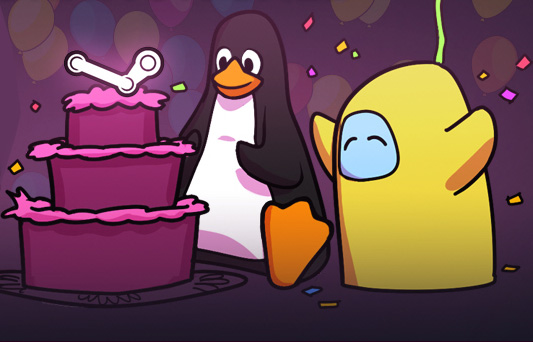
  • Valve launches Steam for Linux and announces a celebration sale

    After two months of public beta testing, the Linux version of Valve’s popular multiplayer gaming ecosystem has been officially released and is available to download for free from the Ubuntu Software Center.

    To celebrate the release, Valve is cutting the price of 50 Linux titles by between 50-80 percent in a week long sale that will end on Thursday, 21 February at 10 AM PST. Games currently on sale include Bastion, Trine 2, Counter Strike Source, Serious Sam 3, and Darwinia.

    The free-to-play Team Fortress 2 is also available on the new client and, for a limited time, Steam is giving players a free, in-game Tux mascot that can be carried or traded.

    Speaking about the launch, David Pitkin, Director of Consumer Applications at Canonical said: “The introduction of Steam to Ubuntu demonstrates growing demand for open systems from gamers and game developers. We expect a growing number of game developers to include Ubuntu among their target platforms. We’re looking forward to seeing AAA games developed with Ubuntu in mind as part of a multi-platform day and date release on Steam”.

    Steam for Linux also includes Big Picture, a new mode for viewing on televisions, that can be interacted with using a game controller.

    The creation of a Linux client is a direct result of Valve’s boss Gabe Newell’s dislike of Windows 8 (he famously called the new OS “a catastrophe for everyone in the PC space”). Six months ago, following Valve’s announcement that it would be embracing Linux — well Ubuntu at least — I asked the question Will Windows 8 make Linux the new gaming OS? Now that Steam for Linux is here I guess we’ll find out.

    Are you excited about the new Steam client and do you think it will make a difference to Ubuntu’s popularity — with gamers or just in general?

  • Get your phones ready — The Brit Awards to be Shazam-enabled

    British broadcaster ITV has agreed a deal with Shazam — the popular music identification service — to allow viewers of this year’s The Brits music awards to access exclusive content during the live broadcast — a UK first.

    By using Shazam to tag the show between 8pm and 10.15pm on February 20, viewers will get access to exclusive behind-the-scenes content from performers and guest presenters.

    Making the announcement, David Jones, EVP Marketing for Shazam said: “We are excited that our first live Shazam-enabled program in the UK is one of the biggest nights of the year for the music industry, the BRIT Awards. People who know and love us for music will now get to experience all the great features we now bring to television”.

    The Shazam app, which is typically used to identify recorded music by sampling a few seconds of content and looking it up in its ten million strong song database, is available for a range of platforms including iOS devices, Android, BlackBerry, and Windows Phone.

  • Tesco launches free Netflix rival

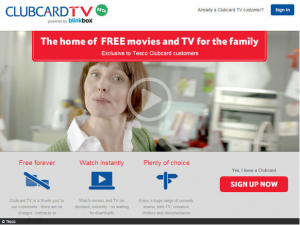
    UK supermarket chain Tesco is set to launch a free online video streaming service called Clubcard TV.

    Currently being internally beta tested by employees and set to launch officially this spring, it will (as the name suggests) be available to all shoppers with a Tesco loyalty card. And the really good news is it will be entirely free. According to Tesco, the new service is a “thank you to our customers — there are no charges, contracts or subscriptions”.

    Powered by Blinkbox, the movie and TV streaming service that Tesco bought a 80 percent majority stake in 2011, it will let customers watch both movies and on-demand TV. At the moment it’s web-only, but hopefully Tesco will be adding a mobile app at some point in the future.

  • Get your questions ready — President Obama returns for a new Google+ Hangout

    Towards the end of January, United States Vice President Joe Biden participated in a “Fireside Hangout” on Google+ to talk about reducing gun violence. A week later it was the turn of Domestic Policy Director Cecilia Munoz who used Google’s social network to discuss immigration reform.

    And next up it will be US President Obama himself taking part in the 21st century equivalent of FDR’s famous radio addresses.

    Days after delivering the State of the Union to Congress, and just as he did in 2012, the President will be answering a selection of top-voted questions in a live-streamed interview.

    Selected participants will ask their own questions, but if you have something to say you can head to the White House YouTube channel and submit a video or text question there.

    You can submit or vote on topics you’d like to hear the President address until 11:59 p.m. ET on Wednesday, February 13. The hangout itself will be on Thursday at 4:50 p.m. ET.

    So do you plan on getting involved and what questions would you like the President to answer?

    Photo Credit: Pete Souza/The White House

  • Dedicated YouTube channel coming to British TV

    Freesat, the BBC and ITV-backed satellite TV operator, has unveiled plans to launch a dedicated YouTube channel from next month. This will be the first time Google’s service has been made available through a free-to-air provider in the UK.

    Available by the end of March, the YouTube channel will be the very latest iteration built on HTML 5 and, according to Freesat, offer a “TV-optimized, visually stunning and fully interactive viewing experience”. Viewers will be able access videos to watch through the main programming guide.

    Peter Sherman, Product Marketing Manager for YouTube said, “We’re happy to be working with Freesat so that Freesat users can now access YouTube from the platform. Our creator community is developing quality content that will delight and inspire viewers and we’re pleased to be able to bring it to people in new ways”.

    Freesat customers require a set-top box to access the service but do not have to pay a subscription fee. The service launched in 2008 and has just sold its 3 millionth product.

    Photo Credit M.Stasy/Shutterstock

  • Microsoft’s attacks on Google are sad and embarrassing

    After I left school I went into sales. And one of the first things I was taught was this: never disparage the competition. Never say bad things about them — even if what you’re saying is true, or you believe it to be at least — because it makes the firm you’re representing seem petty and small.

    Clearly this is a lesson Microsoft needs to learn. The firm’s marketing department, in particular whoever came up with the Scroogled campaign, is doing its best to turn the Redmond, Wash.-based technology giant into a petty, whining child, complaining about a rival rather than championing its own products. Instead of shouting triumphantly, “Use Outlook.com because it’s great and has all these benefits”, Microsoft is reduced to grumbling, “Don’t use Gmail because it reads your emails”. It’s not an aggressive information campaign as some people have described it. It’s a sad and frankly pathetic strategy.

    I like Microsoft as a company, I like (many of) its products and to see it engaging in these sort of low-level scrappy tactics makes me a little sad. Microsoft is better than that. Or it should be.

    The original Scroogled campaign attacked Google Shopping. Microsoft called out its rival for using a “pay-to-rank” practice that presented users with search results that were neither honest nor fair. The latest Scroogled crusade says people shouldn’t use Gmail because Google goes through users personal emails to sell them ads. When I read that I cringed. It was an old, old issue dredged up in an act that surely resulted in the barrel scraper responsible for it getting a handful of splinters in the process. Sarah Perez at TechCrunch summed it up best for me when she reported the campaign with this opening line: “Hey Microsoft, 2004 called. It wants its privacy outrage debate back”.

    Microsoft’s The Browser You Loved To Hate campaign for Internet Explorer is the opposite of the Scroogled one. It’s clever, funny, pokes fun at the veteran browser and sells the product in the process. It makes you respect Microsoft for acknowledging how people feel about IE, and uses goodwill and positivity to attempt to change public opinion.

    Scroogled is mean-spirited and in the case of the Gmail attack, comes across as desperate.
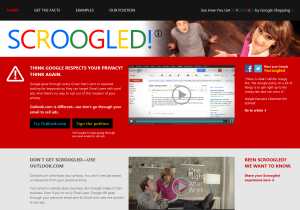
    What future delights does the Scroogled campaign hold for us I wonder? “Don’t use Android because its ideas and technology are stolen from the iPhone!”, “Don’t use Street View because it’s encouraging Google to look through your living room curtains and leach private data from your Wi-Fi”… Perhaps Microsoft will launch an ad campaign aimed at warning Safari users that Google might have tracked them without their permission and promising Bing won’t do the same thing (oh wait, Microsoft already did that last one).

    Of course Google does bad things from time to time, but Microsoft — hardly the most trustworthy of moral crusaders anyway — isn’t the firm to call them out for it. Leave that to the privacy advocates.

    Instead of attacking Google, Microsoft should finally try to learn from it. Google built (or acquired and polished) products that consumers wanted to use. People switched from AltaVista and other search engines to Google because its site produced the best results. Those same people switched from Hotmail to Gmail because Google had the better email service (and didn’t bombarded users with flashing adverts and spam). Consumers use YouTube because it’s fantastic, and Google Maps, Chrome, Reader, Calendar etc. for the same reasons.

    Sure, Google produces a fair amount of duds, but when it scores a success it’s usually because the product it’s offering is superior to what’s out there and people flock to it.

    I won’t switch to Bing, or Outlook.com full time because they aren’t as good as what I’m getting from Google (I briefly moved to DuckDuckGo for search, but got drawn back to Google as we all are eventually). Scaremongering and the unholy trinity of fear, uncertainty and doubt are unlikely to ever make me switch my search engine or email provider.

    But the promise of a genuinely superior product might.

    Photo Credit: eurobanks/Shutterstock

  • Employees frequently steal (and use) confidential data when switching jobs

    According to Symantec, businesses are increasingly at risk of insider IP theft, with staff moving, sharing and exposing sensitive data on a daily basis and, worse still, taking confidential information with them when they change employers.
    A new survey conducted by The Ponemon Institute, and based on responses from 3,317 individuals in the United States, United Kingdom, France, Brazil, China and Korea, shows that half of employees admit to taking corporate data when they leave a job, with 40 percent saying they intend to use the data in their new position.

    In a lot of cases, their actions aren’t intended as malicious, Symantec says. They often just don’t know it’s wrong to take data like this, and frequently fail to understand who owns the IP in the first place (many employees wrongly attribute ownership to the person who created it).

    The survey also found that 56 percent of employees don’t think it’s a crime to use trade secrets taken from a previous employer and 62 percent think “it’s acceptable to transfer corporate data to their personal computers, tablets, smartphones and cloud file-sharing apps”. Once the data is there, it’s rarely deleted.

    It’s a big problem, because as Symantec explains, it “means valuable intelligence is falling into the hands of competitors. Ultimately, this puts everyone at risk — the employee who takes the IP, the organization that invested in it and the new employer who unwittingly receives it. Everyone can be held accountable, and no one wins”.

    Based on the survey results Symantec recommends organizations take action in three ways — educate their employees about IP theft, enforce non-disclosure agreements (NDAs), and monitor inappropriate access and use of IP (something which is often easier said than done).

    Symantec’s complete report, What’s Yours Is Mine: How Employees are Putting Your Intellectual Property at Risk, is available for download.

    Photo Credit:  BruceParrott /Shutterstock

  • BlackBerry’s plans to take over your smartphone foiled by a misfiring app

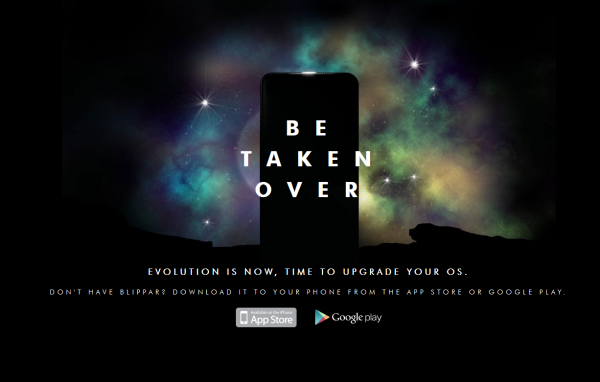
    You’ve read all the press about the new BlackBerry 10 smartphones, and you’re intrigued enough to want to know more. Well, a clever new marketing campaign lets you transform your existing iOS or Android device into a BlackBerry Z10 using augmented reality. Well sort of.

    Unlike the Playboy interactive cover which uses Layar, you’ll need to have the free Blippar app installed on your phone. Once done, scan the special BB Take Over Me webpage (or just scan the image here, if you prefer) and your phone will be instantly transformed into an interactive Z10. Or at least that’s the theory.

    Both myself and my colleague Mihaita Bamburic found it just froze on the “Touch to start” screen. If that’s a genuine representation of the Z10, BlackBerry has a real problem on its hands. Still a bit of perseverance (and a couple of crashes later) and I finally got it working.

    Once your smartphone has been “taken over” you’ll see lots of apps streaming out of the silhouetted phone on the web page. Afterwards you’ll be taken to a demo of the Z10 running in your browser and can try out some of the device’s features for yourself.

    It’s obviously just a bit of fun, but it’s a clever idea (when it works), and one I’m sure we’ll see a lot more of in the future.

  • Layar brings Playboy to life on your smartphone

    The publisher of the Dutch edition of Playboy has started adding Layar augmented reality codes to the cover and certain pages inside of the magazine, providing a little interactive treat for iOS and Android smartphone owners.
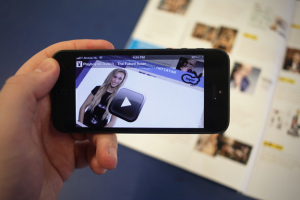
    When scanned with the Layar app, the cover of the current Playboy Netherlands comes to life, showing semi-nude, partially animated clips of the three potential Playmate of the Year cover models, Beau, Nadine and Lotte.

    Inside the magazine, last year’s Playmate winner — Zimra — introduces readers to the interactive magazine in a video, and a secret page allows them to ogle 2012’s worthy winner via the wonders of AR.

    Other content on offer includes videos of gadgets, cars and tech, a flashback to the girls of 1984, music playlist links, movies, TV and videogame trailers, competitions and more.

    “We saw some other magazines who were experimenting with Layar,” Patrick Goldsteen, editor in chief of Playboy NL explains. “This gave us some insights into what we could do with it and we saw some great opportunities to extend the experience of the magazine reader. As Playboy we have a great amount of content but are limited to the 114 pages of the magazine. With Layar we virtually have an unlimited amount of possibilities to publish extra content”.
    If you install the Layar app on your smartphone, you can experience the delights of Beau, Nadine and Lotte by scanning the cover for yourself. It’s NSFW though, so be warned.

  • Liberty Global acquires Virgin Media for $23.3 billion

    International television and telecommunications company Liberty Global has announced the acquisition of the Virgin Media for $23.3 billion in cash and stock, creating the UK’s second largest pay-TV business after BskyB.

    Virgin Media will retain its name and logo, for the time being at least, and the company’s 4.9 million subscribers are unlikely to notice any major changes.

    “Adding Virgin Media to our large and growing European operations is a natural extension of the value creation strategy we’ve been successfully using for over seven years,” Liberty Global CEO Mike Fries said. “Virgin Media will add significant scale and a first-class management team in Europe’s largest and most dynamic media and communications market. After the deal, roughly 80 percent of Liberty Global’s revenue will come from just five attractive and strong countries — the UK, Germany, Belgium, Switzerland and the Netherlands”.

    Virgin Media CEO Neil Berkett commented: “Over the past six years, Virgin Media has transformed the digital experience of millions of customers, catalyzed a deep-rooted change in the UK’s digital landscape and delivered impressive growth and returns for our shareholders. I’m confident that this deal will help us to build on this legacy. Virgin Media and Liberty Global have a shared ambition, focus on operational excellence and commitment to driving shareholder value. The combined company will be able to grow faster and deliver enhanced returns by capitalizing on the exciting opportunities that the digital revolution presents, both in the UK and across Europe”.

    The combined reach of Liberty Global and Virgin Media will cover 47 million homes, and serve 25 million customers across 14 countries.

  • Backupify’s new developer platform aims to accelerate SaaS adoption

    Data security and privacy worries are among the most often cited barriers preventing businesses from moving to the cloud. Backupify hopes to address that concern by rolling out a core set of APIs that will allow Software as a Service ISVs (Independent Software Vendors) to integrate the firm’s data protection functionality into their applications.
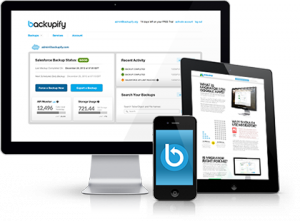
    The aim of the Backupify Developer Platform is to make it easier for SaaS companies to offer the ability to store a secure second copy of their customer’s data off-site through Backupify, thereby assuaging their client’s security concerns. Something Backupify says “will help accelerate market acceptance of SaaS applications by allowing ISVs to continue to focus on what they do best while relying on Backupify to protect their customers’ data”.

    The Backupify functionality can be offered as an integrated component of the ISV’s SaaS solutions, or as an optional upgrade.
    Speaking about the new developer platform, Rob May, CEO of Backupify, said: “Our experience in backup and recovery solutions for Google Apps and Salesforce customers has taught us that there is tremendous demand in the market for independent data protection for all SaaS applications. Customers and ISVs have approached us over the years to support their SaaS applications, which led us to create the developer platform. We’re excited to work with leading ISVs on the initial integrations”.

    The Backupify API and initial ISV partner integrations will be available in Q2 2013, with confirmed beta phase partners including Apptivo, Freshdesk, Mavenlink, Nimble and Pipeline Deals. ISVs interested in joining the Backupify Developer Platform can find out more here.

    Photo Credit: Lightspring/Shutterstock

  • BlackBerry bribes — ah, rewards — app developers with a limited edition red Z10

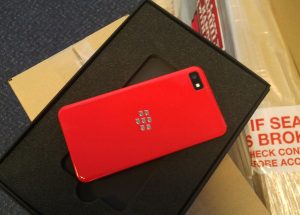
    It’s certainly one way to make sure your app store attracts a decent number of apps — offer developers something that money can’t buy (except possibly later on through eBay). BlackBerry — formerly RIM — has produced a limited edition red BlackBerry Z10 for those developers who created “quality” third party apps for the new BB10 platform prior to launch.
    There will be just 12,000 units of the new device made, and BlackBerry estimates those developers who qualify for one (and who must also have a BlackBerry Dev Alpha A or B testing device), will receive their handsets in 6-8 weeks. The company will email successful developers and explain how to trade a Dev Alpha unit for the new device.

    Each hot-rod red Z10 will have the words “BlackBerry Developer” engraved on it, and come with a unique serial number.

    Announcing the move at the BlackBerry Jam developer conference in Amsterdam today, BlackBerry’s VP of developer relations Alec Saunders said that early developers will be “the only ones that will have these devices because they’re the ones that earned them”.

    He did however, say the phone will also be made available to new developers, provided they get their apps accepted by 28 February, so there’s still a chance you can get your hands on one if you act quickly.

  • The evasi0n iOS 6.x jailbreak now available

    The lack of an untethered jailbreak for iOS 6.x has been frustrating for many iPhone/iPod touch/and iPad users desperate to liberate their devices, install all their beloved jailbreak apps, and apply their favorite tweaks. A friend of mine is keen to buy an iPhone 5, but hasn’t purely because he’s been waiting to make sure of an iOS 6 jailbreak.
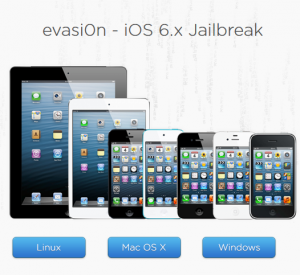
    Well the good news for him, and other users keen to remove the limitations on their Apple devices, is the evad3rs team has rolled out its highly anticipated evasi0n hack for all Apple hardware running iOS6-iOS6.1.

    There are downloads for Windows, Mac OS X and Linux and jailbreaking your device takes five minutes and is very straightforward. Before applying the hack make sure you’ve backed up your device using iTunes or iCloud (triple check everything is backed up before proceeding) and disable the lock passcode feature if on. It’s worth doing a fresh install, updating your device to iOS6.1 via iTunes if you haven’t already done so.

    The evad3rs team warns against using your computer while the jailbreak is going on (especially don’t start iTunes or Xcode).

    If the process halts midway through you can restart the program or reboot your device.

    The important Cydia packages have been updated, so once your device is jailbroken you’ll be able to get the apps you want.

  • The stripped-down Model A Raspberry Pi now available in Europe

    The Model B Raspberry Pi is hardly expensive, costing just $35 (plus local taxes and shipping/handling fees). But if that’s a little too much for you, or you don’t need fancy features like Ethernet, and 256MB of RAM sounds more than adequate, you can now get your hands on the Model A Raspberry Pi for a bargain $10 cheaper.

    Available from Premier Farnell/Element 14 and RS Components, the Model A version of the popular credit card-sized ARM GNU/Linux computer will cost just $25. Although it’s currently only available in Europe, it will be rolling out to the rest of the world shortly. If you live in the US you can pre-order one, but there will be a slight delay before the order can be fulfilled.

    The Model A might have half the RAM, just one USB port and no Ethernet, but that does mean it consumes less power than its sibling, making it ideal for projects powered by batteries or solar power.

    Photo credit: The Raspberry Pi Foundation

  • British Telecom cuts its broadband prices and announces BT Cloud, a new online storage service

    BT has said it will end traffic throttling, remove usage caps on all but its entry level broadband packages, and slash the price too.

    Its new Totally Unlimited Broadband offering will be priced from £16 a month for 16Mbps copper broadband, £23 for 38Mbps Infinity, and £26 for 76Mbps Infinity. New customers will also get the first six months free.

    In addition, the provider is rolling out a new online storage service. BT Cloud is available for all consumer broadband customers, with standard users getting 2GB of free storage, and Infinity 76Mbps and Unlimited customers receiving a much more generous 50GB allowance.

    Making the announcement, John Petter, managing director of BT’s Consumer division, said: “We believe we have boosted our broadband offering by moving our best broadband deals to totally unlimited. Customers told us that they wanted to be able to enjoy catch-up TV, streamed films and other bandwidth-eating applications without having to worry about going over their limit or being slowed down by their ISP. But we wanted to make that really affordable too, without the sort of traffic management Virgin Media, TalkTalk or EE customers may find themselves subject to. Unlike Sky, we’re extremely confident that our network can stand up to the extra bandwidth demands from totally unlimited products everywhere across the UK”.

    Photo Credit: T. L. Furrer/Shutterstock

  • Twitter hacked — approximately 250,000 accounts affected

    If you’ve just received an email from Twitter warning that as a precautionary security measure the micro-blogging site has reset your Twitter account password, and inviting you to create a new one, you should take it seriously. Very seriously.
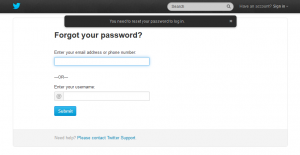
    According to Twitter the service recently “detected an attack on our systems in which the attackers may have had access to limited user information — specifically, your username, email address and an encrypted/salted version of your password (not the actual letters and numbers in your password)”.

    Details of the attack can be found in a blog post in which Twitter explains that the attackers may have gained access to details for approximately 250,000 users. A relatively small proportion, seeing that Twitter has 200 million active monthly users.

    Twitter goes to explain that “this attack was not the work of amateurs, and we do not believe it was an isolated incident. The attackers were extremely sophisticated, and we believe other companies and organizations have also been recently similarly attacked. For that reason we felt that it was important to publicize this attack while we still gather information, and we are helping government and federal law enforcement in their effort to find and prosecute these attackers to make the Internet safer for all users”.

    I’m among the 250,000 users who were affected by this hack and this morning received two messages from Twitter. The first warning that my password had been reset, and the other containing a link to create a new one. If you receive the same messages and, like me, are adverse to clicking these kind of links (this is the perfect opportunity for phishers of course) you can just go to Twitter and try to log in. Enter your old email address, phone number, or username and Twitter will send you a fresh reset link.

    The micro-blogging site says that while “only a very small percentage of our users were potentially affected by this attack, we encourage all users to take this opportunity to ensure that they are following good password hygiene, on Twitter and elsewhere on the Internet. Make sure you use a strong password — at least 10 (but more is better) characters and a mixture of upper- and lowercase letters, numbers, and symbols — that you are not using for any other accounts or sites”.

    All good advice of course. So whether you received the emails or not, now is a very good time to change your Twitter password because you can never be too careful.

    Photo Credit: Julien Tromeur/Shutterstock

  • Kim Dotcom offers a $13,500 bounty to anyone who can break Mega’s encryption

    Mega has come in for some criticism since it launched, with the likes of Ars Technica, among others, questioning exactly how secure Kim Dotcom’s new file storage and sharing service actually is. Cryptography researcher Steve Thomas even created a tool designed to reveal passwords stored in confirmation emails.

    But despite all this, Mega has so far proven to be a sturdy ship. Although it has had a few (quickly plugged) leaky holes, which is to be expected considering it’s still very new, nothing’s come along so far to sink it. And Kim Dotcom is so sure Mega’s security is uncrackable, he’s prepared to put his money where his mouth is.

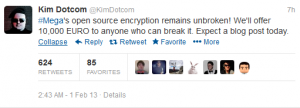
    The brash entrepreneur announced his intentions in a tweet earlier, stating: “#Mega’s open source encryption remains unbroken! We’ll offer 10,000 EURO to anyone who can break it.”

    10,000 euros/$13,500 is a decent amount of cash up for grabs, and will likely appeal to hard up hackers looking to line their pockets and make a name for themselves (the first person to crack the high profile site will no doubt gain a lot of press attention). But I can’t help thinking that if Dotcom is truly convinced his site is uncrackable, the bounty would be much higher. Maybe it will increase the longer the site’s encryption goes unbroken.

    Things have certainly been busy behind the scenes at the new file locker. The service, which now lets you change or reset your password is, according to Dotcom, currently hosting around 50 million files. And the unofficial Mega search engine which popped up was quickly blocked after less than 24 hours.