Category: Mobile

  • Using Public Wi-Fi? Hop Into a Free VPN Tunnel First

    I spent several hours during yesterday’s NewTeeVee Live conference at San Francisco’s Mission Bay Conference Center sitting at the press table with tech writers from various publications who were connecting to the open Wi-Fi network. Before I connected to the center’s hotspot, I loaded a VPN (virtual private network) application, which provides a secure, encrypted tunnel within which I use public Wi-Fi. The one I use happens to be custom and proprietary, and takes about 15 seconds to establish a connection that will keep me completely secure on an open network.

    I noticed, though, that while some of the writers at the conference were probably using firewalls, hardly any of them used VPNs to keep their Wi-Fi sessions completely secure. And these were tech writers. That’s a shame, because there are a lot of good, completely free VPN applications available.

    One of the best choices out there is OpenVPN, an open-source, cross-platform VPN solution. The freeware world, too, includes many VPN applications that users swear by, such as iPig from iOpus and the free version of LogMeIn’s Hamachi. Cisco’s cross-platform VPN client is also widely used, although note that it’s incompatible with some firewalls. Hotspot Shield is also well-liked by many Windows and Mac users.

    Windows 7 actually comes with a built-in Agile VPN client, but it’s not said to be as easy as many of the free, time-tested clients. Snow Leopard Server also offers VPN functionality, and previous versions of the Mac OS have included it. For many users, though, especially ones who don’t have access to help from an IT department, simple, free downloadable VPN solutions–which usually have intuitive interfaces–are great choices.

    VPN applications couldn’t be easier to use. Once installed, you simply sign in to them, and your online communications are routed through encrypted tunnels. Problems with particular VPN clients are typically the result of firewall-related conflicts, but you can easily find an app that works for you.

    As is always true with security software solutions, user apathy is the biggest problem of all. So the next time you use public Wi-Fi, make sure you hop into a secure VPN tunnel first.

    Do you use a VPN application that you like?

  • Apple Has Sold 30,000 iPhones So Far in China

    4058121307_3514e5b517_oApple is expected to ship 11 million million iPhones this quarter, and is banking on China for continued growth, according to an analyst note issued today. Daniel Amir, director and senior research analyst of semiconductors at Lazard Capital Markets, cited China Unicom as sayings it’s sold some 30,000 iPhones in the country since the iconic handset’s launch there on Oct. 30. However, in light of the phone’s high price tag, he isn’t so sanguine about Apple’s prospects in China going forward. From the note:

    In October, iPhone shipment to China reached 700K units even though sell-through has been much lower largely due to the high price point. Apple is likely to continue diverting 10% of the iPhone build to the Chinese market, as the opportunity for China could be significant to future growth of the iPhone. … Overall, in our opinion, the high price point remains a barrier for further iPhone adoption and the current run rate is below expectations.

    Even if Apple can’t keep growing sales significantly through China, it need only wait until its exclusivity agreements are over to keep its sales on the up and up.

  • Google Voice Gets New Free VoIP Service

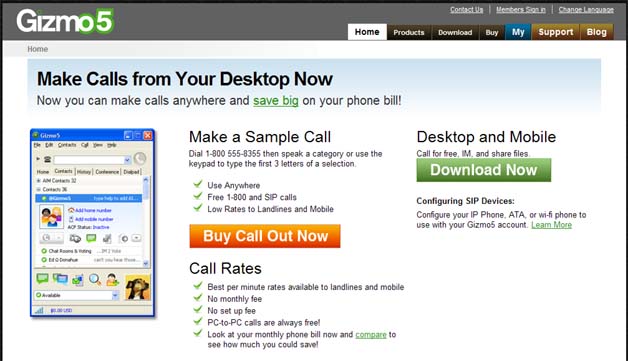
    Earlier this week, reports surfaced indicating that Google had bought Gizmo5, a VoIP firm. The news came just on the heels of Google’s AdMob acquisition. Google has now officially announced that it has indeed acquired Gizmo5.

    "While we don’t have any specific features to announce right now, Gizmo5’s engineers will be joining the Google Voice team to continue improving the Google Voice and Gizmo5 experience," Google says. "Current Gizmo5 users will still be able to use the service, though we will be suspending new signups for the time being, and existing users will no longer be able to sign up for a call-in number."

    "We’ve acquired a number of small companies over the past five years, and the people and technology that have come to Google from other places have contributed in many ways, large and small, to all kinds of Google products," the company adds. "Since the GrandCentral team joined Google in 2007, they’ve done incredible things with Google’s technology and resources to launch and improve Google Voice."

    In a previous report, Doug Caverly of WebProNews noted that Gizmo5 is a good fit for Google. For one, Gizmo5 is free, and Google offers a great deal of free services as it is. It is also available in nine languages, and Google is frequently expanding its reach in this regard with most of its products.

    A couple weeks ago Google announced that Google Voice users can now use their own existing mobile numbers. They no longer have to have a separate Google number. This should be a great way to attract new users. However, at this point, Google Voice is still only available on an invitation basis.
     

    Related Articles:

    > Report Indicates Google Bought Gizmo5

    > You Don’t Need a Google Number to Use Google Voice

    > AT&T Goes On The Offensive Against Google Voice

  • Say Hello to Devicescape Wi-Fi for Nokia, Android

    Devicescape is hoping to meet smartphone users’ increasing demand for Wi-Fi access by broadening support for its Easy Wi-Fi Network to include Nokia and Android-based handsets — beyond currently supported platforms such as iPhone OS, Windows Mobile, Windows and Mac OS X. Given Nokia’s impressive worldwide footprint and Android’s newfound momentum, the move, announced today, should help Devicescape build its customer base in a big way — which will be crucial as the company goes after hardware vendors.

    Devicescape said users can download an app from the Android Market or Nokia’s Ovi to access hundreds of thousands of free Wi-Fi hotspots; the app also includes a map view for locating Easy Wi-Fi locations. The San Bruno, Calif.-based startup, which launched its network last month, competes with service providers such as Boingo Wireless and iPass. Unlike its competition, though, the startup is hoping to cash in on the increasing demand for seamless connectivity by targeting the makers of smartphones, netbooks, digital readers and other connected devices.

  • Yahoo Launches Spanish Version of Mobile Home Page

    Yahoo has launched Yahoo Mobile in Spanish. This is a Spanish-language version of the Yahoo Mobile home page, which is customized specifically for U.S. Hispanic consumers, and is available on over 1,900 devices.

    "By bringing together U.S. Hispanic consumers’ favorite content and services from across the Internet, Yahoo! Mobile en Español enables users to create both culturally and personally relevant mobile experiences," a spokesperson for Yahoo tells WebPronews.

    "Yahoo! Mobile en Español targets a significant addressable set of influential and increasingly mobile U.S. Hispanic consumers," she says. "According to the U.S. Census Bureau there are 46 million U.S. Hispanics, making it equivalent in population to the second largest country in Latin America behind Brazil. According to comScore, mobile Internet usage among Hispanics is outpacing that of all other groups, with 88% of Hispanics consuming content on their mobile phones."

    Yahoo Mobile Goes Spanish

    Yahoo says Yahoo! Mobile en Español will give users the ability to:

    – Discover via results from Yahoo!’s award-winning mobile Search, editor-selected content, and U.S. and global news content presented in Spanish, including the “América Latina” news section, which provides relevant content from the Latin American region.

    – Stay connected through access to email and social networking accounts from the most popular Web providers, as well as instant messaging, address book, and calendar functions.

    – Stay informed by bringing favorite Web content —sports, news, local information, RSS feeds, weather, stocks, horoscopes, and more — to a single location.

    Users can find Yahoo Mobile en Español at espanol.yahoo.com. There are more details in Spanish in this blog post from Yahoo.

    Related Articles:

    > Yahoo Adopts Mobile Advertising Guidelines

    > Twitter Expands Into More Than Just 2 Languages

  • Qualcomm Breaks the Gigahertz Barrier on Smartphones

    Qualcomm has just released a new chip family focused on smartphones, including one that breaks the gigahertz barrier. The chips’ capabilities make clear that the line between phones and low-end notebooks are blurring. They’re based on the Scorpion CPU that is at the heart of Snapdragon chipsets and uses an 800 MHz to 1 GHz custom ARM-based CPU.

    This new chip family, the horribly named MSM7×30, can do 720p HD video (encode/decode), 2-D and 3-D graphics, and has surround sound, integrated GPS and a 12-Megapixel camera as well as all the usual trimmings like Bluetooth and Wi-fi and FM Radio 3G (both flavors). On the multimedia front, Qualcomm is playing catch-up Texas Instruments and Nvidia. The new chips work with all smartphone operating systems except Apple’s iPhone OS. They will be launched sometime next year and are optimized for the web experience.

  • Palm Pre Sales in “Substantial Decline”: Analyst

    palm-prePalm’s bet on webOS isn’t paying many dividends, according to a research note issued by Northeast Securities analyst Ashok Kumar this morning. Domestic sell-through checks point to a “substantial decline” in recent sales of the Pre, Kumar said, and slashing the price to $99 hasn’t helped much. Nor is the upcoming launch of the Pixi likely to reverse the trend.

    Those slowing sales are whittling away at the prospects for webOS, which Palm had positioned as a worthy competitor to the iPhone, Android and BlackBerry platforms. From the note:

    “As a fading brand, carriers are likely to see better returns on their promotional and advertising dollars with other vendors…WebOS has negligible smartphone OS share, 0.2 percent per Gartner estimates, and is unlikely to attract any meaningful third-party application support. Palm has bet the farm on webOS and there is a real possibility that they may not achieve critical mass.”

    The Pre failed to live up to expectations out of the gate — thanks largely to Sprint’s unwillingness to heavily market the gadget (GigaOM Pro, subscription req.) — and Palm’s next best hope for webOS appeared to be an upcoming launch with Verizon Wireless early next year. But as Verizon’s Droid initiative demonstrates, the Google OS has captured the attention of the nation’s largest carrier. If it overlooks the Pre in favor of the Droid, that could put one more nail in Palm’s coffin.

  • My Video Interview With Joe Hewitt, Facebook’s iPhone App Guru

    Much of Facebook’s success on the iPhone has come courtesy of Joe Hewitt, an ace programmer who joined the world’s largest social networking site when it acquired Parakey, a company he co-founded with Firefox kid Blake Ross. Hewitt has now decided to shift his focus away from the iPhone. In a tweet sent out earlier today he said, “Time for me to try something new. I’ve handed the Facebook iPhone app off to another engineer, and I’m onto a new project.”

    Joe was named to GigaOM’s Top 15 Mobile Influencers list earlier this year for his contributions to the iPhone app ecosystem — in particular, for single-handedly turning Facebook into a major force on the iconic Apple device. I recently gave him a hard time over the delays in launching Facebook 3.0, which prompted Joe to stop by our office and take part in an impromptu video chat. Here are the excerpts from that conversation.

  • Are the Symbian Foundation’s Open-source Plans DOA?

    “When Nokia announced that it was launching the Symbian Foundation to great fanfare,” writes John Mark Walker on OStatic, “it had within its grasp that rarest of opportunities to move swiftly and become the dominant open-source mobile platform. Alas, just one and a half years later, Nokia and the foundation have seemingly ceded that position to Android. Instead of recognizing the threat from Android and making strategic changes to counter, they instead criticized Google’s closed-door development of the OS before releasing a line of code themselves.” Can the Symbian Foundation and Nokia recover quickly and deliver on their important open-source promises and goals?  OStatic tackles that question today, here.

  • Holiday Shoppers Turning To Social Media And Internet

    Digital technologies continue to drive a new approach to shopping, with social media and mobile phones becoming key influencers this holiday season, according to a new survey of holiday retail spending and trends by Deloitte.

    Social media is gaining traction with 17 percent of consumers planning to use social media during their holiday shopping, and 60 percent plan to use it to find discounts, coupons and sales information, More than half (53%) plans to use social media to research gift ideas, while 52 percent plan to check the gift wish lists of friends and family.

    Consumers in all age groups plan to embrace social media over the holidays. While more than half (52%) of those who expect to use social media during the shopping process are in the 18-29 years old age group, 33 percent are in the 30-44 years old age group and 12 percent are in the 45-60 years old age group.

    The mobile phone is another digital tool for the holidays that is on track to be used by 19 percent of consumers to help with their holiday shopping. Those consumers plan to find store locations (55%), research prices (45%), find product information (40%), get discounts and coupons (32%) and read reviews (31%). A quarter plan to make a holiday purchase with their phone.

    The Internet ranks as a top shopping destination and continues to see steady growth. Nearly a quarter (22%) of consumers indicate they will shop primarily online this year and many are using the Internet to find special offers, with 44 percent of shoppers expecting to use a coupon they get online.

    Reviews have become another key online source of information, with 39 percent of consumers indicating they often read consumer-generated reviews of stores or products online, and one-quarter (25 percent) saying they will likely purchase a product this holiday season based on an online recommendation. More than a third (34 percent) say that online consumer reviews and ratings influence their buying decisions more than advertising.
    Stacy-Janiak
    "Consumers are turning to mobile, online and social media during their entire holiday shopping experience," said Stacy Janiak, vice chairman and Deloitte’s U.S. Retail leader. "Retailers should consider harnessing this activity to turn browsers into buyers with one-click access to coupons, promotions and purchasing tools."

    "This year’s leaner in-store inventories may also open the door for retailers to lure customers to their online channels where it is easier to access inventory, no matter where it is located."

    The Internet is also changing the traditional store-based purchase process. Almost half of consumers (48%) say they like the convenience of shopping with multi-channel retailers, and 78 percent indicate they have purchased an item in a retailer’s store after viewing or researching the product online. In addition 65 percent have done the opposite and purchased an item on retailer’s website after viewing it in the store or catalog.

    Related Articles:

    >Online Retailers To Have Better Holiday Season

    >Amazon And Walmart Engage In Price War Over Holiday Book Shoppers

    >Consumer Online Spending To Grow 24%


  • Google CEO Schmidt: Why We Bought AdMob

    Google earlier this week said it was buying AdMob, a mobile advertising network, for $750 million in stock — clearly an attempt to get a running start in the mobile advertising business. Together, according to some estimates, the two companies control 30-40 percent of the mobile ad market.

    What wasn’t said was that without AdMob, it would take a long time for Google to get thousands of apps to use its ad service as that would involve re-tweaking thousands of iPhone apps that were using AdMob’s network. Google didn’t have time for that, as CEO Eric Schmidt explained in an interview with Bloomberg:

    “AdMob is clearly the best of its ilk for applications monetization…We think that’s as strategic as search monetization, which, of course, we’re very good at…One the key success points for the iPhone was this enormous development of apps, and particularly free apps, which are advertising supported…Now that we have our Android platform coming out, and really with some serious partners behind it, it will also be important to have that be true for Android as well as the others.”

    Ian Schafer, CEO of Deep Focus, a marketing agency, puts it all in context:

    With the acquisition of AdMob, Google now has access to usage data of many of the most popular mobile apps–especially the apps in the iTunes App Store. For iPhones. If Google is taking on Apple for mobile OS market share, they just scored a huge competitive advantage. Google will know more details than ever about how people are using iPhone apps, how they are engaging with advertising within those apps, and users’ loyalty to those apps. Dashboards like the above only provide a window into the beginning of the mining that Google is likely about to do on their mobile handset competition.

    Get the complete lowdown on mobile app stores, including details on who is doing what, in this special report, which is included in the annual subscription of GigaOM Pro. Subscribe to GigaOM Pro for $79 a year, get this report.

    Google has been worried sick about the rise of the app economy because it undermines its ad-based search paradigm. As Andy Abramson explained:

    If your business is built on things like web based technology (search), cloud based technology (Apps) and advertising from traffic that goes to and through your search engine or when people are looking at their content in the apps, the concept of many app stores has to be very, very scary for a few reasons.

    Well nothing like a bit of fear to loosen the purse strings. AdMob is Google’s second-largest advertising-related acquisition to date, behind DoubleClick, for which it paid $3.2 billion. The company also paid $1.6 billion for YouTube. Notably, Schmidt said he doesn’t view AdMob-sized deals as the norm for future deals.

    Photo courtesy of Charles Haynes via Flickr.

  • If Mobile Carriers Don’t Address Demand for Wi-Fi, Ad-Supported Services Will

    Mobile network operators must find better — and cheaper — ways of incorporating Wi-Fi access into their data plans, according to a new study conducted by two companies with skin in the game. The study from mobile broadband gateway provider Stoke and international Wi-Fi access provider Trustive found that more than 64 percent of the 300 business users polled said they use Wi-Fi for data roaming — apparently favoring the technology over cellular access — and 42 percent of respondents said they plan their Wi-Fi usage in advance of traveling so they know where and how they can access the Internet.

    And price is largely driving their decisions about how they access the web. An overwhelming 86 percent of the 300 business users polled said price was the most important factor in selecting a Wi-Fi access provider, and 72 percent of respondents paid for their own Wi-Fi access.

    Meanwhile, the survey also found nearly two-thirds of users relied on being connected, with 65 percent of respondents accessing the network when they need to download materials rather than carry their information with them. That demand — coupled with the rise in Wi-Fi usage due to the traction of WiFi-enabled phones — indicates a need for mobile operators to embrace the technology more effectively in their data plans, said Barry Hill, vice president of sales and marketing for Stoke.

    “The survey demonstrates widespread dissatisfaction with mobile operators,” Hill said in a prepared statement. “On the plus side, it indicates that due to high and unpredictable data roaming charges, Wi-Fi is the wireless broadband preference for workers when traveling. Users expect operators to bundle affordable worldwide Wi-Fi access together with cellular data plans. Increasingly, they will select operators based on the mixed wireless access experience.”

    But the figures also highlight the opportunities that exist in using free Wi-Fi as a marketing tool, as Stacey and Om pointed out yesterday. Business users feel they must be connected as often as possible wherever they travel, but are footing the bills themselves. If carriers can’t find ways to deliver data plans that incorporate Wi-Fi for road warriors, many ad-supported services such as those funded by sponsors like Google, Microsoft and Yahoo will try to meet that demand.

  • Google Latitude Introduces Location History, Smart Alerts

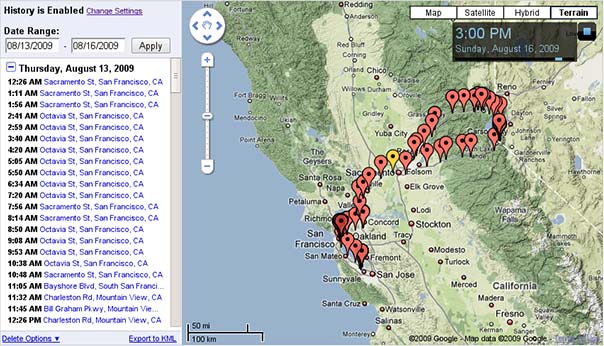
    A quick, but important, note: the stuff we’re about to discuss is only available on an opt-in basis.  So there’s no need to stop halfway through this article and drown your phone or tape it to a neighbor’s car.  Now, with that out of the way, let’s move on to the news that Google Latitude’s gained two features called Google Location History and Google Location Alerts (which is in beta).

    Google Location History may be either the less cool or the less creepy offering, depending on one’s point of view.  A post on the Google Mobile Blog explained that, with it, you can "store, view, and manage your past Latitude locations."  Then, "You can visualize your history on Google Maps and Earth or play back a recent trip in order."

    In another nod to personal privacy, it’s possible to delete part or all of your location history, too.

    As for the second feature, it builds on the first and tries to intelligently connect you with acquaintances.  According to the post, "Location Alerts can recognize your regular, routine locations and not create alerts when you’re at places like home or work.  Alerts will only be sent to you and any nearby friends when you’re either at an unusual place or at a routine place at an unusual time."

    You can enable these offerings here if they suit your style.  And should you later change your mind, Google promises that you can disable them rather than head for the nearest sink or roll of duct tape.

    Related Articles:

    > Google Puts All Of Your Personal Info In One Place

    > Google Tracks User Data To Monitor Load Times

    > iPhone Finally Gets A Google Latitude App

  • Google Maps Adds NYC Subway Layer

    Last night on "30 Rock," Alec Baldwin’s character got lost within New York’s subway system, and due to being covered in bedbugs, received no help from his fellow passengers.  But if the same thing happened to him (or a non-fictional person) today, Google Maps could have come to the rescue.

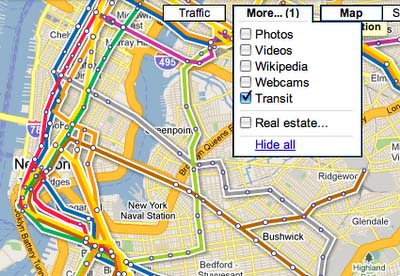
    A post on the LatLong Blog announced this afternoon, "[Y]ou can now see New York’s subway lines drawn out directly on Google Maps as part of the transit layer.  To turn it on, just point Google Maps to somewhere in New York, click on the ‘More…’ button at top-right, and select ‘Transit.’"

    Then, "When you click on any station name, a bubble pops up with the names of the line that service the station, and all the other lines on the screen fade out."

    And the transit layer is accessible through Google Maps for BlackBerry, Windows Mobile, and Symbian S60, by the way, so people should be able to take advantage of it while they’re on the go.

    Lots of New York tourists – and/or GE execs who have been barred from using company cars – are likely to wind up being quite grateful for this offering.

    Related Articles:

    > Google Maps Takes Another Crack At Real Estate

    > Google Launches Analytics For Mobile Apps

    > Google Search By Voice Learns Chinese (In Limited Fashion)

  • Droid’s Opening Weekend Solid, But Not in iPhone Territory

    Unless you’ve been hiding under a rock for the past several weeks, you’ve no doubt been bombarded with the heavy marketing surrounding the new Droid smartphone. Today, TheAppleBlog has a good analysis of the first weekend of sales for the Droid — in which 100,000 units moved — compared with the weekend openings of the iPhone, the iPhone 3G, the iPhone 3GS, and the Palm Pre. In short, the Droid did well, but nowhere near the iPhone releases. The numbers are collected in the chart below. Check Stacey’s thoughts from earlier today as well as TheAppleBlog’s analysis here.

    chart

  • Apple Shoots Past Nokia As World’s Most Profitable Handset Vendor

    Apple became the world’s most profitable handset vendor in the third quarter of this year, reports Strategy Analytics. “We estimate Apple’s operating profit for its iPhone handset division stood at $1.6 billion in the third quarter of 2009,” wrote analyst Alex Spektor. That means Apple overtook Nokia, whose operating profit came in at just $1.1 billion. As Spektor noted, “With strong volumes, high wholesale prices and tight cost controls, the PC vendor has successfully broken into the mobile phone market in just two years.”

    Well I don’t know if Apple can accurately be described as a “PC vendor,” but I do know that it’s seen unprecedented success with its App Store, that Nokia’s share of the smartphone market continues to slide, and that, going forward, Google’s Android may represent the real competition for Apple.

    The iPhone’s success has everything to do with the huge and healthy ecosystem of great applications available for it. Strategy Analytics’ estimates only highlight how many ways Nokia, by comparison, has dropped the ball. For example, the company announced plans to focus on a new, open-source version of the Symbian operating system more than a year ago.

    Fast-forward to today, and the Symbian Foundation has only recently open sourced the operating system’s microkernel. Meanwhile, Nokia reported terrible financial results for its latest quarter, capped by a 31 percent decline in North American sales. If the Finnish handset maker had a more fleet-footed, organized operating system and application strategy, it might have avoided having its lunch eaten by Apple.

    Both the Windows Mobile and BlackBerry line of devices are being forced to confront the power of Android, and the  open source operating system is likely to provide some significant competition for the iPhone as well. As Stacey pointed out this morning, Verizon and Motorola moved more than 100,000 Droid phones this weekend.

    It’s especially worth noting the comment made by Motorola’s Sanjay Jha analyst Mark McKechnie with Broadpoint AmTech, quoted in Stacey’s post, who said: “We estimate each Android unit contributes 4x the gross profit of a feature phone unit and that 10 million Android units will contribute nearly half of the gross profits in MOT’s handset division.” Indeed, from a profitability standpoint, Apple and the Android-based handset players are becoming the ones to watch.

  • What the N900 Means to Nokia

    n900Nokia is hoping to recapture some of its lost glory in the smartphone space with the N900, the flagship device that began shipping today. The long-awaited handset runs Nokia’s new Maemo 5 operating system and boasts some pretty impressive features, including 32GB on onboard memory, multitasking functionality, and a 5-megapixel camera with video capability.

    While the N900 may not be the iPhone-killer Nokia would love to produce — as Om opined last month — it has received positive reviews, thanks largely to Maemo 5’s web browser. Maemo-based Internet tablets have fared poorly in the U.S., but with Symbian gathering dust — and losing customers — Maemo increasingly appears to be Nokia’s best hope for catching up to its rivals in the superphone era. As Fjord’s Christian Lindholm told Om last week (see the clip below), a typical mobile operating system has a shelf life of about 10 years, and building a mobile OS from scratch is a daunting task. If Nokia can find much of an audience with its N900 and Maemo 5, it may be a first step in reversing its fortunes.

    While its Symbian platform remains atop the smartphone space in terms of market share, Nokia is in desperate need of a high-end, web-friendly handset that can compete with the iPhone. The manufacturer continues to lose ground in the vital U.S. market and has watched its dominance erode in its home market of Western Europe as Apple, Research In Motion and others close the gap. And Nokia will surely lose substantial ground to Android in the next few months as Google’s mobile OS gains traction in North America and Europe. The Finnish manufacturer must continue to support its massive base of Symbian customers, of course, but Nokia’s best hope for the long-term appears to be Maemo 5.

  • 4 Scenarios for Android, Minus the Phones

    When the Mobile World Congress conference happened at the beginning of  this year, Fabrizio Capobianco, CEO of Funambol, a mobile application company, described the Android operating system as “a shocking no-show.” Hardly any smartphones there were based on it. That, of course, has radically changed as we approach the end of the year. There is, in fact, so much action surrounding Android on smartphones (GigaOM Pro, subscription required) that its non-phone prospects are being overshadowed. Android has the potential to be disruptive on many types of hardware platforms, and here are four scenarios for what the OS might do beyond phones.

    Usher in Next-Gen Navigation Devices. I recently asked Chris DiBona, Open Source Program Manager at Google and one of the overseers of Android, what he thought of the new Droid phone during a casual, non-interview conversation. He immediately answered that he really liked the new, free Google Maps Navigation for Android 2.0 features, and made some citations that let me know for sure he wasn’t just feeding me a press release. He especially appreciates the fact that you can just pop your Droid into a cradle in your car and it will go straight into the navigation and mapping environment. jkOnTheRun has given the navigation features rave reviews, too, and suggested that they make break new ground for Android in the overall GPS space.

    Become the Most Flexible e-Book Platform. The looming battle between Amazon’s Kindle eBook device and Barnes & Noble’s Nook could “portend the next wave of Android disruption,” Joel West recently noted, hitting the nail on the head. Having Android on the Nook opens the device up to the fast-growing ecosystem of Android applications — potentially a major advantage over the Kindle. It’s puzzling, though, why Barnes & Noble hasn’t included a browser on the Nook device, which would make it even more flexible.

    Bring Intelligence to Digital Entertainment Devices. MIPS Technologies, which provides processors and architectures for home entertainment, portable multimedia, and communications devices, is moving ahead with a number of initiatives focused on the Android operating system.  It has its own Android port that it has open sourced for players in the digital entertainment space to work with. Blu-ray players, set-top boxes, and digital TVs are just some of the hardware devices that MIPS is targeting with its Android port, as EETimes has reported. MIPS has already demonstrated Android running on a home media player and other devices. Archos also has its Archos 5 — a slick video player based on Android, and possibly a hot seller over the holidays. It’s shown at left.

    Biggest Non-Phone Prospects Arrive From Japan. The Open Embedded Software Foundation (OESF) doesn’t get a lot of press in the U.S. and Europe, but it is extremely focused on bringing Android to non-phone platforms, as OStatic covered here. Many heavy-hitting companies are working with Japan’s OESF to take Android to non-phone devices, including ARM, KDDI, Japan Cable Laboratories, Alpine Electronics and Fujitsu Software Technologies. OESF working groups are also collaborating with MIPS on its non-phone Android plans.

    It’s hard to believe that as recently as April of this year, many observers were wondering if Android had already failed. Fast-forward to today, and we’re seeing approximately 20 Android handsets arrive before year’s end — and numerous promising prospects for the OS on non-phone platforms.

  • The Clear Dilemma

    clearwireClearwire, as expected, said today that it’s managed to cajole $1.56 billion out of most of its previous investors to continue its buildout of the Clear WiMAX network. However, those doubling down on WiMAX (see chart) as the ideal fourth-generation wireless technology are likely throwing good money after bad. Even if we ignore the incredible writedowns these companies have had to make related to their first bet on Clearwire and WiMAX, the potential for return on the latest investment is still low. Why? Because Clearwire’s Clear service is stuck between a rock and hard place.

    The Rock

    Knowing that mobile broadband demand will continue to skyrocket, both Sprint and Clearwire  elected to build out WiMAX-based networks under the assumption that they could roll out nationwide mobile broadband before the cellular carriers could. But given that Verizon plans to cover 100 million people with a 4G Long Term Evolution network by the end of 2010 with AT&T to follow two years later, the WiMAX experience for many will be weighed against the cellular experience. And Clearwire can’t provide LTE for two more years, even it if wanted to. To compete, Clearwire, the cable providers reselling the service, and Sprint will have to create compelling packages and services that the cellular providers aren’t offering.

    People can debate the propagation qualities of the WiMAX spectrum, but for the average person choosing a mobile broadband provider, the services and the devices will be the selling point, not the network. Right now, Clearwire and crew are selling basic broadband with relatively few devices. And the larger strategy of providing connectivity to devices like e-readers is pretty risky given that WiMAX isn’t available nationwide. Sprint even lost out on providing mobile broadband for the Amazon Kindle recently when the e-reader went international. Amazon is instead using AT&T, which has a GSM network and arrangements to ensure the e-reader works around the world. When it comes to device connectivity, global standards and large coverage areas win.

    The Hard Place

    With Clearwire fighting the cellular carriers to provide true mobile broadband connectivity for consumer data plans and for M2M deals, some believe it has an opportunity to provide local mobile broadband for folks who want to travel in their towns, but aren’t real road warriors going from city to city. This is a fairly compelling case as it doesn’t require total nationwide coverage, and Comcast, which has begun to offer WiMAX subscriptions as part of its service bundles, has seen strong interest from consumers. But Clearwire faces strong competition in this market from Wi-Fi.

    Both AT&T and Verizon offer their customers free Wi-Fi for subscribers of their high-speed Internet services. Those with cable subscriptions may also have access to free Wi-Fi, and for those that don’t, there are plenty of sponsored hotspots and just a few hoops to jump through at places like your local Starbucks. If you’re going to be lugging your laptop around (and so far, that’s what most WiMAX modems are aimed at), you might as well find a place with Wi-Fi.

    Of course, for some people, WiMAX will be a credible option, possibly as a replacement for wired access (although I’m not excited about that opportunity). My husband, for example, is eager to see how well it works in Austin (coming in mid-November) as he can’t get DSL or cable service at his office, and existing cellular speeds are lousy. Clearwire is also part of an agreement attempting to use WiMAX as the network for utilities’ smart grids, although how Clearwire would monetize that is uncertain. However, given the billions it’s costing Clearwire and its backers to build out its network, I’m not sure the space between the rock and the hard place is large enough for a multibillion-dollar company to thrive.

  • Here’s Why Motorola Bet on Android

    37875The estimate that Verizon sold 100,000 Droid phones this weekend as part of the Droid onslaught is pretty sweet for Motorola, as is the assumption from Mark McKechnie with Broadpoint AmTech that the cellular provider purchased 200,000 of the handsets from Motorola in anticipation of high demand. But the more interesting part of his research note wasn’t the past — it’s the future, namely that he thinks Motorola’s handset business should return to an operating profit next year on the strength of co-CEO’ Sanjay’s Jha’s bet on the Android operating system. From the analyst note:

    We estimate each Android unit contributes 4x the gross profit of a feature phone unit and that 10 million Android units will contribute nearly half of the gross profits in MOT’s handset division.

    And that profit boost is why Jha is betting on Android — and why the bet must succeed. Motorola doesn’t have any more aces, and consolidation is a real threat for the handset industry. After watching Apple’s iPhone and devices from Research In Motion steal profits from the handset industry, Jha hopes Android offers the winning hand that Motorola needs in order to take some of those profits back.