Category: Mobile
-
Google Glass is no iPad
-
Samsung reportedly prepping ‘Galaxy S4 Zoom’ with 16-megapixel camera

-
RunKeeper For Pebble Arrives, Bringing Run, Walk And Bike Ride Progress Tracking To The Smart Watch
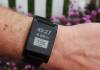
So far, the Pebble smart watch has done little besides offer up watch faces for users to tinker with, but the apps are starting to come in, and today marks the much-anticipated debut of early marquee partner RunKeeper. RunKeeper was an early player in the smartphone-based activity tracker market, and continues to be an industry leader. It was a natural partnership for both Pebble and RunKeeper, and now consumers get to see what the two can do together.
The new Pebble RunKeeper integration works with both Android and iOS apps, and provides the same functionality for both. RunKeeper CEO Jason Jacobs says that his company is very interested in the wearable tech market, and he believes that the key to cracking open a much broader audience for fitness and health tracking tech could be gadgets like the Pebble, which make it even easier to access and use information gathered by tools like RunKeeper.
“What’s really exciting for me is that what people were expecting was that it just makes it easier to have a RunKeeper controller on your wrist,” he said, describing the experience of the Pebble integration’s early beta testers. “But what they’re finding is not only can it do that, but it’s actually more powerful than an app because it’s starting to change the way they’re interacting with the data, it’s more seamless to their experience, it’s not disrupting their flow.”
Jacobs says RunKeeper’s thesis as a company is that that’s exactly what needs to happen in order to help this kind of activity tracker technology find wider purchase among a mainstream audience. “The data needs to be more actionable, and it needs to be proactively given to you so that you don’t need to hunt and look for it,” he said. The Pebble is a good way to achieve that, since it can surface any data that a smartphone, either Android or iPhone, can gather on its wrist-mounted display.
On the Pebble, RunKeeper will display pace, speed, and distance travelled and offer workout start and stop features. It can work with runs, and also bike rides and walks, and does everything most will need to get a lot more out of their smartphone supported workouts right away. It offers RunKeeper a way to compete with wearables like the Nike+ GPS sport watch, all the while allowing them to focus on the tech they do best, leaving hardware to more specialized partners.
“The software is really hard, and we think it’s a really big opportunity, and we want to be the best at the software piece,” Jacobs explained. “Part of that is pushing the phone’s capabilities so that you don’t need hardware, but part of that is also playing nice with all the best of breed hardware that comes out. In terms of being that best of breed hardware ourselves, it’s not in our roadmap or aspirations. It is in our road or aspirations to be a good neighbour.”
This version of RunKeeper for Pebble is just a start, Jacobs says, noting that during the development process they realized they could add in much more, like setting pace on the smart watch, setting distance targets and more. RunKeeper also worked closely with Pebble to get this particular integration developed, and says we’ll see similar UI elements used as other fitness tracking apps come on board. Future work could go into helping RunKeeper differentiate its experience further as the development ecosystem for Pebble progresses.
Jacobs leads me to believe that RunKeeper will be opportunistic about partnerships with hardware companies and other software efforts operating in the same general space, and this Pebble partnership is just one part of a larger strategy to try to find the key to cracking the mainstream market with a product that, while successful, has had more niche appeal up until now. The Pebble is also arguably a niche product, but taken together, it’s possible two things aimed at a very specific audience could combine in just the right way to attract a much broader following.
-
Nokia and Verizon confirm Lumia 928 ahead of official debut

-
HTC still won’t say if the One is ever coming to Verizon

-
A new solution for Galaxy S4 storage shortage: AT&T launches 32GB model on May 10th

-
Does Google Glass need an etiquette guide? WSJ seems to think so

-
America’s newfound messaging obsession rocks the mobile app market

-
Android is eating everyone’s lunch in the U.S. – except for Apple’s

-
The genius of Samsung ads: Even the most gimmicky features look like must-haves

-
BlackBerry R10 photos leak, could kick BlackBerry comeback into high gear

-
Nintendo Offers Smartphone App Porting Tool, But Should Be Porting Its Content To Phones Instead

Nintendo is trying to get people to buy the new Wii U, but it just isn’t working, according to recent sales numbers. Now, the Japanese gaming giant is hoping that helping developers port their smartphone content to the home gaming console with conversion software will help entice buyers, according to the Japan Times.
Smartphone apps on a home console isn’t a novel idea: Sony began encouraging devs to bring their mobile phone hits to the PlayStation network a while ago, and continues to add mobile-first titles to the ranks of the Vita’s portable library. But there’s nothing really indicating that’s making a major difference in terms of attracting customers. After all, why would people seek out those titles on consoles, portable or otherwise, when they’ve already got myriad devices to play them on natively, including the iPhone, Android smartphones and the iPad?
Nintendo looking for ports of smartphone titles is a quick and dirty way to build out a larger software library, and for developers, a way to at least explore a new delivery vector to reach customers they may not already be reaching. But it will probably be a limited audience, made more so by the fact that anyone who’s already a fan of the title on mobile would probably be disinclined to pay for it all over again.
Porting is also a strategy that hasn’t really seemed to have been successful for anyone so far. BlackBerry has encouraged developers to port their Android apps over to BB10 using its own super-simple tool, which by all accounts takes only a few minutes to do its magic. But even still, it’s finding it hard to get developers on board, and that’s going from one mobile platform to another. Incentivizing conversions for mobile devs to bring their titles to a home console will likely be tricker still.
It’s been brought up before, but it bears repeating: Nintendo would probably stand to gain a lot more by reversing the situation, and porting its own blockbuster titles to other platforms, the way that Sony has flirted with doing, and the way that other publishers like Square Enix and Capcom have fully embraced. Admittedly, neither of those are hardware makers like Nintendo, but arguably that makes things more imperative for the Mario creator, which is having a really rough go of its hardware efforts, with lots of money sunk into a brand new console just at the beginning of what has been a 10-year release cycle in the past.
I wouldn’t mind having something like Dots on my Wii U, if I had or cared about one, but it’s not going to convince me to go buy that console. On the other hand, I’d love Super Mario World on the iPhone (a legit version, not via emulator) and would pay dearly for the pleasure. You’ve got the funnel all wrong, Nintendo, and it isn’t going to bring the people back.
-
Tactus And Synaptics Create A Reference Tablet For OEMs With An Amazing, Disappearing Keyboard

One of the most impressive things we happened upon at CES this year was the Tactus keyboard, a special fluid-filled layer that could be baked into a tablet or smartphone to provide users with a physical keyboard that could recede back into the screen when it wasn’t needed.
Since then the company has been flying under the radar, but it turns out Tactus has been hard at work on a prototype device with help from a prominent player in the touch interaction space. Tactus confirmed to TechCrunch that it has partnered with touch panel experts at Synaptics to create a reference device — a 7-inch Android-powered tablet — that it will begin shopping around to OEMs and carriers at the end of June.
As you might expect, the company was hesitant to name names, but newly-installed sales and marketing VP RK Parthasarathy noted that “multiple tier 1 OEMs” are already waiting for a chance to fiddle with the 7-inch reference design kit, and that the first Tactus devices were still slated to be shown off some time this year… just not around these parts. Instead, Parthasarathy expects the first official Tactus-enabled tablet to make an appearance at a trade show in Asia in Q4 (the tight-lipped VP wouldn’t confirm which) before popping up at CES in early 2013.
Fortunately, it seems as though those Tactus-enabled tablets may able to compete on price just as devices like the Nexus 7 and Kindle Fire do right now. Despite the seeming complexity of adding a fluid-filled outer layer to a tablet’s screen, it’s apparently a walk in the park compared to the alternative. According to Parthasarathy, the process of handling and cutting down glass for the traditional cover lenses that sit over tablet displays is cumbersome and pricey enough that implementing a Tactus layer is a viable financial alternative. The fact that the keyboard can be made to work with whatever OS sits below it is an intriguing proposition to boot — there’s nothing stopping Microsoft or Apple from running with these things short of a mismatch in vision.
The move works rather nicely for Synaptics too — the company’s touch layers have become ubiquitous in laptops and smartphones, but short of an appearance in Samsung’s 10-inch Galaxy Tab 2.0 Synaptics hasn’t had much success in cracking the tablet market.
“The tablet market has been evolving, and Synaptics has been criticized for being late to the game,” said Synaptics technology strategist Dr. Andrew Hsu. Granted, the tablet market is still relatively small compared to the handset business — while Synaptics’ presence in tablets has been modest, it hopes that partnering with Tactus can help them pick up steam in an already-crowded market.
It’s an incredibly neat concept and seems to work well enough in practice, but are people really clamoring for a return to more tactile way to interact with their devices? After all, big names in the mobile space like Samsung have been tinkering with ways to users to manipulate their gadgets without the need to lay a finger on them. In short, are touchier keyboards really the way forward? At least one person would probably agree, but as far as Tactus is concerned there’s nothing to stop an OEM from baking a whole host of interaction methods into a single device.
“What we’re seeing is a natural evolution,” Parthasarathy pointed out. “We don’t believe there is a single interaction mechanism that belongs on every device. Users will have a multitude of interface options, but serious content creation requires a physical interface.” We’ll soon see if the Tactus vision ultimately pans out — with any luck, that initial batch of Tactus tablets will go on sale a few months after appearing at CES.
-
Mobile PC Market To More Than Double On Demand For Tablets And Touch PCs, According To Report

The mobile PC market isn’t doing great, but that’s only if you look at it independently of tablet device sales. NPD DisplaySearch now says that over the next five years, however, the mobile PC market will more than double, growing from 367.6 million units in 2012 to 762.7 million by 2017.
The growth is being driven by a sea change in PC computing, as tablet PCs continually replace your standard notebook form factors, and touch gets built in to more and more laptop devices. Almost every manufacturer now has at least one touch-capable model, which is actually required for Windows 8 certification, and which helps explain ambitious devices like the Asus Aspire R7.
In the near-term, NPD DisplaySearch expects tablet shipments to rise 67 percent year-over-year in 2013, reaching 256.5 million on their own. Notebook shipments are expected to slow in general, down to 183.3 million in 2017, from 203.3 million in 2013. NPD predicts growth for certain categories, including touch-enabled devices, and even projects that devices like the MacBook Air and Ultrabooks will adopt touch in the coming years.
NPD doesn’t see Windows 8 actually driving touch adoption, despite the requirement by Microsoft for certification. That’s probably because of reportedly lackluster sales performance by Microsoft’s latest OS so far, but still the category will grow as OEMs look to invest more in hybrid devices, sliders and tablet-style form factors that could potentially resonate better with where consumers seem to be spending their computing dollars these days.
Despite the generally rosy outlook NPD DisplaySearch paints, the fact remains that now, Apple is the company that stands to gain the most from an upsurge in tablet popularity. It sold around 19.5 million iPads during Q2 2013, representing 65 percent year over year growth, and so far no one has been able to come close to that. Others are slowly making inroads, however, including Asus, which reported its Q1 2013 earnings today, including 3 million tablet sales that offset notebook and PC component losses to the tune of $202 million in profit.
-
Five things you can actually learn from #followateen
If you want to take a look at Generation Overshare, there’s no better place to do it than #followateen, one of those internet things that’s grown over the past month to take on a life of its own. With #followateen, adults are picking random teenagers to follow on Twitter and then reporting back on what “their teens” are up to.
This isn’t a new idea, but it was revitalized by Buzzfeed’s Katie Notopoulos in early April, who suggested people pick a teen and find out what kids are up to on Twitter these days. The hashtag took off, and if you haven’t searched for the results recently, you should.
My teen hates school because you have to wear pants there. I love my teen. #followateen—
Choire Sicha (@Choire) April 12, 2013#followateen update 2: he's upset about being placed into remedial english next semester. He also spelled remedial wrong. Good luck, teen!—
Brandon (@BrandonTCX8) December 30, 2011Not sure I understand the #followateen hashtag. Are people really following random teens? How do you find one to follow?—
Matt Yglesias (@mattyglesias) April 30, 2013(Sometimes the teens even catch on.)
My teen says she's pretty sure my deer tweet is about her, and she's pretty sure she doesn't know me. #followateen—
Meaghan O'Connell (@meaghano) April 13, 2013Aside from making fun of random teenagers, the growth of the hashtag can actually teach us a good deal about teens, social media, and our weird relationships with the internet. Here are five things I actually learned from #followateen:
Life is a lot harder for teenagers in 2013
When Timeline came out last year, I went back and deleted a lot of old wall posts, and I was shocked by the volume of bad photos and inane thoughts my friends and I posted. (i.e., “Do you have a copy of the math homework?” or “OMG lacrosse practice was so hard today.”) At the time, I thought that teenagers had probably learned from my generation’s early adoption and over-sharing, and that today’s teens had stopped posting as many inane, personal moments online. Surely they’d come to realize that everything they post on the internet is public and searchable forever.
Hahahaha. No.
Scrolling through posts from teens on Twitter this week, it became clear that they have not stopped posting personal, intimate details of their lives online for anyone to search, and if anything, they’re posting even more. As someone who went through high school missing one of my front teeth (don’t ask), I cringe for the future selves of these teens who will wish they’d posted a little less for the public to see. And in my (pretty recent) day, we didn’t even have Instagram or Tumblr.
PROMMMMM TOMORROWWW CANTTT WAITTTTT 😁😘😍😙—
May29th™ (@TiiAHBHOO) May 03, 2013I have 6 school days left in my senior year and I just got my first detention ever for leaving gym class early. Ha. #whatajoke—
ʝαє∂єи вαяℓσω (@jaebarlow) May 03, 2013im grounded, so i guess i will just make some vines—
jason orcutt (@jason_orcutt) May 03, 2013#followateen is the future
You can lament those selfies and poor grammar on Twitter all you want, but how teens are using social media like Twitter today is likely going to have an impact on what we’ll all be using ten years from now. Companies like Facebook and Twitter are struggling to build advertising networks and continue to add new users, but data has shown that many of those new users are actually coming from older generations, as kids are being drawn to new sites like Snapchat, Vine, Wanelo, Tumblr, and Instagram.
You and I don’t use Twitter the same way
When I log on Twitter, I find people talking about the latest tech news, debating the proper way to report corrections to tweets, and LOLing at internet trends like #followateen. I bet the average age of the people I follow is 30. But searching for teen-esque hashtags and scrolling through the resulting posts was an incredible reminder that Twitter is entirely what you make of it, and that my experience on the network probably looks nothing like yours.
It’s easy to forget when everyone becomes so accustomed to his or her personal feed that this is true. I would guess that there’s far less disparity in people’s different Facebook and Instagram experiences, because those social networks are much more dictated by the design of the sites and the types of content people can post. But on Twitter, you create your own adventure.
Twitter is totally creepy, whether or not you #followateen
Yes, it can be super creepy to #followateen on Twitter and treat that teen like a zoo specimen for observation. But Helena Fitzgerald of The New Inquiry points out that, really, following a teen and reporting back on the hilariousness of their lives is no different than most of our Twitter relationships, where we follow people and retweet them and view their tweets as news; especially when most of them never follow us back. Humans are curious about other people by nature, and Twitter plays up that curiosity in ways that can be creepy but also completely entertaining.
Stupidity on the internet is certainly not confined to kids
Lest the adults get too full of themselves and their superiority over the teens, the emergence of the #followanadult hashtag on Friday serves as incredible reminder that adults can be just as predictable and boring online as the teens are.
Growns who think teen tweets are dumb (#followateen) should see their fellow adults'. Today we dare to #followanadult. Join us won't you?—
Rookie (@RookieMag) May 03, 2013#followanadult my adult is posting articles about divorce, punctuated by wiz khalifa lyrics.—
m.h. (@zefzefmeredeath) May 03, 2013my adult gets a text, email and phone call from Walgreens when his prescription is ready. He thinks this may be overkill. #followanadult—
shannon (@shansperl) May 03, 2013@tavitulle My adult's corporate employer is planning an office-wide Harlem Shake parody. #followanadult—
Kirsten Reach (@KirstenReach) May 03, 2013my adult is out of kombucha #followanadult—
Tavi Gevinson (@tavitulle) May 03, 2013
Related research and analysis from GigaOM Pro:
Subscriber content. Sign up for a free trial.- Facebook’s IPO filing: ideas and implications
- Flash analysis: future opportunities for Pinterest
- Pinterest reawakens Napster-style debate over copyright


-
For the wearable tech market to thrive, it needs to get in better shape
Any attendee at this year’s CES couldn’t help but notice the sheer number of wearable health vendors in the health and fitness section of the convention floor. What was once a small corner at last year’s show has blossomed into a couple hundred exhibitors. Confirming the trend is real, ABI Research claims that nearly 30 million wireless wearable health devices were shipped in 2012 and that figure is projected to grow to 48 million in 2013. But with so many new companies producing their activity monitors, fitness trackers and calorie counters, what is the tangible future for this segment of emerging tech?
Well, we may have gotten a preview of that recently with Jawbone’s acquisition of BodyMedia (Disclosure: the author’s company, Comcast Ventures, is an investor in BodyMedia). Coming on the heels of Zeo closing the doors on its innovative sleep tracking device, is it possible the pendulum is already swinging from proliferation and expansion to consolidation in just four short months since CES?
I think it’s still too soon to make that call, but clearly market leaders like Jawbone are looking forward, identifying what still needs to be solved in this category, and acting strategically. It’s going to be a land grab for the right talent, intellectual property and data that can help.
Below are three key components that companies in the wearable technology segment still need to address in order to produce positive results for today’s consumers and stay relevant:
- Accuracy and efficacy: The core sensing technology for many of these products is a three-axis accelerometer of the same sort found in our smartphones. A lot can be inferred from one sensor, but having a multitude of sensors sharpens the accuracy of what we think the body is doing. That’s why we are seeing additional sensors such as heart rate, skin temperature, galvanic skin response and heat flux becoming more prevalent in these devices. It’s also critical to appreciate the increased order of magnitude in difficulty when going from one sensor to multiple sensors. Sensor fusion is the future, but sensor fusion is hard. Only true data scientists need apply.When dealing with personal health, “close enough” is not good enough, and this class of product could be leading its consumers astray. The healthcare industry is accustomed to conducting clinical studies and publishing research findings. While that model is perhaps a little heavyweight for fitness trackers, there is still room for greater transparency on the accuracy and efficacy of these devices. Simply put, accuracy shouldn’t be in the eye of the beholder, and can only be achieved by benchmarking against voluminous amounts of data over a sustained period of time. In order to establish and justify widespread consumer trust, there needs to be independent analysis against gold standards, shared in a public setting.
- The right form factor for the occasion: At CES 2013, we witnessed new wristbands from Fitbit and Fitbug (Disclosure: see below), new forearm bands from Scosche and Wahoo, new clip-on units from Withings and GeoPalz, and new watches from Basis and Mio. The technology has also moved to T-shirts, headbands, hats and shoes and BodyMedia showed off a more jewelry-like form factor. Clearly there’s a lot of experimentation with form factor going on, and the question remains whether one dominant type will emerge that rules them all, or if instead manufacturers evolve to a product line strategy with a SKU that accompanies each corresponding daily activity.We’re accustomed to changing our clothes during the course of the day, so some would argue it’s not unreasonable to think we may some day adopt the habit of change our assemblage of devices, too. But a strong case can be made too that passive tracking may be the preferred long-term model over premeditated, active tracking – we’ve all witnessed too many New Year’s resolutions fall by the wayside to assume otherwise.
- Coaching and counseling: At its core, all these devices encourage behavioral change in an individual to lead a more active, healthy lifestyle. Any weight loss or fitness professional will tell you that maintaining a behavioral change is extremely difficult and so when left as a solo endeavor, the chances of long-term success are less than promising.Thus several companies have wisely paired their products with fitness services to increase consumers’ chances for success: Philips Active Link is available to Weight Watchers members, BodyMedia is a long-standing partner with 24 Hour Fitness, and Fitbit collaborates with Retrofit. Incorporating the use of these devices in a larger, more holistic program makes a lot of sense and may become the predominant model of engagement in the future. For sure, the data scientists can make the data dashboards coming off of these apps more intuitive, more actionable, more DIY, but the successful system of tomorrow may just need to expand its scope into “services” such as coaching and counseling.
We are experiencing more consumerization of healthcare and this class of technologies engenders more knowledge and more transparency. For this category to have the long lasting affect we all hope for, however, the technology needs to evolve beyond simply measuring calories burned or steps walked. The market winners and losers are starting to take shape.
Disclosure: Fitbit is backed by True Ventures, a venture capital firm that is an investor in the parent company of this blog, Giga Omni Media. Om Malik, founder of Giga Omni Media, is also a venture partner at True.
Michael Yang is Managing Director of Comcast Ventures.
Have an idea for a post you’d like to contribute to GigaOm? Click here for our guidelines and contact info.

Related research and analysis from GigaOM Pro:
Subscriber content. Sign up for a free trial.- Connected world: the consumer technology revolution
- The future of mobile: a segment analysis by GigaOM Pro
- What the Google-Motorola deal means for Android, Microsoft and the mobile industry

-
Microsoft’s new plan to boost Windows Phone: Sell dirt-cheap Lumias at Walmart

Windows Phone has been far from a rousing success so far, but that hasn’t stopped Microsoft from trying to goose sales of Windows Phone devices in any way it can. AllThingsD reports that Microsoft’s latest strategy involves pushing Nokia’s dirt-cheap Lumia 521 into Walmart and selling it for $150 off-contract. The goal is to undercut the appeal of subsidized devices such as the iPhone and the Galaxy S4, which both sell for $200 or more at most retail outlets if users sign two-year service contracts. But by offering the Lumia 521 through T-Mobile without a service agreement and at a comparatively low monthly rate of $70 for voice and data, Microsoft may have found a clever way to attract budget-conscious phone shoppers. The Lumia 521 features a 4-inch 800 x 480-pixel display, a dual-core 1GHz processor and a 5-megapixel rear camera.
-
Bargain-bin smartphones vault ZTE into the top 5 in U.S. market share

-
Apple’s low-cost plastic iPhone will reportedly launch in limited supply

-
The Google Now dilemma: Yes, it’s kind of creepy — but it’s also incredibly useful
One of the reasons I decided to make the switch from using an iPhone to an Android phone — in addition to the freedom it allowed me from Apple’s walled garden — was that I was interested in trying out Google’s version of “augmented reality” search, namely Google Now. Although I’ve used it periodically over the past few months, the utility of it really started to hit home while I was on a recent trip to Europe and relied on my smartphone as a lifeline.
While there is something undeniably creepy about the Google Now service, I have to admit that it is also very useful — so much so that I couldn’t imagine going on a trip without it. I’m already imagining how it and other kinds of “anticipatory data” services (including Google News updates) might work through Google Glass.
Useful information when you need it
It’s not that Google Now is really all that revolutionary, in the sense of being surprising or magical or having whiz-bang special effects: it just collects a broad range of information about you and your activity from your search history, your calendar, your email, web services you are signed into, and so on, and then uses that to show you information that is relevant to what you are doing or where you happen to be (Google recently introduced it for iOS as well as Android).

In a way, that could be part of the reason Google Now is so appealing — it doesn’t try to impress you, it just works silently in the background, in more or less the way you would expect it to. That in itself is something to be grateful for.
The first time I noticed myself depending on it (or at least noticing how useful it was), came when I was getting ready for my flight to Italy: sliding upwards from the home button on the Nexus 4 showed a series of Google Now “cards,” and the first one said that my flight had been delayed by an hour. Since I was panicking at that point about how much I still had to do before leaving for the airport, that information was incredibly helpful. I could take a bit more time and relax.
Meanwhile, the second Google Now card showed the traffic on the highway and told me that I should probably give myself more time than usual to get to the airport — and when I got closer to the time of my departure, a third card showed my boarding pass information, including boarding time and the gate number (Google Now got that info from my calendar, but it also supports scannable boarding passes for a limited number of airlines).

Not revolutionary, but evolutionary
Again, none of this information was specific to Google Now, or derived magically by Google search trickery: I could have easily found out about my flight being delayed by using a service like FlightStats, or by checking the website for the airline or the airport itself — and I could have checked the traffic on any number of sites. But the point is that doing these things would take time, and I was already pressed for time. Seeing it all displayed in front of me in a simple way, without me having to do anything, was exactly the kind of thing a virtual assistant is good for.
Google Now continued to perform this kind of function while I was travelling (once I got a local SIM card, of course, so that I wouldn’t get robbed by my carrier for roaming charges). It told me that my connecting flight in Munich was on time, which allowed me to prepare for possibly not making my connection — and once I arrived in Italy, it informed me of the weather, the traffic from the airport in Rome, and also showed me photos of nearby sights that I might want to visit.
These latter aspects were also very useful for someone visiting a foreign country: I didn’t have much use for them while I was at home, but they instantly became much more important when I was travelling. Like the flight information or traffic, I could have found that content myself by doing a web search — but it was much handier to have it displayed for me automatically. And I started to imagine what it might be like to simply look at something like the Colosseum with Google Glass and have information about it appear in front of my eyes. Geeky? Yes. But also hugely useful.

The privacy tradeoff is worth it
The part that clearly disturbs some people about Google Now is the data collection that is involved in making it work: the tracking of your web searches, your calendar appointments, your location via GPS, the photos you have posted, the flights you are preparing to take, and so on. There’s no question that this is invasive — and some users will undoubtedly decide that it’s not worth the tradeoff, and choose to keep the information to themselves. I think the benefits outweigh the disadvantages.
Are there ways Google could use this information that I might not like? Of course there are. But I trust that Google is aware enough of the dangers — both legal and commercial — of engaging in that kind of behavior that they will avoid it. While some may choose to see Google’s ambitions in this area as evil, I think the company’s goal remains the same: to provide services that encourage users to spend more time on the internet and produce more data that improves Google’s search and/or advertising algorithms. And I am okay with that.
In return for providing some anonymized data and behavior patterns, I get access to a personalized assistant that is not only more unobtrusive than any human version would be, but is also faster and completely free. That’s a pretty good bargain.

Related research and analysis from GigaOM Pro:
Subscriber content. Sign up for a free trial.- Connected world: the consumer technology revolution
- What the Google-Motorola deal means for Android, Microsoft and the mobile industry
- The future of mobile: a segment analysis by GigaOM Pro