Category: Mobile

  • Facebook beats revenue estimates for Q1 earnings with $1.46 billion, misses on profit

    Facebook announced $1.46 billion in revenue Wednesday for the company’s first quarter of 2013, narrowly beating analyst estimates of $1.44 billion in revenue. The company saw first-quarter earnings of $0.12 per share excluding one-time charges, compared to analyst expectations of $0.13 per share. The first quarter revenue of $1.46 billion compares to revenue of $1.18 billion from the same quarter of 2012.

    Facebook saw monthly active users hit 1.11 billion as of March 31, 2013, an increase of 23 percent increase over last year. Daily active users hit 665 million on average for March, compared to the 1.06 billion monthly actives and 618 million daily actie users reported in December 2012.

    Related research and analysis from GigaOM Pro:
    Subscriber content. Sign up for a free trial.


  • Another blow for BlackBerry: Apple, Samsung devices to gain security approval from DoD

    Samsung iPhone iPad government approval
    The United States Department of Defense will reportedly grant security approval to Samsung’s Galaxy smartphones and Apple’s iPhone and iPad running iOS 6 for use by Pentagon officials, according to The Wall Street Journal. Both companies have been pressing officials to grant them clearance and allow Defense employees to switch from outdated BlackBerry devices. The Defense Information Systems Agency, which is in charge of sanctioning commercial technology for use in the Pentagon, will reportedly determine in the coming weeks that Samsung’s Galaxy line of smartphones that come preloaded with the company’s Knox security software comply with the agency’s Security Technology Implementation Guide. In a separate determination, the agency is also expected to allow Apple’s smartphones and tablets running iOS 6 to be used by military agencies for “nonclassified communications,” such as email and basic Web browsing.x

  • Nokia’s Lumia faces a brutal May challenge from low-end Android vendors

    Nokia Lumia Asian Market Analysis
    A month ago, Nokia was surfing a wave of enthusiasm in Asia. The cheap Windows Lumia 620 and Lumia 520 models both debuted in the top 5 of India’s biggest web retailer, Flipkart. Just four weeks later the situation has changed dramatically. Nokia has just one Lumia left in the top 10 chart of Flipkart and both the 620 and the 520 have crashed out of top 10. One major problem: The low-end Android vendors are now offering truly nutty value for money. Nokia’s Lumia 620 is supposed to be an attractively priced budget model at 14,000 rupees ($260) without carrier subsidies, or about half the price of high-end Samsung smartphones. The Lumia 520 is supposed to be deep value at 10,000 rupees ($186).

    But the Micromax Ninja A89 now features a 4-inch screen and 1 GHz dual-core processor and sells for just 6,500 rupees ($121). Under pressure from Micromax and Karbonn, Samsung has dropped the price of its Galaxy S Advance to 14,000 rupees ($260), and this gets you a 4-inch Super AMOLED screen and a 5 megapixel primary camera. Nokia simply has not been able to keep pace with the price aggression of Asian Android vendors this spring.

    The problem is not limited to Lumia models because Nokia’s Asha range of premium feature phones is clearly caught in a similar vise. The relatively fancy Asha 306 has plunged out of Flipkart top 50 over the past couple of months. It offers a 3-inch display and a 2 megapixel camera for under 4,000 rupees ($75), which was a decent deal last summer. But now there are real Android smartphones like the Karbonn A1 offering a 3.5 inch screen and a 3-megapixel camera for the same price.

    Why would a budget buyer with 4,000 rupees opt for a Nokia budget phone if the alternative is an Android smartphone with a bigger screen and a camera with higher specs for the same price? The answer used to be quality. It is widely known that vendors like Karbonn and Micromax offer suspect photo quality and often sub-optimal software performance. But that argument seems to be losing its power as Android price points continue heading south.

    The Lumia 720 is still the No. 1 phone at Flipkart. But in the budget category where Nokia has pinned its hopes for volume growth in 2013, both low-end Lumias and Asha models are withering under the brutal price offensive from Android specialists. Over the coming months, Nokia simply has to come up with a new strategy. Either introduce a cheaper new Lumia range or drop the prices of the 620 and the 520 rapidly and aggressively. The current formula is not working.

  • Z10 helps BlackBerry gain share in April as Apple slips

    BlackBerry Market Share April 2013
    As BlackBerry begins rolling out its second BlackBerry 10 smartphone, the struggling vendor will at least have some good momentum to build on coming out of April. According to market watcher Net Applications, BlackBerry gained usage share in April after losing share in each of the two prior months. While BlackBerry only accounts for a minuscule portion of global mobile usage — 1.51% in April, less than Symbian’s 1.73% — it’s at least moving in the right direction, up from the low of 1.39% it hit in February. IOS shed about 1.5 points in April to fall to a still-dominant 59.04% according to Net Applications, while Android smartphones and tablets gained more than a point to climb to 26.02%.

  • Microsoft could generate $8.8 billion annually from Android royalties by 2017

    Microsoft's Android licensing agreements
    Google unlawfully used technology from Oracle, Microsoft and others when creating its Android and Chrome operating systems, leaving its vendor partners exposed. Rather than engaging in expensive and often drawn out lawsuits, a majority of Android vendors have signed licensing agreements with patent holders. Microsoft has already signed licensing agreements with more than 20 Android manufacturers, including big-name players such as HTC, Samsung and LG. The company claims that 80% of Android smartphones sold in the U.S. and most devices sold throughout the world are now covered under its various agreements.

    Continue reading…

  • Siri creator says texting-while-driving study was flawed, Siri is safe

    Siri Driving Safety Study
    A recent study suggesting that Siri and other voice-to-text services are just as dangerous to use while driving as traditional text messing is seriously flawed, according to one of Siri’s co-creators. The study, conducted recently by the Texas Transportation Institute at Texas A&M University, found that drivers who were texting took about twice as long to react as drivers concentrating only on the road. The delayed reaction times were roughly the same for drivers using Siri, but the service’s co-inventor Adam Cheyer argues that the study “seems to have misunderstood how Siri was designed to be used.”

    Continue reading…

  • AT&T And LG Make The U.S. Optimus G Pro Official, Coming May 10 For $199.99

    gpro1

    LG’s Optimus G successor, the G Pro, is coming to AT&T on May 10 with pre-orders beginning May 3, the companies revealed in a press release today. LG’s Optimus G Pro offers a 1.7GHz quad-core processor, 2GB of RAM, a 5.5-inch 1920×1080 display with a pixel density of 400ppi, and a 13 megapixel rear-facing camera. The G Pro will be available on a two-year agreement for $199.99, and packs AT&T 4G LTE cellular connectivity.

    Chris checked out the G Pro back in February at Mobile World Congress in Barcelona, and came away with a decidedly positive overall impression. The phone’s high points seem to be its camera and light and slim design, as well as a built-in IR blaster that means it can operate as a universal remote for you TV and other home electronics.

    The phone’s arrival was hardly a surprise, having been leaked earlier by Android Central, which pegged the exact date. Then LG announced an event for today, May 1, and went on to confirm that this would indeed be about the Optimus G Pro late in April.

    For LG, it’s a phone that follows the Optimus G, a flagship device that has done fairly well so far, hitting the 1 million sales mark back in January of this year, after a release in September 2012. The G also provided the basic groundwork for Google’s Nexus 4 Android reference device, which reached 1 million in handset sales in February, according to an estimate based on serial numbers calculated by Nexus 4 owners.

    The G Pro will be going up against the extremely well-reviewed HTC One, and the Android juggernaut, Samsung’s Galaxy S4, so it’s got a lot to compete with. But for fans of the last two major LG-made devices, this looks to be decently attractive upgrade.

  • AT&T’s LG Optimus G Pro launches on May 10th for $199.99

    LG Optimus G Pro Release Date
    AT&T on Wednesday announced the upcoming launch of LG’s latest flagship smartphone, the Optimus G Pro. The newest addition to LG’s Optimus smartphone lineup features a 1.7GHz quad-core Snapdragon processor, a 5.5-inch full HD 1080p display, a 3,140 mAh battery, a 13-megapixel camera and Android 4.1.2 Jelly Bean. “The LG Optimus G Pro gives AT&T customers the ability to create and share rich content easily,” said AT&T’s SVP od devices, Jeff Bradley. “There’s no better place to experience that content than exclusively on our 4G LTE network, the nation’s fastest.” The Optimus G Pro will cost $199.99 on contract when it becomes available beginning May 10th.

  • Insiders fear Apple may not debut iOS 7 on time

    Apple iOS 7 Delay
    Apple is expected to announce the next version of its iOS operating system at its Worldwide Developers Conference later next month. According to a report from Bloomberg, design chief Jonathan Ive is “shunning realistic images” and bringing more “dramatic changes” to the email and calendar applications in iOS 7. The executive is reportedly encouraging collaboration between the software and hardware divisions, which is a different approach than his predecessors Steve Jobs and Scott Forstall. He is said to be “methodically reviewing” new designs in an attempt to avoid another controversial launch, as was the case with last year’s release of Apple Maps. There are some concerns, however, that iOS 7 may not be ready to be previewed at WWDC in June. The company is said to be so far behind schedule that it has members of its Mac team helping out in the mobile software division.

    Continue reading…

  • T-Mobile MetroPCS Merger Has Been Completed

    Last week, shareholders approved the MetroPCS T-Mobile merger, and today, T-Mobile announced that the deal (the combination of T-Mobile USA and MetroPCS Communications) has been completed.

    The combined company will be known as simply T-Mobile USA, and will begin trading on the New York Stock Exchange today under the ticker “TMUS.”

    John Legere will serve as President and CEO, with former MetroPCS Vice Chairman and CFO, J. Braxton Carter, serving as CFO of the combined company. T-Mobile and MetroPCS will continue to operate as separate brands.

    “By uniting T-Mobile and MetroPCS, we have created a dynamic new player in the wireless industry that has the right strategy and management team in place to compete successfully in today’s marketplace,” said Tim Höttges, currently Deputy CEO and CFO of Deutsche Telekom, who will serve as Chairman of the Board. “We look forward to realizing the tremendous potential of the new T-Mobile.”

    Under the deal’s terms, MetroPCS effected a 1 for 2 reverse stock split, made a cash payment of $1.5 billion to its stockholders (approximately $4.05 per share prior to the reverse stock split), and acquired all of T-Mobile’s capital stock from Deutsche Telekom in exchange for about 74% of MetroPCS’ common stock on a pro forma basis.

    The combined company is headquartered in Bellevue, Washington. It also maintains a “significant” presence in Richardson, Texas.

  • Samsung, Intel invest in speech analysis company to boost voice command apps

    Samsung Intel Expect Labs investment
    Samsung, Intel and Telefónica have joined the likes of Google and invested in a startup company that specializes in speech analysis, IDC News Service reported. The San Francisco-based Expect Labs created a technology that can analyze and understand conversations in real-time, and then uses that data to find related information. The company previously created an iPad application known as MindMeld that can analyze a conversation and automatically display relevant content such as photos, videos and articles.

    Continue reading…

  • Samsung promises PC-like performance from new mobile RAM

    Samsung mobile RAM performance
    Samsung on Tuesday announced its new mobile memory that promises to deliver PC-like performance for multimedia-intensive features on smartphones and tablets. The 20-nanometer class low power DDR3 mobile RAM is equipped with 4GB of memory and is capable of transmitting data at up to 2,133 Mbps per pin. Samsung says at those speeds, three full HD videos could be transmitted in one second in a mobile device.

    Continue reading…

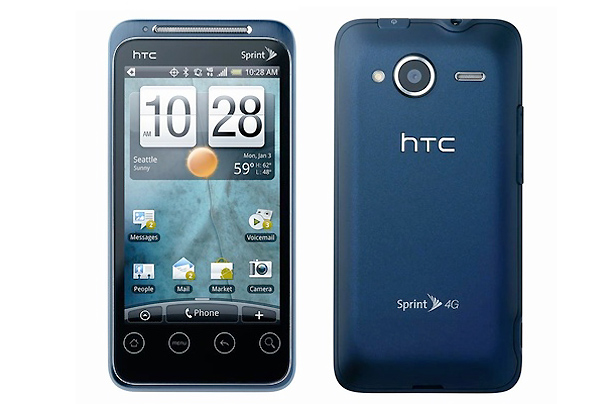
  • Overheating HTC Evo Shift Burns Owner

    gTMGDQ4

    A Columbus, Ohio woman found that her HTC Evo Shift had branded her after overheating while it was under her waistband. The woman, Jennifer Grago, reported that she was using the phone’s FM radio while she did yard work.

    “I didn’t have pockets so I just put the phone in the band of my sweats. Seemed like an alright option… I felt my phone getting warm so I moved it and trucked on. Figured sweatpants and 70 some degrees was a factor. Went to move it again and it hurt like a #%&@! and skin with it. I swear to god I almost passed out,” she wrote.

    Best Buy, where she purchased the phone, told her that phones need “correct ventilation” and should be placed in form-fitting casing.

    The phone left a clear outline of the casing on her skin. Phones, which are in essence compact radios, can easily overheat for various reasons but for a device to overheat so egregiously is frightening. The phone is two years old and is currently available for free with contract on Sprint’s network.

  • Nokia still thinks camera quality is the best way to beat iOS and Android

    Nokia Smartphone Strategy Cameras
    Nokia may not be selling nearly as many smartphones as Apple or Samsung but it wants to make sure the smartphones it does sell have the world’s best cameras. Bloomberg reports that Nokia continues to make major investments in camera technology firms and most recently invested an undisclosed amount in camera software startup Pelican Imaging to develop software for array cameras that “use multiple optics and mesh the data into one image,” like the Lytro camera that debuted last year. Bloomberg says that Nokia sees cameras as a major differentiator to help set itself apart from its rivals because “imaging quality is one of the top three reasons to buy or return a phone.” Nokia’s upcoming Lumia 928 flagship smartphone is expected to showcase the company’s PureView camera technology as one of its killer features.

  • Twitter Music for iPhone barely outshines Nokia’s last iOS app

    Twitter Music iPhone Top-100
    It is difficult for big tech companies to create hot apps. Very difficult. A few months ago, Nokia’s mapping app called HERE created a big media splash when it launched, becoming a top-5 iPhone app the day after it debuted. It then tumbled out of top-100 in just six days. Twitter’s much-hyped music app annoyingly titled “Twitter #music” managed to cling onto a top-100 position 96 hours longer — it dropped out on its tenth day.

    Continue reading…

  • Grouper users no longer have to wait for a date with iPhone app launch

    If you’ve ever used Uber to tap your location and have a cab pull up almost instantly wherever you are, you’ve had a taste of the future of dating — or at least, the future of dating according to Grouper.

    Grouper iPhone app screenshotThe service that lets you pull together some friends and meet new people for drinks will be dramatically lowering the time involved in setting up an outing with the launch of the company’s iPhone app on Tuesday and on-demand meet-ups rolling out to different cities. No longer will you have to wait two weeks to bring two friends and meet three friends at a bar through the app. Soon you’ll be able to get a Grouper going within the hour.

    There have been no shortage of next-generation dating apps launching recently, with a variety of companies trying to help millennials find other people through their smartphones. And most of these, like Grindr or Tinder, are already mobile and location-based. But Grouper CEO Michael Waxman said the company will add the benefits of mobile while maintaining the central premise of the app that’s made it so popular. Namely, that people want to meet other people without the label of a date, with the comfort of friends along for the night, and without the creepy factor of photo-based apps.

    “If Tinder’s a game, we’re the anti-game. If Tinder is playing Hot or Not and messaigng back and forth, we’re like, let’s cut the BS and be humans and share a drink and see if there’s anything there,” Waxman said. “It’s still the hardest thing and also the most valuable part of the equation.”

    Previously, users would gather up two friends for a Grouper, and it could take up to two weeks to be paired with another group of three for a night out. Unlike photo-based apps, you’re not picking someone based on their profile photo — you and your friends are blindly matched with another friend group via the Grouper algorithms. And then a Grouper staff member would sign off on the match, which affected the time it took to create the pairs. Each Grouper participant pays a fee which covers the first round of drinks at a bar picked for you (and has provided the company with a solid business model, Waxman said).

    The company has been working to streamline this process and get people together faster, bringing the time from weeks down to days, and Waxman said that adding a mobile app is the final piece of that puzzle that will bring the total time down to a matter of hours. And for participants, they won’t be tied to the desktop anymore, although they could previously get SMS notifications while they were out.

    Grouper screenshot concierge

    “It’s really Grouper as it was meant to be. We started on the desktop web because we could iterate more quickly. But for meeting people in the physical world, the phone makes more sense,” said Waxman, who notes that he met his own girlfriend on Grouper. “From the map of where you’re going, to messaging back and forth with the Grouper concierge through the app, there are just a ton of ways it can make Grouper better.”

    The new iPhone app will be available to all users beginning Tuesday when it hits Apple’s app store, providing iPhone users with features like maps and messaging right away. But the on-demand Grouper feature that creates dates in under an hour will be rolling out more slowly as the company prepares to meet demand in different cities. Waxman said the app has been growing tremendously, and while he didn’t disclose registered or active users, he said Grouper is now running in 20 different American cities and has plans for more.

    “We’re really inpspired by apps like Uber, where you press a button and something great happens. But we think that meeting three cool people is better than a car.”

    Related research and analysis from GigaOM Pro:
    Subscriber content. Sign up for a free trial.


  • Nokia determined to win race to the bottom with dirt-cheap $20 handset

    Nokia 105 Price $20
    Nokia is determined to show that no company can out-cheap it. Bloomberg reports that Nokia is “counting on a bare-bones handset that sells for just $20 to give it an edge” over rivals in emerging markets. The new Nokia 105 includes such dulling-edge features as “preloaded games, a color screen, a radio, a speaking clock and a flashlight” and has already gone on sale in India and Indonesia. Nokia plans to launch it in Europe in the near future, as well. Bloomberg notes that Nokia’s low-end handset business has come under intense pressure in many markets lately not only from Samsung but from Chinese manufacturers Huawei and ZTE that have both risen over the past year to become major players in emerging markets.

  • Sony reportedly prepping quad-core phablet with 20-megapixel camera

    One Sony Smartphone
    Sony is believed to be working on two new smartphones that will debut later this year. Earlier rumors suggested the company is preparing to release a phablet with a 6.44-inch full HD display, codenamed Togari. The device was expected to debut at Mobile World Congress in February, however it has since fallen off the grid. The second smartphone, codenamed Honami, is said to be part of the company’s “One Sony” branding initiative, which looks to bring all of Sony’s top technology to one device.

    Continue reading…

  • Android widens lead in Q1 as iPhone loses market share, Windows Phone gains ground

    Windows Phone 8 U.S. Sales
    Microsoft’s Windows Phone 8 platform has slowly increased its market share since being released last October. The latest numbers from Kantar Worldpanel found that the operating system accounted for 5.6% of sales in the United States in the first quarter of 2013, up 1.9 percentage points from the same period in 2012. Android smartphones continue to dominate the market, increasing 1.4 percentage points and accounting for 49.3% of all smartphone sales, compared to the iPhone’s market share, which fell from 44.6% in Q1 2012 to 43.7% last quarter.

    Continue reading…

  • Android design chief praises Facebook Home, calls it incredibly polished

    Facebook Home Praise Android Design Chief
    Facebook unveiled Facebook Home, an application that replaces your Android phone’s homescreen with Facebook photos and status updates, earlier this month for select Android smartphones. Google chairman Eric Schmidt previously called the software “fantastic” and said it was a creative tweaking of the operating system that fits in well with Google’s conception of Android as an open source platform. He isn’t the only Google executive who finds Facebook Home intriguing, however: Android design chief Matias Durate told ABC News that Facebook’s homescreen replacement “shows an incredible amount of polish and attention to design detail,” which is impressive especially because it “didn’t come from a hardware manufacturer.”

    Continue reading…