
Category: Mobile
-
Why Apple’s cheaper iPhone might be mid-range, not bargain bin
-
BlackBerry Q10 early sales reportedly strong in Canada

-
Obama’s new FCC chairman isn’t a reflexive shill for carriers, but he’s still a bad pick


-
Google’s X Phone revealed in new photos

-
Apple is ‘bleeding market share’

-
LG Working On A Nexus 5, Wants Deeper Partnerships On TVs And Glass, Report Claims
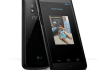
LG is an Android smartphone OEM that, like many others, finds itself in the shadow of Samsung. But it scored an impressive hit with the Nexus 4, the $300 unlocked Google-branded Android reference phone it released last year, and according to the Korea Times, it’s already working on a follow-up with the search giant.
The new report claims that LG is working on a new Nexus-branded smartphone, and that LG also wants to add to its existing partnership with Google for TV products, and would like to be closely involved in future developments like Google Glass. LG clearly sees the value of being closely associated with Google, as it managed to pull into third place in the global smartphone race in Q1 2013 according to IDC and Juniper.
LG’s Optimus G and the Nexus 4 helped it gain some ground in the smartphone war, although it still trails far behind Samsung and Apple, who hold 32.7 percent and 17.3 percent of the global market respectively, compared to LG’s 4.8 percent. Recent estimates have put sales of both the Optimus G and the Nexus 4 at somewhere north of 1 million, which, while once again trailing devices by LG and Apple, are impressive enough. Especially in the case of the Nexus 4, LG proved that it could make a strong seller out of a line that usually has more limited consumer appeal.
In the past, we’ve seen reports that an LG Nexus 5 was in the works, with the code name “Megalodon.” This isn’t just an upgraded version based on the LG Optimus G Pro, but a truly new device with a very powerful quad-core 2.3GHz Qualcomm Snapdragon 800 processor on board. Recent rumors indicate we might see a Nexus 4 variant at Google I/O in two weeks, with a 32GB storage option and both LTE and CDMA cellular wireless bands on board. The current Nexus 4 maxes out at HSPA+, but it does have an LTE-capable radio, early hacks revealed.
There’s very little downside to LG building a new Nexus device, and Google might be more inclined to let them, given the success of the last one. It’s possible we’ll hear more about this at I/O, but given that the Nexus 4 only arrived late last year, we might have to wait a little longer, too.
-
Curved Apple batteries could pave way for thinner iPhones, iWatch

-
Jelly Bean overtakes Ice Cream Sandwich, but still trails moldy Gingerbread

-
Connected Kitchen Scale From Chef Sleeve Tracks Your Nutrition Bite-By-Bite

Chef Sleeve has been selling its iPad-protecting plastic sleeves since 2011 to keep kitchen gunk off the iPad you’re using while you cook. They also make a dishwasher-safe, non-porous chopping board with a built in iPad stand (below right), and a smaller stand in the same recycled paper composite finish. But Chef Sleeve’s grand plan is to create a range of connected devices for the kitchen that link up with an iPad app to let people track their nutrition in a highly granular, yet low hassle, way.
To that end it’s just kicked off a Kickstarter campaign for its next product: a smart Bluetooth scale, which it’s calling Smart Food Scales, that will enable people to weigh ingredients and snacks and then determine the exact amount of fat, salt, sugar, vitamins and so on in the ingredients they’re using in recipes or the snacks they’re eating at home.
“This is our first smart product. We now want to activate these pieces of hardware and take the iPad even further and enhance the experience in the kitchen,” says Chef Sleeve’s Michael Tankenoff. “The Bluetooth scale will sync up with our iOS app on iPad or iPhone. Say you’re weighing strawberries. We house the USDA database of food information, so you select strawberries. Not only will it tell you the weight, but it tells you all the nutritional information.
“For example, you’re preparing a salad — you put your bowl on the scale, add your lettuce, select lettuce, reset to zero, add your tomatoes, select tomatoes, reset to zero, keep going, build this recipe and when you’re done, now you know exactly the nutritional value of that salad that you have every day.”
As well as the health conscious and people watching their weight, Chef Sleeve envisages the scales being useful for individuals with conditions such as diabetes to help them track their sugar intake, or people with specific nutritional deficiencies who need to make sure they’re getting enough of certain vitamins in their diet.
The company is looking to raise $30,000 via its Kickstarter campaign, which runs until the end of the month. It’s showing the following prototype screenshots (below) of the planned iPad software. It also intends to open up its API at some point in the future, so that third-party developers can build apps for the smart scales — although it’s going to be careful about how it does this, as it wants to keep any other apps wholesome (scales can, after all, be used to weigh non-foodstuffs too).
After the scales, Chef Sleeve says it will look to launch other connected devices that tie back in to its iOS app to keep adding to a range of smart kitchen devices. A thermometer could be next, says CEO Santiago Merea. A chopping board with an integrated scale could also be on the cards “at some point” — but he says the company is being mindful about its mainstream consumer buyer. “We need to be careful about our demographic. We’re not going to throw rockets at them,” he told TechCrunch. “We want the design to be very homey, very crafty.”
If the uptake of the scales is strong, it could end up generating some fascinating data for Chef Sleeve — such as what, when and how people eat — which it said it will look to feed back into its product development.
“Our pledge is going to be to not store any personal information at all — because we don’t need to but we also don’t want the risk of being hacked,” said Merea. ”Food is personal… So we’re not storing any personal information but we don’t need to. With that data we can also even help our customers. It’s going to be really cool what we can do with this.”
Chef Sleeve already has stores interested in carrying the smart scales, according to Merea. It’s hoping to get into speciality kitchenware stores with the smart scales, a shift of its retail strategy which, to date, has been mostly focused on selling via Amazon (and its own website).
-
These might be the first photos of Google’s ‘X Phone’

Google and Motorola are working on a top-secret “X Phone” that hasn’t really been top-secret for quite some time. While we’ve heard rumblings and rumors here and there, we have yet to see any leaked photos of the mysterious smartphone. Until now — perhaps. Evleaks, who often leaks photos and accurate specs of unreleased smartphones, published four photos of an unknown Motorola handset wrapped in a protective black box to keep its design a secret. While evleaks has not been able to confirm if this is indeed the unbreakable X Phone, a model number on the back reads “XFON ATT,” which certainly suggests that it may be AT&T’s version of the upcoming handset that may revitalize Motorola. There are conflicting reports regarding when Google might unveil the new handset, but there will be plenty of time at the three-hour keynote at this year’s Google I/O conference if it’s ready in time. The leaked photos of the phone follow below.
-
LG reportedly readying second Nexus device and a Google TV set

-
Google denies battery-draining location bug in Google Now for iOS
-
Lumu Is A Digital Light Meter For Photographers That Plugs Into Your iPhone & Tells You What Camera Settings To Use
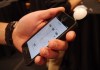
Meet Lumu: a digital light meter for photographers that plugs into the iPhone’s headphone jack as a smaller and smarter replacement for traditional analogue light meters. It’s used in conjunction with Lumu’s app — being demoed in prototype here at hardware alley at Disrupt NY – to help photographers figure out the best camera settings for their current location.
Lumu is not going to help you take better photos on your iPhone — it’s a tool for standalone cameras that have ISO, aperture and shutter speed parameters that can be manually set. The startup, which hails from Slovenia in Europe, plans to kick off a Kickstarter funding campaign in about a month. The Lumu device will cost $99.
“It’s the world’s smartest light meter,” says co-founder Benjamin Polovic. “The existing light meters are large, bulky and very expensive. With Lumu, the main processing is done on the iPhone, so we use the iPhone’s power. It also doesn’t use any batteries, it’s powered from the iPhone.
“You take your iPhone or your iPod and plug it in and it’s going to recognise it, and it sets all of the parameters for your unique environment. So you put in your ISO that you use in your film or your digital camera, the aperture you want to use and then it calculates the time.”
The photographer then needs to manually input the suggested settings into their camera but Polovic says the group is thinking about making a Bluetooth dongle so settings can be wirelessly sent to a digital camera. “We’re excited to get some ideas from Kickstarter when the campaign launches,” he added.
As well as showing the light level and exposure value for the current lighting conditions, the app lets users store pre-sets for individual geotagged locations so they can easily revisit them later. It will also include an auto mode, and a filter-style feature that will tell users how to achieve effects such as bokeh (background blur).
Polovic said Lumu’s hope is to inspire more people to start digging down into their camera settings. ”We love photography, we want to make it better, we want to introduce it to people who don’t necessarily know how to use cameras because they are quite complex. We want to make it simple,” he says.
The startup has been developing Lumu for about four to five months, according to Polovic. Down the line, it plans to launch an SDK so developers can create other apps using the light sensor — giving the example of an app that wakes the iPhone’s owner when it starts getting light, for instance.
-
With A Widespread Launch Looming, Mozilla Rolls Out Firefox OS Simulator 3.0
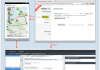
Mozilla was keen to talk up the 3.0 version of its Firefox OS simulator back in March, but didn’t have much to share about when eager developers could start fiddling with it. Thankfully for HTML5 buffs, that six-week quiet period is over — the team just announced on the official Mozilla Hacks blog that the newly updated simulator is now available to download.
All of the features that appeared in the preview release are accounted for — think support for rotating displays and a mock geolocation API for testing location-aware apps — but the simulator suite has been polished a bit since we last saw it. Most of those tweaks are housekeeping changes: the size of the download has been reduced, which has led to snappier boot times, and the simulator now supports common OS shortcuts like Cmd + Q to shut down, but the simulator has also been updated to run newer versions of Firefox OS and the Gaia user interface layer.
With that said, prospective Firefox OS developers will probably use one simulator feature more than any other: the ability to push work-in-progress applications to connected test devices. Mozilla and its hardware partners Huawei, LG, and ZTE (who showed off its first FFOS device at Mobile World Congress) have been pointing to device launches in Brazil, Colombia, Hungary, Mexico, Poland, Serbia, Spain and Venezuela later this year, but the quality of the experiences found on those phones will ultimately determine whether or not Firefox OS flops.
Even so, strong early sales of Firefox OS developer devices may point to a promising official launch for the first set of consumer-facing phones later this year. Just look at Spanish hardware OEM startup Geeksphone — it began selling its Keon and Peak reference devices for $119 and $194, respectively, late last month, and the company was forced to limit the number of handsets sold that on launch day so the 20-person team could keep up with shipping.
That’s a promising start especially for a company as young as Geeksphones, but there’s no question that Firefox OS is going to face some serious competition in its launch markets. Android powers a staggering number of cheap smartphones, and Nokia has refocused its efforts to build low-cost devices based both on Windows Phone and the aging Series 40 OS. Meanwhile, persistent rumors of a low-cost iPhone continue to make the rounds — Firefox OS seemed like a novel option for new and adventurous smartphone owners when I first played with it, but we’ll have to see how the rest of the industry responds.
-
LG Optimus G Pro preview

-
Apple releases new iOS 6.1.4 update for iPhone 5

-
iOS 7 is coming with a major redesign – and it will launch on time

-
HTC One seen holding its own against Galaxy S4 marketing barrage

-
Google has quite a show in store for us at this year’s Google I/O
-
HTC M4 pictured: A smaller version of the world’s sleekest smartphone
