
Category: Mobile
-
T-Mobile iPhone rumored to debut at ‘UNcarrier’ event tomorrow
-
T-Mobile’s new contract-free pricing now available

-
Summly’s teenaged founder says he wants to help make Yahoo great again
Nick D’Aloisio just agreed to sell his mobile news-reading startup Summly to Yahoo for a rumored $30 million — which wouldn’t be that unusual, except for the fact that D’Aloisio is 17 years old. But while many seem to be assuming the young entrepreneur will take his windfall and flee the faded internet portal as soon as he possibly can, D’Aloisio said in an interview that he has no intention of doing this — on the contrary, he says he wants to stay and help Yahoo capitalize on its strengths and find a way to return it to greatness.
The young Brit created Summly to try and help solve the problem of consuming news content on a mobile device (something a number of others are focusing on as well, including San Francisco-based Circa). The app created machine-generated summaries of news articles, and D’Aloisio said in a phone call from London that he wants to see what Yahoo can do by applying the same kind of algorithmic approach to some of the company’s other news and entertainment content:
“It’s going to be a really fun journey. To see where we can take our technology with Yahoo’s focus on mobile under Marissa Mayer will be really exciting… there is so much opportunity to take these daily habits like weather, news, stocks and sports and use technologies like Summly to really turn them into an A-star experience. And I want to be there for as long as I feel is necessary to get Summly and Yahoo really doing well with mobile.”
Yahoo has a chance, D’Aloisio says
Although Yahoo has been criticized by many (including us) for being too large and slow to adapt to the new age of digital content, D’Aloisio said that he is excited about joining the company, and thinks that Yahoo under Marissa Mayer has a chance to be great again:
“Definitely with the approach they are taking at the moment — they’re moving at light speed, and it’s really exciting to be joining the company at this stage, because there’s so much opportunity in the next 12 to 24 months to take technologies like Summly and the other assets they have, like the newsroom and all of this content, and take it to the larger mainstream.”
The Summly founder said that while many see Yahoo as an also-ran, he thinks the company still has a chance to take advantage of the millions of users it has:
“Yahoo to me, as the founder of a company, is one of the biggest opportunities you could have — it’s one of those classic internet companies… the fact is that they have massive leverage in the industry, they have hundreds of millions of people coming to their content every month, and it’s really exciting to be building for that scale. That’s the exciting thing — it’s the scale that Yahoo brings, and that user base, that I really want to build products for.”
A “surreal journey” at times
D’Aloisio also admitted that he was surprised at how something that began as a hobby has turned out, and how much he has accomplished at such a young age:
“It’s a surreal journey. I guess I always saw this as a hobby — it’s just a passion of mine. And the fact that it’s [resulted in] an acquisition is something I never expected… and it wouldn’t have been possible without Horizon Ventures and Li Ka-shing, who took a gamble on me as a teenager. I really owe it to them and to everyone who has been by my side supporting me.”
The young entrepreneur said he has had a number of learning experiences along the way — including one described in a Gizmodo post from 2011 entitled “How I Made a 15-Year-Old App Developer Cry” — but added that it has been “a really incredible journey,” and he is looking forward to the next chapter with Marissa Mayer and Yahoo. One thing is for sure: If everyone at the company was as eager as D’Aloisio seems to be, the company would have no reason to fear the future.

Related research and analysis from GigaOM Pro:
Subscriber content. Sign up for a free trial.- NewNet Winners and Losers of 2009
- Facebook’s IPO filing: ideas and implications
- Connected world: the consumer technology revolution


-
Brightstar revealed as mystery company that bought 1 million BlackBerry 10 devices

-
Looks Like Those 1M Mystery BlackBerry 10 Devices Went To A Verizon Distributor

BlackBerry delivered one of the world’s most mysterious press releases a short time ago when it revealed that it had sold a cool 1 million BB10 devices to an unnamed partner, but now it looks like some sleuthing has turned up the real client. AllThingsD and Detwiler Fenton both report that the likely source of the order was Brightstar, an international distribution company that counts Verizon, along with carriers around the world as its partners.
Brightstar is an established BlackBerry customer, and distributes handsets from the Waterloo manufacturer in some of its strongest markets, including in countries like Malaysia where BlackBerry retains very high popularity. Brightstar’s order (if indeed this is the client in question) would indeed be the largest ever single order of BlackBerry devices, but it’s also potentially a way for companies like Verizon to make a sizable bet on the company’s brand new OS and hardware, without taking on all the risk for such an order itself.
Detwiler Fenton says that the move indicates “Verizon doesn’t believe this well be a strong seller since it normally tries to allocate hot product on its own,” and that using Brightstar means it will spread out some of the responsibility and potential reward that comes with placing inventory in big-box retail locations like Best Buy, in exchange for the security of not being left solely on the hook should things go south. The U.S. launch of BlackBerry 10 happened last Friday, and while not all the cards are on the table, there’s still some early reason to believe things didn’t go amazingly well.
BlackBerry has its earnings coming up this week on Thursday, but sales of BB10 devices in the U.S. won’t be included in or influence the results. Still, stock price is down today after last weekend’s launch failed to garner the kind of high-profile success and buzz associated with new hardware from Apple or Samsung.
That million is still a big number, and a sizable order. But if Detwiler Fenton is accurate in its report and this involved carriers like Verizon placing an order through their distribution partner, it’s a lot less significant than were it to go to a single buyer. We’ve contacted RIM for comment, but they did not respond by time of publication.
-
HTC marketing chief plans ‘loud’ campaign to boost HTC innovations, bash Samsung

-
We’ll be live from T-Mobile’s ‘UNcarrier’ event tomorrow at 11:00AM!

Bookmark this link, which will go live shortly before the event begins tomorrow, and make sure to head there for our live coverage of T-Mobile’s press conference! Coverage will begin just before 11:00 a.m. EDT / 8:00 a.m. PDT.
-
Finally, Yahoo does something kind of smart by buying mobile news app Summly
We’ve beaten up on Yahoo a number of times for the company’s lack of innovation and other weaknesses, including CEO Marissa Mayer’s edict against remote working, so it’s probably fair to point out when the moribund web portal actually does something interesting — and the acquisition of news-reading app Summly arguably falls into that category. This deal isn’t going to magically transform Yahoo into a star, but at least it shows Mayer is serious about pushing the company forward in ways that are becoming increasingly important.
The most obvious appeal of a purchase like Summly is that Yahoo gets access to a brilliant and charismatic young programmer in founder Nick D’Aloisio, who started the company in Britain when he was just 15. Om met D’Aloisio in Berlin and did an interview with him about the concept behind Summly not long after the teen launched his startup, and described how far ahead he was of many of his much more experienced peers. If nothing else, D’Aloisio might inject some fresh thinking into Yahoo, something it desperately needs.

Nick D’Aloisio
It’s not just fresh thinking about content or design either: while it may not be a blockbuster success story like Instagram or SnapChat, part of what made Summly interesting is that it was an attempt to rethink how we consume content on a mobile device. Circa, which is funded by Cheezburger CEO Ben Huh (and is part of our startup showcase at paidContent Live in April) is another startup focused on the same problem: how does news content need to be rethought for mobile?
Yahoo News may be far from cutting edge, but it still pulls in a fairly large audience — far larger than Google News. If Yahoo can use D’Aloisio and Summly’s algorithms to figure out how to take advantage of that on a mobile device, it could potentially have a winner on its hands. Google has done virtually nothing to optimize its news-reading experience for mobile, and efforts at recommendation or curation apps like Currents have mostly fallen flat.
According to an All Things Digital report, Yahoo may have paid as much as $30 million — primarily in cash — for Summly. That’s a lot for an app that only racked up about a million downloads and hasn’t really taken off in terms of readership, but for Mayer it theoretically accomplishes two important things: it shows that the company is intent on figuring out how content works on mobile, and it sends a message that Yahoo is willing to make acquisitions and bring in new talent in order to fix itself. Whether those efforts work, of course, remains to be seen.
Post and thumbnail image courtesy of Getty Images / Chris Jackson

Related research and analysis from GigaOM Pro:
Subscriber content. Sign up for a free trial.- Facebook’s IPO filing: ideas and implications
- Connected world: the consumer technology revolution
- Siri: Say hello to the coming “invisible interface”

-
BlackBerry Z10 sales said to have ‘dramatically slowed’ with Galaxy S 4 on the way

-
Why the collision of big data and privacy will require a new realpolitik
When it comes to protecting privacy in the digital age, anonymization is a terrifically important concept. In the context of the location data collected by so many mobile apps these days, it generally refers to the decoupling of the location data from identifiers such as the user’s name or phone number. Used in this way, anonymization is supposed to allow the collection of huge amounts of information for business purposes while minimizing the risks if, for example, someone were to hack the developer’s database.
Except, according to research published in Scientific Reports on Monday, people’s day-to-day movement is usually so predictable that even anonymized location data can be linked to individuals with relative ease if correlated with a piece of outside information. Why? Because our movement patterns give us away.
The paper, entitled Unique in the Crowd: The privacy bounds of human mobility, took an anonymized dataset from an unidentified mobile operator containing call information for around 1.5 million users over 14 months. The purpose of the study was to figure out how many data points — based on time and location — were needed to identify individual users. The answer, for 95 percent of the “anonymous” users logged in that database, was just four.
From the paper:
“We showed that the uniqueness of human mobility traces is high, thereby emphasizing the importance of the idiosyncrasy of human movements for individual privacy. Indeed, this uniqueness means that little outside information is needed to re-identify the trace of a targeted individual even in a sparse, large-scale, and coarse mobility dataset. Given the amount of information that can be inferred from mobility data, as well as the potentially large number of simply anonymized mobility datasets available, this is a growing concern.”
Just because you’re paranoid…
For those already worrying about the privacy-busting implications of mobile device use, this should come as no surprise. As CIA CTO Ira “Gus” Hunt stressed last week at GigaOM’s Structure:Data conference, mobility and security do not go hand-in-hand. You can be constantly tracked through your mobile device, even when it is switched off. What’s more, those sensors you’re pairing with your device make it ridiculously easy to identify you.
From Hunt’s speech:
“You guys know the Fitbit, right? It’s just a simple three-axis accelerometer. We like these things because they don’t have any – well, I won’t go into that [laughter]. What happens is, they discovered that just simply by looking at the data what they can find out is with pretty good accuracy what your gender is, whether you’re tall or you’re short, whether you’re heavy or light, but what’s really most intriguing is that you can be 100 percent guaranteed to be identified by simply your gait – how you walk.”
One of the explicit purposes of Unique in the Crowd was to raise awareness. As the authors put it: “these findings represent fundamental constraints to an individual’s privacy and have important implications for the design of frameworks and institutions dedicated to protect the privacy of individuals.”
But this isn’t just about mobility; it’s also about the implications of our big data society. These are effectively two sides of the same coin – mobile devices make it easy to collect data, while big data capabilities make it increasingly trivial to take the resulting mass of supposedly anonymized data and tease out the kind of specificity that the anonymizers were trying to erase.
This was precisely the sort of problem foreseen by Europe’s cybersecurity agency, ENISA, a few months back when evaluating the continent’s proposed “right to be forgotten”. If a citizen really wants all traces of their personal data removed from the web, ENISA pointed out, that would have to mean removing their data from anonymized datasets as well as from more obvious repositories such as social networks and search indices.
As ENISA said at the time:
“Removing forgotten information from all aggregated or derived forms may present a significant technical challenge. On the other hand, not removing such information from aggregated forms is risky, because it may be possible to infer the forgotten raw information by correlating different aggregated forms.”
Shall we just give up now?
The Unique in the Crowd authors stressed in a BBC interview that “we really don’t think that we should stop collecting or using this data — there’s way too much to gain for all of us — companies, scientists, and users.” So what can be done?
Personally speaking, I have been writing about issues around data privacy for many years, and I still cannot see any easy solution to this problem. If it were simply a case of which side of the argument carries more weight, I would have no hesitation in siding with the privacy brigade: selling data to advertisers in order to fund that “free” app does not justify the creation of a surveillance society.
But it’s just not that simple. That Fitbit is also trying to help you keep fit — the fact that it can identify you by accident doesn’t change that fact. Mobile operators’ datasets help keep their networks running. Location-based services don’t work without location. We even hope big data capabilities will help us fight diseases and socio-economics problems. And, most importantly, despite the fact that most people in the U.S. and European Union insist they want better data privacy, we see time and again that this desire doesn’t translate into action – people still give up their data without much consideration.
What we need is a new realpolitik for data privacy. We are not going to stop all this data collection, so we need to develop workable guidelines for protecting people. Those developing data-centric products also have to start thinking responsibly – and so do the privacy brigade. Neither camp will entirely get its way: there will be greater regulation of data privacy, one way or another, but the masses will also not be rising up against the data barons anytime soon.
There needs to be better regulation that works in practice – unlike Europe’s messy cookie law or the “right to be forgotten”. It may be that the restrictions will need to be on the use of data rather than its collection, as proposed in a recent World Economic Forum report. However, regulators tend not to be very proactive, particularly when the risks, while inevitable, remain mostly theoretical.
I suspect the really useful regulation will come some way down the line, as a reactive measure. I just shudder to think what event will necessitate it.

Related research and analysis from GigaOM Pro:
Subscriber content. Sign up for a free trial.- Connected world: the consumer technology revolution
- Flash analysis: the tech startup investment environment, Q3 2011
- Mobile 2011: Data Consumption Will Explode

-
Prominent Android hacker quits Samsung job, slams TouchWiz on the way out

-
Samsung rumored to debut mid-range Galaxy S 4 mini this summer

-
Why the budget iPhone would throw the smartphone market into chaos

-
Buying the new Blackberry Z10 in Manhattan was a chilling experience

-
HTC Will Start Being More Vocal About Its Brilliance, Confirms Camera Supply Is Behind HTC One Delay
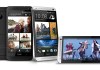
HTC has revealed that it will finally drop the frankly stupid “Quietly Brilliant” tagline it has been using for the past few years, the WSJ reports, with company marketing chief Benjamin Ho saying they “haven’t been loud enough” with marketing to date. The first fruits of that change in strategy are already apparent, with HTC handing out snacks at the Galaxy S4 launch event in NYC, and the use of the hashtag #theNextBigFlop to directly take down the S4 on Twitter.
Ho also explained in an interview with the Wall Street Journal that supply shortage, specifically involving camera components (which are unique to the HTC One and use a new “Ultrapixel” layered sensor technology), is what’s behind the continued delay in launching the HTC One in the U.S. That’s acting as a choke point preventing the speedy ramp up of production, Ho told the WSJ.
While HTC is being more vocal in terms of both being aggressive with the competition and its products, and with informing the public about the real reason behind its slow global rollout of the flagship HTC One device, it has a lot of ground to make up. Q4 sales were down 41 percent year over year, and recently, HTC CEO Peter Chou said recently he’ll resign if the One fails to succeed with consumers.
The Taiwanese company will also be dumping funds into marketing, meaning that this change from the “Quiet” company of old isn’t just about optics. Ho said in the WSJ interview that it will be increasing its digital marketing spend by 250 percent this year compared with last, and that print and traditional media ads will get a 100 percent budget bump in 2013.
It’s unclear how much of that budget will be dedicated to smack talk, but HTC is already actively banging that drum. In addition to the Twitter campaign mentioned above, there’s also recent comments made by HTC North America President Mike Woodward, who told Business Insider that his company was “pleased to see no innovation in the design itself” with the S4, noting that he thought “Samsung is trying to overwhelm us with money and marketing.” In the interview he noted that while HTC couldn’t match the Samsung marketing giant in terms of available cash, it will amp up its efforts.
HTC doesn’t need to spend a lot of money, but it does need to stop pretending that making good hardware and then sitting back and being mostly quiet about it is the way to compete in the smartphone game. Luckily, it looks like the company has finally realized that too. Now it just needs to ship.
-
This Is Not A Smartwatch

Confession: I have a few storage boxes in my loft that contain old, but barely used, gadgets. Stowed away, still in their boxes, as if waiting for the right time to be brought out like unloved Christmas decorations.
Ignoring the generations of well-used feature phones also put in storage (thanks to the data locked up inside their tiny brains) many of these devices are gadgets that never lived up to their promise. Which may be why I haven’t been able to throw them out. It just seems wasteful since they never had a useful life.
Among this collection there is even a smartwatch. Or rather a Bluetooth watch, to give it its correct title. The smartwatch of its day, if you will.
At first glance all these boxed-up gadgets look like they’re just waiting to be plugged in to finally start paying back the debt they owe for being made in the first place. Some even look a bit glamorous, gathering an air of mystery thanks to the pelting pace of technology evolution. But pick up yesteryear’s rejects and it soon becomes clear why they’re in stasis: they weren’t good enough to be useful. This is where the mystery stops.
Here’s what passed for a smartwatch in 2008 – made by the now defunct Sony Ericsson joint venture:
The Sony Ericsson MBW-200 Bluetooth watch was only ever an accessory to a mobile phone – and a limited accessory at that. It’s a timely reminder of the pitfalls of building a smartwatch, as the tech industry’s heavy hitters scramble their fighter jets to scream towards the next must-have wearable gadget.
Sure, Pebble has proved there’s a market for some kind of wrist-mounted gizmo that connects to your smartphone and extends the experience of carrying a pocket-sized computer around with you all day every day — but boy it better be worth it.
The MBW-200 wasn’t even good at being a watch, let alone acting as sidekick to the mobile phone. It was top heavy and chunky, so that rather than sit pleasingly on the wrist, it felt like it wanted to swing around it like a high bar gymnast. While its tiny OLED screen, resting forlornly at the bottom of the watch face, wiped a third of the markings off the dial. Aesthetically it was unbalanced and, when not displaying anything, gave the watch a vacant appearance. An ugly and uneasy conjunction of old tech and new.
(It should be noted that the MBW-200 was a range of ladies’ watches – so these devices were even smaller than other SE Bluetooth watches, leaving very little room on the dial to accommodate a screen, hence its squashed situation.)
I reckon a two-inch curved screen is the largest pane that could comfortable fit on my lady-sized wrist, without pushing into bangle territory — which illustrates a key design challenge for today’s smartwatch builders: wrists not only offer very limited real estate to build on, the plots aren’t all sized the same. Ergonomically the MBW-200 was already teetering on the brink of what’s acceptable everyday wrist wear — and its circular watch face was less than one-and-a-quarter inches in diameter.
Squeeze in a SIM tray, and could an iWatch actually become the fabled low-cost iPhone?
Another ergonomic problem with this early attempt at a smartwatch were its (physical) buttons, five in all, lined along the two strap-less sides. Being small, stiff and awkwardly placed, they required two fingers to be engaged in a pincer squeeze when pressing each one. One to push the button, the other to create an equal and opposite push from the other side to stop the watch from being shunted down your wrist.
A touchscreen watch wouldn’t necessarily need any physical buttons so shouldn’t have to contend with such anchorage issues. But wrist-mounted touchscreens face other challenges — from how to protect such a large screen from the bumps and scrapes of everyday life, to how to fit in a big enough battery to power a rich, colour touchscreen display without building a chunky, ugly mess of a watch again.
Hardware aside, the absolute worst thing about the MBW-200 was its ‘smart’ functions. They just weren’t smart enough to make it worth wearing.
Setting aside the hassle of having to make sure watch and phone were properly paired each time you strapped the thing on, the OLED screen was ludicrously tiny: a mere 0.7 inches x 0.15 inches. Lengthier data (such as phone numbers) had to be scrolled to view, rather than being visible all at once. Not exactly helpful if you’re trying to figure out who’s calling. Incoming text messages were announced by a vibration to get your attention, and a text message icon appeared on the screen. This was fine except the actual message itself was not displayed. The screen didn’t indicate who it was from, either — both pretty huge constraints on usefulness.
The watch’s other main function was to allow you to reject or accept calls via two of its physical buttons. Rejecting a call had some value – say if you wanted to stop your phone ringing and didn’t want to go to the trouble of pulling it out of your bag/pocket to do that. But having a button to accept a call but no way to take the call without getting the phone out anyway (unless you already owned and had previously paired a Bluetooth headset with it and happened to have it to hand/in your ear)? Well, that feature could actually feel pretty dumb.
Will an Apple iWatch or a Samsung Galaxy watch or a Google Android watch let you talk directly into your wrist when someone calls you? And include a speaker so you have to lean in close to listen? It might have to in order to avoid being annoying, but that’s more kit to fit in and more stuff to power. Not to mention a new type of behaviour to think about: people talking into and listening to their wrists. (Albeit, that doesn’t seem so odd when you consider Google is trying to get people talking to their spectacles.)
And if you can make calls on a smartphone, could it actually work as a standalone phone? Squeeze in a SIM tray, and could an iWatch actually become the fabled low-cost iPhone? It’s a stretch but maybe a smartwatch has to be that useful to be, well, useful enough.
Five years is an ice age in technology terms so some of the MBW-200’s features weren’t as dumb as they look now. This watch was made to marry a dumbphone after all. And hey, some of what Sony Ericsson was doing five years ago, Pebble is doing now – which perhaps goes to show that despite a human appetite for a wrist-mounted computer, building something that genuinely works in that coveted, curved, convenient but constrained location is a harder problem than a lot of companies realise. Because a lot of companies have tried to make a smartwatch and made cupboard trash instead.
When I was given the watch, after some initial excitement at the concept of being able to screen calls and texts, the reality of its limited usefulness vs. the hassle involved with charging, pairing, wearing and actually using the dumb thing soon sunk in. And, well, to cut a long story short, this not-so-smart-watch was put back in its box for good.
-
Verizon announces iMessaging clone for Android, iOS and Web [video]

-
Sprint thanks Genachowski for blocking the AT&T-T-Mobile merger

-
Samsung exec says former Android chief Andy Rubin was stubborn

-
Facebook Internally Blocks Desktop Site to Force Employees to Use Mobile
Facebook users are swaying more in the direction of mobile usage, and the company knows that it has to focus more on that experience. And to make sure that its mobile team is well-aware of the shortcomings of the Facebook mobile product, Facebook recently forced them to use mobile.
No, not a suggestion, as in “you should spend more time on mobile in order to better develop for mobile.”
It was more like a “we’re forcing you to use mobile.” And they did it by internally shutting down their access to the desktop site.
Here’s what Facebook product manager Josh Williams (the former CEO of Gowalla) recently had to say at SXSW:
To be honest, a couple of weeks ago, myself and a number of other product managers had access to our website internally shut off,. Basically it forced us to use only mobile devices for a week. It forced us to say, ‘Hey, we have these features that exist in one place but not in another, and we have to remedy.
This is some serious dogfooding (using your own product in order to learn more about your own product), but it’s not the first time we’ve heard of this kind of thing coming out of Facebook.
Back in August of 2013, Facebook released a massive overhaul of their iOS app. It was entirely rebuilt upon the concept of speed – and they succeeded with an app that was slick and blazingly fast compared to the previous version.
Soon after, Facebook instituted an iPhone-free policy around the workplace in order to force employees to use Facebook for Android. The feeling was that users who were hands on with the Android app would be better at fixing it, because it surely needed an overhaul at the time as well. It eventually got that speed boost.
[via FastCompany]

