
Category: Mobile
-
T-Mobile could sell more than 3 million iPhones in 2013
-
AT&T iPhone 5 jailbreak tweak purportedly gives access to T-Mobile’s LTE network band

-
One key to Samsung’s success: ‘They’re not stopping to think. They’re just making more phones.’

-
Mobile Home Is An Easy Way To Turn Siri Into Your Very Own Personal KITT From Knight Rider
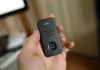
My recently-purchased car has Bluetooth built-in to let me use my phone hands-free from the steering wheel, as do most cars coming off the line new these days. The one issue is that there’s no way to activate Siri using the car’s default controls, which is another unfortunately common thing for modern cars and aftermarket Bluetooth stereo kits. But Plano, Texas-based Beanco Technology offers a really simple solution to fix that called the Mobile Home, in the most minimalist way possible.
A lot of gadgets come through my office, and generally speaking, if they have terribly punny names like “Mobile Home” and come from a website that looks like this one, I’m inclined to pass on writing them up. But the Mobile Home impressed by how easily it added a much-need feature lacking from my in-car Bluetooth system, without requiring me to do anything more than pair a Bluetooth device to my iPhone (so long as you’ve already also paired your phone with your in-car system).
What it is
A small rectangular black box with what looks like a design copyright-infringing Home button, which acts just the same as the one built into your iPhone device.
Who it’s for
Anyone with a car stereo or hands-free system, factory or aftermarket, that allows you to do everything except call up Siri from existing steering wheel-mounted controls.
What it does
Using either the metal clip mount, or the included Velcro attachment kit, you fasten it either to your sun visor or dash, effectively adding a nice big Home button to the in-car controls in a place that’s easy to reach without taking your eyes off the road. Just like with the iPhone itself, you long press the Mobile Home to bring up Siri, double-click to activate lock screen audio controls, and single-click to wake the display. The iPhone sees it as a Bluetooth keyboard, which means you can’t use the on-screen one when it’s connected, but that’s not something you’re ever supposed to do while driving anyway.
Bottom Line
My main complaint with the Mobile Home is that it’s expensive, at an MSRP of $79 (though the “special launch price” of $59 seems to be pretty permanent). But if this is the one piece that’s missing from your ideal in-car hands-free setup, then it does the job better than most, and even incorporates things like an auto-off function that means the battery lasts between six months and a year under normal use conditions. Sometimes looks can be deceiving, and behind Beanco’s somewhat amateurish presentation, there’s a handy little gadget that does its job simply and well.
-
Playdek Closes $3.8M Series A To Build A Digital Community Where Tabletop Gamers Can Feel At Home

Fresh from putting smiles on the faces of tabletop gaming geeks everywhere, with yesterday’s news that it would be helping to bring Dungeons & Dragons to iOS devices later this year, mobile game publisher Playdek has closed a $3.8 million Series A funding round.
The round was led by Qualcomm Incorporated, via its venture investment arm, Qualcomm Ventures, with IDG Ventures and ff Venture Capital also participating. Existing investors Deep Fork Capital, Greycroft Partners, Jarl Mohn and unnamed angel investors also joined in. The company had previously raised $1.56 million in funding from its seed and Angel rounds — taking its total funding post-Series A to $5.36 million.
Playdek said the new funding will allow it to expand its digital hobby games portfolio with new launches, including its forthcoming app, Agricola, based on the strategy board game of the same name. Flagship existing titles from Playdek include its Ascension series.
The company’s other big plan for the funding is to build a hobby gamer community and online platform for players to meet and hang out, due to launch later this year. It said this platform will “provide the services that hobby gamers value” — so presumably stuff like leaderboards ranking players by score and forums to discuss the merits of different gaming strategies. In a press statement, Joel Goodman, CEO, said it would be about “giving gamers that ‘around the table’ feeling in the digital realm”. The platform will also offer events and tournaments.
Commenting on the funding in a statement, Phil Sanderson, Managing Director, IDG Ventures said: “The market category is poised for growth, and Playdek has proven that it is the expert when it comes to bringing this dedicated audience what they want in mobile gameplay.”
“Playdek gives gamers what they want — compelling online games based on the franchises they know and love. Playdek allows people to explore these worlds and stories in a compelling new way,” added John Frankel, ff Venture Capital, also in a statement. “We love the team, the strategy, and what they have done to date; we expect great things from them in the future.”
-
BlackBerry subscriber bleed turns into an arterial gush

-
Galaxy S 4 preorders begin at AT&T on April 16th for $250

-
Samsung Galaxy S4 Pre-Sales Start At AT&T On April 16, Priced At $249.99 On 2-Year Agreement

AT&T has just posted an update to its Consumer Blog revealing pre-order details of the Samsung Galaxy S4. The phone will be available for order beginning April 16, for $249.99 with a two-year commitment. Samsung had previously announced that the Galaxy S4 would be coming to the U.S. sometime in Q2 2013, and didn’t reveal launch pricing at its event earlier in March.
The ship date of the AT&T Galaxy S4 wasn’t revealed this time around, so there’s still no guarantees about when consumers will be able to actual hold the hardware, which boasts a 5-inch 1080p display, in their hot little hands. Based on Jordan’s initial impressions, the Galaxy S4 looks like a worth successor to Samsung’s flagship smartphone role. The hardware specs include either 16GB, 32GB or 64GB of internal storage, but AT&T hasn’t yet specified what exactly you’ll be getting for your $250.
Pricing for the Galaxy S4 at AT&T is interesting, since it puts the smartphone above the starting on-contract price of the iPhone 5 ($199.99 with contract), and also carries a lot more sticker shock than the $99 downpayment it’ll carry with T-Mobile when it launches with that carrier beginning May 1.
-
Samsung Reportedly Debuting Stores-Within-A-Store At Best Buy Locations For Galaxy S4 Launch

Samsung will reportedly be launching Samsung Stores in select Best Buy locations ahead of the Galaxy S4′s U.S. launch, a new report from Geek.com claims. The new sections, which will occupy spots close to the mobile department, will feature Samsung branding throughout and highlight a number of Samsung products, not just the upcoming Galaxy S4, though that flagship device will be the core focus.
The report from Geek.com says that at first the Samsung Stores will only be appearing at certain high-traffic locations, with training to begin for employees in the mobile departments at those stores soon. The store-within-a-store concept will roll out to other Best Buys following the launch later this year, with the ultimate goal of puting one in every U.S. location. We’ve reached to both Best Buy and Samsung for comment, but have yet to hear back at publication time.
Of course, there’s a good precedent for this sort of thing at Best Buy specifically, and it was set by a company that Samsung is generally keen to emulate: Apple. Apple’s dedicated mini-stores in Best Buy locations are unique in that they replicate almost exactly the in-store displays of Apple products in the company’s own standalone retail stores. It sounds like Samsung’s new in-store locations will resemble the Apple versions in both form and function, with the main intent being to have staff and space to properly demonstrate Samsung’s devices separate from those made by other OEMs.
If these Samsung Stores become a reality, it’s likely going to have the most effect on its fellow Android smartphone manufacturers, rather than Apple, however. Samsung is already setting itself apart from the competition in terms of market reach and global sales, but distinguishing itself on the physical retail floor will institutionalize a choice between Samsung and ‘all the rest’ for in-store shoppers.
Samsung is getting bolder in its marketing efforts, as was painfully apparent from its lavish, confusing Broadway spectacle earlier this month. If it wants to stand out, physically separating itself inside of Best Buy locations is another very good way to do so.
-
Citrix: Windows Phone is barely making a dent in the workplace

-
Apple Patents iPhone With Wraparound Display, Including Designs That Plug Together Voltron-Style
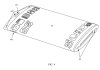
Apple has a new patent filing just published by the USPTO today, first spotted by AppleInsider, which details a wraparound-style AMOLED display that could make it possible to create an iPhone that’s almost entirely screen, with touch gestures and virtual buttons replacing physical ones completely. The patent describes designs that could have a seamless, continuous surface resembling the fourth generation iPod nano, as well as other shapes closer to the current iPhone, but with every surface a touch-sensitive glass display.
The patent is a fairly comprehensive one, and even mentions built-in facial recognition as well as a method of layering flexible, see-through displays on top of one another in order to produce different visual effects, including the appearance of 3D. The glass used to encase the display is described as either seamless, or featuring small design elements to hide where one piece joins another. One major advantage is that glass is relatively radio transparent, which is why the current generation iPhone 5 has top and bottom glass “window” panels on the backside of its casing, and another, says Apple in the filing, is the aesthetic advantage.
Apple suggests a number of different device designs representing different geometric shapes that could be used with an all-encompassing external glass display, but even more interesting, in some it talks about removable end caps that could allow more than one device to be joined together. Like Voltron, when combined these iPhones or iOS mobile devices would become greater than the sum of their parts.
Another neat trick is the way in which the proposed device would recognize what touch to treat as important, and which to ignore, since the entire phone is essentially one big touchscreen. Apple describes a way of detecting how a user is actually handling the device to solve that problem, using on-board cameras and facial recognition to figure out where to display content, and where to register touch.
The final element of the patent is a version that contains layered, transparent displays that can each show different content, or layers of a single image to achieve 3D effects. It could also be used to place a HUD or additional information on top of another image, essentially building a second-screen or augmented reality experience into a single device.
This is one of the more exciting Apple patents that has surfaced lately, as it demonstrates essentially a completely re-imagined next-generation iOS smartphone. But the technology is probably still a ways off from being economically practical, and the battery demands of a completely wraparound display would also likely be astronomical. So while I wouldn’t expect this in iPhone 6 (or even 7), it’s a good look at how the company is thinking about innovation behind the scenes.
-
Amazon reportedly increasing Kindle phone screen size in response to ‘phablet’ fever

-
Facebook Trails Only Email and Web Browsing in New Mobile Use Survey
A new IDC Research report, sponsored by Facebook, looks at the various ways in which people are using their mobile devices during a typical week.
The study, which looked at the mobile habits of nearly 7,500 18-44-year-olds over the course of one week in March, found that just under half (49.4%) of the U.S. population is using smartphones – about 155.1 million people. And that Facebook is used by 70% of them. That’s #3 overall, just behind web browsing at 73% and email and 78%. Facebook usage beat out games, maps, photos, and video streaming.
Since the study was paid for by Facebook, there’s plenty of data on how Facebook is used on mobile devices in a typical week. First off, Facebook was found to account for 1 in ever 4 minutes spent on social and communication activities on smartphones. The average survey participant spent 32 minutes and 51 seconds on Facebook every day. Out of the 70% of people that use Facebook on their device, 61% said that they check it every day.
That roughly 33 minutes spent on Facebook every day breaks down like this: 16 minutes browsing the news feed, nearly 10 messaging, and just over 6 posting statuses and photos.
These Facebook sessions last, on average, about 2 minutes and 22 seconds and people check Facebook around 14 times a day, on average.

The study also looks at other aspect of mobile use apart from Facebook, and some fo the findings are interesting:
- 25% of those surveyed said that they can’t even recall the last time their smartphone wasn’t next to them. Another 24% said that they spend less that 30 minutes throughout the day without their device within ear shot.
- 34% said they feel “excited” when they post a photo on Instagram, and 27% feel excited while posting LinkedIn updates.
- Half of those surveyed said they tell Facebook when they go to the movies. 13% tweet about it.
- 79% of people reach for their smartphones within 15 minutes of waking up. 62% do so immediately after waking up. Those numbers only increase when you narrow it down to 18-24-year-olds.
- People are only using 16% of their communication time on their phones to make calls. All the other time is spent texting, emailing, and social networking.
For the complete study, head here. It’s a pretty interesting look at the current state of mobile connections in the U.S., if you can deal with a little bit of obvious bias toward making Facebook look like the all-consuming timelord. Come to think about it, who’s really going to argue with that notion?
-
iOS 6.1.3 update reportedly causing even more battery life problems

-
The best news for BlackBerry: Its success may not hinge on the American market

-
The lethal timidity of T-Mobile

-
New T-Mobile plans estimated to save up to $290 per year for individual subscribers

-
Samsung smartphone sales expected to hit record 70 million in Q1

-
Android apps make up 20% of all BlackBerry 10 apps

-
Qualcomm’s Got The Cash And The Market Share, But All It Really Wants Is To Be Noticed

Poor little Qualcomm: $100 billion in market cap but nobody knows your name. At least that’s the song the company is singing in a new MIT Technology Review article today, which features Qualcomm Chief Marketing Officer Anand Chandrasekher basically begging for attention. Qualcomm is the Intel of the mobile world, after all, but without garish stickers on every PC, a two-word catchy slogan and mascots in brightly colored cleanroom suits, it doesn’t enjoy the same level of public recognition.
A multibillion dollar company whining about average people not paying it enough attention may seem the pinnacle of first-world problems, but Qualcomm has legitimate business reasons to be concerned about its profile. The fact is that brand recognition translates to consumer influence, which in turn means bargaining power when Qualcomm goes to sell its processors to OEMs. It sounds stupid and greedy, but in fact, it’s smart and greedy.
The good news for those of us watching as Qualcomm tries to emerge from the shadows and into the light is that the company seems ready to do embarrassing, amazing, splashy stupid things in order to raise its public profile. The company’s keynote at this year’s CES show in Las Vegas is a perfect example, which centered on the laughable “Born Mobile” slogan, as introduced by one of the worst on-stage attempts at play-acting in trade show history (Samsung’s Galaxy S4 show wasn’t at a trade show, so it doesn’t technically count). The Verge’s supercut accurately captures the Qualcomm CES madness in a two-and-a-half-minute clip.
And unlike Intel, which just had actors depicting engineers dress up and dance, Qualcomm is actually using engineers to try to ‘go viral.’ Last year, the company had its engineers sit down and “help brainstorm” so-called “viral video,” which resulted in gems like this surprisingly dry demonstration of phones melting butter to display heat produced by various mobile SoCs. There’s a record scratch sound effect in there, that’s how you know it’s viral.
The problem is that no one wants to be the quiet technology partner anymore, and for good reason: in consumer tech, operating behind-the-scenes is less lucrative than selling to consumers. Qualcomm is amping up its PR and marketing efforts to try to elbow out a space in the public consciousness, complete with this dragon thing apparently designed to play on people’s love of Game of Thrones, but its approach still seems a little half-baked. As far as media campaigns go, however, messy misfires are almost always more entertaining to watch than uncontested successes, so Qualcomm could get its wish, albeit in a roundabout way.

