
Category: Mobile
-
Indian smartphone vendors could crush Nokia in emerging markets
-
Sprint will launch an all-touch BlackBerry phone in 2013, but not the Z10

-
AT&T LTE network tops speed test, but Verizon still has the best LTE coverage

-
iPhone 5S will reportedly include NFC and a fingerprint sensor for enhanced security

-
Trademark filing suggests Galaxy S IV may have a 3D camera

-
Lenovo CEO claims BlackBerry acquisition could ‘possibly make sense’

-
Amazon’s rumored Kindle smartphone could be delayed

-
Google ‘X Phone’ specs reportedly revealed: Quad-core CPU, 4.7-inch HD display, 16MP camera

-
Leaked prototype reveals that Apple built the world’s first ‘phablet’

-
Not Many Developers Are Working On Wii U Games
The Wii U has a few obstacles it needs to overcome, but the biggest is definitely its lack of software. A recent poll of developers shows that the Wii U’s software drought may not be ending anytime soon.
A new survey out of the Game Developers Conference polled a number of developers asking which platforms they’re developing for. Surprisingly, the Wii U came in dead last with only 4.6 percent of developers saying they were working on a title for Nintendo’s console. Other consoles didn’t fare too well either as only 13.2 percent of developers are making a game for the Xbox 360, whereas 13 percent are working on the PlayStation 3.
Drops in console development leave plenty of room for PC and mobile development to pick up the slack. An astonishing 55 percent of developers said that they’re making their next game for smartphones or tablets. Another 48 percent said that their next game would be on the PC and/or Mac.
Now, before everybody starts freaking out, these numbers need a little context. For starters, GDC is no longer attended exclusively by people working at a major publisher. In fact, most of the attendees at GDC these past few years have been indie developers. The latest numbers only reinforce that fact as over 53 percent of respondents to the GDC survey identified themselves as an indie developer.
So, how does tie into the low console numbers, and high mobile numbers? It shows that indie developers are flocking to the PC and mobile markets because they’re easier and cheaper to develop for. It doesn’t hurt that PC and mobile platforms are far more open than consoles, despite Sony’s and Nintendo’s best efforts to fix that.
In short, the high number of indie developers attending GDC ensures that the numbers for indie platforms, like mobile and PC, are going to be higher. Now this doesn’t mean that Nintendo gets away without any criticism. It needs to do a better job of courting third-party developers and indies. The Wii U launched with a great selection of indie titles, and the hardware maker needs to continue that trend going into the future.
As big AAA games start to cost more and take more time to develop, the smaller indie titles will become increasingly more important to the livelihood of any platform. Sony seems to embracing the indie developer with the PS4 saying the console will support any kind of game. Nintendo is reportedly doing much the same with the Wii U. Now these hardware makers just have to prove it by securing quality indie content while supporting these developers with the help they need to realize their vision.
[h/t: Gamasutra]
-
Samsung releases second Galaxy S IV teaser [video]

-
BlackBerry’s Z10 Will Make Its AT&T Debut On March 22 For $199, Pre-Orders Kick Off Tomorrow

Just days after Bloomberg ran a report claiming that AT&T would release BlackBerry’s long-awaited Z10 smartphone on March 22, AT&T has issued a statement confirming that launch will indeed go forward as reported. Prospective BlackBerry owners will have to shell out $199 for the Canadian company’s new flagship and (for better or worse) sign a two year contract.
In the event that you absolutely need to have one (a sentiment that our own Darrell Etherington didn’t share in his full review), AT&T will kick off the pre-order process starting tomorrow, March 12.
This makes AT&T the second of the three major U.S. wireless carriers to announce availability for the Z10 — T-Mobile announced late last week that its business customers would be able to get their hands on the device starting today, though it remained decidedly mum when it came to general consumer availability. Verizon on the other hand is widely expected to push BlackBerry’s Z10 out the door sometime in April, and Sprint has decided to focus solely on the QWERTY keyboard-packing Q10 (see our hands-on impressions here).
With any luck, BlackBerry will see a surge of U.S. customers joining the fold shortly, but the experience they’ll be treated to upon arrival may not be as complete as they would hope.
There’s no question BlackBerry 10 plays home to some neat concepts and impressive UI flourishes — I’ve grown quite fond of fiddling with the demo Z10 the company graciously handed out en masse at its launch event — the distinct lack of certain popular applications that has forced some developers to take matters into their own hands. The tepid app environment (sideloading notwithstanding) could leave some curious consumers cold on the platform as a whole, and that’s exactly what RIM can’t afford right now. Then again, this just leaves room for upstart developers and entrepreneurs to make their mark by targeting a segment of the smartphone market that’s currently underserved, so BlackBerry 10 may hit its stride soon anyway.
-
AT&T confirms March 22nd launch for BlackBerry Z10, preorders begin tomorrow for $199.99

-
Early Apple iPhone Developer Prototype Looked More Like An iPad, Had Ethernet And Serial Ports
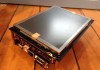
Apple has been working on the iPhone since long before it hit the market in 2007, and today a new developer prototype has come to light that shows how it might have looked if they’d rushed it to market earlier. The 2005 internal prototype is pictured in photos obtained by Ars Technica, from an unnamed former Apple employee.
The prototype iPhone doesn’t look like an iPhone as we know it at all, aside from the fact that it boasts a rectangular screen. The device is 5″ x 7″, closer to the current iPad mini than anything else, which is 5.3″ by 7.87″. It’s also two inches thick, which is around the depth of six iPad minis stacked, but that was necessary for including all the ports the iPhone prototype had on board.
Yes, ports. The early iPhone design had a USB port, Ethernet and serial. They weren’t included so that you could hook up to your dot matrix printer – Ars’ source says the development team was simply making the gadget as easy to work internally with as possible in its early, pre-release form. The unit itself was designed completely around helping the internal team refine the product; a large display also makes it easier to work with. But back then everything was up in the air, meaning it was still arguably a real possibility that the iPhone could have shipped with wired Internet on board.
Ars notes that the chip used in the prototype is the older, slower antecedent of the Samsung-made ARM design used in the actual first iPhone, so the partnership was in place long before Apple went into full-scale production.
Apple co-founder Steve Jobs said in 2010 that Apple actually worked on the iPad before it ever began work on the iPhone, so it makes sense that an early prototype for an Apple phone would largely resemble the Apple slate that would later follow. And in basic engineering terms, it’s easier to work big before working small. And even though they never would’ve shipped it, it’s funny to imagine that Apple was making phablets long before Android OEMs were stretching the limits of what sized device can comfortably be termed a “phone.”
-
Leaked photos may finally reveal Samsung’s Galaxy S IV

-
Galaxy S IV Reportedly Leaks, Remains Visually Similar To Galaxy S III
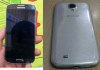
The Samsung Galaxy S IV is being announced later this week at a special event, but we’ve already seen plenty of leaks regarding the flagship phone’s hardware, but now there’s a new one (via SammyHub) that claims to depict the phone in the flesh, giving us an idea of what it could look like. If these leaks are accurate, the GSIV changes little from the previous generation and Galaxy Note II designs.
Posted to a Chinese forum, it’s still very possible that these are images of another yet-to-be released Samsung device, or simply elaborate fakes, but if that’s what they are, then they’re very well done. The images show a Samsung-branded phone with a 5-inch display, a metal-look band surrounding the phone, and what looks like slightly textured front and back surfaces. The rear is a glossy white, the slab has rounded rectangular edges, and the screen looks to extend closer to the bezel than in any previous Samsung handset, meaning it could manage not to have grown that much in terms of physical size despite the larger display.
The leak fits with reports that the Galaxy S IV will retain its plastic outer case, and agrees with other recent rumors about software and internal specs, since it’s shown to be running Android 4.2.1, has a 1080p displays, runs 2GB of RAM and offers a 13-megapixel camera. The CPU numbering also suggests that it has a Samsung Exynos Octa chip on board as previously reported.Samsung has been known to epically troll its fans, as it did last year with a disguised version of the Galaxy S III which was covered in an outer case that hid its true design. We could be seeing that sort of thing again, but this leak looks much more convincingly like a shipping device, not encased in any disguise. Regardless of whether it’s the real thing or not, we’ll find out for sure what Samsung’s latest flagship looks like on Thursday.
-
The technologies that will save us from the “mobile data crunch”
It’s hard to believe that it’s been less than five years since Apple introduced the App Store, launching a multi-billion dollar industry around content and services for mobile devices. Since then mobile apps have helped propel smartphone sales through the stratosphere, with shipments topping 720 million units last year. Meanwhile NPD predicts 2013 could be the year tablets outsell notebooks.
Correspondingly T-Mobile has said that smartphone users are consuming as much as 30 times more data than just a few years ago, and that appetite grows each year. Cisco estimates that global mobile data traffic is nearly doubling each year and will grow 13-fold in the next 5 years. As that growth comes at larger and larger scale, network operators are finding themselves at overcapacity. While the FCC is exploring ways to make more spectrum available, there is simply not enough to go around in the short term, and it’s only going to get worse.
This “mobile data crunch,” as we at Bessemer (and others) refer to it, offers one of the best investment opportunities there has ever been around telecom infrastructure. Here’s a look at a few key sectors we believe will experience outsize growth, and are investing accordingly. (Disclosure: Bessemer has investments in or a relationship with two of the companies mentioned in this piece; see below for those disclosures.)
New cell site technology
So if more spectrum isn’t available, how can carriers get more capacity out of existing airwaves? Many are looking to add new cell sites, as cellular spectrum can be “reused” at multiple locations if there is enough separation between sites. Carriers are very excited about moving to a “HetNet,” which will incorporate thousands of small cells – or low-powered radio access nodes that provide the same functionality as a larger tower for a small region. The HetNet will make the network vastly more complex, with the small cells adding thousands more points of interference that will need to be managed.
Companies like Ubiquisys are building intelligent software for small cells to make them more manageable within the Radio Access Network (RAN). Small cells also introduce complications with backhaul (that is, returning the signal to the core network). For all of their flexibility, they are often placed in locations where traditional methods of backhaul like fiber cables or line-of-sight-microwave are impractical or unavailable. Blinq Networks and Siklu are among the companies working on new methods of backhaul for otherwise hard-to-reach small cell deployments.
Offloading alternatives
An easier way for carriers to ease the spectrum crunch is simply to get rid of as much data traffic over their networks as possible, enabled by the use of Wi-Fi offload technologies from companies like AirSense, WeFi, and Devicescape.
Ralph de la Vega, CEO of AT&T Mobility, told an audience he “has been preaching about” this for some time. But he’s done more than that – AT&T now owns hotspots at some 30,000 McDonald’s and Starbucks locations, which handle traffic from the network’s customers when they are in the store. This is more difficult than it may seem, as carriers need to ensure that the consumer experience on Wi-Fi is as good or better than using the mobile network. Bringing awareness of which hotspots are accessible and have a strong signal as well as being able to seamlessly transition a user between the cellular and Wi-Fi network without interrupting service are critical areas being addressed by new companies.
Network shaping
Finally, some startups are going directly at the core network with software solutions that optimize the flow of mobile data traffic. This is perhaps the area we are most excited about, as evidenced by our investments in Intucell and Vasona Networks (Note: Intucell was recently sold to Cisco, but I remain on the board of directors; Bessemer still maintains an investment in Vasona Networks).
Earlier this year, Intucell signed a multi-million dollar deal to deploy its self-optimizing network technology across AT&T’s entire U.S. network. Intucell’s solution optimizes the RAN by identifying in real time faulty or underutilized cells and adjusting their configuration automatically to provide the optimal level of coverage. Similarly, Vasona is leveraging its position as software in the network to deliver IP video and data at the appropriate time and bit rate over a given cell.
What makes us particularly excited about this last category? Carriers can test software solutions on their network at a low upfront cost and see proven results in a short time before committing to a more substantial order. From an investor perspective, this means shorter sales cycles and a more capital-efficient business: We are now seeing startups that have never raised money before yet have already completed successful trials with major operators.
Bob Goodman is a partner at Bessemer Venture Partners.
Photo courtesy of E.O./Shutterstock.com.

Related research and analysis from GigaOM Pro:
Subscriber content. Sign up for a free trial.


-
BlackBerry Z10 getting WhatsApp starting next week

-
AT&T reaffirms commitment to unlocking cell phones

-
Nokia frets over possibility of a ‘Surface smartphone’


