Category: Mobile
-
Apple triumphs over Samsung in latest patent infringement trial
-
Tablets Now Taking A Greater Global Share Of Web Page Views Than Smartphones, According To Adobe’s Digital Index

The proportion of web traffic coming from tablets has pushed past smartphones for the first time, according to Adobe’s latest Digital Index which has tracked more than 100 billion visits to 1,000+ websites worldwide, between June 2007 to date, to compare which device types are driving the most page views. The monitored markets are the U.K, U.S., China, Canada, Australia, Japan, France and Germany. While the difference between smartphone and tablet traffic is marginal — with tablets accounting for eight per cent of the measured page views and smartphones seven per cent — the growth in tablet page views is impressive, especially considering how new the category is (the first iPad launched in April 2010).
Of course both mobile device types still account for a fraction of the total share of page views when compared to desktops/laptops — which accounted for 84 per cent of the page views, according to Adobe’s data – but both are taking a growing share, and tablet growth is on an especially steep trajectory:
Adobe attributes the rise of tablet page views to how well-suited the form factor is for web browsing, with the most obvious attribute being tablets’ larger screen size vs smartphones (albeit, that gap is closing as some tablets shrink and some smartphones swell). On average, Adobe found that Internet users view 70 per cent more pages per visit when browsing with a tablet compared to a smartphone — so tablet users are doing more leisurely (and presumably leisure time) browsing.
While there is a good spread of different activities across both tablets and smartphones, Adobe’s index indicates that online shopping is a particularly popular activity for tablet users. Retail websites receive the highest share of tablet traffic across all industries, according to its data, while automotive and travel shopping websites also get a “significant share” of tablet traffic:
Writing on its digital index blog, Adobe adds:
We’ve been keeping a close eye on how quickly tablets have taken off. Just ayear ago in January we uncovered that visitors using tablets spend 54% more per online order than their counterparts on smartphones, and 19% more than desktop/laptop users. During the past holiday shopping season we saw that 13.5% of all online sales were transacted via tablets. And last month before the Super Bowlwe learned that online viewership via tablets doubles during big sporting events. Now we know that not only is tablet traffic more valuable in terms of ecommerce and engagement, tablets have also become the primary device for mobile browsing.
The U.K. leads Adobe’s Index for tablet page views, with the U.S. second:
All countries tracked saw their share of traffic from tablets double over the course of 2012 — a trend Adobe expects to continue through 2013. It added that some slight dips in tablet share in certain countries in November were down to PC traffic surging, rather than tablet page views dropping:
-
Jawbone Design Guru Helps Bring Wearable Tech & Data Tracking To Your Golf Game

“I have a tip that can take five strokes off anyone’s golf game: It’s called an eraser,” Arnold Palmer once remarked. Yes, Even brave enough to wear ridiculous clothes and hack a small white ball around a manicured lawn, golf is a difficult and sometimes humiliating, sport.
Luckily for golfers, John McGuire feels your pain and is on a mission to make the game just a little less painful for anyone daring (and ignorant) enough to pick up a club. His new company, Active Mind Technology, wants to give the golfing masses access to the same tools traditionally reserved for the pros by leveraging the same wearable sensor-based technologies found in health-tracking devices like Fitbit, Basis and Jawbone’s Up.
And who better to assist in that endeavor than the mastermind behind the design of products like Jambox, Jawbone and Jawbone Up? Joining McGuire and his team of twenty is Yves Behar, the design and branding guru (and Chief Creative Officer of Jawbone) known for helping to design the products mentioned above as well as those for PUMA, General Electric, Samsung, Prada and more.
While Behar hasn’t assumed a title in the company, McGuire tells us that he has not only led the design of the UI, UX, branding and packaging of Active Mind’s newest product, he’s also and investor and “thankfully, even acts like a founder,” he says.
This week, McGuire, Behar and team officially unveiled Game Golf, a wearable product that employs a combination of sensors, GPS and NFC technologies to provide golfers with a stream of data and feedback to help them improve their scores.
Essentially, the device, which includes transmitter tags that are inserted into clubs and a receiver that can be attached to your belt, track every shot a user takes during a round, as well as distance, club selection and so on. And, a la health and fitness trackers, Game Golf compiles this data and syncs it with the cloud, allowing users to then access their performance data via its mobile app on their mobile devices and personal computers.
Golfers can then share highlights of their round and their overall progress with friends by way of their social network(s) of choice, and see the percentage of shots that they hit in the fairway, greens in regulation, and putting performance. Backing its software, the team has designed Game Golf’s battery to accomodate two full rounds of data tracking before requiring a charge.
Though that all equates to a good start, one feature that’s conspicuously absent is that the device is not able to measure the velocity of one’s swing (or its relative accuracy). his could deter some early adopters, it’s not a flat-out deal breaker; however, adding this capability down the road could become a significant selling point for those sitting on the fence.
And, unfortunately for those looking for instant gratification, Game Golf isn’t yet available in stores. Instead, the company has launched a crowdfunding campaign on Indiegogo through which it hopes to raise $125,000 in an effort to finance its product development and distribution. In spite of (or perhaps because of) the fact that it will cost a hefty $249 when it does become publicly available in stores, McGuire tells us that Game Golf has become the fastest money-raising campaign in Indiegogo’s history, raising $63K in 12 hours.
Now, two days removed from launch, the campaign has raised over $108,000. At this rate, it should meet its goal within a week, which the founder takes as a promising sign of the potential demand for its golf tracker.
Based on its initial concept and after recruiting well-known pro golfers like Lee Westwood and Graeme McDowell to help with early testing (and invest), Active Mind was able to raise seed financing from a bevy of reputable investors, including Chamath Palihapitiya, Jerry Yang (of AME Cloud Ventures), Morado Venture Partners, Crosslink Capital and Ed Colligan (the Former CEO of Palm) — to name a few.
“Game Golf gives everyone access to crucial data that can dramatically improve your golf game and handicap,” McDowell says of its appeal to golfers. “[It’s] intuitive, doesn’t disrupt your game and is essential for any golfer looking to understand their game better and knock down their handicap.”
With its Indiegogo campaign acting as a proof of concept, the startup is currently in the process of raising what McGuire tells us will be a $4 million series A round. If Game Golf is able to sustain this early demand, it will eventually look to expand into other sports, like board and motor sports and soccer, for example.
While the near-term plan involves serious iterating around Game Golf, McGuire said that the platform is being architected in such a way that it will be able to eventually help users measure activity — and provide a gamification and social layer — across multiple sports.
As to Game Golf, the founder said that users can expect to see its public launch sometime this summer.
For more, find the startup’s Indiegogo campaign here, along with video demo below:
-
Meet Thermodo: A Tiny External Thermometer That Lives In Your iPhone’s Headphone Jack

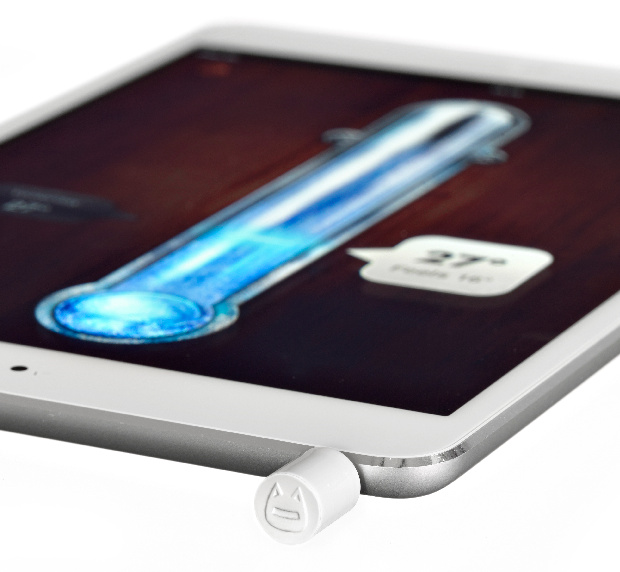
Danish startup Robocat has built a lot of software for Apple’s iOS devices, but today the company is branching out with the launch of a new hardware accessory for the iPhone, iPad, and Android devices. It’s called Thermodo, and it’s a very small hardware thermometer that fits in your device’s headphone jack, and transmits real temperature data for use in apps.
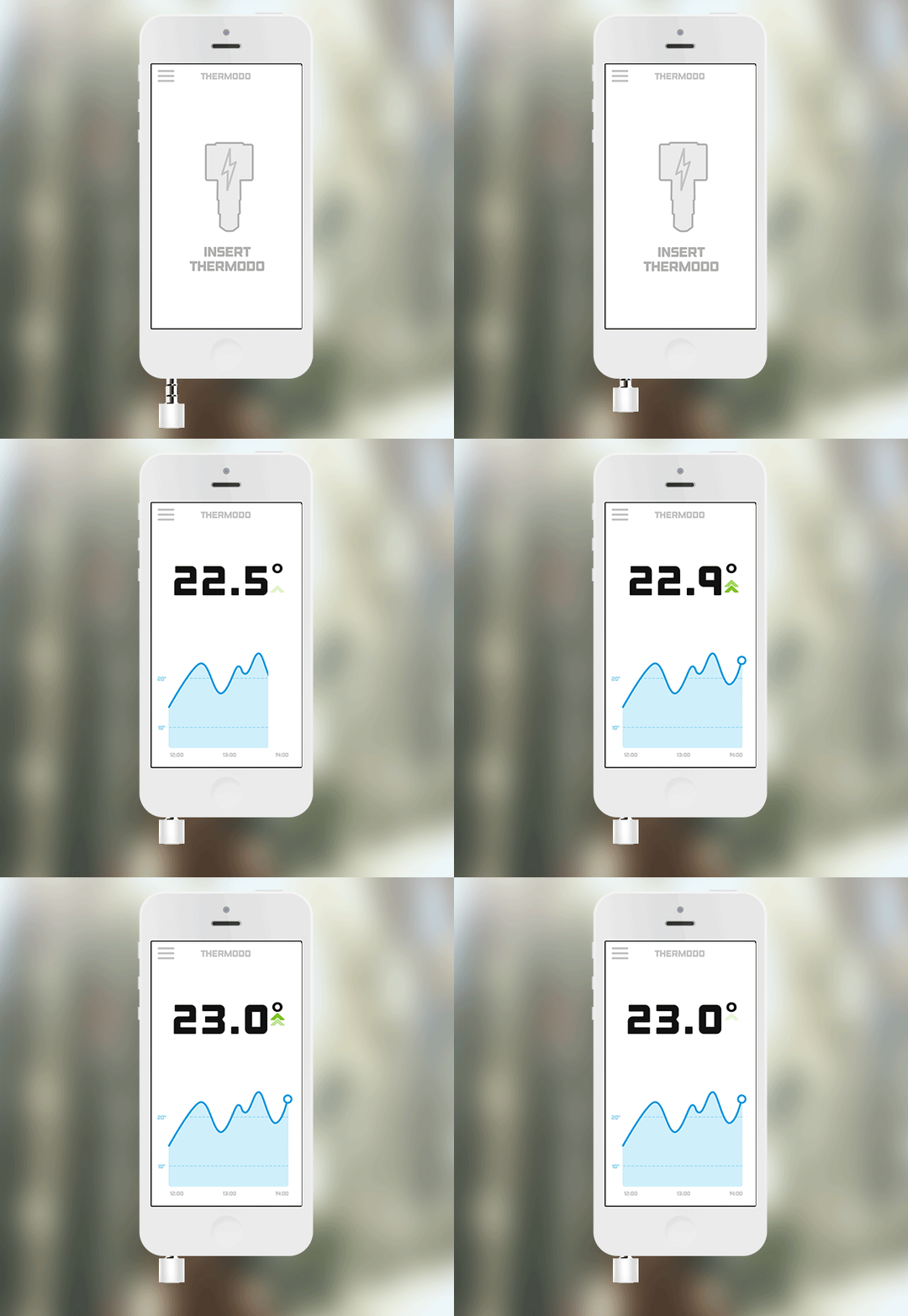
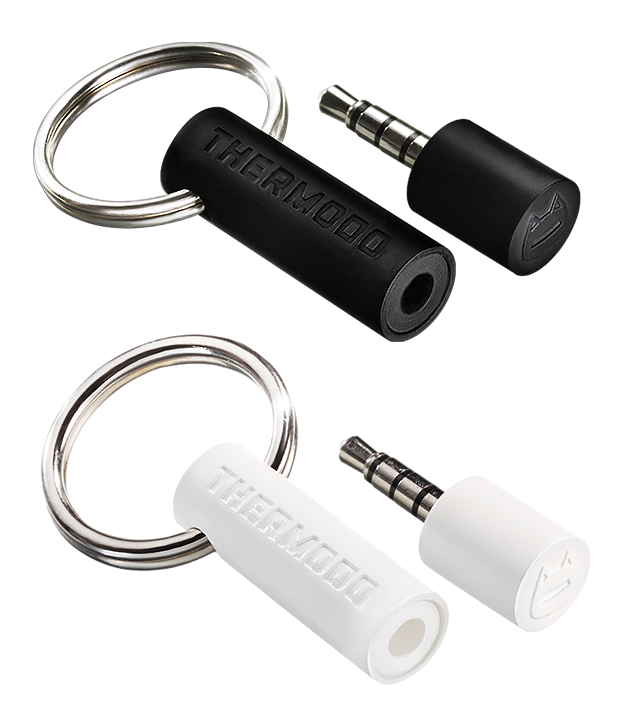
The Thermodo hardware has a passive temperature sensor, housed in an audio jack and protected by a small cylindrical end cap that only extends around a quarter of an inch out from your device. It doesn’t need its own power source, and it transmits weather data as an audio signal that can be picked up by your phone and translated into the corresponding temperature on your phone via an API, which the company will first use in a dedicated Thermodo companion app for iOS, as well as in two of its previously released apps, Haze and Thermo.
The Thermodo works offline, indoors and out, and comes with a carrying case keyring to make sure you don’t lose the tiny thing when it’s not in use. Robocat says that eventually, any device could potentially support Thermodo, including Raspberry Pi, Macs, and Arduino-based gadgets, thanks to the company’s open source SDK.
I talked to Robocat founder Willi Wu about the project, and why it came to be in the first place. He says the company branched out from its core focus on mobile weather apps based on feedback from users.
“The idea Thermodo is actually based on an indirect request from our users,” he explained.” We received several one star reviews because our users wanted the feature of measuring the temperature themselves right where they are. Currently the iPhone does not support any access to any temperature reading within the phone nor is there a dedicated sensor for this purpose. We wanted to attack to this problem anyway and came up with the most simple solution we could imagine, Thermodo.”
While other devices like the Square credit card reader and the Jawbone UP fitness band use the headphone jack as a way for accessories to communicate with smartphone devices, Wu says that Thermodo is fundamentally different in its approach. That opens up plenty more possibilities for how the company could use the tech in the future to create other kinds of sensors, he says.
“Thermodo is not translating sounds to data like Square or other softmodem-based products,” he said. “It turns out that we can apply this method to all kind of applications. What we do is converting the temperature into an electrical impedance and this impedance is determined by what we call the “Thermodo Principle.” Now we can convert all kind of things into an electrical impedance, like for example wind speed, pressure, brightness and so on.”
Wu says Robocat’s technical lead is already measuring his resistors and capacitors in this manner, and that the company is experimenting with some of these alternate sensing capabilities already. Eventually Thermodo could have a number of sibling devices to gauge just about everything under the sun (including the sun’s brightness).
Thermodo is looking for just $35,000 in funding, and pre-order pledges start at just $19 for a single Thermodo unit. This is a project that will hit its goal quickly, and I can’t wait to see what comes next from Robocat’s new hardware focus.
-
Galaxy S III unlock screen flaw opens up entire device to hackers

-
How can Microsoft’s smartphone market share be shrinking in America?

-
AT&T rumored to launch BlackBerry Z10 on March 15th

-
iOS gains on Android in January as Windows Phone remains stagnant

-
Prepare Your Pockets, Samsung’s Next Galaxy Note Phablet Could Sport A 5.9-Inch Screen

Samsung’s Galaxy S IV hasn’t even been revealed yet and news of another top-tier Samsung smartphone is already threatening to steal some of its spotlight. The Korea Times reported earlier today that the Korean electronics giant is busy working on a Galaxy Note phablet followup with a 5.9-inch display behind closed doors.
If the Korea Times’ report holds true then Samsung is taking a more measured approach to how it scales up smartphone screen sizes — as PocketNow points out this is (thankfully?) a hair smaller than what some earlier rumors suggested, since for a while there it looked like Samsung was considering pushing out a phablet with a 6.3-inch screen. The Times’ source also noted that the Note III would sport an eight-core Exynos processor, a not-so-subtle reference to Samsung’s Exynos 5 Octa chipset.
Samsung isn’t the first to push up against that 6-inch barrier, and they’ll hardly be the last. Chinese OEM Huawei blew past it earlier this year when it unveiled the hefty Ascend Mate and its 6.1-inch screen at CES, and ZTE revealed its 5.7-inch Grand Memo during Mobile World Congress. For better or worse, the plus-sized phone trend doesn’t seem to be going anywhere.
In the past I’ve asked how big is too big for these sorts of phablets, but looking back that’s sort of a restrictive question. The word “phablet” doesn’t have a universally accepted definition (it’s usually just used to refer to big honking phones) — perhaps the better question is at what point are devices like the Note and Grand Memo more tablet than phone?
For what it’s worth, Samsung and rivals like Huawei and Asus seem keen on making that sort of distinction a meaningless one. The Korea Times report comes just days after Samsung pulled back the curtain on its Galaxy Note 8.0 tablet in Barcelona during Mobile World Congress — it’s the company’s smallest Note tablet to date and some versions of the device feature the ability to make voice calls. Asus (perhaps swept up in a fit of wordplay-induced whimsy) also showed off its 7-inch FonePad tablet at MWC, and touted its ability to place voice calls almost as much as its reasonable price tag.
-
Apple’s Growth Outpaces Samsung’s In Most Recent comScore U.S. Smartphone Share Report

Apple’s iPhone made up some ground in the most recent comScore smartphone OEM market share numbers, covering the three-month period ending in January 2013. Apple’s share rose from 34.3 percent curing the previous quarter to 37.8 percent, a point change of 3.5. Samsung’s share also rose, going from 19.5 percent to 21.4 percent, growth of 1.9 percentage points. HTC and Motorola shed share, maintaining their third and fourth-place spots but each losing nearly as much share Samsung gained.
ComScore also measured smartphone platform share, and found that Google’s Android accounted for 52.3 percent of overall U.S. smartphone subscribers aged 13 or older, a drop of 1.3 percentage points vs. the previous quarter. Apple’s iOS gained ground, adding 3.5 percentage points to its share, going from 34.3 percent share in the quarter ending October 2012, to 37.8 percent in the one that just ended in January.
In other words, according to comScore’s number, Apple was the big winner for the holiday season. Which makes a lot of sense, given that it released the iPhone 5 in September, and the device continued to see supply constraints through October and November leading into the holiday sales season. Samsung’s flagship device, the Galaxy S III, had been on the market since June 2012.
In terms of platforms vying for third place, BlackBerry shed nearly 2 percentage points of its share during the quarter, but a lot of that was likely due to the imminent release of BB10. The first BB10 devices didn’t go on sale anywhere in the world until the end of the month, and they have yet to arrive officially at any U.S. carriers. Next quarter results should be a better indicator of how BlackBerry will fare alongside Microsoft in the U.S. in the war for a third modern smartphone platform.
Apple’s share of the smartphone market was also up from the three-month period ending in December, when comScore pegged it at 36.3 percent, with Samsung up to 21.0 percent, representing growth of 2.0 and 2.3 percentage points respectively. These two continue to slug it out at the top, but the most recent numbers show Apple pulling ahead at a faster rate. We’ll see if the Galaxy S IV launch, likely coming sometime next week, has any influence on consumer buying choices when it comes to the U.S. smartphone market.
-
Samsung’s Galaxy Note III rumored to feature 5.9-inch display, eight-core processor

-
T-Mobile strikes back at AT&T attack ads

-
Famed Apple columnist dumps iPhone for Android

-
U.S. Galaxy S IV Screenshots Leak, Backing Up Smart Scroll Claims And Some Hardware Specs

The Galaxy S IV leaks are coming fast, from a number of sources including the company itself, and this morning brings two in rapid succession. First, as Matt reported earlier, shots depicting the addition of new Smart screen settings from a version of Android 4.2.1 for the Galaxy S III surfaced, and now another source is claiming to have received images of the same thing from a U.S. model Galaxy S IV.
The Galaxy S IV screenshots come from GSM Israel, a blog with a pretty solid track record in reporting early leak information. This time around, the blog say it’s very confident that these screenshots are legit, as they come from a “very reliable” source. Another reason to believe these are the real thing? They match up pretty closely to the earlier GS III screen leaks depicting similar changes to that device’s settings screens, as you can see in the side-by-side image below.
Alongside a screen that seems to confirm Samsung will indeed be including “Smart scroll” in the new version of its Galaxy S smartphone, along with features that change screen orientation, pause media playback and disable screen timeout based on head positioning, these leaks also indicate we’ll see the rumored 1.8GHz quad-core processor powering this phone. Data from the Quick System Info Pro app also suggest rumors about the GS IV’s 1920×1080 pixel screen, with Retina-busting 440 ppi pixel density and an approximately 5-inch display, are also accurate.
There’s also a screen of the device’s camera options, which indicate it’ll be able to max out at 13 megapixels, another oft-rumored spec for the still-unannounced device. Samsung likely won’t have many surprises left to deliver on stage when it unveils the Galaxy S IV next Thursday, March 14 at a presentation in New York City, but this still looks like a phone that will help Samsung continue its Android device sales dominance. And we’ll still be on hand to make sure you get the news and confirmations of these features live as they happen.
-
Leaked Galaxy S IV screenshots reveal several new features

-
Samsung To Continue Its Innovation Push With Head Tracking Auto-Scroll On The GSIV

If these leaked screenshots are the real deal, the upcoming Samsung Galaxy S IV will feature a rather innovative way to scroll. Called “Smart scroll” the phone can apparently scroll based on a user’s head angle. This will work in browsers and emails. Novelty? Probably. Innovation? Absolutely.
Auto-tracking is the next frontier in user interaction. Intelligent eye-tracking would result in a revolutionary paradigm shift. Contrary to earlier rumors, Samsung’s Smart scroll doesn’t seem to track eye movement, but the leaked screenshots seem to indicate a similar result.
Sammobile notes that these screenshots were taken from a leaked Android 4.2.1 build intended for the Galaxy S III but insists the Galaxy S IV will have the features as well.
There’s no word on how this interaction takes place. Chances are it uses the front-facing camera in some way rather than including new tracking hardware. But, if true, Samsung is again pushing forward the smartphone.
Samsung is now a global leader in smartphones. It’s not following anymore. The company is charging forward ahead of other vendors and innovation is leading the way. The Galaxy S III is loaded with clever features not found in other smartphones: Direct Call, S Beam, Pop up play.
Apple won the early smartphone wars thanks to similar clever functions. Apple’s innovation turned to iteration. But not at Samsung. And consumers are reacting in kind, making Samsung the largest smartphone vendor.
It’s likely that the next Galaxy S will feature other novel functions along with head tracking. All secrets will be revealed on March 16th when Samsung unveils it at a massive NYC event.
-
News Corp’s Education Tablet May Be The Bureaucratic Fit Schools Need To Adopt Tech
Public school systems are cheerfully decorated dictatorships: discipline, standards, and testing are the driving concepts of modern k-12 education. The very reason why districts purchase bundles of the same textbooks is so they can keep classrooms in lockstep alignment as teachers meticulous meet timely instructional goals. Amplify, NewsCorp’s new education division, finally revealed its long-awaited flagship product: a sophisticated tablet designed specifically for schools, which many finally be the perfect bureaucratic blend of classroom management, assessment, and monitoring that schools need to adopt technology en mass.
But what in the sam hill is News Corp. doing messing around in education? Well, it’s true that Rupert Murdoch is one of the more well-known (and polarizing) figures in the media landscape; his reputation precedes him, and it’s not one that’s typically been associated with education reform. While the News Corp. founder’s sudden transformation into an education reform advocate may seem a head-scratcher, the motivation becomes clear when, in Murdoch’s terms, one considers that K-12 education is a $500 billion sector in the U.S. alone — and one that remains relatively untouched by corporations like News Corp.
A little over two years ago, Murdoch set out leverage the News Corp. brand to help fix a public education system that, in his words, has “lower standards than American Idol,” hiring one of the more prominent figures in American education, former chancellor of New York schools, Joel Klein, to pursue opportunities in EdTech. With Klein as his new education guru, the pair quickly made their first big strategic move, acquiring New York-based software, assessment and data services startup, Wireless Generation, for a whopping $360 million.
However, News Corp.’s plans for education were quickly derailed by the infamous phone-hacking scandal that forced Klein leave his position to lead the company’s internal investigation. After two years of investigations, trials and more, News Corp. rebranded its education unit last summer as “Amplify,” revealing some of the basic tenets that would shape its digital strategy, which include “assessment via mobile tools, curriculum design and the online distribution of resources via AT&T-powered tablets,” as Greg wrote at the time.
Klein and company are convinced that, for public education reform to be successful, the private sector needs to get more involved — as does the role of technology in the classroom to help both teachers teach more effectively and help students learn. Amplify attempts to put those ideas into practice, by allowing the company to not only sell its curriculum on any tablet makes its way into schools, but by betting that schools will be willing to fork over a pretty penny to access blended learning tools (and an infrastructure to store learning data) all through a custom tablet.
Of course, Ammplify isn’t the first to offer these types of learning tools on mobile devices, as many startups (and even bigs like Pearson) already have similar cross-platform, web-based tools on the market. However, no particular device or platform has emerged as the clear leader, and by offering classroom management tools and features that one would expect from News Corp, like a kill switch that allows teachers to limit students’ access to apps on the tablet, Amplify hopes to get a leg up.
As to those features: Amplify’s Android-based 10″ tablet comes preloaded with all the basic learning software that teachers need to dole out information on any given subject: textbooks, multimedia lessons, Encyclopedia Britannica, and a graphing calculator. It even includes the widely popular Khan Academy suite of YouTube-based lectures, which were recently converted to an off-line textbook-style format.
More importantly, Amplify’s tablet suite is a managerial dream: teachers can carefully monitor students behavior, administrators can deploy content across an entire grade-level, and districts can evaluate schools with custom standardized tests.
Amplify gives teachers, as both disciplinarian and educator, impressive control. They can selectively enable or disable apps to direct student learning; distracted students get an “eyes on teacher” alert if their usage behavior indicates an inattentive mind. Impromptu polls and tests individually evaluates each student and gives them customized refreshers.
The very cost-structure of the tablet system is designed for administration. Even with a two-year subscription at $99 per year, the wifi-enabled tablet is still a pricey $299 (a 4G version is $349 with a $179/year contract). But, it’s meant to be purchased by whole schools, districts or states, and comes with 24-hour live technical support to ensure students are meeting goals in a timely fashion. If schools could replace some of their textbooks and IT overhead, the cost appears less daunting. But, it’s still high.
Just as important, Amplify has been built around the Common Core, a new national curriculum guideline emphasizing career and college readiness. Yet, since the federal government can’t set national standards, schools have been left to fend for themselves and develop their own tests. Amplify’s evaluation wing aims to ease the confusion and develop a reliable set of measures that can easily be distributed school-wide with the click of a button.
During Greg’s interview with Amplify CEO Joel Klein at Techcrunch’s Disrupt San Francisco, he made it clear that all of the wonderful hardware in the world won’t make a difference unless it’s built for the schools and teachers. There’s already a crowded market of education technology, from classroom management software ClassDojo, to tablet software from textbook giants McGraw-Hill and Pearson.
Successful players in the education space knew that schools need scale, structure, and support. When Google entered the market, they got buy-in from state-level officials and now have over 20 million users.
Klein, knows that education is a game of Monopoly: provide a school everything and ye shall receive everything. The result, in this case, may be the push that the education system needs to enter the 21st century.
-
LTE handset shipments surged by a ‘phenomenal +1100%’ in Q4 2012

-
Sprint encourages customers to unlock old phones and use them on prepaid networks

-
HTC may bring ‘ultrapixel’ cameras to mid-range smartphones